Beschaffungsanfragen werden über Schnellbestellung eingereicht. Die unten genannten Preise für AR Bulk und SR Bulk entsprechen den zum Zeitpunkt dieser Aktualisierung aufgeführten Preisen. Die USD-Angaben sind ungefähre Umrechnungen zum Kurs von ¥154/USD. Bedingungen zu Angebotsanfragen, Versand, Zoll, Zahlung, Bestand und Zuteilung müssen vor jeder Bestellung erneut geprüft werden. Weiterführende Leitfäden: Japanische Pokemon-Karten im Großhandel kaufen, Leitfaden zum Großhandel mit japanischen One Piece-Karten und Leitfaden zur Großhandelspreisliste für Pokemon mit Bewertung PSA 10; im Kartenlisten-Verzeichnis können Sie Sets durchsehen. Bei der Aktualisierung vom 15. Oktober 2026 wurden Links, Preise und die zollrechtliche Behandlung nach Zielland geprüft; die übrigen Fakten in diesem Artikel wurden zuletzt am 14. Juli 2026 überprüft.
Großhandelsanfragen für japanische TCG-Produkte lassen sich leichter beurteilen, wenn ein Kartenladen genaue Produktspezifikationen liefert. Geben Sie Produkt, SKU oder JAN, Menge und Einheit, Zielort, Frist und bevorzugte Zahlungsart an. Lassen Sie Samurai Sword Tokyo vor Ihrer Kaufentscheidung das verfügbare Produkt, den Preis, etwaige Zuteilungs- oder Reservierungsbedingungen, die Angebotsgültigkeit, die Zahlungsanweisungen und die Versandannahmen bestätigen.
Beschreiben Sie bei Booster-Boxen, Cases, unbewerteten Einzelkarten, Bulk-Losen, bewerteten Karten oder zukünftigen Veröffentlichungen jede angefragte Position separat. Fragen Sie, ob die genauen Produkte und Mengen geliefert und gemeinsam bestellt werden können. Stützen Sie Ihre Kaufentscheidung auf das bestätigte Angebot, die Einfuhrgesamtkosten und die eigenen Abverkaufsdaten Ihres Shops.
1. So funktioniert der Ablauf einer SST-Großhandelsanfrage
Nutzen Sie eine Angebotsanfrage, wenn vor dem Kauf etwas bestätigt werden muss
Nutzen Sie Schnellbestellung für eine Beschaffungsanfrage, wenn Produkt, Menge oder Verfügbarkeit geprüft werden müssen. Wenden Sie sich bei einer bestehenden Bestellung über den in Ihrem Konto oder auf der Kontaktseite angegebenen Weg an den Kundenservice. Beschreiben Sie jedes angefragte Produkt mit eindeutiger Identität, Menge und Einheit.
Geben Sie bei Artikeln mit marktabhängigen Preisen genaue japanische Kennungen an, statt nur einen englischen Spitznamen zu verwenden. Fragen Sie, ob ein ausverkaufter Artikel zum aktuellen Preis erneut beschafft werden kann oder ob für eine zukünftige Veröffentlichung eine Zuteilung verfügbar ist. Geben Sie bei Artikeln, die nicht im Shop gelistet sind, Set-Codes, JANs, Kartennamen, Zertifizierungsnummern und passende Referenzbilder an.
| Kaufsituation | Was Sie anfragen sollten | Was Sie überprüfen sollten |
|---|---|---|
| Aktuell sichtbares Produkt | Aktuelle Menge, Preise und Versanddetails | Ob und wann die angefragte Menge reserviert wird |
| Ausverkaufter Artikel | Prüfung einer möglichen Beschaffung | Aktuelle Verfügbarkeit und Preis vor einer verbindlichen Zusage |
| Vorbestellung oder kommendes Set | Verfügbare Zuteilung für das genaue Produkt | Bestätigungsbedingungen und voraussichtlicher Zeitplan |
| Position mit ASK- oder marktabhängigem Preis | Aktuelles Angebot für den angegebenen Artikel | Gültigkeitsende und etwaige Bedingungen für eine Preisbindung |
| Nicht gelistete Einzelkarte, Kartenlos oder Slab | Verfügbarkeit anhand genauer Kennungen und Zustandsanforderungen | Ob der angebotene Artikel sämtliche Anforderungen erfüllt |
Die vier Phasen verstehen
Bestimmen Sie zunächst, was Ihr Shop benötigt. Geben Sie zweitens Menge, Einheit, Zielort und Frist an. Fragen Sie drittens nach Verfügbarkeit, Preis, Ersatzprodukten und Versanddetails. Vergleichen Sie viertens die Antwort mit Ihrer Anfrage und klären Sie vor der Zahlung alle noch fehlenden Bestätigungen. Bewahren Sie Anfrage und Antwort zusammen als einen Einkaufsvorgang auf.
Die Trennung zwischen Anfrage und Antwort ist wichtig. Die Anfrage beschreibt den Bedarf; die Antwort legt das aktuelle Angebot fest. Ändert sich eine Anforderung—Menge, Zielort, Frist, Produktmix, Spielraum für Ersatzprodukte oder Zahlungsweg—, bildet das ursprüngliche Angebot die Transaktion möglicherweise nicht mehr ab. Bitten Sie um eine aktualisierte Bestätigung, statt die Annahmen nur intern anzupassen.
Bestand und Zuteilungsstatus bestätigen lassen
Fragen Sie, ob Bestand reserviert ist, wann die Zuteilung gesichert ist und welche Zahlungs- oder Rechnungsbedingungen gelten. Eine eingereichte Anfrage allein reicht nicht aus, um Ihren Kunden eingehende Ware zu versprechen. Führen Sie die Position intern weiterhin als „angefragt“, bis Sie die für diesen Kauf erforderliche Bestätigung erhalten.
2. Eine Anfrage mit den richtigen Angaben für ein Angebot erstellen
Produktidentität: Produktname, SKU, JAN oder eine andere stabile Kennung
Eine eindeutige Kennung ist der schnellste Weg, Verwechslungen zwischen Sets und Varianten zu vermeiden. Geben Sie bei versiegelten Produkten den genauen japanischen Set-Namen, Set-Code, SKU oder JAN und Produktlink an sowie, ob Sie eine Standardbox, eine Box ohne Schrumpffolie, ein Case, ein Deck, ein Spezialset oder einen Promoartikel benötigen. Geben Sie bei Einzelkarten Sprache, Set, Kartennummer, Seltenheit und Ausführung an. Nennen Sie bei PSA 10 die Bewertungsgesellschaft, die Bewertungsnote, die genaue Kartenidentität und das Zertifikat, wenn ein bestimmter Slab entscheidend ist.
Verlassen Sie sich nicht allein auf den Charakternamen. Zu einem einzigen Charakter aus Pokemon oder One Piece können zahlreiche japanische Karten, Nachdrucke, Seltenheiten, alternative Illustrationen, Promos und Kartennummern existieren. „Pikachu PSA 10“ oder „Karte von Luffy“ ist eine Suchanfrage, keine eindeutige Spezifikation für einen Kauf. Ist der Artikel nicht gelistet, fügen Sie einen Screenshot nur als ergänzenden Nachweis bei und geben Sie die maschinenlesbaren Kennungen als Text an.
Menge und Einheit: Definieren Sie, was eine Einheit bedeutet
Eine Mengenangabe ohne Einheit schafft kostspielige Unklarheiten. Geben Sie Boxen, versiegelte Cases, Karten, bewertete Slabs, Lose mit 100 Karten, Kilogramm, vollständige Sets oder eine andere definierte Einheit an. Nennen Sie bei einem Case die erwartete Boxenanzahl nur dann, wenn sie für genau dieses Produkt bestätigt ist; übernehmen Sie keine Annahmen aus einem anderen Spiel oder einer anderen Veröffentlichung. Legen Sie bei Bulk fest, ob Duplikate erlaubt sind, ob die Zusammenstellung zufällig erfolgt, welche Sprache, Seltenheit und welcher Zustand gelten und ob das Foto die tatsächliche Ware oder ein repräsentatives Beispiel zeigt.
Zielort, Frist, bevorzugte Zahlungsart und Ersatzprodukte
Geben Sie das Zielland an und unterscheiden Sie zwischen einer Versandfrist und einer Ankunftsfrist. Die aktuelle Versandrichtlinie nennt Zahlungen über Wise oder PayPal. Nennen Sie Ihre bevorzugte Methode und befolgen Sie die für die Bestellung mitgeteilten Anweisungen; lassen Sie etwaige Gebühren und Fristen vor der Zahlung bestätigen.
Legen Sie abschließend die Ersatzregeln fest. Eine sinnvolle Regel könnte eine andere versiegelte Konfiguration erlauben, ein anderes Set jedoch ausschließen; unterschiedliche PSA-Zertifikate zulassen, eine andere Bewertungsnote jedoch ablehnen; oder ein Ersatzprodukt nur unterhalb eines maximalen Stückpreises gestatten. „Ersatzprodukte akzeptiert“ ohne klare Grenzen verlagert die Entscheidung zurück in die E-Mail-Korrespondenz und verzögert das Angebot.
Versehen Sie die Anfrage mit einer internen Referenz, etwa einer Einkaufschargennummer, und dokumentieren Sie die versendete Version. Wenn der Shop später Mengen ändert, eine Position entfernt, das Budget erhöht, den Zielort ändert oder die Frist verlängert, senden Sie eine eindeutig überarbeitete Anfrage, statt davon auszugehen, dass die ursprüngliche Antwort die Änderung abdeckt. Versionskontrolle ist besonders hilfreich, wenn mehrere Einkäufer, ein Lager und eine Kreditorenbuchhaltung beteiligt sind: So können alle dieselben Produktpositionen, die Angebotsgültigkeit und die Zahlungsanweisungen abgleichen.
Lassen Sie vor dem Absenden eine zweite Person die Kennungen und Einheiten prüfen. Ein einziges falsches Zeichen im Set-Code oder eine Verwechslung von Case und Box kann die Bestellung erheblich verändern. Bei der Prüfung sollte außerdem kontrolliert werden, ob die Frist realistisch ist, der Zielort zum importierenden Unternehmen passt und jede Ersatzregel eine wirtschaftliche Grenze enthält. Diese kleine Kontrolle ist günstiger als die Klärung eines Variantenstreits nach dem internationalen Versand.
| Feld der Angebotsanfrage | Erforderliche Mindestangaben | Häufiger Fehler |
|---|---|---|
| Produkt | Name plus SKU, JAN, Set-Code, Kartennummer, URL oder Zertifikat | Einen allgemeinen Spitznamen verwenden, der auf mehrere Artikel zutrifft |
| Menge | Zahl mit ausdrücklich angegebener Einheit | „10“ schreiben, ohne Boxen, Cases, Karten oder Lose anzugeben |
| Zielort | Land und auf Anfrage Postleitzahl/Region der Lieferung | Versandkosten anfragen, ohne einen Zielort zu nennen |
| Frist | Spätestes Versand- oder Ankunftsdatum, eindeutig gekennzeichnet | Eine Schätzung als garantiertes Lieferdatum bezeichnen |
| Zahlung | Bevorzugter Zahlungsweg und akzeptable Alternative | Davon ausgehen, dass für jeden Zahlungsweg identische Bedingungen gelten |
| Budget | Maximaler Stückpreis oder gesamtes Warenbudget, soweit relevant | Den „besten Preis“ anfragen, ohne eine Entscheidungsschwelle zu nennen |
| Ersatzprodukte | Erlaubte und ausgeschlossene Änderungen | Ersatzprodukte akzeptieren, ohne die zulässigen Produkte einzugrenzen |
3. Booster-Boxen und versiegelte Cases im Großhandel
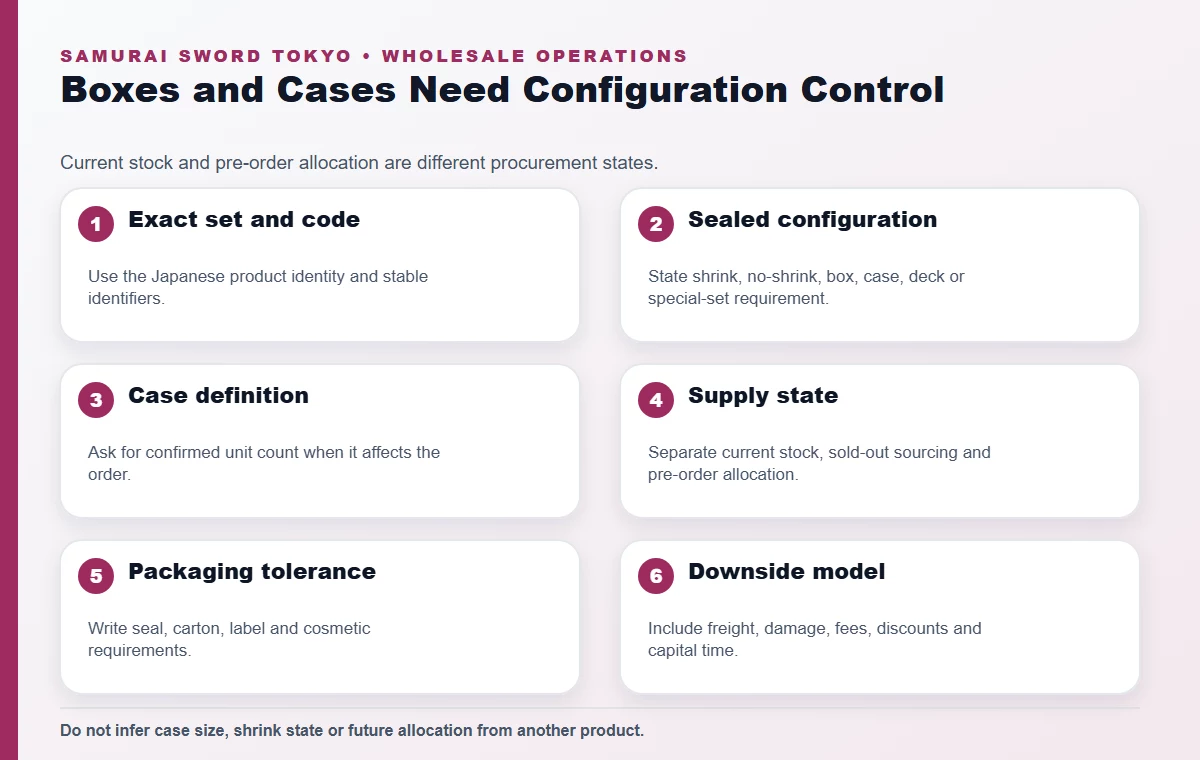
Die versiegelte Konfiguration angeben, nicht nur das Set
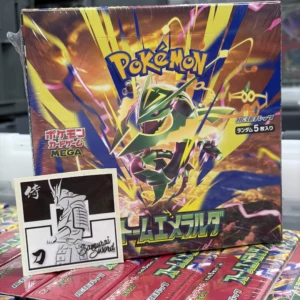
Japanische Booster-Produkte können als versiegelte Standardboxen, Einheiten ohne Schrumpffolie, versiegelte Cases, Spezialsets, Decks oder in anderen Konfigurationen angeboten werden. Sie unterscheiden sich hinsichtlich der Wirtschaftlichkeit pro Einheit, der Wiederverkaufszielgruppen, der Versandeffizienz und der Zustandserwartungen. Ein Kartenladen sollte genau angeben, welche Konfiguration akzeptabel ist und ob der Zustand der Schrumpffolie, die Case-Versiegelung, Kartonetiketten oder Anforderungen an das äußere Erscheinungsbild der Boxen für das Geschäft relevant sind.
Fragen Sie bei einem versiegelten Case das genaue Produkt und die Case-Einheit an. Gehen Sie nicht von einer einheitlichen Boxenanzahl über verschiedene Spiele oder Veröffentlichungen hinweg aus. Bitten Sie darum, die Definition des Case in der Antwort zu bestätigen, wenn sie Ihre Kaufentscheidung beeinflusst. Wenn Sie einzelne Boxen als Ersatz akzeptieren, geben Sie die Höchstmenge und den erforderlichen Verpackungsstandard an.
Aktuellen Bestand von Vorbestellungszuteilungen trennen
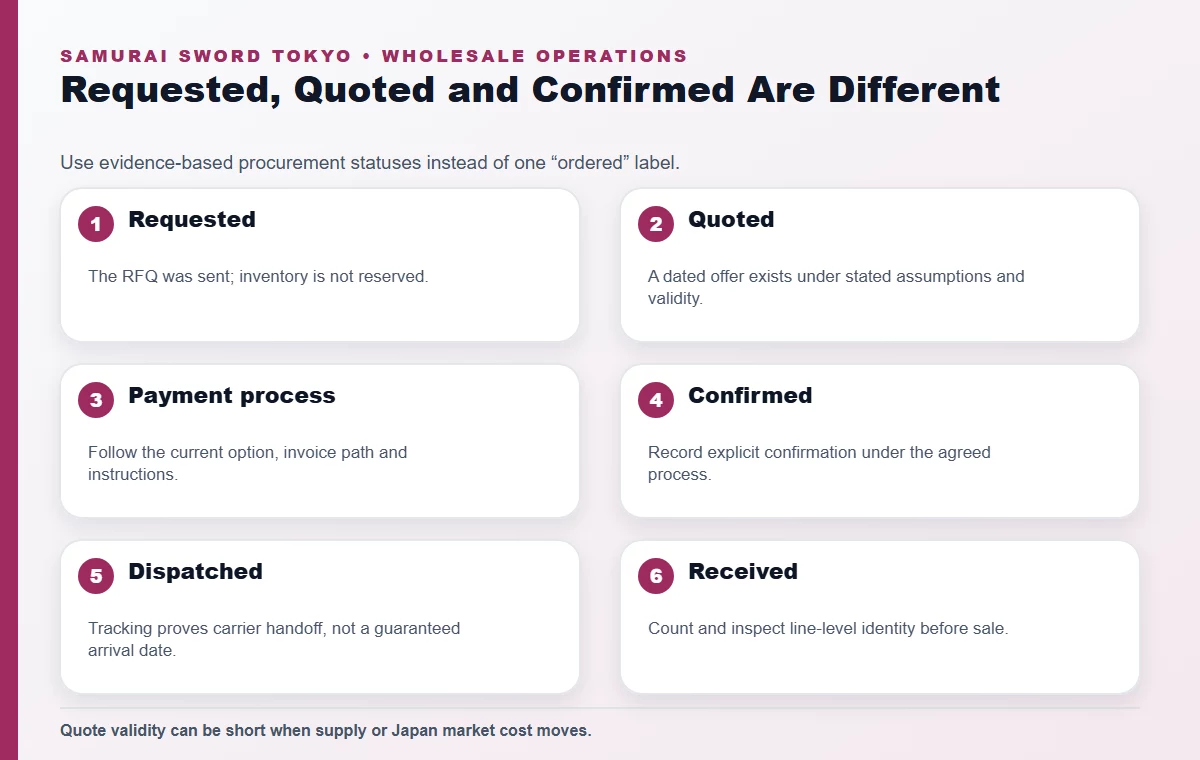
Positionen aus aktuellem Bestand und Vorbestellungszuteilungen befinden sich in unterschiedlichen Beschaffungsphasen. Aktueller Bestand kann sich vor der Zahlungsbestätigung noch verändern. Die Verfügbarkeit bei Vorbestellungen kann sich aufgrund von Lieferantenzuteilungen, Veröffentlichungsterminen, Prüfungen oder anderen Bedingungen ändern. Verwenden Sie interne Status wie angefragt, angeboten, bezahlt/bestätigt, erhalten und abgeglichen. Kennzeichnen Sie Ware nicht als im Zulauf, wenn sie lediglich angefragt wurde.
| Beschaffungsweg | Besonders geeignet für | Spezifikation | Wichtigstes zu kontrollierendes Risiko |
|---|---|---|---|
| Einzelne Booster-Boxen | Sortimentstests und flexiblen Wiederverkauf | Set, Konfiguration, Menge, Anforderungen an die Schrumpffolie | Höhere Frachtkosten pro Box oder unterschiedliche Zustände |
| Versiegelte Cases | Bestand zum Verkaufsstart und Anbieter von Breaks | Genaue Case-Definition, Versiegelungen, Kartonanforderungen | Zuteilung, Kapitalkonzentration und Kartonschäden |
| Boxen ohne Schrumpffolie | Käufer, die den offengelegten Verpackungszustand akzeptieren | Genaues Produkt ohne Schrumpffolie und Beschreibung beim Wiederverkauf | Verwechslung mit einer werkseitig in Schrumpffolie versiegelten Konfiguration |
| Vorbestellungsanfrage | Kommende Veröffentlichungen | Produkt, voraussichtliche Veröffentlichung, Box-/Case-Einheit, Zielort, Frist | Lieferbarkeit und Veröffentlichungszeitpunkt sind nicht garantiert |
| Regelmäßige Belieferung | Wiederkehrende Bestandsplanung | Gewünschter Rhythmus, Mengenbereich und Ersatzregeln | Annehmen, dass ein einzelnes Angebot eine zukünftige Zuteilung begründet |
Versiegelte Ware ohne garantierte Marge kalkulieren
Ein Großhandelspreis garantiert keine Handelsspanne im Einzelhandel. Stellen Sie den angebotenen Warenkosten die Kosten für Anlieferung, Einfuhr, Zahlung, Schadensrücklage, Marktplatzgebühren, Versandabwicklung an Kunden, Preisnachlässe und Kapitalbindungsdauer gegenüber. Rechnen Sie mit vorsichtigen Nettoerlösen und mehreren Abverkaufsszenarien. Stützen Sie eine Case-Bestellung nicht auf den Hype zum Verkaufsstart, einen einzelnen Angebotspreis oder die Ergebnisse eines früheren Sets.
4. Unbewertete Einzelkarten im Großhandel: Identität und Zustand haben Vorrang
Jede angefragte Karte maschinell prüfbar machen
Geben Sie bei unbewerteten Einzelkarten Spiel, Sprache, Set, Kartennummer, Seltenheit, Druck oder Ausführung, Menge und den gewünschten Zustandsbereich an. Handelt es sich um eine Promo, nennen Sie die Promonummer und, soweit bekannt, die Kennung der Verteilung. Charaktername, Beschreibung der Illustration oder übersetzter Set-Name können die Anfrage ergänzen, sollten Kartennummer und Set-Nachweis jedoch nicht ersetzen.
Verwenden Sie bei einer Anfrage zu mehreren Karten eine Zeile pro unterschiedlicher Karte oder einen strukturierten Anhang. Vermeiden Sie eine reine Screenshot-Collage, bei der das Beschaffungsteam Kartennummern erschließen muss. Wenn Sie alternative Druckversionen akzeptieren, führen Sie diese ausdrücklich in der gewünschten Reihenfolge auf und geben Sie an, ob sich die Preisobergrenze ändert.
Zustandsbeschreibungen müssen praktisch anwendbar sein
Begriffe wie „nahezu neuwertig“ können je nach Marktplatz und Shop unterschiedlich ausgelegt werden. Nennen Sie die für Ihren Vertriebskanal inakzeptablen Mängel: Dellen, Knicke, starke weiße Abnutzungsstellen, Kratzer, Drucklinien, Flecken, abgeplatzte Kanten, Beschriftungen, Verformungen oder mögliche Manipulationen. Fragen Sie bei höherwertigen Karten, welche Fotos oder Zustandsbestätigungen vor der Zahlung bereitgestellt werden können. Verwenden Sie bei günstigeren Bulk-Einzelkarten einen Standard für die gesamte Charge nur dann, wenn beide Parteien dessen Grenzen verstehen.
| Angabe zur Einzelkarte | Beispiel für eine genaue Angabe | Warum das wichtig ist |
|---|---|---|
| Identität | Spiel, japanisches Set, Kartennummer, Seltenheit | Unterscheidet Nachdrucke und alternative Ausführungen |
| Menge | Genaue Anzahl der Exemplare je Kartenidentität | Verhindert, dass eine Gesamtkartenzahl die Zusammensetzung verschleiert |
| Zustand | Schriftliche Festlegung akzeptabler und ausgeschlossener Mängel | Stimmt die Wareneingangsprüfung auf den Wiederverkaufskanal ab |
| Ersatz | Benannte alternative Druckversion oder kein Ersatz | Verhindert, dass eine andere Karte als Erfüllung der Anfrage gilt |
| Nachweis | Produkt-URL, Link zur Kartendatenbank oder Screenshot | Ergänzt die Kennungen im Text |
| Preisobergrenze | Höchstbetrag pro Karte oder für die gesamte Position | Schafft eine wirtschaftliche Entscheidungsregel |
Erhaltene Einzelkarten nach ihrer tatsächlichen Wirtschaftlichkeit vermarkten
Prüfen Sie nach dem Wareneingang Anzahl, Identität und Zustand, bevor Sie die Karten zum Verkauf einstellen. Der beste Weg kann der Einzelverkauf, ein Charakterpaket, ein Los zur Set-Vervollständigung, der Verkauf im Livestream, eine Prüfung auf Eignung zur Bewertung oder das Zurückhalten der Ware sein. Die Großhandelsbeschaffung liefert Bestand; sie legt den Wiederverkaufskanal nicht fest. Erfassen Sie die Nettoerlöse je eingegangener Charge, damit zukünftige Anfragen auf Daten statt auf allgemeinen Eindrücken beruhen.
5. Bulk-Karten und Kartenlose: Die vereinbarte Zusammenstellung festlegen
Bulk ist eine Einheit, kein Qualitätsversprechen
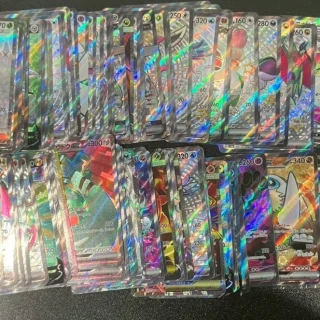
Als aktuelle Einzelhandelsbeispiele finden Sie bei SST AR Bulk – 100-Card Set, gelistet für ¥26,999 (~$175) und SR Bulk – 100-Card Set, gelistet für ¥34,999 (~$227). Nutzen Sie anschließend die Großhandelsanfrage für größere, regelmäßige oder gemischte Anforderungen. Preis und Verfügbarkeit auf den Produktseiten bleiben laufend veränderliche Werte und stellen keine Großhandelszusage dar.
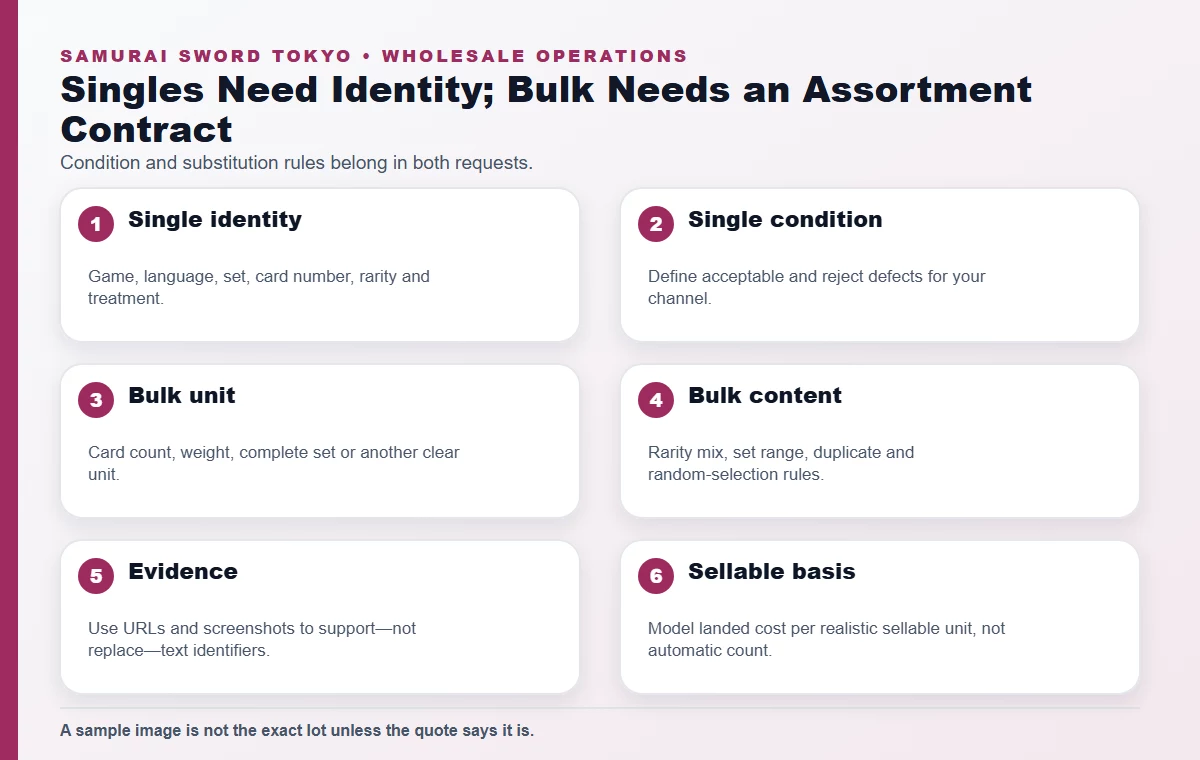
„Bulk“ kann 100 Karten der Seltenheit Art Rare, gewöhnliche und ungewöhnliche Karten niedriger Seltenheitsstufen, Holo-Lose, gemischte japanische Einzelkarten, stark duplikatlastige Bestände, nach Sets sortierte Karten oder nach Gewicht angebotene Ware bedeuten. Jede Auslegung hat andere Auswirkungen auf Arbeitsaufwand, Versand und Wiederverkauf. Definieren Sie Kartenanzahl oder Gewicht, Spiel, Sprache, Seltenheitsmix, Set-Bereich, Duplikatregeln, Regeln zur Zufallsauswahl, Zustand und ob Beispielbilder die Kategorie oder das tatsächliche Los zeigen.
Wenn der Verkäufer sich bemüht, Duplikate zu reduzieren, halten Sie dies als Bemühenszusage und nicht als Garantie für duplikatfreie Ware fest. Wenn Ihr Kundenpaket keine Duplikate verspricht, muss Ihr eigener Wareneingangs- und Verpackungsprozess dieses Versprechen sicherstellen und überprüfen. Übernehmen Sie keine weitergehenden Zusagen, als die Lieferbedingungen rechtfertigen.
Kosten pro verkäuflicher Einheit berechnen, nicht automatisch pro erhaltener Karte
Der Warenpreis geteilt durch die Anzahl der erhaltenen Karten ist nur der Ausgangspunkt. Rechnen Sie Anlieferung, Zölle oder Steuern, Zahlungskosten, Verbrauchsmaterial, Sortierung, Katalogisierung, Fotografie, Erstellung von Verkaufsangeboten, Verkaufsgebühren, Retouren und unverkaufte Bestände hinzu. Teilen Sie anschließend durch die Anzahl der Karten oder Pakete, die Ihre Vertriebskanäle realistisch verkaufen können. Beschädigte Karten, eine hohe Duplikatkonzentration und wenig gefragte Bestände können diesen effektiven Nenner verringern.
| Bulk-Spezifikation | Schriftlich festzulegende Entscheidung | Risiko bei fehlender Angabe |
|---|---|---|
| Einheit | 100 Karten, 1,000 Karten, Kilogramm, vollständiges Set oder eine andere Einheit | Die Menge lässt sich nicht genau vergleichen oder beim Wareneingang prüfen |
| Seltenheit/Inhalt | AR, Holo, gewöhnlich/ungewöhnlich, gemischt oder genaue Liste | Käufer und Verkäufer stellen sich unterschiedliche Ware vor |
| Duplikate | Erlaubt, begrenzt, nach Möglichkeit reduziert oder garantiert duplikatfrei | Eine hohe Konzentration macht die geplante Vielfalt zunichte |
| Auswahl | Zufällig, gezielt zusammengestellt, nach Sets sortiert oder die tatsächlich abgebildeten Karten | Beispielbilder werden mit dem genauen Inhalt verwechselt |
| Zustand | Standard für die gesamte Charge und ausgeschlossene Mängel | Arbeitsaufwand und verkäufliche Menge werden falsch kalkuliert |
| Ersatzprodukte | Zulässige Seltenheiten, Sets, Sprachen und Preisgrenzen | Eine unklare Anfrage wird mit abweichender Ware erfüllt |
Vor einer regelmäßigen Ausweitung ein Testlos einsetzen
Messen Sie die Anzahl unterschiedlicher Kartenidentitäten, Duplikatkonzentration, verkäufliche Menge, Sortierstunden, durchschnittliche Nettoerlöse, Abverkaufsquote nach 30/60 Tagen, Retourenquote und Lageralter. Weiten Sie den Einkauf erst aus, wenn die Charge Ihre Schwellenwerte erreicht. Ein größeres Los kann die Frachtkosten pro Karte senken und gleichzeitig Arbeitsaufwand, Kapitaleinsatz und das Risiko langsam verkäuflicher Bestände erhöhen.
6. Karten mit Bewertung PSA 10: genaue Slabs statt unspezifischer Bestände einer Bewertungsstufe
Kartenidentität und Spielraum bei Zertifikaten angeben
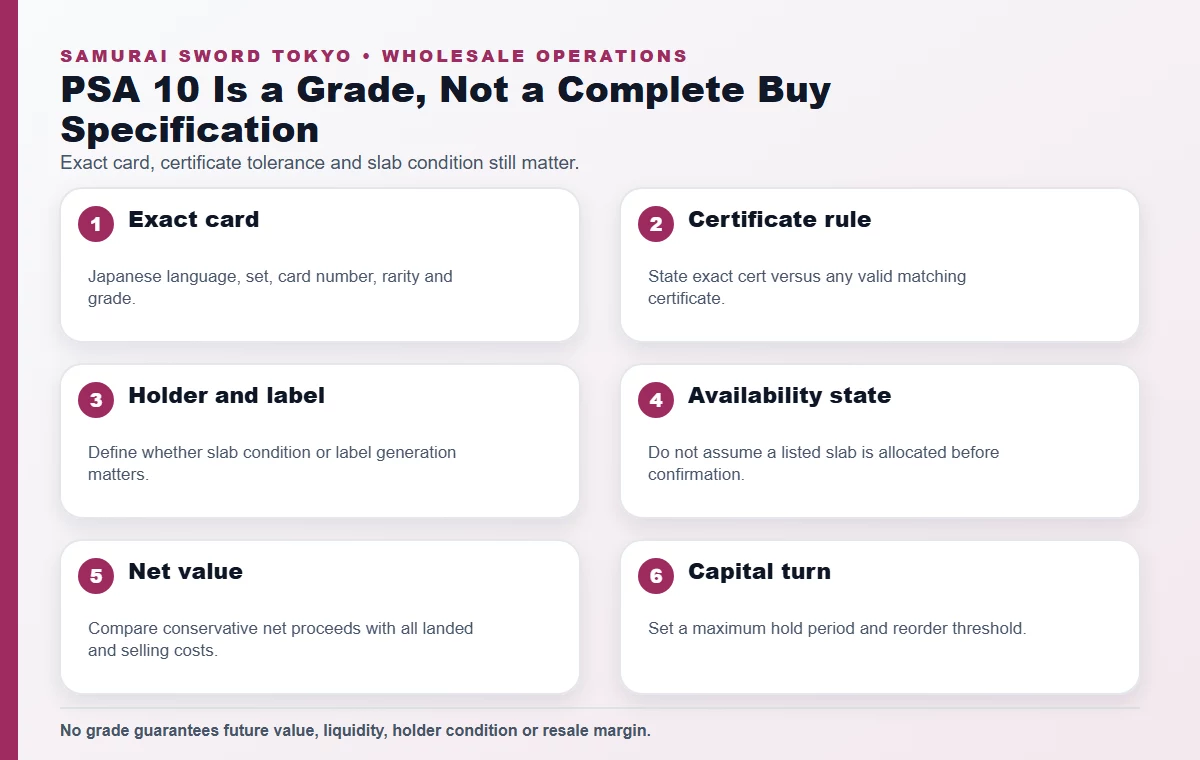
Eine Anfrage für PSA 10 sollte die genaue Kartenidentität, Japanisch als Sprache, Set, Kartennummer, Seltenheit oder Ausführung, Bewertungsnote und Menge enthalten sowie angeben, ob jedes gültige Zertifikat akzeptabel ist. Benötigt der Shop genau den abgebildeten Slab, nennen Sie die Zertifizierungsnummer. Wenn unterschiedliche Zertifikate akzeptabel sind, geben Sie an, ob es Annahmekriterien für die Etikettengeneration, den Zustand der Hülle oder den optischen Gesamteindruck gibt.
Die Bewertungsnote allein macht nicht alle Slabs wirtschaftlich gleichwertig. Nachfrage nach dem Charakter, Illustration, Anzahl bewerteter Exemplare, Set, Zertifizierung, Zentrierung, Etikett, Hüllenzustand und Ihre Kundschaft beeinflussen die Verkäuflichkeit. Keine Angebotsanfrage kann den zukünftigen Wiederverkaufswert oder die Verkaufsgeschwindigkeit garantieren.
Gleichzeitige Verfügbarkeit online und im Ladengeschäft kontrollieren
Die Versandrichtlinie von SST weist darauf hin, dass von PSA bewertete Karten auch im Ladengeschäft verkauft werden können. Ein online angezeigter Artikel kann daher dort verkauft werden, bevor die Zuteilung gesichert ist. Behandeln Sie den Slab bei Großhandelsanfragen als unbestätigt, bis die Antwort und das vereinbarte Verfahren ihn sichern. Wenn ein bestimmtes Zertifikat unerlässlich ist, benennen Sie diese Einschränkung ausdrücklich und akzeptieren Sie keinen unspezifischen Ersatz ohne Prüfung.
Ein Margenmodell für bewertete Karten mit Negativszenario erstellen
| Kontrolle | Frage | Bedeutung der fehlenden Garantie |
|---|---|---|
| Genaue Identität | Stimmen Set/Kartennummer/Seltenheit/Sprache? | Eine ähnliche Charakterkarte ist kein Ersatz |
| Zertifikat | Beliebiges oder genau bestimmtes Zertifikat? | Die Verfügbarkeit kann sich ändern, bevor die Zuteilung gesichert ist |
| Hülle/Etikett | Sind Slab-Zustand und Etikettengeneration entscheidend? | PSA 10 garantiert keine makellose Hülle |
| Nachweise zu Nettoerlösen beim Wiederverkauf | Welche Nettoerlöse sind in Ihrem Markt vorsichtig kalkuliert realistisch? | Ein Angebotspreis ist keine realisierte Marge |
| Lagerumschlag | Wie lange darf Kapital in einem einzelnen Slab gebunden bleiben? | Ein hoher Nominalwert kann dennoch einen langsamen Rückfluss in liquide Mittel bedeuten |
| Ersatzprodukte | Welche alternative Karte, welches Zertifikat und welcher Preis sind akzeptabel? | Unklarer Spielraum führt zu Verzögerungen bei der Freigabe |
7. Preis, Bestand, Zuteilung und Angebotsgültigkeit kontrollieren
Das Angebot als datiertes Angebot mit zugrunde liegenden Annahmen lesen
Die Antwort auf die Angebotsanfrage sollte nennen, welche Artikel angeboten werden können, sowie Preise, Verfügbarkeit, Gültigkeit, Zahlungsoption, Rechnungsablauf und nächste Schritte angeben. Bewahren Sie sie mit der ursprünglichen Anfrage auf. Prüfen Sie, ob Produkt, Menge, Einheit, Zielort, Frist, Ersatzregeln und Versandannahmen weiterhin übereinstimmen. Wenn sich eine Angabe geändert hat, fragen Sie, ob das Angebot noch gültig ist.
Bitten Sie um ein ausdrückliches Gültigkeitsdatum oder eine Gültigkeitsuhrzeit und um Angaben zu allen Bedingungen, die Preis oder Verfügbarkeit beeinflussen. Wenn Sie Menge, Zielort oder Produktanforderungen ändern, lassen Sie bestätigen, dass das Angebot weiterhin gilt. Lassen Sie ein abgelaufenes Angebot vor der Zahlung erneut bestätigen.
Eindeutige Beschaffungsstatus verwenden
| Status | Nachweis | Was der Shop intern als gegeben führen darf |
|---|---|---|
| Angefragt | Beschaffungsanfrage versendet | Ausdrückliche Bestätigung von Bestand und Reservierung abwarten |
| Angeboten | Aktuelle Antwort mit Gültigkeitsangabe | Angebot unter den angegebenen Annahmen verfügbar |
| Zahlung/Rechnung in Bearbeitung | Vereinbarter Weg und entsprechende Anweisungen | Bis zur Bestätigung nicht als gesichert betrachten |
| Bestätigt | SST-Bestätigung gemäß vereinbartem Verfahren | Beschaffung der eingehenden Ware bestätigt |
| Versandt | Übergabe an den Transportdienstleister und Sendungsverfolgung | Unterwegs; das Ankunftsdatum bleibt eine Schätzung |
| Erhalten/abgeglichen | Prüfung von Anzahl, Identität und Zustand | Verfügbarer Bestand nach Erfassung der Abweichungen |
Die Freigabe von Ersatzprodukten liegt beim Käufer
Wenn sich die Verfügbarkeit ändert, kann ein Ersatzprodukt die Einhaltung einer Frist oder Preisspanne ermöglichen, aber nur, wenn es zum Bedarf des Shops passt. Definieren Sie vorab genehmigte Ersatzprodukte in der Angebotsanfrage. Jede andere Änderung sollte dem Käufer mit dem geänderten Artikel, der Menge, dem Preis und den Auswirkungen auf den Versand zur Freigabe vorgelegt werden. Lassen Sie niemals zu, dass ein allgemeiner Hinweis wie „Ersatzprodukte in Ordnung“ die Anforderungen an Kartenidentität, versiegelte Konfiguration, Bewertungsnote oder Zusammenstellung außer Kraft setzt.
8. Versand, Zölle, Steuern und Einfuhrgesamtkosten
Ein Angebot entspricht nicht automatisch den Einfuhrgesamtkosten
Laut der aktuellen Zollrichtlinie von SST werden Bestellungen in die USA und US-Territorien DDP versendet: Anfallende Einfuhrabgaben werden beim Checkout erhoben; bei der Zustellung ist keine zusätzliche Zollzahlung erforderlich. Andere Zielländer werden DAP beliefert, wobei anfallende Zölle, Steuern und Gebühren des Transportdienstleisters vor oder bei der Zustellung an diesen zu zahlen sind. Bestätigen Sie bei der Berechnung der Einfuhrgesamtkosten den Zielort und die aktuelle Richtlinie.
Berechnen Sie die Einfuhrgesamtkosten aus Warenwert, internationaler Fracht, Versicherung, Zahlungs- und Währungskosten, Zoll, MwSt./GST oder anderen Steuern, Zollabfertigungs- oder Transportdienstleistergebühren, Wareneingangsabwicklung, Schadensrücklage und lokalem Transport. Fragen Sie, ob die Versandkosten endgültig feststehen oder auf einer Annahme beruhen. Wenden Sie sich hinsichtlich der zolltariflichen Einreihung und der Pflichten des Importeurs an die zuständige Behörde im Zielland oder eine qualifizierte Beratung; weder ein Blog noch ein Lieferantenangebot garantiert die zollrechtliche Behandlung.
Aus Schätzungen keine verbindlichen Liefertermine machen
Die Versandrichtlinie von SST bezeichnet Bearbeitungs- und Transportzeiten als Schätzungen und nicht als garantierte Termine. Sie nennt Bedingungen bei Zuteilung, Prüfung, Zoll, Transportdienstleister und Zielort, die Verzögerungen verursachen können. Ein Shop sollte gewünschte, geschätzte und tatsächliche Termine getrennt erfassen. Verkaufen Sie nicht im Voraus mit einem garantierten Liefertermin für Kunden, sofern Ihr Unternehmen diesen nicht unabhängig von Schwankungen bei Lieferant und Transportdienstleister einhalten kann.
| Bestandteil der Einfuhrgesamtkosten | Nachweisquelle | Kontrolle |
|---|---|---|
| Ware | Aktuelles Angebot/Rechnung | Produkt, Menge, Einheit und Währung abgleichen |
| Internationale Fracht | Angebot, Checkout oder Nachweis des Transportdienstleisters | Klären, ob geschätzt oder endgültig, und einheitlich zuordnen |
| Zahlung/Währungsumrechnung | Tatsächlicher Zahlungsweg | Gebühren und effektive Umrechnung separat erfassen |
| Zölle/Steuern | Angebot, DDP-Behandlung und Zollbehörde | DDP beim Checkout für die USA/US-Territorien und DAP-Gebühren am Zielort für andere Länder prüfen |
| Zollabfertigung/Abwicklung | Transportdienstleister oder Zollagent | Gegebenenfalls Auslage- und Abfertigungskosten einbeziehen |
| Abweichungen beim Wareneingang | Wareneingangsprüfung | Rücklage für Schäden, Fehlmengen, Zustandsabweichungen und Verzögerungen |
| Verkaufskosten | Ihr Vertriebskanal | Marktplatzkosten, Arbeitsaufwand, Verpackung, Retouren und Preisnachlässe hinzurechnen |
Kosten gemischter Sendungen einheitlich zuordnen
Boxen, Bulk-Karten und PSA-Slabs unterscheiden sich in Gewicht, Volumen und Versicherungswert. Wählen Sie eine dokumentierte Zuordnungsmethode—Gewicht, verpacktes Volumen, Wert oder eine Kombination—und wenden Sie diese auf alle Chargen an. Eine willkürliche gleichmäßige Aufteilung kann eine Kategorie profitabel erscheinen lassen, während eine andere deren Frachtkosten trägt. Gleichen Sie nach der Lieferung geschätzte und tatsächliche Kosten ab.
9. Kontrollen für Wareneingang, Marge und Nachbestellungen
Wareneingang anhand von Angebot und positionsgenauer Warenaufstellung prüfen
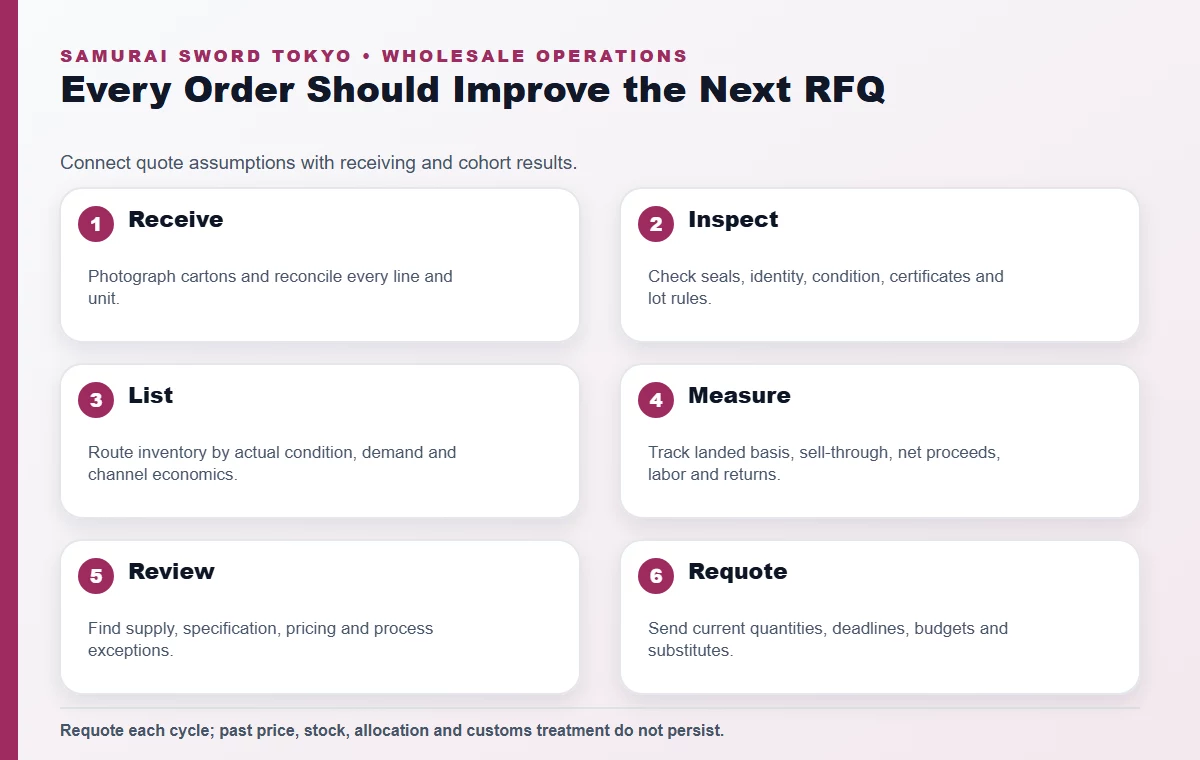
Fotografieren Sie vor dem Öffnen sichtbare Kartonschäden und bewahren Sie die Etiketten auf. Zählen Sie zunächst die Kartons, dann die Positionen und anschließend die Einheiten. Gleichen Sie Produktkennungen, versiegelte Konfiguration, Kartennummern, Zertifikate, Regeln zur Bulk-Zusammenstellung und Zustand ab. Erfassen Sie Fehlmengen, Ersatzprodukte, Schäden und Unklarheiten, bevor der Bestand verteilt wird. Ein Gesamtbestellwert reicht nicht aus; Identität und Menge jeder Position sind entscheidend.
Prüfen Sie bei versiegelten Cases den Karton und die Versiegelungsnachweise gemäß der vereinbarten Spezifikation. Dokumentieren Sie bei Boxen, ob Schrumpffolie vorhanden ist, sowie optische Abweichungen. Wenden Sie bei Einzelkarten den schriftlich festgelegten Zustandsstandard an. Zählen Sie bei Bulk die Einheit und nehmen Sie gemäß Vertrag Stichproben oder eine vollständige Prüfung vor. Gleichen Sie bei PSA 10 gegebenenfalls Zertifikat und Slab-Zustand ab.
Nettobeitrag und Rückfluss in liquide Mittel messen
Bewerten Sie eine Großhandelsbestellung nicht allein anhand des Bruttoumsatzes. Erfassen Sie Einfuhrgesamtkosten, Verkaufsgebühren, Rabatte, Arbeitsaufwand, Retouren, Schäden, Lageralter und Nettoerlöse. Trennen Sie die Einkaufschargen nach Bestelldatum und Produktlinie. Boxen können schnell verkauft werden, unterliegen aber Schwankungen zum Verkaufsstart; Einzelkarten können höhere prozentuale Bruttomargen erzielen, erfordern jedoch Arbeitsaufwand; bei Bulk können Sortierung und die Akzeptanz von Duplikaten erforderlich sein; PSA 10 kann Kapital in weniger Einheiten konzentrieren.
| Kennzahl | Warum das wichtig ist | Frage zur Nachbestellung |
|---|---|---|
| Erfüllungsquote je Position | Zeigt, was bestätigt und geliefert wurde | Passt der Beschaffungsweg zu Ihrem geplanten Sortiment? |
| Einfuhrgesamtkosten je Einheit | Verhindert, dass Fracht und Steuern unberücksichtigt bleiben | Erfüllt das neue Angebot weiterhin den Schwellenwert? |
| Abverkaufsquote nach 30/60/90 Tagen | Misst den Lagerumschlag | Schafft eine weitere Bestellung eine sinnvolle Sortimentstiefe oder Überbestand? |
| Nettoerlöse | Berücksichtigt das nach variablen Kosten verbleibende Geld | Hat die Charge nach Abzug der Verkaufskosten einen Beitrag geleistet? |
| Arbeitsstunden | Macht Kosten für Sortierung, Angebotserstellung und Kundenservice sichtbar | Lässt sich der Prozess ausweiten, ohne an Genauigkeit zu verlieren? |
| Retouren/Abweichungen | Prüft die Wirksamkeit der Spezifikations- und Zustandskontrollen | Was muss sich bei der nächsten Angebotsanfrage ändern? |
| Lageralter | Misst das gebundene Kapital | Sollte der Shop nachbestellen, Pakete bilden, Preise senken oder den Einkauf einstellen? |
Bei jedem Einkaufszyklus ein neues Angebot einholen
Eine erfolgreiche Erstbestellung begründet keinen dauerhaft geltenden Preis, Bestand, Zuteilungsanspruch, Versandtarif, keine dauerhafte Zollbehandlung und keine dauerhafte Marge. Reichen Sie die Angebotsanfrage mit aktueller Menge, Zielort, Frist und Ersatzregeln ein oder aktualisieren Sie sie entsprechend. Vergleichen Sie das neue Angebot mit der vorherigen Einkaufscharge statt mit Ihrer Erinnerung. Weiten Sie den Einkauf nur aus, wenn Lieferzuverlässigkeit, Einfuhrgesamtkosten, Genauigkeit beim Wareneingang, Abverkauf und Rückfluss in liquide Mittel dafür sprechen.
Führen Sie vor der Freigabe der nächsten Bestellung eine kurze Einkaufsprüfung durch. Der zuständige Einkäufer sollte Nachfrage und Preisgrenzen bestätigen; das operative Team sollte Lager-, Prüf- und Angebotserstellungskapazitäten bestätigen; die Finanzabteilung sollte die Annahmen zu Einfuhrgesamtkosten und Zahlungszeitpunkten bestätigen; und der zollrechtlich verantwortliche Importeur sollte die aktuellen Zollanforderungen bestätigen. Ein Produkt kann für Kunden attraktiv und dennoch ein ungeeigneter Einkauf sein, wenn das Team es nicht korrekt vereinnahmen, während der Lagerdauer finanzieren oder ohne übermäßige Preisnachlässe verkaufen kann.
Dokumentieren Sie die endgültige Entscheidung auch dann, wenn sie „nicht kaufen“ lautet. Das Festhalten des abgelehnten Angebots, des Grundes und des Prüfdatums schafft ein nützliches Marktgedächtnis, ohne alte Zahlen als aktuelle Fakten zu behandeln. Wenn sich die Verfügbarkeit ändert, kann der Shop die Position mit einer neuen Angebotsanfrage erneut prüfen und gleichartige Annahmen vergleichen, statt die Entscheidung aus verstreuten Nachrichten neu zusammenzusetzen.
10. Häufige Fragen: Großhandel mit japanischen TCG-Produkten für Kartenläden
Welche Angaben sollte ein Kartenladen in eine Großhandelsanfrage für japanische TCG-Produkte aufnehmen?
Nennen Sie den Produktnamen und eine eindeutige Kennung wie SKU, JAN, Set-Code, Produktlink, Kartennummer, Zertifizierungsnummer oder Screenshot; Menge und Einheit; Zielland; Lieferfrist; bevorzugte Zahlungsart; gegebenenfalls Budget oder maximalen Stückpreis; und ob Ersatzprodukte akzeptabel sind.
Wird durch das Einreichen einer Beschaffungsanfrage Bestand reserviert?
Fragen Sie SST, ob Bestand reserviert wird, wann die Zuteilung gesichert ist und welche Zahlungs- oder Rechnungsbedingungen gelten. Führen Sie eine Beschaffungsanfrage über Quick Order weiterhin als angefragt, bis die relevanten Kaufdetails bestätigt sind. Versprechen Sie Kunden keine eingehende Ware allein aufgrund einer Eingangsbestätigung der Anfrage.
Kann ich ausverkaufte oder nicht gelistete Produkte anfragen?
Ja, zur Prüfung der Beschaffungsmöglichkeit. Nennen Sie bei ausverkauften Artikeln den genauen Artikel und die benötigte Menge. Geben Sie bei einem nicht gelisteten Artikel Set-Codes, JANs, Kartennamen, Zertifizierungsnummern, Screenshots oder Hinweise an. Eine Anfrage garantiert weder, dass das Produkt beschafft werden kann, noch dass der Preis Ihren Zielvorstellungen entspricht.
Kann ich eine Vorbestellungszuteilung für Booster-Boxen oder Cases anfragen?
Ja. Nennen Sie das Produkt, die voraussichtliche Veröffentlichung, die angefragte Boxen- oder Case-Menge, den Zielort und die Frist. Die Anfrage garantiert keine Zuteilung; diese kann von der Verfügbarkeit beim Lieferanten, den Marktbedingungen, dem Zahlungszeitpunkt und der Bestätigung durch Mitarbeitende abhängen.
Wie lange ist ein Großhandelsangebot für japanische TCG-Produkte gültig?
Bitten Sie darum, in der Antwort das Gültigkeitsdatum oder die Gültigkeitsuhrzeit sowie etwaige Preis- oder Verfügbarkeitsbedingungen anzugeben. Lassen Sie das Angebot nach Ablauf oder nach Änderungen Ihrer Anforderungen erneut bestätigen, statt sich auf eine frühere Preis- oder Bestandsauskunft zu verlassen.
Kann eine Großhandelsbestellung Boxen, Einzelkarten, Bulk-Lose und Karten mit Bewertung PSA 10 enthalten?
Führen Sie die angefragten Produkte jeweils separat mit eigenen Mengen, Einheiten und Annahmekriterien auf. Fragen Sie, ob sie gemeinsam angeboten, gekauft und versendet werden können. Laut der Versandrichtlinie von SST werden separate Bestellungen separat versendet; klären Sie daher die Bestellabwicklung vor dem Checkout.
Sind Gewinnmargen beim Großhandel mit japanischen Karten garantiert?
Nein. Ein Angebot ist ein Beschaffungsangebot und keine Garantie für Wiederverkaufspreise oder Gewinne. Ihre Marge hängt von Einfuhrgesamtkosten, Währungs- und Zahlungskosten, Steuern, Versand, Gebühren, Arbeitsaufwand, Zustand, Zusammenstellung, Abverkauf, Retouren, Preisänderungen und Ihrem Absatzmarkt ab.
Wer zahlt Einfuhrzölle und Steuern?
Bestellungen in die USA und US-Territorien werden DDP versendet: Anfallende Einfuhrabgaben werden beim Checkout erhoben; bei der Zustellung ist keine zusätzliche Zollzahlung erforderlich. Andere Zielländer werden DAP beliefert, wobei anfallende Zölle, Steuern und Gebühren des Transportdienstleisters vor oder bei der Zustellung an diesen zu zahlen sind. Prüfen Sie vor der Zahlung die aktuelle Zollrichtlinie.
Was sollte ich bei Großhandelsanfragen für PSA 10 angeben?
Geben Sie die genaue Kartenidentität, Sprache, Set und Kartennummer, Bewertungsnote, Bewertungsgesellschaft, Menge und—wenn Sie einen bestimmten Slab benötigen—die Zertifizierungsnummer an. Geben Sie an, ob unterschiedliche Zertifikate oder Ersatzkarten akzeptabel sind. Die Bewertungsnote allein garantiert keinen gleichen Marktwert, keine gleiche Verkäuflichkeit und keinen gleichen optischen Gesamteindruck.
Wann sollte ein Kartenladen nachbestellen?
Bestellen Sie erst nach, nachdem Sie das neue Angebot mit den tatsächlichen Ergebnissen der Einkaufscharge verglichen haben: Abverkauf, Nettoerlöse, Arbeitsaufwand, Lageralter, Retouren, Duplikatkonzentration, Zustandsabweichungen und Rückfluss in liquide Mittel. Lassen Sie Preis, Verfügbarkeit, Zuteilung, Versandannahmen, Steuern und Angebotsgültigkeit bei jedem Einkaufszyklus erneut bestätigen.
Lassen Sie vor der Zahlung die genauen Produkte, Mengen, den Zustand, Preis, die Verfügbarkeit, das Gültigkeitsende des Angebots und die Zahlungsanweisungen bestätigen. Prüfen Sie die aktuellen Versand- und Zollrichtlinien für den Zielort und bewahren Sie diese Angaben mit dem angenommenen Angebot auf.
Passend zu diesem Artikel
📩 Exklusive Sale-Alerts & Coupons für Mitglieder
Sale-Alerts, Coupons und Restock-Infos per E-Mail, direkt aus Tokio.