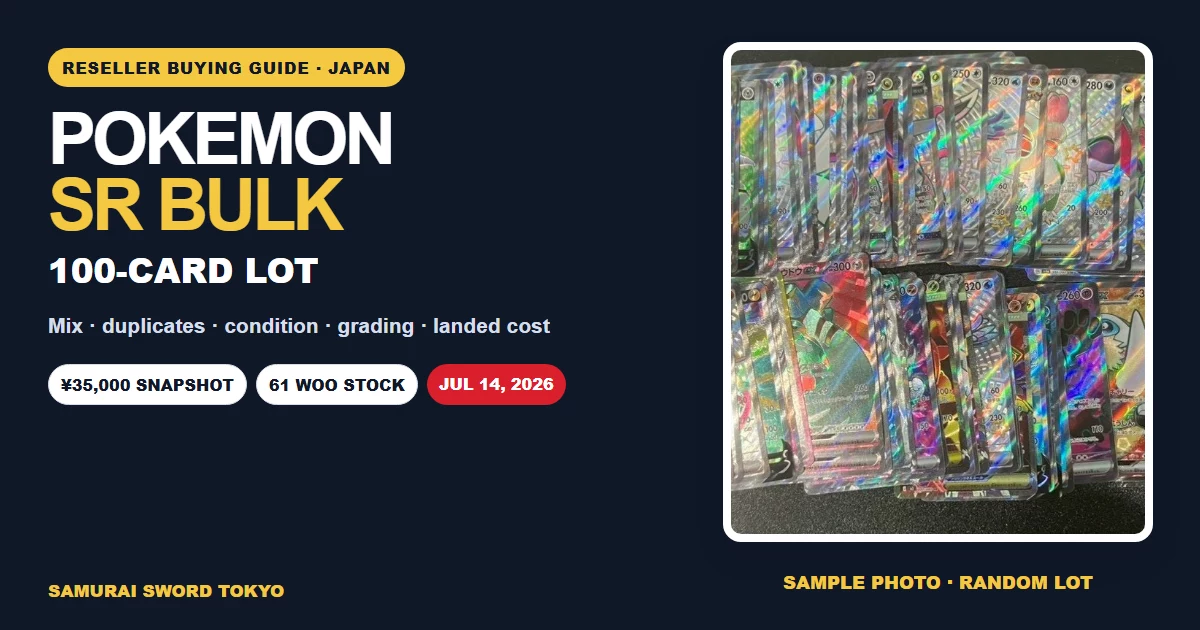
Un lote a granel de cartas SR de Pokémon japonesas puede ser un inventario útil para revendedores cuando buscas muchos anuncios de bajo precio, paquetes temáticos o variedad para ventas en directo sin abrir docenas de cajas selladas. No es un atajo hacia una carta codiciada garantizada, un grado garantizado ni una ganancia garantizada. La ventaja comercial proviene del proceso: contar con precisión, identificar cada carta, controlar los duplicados, calificar el estado de forma consistente y conocer tu costo de importación antes de publicar cualquier anuncio.
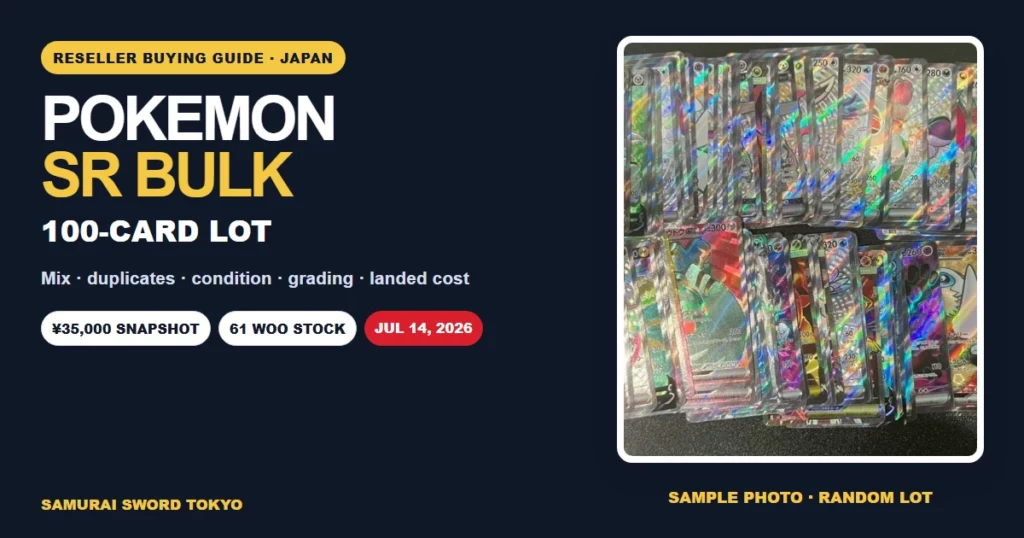
Samurai Sword Tokyo actualmente tiene listado un SR Bulk – 100-Card Set. En la captura directa de WooCommerce tomada el 14 de julio de 2026, 4:17 p. m. JST, el campo de precio del producto era ¥35,000, el campo de stock de Woo era 61 lotes, y el estado de stock era en stock. Eso equivale a una base de precio de compra simple de ¥350 por carta antes de envío, aranceles, impuestos, costo de pago, insumos, mano de obra, rechazos y comisiones de venta. El precio y el stock son volátiles; vuelve a verificar la página del producto en vivo inmediatamente antes de realizar el pedido.
Primero revisa el lote de 100 cartas en vivo
Abre la página actual del producto para confirmar el precio y la disponibilidad. Los valores del 14 de julio en esta guía son una auditoría fechada, no una cotización permanente ni una reserva de stock.
Fecha de la evidencia: 14 de julio de 2026, 4:17 p. m. JST. El precio, el stock, las condiciones de calificación, las reglas de las transportistas y los costos de importación pueden cambiar. Vuelve a verificar las fuentes primarias antes de actuar.
¿Es el lote SR de 100 cartas adecuado para tu modelo de reventa?
La primera pregunta correcta no es “¿Son valiosas las cartas SR?”. Es “¿Puede mi tienda convertir un surtido aleatorio de 100 cartas en ofertas claras y descritas con precisión a un costo operativo controlado?”. Un revendedor con catalogación rápida, tráfico existente de Pokémon y varios canales de venta puede dirigir distintas cartas a distintos compradores. Un vendedor que depende de un único golpe premium puede no tener una forma fiable de recuperar la mano de obra y los costos internacionales cuando la mezcla es ordinaria.
Captura en vivo del producto: precio, stock y condiciones del lote
| Campo | Captura del 14 de julio de 2026 | Cómo debe usarlo un revendedor |
|---|---|---|
| Producto | SR Bulk – 100-Card Set (ID 40607) | Confirma que estás evaluando el lote SR y no el lote AR de menor precio. |
| SKU | SR-BULK-100 | Conserva el SKU del proveedor en tus registros de compra y recepción. |
| Precio | ¥35,000 por lote de 100 cartas | Úsalo solo como el componente de compra; no es el costo de importación. |
| Stock de Woo | 61 lotes; estado en stock | La disponibilidad es una captura puntual, no una reserva ni una promesa futura. |
| Base unitaria simple | ¥350 por carta | Antes de flete, cargos de importación, mano de obra, insumos, rechazos y comisiones de venta. |
| Declaración de selección | Aleatoria; foto de muestra; pueden producirse duplicados | No vendas por adelantado una lista exacta ni una mezcla libre de duplicados. |
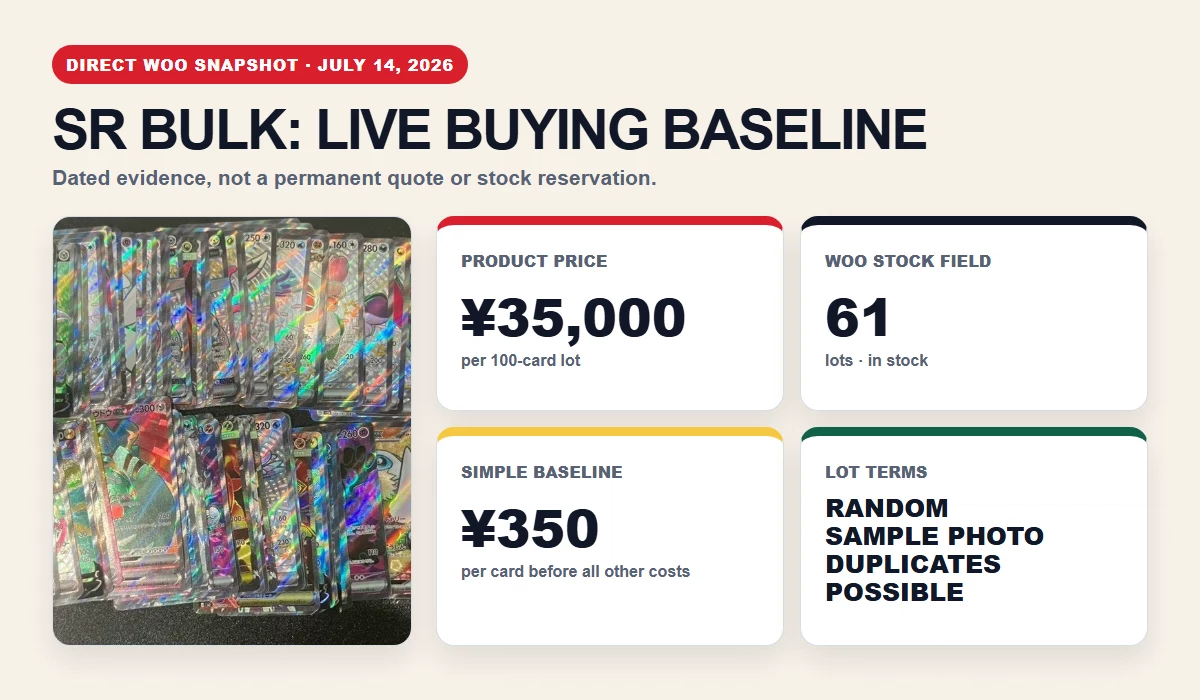
La descripción del anuncio indica que la fotografía es una muestra, que las cartas se seleccionan de forma completamente aleatoria y que el vendedor intentará evitar duplicados, aunque reconoce que aún pueden producirse. Estos tres hechos definen el riesgo comercial con más claridad que la palabra “a granel”. Significan que tu resultado esperado debe ser un rango de resultados de inventario viables, no una composición asumida única.
Perfiles de revendedor idóneos y no idóneos
| Perfil del comprador | Idoneidad | Motivo |
|---|---|---|
| Tienda de cartas con vitrina de sueltas en crudo o catálogo web con búsqueda | Idoneidad alta | Muchos SKU distintos de bajo precio pueden generar profundidad y visitas recurrentes. |
| Vendedor en directo o «breaker» que puede presentar la variedad aleatoria con honestidad | Posible idoneidad | Los duplicados pueden distribuirse entre sesiones si se controlan el estado y la identidad. |
| Vendedor de convenciones que arma carpetas asequibles de cartas japonesas | Posible idoneidad | La variedad visual puede ser útil cuando la oferta no se basa en cartas codiciadas exactas. |
| Revendedor enfocado solo en calificación | Idoneidad baja sin evidencia de inspección | Un título de lote a granel en crudo y una imagen de muestra no garantizan cartas listas para calificar. |
| Vendedor de preventa que promete una lista fija | Idoneidad baja | El producto es aleatorio y pueden producirse duplicados. |
| Comprador que necesita un entrenador, Pokémon o set específico | Idoneidad baja | Las cartas sueltas exactas reducen el riesgo de surtido y el trabajo de catalogación. |
Una prueba de tres preguntas para decidir sí o no
- ¿Puedes vender al menos tres rutas de inventario, por ejemplo cartas sueltas individuales en crudo, paquetes temáticos y lotes de tienda o exhibición, sin alterar la verdad del producto?
- ¿Puedes contar, identificar, fotografiar y calificar el estado de 100 cartas con la rapidez suficiente para que la mano de obra no elimine la ventaja de precio?
- ¿Puedes absorber un resultado conservador que incluya personajes repetidos, números de carta repetidos o cartas que no deberían calificarse?
Si alguna respuesta es no, reduce la cantidad, mejora primero el flujo de trabajo o compra inventario exacto. Un lote puede tener un precio justo y aun así ser el insumo equivocado para un modelo de negocio en particular.
Qué significa “SR a granel” y qué no garantiza
SR es un filtro de rareza real en la base de datos oficial del Pokémon Card Game japonés, pero “SR a granel” en un producto de reventa es también una etiqueta de lote orientada al proveedor. Son conceptos relacionados, no un permiso para asumir que está representada toda rareza premium posible, toda proporción de personajes o toda época. La búsqueda oficial de cartas separa actualmente SR de categorías como AR, SAR, UR, SSR, HR, CHR y CSR. Por lo tanto, un comprador debe verificar el número impreso de cada carta y su entrada en la base de datos oficial en lugar de tratar toda carta con textura o arte completo como intercambiable.
SR en comparación con etiquetas de rareza japonesas cercanas
| Etiqueta | Significado operativo para la recepción | No asumas |
|---|---|---|
| SR | Registra el número de carta impreso y confirma la entrada oficial de rareza. | Que toda carta SR tiene la misma demanda, precio, tratamiento artístico o potencial de calificación. |
| AR | Mantenla separada de SR si el proveedor o tu cliente usa filtros de rareza estrictos. | Que los lotes AR y SR son intercambiables porque ambos pueden centrarse en la ilustración. |
| SAR | Catalógala solo cuando la carta exacta esté confirmada como SAR. | Que una carta visualmente elaborada en un lote etiquetado como SR sea necesariamente SAR. |
| UR / HR / SSR | Usa la entrada oficial de la carta y el contexto de la época. | Que etiquetas premium adyacentes estén incluidas en un lote SR aleatorio. |
| Promo o tratamiento especial | Registra el número de promo, el sello y el contexto de distribución. | Que la rareza pueda inferirse solo por el patrón del foil. |
La regla de la foto de muestra
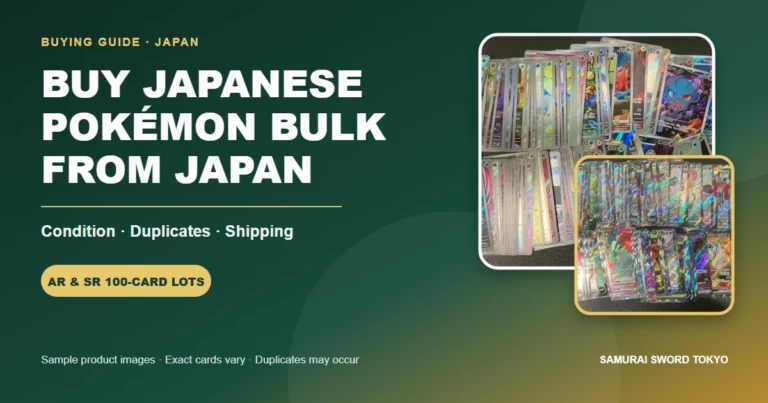
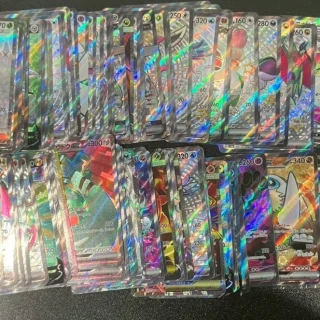
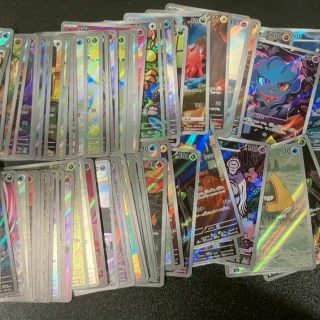
La fotografía de origen muestra un amplio grupo de cartas Pokémon japonesas brillantes dispuestas juntas. Es útil para reconocer el producto en general y para diseñar esta guía. No demuestra los personajes exactos, los sets, los números de carta, la cantidad de duplicados, la calidad de la superficie ni el valor de reventa del próximo lote. No recortes una carta atractiva de la muestra e insinúes que se incluirá. No anuncies “cartas mostradas” a menos que el proveedor cambie explícitamente las condiciones a un lote exacto fotografiado.
La regla de la mezcla aleatoria
Una selección aleatoria significa que la mezcla puede variar entre Pokémon, Entrenadores, épocas de sets, popularidad del arte y liquidez de mercado. También puede variar entre dos lotes comprados al mismo tiempo. Aleatorio no significa necesariamente estadísticamente uniforme, y no existe un modelo de probabilidad publicado para números de carta individuales en este producto. Construye tus previsiones en torno a categorías (cartas únicas, bandas de duplicados, carriles de estado y rutas de venta) en lugar de cartas específicas destacadas.
La regla de los duplicados
El esfuerzo del vendedor por reducir los duplicados es útil, pero el anuncio permite explícitamente que existan. Planifica para ellos. “Duplicado” normalmente debería significar el mismo número de carta y el mismo tratamiento, no simplemente el mismo nombre de Pokémon. Dos cartas de Charizard de sets distintos o con números de carta distintos son artículos de catálogo diferentes. Por el contrario, la misma ilustración y el mismo número repetidos cinco veces son un solo SKU con cantidad cinco, incluso si pequeñas variaciones de impresión hacen que las copias se vean ligeramente distintas.
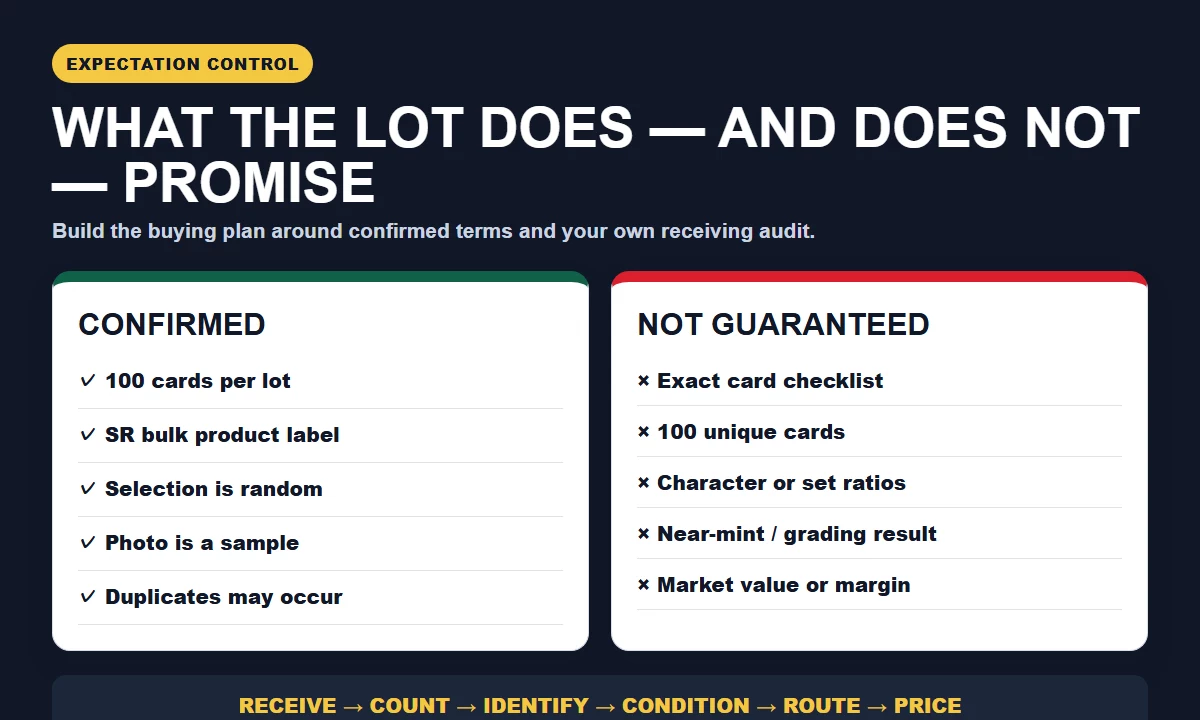
Cómo auditar la mezcla, los duplicados y el conteo a la llegada
El área de recepción es donde una compra a granel se convierte en inventario confiable. Filma o fotografía el paquete sellado antes de abrirlo, conserva la etiqueta del proveedor y cuenta antes de clasificar. Esto protege a ambas partes si el conteo físico difiere del pedido y le da a tu equipo una cadena de custodia con marca de tiempo. No empieces a publicar cartas atractivas mientras el resto siga sin contar.
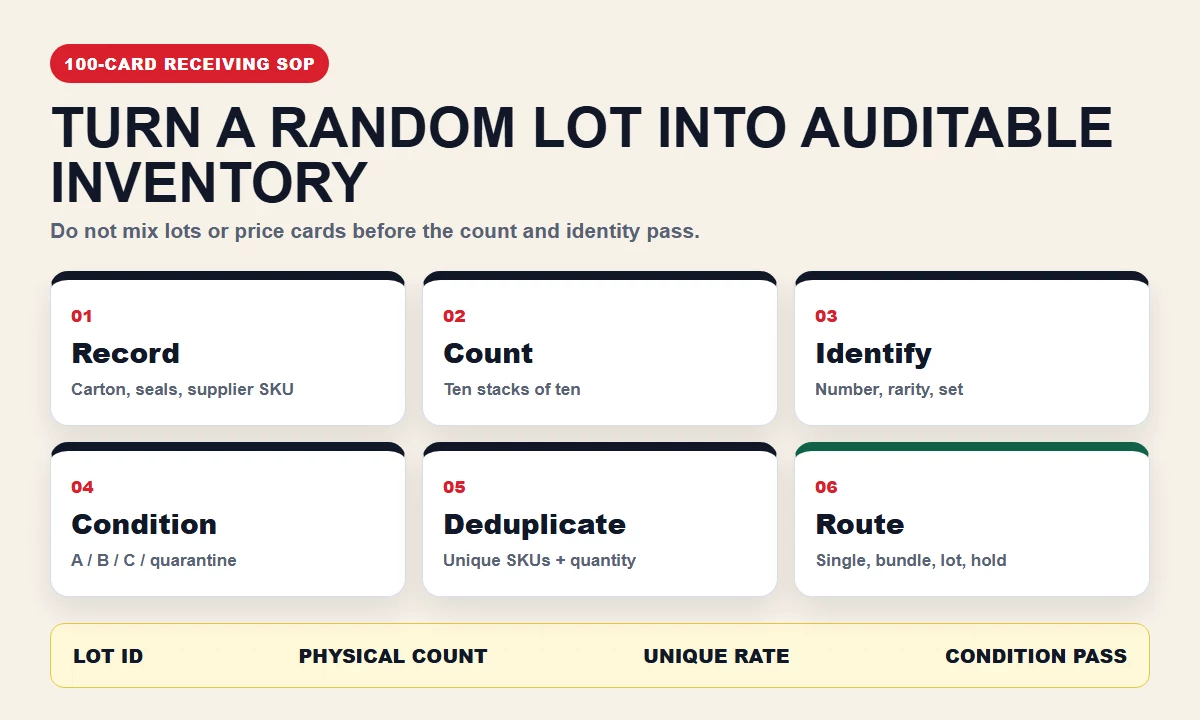
Paso 1: concilia el conteo físico
Usa un tapete limpio o una bandeja de clasificación y cuenta en grupos de diez. Una unidad de 100 cartas debe resolverse en diez pilas de diez antes de tomar decisiones de fundas, catalogación o calificación. Registra por separado los faltantes, los excedentes y los daños de transporte evidentes. Si llegan varios lotes juntos, mantén cada unidad del proveedor aislada hasta que su conteo y su ID de ingreso estén completos; de lo contrario, el reporte de duplicados y estado se vuelve imposible a nivel de lote.
Paso 2: crea una hoja de auditoría a nivel de lote
| Campo | Formato de ejemplo | Por qué importa |
|---|---|---|
| ID de lote interno | SR-20260714-A | Vincula cada carta a una compra y un envío concretos. |
| Producto / SKU del proveedor | 40607 / SR-BULK-100 | Evita confusiones con el lote AR a granel o con compras de cartas exactas. |
| Conteo físico | 100 recibidas | Establece el denominador de todas las tasas posteriores. |
| Números de carta únicos | Medido después de la catalogación | Muestra la profundidad del surtido sin implicar valor. |
| Unidades duplicadas | Conteo total menos conteo único | Cuantifica el trabajo de enrutamiento. |
| Conteos por carril de estado | A / B / C / cuarentena | Evita que cartas dañadas entren en anuncios de cartas en buen estado. |
| Excepciones | Discrepancia, sospecha de alteración, humedad, olor | Crea una cola de revisión y un registro de evidencia. |
Paso 3: identifica la mezcla antes de fijar precios
Clasifica primero por número de carta impreso y rareza, luego por personaje o tema. Fijar precios demasiado pronto crea un anclaje: el equipo dedica tiempo a las cartas más reconocibles y descuida el inventario repetido o de baja liquidez. Una pasada completa de identidad también expone cartas que se parecen entre sí pero pertenecen a sets distintos, y hace medible la tasa de duplicados.
| Métrica | Cálculo | Decisión que respalda |
|---|---|---|
| Tasa de cartas únicas | Números de carta únicos / 100 | Cuánta amplitud de catálogo genera el lote. |
| Tasa de duplicados | (100 – números de carta únicos) / 100 | Cuánto inventario necesita enrutarse por cantidad o en paquetes. |
| Concentración del SKU principal | Mayor cantidad de cartas idénticas / 100 | Si un artículo repetido domina el lote. |
| División Pokémon / Entrenador | Conteo por tipo de carta después de la verificación | Merchandising y orientación de audiencia. |
| Distribución por época / set | Conteo por código de set o familia de lanzamiento | Etiquetas de búsqueda, secciones de carpeta e idoneidad para el cliente. |
| Tasa de aprobación de estado | Cartas en crudo vendibles / 100 | El denominador de cartas aceptadas para el costo de importación. |
Paso 4: agrupa los duplicados por acción
| Copias idénticas | Acción predeterminada | Control |
|---|---|---|
| 1 | Publícala como un solo SKU | Fotografía el carril de estado real o usa una redacción precisa de «foto representativa». |
| 2-3 | Un solo SKU con cantidad, o repártelo entre canales | Mantén la copia de peor estado fuera del anuncio de mejor estado. |
| 4-9 | Prueba paquetes temáticos, sets de juego solo cuando sea apropiado, o rotación en ventas en directo | Nunca llames «set completo» a un grupo aleatorio. |
| 10+ | Lote de mayoreo/tienda o stock de reposición programada | Monitorea las ventas efectivas antes de comprar más del mismo perfil. |
Un duplicado puede ser comercialmente útil si se cuenta y se enruta con precisión. El riesgo aparece cuando el plan de compra asumió 100 anuncios únicos. Modela al menos un caso conservador de duplicados antes de comprar; por ejemplo, pregúntate si tu operación sigue funcionando si solo entre 70 y 80 números de carta son únicos. Ese rango es una prueba de estrés, no un pronóstico para este producto.
Control de estado sin prometer de más
Las cartas modernas en crudo pueden verse limpias en una foto de grupo mientras muestran desgaste blanco, rayones, abolladuras, líneas de impresión o marcas de presión bajo luz directa. «Recién salida del sobre» no es un grado de estado medible, y la foto de un proveedor a granel no puede establecer el estado de las cartas que recibes. El revendedor debe crear un estándar interno repetible, divulgarlo y fotografiar las excepciones.
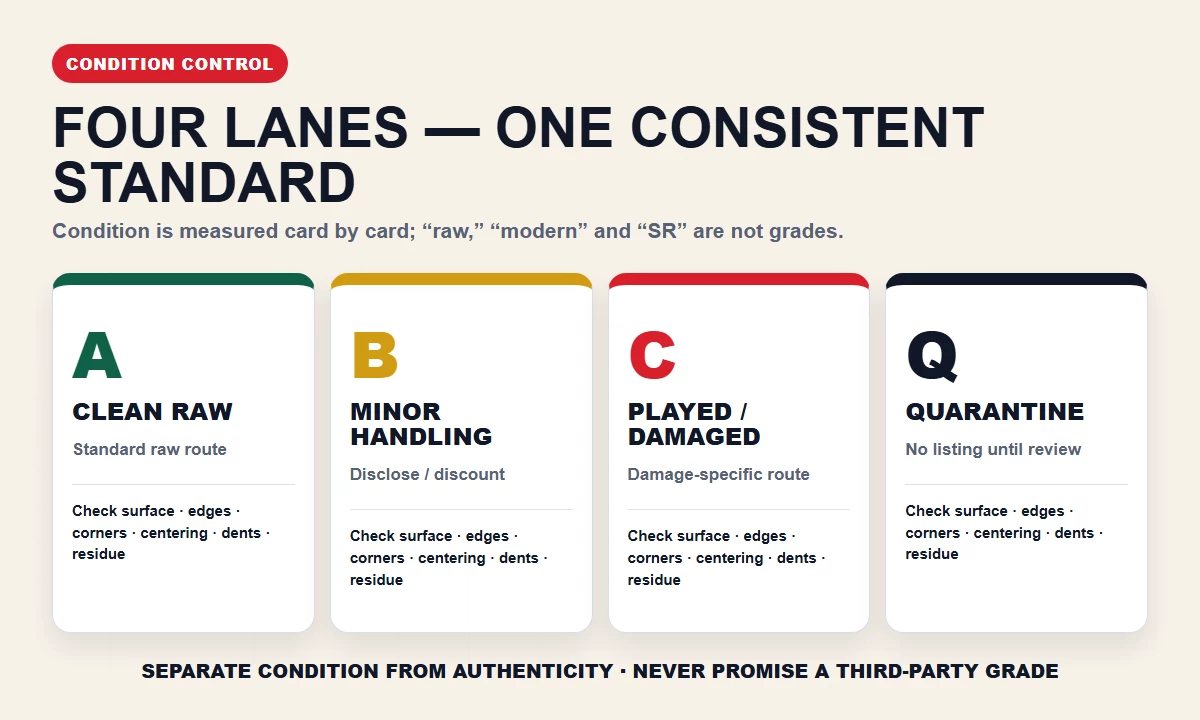
Usa cuatro carriles de estado
| Carril | Definición interna | Ruta típica |
|---|---|---|
| A — en crudo limpia | Sin pliegue, abolladura ni desgaste blanco importante visible de inmediato; la superficie pasa la verificación con luz en ángulo. | Anuncio estándar en crudo con imágenes reales o representativas, según se indique. |
| B — manipulación menor | Pequeño problema de borde o superficie que debe divulgarse pero que sigue siendo presentable. | Carta suelta con descuento o paquete claramente etiquetado. |
| C — jugada / dañada | Pliegue, abolladura, rayones intensos, desprendimiento, humedad o desgaste importante de borde. | Anuncio con daño divulgado, paquete no premium o decisión de no vender. |
| Q — cuarentena | Preocupación de identidad, autenticidad, alteración, olor o contaminación. | Sin publicar hasta que se revise y documente. |
Inspecciona las superficies con foil bajo luz controlada
Usa una luz difusa cenital más una luz lateral móvil. Gira la carta en lugar de frotar su superficie. Revisa el frente y el reverso en busca de líneas de impresión, marcas de rodillo, rayones, abolladuras, astillado de bordes, compresión de esquinas, manchas, residuos y curvatura. Las fundas pueden ocultar el desgaste blanco de los bordes y generar reflejos, así que inspecciona fuera de la funda con manos limpias y secas o herramientas de manipulación adecuadas. Nunca limpies, prenses ni recolorees una carta para mejorar su apariencia; la alteración puede destruir la confianza y puede hacer que una carta no sea elegible para un grado numérico.
Separa el estado de la autenticidad
Una carta genuina puede estar dañada, y una carta visualmente limpia puede seguir necesitando una revisión de identidad o autenticidad. No uses «auténtica» como sinónimo de «casi perfecta». De igual manera, no describas una carta en crudo como «calidad PSA 10». Los estándares publicados de PSA describen un 10 como prácticamente perfecto e incluyen consideraciones de centrado, esquinas, enfoque, brillo y manchas, además de reconocer el criterio y el atractivo visual. Tu filtro de recepción no es el resultado final de la empresa calificadora.
Redacta anuncios que resistan devoluciones
- Indica si la imagen muestra la carta exacta o es representativa.
- Usa el número de carta impreso, el set o la marca de regulación, la rareza y el idioma en el título o en las especificaciones del artículo.
- Divulga los defectos materiales con una fotografía de cerca en lugar de depender de una palabra de estado genérica.
- Mantén las notas del carril de estado vinculadas al ID de inventario después de que una carta se mueva entre canales.
- No combines copias de los carriles A y B bajo un solo estado sin explicar el rango.
Las descripciones conservadoras y consistentes suelen importar más que asignar el estado más optimista. Las devoluciones, los reembolsos parciales y el tiempo de atención al cliente forman parte de la economía incluso cuando la carta en sí era económica.
Autenticidad y precisión del catálogo a gran escala
Un revendedor necesita dos controles: verificar que la identidad de la carta se registre correctamente y escalar cualquier cosa que parezca inconsistente con una carta genuina emitida de fábrica. El primer control es trabajo de catálogo rutinario. El segundo es un filtro de riesgo, no una garantía. Una imagen, un número de carta coincidente o un resultado de base de datos por sí solos no pueden demostrar autenticidad.
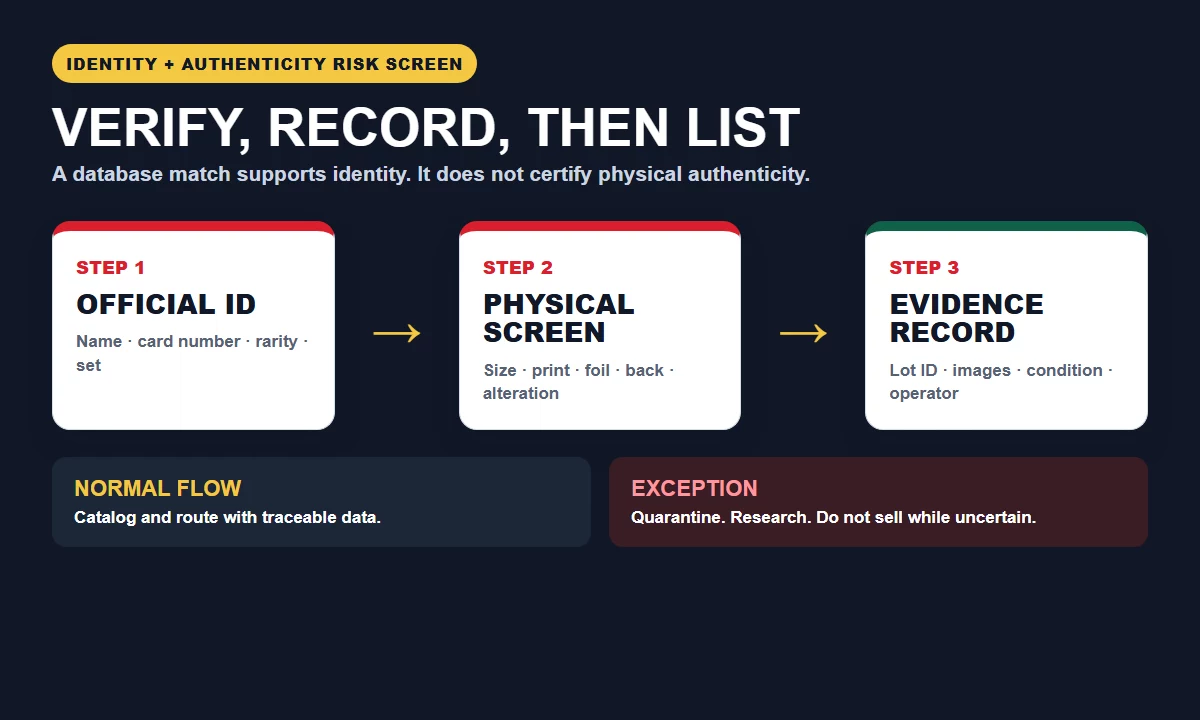
Comienza con la base de datos oficial de cartas japonesas
Usa la búsqueda oficial de cartas del Pokémon Card Game para verificar cruzadamente el nombre, el número impreso, la rareza y el contexto del set. La búsqueda oficial expone filtros de rareza que incluyen SR y categorías adyacentes, lo que la convierte en una autoridad más fiable para la clasificación que el título de una plataforma de venta. SST también mantiene un centro de listas de cartas Pokémon japonesas como ayuda de navegación, pero los datos oficiales de las cartas deben resolver los conflictos de identidad.
Ejecuta un control de consistencia física
| Verificación | Control normal | Escala cuando |
|---|---|---|
| Identidad impresa | El nombre, el número, la rareza y el contexto del set coinciden con la referencia oficial. | Un número, rareza o arte no coincide con la referencia. |
| Dimensiones y corte | La carta coincide con una carta genuina de comparación conocida. | El tamaño, el radio de las esquinas o el corte son visiblemente inconsistentes. |
| Tipografía y símbolos | El grosor del texto, los símbolos de energía y el texto de reglas se ven consistentes. | Las fuentes, el espaciado o los símbolos están distorsionados o mal escritos. |
| Superficie y foil | El patrón y el acabado se comportan de forma consistente bajo luz cambiante. | Aparece una impresión arcoíris estática, una textura inusual o separación de capas. |
| Reverso y color | El diseño del reverso y el balance de color son consistentes con la época. | El registro, el color o la geometría del borde son notablemente anormales. |
| Evidencia de alteración | Sin recoloreado, recorte, residuo de prensado ni recubrimiento extraño. | Los bordes, el brillo o la superficie muestran posible intervención. |
Cuarentena primero, investigación después
No coloques una carta cuestionable en un anuncio activo mientras la investigas. Asigna un ID de cuarentena, fotografía ambos lados y la preocupación específica, registra la fuente de comparación y obtén una revisión experta. Si la evidencia sigue siendo insuficiente, no la vendas como auténtica. La misma regla se aplica a las cartas con posible limpieza o alteración: la incertidumbre no debe trasladarse al cliente mediante un lenguaje seguro.
Mantén un registro de catálogo rastreable
Como mínimo, conserva el ID de lote interno, el SKU del proveedor, el número de carta, la rareza, el set, el nombre del personaje o Entrenador, el idioma, el carril de estado, la cantidad y la ruta de la imagen. Añade la fecha y el operador de cualquier corrección. Este registro permite responder a la pregunta de un cliente, rastrear un error recurrente y calcular las ventas efectivas reales por lote en lugar de por un conjunto de inventario mezclado.
Enrutamiento para revendedores: sueltas, paquetes, ventas en directo y lotes de tienda
Un lote aleatorio se vuelve más fácil de rentabilizar cuando cada carta tiene más de un destino honesto. El objetivo no es forzar cada carta al precio anunciado más alto. Es hacer coincidir la profundidad del inventario, el estado, la demanda y la mano de obra con el canal que tiene más probabilidades de venderla con precisión.
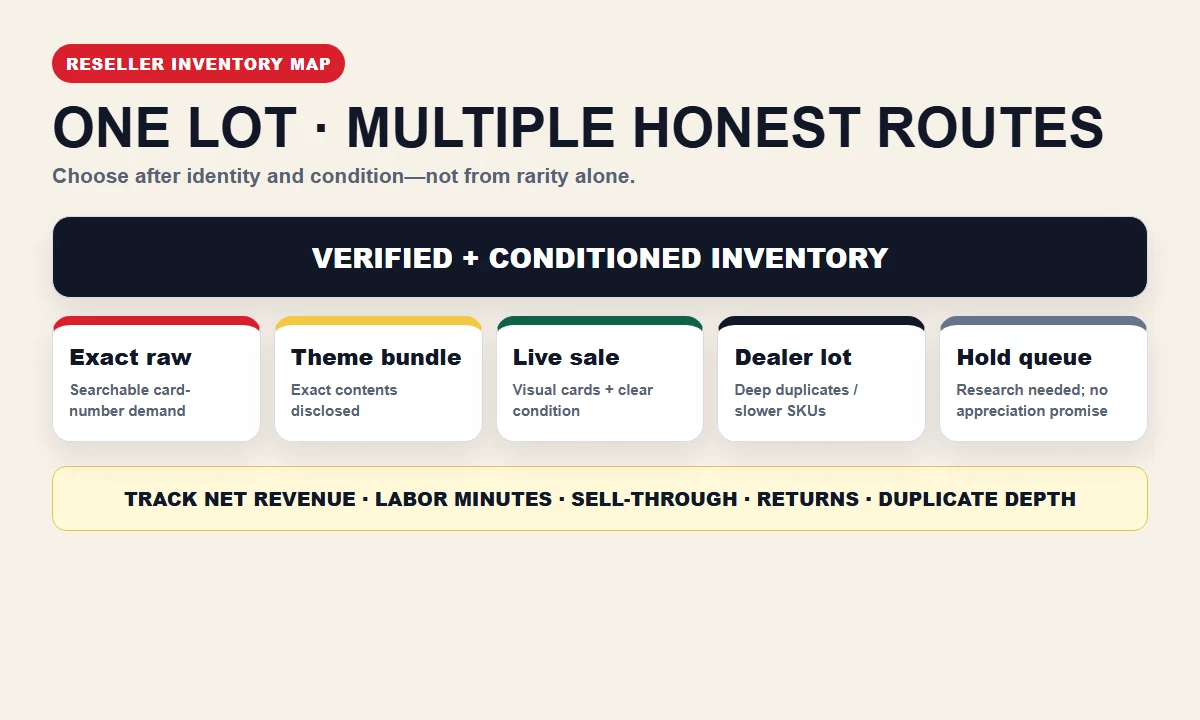
Elige una ruta después de catalogar
| Ruta | Mejores candidatas | Costo o riesgo principal |
|---|---|---|
| Suelta exacta en crudo | Número de carta verificado, fotos limpias, demanda con capacidad de búsqueda. | Fotografía, especificaciones del artículo, mano de obra de selección y empaque. |
| Paquete de personaje o Entrenador | Varias cartas distintas que comparten un tema claro. | El paquete debe divulgar el contenido exacto; el tema no justifica ocultar daños. |
| Mini lote de set o época | Cartas verificadas de la misma familia de producto. | No lo llames completo a menos que se incluyan todas las cartas requeridas. |
| Rotación en ventas en directo | Cartas visualmente atractivas con divulgación clara del estado. | El tiempo de presentación y las comisiones de la plataforma pueden superar el costo de la carta. |
| Lote de distribuidor / tienda | Duplicados abundantes o inventario de movimiento lento. | Una realización unitaria menor puede intercambiarse por una rotación más rápida. |
| Cola de espera / investigación | Cartas recién lanzadas, difíciles de identificar o inciertas. | El capital permanece inmovilizado; conservar la carta no es una estrategia de apreciación garantizada. |
Crea un solo SKU y después gestiona la cantidad
Los números de carta idénticos en el mismo carril de estado normalmente deberían compartir un solo SKU de catálogo con cantidad. Esto evita que los anuncios duplicados compitan entre sí y hace visible la reposición. Si las copias difieren materialmente en estado, sepáralas. Una copia limpia y una copia abollada son ofertas diferentes incluso cuando el número de carta impreso coincide.
Usa los paquetes temáticos con cuidado
Los paquetes pueden reducir el trabajo de publicación y darles un destino útil a los personajes repetidos. Deben mostrar o enumerar cada carta incluida, indicar si hay duplicados presentes y evitar términos como «valor misterioso» que sugieran un piso financiero no divulgado. Un paquete temático es más sólido cuando el comprador entiende el tema, la cantidad exacta, el idioma, el rango de estado y si la fotografía es exacta.
Deja que las ventas efectivas decidan el tamaño del reabastecimiento
Rastrea las unidades vendidas en treinta días, los días hasta la primera venta, el ingreso neto promedio después de las comisiones de la plataforma, la tasa de devolución y la profundidad de duplicados restante por lote de ingreso. Vuelve a pedir porque una ruta repetible se vendió, no porque algunas cartas atractivas hicieron que la primera foto se viera fuerte. El stock actual de SST puede sostener la reposición hoy, pero el precio y la disponibilidad futuros no están garantizados.
| Métrica | Qué revela | Señal de alerta |
|---|---|---|
| Ingreso neto por carta aceptada | Ingreso después de comisiones de venta y reembolsos. | Usar el precio bruto del anuncio como ganancia. |
| Minutos de mano de obra por carta vendida | Costo operativo de catalogación y cumplimiento. | Anuncios de bajo precio que consumen el tiempo destinado a cartas premium. |
| Ventas efectivas a 30 días | Con qué rapidez la ruta elegida agota el stock. | Volver a pedir mientras la profundidad de duplicados sigue aumentando. |
| Tasa de devoluciones / incidencias | Calidad de las descripciones de identidad y estado. | Reclamos repetidos de «no es como se describe». |
| Concentración de inventario | Exposición a un solo número de carta o personaje. | Un SKU de movimiento lento domina las unidades restantes. |
¿Necesitas un pedido más grande o recurrente?
Revisa primero el inventario actual de pedido rápido y luego usa la página de consultas de SST para una pregunta específica de tu negocio. No se promete una respuesta personalizada, y el stock en vivo sigue siendo la señal de disponibilidad determinante.
Estrategia de calificación: selecciona candidatas, no asumas resultados
La palabra SR no hace rentable la calificación, y una carta que se ve limpia en una foto de grupo no es automáticamente una candidata para calificar. La calificación añade revisión de autenticación, una opinión de estado, costo de servicio, envío, exposición a seguro y tiempo de espera. La carta en crudo primero debe pasar los filtros de identidad, demanda y estado por sus propios méritos.
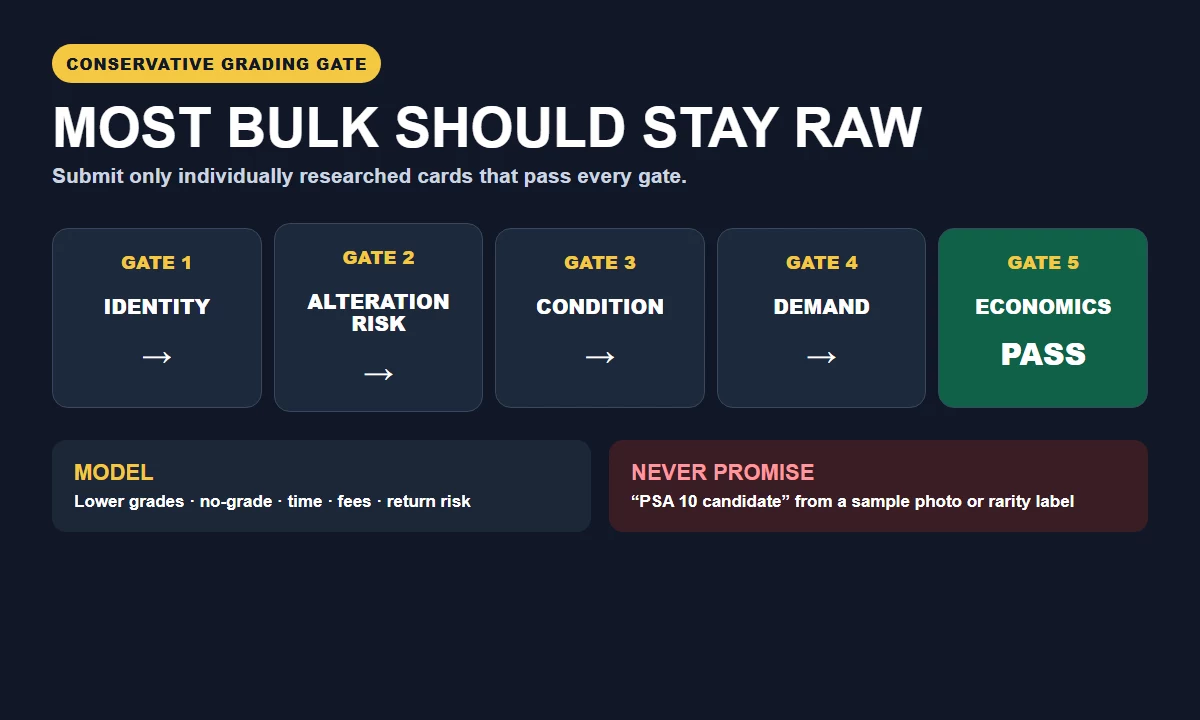
Usa un filtro de calificación de cinco puertas
| Puerta | Pregunta | Acción si falla |
|---|---|---|
| Identidad | ¿Están confirmados el número de carta exacto, la rareza y la variante? | Catalógala o ponla en cuarentena; no la envíes. |
| Autenticidad / alteración | ¿Existe alguna preocupación sobre recorte, recoloreado, limpieza o restauración? | Escala el caso; no asumas un grado numérico. |
| Estado | ¿El frente, el reverso, los bordes, las esquinas, la superficie y el centrado cumplen tu umbral? | Véndela en crudo con el estado indicado con precisión, o recházala. |
| Demanda | ¿Hay evidencia de demanda de compradores para esta carta exacta en el grado objetivo? | Prefiere el inventario en crudo; evita calificar solo por la rareza. |
| Economía | ¿Un resultado conservador cubre todos los costos de calificación y venta? | No la envíes si la decisión requiere el grado máximo para funcionar. |
Modela una distribución de grados, no un conteo de PSA 10
Los estándares publicados de PSA llaman a un PSA 10 prácticamente perfecto y describen expectativas estrictas para las esquinas, el enfoque, el brillo, las manchas y el centrado, con una tolerancia para una imperfección menor de impresión solo cuando no se afecta el atractivo visual. La misma página explica que el atractivo visual introduce criterio. Por lo tanto, un modelo de revendedor debe incluir grados numéricos más bajos, resultados sin grado y cartas devueltas como cuestionables o alteradas cuando corresponda. No promociones el inventario en crudo como «candidatas a 10» simplemente porque sea moderno y brillante.
Suma todos los costos de calificación
- Nivel de servicio y costo de membresía al momento del envío.
- Envío de ida y vuelta, seguro y exposición aduanera cuando corresponda.
- Card saver, funda, etiqueta y mano de obra de preparación.
- Capital inmovilizado durante el tiempo de entrega estimado, que puede cambiar.
- Posibles recargos, resultados sin grado y grados menores a los modelados.
- Comisiones de la plataforma, riesgo de devolución y cumplimiento después de que regrese la carta encapsulada.
PSA indica que las estimaciones de tiempo de entrega y las condiciones de servicio pueden cambiar. Consulta la página oficial de servicio actual en lugar de copiar una tarifa o un tiempo de un artículo antiguo. Esta guía deliberadamente no inserta una tarifa de calificación en la economía del lote porque el valor correcto depende de tu cuenta, tu nivel de servicio, el destino y la fecha de envío.
Mantén las cartas enviadas vinculadas al lote original
Asigna un ID de envío que conecte cada carta con el ID de ingreso del lote SR a granel. Registra las imágenes en crudo, la lógica del valor declarado, el nivel de servicio, la fecha de salida, el grado recibido y todos los costos. Sin trazabilidad del lote, una carta exitosa puede hacer que toda la compra parezca más rentable de lo que fue, mientras que los envíos sin éxito desaparecen entre los gastos generales.
Costo de importación, punto de equilibrio y sensibilidad de margen
La base de compra del 14 de julio es simple: ¥35,000 dividido entre 100 es igual a ¥350 por carta. El cálculo del negocio no es simple porque en el denominador solo deben estar las cartas aceptadas y vendibles, mientras que en el numerador corresponde todo costo de adquisición y procesamiento. Un precio de compra bajo por carta puede convertirse en un costo de importación alto si se ignoran el envío, la mano de obra, los rechazos y las ventas lentas.
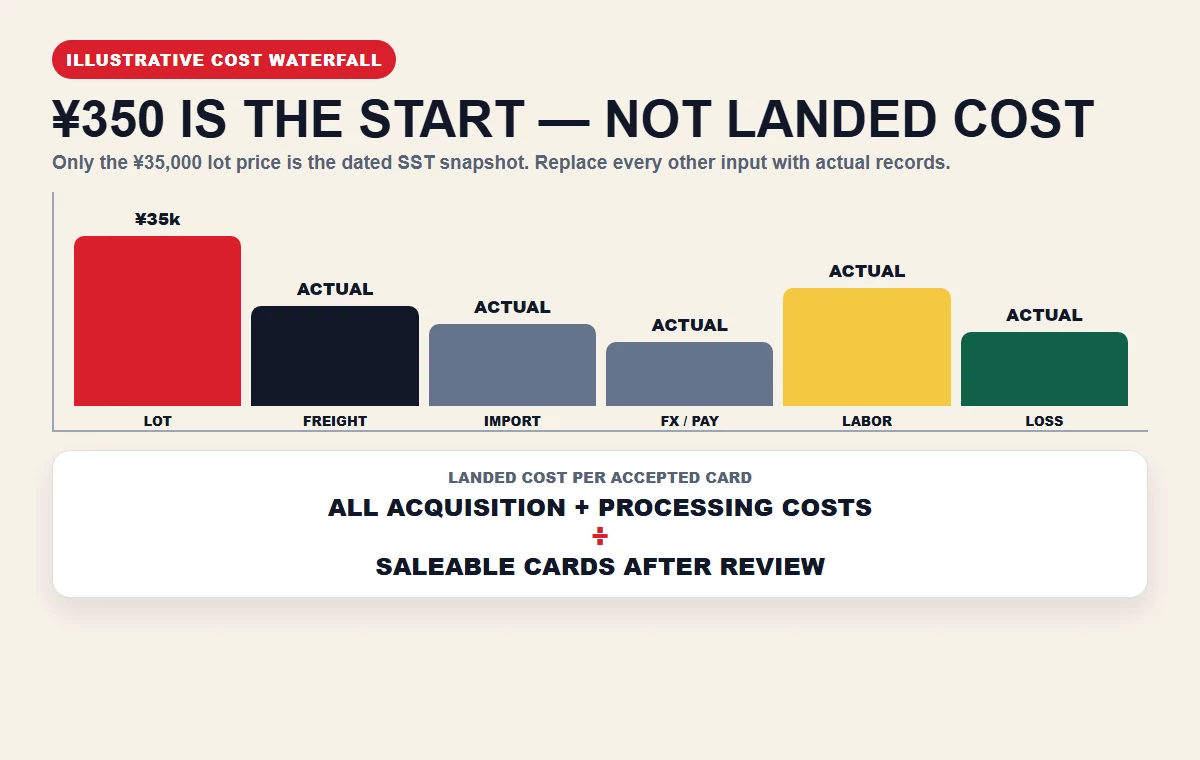
Usa una fórmula de costo de importación por carta aceptada
«Aceptada» significa una carta que tu negocio está dispuesto a vender en uno de sus carriles de estado divulgados. Las cartas en cuarentena, con daño severo y con excepciones de identidad sin resolver no deberían permanecer silenciosamente en el denominador. Sin embargo, sí permanecen en el numerador de costo porque el negocio pagó para adquirirlas y procesarlas.
| Dato de entrada | Usa evidencia real de | Error común |
|---|---|---|
| Compra del lote | Factura del proveedor / pedido de Woo | Usar el precio de un artículo antiguo después de que el precio en vivo cambió. |
| Asignación de envío | Factura de la transportista asignada entre el pedido combinado | Asignar envío cero porque otros productos compartieron la caja. |
| Aranceles, impuestos y despacho | Factura de importación y normas locales | Asumir que todo destino tiene el mismo tratamiento. |
| Pago y tipo de cambio | Estado de cuenta del procesador o del banco | Usar el tipo de cambio publicado sin el margen de conversión. |
| Insumos | Fundas, bolsas, etiquetas, almacenamiento y empaque | Tratar los consumibles como gratuitos. |
| Mano de obra | Tiempo medido de recepción, catalogación, fotografiado y cumplimiento | Valorar en cero la mano de obra del propietario. |
| Previsión de pérdida | Daño histórico, devoluciones y castigos por inventario no vendido | Modelar cada carta con el mejor estado visible. |
Escenarios ilustrativos de sensibilidad
La siguiente tabla no es un pronóstico, una cotización ni una promesa de ganancia. Mantiene la compra del lote en los ¥35,000 auditados y cambia datos de entrada operativos hipotéticos para que un comprador vea por qué importa el denominador de cartas aceptadas. Reemplaza cada suposición con tus propios registros.
| Escenario | Lote | Otros costos de importación/procesamiento | Cartas aceptadas | Costo de importación ilustrativo por carta aceptada |
|---|---|---|---|---|
| Ejemplo de operación austera | ¥35,000 | ¥10,000 | 98 | Aproximadamente ¥459 |
| Prueba de estrés base | ¥35,000 | ¥15,000 | 95 | Aproximadamente ¥526 |
| Ejemplo de alta fricción | ¥35,000 | ¥25,000 | 90 | Aproximadamente ¥667 |
Calcula el punto de equilibrio a partir del ingreso neto
El precio bruto del anuncio no es el ingreso neto. Si una plataforma cobra una comisión porcentual más costos de pago o de anuncios promocionados, el precio bruto requerido debe cubrir esas deducciones. Añade de nuevo la mano de obra de empaque y cumplimiento solo si no estaba ya incluida en el modelo de costo de importación. Para un lote mixto, usa un modelo de cartera: algunas cartas pueden venderse individualmente, otras en paquetes, y otras pueden quedar sin vender. No asignes el mismo precio de venta esperado a cada carta SR.
| Línea | Fórmula o dato de entrada | Uso |
|---|---|---|
| Costo de inventario aceptado | Cartas aceptadas × costo de importación por carta aceptada | Costo total asignado al inventario vendible. |
| Ventas netas esperadas | Bruto cobrado menos comisiones de la plataforma, reembolsos y descuentos | Comparable con el costo de inventario aceptado. |
| Reserva de no vendido | Costo del inventario que no se espera vender en la ventana de planificación | Evita un supuesto optimista de venta del 100%. |
| Contribución operativa | Ventas netas esperadas menos costo de inventario menos mano de obra de cumplimiento | Contribución del negocio antes de gastos generales e impuestos. |
| Margen de seguridad | Caso conservador a la baja frente al punto de equilibrio | Muestra si una mala mezcla anula el plan. |
Trata la moneda y el precio como variables fechadas
Los precios de SST están denominados en JPY. Tu costo por carta en USD, EUR, GBP u otra moneda depende de la tasa de liquidación real y de las comisiones en la fecha del pedido. El precio actual del lote de ¥35,000 también puede cambiar. Guarda la cotización del checkout y el registro de pago, y luego fija el lote de ingreso a los montos reales en JPY y en tu moneda local. Nunca combines cartas de compras con precios distintos bajo un costo asumido único sin un método documentado de promedio ponderado.
Envío internacional, almacenamiento y lista de verificación final de compra
Los compradores internacionales deben decidir cómo se protegerán, declararán, despacharán y recibirán las cartas antes de realizar un pedido grande. Las cartas coleccionables son compactas, pero la presión sobre la superficie, la humedad y el movimiento pueden crear problemas de estado que resultan costosos de documentar después de que varios lotes se hayan mezclado.
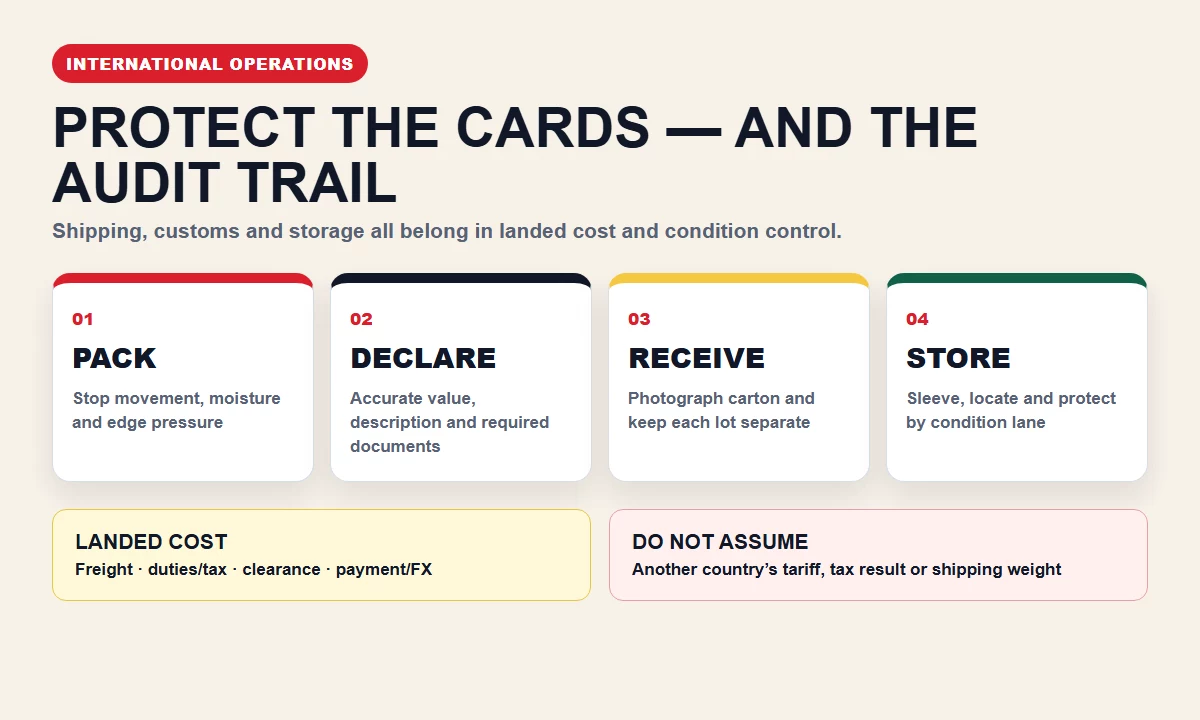
Planifica el empaque en función del estado de las cartas y la trazabilidad del lote
- Solicita que las pilas internas no puedan deslizarse libremente ni entrar en contacto con los bordes duros de la caja.
- Mantén cada unidad de 100 cartas identificable cuando pidas más de un lote.
- Usa protección interna resistente a la humedad adecuada para la ruta y el clima.
- Evita la compresión excesiva que pueda crear abolladuras o curvatura.
- Fotografía la caja exterior, los sellos, las etiquetas y el empaque interno antes de clasificar.
No infieras el peso real del paquete a partir de un campo del catálogo. Los pedidos combinados, los materiales de protección y las reglas de peso dimensional de la transportista pueden cambiar el envío facturable. Usa la cotización del checkout o del negocio para el envío real y asigna su costo entre los productos de manera consistente.
Suma los aranceles, impuestos y despacho al costo de importación
La guía internacional vigente de FedEx explica que los aranceles y los impuestos son cargos de importación impuestos por el gobierno y pueden depender del valor declarado, el origen, la clasificación arancelaria (HS), los acuerdos, la descripción y el uso del producto. La responsabilidad puede asignarse al remitente, al destinatario o a un tercero según el envío, y pueden aplicarse comisiones relacionadas con el despacho. Las reglas cambian según el destino; confirma tus propias obligaciones como importador y no copies el resultado fiscal de otro comprador.
Almacena el lote como inventario, no como una pila suelta
Después del ingreso, enfunda las cartas según tu política de manipulación y mantén los carriles de estado físicamente separados. Usa separadores por set o número de carta y un código de ubicación en el registro de inventario. Guárdalas lejos de la humedad, la luz solar directa, el polvo y la presión. Una carta que superó el ingreso puede seguir dañándose por manipulación repetida en ventas en directo o por cajas de almacenamiento sobrecargadas.
Lista de verificación final antes de la compra
| Verificación | Condición de aprobación | Si no está listo |
|---|---|---|
| Producto en vivo | Precio y stock actuales verificados de nuevo en la página del producto. | Pausa; los valores del artículo son solo una captura fechada. |
| Incertidumbre del lote | Selección aleatoria, foto de muestra y riesgo de duplicados aceptados. | Compra cartas sueltas exactas en su lugar. |
| Capacidad de ingreso | El equipo puede contar, identificar, filtrar por estado y catalogar 100 cartas con prontitud. | Reduce la cantidad o programa la mano de obra. |
| Rutas de venta | Existen al menos dos rutas honestas para las cartas ordinarias y los duplicados. | Diseña el enrutamiento antes de comprar. |
| Modelo de costos | Se incluyen envío, importación, tipo de cambio, insumos, mano de obra, comisiones y rechazos. | No uses ¥350 como costo final. |
| Política de calificación | Solo las cartas filtradas individualmente entran en la cola de calificación. | Mantén el lote en crudo. |
| Trazabilidad | El ID de lote, el SKU, la factura, las imágenes y los códigos de ubicación están listos. | Crea primero la plantilla de ingreso. |
SR frente a AR a granel: elige según la demanda del cliente, no por jerarquía
Como referencia, el producto relacionado de SST AR Bulk – 100-Card Set mostró una captura directa de Woo de ¥27,000 y 16 unidades en stock durante la misma auditoría del 14 de julio. El lote SR mostró ¥35,000 y 61. Esto no demuestra qué lote tiene mejor valor de reventa o margen. Solo establece dos opciones actuales del proveedor con etiquetas y costos de compra distintos. Compara lo que realmente buscan tus clientes, con qué precisión puede catalogar tu equipo cada rareza, y si la base de adquisición más baja o más alta se ajusta a tu canal.
| Producto | ID de producto | Precio de la captura | Stock de Woo | Base de compra simple |
|---|---|---|---|---|
| SR Bulk – 100-Card Set | 40607 | ¥35,000 | 61 | ¥350/carta antes de otros costos |
| AR Bulk – 100-Card Set | 40606 | ¥27,000 | 16 | ¥270/carta antes de otros costos |
¿Listo para evaluar el lote en vivo?
Confirma la página actual del producto y luego pide solo la cantidad que tus sistemas de ingreso y ventas puedan absorber. Para una pregunta de abastecimiento más grande, usa la vía de consultas de SST antes de finalizar la compra.
Preguntas frecuentes
¿Cuántas cartas tiene el producto SR a granel de Pokémon japonesas de SST?
El producto está listado como un set de 100 cartas. Cuenta las cartas físicas antes de clasificar y mantén cada unidad separada si llegan varios lotes juntos. La fotografía de muestra no es una lista de verificación exacta.
¿Cuál era el precio del SR Bulk de 100 cartas el 14 de julio de 2026?
Una auditoría directa de solo lectura de WooCommerce del 14 de julio de 2026, 4:17 p. m. JST mostró ¥35,000 para el ID de producto 40607. Ese es un campo de precio de producto fechado, no una cotización permanente. Vuelve a verificar la página en vivo antes de realizar el pedido.
¿Había stock del lote SR a granel?
La misma auditoría mostró una cantidad de stock de Woo de 61 lotes y un estado en stock. El inventario puede comprarse, reservarse, conciliarse o repreciarse después de la captura, por lo que la página del producto en vivo determina la disponibilidad actual.
¿Un lote SR a granel de 100 cartas contiene 100 cartas diferentes?
No está garantizado. El anuncio indica que la selección es aleatoria y que el vendedor intentará evitar duplicados, pero pueden producirse. Construye tu plan en torno a una tasa medible de cartas únicas después de la recepción.
¿Están garantizadas las cartas exactas de la foto de muestra?
No. El anuncio describe la foto como una muestra. Úsala para identificar la categoría del producto, no para anunciar personajes, números de carta, sets, estado o valor exactos en el próximo pedido.
¿Están garantizadas todas las cartas como casi perfectas o candidatas a PSA 10?
No se indica tal garantía. Inspecciona cada carta en busca de problemas de superficie, bordes, esquinas, centrado, abolladuras, rayones y alteración. Un filtro de estado en crudo no puede garantizar un grado de un tercero.
¿Puedo calificar cartas de un lote SR a granel?
Puedes investigar y filtrar cartas individualmente, pero envíalas solo cuando la identidad, el riesgo de autenticidad, el estado, la demanda y la economía conservadora aprueben todos. Incluye en el modelo los resultados de grado menor y sin grado.
¿Es ¥350 el costo real por carta?
Es solamente ¥35,000 dividido entre 100. El costo de importación real también debe incluir el envío asignado, los cargos de importación, los costos de pago y de tipo de cambio, los insumos, la mano de obra, los rechazos, las devoluciones y las comisiones de venta, dividido entre las cartas vendibles aceptadas.
¿Cómo debe manejar un revendedor los duplicados?
Cataloga las cartas idénticas bajo un solo SKU con cantidad, separa las diferencias materiales de estado y enruta las copias más abundantes hacia paquetes temáticos transparentes, rotación en ventas en directo o lotes de distribuidor. Nunca llames «set completo» a un grupo aleatorio.
¿Cómo confirmo que una carta japonesa es realmente SR?
Usa el número de carta impreso y la búsqueda oficial de cartas del Pokémon Card Game japonés para confirmar la rareza y el contexto del set. No te bases únicamente en la apariencia del foil ni en el título de una plataforma de venta.
¿Debería comprar SR a granel o AR a granel?
Elige en función de la demanda de tus clientes, la habilidad de ingreso, el costo de compra y las rutas de venta. La captura del 14 de julio mostró precios y stock distintos para los dos productos, pero no demuestra que uno tenga mejor ganancia o valor.
¿Pueden los compradores internacionales adeudar aranceles o impuestos?
Potencialmente. El tratamiento de importación depende de las normas del destino, el valor declarado, la clasificación, el origen y las condiciones del envío. Confirma los requisitos aduaneros y de la transportista vigentes para tu negocio e incluye todos los cargos en el costo de importación.
Fuentes verificadas el 14 de julio de 2026: ID de producto SST 40607 y el ID de producto AR relacionado 40606 mediante una auditoría directa de solo lectura de WooCommerce; las páginas de producto en vivo de SST; la búsqueda oficial de cartas del Pokémon Card Game; los estándares de calificación de PSA; y la guía internacional de FedEx sobre aranceles, impuestos y envíos. Los valores actuales son capturas fechadas. Los ejemplos operativos son marcos editoriales de SST, no promesas de valor o de ganancias.
Seleccionado para este artículo
📩 Ofertas y cupones solo para miembros
Avisos de rebajas, cupones y reposiciones por email, desde Tokio.