

Le carte giapponesi Pokémon Alt Art (SAR) sono le carte più ricercate del Pokémon giapponese moderno. Se negli ultimi due anni hai visto un box break su YouTube, conosci quel momento in cui il reviewer si ferma, gira la carta di lato e dice piano “oh” — è quasi sempre una SAR. Le carte Special Art Rare sono al vertice di ciò che le tirature di stampa giapponesi offrono realmente, e sono il motivo per cui i prezzi delle singole JPN sono rimasti elevati per tutta l’era Scarlet & Violet.
Questa guida indicizza le migliori carte giapponesi SAR di Pokémon per set, dalla Charizard ex di SV3 alla Zekrom ex di SV11B, con le fasce di prezzo attuali in USD per il 2026, tassi di pull realistici e i crediti degli illustratori che muovono il mercato. Se sei alle prime armi con le rarità JPN in generale, la guida alle rarità delle carte giapponesi Pokémon spiegate copre l’intero sistema di rarità — questa pagina presuppone che tu conosca già quella base e sia pronto a puntare specificamente alle SAR.
Il nostro team spedisce ogni giorno singole giapponesi Pokémon da Tokyo. I prezzi qui sotto riflettono i dati SNKRDUNK e Mercari di inizio 2026, convertiti a circa ¥141/USD.
SAR (Special Art Rare) è il livello apicale delle alt-art nel Pokemon giapponese moderno — illustrazione unica senza bordo, ~1 ogni 20-30 bustine (2-4 per box), con chase di punta che vanno da Charizard ex (SV3) a Nanjamo (SV2a) scambiati tra $50 e oltre $800 nel 2026.
Nuova sezione aggiunta qui sotto: “Nuovi set con SAR dalla primavera 2026” raccoglie ogni box di bustine dell’era Mega uscito dall’ultimo aggiornamento di questa guida, con i prezzi in vendita oggi dal nostro magazzino di Tokyo.
Cos’è la SAR (Special Art Rare)?

SAR sta per Special Art Rare. La differenza principale tra SAR e il livello SR più vecchio è che le carte SAR usano un’illustrazione alternativa unica che non compare da nessun’altra parte nel set — né come carta normale, né come RR, né come SR. L’artwork SAR è tipicamente senza bordo (l’illustrazione arriva fino ai quattro margini della carta) e abbina un timbro di rarità in foil dorato a un trattamento in foil texturizzato completo su tutta l’illustrazione.
Le carte SR, al contrario, sono versioni full-art dello stesso artwork già usato sulla controparte RR o allenatore della carta. La SR è una versione “più grande e più lucente” di un artwork già visto nel set. La SAR è artwork completamente nuovo, spesso cinematografico, che di solito mostra il Pokémon nel suo habitat o accanto a un allenatore iconico.
Dal punto di vista funzionale, una SAR si gioca esattamente come l’ex o il VSTAR normale che duplica. I collezionisti non le comprano per giocarci — il prezzo è puramente guidato dalla domanda legata all’artwork. I giocatori da torneo attenti all’estetica preferiranno una SAR alla RR equivalente per il sleeve, ma il testo di gioco è identico riga per riga.
I tassi di pull delle SAR nel contesto
Le carte SAR escono circa 1 ogni 20-30 bustine, il che equivale in media a circa 2-4 SAR per box giapponese da 30 bustine. Questi numeri sono stime tracciate dalla community a partire da dati di apertura; The Pokemon Company non pubblica tassi di pull ufficiali per i set giapponesi.
La struttura del set conta. Le bustine high-class e i formati speciali come SV2a Pokemon Card 151 hanno una densità di SAR più alta (3-5 per box è comune), mentre le bustine standard come SV11B Black Bolt si attestano più vicino a 2-3. Puoi finire un’intera box senza alcuna SAR, così come puoi trovarne 5 o 6 in una box insolitamente fortunata — la varianza è ampia. Su centinaia di box lavorate dal nostro team, la box mediana si attesta esattamente su 3 SAR.
L’implicazione pratica: aprire bustine per una SAR specifica quasi mai risulta più economico rispetto a comprare la singola. Se vuoi la Charizard ex SAR di SV3, compra la Charizard ex SAR di SV3. Aprire box serve per l’esperienza e la possibilità; non è una strada per ottenere una carta specifica.
I pull rate sono stimati dai dati di apertura della community giapponese (SNKRDUNK, Mercari, compilation YouTube). The Pokemon Company non pubblica pull rate ufficiali. I risultati effettivi variano significativamente da box a box.
Chi illustra le carte SAR?
L’artwork SAR è la parte più incentrata sull’artista della stampa Pokémon moderna. Quattro crediti compaiono più spesso, e vederne uno nell’angolo in basso a destra di una carta è un segnale di valore affidabile.
- Sowsow — l’illustratore giapponese di Pokémon più citato oggi. Il suo stile è delicato, emotivo e incentrato sull’habitat — Pokémon raggomitolati in ambienti naturali, allenatori in momenti tranquilli con i loro compagni. Le SAR di Sowsow ottengono tipicamente un premio del 20-40% rispetto alle altre SAR dello stesso set.
- 5ban Graphics — gestisce gran parte della produzione in foil dorato e delle SAR di digital art in tutta l’era Scarlet & Violet. Il loro lavoro si riconosce per composizioni pulite e forte contrasto di foil metallico, e sono responsabili di molte delle SAR incentrate solo sul Pokémon (senza personaggio).
- 2020 Artist Collective — il collettivo sotto pseudonimo apparso durante l’era di S4a Shiny Star V. Questo collettivo ha illustrato molte delle CHR originali e delle prime carte in stile alt-art del 2020-2021. Il loro lavoro precede il livello SAR formale, ma viene collezionato nella stessa categoria dai compratori di art dei personaggi.
- Mitsuhiro Arita (moderno) — l’illustratore originale del Charizard del Base Set, e il suo lavoro moderno su Pokémon — inclusi occasionali contributi SAR — porta un premio significativo per la sola nostalgia. Quando Arita firma una SAR moderna, ci si aspetta una forte domanda dei collezionisti al lancio.
Controllare il credito dell’illustratore prima di pagare è un modo rapido per verificare la coerenza del prezzo. Una SAR allenatore di Sowsow di un set attuale manterrà quasi sempre meglio il valore rispetto a una SAR dello stesso set di un illustratore meno seguito.
Le migliori carte SAR per set — Era Scarlet & Violet
L’era SV è quella in cui la SAR è diventata la chase card predefinita, e ogni set principale da SV1 in poi è uscito con 4-8 SAR. Di seguito cinque tra le carte SAR più collezionate dei set dell’era SV a inizio 2026.
Charizard ex SAR — SV3 Ruler of the Black Flame · SAR · Mercato ~$450-$700 USD (~¥63,000-¥98,000)
La SAR simbolo della prima era Scarlet & Violet. Composizione cinematografica di Charizard tra le fiamme contro un cielo scuro, senza bordo, foil intenso. Le tirature sono richieste ininterrottamente dal lancio di SV3 nel giugno 2023, e questa carta da sola guida una quota significativa del prezzo delle box di SV3. Consulta la lista carte di SV3 Ruler of the Black Flame per l’intera formazione di chase card.
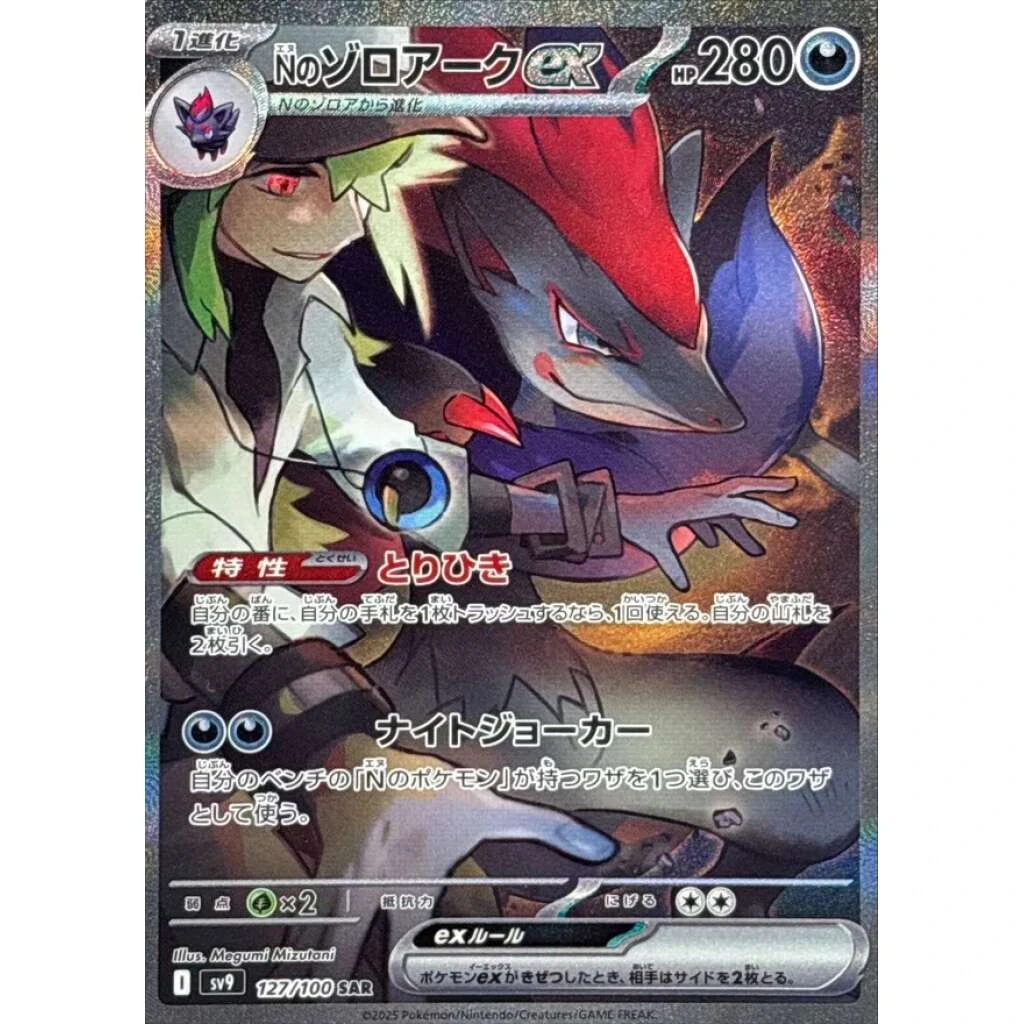
N’s Zoroark ex SAR — SV9 Battle Partners · SAR · Mercato ~$250-$450 USD (~¥35,000-¥63,000)
Battle Partners è stato costruito attorno a mazzi con allenatore iconico, e N’s Zoroark ex SAR è la chase card più richiesta del set. La composizione mette N e Zoroark insieme in una scena di foresta in ombra, un chiaro rimando all’arco narrativo originale di N in Black & White. Anche Lillie’s Clefairy ex SAR e Iono’s Bellibolt ex SAR dello stesso set raggiungono prezzi elevati. Vedi la lista completa delle carte di SV9 Battle Partners.

Team Rocket’s Mewtwo ex SAR — SV10 Glory of Team Rocket · SAR · Mercato ~$250-$450 USD (~¥35,000-¥63,000)
Il tema Team Rocket di SV10 ha dato a Mewtwo una reinterpretazione da villain — la SAR rappresenta Mewtwo con il caratteristico marchio rosso R dell’organizzazione e un’energia psichica oscura. Il prezzo appena dopo il lancio di questa carta ha superato i $500 e si è assestato nella fascia $250-$450 fino a inizio 2026. Consulta la lista carte di SV10 Glory of Team Rocket.

Reshiram ex SAR — SV11W White Flare · SAR · Mercato ~$200-$400 USD (~¥28,000-¥56,000)
Il set SV11W, incentrato sui draghi, ha abbinato i leggendari storici di Unima a un foil premium. Reshiram ex SAR presenta uno sfondo di fiamme estese con il Pokémon Bianco Immenso a metà ruggito. È disponibile la lista completa delle carte di SV11W White Flare.
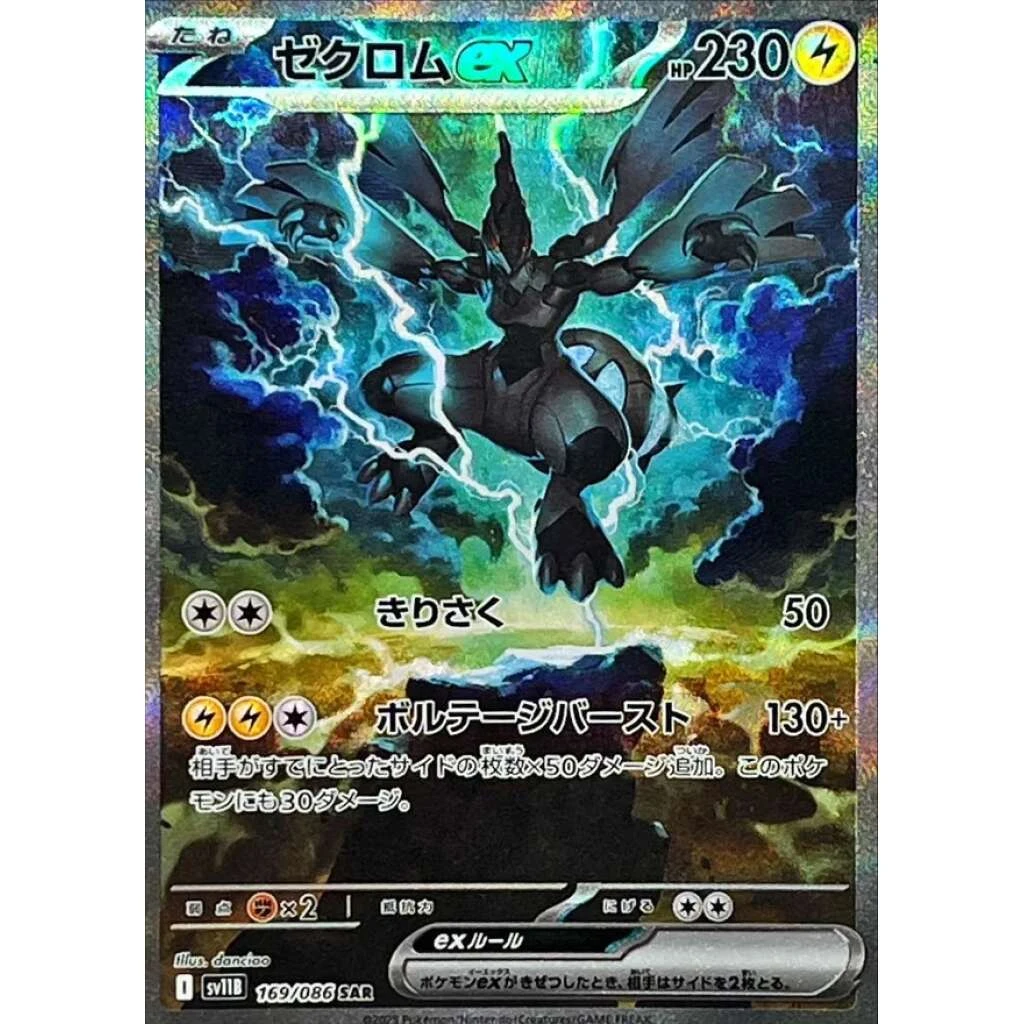
Zekrom ex SAR — SV11B Black Bolt · SAR · Mercato ~$200-$400 USD (~¥28,000-¥56,000)
La controparte di Reshiram, Zekrom ex SAR, porta la versione elettrica con una composizione altrettanto drammatica. Black Bolt e White Flare sono usciti contemporaneamente come set gemelli, il che rende le due SAR una coppia naturale per i collezionisti — comprarne una senza l’altra risulta incompleto per la maggior parte dei completisti di SV11. Lista completa delle carte di SV11B Black Bolt.
Oltre a queste cinque, SV2a Pokemon Card 151 merita una menzione a parte. Il set 151 ha proposto una formazione di SAR ad alta densità che include Nanjamo SAR (che ha scambiato sopra gli $800 per gran parte del 2024-2026) e una variante ristampata di Charizard ex SAR, entrambe tra le SAR giapponesi Pokémon più ricercate dell’intera era. Consulta la lista carte di SV2a 151 per l’intero set SAR di 151.
Le migliori carte SAR per set — Era Sword & Shield
La SAR come rarità con nome proprio ha debuttato a metà dell’era Sword & Shield, il che significa che l’era S ha meno SAR nel complesso, ma alcune delle carte singole più iconiche dell’hobby moderno.
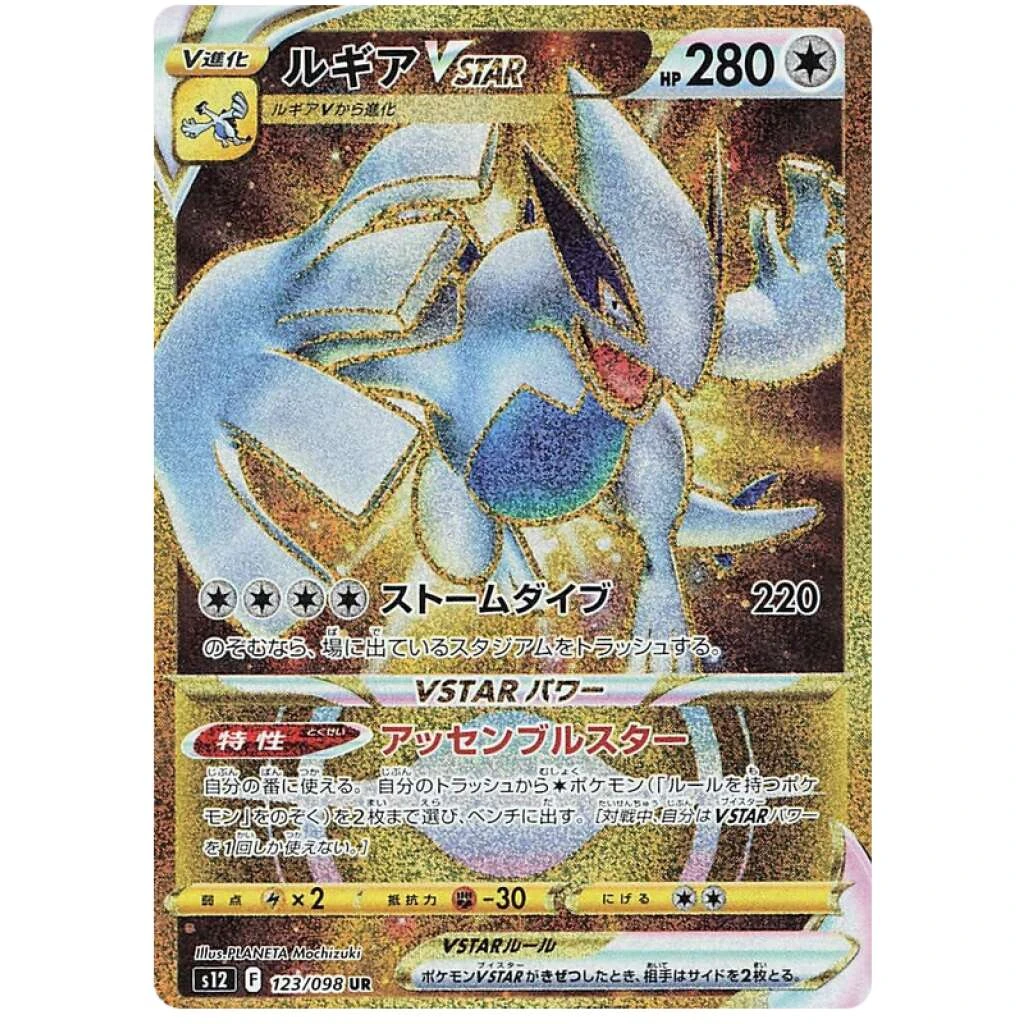
Lugia VSTAR SAR — S12 Paradigm Trigger · SAR · Mercato ~$350-$600 USD (~¥49,000-¥85,000)
Il set Paradigm Trigger ha chiuso la linea principale di Sword & Shield con una chase card incentrata su Lugia. Lugia VSTAR SAR mostra il Guardiano dei Mari in volo cinematografico sopra acque in tempesta, completamente senza bordo, con foil texturizzato che cattura la luce in modo spettacolare. È ancora una delle SAR JPN più scambiate nell’hobby, anche a oltre tre anni dal lancio. Vedi la lista carte di S12 Paradigm Trigger.
Alolan Vulpix VSTAR SAR — S11a Incandescent Arcana · SAR · Mercato ~$150-$300 USD. S11a Incandescent Arcana ha proposto un formato incentrato sui personaggi, e Alolan Vulpix VSTAR SAR è la carta più collezionata del set — scena di neve dai toni pastello delicati, composizione molto orientata all’illustratore. Prezzi più accessibili rispetto alle chase card di S12, il che la rende una SAR d’ingresso popolare per i nuovi collezionisti JPN. Lista completa delle carte di S11a Incandescent Arcana.
Le carte Sword & Shield più vecchie dell’era S6K Jet-Black Geist usano la designazione “SA” (Shadow Rider Calyrex VMAX Alt Art, “Chubby” Blissey V Alt Art) invece del successivo codice a lettere “SAR”, ma sono funzionalmente identiche nell’ambito del collezionismo alt-art. Se stai esplorando inventario più vecchio dell’era S, tratta le carte SA come SAR pre-SAR ai fini di prezzo e collezionismo.
E le SAR dell’era Mega?

L’era della Mega Evoluzione continua a includere carte SAR — ma il livello massimo di chase card passa a MUR (Mega Ultra Rare). A partire da M1L Mega Brave a fine 2025, The Pokemon Company ha introdotto MUR come nuova rarità di livello superiore, riservata esclusivamente ai Pokémon Mega-evoluti (Mega Charizard X ex MUR è la carta di punta), mentre le SAR incentrate sull’allenatore come Lillie’s Determination SAR 091/063 e Lt. Surge’s Deal SAR 090/063 continuano a essere stampate nella checklist di M1L.
MUR usa un trattamento visivo diverso — foil olografico texturizzato su tutta la carta con branding Mega esplicito — ed esce con rarità significativamente maggiore rispetto alla SAR (più vicino a 1 per box per la chase card Mega di punta). I set Mega continuano a includere anche carte AR (Art Rare) ed ex RR normali, ma i collezionisti che cercano l’equivalente, per l’era Mega, della Charizard ex SAR dell’era SV dovrebbero orientarsi verso la MUR. Per il quadro completo dei prezzi MUR e dell’inventario attuale, la guida alle rarità delle carte giapponesi Pokémon spiegate copre il livello MUR in profondità.
Nuovi set con SAR dalla primavera 2026
La line-up dell’era Mega continua ad espandersi dall’ultimo aggiornamento di questa guida a maggio 2026, e ognuno dei set qui sotto esce con la stessa struttura di tassi di pull SAR descritta sopra. Tutte queste box sono sigillate e già oggi nel nostro magazzino di Tokyo:
- M1L Mega Brave — attualmente in vendita a ¥9,025 (~$57) — vedi la box →
- M1S Mega Symphonia — attualmente in vendita a ¥7,600 (~$48) — vedi la box →
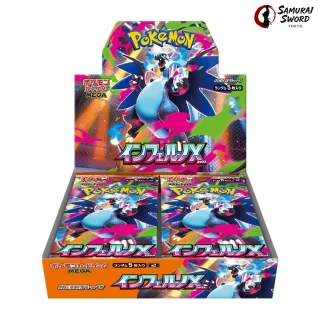
- M2 Inferno X — attualmente in vendita a ¥15,200 (~$96) — vedi la box →
- M2a Mega Dream ex — attualmente in vendita a ¥12,240 (~$77) — vedi la box →
- M3 Munikis Zero (Nihil Zero) — attualmente in vendita a ¥8,240 (~$52) — vedi la box →
- M4 Ninja Spinner — attualmente in vendita a ¥8,625 (~$54) — vedi la box →
- M5 Abyss Eye (Pitch Black) — attualmente in vendita a ¥8,050 (~$51) — vedi la box →
- M6 Storm Emeralda — attualmente in vendita a ¥11,040 (~$69) — vedi la box →
- M6a 30th CELEBRATION — attualmente in vendita a ¥23,000 (~$145) — vedi la box →
Non stiamo ancora facendo affermazioni a livello di singola carta su una specifica SAR di queste box più recenti — una lettura affidabile del tasso di pull richiede un campione di apertura più ampio — ma la struttura delle bustine e la densità di SAR descritte nelle sezioni sopra si applicano a tutta l’era Mega.
Come riconoscere una SAR su una carta
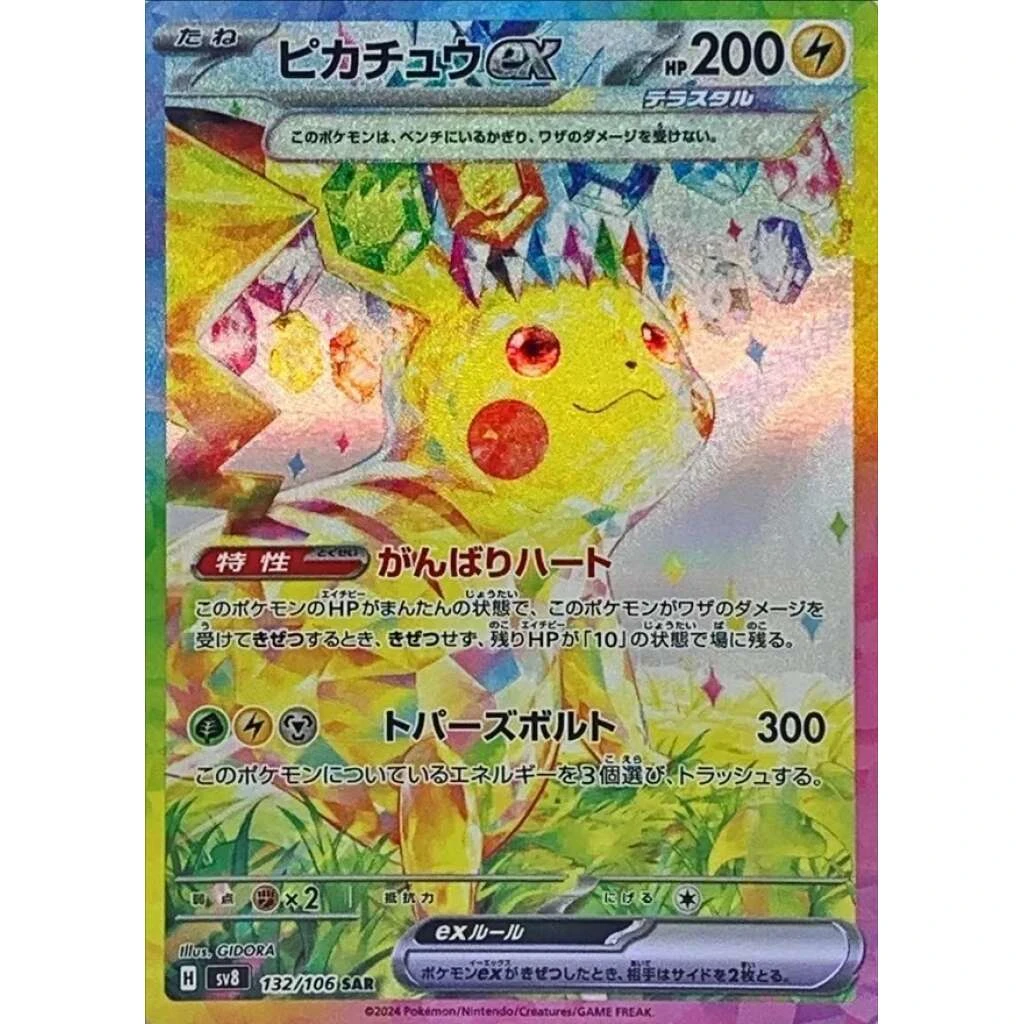
Quattro controlli visivi, ciascuno dei quali di solito basta da solo a identificare una SAR:
- Numero di carta superiore al totale del set base. I set giapponesi usano un formato come “169/086” dove il denominatore è il numero totale di carte del set base. Se il numeratore supera il denominatore, la carta è una secret rare di qualche tipo — SR, SAR, UR o MUR. La SAR in particolare tende a collocarsi nella fascia medio-alta della numerazione delle secret rare (spesso il terzo superiore della checklist estesa oltre il set base).
- Illustrazione senza bordo. L’artwork SAR arriva fino ai quattro margini della carta. Le carte RR e AR normali mantengono un bordo carta giallo o colorato. Se l’illustrazione va completamente da un margine all’altro senza alcun bordo, è SAR, UR o MUR.
- Codice di rarità “SAR” dorato nell’angolo. Le SAR moderne dell’era SV stampano “SAR” in lettere dorate nell’angolo in basso a sinistra accanto al numero di carta. Inclina la carta sotto la luce — le lettere sono piccole ma leggibili.
- Trattamento in foil texturizzato completo. Fai scorrere un’unghia sull’illustrazione. Le carte SAR hanno una texture di foil goffrato pronunciata sulla maggior parte della superficie della carta, non solo sul Pokémon. Se la texture sembra liscia, hai in mano una RR o una AR, non una SAR.
Se tutti e quattro i controlli sono positivi, la carta è una SAR. Se lo sono solo alcuni, incrocia il numero di carta con la checklist ufficiale del set — collegata in tutto l’articolo per ogni set menzionato.
SAR vs AR vs SR — Confronto rapido
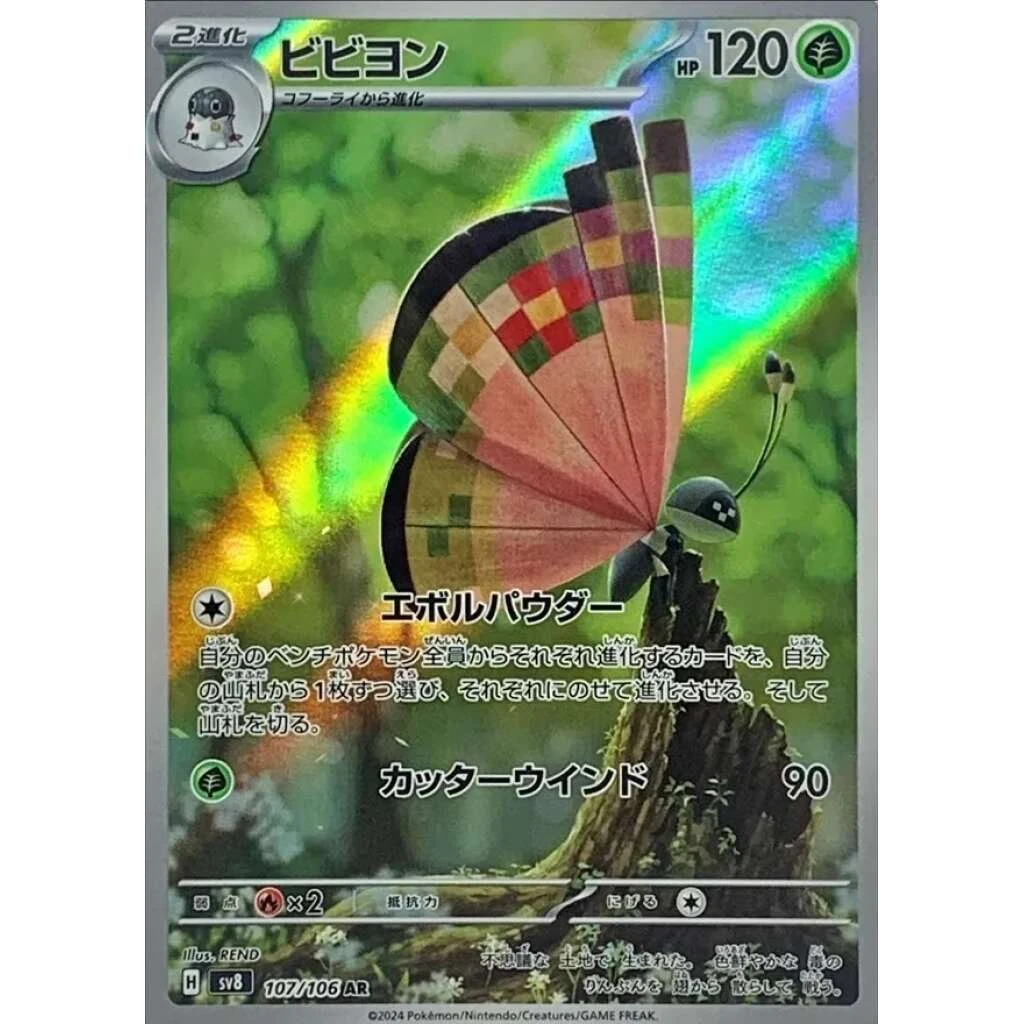

| Rarità | Artwork | Bordo | Tasso di pull stim. | Prezzo (USD) |
|---|---|---|---|---|
| AR (Art Rare) | Illustrated background, Pokemon-focused | Colored card border retained | 2-3 per 30-pack box | $2-$20 |
| SR (Super Rare) | Full-art version of existing RR / trainer art | Silver holo border | 1-2 per 30-pack box | $10-$100+ |
| SAR (Special Art Rare) | Unique alternate illustration, borderless | No border, gold foil rarity stamp | 1 per 20-30 packs (2-4 per box) | $50-$800+ |
Il modello mentale chiaro: AR è una carta illustrata d’ingresso al livello artwork, SR è una versione premium di un artwork già esistente altrove, e SAR è artwork completamente nuovo senza controparte, al vertice della curva dei prezzi. Quando i collezionisti occidentali passano dal TCG inglese al mercato JPN, la progressione “Illustration Rare → Special Illustration Rare” corrisponde esattamente a “AR → SAR” — il concetto è identico, cambiano solo le tirature di mercato.
Tabella delle fasce di prezzo SAR (USD 2026)
| Carta | Set | Prezzo di mercato 2026 (USD) |
|---|---|---|
| Charizard ex SAR | SV3 Ruler of the Black Flame | $450-$700 |
| N’s Zoroark ex SAR | SV9 Battle Partners | $250-$450 |
| Team Rocket’s Mewtwo ex SAR | SV10 Glory of Team Rocket | $250-$450 |
| Reshiram ex SAR | SV11W White Flare | $200-$400 |
| Zekrom ex SAR | SV11B Black Bolt | $200-$400 |
| Nanjamo SAR | SV2a Pokemon Card 151 | $500-$800+ |
| Lugia VSTAR SAR | S12 Paradigm Trigger | $350-$600 |
| Alolan Vulpix VSTAR SAR | S11a Incandescent Arcana | $150-$300 |
I prezzi riflettono condizioni near-mint non gradate (raw) a febbraio 2026, basate su dati del mercato secondario di SNKRDUNK e Mercari convertiti a ¥141/USD. Le copie gradate PSA 10 scambiano tipicamente da 2 a 4 volte queste fasce, con Charizard ex SAR PSA 10 e Nanjamo SAR PSA 10 costantemente tra le carte moderne giapponesi gradate più costose dell’hobby.
Dove comprare carte giapponesi SAR
Le carte giapponesi SAR si muovono principalmente attraverso i canali delle singole — la maggior parte dei collezionisti fuori dal Giappone non apre box JPN a volumi da box, quindi il mercato delle singole SAR è ciò che userai davvero.
- Per carta specifica — sfoglia la nostra collezione completa di singole giapponesi Pokémon e filtra per codice set.
- Per set — la collezione di singole Scarlet & Violet copre le SAR da SV3 a SV11B in un unico posto.
- Per checklist completa — ogni pagina di lista carte specifica per set (collegata in tutto l’articolo) mappa ogni SAR di quel set rispetto alla disponibilità attuale.
- Navigazione generale — l’inventario completo copre insieme box sigillate, singole e SAR più vecchie dell’era S.
Autentichiamo e spediamo ogni singola direttamente da Tokyo con spedizione tracciata. Poiché la disponibilità di SAR è limitata e si muove continuamente, controllare le pagine delle liste carte per la disponibilità attuale è il modo più affidabile per intercettare carte specifiche quando tornano sul sito.
Domande frequenti
Cosa significa SAR su una carta giapponese Pokémon?
SAR sta per Special Art Rare. È la rarità alt-art più alta nei set giapponesi moderni di Pokémon, dalla metà dell’era Sword & Shield fino all’attuale era Scarlet & Violet. Le carte SAR presentano illustrazioni uniche senza bordo con trattamento in foil dorato ed escono circa 1 ogni 20-30 bustine, ovvero circa 2-4 per box giapponese da 30 bustine.
Quanto vale una carta giapponese SAR?
Le carte giapponesi SAR vanno da circa $50 per Pokémon meno popolari a oltre $800 per chase card di punta come Charizard ex SAR di SV3 o Nanjamo SAR di SV2a 151. Le SAR incentrate sui personaggi e le carte con Pokémon preferiti dai fan raggiungono i prezzi più alti. Le copie gradate PSA 10 scambiano tipicamente da 2 a 4 volte il prezzo raw.
Qual è la differenza tra SAR e AR su una carta Pokémon?
Le carte AR (Art Rare) mantengono un bordo carta colorato e usano sfondi illustrati per il Pokémon, uscendo 2-3 per box da 30 bustine a prezzi tipici di $2-$20. Le carte SAR (Special Art Rare) sono completamente senza bordo con illustrazioni alternative uniche, escono circa 1 ogni 20-30 bustine e scambiano tra $50 e oltre $800. AR è il livello illustrato d’ingresso; SAR è il livello alt-art massimo con artwork unico non presente altrove nel set.
Le carte giapponesi SAR sono migliori delle Special Illustration Rare inglesi?
Le carte giapponesi SAR e le carte inglesi Special Illustration Rare (SIR) sono meccanicamente equivalenti — diverse tirature di mercato dello stesso concetto alt-art. Le versioni giapponesi scambiano tipicamente con un premio del 15-40% rispetto agli equivalenti inglesi, grazie a una qualità del foil superiore, tirature di stampa per carta più piccole e una domanda di collezionisti sostenuta sia sul mercato interno che internazionale.
Posso pescare una SAR da una normale box giapponese di bustine?
Sì. Ogni box giapponese standard da 30 bustine dell’era Scarlet & Violet (da SV1 in poi) contiene in media 2-4 carte SAR, anche se la SAR specifica che ottieni è casuale. Aprire una box per una SAR nominata specifica raramente risulta più economico rispetto a comprare la singola; aprire box serve principalmente per l’esperienza del pull, non come strada per ottenere una carta mirata.
Ricevi ¥2.000 in punti con un account gratuito
Crea un account gratuito1 pt = ¥1 · Utilizzabili fino al 20 % del totale dell'ordine · I punti di benvenuto scadono 30 giorni dopo la registrazione · Dazi di importazione, imposte e oneri doganali non sono inclusi nel prezzo e vengono riscossi alla consegna, tranne per le destinazioni a cui spediamo con dazi assolti.
Selezionato per questo articolo
📩 Saldi e coupon riservati ai membri
Avvisi saldi, coupon e riassortimenti via email, direttamente da Tokyo.

![Super Electric Breaker (SV8) Pull Rates & Hit Rates — Best Cards & Box Value [2026]](https://samuraiswordtokyo.com/wp-content/uploads/blog-refresh/457/featured_1200x630_7d28b21a-be7a-4919-8190-f3944b75a801.webp)