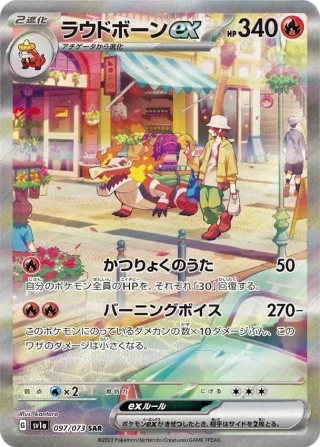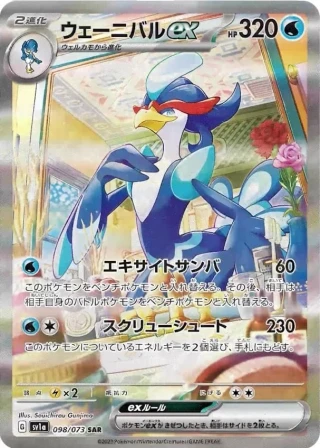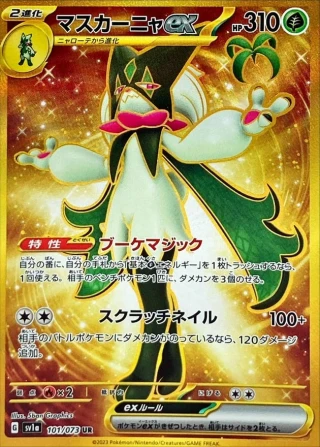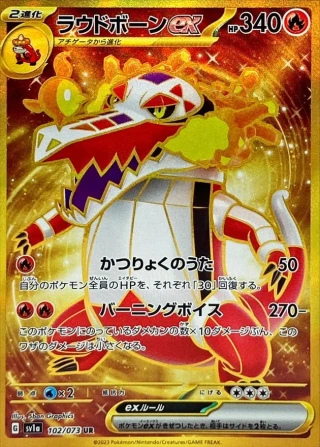
Japanese TCG Store Samurai Sword

SV4M Future Flash 抽卡機率,最佳卡牌與盒裝價值 指南

Future Flash (SV4M) needed a full May 21, 2026 refresh because the old article read like a short card list instead of a serious buying guide. The current standard is different: lead with the buying answer, show the product, show the chase cards, explain the pull-rate math, and separate Japan market signals from overseas customer-facing prices.

The practical answer is simple. Buy sealed if you want the future-Paradox half of SV4 with a lower sealed entry. Buy singles if Altaria ex SAR or Iron Valiant ex SAR is the only target. A sealed box can be a strong purchase when you want the product story and the opening experience. It is a weak purchase when you are only using it as an expensive shortcut to one exact SAR.

This version follows the same format as the stronger SST Pokemon guides: current market proof, a real product image, a top-card grid, a Japan vs overseas chart, buyer segmentation, box EV, and a deeper FAQ section. The goal is not to pad word count; it is to answer the questions a collector or shop buyer actually has before ordering.

The biggest change is the order of the thinking. A thin article usually starts with a card ranking and only later mentions whether a box is worth buying. This refresh starts with the purchase decision because that is what search traffic is really asking. A reader wants to know whether sealed makes sense today, whether singles are smarter, whether the set has a reason to age well, and whether the visible price is current. The card ranking is still important, but it sits inside a fuller buying framework.
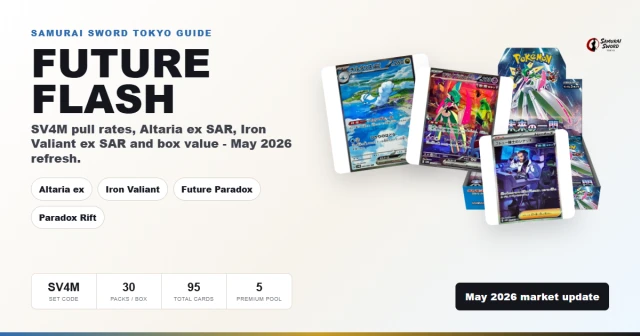
Future Flash SV4M pull rates and best cards guide
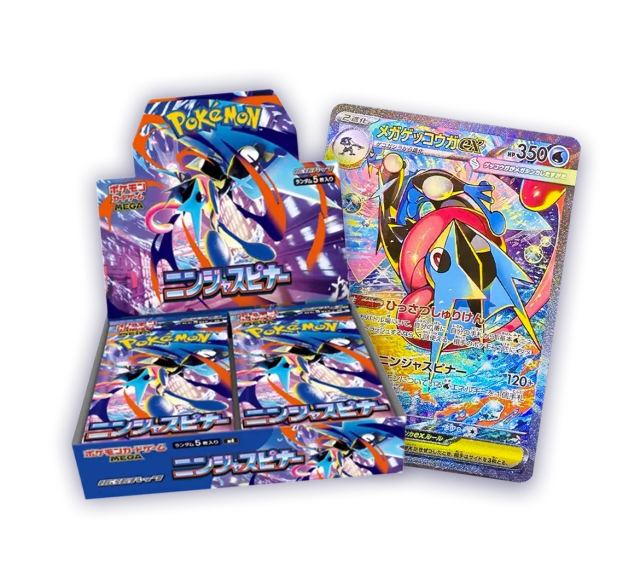
Thumbnail composite for Future Flash using SST product imagery and key chase-card imagery.
Key Takeaway Altaria ex SAR gives Future Flash a softer top chase while Iron Valiant and Iron Hands carry the future-Paradox identity. Japan signals now sit around ツ・9,400-11,200, while SST’s overseas retail signal is $64.5. Judge the box by buyer type: sealed collectors, singles buyers, openers, and import buyers all need different advice.
SV4MSet code
30Packs / box
95Total cards
5Premium pool

Future Flash Set Overview

Future Flash is the Japanese SV4M product released on October 27, 2023. It connects to Paradox Rift, but Japanese sealed buyers should treat it as its own product with its own card numbering, box price, and collector identity.

The old short article format usually stopped at release date, card count, and a top-10 table. That is not enough. A modern buyer needs to know whether the set has a durable reason to exist, whether the sealed price is moving, whether the top cards justify opening, and how the Japanese box compares with English or adjacent Japanese sets.

Spec Detail
Set code SV4M
Japanese release October 27, 2023
Card count 66 main-set cards plus 29 secret cards, 95 total
Box format 30 packs per box, 5 cards per pack
SAR count 5 Special Art Rare cards
Current Japan signal Japan signals now sit around ツ・9,400-11,200, while SST’s overseas retail signal is $64.5.
Best buyer Collector or shop buyer who understands the set story and is not relying on one exact pull.
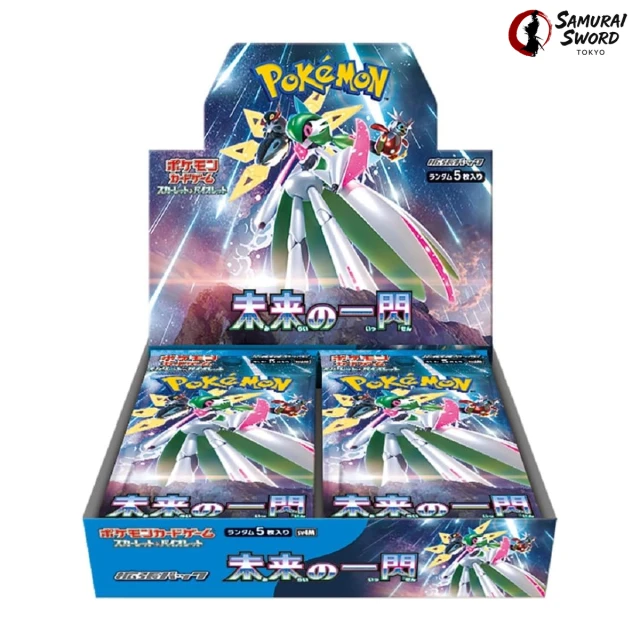
Future Flash Japanese Pokemon booster box
Future Flash sealed Japanese booster box. The product image is shown early so the article card and article body match the product being sold.

What Changed in the May 2026 Refresh

The old article was useful as a first pass, but it was too thin for the current blog standard. It had fewer visual breaks, a weaker market section, and a shorter decision path. This refresh adds the missing context: why the set matters, where the box sits today, how the top cards rank, and when singles make more sense than sealed.

Japanese Box vs English Relationship

English products are easier for many local buyers, but the Japanese product is cleaner for collectors who want one exact set code and Japanese print quality. The Japanese box also has a more direct sealed-market signal because the product is not blended with multiple Japanese sources the way many English releases are.

Factor Japanese Future Flash Paradox Rift
Product identity One Japanese set code, one box, one collector story English market relationship with different distribution and buyer behavior
Best for Japanese sealed collectors, import buyers, visual collectors Local players and buyers who prefer English cards
Pricing Read Japan and overseas separately Often easier to find locally, but not the same sealed thesis
Buying mistake Using old article prices after the market has moved Assuming English and Japanese pull economics are identical

What the Product Page Should Help You Decide

A strong set guide should reduce hesitation before the product page click. For Future Flash, the reader should leave this section knowing the set code, the card count, the box format, the major chase lanes, and the current market spread. That is enough to compare the box against other Japanese sealed products without opening a dozen tabs.

This is especially important for overseas buyers. A small difference in listed price can disappear once shipping, payment fees, import tax, and condition risk are included. The article therefore treats price as a range and a decision signal, not as a single permanent number. That is the difference between a useful ecommerce guide and a static checklist.

Top 10 Best Cards and Current Market Read

Altaria ex SAR gives Future Flash a softer top chase while Iron Valiant and Iron Hands carry the future-Paradox identity. The top-card table below uses the local PriceCharting cache and Fuji card-list image set where available, then frames each card by why a buyer would care. Prices are not permanent; the ranking is useful because it shows the shape of demand.

Rank Card Rarity Raw price signal Why it matters
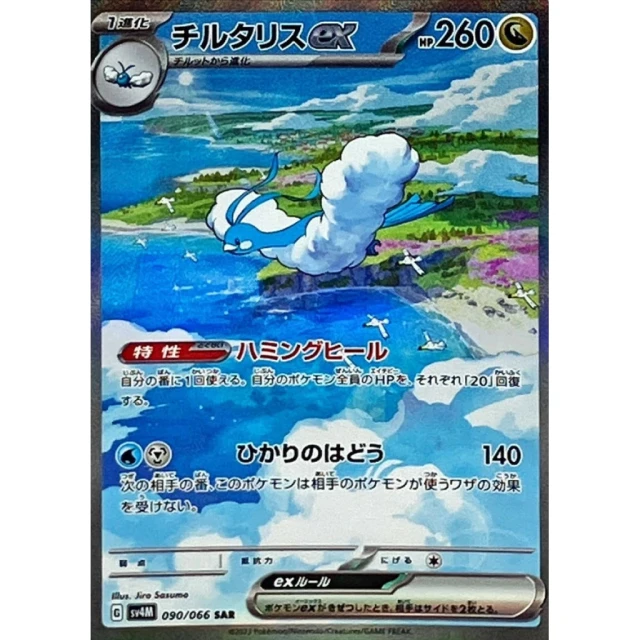
1 Altaria ex 90/66 SAR $51.68 The top visual chase and the card that softens the future-Paradox set identity.
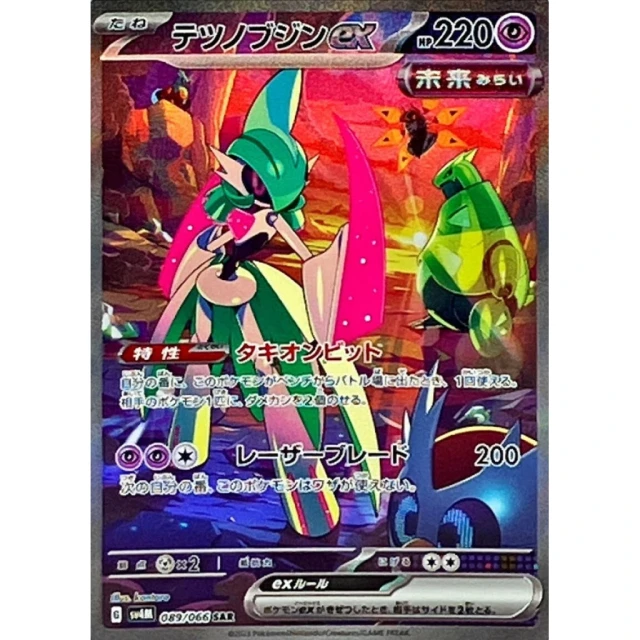
2 Iron Valiant ex 89/66 SAR $21.45 The future-Paradox mascot lane and strongest mechanical Pokemon chase.
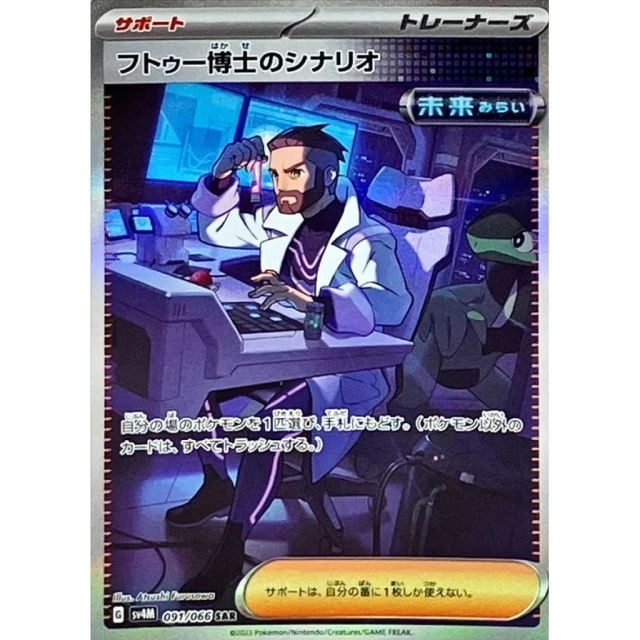
3 Professor Turo’s Scenario 91/66 SAR $12.75 Turo gives the set a story-linked trainer SAR.
4 Tulip 92/66 SAR $14.00 Tulip provides female-supporter demand below the top two cards.
5 Iron Hands ex 88/66 SAR $14.38 Playable future Paradox Pokemon with collector relevance.
6 Iron Valiant ex 93/66 UR $7.00 Gold mascot card for the future-Paradox lane.
7 Counter Catcher 94/66 UR $9.46 Utility gold card that gives the box competitive depth.
8 Iron Valiant ex 80/66 SR $3.81 Lower-cost version of the mascot chase.
9 Iron Hands ex 79/66 SR $4.12 Playable Pokemon hit and practical buyer target.
10 Swablu 76/66 AR $6.00 Swablu AR pairs naturally with Altaria and helps binder appeal.
Altaria ex SAR from Future FlashSAR

Altaria ex

The top visual chase and the card that softens the future-Paradox set identity.

Iron Valiant ex SAR from Future FlashSAR

Iron Valiant ex

The future-Paradox mascot lane and strongest mechanical Pokemon chase.

Professor Turo's Scenario SAR from Future FlashSAR

Professor Turo’s Scenario

Turo gives the set a story-linked trainer SAR.

Top-Card Thesis

The best version of a set guide explains why the top card leads. For Future Flash, the top layer works because the cards are tied to the set story rather than feeling randomly expensive. The market can move, but the identity is easier to defend when the chase cards are aligned with the product name, mascot, character focus, or mechanic.

Secondary Hit Layer

A box feels better when there are enough cards below the top chase to keep opening from becoming binary. That does not mean every SAR or UR pays for the box. It means the buyer has several outcomes that still feel like meaningful collection pieces.
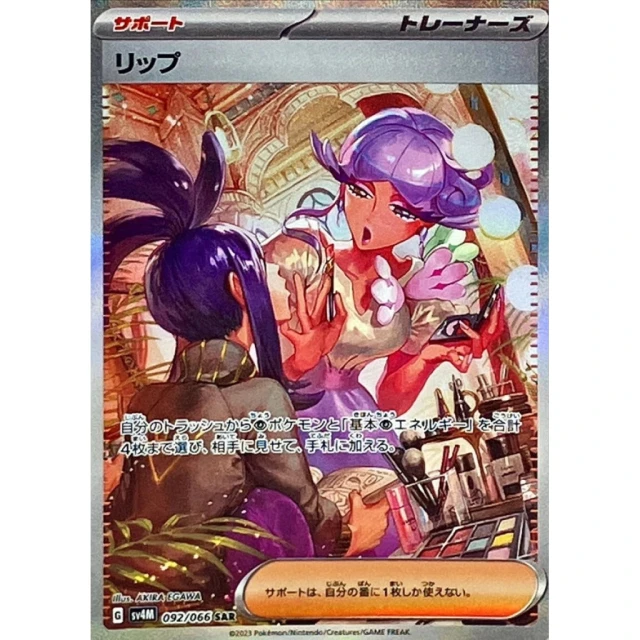
Tulip SAR from Future FlashSAR

Tulip

Tulip provides female-supporter demand below the top two cards.
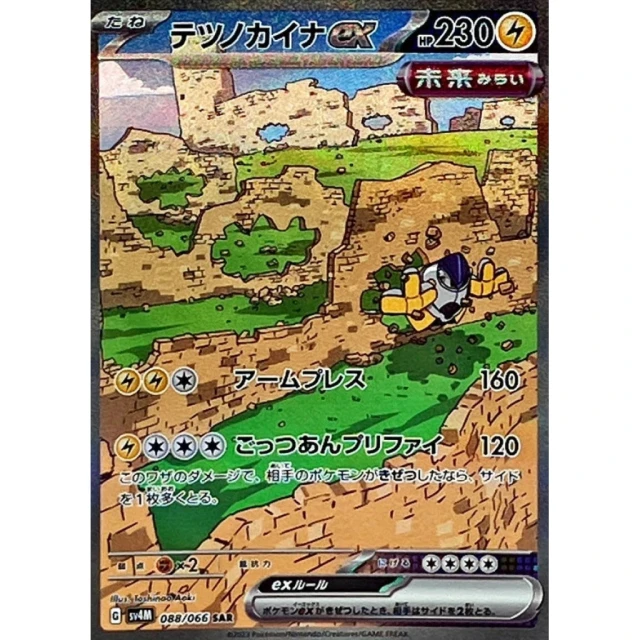
Iron Hands ex SAR from Future FlashSAR

Iron Hands ex

Playable future Paradox Pokemon with collector relevance.
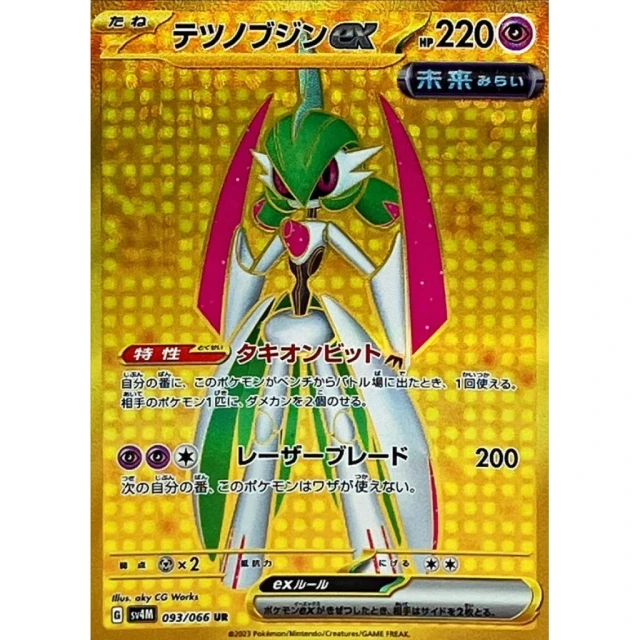
Iron Valiant ex UR from Future FlashUR

Iron Valiant ex

Gold mascot card for the future-Paradox lane.
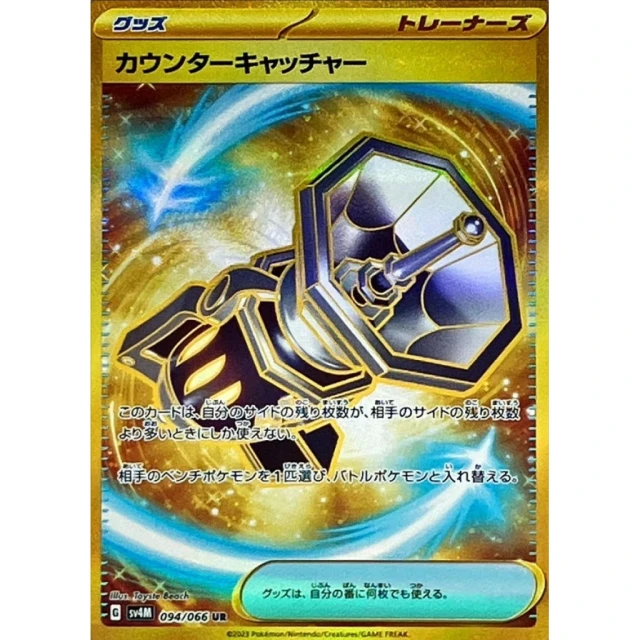
Counter Catcher UR from Future FlashUR

Counter Catcher

Utility gold card that gives the box competitive depth.

Budget Singles Worth Watching

Budget singles matter because not every reader is ready to buy a sealed box or a top SAR. Lower-cost SRs, ARs, and URs often make the article more useful for collectors who want the set identity without paying for the top card. For Future Flash, the lower layer also helps explain why opening can still be enjoyable even when the expected value is below sealed price.

The lower layer also matters for resale and customer education. A shop buyer can sell the top chase easily, but the box becomes easier to merchandise when there are several cards that look good in a display case, binder page, or break menu. That is why the article covers secondary SARs, ARs, and URs instead of treating everything outside the top three as filler.

What Makes Future Flash Special

Future Flash Is the Mechanical Half of the SV4 Pair

Future Flash works because the future Paradox Pokemon give the set a cold mechanical look, then Altaria and Swablu soften the collection with elegant art rares.

Why the Set Can Be Explained Quickly

A strong ecommerce article should make the set understandable from a thumbnail, a product card, or a quick scan. Future Flash has that advantage: its best cards and product identity point in the same direction. That makes it easier for collectors, store buyers, and breakers to communicate the product without a long explanation.

Why That Matters for Sealed Boxes

Sealed boxes do not trade only on average pull value. They also trade on identity, scarcity, display appeal, and whether future buyers can understand the box quickly. A set with a clear story can stay easier to sell than a technically similar set whose top cards feel disconnected from the product.

Collector Memory and Thumbnail Recognition

Collector memory is practical, not abstract. If a buyer can remember the set from one image and one chase lane, the article and product card have a much better chance of converting later. Future Flash should therefore be presented with its box image, its most recognizable cards, and the set-specific hook near the top of the page. A text-only article forces the reader to do too much work.

Should You Buy a Future Flash Box in 2026?

Buy sealed if you want the future-Paradox half of SV4 with a lower sealed entry. Buy singles if Altaria ex SAR or Iron Valiant ex SAR is the only target. The honest answer changes by buyer type. That is the main reason the new article format needs more depth than the old one.

Buyer type Best action Reason
Exact top-card buyer Buy the single Specific-card odds are low, even when the set itself is good.
Sealed collector Buy after checking current spread The product story matters, but stale pricing can produce bad entries.
Casual opener Buy one box if lower hits are acceptable The box can be fun without guaranteeing the chase card.
Shop or breaker Buy if the set story is easy for your customers Clear chase identity matters for merchandising and breaks.
Player Buy singles Playable needs are cheaper and cleaner through targeted purchases.
Import buyer Compare landed cost Shipping, duties, and currency spread can erase a low sticker price.

Box vs Singles

Singles are the rational route for one exact chase. Sealed boxes are for the product experience, shelf identity, and optionality. The article should not confuse those two jobs. A box can be good and still be the wrong route to one card.

Compared With Ancient Roar

Use Ancient Roar as the comparison point rather than treating every SV-era box as identical. The better buy is the one whose chase structure matches the buyer’s goal. Sometimes that means paying more for a stronger chase; sometimes it means buying the cheaper box because the set identity is enough.

Sealed Holding Logic

The sealed holding case depends on whether the box will still be easy to explain later. Future Flash has a clearer story than many generic mid-era boxes, but that does not remove restock, reprint, or demand risk. Buy sealed because you want the box and understand the thesis, not because an article says every sealed Pokemon product must rise.

How to Compare Entry Prices

Do not compare one seller’s Japan sticker price with another seller’s international checkout price as if they are the same thing. A clean comparison includes product condition, whether the box is factory sealed, shipping speed, tracking, payment fees, and the risk of dealing with an unknown marketplace seller. The cheapest visible number is not always the cheapest final purchase.

For repeat buyers and stores, consistency can be worth more than a small discount. A predictable sourcing route makes it easier to reorder, answer customer questions, and avoid condition disputes. For one-time collectors, the right move is often to decide the maximum landed cost first, then choose the cleanest box inside that budget.

Pull Rates, Chase Odds and Box EV

Pokemon does not publish official pull rates for Japanese booster boxes. The estimates below are decision support based on typical Japanese SV-era structure and community opening behavior, not guaranteed odds.

Pull Rate Reality The key distinction is any premium hit versus one exact card. A buyer can reasonably expect a satisfying box and still be very unlikely to pull the exact SAR they want.

Estimated Pull Rate Breakdown

Rarity or slot Estimated box behavior Buyer meaning
RR / ex Several per box Baseline hits, not the sealed-price thesis.
AR Multiple visual hits in many boxes Binder value and casual opening satisfaction.
SR Most boxes are anchored by an SR-or-better style slot The most common premium outcome.
SAR Chance upgrade, not guaranteed The main collector chase, but exact-card odds are much lower.
UR Lower-frequency gold-card upgrade Useful for collectors and playable/gold-card buyers.

Specific Chase Odds

If a buyer wants one exact SAR, the correct mental model is multi-box odds. Even if a set has a relatively small SAR pool, the box still has to hit the SAR layer and then hit the correct card inside that layer. That is why the recommendation for exact-card buyers is nearly always singles first.

Goal Estimated route Recommendation
Enjoy one sealed box Reasonable Buy sealed if the set story appeals to you.
Pull any premium card Reasonable but variable Open if lower outcomes are acceptable.
Pull the top SAR Low exact-card odds Buy the single if this is the only target.
Build a master set Boxes plus singles Use sealed for base volume, singles for expensive gaps.
Hold sealed No pull risk Focus on box condition, authenticity, and entry price.

Box EV Context

Expected value is usually below sealed price for Pokemon boxes. That is normal. The sealed price includes scarcity, product identity, optionality, and the entertainment value of opening. The mistake is using EV as the only reason to buy or ignoring EV completely. A strong guide shows both.

EV component Role in Future Flash How to use it
Top SARs Main upside Great when hit, too rare to rely on.
Secondary SARs Reduce binary feel Make opening more satisfying below the top card.
SR/AR layer Baseline visual value Important for casual collectors and binder builders.
UR layer Gold-card optionality Can matter when the card is playable or iconic.
Sealed premium Box value beyond pulls Driven by condition, supply, and set identity.

Opening Plan by Budget

One box is best treated as an experience purchase. Two or three boxes can give a better feel for the set, but they still do not turn an exact SAR into a reliable outcome. If a buyer plans to spend more than the price of the target single, the singles route should be reconsidered before opening another box.

The balanced route for many collectors is one sealed box plus targeted singles. The box provides the product memory, base cards, AR texture, and a chance at upside. Singles then finish the exact chase cards without forcing the buyer to gamble through a larger sealed budget. That hybrid strategy is often better than pure sealed opening or pure singles buying.

Japan vs Overseas Price Snapshot

The market section is where the old articles were weakest. Japan signals now sit around ツ・9,400-11,200, while SST’s overseas retail signal is $64.5. That does not mean there is one perfect price. It means buyers should compare Japan source signals, overseas retail, shipping, condition, and the reason they are buying.
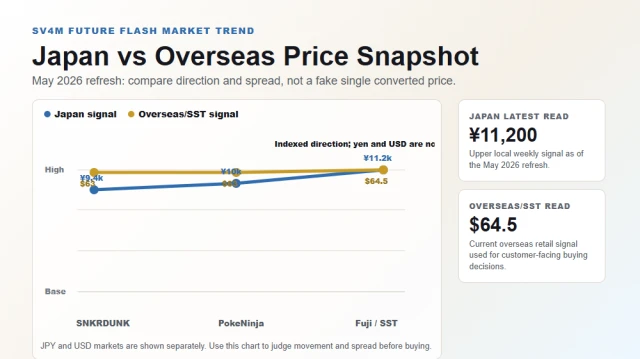
Future Flash Japan vs overseas box price chart May 2026
Japan vs overseas market snapshot for Future Flash, updated May 21, 2026. Yen and dollar signals are intentionally separated.
Market signal Earlier baseline May 2026 read Buyer meaning
Japan low/mid signal ¥9,400 ¥9,987 Shows whether the box is still in its old range or has reset upward.
Japan upper live signal Not always covered in old article ¥11,200 Use this to avoid anchoring to stale pricing.
Overseas/SST signal $63 $64.5 Customer-facing price must include shipping, handling, and sourcing realities.
Best buyer action Casual price check Compare landed cost and buyer goal Do not use one converted number as the entire market.

How to Read a Wide Spread

A wide spread is not automatically a contradiction. Japan domestic signals, overseas retail, buy-price references, and sold data all measure different parts of the market. The right article explains the spread instead of hiding it.

What Would Change the Recommendation?

The recommendation weakens if sealed supply returns in size, if the top-card demand cools, or if overseas pricing runs far above Japan without a condition or sourcing reason. It strengthens if the box holds its current range while the top cards remain liquid.

Current Market Thesis

Future Flash is best treated as a set with a specific buyer thesis, not a generic Pokemon box. If the buyer wants that thesis, sealed can make sense. If the buyer only wants a single card, the market thesis is a warning to buy the single instead.

May 2026 Action Guide

If the current Japan signal is close to the overseas checkout price after shipping, buying from a trusted store is usually simpler than chasing a marginal discount. If Japan is materially lower, the buyer should ask whether the difference is real after fees and condition risk. If overseas is materially lower, the buyer should check whether the listing is old stock, opened stock, regional product, or missing condition details.

The correct conclusion is not always “buy now.” Sometimes the correct move is to watch the spread for another week, buy the single, or choose a different Japanese box with a better entry. The value of the chart is that it gives the reader a framework for that choice instead of leaving them with a stale price line from an older article.

Where to Buy Future Flash

For SST customers, check the live product page first, then compare against the broader Japanese sealed collection if the box is out of stock or if another set better matches the buyer’s goal.

Future Flash (SV4M) Booster Box

Japanese sealed booster box. Check live stock, current price, and shipping options before using old article assumptions.

View SV4M Box

Authenticity and 狀態 Checks

Check Why it matters
Factory shrink and seams 狀態-sensitive sealed boxes should not have questionable wrap or unclear photos.
Japanese set code Confirms you are buying SV4M, not an English or regional equivalent.
Box format 30 packs per box, 5 cards per pack should match the Japanese product.
Landed cost Shipping, taxes, duties, and payment fees matter more than sticker price alone.
Seller history Fast-moving boxes attract weak listings. Reliable sourcing reduces avoidable risk.

Use the SV4M card list to inspect every card, or browse the Japanese Pokemon sealed booster box collection if you are comparing alternatives.

The Bottom Line

Future Flash is worth covering at full length because the buying decision is not just a top-10 list. The buyer needs product identity, current market context, chase-card odds, and a clear box-vs-singles answer. That is the gap this refresh closes.

The best buyer is someone who likes the set even when the top card does not appear. The worst buyer is someone who wants one exact SAR and thinks a box is the cheapest route. If you separate those two people, the recommendation becomes much clearer.

Best use case Buy sealed for the Future Flash product story and optionality. Buy singles for precision. Use the current Japan vs overseas spread before deciding where to enter.

Frequently Asked Questions

What are the pull rates for Future Flash?

Pokemon does not publish official pull rates. Treat SV4M as a Japanese box with regular hits, AR/CHR texture depending on the era, and one SR-or-better style slot, with SAR/CSR/UR/alternate-art outcomes as chance upgrades.

What is the best card in Future Flash?

Altaria ex is the leading chase in this refresh. The set still needs to be judged by the full premium pool, not only by the single top card.

Is Future Flash worth buying in 2026?

Yes if you like the set identity and current sealed price. Buy singles instead if you only want Altaria ex or one exact premium card.

How many cards are in Future Flash?

Future Flash has 66 main-set cards plus 29 secret or premium cards, 95 total cards in this guide’s count.

Is Future Flash the same as Paradox Rift?

No. Paradox Rift is the English-market relationship. Future Flash is the Japanese SV4M product with its own card numbering, box format, and sealed-market behavior.

Should I buy a Future Flash box or Altaria ex?

Buy Altaria ex directly if that is the only target. Buy the box if you value the opening experience, sealed collecting, and multiple chase lanes.

What is the biggest risk with Future Flash?

The biggest risk is treating one sealed box as a rational way to hit one exact card. Exact-card odds remain low even when any-premium-hit odds feel attractive.

Where can I see the full Future Flash card list?

Use the SV4M card list linked in the article to inspect card numbers, artwork, and rarity before buying sealed or singles.

Is Future Flash better than Ancient Roar?

Future Flash is better if you prefer future-Paradox Pokemon and Altaria. Ancient Roar is the cleaner comparison if you want a different chase structure or sealed price band.

Is Future Flash better opened or kept sealed?

Open it if the chase suite and pack experience matter. Keep it sealed if you want a clean Japanese box with current Japan-vs-overseas market support.
SV2D Clay Burst 抽卡機率,最佳卡牌與盒裝價值 指南

Clay Burst (SV2D) needed a full May 21, 2026 refresh because the old article read like a short card list instead of a serious buying guide. The current standard is different: lead with the buying answer, show the product, show the chase cards, explain the pull-rate math, and separate Japan market signals from overseas customer-facing prices.

The practical answer is simple. Buy sealed only if you want the Iono lottery and understand the variance. Buy the Iono SAR or SR directly if you want the character card. A sealed box can be a strong purchase when you want the product story and the opening experience. It is a weak purchase when you are only using it as an expensive shortcut to one exact SAR.

This version follows the same format as the stronger SST Pokemon guides: current market proof, a real product image, a top-card grid, a Japan vs overseas chart, buyer segmentation, box EV, and a deeper FAQ section. The goal is not to pad word count; it is to answer the questions a collector or shop buyer actually has before ordering.

The biggest change is the order of the thinking. A thin article usually starts with a card ranking and only later mentions whether a box is worth buying. This refresh starts with the purchase decision because that is what search traffic is really asking. A reader wants to know whether sealed makes sense today, whether singles are smarter, whether the set has a reason to age well, and whether the visible price is current. The card ranking is still important, but it sits inside a fuller buying framework.

Clay Burst SV2D pull rates and best cards guide
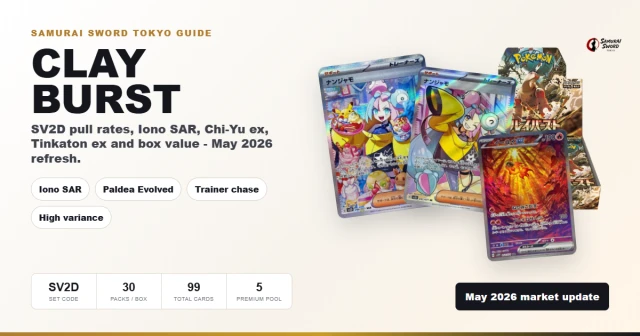
Thumbnail composite for Clay Burst using SST product imagery and key chase-card imagery.
Key Takeaway Clay Burst is still the Iono box. The set has other hits, but Iono SAR is the reason the sealed product remains watched. Japan signals now sit around ツ・12,000-13,400, while SST’s overseas retail signal is $84. Judge the box by buyer type: sealed collectors, singles buyers, openers, and import buyers all need different advice.
SV2DSet code
30Packs / box
99Total cards
5Premium pool

Clay Burst Set Overview

Clay Burst is the Japanese SV2D product released on April 14, 2023. It connects to Paldea Evolved, but Japanese sealed buyers should treat it as its own product with its own card numbering, box price, and collector identity.

The old short article format usually stopped at release date, card count, and a top-10 table. That is not enough. A modern buyer needs to know whether the set has a durable reason to exist, whether the sealed price is moving, whether the top cards justify opening, and how the Japanese box compares with English or adjacent Japanese sets.

Spec Detail
Set code SV2D
Japanese release April 14, 2023
Card count 71 main-set cards plus 28 secret cards, 99 total
Box format 30 packs per box, 5 cards per pack
SAR count 5 Special Art Rare cards
Current Japan signal Japan signals now sit around ツ・12,000-13,400, while SST’s overseas retail signal is $84.
Best buyer Collector or shop buyer who understands the set story and is not relying on one exact pull.
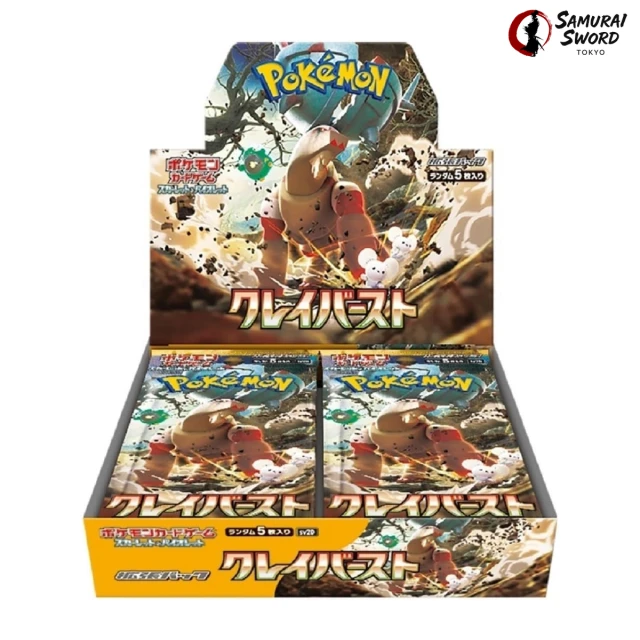
Clay Burst Japanese Pokemon booster box
Clay Burst sealed Japanese booster box. The product image is shown early so the article card and article body match the product being sold.

What Changed in the May 2026 Refresh

The old article was useful as a first pass, but it was too thin for the current blog standard. It had fewer visual breaks, a weaker market section, and a shorter decision path. This refresh adds the missing context: why the set matters, where the box sits today, how the top cards rank, and when singles make more sense than sealed.

Japanese Box vs English Relationship

English products are easier for many local buyers, but the Japanese product is cleaner for collectors who want one exact set code and Japanese print quality. The Japanese box also has a more direct sealed-market signal because the product is not blended with multiple Japanese sources the way many English releases are.

Factor Japanese Clay Burst Paldea Evolved
Product identity One Japanese set code, one box, one collector story English market relationship with different distribution and buyer behavior
Best for Japanese sealed collectors, import buyers, visual collectors Local players and buyers who prefer English cards
Pricing Read Japan and overseas separately Often easier to find locally, but not the same sealed thesis
Buying mistake Using old article prices after the market has moved Assuming English and Japanese pull economics are identical

What the Product Page Should Help You Decide

A strong set guide should reduce hesitation before the product page click. For Clay Burst, the reader should leave this section knowing the set code, the card count, the box format, the major chase lanes, and the current market spread. That is enough to compare the box against other Japanese sealed products without opening a dozen tabs.

This is especially important for overseas buyers. A small difference in listed price can disappear once shipping, payment fees, import tax, and condition risk are included. The article therefore treats price as a range and a decision signal, not as a single permanent number. That is the difference between a useful ecommerce guide and a static checklist.

Top 10 Best Cards and Current Market Read

Clay Burst is still the Iono box. The set has other hits, but Iono SAR is the reason the sealed product remains watched. The top-card table below uses the local PriceCharting cache and Fuji card-list image set where available, then frames each card by why a buyer would care. Prices are not permanent; the ranking is useful because it shows the shape of demand.

Rank Card Rarity Raw price signal Why it matters
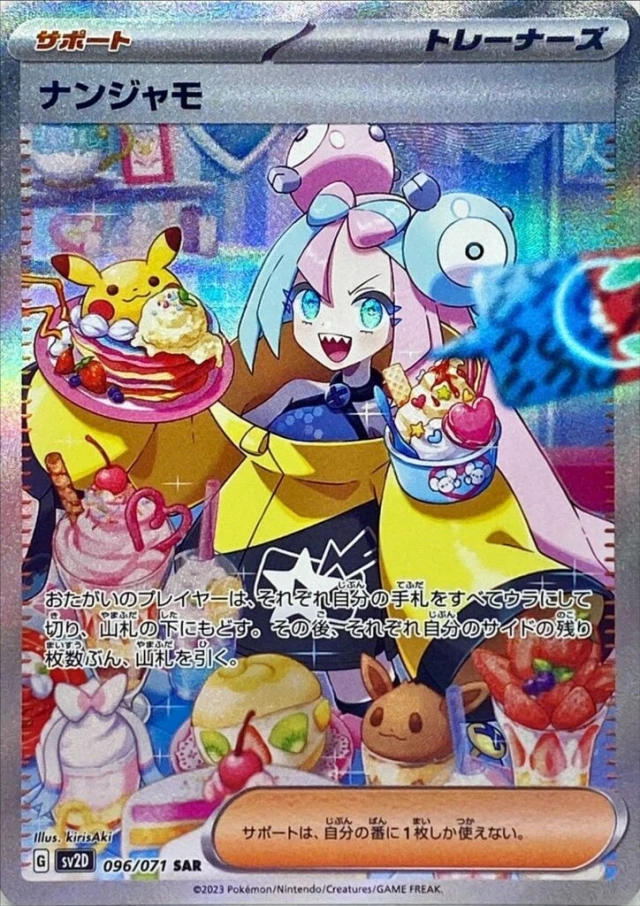
1 Iono 96/71 SAR $310.77 The defining Scarlet & Violet trainer chase and the card that carries the box.
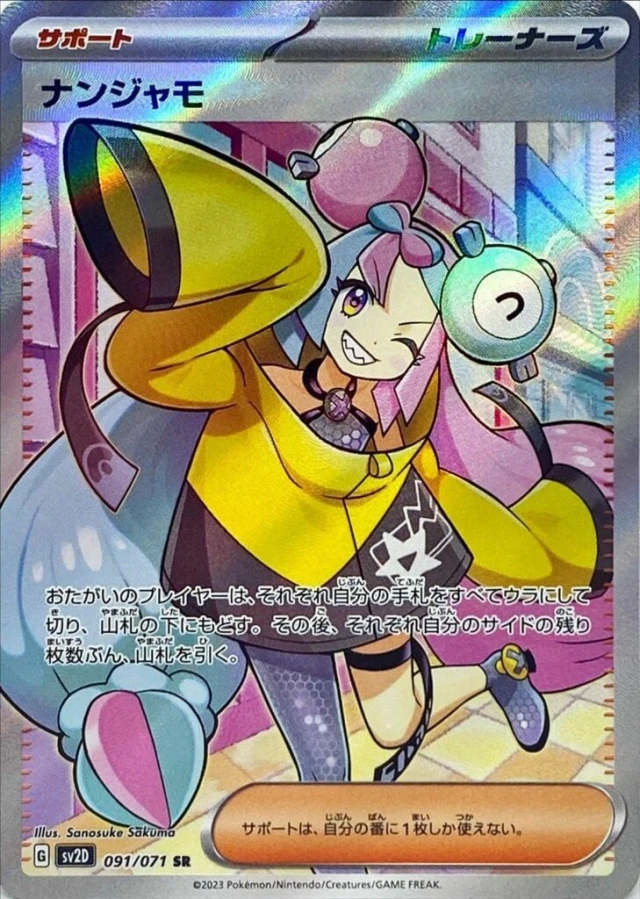
2 Iono 91/71 SR $30.89 The practical Iono fallback when the SAR is too expensive.
3 Chi-Yu ex 92/71 SAR $24.54 A strong Pokemon SAR below the Iono layer.
4 Tinkaton ex 93/71 SAR $28.56 Popular Paldea Pokemon with strong visual appeal.
5 Ting-Lu ex 94/71 SAR $8.65 Set mascot style SAR and a secondary premium hit.
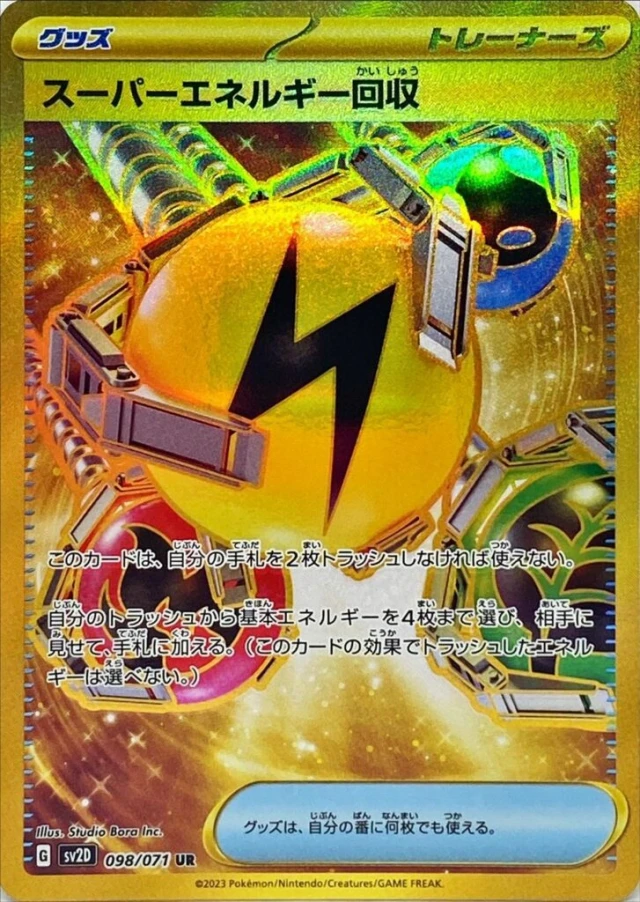
6 Superior Energy Retrieval 98/71 UR $8.54 Playable gold card that helps the box beyond collectors.
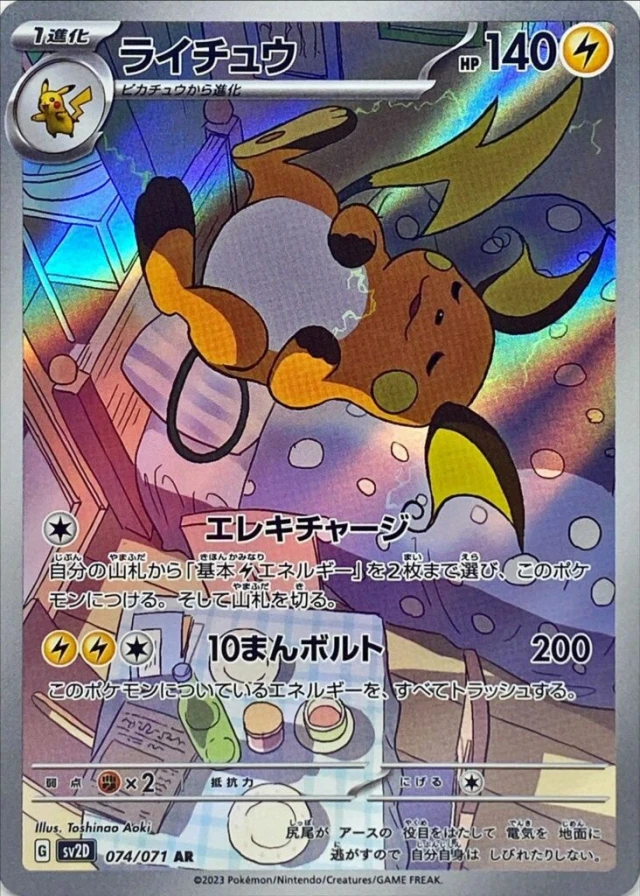
7 Raichu 74/71 AR $15.99 Raichu AR is the best low-cost nostalgia card in the set.
8 Tyranitar 79/71 AR $10.53 Tyranitar AR gives the art-rare pool a popular Pokemon hit.
9 Maushold 81/71 AR $17.56 Maushold AR is a memorable binder card.
10 Grass Energy 99/71 UR $12.50 Gold energy adds completionist depth.
Iono SAR from Clay BurstSAR

Iono

The defining Scarlet & Violet trainer chase and the card that carries the box.

Iono SR from Clay BurstSR

Iono

The practical Iono fallback when the SAR is too expensive.

Chi-Yu ex SAR from Clay BurstSAR

Chi-Yu ex

A strong Pokemon SAR below the Iono layer.

Top-Card Thesis

The best version of a set guide explains why the top card leads. For Clay Burst, the top layer works because the cards are tied to the set story rather than feeling randomly expensive. The market can move, but the identity is easier to defend when the chase cards are aligned with the product name, mascot, character focus, or mechanic.

Secondary Hit Layer

A box feels better when there are enough cards below the top chase to keep opening from becoming binary. That does not mean every SAR or UR pays for the box. It means the buyer has several outcomes that still feel like meaningful collection pieces.

Tinkaton ex SAR from Clay BurstSAR

Tinkaton ex

Popular Paldea Pokemon with strong visual appeal.

Ting-Lu ex SAR from Clay BurstSAR

Ting-Lu ex

Set mascot style SAR and a secondary premium hit.

Superior Energy Retrieval UR from Clay BurstUR

Superior Energy Retrieval

Playable gold card that helps the box beyond collectors.

Raichu AR from Clay BurstAR

Raichu

Raichu AR is the best low-cost nostalgia card in the set.

Budget Singles Worth Watching

Budget singles matter because not every reader is ready to buy a sealed box or a top SAR. Lower-cost SRs, ARs, and URs often make the article more useful for collectors who want the set identity without paying for the top card. For Clay Burst, the lower layer also helps explain why opening can still be enjoyable even when the expected value is below sealed price.

The lower layer also matters for resale and customer education. A shop buyer can sell the top chase easily, but the box becomes easier to merchandise when there are several cards that look good in a display case, binder page, or break menu. That is why the article covers secondary SARs, ARs, and URs instead of treating everything outside the top three as filler.

What Makes Clay Burst Special

Iono Turns Clay Burst Into a True Chase Box

Clay Burst is not remembered because of a broad mascot suite. It is remembered because Iono became the Scarlet & Violet trainer chase, and that single card still defines how buyers evaluate the box.

Why the Set Can Be Explained Quickly

A strong ecommerce article should make the set understandable from a thumbnail, a product card, or a quick scan. Clay Burst has that advantage: its best cards and product identity point in the same direction. That makes it easier for collectors, store buyers, and breakers to communicate the product without a long explanation.

Why That Matters for Sealed Boxes

Sealed boxes do not trade only on average pull value. They also trade on identity, scarcity, display appeal, and whether future buyers can understand the box quickly. A set with a clear story can stay easier to sell than a technically similar set whose top cards feel disconnected from the product.

Collector Memory and Thumbnail Recognition

Collector memory is practical, not abstract. If a buyer can remember the set from one image and one chase lane, the article and product card have a much better chance of converting later. Clay Burst should therefore be presented with its box image, its most recognizable cards, and the set-specific hook near the top of the page. A text-only article forces the reader to do too much work.

Should You Buy a Clay Burst Box in 2026?

Buy sealed only if you want the Iono lottery and understand the variance. Buy the Iono SAR or SR directly if you want the character card. The honest answer changes by buyer type. That is the main reason the new article format needs more depth than the old one.

Buyer type Best action Reason
Exact top-card buyer Buy the single Specific-card odds are low, even when the set itself is good.
Sealed collector Buy after checking current spread The product story matters, but stale pricing can produce bad entries.
Casual opener Buy one box if lower hits are acceptable The box can be fun without guaranteeing the chase card.
Shop or breaker Buy if the set story is easy for your customers Clear chase identity matters for merchandising and breaks.
Player Buy singles Playable needs are cheaper and cleaner through targeted purchases.
Import buyer Compare landed cost Shipping, duties, and currency spread can erase a low sticker price.

Box vs Singles

Singles are the rational route for one exact chase. Sealed boxes are for the product experience, shelf identity, and optionality. The article should not confuse those two jobs. A box can be good and still be the wrong route to one card.

Compared With Snow Hazard

Use Snow Hazard as the comparison point rather than treating every SV-era box as identical. The better buy is the one whose chase structure matches the buyer’s goal. Sometimes that means paying more for a stronger chase; sometimes it means buying the cheaper box because the set identity is enough.

Sealed Holding Logic

The sealed holding case depends on whether the box will still be easy to explain later. Clay Burst has a clearer story than many generic mid-era boxes, but that does not remove restock, reprint, or demand risk. Buy sealed because you want the box and understand the thesis, not because an article says every sealed Pokemon product must rise.

How to Compare Entry Prices

Do not compare one seller’s Japan sticker price with another seller’s international checkout price as if they are the same thing. A clean comparison includes product condition, whether the box is factory sealed, shipping speed, tracking, payment fees, and the risk of dealing with an unknown marketplace seller. The cheapest visible number is not always the cheapest final purchase.

For repeat buyers and stores, consistency can be worth more than a small discount. A predictable sourcing route makes it easier to reorder, answer customer questions, and avoid condition disputes. For one-time collectors, the right move is often to decide the maximum landed cost first, then choose the cleanest box inside that budget.

Pull Rates, Chase Odds and Box EV

Pokemon does not publish official pull rates for Japanese booster boxes. The estimates below are decision support based on typical Japanese SV-era structure and community opening behavior, not guaranteed odds.

Pull Rate Reality The key distinction is any premium hit versus one exact card. A buyer can reasonably expect a satisfying box and still be very unlikely to pull the exact SAR they want.

Estimated Pull Rate Breakdown

Rarity or slot Estimated box behavior Buyer meaning
RR / ex Several per box Baseline hits, not the sealed-price thesis.
AR Multiple visual hits in many boxes Binder value and casual opening satisfaction.
SR Most boxes are anchored by an SR-or-better style slot The most common premium outcome.
SAR Chance upgrade, not guaranteed The main collector chase, but exact-card odds are much lower.
UR Lower-frequency gold-card upgrade Useful for collectors and playable/gold-card buyers.

Specific Chase Odds

If a buyer wants one exact SAR, the correct mental model is multi-box odds. Even if a set has a relatively small SAR pool, the box still has to hit the SAR layer and then hit the correct card inside that layer. That is why the recommendation for exact-card buyers is nearly always singles first.

Goal Estimated route Recommendation
Enjoy one sealed box Reasonable Buy sealed if the set story appeals to you.
Pull any premium card Reasonable but variable Open if lower outcomes are acceptable.
Pull the top SAR Low exact-card odds Buy the single if this is the only target.
Build a master set Boxes plus singles Use sealed for base volume, singles for expensive gaps.
Hold sealed No pull risk Focus on box condition, authenticity, and entry price.

Box EV Context

Expected value is usually below sealed price for Pokemon boxes. That is normal. The sealed price includes scarcity, product identity, optionality, and the entertainment value of opening. The mistake is using EV as the only reason to buy or ignoring EV completely. A strong guide shows both.

EV component Role in Clay Burst How to use it
Top SARs Main upside Great when hit, too rare to rely on.
Secondary SARs Reduce binary feel Make opening more satisfying below the top card.
SR/AR layer Baseline visual value Important for casual collectors and binder builders.
UR layer Gold-card optionality Can matter when the card is playable or iconic.
Sealed premium Box value beyond pulls Driven by condition, supply, and set identity.

Opening Plan by Budget

One box is best treated as an experience purchase. Two or three boxes can give a better feel for the set, but they still do not turn an exact SAR into a reliable outcome. If a buyer plans to spend more than the price of the target single, the singles route should be reconsidered before opening another box.

The balanced route for many collectors is one sealed box plus targeted singles. The box provides the product memory, base cards, AR texture, and a chance at upside. Singles then finish the exact chase cards without forcing the buyer to gamble through a larger sealed budget. That hybrid strategy is often better than pure sealed opening or pure singles buying.

Japan vs Overseas Price Snapshot

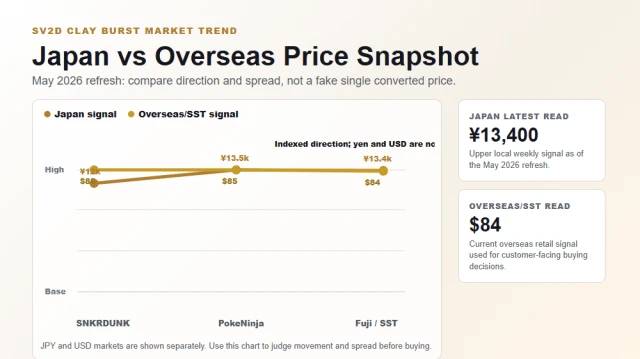
The market section is where the old articles were weakest. Japan signals now sit around ツ・12,000-13,400, while SST’s overseas retail signal is $84. That does not mean there is one perfect price. It means buyers should compare Japan source signals, overseas retail, shipping, condition, and the reason they are buying.

Clay Burst Japan vs overseas box price chart May 2026
Japan vs overseas market snapshot for Clay Burst, updated May 21, 2026. Yen and dollar signals are intentionally separated.
Market signal Earlier baseline May 2026 read Buyer meaning
Japan low/mid signal ¥12,000 ¥13,475 Shows whether the box is still in its old range or has reset upward.
Japan upper live signal Not always covered in old article ¥13,400 Use this to avoid anchoring to stale pricing.
Overseas/SST signal $85 $84 Customer-facing price must include shipping, handling, and sourcing realities.
Best buyer action Casual price check Compare landed cost and buyer goal Do not use one converted number as the entire market.

How to Read a Wide Spread

A wide spread is not automatically a contradiction. Japan domestic signals, overseas retail, buy-price references, and sold data all measure different parts of the market. The right article explains the spread instead of hiding it.

What Would Change the Recommendation?

The recommendation weakens if sealed supply returns in size, if the top-card demand cools, or if overseas pricing runs far above Japan without a condition or sourcing reason. It strengthens if the box holds its current range while the top cards remain liquid.

Current Market Thesis

Clay Burst is best treated as a set with a specific buyer thesis, not a generic Pokemon box. If the buyer wants that thesis, sealed can make sense. If the buyer only wants a single card, the market thesis is a warning to buy the single instead.

May 2026 Action Guide

If the current Japan signal is close to the overseas checkout price after shipping, buying from a trusted store is usually simpler than chasing a marginal discount. If Japan is materially lower, the buyer should ask whether the difference is real after fees and condition risk. If overseas is materially lower, the buyer should check whether the listing is old stock, opened stock, regional product, or missing condition details.

The correct conclusion is not always “buy now.” Sometimes the correct move is to watch the spread for another week, buy the single, or choose a different Japanese box with a better entry. The value of the chart is that it gives the reader a framework for that choice instead of leaving them with a stale price line from an older article.

Where to Buy Clay Burst

For SST customers, check the live product page first, then compare against the broader Japanese sealed collection if the box is out of stock or if another set better matches the buyer’s goal.

Clay Burst (SV2D) Booster Box

Japanese sealed booster box. Check live stock, current price, and shipping options before using old article assumptions.

View SV2D Box

Authenticity and 狀態 Checks

Check Why it matters
Factory shrink and seams 狀態-sensitive sealed boxes should not have questionable wrap or unclear photos.
Japanese set code Confirms you are buying SV2D, not an English or regional equivalent.
Box format 30 packs per box, 5 cards per pack should match the Japanese product.
Landed cost Shipping, taxes, duties, and payment fees matter more than sticker price alone.
Seller history Fast-moving boxes attract weak listings. Reliable sourcing reduces avoidable risk.

Use the SV2D card list to inspect every card, or browse the Japanese Pokemon sealed booster box collection if you are comparing alternatives.

The Bottom Line

Clay Burst is worth covering at full length because the buying decision is not just a top-10 list. The buyer needs product identity, current market context, chase-card odds, and a clear box-vs-singles answer. That is the gap this refresh closes.

The best buyer is someone who likes the set even when the top card does not appear. The worst buyer is someone who wants one exact SAR and thinks a box is the cheapest route. If you separate those two people, the recommendation becomes much clearer.

Best use case Buy sealed for the Clay Burst product story and optionality. Buy singles for precision. Use the current Japan vs overseas spread before deciding where to enter.

Frequently Asked Questions

What are the pull rates for Clay Burst?

Pokemon does not publish official pull rates. Treat SV2D as a Japanese box with regular hits, AR/CHR texture depending on the era, and one SR-or-better style slot, with SAR/CSR/UR/alternate-art outcomes as chance upgrades.

What is the best card in Clay Burst?

Iono is the leading chase in this refresh. The set still needs to be judged by the full premium pool, not only by the single top card.

Is Clay Burst worth buying in 2026?

Yes if you like the set identity and current sealed price. Buy singles instead if you only want Iono or one exact premium card.

How many cards are in Clay Burst?

Clay Burst has 71 main-set cards plus 28 secret or premium cards, 99 total cards in this guide’s count.

Is Clay Burst the same as Paldea Evolved?

No. Paldea Evolved is the English-market relationship. Clay Burst is the Japanese SV2D product with its own card numbering, box format, and sealed-market behavior.

Should I buy a Clay Burst box or Iono?

Buy Iono directly if that is the only target. Buy the box if you value the opening experience, sealed collecting, and multiple chase lanes.

What is the biggest risk with Clay Burst?

The biggest risk is treating one sealed box as a rational way to hit one exact card. Exact-card odds remain low even when any-premium-hit odds feel attractive.

Where can I see the full Clay Burst card list?

Use the SV2D card list linked in the article to inspect card numbers, artwork, and rarity before buying sealed or singles.

Is Clay Burst better than Snow Hazard?

Clay Burst is better if you prefer Iono demand and early SV-era history. Snow Hazard is the cleaner comparison if you want a different chase structure or sealed price band.

Is Clay Burst better opened or kept sealed?

Open it if the chase suite and pack experience matter. Keep it sealed if you want a clean Japanese box with current Japan-vs-overseas market support.
SV2P Snow Hazard 抽卡機率,最佳卡牌與盒裝價值 指南

Snow Hazard (SV2P) needed a full May 21, 2026 refresh because the old article read like a short card list instead of a serious buying guide. The current standard is different: lead with the buying answer, show the product, show the chase cards, explain the pull-rate math, and separate Japan market signals from overseas customer-facing prices.

The practical answer is simple. Buy sealed if you like Chien-Pao, Grusha, and the SV2 pair. Buy singles if you only want Grusha SAR or Chien-Pao ex SAR. A sealed box can be a strong purchase when you want the product story and the opening experience. It is a weak purchase when you are only using it as an expensive shortcut to one exact SAR.

This version follows the same format as the stronger SST Pokemon guides: current market proof, a real product image, a top-card grid, a Japan vs overseas chart, buyer segmentation, box EV, and a deeper FAQ section. The goal is not to pad word count; it is to answer the questions a collector or shop buyer actually has before ordering.

The biggest change is the order of the thinking. A thin article usually starts with a card ranking and only later mentions whether a box is worth buying. This refresh starts with the purchase decision because that is what search traffic is really asking. A reader wants to know whether sealed makes sense today, whether singles are smarter, whether the set has a reason to age well, and whether the visible price is current. The card ranking is still important, but it sits inside a fuller buying framework.

Snow Hazard SV2P pull rates and best cards guide
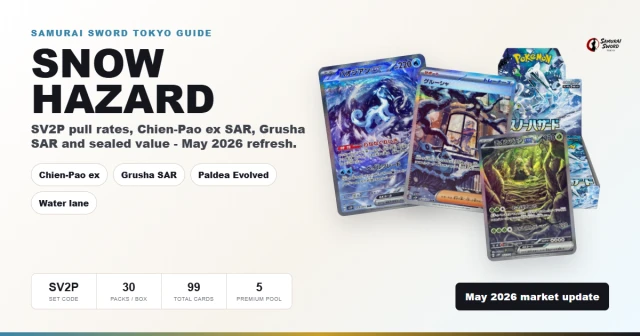
Thumbnail composite for Snow Hazard using SST product imagery and key chase-card imagery.
Key Takeaway Snow Hazard is the cleaner Chien-Pao and Grusha box, with a lower ceiling than Clay Burst but less dependence on one trainer card. Japan signals now sit around ツ・9,999-12,300, while SST’s overseas retail signal is $74.5. Judge the box by buyer type: sealed collectors, singles buyers, openers, and import buyers all need different advice.
SV2PSet code
30Packs / box
99Total cards
5Premium pool

Snow Hazard Set Overview

Snow Hazard is the Japanese SV2P product released on April 14, 2023. It connects to Paldea Evolved, but Japanese sealed buyers should treat it as its own product with its own card numbering, box price, and collector identity.

The old short article format usually stopped at release date, card count, and a top-10 table. That is not enough. A modern buyer needs to know whether the set has a durable reason to exist, whether the sealed price is moving, whether the top cards justify opening, and how the Japanese box compares with English or adjacent Japanese sets.

Spec Detail
Set code SV2P
Japanese release April 14, 2023
Card count 71 main-set cards plus 28 secret cards, 99 total
Box format 30 packs per box, 5 cards per pack
SAR count 5 Special Art Rare cards
Current Japan signal Japan signals now sit around ツ・9,999-12,300, while SST’s overseas retail signal is $74.5.
Best buyer Collector or shop buyer who understands the set story and is not relying on one exact pull.
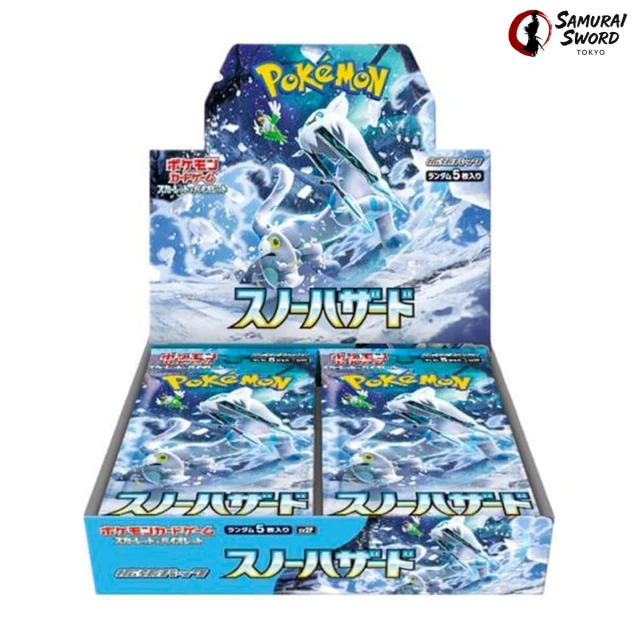
Snow Hazard Japanese Pokemon booster box
Snow Hazard sealed Japanese booster box. The product image is shown early so the article card and article body match the product being sold.

What Changed in the May 2026 Refresh

The old article was useful as a first pass, but it was too thin for the current blog standard. It had fewer visual breaks, a weaker market section, and a shorter decision path. This refresh adds the missing context: why the set matters, where the box sits today, how the top cards rank, and when singles make more sense than sealed.

Japanese Box vs English Relationship

English products are easier for many local buyers, but the Japanese product is cleaner for collectors who want one exact set code and Japanese print quality. The Japanese box also has a more direct sealed-market signal because the product is not blended with multiple Japanese sources the way many English releases are.

Factor Japanese Snow Hazard Paldea Evolved
Product identity One Japanese set code, one box, one collector story English market relationship with different distribution and buyer behavior
Best for Japanese sealed collectors, import buyers, visual collectors Local players and buyers who prefer English cards
Pricing Read Japan and overseas separately Often easier to find locally, but not the same sealed thesis
Buying mistake Using old article prices after the market has moved Assuming English and Japanese pull economics are identical

What the Product Page Should Help You Decide

A strong set guide should reduce hesitation before the product page click. For Snow Hazard, the reader should leave this section knowing the set code, the card count, the box format, the major chase lanes, and the current market spread. That is enough to compare the box against other Japanese sealed products without opening a dozen tabs.

This is especially important for overseas buyers. A small difference in listed price can disappear once shipping, payment fees, import tax, and condition risk are included. The article therefore treats price as a range and a decision signal, not as a single permanent number. That is the difference between a useful ecommerce guide and a static checklist.

Top 10 Best Cards and Current Market Read

Snow Hazard is the cleaner Chien-Pao and Grusha box, with a lower ceiling than Clay Burst but less dependence on one trainer card. The top-card table below uses the local PriceCharting cache and Fuji card-list image set where available, then frames each card by why a buyer would care. Prices are not permanent; the ranking is useful because it shows the shape of demand.

Rank Card Rarity Raw price signal Why it matters
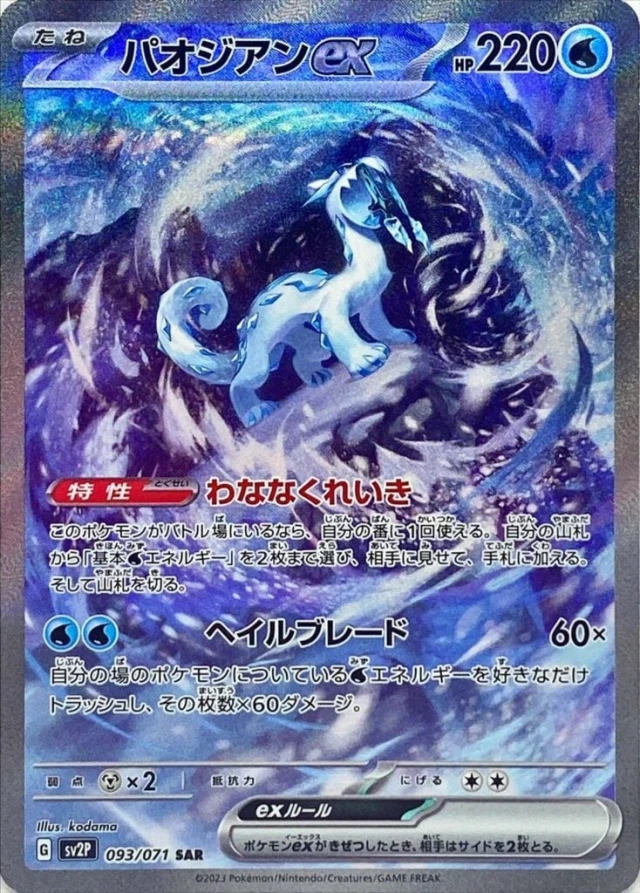
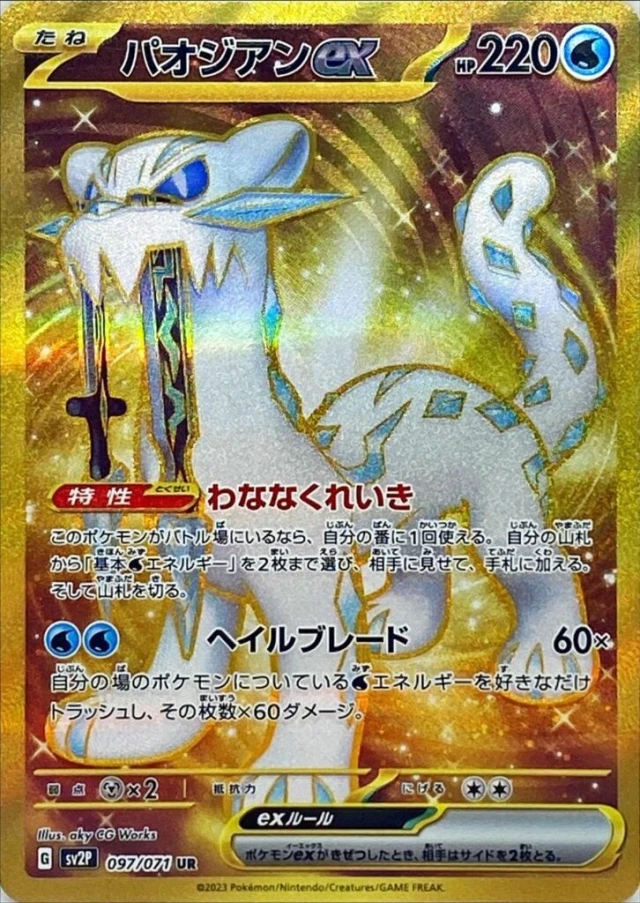
1 Chien-Pao ex 93/71 SAR $30.86 The mascot SAR and clearest Pokemon chase.
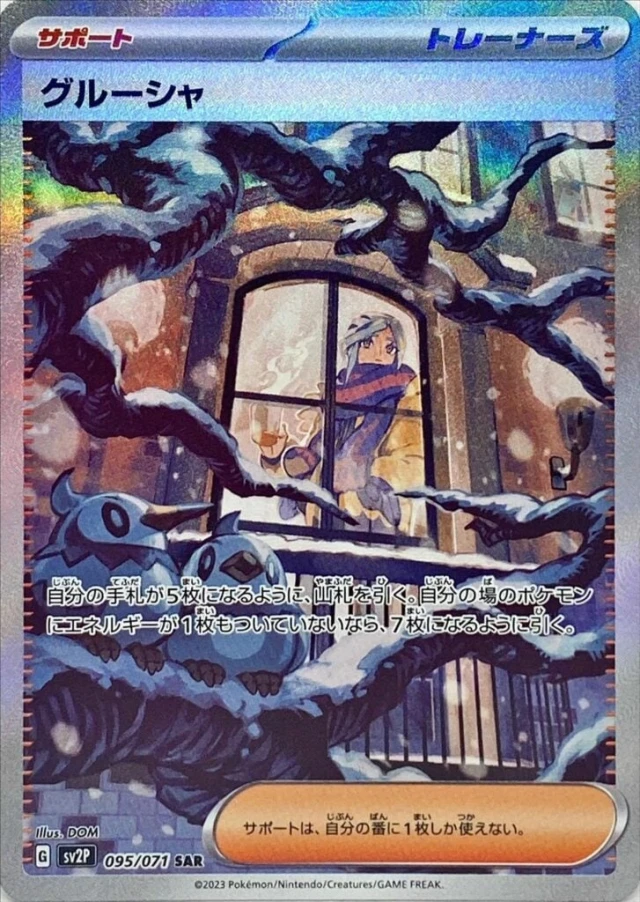
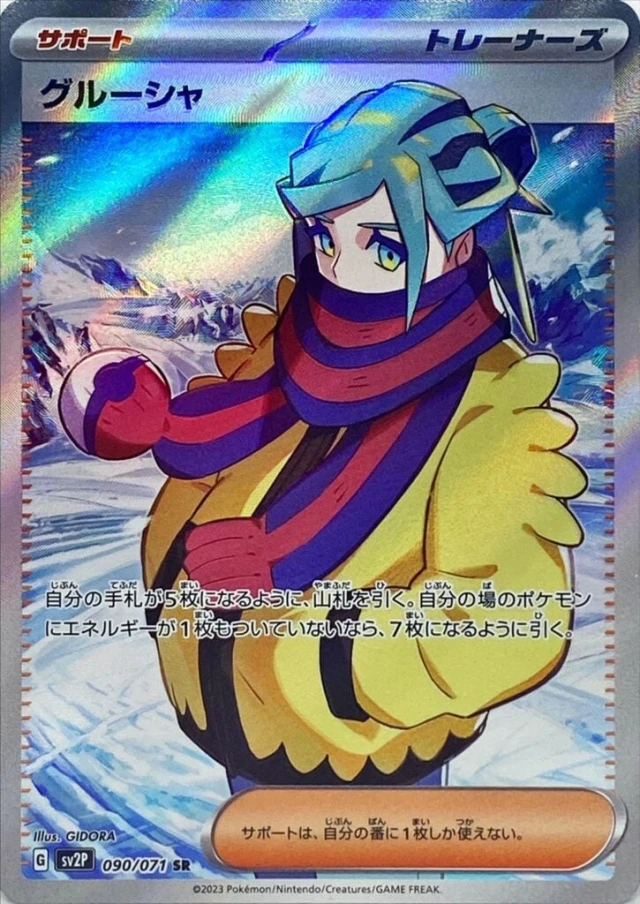
2 Grusha 95/71 SAR $32.00 Grusha is the leading trainer chase and the card many collectors remember first.
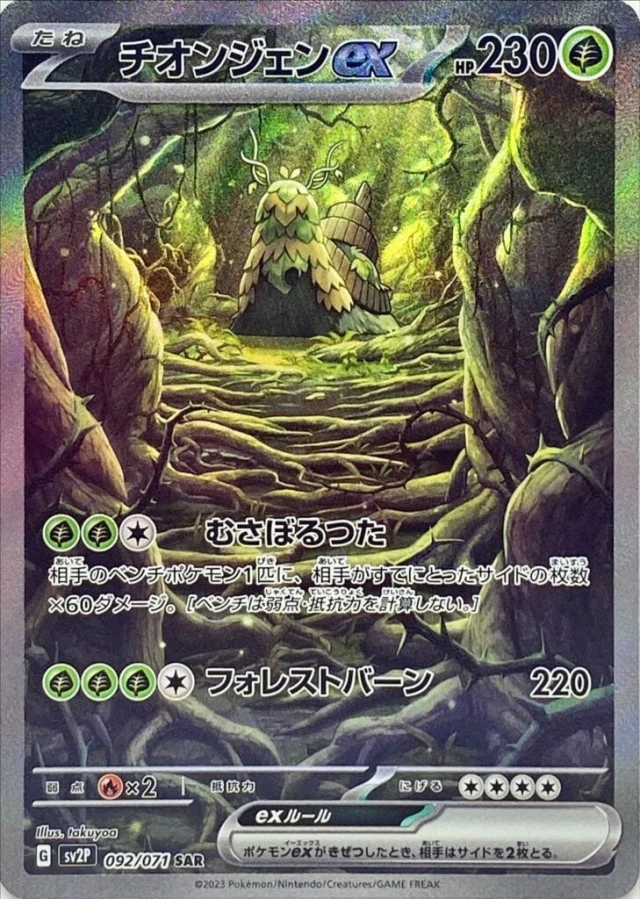
3 Wo-Chien ex 92/71 SAR $14.50 Secondary Treasures of Ruin SAR that deepens the premium pool.
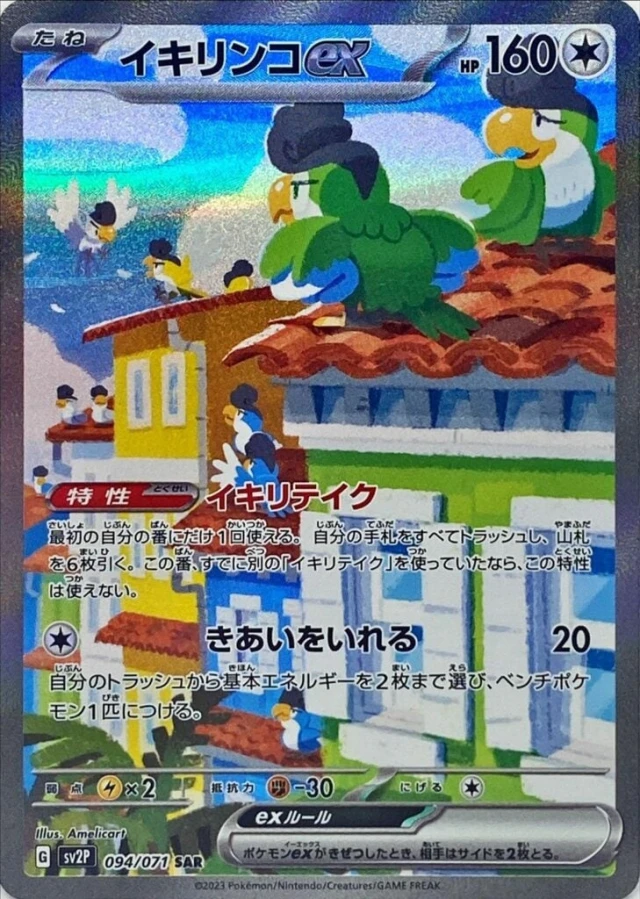
4 Squawkabilly ex 94/71 SAR $16.48 Playable Pokemon SAR with collector relevance.
5 Chien-Pao ex 97/71 UR $6.35 Gold mascot card for Chien-Pao buyers.
6 Grusha 90/71 SR $8.00 Grusha SR is the lower-cost trainer route.
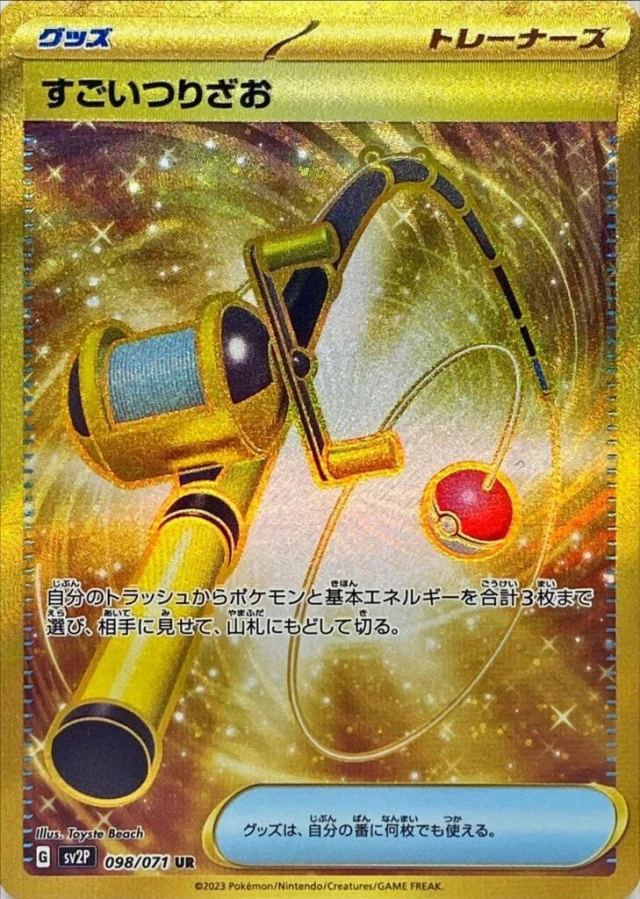
7 Super Rod 98/71 UR $16.75 Playable gold-card demand improves the box floor.
8 Frigibax 75/71 AR $5.74 Frigibax AR connects directly to the Chien-Pao/Baxcalibur water lane.
9 Baxcalibur 77/71 AR $8.10 Baxcalibur AR has strong evolution-line appeal.
10 Water Energy 99/71 UR $13.00 Gold energy fits the set identity and completionist demand.
Chien-Pao ex SAR from Snow HazardSAR

Chien-Pao ex

The mascot SAR and clearest Pokemon chase.

Grusha SAR from Snow HazardSAR

Grusha

Grusha is the leading trainer chase and the card many collectors remember first.

Wo-Chien ex SAR from Snow HazardSAR

Wo-Chien ex

Secondary Treasures of Ruin SAR that deepens the premium pool.

Top-Card Thesis

The best version of a set guide explains why the top card leads. For Snow Hazard, the top layer works because the cards are tied to the set story rather than feeling randomly expensive. The market can move, but the identity is easier to defend when the chase cards are aligned with the product name, mascot, character focus, or mechanic.

Secondary Hit Layer

A box feels better when there are enough cards below the top chase to keep opening from becoming binary. That does not mean every SAR or UR pays for the box. It means the buyer has several outcomes that still feel like meaningful collection pieces.

Squawkabilly ex SAR from Snow HazardSAR

Squawkabilly ex

Playable Pokemon SAR with collector relevance.

Chien-Pao ex UR from Snow HazardUR

Chien-Pao ex

Gold mascot card for Chien-Pao buyers.

Grusha SR from Snow HazardSR

Grusha

Grusha SR is the lower-cost trainer route.

Super Rod UR from Snow HazardUR

Super Rod

Playable gold-card demand improves the box floor.

Budget Singles Worth Watching

Budget singles matter because not every reader is ready to buy a sealed box or a top SAR. Lower-cost SRs, ARs, and URs often make the article more useful for collectors who want the set identity without paying for the top card. For Snow Hazard, the lower layer also helps explain why opening can still be enjoyable even when the expected value is below sealed price.

The lower layer also matters for resale and customer education. A shop buyer can sell the top chase easily, but the box becomes easier to merchandise when there are several cards that look good in a display case, binder page, or break menu. That is why the article covers secondary SARs, ARs, and URs instead of treating everything outside the top three as filler.

What Makes Snow Hazard Special

Snow Hazard Is the Ice Half of the SV2 Pair

Snow Hazard pairs naturally with Clay Burst but has its own identity: Chien-Pao, Grusha, Baxcalibur, and icy Paldea visuals make the product feel colder and more cohesive.

Why the Set Can Be Explained Quickly

A strong ecommerce article should make the set understandable from a thumbnail, a product card, or a quick scan. Snow Hazard has that advantage: its best cards and product identity point in the same direction. That makes it easier for collectors, store buyers, and breakers to communicate the product without a long explanation.

Why That Matters for Sealed Boxes

Sealed boxes do not trade only on average pull value. They also trade on identity, scarcity, display appeal, and whether future buyers can understand the box quickly. A set with a clear story can stay easier to sell than a technically similar set whose top cards feel disconnected from the product.

Collector Memory and Thumbnail Recognition

Collector memory is practical, not abstract. If a buyer can remember the set from one image and one chase lane, the article and product card have a much better chance of converting later. Snow Hazard should therefore be presented with its box image, its most recognizable cards, and the set-specific hook near the top of the page. A text-only article forces the reader to do too much work.

Should You Buy a Snow Hazard Box in 2026?

Buy sealed if you like Chien-Pao, Grusha, and the SV2 pair. Buy singles if you only want Grusha SAR or Chien-Pao ex SAR. The honest answer changes by buyer type. That is the main reason the new article format needs more depth than the old one.

Buyer type Best action Reason
Exact top-card buyer Buy the single Specific-card odds are low, even when the set itself is good.
Sealed collector Buy after checking current spread The product story matters, but stale pricing can produce bad entries.
Casual opener Buy one box if lower hits are acceptable The box can be fun without guaranteeing the chase card.
Shop or breaker Buy if the set story is easy for your customers Clear chase identity matters for merchandising and breaks.
Player Buy singles Playable needs are cheaper and cleaner through targeted purchases.
Import buyer Compare landed cost Shipping, duties, and currency spread can erase a low sticker price.

Box vs Singles

Singles are the rational route for one exact chase. Sealed boxes are for the product experience, shelf identity, and optionality. The article should not confuse those two jobs. A box can be good and still be the wrong route to one card.

Compared With Clay Burst

Use Clay Burst as the comparison point rather than treating every SV-era box as identical. The better buy is the one whose chase structure matches the buyer’s goal. Sometimes that means paying more for a stronger chase; sometimes it means buying the cheaper box because the set identity is enough.

Sealed Holding Logic

The sealed holding case depends on whether the box will still be easy to explain later. Snow Hazard has a clearer story than many generic mid-era boxes, but that does not remove restock, reprint, or demand risk. Buy sealed because you want the box and understand the thesis, not because an article says every sealed Pokemon product must rise.

How to Compare Entry Prices

Do not compare one seller’s Japan sticker price with another seller’s international checkout price as if they are the same thing. A clean comparison includes product condition, whether the box is factory sealed, shipping speed, tracking, payment fees, and the risk of dealing with an unknown marketplace seller. The cheapest visible number is not always the cheapest final purchase.

For repeat buyers and stores, consistency can be worth more than a small discount. A predictable sourcing route makes it easier to reorder, answer customer questions, and avoid condition disputes. For one-time collectors, the right move is often to decide the maximum landed cost first, then choose the cleanest box inside that budget.

Pull Rates, Chase Odds and Box EV

Pokemon does not publish official pull rates for Japanese booster boxes. The estimates below are decision support based on typical Japanese SV-era structure and community opening behavior, not guaranteed odds.

Pull Rate Reality The key distinction is any premium hit versus one exact card. A buyer can reasonably expect a satisfying box and still be very unlikely to pull the exact SAR they want.

Estimated Pull Rate Breakdown

Rarity or slot Estimated box behavior Buyer meaning
RR / ex Several per box Baseline hits, not the sealed-price thesis.
AR Multiple visual hits in many boxes Binder value and casual opening satisfaction.
SR Most boxes are anchored by an SR-or-better style slot The most common premium outcome.
SAR Chance upgrade, not guaranteed The main collector chase, but exact-card odds are much lower.
UR Lower-frequency gold-card upgrade Useful for collectors and playable/gold-card buyers.

Specific Chase Odds

If a buyer wants one exact SAR, the correct mental model is multi-box odds. Even if a set has a relatively small SAR pool, the box still has to hit the SAR layer and then hit the correct card inside that layer. That is why the recommendation for exact-card buyers is nearly always singles first.

Goal Estimated route Recommendation
Enjoy one sealed box Reasonable Buy sealed if the set story appeals to you.
Pull any premium card Reasonable but variable Open if lower outcomes are acceptable.
Pull the top SAR Low exact-card odds Buy the single if this is the only target.
Build a master set Boxes plus singles Use sealed for base volume, singles for expensive gaps.
Hold sealed No pull risk Focus on box condition, authenticity, and entry price.

Box EV Context

Expected value is usually below sealed price for Pokemon boxes. That is normal. The sealed price includes scarcity, product identity, optionality, and the entertainment value of opening. The mistake is using EV as the only reason to buy or ignoring EV completely. A strong guide shows both.

EV component Role in Snow Hazard How to use it
Top SARs Main upside Great when hit, too rare to rely on.
Secondary SARs Reduce binary feel Make opening more satisfying below the top card.
SR/AR layer Baseline visual value Important for casual collectors and binder builders.
UR layer Gold-card optionality Can matter when the card is playable or iconic.
Sealed premium Box value beyond pulls Driven by condition, supply, and set identity.

Opening Plan by Budget

One box is best treated as an experience purchase. Two or three boxes can give a better feel for the set, but they still do not turn an exact SAR into a reliable outcome. If a buyer plans to spend more than the price of the target single, the singles route should be reconsidered before opening another box.

The balanced route for many collectors is one sealed box plus targeted singles. The box provides the product memory, base cards, AR texture, and a chance at upside. Singles then finish the exact chase cards without forcing the buyer to gamble through a larger sealed budget. That hybrid strategy is often better than pure sealed opening or pure singles buying.

Japan vs Overseas Price Snapshot

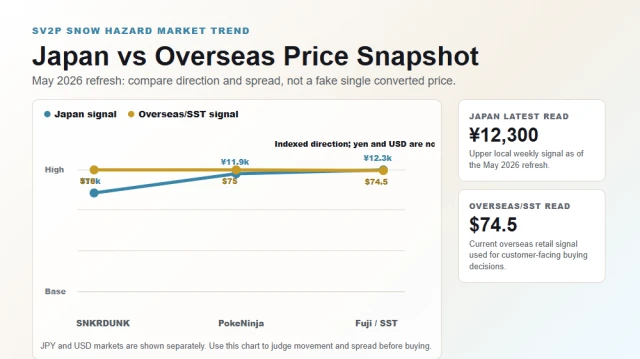
The market section is where the old articles were weakest. Japan signals now sit around ツ・9,999-12,300, while SST’s overseas retail signal is $74.5. That does not mean there is one perfect price. It means buyers should compare Japan source signals, overseas retail, shipping, condition, and the reason they are buying.

Snow Hazard Japan vs overseas box price chart May 2026
Japan vs overseas market snapshot for Snow Hazard, updated May 21, 2026. Yen and dollar signals are intentionally separated.
Market signal Earlier baseline May 2026 read Buyer meaning
Japan low/mid signal ¥9,999 ¥11,890 Shows whether the box is still in its old range or has reset upward.
Japan upper live signal Not always covered in old article ¥12,300 Use this to avoid anchoring to stale pricing.
Overseas/SST signal $75 $74.5 Customer-facing price must include shipping, handling, and sourcing realities.
Best buyer action Casual price check Compare landed cost and buyer goal Do not use one converted number as the entire market.

How to Read a Wide Spread

A wide spread is not automatically a contradiction. Japan domestic signals, overseas retail, buy-price references, and sold data all measure different parts of the market. The right article explains the spread instead of hiding it.

What Would Change the Recommendation?

The recommendation weakens if sealed supply returns in size, if the top-card demand cools, or if overseas pricing runs far above Japan without a condition or sourcing reason. It strengthens if the box holds its current range while the top cards remain liquid.

Current Market Thesis

Snow Hazard is best treated as a set with a specific buyer thesis, not a generic Pokemon box. If the buyer wants that thesis, sealed can make sense. If the buyer only wants a single card, the market thesis is a warning to buy the single instead.

May 2026 Action Guide

If the current Japan signal is close to the overseas checkout price after shipping, buying from a trusted store is usually simpler than chasing a marginal discount. If Japan is materially lower, the buyer should ask whether the difference is real after fees and condition risk. If overseas is materially lower, the buyer should check whether the listing is old stock, opened stock, regional product, or missing condition details.

The correct conclusion is not always “buy now.” Sometimes the correct move is to watch the spread for another week, buy the single, or choose a different Japanese box with a better entry. The value of the chart is that it gives the reader a framework for that choice instead of leaving them with a stale price line from an older article.

Where to Buy Snow Hazard

For SST customers, check the live product page first, then compare against the broader Japanese sealed collection if the box is out of stock or if another set better matches the buyer’s goal.

Snow Hazard (SV2P) Booster Box

Japanese sealed booster box. Check live stock, current price, and shipping options before using old article assumptions.

View SV2P Box

Authenticity and 狀態 Checks

Check Why it matters
Factory shrink and seams 狀態-sensitive sealed boxes should not have questionable wrap or unclear photos.
Japanese set code Confirms you are buying SV2P, not an English or regional equivalent.
Box format 30 packs per box, 5 cards per pack should match the Japanese product.
Landed cost Shipping, taxes, duties, and payment fees matter more than sticker price alone.
Seller history Fast-moving boxes attract weak listings. Reliable sourcing reduces avoidable risk.

Use the SV2P card list to inspect every card, or browse the Japanese Pokemon sealed booster box collection if you are comparing alternatives.

The Bottom Line

Snow Hazard is worth covering at full length because the buying decision is not just a top-10 list. The buyer needs product identity, current market context, chase-card odds, and a clear box-vs-singles answer. That is the gap this refresh closes.

The best buyer is someone who likes the set even when the top card does not appear. The worst buyer is someone who wants one exact SAR and thinks a box is the cheapest route. If you separate those two people, the recommendation becomes much clearer.

Best use case Buy sealed for the Snow Hazard product story and optionality. Buy singles for precision. Use the current Japan vs overseas spread before deciding where to enter.

Frequently Asked Questions

What are the pull rates for Snow Hazard?

Pokemon does not publish official pull rates. Treat SV2P as a Japanese box with regular hits, AR/CHR texture depending on the era, and one SR-or-better style slot, with SAR/CSR/UR/alternate-art outcomes as chance upgrades.

What is the best card in Snow Hazard?

Chien-Pao ex is the leading chase in this refresh. The set still needs to be judged by the full premium pool, not only by the single top card.

Is Snow Hazard worth buying in 2026?

Yes if you like the set identity and current sealed price. Buy singles instead if you only want Chien-Pao ex or one exact premium card.

How many cards are in Snow Hazard?

Snow Hazard has 71 main-set cards plus 28 secret or premium cards, 99 total cards in this guide’s count.

Is Snow Hazard the same as Paldea Evolved?

No. Paldea Evolved is the English-market relationship. Snow Hazard is the Japanese SV2P product with its own card numbering, box format, and sealed-market behavior.

Should I buy a Snow Hazard box or Chien-Pao ex?

Buy Chien-Pao ex directly if that is the only target. Buy the box if you value the opening experience, sealed collecting, and multiple chase lanes.

What is the biggest risk with Snow Hazard?

The biggest risk is treating one sealed box as a rational way to hit one exact card. Exact-card odds remain low even when any-premium-hit odds feel attractive.

Where can I see the full Snow Hazard card list?

Use the SV2P card list linked in the article to inspect card numbers, artwork, and rarity before buying sealed or singles.

Is Snow Hazard better than Clay Burst?

Snow Hazard is better if you prefer Chien-Pao, Grusha, and the ice-themed SV2 lane. Clay Burst is the cleaner comparison if you want a different chase structure or sealed price band.

Is Snow Hazard better opened or kept sealed?

Open it if the chase suite and pack experience matter. Keep it sealed if you want a clean Japanese box with current Japan-vs-overseas market support.
SV1A Triplet Beat 抽卡機率,最佳卡牌與盒裝價值 指南

Triplet Beat (SV1A) needed a full May 21, 2026 refresh because the old article read like a short card list instead of a serious buying guide. The current standard is different: lead with the buying answer, show the product, show the chase cards, explain the pull-rate math, and separate Japan market signals from overseas customer-facing prices.

The practical answer is simple. Buy sealed if you want the first enhanced SV subset and the Paldea starter trio. Buy singles if Dendra SAR or Meowscarada ex SAR is your only target. A sealed box can be a strong purchase when you want the product story and the opening experience. It is a weak purchase when you are only using it as an expensive shortcut to one exact SAR.

This version follows the same format as the stronger SST Pokemon guides: current market proof, a real product image, a top-card grid, a Japan vs overseas chart, buyer segmentation, box EV, and a deeper FAQ section. The goal is not to pad word count; it is to answer the questions a collector or shop buyer actually has before ordering.

The biggest change is the order of the thinking. A thin article usually starts with a card ranking and only later mentions whether a box is worth buying. This refresh starts with the purchase decision because that is what search traffic is really asking. A reader wants to know whether sealed makes sense today, whether singles are smarter, whether the set has a reason to age well, and whether the visible price is current. The card ranking is still important, but it sits inside a fuller buying framework.

Triplet Beat SV1A pull rates and best cards guide
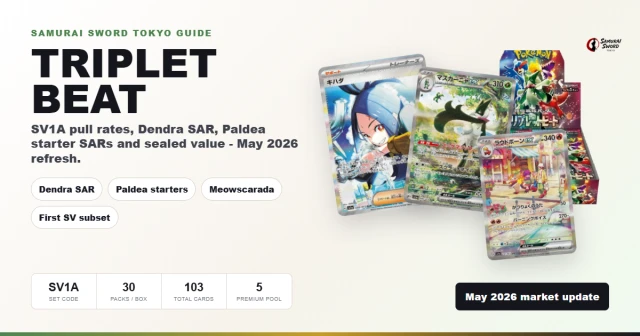
Thumbnail composite for Triplet Beat using SST product imagery and key chase-card imagery.
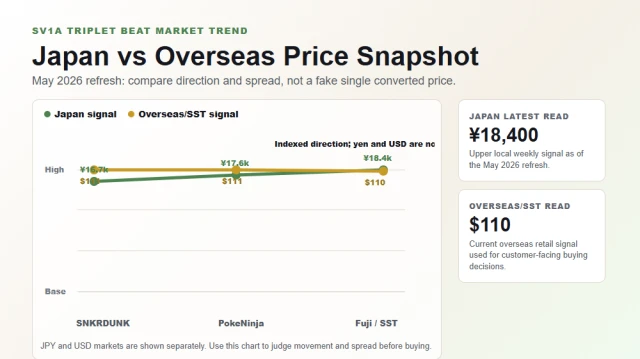
Key Takeaway Triplet Beat is a Paldea starter box with Dendra as the trainer chase and Meowscarada, Skeledirge, and Quaquaval as the product story. Japan signals now sit around ツ・16,666-18,400, while SST’s overseas retail signal is $110. Judge the box by buyer type: sealed collectors, singles buyers, openers, and import buyers all need different advice.
SV1ASet code
30Packs / box
103Total cards
5Premium pool

Triplet Beat Set Overview

Triplet Beat is the Japanese SV1A product released on March 10, 2023. It connects to Paldea Evolved, but Japanese sealed buyers should treat it as its own product with its own card numbering, box price, and collector identity.

The old short article format usually stopped at release date, card count, and a top-10 table. That is not enough. A modern buyer needs to know whether the set has a durable reason to exist, whether the sealed price is moving, whether the top cards justify opening, and how the Japanese box compares with English or adjacent Japanese sets.

Spec Detail
Set code SV1A
Japanese release March 10, 2023
Card count 73 main-set cards plus 30 secret cards, 103 total
Box format 30 packs per box, 5 cards per pack
SAR count 5 Special Art Rare cards
Current Japan signal Japan signals now sit around ツ・16,666-18,400, while SST’s overseas retail signal is $110.
Best buyer Collector or shop buyer who understands the set story and is not relying on one exact pull.
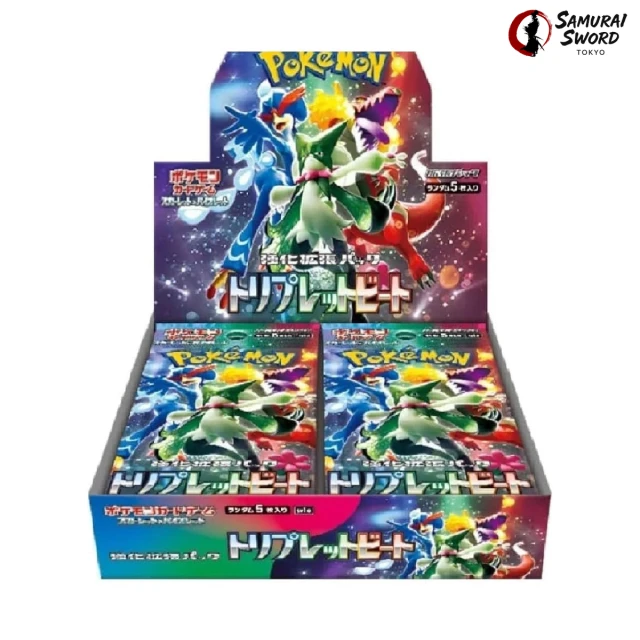
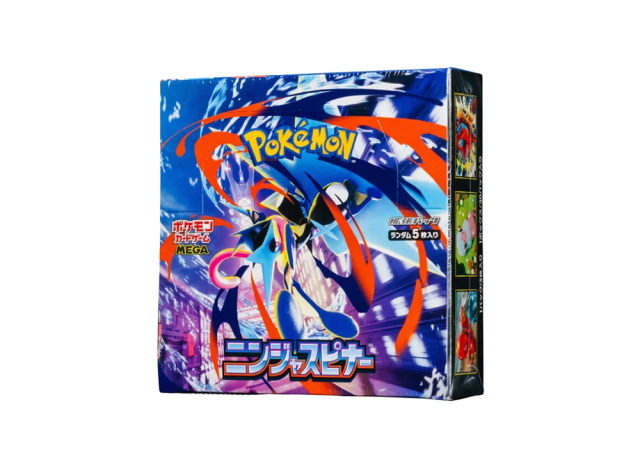
Triplet Beat Japanese Pokemon booster box
Triplet Beat sealed Japanese booster box. The product image is shown early so the article card and article body match the product being sold.

What Changed in the May 2026 Refresh

The old article was useful as a first pass, but it was too thin for the current blog standard. It had fewer visual breaks, a weaker market section, and a shorter decision path. This refresh adds the missing context: why the set matters, where the box sits today, how the top cards rank, and when singles make more sense than sealed.

Japanese Box vs English Relationship

English products are easier for many local buyers, but the Japanese product is cleaner for collectors who want one exact set code and Japanese print quality. The Japanese box also has a more direct sealed-market signal because the product is not blended with multiple Japanese sources the way many English releases are.

Factor Japanese Triplet Beat Paldea Evolved
Product identity One Japanese set code, one box, one collector story English market relationship with different distribution and buyer behavior
Best for Japanese sealed collectors, import buyers, visual collectors Local players and buyers who prefer English cards
Pricing Read Japan and overseas separately Often easier to find locally, but not the same sealed thesis
Buying mistake Using old article prices after the market has moved Assuming English and Japanese pull economics are identical

What the Product Page Should Help You Decide

A strong set guide should reduce hesitation before the product page click. For Triplet Beat, the reader should leave this section knowing the set code, the card count, the box format, the major chase lanes, and the current market spread. That is enough to compare the box against other Japanese sealed products without opening a dozen tabs.

This is especially important for overseas buyers. A small difference in listed price can disappear once shipping, payment fees, import tax, and condition risk are included. The article therefore treats price as a range and a decision signal, not as a single permanent number. That is the difference between a useful ecommerce guide and a static checklist.

Top 10 Best Cards and Current Market Read

Triplet Beat is a Paldea starter box with Dendra as the trainer chase and Meowscarada, Skeledirge, and Quaquaval as the product story. The top-card table below uses the local PriceCharting cache and Fuji card-list image set where available, then frames each card by why a buyer would care. Prices are not permanent; the ranking is useful because it shows the shape of demand.

Rank Card Rarity Raw price signal Why it matters
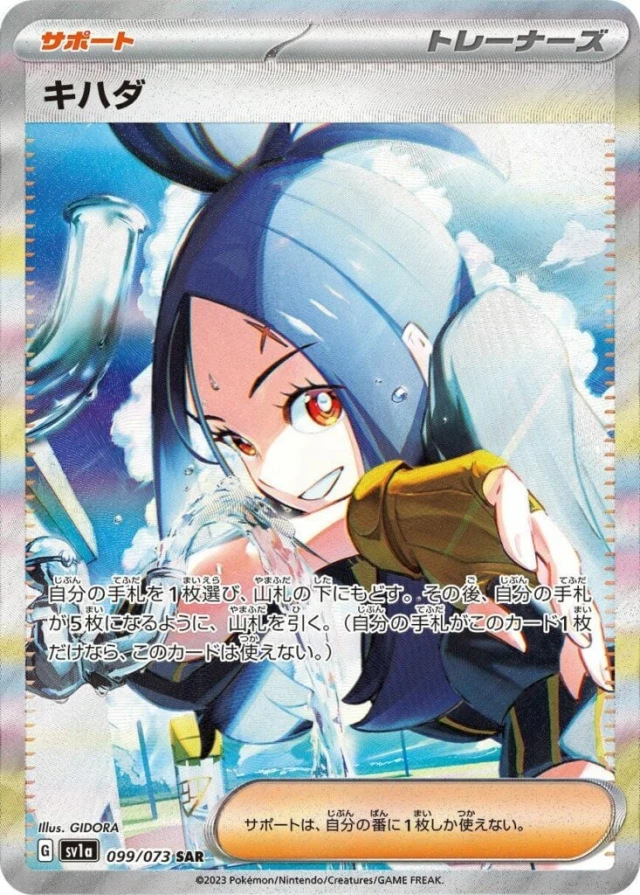
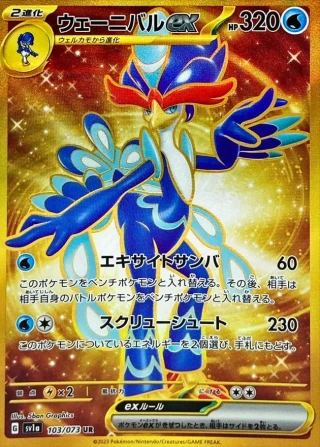
1 Dendra 99/73 SAR $59.88 The top trainer chase and the card that gives the box its market ceiling.
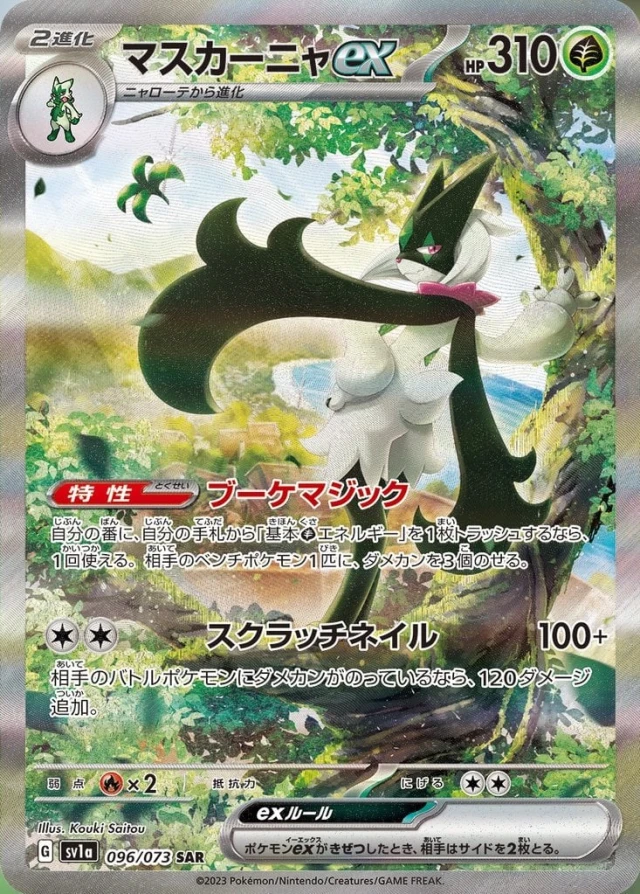
2 Meowscarada ex 96/73 SAR $57.99 The most popular Paldea starter SAR and a strong collector card.
3 Skeledirge ex 97/73 SAR $35.00 Fire starter SAR with distinct stage presence.
4 Quaquaval ex 98/73 SAR $19.55 Completes the starter SAR trio.
5 Meowscarada ex 101/73 UR $12.30 Gold version of the top starter chase.
6 Skeledirge ex 102/73 UR $8.49 Gold fire starter for completionists.
7 Quaquaval ex 103/73 UR $6.69 Gold water starter and trio completion card.
8 Magikarp 80/73 AR $110.69 Magikarp AR gives the set one of its most memorable low-rarity cards.
9 Dendra 92/73 SR $6.32 Lower-cost trainer alternative to Dendra SAR.
10 Boss’s Orders 95/73 SR $6.00 Recognizable trainer SR with broad play history.
Dendra SAR from Triplet BeatSAR

Dendra

The top trainer chase and the card that gives the box its market ceiling.

Meowscarada ex SAR from Triplet BeatSAR

Meowscarada ex

The most popular Paldea starter SAR and a strong collector card.

Skeledirge ex SAR from Triplet BeatSAR

Skeledirge ex

Fire starter SAR with distinct stage presence.

Top-Card Thesis

The best version of a set guide explains why the top card leads. For Triplet Beat, the top layer works because the cards are tied to the set story rather than feeling randomly expensive. The market can move, but the identity is easier to defend when the chase cards are aligned with the product name, mascot, character focus, or mechanic.

Secondary Hit Layer

A box feels better when there are enough cards below the top chase to keep opening from becoming binary. That does not mean every SAR or UR pays for the box. It means the buyer has several outcomes that still feel like meaningful collection pieces.

Quaquaval ex SAR from Triplet BeatSAR

Quaquaval ex

Completes the starter SAR trio.

Meowscarada ex UR from Triplet BeatUR

Meowscarada ex

Gold version of the top starter chase.

Skeledirge ex UR from Triplet BeatUR

Skeledirge ex

Gold fire starter for completionists.

Quaquaval ex UR from Triplet BeatUR

Quaquaval ex

Gold water starter and trio completion card.

Budget Singles Worth Watching

Budget singles matter because not every reader is ready to buy a sealed box or a top SAR. Lower-cost SRs, ARs, and URs often make the article more useful for collectors who want the set identity without paying for the top card. For Triplet Beat, the lower layer also helps explain why opening can still be enjoyable even when the expected value is below sealed price.

The lower layer also matters for resale and customer education. A shop buyer can sell the top chase easily, but the box becomes easier to merchandise when there are several cards that look good in a display case, binder page, or break menu. That is why the article covers secondary SARs, ARs, and URs instead of treating everything outside the top three as filler.

What Makes Triplet Beat Special

The Three Paldea Starters Are the Set

Triplet Beat is unusually easy to merchandise because the product promise is in the name: three starter lines, three ex evolutions, and a clean early-SV identity.

Why the Set Can Be Explained Quickly

A strong ecommerce article should make the set understandable from a thumbnail, a product card, or a quick scan. Triplet Beat has that advantage: its best cards and product identity point in the same direction. That makes it easier for collectors, store buyers, and breakers to communicate the product without a long explanation.

Why That Matters for Sealed Boxes

Sealed boxes do not trade only on average pull value. They also trade on identity, scarcity, display appeal, and whether future buyers can understand the box quickly. A set with a clear story can stay easier to sell than a technically similar set whose top cards feel disconnected from the product.

Collector Memory and Thumbnail Recognition

Collector memory is practical, not abstract. If a buyer can remember the set from one image and one chase lane, the article and product card have a much better chance of converting later. Triplet Beat should therefore be presented with its box image, its most recognizable cards, and the set-specific hook near the top of the page. A text-only article forces the reader to do too much work.

Should You Buy a Triplet Beat Box in 2026?

Buy sealed if you want the first enhanced SV subset and the Paldea starter trio. Buy singles if Dendra SAR or Meowscarada ex SAR is your only target. The honest answer changes by buyer type. That is the main reason the new article format needs more depth than the old one.

Buyer type Best action Reason
Exact top-card buyer Buy the single Specific-card odds are low, even when the set itself is good.
Sealed collector Buy after checking current spread The product story matters, but stale pricing can produce bad entries.
Casual opener Buy one box if lower hits are acceptable The box can be fun without guaranteeing the chase card.
Shop or breaker Buy if the set story is easy for your customers Clear chase identity matters for merchandising and breaks.
Player Buy singles Playable needs are cheaper and cleaner through targeted purchases.
Import buyer Compare landed cost Shipping, duties, and currency spread can erase a low sticker price.

Box vs Singles

Singles are the rational route for one exact chase. Sealed boxes are for the product experience, shelf identity, and optionality. The article should not confuse those two jobs. A box can be good and still be the wrong route to one card.

Compared With Clay Burst

Use Clay Burst as the comparison point rather than treating every SV-era box as identical. The better buy is the one whose chase structure matches the buyer’s goal. Sometimes that means paying more for a stronger chase; sometimes it means buying the cheaper box because the set identity is enough.

Sealed Holding Logic

The sealed holding case depends on whether the box will still be easy to explain later. Triplet Beat has a clearer story than many generic mid-era boxes, but that does not remove restock, reprint, or demand risk. Buy sealed because you want the box and understand the thesis, not because an article says every sealed Pokemon product must rise.

How to Compare Entry Prices

Do not compare one seller’s Japan sticker price with another seller’s international checkout price as if they are the same thing. A clean comparison includes product condition, whether the box is factory sealed, shipping speed, tracking, payment fees, and the risk of dealing with an unknown marketplace seller. The cheapest visible number is not always the cheapest final purchase.

For repeat buyers and stores, consistency can be worth more than a small discount. A predictable sourcing route makes it easier to reorder, answer customer questions, and avoid condition disputes. For one-time collectors, the right move is often to decide the maximum landed cost first, then choose the cleanest box inside that budget.

Pull Rates, Chase Odds and Box EV

Pokemon does not publish official pull rates for Japanese booster boxes. The estimates below are decision support based on typical Japanese SV-era structure and community opening behavior, not guaranteed odds.

Pull Rate Reality The key distinction is any premium hit versus one exact card. A buyer can reasonably expect a satisfying box and still be very unlikely to pull the exact SAR they want.

Estimated Pull Rate Breakdown

Rarity or slot Estimated box behavior Buyer meaning
RR / ex Several per box Baseline hits, not the sealed-price thesis.
AR Multiple visual hits in many boxes Binder value and casual opening satisfaction.
SR Most boxes are anchored by an SR-or-better style slot The most common premium outcome.
SAR Chance upgrade, not guaranteed The main collector chase, but exact-card odds are much lower.
UR Lower-frequency gold-card upgrade Useful for collectors and playable/gold-card buyers.

Specific Chase Odds

If a buyer wants one exact SAR, the correct mental model is multi-box odds. Even if a set has a relatively small SAR pool, the box still has to hit the SAR layer and then hit the correct card inside that layer. That is why the recommendation for exact-card buyers is nearly always singles first.

Goal Estimated route Recommendation
Enjoy one sealed box Reasonable Buy sealed if the set story appeals to you.
Pull any premium card Reasonable but variable Open if lower outcomes are acceptable.
Pull the top SAR Low exact-card odds Buy the single if this is the only target.
Build a master set Boxes plus singles Use sealed for base volume, singles for expensive gaps.
Hold sealed No pull risk Focus on box condition, authenticity, and entry price.

Box EV Context

Expected value is usually below sealed price for Pokemon boxes. That is normal. The sealed price includes scarcity, product identity, optionality, and the entertainment value of opening. The mistake is using EV as the only reason to buy or ignoring EV completely. A strong guide shows both.

EV component Role in Triplet Beat How to use it
Top SARs Main upside Great when hit, too rare to rely on.
Secondary SARs Reduce binary feel Make opening more satisfying below the top card.
SR/AR layer Baseline visual value Important for casual collectors and binder builders.
UR layer Gold-card optionality Can matter when the card is playable or iconic.
Sealed premium Box value beyond pulls Driven by condition, supply, and set identity.

Opening Plan by Budget

One box is best treated as an experience purchase. Two or three boxes can give a better feel for the set, but they still do not turn an exact SAR into a reliable outcome. If a buyer plans to spend more than the price of the target single, the singles route should be reconsidered before opening another box.

The balanced route for many collectors is one sealed box plus targeted singles. The box provides the product memory, base cards, AR texture, and a chance at upside. Singles then finish the exact chase cards without forcing the buyer to gamble through a larger sealed budget. That hybrid strategy is often better than pure sealed opening or pure singles buying.

Japan vs Overseas Price Snapshot

The market section is where the old articles were weakest. Japan signals now sit around ツ・16,666-18,400, while SST’s overseas retail signal is $110. That does not mean there is one perfect price. It means buyers should compare Japan source signals, overseas retail, shipping, condition, and the reason they are buying.

Triplet Beat Japan vs overseas box price chart May 2026
Japan vs overseas market snapshot for Triplet Beat, updated May 21, 2026. Yen and dollar signals are intentionally separated.
Market signal Earlier baseline May 2026 read Buyer meaning
Japan low/mid signal ¥16,666 ¥17,597 Shows whether the box is still in its old range or has reset upward.
Japan upper live signal Not always covered in old article ¥18,400 Use this to avoid anchoring to stale pricing.
Overseas/SST signal $111 $110 Customer-facing price must include shipping, handling, and sourcing realities.
Best buyer action Casual price check Compare landed cost and buyer goal Do not use one converted number as the entire market.

How to Read a Wide Spread

A wide spread is not automatically a contradiction. Japan domestic signals, overseas retail, buy-price references, and sold data all measure different parts of the market. The right article explains the spread instead of hiding it.

What Would Change the Recommendation?

The recommendation weakens if sealed supply returns in size, if the top-card demand cools, or if overseas pricing runs far above Japan without a condition or sourcing reason. It strengthens if the box holds its current range while the top cards remain liquid.

Current Market Thesis

Triplet Beat is best treated as a set with a specific buyer thesis, not a generic Pokemon box. If the buyer wants that thesis, sealed can make sense. If the buyer only wants a single card, the market thesis is a warning to buy the single instead.

May 2026 Action Guide

If the current Japan signal is close to the overseas checkout price after shipping, buying from a trusted store is usually simpler than chasing a marginal discount. If Japan is materially lower, the buyer should ask whether the difference is real after fees and condition risk. If overseas is materially lower, the buyer should check whether the listing is old stock, opened stock, regional product, or missing condition details.

The correct conclusion is not always “buy now.” Sometimes the correct move is to watch the spread for another week, buy the single, or choose a different Japanese box with a better entry. The value of the chart is that it gives the reader a framework for that choice instead of leaving them with a stale price line from an older article.

Where to Buy Triplet Beat

For SST customers, check the live product page first, then compare against the broader Japanese sealed collection if the box is out of stock or if another set better matches the buyer’s goal.

Triplet Beat (SV1A) Booster Box

Japanese sealed booster box. Check live stock, current price, and shipping options before using old article assumptions.

View SV1A Box

Authenticity and 狀態 Checks

Check Why it matters
Factory shrink and seams 狀態-sensitive sealed boxes should not have questionable wrap or unclear photos.
Japanese set code Confirms you are buying SV1A, not an English or regional equivalent.
Box format 30 packs per box, 5 cards per pack should match the Japanese product.
Landed cost Shipping, taxes, duties, and payment fees matter more than sticker price alone.
Seller history Fast-moving boxes attract weak listings. Reliable sourcing reduces avoidable risk.

Use the SV1A card list to inspect every card, or browse the Japanese Pokemon sealed booster box collection if you are comparing alternatives.

The Bottom Line

Triplet Beat is worth covering at full length because the buying decision is not just a top-10 list. The buyer needs product identity, current market context, chase-card odds, and a clear box-vs-singles answer. That is the gap this refresh closes.

The best buyer is someone who likes the set even when the top card does not appear. The worst buyer is someone who wants one exact SAR and thinks a box is the cheapest route. If you separate those two people, the recommendation becomes much clearer.

Best use case Buy sealed for the Triplet Beat product story and optionality. Buy singles for precision. Use the current Japan vs overseas spread before deciding where to enter.

Frequently Asked Questions

What are the pull rates for Triplet Beat?

Pokemon does not publish official pull rates. Treat SV1A as a Japanese box with regular hits, AR/CHR texture depending on the era, and one SR-or-better style slot, with SAR/CSR/UR/alternate-art outcomes as chance upgrades.

What is the best card in Triplet Beat?

Dendra is the leading chase in this refresh. The set still needs to be judged by the full premium pool, not only by the single top card.

Is Triplet Beat worth buying in 2026?

Yes if you like the set identity and current sealed price. Buy singles instead if you only want Dendra or one exact premium card.

How many cards are in Triplet Beat?

Triplet Beat has 73 main-set cards plus 30 secret or premium cards, 103 total cards in this guide’s count.

Is Triplet Beat the same as Paldea Evolved?

No. Paldea Evolved is the English-market relationship. Triplet Beat is the Japanese SV1A product with its own card numbering, box format, and sealed-market behavior.

Should I buy a Triplet Beat box or Dendra?

Buy Dendra directly if that is the only target. Buy the box if you value the opening experience, sealed collecting, and multiple chase lanes.

What is the biggest risk with Triplet Beat?

The biggest risk is treating one sealed box as a rational way to hit one exact card. Exact-card odds remain low even when any-premium-hit odds feel attractive.

Where can I see the full Triplet Beat card list?

Use the SV1A card list linked in the article to inspect card numbers, artwork, and rarity before buying sealed or singles.

Is Triplet Beat better than Clay Burst?

Triplet Beat is better if you prefer Paldea starters and Dendra trainer demand. Clay Burst is the cleaner comparison if you want a different chase structure or sealed price band.

Is Triplet Beat better opened or kept sealed?

Open it if the chase suite and pack experience matter. Keep it sealed if you want a clean Japanese box with current Japan-vs-overseas market support.
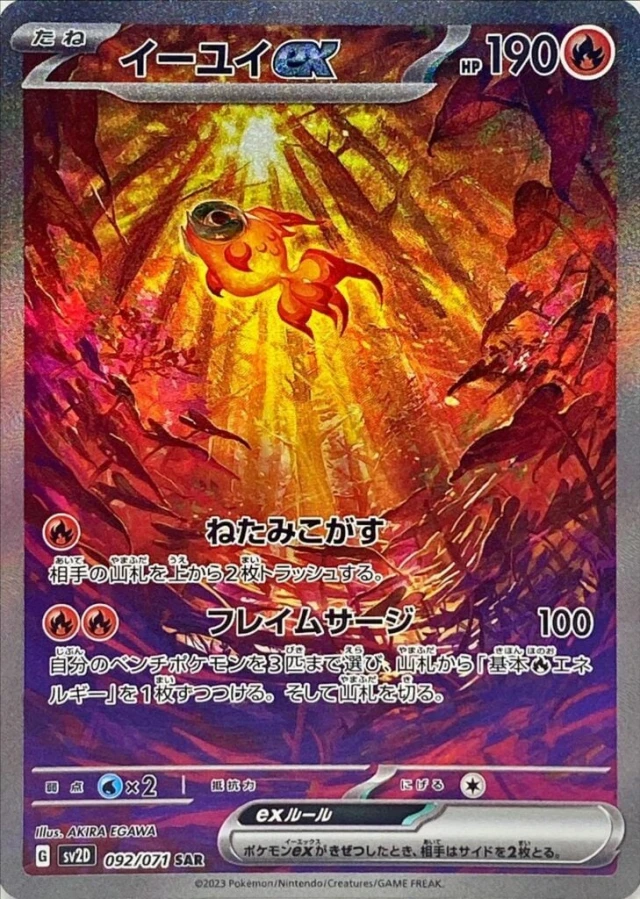
日版寶可夢補充包盒與High Class Pack:該買哪一種

Choosing between a Japanese Pokemon booster box and a high class pack is one of the most common questions we hear from overseas collectors. You’ve seen the God Pack pulls on YouTube — ten ultra-rare cards in a single pack, worth hundreds of dollars. Then you look at the standard 30-pack booster box in your cart and wonder: am I buying the wrong product?

These two product types look similar on the shelf but deliver fundamentally different experiences — from pull rates and card pools to resale value and God Pack odds.

This guide compares Japanese Pokemon booster boxes and high class packs across six dimensions: box structure, guaranteed pulls, God Pack potential, market pricing, historical ROI, and collector fit. Every price comes from SNKRDUNK secondary market data as of March 2026.

Our team at Samurai Sword ships over 100 sealed boxes from Tokyo every week — both standard booster boxes and high class packs. We see exactly how each product type performs in the hands of collectors worldwide.

Key Takeaway

Standard booster boxes give you 30 packs of new cards and the classic opening experience. High class packs deliver 10 premium packs with 2x hit density and God Pack potential. Every HCP in history trades above MSRP — no standard box format can match that track record.

30 vs 10
Packs/Box

~14%
HCP Hit Rate

3.2x
Avg HCP ROI

1-4%
God Pack Rate

At a Glance — Key Differences

Standard Japanese booster boxes deliver 30 packs of fresh, new cards. High class packs deliver 10 packs of premium, curated reprints with dramatically higher hit rates.

That single sentence captures the core trade-off, but the details matter.

Box Structure Comparison

Metric Standard Booster Box High Class Pack
Packs per box 30 10
Cards per pack 5 10-11
Total cards per box 150 100-110
MSRP (retail) ¥5,400 ($36) ¥5,500 ($37)
Price per pack ¥180 ¥550
Release frequency 6-8 sets per year 1 per year (year-end)
Card pool 100% new cards Reprints + new exclusive art (SAR/AR)
God Pack potential No Yes

What Each Format Is Designed For

Standard booster boxes introduce new cards to the metagame. Every expansion brings new Pokemon ex, Trainer cards, and mechanics that shape how people play and collect. If you want to be first to pull the newest chase cards, standard boxes are the product.

High class packs are a year-end celebration. They curate the best cards from the past 12 months, add exclusive new artwork (often SAR and AR versions), and pack every single pack with guaranteed hits. The trade-off: fewer packs, fewer total cards, but every pack feels like a winner.

Starting May 2026, standard booster pack MSRP increases from ¥180 to ¥200 (¥6,000 per box), narrowing the retail price gap with high class packs.

For a deeper look at what’s inside Japanese booster boxes, see our Japanese Pokemon Booster Box Unboxing Guide.

Ninja Spinner Japanese Pokemon booster box
Standard booster box product shot — Ninja Spinner M4 BOX

Pull Rates & Guaranteed Hits

High class packs win on per-pack hit density, but standard boxes offer more total chances across 30 packs.

Standard Booster Box Guarantees (MEGA Era, 2025-2026)

Every standard Japanese booster box guarantees a minimum number of hits based on community opening data. These are not officially confirmed by The Pokemon Company but are consistent across thousands of documented openings tracked by resources like The Trainer Court.

Rarity Guaranteed per Box Notes
SR (Super Rare) or higher 1 Could be SAR, MUR, or Item SR
Item SR 1 Trainer/Item secret rare
AR (Art Rare) 3 Full-art illustration cards
RR (Double Rare) 4-5 Pokemon ex cards
Total hits ~10 Out of 150 cards

Hit rate: roughly 1 in 15 cards is a notable pull.

High Class Pack Guarantees

High class packs guarantee hits in every single pack. Using MEGA Dream ex (the latest HCP, released January 2026) as the benchmark:

Rarity Guaranteed per Box Notes
SR or higher 1 Minimum 1 SAR-or-better
MA (Mega Attack Rare) 1 HCP-exclusive rarity
AR (Art Rare) 3 High-quality reprints
ex cards 10 One guaranteed per pack
Total premium cards ~15+ Out of 100-110 cards

Hit rate: roughly 1 in 7 cards is a notable pull — more than double the standard box density.

Hit Density Comparison

Standard booster box: ~6.7% hit rate (1 in 15 cards). High class pack: ~14% hit rate (1 in 7 cards). HCPs deliver more than double the premium card density per box.

Head-to-Head Pull Comparison

Metric Standard Box High Class Pack Winner
SR+ per box 1 1 Tie
Total hits per box ~10 ~15+ HCP
Hit density (hits/total cards) ~6.7% ~14% HCP
New card variety 80+ unique cards 40-60 unique reprints Standard
Total packs to open 30 10 Standard
God Pack chance 0% ~1-4% HCP

Both formats guarantee at least one SR-or-better card per box. The real difference is density: high class packs pack more premium cards into fewer packs, while standard boxes offer triple the opening experience.

Estimated pull rates based on community opening data. Not officially confirmed by The Pokemon Company.

Japanese Pokemon standard booster box pack contents and hit rates
Standard booster box pack contents example
MEGA Dream ex high class pack contents and guaranteed pulls
High class pack contents example — MEGA Dream ex pack spread
Japanese Pokemon booster box vs high class pack pull rate comparison chart
Pull rate comparison chart — standard vs HCP hit density

God Packs — The High Class Pack Wild Card

God Packs exist only in high class packs and select special expansions. A God Pack replaces an entire pack’s normal contents with all-hit cards — typically 9-10 ultra-rare cards in a single pack.

What’s Inside a God Pack

God Pack contents vary by set but always deliver extraordinary value:

Set God Pack Contents Estimated Value
VSTAR Universe (s12a) 9 AR cards (full Pikachu AR set) or 5 SAR + 5 AR ¥50,000-¥100,000+
Shiny Treasure ex (SV4a) 3 Full Art Shinies + 7 Baby Shinies ¥30,000-¥60,000
Terastal Festival ex (SV8a) 9 Eeveelution SARs (2 variants) ¥80,000-¥200,000+
MEGA Dream ex (M2a) 5 Mega Attack Rares + 4 SAR + 1 AR ¥100,000+

God Pack Odds by Set

The probability of pulling a God Pack varies. Community data suggests:

Set Estimated God Pack Rate Boxes to Expect 1 GP
VSTAR Universe ~1% (1 in 100 packs → ~1 in 10 boxes) ~10 boxes
Shiny Treasure ex ~4% (1 in 25 packs → ~2.5 in 10 boxes) ~4 boxes
Terastal Festival ex ~2% (1 in 50 packs → ~1 in 5 boxes) ~5 boxes
MEGA Dream ex ~1-2% (1 in 50-100 packs) ~5-10 boxes

God Packs are the single biggest reason collectors pay premium prices for high class packs. No standard booster box offers this mechanic.

God Pack Reality Check

God Pack rates range from ~1% to ~4% per pack. At 10 packs per box, expect roughly 1 God Pack every 3-10 boxes depending on the set. These are lottery-tier odds — exciting but not something to count on.

God Pack rates are community estimates based on large-scale opening data. Individual results vary.

VSTAR Universe God Pack Art Rare cards spread
God Pack card spread example — VSTAR Universe AR God Pack

Price & Value Breakdown

High class packs and standard booster boxes start at nearly identical retail prices — but diverge dramatically on the secondary market.

MSRP vs Market Reality

Both product types retail around ¥5,400-¥5,500 ($36-37). Neither is typically available at retail. Secondary market prices on SNKRDUNK reflect true demand:

Product MSRP Market Price (Mar 2026) Premium
Standard Booster Boxes
Ninja Spinner (M4) ¥5,400 ¥10,000 (~$67) 1.9x
Inferno X (M1) ¥5,400 ¥18,800 (~$126) 3.5x
High Class Packs
MEGA Dream ex (M2a) ¥5,500 ¥9,780 (~$65) 1.8x
Shiny Treasure ex (SV4a) ¥5,500 ¥14,499 (~$97) 2.6x
Terastal Festival ex (SV8a) ¥5,500 ¥15,999 (~$107) 2.9x
VSTAR Universe (s12a) ¥5,500 ¥23,700 (~$158) 4.3x

Prices as of March 2026. Secondary market prices from SNKRDUNK.

The most affordable entry point right now is MEGA Dream ex at ¥9,780 — cheaper than most standard MEGA-era boxes.

Japanese Pokemon booster box vs high class pack market price comparison
Price comparison chart — market prices for standard vs HCP boxes

Investment & ROI — Which Holds Value Better?

Historical data shows high class packs have stronger long-term appreciation, but recent MEGA-era standard boxes are challenging that pattern.

Historical High Class Pack ROI

Every high class pack ever released trades above its original MSRP. Here’s the full picture:

Set Year MSRP Market (Mar 2026) ROI Multiple
THE BEST OF XY 2017 ¥5,400 ¥720,000+ 133x
Shiny Star V 2020 ¥5,500 ¥17,900 3.3x
VMAX Climax 2021 ¥5,500 ¥24,784 4.5x
VSTAR Universe 2022 ¥5,500 ¥23,700 4.3x
Shiny Treasure ex 2023 ¥5,500 ¥14,499 2.6x
Terastal Festival ex 2024 ¥5,500 ¥15,999 2.9x
MEGA Dream ex 2025 ¥5,500 ¥9,780 1.8x

Average HCP ROI (excluding THE BEST OF XY outlier): 3.2x

Every single high class pack holds above MSRP. The oldest sets (THE BEST OF XY at 133x, VMAX Climax at 4.5x) show how scarcity drives long-term value.

Standard Box ROI Trends

Standard booster boxes show more variance. Older sets with beloved chase cards can skyrocket (SV-era 151 boxes, Eevee Heroes), while average sets settle near or below MSRP.

MEGA-era boxes are still fresh, but early movers like Inferno X (3.5x) show strong demand driven by the first MEGA Charizard X ex. Most current MEGA standard boxes trade at 1.5-2.0x MSRP.

Key Factors Driving Value

Factor Standard Box High Class Pack
Limited annual release No (6-8/year) Yes (1/year)
God Pack premium No Yes
Reprint vs new cards 100% new Mix (higher art quality)
Print run perception Standard Limited
Historical floor price Can drop below MSRP Always above MSRP

High class packs have a built-in scarcity moat: only one releases per year, and the God Pack mechanic creates sustained speculative demand.

Investment Tip

If you’re buying for long-term value, prioritize sealed high class packs. Every HCP in history trades above MSRP. The combination of annual scarcity + God Pack speculation creates a price floor that standard boxes don’t have.

For detailed analysis of every historical HCP, see our Best Japanese Pokemon High Class Packs guide.

Japanese Pokemon high class pack vs booster box ROI comparison chart
ROI comparison chart — HCP vs standard box historical returns

Which Should You Buy? — By Collector Type

The right choice depends entirely on what you want from your purchase.

The Short Answer

Standard box = more packs, new cards, affordable entry. High class pack = premium density, God Packs, proven investment track record. Most experienced collectors buy both.

For the Opening Experience

Pick: Standard Booster Box.

Thirty packs means 30 individual moments of anticipation. The ritual of cracking pack after pack, sorting through 150 cards, and gradually discovering what your box delivered — that’s the core Pokemon TCG experience. High class packs deliver 10 premium packs, but the session ends faster.

For Premium Collecting

Pick: High Class Pack.

Every pack in an HCP guarantees something worth keeping. The exclusive SAR and AR artwork found only in high class sets often becomes the most sought-after versions of popular Pokemon. If you display cards and want maximum beauty per pack opened, HCPs deliver.

VSTAR Universe God Pack Art Rare cards — the pinnacle of high class pack collecting
VSTAR Universe God Pack — the ultimate HCP experience
Quick Decision Guide

Opening experience → Standard Box (30 packs). Premium collecting → High Class Pack. Long-term investment → HCP sealed. First purchase → Standard Box.

For Investment

Pick: High Class Pack (sealed).

The data speaks clearly: every HCP in history trades above MSRP. No standard box format has that track record. For sealed investment, HCPs offer the closest thing to a floor price guarantee in Pokemon TCG.

If you prefer opening for singles value, standard boxes with strong chase cards (like Inferno X with Mega Charizard X ex) can also deliver — but with more variance.

For Beginners

Pick: Standard Booster Box.

A ¥10,000 Ninja Spinner box gets you 150 cards, including playable Pokemon ex and Trainer cards, at a lower entry point than most HCPs. The variety of 30 packs also teaches you how Japanese rarity tiers work. Once you understand the hobby, treat yourself to an HCP for the premium experience.

For more beginner recommendations, check our Best Japanese Pokemon Sets for Beginners guide.

The “Both” Strategy

Many experienced collectors buy one standard box to open and one high class pack to keep sealed. You get the opening experience and a long-term investment in a single purchase.

Feature Standard Booster Box High Class Pack
Best for Beginners & opening enthusiasts Collectors & investors
Key advantage 30 packs — maximum opening fun Every pack guaranteed premium pulls
Card pool 100% new cards Exclusive SAR/AR artwork
Entry price ~¥10,000 (~$67) ~¥9,780 (~$65)
Special feature More cards & variety God Pack potential (1-4%)

Best Picks for March 2026

If you’re ready to buy, here are our current top picks for each category.

Best Standard Booster Box: Ninja Spinner (¥10,000)

Ninja Spinner (M4) just released on March 13, 2026. Mega Greninja ex headlines the set with one of the most popular Pokemon in the franchise. At ¥10,000 (~$67), it’s the most affordable way to experience the current MEGA era. Strong playable cards like Great Net and Bubble Water Energy add competitive value beyond collecting.

Best High Class Pack: MEGA Dream ex (¥9,780)

MEGA Dream ex (M2a) is the latest high class pack and currently the best value in the HCP category. At ¥9,780 (~$65), it’s actually cheaper than many standard MEGA boxes. Five Mega Attack Rares guaranteed per God Pack, plus exclusive SAR artwork that can’t be found in any standard expansion.

Best Sealed Investment: VSTAR Universe (¥23,700)

VSTAR Universe (s12a) remains the gold standard for HCP investment. Its iconic Pikachu AR God Pack is one of the most recognizable pulls in modern Pokemon TCG history. At ¥23,700 (~$158), entry is steep — but this set has maintained its premium for over three years.

For a complete ranking of all MEGA-era boxes, see our Best Japanese Pokemon Booster Boxes 2026 guide.

MEGA Dream ex High Class Pack booster box
MEGA Dream ex HCP BOX product shot

The Bottom Line

Three things to remember:

  1. Standard booster boxes are best for opening volume, new cards, and affordable entry (¥10,000 for Ninja Spinner). Pick these for the classic 30-pack experience.
  2. High class packs are best for premium pulls, God Pack potential, and long-term value. Every HCP in history has held above MSRP.
  3. The smartest strategy is both: buy a standard box for the opening thrill, and keep an HCP sealed as a long-term hold.

Every box we ship comes with a unique serial number for authentication. No resealed or searched products — guaranteed.

Shop Japanese Pokemon Boxes
Sealed Booster Boxes & High Class Packs
From ~$65 / ~¥9,780
Ships from Tokyo · Tracked delivery · Serial numbered

View Collection →

Frequently Asked Questions

What is a high class pack in Pokemon TCG?

A high class pack is a premium Japanese Pokemon TCG product released once per year, typically in the fourth quarter. Each box contains 10 packs with 10-11 cards per pack, featuring curated reprints with new exclusive artwork (SAR, AR, MA rarities) and dramatically higher hit rates than standard booster boxes. High class packs also offer the chance to pull a God Pack — an all-hit pack worth hundreds or thousands of dollars.

How many packs are in a Japanese Pokemon booster box vs high class pack?

A standard Japanese booster box contains 30 packs with 5 cards each (150 total cards). A high class pack box contains 10 packs with 10-11 cards each (100-110 total cards). Despite having fewer packs, high class packs guarantee more premium pulls per pack.

Are high class packs worth the price?

At current market prices, high class packs range from ¥9,780 (MEGA Dream ex) to ¥23,700 (VSTAR Universe). For collectors who value premium artwork and God Pack potential, the premium is justified. Every high class pack ever released trades above its original MSRP on the secondary market — a track record no standard box format can match.

What are God Packs and which sets have them?

God Packs are ultra-rare packs where every card is a hit — typically 9-10 Art Rares, SARs, or other premium cards. They appear exclusively in high class packs and select special expansions. Notable God Pack sets include VSTAR Universe, Shiny Treasure ex, Terastal Festival ex, and MEGA Dream ex. Estimated pull rates range from ~1% to ~4% depending on the set.

Which is better for beginners — booster box or high class pack?

For beginners, a standard booster box is the better starting point. At ¥10,000 for Ninja Spinner, you get 150 cards across 30 packs — more variety, more opening experience, and a lower price point. High class packs are a great second purchase once you understand the hobby and want the premium collector experience.

Do standard Japanese booster boxes guarantee rare pulls?

Yes. Based on documented community opening data, standard Japanese booster boxes guarantee approximately 1 SR or higher, 1 Item SR, 3 Art Rares, and 4-5 Double Rares per box. These rates are estimated and not officially confirmed by The Pokemon Company, but they are consistent across thousands of tracked openings.

Can you buy Japanese high class packs from outside Japan?

Yes. Specialized export shops like Samurai Sword ship sealed high class pack boxes directly from Tokyo to the US, UK, Canada, Australia, and other countries. All boxes ship with shrink wrap intact and unique serial numbers for authentication. For more purchasing options, see our How to Buy Japanese Pokemon Cards from Japan guide.


⚡ Shop Japanese Pokemon Booster Boxes

Authentic sealed products shipped directly from Tokyo, Japan with tracking & insurance via FedEx.

Browse All Japanese Pokemon Booster Boxes

S12 Paradigm Trigger 抽卡機率,最佳卡牌與盒裝指南: 4月 2026 指南

Paradigm Trigger (S12) needed a full May 21, 2026 refresh because the old article read like a short card list instead of a serious buying guide. The current standard is different: lead with the buying answer, show the product, show the chase cards, explain the pull-rate math, and separate Japan market signals from overseas customer-facing prices.

The practical answer is simple. Buy sealed if you want a Sword & Shield-era Lugia chase box with long-term sealed appeal. Buy Lugia V SA directly if that is the only card you want. A sealed box can be a strong purchase when you want the product story and the opening experience. It is a weak purchase when you are only using it as an expensive shortcut to one exact SAR.

This version follows the same format as the stronger SST Pokemon guides: current market proof, a real product image, a top-card grid, a Japan vs overseas chart, buyer segmentation, box EV, and a deeper FAQ section. The goal is not to pad word count; it is to answer the questions a collector or shop buyer actually has before ordering.

The biggest change is the order of the thinking. A thin article usually starts with a card ranking and only later mentions whether a box is worth buying. This refresh starts with the purchase decision because that is what search traffic is really asking. A reader wants to know whether sealed makes sense today, whether singles are smarter, whether the set has a reason to age well, and whether the visible price is current. The card ranking is still important, but it sits inside a fuller buying framework.

Paradigm Trigger S12 pull rates and best cards guide
Thumbnail composite for Paradigm Trigger using SST product imagery and key chase-card imagery.
Key Takeaway Paradigm Trigger is still a Lugia V special-art box, with Candice, Unown, Regidrago, and Lugia VSTAR adding depth below the chase. Japan signals now sit around ツ・28,500-34,000, while SST’s overseas retail signal is $144.5. Judge the box by buyer type: sealed collectors, singles buyers, openers, and import buyers all need different advice.
S12Set code
30Packs / box
125Total cards
27Premium pool

Paradigm Trigger Set Overview

Paradigm Trigger is the Japanese S12 product released on October 21, 2022. It connects to Silver Tempest, but Japanese sealed buyers should treat it as its own product with its own card numbering, box price, and collector identity.

The old short article format usually stopped at release date, card count, and a top-10 table. That is not enough. A modern buyer needs to know whether the set has a durable reason to exist, whether the sealed price is moving, whether the top cards justify opening, and how the Japanese box compares with English or adjacent Japanese sets.

Spec Detail
Set code S12
Japanese release October 21, 2022
Card count 98 main-set cards plus 27 secret cards, 125 total
Box format 30 packs per box, 5 cards per pack
SAR count 27 Special Art Rare cards
Current Japan signal Japan signals now sit around ツ・28,500-34,000, while SST’s overseas retail signal is $144.5.
Best buyer Collector or shop buyer who understands the set story and is not relying on one exact pull.
Paradigm Trigger Japanese Pokemon booster box
Paradigm Trigger sealed Japanese booster box. The product image is shown early so the article card and article body match the product being sold.

What Changed in the May 2026 Refresh

The old article was useful as a first pass, but it was too thin for the current blog standard. It had fewer visual breaks, a weaker market section, and a shorter decision path. This refresh adds the missing context: why the set matters, where the box sits today, how the top cards rank, and when singles make more sense than sealed.

Japanese Box vs English Relationship

English products are easier for many local buyers, but the Japanese product is cleaner for collectors who want one exact set code and Japanese print quality. The Japanese box also has a more direct sealed-market signal because the product is not blended with multiple Japanese sources the way many English releases are.

Factor Japanese Paradigm Trigger Silver Tempest
Product identity One Japanese set code, one box, one collector story English market relationship with different distribution and buyer behavior
Best for Japanese sealed collectors, import buyers, visual collectors Local players and buyers who prefer English cards
Pricing Read Japan and overseas separately Often easier to find locally, but not the same sealed thesis
Buying mistake Using old article prices after the market has moved Assuming English and Japanese pull economics are identical

What the Product Page Should Help You Decide

A strong set guide should reduce hesitation before the product page click. For Paradigm Trigger, the reader should leave this section knowing the set code, the card count, the box format, the major chase lanes, and the current market spread. That is enough to compare the box against other Japanese sealed products without opening a dozen tabs.

This is especially important for overseas buyers. A small difference in listed price can disappear once shipping, payment fees, import tax, and condition risk are included. The article therefore treats price as a range and a decision signal, not as a single permanent number. That is the difference between a useful ecommerce guide and a static checklist.

Top 10 Best Cards and Current Market Read

Paradigm Trigger is still a Lugia V special-art box, with Candice, Unown, Regidrago, and Lugia VSTAR adding depth below the chase. The top-card table below uses the local PriceCharting cache and Fuji card-list image set where available, then frames each card by why a buyer would care. Prices are not permanent; the ranking is useful because it shows the shape of demand.

Rank Card Rarity Raw price signal Why it matters
1 Lugia V 110/98 SA/SR $510.00 The defining special-art chase and the reason the box has a high ceiling.
2 Candice 113/98 SR $12.49 Candice gives the set a strong trainer lane below Lugia.
3 Unown V 103/98 SA/SR $25.31 Alternate art with strong Johto nostalgia and a distinct visual identity.
4 Regidrago V 108/98 SA/SR $23.50 Regidrago special art keeps the alternate-art pool from being only Lugia.
5 Lugia VSTAR 123/98 UR $25.59 Gold Lugia for completionists and mascot collectors.
6 Lugia VSTAR 118/98 HR $24.61 Rainbow Lugia gives the mascot another premium slot.
7 Lugia V 109/98 SR $12.99 Standard full-art Lugia is the practical lower-cost version.
8 Candice 121/98 HR $6.20 Candice HR supports trainer completion demand.
9 Unown VSTAR 116/98 HR $7.70 Unown premium hit for Johto collectors.
10 Regidrago VSTAR 117/98 HR $6.71 Regidrago premium hit below the SA card.
Lugia V SA/SR from Paradigm TriggerSA/SR

Lugia V

The defining special-art chase and the reason the box has a high ceiling.

Candice SR from Paradigm TriggerSR

Candice

Candice gives the set a strong trainer lane below Lugia.

Unown V SA/SR from Paradigm TriggerSA/SR

Unown V

Alternate art with strong Johto nostalgia and a distinct visual identity.

Top-Card Thesis

The best version of a set guide explains why the top card leads. For Paradigm Trigger, the top layer works because the cards are tied to the set story rather than feeling randomly expensive. The market can move, but the identity is easier to defend when the chase cards are aligned with the product name, mascot, character focus, or mechanic.

Secondary Hit Layer

A box feels better when there are enough cards below the top chase to keep opening from becoming binary. That does not mean every SAR or UR pays for the box. It means the buyer has several outcomes that still feel like meaningful collection pieces.

Regidrago V SA/SR from Paradigm TriggerSA/SR

Regidrago V

Regidrago special art keeps the alternate-art pool from being only Lugia.

Lugia VSTAR UR from Paradigm TriggerUR

Lugia VSTAR

Gold Lugia for completionists and mascot collectors.

Lugia VSTAR HR from Paradigm TriggerHR

Lugia VSTAR

Rainbow Lugia gives the mascot another premium slot.

Lugia V SR from Paradigm TriggerSR

Lugia V

Standard full-art Lugia is the practical lower-cost version.

Budget Singles Worth Watching

Budget singles matter because not every reader is ready to buy a sealed box or a top SAR. Lower-cost SRs, ARs, and URs often make the article more useful for collectors who want the set identity without paying for the top card. For Paradigm Trigger, the lower layer also helps explain why opening can still be enjoyable even when the expected value is below sealed price.

The lower layer also matters for resale and customer education. A shop buyer can sell the top chase easily, but the box becomes easier to merchandise when there are several cards that look good in a display case, binder page, or break menu. That is why the article covers secondary SARs, ARs, and URs instead of treating everything outside the top three as filler.

What Makes Paradigm Trigger Special

Lugia Makes Paradigm Trigger a Ceiling Box

Paradigm Trigger closes the main Sword & Shield era with Lugia as the unmistakable chase. The Japanese version has a tighter identity than its English relationship because the S12 card pool is more focused.

Why the Set Can Be Explained Quickly

A strong ecommerce article should make the set understandable from a thumbnail, a product card, or a quick scan. Paradigm Trigger has that advantage: its best cards and product identity point in the same direction. That makes it easier for collectors, store buyers, and breakers to communicate the product without a long explanation.

Why That Matters for Sealed Boxes

Sealed boxes do not trade only on average pull value. They also trade on identity, scarcity, display appeal, and whether future buyers can understand the box quickly. A set with a clear story can stay easier to sell than a technically similar set whose top cards feel disconnected from the product.

Collector Memory and Thumbnail Recognition

Collector memory is practical, not abstract. If a buyer can remember the set from one image and one chase lane, the article and product card have a much better chance of converting later. Paradigm Trigger should therefore be presented with its box image, its most recognizable cards, and the set-specific hook near the top of the page. A text-only article forces the reader to do too much work.

Should You Buy a Paradigm Trigger Box in 2026?

Buy sealed if you want a Sword & Shield-era Lugia chase box with long-term sealed appeal. Buy Lugia V SA directly if that is the only card you want. The honest answer changes by buyer type. That is the main reason the new article format needs more depth than the old one.

Buyer type Best action Reason
Exact top-card buyer Buy the single Specific-card odds are low, even when the set itself is good.
Sealed collector Buy after checking current spread The product story matters, but stale pricing can produce bad entries.
Casual opener Buy one box if lower hits are acceptable The box can be fun without guaranteeing the chase card.
Shop or breaker Buy if the set story is easy for your customers Clear chase identity matters for merchandising and breaks.
Player Buy singles Playable needs are cheaper and cleaner through targeted purchases.
Import buyer Compare landed cost Shipping, duties, and currency spread can erase a low sticker price.

Box vs Singles

Singles are the rational route for one exact chase. Sealed boxes are for the product experience, shelf identity, and optionality. The article should not confuse those two jobs. A box can be good and still be the wrong route to one card.

Compared With Lost Abyss

Use Lost Abyss as the comparison point rather than treating every SV-era box as identical. The better buy is the one whose chase structure matches the buyer’s goal. Sometimes that means paying more for a stronger chase; sometimes it means buying the cheaper box because the set identity is enough.

Sealed Holding Logic

The sealed holding case depends on whether the box will still be easy to explain later. Paradigm Trigger has a clearer story than many generic mid-era boxes, but that does not remove restock, reprint, or demand risk. Buy sealed because you want the box and understand the thesis, not because an article says every sealed Pokemon product must rise.

How to Compare Entry Prices

Do not compare one seller’s Japan sticker price with another seller’s international checkout price as if they are the same thing. A clean comparison includes product condition, whether the box is factory sealed, shipping speed, tracking, payment fees, and the risk of dealing with an unknown marketplace seller. The cheapest visible number is not always the cheapest final purchase.

For repeat buyers and stores, consistency can be worth more than a small discount. A predictable sourcing route makes it easier to reorder, answer customer questions, and avoid condition disputes. For one-time collectors, the right move is often to decide the maximum landed cost first, then choose the cleanest box inside that budget.

Pull Rates, Chase Odds and Box EV

Pokemon does not publish official pull rates for Japanese booster boxes. The estimates below are decision support based on typical Japanese SV-era structure and community opening behavior, not guaranteed odds.

Pull Rate Reality The key distinction is any premium hit versus one exact card. A buyer can reasonably expect a satisfying box and still be very unlikely to pull the exact SAR they want.

Estimated Pull Rate Breakdown

Rarity or slot Estimated box behavior Buyer meaning
RR / ex Several per box Baseline hits, not the sealed-price thesis.
AR Multiple visual hits in many boxes Binder value and casual opening satisfaction.
SR Most boxes are anchored by an SR-or-better style slot The most common premium outcome.
SAR Chance upgrade, not guaranteed The main collector chase, but exact-card odds are much lower.
UR Lower-frequency gold-card upgrade Useful for collectors and playable/gold-card buyers.

Specific Chase Odds

If a buyer wants one exact SAR, the correct mental model is multi-box odds. Even if a set has a relatively small SAR pool, the box still has to hit the SAR layer and then hit the correct card inside that layer. That is why the recommendation for exact-card buyers is nearly always singles first.

Goal Estimated route Recommendation
Enjoy one sealed box Reasonable Buy sealed if the set story appeals to you.
Pull any premium card Reasonable but variable Open if lower outcomes are acceptable.
Pull the top SAR Low exact-card odds Buy the single if this is the only target.
Build a master set Boxes plus singles Use sealed for base volume, singles for expensive gaps.
Hold sealed No pull risk Focus on box condition, authenticity, and entry price.

Box EV Context

Expected value is usually below sealed price for Pokemon boxes. That is normal. The sealed price includes scarcity, product identity, optionality, and the entertainment value of opening. The mistake is using EV as the only reason to buy or ignoring EV completely. A strong guide shows both.

EV component Role in Paradigm Trigger How to use it
Top SARs Main upside Great when hit, too rare to rely on.
Secondary SARs Reduce binary feel Make opening more satisfying below the top card.
SR/AR layer Baseline visual value Important for casual collectors and binder builders.
UR layer Gold-card optionality Can matter when the card is playable or iconic.
Sealed premium Box value beyond pulls Driven by condition, supply, and set identity.

Opening Plan by Budget

One box is best treated as an experience purchase. Two or three boxes can give a better feel for the set, but they still do not turn an exact SAR into a reliable outcome. If a buyer plans to spend more than the price of the target single, the singles route should be reconsidered before opening another box.

The balanced route for many collectors is one sealed box plus targeted singles. The box provides the product memory, base cards, AR texture, and a chance at upside. Singles then finish the exact chase cards without forcing the buyer to gamble through a larger sealed budget. That hybrid strategy is often better than pure sealed opening or pure singles buying.

Japan vs Overseas Price Snapshot

The market section is where the old articles were weakest. Japan signals now sit around ツ・28,500-34,000, while SST’s overseas retail signal is $144.5. That does not mean there is one perfect price. It means buyers should compare Japan source signals, overseas retail, shipping, condition, and the reason they are buying.

Paradigm Trigger Japan vs overseas box price chart May 2026
Japan vs overseas market snapshot for Paradigm Trigger, updated May 21, 2026. Yen and dollar signals are intentionally separated.
Market signal Earlier baseline May 2026 read Buyer meaning
Japan low/mid signal ¥28,500 ¥23,304 Shows whether the box is still in its old range or has reset upward.
Japan upper live signal Not always covered in old article ¥34,000 Use this to avoid anchoring to stale pricing.
Overseas/SST signal $147 $144.5 Customer-facing price must include shipping, handling, and sourcing realities.
Best buyer action Casual price check Compare landed cost and buyer goal Do not use one converted number as the entire market.

How to Read a Wide Spread

A wide spread is not automatically a contradiction. Japan domestic signals, overseas retail, buy-price references, and sold data all measure different parts of the market. The right article explains the spread instead of hiding it.

What Would Change the Recommendation?

The recommendation weakens if sealed supply returns in size, if the top-card demand cools, or if overseas pricing runs far above Japan without a condition or sourcing reason. It strengthens if the box holds its current range while the top cards remain liquid.

Current Market Thesis

Paradigm Trigger is best treated as a set with a specific buyer thesis, not a generic Pokemon box. If the buyer wants that thesis, sealed can make sense. If the buyer only wants a single card, the market thesis is a warning to buy the single instead.

May 2026 Action Guide

If the current Japan signal is close to the overseas checkout price after shipping, buying from a trusted store is usually simpler than chasing a marginal discount. If Japan is materially lower, the buyer should ask whether the difference is real after fees and condition risk. If overseas is materially lower, the buyer should check whether the listing is old stock, opened stock, regional product, or missing condition details.

The correct conclusion is not always “buy now.” Sometimes the correct move is to watch the spread for another week, buy the single, or choose a different Japanese box with a better entry. The value of the chart is that it gives the reader a framework for that choice instead of leaving them with a stale price line from an older article.

Where to Buy Paradigm Trigger

For SST customers, check the live product page first, then compare against the broader Japanese sealed collection if the box is out of stock or if another set better matches the buyer’s goal.

Paradigm Trigger (S12) Booster Box

Japanese sealed booster box. Check live stock, current price, and shipping options before using old article assumptions.

View S12 Box

Authenticity and 狀態 Checks

Check Why it matters
Factory shrink and seams 狀態-sensitive sealed boxes should not have questionable wrap or unclear photos.
Japanese set code Confirms you are buying S12, not an English or regional equivalent.
Box format 30 packs per box, 5 cards per pack should match the Japanese product.
Landed cost Shipping, taxes, duties, and payment fees matter more than sticker price alone.
Seller history Fast-moving boxes attract weak listings. Reliable sourcing reduces avoidable risk.

Use the S12 card list to inspect every card, or browse the Japanese Pokemon sealed booster box collection if you are comparing alternatives.

The Bottom Line

Paradigm Trigger is worth covering at full length because the buying decision is not just a top-10 list. The buyer needs product identity, current market context, chase-card odds, and a clear box-vs-singles answer. That is the gap this refresh closes.

The best buyer is someone who likes the set even when the top card does not appear. The worst buyer is someone who wants one exact SAR and thinks a box is the cheapest route. If you separate those two people, the recommendation becomes much clearer.

Best use case Buy sealed for the Paradigm Trigger product story and optionality. Buy singles for precision. Use the current Japan vs overseas spread before deciding where to enter.

Frequently Asked Questions

What are the pull rates for Paradigm Trigger?

Pokemon does not publish official pull rates. Treat S12 as a Japanese box with regular hits, AR/CHR texture depending on the era, and one SR-or-better style slot, with SAR/CSR/UR/alternate-art outcomes as chance upgrades.

What is the best card in Paradigm Trigger?

Lugia V is the leading chase in this refresh. The set still needs to be judged by the full premium pool, not only by the single top card.

Is Paradigm Trigger worth buying in 2026?

Yes if you like the set identity and current sealed price. Buy singles instead if you only want Lugia V or one exact premium card.

How many cards are in Paradigm Trigger?

Paradigm Trigger has 98 main-set cards plus 27 secret or premium cards, 125 total cards in this guide’s count.

Is Paradigm Trigger the same as Silver Tempest?

No. Silver Tempest is the English-market relationship. Paradigm Trigger is the Japanese S12 product with its own card numbering, box format, and sealed-market behavior.

Should I buy a Paradigm Trigger box or Lugia V?

Buy Lugia V directly if that is the only target. Buy the box if you value the opening experience, sealed collecting, and multiple chase lanes.

What is the biggest risk with Paradigm Trigger?

The biggest risk is treating one sealed box as a rational way to hit one exact card. Exact-card odds remain low even when any-premium-hit odds feel attractive.

Where can I see the full Paradigm Trigger card list?

Use the S12 card list linked in the article to inspect card numbers, artwork, and rarity before buying sealed or singles.

Is Paradigm Trigger better than Lost Abyss?

Paradigm Trigger is better if you prefer Lugia V special art and final Sword & Shield main-set status. Lost Abyss is the cleaner comparison if you want a different chase structure or sealed price band.

Is Paradigm Trigger better opened or kept sealed?

Open it if the chase suite and pack experience matter. Keep it sealed if you want a clean Japanese box with current Japan-vs-overseas market support.
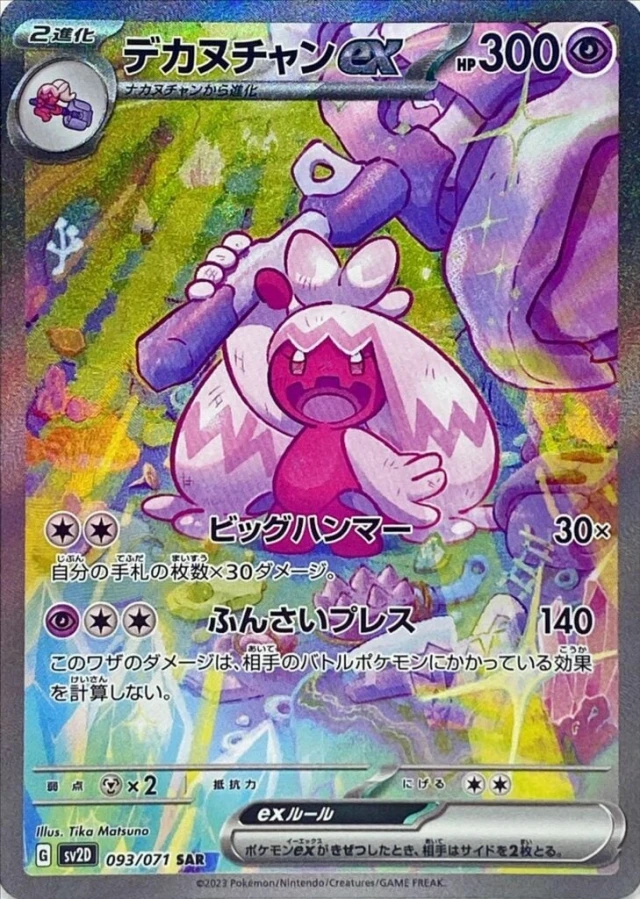
S11A Incandescent Arcana 抽卡機率,最佳卡牌與盒裝指南: 4月 2026 指南

Serena SR from S11A Incandescent Arcana remains one of the most iconic trainer cards from the entire Sword & Shield era — and at roughly $75 today, it sits far below its $300+ peak from 2022. This Incandescent Arcana set, released in September 2022 as an Enhanced Expansion Pack, introduced Character Rare (CHR) cards that pair Pokemon with their trainers in stunning full-art illustrations, plus Alolan Vulpix VSTAR — the first unevolved Pokemon to ever receive the VSTAR treatment.

With boxes currently at $48–62, S11A offers one of the more affordable entry points into Sword & Shield era collecting. But is it actually worth opening? How rare is that Serena SR pull? And what does a box’s expected value look like 3.5 years after release?

This guide covers the TOP 10 most valuable Incandescent Arcana cards ranked by current JPN market prices from SNKRDUNK, complete pull rate data per box, an expected value breakdown translated from Japanese sources, and 3.5 years of price history showing how both the box and the Serena SR have evolved since launch.

We handle hundreds of Japanese Pokemon TCG boxes every month. Here’s what you need to know before opening or investing in S11A.

Key Takeaway

S11A Incandescent Arcana features the iconic Serena SR (~$75) and some of the finest Character Rare artwork in the Sword & Shield era. At ~¥7,000–8,980/box (~$48–62), it’s one of the most affordable S&S sets with a chase card worth more than the box itself. Production has ended and post-reprint supply is stabilizing.

$75
Top Card (Serena SR)

~$48–62
BOX Market Price

20 Packs
Per Box

94 Cards
Total Set

S11A Incandescent Arcana Set Overview

Incandescent Arcana is a compact but chase-heavy Enhanced Expansion Pack that punches well above its size. Released on September 2, 2022 as part of the Sword & Shield series, S11A packs 94 cards — including 26 secret rares — into a 20-pack box format.

Set Specs

Spec Detail
Set Code S11A
Set Name Incandescent Arcana (白熱のアルカナ)
Series Sword & Shield
Category Enhanced Expansion Pack
JP Release September 2, 2022
Packs per Box 20
Cards per Pack 6
Main Set 68 cards
Secret Rares 26 cards (6 CHR, 9 SR, 2 CSR, 6 HR, 3 UR)
Total Cards 94
MSRP ¥5,200 → Market price: ~¥7,000–8,980 ($48–62) as of April 2026
EN Equivalent Silver Tempest (partial — also includes S12, S11 cards)

Unlike standard 30-pack expansion boxes, Enhanced Expansion Packs contain 20 packs with higher rarity density. Fewer packs per box, but a stronger chance at pulling secret rares relative to total pack count.

What Makes This Set Special

Three features define Incandescent Arcana’s collector appeal:

  1. Character Rare (CHR) cards. S11A showcases the CHR mechanic at its peak, featuring full-art illustrations of Pokemon alongside their trainers. Braixen appears with Serena, Gardevoir with Diantha, and Jynx with Furisode Girl — each one a display-worthy piece of art. These CHR cards sit in the $5–12 range, making them accessible collector targets.
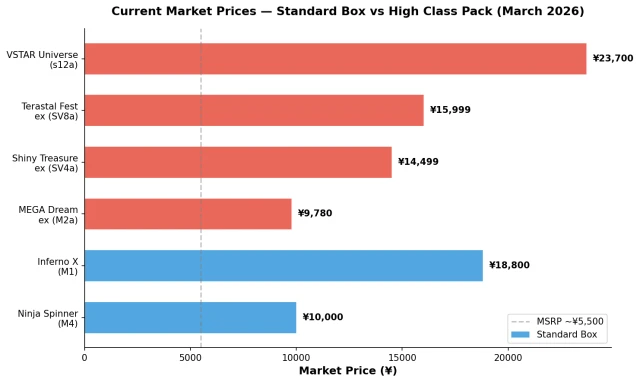
  2. Serena SR (081/068). Illustrated by Mizutani Megumi, this card became the defining trainer full art of the Sword & Shield era. It peaked above ¥50,000 ($350+) at launch and still commands ~¥10,927 (~$75) after 3.5 years — a testament to enduring character popularity.
  3. Alolan Vulpix VSTAR. The first unevolved Pokemon to receive VSTAR status. This design choice spotlighted the set’s theme of celebrating beloved Pokemon regardless of their evolutionary stage. Alolan Vulpix’s enduring fan popularity — it has consistently ranked among the top Pokemon in official popularity polls — made this a crowd-pleasing choice.

The set also includes three Radiant Pokemon — Radiant Jirachi, Radiant Tsareena, and Radiant Alakazam — which use the Sword & Shield era’s unique Radiant mechanic (one Radiant per deck, guaranteed 1 per box).

JPN vs English — The Silver Tempest Connection

The English set Silver Tempest combines cards from three Japanese sets: Incandescent Arcana (S11A), Paradigm Trigger (S12), and select cards from Lost Abyss (S11). This means Silver Tempest dilutes S11A’s concentrated chase card pool across a much larger set.
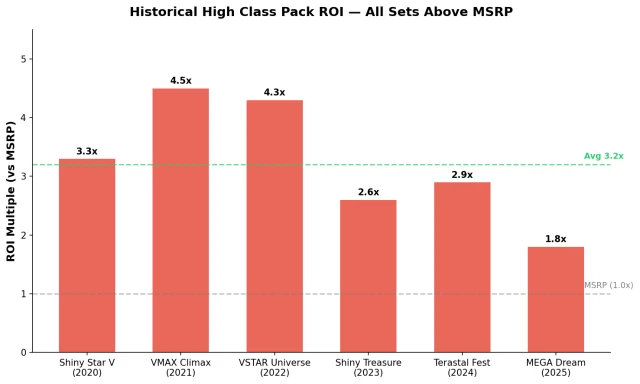
For collectors specifically targeting Serena SR, Furisode Girl SR, or the CHR cards, the Japanese S11A version offers better odds per box. The JPN texturing and print quality also carry a collector premium that typically ranges 15–40% above English equivalents.
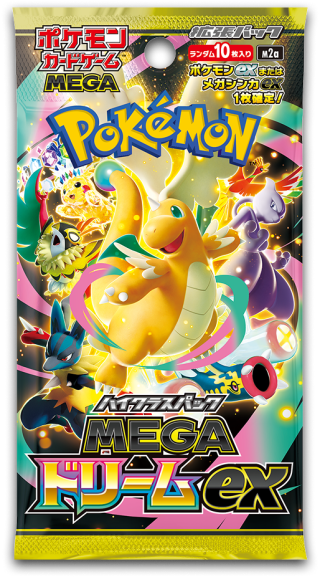
JPN Premium

The Japanese Serena SR (~$75) commands a consistent premium over the English Silver Tempest version. JPN cards from S11A typically trade 15–40% higher than their ENG equivalents, driven by superior print quality and a more focused card pool.

Top 10 Most Valuable Incandescent Arcana Cards

Serena SR dominates this set’s value chart at roughly 5× the price of the second-most valuable card. Here are the top 10 cards ranked by current JPN market data.

Serena SR 081/068 from S11A Incandescent Arcana — most valuable card in the set
Serena SR (081/068) — ¥10,927 (~$75)
Rank Card Number Rarity JPN Price (¥) USD Price
1 Serena 081/068 SR ¥10,927 ~$75
2 Furisode Girl 082/068 SR ¥3,400 ~$23
3 Alolan Vulpix VSTAR 087/068 HR ¥2,500 ~$18
4 Serperior V 084/068 CSR ¥2,200 ~$15
5 Serena 089/068 HR ¥1,800 ~$12
6 Alolan Vulpix V 077/068 SR ¥1,500 ~$10
7 Gardevoir (Diantha) 072/068 CHR ¥1,200 ~$8
8 Braixen (Serena) 069/068 CHR ¥1,000 ~$7
9 Ho-Oh V 080/068 SR ¥800 ~$6
10 Mawile V 085/068 CSR ¥700 ~$5
Price Note

JPN prices from SNKRDUNK and pokeka-atari (April 2026). JPN cards typically trade at a 15–40% premium over English equivalents for high-demand cards.

#1 Serena SR (081/068) — ~$75

The Serena SR isn’t just the most valuable card in Incandescent Arcana — it’s one of the most recognizable trainer cards in the entire Sword & Shield era. Illustrated by Mizutani Megumi, the card depicts Kalos protagonist Serena in a flowing pose that immediately became a collector icon.

At launch, this card traded above ¥50,000 (~$350). After the inevitable correction and a 2024 reprint that increased box supply, it settled at approximately ¥10,927 (~$75). That’s still a commanding premium — more than the cost of the box itself — and speaks to the enduring popularity of both the character and the artwork.

Serena’s dual appeal as a competitive Supporter card (she saw significant play in the Sword & Shield Standard format) and a collector centerpiece creates a demand floor that few trainer cards can match.

#2 Furisode Girl SR (082/068) — ~$23

Furisode Girl SR 082/068 from S11A Incandescent Arcana
Furisode Girl SR (082/068) — ¥3,400 (~$23)

Furisode Girl in traditional Japanese attire brings a distinctly cultural aesthetic to the SR lineup. At ~¥3,400 (~$23), she ranks as the set’s second most valuable card with steady collector interest. The furisode — a long-sleeved kimono worn at coming-of-age ceremonies — gives this card an elegance that resonates with both Japanese and international collectors.

#3 Alolan Vulpix VSTAR HR (087/068) — ~$18

Alolan Vulpix VSTAR HR 087/068 rainbow rare from S11A Incandescent Arcana
Alolan Vulpix VSTAR HR (087/068) — ¥2,500 (~$18)

The rainbow-rare treatment of Alolan Vulpix VSTAR at ~¥2,500 (~$18) captures the charm of this fan-favorite Pokemon. As the first unevolved Pokemon to receive VSTAR status, this card represents a historic milestone in the TCG’s design philosophy.

Other Notable Cards

Serperior V CSR 084/068 Character Super Rare from S11A Incandescent Arcana
Serperior V CSR (084/068) — ¥2,200 (~$15)

The Serperior V CSR (084/068) at ~$15 is one of two Character Super Rares in the set, pairing Serperior with its trainer in an extended-art treatment. Two CHR cards stand out as affordable highlights: Gardevoir with Diantha (072/068, ~$8) and Braixen with Serena (069/068, ~$7). These trainer-Pokemon pairings capture the heart of what makes Incandescent Arcana special for collectors at any budget.

  • Serena HR (089/068) (¥1,800 / $12) — Rainbow rare Hyper Rare treatment of the set’s flagship trainer card.
  • Alolan Vulpix V SR (077/068) (¥1,500 / $10) — Full-art V card featuring the set mascot in classic SR style.
  • Ho-Oh V SR (080/068) (¥800 / $6) — One of the more striking full-art compositions, with the legendary bird rendered in vivid gold and crimson.
  • Mawile V CSR (085/068) (¥700 / $5) — The second Character Super Rare, pairing Mawile V with its trainer.

Even the lower-value pulls carry attractive full-art illustrations that hold genuine display appeal — a hallmark of the Incandescent Arcana set as a whole.

Should You Buy an Incandescent Arcana Box?

At $48–62 per box, Incandescent Arcana offers affordable access to one of the most art-driven sets in the Sword & Shield era. Here’s how the decision breaks down.

Buyer’s Tip

If you’re chasing the Serena SR specifically, buying the single at ~$75 is more cost-efficient than opening boxes. But for the CHR artwork experience with a genuine shot at the set’s premium cards, the $48–62 box price is hard to beat.

For Collectors

S11A is a set built for collectors. The CHR cards — Braixen with Serena, Gardevoir with Diantha, Milotic with Wallace — are arguably the best Character Rare artwork in the entire Sword & Shield series. At $5–12 each as singles, these are achievable targets from regular box openings.

The Serena SR at ~$75 is the flagship chase card. While pulling it from a single box is unlikely, every box guarantees at least one SR-or-higher pull, plus 1–2 CHR cards. Even a box without the Serena hit delivers display-worthy art.

For Box Openers

Twenty packs at $48–62 means roughly $2.50–3.00 per pack — strong value for a Sword & Shield Enhanced Expansion. Each box guarantees approximately 2 RRR cards, 4–5 RR cards, 1 Radiant Pokemon (Jirachi, Tsareena, or Alakazam), and 1–2 CHR cards. The guaranteed high-rarity hit adds excitement to every opening.

The compact 20-pack format also means shorter sessions — a quick, focused opening experience compared to 30-pack standard boxes.

For Long-Term Holders

The box has been reprinted (most recently in June 2024), which pushed market prices to the ¥6,000–7,000 range. That reprint stock has since been absorbed, and prices have stabilized around ¥7,000–8,980 (~$48–62). With production now ended and the Serena SR maintaining its price floor, sealed boxes carry a stable outlook.

As a Sword & Shield era Enhanced Expansion, S11A belongs to a completed product cycle — no further reprints are expected. Historical patterns across Japanese Pokemon TCG show that sealed product from completed eras tends to appreciate gradually once remaining supply tightens.

Singles vs. Box — The Math

Approach Cost What You Get
Buy Serena SR single ~$75 The exact card you want, guaranteed
Buy 5–18 boxes (estimated for Serena) $240–1,100 1 specific SR out of 9 possible × ~1 SR per 1–2 boxes
Buy 1 box for the experience $48–62 20 packs + guaranteed SR-tier pull + CHR cards

If you value the opening experience and the CHR/CSR artwork alongside any SR pull, boxes deliver more cumulative enjoyment than chasing a single card at market price.

Incandescent Arcana Pull Rates

Every S11A box guarantees at least one SR-tier card — and the Enhanced Expansion format delivers higher rarity density per pack than standard 30-pack boxes. Here’s the complete breakdown.

Pull Rate Breakdown (Per Box — 20 Packs)

Rarity Cards in Set Expected per Box Notes
RRR 3 ~2 Serperior VSTAR, Alolan Vulpix VSTAR, Mawile VSTAR
RR ~8 4–5 V and VSTAR cards
Radiant 3 1 Radiant Jirachi, Tsareena, or Alakazam
CHR 6 1–2 Character Rare — Pokemon with trainers
SR 9 ~1 per 1–2 boxes Full art V cards and Supporter cards
CSR 2 ~1 per 3–4 boxes Serperior V, Mawile V
HR 6 ~1 per 5 boxes Rainbow rare treatment
UR 3 ~1 per 10 boxes Gold rare — lowest pull rate
Disclaimer

Pull rates are estimated based on community opening data. Not officially confirmed by The Pokemon Company. Actual results vary.

Each box guarantees one card from the SR-or-higher pool (SR, CSR, HR, or UR). In practice, most boxes yield an SR. CSR pulls run approximately 1 in 3–4 boxes, HR cards appear roughly 1 in 5 boxes, and UR cards are the rarest at approximately 1 in 10 boxes.

CHR & CSR Cards Explained

Character Rare (CHR) cards are one of the defining innovations of late Sword & Shield era sets. These full-art illustrations show Pokemon alongside their trainers — a concept that resonated deeply with collectors and turned Incandescent Arcana into a collector favorite.

S11A’s 6 CHR cards:

  • Braixen CHR (069/068) — with Serena
  • Milotic CHR (070/068) — with Wallace
  • Jynx CHR (071/068) — with Furisode Girl
  • Gardevoir CHR (072/068) — with Diantha
  • Smeargle CHR (073/068)
  • Altaria CHR (074/068)
Braixen CHR 069/068 featuring Braixen and Serena — S11A Incandescent Arcana Character Rare
Braixen CHR (069/068) — with Serena

The two Character Super Rare (CSR) cards — Serperior V CSR (084/068) and Mawile V CSR (085/068) — take this concept further with full-art V card treatments. At $5–15, CSR cards are among the best value-for-art cards in the set.

Box EV Breakdown

Every box of Pokemon cards has negative expected value on average — that’s standard across all TCG products. The manufacturer’s margin, distributor costs, and retail markup are built into the price. What matters for S11A is the guaranteed CHR, RRR, and Radiant slots that provide a value floor, while the SR slot introduces high variance.

Component Est. Value per Box
1 SR/CSR/HR/UR hit ~¥2,500 (weighted avg.)
1–2 CHR cards ~¥800
2 RRR cards ~¥400
4–5 RR cards ~¥400
1 Radiant Pokemon ~¥200
Remaining R/U/C ~¥100
Estimated Box EV ~¥5,115 (~$35)
EV Summary

Box cost: ~¥7,000–8,980 ($48–62) | Average EV: ~¥5,115 ($35). The guaranteed SR slot provides ~¥2,500 baseline. A Serena SR pull ($75) brings a single box well above its cost. The EV gap is standard for Pokemon TCG products.

For reference, sets like VSTAR Universe and most other Sword & Shield products show a similar EV structure. Box purchases in the Pokemon TCG are driven by the opening experience, collector value of the art, and the upside potential from chase card pulls.

Where to Buy Incandescent Arcana

Sealed S11A boxes are available through Japanese TCG specialty retailers that ship internationally — here’s what to look for when buying.

Buying from Japan

Authenticity markers: Genuine S11A boxes have a Creatures Inc. factory seal (not re-shrunk clear wrap), Japanese text on all packaging, and 20 individually sealed 6-card packs inside. The box weight should be consistent — significantly lighter boxes may indicate tampering.

20 packs per box — Enhanced Expansion boxes are smaller than standard 30-pack boxes, which is normal for this product type. If a seller advertises 30 packs, it’s either mislabeled or a different set.

Shipping considerations: Japanese booster boxes ship well due to sturdy packaging. Expect 5–10 business days to the US via tracked shipping. Customs duties vary by country — US buyers generally face no duty on orders under $800.

We stock Incandescent Arcana boxes from our warehouse in Tokyo with tracked international shipping. Every box is sourced directly from authorized Japanese distributors.

Bottom Line

Three things to remember about S11A Incandescent Arcana:

  1. The Serena SR ($75) is the engine — one card’s value exceeds the box price, creating the asymmetric upside that drives box demand.
  2. CHR artwork defines this set — Braixen with Serena, Gardevoir with Diantha, and four other trainer-Pokemon pairings make S11A one of the most art-focused sets in Sword & Shield history.
  3. Post-reprint stability — the 2024 reprint corrected prices to an accessible $48–62 range, and production has now ended. Current prices reflect genuine collector value.

At $48–62 per box, Incandescent Arcana offers a genuine balance between chase-card potential, collector-grade artwork, and affordable entry. For Sword & Shield era collectors, this is one of the defining art-driven sets to own — sealed or opened.

Shop This Set
Incandescent Arcana (S11A) Booster Box
From ~$48–62 / ~¥7,000–8,980
Ships from Tokyo · Tracked delivery

View Product →

Frequently Asked Questions

What are the pull rates for Incandescent Arcana?

Each 20-pack box guarantees approximately 2 RRR cards, 4–5 RR cards, 1 Radiant Pokemon, 1–2 CHR cards, and 1 SR or higher card. UR cards appear roughly 1 in 10 boxes. Pull rates are estimated from community opening data and not officially confirmed.

What is the most expensive card in Incandescent Arcana?

Serena SR (081/068) at approximately ¥10,927 (~$75) as of April 2026. It peaked above ¥50,000 ($350+) at launch in September 2022. The second most valuable card is Furisode Girl SR at ¥3,400 (~$23).

Is Incandescent Arcana worth buying?

At $48–62 per box, S11A offers affordable access to iconic CHR artwork and the chase Serena SR. Box EV (~¥5,115) runs below box cost, which is standard for Pokemon TCG products. The set’s value lies in its collector-grade art and the chance at one of the most recognized trainer cards in Sword & Shield history.

What is the English equivalent of Incandescent Arcana?

Silver Tempest is the English set that includes cards from S11A Incandescent Arcana, along with cards from S12 Paradigm Trigger and S11 Lost Abyss. The Japanese version offers a more concentrated card pool with better odds for targeting specific pulls.

What are Character Rare (CHR) cards?

CHR cards feature Pokemon alongside their trainers in full-art illustrations. S11A includes 6 CHR cards: Braixen with Serena, Milotic with Wallace, Jynx with Furisode Girl, Gardevoir with Diantha, Smeargle, and Altaria. They typically range from $5–12 and are among the most collectible cards in the set.

How many secret rares are in Incandescent Arcana?

S11A contains 26 secret rare cards beyond the 68-card main set: 6 CHR, 9 SR, 2 CSR, 6 HR, and 3 UR cards, for a total of 94 cards in the complete set.


Related Guides

S11 Lost Abyss 抽卡機率,最佳卡牌與盒裝指南 (2026)

The Giratina V SA from S11 Lost Abyss is the single most valuable card you can pull from a standard modern Japanese Pokemon TCG expansion — at roughly $984 raw and $1,700+ in a PSA 10 slab, it commands prices that rival vintage chase cards. Lost Abyss introduced the Lost Zone mechanic to the Sword & Shield era when it launched in July 2022, and 3.5 years later the sealed box trades at ¥33,000–37,500 (~$220–250) — nearly 7× its original retail price.

That box premium exists for one reason: every sealed box carries roughly a 3.8–6.2% chance of containing the Giratina V SA. Open sixteen boxes and you might pull one. Or you might find it in your first. That lottery is what keeps S11 among the most sought-after sealed products in the modern Japanese card market.

This guide breaks down the complete Lost Abyss picture: all 10 most valuable cards ranked by current JPN market prices, pull rate data translated from Japanese opening compilations, a box EV calculation, and 3.5 years of price history showing how this set survived a reprint crash and came back stronger. We ship hundreds of Japanese Pokemon TCG boxes monthly — here’s the data behind one of the most iconic sets we’ve handled.

Key Takeaway

S11 Lost Abyss is home to the ~$984 Giratina V SA — the most valuable card from any standard modern JPN expansion. At ~¥33,000–37,500/box (~$220–250), the chase card alone is worth 4–4.5× the box price. Production ended after the 2024 reprint, and the V-shaped price recovery from ¥5,000 to ¥35,000 confirms enduring demand.

$984
Top Card (Giratina V SA)

~$220–250
BOX Market Price

30 Packs
Per Box

127 Cards
Total Set

S11 Lost Abyss Set Overview

Lost Abyss is the set that brought the Lost Zone mechanic to Sword & Shield — and produced the most valuable card in the modern Japanese Pokemon TCG. Released on July 15, 2022, S11 packs 127 cards into a standard 30-pack box that has become one of the most premium sealed products in the hobby.

Set Specs

Spec Detail
Set Code S11
Set Name Lost Abyss (ロストアビス)
Series Sword & Shield
Category Expansion Pack
JP Release July 15, 2022
Packs per Box 30
Cards per Pack 5
Main Set 100 cards
Secret Rares 27 cards (12 SR incl. 4 SA, 8 HR, 3 UR, 4 Trainer SR)
Total Cards 127
MSRP ¥4,950 → Market price: ¥33,000–37,500 ($220–250) as of April 2026
EN Equivalent Lost Origin (partial — also includes S10A, S10D cards)

The Lost Zone Mechanic

Lost Abyss’s signature mechanic — the Lost Zone — sends cards to a separate zone from which they cannot be retrieved. Unlike the discard pile, cards in the Lost Zone are permanently removed from play. This created new deck strategies centered around accumulating cards in the Lost Zone to unlock powerful abilities, most notably Giratina VSTAR’s Star Requiem attack, which knocks out any opposing Pokemon if 10+ cards sit in your Lost Zone.

The mechanic proved so popular that Lost Zone-based strategies dominated the competitive Sword & Shield format through 2023. That competitive relevance, combined with the Giratina V SA’s artwork, created a dual demand pillar — both players and collectors want these cards.

What Makes This Set Special

  1. Giratina V SA (111/100). The most valuable card from any standard modern JPN expansion. Illustrated by Shinji Kanda, the alternate art depicts Giratina emerging from a portal between dimensions. At ~$984 raw and $1,700+ PSA 10, this card alone justifies the set’s sealed product premium.
  2. Four alternate art cards. S11 contains four Special Art variants: Giratina V SA, Aerodactyl V SA, Rotom V SA, and Galarian Perrserker V SA. The SA pull rate (~15% per box for any SA) keeps these cards genuinely scarce.
  3. Lost Zone competitive legacy. Giratina VSTAR, Comfey, and Mirage Gate formed the backbone of one of the most dominant deck archetypes in the Sword & Shield competitive era.

JPN vs English — The Lost Origin Connection

The English set Lost Origin combines cards from three Japanese sets: Lost Abyss (S11), Dark Phantasma (S10A), and Time Gazer (S10D). This dilutes S11’s concentrated card pool across a 196-card English set, significantly reducing your odds of pulling any specific S11 card.

JPN Premium

The Japanese Giratina V SA (~$984) commands a 70%+ premium over the English Lost Origin version (~$400–573). JPN cards from S11 consistently trade higher than their ENG equivalents, driven by superior print quality and a more focused 127-card pool.

Top 10 Most Valuable Lost Abyss Cards

The Giratina V SA towers over this set’s value chart at roughly 11× the price of the second-most valuable card. Here are the top 10 ranked by current JPN market data.

Giratina V SA 111/100 alternate art from S11 Lost Abyss — most valuable modern Japanese Pokemon card
Giratina V SA (111/100) — ¥180,000–218,000 (~$984)
Rank Card Number Rarity JPN Price (¥) USD Price
1 Giratina V (Alt Art) 111/100 SR (SA) ¥180,000–218,000 ~$984
2 Aerodactyl V (Alt Art) 106/100 SR (SA) ¥14,000–17,800 ~$87
3 Giratina VSTAR 125/100 UR ¥5,500–6,980 ~$23
4 Rotom V (Alt Art) 104/100 SR (SA) ¥2,200–2,780 ~$21
5 Giratina V 110/100 SR ¥2,200–2,780 ~$18
6 Giratina VSTAR 120/100 HR ¥2,700–3,580 ~$10
7 Aerodactyl V 105/100 SR ¥1,300–1,780 ~$8
8 Fantina 116/100 SR ¥900–1,580 ~$6
9 Aerodactyl VSTAR 118/100 HR ¥1,600–2,180 ~$5
10 Pidgeot V 112/100 SR ¥700–980 ~$4
Price Note

JPN prices from SNKRDUNK and altema.jp (April 2026). USD prices from PriceCharting. JPN cards typically trade at a 15–40% premium over English equivalents for high-demand cards.

#1 Giratina V SA (111/100) — ~$984

The Giratina V SA is the defining card of modern Japanese Pokemon — and the highest-value pull from any standard expansion box in the current era. At ¥180,000–218,000 on the Japanese secondary market (~$984 USD raw), it occupies a price tier usually reserved for vintage stars.

Illustrated by Shinji Kanda, the alternate art captures Giratina tearing through dimensional space with its six-legged, centipede-like Altered Forme on full display. The composition uses dramatic perspective — Giratina lunging toward the viewer through a shattered portal — creating a sense of motion that few Pokemon cards achieve.

PSA 10 copies trade at $1,700+, reflecting the grading market’s strong conviction. The Japanese version commands a 70%+ premium over its English Lost Origin counterpart (~$400–573).

#2 Aerodactyl V SA (106/100) — ~$87

Aerodactyl V SA 106/100 alternate art from S11 Lost Abyss
Aerodactyl V SA (106/100) — ¥14,000–17,800 (~$87)

The Aerodactyl V SA at ¥14,000–17,800 (~$87) shows the prehistoric Pokemon soaring above a fossil excavation site — a scene that connects Aerodactyl to its lore origins. This card has strong international demand, particularly among collectors who appreciate the paleontology-themed artwork. PSA 10 copies trade around $171.

#3 Giratina VSTAR UR (125/100) — ~$23

Giratina VSTAR UR Gold 125/100 from S11 Lost Abyss
Giratina VSTAR UR (125/100) — ¥5,500–6,980 (~$23)

The gold-textured Ultra Rare treatment of Giratina VSTAR at ¥5,500–6,980 (~$23) is a popular display piece. The Star Requiem VSTAR Power text gleams in gold relief. PSA 10 copies jump to ~$83, making it a viable grading candidate.

Cards #4–10

  • Rotom V SA (104/100) (¥2,200–2,780 / ~$21) — Competitive staple from Charizard ex decks. 3-draw ability maintained play demand well into Scarlet & Violet format.
  • Giratina V SR (110/100) (¥2,200–2,780 / ~$18) — Standard full-art version carrying the set mascot’s baseline collector appeal.
  • Giratina VSTAR HR (120/100) (¥2,700–3,580 / ~$10) — Rainbow rare hyper rare with full-texture holographic treatment.
  • Aerodactyl V SR (105/100) (¥1,300–1,780 / ~$8) — Standard full-art Aerodactyl. Clean artwork, accessible price.
  • Fantina SR (116/100) (¥900–1,580 / ~$6) — Female trainer full art with steady collector demand. PSA 10 at ~$35.
  • Aerodactyl VSTAR HR (118/100) (¥1,600–2,180 / ~$5) — Rainbow rare version of the fossil VSTAR.
  • Pidgeot V SR (112/100) (¥700–980 / ~$4) — Standard full-art V card.

For the complete S11 card list with images, see our S11 Lost Abyss Card List page.

Should You Buy a Lost Abyss Booster Box?

At $220–250 per box, S11 is a premium purchase — but the Giratina V SA alone is worth 4–4.5× the box price. Here’s how it breaks down by buyer type.

Buyer’s Tip

If you’re chasing the Giratina V SA specifically, buying the single at ~$984 saves thousands compared to opening boxes. But the ~15% SA pull rate per box means roughly 1 in 7 boxes contains a display-worthy alternate art — and that lottery is what keeps collectors opening.

For Collectors

Lost Abyss is one of those sets where one card defines the entire experience. The Giratina V SA at ~$984 creates a level of pack-opening tension that few modern sets can match. Every SR-slot pack is a potential $984 moment — and even without hitting the SA, the four trainer SRs and other alternate arts deliver display-worthy pulls.

S11 also carries historical weight as the set that introduced the Lost Zone mechanic. For collectors building a Sword & Shield era collection, this is a cornerstone set.

For Box Openers

Thirty packs at $220–250 means roughly $7–8 per pack. Each box guarantees at least one SR-tier pull (from the 16-card SR pool, which includes the four SAs). You’ll also pull approximately 4–5 RR cards, 2 RRR cards, and common/uncommon bulk.

The ~3.8–6.2% chance of pulling the Giratina V SA from a single box is the headline — but even a non-SA box delivers $20–40 in SR value plus the guaranteed RR/RRR cards. The 10% “double-hit” box probability adds extra excitement.

For Long-Term Holders

The sealed box trajectory tells a powerful story. S11 launched at ¥4,950, climbed steadily, crashed to approximately ¥5,000 after the June 2024 reprint, then recovered to ¥33,000–37,500 by early 2026. That recovery — from reprint floor back to 7× the original price — demonstrates the market’s conviction in this set’s long-term value.

Production is finished. The 2024 reprint was the last run. Every box opened or shipped reduces sealed supply permanently.

Singles vs. Box — The Math

Approach Cost What You Get
Buy Giratina V SA single ~$984 The exact card you want, guaranteed
Buy 16 boxes (avg for specific SA) $3,500–4,000 ~1 Giratina V SA + 3–4 total SA pulls + 480 other cards
Buy 1 box for the experience $220–250 30 packs + guaranteed SR-tier pull + ~3.8–6.2% SA lottery

Lost Abyss Pull Rates

S11 follows the standard Sword & Shield expansion pull rate structure — one guaranteed SR-tier card per box, with SA, HR, and UR cards requiring multiple boxes. The 30-pack format gives you more shots at the high-rarity pool than smaller Enhanced Expansion sets.

Pull Rate Breakdown (Per Box — 30 Packs)

Rarity Cards in Set Expected per Box Notes
RR ~12 4–5 V and VSTAR cards
RRR ~6 ~2 VSTAR and VMAX cards
SR 16 (incl. 4 SA) 1 guaranteed Full art V, trainers, and alternate arts
SA 4 ~1 per 6–7 boxes (~15%) Giratina V, Aerodactyl V, Rotom V, Galarian Perrserker V
HR 8 ~1 per 10 boxes (~10%) Rainbow rare treatment
UR 3 ~1 per 10 boxes (~10%) Giratina VSTAR, Lost Sweeper, Collapsed Stadium
Disclaimer

Pull rates are estimated from Japanese community opening compilations (oripagacha.com, SNKRDUNK). Not officially confirmed by The Pokemon Company. Actual results vary.

Giratina V SA — The Odds

Approximately 3.8–6.2% per box for the Giratina V SA specifically — roughly 1 in 16–26 boxes. Conservative estimates (oripagacha) place the rate at ~3.8% per box; SNKRDUNK data suggests ~6.2%. At carton level (12 boxes), Japanese opening data suggests approximately 2 total SA pulls, giving roughly a 50% chance of seeing the Giratina V SA in one carton.

“Double-Hit” Boxes

Approximately 10% of S11 boxes contain two secret rares instead of the standard one. These are randomly distributed and can contain any combination of SR, HR, or UR cards.

Box EV Breakdown

Every box of Pokemon cards has negative expected value on average — that’s standard across all TCG products. What matters for S11 is the Giratina V SA’s extreme value pulling the SA-weighted average substantially higher than most sets.

Component Est. Value per Box
1 SR/SA hit (SA-weighted avg.) ~¥7,500 (~$50)
4–5 RR cards ~¥600
2 RRR cards ~¥400
Remaining R/U/C ~¥200
SA-Weighted Box EV ~¥8,700 (~$58)
EV Summary

Box cost: ~¥33,000–37,500 ($220–250) | Average EV: ~¥8,700 ($58). The 15% SA probability — with the Giratina V SA at $984 — creates the widest SA-weighted upside of any Sword & Shield expansion. Standard SR-only EV is ~¥2,800 ($19).

The Giratina V SA’s extreme value ($984) means that a single SA pull transforms the entire box economics. For comparison, S12 Paradigm Trigger has a similar dynamic with the Lugia V SA ($510), and S11A Incandescent Arcana features the Serena SR ($75) at a smaller scale.

Where to Buy S11 Lost Abyss

Authentic S11 boxes are available through Japanese TCG specialty retailers with tracked international shipping. Given the set’s premium price point (~$220–250), verification is especially important.

What to Look For

  • Factory seal — Genuine S11 boxes have a white Creatures Inc. factory seal, not re-shrunk clear wrap. At this price point, resealed boxes are a real risk from unverified sellers.
  • 30 packs per box — Each pack contains 5 cards. A box should feel appropriately heavy and consistent in weight.
  • Japanese text on all packaging — The box should display the ロストアビス (Lost Abyss) branding with The Pokemon Company logo.
  • Seller verification — Purchase from established sellers with a track record in Japanese Pokemon TCG and verifiable sourcing from authorized Japanese distributors.

At Samurai Sword Tokyo, we stock sealed Japanese Lost Abyss boxes sourced directly from our inventory in Japan with tracked international shipping. Availability fluctuates — check our product page for current stock.

Bottom Line

Three things to remember about S11 Lost Abyss:

  1. The Giratina V SA ($984) is the engine — the most valuable card from any standard modern JPN expansion. It drives sealed box demand, determines box pricing, and creates the asymmetric upside that makes every opening tense.
  2. Supply is finite and shrinking — production ended after the 2024 reprint. The V-shaped price recovery from ¥5,000 to ¥33,000–37,500 reflects a market that recognizes permanent scarcity.
  3. Four alternate arts keep every box alive — the ~15% SA pull rate per box means roughly 1 in 7 boxes contains a display-worthy alternate art card.

At $220–250 per box, Lost Abyss sits in premium territory — but for a set containing a $984 chase card with proven appreciation over 3.5 years, the risk-reward balance is compelling. Whether you’re opening for the thrill or holding sealed for the long term, S11 has earned its place among the most important Sword & Shield era sets.

Shop This Set
Lost Abyss (S11) Booster Box
From ~$220–250 / ~¥33,000–37,500
Ships from Tokyo · Tracked delivery

View Product →

Frequently Asked Questions

What are the pull rates for Lost Abyss?

Each 30-pack box guarantees at least one SR-tier card from a pool of 16 SRs (including 4 alternate arts). SA cards appear in approximately 15% of boxes (~1 in 6–7 boxes). HR cards appear ~10% of the time, and UR cards also ~10%. About 10% of boxes are “double-hit” boxes containing two secret rares. Pull rates are estimated from Japanese community opening data and not officially confirmed.

What is the most expensive card in Lost Abyss?

Giratina V SA (111/100) at approximately ¥180,000–218,000 (~$984 raw) as of April 2026. PSA 10 graded copies trade at $1,700+. It is the most valuable card from any standard modern Japanese Pokemon TCG expansion.

Is Lost Abyss worth buying in 2026?

At $220–250 per box, S11 is a premium set with the highest chase-card ceiling in the Sword & Shield era. Box EV (including SA probability) averages approximately $58, which is below box cost — standard for Pokemon TCG products. The value proposition lies in the ~3.8–6.2% chance of pulling a $984 Giratina V SA, the collector-grade artwork, and the sealed box’s appreciation trajectory.

How rare is the Giratina V SA in Lost Abyss?

Approximately 3.8–6.2% per box (roughly 1 in 16–26 boxes). At carton level (12 boxes), you can expect about 2 total SA pulls with roughly a 50% chance of seeing the Giratina V SA specifically.

What is the English equivalent of Lost Abyss?

Lost Origin (SWSH11) is the English equivalent, but it combines cards from three Japanese sets: S11 Lost Abyss, S10A Dark Phantasma, and S10D Time Gazer. The English version has 196 cards versus S11’s 127, diluting pull rates. The Japanese Giratina V SA commands a 70%+ price premium over the English version.

Is the Lost Abyss box price sustainable at $220–250?

The current price reflects post-reprint stabilization. After crashing to ~$35 following the June 2024 reprint, boxes recovered to $220–250 as supply was absorbed and the Giratina V SA continued appreciating. With production finished and no further reprints expected, the price is anchored by finite supply and the $984 chase card.


Related Guides

PRB-01 抽卡機率, 最佳卡牌與Gold DON 指南,2026

A single Monkey D. Luffy Comic Parallel from PRB-01 sells for over $2,900 ungraded. The mythical God Pack — ten historic Comic Parallels sealed in one pack — has traded above $9,000. And Gold DON!! cards, exclusive to this set, now command $200–$500 each.

ONE PIECE CARD THE BEST (PRB-01) is the first-ever premium booster in the ONE PIECE CARD GAME. Released in Japan on July 27, 2024, and internationally on November 8, 2024, this set packages the most iconic cards from OP-01 through OP-06 with brand-new artwork, a new Sanji Leader card, and 30 exclusive Gold DON!! cards.

Whether you’re eyeing the Gold DON cards for your collection, hunting for reprinted tournament staples, or simply wondering if a PRB-01 box is worth opening in 2026, this guide covers everything: the top 10 most valuable cards, estimated pull rates, current market prices, and a clear buying strategy. We track JPN market data from SNKRDUNK and Mercari alongside EN pricing from TCGPlayer and eBay daily.

¥8,900
Box Price

141
Cards

~1/box
SEC Rate

10
Packs/Box

PRB-01 — Set Overview

PRB-01 breaks from the standard booster format. Instead of 24 packs with 6 cards each, a premium booster box contains 10 packs of 10 cards — 100 cards total per box.

Release Info & BOX Specs

Spec Detail
Set Name ONE PIECE CARD THE BEST (PRB-01)
JPN Release July 27, 2024
EN Release November 8, 2024
MSRP ¥5,500 (JPN) / ~$54.99 (EN)
Market Price ~¥8,900 (JPN, SNKRDUNK) / ~$858 (EN, PriceCharting)
Packs per Box 10
Cards per Pack 10
Total Card Types 111 + 30 DON!! = 141 types
Card Breakdown 1 Leader, 23 C, 25 UC, 4 Promo, 21 R, 29 SR, 8 SEC, 30 DON!!

Prices as of March 2026.

JPN boxes trade around ¥8,900 on SNKRDUNK, while EN sealed boxes have surged to approximately $858 on PriceCharting — driven by the EN Gold DON cards’ strong collector demand.

PRB-01 ONE PIECE CARD THE BEST booster box product image
PRB-01 ONE PIECE CARD THE BEST Booster Box

What’s Inside — Reprints, New Art & Exclusives

PRB-01 collects fan-favorite cards from the first six main booster sets (OP-01 through OP-06) and pairs them with fresh artwork. Over 50 cards feature newly commissioned alternate-art parallels with premium foil treatments.

Key inclusions:

  • Sanji (PRB01-001) — A brand-new Leader card exclusive to this set. 5 Life, 5000 Power with Strike. His ability grants Rush to characters costing 8 or less without On Play effects, once per turn
  • Reprinted tournament staples — Green 10-cost Doflamingo (OP-04), Charlotte Katakuri (OP-03), Dracule Mihawk (OP-01), Gum-Gum Red Roc
  • 30 exclusive DON!! cards — Character-art DON cards featuring Zoro, Uta, Law, Ace, Luffy, Yamato, Perona, Vivi, Reiju, Sabo, and more. Gold foil versions are the primary chase cards
  • 8 Secret Rares — Including manga-art Comic Parallels of Luffy, Nami, Zoro, Sogeking, Shanks, and Katakuri
What Makes PRB-01 Unique

PRB-01 is the only source for Gold DON!! cards in the entire OPTCG lineup. Combined with reprinted fan-favorites in new artwork and the legendary God Pack, this set offers a collecting experience no standard booster can match.

The God Pack — OPTCG’s Rarest Pull

The God Pack is PRB-01’s most exclusive feature. One sealed pack containing all ten historic Comic Parallel cards — the manga-panel artwork versions that individually sell for hundreds to thousands of dollars.

Estimated pull rate: roughly 1 God Pack per 100 cartons (1,000 boxes). Complete God Packs have sold for ¥1,380,000 (approximately $9,200) in the JPN market.

God Pack Odds

A carton is 10 boxes. At ¥8,900 per box, you’d spend ¥8,900,000 (~$59,300) opening 1,000 boxes before statistically expecting one God Pack. This makes it a collector’s dream — something to celebrate if you pull one, not something to chase by volume.

Premium Booster (PRB-01) Standard Booster (e.g., OP-09)
10 packs × 10 cards 24 packs × 6 cards
100 cards per box 144 cards per box
¥5,500 retail ¥5,940 retail
Gold DON!! cards (exclusive) No DON variants
Reprints with new art All original cards
God Pack (~1/1,000 boxes) No God Pack
8 Secret Rares 2-4 Secret Rares (varies)

Top 10 Most Valuable PRB-01 Cards

PRB-01’s value is concentrated in two categories: the ultra-rare Comic Parallel reprints and the set-exclusive Gold DON!! cards. Here are the cards worth knowing about, ranked by current market value.

Rank Card Rarity JPN Price EN/Intl Price
1 Monkey D. Luffy (OP05-119) Comic Parallel ~¥440,000 ~$2,950
2 Nami (OP01-016) Comic Parallel ~¥80,000 ~$700
3 Roronoa Zoro (OP06-118) Comic Parallel ~¥100,000 ~$665
4 DON!! Card — Zoro (Gold) SP DON ~¥30,000 ~$525
5 Shanks (OP01-120) Comic Parallel ~¥100,000 ~$600
6 Sogeking (OP03-122) Comic Parallel ~¥65,000 ~$430
7 DON!! Card — Uta (Gold) SP DON ~¥25,000 ~$215
8 DON!! Card — Law (Gold) SP DON ~¥18,000 ~$170
9 DON!! Card — Ace (Gold) SP DON ~¥16,000 ~$105
10 DON!! Card — Perona (Gold) SP DON ~¥16,000 ~$103

Prices as of March 2026. JPN prices from Mercari/Card Rush. EN prices from PriceCharting/eBay sold listings.

Monkey D. Luffy OP05-119 Comic Parallel PRB-01

#1 — Comic COMIC PARALLEL
Monkey D. Luffy (OP05-119)
~$2,950 · JPN: ~¥440,000
The Gear 5 Luffy Comic Parallel is PRB-01’s crown jewel, featuring the iconic manga panel of Luffy’s awakening rendered across the full card face. Ungraded copies trade around $2,950, while PSA 10 specimens have reached $7,500. A BGS 10 Black Label sold for $10,601 in November 2025. Three factors drive this card’s value: Luffy’s status as the franchise protagonist, the Gear 5 transformation being the series’ most celebrated moment, and the Comic Parallel treatment being the rarest card type in OPTCG.

Rarity Check

All three top cards are Comic Parallels with an estimated pull rate of 1 per 6–8 cartons. At 10 boxes per carton, that’s roughly 1 in every 60–80 boxes. Their value reflects genuine scarcity.

Nami OP01-016 Comic Parallel PRB-01

#2 — Comic COMIC PARALLEL
Nami (OP01-016)
~$700 · JPN: ~¥80,000
Nami’s Comic Parallel is the signature card of PRB-01 — created specifically for this set rather than reprinted from an earlier booster. Character popularity drives much of the value. Nami consistently ranks among the top three most popular ONE PIECE characters in fan polls, and this is her first (and to date, only) Comic Parallel card. From a play perspective, the base OP01-016 Nami is a staple 2-cost character in Red decks.

Roronoa Zoro OP06-118 Comic Parallel PRB-01

#3 — Comic COMIC PARALLEL
Roronoa Zoro (OP06-118)
~$665 · JPN: ~¥100,000
Zoro’s Comic Parallel showcases one of his signature sword techniques in striking black-and-white manga composition. Zoro’s position as the Straw Hat crew’s second-in-command gives this card consistent collector demand. The JPN market has held relatively stable since launch, suggesting the price has found its floor.

#4–10: Gold DON!! Cards & More Comic Parallels

The remaining top cards split between Comic Parallels and the set-exclusive Gold DON!! cards:

4

DON Card Zoro Gold

DON!! Zoro (Gold) SP
~$525 · JPN: ~¥30,000
Most accessible high-value chase card. Gold DON cards appear at ~1 per carton.

5

Shanks OP01-120 Comic Parallel

Shanks (OP01-120) Comic
~$600 · JPN: ~¥100,000
Iconic character with manga-panel artwork carrying strong emotional resonance.

6

Sogeking OP03-122 Comic Parallel

Sogeking (OP03-122) Comic
~$430 · JPN: ~¥65,000
Captures the “brave warrior of the sea” moment — a top fan-voted scene.

7

DON Card Uta Gold

DON!! Uta (Gold) SP
~$215 · JPN: ~¥25,000
FILM RED crossover appeal between movie fans and card collectors.

8

DON Card Law Gold

DON!! Law (Gold) SP
~$170 · JPN: ~¥18,000
Trafalgar Law’s consistent popularity keeps demand steady across all media.

9

DON Card Ace Gold

DON!! Ace (Gold) SP
~$105 · JPN: ~¥16,000
Sleeper hit — undervalued relative to Ace’s cultural impact in ONE PIECE.

10

DON Card Perona Gold

DON!! Perona (Gold) SP
~$103 · JPN: ~¥16,000
Surprise entry driven by Perona’s dedicated fanbase and striking artwork.

Beyond the Top 10

Additional Gold DON cards worth noting: Yamato (~$103), Luffy (~$97), Sabo (~$90), and Vivi (~$80). The full 30-card Gold DON lineup means meaningful chase value across many packs.

Should You Buy PRB-01?

PRB-01 remains one of the most compelling premium products in OPTCG, even 20 months after its JPN release. The answer depends on what you’re after.

For Collectors

Verdict: Strong buy for Gold DON cards and new-art parallels.

The 30 exclusive Gold DON cards cannot be found in any other set. If you want gold-foiled character DON cards for your collection or tournament deck, PRB-01 is your only source. The new-art parallels across 50+ cards also provide unique versions of classic cards that look distinctly different from their original printings.

The God Pack dream is a bonus — not a strategy. With odds around 1 in 1,000 boxes, treat any God Pack pull as a celebration rather than an expected outcome.

Collector Tip

Gold DON cards from PRB-01 are tournament-legal and make excellent display pieces. Many collectors frame their Gold DON alongside the matching character’s Comic Parallel for a premium showcase.

For Players

Verdict: Consider singles for specific staples. Buy a box for DON card variety.

PRB-01 reprinted several tournament-relevant cards with fresh artwork:

  • Sanji Leader (PRB01-001) grants Rush to cost-8-or-less characters — a unique aggressive strategy for blue/purple builds
  • Green Doflamingo (10-cost) remains a meta-relevant finisher
  • Charlotte Katakuri continues to see play as a removal tool
  • Gum-Gum Red Roc is still one of the most efficient removal events in the game

Buying singles is almost always more cost-effective for competitive decks. But if you also want Gold DON cards to personalize your deck’s DON pile, a box gives you parallel DON cards (roughly 1 per box) plus a chance at the Gold variants.

Sanji Leader Impact

The Sanji Leader (PRB01-001) with Rush-granting ability has carved out a niche in blue/purple aggressive builds. If you’re building around this strategy, opening a box gives you the best chance at pulling the Leader Parallel version.

For Investors

Verdict: Monitor the EN sealed box market.

EN sealed PRB-01 boxes have climbed from ~$55 at launch to approximately $858 — driven by limited print runs and Gold DON card demand. JPN boxes have been more stable, rising from ¥5,500 to ¥8,900 — a 62% gain, but modest compared to some standard booster sets.

Gold DON singles, particularly the Zoro variant, have shown steady price growth. Cards that serve both competitive and collector purposes tend to hold value well in OPTCG.

PRB-02 (Premium Booster Vol. 2) has been announced. New premium booster releases can either boost interest in the product category (positive for PRB-01) or redistribute collector attention (short-term pressure on PRB-01 prices).

Buy Now If
  • You want Gold DON cards (exclusive to PRB-01)
  • You’re a collector seeking Comic Parallel chase
  • JPN box at ~¥8,900 fits your budget
Consider Waiting If
  • You only need specific reprinted staples (buy singles)
  • You’re watching for PRB-02’s impact on prices
  • EN sealed boxes at ~$858 feel overextended

Pull Rates — What’s in Your PRB-01 Box

Every TCG booster box carries negative expected value on average — that’s the standard business model. What matters is how the value distributes and what your realistic expectations should be.

Rarity Pull Rates (Estimated)

These rates are community-estimated based on JPN opening data. They are not officially confirmed by BANDAI.

Rarity Estimated Rate Per Box Expectation
Common / Uncommon Guaranteed Multiple per pack
Rare (R) Common Several per box
Super Rare (SR) ~2-3 per box Reliable presence
Secret Rare (SEC) ~1 per box One per box on average
Parallel DON!! ~1 per box Alternate-art DON card
Gold DON!! (SP) ~1 per carton (10 boxes) ~10% chance per box
Comic Parallel ~1 per 6-8 cartons ~1-2% chance per box
Leader Parallel (L) Sanji ~1 per 3 cartons ~3% chance per box
God Pack ~1 per 100 cartons ~0.1% chance per box

Estimated rates based on JPN opening reports. Not officially confirmed by BANDAI.

PRB-01 pull rates chart showing rarity distribution per box
PRB-01 Estimated Pull Rate Distribution

Box Contents Breakdown

A typical PRB-01 box yields roughly:

  • 4-5 Super Rares with varying value (most SRs trade under ¥2,000 / $15)
  • 1 Secret Rare — the floor for box value. SECs range from ¥3,000 to ¥15,000 depending on the card
  • 1 Parallel DON!! — standard parallel (not gold), trading around ¥1,000-3,000
  • Filler — Commons, Uncommons, and Rares with minimal individual value
Box Value Floor

The SR and SEC guaranteed slots support a baseline box value. Pulling a Gold DON or Comic Parallel pushes a box into profit territory — but those pulls require luck or volume.

Singles vs Box Strategy

Strategy Cost What You Get Best For
Buy 1 BOX ~¥8,900 (~$59 JPN) 1 SEC + 2-3 SRs + 1 Parallel DON + filler Opening experience + DON card variety
Buy Gold DON single $100-525 Exactly the card you want Targeting specific Gold DON
Buy SEC single $10-50 (most) Exact card, exact condition Building competitive decks

Premium Booster vs Standard Booster — Which Is Better?

Both serve different purposes. Here’s a direct comparison:

Factor PRB-01 Premium Booster Standard Booster (e.g., OP-09)
Price (JPN market) ~¥8,900 ¥6,000–15,000 (varies by set)
Cards per box 100 (10×10) 144 (24×6)
New original cards 1 Leader + 30 DON!! Full set (80-120 new cards)
Chase card type Gold DON + Comic Parallels SEC + SP + Manga Rare
Competitive impact Reprints only (except Sanji) New meta-defining cards
Collector appeal Unique DON cards + God Pack Set-exclusive parallels
Best for DON collectors, reprint hunters Meta players, set completionists
Which to Pick?

Standard boosters offer more new cards and competitive impact. PRB-01 offers something no standard set can — exclusive Gold DON cards and the chance at a God Pack. Serious collectors often buy both.

Where to Buy PRB-01

JPN boxes ship directly from Tokyo with tracked delivery. At approximately ¥8,900 (~$59), a JPN PRB-01 box remains one of the most affordable premium products in OPTCG relative to its chase card potential.

When buying from Japan, factor in shipping (typically $15-25 for a single box) and potential customs duties depending on your country. Boxes arrive sealed with original BANDAI shrink wrap.

For more on the process, see our guide to buying ONE PIECE cards from Japan.

Shop This Set
PRB-01 ONE PIECE CARD THE BEST Booster Box
From ~$59 / ~¥8,900
Ships from Tokyo · Tracked delivery

View Product →

The Bottom Line

Three things to remember about PRB-01:

  1. Gold DON cards are the real chase — 30 exclusive character DON cards with gold foil, available nowhere else. Prices range from $75 to $525.
  2. Comic Parallels are lottery tickets — Beautiful manga-panel artwork on cards worth $430 to $2,950, but pull rates of 1 per 60-80 boxes make them celebration pulls, not expectations.
  3. JPN boxes are the sweet spot — At ~¥8,900 (~$59), JPN boxes offer the Gold DON chase at a fraction of EN sealed prices (~$858). The guaranteed SEC and SR pulls provide baseline value.

PRB-01 carved out a unique niche in OPTCG as the first premium booster. With no other source for Gold DON cards and the legendary God Pack, it remains a collector essential heading into 2026.

1

Monkey D. Luffy Comic Parallel

Luffy (OP05-119) Comic
~$2,950
PRB-01’s crown jewel — Gear 5 manga-panel artwork.

2

Nami Comic Parallel

Nami (OP01-016) Comic
~$700
PRB-01 exclusive — her first and only Comic Parallel.

3

Zoro Comic Parallel

Zoro (OP06-118) Comic
~$665
Stable demand from Zoro’s signature sword technique art.

Frequently Asked Questions

What are the best cards in PRB-01 ONE PIECE CARD THE BEST?

The most valuable card is the Monkey D. Luffy (OP05-119) Comic Parallel, trading around $2,950 ungraded. The Nami (OP01-016) Comic Parallel and Gold DON Zoro card are the next highest-value pulls. Gold DON cards across all 30 character variants range from $75 to $525, making them the primary chase cards for most collectors opening boxes.

What is the pull rate for Gold DON cards in PRB-01?

Gold DON cards (Super Parallel DON) are estimated at approximately 1 per carton (10 boxes). Regular Parallel DON cards appear at roughly 1 per box. These rates are community-estimated from JPN opening data and are not officially confirmed by BANDAI.

Is the PRB-01 Premium Booster worth buying in 2026?

For collectors wanting Gold DON cards, yes — these exclusive cards cannot be found in any other set. For competitive players, buying singles of specific reprinted staples is more cost-effective. JPN boxes at ~¥8,900 (~$59) offer reasonable value given the guaranteed SEC pull and chance at Gold DON cards. EN sealed boxes at ~$858 are primarily investment/collector purchases.

What is a God Pack in ONE PIECE CARD THE BEST?

The God Pack is an ultra-rare sealed pack containing all ten Comic Parallel cards from the set. Estimated pull rate is roughly 1 per 100 cartons (1,000 boxes). Complete God Packs have sold for approximately ¥1,380,000 (~$9,200). This is the rarest pull in any OPTCG product released to date.

How many packs are in a PRB-01 box?

A PRB-01 premium booster box contains 10 packs with 10 cards each (100 cards total). This differs from standard booster boxes, which contain 24 packs of 6 cards (144 cards total).

How does PRB-01 compare to PRB-02?

PRB-01 features cards from OP-01 through OP-06, while PRB-02 covers later sets. PRB-01 is notable for its Gold DON cards and the God Pack feature. Both sets share the premium booster format (10 packs, 10 cards per box). PRB-01 has had more time on the market, so its prices are more established, while PRB-02 offers newer chase cards including a highly sought-after Manga Sanji.

Can I use Gold DON cards in tournaments?

Yes. Gold DON cards are functionally identical to standard DON!! cards and are fully tournament-legal. Many competitive players specifically seek Gold DON versions of their favorite characters to personalize their DON deck.


🏴‍☠️ Ready to Open Packs?

Get the PRB-01 ONE PIECE CARD THE BEST booster box — shipped directly from Tokyo, Japan with tracking & insurance.

Buy PRB-01 ONE PIECE CARD THE BEST Box

Browse All One Piece Booster Boxes →

Related Guides

PRB-02 THE BEST vol.2:抽卡機率與最佳卡牌:指南

What are the best cards in PRB-02, and what can you realistically pull from a box? Sanji’s first-ever Comic Parallel sits at the top at roughly $500, making it one of the most coveted pulls in ONE PIECE CARD GAME history. But the real story of ONE PIECE CARD THE BEST vol.2 goes beyond a single chase card — this premium booster introduces 30 character-themed Gold DON!! cards, God Packs loaded with parallels, and alternate art reprints of some of the game’s most iconic event cards.

Every single PRB-02 pack guarantees at least one Super Rare or better, which fundamentally changes the opening experience compared to regular OP sets. From collectors chasing Gold DON!! completionism to competitive players upgrading their tournament decks with premium alt arts, this set delivers genuine value at a surprisingly accessible price point — especially on the JPN side.

In this guide, we break down every high-value card in PRB-02, share estimated pull rates from the Japanese opening community, rank all 30 Gold DON!! cards by market value, and give you a clear framework for deciding if this set is right for your collection. All pricing reflects March 2026 data from PriceCharting, SNKRDUNK, and Japanese card shop buyback rates.

¥5,500
Box MSRP

100
Cards/Box

SR+
Per Pack

30
Gold DON!!

What Is PRB-02? Set Overview & Specs

PRB-02 is a premium booster that collects the strongest cards from past sets with fresh alternate art treatments, 6 new SP cards, and the complete 30-character Gold DON!! lineup — all with guaranteed SR-per-pack pull rates.

Spec Detail
Full Name PREMIUM BOOSTER — ONE PIECE CARD THE BEST vol.2 [PRB-02]
JPN Release July 26, 2025
EN Release October 3, 2025
MSRP ¥5,500 / $5.49 per pack
Packs per BOX 10
Cards per Pack 10 (guaranteed 1 SR or better)
Total Card Types 129 + 30 DON!! = 159 types
Rarity Breakdown C: 46 · UC: 29 · R: 41 · SR: 34 · SEC: 8 · SP: 6 · DON!!: 30
Premium Booster Difference

Unlike standard OP sets (24 packs, 6 cards each), PRB-02 packs 10 cards per pack with a guaranteed SR or better in every single one — making every pack opening a premium experience.

What’s New in THE BEST vol.2

PRB-02 builds on PRB-01 with several standout additions:

  • Sanji’s Comic Parallel debut — the first Straw Hat member to receive a Comic Parallel in a premium booster, joining Zoro, Nami, and Usopp from PRB-01
  • 30 character-themed Gold DON!! cards — each featuring a unique character illustration with gold foil treatment. Super Parallel (Gold Frame) versions exist for all 30
  • 6 new SP cards — including alt art versions of fan-favorite event cards like Gomu Gomu no Gigant and Cross Guild
  • Event card parallels — powerful gameplay staples with new premium art treatments
  • God Packs — rare packs containing all parallels or all Gold DON!! cards

JPN vs EN Release Timeline

The Japanese version launched in July 2025, giving JPN box buyers a roughly three-month head start. The English release followed in October 2025.

JPN Version
  • Released July 26, 2025
  • BOX price: ~$60-65
  • Higher print volume
  • Same card pool & art
EN Version
  • Released October 3, 2025
  • BOX price: ~$300+
  • Limited print run
  • English text for play

For international collectors buying from Japan, the JPN BOX carries a significant price advantage. If you’re considering which version to buy, our JPN vs EN comparison guide breaks down the key differences for any set.

Top 10 Most Valuable Cards in PRB-02

Sanji’s Comic Parallel dominates the PRB-02 value chart at ~$500, followed by a compelling mix of event card alt arts and Gold DON!! super parallels that keeps the chase exciting well beyond the #1 spot. Prices below reflect March 2026 secondary market data.

Sanji Comic Parallel OP06-119 PRB-02

#1 — Comic COMIC PARALLEL
Sanji (OP06-119)
~$500 · JPN: ~¥40,000
The crown jewel of PRB-02 and one of the rarest pulls in recent OPTCG history. With an estimated pull rate of just 1 per 100-200 boxes, Sanji’s Comic Parallel commands premium pricing that reflects both extreme scarcity and his enduring popularity. The manga-style illustration captures Sanji in a dynamic pose, completing the Straw Hat Comic Parallel lineup that started with Zoro and Nami in PRB-01.

Rarity Check

At roughly 1 per 100-200 boxes, the Sanji Comic Parallel is among the rarest pulls in any OPTCG product. For context, that’s roughly 1 in every 1,000-2,000 packs opened.

Gomu Gomu no Gigant Alt Art OP09-078 PRB-02

#2 — SP EVENT SP
Gomu Gomu no Gigant (OP09-078)
~$250 · JPN: ~¥18,000
This event SP features a breathtaking new illustration of Luffy’s signature attack. The original OP09-078 is a staple removal card in Luffy-based decks, and this alt art elevates it to collector-grade status while maintaining full tournament legality. Dual appeal — competitive relevance plus premium art — makes it one of PRB-02’s most stable value holds.

Gold DON!! Shanks Super Parallel PRB-02

#3 — Gold GOLD DON!! SUPER PARALLEL
Gold DON!! Shanks
~$85 · JPN: ~¥9,000
The Shanks Gold DON!! leads the 30-card lineup by a comfortable margin. Character popularity drives pricing among Gold DON!! cards, and Shanks sits at the very top. Gold DON!! Super Parallels appear at roughly 1 per 5 boxes, but with 30 characters in the pool, pulling a specific character like Shanks requires considerably more luck.

Cards #4-10

# Card Rarity Price (USD) JPN Buyback
4 Charlotte Pudding (OP06-047) SP ~$79 ¥6,500
5 Come On!! We’ll Fight You!! (OP09-020) SP ~$75 ¥4,500
6 Monkey D. Luffy (EB02-061) SP ~$72 ¥6,500
7 Shanks (OP06-007) SP ~$65 ¥4,500
8 Cross Guild (OP09-057) SP ~$63 ¥5,000
9 Gold DON!! Boa Hancock Gold ~$55 ¥3,500
10 Gold DON!! Gear 5 Luffy Gold ~$53 ¥6,000
4

Charlotte Pudding SP OP06-047

Pudding SP
~$79 · ¥6,500
Surprise performer — Egghead Arc popularity drives premium pricing

5

Come On We'll Fight You SP OP09-020

Come On!! SP
~$75 · ¥4,500
Iconic Shanks event card with stunning new alt art

6

Monkey D Luffy SP EB02-061

Luffy SP
~$72 · ¥6,500
Premium reprint with Makitoshi illustration

7

Shanks SP OP06-007

Shanks SP
~$65 · ¥4,500
Enduring fan-favorite character with strong collector demand

8

Cross Guild SP OP09-057

Cross Guild SP
~$63 · ¥5,000
Tournament staple — popular competitive deck upgrade

9

Rebecca SP OP05-091

Rebecca SP
~$42 · ¥4,500
Fan-favorite character with strong alt art collectibility

Player’s Pick

Cross Guild (OP09-057) at #8 sees heavy tournament play as a key search card. Upgrading to the PRB-02 alt art is popular among competitive players looking to bling out their decks.

Gold DON!! Complete Tier List — All 30 Characters Ranked

No other OPTCG product offers anything like PRB-02’s Gold DON!! cards — 30 unique character designs with gold foil treatment, each available in regular parallel (roughly 1 per box) and rare Super Parallel Gold Frame (roughly 1 per 5 boxes) versions. Character popularity drives a 9x price spread across the set.

Tier 1 — Premium ($50+)

Character JPN Buyback USD Market
Shanks ¥9,000 ~$85
Luffy (Gear 5) ¥6,000 ~$53
Boa Hancock ¥3,500 ~$55

These three characters command the highest prices due to their universal popularity. Shanks leads thanks to his iconic status and cross-fandom appeal.

Tier 2 — Strong ($30-50)

Character JPN Buyback USD Market
Yamato ¥4,500 ~$47
Teach ¥4,500 ~$47
Nami ¥3,500 ~$48
Chopper ¥3,800 ~$40
Bonney ¥3,500 ~$38

Yamato and Teach benefit from strong fan followings and competitive deck associations. Nami and Chopper represent core Straw Hat crew popularity.

Tier 3 & 4 — Mid to Budget ($10-30)

Character JPN Buyback Tier
Smoker ¥3,500 Tier 3
Buggy ¥3,000 Tier 3
Usopp ¥3,000 Tier 3
Pudding ¥2,700 Tier 3
Marco ¥2,700 Tier 3
Luffy (Gear 4) ¥2,500 Tier 3
Shirahoshi ¥2,500 Tier 3
Calgara ¥2,500 Tier 3
Sanji / Robin / Sugar / others ¥1,000-2,300 Tier 4
Key Insight

Even the lowest-tier Gold DON!! cards hold ¥1,000+ buyback value. Since you average roughly one Gold DON!! Super Parallel per 5 boxes, each pull returns meaningful value regardless of which character you land on.

Pull Rates & What’s in Your Box

Every PRB-02 pack guarantees at least one SR or better — a baseline that standard booster sets cannot match, which means even a “bad” box delivers solid foundational value through its SR content.

Rarity-by-Rarity Pull Rates

Rarity Types Per BOX (est.) Per Carton (est.)
SR 34 ~10 cards
SEC 8 ~1 card
SR Parallel 9 ~1 card
Gold DON!! (Regular) 30 ~1 card
Gold DON!! (Super Parallel) 30 ~4 cards (~1/5 BOX)
SP (Reprint) 6 ~1 card (~1/20 BOX)
Event SP 4 ~1 card (~1/20 BOX)
Comic Parallel (Sanji) 1 ~1 per 6-10 cartons
God Pack ~1 per 15-20 cartons

Pull rates are estimated from Japanese opening community data and are not officially confirmed by Bandai.

God Pack — What It Is and What It’s Worth

PRB-02 features two types of God Packs — ultra-rare packs where all 10 cards are premium:

  • Parallel God Pack: All 10 cards are parallel versions, potentially including SEC and SP cards
  • Gold DON!! God Pack: All 10 cards are Gold DON!! Super Parallels from the 30-character lineup

The Gold DON!! God Pack is estimated at roughly 1 per 15-20 cartons. With individual Gold DON!! cards ranging from $10-85, a single God Pack delivers an estimated $300-500+ in total card value.

God Pack Value

Pulling a Gold DON!! God Pack from a ~$60 JPN box means 10 premium Gold DON!! Super Parallels worth an estimated $300-500+ total. The odds are roughly 1 in 300-400 boxes — rare, but the payoff is extraordinary.

Box Value Breakdown

Component Guaranteed? Typical Value Range
~10 SR cards Yes (1+ per pack) $15-40 total
1 SEC or Parallel High probability $10-60+
1 Gold DON!! (Regular) High probability $5-15
Gold DON!! Super Parallel ~1 in 5 boxes $10-85 if pulled
SP/Event SP ~1 in 20 boxes $55-500+ if pulled

Should You Buy PRB-02?

PRB-02 ranks among the strongest premium products in the OPTCG lineup, with the guaranteed SR-per-pack structure and Gold DON!! chase cards setting it apart from every standard booster on the market.

For Collectors

Verdict: Strong buy for character collectors and DON!! completionists.

The Gold DON!! subset is a collecting experience that no other OPTCG product offers. Chasing all 30 characters creates a long-term project, and the gold foil treatment makes these cards display-worthy. The Sanji Comic Parallel adds a true grail-tier chase card, and the event card SPs offer premium art for iconic game moments.

Collection Value

A complete set of all 30 Gold DON!! Super Parallels carries a combined market value of roughly $800-1,000+, making it one of the most rewarding subset completions in OPTCG.

For Players

Verdict: Selective buy — target specific SP cards for deck upgrades.

PRB-02’s event card SPs (Gomu Gomu no Gigant, Cross Guild, Come On!! We’ll Fight You!!) offer premium versions of tournament staples. The guaranteed SR content also provides solid deck-building material. If you only need one or two specific cards, buying singles from a card shop may be more cost-effective than chasing them through sealed product.

Buy Sealed
  • Gold DON!! chase experience
  • Guaranteed SR every pack
  • JPN BOX at ~$60 is accessible
Buy Singles
  • Target specific SP cards
  • No variance — get exactly what you need
  • Better for competitive deck upgrades

For Investors

Verdict: Monitor Gold DON!! completion demand and Sanji Comic Parallel trajectory.

PRB-01’s top chase cards have appreciated since release, and PRB-02 follows a similar premium product structure. The Gold DON!! subset creates sustained demand as collectors pursue the full 30-card set. Sealed product pricing is most attractive on the JPN side — at ~$60 per box, the risk-reward profile for JPN sealed product is favorable compared to EN pricing.

Browse our full One Piece booster box collection to compare PRB-02 alongside other sets.

Where to Buy PRB-02 from Japan

For international collectors, buying JPN PRB-02 directly from Japan offers the strongest value proposition at ~$60 per box versus $300+ for EN.

What to expect when ordering from Japan:

  • Shipping typically takes 7-14 business days to US/CA/UK/AU
  • Customs duties may apply depending on your country (usually 0-5% for trading cards)
  • All boxes are factory sealed with original shrink wrap

For a detailed walkthrough of the import process, check our Complete Guide to Buying One Piece Cards from Japan.

Shop This Set
PRB-02 THE BEST vol.2 Booster Box
From ~$60 / ~¥5,500
Ships from Tokyo · Tracked delivery

View Product →

The Bottom Line

PRB-02 ONE PIECE CARD THE BEST vol.2 delivers three things no standard booster set can match:

  1. Guaranteed SR-per-pack baseline — every pack delivers value, eliminating the “all commons” disappointment
  2. Gold DON!! chase cards — a 30-character collectible subset with real market value across all tiers
  3. Grail-level chase in Sanji Comic Parallel — a ~$500 card that gives every box opening genuine excitement

At ~$60 for a JPN box, the entry point is accessible. The worst-case scenario still delivers a box full of SRs and a shot at Gold DON!! Super Parallels. The best case includes SP event cards or the legendary Sanji pull.

Ready to Open?
PRB-02 THE BEST vol.2 Booster Box
From ~$60 / ~¥5,500
Ships from Tokyo · Tracked delivery

Shop PRB-02 →

Frequently Asked Questions

What are the pull rates for PRB-02?

Every pack guarantees at least one SR or better. Per box (10 packs), you can expect roughly 10 SRs, 1 SEC or Parallel, and 1 Gold DON!! regular. Gold DON!! Super Parallels appear at about 1 per 5 boxes. SP cards are roughly 1 per 20 boxes, and the Sanji Comic Parallel is estimated at 1 per 100-200 boxes. Pull rates are community-estimated and not officially confirmed by Bandai.

What is the most expensive card in PRB-02?

The Sanji Comic Parallel (OP06-119) is the most valuable card at approximately $500 as of March 2026. It is Sanji’s first-ever Comic Parallel card and has an extremely low pull rate estimated at 1 per 100-200 boxes.

What is a PRB-02 God Pack?

God Packs are ultra-rare packs where all 10 cards are premium pulls. PRB-02 has two types: a Parallel God Pack (all cards are parallel versions) and a Gold DON!! God Pack (all 10 cards are Gold DON!! Super Parallels). The estimated rate is about 1 God Pack per 15-20 cartons.

How many Gold DON!! cards are in PRB-02?

PRB-02 contains 30 character-themed Gold DON!! cards, each featuring a unique character illustration with gold foil treatment. Each character has a regular parallel version and a rarer Super Parallel (Gold Frame) version. Character popularity drives significant price differences, ranging from ~$10 for budget characters to ~$85 for Shanks.

Is PRB-02 worth buying?

For collectors, PRB-02 offers strong value at the JPN price point (~$60 per box). The guaranteed SR-per-pack structure, Gold DON!! chase cards, and Sanji Comic Parallel create a premium opening experience. For players seeking specific cards, buying singles may be more cost-effective. EN boxes at $300+ carry a steeper entry cost but appeal to English-language collectors.

What is the difference between PRB-01 and PRB-02?

PRB-01 introduced the Gold DON!! concept and featured Zoro and Nami Comic Parallels. PRB-02 continues with Sanji’s Comic Parallel, expands the Gold DON!! lineup to 30 characters, and adds new event card SPs. Both are premium products with guaranteed SR-per-pack, but PRB-02 offers more chase card variety through its larger Gold DON!! pool.

When was PRB-02 released in English?

The English version of PRB-02 released on October 3, 2025, roughly three months after the Japanese release (July 26, 2025). EN boxes trade at a notable premium (~$300+) compared to JPN boxes (~$60-65) due to lower print volume.


🏴‍☠️ Ready to Open Packs?

Get the PRB-01 ONE PIECE CARD THE BEST booster box — shipped directly from Tokyo, Japan with tracking & insurance.

Buy PRB-01 ONE PIECE CARD THE BEST Box

Browse All One Piece Booster Boxes →

Related Guides