Japanese TCG Store Samurai Sword

PRB-02 probabilidades de sobres y Mejores Cartas: ONE PIECE CARD THE BEST vol.2 Guía
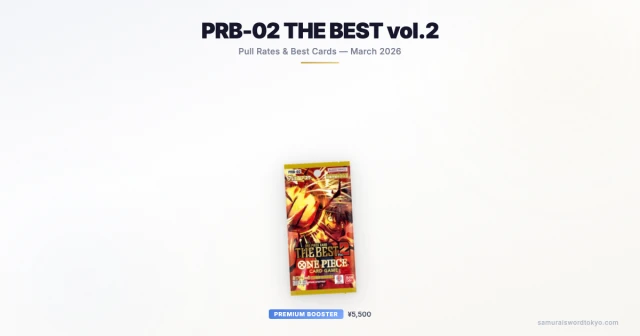
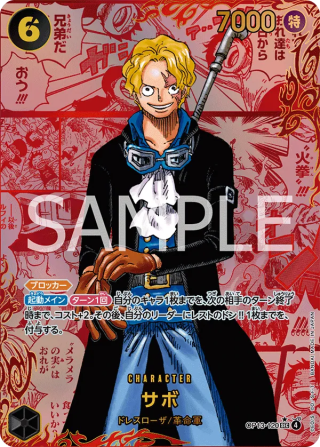
What are the best cards in PRB-02, and what can you realistically pull from a box? Sanji’s first-ever Comic Parallel sits at the top at roughly $500, making it one of the most coveted pulls in ONE PIECE CARD GAME history. But the real story of ONE PIECE CARD THE BEST vol.2 goes beyond a single chase card — this premium booster introduces 30 character-themed Gold DON!! cards, God Packs loaded with parallels, and alternate art reprints of some of the game’s most iconic event cards.

Every single PRB-02 pack guarantees at least one Super Rare or better, which fundamentally changes the opening experience compared to regular OP sets. From collectors chasing Gold DON!! completionism to competitive players upgrading their tournament decks with premium alt arts, this set delivers genuine value at a surprisingly accessible price point — especially on the JPN side.

In this guide, we break down every high-value card in PRB-02, share estimated pull rates from the Japanese opening community, rank all 30 Gold DON!! cards by market value, and give you a clear framework for deciding if this set is right for your collection. All pricing reflects March 2026 data from PriceCharting, SNKRDUNK, and Japanese card shop buyback rates.

¥5,500
Box MSRP

100
Cards/Box

SR+
Per Pack

30
Gold DON!!

What Is PRB-02? Set Overview & Specs

PRB-02 is a premium booster that collects the strongest cards from past sets with fresh alternate art treatments, 6 new SP cards, and the complete 30-character Gold DON!! lineup — all with guaranteed SR-per-pack pull rates.

Spec Detail
Full Name PREMIUM BOOSTER — ONE PIECE CARD THE BEST vol.2 [PRB-02]
JPN Release July 26, 2025
EN Release October 3, 2025
MSRP ¥5,500 / $5.49 per pack
Packs per BOX 10
Cards per Pack 10 (guaranteed 1 SR or better)
Total Card Types 129 + 30 DON!! = 159 types
Rarity Breakdown C: 46 · UC: 29 · R: 41 · SR: 34 · SEC: 8 · SP: 6 · DON!!: 30
Premium Booster Difference

Unlike standard OP sets (24 packs, 6 cards each), PRB-02 packs 10 cards per pack with a guaranteed SR or better in every single one — making every pack opening a premium experience.

What’s New in THE BEST vol.2

PRB-02 builds on PRB-01 with several standout additions:

  • Sanji’s Comic Parallel debut — the first Straw Hat member to receive a Comic Parallel in a premium booster, joining Zoro, Nami, and Usopp from PRB-01
  • 30 character-themed Gold DON!! cards — each featuring a unique character illustration with gold foil treatment. Super Parallel (Gold Frame) versions exist for all 30
  • 6 new SP cards — including alt art versions of fan-favorite event cards like Gomu Gomu no Gigant and Cross Guild
  • Event card parallels — powerful gameplay staples with new premium art treatments
  • God Packs — rare packs containing all parallels or all Gold DON!! cards

JPN vs EN Release Timeline

The Japanese version launched in July 2025, giving JPN box buyers a roughly three-month head start. The English release followed in October 2025.

JPN Version
  • Released July 26, 2025
  • BOX price: ~$60-65
  • Higher print volume
  • Same card pool & art
EN Version
  • Released October 3, 2025
  • BOX price: ~$300+
  • Limited print run
  • English text for play

For international collectors buying from Japan, the JPN BOX carries a significant price advantage. If you’re considering which version to buy, our JPN vs EN comparison guide breaks down the key differences for any set.

Top 10 Most Valuable Cards in PRB-02

Sanji’s Comic Parallel dominates the PRB-02 value chart at ~$500, followed by a compelling mix of event card alt arts and Gold DON!! super parallels that keeps the chase exciting well beyond the #1 spot. Prices below reflect March 2026 secondary market data.
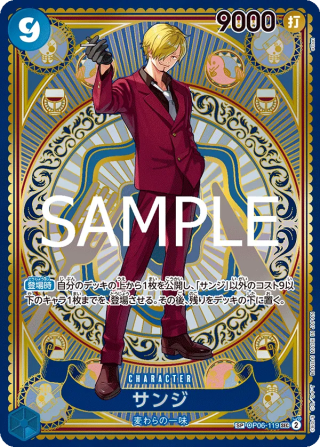
Sanji Comic Parallel OP06-119 PRB-02

#1 — Comic COMIC PARALLEL
Sanji (OP06-119)
~$500 · JPN: ~¥40,000
The crown jewel of PRB-02 and one of the rarest pulls in recent OPTCG history. With an estimated pull rate of just 1 per 100-200 boxes, Sanji’s Comic Parallel commands premium pricing that reflects both extreme scarcity and his enduring popularity. The manga-style illustration captures Sanji in a dynamic pose, completing the Straw Hat Comic Parallel lineup that started with Zoro and Nami in PRB-01.

Rarity Check

At roughly 1 per 100-200 boxes, the Sanji Comic Parallel is among the rarest pulls in any OPTCG product. For context, that’s roughly 1 in every 1,000-2,000 packs opened.
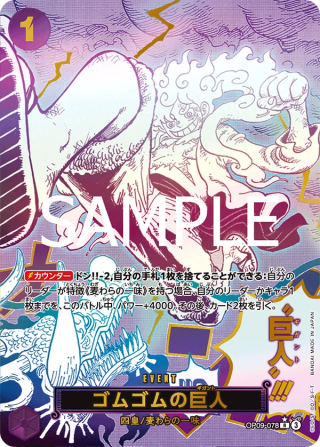
Gomu Gomu no Gigant Alt Art OP09-078 PRB-02

#2 — SP EVENT SP
Gomu Gomu no Gigant (OP09-078)
~$250 · JPN: ~¥18,000
This event SP features a breathtaking new illustration of Luffy’s signature attack. The original OP09-078 is a staple removal card in Luffy-based decks, and this alt art elevates it to collector-grade status while maintaining full tournament legality. Dual appeal — competitive relevance plus premium art — makes it one of PRB-02’s most stable value holds.

Gold DON!! Shanks Super Parallel PRB-02

#3 — Gold GOLD DON!! SUPER PARALLEL
Gold DON!! Shanks
~$85 · JPN: ~¥9,000
The Shanks Gold DON!! leads the 30-card lineup by a comfortable margin. Character popularity drives pricing among Gold DON!! cards, and Shanks sits at the very top. Gold DON!! Super Parallels appear at roughly 1 per 5 boxes, but with 30 characters in the pool, pulling a specific character like Shanks requires considerably more luck.

Cards #4-10

# Card Rarity Price (USD) JPN Buyback
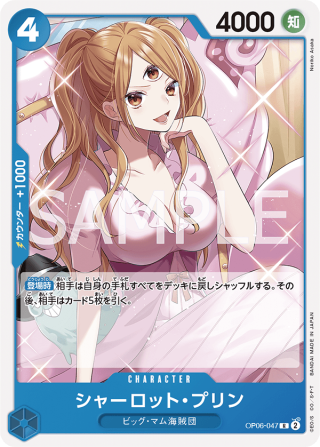
4 Charlotte Pudding (OP06-047) SP ~$79 ¥6,500
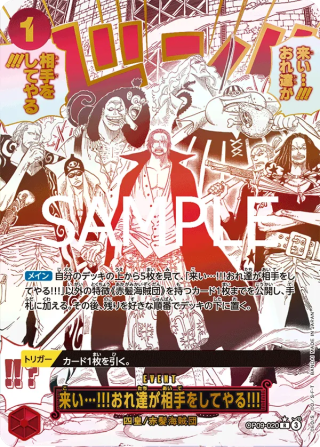
5 Come On!! We’ll Fight You!! (OP09-020) SP ~$75 ¥4,500
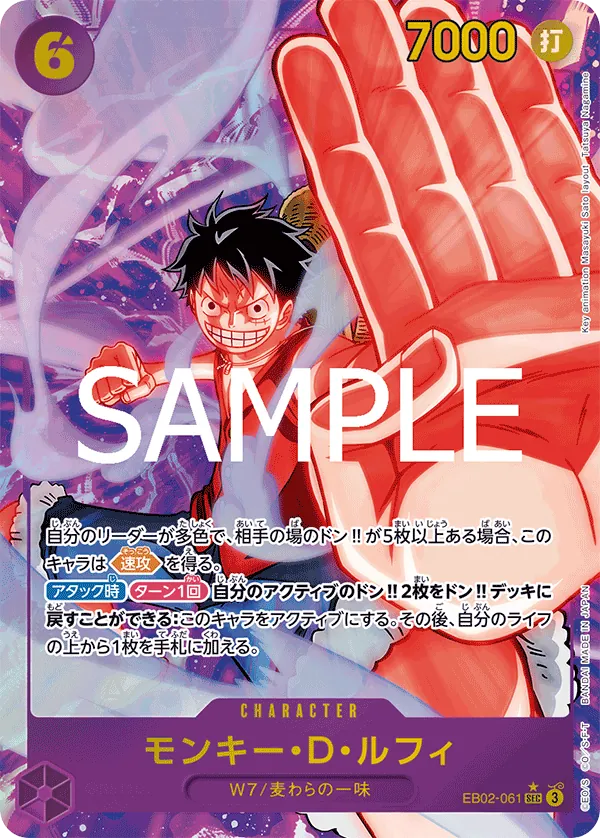
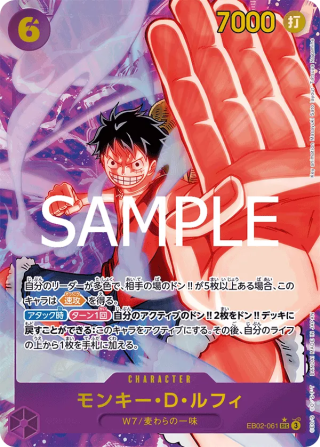
6 Monkey D. Luffy (EB02-061) SP ~$72 ¥6,500
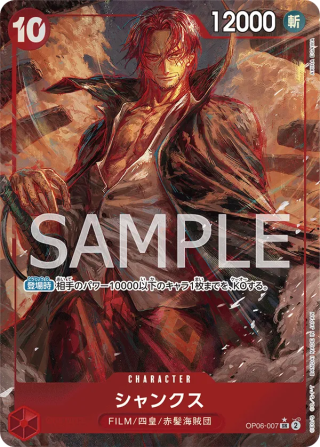
7 Shanks (OP06-007) SP ~$65 ¥4,500
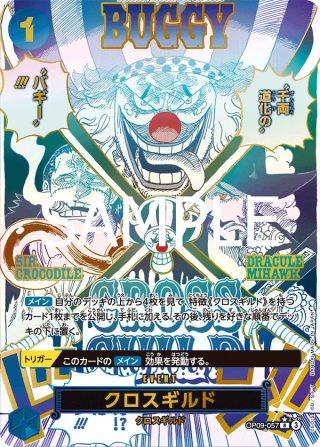
8 Cross Guild (OP09-057) SP ~$63 ¥5,000
9 Gold DON!! Boa Hancock Gold ~$55 ¥3,500
10 Gold DON!! Gear 5 Luffy Gold ~$53 ¥6,000
4

Charlotte Pudding SP OP06-047

Pudding SP
~$79 · ¥6,500
Surprise performer — Egghead Arc popularity drives premium pricing

5

Come On We'll Fight You SP OP09-020

Come On!! SP
~$75 · ¥4,500
Iconic Shanks event card with stunning new alt art

6

Monkey D Luffy SP EB02-061

Luffy SP
~$72 · ¥6,500
Premium reprint with Makitoshi illustration

7

Shanks SP OP06-007

Shanks SP
~$65 · ¥4,500
Enduring fan-favorite character with strong collector demand

8

Cross Guild SP OP09-057

Cross Guild SP
~$63 · ¥5,000
Tournament staple — popular competitive deck upgrade

9

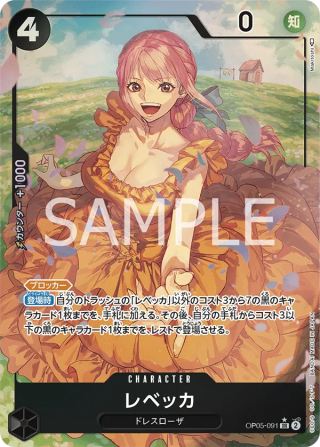
Rebecca SP OP05-091

Rebecca SP
~$42 · ¥4,500
Fan-favorite character with strong alt art collectibility

Player’s Pick

Cross Guild (OP09-057) at #8 sees heavy tournament play as a key search card. Upgrading to the PRB-02 alt art is popular among competitive players looking to bling out their decks.

Gold DON!! Complete Tier List — All 30 Characters Ranked

No other OPTCG product offers anything like PRB-02’s Gold DON!! cards — 30 unique character designs with gold foil treatment, each available in regular parallel (roughly 1 per box) and rare Super Parallel Gold Frame (roughly 1 per 5 boxes) versions. Character popularity drives a 9x price spread across the set.

Tier 1 — Premium ($50+)

Character JPN Buyback USD Market
Shanks ¥9,000 ~$85
Luffy (Gear 5) ¥6,000 ~$53
Boa Hancock ¥3,500 ~$55

These three characters command the highest prices due to their universal popularity. Shanks leads thanks to his iconic status and cross-fandom appeal.

Tier 2 — Strong ($30-50)

Character JPN Buyback USD Market
Yamato ¥4,500 ~$47
Teach ¥4,500 ~$47
Nami ¥3,500 ~$48
Chopper ¥3,800 ~$40
Bonney ¥3,500 ~$38

Yamato and Teach benefit from strong fan followings and competitive deck associations. Nami and Chopper represent core Straw Hat crew popularity.

Tier 3 & 4 — Mid to Budget ($10-30)

Character JPN Buyback Tier
Smoker ¥3,500 Tier 3
Buggy ¥3,000 Tier 3
Usopp ¥3,000 Tier 3
Pudding ¥2,700 Tier 3
Marco ¥2,700 Tier 3
Luffy (Gear 4) ¥2,500 Tier 3
Shirahoshi ¥2,500 Tier 3
Calgara ¥2,500 Tier 3
Sanji / Robin / Sugar / others ¥1,000-2,300 Tier 4
Key Insight

Even the lowest-tier Gold DON!! cards hold ¥1,000+ buyback value. Since you average roughly one Gold DON!! Super Parallel per 5 boxes, each pull returns meaningful value regardless of which character you land on.

Pull Rates & What’s in Your Box

Every PRB-02 pack guarantees at least one SR or better — a baseline that standard booster sets cannot match, which means even a “bad” box delivers solid foundational value through its SR content.

Rarity-by-Rarity Pull Rates

Rarity Types Per BOX (est.) Per Carton (est.)
SR 34 ~10 cards
SEC 8 ~1 card
SR Parallel 9 ~1 card
Gold DON!! (Regular) 30 ~1 card
Gold DON!! (Super Parallel) 30 ~4 cards (~1/5 BOX)
SP (Reprint) 6 ~1 card (~1/20 BOX)
Event SP 4 ~1 card (~1/20 BOX)
Comic Parallel (Sanji) 1 ~1 per 6-10 cartons
God Pack ~1 per 15-20 cartons

Pull rates are estimated from Japanese opening community data and are not officially confirmed by Bandai.

God Pack — What It Is and What It’s Worth

PRB-02 features two types of God Packs — ultra-rare packs where all 10 cards are premium:

  • Parallel God Pack: All 10 cards are parallel versions, potentially including SEC and SP cards
  • Gold DON!! God Pack: All 10 cards are Gold DON!! Super Parallels from the 30-character lineup

The Gold DON!! God Pack is estimated at roughly 1 per 15-20 cartons. With individual Gold DON!! cards ranging from $10-85, a single God Pack delivers an estimated $300-500+ in total card value.

God Pack Value

Pulling a Gold DON!! God Pack from a ~$60 JPN box means 10 premium Gold DON!! Super Parallels worth an estimated $300-500+ total. The odds are roughly 1 in 300-400 boxes — rare, but the payoff is extraordinary.

Box Value Breakdown

Component Guaranteed? Typical Value Range
~10 SR cards Yes (1+ per pack) $15-40 total
1 SEC or Parallel High probability $10-60+
1 Gold DON!! (Regular) High probability $5-15
Gold DON!! Super Parallel ~1 in 5 boxes $10-85 if pulled
SP/Event SP ~1 in 20 boxes $55-500+ if pulled

Should You Buy PRB-02?

PRB-02 ranks among the strongest premium products in the OPTCG lineup, with the guaranteed SR-per-pack structure and Gold DON!! chase cards setting it apart from every standard booster on the market.

For Collectors

Verdict: Strong buy for character collectors and DON!! completionists.

The Gold DON!! subset is a collecting experience that no other OPTCG product offers. Chasing all 30 characters creates a long-term project, and the gold foil treatment makes these cards display-worthy. The Sanji Comic Parallel adds a true grail-tier chase card, and the event card SPs offer premium art for iconic game moments.

Collection Value

A complete set of all 30 Gold DON!! Super Parallels carries a combined market value of roughly $800-1,000+, making it one of the most rewarding subset completions in OPTCG.

For Players

Verdict: Selective buy — target specific SP cards for deck upgrades.

PRB-02’s event card SPs (Gomu Gomu no Gigant, Cross Guild, Come On!! We’ll Fight You!!) offer premium versions of tournament staples. The guaranteed SR content also provides solid deck-building material. If you only need one or two specific cards, buying singles from a card shop may be more cost-effective than chasing them through sealed product.

Buy Sealed
  • Gold DON!! chase experience
  • Guaranteed SR every pack
  • JPN BOX at ~$60 is accessible
Buy Singles
  • Target specific SP cards
  • No variance — get exactly what you need
  • Better for competitive deck upgrades

For Investors

Verdict: Monitor Gold DON!! completion demand and Sanji Comic Parallel trajectory.

PRB-01’s top chase cards have appreciated since release, and PRB-02 follows a similar premium product structure. The Gold DON!! subset creates sustained demand as collectors pursue the full 30-card set. Sealed product pricing is most attractive on the JPN side — at ~$60 per box, the risk-reward profile for JPN sealed product is favorable compared to EN pricing.

Browse our full One Piece booster box collection to compare PRB-02 alongside other sets.

Where to Buy PRB-02 from Japan

For international collectors, buying JPN PRB-02 directly from Japan offers the strongest value proposition at ~$60 per box versus $300+ for EN.

What to expect when ordering from Japan:

  • Shipping typically takes 7-14 business days to US/CA/UK/AU
  • Customs duties may apply depending on your country (usually 0-5% for trading cards)
  • All boxes are factory sealed with original shrink wrap

For a detailed walkthrough of the import process, check our Complete Guide to Buying One Piece Cards from Japan.

Shop This Set
PRB-02 THE BEST vol.2 Booster Box
From ~$60 / ~¥5,500
Ships from Tokyo · Tracked delivery

View Product →

The Bottom Line

PRB-02 ONE PIECE CARD THE BEST vol.2 delivers three things no standard booster set can match:

  1. Guaranteed SR-per-pack baseline — every pack delivers value, eliminating the “all commons” disappointment
  2. Gold DON!! chase cards — a 30-character collectible subset with real market value across all tiers
  3. Grail-level chase in Sanji Comic Parallel — a ~$500 card that gives every box opening genuine excitement

At ~$60 for a JPN box, the entry point is accessible. The worst-case scenario still delivers a box full of SRs and a shot at Gold DON!! Super Parallels. The best case includes SP event cards or the legendary Sanji pull.

Ready to Open?
PRB-02 THE BEST vol.2 Booster Box
From ~$60 / ~¥5,500
Ships from Tokyo · Tracked delivery

Shop PRB-02 →

Frequently Asked Questions

What are the pull rates for PRB-02?

Every pack guarantees at least one SR or better. Per box (10 packs), you can expect roughly 10 SRs, 1 SEC or Parallel, and 1 Gold DON!! regular. Gold DON!! Super Parallels appear at about 1 per 5 boxes. SP cards are roughly 1 per 20 boxes, and the Sanji Comic Parallel is estimated at 1 per 100-200 boxes. Pull rates are community-estimated and not officially confirmed by Bandai.

What is the most expensive card in PRB-02?

The Sanji Comic Parallel (OP06-119) is the most valuable card at approximately $500 as of March 2026. It is Sanji’s first-ever Comic Parallel card and has an extremely low pull rate estimated at 1 per 100-200 boxes.

What is a PRB-02 God Pack?

God Packs are ultra-rare packs where all 10 cards are premium pulls. PRB-02 has two types: a Parallel God Pack (all cards are parallel versions) and a Gold DON!! God Pack (all 10 cards are Gold DON!! Super Parallels). The estimated rate is about 1 God Pack per 15-20 cartons.

How many Gold DON!! cards are in PRB-02?

PRB-02 contains 30 character-themed Gold DON!! cards, each featuring a unique character illustration with gold foil treatment. Each character has a regular parallel version and a rarer Super Parallel (Gold Frame) version. Character popularity drives significant price differences, ranging from ~$10 for budget characters to ~$85 for Shanks.

Is PRB-02 worth buying?

For collectors, PRB-02 offers strong value at the JPN price point (~$60 per box). The guaranteed SR-per-pack structure, Gold DON!! chase cards, and Sanji Comic Parallel create a premium opening experience. For players seeking specific cards, buying singles may be more cost-effective. EN boxes at $300+ carry a steeper entry cost but appeal to English-language collectors.

What is the difference between PRB-01 and PRB-02?

PRB-01 introduced the Gold DON!! concept and featured Zoro and Nami Comic Parallels. PRB-02 continues with Sanji’s Comic Parallel, expands the Gold DON!! lineup to 30 characters, and adds new event card SPs. Both are premium products with guaranteed SR-per-pack, but PRB-02 offers more chase card variety through its larger Gold DON!! pool.

When was PRB-02 released in English?

The English version of PRB-02 released on October 3, 2025, roughly three months after the Japanese release (July 26, 2025). EN boxes trade at a notable premium (~$300+) compared to JPN boxes (~$60-65) due to lower print volume.


🏴‍☠️ Ready to Open Packs?

Get the PRB-01 ONE PIECE CARD THE BEST booster box — shipped directly from Tokyo, Japan with tracking & insurance.

Buy PRB-01 ONE PIECE CARD THE BEST Box

Browse All One Piece Booster Boxes →
Related Guides

EB-01 probabilidades de sobres y Mejores Tarjetas: Memorial Collection guía completa

What are the best cards in EB-01, and is ONE PIECE CARD GAME’s first-ever Extra Booster still worth buying two years after release? The Tony Tony Chopper Manga Rare commands roughly $666 on the secondary market, making it one of the most valuable single pulls in the entire game. But EB-01 Memorial Collection offers far more than one chase card — this set introduced competitive staples that still see tournament play today, fan-favorite alternate arts spanning Dressrosa to Impel Down, and a collector-driven appeal that has pushed JPN box prices well above their original retail.

With only 62 card types and a single Secret Rare, EB-01 packs a surprisingly concentrated value profile. Every box delivers guaranteed SR content across 24 packs, and the smaller card pool means your odds of pulling specific chase cards are meaningfully better than in a standard 121-type booster set.

In this guide, we rank every high-value card in EB-01, break down estimated pull rates from the Japanese opening community, analyze current market trends, and help you decide whether Memorial Collection belongs in your collection. All pricing reflects March 2026 data from PriceCharting and Japanese card shop buyback rates.

¥5,280
Box MSRP

144
Cards/Box

62
Card Types

$666
Top Card

What Is EB-01? Set Overview & Specs

EB-01 Memorial Collection is the first Extra Booster in ONE PIECE CARD GAME history — a smaller, collector-focused product that supplements existing deck themes rather than launching new ones, with fan-favorite characters from Dressrosa, Baroque Works, Impel Down, and Wano.

Spec Detail
Full Name EXTRA BOOSTER — MEMORIAL COLLECTION [EB-01]
JPN Release January 27, 2024
EN Release May 3, 2024
MSRP ¥5,280 (¥220/pack)
Packs per BOX 24
Cards per Pack 6
Total Card Types 62 (61 + 1 DON!!)
Rarity Breakdown C: 28 · R: 21 · SR: 8 · SEC: 1 · Leaders: 3 · DON!!: 1
First Extra Booster

EB-01 is the very first Extra Booster in OPTCG history — a landmark product that established the format for all subsequent EB sets. Its compact 62-card pool versus 121+ in standard sets gives meaningfully better pull odds.

What Makes EB-01 Special

EB-01 stands apart from standard OP booster sets in several ways:

  • Compact card pool — Only 62 types versus 121+ in standard sets, giving better pull odds for specific cards
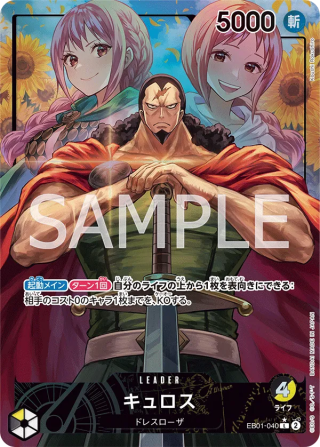
  • Three new Leaders — Kouzuki Oden, Kyros, and Hannyabal each bring unique deck-building options
  • Manga Rare debut — Tony Tony Chopper received the set’s only Manga Rare treatment, creating the ultimate chase card
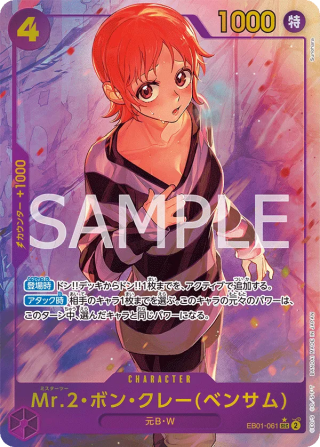
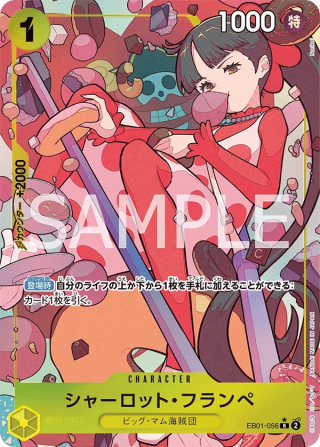
  • Competitive staples — Mr. 2 Bon Kurei (SEC), Charlotte Flampe, and Shirahoshi became meta-defining cards
  • Cross-arc nostalgia — Cards spanning Dressrosa, Baroque Works, Impel Down, Fish-Man Island, and Wano arcs

JPN vs EN Box Pricing

JPN Version
  • Released January 27, 2024
  • BOX price: ~$100
  • JPN text, premium print quality
  • Same card pool & art
EN Version
  • Released May 3, 2024
  • BOX price: ~$120+
  • English text for play
  • Narrower JPN-EN gap than usual

For a deeper look at what differs between the two versions, see our JPN vs EN comparison guide.

Top 10 Most Valuable Cards in EB-01

The Chopper Manga Rare dominates EB-01’s value chart at ~$666, followed by Mr. 2 Bon Kurei’s SEC alternate art and Charlotte Flampe’s SP — a spread that reflects both collector demand and lasting competitive relevance. Prices below reflect March 2026 JPN secondary market data.

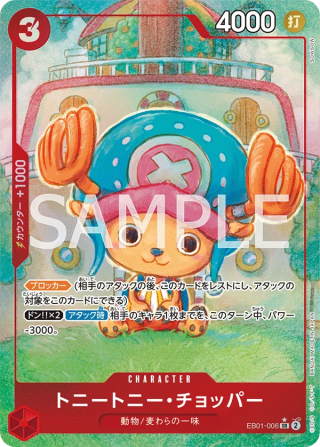
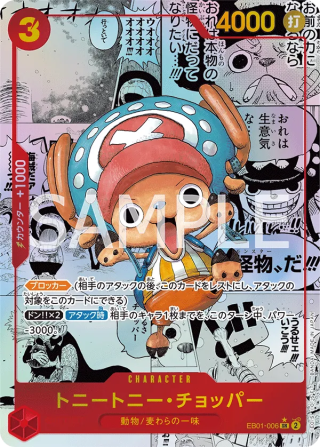
Tony Tony Chopper Manga Rare EB01-006 Memorial Collection

#1 — Manga MANGA RARE
Tony Tony Chopper (EB01-006)
~$666 · JPN: ~¥50,000+
The undisputed king of EB-01 and one of the most valuable Manga Rares in all of OPTCG. This Chopper features the iconic manga panel art treatment that collectors prize above almost every other rarity tier. With an estimated pull rate of roughly 1 per 4-6 cartons, the Chopper Manga Rare turns any box opening into a legitimate treasure hunt. Two years after release, this card has held its value remarkably well.

Rarity Check

At roughly 1 per 4-6 cartons (48-144 boxes), the Chopper Manga Rare is among the rarest pulls in any OPTCG product. For context, that’s roughly 1 in every 1,150-3,450 packs opened.

Mr.2 Bon Kurei Bentham Secret Rare Alternate Art EB01-061

#2 — SEC SECRET RARE ALT ART
Mr. 2 Bon Kurei / Bentham (EB01-061)
~$39 · JPN: ~¥4,000
EB-01’s sole Secret Rare pulls double duty as both a collector piece and a competitive powerhouse. Mr. 2 sees play in Red Purple Trafalgar Law — one of the strongest decks across multiple formats — and his ability to impersonate Nami gives him unique mechanical appeal. As the only SEC in a 62-card set, the alternate art version commands premium pricing.

Charlotte Flampe SP EB01-056 Memorial Collection

#3 — SP SPECIAL ART PARALLEL
Charlotte Flampe (EB01-056)
~$35 · JPN: ~¥3,500
Flampe’s SP version benefits from sustained competitive demand. Yellow decks have been a dominant force in OPTCG’s metagame for multiple formats, and Flampe serves as a key support piece with draw engine mechanics. The SP art treatment elevates an already valuable competitive card into genuine collector territory.

Cards #4-10

# Card Rarity Price (USD) JPN Buyback
4 Laboon (EB01-048) SR ~$16 ¥1,500
5 Brook (EB01-046) SR ~$12 ¥1,200
6 Kouzuki Oden (EB01-001) L ~$12 ¥1,200
7 Tony Tony Chopper (EB01-006) SR ~$11 ¥1,000
8 Scratchmen Apoo (EB01-015) R ~$11 ¥1,000
9 Hannyabal (EB01-021) L ~$10 ¥1,000
4

Laboon Alternate Art EB01-048

Laboon SR
~$16 · ¥1,500
Fan-favorite Thriller Bark character with stunning alternate art

5

Brook Alternate Art EB01-046

Brook SR
~$12 · ¥1,200
Beloved Straw Hat crew member with premium art treatment

6

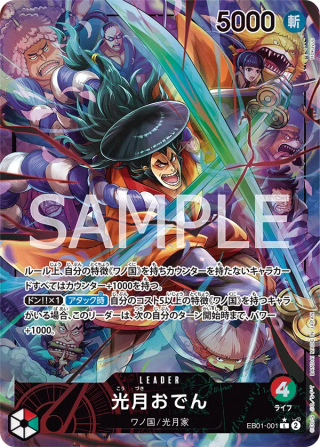
Kouzuki Oden Alternate Art Leader EB01-001

Oden L
~$12 · ¥1,200
Leader card with Wano/Akazaya Nine synergy for unique builds

7

Tony Tony Chopper Alternate Art EB01-006

Chopper SR
~$11 · ¥1,000
Crayon-style alt art — distinct from the manga rare version

8

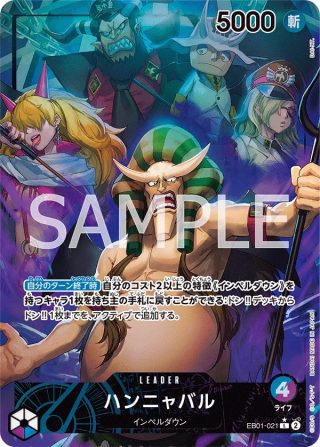
Hannyabal Alternate Art Leader EB01-021

Hannyabal L
~$10 · ¥1,000
Impel Down Leader enabling Blue Purple ramp strategies

9

Kyros Alternate Art EB01-040

Kyros SR
~$10 · ¥900
Dressrosa arc warrior with future support potential

Player’s Pick

Scratchmen Apoo at #8 is notable as a Rare-rarity card commanding $11 — strong competitive demand for Supernova support pieces drives pricing well above typical R-tier values.

Pull Rates & What’s in Your Box

Every EB-01 box delivers 24 packs of 6 cards each — a total of 144 cards — with a compact 62-type card pool that gives meaningfully better odds for specific pulls compared to standard 121+ type booster sets.

Rarity-by-Rarity Pull Rates

Rarity Types Per BOX (est.) Notes
C 28 ~84 cards Bulk of box contents
R 21 ~36 cards Higher ratio than standard sets
SR 8 ~4-6 cards Strong pull rate for small set
SR Parallel / Alt Art ~8 ~2-3 cards Where the value concentrates
SEC 1 ~0.5-1 card Mr. 2 — ~1 per 1-2 boxes
SEC Alt Art 1 ~0.25 card ~1 per 3-5 boxes
SP 1 ~0.25 card Flampe SP — ~1 per 3-5 boxes
Manga Rare 1 ~1 per 4-6 cartons
Leader Alt Art 3 ~0.5-1 card Oden, Kyros, Hannyabal

Pull rates are estimated from Japanese opening community data and are not officially confirmed by Bandai.

Compact Pool Advantage

With only 8 SR types versus 10+ in standard sets, your odds of pulling any specific SR are roughly 50% better than in a typical OP booster box.

Box Value Breakdown

Component Guaranteed? Typical Value Range
4-6 SR cards Yes $15-30 total
2-3 SR Alt Art / Parallel High probability $15-40+
1 SEC (Mr. 2) ~1 in 1-2 boxes $5-39
1 SP (Flampe) ~1 in 3-5 boxes $35 if pulled
Manga Rare (Chopper) ~1 per 4-6 cartons $666 if pulled

Best Competitive Cards from EB-01

Four EB-01 cards still define competitive formats two years after release — an unusual longevity that makes this set relevant for players, not just collectors.

Card ID Meta Role Key Decks
Mr. 2 Bon Kurei EB01-061 Multi-format staple Red Purple Trafalgar Law
Charlotte Flampe EB01-056 Draw engine Yellow decks (multiple leaders)
Shirahoshi EB01-057 Generic yellow blocker All yellow builds
Cavendish EB01-012 DON!! manipulation Supernova builds

Mr. 2 Bon Kurei’s mechanical flexibility — counting as “Nami” for certain interactions — gives him unique utility that no other card replicates. Charlotte Flampe’s draw engine makes her an automatic inclusion in most yellow builds, while Shirahoshi’s generic blocker role means she fits virtually any yellow deck. Cavendish supports Supernova leader strategies with active DON!! manipulation.

Deck Builder’s Note

Hannyabal (EB01-021) is also competitively relevant as one of EB-01’s three Leaders, enabling Blue Purple Impel Down ramp strategies. While not tier-1 in every format, Impel Down builds have shown up at regional events.

Should You Buy EB-01?

EB-01 Memorial Collection remains one of the strongest Extra Booster products in OPTCG, with a concentrated card pool, lasting competitive relevance, and a true grail-tier chase card in the Chopper Manga Rare.

For Collectors

Verdict: Strong buy at current JPN pricing.

At ~$100 per JPN box, you’re getting a premium collector experience with genuine chase card excitement. The Chopper Manga Rare at $666 provides a grail-tier pull possibility, and the alternate art treatments across Dressrosa, Impel Down, and Wano characters create a visually stunning collection.

Collector Value

EB-01’s nostalgic appeal — the set was explicitly designed to celebrate beloved characters across multiple arcs — gives it lasting collector significance as OPTCG’s first Extra Booster product.

For Players

Verdict: Buy singles for specific competitive needs.

If you need Mr. 2 Bon Kurei, Charlotte Flampe, or Shirahoshi for your competitive decks, buying singles is more cost-effective than chasing through sealed product. However, if you play multiple archetypes (yellow, purple, Supernova), a box can provide solid deck-building material across several strategies simultaneously.

Buy Sealed
  • Chase Chopper Manga Rare
  • Compact pool = better odds
  • Multi-archetype value
Buy Singles
  • Target specific meta cards
  • No variance risk
  • Better for single-deck players

For Investors

Verdict: JPN sealed boxes have appreciated and may continue.

EB-01 JPN boxes have nearly doubled from their ¥5,280 retail price to ~$100 in two years. As the first Extra Booster in OPTCG history, this set carries “first of its kind” collector premium. Sealed product from early OPTCG sets has historically appreciated as the player base grows.

Browse our full One Piece booster box collection to compare EB-01 alongside other sets.

Where to Buy EB-01 from Japan

For international collectors, buying JPN EB-01 directly from Japan ensures authentic sealed product at competitive pricing.

What to expect when ordering from Japan:

  • Shipping typically takes 7-14 business days to US/CA/UK/AU
  • Customs duties may apply depending on your country (usually 0-5% for trading cards)
  • All boxes are factory sealed with original shrink wrap

For a detailed walkthrough of the import process, check our Complete Guide to Buying One Piece Cards from Japan.

Shop This Set
EB-01 Memorial Collection Booster Box
From ~$100 / ~¥5,280 MSRP
Ships from Tokyo · Tracked delivery

View Product →

The Bottom Line

EB-01 Memorial Collection delivers three things that make it special even two years after release:

  1. A $666 chase card — the Chopper Manga Rare gives every box opening genuine excitement and represents one of OPTCG’s most valuable singles
  2. Competitive longevity — Mr. 2 Bon Kurei, Charlotte Flampe, and Shirahoshi remain tournament staples across multiple formats
  3. First Extra Booster premium — as OPTCG’s inaugural Extra Booster, EB-01 carries collector significance that grows with the game’s expanding player base

At ~$100 for a JPN box, the entry point reflects earned appreciation rather than speculative hype. The compact 62-card pool gives better pull odds than standard sets, and the nostalgic character selection ensures broad collector appeal.

Ready to Open?
EB-01 Memorial Collection Booster Box
From ~$100 / ~¥5,280 MSRP
Ships from Tokyo · Tracked delivery

Shop EB-01 →

Frequently Asked Questions

What is the most expensive card in EB-01?

The Tony Tony Chopper Manga Rare (EB01-006) is the most valuable card at approximately $666 as of March 2026. This manga panel art treatment is estimated at roughly 1 per 4-6 cartons, making it an exceptionally rare pull.

What are the pull rates for EB-01?

Each box contains 24 packs of 6 cards. You can expect roughly 4-6 SRs per box, with a chance at SR alternate arts (2-3 per box), the Mr. 2 Bon Kurei SEC (~1 per 1-2 boxes), Flampe SP (~1 per 3-5 boxes), and the Chopper Manga Rare (~1 per 4-6 cartons). Pull rates are community-estimated and not officially confirmed.

Is EB-01 worth buying in 2026?

For collectors, EB-01 remains a strong buy at the JPN price point (~$100 per box). The concentrated card pool, competitive staples, and Chopper Manga Rare chase card create a premium opening experience. For players seeking specific cards, buying singles is more cost-effective.

How many cards are in EB-01?

EB-01 contains 62 card types (61 cards + 1 DON!! card), including 3 Leaders, 28 Commons, 21 Rares, 8 Super Rares, and 1 Secret Rare. The smaller pool compared to standard 121+ type sets means better pull odds.

What is the difference between EB-01 and regular booster sets?

EB-01 is an Extra Booster — a smaller, collector-focused product with 62 card types versus 121+ in standard sets. It supplements existing deck themes (Dressrosa, Impel Down, Wano) rather than introducing entirely new mechanics. The compact pool gives better odds for specific cards.

Which EB-01 cards are good for competitive play?

The most competitively relevant EB-01 cards are Mr. 2 Bon Kurei (EB01-061) for Red Purple Law decks, Charlotte Flampe (EB01-056) for yellow decks, Shirahoshi (EB01-057) as a generic yellow blocker, and Cavendish (EB01-012) for Supernova builds.


🏴‍☠️ Ready to Open Packs?

Get the EB-01 Memorial Collection booster box — shipped directly from Tokyo, Japan with tracking & insurance.

Buy EB-01 Memorial Collection Box

Browse All One Piece Booster Boxes →
Related Guides

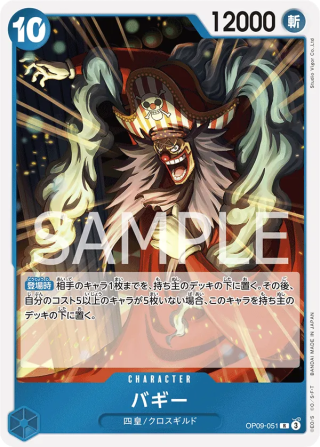
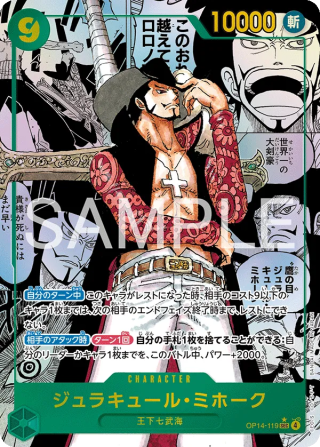
OP-14 probabilidades de sobres y Mejores Cartas: The Azure Sea's Seven guía

OP-14 pull rates tell an unusual story — this set actually pays you back. The Azure Sea’s Seven marks the ONE PIECE CARD GAME’s 3rd Anniversary, and BANDAI loaded this expansion with ultra-rare Gold and Silver Anniversary cards that have already shattered price records. A single Buggy 3rd Anniversary SP (Silver) commands ¥99,800 (approximately $648 at ¥154/USD) on the Japanese secondary market, making it one of the best cards in the entire OPTCG lineup.

Beyond the anniversary hype, OP-14 introduces seven Warlord-themed leaders — Mihawk, Hancock, Doflamingo, Crocodile, Jinbe, Law, and Moria — each opening new competitive archetypes that have reshaped the Japanese meta. Purple Doflamingo currently sits at the top of JPN tournament results, while Boa Hancock decks have climbed into the top 3 by win rate.

Here’s what makes this set stand out: the BOX expected value is positive. At ¥8,365 EV against a ¥5,280 retail price, OP-14 is one of the rare TCG products where the math actually works in the buyer’s favor. We’ll break down the complete pull rates for every rarity tier — including the ultra-rare 3rd Anniversary SPs that appear roughly once every 120 boxes — rank the top 10 most valuable cards with current March 2026 JPN market prices, and help you decide whether this box belongs in your collection.

Our team handles hundreds of OPTCG boxes monthly through our Tokyo warehouse, and OP-14 has been one of the most consistently requested sets since its November 2025 launch.

Key Takeaway

OP-14 delivers positive BOX EV (¥8,365 vs ¥5,280 retail), ultra-rare 3rd Anniversary Buggy chase cards worth up to ¥99,800, and three meta-defining leaders. At near-retail box pricing (~¥5,500), it’s one of the best value propositions in the current OPTCG sealed market.

~¥5,500
Box Price

167
Card Types

~1/3
SEC Rate

24
Packs/Box

OP-14 Set Overview: The Seven Warlords Take the Stage

Seven leader cards in a single booster set — OP-14 holds the OPTCG record. The Azure Sea’s Seven (蒼海の七傑) brings the iconic Seven Warlords of the Sea to the forefront, each building around a unique mechanic from Mihawk’s slash-based control to Doflamingo’s hand manipulation.

What’s New in OP-14

Three features set this expansion apart from previous boosters:

  • 3rd Anniversary Special Cards: Ultra-rare Gold and Silver variants of Buggy with metallic foil finishes. These appear once per ~120 boxes, making them among the rarest pulls in OPTCG history.
  • 7 Warlord Leaders: Every color gets representation — Red (Law), Green (Mihawk), Blue (Jinbe), Multi-Color (Hancock, Moria), Purple (Doflamingo), and Black (Crocodile).
  • 6 SP Reprints with New Art: Fan-favorite cards from earlier sets — including Perona (OP06), Sugar (OP10), and Mihawk (OP12) — return with exclusive alternate illustrations by guest artists.

Full Set Specs

Spec Detail
Set Name The Azure Sea’s Seven (蒼海の七傑)
Set Code OP-14
JPN Release November 22, 2025
EN Release January 16, 2026
MSRP (JPN) ¥5,280 (BOX) / ¥220 (pack)
Packs per Box 24
Cards per Pack 6
Total Cards 126 base + 41 parallels = 167 types
Leaders 7
SEC 2 (Mihawk, Crocodile)
SR 10
SP (Alt Art Reprints) 6
3rd Anniversary SP 2 (Buggy Gold, Buggy Silver)
Market Price (JPN BOX) ~¥5,500 (March 2026)
Market Price (eBay) ~$77 USD

The BOX remains accessible at near-retail pricing — a rarity for popular OPTCG sets. Most recent booster releases trade at significant premiums within weeks of launch. OP-14’s relative affordability combined with its positive EV makes it an appealing sealed product.

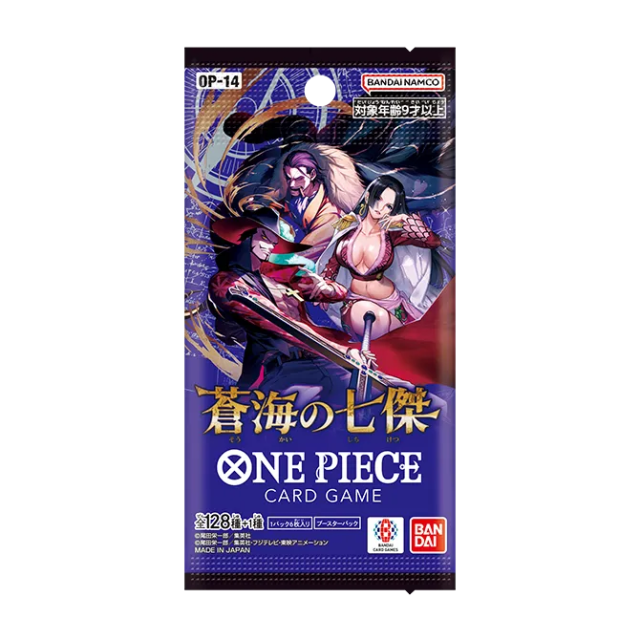
OP-14 The Azure Sea's Seven Japanese booster box
OP-14 The Azure Sea’s Seven — Japanese Booster Box

Top 10 Most Valuable Cards in OP-14 (March 2026)

OP-14’s value distribution is top-heavy: the two 3rd Anniversary Buggy cards and the Mihawk Comic Parallel account for the majority of high-end value. Prices below reflect JPN secondary market data as of March 2026, sourced from SNKRDUNK, Mercari, and major card shops.

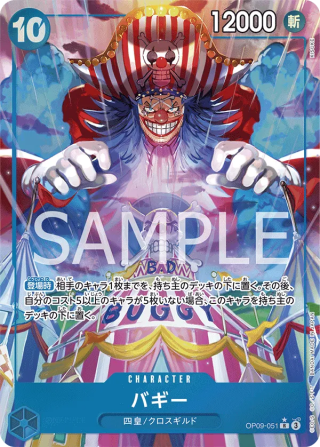
Buggy 3rd Anniversary SP Silver variant OP-14

#1 — SP 3RD ANNIVERSARY SPECIAL
Buggy 3rd Anniversary SP (Silver)
~$648 · JPN: ~¥99,800
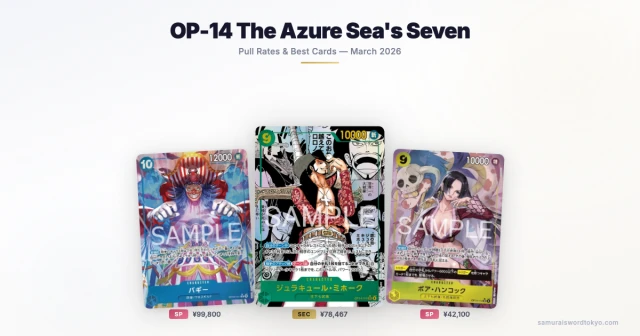
The crown jewel of OP-14. The Silver variant features a stunning metallic silver foil frame surrounding the Yonko-era Buggy illustration. At an estimated pull rate of 1 in 120 boxes, pulling this card is essentially hitting the jackpot. The Silver has maintained remarkable price stability, holding steady in the ¥95,000-100,000 range for three months. Buyback: ~¥65,800.

Rarity Check

The 3rd Anniversary SP cards in OP-14 are part of a four-set series spanning OP-11 through OP-14. Each set featured a different character in Gold and Silver variants: Luffy (OP-11), Teach (OP-12), and now Buggy (OP-14). Completing the full Anniversary collection is a serious collector’s quest.

Buggy 3rd Anniversary SP Gold variant OP-14

#2 — SP 3RD ANNIVERSARY SPECIAL
Buggy 3rd Anniversary SP (Gold)
~$583 · JPN: ~¥89,800
The Gold variant shares the same ultra-rare pull rate as its Silver counterpart but trades at a slight discount. Historical data across the Anniversary series shows Silver variants consistently trading 10-15% above Gold. Both variants have held their value exceptionally well — bucking the typical 20-30% first-quarter depreciation. Buyback: ~¥59,200.

Dracule Mihawk Comic Parallel SEC OP14-119

#3 — Comic SEC COMIC PARALLEL
Dracule Mihawk Comic Parallel (OP14-119)
~$510 · JPN: ~¥78,467
The World’s Greatest Swordsman gets the comic-panel treatment. At an estimated pull rate of 1 in 96 boxes, it’s rarer than the standard SEC. Mihawk’s value is driven by character popularity (consistently top 5 in One Piece polls), competitive relevance, and artistic quality. Based on similar Comic Parallels from previous sets, this type tends to stabilize then appreciate as supply dries up. Buyback: ~¥36,800.

Cards #4–10: The Supporting Cast

Rank Card Rarity Price (¥) ~USD
4 Boa Hancock SP (OP14-112) SP ¥42,100 $274
5 “I’m Scared…♡” (OP14-118) R Parallel ¥28,800 $187
6 Sugar SP (OP10-065) SP ¥12,800 $83
7 Boa Hancock L Parallel (OP14-041) L Parallel ¥12,800 $83
8 Dracule Mihawk SP (OP12-030) SP ¥12,300 $80
9 Ground Death R Parallel (OP14-096) R Parallel ¥11,236 $73
10 Perona SP (OP06-093) SP ¥9,730 $63

4

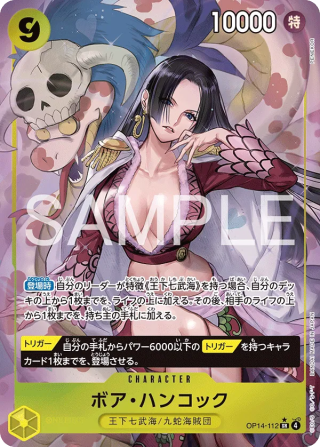
Boa Hancock SP OP14-112

Boa Hancock SP
¥42,100 · ~$274
Guest artist otton’s illustration — climbed 70% from launch. Dual demand from players and collectors.

5

I'm Scared Hancock R Parallel OP14-118

“I’m Scared…♡” R
¥28,800 · ~$187
Hancock’s beloved pose R Parallel — priced higher than most SRs thanks to character popularity.

6

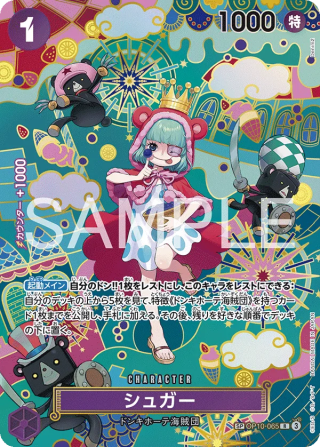
Sugar SP OP10-065

Sugar SP
¥12,800 · ~$83
OP-10 reprint appealing to Purple Doflamingo deck builders.

7

Boa Hancock L Parallel OP14-041

Hancock L Parallel L
¥12,800 · ~$83
Alternate-art leader for collectors wanting the full Hancock set.

8

Dracule Mihawk SP OP12-030

Mihawk SP SP
¥12,300 · ~$80
OP-12 reprint with new art by Sunohara — affordable Mihawk chase entry.

9

Ground Death R Parallel OP14-096

Ground Death R
¥11,236 · ~$73
Crocodile’s signature technique — dramatic desert artwork with renewed competitive relevance.

#10 Perona SP (OP06-093) — The Ghost Princess returns with Hashimoto Q’s distinctive illustration. At ¥9,730 (~$63), she’s the most affordable SP in the set and a potential entry point for collectors building an OP-14 SP collection.

Collector’s Pick

The “I’m Scared…♡” Hancock R Parallel (#5) is this set’s surprise performer — an R-rarity card priced above most SRs purely on character popularity and illustration quality. Watch for this pattern in future sets with strong female characters.

OP-14 Pull Rates: What Can You Expect?

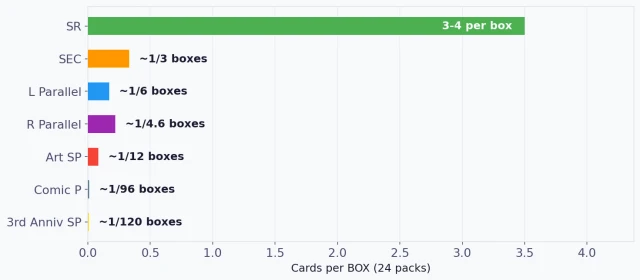
The SEC rate of 1 in 3 boxes makes OP-14’s core chase cards reasonably accessible — but the ultra-rare Anniversary SPs at 1 in 120 boxes are a different story entirely. All rates below are community-estimated based on aggregate box opening data from Japanese card shops and content creators. BANDAI does not publish official pull rates.

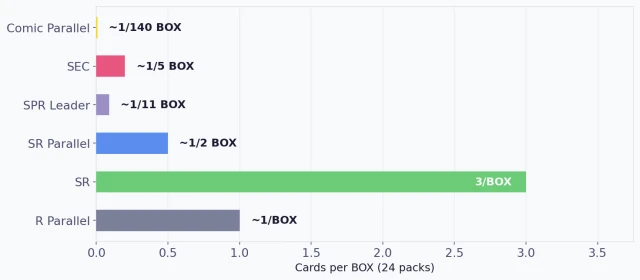
OP-14 The Azure Sea's Seven pull rate breakdown by rarity tier
OP-14 Pull Rate Distribution by Rarity Tier

Rarity Tier Breakdown

Rarity Types Per Box Per Carton (12 BOX) Specific Card Odds
3rd Anniversary SP (Gold/Silver) 2 ~1/120 boxes ~0.1 ~1/240 per specific
Comic Parallel 1 ~1/96 boxes ~0.125 1/96
Art SP 6 ~1/12 boxes ~1 ~1/72 per specific
Leader Parallel 7 ~1/6 boxes ~2 ~1/42 per specific
SEC 2 ~1/3 boxes (33%) ~4 ~1/6 per specific
SR 10 3-4 per box 36-48 Common pull
R Parallel 8 ~1/4.6 boxes (22%) ~2.6 ~1/37 per specific

3rd Anniversary SP — The Ultra Chase

At approximately 1 in 120 boxes, the 3rd Anniversary Gold and Silver Buggy cards are among the rarest pulls in OPTCG history. To put this in perspective:

  • 1 carton (12 boxes): You have roughly a 10% chance of pulling any Anniversary SP
  • 10 cartons (120 boxes): Statistically, you’d expect to see one
  • Cost for 120 boxes: ~¥633,600 (~$4,114) at retail price
Singles vs Chasing

If your goal is specifically to own a Buggy Anniversary card, buying the single at ¥89,800-99,800 is far more cost-effective than chasing it through box openings. The standard SEC rate of 1 in 3 boxes is solid by OPTCG standards — the core chase cards are accessible for moderate spenders.

What’s in Your Box — OP-14 Box Contents Breakdown

TCG booster boxes are entertainment products, not investments — and most boxes across any TCG return less than their purchase price in singles value. OP-14 is a notable exception.

Expected Value by Rarity Slot

Rarity Slot Avg Cards/Box Avg Value/Card Slot EV
SR guaranteed 3-4 ~¥500 ~¥1,750
SEC chance (33%) 0.33 ~¥5,000 ~¥1,650
SP chance (1/12) 0.083 ~¥15,000 ~¥1,250
L Parallel (1/6) 0.17 ~¥8,000 ~¥1,360
R Parallel (1/4.6) 0.22 ~¥12,000 ~¥2,640
Anniversary SP (1/120) 0.008 ~¥95,000 ~¥792
Other (R/UC/C) ~136 minimal ~¥300
Total Box EV ~¥8,365

Box EV: ~¥8,365 vs the ¥5,280 box price — that’s a positive expected return of roughly 58%.

The SR guaranteed slots provide a baseline floor of approximately ¥1,500-2,000 per box. Every box gives you that foundation. The upside comes from hitting an SEC (1 in 3), SP (1 in 12), or — if luck truly favors you — an Anniversary card.

Singles vs Box: Which Strategy Wins?

Strategy Cost What You Get Best For
Buy singles (Top 3) ¥268,000+ Exactly the cards you want Targeted collectors
Buy 1 BOX ~¥5,500 144 cards + chase potential Casual collectors, openers
Buy 1 carton (12 BOX) ~¥66,000 ~4 SEC + 1 SP + deck playsets Serious collectors, players
Opening experience Priceless The thrill of the pull Everyone

Should You Buy OP-14?

For Collectors: Strong Yes

OP-14 is a collector’s set by design. The 3rd Anniversary cards offer a chase experience that most booster sets simply can’t match, and the positive BOX EV means your average box return exceeds the purchase price. The SP alternate art collection — six reprints with exclusive illustrations — provides a satisfying “collect them all” goal within a single set.

The Hancock SP has demonstrated particularly strong price momentum, climbing 70% from launch. Character-driven cards with strong artwork tend to hold value well in OPTCG, and Hancock’s enduring popularity across the One Piece fandom provides durable demand.

At ~¥5,500 per box, the barrier to entry is low compared to sets like OP-09 or OP-11 where boxes traded at significant premiums immediately after launch.

Collector’s Verdict

Positive EV + near-retail pricing + ultra-rare Anniversary chase + 6 collectible SPs. OP-14 checks every box for collectors. The Hancock SP’s 70% price climb since launch shows this set rewards early buyers.

For Players: Selective Buy

Three OP-14 leaders have proven tournament viability in the Japanese meta:

  • Doflamingo (Purple): Currently the #1 meta pick in JPN tournaments. His hand manipulation mechanic punishes overextension and enables consistent control strategies.
  • Boa Hancock (Multi-Color): Top 3 JPN win rate. Her leader ability supports flexible tempo play, blending pressure with disruption.
  • Dracule Mihawk (Green): A control-oriented slash archetype that rewards precise sequencing.

If you’re building competitive decks around any of these leaders, buying boxes for deck staples makes sense. The SRs and Rs you need are accessible at 3-4 SRs per box.

If you play a different archetype and only need 1-2 specific OP-14 cards, singles are the smarter path.

Buy Now
  • Positive BOX EV — rare for TCG sealed product
  • Near-retail pricing (~¥5,500) still available
  • 3 meta-viable leaders for competitive play
Wait / Buy Singles
  • Only need 1-2 specific cards for a deck
  • Chasing Anniversary SPs (buy singles instead)
  • Budget constrained — prioritize deck staples

For Investors: Monitor and Position

The 3rd Anniversary cards have shown unusual price stability — three months post-launch with minimal depreciation. This pattern mirrors limited-edition collectibles more than standard TCG chase cards. As OP-14 boxes leave the print cycle and supply tightens, Anniversary card prices may strengthen further.

Timing Signals to Watch

BOX price rising above ¥7,000 (supply tightening) · EN Anniversary card prices diverging from JPN (regional arbitrage) · New Anniversary card announcements for future sets (renewed collector attention to the series).

OP-14 Meta Impact: Which Leaders Matter?

OP-14 has fundamentally shifted the OPTCG competitive landscape. Three of its seven leaders have broken into the JPN meta, and the set’s Warlord-themed support cards have created entirely new deck archetypes.

Doflamingo — The Meta King

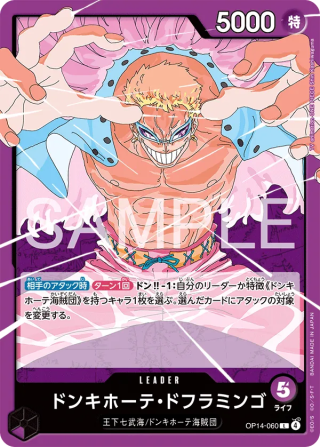
Purple Doflamingo (OP14-060) has claimed the #1 spot in JPN tournament results. His leader ability manipulates the opponent’s hand while deploying characters efficiently, creating a suffocating control-aggro hybrid that punishes both aggressive and passive strategies.

Key deck pieces from OP-14 include Sugar (OP14-063) as an engine piece and the Donquixote Family character package. The deck’s consistency against the previously dominant Red Zoro and Yellow Bonney archetypes from OP-13 has made it the default meta choice in Japanese locals and regionals.

Donquixote Doflamingo leader card OP14-060 Purple
Doflamingo (OP14-060) — the current #1 meta leader in JPN tournaments

Hancock & Mihawk — Competitive Contenders

Boa Hancock (OP14-041) runs an Amazon Lily swarm strategy that floods the board with low-cost characters while her leader ability generates card advantage. She currently holds a top 3 win rate in JPN events, particularly strong against midrange decks.

Green Mihawk (OP14-020) takes the opposite approach — a methodical control deck built around slash-typed characters. Mihawk decks excel at managing board states and closing games through inevitability. While not as dominant as Doflamingo, Mihawk provides a strong option for control-oriented players.

Crocodile (OP14-079) and Moria (OP14-080) round out the competitive-viable leaders, though they occupy more niche positions in the meta. Black Crocodile’s stall/denial strategy and Moria’s recursion mechanics offer counter-meta options that punish specific matchups. For the full card list and EN pricing, see OP-14 on Limitless TCG.

Meta Tip

If you’re entering the JPN competitive scene, Doflamingo is the safest build. His consistency and favorable matchup spread make him the top choice for tournament play. Hancock is the aggressive alternative with higher ceiling but more variance.

Where to Buy OP-14 Japanese Booster Boxes

Japanese OP-14 boxes ship directly from Tokyo with tracked international delivery. Buying JPN versions gives you access to the same ultra-rare Anniversary cards and Comic Parallels found in JPN-exclusive openings — plus the higher print quality and textured finishes that Japanese OPTCG products are known for.

For a complete guide on importing Japanese ONE PIECE cards, including shipping times, customs considerations, and payment methods, see our How to Buy One Piece Cards from Japan guide.

Shop This Set
OP-14 The Azure Sea’s Seven Booster Box (JPN)
From ~$77 / ~¥5,500
Ships from Tokyo · Tracked delivery

View Product →

The Bottom Line

OP-14 The Azure Sea’s Seven delivers on three fronts:

  1. Chase card excitement — The 3rd Anniversary Buggy Gold and Silver SPs are among the rarest and most valuable pulls in OPTCG, and they’ve held their value for three months straight.
  2. Competitive relevance — Three meta-viable leaders (Doflamingo #1, Hancock top 3, Mihawk strong control) ensure the set has lasting gameplay value.
  3. Positive BOX EV — At ¥8,365 EV against the ¥5,280 box price, the math favors the buyer.

Whether you’re chasing Anniversary cards, building a Doflamingo deck, or simply looking for a box with strong expected returns, OP-14 is one of the most well-rounded sets in the OPTCG lineup.

1

Buggy Silver SP

Buggy Silver SP
~¥99,800
The set’s crown jewel — ultra-rare 3rd Anniversary card.

2

Buggy Gold SP

Buggy Gold SP
~¥89,800
Gold foil variant — appreciated +12.5% since launch.

3

Mihawk Comic Parallel

Mihawk Comic Comic
~¥78,467
SEC Comic Parallel — rarer than standard SEC pulls.

Also explore our complete set guides: OP-13 Pull Rates & Best Cards | OP-15 Pull Rates & Best Cards

Frequently Asked Questions

What are the pull rates for OP-14 The Azure Sea’s Seven?

SEC cards appear in roughly 1 out of every 3 boxes (33% rate). Standard SP cards appear approximately once every 12 boxes. The ultra-rare 3rd Anniversary Gold and Silver Buggy cards have an estimated pull rate of 1 in 120 boxes — among the rarest pulls in OPTCG history. Leader Parallels show up about once every 6 boxes. These figures are community estimates based on aggregate opening data, as BANDAI does not publish official pull rates.

What is the most expensive card in OP-14?

As of March 2026, the Buggy 3rd Anniversary SP (Silver) is the most valuable card at approximately ¥99,800 (~$648 USD). The Gold variant follows at ��89,800 (~$583), and the Dracule Mihawk Comic Parallel ranks third at ¥78,467 (~$510). Prices fluctuate on the secondary market.

Is OP-14 worth buying?

For most buyers, yes. OP-14 offers a positive BOX expected value (¥8,365 EV vs ¥5,280 retail), three competitively viable leaders, and ultra-rare chase cards. The box remains affordable at near-retail pricing (~¥5,500), making it accessible for casual and serious collectors. If you only need specific singles, buying individual cards may be more cost-effective.

How rare is the Buggy 3rd Anniversary card in OP-14?

The 3rd Anniversary Buggy cards (Gold and Silver variants) appear approximately once in every 120 boxes — that’s roughly 1 per 10 cartons. At retail price, you’d need to spend approximately ¥633,600 (~$4,114) to statistically expect one pull. This makes them among the rarest inserts in the ONE PIECE CARD GAME.

What decks are strong in the OP-14 meta?

Purple Doflamingo (OP14-060) is the #1 meta pick in JPN tournaments, excelling at control-aggro strategies. Boa Hancock (OP14-041) holds a top 3 JPN win rate with her Amazon Lily swarm deck. Green Mihawk (OP14-020) offers a competitive control option. Black Crocodile and Gecko Moria serve as niche counter-meta choices.

How many SEC cards are in OP-14?

OP-14 contains 2 SEC (Secret Rare) cards: Dracule Mihawk (OP14-119) and Crocodile (OP14-120). Both are powerful 10,000-power characters. Each SEC appears in approximately 1 out of every 3 boxes, with a specific SEC appearing roughly once every 6 boxes.

What is the OP-14 box expected value?

The estimated BOX expected value for OP-14 is approximately ¥8,365, based on current March 2026 secondary market card prices. Against a ¥5,280 box price, this represents a positive EV ratio — unusual for TCG sealed products. This figure accounts for the probability-weighted value of all rarity tiers, including the ultra-rare Anniversary SP cards. Individual box results will vary significantly due to the randomness of pack contents.


🏴‍☠️ Ready to Open Packs?

Get the OP-14 The Azure Sea’s Seven Booster Box booster box — shipped directly from Tokyo, Japan with tracking & insurance.

Buy OP-14 The Azure Sea’s Seven Booster Box Box

Browse All One Piece Booster Boxes →
Related Guides

EB-04 probabilidades de sobres y Mejores Tarjetas: Egghead Crisis guía [2026]

A single Koby card is selling for over $580 — and it comes from a box that costs less than $60 at retail.

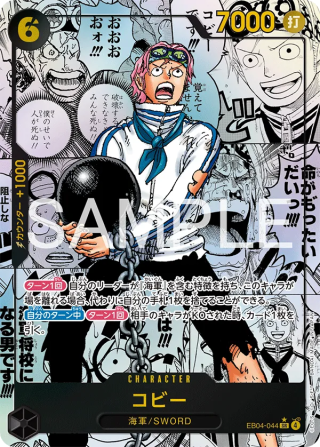
EB-04 Egghead Crisis dropped in Japan on January 31, 2026, bringing the Egghead Island arc to ONE PIECE CARD GAME in Extra Booster form. Koby’s Comic Parallel (EB04-044) sits at the top of the chase list around ¥77,700–100,000 (~$583), while a brand-new Bonney R/Y Leader card has already won a Japanese tournament with a clean 5-0 record. Six SP cards featuring artwork by Hashimoto Q and Bashikou round out a set that punches well above its weight.

Here’s the twist that most English guides miss: there is no standalone EN release of EB-04. International players will find these cards split across OP-14 (January 2026) and OP-15 (April 2026). That makes the Japanese version the only way to get the complete EB-04 experience in one product.

Below you’ll find the top 10 most valuable cards with current JPN market prices, rarity-by-rarity pull rates from community opening data, a competitive breakdown of the Bonney leader, and a clear buy recommendation for collectors, players, and investors.

Our team tracks OPTCG prices across SNKRDUNK, Mercari, and TCGPlayer daily. We’ve been monitoring EB-04 since launch week.

Key Takeaway

EB-04 is the only product with the complete Egghead Crisis card pool. No standalone EN release exists — cards are split across OP-14 and OP-15. At ~¥9,000/box with positive EV (~¥10,980), this is one of the better-value OPTCG boxes on the market right now.

~¥9,000
Box Price

67+1
Card Types

~1/box
SEC Rate

24
Packs/Box

EB-04 Egghead Crisis — Set Overview & Specs

EB-04 packs 67 cards, six guest-artist SPs, and a ~$583 Comic Parallel chase into a ¥5,280 Extra Booster — and it’s the only product that contains the full Egghead Crisis card pool.

Set Specs

Spec Detail
Full Name Extra Booster Vol. 4 — EGGHEAD CRISIS [EB-04]
JPN Release January 31, 2026
EN Release No standalone release (cards in OP-14 & OP-15)
MSRP ¥5,280/box (¥220/pack) → Market price: ~¥9,000 (~$60)
Packs per Box 24
Cards per Pack 6
Total Cards per Box 144
Card Types 67+1 (29C, 21R, 9SR, 1SEC, 6SP, 1L, 1DON)

Prices as of March 2026. Market price from SNKRDUNK.

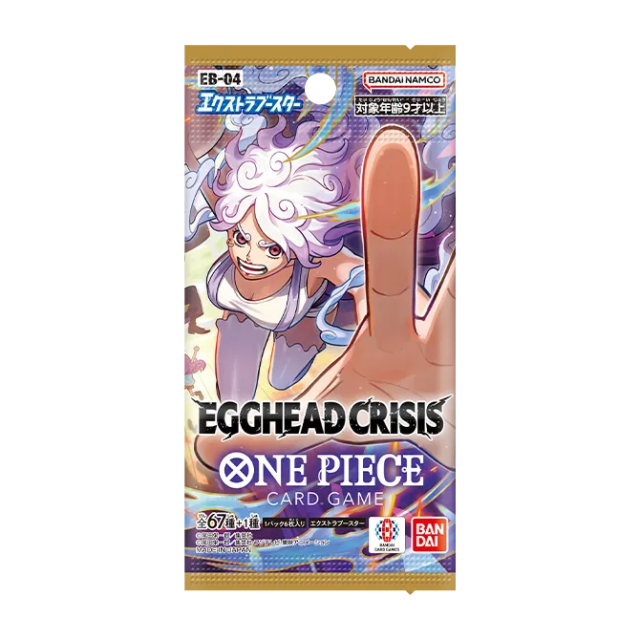
EB-04 Egghead Crisis ONE PIECE CARD GAME booster box Japanese version
EB-04 Egghead Crisis booster box (JPN)

What’s in EB-04

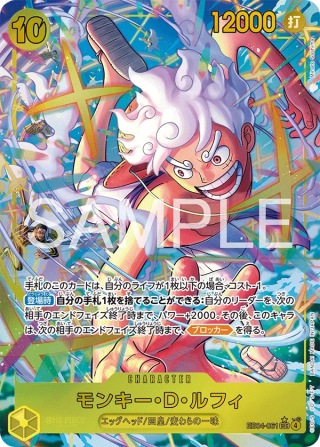
The card pool covers key Egghead arc moments and characters. Twenty-nine Commons and twenty-one Rares form the base, while nine Super Rares provide the competitive staples. A single SEC (Luffy EB04-061) anchors the premium tier, flanked by six Special Parallel cards from guest illustrators Hashimoto Q, Bashikou, Nijihayashi, and otton.

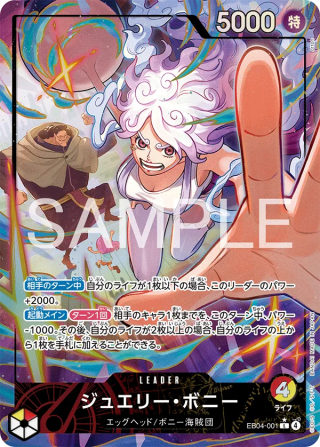
The standout inclusion: Jewelry Bonney as a new Leader card — the first R/Y (Red/Yellow) Bonney Leader in the game. Her tournament performance since launch has confirmed she’s more than a collector piece.

The EN Distribution Twist

Here’s something most guides don’t mention: EB-04 does not exist as a standalone English product. BANDAI has distributed the EB-04 card pool across two international booster sets:

  • OP-14 (released January 16, 2026) — contains a portion of EB-04 cards
  • OP-15 (releasing April 3, 2026) — contains the remaining EB-04 cards

For international collectors and players who want the full Egghead Crisis experience as a cohesive set, the JPN version is the only option. The SP cards, the Koby Comic Parallel, and the Bonney Leader Parallel are all packaged together in one product — something the EN market can’t replicate.

Top 10 Most Valuable EB-04 Cards

These are the cards driving EB-04’s value. All prices reflect the JPN market as of March 2026.

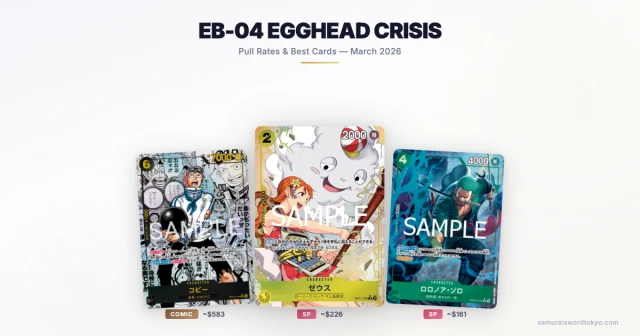
Rank Card Rarity Price (USD)
1 Koby EB04-044 (Comic Parallel) Comic ~$583
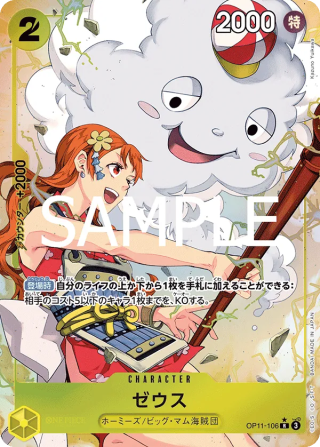
2 Zeus OP11-106 (SP) SP ~$226
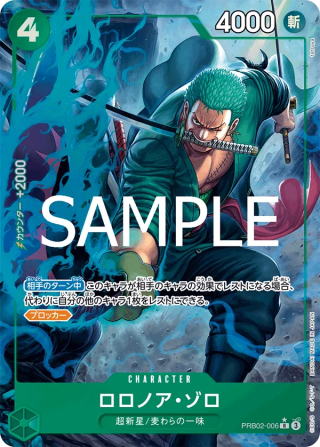
3 Roronoa Zoro PRB02-006 (SP) SP ~$161
4 Jewelry Bonney EB04-001 (Leader Parallel) L ~$142
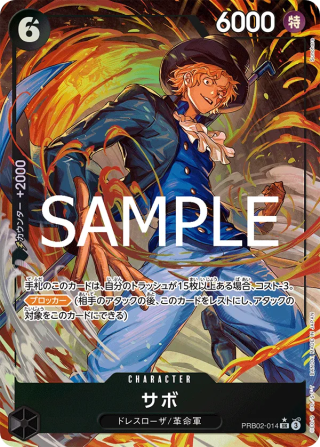
5 Sabo PRB02-014 (SP) SP ~$96
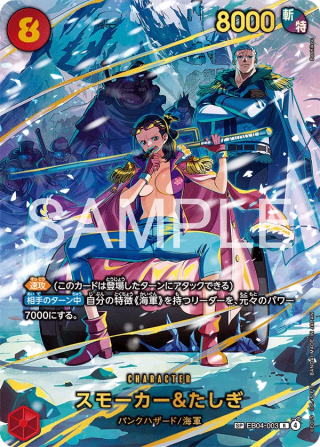
6 Smoker & Tashigi EB04-003 (SP) SP ~$77
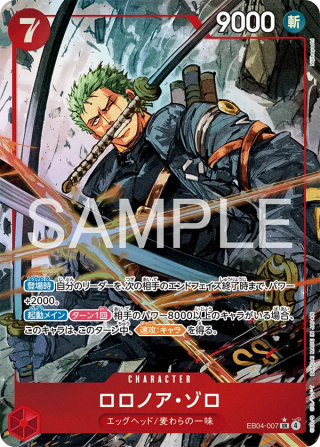
7 Roronoa Zoro EB04-007 (SR Parallel) SR ~$77
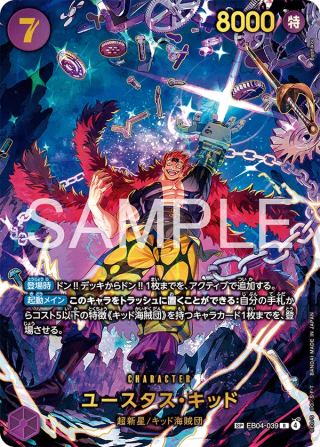
8 Eustass Kid EB04-039 (SP) SP ~$65
9 Monkey D. Luffy EB04-061 (SEC Parallel) SEC ~$65
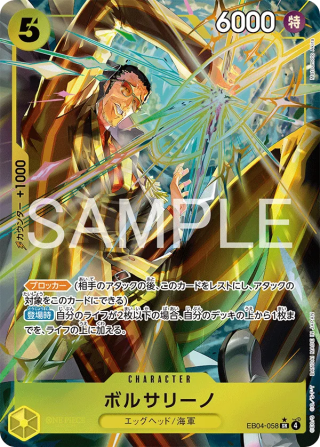
10 Borsalino EB04-058 (SR Parallel) SR ~$52

Prices based on SNKRDUNK and Mercari transaction data, March 2026.

Koby EB04-044 Comic Parallel EB-04 Egghead Crisis

#1 — Comic COMIC PARALLEL
Koby (EB04-044)
~$583 · JPN: ~¥77,700–100,000
The undisputed chase card of EB-04. Koby’s Comic Parallel features manga-panel artwork capturing one of the most defining Egghead arc moments. At 1 in 80.7 boxes (1.24% chance), this card sits in the upper tier of OPTCG Comic Parallels — same price range as several OP-09 and OP-13 Super Parallels at a similar post-launch stage.

Rarity Check

The Koby Comic Parallel requires roughly 4-8 cartons to pull. Boxes containing the Comic Parallel typically also include a SEC card — a pattern consistent with other OPTCG Super Parallel boxes.

Zeus OP11-106 SP Special Parallel Hashimoto Q

#2 — SP SPECIAL PARALLEL
Zeus (OP11-106)
~$226 · JPN: ~¥34,800–43,000
Zeus gets a stunning SP treatment from Hashimoto Q — one of the most sought-after guest illustrators in OPTCG. This cross-set card (originally OP-11) benefits from both the illustrator premium and Zeus’s association with Nami. The SP pull rate across EB-04 sits at roughly 1 per 9.7 boxes, spread across all six SP types.

Roronoa Zoro PRB02-006 SP Special Parallel Hashimoto Q

#3 — SP SPECIAL PARALLEL
Roronoa Zoro (PRB02-006)
~$161 · JPN: ~¥24,800–48,000
Another Hashimoto Q masterpiece. Zoro cards command premium prices in every OPTCG set — he’s consistently the second or third most popular character across the franchise. For Zoro collectors, SPs from earlier sets like OP-01 have appreciated substantially over time.

Cards #4–10

4

Jewelry Bonney Leader Parallel

Bonney L
~¥21,300 · ~$142
New R/Y Leader in alt art by otton. Won JPN tournament 5-0.

5

Sabo SP Special Parallel

Sabo SP
~¥14,400 · ~$96
Bashikou SP of the Revolutionary Army’s Chief of Staff.

6

Smoker and Tashigi SP Special Parallel

Smoker & Tashigi SP
~¥11,550 · ~$77
Bashikou dual-character SP. Uncommon composition in OPTCG.

7

Roronoa Zoro SR Parallel

Zoro SR
~¥11,550 · ~$77
Nijihayashi art. Second Zoro in top 10 — different style from #3 SP.

8

Eustass Kid SP Special Parallel

Eustass Kid SP
~¥9,750 · ~$65
Bashikou SP capturing Kid’s magnetic powers.

9

Monkey D. Luffy SEC Parallel

Luffy SEC
~¥9,750 · ~$65
10-cost, 12000-power finisher with Rush. Competitive and collectible.

10

Borsalino Kizaru SR Parallel

Borsalino SR
~¥7,800 · ~$52
The Admiral rounds out the top 10. Egghead arc thematic fit.

Should You Buy EB-04?

EB-04 offers genuine value across multiple buyer profiles — and the math supports it more than most OPTCG products at current market prices.

Buy Now
  • Positive EV at ~¥9,000 box price
  • Only way to get complete EB-04 set (no EN release)
  • SEC nearly guaranteed per box
Wait
  • Box prices may drop further from ¥9,000
  • Card prices still settling (5 weeks post-launch)
  • Comic Parallel odds are extreme (1 in 81 boxes)

For Collectors

EB-04 is a strong buy at current box prices. The Egghead arc is one of the most significant storylines in modern One Piece, and this set captures key moments and characters with guest artwork from four illustrators. Six SP cards, a Comic Parallel chase, and a new Leader Parallel give you multiple exciting pull targets.

The “no standalone EN release” factor adds a layer of exclusivity to the JPN version. International collectors who want the complete Egghead Crisis set in its original packaging won’t find it anywhere else.

Collector Strategy

Open 1-3 boxes for the experience. The positive EV at market price means you’re not overpaying for the thrill. Buy specific chase cards (Koby, Zeus, Zoro SP) as singles if you don’t hit them.

For Competitive Players

Bonney makes this set competitively relevant. The new R/Y Leader (EB04-001) already proved herself with a 5-0 finish at a Japanese Flag Ship tournament on February 21, 2026 — just three weeks after the set launched.

Her ability is high-risk, high-reward: she gains +2000 power when your life is at 1 or below, and can reduce an opponent’s character power by 1000. That creates an aggressive playstyle that supports Egghead, Land of Wano, and Impel Down archetypes.

Luffy EB04-061 (SEC) also has competitive potential as a 10-cost, 12000-power finisher with Rush. He slots into multiple Luffy-based strategies as a late-game closer.

Recommended approach: If you plan to build a Bonney deck, a box or two gives you the commons, uncommons, and rares you need as a foundation. Pick up specific SRs as singles.

For Investors

The numbers favor EB-04 right now. At a market price of ~¥9,000 (~$60), the estimated box EV sits around ¥10,980 — one of the rare cases where an OPTCG box trades below its expected value. That gap won’t last forever as the market adjusts, but it represents an attractive entry point.

Extra Boosters tend to have shorter print runs than main boosters. EB-03 Heroines demonstrated how themed Extra Boosters can hold value — particularly when they contain character-driven SP cards and limited parallels.

The JPN exclusivity angle matters: with EN cards dispersed across OP-14 and OP-15, the JPN EB-04 box is the only sealed product that contains the complete set. Historical patterns in OPTCG suggest that unique product configurations hold value better over time.

Timing Note

Monitor BOX price trajectory over the next 2-3 months. If prices remain near ¥9,000, the risk-reward profile is favorable for sealed holding. Prices may settle further — watch for your ideal entry.

Pull Rates — What’s in Your Box

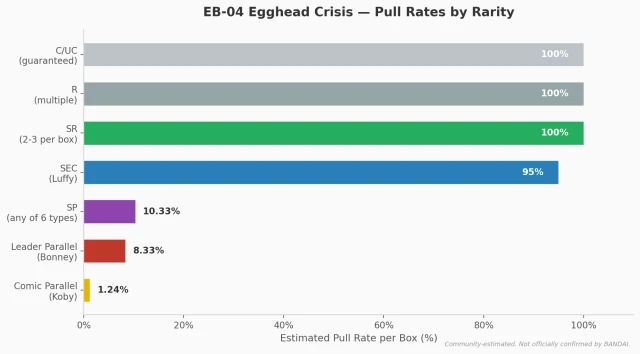
EB-04 delivers a SEC in roughly 95% of boxes and an SP in about 1 in 10 — generous for an Extra Booster, though the Koby Comic Parallel remains a true lottery hit at 1.24%.

Rarity-by-Rarity Breakdown

Rarity Cards in Set Est. Pull Rate (per Box) Boxes to Pull
Common (C) 29 Guaranteed (multiple per pack) 1 box
Rare (R) 21 Guaranteed (multiple per box) 1 box
Super Rare (SR) 9 ~2-3 per box 1 box
Secret Rare (SEC) 1 ~1 per box 1 box
SP (Special Parallel) 6 types ~1 per 9.7 boxes (10.33%) ~10 boxes
Leader Parallel (Bonney) 1 ~1 per carton (est.) ~12 boxes
Comic Parallel (Koby) 1 ~1 per 80.7 boxes (1.24%) ~81 boxes

Community-estimated pull rates based on JPN opening data. Not officially confirmed by BANDAI.

EB-04 Egghead Crisis pull rate chart showing rarity distribution per box
EB-04 pull rate distribution by rarity

Two things stand out about EB-04’s pull rate structure:

SEC at roughly 1 per box is generous. Compared to main booster sets where SECs can take 4-6 boxes to appear, EB-04’s Extra Booster format delivers a Secret Rare much more frequently. That SEC (Luffy EB04-061) is your value floor — every box should contain at least one meaningful hit.

The SP rate is tighter than EB-03. At 1 per 9.7 boxes across six SP types, you’re looking at roughly 58 boxes to statistically hit a specific SP. That’s where the variance lives — some buyers will pull an SP in their first box, others won’t see one in ten.

Singles vs Box — Which Route?

Strategy Best For Pros Cons
Open boxes Collectors, thrill-seekers SEC nearly guaranteed, SP chance, full experience Comic Parallel requires ~81 boxes
Buy singles Targeted collectors, players Get exactly what you need, no variance No opening experience, miss surprise hits
Hybrid (1-2 boxes + singles) Most buyers Best risk-reward balance Higher total spend

At ~¥9,000/box with an EV of ~¥10,980, the box route offers favorable math compared to most OPTCG products. The guaranteed SR floor plus the strong SEC rate mean that most boxes deliver a reasonable return in card value — with the SP and Comic Parallel as upside.

For competitive players who just need specific Rares and SRs for a Bonney deck, singles are more efficient. For everyone else, 1-2 boxes plus targeted singles for chase cards hits the sweet spot.

Where to Buy EB-04 from Japan

For international buyers, the JPN version of EB-04 is the only way to get the complete Egghead Crisis set in one product.

What to Know Before Ordering

Shipping: JPN booster boxes ship well internationally. A single box weighs approximately 250g. Most Japanese retailers offer EMS (3-5 days) or surface mail (2-4 weeks) to major markets like the US, Canada, UK, and Australia.

Customs & Import Duties: Depending on your country, you may owe import tax on orders above certain thresholds. US buyers generally face no duty on single-box orders under $800. UK and AU buyers should budget 10-20% on top of the purchase price for VAT/GST.

Estado: JPN boxes ship sealed with shrink wrap intact. Verify that any retailer you buy from guarantees shrink-wrapped, undamaged boxes — this matters for both card condition and resale value.

For a deeper look at the import process, our complete guide to buying ONE PIECE cards from Japan covers everything from payment methods to tracking.

EB-04 Egghead Crisis
Japanese Booster Box
~¥9,000 (~$60)
  • 24 packs × 6 cards
  • SEC nearly guaranteed per box
  • No standalone EN release — JPN exclusive set
Ships from Tokyo · 5–10 business days · Tracked

View Product →

The Bottom Line

EB-04 Egghead Crisis earns its place as one of the stronger Extra Boosters in the OPTCG lineup. Three things define this set:

1. The Koby Comic Parallel is a legitimate chase card. At ~$583 with a 1.24% per-box pull rate, it carries real scarcity and strong character momentum. Koby’s rising status in the One Piece storyline gives this card narrative tailwinds that most Comic Parallels don’t have.

2. Competitive relevance sets EB-04 apart from typical Extra Boosters. The Bonney R/Y Leader has already proven viable at the tournament level with a 5-0 finish. Luffy EB04-061 SEC adds a legitimate finisher card. For players, this isn’t just a collector’s set.

3. The JPN version is uniquely positioned. With no standalone EN release, the JPN EB-04 box offers the complete Egghead Crisis experience in one product. At ~¥9,000 with positive expected value, the current price point represents a favorable entry.

1

Koby Comic Parallel

Koby Comic
~$583
Top chase · 1 in 81 boxes

2

Zeus SP

Zeus SP
~$226
Hashimoto Q · Illustrator premium

3

Zoro SP

Zoro SP
~$161
Hashimoto Q · Top character demand

Whether you’re chasing Koby, building a Bonney deck, or adding Hashimoto Q SPs to your collection, EB-04 delivers on multiple fronts.

Frequently Asked Questions

What are the best cards in EB-04 Egghead Crisis?

The top chase card is Koby’s Comic Parallel (EB04-044) at ~$583, followed by Zeus SP (~$226) and Roronoa Zoro SP (~$161). The full top 10 includes six SP cards, a Leader Parallel, and the Luffy SEC — all with guest artwork from illustrators like Hashimoto Q and Bashikou.

What is the pull rate for Koby’s Comic Parallel in EB-04?

Community data from JPN openings estimates the Koby Comic Parallel at approximately 1 in 80.7 boxes, or a 1.24% chance per box. That translates to roughly 4-8 cartons per Comic Parallel pull. These rates are community-estimated and not officially confirmed by BANDAI.

Is there an English version of EB-04 Egghead Crisis?

No. There is no standalone English release of EB-04. BANDAI has distributed the EB-04 card pool across two international sets: OP-14 (released January 16, 2026) and OP-15 (releasing April 3, 2026). The JPN version is the only way to get the complete EB-04 set in one product.

Is the Bonney Leader from EB-04 competitively viable?

Yes. The Jewelry Bonney R/Y Leader (EB04-001) won a Japanese Flag Ship tournament with a 5-0 record on February 21, 2026. Her ability grants +2000 power when life is at 1 or below and can reduce opponent character power by 1000. She supports Egghead, Land of Wano, and Impel Down archetypes.

How many SR cards come in an EB-04 box?

JPN community opening data suggests approximately 2-3 Super Rare cards per box. Each box contains 24 packs of 6 cards (144 total), with SRs appearing reliably across the 9 SR types in the set.

Is EB-04 worth buying at current prices?

At the current market price of ~¥9,000 (~$60), EB-04 has a positive estimated box EV of ~¥10,980. That’s unusually favorable for an OPTCG product. The SEC rate of approximately 1 per box provides a strong value floor, and the six SP cards offer meaningful upside.

What’s the difference between EB-04 and EB-03?

EB-03 Heroines is an all-female character set with 9 SPs and a God Pack. EB-04 Egghead Crisis focuses on the Egghead Island arc with 6 SPs, a Comic Parallel (Koby), and a new competitive Leader (Bonney). EB-03 has a higher market box price (~¥13,800 vs ~¥9,000) and a God Pack mechanic that EB-04 does not include.


🏴‍☠️ Ready to Open Packs?

Get the EB-04 EGGHEAD CRISIS booster box — shipped directly from Tokyo, Japan with tracking & insurance.

Buy EB-04 EGGHEAD CRISIS Box

Browse All One Piece Booster Boxes →
Related Guides

Mejores cartas Pokémon japonesas para calificar con PSA en 2026

Meta description: Updated March 2026 ranking of the 15 best Japanese Pokemon cards worth PSA grading. New PSA fees, raw vs PSA 10 prices, ROI calculations, and set-by-set analysis.

OG title: Best Japanese Pokemon Cards to Grade in 2026 | PSA 10 ROI OG description: 15 best JPN cards worth PSA grading in 2026 — updated with new PSA fee structure, raw vs PSA 10 prices, and ROI calculations based on SNKRDUNK data.

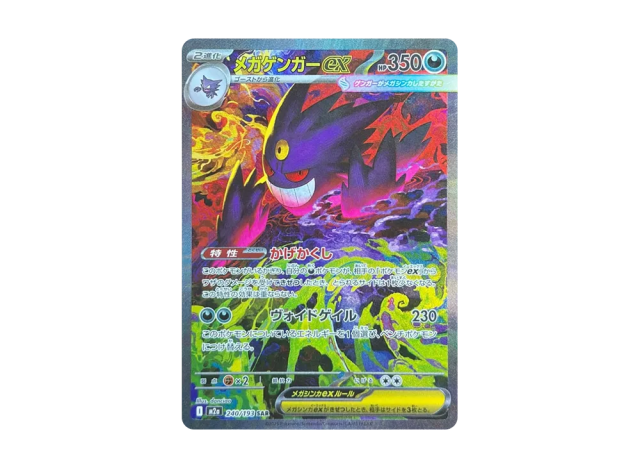
Which best Japanese Pokemon cards should you grade for PSA in 2026? A Mega Gengar ex card worth ¥1,318 raw turns into ¥25,400 inside a PSA 10 slab — a 19x return that repeats across dozens of modern Japanese cards.

PSA raised its grading fees in February 2026, bumping the Value tier from $25 to $33 per card. That changes the ROI math on every submission. We re-ran the numbers across 50+ modern Japanese Pokemon cards using SNKRDUNK and eBay transaction data to find the 15 that still deliver strong grading returns at the new price point.

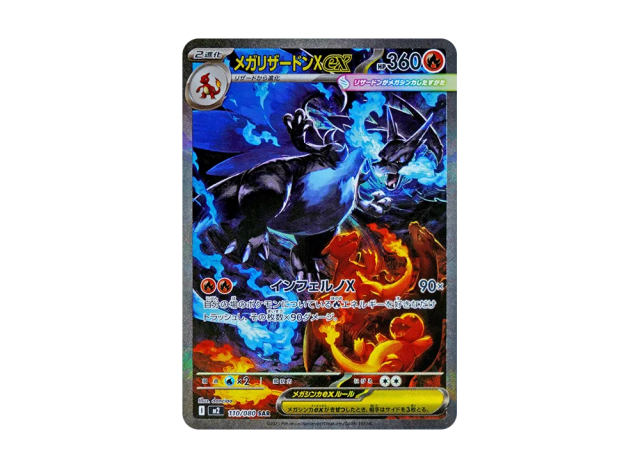
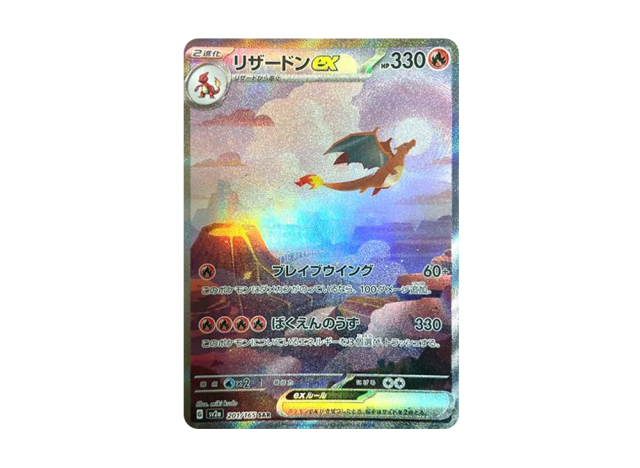
The answer: premium SARs and specific hidden gems still clear the ROI bar by wide margins. Charizard ex SAR from Pokemon Card 151 now trades at ¥45,000 raw with PSA 10 copies at ¥78,000+ — and Mega Charizard X ex SAR from Inferno X commands ¥122,000 in a slab.

Three tiers in this ranking: high-value SARs ($250+ raw), mid-value grading candidates ($125–$250), and hidden gems where sub-$15 cards become triple-digit slabs. Plus a set-by-set breakdown showing which Japanese booster boxes produce the most grading candidates.

For the full step-by-step grading process, see our Japanese Pokemon Card Grading Guide.

Prices as of March 2026. Secondary market prices based on SNKRDUNK and eBay sold data. ¥159/USD.

Key Takeaway

Not every card is worth grading. Focus on cards where the PSA 10 premium exceeds 3× the raw price plus grading fees. Japanese cards grade higher on average than English — PSA 10 hit rates of 60–70% vs 40–50%.

19.27x
Top Grading ROI

$33
PSA Fee (2026)

60-89%
JPN PSA 10 Rate

15 Cards
Ranked

The PSA 10 Premium on Japanese Cards — By the Numbers

Japanese Pokemon cards earn the highest PSA 10 premiums in the hobby: modern JPN SARs see 40% to over 100% price increases after grading. Two structural factors drive this.

Why Japanese Cards Grade Higher

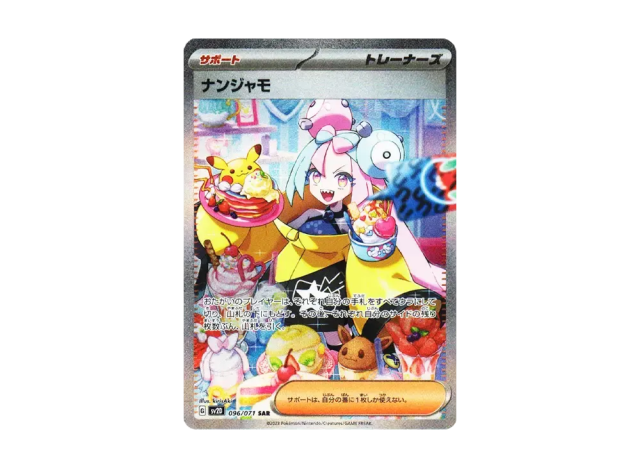
Japanese Pokemon cards hit PSA 10 at rates between 60% and 89% — significantly higher than their English counterparts. Pikachu ex SAR from Super Electric Breaker grades PSA 10 at 89.9%. Charizard ex SAR from Ruler of Black Flame hits 89.1%. Even Nanjamo SAR from Clay Burst, one of the toughest modern grades, sits at 58.1%.

Japanese card stock is thicker and more rigid, reducing corner and edge damage during pack opening. JPN printing uses a finer dot matrix, producing sharper text and fewer surface imperfections that PSA flags.

This higher hit rate directly impacts your bottom line. When 4 out of 5 cards come back PSA 10 instead of 2, your per-card cost drops and total return multiplies.

Japanese Pokemon card printing quality comparison showing superior texture
Comparison of Japanese vs English Pokemon card texture quality close-up

The ROI Framework: 2026 Updated Fees

PSA overhauled its pricing in February 2026. Here’s the new cost structure:

Factor Value
PSA grading fee (Value tier, Feb 2026) $33 per card
Shipping to PSA ~$10–18 per submission
Insurance (recommended for $300+) ~$5–12
Total cost per card ~$40–55

The $100 Rule: At the new $33 fee, don’t grade any raw card worth less than $100 unless it’s a Tier 3 hidden gem with a proven 10x+ multiplier. The old $75 threshold no longer applies.

The 10% Rule: If all-in grading cost exceeds 10% of the PSA 10 value, reconsider. A $45 fee on a $500 slab? That’s 9% — solid. A $45 fee on a $150 slab? That’s 30% — too thin.

Breakeven formula: Raw price + grading cost < PSA 10 value. Charizard ex SAR (151) at ¥45,000 raw ($283), plus ¥7,000 ($44) grading = ¥52,000 total. PSA 10 sells for ¥78,000 ($491) — net gain ¥26,000, a 50% return.

Top 15 Japanese Pokemon Cards Worth Grading in 2026

Nanjamo (Iono) SAR delivers the strongest percentage ROI at +116%, while Mega Charizard X ex SAR from Inferno X generates the largest dollar gain per card at +$327. All prices reflect SNKRDUNK, altema.jp, and eBay completed transactions as of March 2026 at ¥159/USD.

Tier 1: High-Value SARs ($250+ Raw)

Premium submissions where PSA 10 grading adds $150 to $330 in value per card.

Rank Card Set Raw (USD) PSA 10 (USD) Premium
1 Mega Charizard X ex SAR Inferno X $440 (¥70,000) $767 (¥122,000) +74%
2 Nanjamo (Iono) SAR Clay Burst (sv2D) $314 (¥50,000) $679 (¥108,000) +116%
3 Mega Gengar ex SAR MEGA Dream ex (M2a) $302 (¥48,000) $557 (¥88,600) +84%
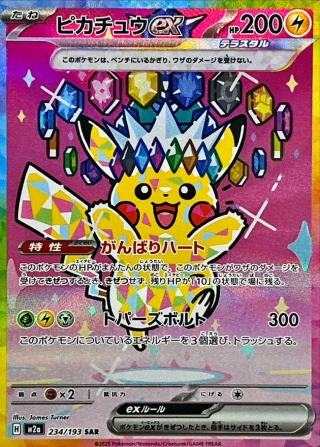
4 Pikachu ex SAR Super Electric Breaker (SV8) $346 (¥55,000) $574 (¥91,300) +66%
5 Mew ex SAR Shiny Treasure ex (SV4a) $302 (¥48,000) $541 (¥86,000) +79%
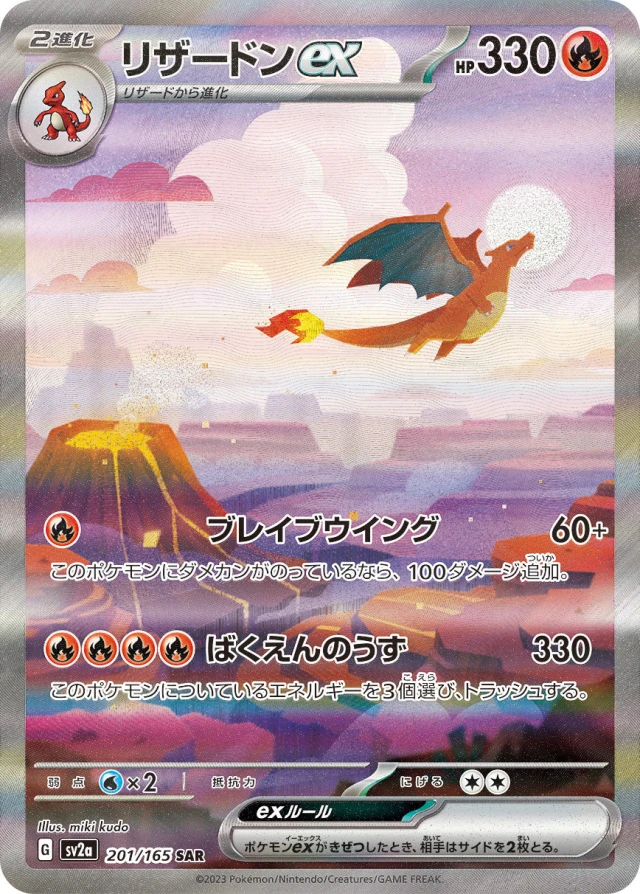
6 Charizard ex SAR Pokemon Card 151 (sv2a) $283 (¥45,000) $491 (¥78,000) +73%
7 Charizard ex SAR Ruler of Black Flame (SV3) $252 (¥40,000) $415 (¥65,900) +65%
8 Pikachu ex SAR MEGA Dream ex (M2a) $252 (¥40,000) $476 (¥75,700) +89%
PSA 10 Mega Charizard X ex SAR Inferno X Japanese Pokemon card
PSA 10 slab of Mega Charizard X ex SAR from Inferno X

#1 Mega Charizard X ex SAR — The highest raw-to-graded dollar gain on this list at +$327. Pulled from the Inferno X set, this card’s PSA 10 premium approaches its raw price. Charizard PSA 10 slabs have historically held value better than any other character. With PSA 10 population still under 500 for this recent set, scarcity supports the premium.

#2 Nanjamo (Iono) SAR — The highest percentage premium in Tier 1 at +116%. Sustained popularity across JPN and ENG markets keeps PSA 10 demand high. At a 58.1% PSA 10 rate — the lowest on this list — the odds are tougher, but the $365 premium per successful grade makes it the most rewarding high-stakes submission.

#3 Mega Gengar ex SAR — New to Tier 1 in this update. This card was previously tracked as a low-value hidden gem in RR form, but the SAR version from MEGA Dream ex commands ¥88,600 in PSA 10 — an 84% premium on a ¥48,000 raw card. Gengar’s sustained collector following and low SAR pull rates drive the premium.

#7 Charizard ex SAR (Ruler of Black Flame) — PSA 10 has surged from ¥35,000 to ¥65,900 while the raw card has also climbed to ¥40,000, creating a solid +65% premium. The SV3 set produced one of the most iconic Charizard artworks in the Scarlet & Violet era, and a PSA 10 hit rate of 89.1% makes this a high-confidence submission.

#6 Charizard ex SAR (Pokemon Card 151) — This card has climbed from ¥20,000 to ¥45,000 raw since our last update, reflecting surging demand for the sv2a set. PSA 10 at ¥78,000 still delivers a 73% premium. See the full breakdown in our Pokemon Card 151 pull rates guide.

PSA 10 Charizard ex SAR Pokemon Card 151 Japanese card
PSA 10 slab of Charizard ex SAR from Pokemon Card 151 sv2a

Tier 2: Mid-Value Grading Candidates ($125–$250 Raw)

Rank Card Set Raw (USD) PSA 10 (USD) Premium
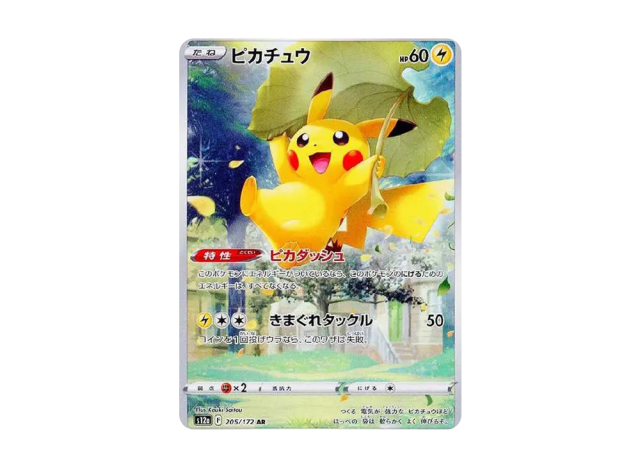
9 Pikachu AR VSTAR Universe (s12a) $189 (¥30,000) $397 (¥63,200) +111%
10 Lillie’s Clefairy ex SAR Battle Partners (SV9) $176 (¥28,000) $283 (¥45,000) +61%
PSA 10 Pikachu AR VSTAR Universe Japanese Pokemon card
PSA 10 slab of Pikachu AR from VSTAR Universe s12a

#9 Pikachu AR (VSTAR Universe) — This Art Rare from the VSTAR Universe set delivers +111% premium at a PSA 10 rate of 84.3%. ARs tend to have excellent surface quality. At $189 raw, the grading fee is under 8% of the PSA 10 value — well within our ROI framework.

#10 Lillie’s Clefairy ex SAR — From Battle Partners, one of the newest sets on this list. The 61% premium is moderate, but PSA 10 population is still growing. Lillie’s character popularity and the card’s recent release suggest room for premium expansion.

Tier 3: Hidden Gems — Highest ROI Multipliers

Cards under ¥2,000 raw ($13) that multiply in value with a PSA 10 label. Dollar gains are smaller, but the multipliers justify batch grading.

Rank Card Set Raw (USD) PSA 10 (USD) Multiplier
11 Mega Gengar ex RR MEGA Dream ex (M2a) ~$9 (¥1,400) ~$160 (¥25,400) 18.1x
12 Mega Gardevoir ex SR Mega Symphonia (M1S) ~$8 (¥1,200) ~$94 (¥15,000) 12.5x
13 Marshadow AR Mega Brave (M1L) ~$5 (¥800) ~$57 (¥9,000) 11.3x
14 Cassiopeia SR Night Wanderer (SV6a) ~$6 (¥1,000) ~$56 (¥8,900) 8.9x
15 Team Rocket’s Giovanni P Promo ~$10 (¥1,600) ~$113 (¥18,000) 11.3x
PSA 10 Mega Gengar ex Japanese card with 18x value multiplier
PSA 10 Mega Gengar ex RR from MEGA Dream ex showing 18x value multiplier

#11 Mega Gengar ex RR (18.1x) — The star of grading arbitrage. A raw RR copy costs about ¥1,400. Ship it to PSA, get a 10, and it’s worth roughly ¥25,400. Even at the new $33 grading fee (¥5,250), your net return is ¥18,750 on a ¥6,650 investment — a 282% return. Note: the SAR version (#3 on this list) is a separate, higher-value card.

#15 Team Rocket’s Giovanni P (11.3x) — A promo card most collectors overlook. Giovanni’s enduring franchise popularity drives PSA 10 demand, and limited promo distribution keeps PSA 10 population low. At ¥1,600 raw, submitting 3–5 copies in one batch is the optimal strategy.

Tier 3 Strategy: Buy 3–5 raw copies, grade them all, and sell the PSA 10s while keeping one. At ¥800–1,600 per card, your total outlay for 5 copies plus grading at the new rate is under ¥35,000 — and a single PSA 10 return covers the entire batch.

Best Japanese Sets for Grading Candidates

Inferno X and Super Electric Breaker produce the highest-value PSA 10 candidates, while MEGA Dream ex leads on candidate depth with 3 cards on this list. Here’s the set-by-set breakdown.

Tier Set Cards on This List Avg PSA 10 Premium Best Candidate
Tier 1 Inferno X 1 +74% Mega Charizard X ex SAR (PSA 10: ¥122,000)
Tier 1 MEGA Dream ex (M2a) 3 +84% avg Mega Gengar ex SAR (PSA 10: ¥88,600)
Tier 1 Super Electric Breaker (SV8) 1 +66% Pikachu ex SAR (PSA 10: ¥91,300)
Tier 1 Shiny Treasure ex (SV4a) 1 +79% Mew ex SAR (PSA 10: ¥86,000)
Tier 1 Pokemon Card 151 (sv2a) 1 +73% Charizard ex SAR (PSA 10: ¥78,000)
Tier 1 Ruler of Black Flame (SV3) 1 +65% Charizard ex SAR (PSA 10: ¥65,900)
Tier 2 VSTAR Universe (s12a) 1 +111% Pikachu AR (PSA 10: ¥63,200)
Tier 2 Battle Partners (SV9) 1 +61% Lillie’s Clefairy ex SAR (PSA 10: ¥45,000)
Best Japanese Pokemon booster boxes for PSA grading candidates 2026
Collection of Japanese Pokemon booster boxes from top grading sets

MEGA Dream ex dominates this ranking with 3 cards across two tiers — Mega Gengar ex SAR in Tier 1, Pikachu ex SAR in Tier 1, and Mega Gengar ex RR in Tier 3. This high-class pack produces the deepest bench of grading candidates.

Ruler of Black Flame’s Charizard ex SAR saw PSA 10 surge from ¥35,000 to ¥65,900 — a +65% premium with the raw card now at ¥40,000. Combined with an 89.1% PSA 10 hit rate, this remains one of the most reliable grading plays.

Shiny Treasure ex remains the safest grading bet thanks to Mew ex SAR’s 85.3% PSA 10 rate. If you want to maximize the odds of a 10, this set delivers.

For hidden gems, MEGA-era sets and select promos dominate. BOX prices for these sets are reasonable, and the grading multipliers on low-value cards are extraordinary.

The Grading ROI Calculator — Is Your Card Worth Submitting?

Any Japanese card worth ¥25,000+ raw ($157) with a 60%+ PSA 10 premium clears our updated ROI threshold. Here’s a quick-reference table showing net ROI at the new $33 fee, assuming a ¥7,000 ($44) all-in grading cost.

Raw Value Grading Cost PSA 10 Value (at +80% avg) Net Gain ROI on Total Cost
¥15,000 ($94) ¥7,000 ($44) ¥27,000 ($170) +¥5,000 +23%
¥25,000 ($157) ¥7,000 ($44) ¥45,000 ($283) +¥13,000 +41%
¥40,000 ($252) ¥7,000 ($44) ¥72,000 ($453) +¥25,000 +53%
¥55,000 ($346) ¥7,000 ($44) ¥99,000 ($623) +¥37,000 +60%
¥80,000 ($503) ¥7,000 ($44) ¥144,000 ($906) +¥57,000 +66%

Assumes 80% PSA 10 hit rate (JPN average). Adjust down for cards with known surface issues.

PSA 10 Nanjamo Iono SAR Clay Burst Japanese Pokemon card grading ROI
PSA 10 Nanjamo SAR from Clay Burst showing 116% grading premium

When NOT to Grade

Save your money on these:

  • Raw value under ¥15,000 ($94) — Unless it’s a Tier 3 hidden gem with 10x+ multiplier, the new $33 fee eats too much of the premium
  • Visible whitening or edge wear — PSA 9 premiums on modern JPN cards add only 10–15% vs raw, while PSA 10 adds 60%+
  • PSA 10 population over 5,000 — Supply outpacing demand compresses premiums over time
  • Cards from sets released in the last 3 months — PSA 10 prices spike then correct. Wait for stabilization
Japanese Pokemon card edge quality check for PSA grading submission
Example of a Japanese Pokemon card edge showing PSA 10 quality indicators

PSA 10 Population and Scarcity — Why Low POP Matters

Population data directly impacts long-term PSA 10 values. A PSA 10 Mega Charizard X ex SAR with population under 500 holds its premium far better than a Pikachu V with 15,000+ copies graded.

Reading the PSA POP Report

The PSA POP Report shows how many copies of each card have been graded at each level. Focus on:

  • Total PSA 10 population — Under 500 is ideal for premium retention
  • PSA 10 rate — JPN modern cards typically hit 60–89%. Higher rates mean more supply, which can compress premiums long-term
  • Submission velocity — How fast the POP is growing. Cards from 2023 and earlier have slower growth, keeping current low-POP cards scarcer

Cards with the Best POP-to-Demand Ratios

From our ranking:

  • Mega Charizard X ex SAR (Inferno X) — Recent set, limited PSA submissions. Charizard demand is effectively infinite
  • Team Rocket’s Giovanni P (Promo) — Narrow distribution, promo cards historically have lower submission rates
  • Charizard ex SAR (Ruler of Black Flame) — The +65% premium with an 89.1% hit rate and PSA 10 population of 17,137 still shows demand outpacing the graded supply reaching the market

For long-term value analysis, check our best Japanese Pokemon cards to invest in 2026 guide and our most valuable Japanese Pokemon cards ranking.

How to Get Your Cards Graded

PSA’s Value tier at $33 per card (up from $25) remains the most cost-effective option for Japanese Pokemon card submissions, with a 75-day turnaround.

We’ve written a complete walkthrough in our Japanese Pokemon Card Grading Guide. Key points for 2026:

  • Service levels (February 2026 pricing): Value ($33/card, 75-day turnaround), Value Plus ($50/card, 45-day), Value Max ($65/card, 35-day), Regular ($80/card, 25-day)
  • International shipping: US-based submitters ship directly. International collectors use proxy services or forwarding partners
  • Card protection: Penny sleeves + semi-rigid holders (Card Savers). Never use toploaders for PSA submissions
  • Declared value: Always declare at or above market value for insurance purposes
How to prepare Japanese Pokemon cards for PSA grading submission
Card preparation setup for PSA submission with penny sleeves and Card Savers

The Bottom Line

Three takeaways from the updated March 2026 data:

  1. Nanjamo (Iono) SAR leads on percentage premium at +116% — ¥50,000 raw, ¥108,000 graded, with the lowest PSA 10 rate on this list (58.1%) making it a high-reward, higher-risk play
  2. Hidden gems under ¥2,000 still deliver 10x–18x multipliers even after PSA’s fee increase — a single PSA 10 Mega Gengar ex RR covers an entire 5-card batch
  3. PSA’s February 2026 fee increase raised the minimum viable grading threshold from ¥11,000 to ¥15,000 raw — but every card on this list still clears it

Got a Mega Charizard X ex SAR worth ¥70,000? Or a stack of ¥1,400 Mega Gengar ex RR cards? The data points to the same conclusion: selective PSA grading of Japanese Pokemon cards remains one of the strongest value-adds in the hobby — you just need to be more selective now that fees have risen.

The best source for grading candidates? Sealed Japanese booster boxes. Every box you open is a chance to pull a card from this ranking.

All orders ship from Japan with tracking and insurance. View shipping policy → | Customs & duties info →

Questions? Contact us → | Return policy →

Price Sources

Data Point Source Notes
JPN raw card prices SNKRDUNK + altema.jp Primary JPN market reference
JPN PSA 10 prices SNKRDUNK + altema.jp PSA 10 transaction data Completed sale data
USD conversion ¥159/USD As of March 12, 2026
PSA 10 hit rates PSA POP Report + community opening data Estimated, not officially confirmed
Grading fees PSA February 2026 revised fee schedule

FAQ

What Japanese Pokemon cards are worth grading PSA in 2026?

Cards with a raw value above ¥15,000 ($94) and a proven PSA 10 premium of 60%+ are the strongest candidates. Our top percentage ROI pick is Nanjamo (Iono) SAR from Clay Burst — ¥50,000 raw, ¥108,000 as PSA 10 (+116%). For high-dollar returns, Mega Charizard X ex SAR from Inferno X adds ¥52,000 per graded card. Hidden gems under ¥2,000 with 10x+ multipliers (like Mega Gengar ex RR at 18.1x) justify batch grading.

How much does PSA grading cost in 2026?

PSA raised prices in February 2026. Value tier is now $33 per card (75-day turnaround), up from $25. Value Plus is $50 (45 days), Value Max is $65 (35 days), and Regular is $80 (25 days). With shipping and insurance, budget ¥7,000–8,000 ($44–50) per card for the Value tier.

Is it worth getting Japanese Pokemon cards PSA graded after the 2026 fee increase?

Yes, for cards that clear our updated thresholds. Japanese cards hit PSA 10 at 60–89% rates. At the new $33 fee, any JPN card worth ¥25,000+ raw ($157) with an 80%+ PSA 10 rate is a strong submission. The fee increase eliminated borderline candidates but left the top 15 on this list with comfortable ROI margins.

What is the most valuable PSA 10 Japanese Pokemon card in 2026?

Among modern cards (2022–2026 releases), Mega Charizard X ex SAR from Inferno X leads at ¥122,000 ($767) in PSA 10. Nanjamo SAR is second at ¥108,000 ($679). For all-time rankings including vintage cards, see our most valuable Japanese Pokemon cards guide.

Which Pokemon sets have the best PSA 10 hit rate?

Super Electric Breaker leads with Pikachu ex SAR hitting 89.9% PSA 10 rate. Ruler of Black Flame’s Charizard ex SAR is close at 89.1%. Shiny Treasure ex delivers 85.3% on Mew ex SAR. Modern Japanese sets generally grade between 58–90% PSA 10.

What is the minimum card value worth grading after PSA’s 2026 price increase?

We recommend ¥15,000 ($94) raw as the new minimum for standard submissions, up from ¥11,000 before the fee change. Below ¥15,000, the ¥7,000 all-in grading cost eats too much premium. Exception: hidden gem cards in the ¥800–2,000 range with 10x+ multipliers, where batch grading 3–5 copies still works.

Which modern Japanese Pokemon cards have the highest PSA 10 premium?

By percentage: Nanjamo (Iono) SAR at +116%, Pikachu AR (VSTAR Universe) at +111%, Pikachu ex SAR (MEGA Dream ex) at +89%. By yen amount: Mega Charizard X ex SAR (Inferno X) adds ¥52,000, Nanjamo SAR adds ¥58,000, and Mega Gengar ex SAR (MEGA Dream ex) adds ¥40,600. The best candidates score high on both metrics.


⚡ Shop Japanese Pokemon Booster Boxes

Authentic sealed products shipped directly from Tokyo, Japan with tracking & insurance via FedEx.

Browse All Japanese Pokemon Booster Boxes


Guía de grading para cartas Pokémon japonesas (PSA/BGS/CGC)

A PSA 10 Pikachu ex SAR from Super Electric Breaker recently sold for $516 on eBay. The same card ungraded trades around ¥55,000 (~$375). That single plastic case added roughly $140 in value.

Grading Japanese Pokemon cards has become one of the smartest moves a collector can make — and Japanese cards have a built-in advantage that most English-language guides completely ignore. JPN cards consistently grade higher than their English counterparts thanks to superior card stock and tighter quality control at the printing facility.

This guide covers everything you need to know about grading Japanese Pokemon cards in 2026: which service to choose (PSA, BGS, or CGC), exactly how much it costs after the February 2026 price update, how to submit your cards step by step, and which cards are actually worth the grading fee. We handle Japanese Pokemon cards daily at our warehouse, and we have seen firsthand how a PSA 10 slab transforms a card’s market value.

Key Takeaway

A PSA 10 slab adds 38-75% to a Japanese SAR’s value — Pikachu ex SAR jumps from ¥55,000 raw to ~$516 graded. Japanese cards grade PSA 10 at significantly higher rates than English prints thanks to thicker card stock and tighter QC, making every JPN box opening a potential grading opportunity.

+38-75%
PSA 10 Premium

$33
PSA Fee (2026)

$516
Top PSA 10 Sale

60-89%
JPN PSA 10 Rate

Why Grade Japanese Pokemon Cards?

Grading Japanese Pokemon cards locks in a card’s condition with a trusted third-party score, and the price premium for top grades is significant. A PSA 10 (Gem Mint) designation can add 50-200% to a card’s raw value — sometimes more for chase cards with low PSA 10 populations.

The PSA 10 Premium — Real Numbers

The gap between raw and graded prices tells the story. Here are real market examples from early 2026:

PSA 10 Pikachu ex SAR Super Electric Breaker Japanese Pokemon card graded slab
PSA 10 graded Pikachu ex SAR in slab
Card Rarity Raw Price PSA 10 Price Premium
Pikachu ex SAR (Super Electric Breaker) SAR ¥55,000 (~$375) ~$516 (¥76,000) +38%
Mega Charizard X ex SAR (Inferno X) SAR ¥65,000 (~$440) ~$720 (¥105,000) +62%
Umbreon ex SAR (Terastal Festival ex) SAR ¥47,000 (~$320) ~$420 (¥62,000) +32%
Mew ex SAR (Shiny Treasure ex) SAR ¥55,000 (~$375) ~$575 (¥85,000) +55%
Charizard ex SAR (Pokemon Card 151) SAR ¥20,000 (~$136) ~$238 (¥35,000) +75%

Prices as of March 2026. Secondary market prices via SNKRDUNK and eBay sold listings.

The pattern is clear: cards valued at $100+ raw see the strongest return on grading investment. The grading fee ($25-$33 for PSA Value tiers) is a fraction of the premium gained.

Why Japanese Cards Grade Higher Than English

Japanese Pokemon cards have a structural advantage when it comes to grading. The printing facility in Japan produces cards with:

  • Better centering — JPN cards are cut with tighter tolerances, making off-center cards far less common than in English print runs
  • Smoother card stock — The paper quality is more uniform, reducing surface imperfections that cost points on the grading scale
  • Cleaner edges — Factory-fresh JPN cards show fewer whitening issues straight out of the pack
  • Consistent foil application — Holographic patterns and texture are applied more evenly

This means a freshly pulled Japanese SAR or SR has a meaningfully higher chance of earning a PSA 10 compared to the same card printed in English. Collectors who grade Japanese cards regularly report PSA 10 hit rates of 60-80% on pack-fresh cards, compared to 40-60% for English equivalents.

For collectors buying sealed Japanese booster boxes, this is a major advantage. Every box you open is a potential source of PSA 10 candidates.

PSA vs BGS vs CGC — Which Service for Japanese Cards?

PSA is the strongest choice for Japanese Pokemon cards if resale value matters to you. Three grading services dominate the Pokemon card market, and each has strengths — but for Japanese cards specifically, the numbers favor PSA.

PSA — The Market Leader

PSA holds roughly 70% of the graded Pokemon card market. For Japanese cards, PSA is the default choice for most collectors and resellers.

Why PSA for JPN cards:

  • Highest resale liquidity — PSA slabs sell faster and for more money on eBay, Mercari, and SNKRDUNK
  • PSA Japan accepts domestic submissions — no international shipping needed if you are in Japan
  • PSA POP Report provides transparent population data for every card
  • Most recognized brand globally among Pokemon collectors

Drawback: PSA uses a single overall grade (1-10) without subgrades. If your card scores a 9 with near-perfect centering but a small surface mark, you only see “PSA 9” — not the breakdown.

BGS (Beckett Grading Services) — Subgrades for Serious Collectors

BGS assigns four subgrades — Centering, Corners, Edges, and Surface — alongside the overall grade. This transparency appeals to collectors who want to know exactly where a card lost points.

BGS graded Pokemon card showing four subgrades centering corners edges surface
BGS graded card showing subgrades label close-up

The BGS Black Label: A BGS 10 Black Label (all four subgrades at 10) is rarer than a PSA 10 and commands a significant premium. However, BGS Black Labels are extremely difficult to achieve on any card.

For JPN cards specifically:

  • BGS market share for Pokemon is smaller than PSA — resale prices are typically 10-20% lower than equivalent PSA grades
  • Turnaround times have historically been longer
  • No domestic Japan submission option — cards must ship to the US

CGC (Certified Guaranty Company) — The Growing Alternative

CGC entered the trading card market more recently and has been gaining traction with competitive pricing and faster turnaround.

For JPN cards:

  • Stricter centering standards than PSA — JPN cards’ better centering works in your favor here
  • Growing acceptance but still lags PSA in resale value by 15-25%
  • Offers subgrades (optional, for an additional fee)
  • No domestic Japan submission
Feature PSA BGS CGC
Market Share (Pokemon) ~70% ~15% ~15%
Resale Premium Highest Medium Growing
Subgrades No Yes (4) Optional
JPN Domestic Submission Yes (PSA Japan) No No
Starting Price (2026) $24.99 $14.95 $15.00
Best For Resale value, liquidity Detailed condition data Budget grading

Our recommendation: For Japanese Pokemon cards, PSA is the strongest choice if you plan to sell or trade your graded cards. The resale premium alone justifies the slightly higher cost. If you are a personal collector who values detailed condition breakdowns, BGS is worth considering.

PSA Grading Costs in 2026 (Updated February)

PSA updated its pricing on February 10, 2026, with increases of $3-$5 across most service levels. Here is the complete breakdown.

US Pricing Tiers

Service Level Cost Per Card Turnaround Max Declared Value Best For
Value Bulk $24.99 95 business days $499 Bulk submissions (20+ cards)
Value $32.99 75 business days $499 Standard single cards
Value Plus $49.99 45 business days $999 Faster turnaround
Value Max $64.99 35 business days $999 Mid-priority cards
Regular $79.99 25 business days $2,499 Higher-value cards
Express $149.00 15 business days $2,499 Time-sensitive submissions
Super Express $299.00 7 business days $4,999 Urgent, high-value cards

Value Bulk requires PSA Collectors Club membership ($99/year). All prices per card.

PSA Japan Pricing (¥ — Domestic Submissions)

If you are submitting from within Japan, PSA Japan offers yen-denominated pricing through psacard.co.jp:

Service Level Cost Per Card (¥) Turnaround Change (Feb 2026)
Value Bulk (バリュー・バルク) ¥3,980 90 business days +¥1,000
Value (バリュー) ¥4,980 +¥1,000
Value Plus (バリュー・プラス) ¥6,980 +¥1,000
Regular (レギュラー) ¥9,980 +¥1,000

PSA Japan pricing as of February 2026. Higher tiers (Express+) available — check psacard.co.jp for current rates.

Which Tier to Choose

The right tier depends on your card’s value:

  • Card worth $100-$300 raw → Value Bulk ($24.99) or Value ($32.99). The grading fee is a small percentage of the potential premium
  • Card worth $300-$1,000 raw → Value ($32.99) to Value Plus ($49.99). Worth the faster turnaround since the card represents significant value
  • Card worth $1,000+ raw → Regular ($79.99) or Express ($149). You want your high-value card back quickly with proper insurance coverage

Rule of thumb: If the grading fee is less than 10% of the card’s raw value, it is almost always worth submitting. For cards under $75 raw, the math gets tight — the grading fee plus shipping can eat into or exceed the PSA 10 premium.

How to Submit Japanese Cards for Grading — Step by Step

Submitting cards to PSA is straightforward once you know the process. Here are the five steps.

Card Saver I semi-rigid holder and penny sleeve for PSA grading submission
Card Saver I semi-rigid holder with penny sleeve for PSA submission

Step 1 — Inspect and Select Your Cards

Before spending money on grading, evaluate each card honestly:

  • Check centering — Hold the card up and compare the border width on all four sides. JPN cards are generally well-centered, but check anyway
  • Inspect corners — Use a loupe or magnifying glass. Even tiny whitening can drop a grade
  • Look for surface scratches — Tilt the card under direct light. Holo cards show scratches more easily
  • Check edges — Run your finger along each edge. Feel for nicks or rough spots

The $75 rule: Only submit cards worth $75 or more in raw condition. Below that threshold, the grading fee ($25-$33) plus return shipping ($10-$20) makes the ROI marginal at best.

Step 2 — Prepare and Package Your Cards

Proper packaging prevents damage during transit — and PSA will charge you if cards arrive damaged.

  1. Place each card in a penny sleeve (soft sleeve), inserting top-first
  2. Slide the sleeved card into a Card Saver I (semi-rigid holder). Do NOT use top-loaders — PSA prefers Card Saver I holders
  3. Write the card’s submission number on the Card Saver with a marker
  4. Stack Card Savers together and wrap with a rubber band or painter’s tape
  5. Place the stack between two pieces of cardboard for rigidity
  6. Use a box that fits snugly — excess space means cards can shift during shipping

Step 3 — Create Your Submission on PSA’s Website

PSA online submission form for Japanese Pokemon card grading
PSA online submission form screenshot
  1. Log in to your PSA account at psacard.com (or psacard.co.jp for PSA Japan)
  2. Click “Submit” and select your service level
  3. Enter each card’s details: Card Name, Set, Card Number, Year, Declared Value
  4. For Japanese cards, select “Japanese” as the language — PSA handles JPN cards routinely
  5. Review your submission, pay the grading fee, and print the packing slip

Declared value tip: Be honest with declared values. PSA uses this for insurance purposes. Underdeclaring risks denied claims if something goes wrong. Overdeclaring bumps you into a higher service tier.

Step 4 — Ship to PSA

PSA Lounge Tokyo Akihabara storefront for walk-in Pokemon card grading submissions
PSA Lounge Tokyo in Akihabara – storefront photo
  • From the US: Ship to PSA’s facility in Santa Ana, California. Use USPS Priority Mail with tracking and insurance matching your declared value
  • From Japan (via PSA Japan): Ship domestically to PSA Japan’s receiving address. Standard tracked shipping within Japan is sufficient
  • From other countries: Ship internationally to PSA US, or use a forwarding service. Factor in customs declarations and shipping insurance
  • PSA Lounge Tokyo (Akihabara): Walk-in submissions accepted — bring your cards directly and skip shipping entirely

Always use tracked shipping. Untracked packages with valuable cards are a risk not worth taking.

Step 5 — Receive and Verify Your Graded Cards

After PSA grades your cards:

  1. Check your PSA account for grade results before the cards arrive
  2. Verify each slab matches the card you submitted (cert number, card name, grade)
  3. Look up your card on the PSA POP Report to see how many copies exist at each grade
  4. Update your collection tracking with the PSA certification number

Your graded cards will arrive in PSA’s tamper-evident slabs, ready for display, sale, or long-term storage.

What the Grades Mean — PSA Scale Explained

PSA uses a 1-10 scale, but for modern Japanese Pokemon cards, the grades that matter most are 8, 9, and 10. Cards grading below 8 are typically not worth the submission fee unless they are vintage or extremely rare.

PSA grading scale 1 to 10 explained for Pokemon cards with grade descriptions
PSA grading scale visual diagram showing grades 1-10

PSA 8-9 — Near Mint to Mint

  • PSA 8 (NM-MT): Minor imperfections visible upon close inspection. Slight whitening on one or two corners, minor centering shift. A PSA 8 on a $200+ card still holds value, but the premium over raw is modest (10-20%)
  • PSA 9 (Mint): Nearly perfect with one minor flaw — perhaps slightly off-center or a single corner with minimal whitening. PSA 9 carries a solid premium (20-40% over raw) and is a realistic target for most pack-fresh JPN cards

PSA 10 (Gem Mint) — The Gold Standard

PSA 10 means the card is virtually perfect: sharp corners, flawless surface, centered within PSA’s tolerances, and clean edges. This is the grade that commands the massive premium.

For Japanese cards, PSA 10 is achievable at higher rates than English cards. The combination of better card stock, tighter centering, and cleaner printing gives JPN cards an edge. Many collectors report that 6-8 out of every 10 pack-fresh JPN SARs or SRs earn a PSA 10.

Grade Estado Market Impact JPN Card Hit Rate (Pack-Fresh)
PSA 10 Gem Mint — virtually perfect 50-200% premium over raw 60-80%
PSA 9 Mint — one minor flaw 20-40% premium over raw 15-30%
PSA 8 NM-MT — minor imperfections 10-20% premium over raw 5-10%
PSA 7 or below Visible wear Often below raw market price Rare for pack-fresh

Which Japanese Cards Are Worth Grading?

Not every card deserves a slab. Grading fees, shipping costs, and turnaround time mean you should be selective about what you submit.

The $75 Rule — When Grading Pays Off

A simple ROI framework: only grade cards worth $75 or more in raw condition.

Here is the math. Assume you use PSA Value Bulk ($24.99) with $15 in shipping costs:

  • Total grading cost: ~$40
  • If the PSA 10 premium is 50%: your card needs to be worth at least $80 raw to break even
  • If the PSA 10 premium is 75%: break-even drops to around $55 raw

Since JPN cards hit PSA 10 at higher rates (60-80%), the expected value calculation favors grading. But you still need the raw card to be worth enough to absorb the fee.

Best Candidates by Rarity

Rarity Grade Priority Why
SAR (Special Art Rare) High — always consider grading Highest raw values, strongest PSA 10 premiums
MUR (Master Ultra Rare) High Ultra-rare, extremely high per-card value
UR (Ultra Rare) Medium-High Solid premiums, especially for popular characters
SR (Super Rare) Medium Grade if raw value exceeds $75
AR (Art Rare) Low Most ARs are under $20 raw — grading fee exceeds premium
RR (Double Rare) Low Rarely worth grading unless it is a meta staple

Which sets have the best grading candidates? Check our detailed pull rates and top card guides for each set:

Charizard ex SAR Pokemon Card 151 Japanese grading candidate PSA 10
Charizard ex SAR from Pokemon Card 151 — top grading candidate

For a broader look at the most valuable Japanese cards, see our Most Valuable Japanese Pokemon Cards 2026 guide and our investment analysis.

Cards NOT Worth Grading

Save your money on these:

  • Cards under $50 raw — The math does not work. Grading cost + shipping eats the premium
  • Cards with visible damage — Creases, bends, or heavy whitening will grade PSA 6 or below. Not worth the fee
  • Common and uncommon cards — Unless it is a vintage error card, sub-$5 cards should never be graded
  • Cards you pulled and handled without sleeves — Surface micro-scratches from bare handling almost guarantee a PSA 9 or lower

Tips for Getting PSA 10 on Japanese Cards

Pulling a valuable card is only half the battle. How you handle it from pack to slab determines whether you get a PSA 10 or settle for a 9.

Handle Fresh Pulls Correctly

The moment you pull a card from the pack:

  1. Touch only the edges — Fingerprints on the surface show under PSA’s inspection light
  2. Sleeve immediately — Have penny sleeves ready before you open packs. Insert top-first into the sleeve
  3. Do not riffle through the pack — Sliding cards against each other causes micro-scratches on holo surfaces
  4. Work on a clean, soft surface — A playmat or microfiber cloth prevents back-side scratches
  5. Store sleeved cards flat — Avoid bending by storing in a Card Saver or top-loader right away

Common Defects That Cost You a Grade

Even on Japanese cards with their superior print quality, these issues appear:

  • Print lines — Faint horizontal lines across the holo surface. Common on textured cards. Hold under angled light to check
  • Corner whitening — Even factory-fresh JPN cards occasionally show minor whitening on one corner. Check all four
  • Off-center cuts — While JPN centering is generally excellent, some cards still come slightly off. PSA allows roughly 60/40 centering for a 10
  • Surface texture irregularities — On full-art and SAR cards, look for bumps or inconsistencies in the textured surface
  • Edge nicks — Tiny chips on the card edge from pack opening. Use a loupe to inspect

Pro tip: If a card has one minor flaw, it is likely a PSA 9 — still worth grading if the raw value exceeds $100. Do not only submit cards you think are “perfect 10s.” A PSA 9 SAR still commands a meaningful premium.

The Bottom Line

Grading Japanese Pokemon cards is one of the highest-ROI moves a collector can make, especially given JPN cards’ natural advantage in achieving top grades.

Three key takeaways:

  1. PSA is the top choice for JPN cards — 70% market share, highest resale value, and PSA Japan enables domestic submissions from Japan
  2. The 2026 costs are manageable — At $24.99-$32.99 for Value tiers, the grading fee is a small fraction of the premium on cards worth $75+
  3. JPN cards grade higher — Superior card stock and centering give Japanese cards a 60-80% PSA 10 hit rate on pack-fresh cards, compared to 40-60% for English

The best way to build a collection of gradeable cards? Start with quality sealed product. Every Japanese booster box is a potential source of PSA 10 candidates — and every box from our store is serial-tracked for authenticity.

Grade-Worthy Cards Start Here
Japanese Sealed Booster Boxes
From ¥5,500 (~$37)
Ships from Tokyo · Tracked · Serial-numbered

Browse Collection →

FAQ [schema: FAQPage]

How much does it cost to get a Japanese Pokemon card graded?

PSA grading starts at $24.99 per card (Value Bulk tier, as of February 2026). PSA Japan offers yen-denominated pricing starting at ¥3,980. BGS starts at $14.95 and CGC at $15.00. Factor in return shipping ($10-$20 for US domestic, more for international) when calculating total cost.

Is it worth grading Japanese Pokemon cards?

Yes, if the card is worth $75 or more in raw condition. PSA 10 premiums on Japanese SARs and URs typically range from 50-200% over raw prices. Japanese cards also have a higher PSA 10 hit rate (60-80% pack-fresh) compared to English cards, making the expected return on grading stronger.

Can you send Japanese cards to PSA from Japan?

Yes. PSA Japan (psacard.co.jp) accepts domestic submissions from within Japan. Value Bulk pricing starts at ¥3,980 per card with a 90-business-day turnaround. You ship domestically within Japan, avoiding international shipping costs and customs. PSA Lounge Tokyo in Akihabara also accepts walk-in submissions.

What grade do most Japanese Pokemon cards get?

Pack-fresh Japanese cards in good condition typically receive PSA 9 or PSA 10. The superior card stock and centering of JPN printing gives them an advantage — collectors commonly report 60-80% PSA 10 rates on carefully handled pack-fresh SARs and SRs.

PSA vs CGC — which is better for Japanese Pokemon cards?

PSA is the stronger choice for resale value and market liquidity. PSA-graded Pokemon cards sell for 15-25% more than equivalent CGC grades on secondary markets. CGC offers lower starting prices ($15 vs $24.99) and optional subgrades, making it a reasonable budget alternative if you plan to keep the cards in your personal collection.

How long does PSA grading take in 2026?

After the February 2026 update: Value Bulk takes 95 business days, Value takes 75 days, and Express takes 15 days. PSA Japan’s Value Bulk turnaround is 90 business days. Actual times may vary based on submission volume.

What Japanese Pokemon cards are worth grading?

Focus on SARs (Special Art Rare) and URs (Ultra Rare) worth $75+ in raw condition. Top candidates include chase cards like Pikachu ex SAR, Charizard ex SAR, and popular character SARs from recent sets. Avoid grading cards under $50 raw — the grading fee and shipping costs will eat into or exceed the premium.


⚡ Shop Japanese Pokemon Booster Boxes

Authentic sealed products shipped directly from Tokyo, Japan with tracking & insurance via FedEx.

Browse All Japanese Pokemon Booster Boxes

Guía para abrir una booster box japonesa de Pokémon

Key Takeaway

Japanese booster boxes guarantee at least 1 SR + 3 ARs + 2-3 RRs per box — something English boxes never promise. Four box types exist (Main Expansion, Enhanced, High Class Pack, Special), each with different pack counts and pull structures. Start with a High Class Pack for the best first-time experience.

30
Packs per Box

5
Cards per Pack

1 SR
Guaranteed

4
Box Types

Introduction

Thirty packs. Five cards each. A guaranteed Super Rare in every box. A Japanese Pokemon booster box is not just a smaller version of the English box — the pack count, card structure, pull rate guarantees, and even what counts as “rare” are fundamentally different.

If you’re opening your first Japanese booster box — or thinking about buying one — the differences can be confusing. Thirty packs instead of thirty-six. Five cards per pack instead of ten. No energy cards. And a guaranteed Super Rare in every box? That last part is real, and it’s one of the biggest reasons collectors worldwide are switching to Japanese boxes.

We ship hundreds of Japanese booster boxes from Tokyo every month and have documented pull rates across 17+ sets. This guide breaks down exactly what’s inside each box type, how Japanese boxes compare to English ones, what pulls you can realistically expect, and which box type matches your goals.

What’s Inside a Japanese Booster Box?

Every Japanese booster box contains sealed booster packs wrapped in factory shrink wrap. But the specifics depend on the set type — and that’s where most first-time buyers get confused.

Box Contents at a Glance

A standard Japanese expansion pack box contains 30 booster packs with 5 cards each, totaling 150 cards per box. No energy cards are included in standard packs (unlike English packs, which always include an energy card). Every card at Rare or above is holographic — there are no non-holo rares in Japanese sets.

The box itself features full set artwork on the cover, which makes sealed Japanese boxes popular display pieces. Inside, packs are lined up in rows with uniform packaging and set-specific pack art.

Inside a Japanese Pokemon booster box showing 30 sealed packs
Japanese booster box opened showing 30 packs arranged inside

Inside Each Pack — The 5-Card Slot Structure

Each Japanese booster pack follows a consistent slot structure. Understanding this pattern transforms the opening experience — you’ll know exactly when to hold your breath.

Slot Typical Contents Notes
1 Common (C) Base card
2 Common (C) Base card
3 Common (C) or Uncommon (U) Occasionally upgraded
4 Uncommon (U) Higher-tier base card
5 Rare (R) or higher The hit slot — can be R, RR, AR, SR, SAR, or UR

Slot 5 is where the action happens. In most packs, you’ll pull a standard Rare (holo). But in roughly 1 out of every 5-6 packs, slot 5 upgrades to a Double Rare (RR), Art Rare (AR), or higher. That’s the moment collectors live for.

Pro Tip: The 5th Card

Always check slot 5 last. That’s your hit slot — and in roughly 1 out of 5-6 packs, it upgrades from a standard Rare to an RR, AR, SR, SAR, or even UR. The anticipation is what makes Japanese pack openings addictive.

4 Types of Japanese Booster Boxes Explained

Not all Japanese booster boxes are the same. The Pokemon Company releases four distinct product types, each with different pack counts, card counts, and pull rate structures.

Main Expansion (拡張パック)

The standard release and the most common box type. Main expansions form the backbone of each generation’s card pool.

  • Packs per box: 30
  • Cards per pack: 5
  • MSRP: ¥5,400 → Market price: ¥6,000–8,000 (~$40–55)
  • Best for: General collecting, building a set, consistent value

Recent examples: Battle Partners (SV9), Super Electric Breaker (SV8), Ninja Spinner (M4)

Best Starting Point

Main expansions at $40–55 are the most budget-friendly entry into Japanese Pokemon collecting. Every box guarantees 1 SR and 150 cards with zero filler energy cards.

Enhanced Expansion (強化拡張パック)

Enhanced expansions use the same box structure as main expansions but feature higher rarity rates and typically focus on a specific theme or popular Pokemon.

  • Packs per box: 30
  • Cards per pack: 5 (some sets have 6)
  • Market price: ¥7,000–12,000 (~$48–83)
  • Best for: Collectors targeting chase cards, higher pull rate value

Recent examples: Terastal Festival ex (SV8a), Pokemon Card 151 (SV2a)

Japanese Pokemon Terastal Festival ex enhanced expansion booster box
Terastal Festival ex — an enhanced expansion with all 9 Eeveelution SARs and God Pack potential

High Class Pack (ハイクラスパック)

The premium offering, typically released once per year around November-December. High Class Packs are the most exciting boxes to open — more cards per pack, better guaranteed pulls, and the highest concentration of ultra-rare cards.

  • Packs per box: 10
  • Cards per pack: 10–11
  • Market price: ¥7,000–10,000 (~$48–69, as of March 2026)
  • Best for: Maximum opening excitement, best guaranteed pulls, gift-worthy unboxing

Recent examples: MEGA Dream ex, Shiny Treasure ex (SV4a), VSTAR Universe (S12a)

HCP vs Standard: Which Has More Value?

High Class Packs deliver more guaranteed hits per dollar despite having fewer packs. With 2-3 SRs, 4-6 ARs, and God Pack potential, HCPs are the premium opening experience. Standard boxes win on total card count (150 vs 100-110). See our Best High Class Packs guide for the full comparison.

Special Expansion

Special expansions don’t follow a fixed structure. Pack counts, card counts, and even the included products (decks, promos, accessories) vary with each release. Always check the specific product details before purchasing.

  • Packs per box: Varies (commonly 10–30)
  • Cards per pack: Varies (5–11)
  • Price: Varies by product
  • Best for: Themed collections, promo hunters
Japanese Pokemon High Class Pack booster box MEGA Dream ex
High Class Pack box (MEGA Dream ex) — premium packaging with 10 packs of 10-11 cards each

Quick Comparison

Feature Main Expansion Enhanced High Class Pack Special
Packs per box 30 30 10 Varies
Cards per pack 5 5–6 10–11 Varies
Total cards 150 150–180 100–110 Varies
Market price $40–55 $48–83 $48–69 Varies
SR+ guarantee 1 SR 1 SR 1 SR + extras Varies
God Pack chance No Rare Yes (1–4%) Some sets
Release frequency ~6/year ~2/year 1/year ~2/year

Japanese vs English Booster Boxes — Key Differences

Japanese booster boxes outperform English boxes in pull rate consistency, print quality, and guaranteed hits. If you’ve only opened English boxes before, Japanese boxes will feel like a different product entirely.

Pack & Card Count

Japanese English
Packs per box 30 36
Cards per pack 5 10
Total cards per box 150 360
Energy cards included No Yes (1 per pack)
Actual collectible cards 150 ~324 (36 energies removed)

English boxes have more total cards, but Japanese boxes have a higher ratio of meaningful pulls per card opened. No filler energy cards means every card you pull has collection potential.

Pull Rate Guarantees

This is the single biggest advantage of Japanese booster boxes. Every Japanese booster box is virtually guaranteed at least one Super Rare (SR) or higher card. English boxes have no such guarantee — you can open an entire English booster box and pull nothing above a standard holo.

Why does Japan have guaranteed pulls? It traces back to Japanese consumer protection regulations. Products sold with random contents must ensure a baseline level of value, which means The Pokemon Company structures Japanese print runs to include guaranteed hit slots.

English-language sets have no equivalent legal requirement, so pulls are purely random.

The Guarantee Difference

Japanese box: 1 SR guaranteed per box (community-verified across thousands of openings). English box: Fully random — no guaranteed hits above standard holo. This single difference is the #1 reason international collectors are switching to Japanese boxes.

Print Quality & Card Features

Japanese cards are printed by Creatures Inc. and are widely regarded as having superior print quality:

  • All Rare cards are holographic — no non-holo rares exist in Japanese sets
  • Sharper printing and better texture on full-art and special art rare cards
  • More consistent centering — Japanese cards grade higher at PSA on average
  • No reverse holo filler — when you pull a holo, it’s a real rare
JPN vs ENG Print Quality

Japanese cards are printed by Creatures Inc. on higher-quality cardstock. The texture on full-art and SAR cards is noticeably sharper, centering is more consistent (higher PSA 10 rates), and every Rare is holographic — no non-holo rares exist. For a deep dive, see our Japanese vs English Pokemon Cards comparison.

Guaranteed Pulls — What Every Japanese Box Includes

Japanese booster boxes provide a baseline level of guaranteed rare cards. These guarantees are not officially confirmed by The Pokemon Company, but extensive community opening data across thousands of boxes shows highly consistent patterns.

Standard Expansion Guarantees

For a typical main expansion box (30 packs), you can expect:

Rarity Guaranteed Minimum Notes
SR (Super Rare) 1 Sometimes 2
AR (Art Rare) 3 Beautiful full-art illustrations
RR (Double Rare) 2–3 Playable ex/MEGA cards
R (Rare) ~20 All holographic
ACE SPEC 1 Scarlet & Violet era onward

That means every single box gives you at least one premium pull worth keeping or trading. The SR alone typically covers 15–30% of the box’s market price.

Japanese Pokemon booster box opening results showing guaranteed SR, AR, and RR pulls laid out
Actual box opening results — guaranteed SR, ARs, RRs, and ACE SPEC cards from a single Japanese booster box
Guaranteed Value Floor

Even in the least exciting box, you’re walking away with 1 SR + 3 ARs + 2-3 RRs + ~20 holo Rares. That’s a minimum of 25+ collectible cards worth keeping, trading, or grading.

High Class Pack Guarantees

High Class Packs have significantly better guaranteed pulls:

  • Multiple SRs per box — often 2–3
  • Higher AR count — 4–6 per box
  • SAR/UR appearance rate — roughly 1 in every 3–5 boxes
  • God Pack possibility — see below

For detailed pull rate breakdowns by set, check our individual set guides.

HCP Pull Rate Advantage

A single High Class Pack box often contains more SRs and ARs than 2-3 standard boxes combined. If guaranteed premium pulls are your priority, HCPs are the clear winner.

Why Japanese Boxes Have Guarantees

Japan’s consumer protection framework requires products with randomized contents to deliver minimum value thresholds. The Pokemon Company structures its Japanese print runs to meet these requirements, ensuring every box contains at least one high-rarity card.

English-language products are printed by a different entity and aren’t subject to the same regulations — which is why English box pulls are fully random.

Why This Matters for Buyers

The guaranteed SR in every Japanese box means your minimum value floor is built in. Even in a “worst case” opening, you’re pulling cards worth collecting. English boxes have no such safety net — some English box openings yield nothing above a standard holo worth $1-2.

Realistic Expectations — What a “Normal” Box Looks Like

Every box guarantees a baseline of rare cards, and that baseline alone makes Japanese booster boxes strong value for collectors. Here’s what a typical opening actually looks like.

What 80% of Boxes Look Like

1 SR (chase-worthy special art) + 3 ARs (full-illustration Pokemon) + 2-3 RRs (playable ex cards) + 1 ACE SPEC + ~20 holo Rares. That’s 25+ meaningful cards from a single box — every one of them holographic and collectible.

The Typical Box (Most Common Outcome)

About 80% of boxes you open will look something like this:

  • 1 Super Rare (SR) — a chase-worthy card with special art treatment
  • 3 Art Rares (AR) — full-illustration cards featuring Pokemon in scenic settings
  • 2–3 Double Rares (RR) — playable ex or MEGA Pokemon cards
  • 1 ACE SPEC — a powerful trainer card with special rarity
Box Composition Breakdown

~20 holo Rares (all holographic) + ~120 Commons/Uncommons for set completion. Every single Rare in a Japanese set has holographic treatment — no non-holo rares exist.

This is a solid haul. The SR alone often has a market value of ¥1,000–5,000 ($7–35, as of March 2026), and the ARs are some of the most beautiful cards in the hobby. For collectors, even a “normal” box builds your collection with 25+ meaningful cards.

Every Card Is Holo

Unlike English sets where you might pull non-holo rares, every Rare card in a Japanese set is holographic. Even your “common” rare pulls have that satisfying shine. Combined with no energy filler, Japanese boxes deliver a noticeably higher-quality opening experience card for card.

The Lucky Box (About 1 in 5)

Roughly 20% of boxes include a bonus hit on top of the guaranteed pulls:

  • A second SR — two premium pulls in one box
  • A SAR (Special Art Rare) — the chase cards worth ¥10,000–50,000+ ($70–350+)
  • A UR (Ultra Rare) — gold cards with premium market value

When a SAR appears, it can be worth more than the box itself. These are the moments that make opening Japanese boxes addictive.

Setting Expectations

Go in expecting the typical box (1 SR + 3 ARs) and you’ll always be satisfied. The lucky box is a bonus, not the baseline. This mindset is what separates collectors who enjoy the hobby from those who chase disappointment.

God Packs — The Ultimate Surprise

God Packs are exclusive to High Class Packs and select enhanced expansions. A God Pack replaces a normal pack with one containing all rare or ultra-rare cards — typically 10 cards at AR rarity or above.

God Packs are the jackpot of the Pokemon card world. Even the possibility adds an extra layer of excitement to every High Class Pack opening.

God Pack Odds by Set

VSTAR Universe: ~1% (all 9 AR cards) · Shiny Treasure ex: ~4% (highest rate ever) · Terastal Festival ex: all 9 Eeveelution SARs in one pack. God Packs only appear in High Class Packs and select enhanced expansions — standard boxes don’t have them.

How to Verify Your Box Is Authentic

Counterfeit Japanese booster boxes exist, and the best defense is knowing what to look for before you open anything.

Quick Authentication Checklist

Shrink wrap: tight, uniform, no bubbles or re-seal marks · Weight: ~350-400g (standard) or ~200-250g (HCP) · Heat seals: clean edges at top and bottom · Seller: buy from serial-tracked sellers for full protection

Authenticator inspecting Japanese Pokemon booster box shrink wrap seal
Professional authentication — inspecting shrink wrap quality on a sealed Japanese booster box

Shrink Wrap Check

Authentic Japanese booster boxes have factory-applied shrink wrap with tight, uniform seals, clean heat seals at the top and bottom edges, official logos printed on the wrap (varies by set), and consistent thickness. Re-wrapped boxes often feel thicker or uneven.

Buying Tip

The safest approach is to buy from sellers who serial-track their inventory. If a box is ever reported as tampered, the seller can trace it to the source and take action. This is why authentication matters more than price when choosing where to buy.

If the shrink wrap looks hand-applied or has irregular seals, stop and verify with the seller.

Weight & Feel

Box Type Expected Weight Warning Sign
Standard 30-pack 350–400g Lighter = missing packs
High Class Pack 10-pack 200–250g Heavier = replacement contents
Red Flags to Watch For

Prices significantly below market average, sellers with no reviews, missing shrink wrap seals, and irregular box weight are the top 4 warning signs. When in doubt, pay slightly more from a verified seller rather than risk a counterfeit.

For a complete authentication guide covering cards, packs, and boxes, see our How to Spot Fake Japanese Pokemon Cards guide.

Every box we ship from Samurai Sword is serial-tracked. If a tampered or counterfeit box is ever identified, we trace it back to the source and permanently ban that supplier. This serial tracking system protects every purchase.

Your First Japanese Booster Box — Which Type to Choose

The right box depends on your budget, goals, and experience level. Here’s a straightforward recommendation for each scenario.

Best for First-Timers: High Class Pack

If you’re opening your first Japanese booster box, a High Class Pack delivers the best experience. More guaranteed hits, larger packs (10–11 cards each), the possibility of a God Pack, and a higher concentration of visually stunning cards. Sets like Shiny Treasure ex and MEGA Dream ex are excellent starting points.

Japanese Pokemon VSTAR Universe High Class Pack booster box
VSTAR Universe — one of the most popular High Class Packs with God Pack potential and iconic Pikachu AR

For more starter recommendations, see our Best Japanese Pokemon Sets for Beginners guide.

Best Value: Main Expansion

Main expansions offer the most cards per dollar. At $40–55 per box with 150 cards and a guaranteed SR, they’re the most budget-friendly way to build a Japanese collection. Sets like Battle Partners and Super Electric Breaker provide strong pull rates at accessible price points.

Best for Chase Card Hunters: Enhanced Expansion

Enhanced expansions focus on specific themes with higher concentrations of desirable cards. If there’s a particular Pokemon or character you’re targeting, enhanced sets usually have better odds. Terastal Festival ex (all 9 Eeveelution SARs) and Pokemon Card 151 (Master Ball Mirror collection) are prime examples.

Your Goal Recommended Type Top Pick Price Range
First box ever High Class Pack Shiny Treasure ex / MEGA Dream ex $48–69
Budget collecting Main Expansion Battle Partners / Super Electric Breaker $40–55
Chase cards Enhanced Expansion Terastal Festival ex / Pokemon 151 $48–83
Maximum excitement High Class Pack VSTAR Universe / Shiny Treasure ex $48–69
Set completion Main Expansion Any current set $40–55

For a full comparison of the best boxes available right now, see our Best Japanese Pokemon Booster Boxes 2026 ranking.

Japanese Pokemon Booster Boxes
All Sealed Booster Boxes — Serial Tracked
From $40
Ships from Tokyo · Tracked shipping · Authenticity guaranteed

Browse all boxes →

The Bottom Line

Japanese booster boxes deliver a fundamentally better opening experience than English boxes — guaranteed rare pulls, superior print quality, and more consistent value in every box.

Three things to remember:

  1. Every Japanese box guarantees at least 1 SR + 3 ARs + 2-3 RRs — you’re never walking away empty-handed
  2. Four box types exist — Main Expansion (best value), Enhanced (higher pull rates), High Class Pack (premium experience), and Special (varies)
  3. Japanese boxes are structured differently from English — 30 packs × 5 cards, no energy filler, all Rares are holo

If you’re ready to try your first Japanese booster box, start with a High Class Pack for maximum impact or a Main Expansion for best value. Either way, you’re getting a product built to deliver.

FAQ

How many packs are in a Japanese Pokemon booster box?

Most Japanese booster boxes contain 30 packs with 5 cards each, totaling 150 cards. High Class Packs are the exception — they contain 10 packs with 10–11 cards each (100–110 total). Special expansions vary, so always check the product details for the specific set.

What’s the difference between a Japanese and English Pokemon booster box?

Japanese boxes have 30 packs with 5 cards (vs 36 packs with 10 cards in English). Japanese boxes guarantee at least one Super Rare per box, while English boxes are fully random. Japanese cards also have no non-holo rares and no energy cards in packs. Print quality is generally considered superior in Japanese products.

Are Japanese Pokemon booster boxes guaranteed a rare card?

Yes, based on extensive community data. Every standard Japanese booster box includes at least 1 Super Rare (SR), approximately 3 Art Rares (AR), and 2–3 Double Rares (RR). These guarantees are not officially confirmed by The Pokemon Company but are remarkably consistent across thousands of documented openings. Japanese consumer protection regulations are believed to be the underlying reason.

What is a God Pack in Japanese Pokemon?

A God Pack is a special pack found in High Class Packs and some enhanced expansions where every card in the pack is a rare or ultra-rare. For example, in Terastal Festival ex, a God Pack contains all 9 Eeveelution Special Art Rares. God Pack rates range from roughly 1% to 4% of boxes, depending on the set.

Which Japanese booster box should I buy first?

For your first Japanese box, we recommend a High Class Pack like Shiny Treasure ex or MEGA Dream ex. They offer the most exciting opening experience with better guaranteed pulls, larger packs, and the chance of a God Pack. If budget is a priority, any current main expansion (like Battle Partners or Super Electric Breaker) at $40–55 gives you 150 cards with a guaranteed SR.

How can I tell if a Japanese booster box is authentic?

Check the shrink wrap for tight, uniform factory sealing with clean heat seals and no bubbles or wrinkles. Verify the box weight matches the expected range (350–400g for standard 30-pack boxes). Buy from established sellers who provide tracking and authentication guarantees. For detailed authentication steps, see our counterfeit detection guide.

Do Japanese Pokemon packs contain energy cards?

No. Standard Japanese booster packs contain only 5 collectible cards — no basic energy cards are included. This is a key difference from English packs, which always include at least one energy card. Energy cards in Japan are typically acquired through starter decks, theme decks, or purchased separately.


⚡ Shop Japanese Pokemon Booster Boxes

Authentic sealed products shipped directly from Tokyo, Japan with tracking & insurance via FedEx.

Browse All Japanese Pokemon Booster Boxes

Tasas de extracción y mejores cartas de Op 13

The OP-13 best cards are headlined by a Monkey D. Luffy Red Super Parallel valued at ¥350,000 (approximately $2,333) — the most expensive pullable card in any standard OPTCG booster since launch. Released in Japan on August 23, 2025 as the official 3rd Anniversary set, Carrying On His Will introduces an entirely new rarity tier, a collaboration with Jujutsu Kaisen creator Gege Akutami, and three Tier 1 competitive leaders in a single expansion.

This is not a typical booster release. OP-13 packs six leaders — including Gol D. Roger’s first-ever playable Leader card and the enigmatic Imu — alongside Red Super Parallels that exist only in this set. The Demon Pack, a new God Pack variant featuring all Five Elders in Akutami’s art style, has become one of the most sought-after pulls in TCG history.

This guide breaks down the top 10 most valuable OP-13 cards with current Japanese market prices, detailed pull rate data, Demon Pack mechanics, competitive meta impact, and buying recommendations. Our team tracks JPN market data daily across SNKRDUNK, Mercari, and multiple card shop buy lists — giving you pricing that English-language sources typically miss.

~¥5,800
Box Price

133
Card Types

~1/1-2
SEC Rate

24
Packs/Box

What Makes OP-13 Special: 3rd Anniversary Celebration

OP-13 Carrying On His Will is the most ambitious booster set Bandai has released for the ONE PIECE CARD GAME. Built around the Three Brothers — Luffy, Ace, and Sabo — this 3rd Anniversary commemoration delivers four firsts for the franchise.

Set Specs

Detail Value
Set Name Carrying On His Will (受け継がれる意志)
Set Code OP-13
JPN Release August 23, 2025
EN Release November 7, 2025
MSRP ¥5,280 (JPN, tax incl.) / Market: ~¥5,800 (~$39 at ¥150/USD)
Packs / Box 24
Cards / Pack 6 (JPN) / 12 (EN)
Total Card Types 133
Leaders 6
Super Rares (SR) 10
Secret Rares (SEC) 3
Special Art Parallels (SP) 10
3rd Anniversary SP 2 (Gold & Silver Shanks)
Red Super Parallel 3 (Luffy, Ace, Sabo)

Four Firsts in OP-13

Gol D. Roger’s debut as a Leader card. The Pirate King has appeared as a Character in previous sets, but OP-13 marks his first playable Leader (OP13-003). Roger brings a ramp-focused strategy that has immediately carved out Tier 1 status — particularly as a strong counter to Imu.

Imu enters the card game. One of the most mysterious figures in One Piece lore, Imu (OP13-079) arrives as a Black Leader with the Five Elders as support. The Imu deck has dominated tournaments since release, with the Five Elders’ immunity to effect removal rewriting deck-building across the format.

Red Super Parallel — a set-exclusive rarity. This new rarity tier features crimson-themed manga panel artwork exclusive to the Three Brothers. Only three cards exist in this rarity: Luffy (OP13-118), Ace (OP13-119), and Sabo (OP13-120). Red Super Parallels will not appear in future sets, making them true commemorative collectibles.

Demon Pack. A new God Pack variant containing Five Elders alt-art cards illustrated by Gege Akutami, the creator of Jujutsu Kaisen. Pulling a Demon Pack is estimated at roughly 1 per 10–20 cases (120–240 boxes), making it one of the rarest pulls in OPTCG history.

The set’s title references Chapter 145 of the original manga — “Inherited Will” — where the themes of dreams and willpower that define One Piece are crystallized. For collectors, players, and fans of the series, OP-13 captures that spirit in cardboard form.

Top 10 Most Valuable OP-13 Cards

The three Red Super Parallels dominate the top of the price chart, each commanding six-figure yen valuations. Below is the complete top 10 ranked by current Japanese market price. Prices as of March 2026 from onepiece-card-atari.jp and SNKRDUNK.

Rank Card Card ID Rarity Price (¥) ~USD
1 Monkey D. Luffy — Red Super Parallel OP13-118 SEC-RSP ¥350,000 ~$2,333
2 Portgas D. Ace — Red Super Parallel OP13-119 SEC-RSP ¥300,000 ~$2,000
3 Sabo — Red Super Parallel OP13-120 SEC-RSP ¥230,000 ~$1,533
4 Monkey D. Luffy — Super Parallel OP13-118 SEC-SP ¥85,000 ~$567
5 Shanks — Gold 3rd Anniversary OP09-004 SR-Gold ¥80,000 ~$533
6 Portgas D. Ace — Super Parallel OP13-119 SEC-SP ¥65,000 ~$433
7 Sabo — Super Parallel OP13-120 SEC-SP ¥58,000 ~$387
8 Shanks — Silver 3rd Anniversary OP09-004 SR-Silver ¥55,000 ~$367
9 Ethanbaron V. Nasujuro — Alt Art OP13-080 R-P ¥33,000 ~$220
10 Jaygarcia Saturn — Alt Art OP13-083 R-P ¥33,000 ~$220

Prices reflect Japanese market data as of March 2026. USD estimates at ¥150/USD.

Monkey D. Luffy Red Super Parallel OP13-118 One Piece Card Game

#1 — SEC-RSP RED SUPER PARALLEL
Monkey D. Luffy (OP13-118)
~$2,333 · JPN: ~¥350,000
The undisputed crown jewel of OP-13 — and arguably the entire 3rd Anniversary cycle. This Red Super Parallel features Luffy in crimson-toned manga panel artwork that exists nowhere else in the card game. At ¥350,000 on the JPN market, it has held its value remarkably well since launch, supported by three converging factors: the card will never be reprinted in this rarity, Luffy commands the broadest collector base of any One Piece character, and the Red Super Parallel aesthetic has become an instant icon in the OPTCG community.

🔴 What Is a Red Super Parallel?

A rarity tier exclusive to OP-13 — created specifically for the 3rd Anniversary. These cards feature manga panel artwork with a distinctive crimson color treatment, different from standard Super Parallels or Comic Rares. Only Luffy, Ace, and Sabo received this treatment. Bandai has confirmed Red Super Parallels will not carry over to future sets, giving them permanent scarcity. Pull rate estimated at ~1 per 200+ boxes.

Portgas D. Ace Red Super Parallel OP13-119 One Piece Card Game

#2 — SEC-RSP RED SUPER PARALLEL
Portgas D. Ace (OP13-119)
~$2,000 · JPN: ~¥300,000
Ace’s Red Super Parallel carries enormous emotional weight. The Marineford farewell — arguably the most iconic moment in One Piece — is rendered in crimson manga styling. At ¥300,000, Ace trails Luffy by ¥50,000, a gap that has narrowed since launch as Ace’s cultural significance keeps collector interest steady. Community data suggests Red Super Parallels appear at roughly 1 in 200+ boxes.

Sabo Red Super Parallel OP13-120 One Piece Card Game

#3 — SEC-RSP RED SUPER PARALLEL
Sabo (OP13-120)
~$1,533 · JPN: ~¥230,000
Sabo completes the Three Brothers trio. While his price sits below Luffy and Ace, ¥230,000 is still extraordinary for a booster-pullable card. Sabo’s role as the “inherited will” connecting Ace’s death to Luffy’s future makes him thematically central to this set. His Super Parallel variant (¥58,000) also holds strong.

#4–10 at a Glance

4

Monkey D. Luffy Super Parallel OP13-118

Luffy SP SEC-SP
¥85,000 · ~$567
Standard Super Parallel — the more attainable Luffy chase at ~1/50-80 boxes.

5

Shanks Gold 3rd Anniversary OP09-004

Shanks Gold SR-Gold
¥80,000 · ~$533
3rd Anniversary Gold foil insert. ~1/120-240 boxes.

6

Portgas D. Ace Super Parallel OP13-119

Ace SP SEC-SP
¥65,000 · ~$433
Ace’s Super Parallel — sought after by collectors and competitive players alike.

7

Sabo Super Parallel OP13-120

Sabo SP SEC-SP
¥58,000 · ~$387
Completes the Brothers SP trio. Five-figure territory for collectors.

8

Shanks Silver 3rd Anniversary OP09-004

Shanks Silver SR-Silver
¥55,000 · ~$367
Silver counterpart to Gold Shanks. Still extremely rare.

9

Ethanbaron V. Nasujuro Alt Art OP13-080

Nasujuro Alt R-P
¥33,000 · ~$220
Five Elders alt art by Gege Akutami. JJK crossover interest.

10

Jaygarcia Saturn Alt Art OP13-083

Saturn Alt R-P
¥33,000 · ~$220
Most prominent Elder in recent arcs. Akutami collaboration halo effect.

OP-13 Pull Rates Breakdown

Pull rates are estimated from JPN community box opening data — Bandai does not publish official rates. Based on aggregated reports from Japanese card shops and opening communities, here is what to expect.

Rarity Estimated Pull Rate Per BOX
Super Rare (SR) ~4–5 per BOX 4–5 cards
SR Parallel ~1 per 2–3 BOX 0–1 card
Secret Rare (SEC) ~1 per 1–2 BOX 0–1 card
SEC Parallel ~1 per 4–6 BOX Rare
Super Parallel (SP) ~1 per 50–80 BOX Very rare
Red Super Parallel ~1 per 200+ BOX Extremely rare
3rd Anniversary Gold ~1 per 120–240 BOX Ultra rare
3rd Anniversary Silver ~1 per 120–240 BOX Ultra rare
Demon Pack (God Pack) ~1 per 120–240 BOX Ultra rare

What to Expect From 1 Box

A single OP-13 box (24 packs, 144 cards) will typically yield:

  • 4–5 Super Rares — your guaranteed value floor
  • 0–1 Secret Rares — you may or may not hit one
  • Multiple R-Parallels — including potential Five Elders alt arts
  • 6 Leader cards (one of each) — with a chance at Leader Parallels
📦 Box Value Floor

The SR floor means every box has baseline value. With 10 different SRs in the set — several of which see competitive play — even a “low pull” box delivers usable cards for deck building.

How OP-13 Compares to Previous Sets

OP-13 stands out for its top-end ceiling. The Red Super Parallel tier did not exist before this set, and the Demon Pack introduces a new God Pack variant. For context, OP-12’s top chase (Gold Teach) was valued at ¥128,000, while OP-13’s Luffy Red Super Parallel nearly triples that at ¥350,000. The mid-tier (SEC and SP) pull rates remain consistent with OP-11 and OP-12, so the core box opening experience is familiar — it is the ultra-rare tier that sets OP-13 apart.

OP-13 pull rates chart showing estimated per-box rates for SR through Red Super Parallel and Demon Pack

Should You Buy OP-13?

OP-13 offers something for every type of buyer — but the right approach depends on what you are after.

For Collectors: Strong Buy

The Red Super Parallel trio is a once-in-the-game rarity event. These cards will not appear in any future set, and their manga-panel crimson artwork is visually distinct from anything else in OPTCG. Combined with the Gege Akutami Five Elders collaboration and the Gold/Silver Shanks inserts, OP-13 has the deepest chase card lineup of any standard booster.

Even if you do not hit a Red Super Parallel, the standard Super Parallels (¥58,000–¥85,000) and SEC cards provide strong secondary chase targets. The Three Brothers theme also makes complete sets highly displayable — a Luffy/Ace/Sabo trifecta in matching rarity is a collector’s centerpiece.

🎯 Collector’s Edge

OP-13 has the deepest chase card lineup of any standard OPTCG booster: 3 Red Super Parallels + 3 Super Parallels + 2 Anniversary Gold/Silver + Demon Pack contents. No other set comes close to this variety at the ultra-rare tier.

For Players: Strong Buy

Three Tier 1 competitive leaders from a single set is unprecedented. Imu has redefined the metagame — the Five Elders’ immunity to removal invalidates entire deck archetypes. Gol D. Roger brings ramp strategies that specifically counter Imu. Portgas D. Ace delivers consistent Red aggro that has held Tier 1 since release.

Key playable cards beyond the leaders include SR Elders (Saturn, Mars, Warcury, Nasujuro, Ju Peter) for Imu decks, multiple Sabo support cards for Green builds, and Roger’s boss units. Singles buying is an option for specific deck pieces, but the leader density makes box opening efficient for players building multiple decks.

⚔️ 3 Tier 1 Leaders from 1 Set

Imu (Black) · Gol D. Roger (Purple/Yellow) · Portgas D. Ace (Red/Blue) — no other OPTCG booster has delivered three simultaneously meta-defining leaders.

For Investors: Hold and Monitor

The 3rd Anniversary branding gives OP-13 a built-in collectibility narrative. Historical patterns from similar anniversary TCG products suggest stable floor pricing after the initial correction period. The JPN BOX at ¥5,800 is a remarkably accessible entry point relative to the set’s chase card ceiling.

Buy Now
  • JPN BOX at ¥5,800 — near retail
  • Chase cards stable post-correction
  • Tournament cards needed now
Wait 2–3 Months
  • BOX may drop if reprinted
  • EN supply could settle pricing
  • Meta may shift with OP-14

Competitive Meta Impact

OP-13 did not just add cards to the game — it restructured the competitive meta from the ground up.

Imu (OP13-079) — The Format’s Gatekeeper

Imu is the most impactful Leader card released since the game’s inception. The Black Leader builds around the Five Elders, whose shared keyword grants immunity to effect-based removal. This single mechanic has invalidated control-heavy strategies across the board. Tournament results since August 2025 show Imu consistently in the Top 8 — and often winning outright.

Building an Imu deck requires the Five Elder SRs from OP-13, making box openings directly relevant for competitive players.

Gol D. Roger (OP13-003) — The Answer

Roger emerged as the primary Imu counter. His ramp-focused playstyle allows deploying boss units ahead of curve, going over the top of Imu’s board before the Five Elders’ protection becomes overwhelming. Roger’s competitive viability gives OP-13 a self-contained meta dynamic: the set creates the problem (Imu) and the answer (Roger).

Portgas D. Ace (OP13-002) — Reliable Aggro

Red/Blue Ace provides a straightforward, consistent aggro plan that has maintained Tier 1 status. The deck rewards clean fundamentals and punishes slow setups — keeping both Imu and Roger honest. For tournament players, Ace is the “safe” pick from OP-13.

⚔️ The Takeaway for Players

Any serious competitive player needs cards from OP-13. Three Tier 1 leaders from one set means a single case purchase can yield the core components for multiple top-tier decks — an unusual efficiency in TCG collecting.

Where to Buy OP-13

For the Japanese version of OP-13 — which gives you access to Red Super Parallels, the Demon Pack, and JPN-exclusive quality — importing from Japan is the most direct path.

OP-13 Carrying On His Will
Japanese Booster Box
~¥5,800 (~$39)
  • 24 packs × 6 cards — 144 cards per box
  • 3 Red Super Parallels exclusive to this set
  • Demon Pack chance (Five Elders by Gege Akutami)
Ships from Tokyo · 5–10 business days · Tracked

View OP-13 Box →

JPN Box (~$39)
  • Near retail · superior foil quality
  • Earlier access to chase cards
  • Better value per dollar
EN Box (~$280+)
  • English language · 12 cards/pack
  • Local tournament legal
  • Higher secondary market

🚚 Envio y autenticidad

All boxes ship from Tokyo with tracked international shipping. Factory-sealed with Bandai shrink wrap. Typical delivery: 5–10 business days to US/CA/UK/AU.

The Bottom Line

OP-13 Carrying On His Will is a landmark set for the ONE PIECE CARD GAME — the kind of release that defines a generation of the hobby.

Three things to remember:

  1. Red Super Parallels are one-time cards. Luffy, Ace, and Sabo in this rarity will never appear again. The ¥350,000 Luffy has held 98% of its launch value after seven months.
  2. Three Tier 1 leaders in one set. Imu rewrote the competitive meta. Roger answers it. Ace stays reliable. No other set has delivered this level of competitive impact.
  3. JPN boxes are remarkably affordable. At ¥5,800 (~$39), the JPN BOX is near retail for a set with this chase card ceiling. The EN BOX at $280+ makes JPN importing the clear value play.

The 3rd Anniversary celebration lives up to its name — and then some.

1
Luffy RSP SEC-RSP
¥350,000 · ~$2,333

2
Ace RSP SEC-RSP
¥300,000 · ~$2,000

3
Sabo RSP SEC-RSP
¥230,000 · ~$1,533

FAQ

What are the pull rates for OP-13?

Based on JPN community opening data, expect 4–5 SRs per box, roughly 1 SEC per 1–2 boxes, and Super Parallels at approximately 1 per 50–80 boxes. Red Super Parallels are estimated at 1 per 200+ boxes. Demon Packs appear at roughly 1 per 10–20 cases (120–240 boxes). Bandai does not publish official rates.

What is the most expensive card in OP-13?

The Monkey D. Luffy Red Super Parallel (OP13-118) is the most valuable at approximately ¥350,000 (~$2,333 USD) on the Japanese secondary market as of March 2026. On the English market, raw copies have traded between $8,000–$9,000.

What is a Red Super Parallel?

Red Super Parallel is a rarity tier exclusive to OP-13, created for the 3rd Anniversary celebration. It features manga panel artwork with a distinctive crimson color treatment. Only three cards exist in this rarity: Luffy, Ace, and Sabo. Bandai has confirmed this rarity will not appear in future sets.

What is a Demon Pack in OP-13?

A Demon Pack is a special God Pack variant unique to OP-13. It contains alt-art versions of all Five Elders (Gorosei) illustrated by Gege Akutami, the creator of Jujutsu Kaisen. The estimated pull rate is 1 per 10–20 cases. The Five Elders alt arts individually trade at ¥33,000+ each, making a complete Demon Pack worth over ¥150,000.

Is OP-13 worth buying in 2026?

For collectors, OP-13 is one of the strongest sets in OPTCG history — the Red Super Parallel rarity alone makes it unique. For competitive players, three Tier 1 leaders (Imu, Roger, Ace) from a single set is unprecedented value. The JPN BOX trades at ¥5,800, making it one of the most accessible high-ceiling boxes available. The EN BOX at $280+ is steeper, but reflects strong market fundamentals.


🏴‍☠️ Ready to Open Packs?

Get the OP-13 Carrying on His Will Box booster box — shipped directly from Tokyo, Japan with tracking & insurance.

Buy OP-13 Carrying on His Will Box Box

Browse All One Piece Booster Boxes →
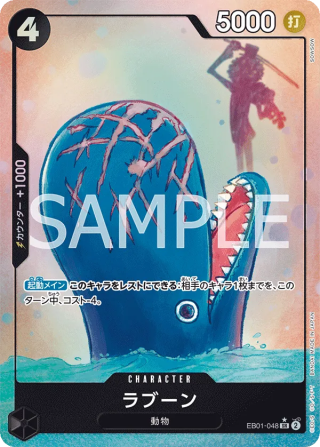
Related Guides

EB-02 Anime 25.º Collection: probabilidades de sobres, Mejores cartas y guía de caja

A single Monkey D. Luffy Manga Rare from EB-02 sells for over ¥120,000 (~$800) on the Japanese market — more than 22 boxes at retail. The Extra Booster Anime 25th Collection celebrates 25 years of the ONE PIECE anime with 26 gold foil SPR leader reprints, a meta-defining new Luffy leader, and one of the hardest chase cards in OPTCG history at 1-in-140 box odds.

If you track SPR leader drops on SNKRDUNK or you’re considering your first EB-02 box, this guide breaks down the EB-02 pull rates, ranks the 10 most valuable cards with current JPN and EN market prices, and gives you the data to decide if the box is worth the premium. Our team handles hundreds of OPTCG boxes monthly through our Tokyo warehouse, and EB-02 remains one of the most requested Extra Boosters we ship overseas.

~¥14,800
Box Price

88
Card Types

~1/140
Manga Rare

26
SPR Leaders

Set Overview — What Makes EB-02 Special

EB-02 is the first OPTCG Extra Booster built entirely around anime-original illustrations, with every card featuring artwork from the TV animation team rather than manga panels or new commissions. Released January 25, 2025 in Japan and May 9, 2025 internationally, the set marks the 25th anniversary of the ONE PIECE anime that debuted in October 1999.

Box Specifications

Spec Detail
Set Name Extra Booster — Anime 25th Collection (EB-02)
JPN Release January 25, 2025
EN Release May 9, 2025
MSRP ¥5,280 (JPN)
Packs per Box 24
Cards per Pack 12
Total Card Types 88 (including DON!!)
Rarity Breakdown 1 Leader, 29 C, 21 R, 9 SR, 1 SEC, 26 SP, 1 DON!!

The 26 Gold Foil SPR Leaders

The defining feature of EB-02 is its 26 SPR (Special Premium Rare) leader cards. These are reprinted leaders from OP-05 through OP-08 and EB-01, re-illustrated by the anime production team and finished with sharp gold foil on text and borders. Each SPR leader features a unique anime-style illustration that differs from both the original card art and any previous alternate art version.

Popular SPR leaders include Boa Hancock (OP07-038), Enel (OP05-098), Jewelry Bonney (OP07-019), Uta (OP06-001), Yamato (OP06-022), and Charlotte Pudding (OP08-058). With 26 different SPR leaders in the pool, pulling any specific one you want requires serious luck — or a willingness to buy singles.

EB-02 Anime 25th Collection booster box Japanese version

Top 10 Most Valuable EB-02 Cards

The EB-02 market is dominated by the Luffy Manga Rare at the top, followed by a cluster of SPR leaders valued between ¥10,000 and ¥26,000. All prices below reflect JPN market data from SNKRDUNK and Mercari as of March 2026, with EN TCGPlayer prices for reference.

Rank Card Rarity JPN Price EN Price
1 Monkey D. Luffy (EB02-061) SEC Manga ~¥120,000 ~$1,000+
2 Boa Hancock (OP07-038) SPR ~¥26,000 ~$400
3 Monkey D. Luffy (EB02-010) L Alt Art ~¥20,000 ~$300
4 Enel (OP05-098) SPR ~¥18,000 ~$230
5 Jewelry Bonney (OP07-019) SPR ~¥15,000 ~$230
6 Uta (OP06-001) SPR ~¥14,000 ~$200
7 Vinsmoke Reiju (OP06-042) SPR ~¥11,000 ~$270
8 Yamato (OP06-022) SPR ~¥11,000 ~$230
9 Charlotte Pudding (OP08-058) SPR ~¥10,000 ~$170
10 Perona (OP03-077) SPR ~¥10,000 ~$150

Prices as of March 2026. JPN prices from SNKRDUNK/Mercari. EN prices from TCGPlayer/PriceCharting.

#1 — Monkey D. Luffy Manga Rare (EB02-061)

Monkey D. Luffy Manga Rare EB02-061 SEC Anime 25th Collection

#1 — SEC MANGA RARE
Monkey D. Luffy (EB02-061)
~$800 · JPN: ~¥120,000
The crown jewel of EB-02 depicts Gear 2 Luffy from the Enies Lobby arc in manga panel art style — the third Manga Rare featuring the series protagonist in OPTCG history. A 7-cost character with the Rush keyword, making it both a collector trophy and a competitive finisher in Green/Purple Luffy builds.

Compared to other Manga Rares in OPTCG — like the OP-01 Shanks (~¥80,000) or OP-05 Luffy Nika (~¥150,000) — EB02-061 sits comfortably in the upper tier. The Enies Lobby Gear 2 scene resonates deeply with longtime fans, and supply remains tight since Extra Boosters receive shorter print runs than mainline sets.

Rarity Check

The 26 SPR leaders in EB-02 share a combined pull rate of approximately 1 per 11 boxes. That means any individual SPR leader you want — like Hancock or Enel — appears roughly once every 286 boxes (26 × 11). Singles are the practical path for specific SPR targets.

#2 — Boa Hancock SPR (OP07-038)

Boa Hancock SPR Leader OP07-038 gold foil Anime 25th Collection EB-02

#2 — SPR LEADER
Boa Hancock (OP07-038)
~$170 · JPN: ~¥26,000
The highest-valued SPR leader in the set. Her Yellow leader ability bounces opposing characters while drawing cards, keeping her relevant in competitive play. The anime-style gold foil illustration pairs her iconic pose with premium finishing.

#3 — Monkey D. Luffy Alternate Art Leader (EB02-010)

Monkey D. Luffy Alternate Art Leader EB02-010 Anime 25th Collection

#3 — L ALT ART LEADER
Monkey D. Luffy (EB02-010)
~$130 · JPN: ~¥20,000
The only brand-new leader in EB-02 — not a reprint. This Green/Purple Luffy sparked the GP Luffy archetype that dominated both JPN and EN competitive metas. Illustrated by Katsumi Ishizuka, one of the original ONE PIECE animators.

#4–10 — SPR Leader Highlights

The remaining top cards are all SPR leaders, each featuring gold foil finishing and anime-original artwork.

4

Enel SPR Leader OP05-098

Enel SPR
¥18,000 · ~$120
Yellow stall leader with Sky Island support. One of the most competitively relevant SPR leaders.

5

Jewelry Bonney SPR Leader OP07-019

Jewelry Bonney SPR
¥15,000 · ~$100
Green leader with aggressive builds seeing tournament play. Egghead arc anime art.

6

Uta SPR Leader OP06-001

Uta SPR
¥14,000 · ~$93
Sleeper hit — massive fan following from Film: RED keeps demand high despite limited meta play.

7

Vinsmoke Reiju SPR Leader OP06-042

Vinsmoke Reiju SPR
¥11,000 · ~$73
Purple Germa leader capable of explosive early-turn attacks starting turn three.

8

Yamato SPR Leader OP06-022

Yamato SPR
¥11,000 · ~$73
One of the most popular recent characters. Green leader with future starter deck support.

9

Charlotte Pudding SPR Leader OP08-058

Charlotte Pudding SPR
¥10,000 · ~$67
Black/Yellow leader that ramps to 10 DON quickly. Strong collector appeal.

Pull Rates — What to Expect from Your Box

EB-02 pull rates are harsh compared to mainline booster sets. Each box guarantees 3 SR cards and typically 1 parallel card, but the high-value SPR leaders and Manga Rare Luffy require significantly more investment to pull.

Rarity Breakdown

Rarity Estimated Rate Approx. Boxes to Pull
SR (×9 types) ~3 per box (guaranteed) 1
Regular Parallel (R/SR/SEC) ~1 per 1.2 boxes ~1
SPR Leader (any of 26) ~1 per 11 boxes ~11
SPR Leader (specific one) ~1 per 286 boxes ~286
SEC (Luffy EB02-061) ~1 per 5 boxes ~5
Manga Rare / Comic Parallel ~1 per 140 boxes ~140

Pull rates are estimated based on community opening data from Japanese collectors. Not officially confirmed by BANDAI.

The Comic Parallel Lottery

The Luffy Manga Rare (EB02-061 Super Parallel version) sits at approximately 1 per 140 boxes — that translates to roughly 1 per 12 cartons. At the current box market price of ~¥14,800, chasing this card through sealed product costs an expected ¥2,072,000 (~$13,800) in boxes. Compare that to the card’s market price of ~¥120,000 (~$800), and the math is clear: buying the single is roughly 17× cheaper than chasing it through packs.

The standard SEC version (EB02-061, non-comic-parallel) at ~1 per 5 boxes is far more attainable, though it carries a much lower premium.

EB-02 pull rate chart showing SEC, SPR, SR, and Comic Parallel rates per box
EB-02 pull rates per box — community estimated data
Pull Rate Context

EB-02’s comic parallel rate of 1/140 is harsher than most mainline sets (typically 1/70–1/100). Extra Boosters have shorter print runs, which concentrates the rarity. For comparison, EB-03’s God Pack lands at roughly 1/180 boxes.

What’s in Your Box — Value Breakdown

Every sealed TCG box returns less than its purchase price on average — that’s how the product model works. The value comes from the opening experience, building your collection, and the chance of pulling something extraordinary. With that context, here’s what a typical EB-02 box contains.

Slot Contents Estimated Value
3× SR (guaranteed) 9 SR types, avg ~¥500-2,000 each ~¥1,500-6,000
~1× Parallel R/SR/SEC parallel ~¥500-5,000
Bulk (C/R) Commons and Rares ~¥200-500 total
Typical Box Total ~¥2,200-11,500
Box Market Price ~¥14,800

The guaranteed SR slots provide your floor value. Three SRs averaging ¥1,000-2,000 each give you ¥3,000-6,000 in baseline value. Your upside depends entirely on parallel pulls — hitting an SPR leader (~¥10,000-26,000) or the SEC Luffy (~¥120,000) transforms your box from underwater to a windfall.

For collectors, the guaranteed SRs include competitive staples like Trafalgar Law (EB02-045), Yamato (EB02-006), and Vegapunk (EB02-056), each with new anime-style artwork that won’t appear in any other set. Even without a big parallel hit, these SRs add genuine cards to your collection.

Singles vs. Box Strategy

Approach Best For Estimated Cost for Top 3 Cards
Buy singles Targeting specific cards ~¥166,000 (Luffy Manga + Hancock SPR + Luffy Alt Art)
Open 1 box Casual collector experience ~¥14,800 + whatever you pull
Open 11 boxes Chasing any SPR leader ~¥162,800 for ~1 SPR leader

Should You Buy EB-02?

EB-02 delivers strong value for collectors drawn to the anime anniversary theme and premium gold foil finishing. Competitive players also find a meta staple in the new Luffy leader. Here’s how it breaks down by buyer type.

For Collectors

The 26 SPR leaders with anime-original art and gold foil borders are unlike anything else in OPTCG. These aren’t just reprints — each card was re-illustrated by the TV anime production staff, creating a unique visual style that sits between the manga-based main set art and Toei’s animation cells. If you collect leader cards, EB-02 is the single richest source of premium leader variants in the game.

The Luffy Manga Rare (EB02-061) adds a flagship chase card that’s already become iconic. Gear 2 Luffy at Enies Lobby is one of the most beloved moments in ONE PIECE, and the manga panel art captures it perfectly.

Action: Buy 1-2 boxes for the experience, then pick up specific SPR leaders as singles. The EB-02 booster box ships from our Tokyo warehouse with tracked delivery.

For Players

Green/Purple Luffy (EB02-010) reshaped the competitive meta when EB-02 launched. The Straw Hat Crew restriction creates a unique deckbuilding challenge, and the DON manipulation mechanic enables aggressive plays that few other leaders can match. GP Luffy consistently placed in Tier 1 across both JPN and EN tournament environments throughout 2025.

Beyond the leader, EB02-061 (the SEC character Luffy with Rush) serves as a finisher in GP Luffy decks. Even the standard version (non-parallel) is a competitive staple.

Action: If you play GP Luffy, you need the leader from EB-02. The standard version is affordable (~¥500 for the non-alternate-art EB02-010). Singles are the smart path for deck building.

Collector vs Player Value

EB-02 is rare among OPTCG sets in delivering strong value for both audiences. The 26 SPR leaders satisfy collectors, while GP Luffy (EB02-010) gives competitive players a Tier 1 option — all from the same box.

For Long-Term Holders

Extra Booster sets typically receive one print run with no reprint. EB-02’s short supply, combined with the anime 25th anniversary theme that won’t be repeated, positions it for steady appreciation as sealed supply decreases. Similar past Extra Boosters like EB-01 Memorial Collection have seen box prices climb 30-50% over 12 months post-release.

Action: Monitor box prices for entry points. Current JPN market price of ~¥14,800 may represent a stable floor after initial launch volatility settled.

Buy Now
  • Sealed supply decreasing (one-print Extra Booster)
  • GP Luffy still relevant in current meta
  • Anime 25th anniversary theme won’t be repeated
Wait
  • EN version available since May 2025 at lower box prices
  • Individual SPR prices may settle further
  • April 2026 rotation may reduce some SPR leaders’ competitive relevance

Competitive Impact — GP Luffy Takes the Meta

EB02-010 Monkey D. Luffy didn’t just enter the meta — it dominated. Within two weeks of the JPN release in January 2025, Green/Purple Luffy decks claimed the highest win rate in online and local tournaments, a position the archetype held for months.

How Green/Purple Luffy Works

The leader’s ability lets you deramp 2 DON and gain 2 active DON, but only if every character on your field belongs to the Straw Hat Crew type. This restriction forces pure Straw Hat builds but rewards them with explosive turn sequencing — you can play large characters earlier than the DON curve normally allows.

Key support cards from EB-02 include anime-themed Straw Hat crew members at various costs, giving the deck a smooth curve from early drops to the EB02-061 Luffy finisher with Rush.

Tournament Results

In the JPN meta (OP-10/EB-02 format), GP Luffy achieved a 55%+ win rate in its first three weeks, making it the most popular and most successful deck simultaneously. Blue Doflamingo eventually emerged as the primary counter, creating a two-deck metagame that defined early 2025 competitive play.

When EB-02 reached the EN market in May 2025, the pattern repeated. GP Luffy immediately became the most-played leader in Western tournaments, according to Limitless TCG tournament data and onepiece.gg meta tier lists.

Meta Status (March 2026)

GP Luffy remains competitive but is no longer the undisputed #1. With OP-14 and OP-15 cards in the format, the meta has diversified. However, GP Luffy still regularly tops events and remains a strong choice for competitive play.

Where to Buy EB-02 — JPN Booster Box

The JPN version of EB-02 Anime 25th Collection offers the original anime-artist illustrations with Japanese text — the authentic version of this anniversary celebration. Our EB-02 boxes ship from Tokyo with tracked international delivery.

Shipping & Import Notes:

  • Ships from Tokyo within 1-3 business days
  • Tracked delivery to US, CA, UK, AU (5-10 business days)
  • Import duties may apply depending on your country — check local customs thresholds
  • All boxes are factory-sealed with shrink wrap intact

For a complete guide on purchasing Japanese OPTCG products, see our How to Buy One Piece Cards from Japan guide.

Shop This Set
EB-02 Anime 25th Collection Booster Box
From ~$99 / ~¥14,800
Ships from Tokyo · Tracked delivery

View Product →

The Bottom Line

EB-02 Anime 25th Collection stands out in the OPTCG lineup for three reasons:

  1. The Luffy Manga Rare (EB02-061) is one of the most valuable and visually striking cards in the game, depicting Gear 2 Luffy at Enies Lobby in manga panel art
  2. 26 gold foil SPR leaders create the richest collection of premium leader variants in any single OPTCG product
  3. GP Luffy (EB02-010) delivered a meta-defining leader that remains competitive over a year after release

The box commands a premium at ~¥14,800 (~$99), and pull rates for SPR leaders (1/11 boxes) and the Manga Rare (1/140 boxes) are steep. For targeted purchases, singles are the rational choice. For the collector experience of cracking anime anniversary packs with a shot at gold foil SPR leaders, EB-02 delivers something no other set offers.

Also explore: EB-03 Heroines Edition — Pull Rates & God Pack Guide | OP-15 JPN vs English — Which to Buy

Frequently Asked Questions

What are the pull rates for EB-02 Anime 25th Collection?

Each box guarantees 3 SR cards and roughly 1 parallel card. SPR leaders appear at approximately 1 per 11 boxes, the SEC Luffy at roughly 1 per 5 boxes, and the Manga Rare Comic Parallel Luffy at approximately 1 per 140 boxes. These are community-estimated rates based on opening data, not officially confirmed by BANDAI.

Is the EB-02 booster box worth buying?

It depends on your goals. For collectors who value the anime 25th anniversary art and gold foil SPR leaders, the box offers a unique opening experience. For competitive players, the GP Luffy leader (EB02-010) is a meta staple available more affordably as a single. The box market price of ~¥14,800 (~$99) is roughly 2.8× the original retail price.

What is the most expensive card in EB-02?

The Monkey D. Luffy Manga Rare (EB02-061, Super Parallel) leads at approximately ¥120,000 (~$800) on the Japanese market as of March 2026. The EN version trades even higher on TCGPlayer, reflecting strong international demand.

How many SPR leaders are in EB-02?

EB-02 contains 26 SPR (Special Premium Rare) leader cards, each reprinted from previous sets (OP-05 through OP-08 and EB-01) with new anime-original illustrations and gold foil finishing.

When did EB-02 release in English?

The English version of EB-02 Anime 25th Collection released on May 9, 2025, approximately four months after the Japanese release on January 25, 2025.

Is the EB02-010 Luffy leader still competitive?

Yes. Green/Purple Luffy (EB02-010) dominated the meta through 2025 and remains a strong competitive choice in March 2026, though the metagame has diversified with OP-14 and OP-15 additions. The standard (non-alternate-art) version of EB02-010 is affordable at under ¥500.

Will EB-02 be reprinted?

Extra Booster sets typically receive a single print run with no reprint. Once current sealed stock is sold, prices for sealed boxes are expected to appreciate over time, similar to EB-01 Memorial Collection’s trajectory.


Related Guides

Tasas de extracción y mejores cartas de Op 12

The OP-12 best cards feature a 3rd Anniversary Gold SP Marshall D. Teach valued at ¥128,000 (approximately $853) and a Jewelry Bonney Comic Parallel commanding ¥84,800 — placing Legacy of the Master among the strongest chase-card lineups in recent OPTCG history. Released in Japan on May 31, 2025, this set celebrates master-disciple bonds across One Piece: Rayleigh and Luffy, Mihawk and Zoro, Kuma and Bonney.

Beyond the collector appeal, OP-12 has reshaped competitive play. Green Zoro (OP12-020) won the North American Nationals, and Red Rayleigh (OP12-001) established itself as the format’s premier aggro leader. The set’s pull rates paint an interesting picture too — that Gold Teach appears roughly once every 240 boxes, while a single box still guarantees solid SR value.

This guide breaks down the top 10 most valuable OP-12 cards with current Japanese market prices, detailed pull rate data from JPN community openings, box value analysis, competitive meta impact, and buying recommendations for every type of buyer. Our team tracks JPN market data daily across SNKRDUNK, Mercari, and multiple card shop buy lists to bring you pricing that English-language sources typically miss.

~¥8,000
Box Price

129
Card Types

~1/3
SEC Rate

24
Packs/Box

What Is OP-12 Legacy of the Master?

OP-12 delivers 129 card types centered on mentor-student relationships that define One Piece — plus exclusive 3rd Anniversary celebration cards featuring Marshall D. Teach in gold and silver foil.

Set Specs

Detail Value
Set Name Legacy of the Master (師弟の絆)
Set Code OP-12
JPN Release May 31, 2025
EN Release August 22, 2025
MSRP ¥5,280 (JPN, tax incl.) / Market: ~¥8,000 (~$53 at ¥150/USD)
Packs / Box 24
Cards / Pack 6 (JPN) / 12 (EN)
Leaders 6
Super Rares (SR) 10
Secret Rares (SEC) 2
Special Art Parallels (SP) 6
Treasure Rare (TR) 1
3rd Anniversary SP 2 (Gold & Silver)

Key Themes & Archetypes

The set’s master-disciple theme spans the entire One Piece saga. Silvers Rayleigh mentoring Luffy anchors the Red archetype with aggressive tempo strategies. Dracule Mihawk training Zoro powers a dominant Green deck that won NA Nationals. Bartholomew Kuma and Jewelry Bonney bring an emotional father-daughter dynamic to a competitive Green leader.

Six new leaders ship in this set — Rayleigh, Gol D. Roger, Zoro, Kuzan, Sanji, and Rosinante — each built around different color combinations and playstyles. Cross-set Special Art reprints from OP-06, OP-09, OP-10, ST-13, and ST-18 round out the collector appeal, with the Zoro-Juurou SP and Portgas D. Ace SP among the most sought-after.

OP-12 Legacy of the Master Japanese Booster Pack ONE PIECE CARD GAME
OP-12 Legacy of the Master — Japanese Booster Pack

Top 10 Most Valuable OP-12 Cards

The three most expensive OP-12 cards span two different characters — Blackbeard and Bonney — with the 3rd Anniversary Gold Teach alone worth more than 16 standard boxes. Below is the complete top 10 ranked by current Japanese market price. Prices as of March 2026 from onepiece-card-atari.jp and SNKRDUNK.

Rank Card Card ID Rarity Price (¥) ~USD
1 Marshall D. Teach (Gold) — 3rd Anniv. OP09-093 SP (Gold) ¥128,000 ~$853
2 Marshall D. Teach (Silver) — 3rd Anniv. OP09-093 SP (Silver) ¥108,000 ~$720
3 Jewelry Bonney — Comic Parallel OP12-118 SEC (Comic) ¥84,800 ~$565
4 Demon Aura Nine Sword Style Asura OP12-037 R (Parallel) ¥27,800 ~$185
5 Boeuf Burst OP12-060 R (Parallel) ¥13,300 ~$89
6 Zoro-Juurou ST18-004 SP ¥9,814 ~$65
7 Portgas D. Ace ST13-011 SP ¥8,230 ~$55
8 Kuzan OP10-082 SP ¥4,488 ~$30
9 Roronoa Zoro (Leader) OP12-020 L (Parallel) ¥4,185 ~$28
10 Bartholomew Kuma OP12-119 SEC (Parallel) ¥4,130 ~$28

Prices reflect Japanese market data as of March 2026. USD estimates at ¥150/USD.

Marshall D. Teach 3rd Anniversary Gold SP OP09-093 One Piece Card Game OP-12

#1 — SP 3RD ANNIVERSARY GOLD SP
Marshall D. Teach (OP09-093)
~$853 · JPN: ~¥128,000
The crown jewel of OP-12 — a 3rd Anniversary commemorative card featuring Blackbeard with gold foil stamping, reusing the Manga Rare artwork from OP-09. At ¥128,000, the Gold Teach carries a premium driven by a pull rate of roughly 1 in 240 boxes (about 20 cartons), the striking visual of full gold foil, and Blackbeard’s growing popularity as one of the series’ final antagonists. On the EN market, this card commands $1,650 — nearly double the JPN equivalent.

Rarity Check

The 3rd Anniversary Gold Teach appears roughly once every 240 boxes (20 cartons). This is the second in a series of anniversary inserts spanning OP-11 (Luffy), OP-12 (Teach), OP-13 (Shanks), and OP-14 (Buggy).

Marshall D. Teach 3rd Anniversary Silver SP OP09-093 One Piece Card Game OP-12

#2 — SP 3RD ANNIVERSARY SILVER SP
Marshall D. Teach (OP09-093)
~$720 · JPN: ~¥108,000
The silver counterpart shares the same Blackbeard artwork and OP09-093 card number but features silver foil stamping. The ¥20,000 gap between gold and silver is narrower than the Luffy gap in OP-11, suggesting collectors view both Teach variants as comparably desirable. On the EN market, silver commands $999 — the price spread is wider at the Western level.

Jewelry Bonney Comic Parallel OP12-118 SEC One Piece Card Game OP-12

#3 — SEC COMIC PARALLEL
Jewelry Bonney (OP12-118)
~$565 · JPN: ~¥84,800
The highest-value pullable card from standard booster slots. The manga panel artwork showcases Bonney’s emotional scene with her father Kuma — perfectly aligned with the set’s master-disciple theme. At roughly 1 in 72 boxes, she’s more attainable than the Teach cards. Her price has doubled since launch (¥42,800 → ¥84,800), driven by dual demand from collectors and competitive players.

#4–10 at a Glance

#4 Demon Aura Nine Sword Style Asura (OP12-037, R-Parallel, ¥27,800) — Zoro’s signature attack in stunning parallel art. A Rare card whose parallel version vastly outperforms its rarity class. Zoro’s fan popularity and the dynamic full-frame illustration drive collector demand far beyond typical R-Parallel pricing.

#5 Boeuf Burst (OP12-060, R-Parallel, ¥13,300) — Sanji’s finishing move gets the parallel treatment. Another R-Parallel punching above its weight, though its price has softened from ¥19,000 at launch. Competitively, this is a key Event card for Sanji-based decks.

R-Parallel Value

Two of the top 5 cards (#4 and #5) are Rare-rarity parallels — not SRs or SECs. In OP-12, the parallel treatment on iconic character moves creates value that rivals higher-rarity cards. These are the “hidden gems” of sealed product opening.

#6 Zoro-Juurou (ST18-004, SP, ¥9,814) — Wano-arc Zoro in a cross-set reprint SP from ST-18. EN market price sits at $220 — triple the JPN equivalent, making JPN singles a compelling value.

#7 Portgas D. Ace (ST13-011, SP, ¥8,230) — Cross-set SP reprint from ST-13. Ace’s enduring popularity ensures steady demand. Rising trend on the JPN market.

Demon Aura Nine Sword Style Asura OP12-037 R-Parallel One Piece Card Game OP-12
Demon Aura Nine Sword Style Asura (OP12-037) — #4 most valuable card

#8 Kuzan (OP10-082, SP, ¥4,488) — Former Admiral Kuzan in his OP-10 SP reprint. A more affordable SP entry point with upside potential if Blue Kuzan gains meta share.

#9 Roronoa Zoro (OP12-020, L-Parallel, ¥4,185) — The leader card behind the NA Nationals-winning deck, in parallel form. Players and collectors both want this one.

#10 Bartholomew Kuma (OP12-119, SEC-Parallel, ¥4,130) — Kuma’s Secret Rare parallel ties directly into the set’s emotional core. The base version sees competitive play as a 6-cost blocker.

OP-12 Pull Rates — What Are Your Odds?

Pull rates for OP-12 follow the standard OPTCG booster structure, with the 3rd Anniversary inserts adding an ultra-rare layer on top. All rates below are unofficial community estimates — Bandai does not publish official pull rate data.

Pull Rates by Rarity

Rarity Estimated Rate Per Box (24 packs) Per Carton (12 boxes)
SR Super Rare Guaranteed 3–5 ~40–50
SEC or Parallel ~1 per box ~1 ~12
R Parallel ~1 per 4 boxes ~0.24 ~3
L Leader Parallel ~1 per 5.6 boxes ~0.18 ~2
SP Special Art ~1 per 11 boxes ~0.09 ~1
Treasure Rare ~1 per 12 boxes ~0.08 ~1
Bonney Comic Parallel ~1 per 72 boxes ~0.014
3rd Anniv. Gold/Silver Teach ~1 per 240 boxes ~0.004

Estimated from JPN community opening data. Bandai does not publish official pull rates. Actual results vary by production batch.

Reality Check

The 3rd Anniversary Gold Teach appears roughly once every 240 boxes — that’s about 20 cartons of sealed product. The Bonney Comic Parallel is more attainable at 1 in 72 boxes (6 cartons), but still a significant commitment.

What to Realistically Expect from One Box

A single OP-12 box guarantees 3 Super Rares and at least one hit from the SEC/Parallel pool. Beyond that guaranteed floor, you have roughly a 1-in-4 chance of pulling an R-Parallel and about a 1-in-6 shot at a Leader Parallel.

The ultra-rare cards require a different mindset entirely. Pulling a Bonney Comic from a single box is about a 1.4% chance. The 3rd Anniversary Teach cards are even more elusive at approximately 1 in 240 boxes. These are chase cards you enjoy finding, not cards you can reasonably expect from a few boxes.

For players building decks, one box typically provides enough Common and Uncommon playsets to start constructing. SR pulls may or may not align with your target deck — competitive players often supplement with singles.

OP-12 Legacy of the Master pull rate distribution chart showing rarity probabilities per box
OP-12 estimated pull rate distribution per box (community data)

Box Value Breakdown

OP-12’s box value sits in a healthy range for a set with strong chase cards and guaranteed SR content. TCG booster boxes generally don’t return full value on average, but OP-12’s guaranteed floor and upside potential make it compelling compared to most OPTCG sets.

What’s in Your Box

Every OP-12 box delivers a baseline of 3 Super Rares plus one guaranteed hit from the SEC/Parallel pool. Japanese market data from onepiece-card-atari.jp estimates the average box expected value at approximately ¥8,310 — roughly in line with current JPN box pricing.

Component Guaranteed? Estimated Value
3× SR cards Yes ¥1,500–¥3,000
1× SEC or Parallel Yes (guaranteed hit) ¥2,000–¥5,000
Ultra-rare upside (weighted avg.) No ¥2,000–¥4,000
Commons/Uncommons/Rares Yes ~¥500
Estimated average ~¥8,310

The guaranteed SR slots provide a value floor. Your actual return depends on whether you hit a Parallel, SP, or one of the ultra-chase cards. The variance is high — most boxes return modest value, but a single Bonney Comic or Anniversary Teach transforms the economics entirely.

Price Appreciation

OP-12 launched at approximately ¥4,300 on SNKRDUNK — notably below the ¥5,280 sticker price. Since then, the box has appreciated to approximately ¥8,000, driven by competitive relevance (Zoro and Rayleigh meta dominance) and sustained chase-card demand.

JPN vs EN Box Price

At ¥8,000 (~$53), the JPN box represents a fraction of the EN box price (~$224). This price differential is one of the strongest arguments for buying JPN sealed product — you get the same chase cards, superior JPN print quality, and 3rd Anniversary inserts for roughly a quarter of the EN cost.

Should You Buy OP-12?

OP-12 offers something for every type of buyer — the question is whether sealed boxes or singles better fit your goals.

For Collectors

OP-12 is a strong buy for collectors drawn to the master-disciple theme. The Bonney Comic Parallel with its manga panel artwork is one of the most emotionally resonant chase cards in OPTCG — Bonney and Kuma’s relationship is a fan-favorite storyline. The cross-set SP reprints (Zoro-Juurou, Ace, Kuzan) give you shots at iconic character art from multiple eras.

The 3rd Anniversary Teach cards are the set’s crown jewels, but chasing them through sealed product requires significant commitment. At 1 in 240 boxes, singles are the practical path for those cards specifically. For the general opening experience, the ¥8,000 JPN box offers solid art variety across 144 cards.

Collector’s Pick

The Bonney Comic Parallel (¥84,800) combines the set’s strongest emotional art — Bonney and Kuma’s father-daughter bond — with genuine scarcity (1/72 boxes). It’s the chase card that best represents OP-12’s master-disciple theme.

Buy Sealed
  • Opening experience + chase thrill
  • JPN box at ¥8,000 (~$53) — accessible
  • Chance at ultra-chase cards
Buy Singles
  • Get exactly the card you want
  • Teach Gold ¥128,000 < expected sealed cost
  • Better for competitive deck building

For Competitive Players

This set is essential if you play OPTCG competitively. Green Zoro (OP12-020) won North American Nationals and remains one of the format’s top leaders. Red Rayleigh (OP12-001) is the premier aggressive strategy with multiple regional wins. Even Jewelry Bonney took down the Toronto Regional Championship.

Key deck pieces — Bartholomew Kuma (OP12-119) as a 6-cost blocker, Boeuf Burst (OP12-060) as an event staple, and the leader cards themselves — are cards you’ll want regardless of collecting interest. The leader cards in their standard (non-parallel) form are readily available at modest prices.

Tournament Results

Green Zoro (OP12-020) — NA Nationals winner · Red Rayleigh (OP12-001) — Multiple Regional wins · Jewelry Bonney — Toronto Regionals winner. Three OP-12-era leaders with championship titles.

For Investors

OP-12’s price trajectory supports a positive outlook. The box appreciated from ¥4,300 at launch to ¥8,000 over nine months — a pattern that often continues as supply dwindles. The 3rd Anniversary Teach cards add a speculative angle: as one of four sets in the anniversary series (OP-11 through OP-14), OP-12 benefits from collectors aiming to complete the full gold/silver set.

At ¥8,000 with an estimated EV of ¥8,310, the math is currently close to breakeven — healthier than many OPTCG sets at this stage. Long-term sealed appreciation is possible, especially as competitive Zoro/Rayleigh demand holds.

OP-12 Meta Impact — Competitive Highlights

OP-12 didn’t just add cards to the meta — it redefined it. Two of the set’s six leaders have claimed major championship titles, and several support cards have become format staples.

Dominant Leaders

Green Zoro (OP12-020) has emerged as arguably the strongest leader in the Western meta. His Slash-focused Green strategy earned the North American Nationals title and consistently posts high conversion rates at regional events. Zoro’s ability to generate card advantage while maintaining aggressive pressure makes him a flexible pick across matchups.

Red Rayleigh (OP12-001) operates as the format’s premier aggro deck. Rayleigh’s strategy revolves around fast, relentless pressure — overwhelming opponents before they can establish their game plan. Multiple regional championship wins confirm his Tier 1 status, and his favorable matchup against Green Zoro creates a healthy check-and-balance at the top of the meta.

Jewelry Bonney (as a leader from earlier sets, supported by OP-12 cards) claimed the Toronto Regional Championship, demonstrating that OP-12’s support cards extend competitive relevance beyond just the set’s own leaders.

Roronoa Zoro OP12-020 Leader Parallel One Piece Card Game OP-12
Roronoa Zoro (OP12-020) — NA Nationals winning leader
Collector + Player Overlap

Several top 10 value cards double as competitive staples. Bartholomew Kuma (OP12-119), Boeuf Burst (OP12-060), and Demon Aura Asura (OP12-037) all see active tournament play — their value is supported by both collector demand and playability.

Cards That Matter for Tournament Play

  • Bartholomew Kuma (OP12-119): 6-cost blocker with life manipulation. A defensive anchor in multiple deck archetypes
  • Boeuf Burst (OP12-060): Key Event card for aggressive strategies. The R-Parallel’s ¥13,300 price tag reflects both collector and competitive demand
  • Demon Aura Nine Sword Style Asura (OP12-037): Zoro’s signature attack sees play in Green Zoro builds, contributing to the R-Parallel’s ¥27,800 valuation

For a deeper look at how earlier sets shaped the meta, check out our OP-11 Best Cards & Pull Rates guide and OP-10 Royal Blood analysis.

Where to Buy OP-12 Japanese Booster Box

At ~¥8,000 per JPN box versus ~$224 for the EN equivalent, the price gap makes JPN sealed product the clear value play for international collectors. You get the same 3rd Anniversary Teach inserts, the same chase Bonney, and JPN’s signature print quality — at roughly a quarter of the EN cost.

What to expect when ordering from Japan:

  • Shipping: Tracked international shipping. Delivery typically takes 5–14 business days depending on your region (US, CA, UK, AU)
  • Customs & duties: US orders under $800 are generally duty-free. UK/AU buyers should budget 10–20% for potential customs charges
  • Authenticity: Genuine Bandai product with intact shrink wrap — the same product from a Tokyo shelf
Shop This Set
OP-12 Legacy of the Master Booster Box (Japanese)
From ~$53 / ~¥8,000
Ships from Tokyo · Tracked delivery

View Product →

For guidance on importing Japanese cards, customs expectations, and shipping timelines, see our How to Buy One Piece Cards from Japan (2026) guide.

The Bottom Line

OP-12 Legacy of the Master delivers on three fronts:

  1. Elite chase cards: 3rd Anniversary Teach Gold at ¥128,000, Bonney Comic at ¥84,800 — a diverse top 10 spanning two characters, multiple rarity types, and cross-set reprints.
  2. Competitive dominance: Green Zoro and Red Rayleigh have reshaped tournament play, making OP-12 cards essential for competitive players.
  3. Accessible JPN box pricing: At ¥8,000 with an EV near breakeven, the JPN box offers strong value at a quarter of the EN price.

Whether you open sealed boxes for the thrill of chasing that Gold Teach or buy singles to complete your Zoro deck, this set rewards engagement. The master-disciple theme gives OP-12 a narrative cohesion that elevates the collecting experience beyond pure market value.

Shop This Set
OP-12 Legacy of the Master Booster Box (Japanese)
From ~$53 / ~¥8,000
Ships from Tokyo · Tracked delivery

Check OP-12 availability →

Frequently Asked Questions

What are the best cards in OP-12 Legacy of the Master?

The most valuable OP-12 cards are the 3rd Anniversary Gold Marshall D. Teach (¥128,000 / ~$1,650 EN), 3rd Anniversary Silver Teach (¥108,000 / ~$999 EN), and Jewelry Bonney Comic Parallel (¥84,800 / ~$819 EN). The top 10 also includes R-Parallels like Demon Aura Asura (¥27,800) and SP reprints like Zoro-Juurou (¥9,814).

What are the pull rates for OP-12?

Community estimates indicate 3–5 SRs per box (3 guaranteed), one SEC or Parallel per box, an SP roughly every 11 boxes, and the Bonney Comic Parallel approximately once per 72 boxes. The 3rd Anniversary Teach Gold/Silver appears about once per 240 boxes. All rates are unofficial — Bandai does not publish official pull data.

Is OP-12 worth buying?

For collectors, the master-disciple theme art and 3rd Anniversary inserts make it a strong set to open. For competitive players, Green Zoro and Red Rayleigh are format-defining leaders. The JPN box at ~¥8,000 with an estimated EV of ~¥8,310 is near breakeven — healthy for a set this deep into its lifecycle. Whether sealed or singles is better depends on your goals.

What is the 3rd Anniversary card in OP-12?

OP-12 contains two 3rd Anniversary Special Cards: Marshall D. Teach in Gold foil (¥128,000) and Silver foil (¥108,000). These use the Manga Rare artwork from OP09-093 with commemorative foil stamping. The 3rd Anniversary series spans OP-11 (Luffy), OP-12 (Teach), OP-13 (Shanks), and OP-14 (Buggy).

How many secret rares are in OP-12?

OP-12 contains 2 Secret Rare cards: Jewelry Bonney (OP12-118) and Bartholomew Kuma (OP12-119). Both have standard and Parallel variants. The Bonney SEC in Comic Parallel form is the set’s highest-value pullable card at ¥84,800.

Is Green Zoro from OP-12 competitive?

Green Zoro (OP12-020) is one of the strongest leaders in the current OPTCG format. He won the North American Nationals and consistently performs at regional events. His Slash-focused Green strategy offers strong card advantage and aggressive pressure, making him a top-tier pick for tournament play.

What is the difference between JPN and EN OP-12?

Both versions contain the same card pool including 3rd Anniversary inserts. Key differences: JPN packs contain 6 cards (¥220/pack), EN packs contain 12 cards ($4.99/pack). JPN boxes are significantly cheaper (~¥8,000 vs ~$224 EN). JPN cards feature higher print quality with richer foil textures. Card text is in Japanese (JPN) or English (EN) — both are tournament legal in their respective regions.


🏴‍☠️ Ready to Open Packs?

Get the OP-12 Legacy of the Master Box booster box — shipped directly from Tokyo, Japan with tracking & insurance.

Buy OP-12 Legacy of the Master Box Box

Browse All One Piece Booster Boxes →
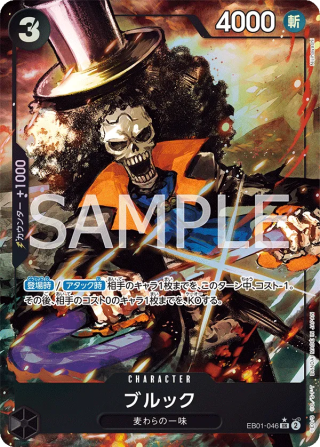
Related Guides