A shadowless Pokemon card is a card from the second print run of the English Base Set — printed after 1st Edition and before Unlimited, missing the drop-shadow around the artwork window that every later Unlimited print carries. It is an English-only phenomenon: Japan never printed a shadowless card at all. The closest thing Japan has is a different, older quirk entirely — the 1996 first print run of its own original set, which shipped without any rarity symbol printed in the corner.
“Shadowless” describes only the English Base Set’s second print run — per Bulbapedia, Japan’s cards went straight from 1st Edition to Unlimited using the same layout, so no Japanese shadowless print exists. The nearest Japanese equivalent is the 1996 “No Rarity Symbol” first print of the original 확장팩.
- Set reference: PSA10 card list.
- Graded Japanese Pokemon singles are listed on our store as of this update.
USD figures convert at ¥154/USD, approximate.
What Is a Shadowless Pokemon Card?
“Shadowless” is a collector term for the second English print run of the Pokemon Trading Card Game Base Set. The English Base Set went through three consecutive print runs, in this order:
- 1st Edition — carries the “1st Edition” stamp on the left side of the card.
- Shadowless — the stamp is dropped, but almost every other layout detail from 1st Edition carries over unchanged.
- Unlimited — the standard, long-running print layout used from that point forward.
The name comes from a single design detail: on Pokemon cards, the illustration window sits inside a printed border, and Unlimited-print cards have a visible drop-shadow running along the right and bottom edges of that border, giving the art box a slight 3D lift off the card face. Shadowless cards — like the 1st Edition cards they were printed alongside — do not have that shadow. It is a small, specific print detail, not a difference in the artwork itself.
How to Identify a Shadowless Card
For Pokemon cards with an illustration window, the drop-shadow is the tell: look at the border around the art box. No shadow on the right/bottom edge means either 1st Edition or Shadowless; a visible shadow means Unlimited. From there, the presence or absence of the “1st Edition” stamp on the left edge separates the first two.
Trainer and Energy cards have no illustration window, so there is nothing to cast a shadow. Those cards are identified instead by the copyright line printed at the bottom of the card:
| Print run | “1st Edition” stamp | Drop-shadow on art box | Copyright line |
|---|---|---|---|
| 1st Edition | Present | Absent | © 1995, 96, 98, 99 Nintendo |
| Shadowless | Absent | Absent | © 1995, 96, 98, 99 Nintendo |
| Unlimited | Absent | Present | © 1995, 96, 98 Nintendo (no “99”) |
Shadowless and 1st Edition share the same “99” copyright line, so a Trainer or Energy card without the “1st Edition” stamp needs the drop-shadow check on an illustrated card from the same pack, or direct comparison against a confirmed reference, to place it correctly.
Why Japan Never Had a Shadowless Print
This is the part most guides skip: shadowless is not a print stage every region went through. It is specific to how the English print run was staged. In Japan, 1st Edition cards were printed using the same layout as their respective Unlimited prints — drop-shadow included — from the start. There was no in-between transitional layout without the shadow.
In other words, Japan’s cards moved directly from 1st Edition to Unlimited, both using the shadowed layout. The step that produced “shadowless” in English never happened in the Japanese print run. If you see a Japanese card advertised as “shadowless,” that description does not map onto anything in Japan’s actual print history for the era.
For the wider English-vs-Japanese 1st Edition comparison, see our Japanese 1st Edition Pokemon cards guide.
Japan’s 1996 No Rarity Symbol Cards: The Closest Equivalent
If there is a Japanese parallel to “an early, transitional print variant that collectors specifically hunt for,” it is not shadowless — it is the very first print run of Japan’s original set. That set, 拡張パック (확장팩, commonly called the Japanese Base Set), released on 20 October 1996 with 102 cards.
Every later Japanese print carries a small rarity symbol — a circle, diamond or star — in the bottom-right corner of the card. Collectors and grading/marketplace sources widely describe the very first print run of this 1996 set as missing that symbol entirely, calling these “No Rarity” cards.
| 1996 JP print variant | Rarity symbol, bottom-right corner |
|---|---|
| First print run (“No Rarity”) | Absent |
| Later print runs (“with rarity”) | Circle, diamond or star present |
“No Rarity Symbol” and “Shadowless” are analogous only in spirit: both are early, transitional print-run variants that collectors track separately from the standard print. They are not the same mechanic. One is about a missing rarity mark; the other is about a missing drop-shadow on an entirely different set, printed in a different country, three years apart. Our guide to whether Japanese Pokemon cards are worth more covers this kind of early-print collectibility question in more depth.
Old Back: The Design Era These Cards Belong To
The 1996 확장팩 also opened what collectors call the “Old Back” era (旧裏, kyu-ura). From that release through 19 July 2001, every Japanese Pokemon card used a reverse-side design carrying the Japanese text “ポケットモンスターカードゲーム” (Pocket Monsters Card Game). The back design changed exactly once in that window, when the VS expansion released with 151 cards — from that point on, every Japanese print has used the “Pokemon”-branded back still in use today. For the full mechanics of how the two backs differ, see our Japanese Pokemon card back guide, our Japanese Old Back cards guide, and our card backs explained article.
These PSA 10 cards are all “Old Back” prints, made within or before that 1996–2001 window:
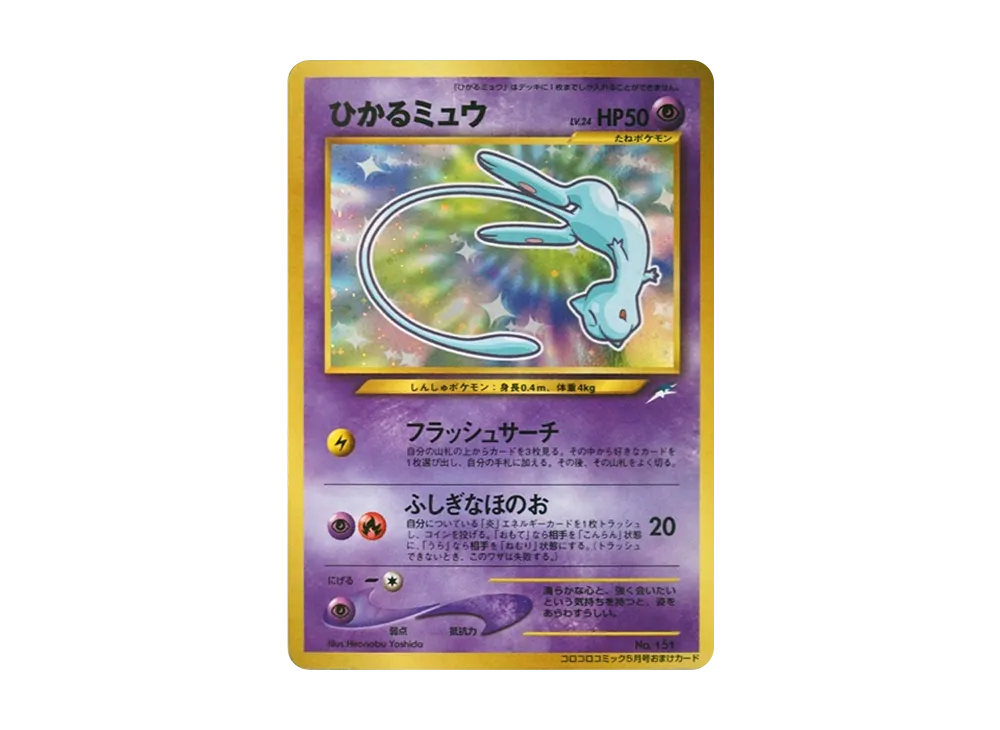
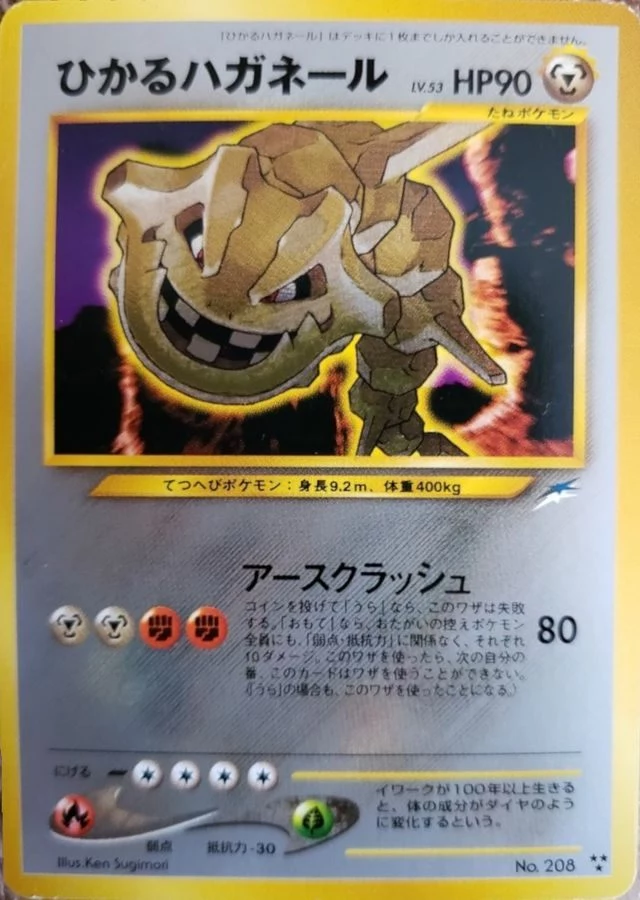
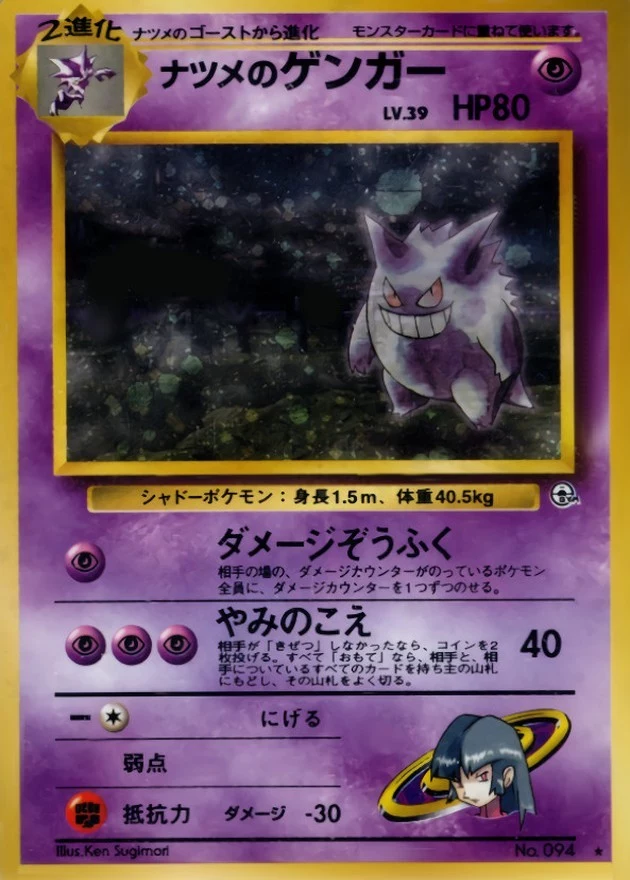
All three predate or sit right at the edge of that cutoff, consistent with their Old Back design — and none of them, or any other Japanese card from this window, carries a shadowless-style layout. The Old Back/New Back split is Japan’s own back-of-card timeline; it runs independently of the English shadowless story.
Buying Vintage Japanese Pokemon Cards from Tokyo
If you searched for “shadowless” hoping to find a Japanese equivalent to chase, the practical takeaway is to redirect that search: the marks that matter for Japanese vintage are Old Back versus New Back, and — for the very earliest 1996 print — the presence or absence of the rarity symbol, not any shadow around the art box. Graded Japanese vintage from that same 1996–2001 Old Back window is offered as PSA 10 back orders — sourced to order; the product pages show the current terms: Shining Mew, Old Back/PROMO, neo-P No.151, ¥10,086,666 (~$65,498); Cal Steelix, Old Back, neo4 No.208, ¥9,180,000 (~$59,610); Sabrina’s Gengar Lv.39 R, Old Back, PMCG-G2 No.094, ¥1,632,000 (~$10,597); Charizard, Old Back, PMCG4 No.006, Team Rocket, ¥807,283 (~$5,242); and Lugia, Old Back, No.249, Premium File 3, ¥275,600 (~$1,790).
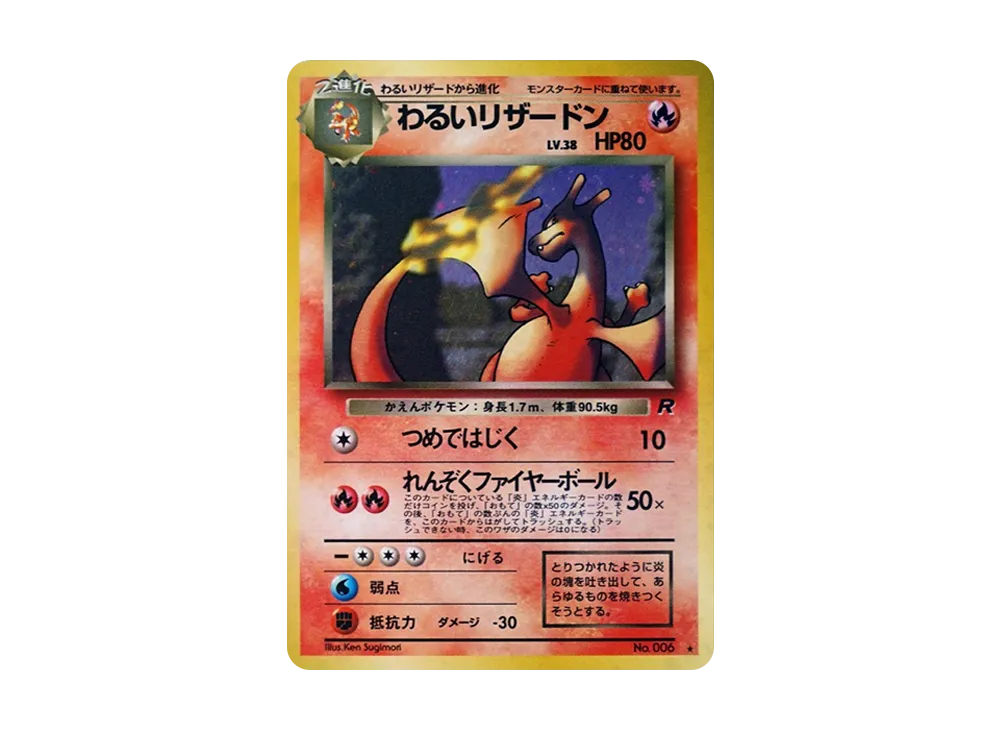
The Team Rocket Charizard sits inside the same Old Back window as our Team Rocket Japanese Pokemon cards guide. For a similar-era promo single, see our Celebi Old Back Premium File promo card guide.
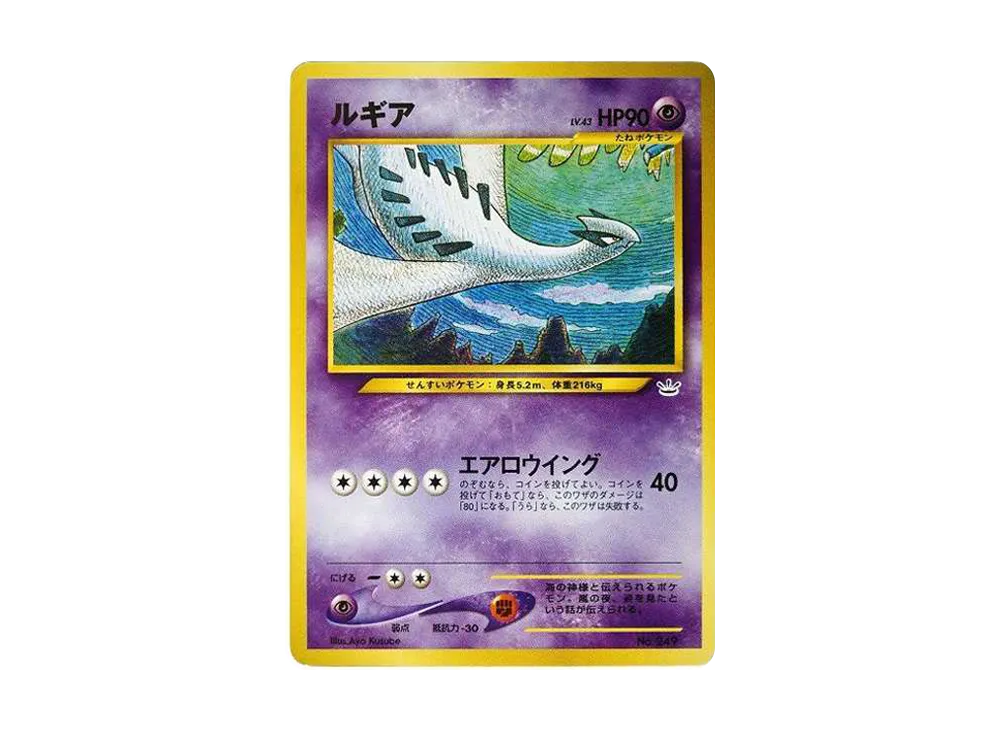
The PSA 10 collection lists graded cards beyond this era, and sourcing requests for a specific single go through 빠른 주문.
자주 묻는 질문
What is a shadowless Pokemon card?
A card from the second English print run of Base Set — printed after 1st Edition and before Unlimited. It keeps nearly all of 1st Edition’s layout but drops the “1st Edition” stamp, and it does not have the drop-shadow that the later Unlimited print added around the illustration window.
How do I tell if my Base Set card is Shadowless or Unlimited?
Check the border around the illustration window: a visible drop-shadow on the right and bottom edge means Unlimited, no shadow means 1st Edition or Shadowless. Trainer and Energy cards have no illustration window, so check the copyright line instead — Shadowless and 1st Edition both show “© 1995, 96, 98, 99 Nintendo,” while Unlimited drops the “99.”
Is there a Japanese shadowless Pokemon card?
No. Per Bulbapedia, Japanese 1st Edition cards were printed using the same layout as their respective Unlimited prints, drop-shadow included, from the start. There was no transitional shadowless print stage in Japan — that step only happened in the English print run.
What is the closest Japanese equivalent to a shadowless card?
The first print run of Japan’s original 1996 set, 확장팩, which collectors describe as missing the rarity symbol later prints carry in the bottom-right corner — known as “No Rarity” cards. It is an analogous early-print-variant phenomenon, not the same mechanic as shadowless, and its exact print-run size is not established.
What is an “Old Back” Japanese Pokemon card?
A card printed from the launch of 확장팩 until the VS expansion, using the reverse-side design carrying the Japanese text “ポケットモンスターカードゲーム.” The back design changed to the current “Pokemon”-branded design with the release of the VS expansion.
How many cards were in Japan’s original 1996 Pokemon set?
102 cards, released as 확장팩 in October 1996.
이 글에 맞춰 고른 상품
📩 멤버 전용 세일 알림 & 쿠폰
세일 알림, 쿠폰, 재입고 소식을 도쿄에서 바로 이메일로.