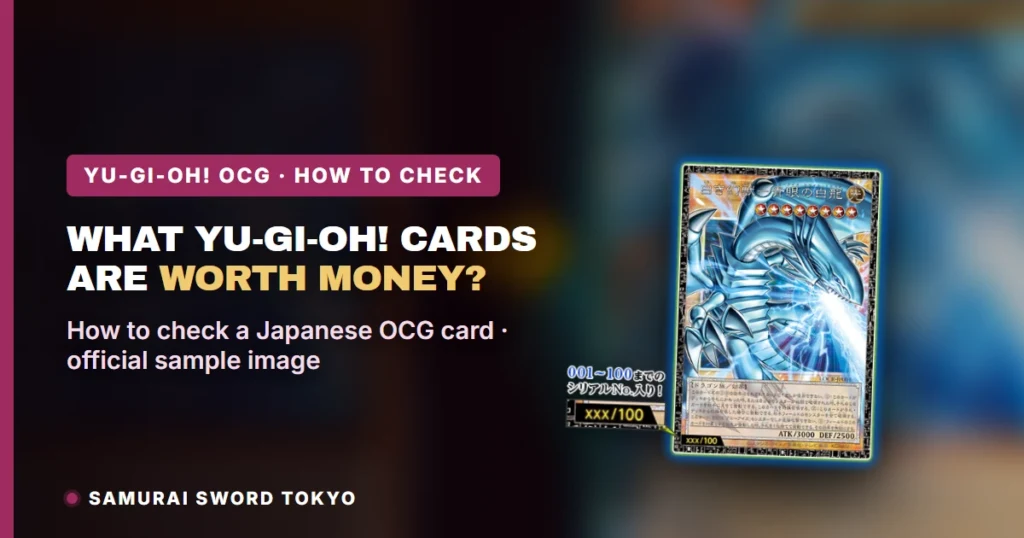
Start with the exact print. We counted 87 Japanese print entries under Blue-Eyes White Dragon in Konami’s database. Match the card number, rarity and artwork before comparing asking prices.
This guide is a step-by-step check for Japanese OCG cards (the Official Card Game sold in Japan). It shows where the card number is printed, how to tell a Japanese card from an English TCG card, how to name the rarity in Konami’s own Japanese terms, how to find out which print you hold, and how to check condition. The facts come from Konami’s Japanese site and its official card database, read on November 18, 2026. The price examples are list prices in our online store on the same date.
This is not a ranking of expensive cards. If you want that, our guide to expensive Yu-Gi-Oh! cards covers it. Here the question is simpler: is the card in your hand worth checking, and how do you check it?
- Official: on Konami’s sample monster card, the card number ROTD-JP014 is on the right below the artwork and above the text box. JP, AE and EN identify the language in the examples shown in this guide.
- Official: Konami’s card database lists 87 print entries for Blue-Eyes White Dragon in Japanese, from 1999 to 2026. One card name is not one price.
- Among the eight Blue-Eyes White Dragon PSA 10 back-order listings compared below, our asking prices range from ¥35,446 to ¥499,999.
Prices are our shop’s asking prices on November 18, 2026, not completed sales. Most of the graded examples are PSA 10 back-order listings (sourced to order); the product page shows the current terms.
The Short Answer: Identify the Print First
Three checks come before any price:
- Identify the print. Record the card number, language, product, rarity and illustration.
- Check condition. Inspect the corners, edges, surface and centring.
- Compare like with like. Compare asking prices for the same print and condition.
The six steps below turn this into checks you can do with the card in your hand.
Step 1: Find the Card Number
Everything starts with the card number. Konami’s own card-anatomy diagram shows where it sits: on its sample monster card, ROTD-JP014 is on the right below the artwork and above the text box.
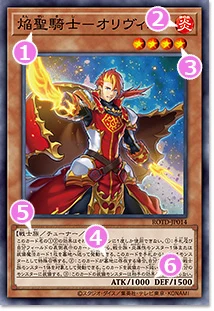
The diagram labels six parts of a monster card: card name, attribute, level, card text, type, and ATK/DEF. It does not label the number, but you can see it printed under the art: ROTD-JP014. Read it in three pieces:
| Part | Example | What it tells you |
|---|---|---|
| 세트 코드 | ROTD | The product the card came from: ライズ・オブ・ザ・デュエリスト (RISE OF THE DUELIST) |
| Language code | JP | A Japanese OCG print |
| Position | 014 | The card’s number in that set |
Now type that number into Konami’s official card database (遊戯王ニューロン, Yu-Gi-Oh! Neuron) at db.yugioh-card.com. Its search panel has a card-number search next to the card-name search. For this card, the database lists one print: ROTD-JP014, released April 18, 2020, in Normal rarity. That one entry tells you the set, the date and the rarity at once.
Some numbers look different. Some promotional and special cards use a letter in the position, as in 2018-JPP01, and early Japanese cards have no language code: LB-01 (May 18, 2000) is the earliest Blue-Eyes White Dragon entry in the database that carries a card number. The four entries dated before it (March 6 to December 16, 1999, starting with the STARTER BOX prints) show no card number at all. The database handles all of these.
Step 2: Japanese OCG or English TCG?
The official database groups its languages into two blocks: the OCG (Japanese, Korean, English (Asia) and Simplified Chinese) and the TCG (English, German, French, Italian, Spanish and Portuguese). Our guide to OCG vs TCG differences explains how the two games differ for players. JP, AE and EN identify the language in the examples shown below. For older numbers such as SDK-001, check the database language, product and date together.
| Code in the number | Example (official database) | What it is |
|---|---|---|
| JP | QCCP-JP001, LOCR-JP001 | Japanese OCG print |
| AE | SDRB-AE001 (November 11, 2023) | Asian English print, part of the OCG |
| EN | LC01-EN004 (entries dated October 5, 2010 and April 21, 2023) | English TCG print |
| No language code | LB-01 (Japanese, May 18, 2000) | An early print; the database entry tells you which product and game it belongs to |
Two practical points follow.
- English words do not make a card English TCG. Konami’s rules for non-Japanese cards at events held in Japan list Japanese OCG prints that carry English or other non-Japanese text. Read the number, not the name.
- Japanese-version cards are the official cards at events in Japan. Konami’s September 26, 2026 rule names Japanese-version OCG cards as the official cards for events in Japan. It permits the listed cards with non-Japanese text to be played as their corresponding existing cards, including KA-05 and YAS3-JP005 as Blue-Eyes White Dragon.
When you search for a price later, always include the language. A Japanese QCCP-JP001 and an English print of the same monster are different prints.
Step 3: Name the Rarity in Konami’s Terms
Konami’s Japanese product pages print the rarity names in katakana. Here they are once in Japanese, with the English reading used in this guide:
| Japanese name | English reading used here | Database code | Where Konami lists it |
|---|---|---|---|
| ノーマル | Normal | N | Core boosters, decks |
| レア | Rare | R | Core boosters (18 of 80 in IMMORTAL PHOENIX) |
| スーパーレア | Super Rare | SR | Boosters and special packs |
| ウルトラレア | Ultra Rare | UR | Boosters and special packs |
| アルティメットレア | Ultimate Rare | UL | IMMORTAL PHOENIX (4 cards); LOCR and YAC1 versions |
| シークレットレア | Secret Rare | SE | IMMORTAL PHOENIX, LOCR, QCAC, YAC1 |
| プリズマティックシークレットレア | Prismatic Secret Rare | PSE | IMMORTAL PHOENIX (24 cards); every LOCR card |
| クォーターセンチュリーシークレットレア | Quarter Century Secret Rare | QCSE | 25th-anniversary products such as QCAC |
| コレクターズレア | Collector’s Rare | CR | LOCR (21 cards), YAC1 (14 cards) |
| グランドマスターレア | Grandmaster Rare | GMR | LOCR (18 cards), YAC1 (10 cards); serial-numbered |
The database also lists other rarity names on some prints, such as ホログラフィックレア (Holographic Rare, HR), 20thシークレットレア (20th Secret Rare), パラレル (Parallel) and ミレニアム (Millennium). Our Japanese OCG rarity guide shows how each one looks on the card.
A core booster shows how the tiers stack. Konami’s page for IMMORTAL PHOENIX (October 31, 2026, ¥198 per pack including tax, 30 packs per box) lists 80 cards: 4 Ultimate Rare, 8 Ultra Rare, 10 Super Rare, 18 Rare and 40 Normal (4 + 8 + 10 + 18 + 40 = 80). On top of that, 24 cards also exist as Prismatic Secret Rare and 30 as Secret Rare. Half of the 80 card types are Normal.
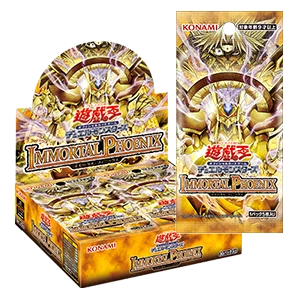
Overframe is a design, not a rarity
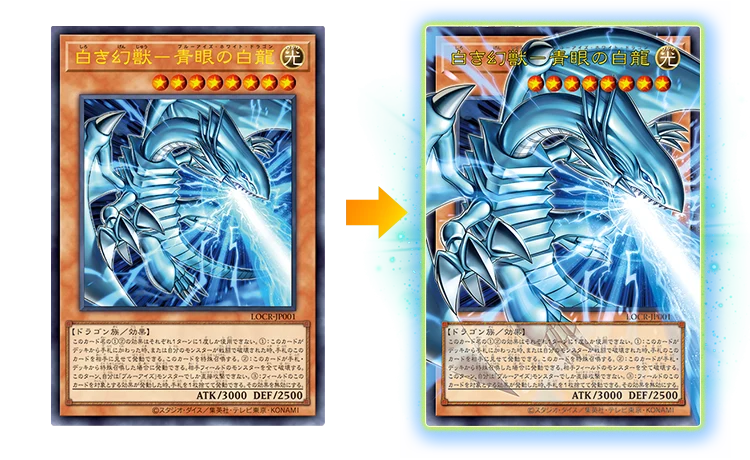
Recent Japanese products add an Overframe (オーバーフレーム) design, in which the illustration breaks out of the art frame. Konami lists it as a version of a rarity: in LOCR, 18 of the Prismatic Secret Rares and 18 of the Ultra Rares are Overframe cards. Record both the rarity and the design when you describe the card.
Grandmaster Rare carries a serial number
Konami’s LOCR page calls Grandmaster Rare a new rarity with a serial number, and the YAC1 page says each Grandmaster Rare carries its own serial number and no two cards share one. The LOCR graphic gives the serial range as 001–100. The sample card shows “xxx/100” at bottom left.
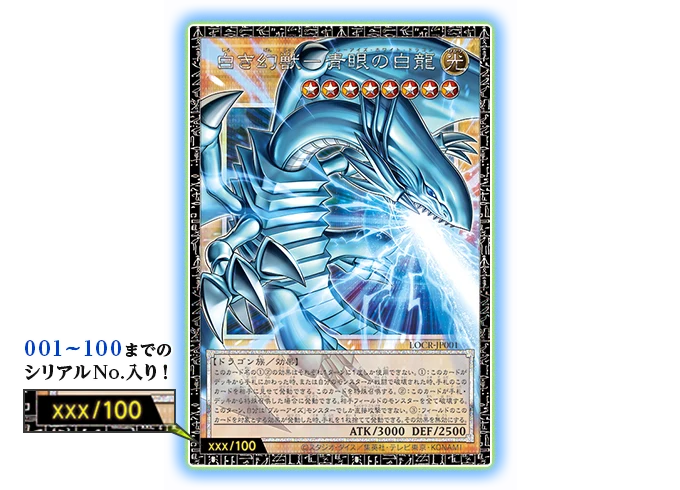
If your card has a serial in that corner, write the serial down with the card number. The LOCR card list shows the set.
Step 4: Work Out Which Print You Hold
Blue-Eyes White Dragon (青眼の白龍) has 87 Japanese print entries in the database, from a STARTER BOX print dated March 6, 1999 to the YAS3 prints of October 31, 2026. By rarity code, those entries break down as 27 Ultra Rare, 13 Secret Rare, 11 Normal, 10 Quarter Century Secret Rare, 5 Ultimate Rare and 21 spread across other codes (27 + 13 + 11 + 10 + 5 + 21 = 87).
Three things in the database entry help you place your card:
- One number can carry several rarities. QCCP-JP001 (QUARTER CENTURY CHRONICLE side:PRIDE, March 23, 2024) appears four times: Ultra Rare, Secret Rare, Ultimate Rare and Quarter Century Secret Rare. The number alone does not finish the job; check the foil.
- One number can carry several illustrations. The database groups prints by illustration. QCAC-JP021 (QUARTER CENTURY ART COLLECTION, February 22, 2025) appears under five different illustrations. Konami’s QCAC page says some cards have alternate illustrations, and each card has Secret Rare, Quarter Century Secret Rare or both set individually.
- The dates show first print and reprints. Each entry carries its release date, so the earliest date listed is the first Japanese printing in the database. Konami’s product pages also flag reprints in the text as 再収録カード (re-included cards).
Event and campaign cards need extra care. Blue-Eyes White Dragon prints in the database include a World Championship 2018 visitor card (2018-JPP01), a Prismatic Secret Rare campaign card (PSEC-JP001) and a Japan Post collaboration card (NYC1-JP001). These were distributed differently from booster cards. Copy the entire number, including any letters after JP. The QCAC card list and our hub of card lists help with set prints.
What Our Shop’s Listings Show
Our catalogue has PSA 10 listings for several Blue-Eyes White Dragon prints. The eight below are as listed on November 18, 2026; listings and prices change daily. Same card name and PSA 10 grade, different prints:
| Print (card number) | Rarity | Distribution | PSA 10 list price |
|---|---|---|---|
| NYC1-JP001 | Quarter Century Secret Rare | Japan Post collaboration card | Listed at ¥35,446 as a back order |
| AC02-JP000 | Prismatic Secret Rare | ANIMATION CHRONICLE 2022 | Listed at ¥40,500 as a back order |
| TD02-JP001 | Quarter Century Secret Rare | Tokyo Dome event visitor card | Listed at ¥49,554 as a back order |
| LPST-JP003 | Prismatic Secret Rare | LIMITED PACK -STAMP EDITION- | Listed at ¥54,000 as a back order |
| QCCP-JP001 | Quarter Century Secret Rare | QUARTER CENTURY CHRONICLE side:PRIDE | Listed at ¥78,000 as a back order |
| TRC1-JP000 | Holographic Rare | THE RARITY COLLECTION | Listed at ¥210,000 as a back order |
| 2018-JPP01 | 20th Secret Rare | World Championship 2018 visitor card | Listed at ¥234,000 as a back order |
| PSEC-JP001 | Prismatic Secret Rare | Campaign card | Listed at ¥499,999 as a back order |
The highest listing in this table is more than fourteen times the lowest. All eight are Blue-Eyes White Dragon, and all eight are PSA 10. They differ in print: rarity, distribution and date. That is why Step 4 matters more than the card name.
The same pattern shows up on a single card number. Dragon Master Knight GB7-003, which our listings name as a Yu-Gi-Oh! Duel Monsters 7 card, is listed in PSA 10 at ¥58,850 as a Secret Rare and at ¥998,000 as an Ultra Rare, both as back orders. Same number, different rarity, very different asking price. Check the foil before you read a price.
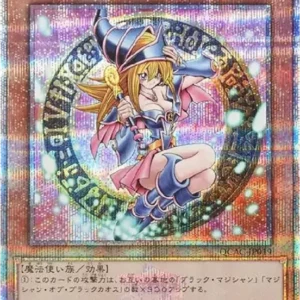
A PSA 10 grade does not make every card expensive either. Favorite HERO Flame Wingman, an Ultra Rare from LIMIT OVER COLLECTION -THE HEROES- (LOCH-JP005), is listed in PSA 10 at ¥10,735 as a back order, and a PSA 10 Ash Blossom & Joyous Spring alternate-illustration Prismatic Secret Rare (PAC1-JP016) is currently listed at ¥23,400. At the other end, a PSA 10 Dark Magician Girl alternate-illustration Quarter Century Secret Rare from QCAC (QCAC-JP019) is currently listed at ¥589,999.
Shop listing names abbreviate Quarter Century Secret Rare as “25th SE”. Konami’s database calls it QCSE.

LOCR is the set behind the Overframe and Grandmaster Rare images above. Konami’s page lists 80 cards (38 Ultra Rare, 42 Super Rare) at ¥385 per pack including tax. At four 팩당 카드 and 15 packs per box, a box contains 60 cards against an 80-card set.
Step 5: 상태 and Grading
Once you know the exact print, check condition under a bright light, tilting the card:
- Corners: sharp, or soft and rounded?
- Edges: any whitening or chipping along the border, front and back?
- Surface: scratches, dents, print lines, or clouding on the foil?
- Centring: are the borders even left to right and top to bottom?
- Bends and warping: lay the card flat and look along it.
On foil rarities such as Secret, Prismatic Secret and Quarter Century Secret Rare, look at the surface at several angles; marks on the foil are part of the condition.
A grade is a third-party assessment of condition. Compare a graded copy with the same print and grade.
A price only matters if the card is real. Our guide on how to spot fake Yu-Gi-Oh! cards covers what to look at before you compare prices.
Step 6: Look Up a Market Price
With the number, language, rarity, print and condition written down, you can search for prices. A few rules keep the comparison honest:
- Search the full description. Card number, rarity, language, and grade or condition together. “QCCP-JP001 Quarter Century Secret Rare Japanese PSA 10” finds a different set of results from “Blue-Eyes White Dragon”.
- Prefer completed sales to asking prices. An asking price is what a seller hopes to get. Where a site shows completed sales, use them, and look at several.
- Compare like with like. Raw with raw, graded with the same grade, Japanese with Japanese, the same illustration with the same illustration.
The Full Checklist
Run through this with the card in front of you:
| Check | Where to look | What to note |
|---|---|---|
| Card number | On the illustrated ROTD card, right below the artwork | A promo-style number (JPP, JPS, a year such as 2018-) or an early number without JP |
| 언어 | JP / AE / EN in the number | Match the market you plan to compare against |
| Rarity | Foil on the name, art and frame; the database entry | The rarity shown for this print in the database |
| Design | Art breaking the frame; alternate illustration | Overframe; an illustration listed separately in the database |
| Serial | Bottom-left corner | A Grandmaster Rare serial such as xxx/100 |
| Print date | Official database entry | Early prints, event or campaign prints |
| 상태 | Corners, edges, surface, centring under light | Clean on all four |
| Authenticity | Print quality, foil, card stock | Anything off: stop and check before pricing |
Use the completed checklist to find comparable cards.
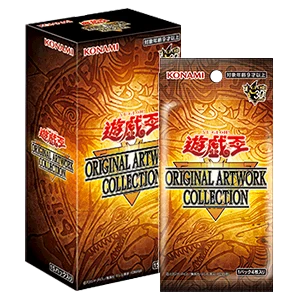
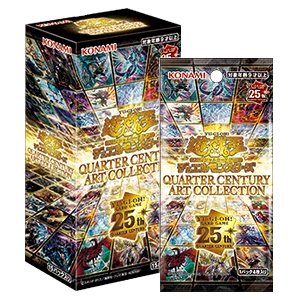
YAC1 (September 26, 2026, ¥396 per pack including tax) shows how many versions one set can hold. Konami’s page lists 100 cards (25 Ultra Rare, 45 Super Rare and 30 Ultra Rare MANGA-STYLE; 25 + 45 + 30 = 100), plus Prismatic Secret Rare, Overframe, Grandmaster Rare, Secret Rare, Ultimate Rare and Collector’s Rare versions of some cards, and monochrome and colour Secret Rare versions of the MANGA-STYLE cards.
Where to Buy Japanese Yu-Gi-Oh! Cards
We sell Japanese Yu-Gi-Oh! sealed product and PSA 10 graded singles from Tokyo. Starting points from this guide:
- All Japanese Yu-Gi-Oh! card boxes
- QCAC-Quarter Century Art Collection Japanese Yu-Gi-Oh Booster Box — currently listed at ¥5,863
- LOCR-Limit Over Collection The Rivals Japanese Yu-Gi-Oh Booster Box — currently listed at ¥6,937
- YAC1-Original Artwork Collection Japanese Yu-Gi-Oh Booster Box — currently listed at ¥8,500
- QCCP-Quarter Century Chronicle side:PRIDE Japanese Yu-Gi-Oh Booster Box — currently listed at ¥7,994
- QCDB-Quarter Century Duelist Box Japanese Yu-Gi-Oh Special Set — currently listed at ¥6,076
- Yu-Gi-Oh! 25th Anniversary Blue-Eyes White Dragon Ukiyo-e Frame Stamp Set with Limited OCG Card (Japan Post) — currently listed at ¥36,419. Our PSA 10 listing for NYC1-JP001 names this stamp set as the card’s source.
Sourcing requests for a specific Japanese card or print go through our Quick Order page; include the card number and rarity. The product page shows the current terms. Our Japanese Yu-Gi-Oh! buying guide covers what to check before you pay.
자주 묻는 질문
What Yu-Gi-Oh! cards are worth money?
Identify the print by its number, rarity and artwork, then check condition. We counted 87 Japanese entries for Blue-Eyes White Dragon in Konami’s database. The eight PSA 10 back-order examples above show how our asking prices differ between prints.
Where is the set number on a Japanese Yu-Gi-Oh! card?
On Konami’s sample monster card, ROTD-JP014 is on the right below the artwork and above the text box. The letters before the dash are the set code, JP marks a Japanese print, and the digits are the card’s position in the set.
How can I tell if my Yu-Gi-Oh! card is Japanese or English?
Read the card number. JP, AE and EN identify the language in the examples shown. For older numbers such as SDK-001, check the database language, product and date together. Some Japanese OCG prints carry English card names, so check the number as well as the text.
What are the special rarities on Japanese Yu-Gi-Oh! cards called?
Konami’s Japanese pages print the names in katakana. This guide renders them as Ultimate Rare, Collector’s Rare and Grandmaster Rare. The English database also uses Quarter Century Secret Rare. Each product page lists which rarities the set contains. Grandmaster Rare cards carry an individual serial number.
How do I tell a first print from a reprint on a Japanese Yu-Gi-Oh! card?
To date a Japanese card, use the official card database: it lists the printings of a card with their release dates, so the earliest date listed is the first Japanese printing in the database. Konami’s product pages flag reprints in the text as re-included cards.
Should I get my Yu-Gi-Oh! card graded?
Check the corners, edges, surface and centring first. A grade is a third-party assessment of condition. Compare a graded copy with the same print and grade.
이 글에 맞춰 고른 상품
📩 Get member-only sale alerts & coupons
Sale alerts, coupons and restock notices by email — straight from Tokyo.