Japanese TCG Store Samurai Sword

One Piece OP-16 The Time of Battle Pull Rates, Best Cards & Pre-Order Guide [2026]
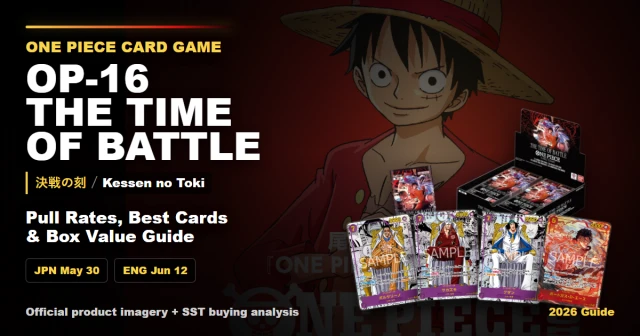
OP-16 The Time of Battle is the next major One Piece Card Game release after OP-15, and it has the exact ingredients collectors usually chase: a Marineford / Summit War theme, six new Leaders, Secret Rares for Ace and Blackbeard, and a Super Parallel lineup centered on the three Admirals.

The Japanese set, 決戦の刻 / Kessen no Toki, releases in Japan on May 30, 2026. The English version follows on June 12, 2026 under the name The Time of Battle. This guide tracks what is confirmed, what is still estimated, and how to think about sealed boxes before release.

Official OP-16 release event visual from ONE PIECE.com
Official release-event visual for OP-16 / Kessen no Toki.
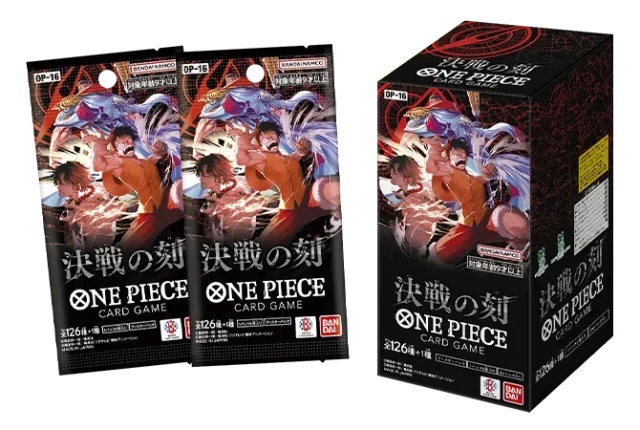
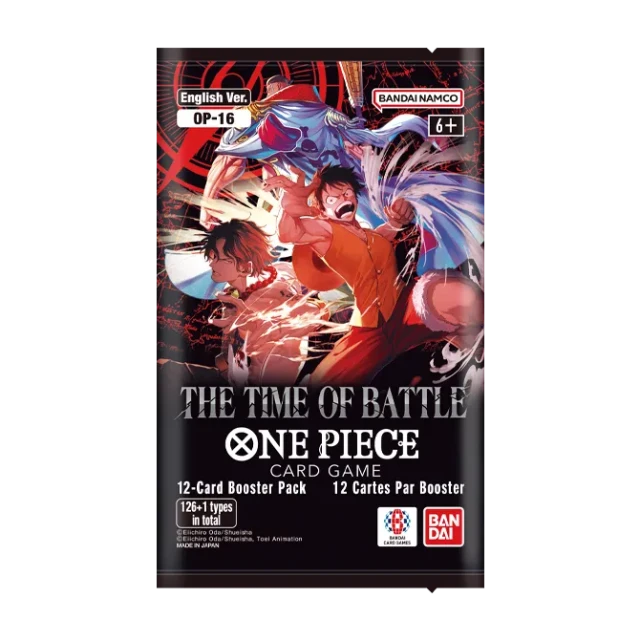
Official English OP-16 The Time of Battle booster pack image
Official English OP-16 booster pack image.
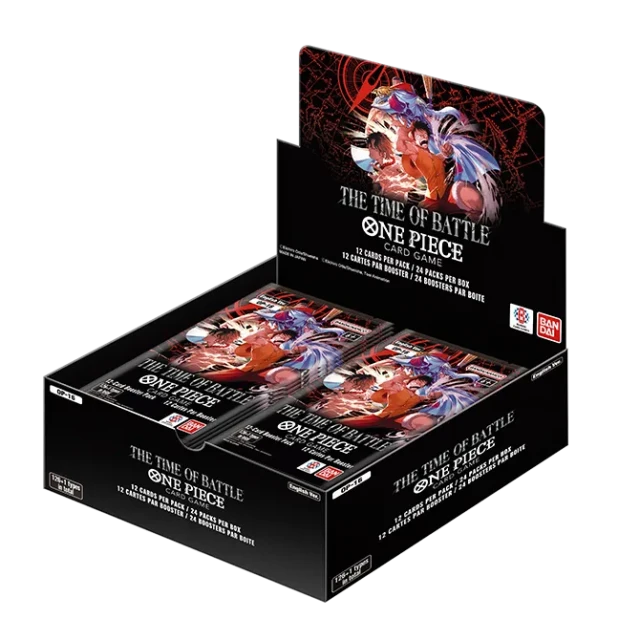
Official English OP-16 The Time of Battle booster box image
Official English OP-16 booster box image.

Shopping note

SST does not have an OP-16 product page live at the time of writing. Browse current Japanese One Piece sealed boxes here: One Piece Booster Box JP.

Key Takeaway

OP-16 is a collector-first set because the theme is Marineford, the Leader lineup includes Ace, Luffy, Buggy, Sengoku, Yamato, and Blackbeard, and the top chase attention is already centered on the Admiral Super Parallels. For sealed buyers, buy Japanese early if you care about first access and Japanese print quality; wait for English if you play locally or want English text. Pull rates below are estimates based on current One Piece Card Game box/case patterns, not official odds.

May 30
JPN Release
June 12
EN Release
126+1
Kaarttypen
24
Packs / Box

Quick Stats

Detail Value
Set code OP-16
Japanese name 決戦の刻 / Kessen no Toki
English name The Time of Battle
Theme Summit War / Marineford / Impel Down
Japanese release May 30, 2026
English release June 12, 2026
Japanese pack MSRP ¥220 tax included
Japanese pack contents 6 cards
Box contents 24 packs
Total card types 126 + 1 DON!! card
Leaders Ace, Luffy, Buggy, Sengoku, Yamato, Blackbeard
Secret Rares 2 types
Super Rares 10 types
Special Cards 6 types
Treasure Rare 1 type

OP-16 Set Overview

Official Japanese OP-16 product feature image showing the Kessen no Toki booster
Official Japanese product feature image for OP-16 Kessen no Toki.

OP-16 returns to the war that defined One Piece for a generation of fans: Impel Down into Marineford. The official Japanese product page frames it as the return of a world-shaking decisive battle, with many characters from that war appearing across the set.

That matters commercially. Marineford is not a small side arc. It includes Luffy trying to save Ace, Whitebeard’s final stand, the Navy’s full force, the Warlords, Blackbeard’s arrival, and the emotional pivot that shaped the post-timeskip story. For a trading card set, that gives OP-16 a broader collector audience than a normal mechanical release.

Rarity Count
Leader 6
Secret Rare 2
Super Rare 10
Rare 26
Uncommon 30
Common 45
Special Card 6
Treasure Rare 1
DON!! Card 1

This is the part to watch: OP-16 has both collector demand and player relevance. Sets with only one of those can fade after launch. Sets with both tend to hold attention longer.

New Leaders in OP-16

The official page highlights six new Leaders. Each one maps to a faction or storyline from the Summit War period.
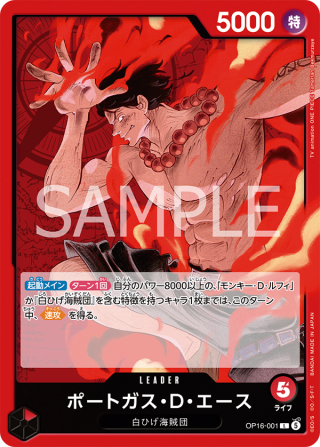
Official OP16-001 Portgas.D.Ace leader card image
OP16-001 Portgas.D.Ace
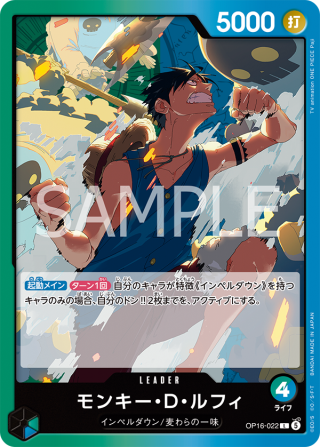
Official OP16-022 Monkey.D.Luffy leader card image
OP16-022 Monkey.D.Luffy
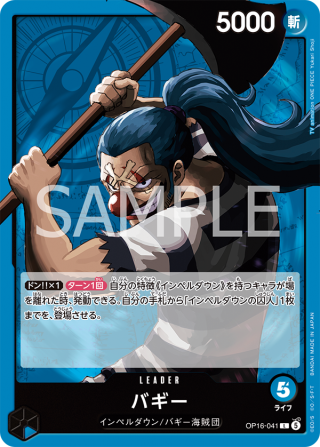
Official OP16-041 Buggy leader card image
OP16-041 Buggy
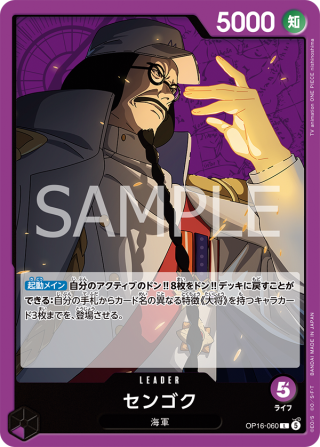
Official OP16-060 Sengoku leader card image
OP16-060 Sengoku
Official OP16-079 Yamato leader card image
OP16-079 Yamato
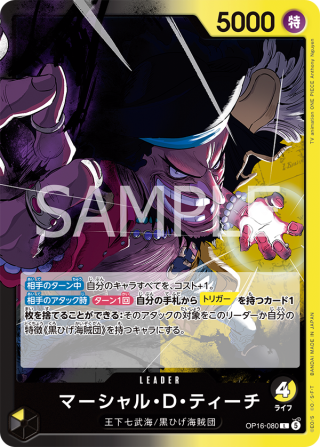
Official OP16-080 Marshall.D.Teach leader card image
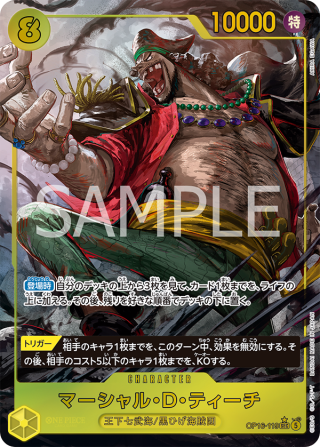
OP16-080 Marshall.D.Teach

Leader Color Theme / Deck Direction
Portgas.D.Ace Red Whitebeard Pirates, aggressive pressure, fast attacks
Monkey.D.Luffy Green / Blue Impel Down, resource acceleration, fast development
Buggy Blue Impel Down / Buggy Pirates, board swarming and tempo
Sengoku Purple Navy / Admirals, high-cost power turns
Yamato Black Wano, trash recursion and rush pressure
Marshall.D.Teach Black / Yellow Blackbeard Pirates, defensive control and attack redirection

Best collector Leaders

Ace and Blackbeard should be the broadest collector targets because they sit at the emotional center of Marineford. Luffy is always liquid, even when the specific card is not the most competitive. Yamato has a strong standalone collector base, and Sengoku may become more attractive if the Admiral package performs in tournaments.

Best player Leaders to watch

Sengoku is the most interesting if the Admiral engine gets enough consistency. Luffy has the cleanest early appeal because Impel Down resource acceleration is easy to understand. Blackbeard is the wild card: defensive redirection effects can be format-shaping if the support cards line up.

Best OP-16 Chase Cards to Watch

Because OP-16 is not fully launched yet, this section focuses on confirmed high-attention slots rather than pretending day-one prices are settled.

Official Super Parallel Preview
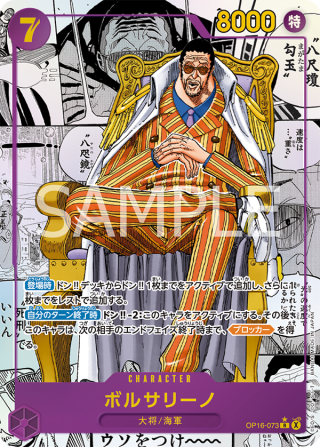
Official OP16-073 Borsalino Super Parallel preview image
OP16-073 Borsalino
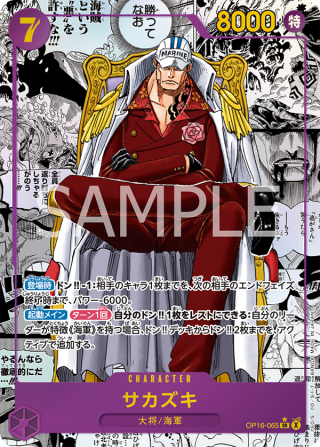
Official OP16-065 Sakazuki Super Parallel preview image
OP16-065 Sakazuki
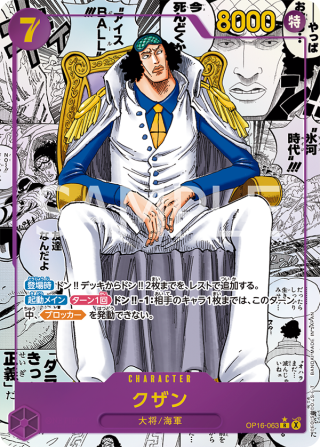
Official OP16-063 Kuzan Super Parallel preview image
OP16-063 Kuzan

Official SEC Preview

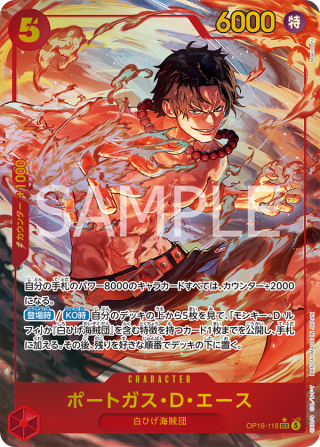
Official OP16-118 Portgas.D.Ace Secret Rare preview image
OP16-118 Portgas.D.Ace SEC
Official OP16-119 Marshall.D.Teach Secret Rare preview image
OP16-119 Marshall.D.Teach SEC

1. Kuzan Super Parallel

Kuzan is one of the three Admiral Super Parallels currently drawing the most attention. The Marineford theme gives him stronger narrative value than a random Navy support card, and purple Navy support could keep the card relevant beyond pure collecting.

2. Sakazuki Super Parallel

Sakazuki is likely to be the most emotionally charged Admiral chase because of his Marineford role. That can cut both ways: some collectors love the villain profile; others prefer Ace, Whitebeard, or Luffy. Either way, Sakazuki should be one of the most watched cards in the set.

3. Borsalino Super Parallel

Borsalino completes the three-Admiral chase group. If OP-16 box openings show the Admiral Super Parallel slot is genuinely hard to hit, collectors may try to complete all three rather than buying just one.

4. Portgas.D.Ace Secret Rare

Ace has the cleanest collector demand in the set. If the Secret Rare or parallel treatment looks strong, Ace can be one of the safest long-term singles because his value does not depend entirely on the meta.

5. Marshall.D.Teach Secret Rare

Blackbeard is a long-term franchise villain. If his OP-16 card is playable, the Secret Rare can carry both player and collector demand. That combination usually creates better liquidity than art-only chase cards.

6. Treasure Rare

The official Japanese product page lists one Treasure Rare. Treat this as a high-variance collector slot until enough openings confirm exact availability and market pricing.

7. Leader Parallels

Leader parallels are usually liquid because they appeal to players and collectors. Ace, Luffy, Blackbeard, and Yamato should be the first four to monitor.

OP-16 Pull Rates and Box Hit Rates

Important disclaimer: Bandai does not publish official pull rates. The rates below are estimates based on recent Japanese One Piece Card Game booster box and case behavior. Use them for planning, not as a guarantee.

Pull / Slot Estimated Rate Plain-English Meaning
SR Usually multiple per box Baseline hit floor
SEC Around 1 in 4-6 boxes Not guaranteed in one box
Leader Parallel Around 1-2 per case Strong chase for players
Special Card Around 1 per case range Character choice matters heavily
Treasure Rare Very scarce Confirm exact market data after launch
Super Parallel / Manga-style chase Case-level to multi-case-level Do not open boxes expecting this

The right way to think about OP-16 is not “how many boxes until I hit the top card?” It is:

  • One box gives you the opening experience and a chance at upside.
  • A sealed case gives you better distribution across high-rarity slots.
  • A single chase card is usually cheaper to buy directly than to chase through random boxes.

For comparison, see our OP-15 breakdown: One Piece OP-15 Booster Box Pull Rates & Hit Rates.

Should You Buy Japanese OP-16 or Wait for English?

This is the cleanest split.

Buyer Type Better Choice Why
Japanese card collectors Japanese OP-16 First release, original language, Japanese print quality
English-language players English OP-16 Tournament readability and local demand
Sealed investors Depends on allocation English can spike if allocation is tight; Japanese has earlier market discovery
Singles buyers Wait 2-4 weeks after launch Early prices are usually unstable
Marineford collectors Japanese early + singles later One box for experience, then target the exact Ace/Admiral cards

Japanese boxes arrive first. That means Japan will set the early market narrative: which cards are actually hard to pull, which Leaders are playable, and which chase singles hold after the first wave of openings.

English boxes matter for a different reason. English demand is driven by local play, sealed allocation, and restock visibility. OP-09 and OP-13 showed that English One Piece sealed product can move very differently from Japanese sealed product when supply tightens.

For the deeper version of this buying decision, use the OP-15 version as a framework: OP-15 Japanese vs English: Which Version Should You Buy?.

Box vs Singles: The Smart Buying Plan

If you want the top chase card, do not pretend sealed boxes are the cheapest path. They usually are not.

Buy a box if:

  • You want the opening experience.
  • You collect sealed Japanese One Piece boxes.
  • You are comfortable with variance.
  • You want first access before English release.

Buy singles if:

  • You only want Ace, Blackbeard, or one specific Admiral.
  • You care about grading candidates.
  • You do not want duplicate bulk.
  • You can wait for the first price correction.

Best practical plan

  1. Buy one Japanese box or a small sealed quantity for the experience.
  2. Watch the first two weeks of Japanese openings.
  3. Buy specific singles after supply appears.
  4. Re-check English sealed allocation before June 12.

That gives you exposure without turning the whole purchase into a lottery ticket.

Price Outlook Before Release

OP-16 should launch with strong attention because Marineford is a major arc and the card pool has several obvious collector anchors. The risk is that early prices can be emotionally inflated before enough supply reaches the market.

Cards most likely to hold better:

  • Ace high-rarity cards
  • Blackbeard high-rarity cards
  • Admiral Super Parallels, especially if the full trio becomes a display target
  • Strong Leader Parallels with both player and collector demand

Cards most likely to correct:

  • Mid-tier parallels with no meta role
  • Non-iconic characters that spike only because they are new
  • Cards with wide day-one pricing and low buylist support

For sealed Japanese boxes, watch the restock pattern. If boxes soften toward MSRP after launch, singles may become the better value. If OP-16 allocation is tight and the Admiral chases prove extremely scarce, sealed boxes can hold a stronger premium.

Where to Buy OP-16 Japanese Boxes

SST does not have a public OP-16 product page live at the time this article was published. When OP-16 stock is listed, we will update this article with the direct product link.

Until then, you can browse available Japanese One Piece sealed booster boxes here:

Browse One Piece Booster Box JP

Every sealed box listed by SST is shipped from Tokyo with tracked international shipping. If you are comparing OP-16 against current inventory, OP-15 is the closest reference point because it is the most recent mainline One Piece booster article with live search performance.

Frequently Asked Questions

When does OP-16 release in Japan?

OP-16 releases in Japan on May 30, 2026.

When does OP-16 release in English?

The English version, The Time of Battle, releases on June 12, 2026.

What is OP-16 about?

OP-16 is themed around the Summit War / Marineford era, including Impel Down, the Navy, Whitebeard Pirates, Blackbeard Pirates, and the major characters tied to that conflict.

How many cards are in OP-16?

The official Japanese product page lists 126 card types plus 1 DON!! card.

Are OP-16 pull rates official?

No. Bandai does not publish official pull rates. Any pull-rate table should be treated as an estimate until large opening samples are available.

Should I buy Japanese or English OP-16?

Buy Japanese if you want first access, original language, and Japanese print quality. Wait for English if you play locally or want English text for deck building.

What are the best OP-16 cards?

Before full launch data, the strongest cards to watch are the Admiral Super Parallels, Ace Secret Rare, Blackbeard Secret Rare, Treasure Rare, and Leader Parallels for Ace, Luffy, Blackbeard, and Yamato.
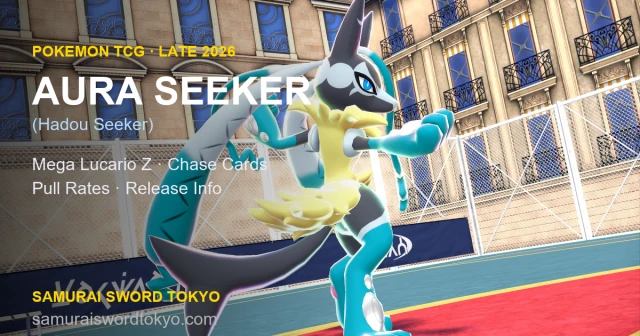

Aura Seeker (Hadou Seeker) Volledige gids: Mega Lucario Z, meest gewilde kaarten en release-informatie [2026]

Aura Seeker (Japanese: ハドウシーカー / Hadou Seeker) is the next MEGA Expansion Pack trademarked by The Pokemon Company on March 10, 2026, and it is expected to headline Mega Lucario Z — the very first “Z” Mega Evolution ever revealed, straight out of the Pokemon Legends: Z-A – Mega Dimension DLC. For international collectors who have been chasing every MEGA era release, this is one of the most anticipated sets of late 2026.

Here is why Aura Seeker matters: Lucario is one of the most iconic Pokemon in franchise history, and its Mega form has always been a top-tier collectible. With the addition of the brand-new Z Mega Evolution mechanic, Aura Seeker is positioned to introduce one of the most visually striking and lore-heavy chase cards of the entire Scarlet & Violet era. Japanese market trackers are already predicting MUR values above ¥70,000 before a single card has been officially revealed.

This guide compiles everything currently known about Aura Seeker as of April 2026 — trademark details, predicted chase cards, expected pull rates based on the MEGA series pattern, release window estimates, and what this set could mean for the Japanese Pokemon card market. Our team at Samurai Sword INC tracks Japanese set information daily from Tokyo, and we will update this guide as new cards are officially revealed.

Key Takeaway

Aura Seeker (Hadou Seeker) is the next MEGA Expansion Pack expected in late 2026 in Japan. The trademark was filed on March 10, 2026, and the set is projected to headline Mega Lucario Z — the first Z Mega Evolution revealed from the Pokemon Legends: Z-A Mega Dimension DLC. Predicted MUR values start at ¥70,000+. Full card reveals and the official release date are still to come — this guide covers everything known so far.

Why “Hadou Seeker” = “Aura Seeker”

The Japanese word “hadou” (波導) literally means “wave guide” and is the same term used in Lucario and the Mystery of Mew and the Pokemon anime for Lucario’s signature aura ability. That direct Lucario connection is why every major Japanese and English source is treating Mega Lucario Z as the confirmed headliner, even before any cards are shown.

Latest Update — Trademark & Leak Status (May 7, 2026)

Aura Seeker remains in the trademark + early-leak phase. No official card list, key visual, or release date has been announced yet. Here is everything credible as of today:

  • Trademark filing: “Hadou Seeker” (波導シーカー) was officially filed by Nintendo, Creatures, and Game Freak on March 10, 2026. Trademark-to-launch windows for prior MEGA Expansion Packs have averaged 6–9 months, pointing to a likely Q4 2026 (October–December) Japanese release.
  • Mega Lucario Z headliner — strong signal, not yet confirmed: The word hadou (波導 / “wave guide”) is the same Japanese term used in the Lucario and the Mystery of Mew film and the anime for Lucario’s signature aura ability. Every major leak aggregator (Card Chill, PokéBeach, japan-figure) treats Mega Lucario Z as the de-facto headliner.
  • TCG Pocket cross-reference: Pulsing Aura (B3) — a TCG Pocket expansion launching in 2026 — has already been fully revealed (234 cards) with Mega Lucario as its centerpiece. Pocket sets often share artwork with their physical TCG counterparts, so Pocket B3 is widely treated as a preview of Aura Seeker’s Mega Lucario Z artwork direction.
  • Predicted set size: Following the M5/M6 pattern, expect ~120–180 main cards plus secret rares, with a continued Mega Attack Rare (MA) tier.
  • English equivalent: No trademark filed yet. Expected early 2027.

Sources: J-PlatPat trademark database, PokéBeach (Mar 2026 trademark report), Card Chill leak roundups, japan-figure, premium.gamepedia.jp. Reliability: trademark confirmed, all card details are speculative. We will update this guide when official reveals begin.

¥6,000
Expected JPN BOX

Late 2026
Expected JPN Date

~¥70,000+
Top Card (Predicted)

30
Packs per Box

Set Overview: What Is Aura Seeker?

Aura Seeker (ハドウシーカー / Hadou Seeker) is expected to be the next mainline MEGA Expansion Pack in the Scarlet & Violet series. The name was officially trademarked by Nintendo, Creatures, and Game Freak on March 10, 2026, following the same trademark classification used for every previous Pokemon TCG set name. No official release date has been announced yet, but based on the typical 6–12 month window between trademark filing and launch, current community consensus points to a late 2026 Japanese release.

Spec Aura Seeker (Predicted) Storm Emeralda (M6)
Release Date (JPN) Late 2026 (Nov–Dec est.) July 31, 2026
Featured Card Mega Lucario Z Mega Rayquaza ex
MSRP (Pack) ¥200 (5 cards, est.) ¥200 (5 cards)
MSRP (Box) ¥6,000 (30 packs, est.) ¥6,000 (30 packs)
Theme Aura / Fighting / Steel Dragon / Sky / Storm
Game Tie-in Legends Z-A: Mega Dimension Legends Z-A: M-Dimension Rush
Est. Card Count 120–180 120–180
EN Release Early 2027 (est.) ~September 2026 (ME6)
Mega Lucario Z official artwork from Pokemon Legends Z-A showing aura-cloaked Z Mega Evolution form

Connection to Pokemon Legends: Z-A – Mega Dimension

The set name “Aura Seeker” directly references Lucario’s signature Aura Sphere move and its ability to sense living beings through aura. This is the exact theme driving the Mega Dimension DLC for Pokemon Legends: Z-A, where Mega Lucario Z — officially designated as the first Z Mega Evolution — was revealed as a brand-new discovered form. TCG sets historically sync with the biggest game reveals, and Aura Seeker is positioned to be Lucario’s moment just as Abyss Eye is for Darkrai.

The “Z” Mega Evolution Distinction

Mega Lucario Z is not just another alt-art version of the familiar Mega Lucario. It was classified as a new form of Mega Evolution based on how its form changes through exposure to a Mega Stone. The “Z” designation was created specifically to separate it from the previously known Mega Lucario. For collectors, this means Aura Seeker will contain a genuinely new card — not a reprint — with fresh artwork, mechanics, and lore.
Trademark Timeline

The Aura Seeker trademark was filed on March 10, 2026 by Nintendo, Creatures, and Game Freak — the standard three-company filing pattern for every Pokemon TCG set. For reference, trademarks in the MEGA series have typically preceded launch by 6–12 months:

  • Abyss Eye (M5): Trademark June 27, 2025 → Release May 22, 2026 (~11 months)
  • Storm Emeralda (M6): Trademark late 2025 → Release July 31, 2026 (~8 months)
  • Aura Seeker: Trademark March 10, 2026 → Expected late 2026 (~8–10 months)

Featured Card: Mega Lucario Z

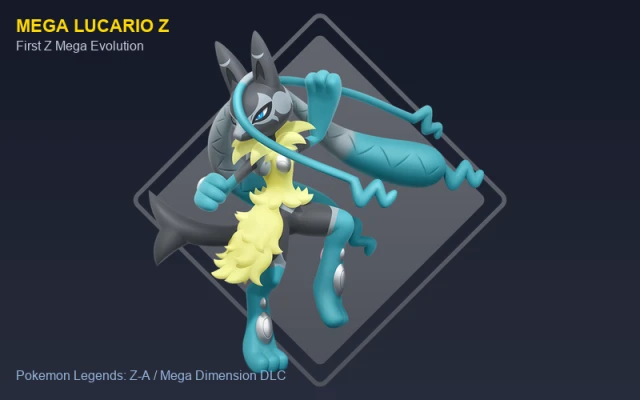
Mega Lucario Z concept artwork, the first Z Mega Evolution and expected headliner of Pokemon TCG Aura Seeker Hadou Seeker set
Mega Lucario Z — The first “Z” Mega Evolution, the projected headliner of Aura Seeker (official artwork pending)

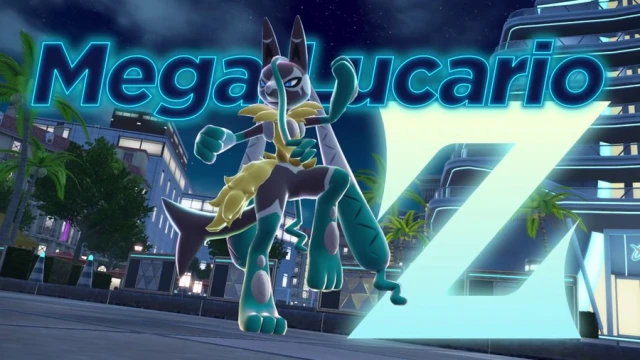
Mega Lucario Z is the expected centerpiece of Aura Seeker, and arguably the most anticipated Fighting-type Mega Evolution in Pokemon TCG history. Revealed in December 2025 as part of the Pokemon Legends: Z-A Mega Dimension DLC, it is the first Pokemon to ever receive a dedicated “Z” Mega Evolution designation — a brand-new classification separate from the existing Mega Lucario.

The Lore: Aura Manipulation & Steel-Energy Strikes

Mega Lucario Z surrounds its entire body with its aura, cloaking itself to increase defense, flexibility, and agility. Its design includes long fur growing around its head and waist, plus a distinctive fan-shaped tail that can visually disorient opponents in close combat. Most importantly, “areas of its body, such as the backs of its hands and its shins, have been hardened with steel energy” — enabling concentrated strikes that could translate into high-damage Fighting/Steel attacks on the TCG.

In the game, Z Mega Evolutions “need less time to fire off moves after receiving an order” but “burn through Mega Power very quickly, making them less suited for long battles.” If that mechanic carries over to the TCG, expect Mega Lucario Z to be a fast-aggro attacker with heavy damage output but a limited window — possibly a KO-two-Pokemon-and-discard mechanic similar to Mega Rayquaza’s hybrid designs.

Why Mega Lucario Z Matters

Lucario has one of the strongest collector pedigrees in the entire Pokemon TCG. Lucario & Melmetal GX from Unbroken Bonds is still a $100+ card in PSA 10. The original Mega Lucario EX from XY: Furious Fists remains a favorite among Fighting-type collectors. The current Mega Lucario ex SAR from MEGA Brave (M1) already commands ¥20,000–30,000 on Japanese secondary markets — and that is the “older” Mega form, not the new Z variant.

Given the rarity pattern of previous MEGA Expansion Packs, expect Mega Lucario Z to appear in multiple rarity tiers:

Rarity Predicted Price (JPN) Pull Rate Estimate
MUR (Mega Ultra Rare) ¥70,000–100,000+ ~1 per 45 boxes
SAR (Special Art Rare) ¥30,000–45,000 ~1 per 6 boxes
RR (Double Rare) ¥800–2,000 ~1 per 3–4 boxes
Mega Lucario Z high resolution artwork showing the first Z Mega Evolution with enhanced aura powers
Lucario’s TCG Track Record

Every major Lucario card release has held strong secondary market value. Lucario & Melmetal GX (2019): $100+ PSA 10. Mega Lucario EX from MEGA Brave (2025): ¥20,000–30,000 SAR. Zeraora-GX tag partners consistently appreciated. The Z Mega Evolution designation positions Mega Lucario Z to be the premium entry in this lineage.

Expected Mechanics (Prediction)

Based on the Mega Dimension DLC gameplay — where Z Mega Lucario fires off moves faster but exhausts Mega Power quickly — expect the TCG version to feature a rush/aggressive attacker design. Previous Lucario cards have emphasized fast setups (Aura Sphere, Power Cyclone), and the Z variant is likely to push this further with increased damage output at a resource cost. Japanese speculation threads suggest a 230–260 HP range with an attack dealing 220+ damage but discarding energy.

Predicted Chase Cards & Prices

Predictions compiled from Japanese market trackers (SNKRDUNK, Toreca Map, Altema, Card Chill speculation threads) and community analysis as of April 2026. Actual cards and values will change when official reveals begin. We will update this section as cards are confirmed.

Rank Predicted Card Rarity Predicted Price (JPN)
1 Mega Lucario Z MUR ¥70,000–100,000+
2 Mega Lucario Z SAR ¥30,000–45,000
3 Korrina (Corni) SAR ~¥18,000–25,000
4 Mega Gardevoir ex SAR ~¥15,000–20,000
5 Mega Garchomp ex SAR ~¥12,000–18,000
6 AZ SAR ~¥10,000–14,000
7 Mega Mawile ex SAR ~¥8,000–12,000
8 Zygarde ex SAR ~¥6,000–10,000

Why Korrina (Corni) Is the Lock Trainer SAR

Korrina (Japanese: コルニ / Corni) is the most obvious trainer SAR pick for Aura Seeker. She is the Shalour City Gym Leader in Pokemon X & Y, known as the “Successor of Mega Evolution,” and her ace Pokemon is Lucario. In the Legends: Z-A – Mega Dimension DLC, Korrina returns as a central character who helps the player discover Z Mega Evolution. A Korrina SAR in Aura Seeker would be one of the most storyline-appropriate trainer SARs in the entire MEGA era.

Other Mega Evolutions to Watch

Based on the Mega Dimension DLC roster and Japanese community speculation, these additional Mega Evolutions are likely candidates for inclusion:

  • Mega Gardevoir ex — Psychic/Fairy, a fan favorite since XY, strong secondary market demand
  • Mega Garchomp ex — Dragon/Ground, one of the most requested Mega returns
  • Mega Mawile ex — Steel/Fairy, tactical chase card with niche collector appeal
  • Mega Audino ex — Normal/Fairy, rumored inclusion from the DLC storyline
Collector Insight

Trainer SARs (full-art supporter cards) have been sleeper hits in previous MEGA sets. In M3 Munikis Zero, Emma SAR appreciated 40% within 3 months. Korrina has not had a full-art trainer SAR since Sword & Shield era, making her return in Aura Seeker a genuine catalyst card to watch.

New Steel-Type Special Energy (Speculation)

Multiple Japanese speculation threads reference a rumored new Steel-type special energy card that could support Mega Lucario Z’s Fighting/Steel dual typing. If confirmed, this would be a significant competitive card that also carries collector value — special energy cards with unique full-art treatments have been surprise hits in recent sets (Lightning Energy SP from S11A is still ¥4,000+).

Expected Pull Rates

Pull rate estimates are based on the MEGA Expansion Pack pattern established by M1–M6. The Pokemon Company does not officially publish pull rates. Actual rates for Aura Seeker may differ.

Per-Box Expected Pulls (30 packs)

Rarity Expected per Box Odds (per pack)
MUR ~0.02 (1 per 45 boxes) ~1 in 1,370
SAR (any) ~0.29 (roughly 1 per 3.4 boxes) ~1 in 103
SR (Pokemon/Supporter) ~0.76
SR (Item/Stadium) ~1.0 (near-guaranteed)
AR ~3 ~1 in 10
RR ~4 ~1 in 7.5

How MEGA Set Pull Rates Compare

The MEGA Expansion Pack structure differs from standard expansions. The key distinction: MUR (Mega Ultra Rare) cards are extraordinarily rare — roughly 1 per 45 boxes, or about 1 per 1,370 packs. This ultra-scarcity is what drives MUR values to ¥70,000+ territory for headliner cards.

SAR pull rates in MEGA sets have been slightly more generous than standard expansions — approximately 1 SAR per 3.4 boxes versus 1 per 5–6 boxes in regular sets. However, with multiple SAR types in the set, the odds of pulling a specific SAR (like Mega Lucario Z) remain low: roughly 1 in 20+ boxes for any individual SAR card.

Important

These pull rates are estimates based on previous MEGA Expansion Packs (M1–M6). Aura Seeker’s actual rates may differ. The Pokemon Company does not officially confirm pull rates for any set.

Should You Buy This Set?

With an expected ¥6,000 MSRP and strong chase card potential, here is how different collector profiles might want to approach Aura Seeker once it becomes available.

For Collectors (Experience-First Buyers)

If you collect Japanese Pokemon cards for the art and the opening experience, Aura Seeker looks like a strong candidate. The Fighting/Steel aesthetic with Mega Lucario Z as the centerpiece promises some of the most dynamic artwork in the MEGA era. Securing boxes at or near MSRP (¥6,000) would be the best price point — secondary market prices for popular Lucario-themed sets typically spike early and stabilize within 2–4 weeks.

Collector verdict: Keep this set on your radar. A Lucario-themed MEGA set with potential Korrina SAR and other returning Mega Evolutions could deliver one of the best opening experiences in the entire era.

For Investors & Resellers

The ¥6,000 MSRP creates a higher floor price, which could support stronger secondary market pricing. Mega Lucario Z’s cross-media appeal (Legends Z-A Mega Dimension DLC tie-in) adds demand beyond the TCG collector base. Key risk: the late-2026 release window overlaps with the 30th Celebration set (September 2026), which could split collector budgets.

Pre-Order Early

  • Secure boxes at or near MSRP before launch markups
  • Day 1 access for resale/grading opportunities
  • Lucario demand is historically strong and consistent
  • Risk: if set underperforms, MSRP is your floor

Wait and See

  • See actual card reveals before committing
  • Post-launch price data available within 1 week
  • Potential for early supply surplus (price dip)
  • Risk: if Mega Lucario Z MUR hits big, boxes sell out fast

JPN vs. English: Which Version?

The English equivalent would arrive approximately 2–4 months later in early 2027. Japanese versions have historically carried a 15–40% premium over English equivalents for SAR and MUR cards. For collectors who specifically want Japanese art quality and first-to-market access, the JPN version is typically the preferred choice. For budget-conscious buyers, the English version tends to offer similar cards at lower prices — though Lucario is a universally popular Pokemon, so expect strong demand on both versions.

Price Predictions & Box EV

All predictions are based on previous MEGA Expansion Pack patterns (M1–M6) and Japanese market tracker estimates (Altema, Toreca Map, SNKRDUNK community). Actual prices will differ. As of April 2026 — pre-release speculation.

Predicted Box EV Breakdown

Slot Expected per Box Predicted Avg Value Expected Value
High-rarity (SAR/MUR/SR) ~1 pull ~¥6,000–9,000 avg ~¥6,000–9,000
AR cards ~3 pulls ~¥800–1,200 avg ~¥2,400–3,600
RR cards ~4 pulls ~¥300–500 avg ~¥1,200–2,000
R / C / U ~22 pulls ~¥50 avg ~¥1,100
Total Expected Value ~¥10,700–15,700
BOX MSRP (Expected) ¥6,000

At the expected MSRP (¥6,000), the predicted box EV is potentially positive in the early weeks — driven by inflated Day 1 prices on chase cards. This is typical for MEGA sets; box EV tends to normalize to slightly negative within 4–6 weeks as supply enters the market. The key variable: how high Mega Lucario Z MUR and SAR prices actually reach at launch.

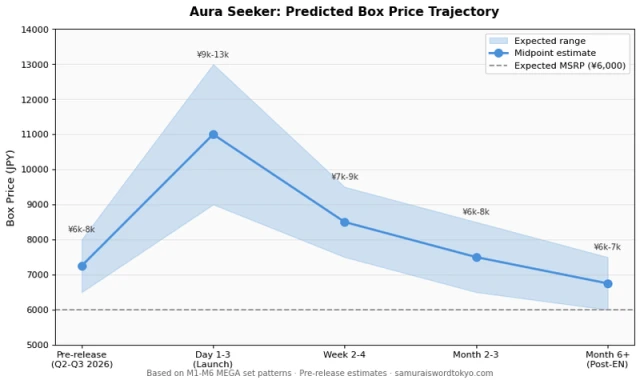
Secondary Market Box Price Trajectory (Predicted)

Aura Seeker predicted box price trajectory chart showing expected MSRP 6000 yen, Day 1 premium, and stabilization timeline through 2027
Predicted Aura Seeker box price trajectory — based on M1–M6 MEGA set patterns
Timeline Predicted Box Price Driver
Pre-release (Q2–Q3 2026) ¥6,500–8,000 Pre-order markups from secondary sellers
Day 1–3 (Launch) ¥9,000–13,000 Initial scarcity + Lucario hype
Week 2–4 ¥7,500–9,500 First restock wave; early opening data
Month 2–3 ¥6,500–8,500 Supply normalization
Month 6+ (Post-EN release) ¥6,000–7,500 Stable collector demand; depends on reprint cycle
MEGA Set Pattern

Previous MEGA Expansion Packs (M1–M6) saw Day 1 box prices 30–100% above MSRP, followed by gradual normalization over 4–8 weeks. Sets with universally popular headliners (like MEGA Brave with Mega Lucario ex) maintained premiums longest. Mega Lucario Z’s first-ever “Z” designation suggests Aura Seeker will follow a similar strong-demand pattern.

How to Buy Japanese Pokemon Cards

Japanese Pokemon booster boxes are region-locked at retail — you cannot simply order from the Pokemon Center Online unless you have a Japanese address. Here is how international collectors typically get access to new Japanese sets.

Japanese Retail (Lottery System)

Major Japanese retailers use a lottery (抽選) system for popular set releases:

  • Pokemon Center Online — Random selection; highest demand, lowest odds
  • Geo / TSUTAYA / Yodobashi — Regional lottery applications
  • Amazon Japan — Availability windows open closer to launch
  • Rakuten — Multiple sellers; prices vary

Winning a retail lottery is typically the only way to secure MSRP pricing. Most international buyers cannot access these lotteries directly.

International Options

Samurai Sword INC ships authentic Japanese Pokemon products directly from Tokyo to the US, UK, Canada, Australia, and beyond. Every box is verified authentic (seal and shrink wrap inspection), shipped with tracked international delivery, and packed to prevent transit damage.

Coming Soon
Aura Seeker Booster Box (JPN)
Expected MSRP ¥6,000 (~$40) + shipping
Ships from Tokyo · Tracked international delivery

Browse Our Collection →

Key Dates to Watch

Date Event
December 2025 Mega Lucario Z revealed in Legends Z-A DLC
March 10, 2026 Aura Seeker trademark filed (Nintendo / Creatures / Game Freak)
Q3 2026 First card reveals expected
Late 2026 (Nov–Dec est.) Expected Japan availability
Early 2027 Expected English availability

Frequently Asked Questions

When is Aura Seeker (Hadou Seeker) expected to release?

Aura Seeker (ハドウシーカー / Hadou Seeker) is expected to release in late 2026 in Japan based on the standard 8–11 month window between trademark filing and launch. The trademark was filed on March 10, 2026 by Nintendo, Creatures, and Game Freak. The English equivalent is anticipated in early 2027. No official release date has been confirmed yet.

What does “Hadou” mean, and why does it point to Lucario?

“Hadou” (波導) is the Japanese word used in Lucario and the Mystery of Mew and the Pokemon anime for Lucario’s signature “aura” ability. It literally translates to “wave guide.” Because this term is so uniquely tied to Lucario, the community consensus is that Aura Seeker will headline Mega Lucario Z — the first Z Mega Evolution revealed in the Pokemon Legends: Z-A Mega Dimension DLC.

What is Mega Lucario Z, and how is it different from regular Mega Lucario?

Mega Lucario Z is the first ever “Z” Mega Evolution, revealed in December 2025 as part of the Pokemon Legends: Z-A Mega Dimension DLC. It was classified as a new form of Mega Evolution based on how its form changes through exposure to a Mega Stone. Compared to regular Mega Lucario, it has long fur around its head and waist, a fan-shaped tail, and areas of its body hardened with steel energy. In-game, Z Mega Evolutions fire moves faster but burn through Mega Power more quickly.

How much will an Aura Seeker booster box cost?

The expected Japanese booster box MSRP is ¥6,000 (approximately $40 at current exchange rates) for 30 packs of 5 cards each. This follows the price increase introduced by Abyss Eye (M5) in May 2026. Secondary market prices tend to be higher than MSRP for popular sets — expect ¥8,000–13,000 per box on Day 1 based on previous MEGA set patterns.

What are the predicted pull rates for Aura Seeker?

Based on the MEGA Expansion Pack pattern (M1–M6): MUR cards appear at roughly 1 per 45 boxes (~1 in 1,370 packs). SAR cards appear at roughly 1 per 3.4 boxes. Each box guarantees approximately 3 AR cards and 4 RR cards. The Pokemon Company does not officially publish pull rates — all figures are community estimates.

What is the most valuable card expected in Aura Seeker?

The predicted most valuable card is the Mega Lucario Z MUR (Mega Ultra Rare), with Japanese market trackers estimating ¥70,000–100,000+ based on patterns from previous MEGA sets and Lucario’s strong collector pedigree. The Mega Lucario Z SAR is predicted at ¥30,000–45,000. Korrina SAR is expected to be a secondary chase card at ¥18,000–25,000. These are pre-release estimates.

How can I buy Aura Seeker from outside Japan?

Japanese booster boxes are region-locked at retail. International buyers typically purchase through Japanese card exporters like Samurai Sword INC, which ships directly from Tokyo with tracked international delivery. Availability for new sets usually opens closer to the launch date. Amazon Japan and Rakuten also ship internationally on some listings, though availability varies significantly.


Storm Emeralda (M6) Complete handleiding: Mega Rayquaza ex, meest gewilde kaarten & pre-orderinformatie

Storm Emeralda is the companion MEGA Expansion Pack to Abyss Eye, currently expected for July 31, 2026 in Japan — headlined by Mega Rayquaza ex, arguably the single most iconic Dragon-type Pokemon in the franchise’s 30-year history. Where Abyss Eye leans into darkness and nightmares, Storm Emeralda goes full sky-dragon spectacle.

Rayquaza has a collector pedigree that few Pokemon can match. The original Rayquaza ex Gold Star from Deoxys (2005) sells for $5,000+ in PSA 10. Rayquaza VMAX Alternate Art from Evolving Skies still commands $300+. Every major Rayquaza card release has generated massive secondary market demand — and the Mega Evolution treatment in the current MEGA series is positioned to continue that trend, with Japanese market trackers predicting SAR values of ¥35,000–50,000.

This guide covers every confirmed detail and credible prediction about Storm Emeralda as of May 21, 2026 — the complete product lineup, predicted chase cards and prices, expected pull rates based on the MEGA series pattern, and how to secure Japanese boxes from outside Japan. Our team at Samurai Sword INC tracks Japanese set releases daily from Tokyo, and we’ll update this guide as official card reveals begin.

Key Takeaway

Storm Emeralda (M6) is expected July 31 in Japan at ¥6,000/box, with Mega Rayquaza ex as the headline demand driver. The full official card list is not public yet, so this guide now separates confirmed product signals, high-confidence Rayquaza information, and community leak watchlist items before making a pre-order recommendation.

Latest Update – Leak & Kaartenlijst Watch (May 21, 2026)

As of May 21, 2026, the important buying answer is unchanged but clearer: Storm Emeralda is still a pre-release set. The July 31, 2026 Japanese release date, 30-pack box format, ¥6,000 box price, Collection File Premium Mega Rayquaza, and three MEGA Starter Sets are supported by trade reporting from PokéBeach and PokeGuardian. A full official card list has not been published yet.

Signal Status on May 21 How to use it
Release / product line Strongest signal: July 31, ¥6,000 box, 30 packs, Rayquaza accessory and starter products reported by major TCG news sources. Treat the launch window as real for planning, but check official product pages before paying a heavy premium.
Card list No public official card list yet. Japanese list pages are mostly placeholders or prediction tables. Searchers looking for “Storm Emeralda card list” should bookmark this page; confirmed cards will be separated from predictions here.
Mega Rayquaza ex Highest-confidence headliner. Current speculation centers on MUR/SAR/RR treatments. Expect the Rayquaza cards to drive preorder demand even before artwork is revealed.
Community leaks X, Reddit, Japanese blogs, and card-market sites are circling Zinnia/Higana, Zygarde, Hoenn dragons, Kyogre/Groudon, and Dragon support. Use these as a watchlist, not confirmed set contents.
Next reveal window Early-to-mid June 2026 is the most likely information window, with PJCS 2026 on June 6-7 as a natural event to monitor. Do not overpay for single-card claims before official images or sell-sheet photos appear.

Reliability note: official Pokémon pages still do not show a public Storm Emeralda card list as of this update. Confirmed-vs-predicted labels below are intentionally conservative.

¥6,000
JPN BOX MSRP

Jul 31
Confirmed JPN Date

~¥50,000
Top Card (Predicted)

30
Packs per Box

Set Overview: What Is Storm Emeralda?

Storm Emeralda (ストームエメラルダ) is expected to be the sixth MEGA Expansion Pack in the Scarlet & Violet series, designated M6. It arrives approximately two months after its companion set Abyss Eye (M5, expected May 22) — together forming the summer 2026 wave of the MEGA Evolution era that has driven record collector demand across the Pokemon TCG.

Spec Storm Emeralda (M6) Abyss Eye (M5)
Release Date (JPN) July 31, 2026 May 22, 2026
Featured Card Mega Rayquaza ex Mega Darkrai ex
MSRP (Pack) ¥200 ¥200
MSRP (Box) ¥6,000 (30 packs) ¥6,000 (30 packs)
Theme Dragon / Sky / Storm Dark / Ghost / Abyss
Game Tie-in Legends Z-A: M-Dimension Rush Legends Z-A: M-Dimension Rush
Est. Card Count 120–180 120–180
EN Release ~September 2026 (ME6) ~July 2026 (ME5)
Shiny Mega Rayquaza playmat for Pokemon TCG featuring emerald storm artwork

The Full Product Lineup (July 31, 2026)

Storm Emeralda launches with an unusually large product lineup — six products on a single day, the most for any MEGA Expansion Pack so far.

Product Price (JPY) Contents
Booster Box ¥6,000 30 packs
Booster Pack ¥200 5 kaarten per pack
Collection File Premium (Mega Rayquaza) ¥2,200 Collector file + promo card(s)
MEGA Starter Set (Sprigatito & Meowscarada ex) ¥1,800 Starter deck + booster packs
MEGA Starter Set (Eevee ex) ¥1,800 Starter deck + booster packs
MEGA Starter Set (Zorua & Zoroark ex) ¥1,800 Starter deck + booster packs

The three MEGA Starter Sets are notable for collectors: they typically include exclusive promo cards not found in the main booster set, plus several booster packs. The Collection File Premium featuring Mega Rayquaza is a collector accessory product that usually includes a special promo card — previous Collection File Premiums from the MEGA era have become sought-after items.

The “Emeralda” Connection

The set name directly references Pokemon Emerald — the 2004 Game Boy Advance title where Rayquaza was the box legendary and Mega Evolution’s spiritual predecessor (Primal Reversion) was introduced in the ORAS remakes. In the Legends: Z-A M-Dimension Rush DLC, Mega Rayquaza’s sky-domain storyline serves as the counterpart to Darkrai’s abyss-domain arc from Abyss Eye. The two sets are thematically linked: darkness below, storm above.

Trademark Timeline

The “Storm Emeralda” trademark was filed on June 27, 2025 — the same day as Abyss Eye, confirming they were planned as companion sets from the start. Early rumors from September 2025 (via PokeBeach) initially suggested Mega Zygarde ex as the headliner, but sell sheets confirmed in February 2026 that Mega Rayquaza ex takes the lead role.

Current Kaartenlijst & Leak Status

The biggest search demand right now is simple: collectors want a Storm Emeralda card list. The honest answer on May 21 is that there is no official public checklist yet. That creates an opportunity, but also a risk: many pages already rank cards as if they are confirmed. We are separating the information into three buckets.

Bucket Cards or products Confidence Why it matters
Product-line signal MEGA Expansion Pack Storm Emeralda, 30-pack booster box, Collection File Premium Mega Rayquaza, Starter Set ex Sprigatito & Meowscarada ex, Eevee ex, Zorua & Zoroark ex. High This is the part buyers can plan around now: launch date, box format, and companion products.
Headliner signal Mega Rayquaza ex as the face of M6. High Rayquaza is the reason this page is already gaining search volume months before release.
Rarity expectation Mega Rayquaza ex MUR, SAR, SR/RR variants. Medium MEGA-era set structure strongly points this way, but exact card numbers and artwork are still pending.
Hoenn / Emerald watchlist Zinnia/Higana, Steven Stone/Daigo, Wallace/Mikuri, Latios, Latias, Salamence, Kyogre, Groudon, Zygarde. Low to medium These are theme-fit predictions repeated across Japanese and English community coverage, not official reveals.
Playability watchlist Dragon acceleration, bench-scaling damage, Delta Stream-style protection, high-energy discard attacks. Low Useful for players to monitor, but do not buy cards or boxes based on unconfirmed text boxes.
Confirmed vs. Predicted

Until official images drop, treat Mega Rayquaza ex as the headline buying signal and treat everything else as a watchlist. This article will become the live card-list page once card numbers, rarities, and artwork are revealed.

Latest X, Reddit & Japanese Leak Watch

Community discussion is useful because it shows where demand will concentrate, but it is not the same as confirmation. The most useful signal from X-style leak accounts, Reddit threads, and Japanese prediction pages is not a fake “confirmed” checklist. It is the pattern of what collectors are preparing to chase.

Community topic What people are watching SST read
Rayquaza premium Collectors expect a Rayquaza SAR and/or MUR to be the expensive card of the set. Very plausible. The buying risk is not whether Rayquaza is popular; it is whether preorder prices already price in the hype.
Higana / Zinnia Japanese sites repeatedly flag Zinnia because of her ORAS / Rayquaza story connection. Strong theme fit, but wait for official Supporter reveal before treating it as a chase.
Zygarde confusion Older leaks connected Storm Emeralda to Mega Zygarde before later reporting shifted toward Rayquaza. Zygarde may still appear, but Rayquaza is the cleaner headline. We would not buy based on Zygarde alone.
Weather Trio nostalgia Kyogre and Groudon speculation is rising because Emerald/ORAS nostalgia is the set’s obvious identity. Good collector hook. It would deepen the set, but it is still speculation.
Reservation timing Japanese retail buyers expect lottery/lottery-style allocation around the first official reveal wave. Plan funds before June, then compare preorder prices against likely MSRP and shipping.

Our working rule for this page: a card stays in the prediction table until it appears on an official Pokémon Card Game page, an official video, a verified sell sheet, or a reliable high-resolution product image. That keeps the article useful for search while protecting buyers from leak inflation.

Featured Card: Mega Rayquaza ex

Mega Rayquaza ex artwork concept, the headliner chase card of Pokemon TCG Storm Emeralda M6 expansion
Mega Rayquaza ex — The headliner of Storm Emeralda (artist concept, official artwork pending)

Mega Rayquaza ex is the centerpiece of Storm Emeralda and potentially the highest-demand chase card of 2026. Rayquaza has topped global Pokemon popularity polls consistently, and its Mega Evolution from Omega Ruby & Alpha Sapphire is one of the most recognizable forms in the franchise. In the competitive TCG, Mega Rayquaza EX from Roaring Skies (2015) defined an entire metagame era.

Why Mega Rayquaza ex Matters

Rayquaza’s collector value speaks for itself across every era of the Pokemon TCG:

Card Set (Year) Current Value (PSA 10)
Rayquaza ex Gold Star Deoxys (2005) $5,000+
Rayquaza C LV.X Supreme Victors (2009) $800+
M Rayquaza EX (Full Art) Roaring Skies (2015) $400+
Rayquaza VMAX (Alt Art) Evolving Skies (2021) $300+
Rayquaza VMAX (JPN SAR) Blue Sky Stream (2021) ¥30,000+
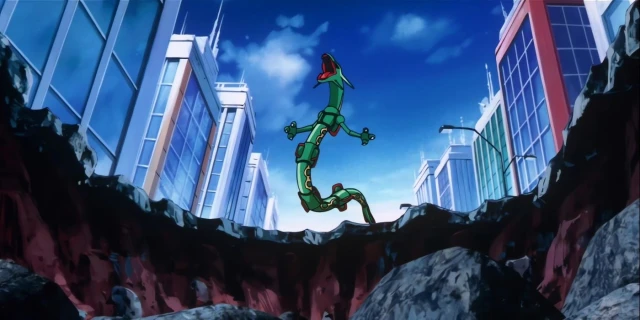
Rayquaza cinematic scene showing the legendary dragon Pokemon in its iconic sky-piercing pose

The pattern is clear: every premium Rayquaza card holds strong long-term value. The Mega Evolution treatment in the current MEGA series adds another level — MUR and SAR versions are expected based on the M1–M5 template:

Rarity Predicted Price (JPN) Pull Rate Estimate
MUR (Mega Ultra Rare) ¥25,000–40,000 ~1 per 45 boxes
SAR (Special Art Rare) ¥35,000–50,000 ~1 per 6 boxes
RR (Double Rare) ¥500–1,500 ~1 per 3–4 boxes
Rayquaza’s Market Premium

Rayquaza SAR cards have historically commanded a 20–40% premium over comparable chase cards from the same set. In Blue Sky Stream (2021), Rayquaza VMAX SAR was the #1 card at ¥30,000+ while most other SARs in the set settled at ¥8,000–15,000. If this pattern holds, Mega Rayquaza ex SAR could outperform even the MUR variant in secondary market value.

Expected Mechanics

Mega Rayquaza in the main series games is known for its Delta Stream ability (which negates Flying-type weaknesses) and Dragon Ascent — one of the strongest moves in the franchise. Expect Mega Rayquaza ex to feature energy-agnostic acceleration or a high-damage attack with a drawback, consistent with previous Rayquaza card designs that prioritize raw power.

Predicted Chase Cards & Prices

Predictions compiled from Japanese market trackers (Altema, Toreca Map, SNKRDUNK speculation threads) and community analysis as of May 21, 2026. Actual cards and values will change when official reveals begin. We’ll update this section as cards are confirmed.

Rank Predicted Card Rarity Predicted Price (JPN)
1 Mega Rayquaza ex SAR ¥35,000–50,000
2 Mega Rayquaza ex MUR ¥25,000–40,000
3 Zinnia (Higana) SAR ¥20,000–30,000
4 Primal Kyogre / Primal Groudon SAR ¥15,000–25,000
5 Steven Stone (Daigo) SAR ¥10,000–20,000
6 Wallace (Mikuri) SAR ¥8,000–12,000
7 Salamence / Dragonite ex SAR ¥6,000–10,000
8 Latios / Latias ex SAR ¥5,000–8,000

Why the SAR Could Outprice the MUR

An unusual prediction: Mega Rayquaza ex SAR may hold a higher market price than the MUR. This has precedent — in some MEGA sets, the SAR’s full-art illustration treatment has generated more collector demand than the MUR’s textured foil pattern. Rayquaza’s aerial, serpentine design lends itself exceptionally well to the wide-canvas SAR format. If the illustrator delivers a standout piece, this could be the most valuable single card in the MEGA era.

Zinnia: The Sleeper Hit

Zinnia (ヒガナ) is deeply connected to Rayquaza in Pokemon lore — she’s the Draconid lore keeper from ORAS who summons Mega Rayquaza to save the world from the meteor crisis. Her SAR would be a thematic perfect match for this set. Japanese market trackers at Altema predict her SAR at ¥20,000–30,000, making her potentially the second most valuable card in the set. Trainer SARs have been consistent performers in the MEGA era — Cynthia and N SARs in previous sets appreciated 30–50% within 3 months.

The Hoenn Legendary Trio

Storm Emeralda’s Hoenn theme opens the door for Primal Kyogre and Primal Groudon to appear alongside Mega Rayquaza — recreating the Weather Trio dynamic from Emerald/ORAS. If both receive SAR treatments, they’d add significant total value to the set’s chase card pool. Steven Stone and Wallace — the two Hoenn champions — are natural fits for Trainer SAR slots.

Collector Insight

Dragon-type Pokemon cards have historically performed well in the secondary market. Evolving Skies (2021) — the last major Dragon-focused set — became one of the most valuable modern sets, with sealed boxes appreciating over 200% in 2 years. Storm Emeralda’s Dragon/Sky theme positions it for similar long-term collector interest.

Expected Pull Rates

Pull rate estimates are based on the MEGA Expansion Pack pattern established by M1–M5. The Pokemon Company does not officially publish pull rates. Actual rates for Storm Emeralda may differ.

Per-Box Expected Pulls (30 packs)

Rarity Expected per Box Odds (per pack)
MUR ~0.02 (1 per 45 boxes) ~1 in 1,370
SAR (any) ~0.29 (roughly 1 per 3.4 boxes) ~1 in 103
SR (Pokemon/Supporter) ~0.76
SR (Item/Stadium) ~1.0 (near-guaranteed)
AR ~3 ~1 in 10
RR ~4 ~1 in 7.5

How MEGA Set Pull Rates Compare

The MEGA Expansion Pack structure carries the same pull rate framework as Abyss Eye. The key figure: MUR cards at roughly 1 per 45 boxes (~1 per 1,370 packs). This ultra-scarcity is the primary driver behind MUR cards reaching ¥25,000+ territory.

For the specific Mega Rayquaza ex SAR, the odds are roughly 1 in 20+ boxes — because the SAR slot is shared among 6–8 different SAR cards in a typical MEGA set. This means securing a specific chase card requires either significant volume or secondary market purchase.

Important

These pull rates are estimates based on previous MEGA Expansion Packs (M1–M5). Storm Emeralda’s actual rates may differ. The Pokemon Company does not officially confirm pull rates for any set.

Should You Buy This Set?

Storm Emeralda’s combination of Mega Rayquaza, Hoenn nostalgia, and Dragon-type focus makes it one of the most anticipated sets of 2026. Here’s how different collector profiles might want to approach it.

For Collectors (Experience-First Buyers)

If you collect Japanese Pokemon cards for the art and the experience, Storm Emeralda checks every box. Rayquaza’s serpentine dragon design in the SAR wide-canvas format has the potential to produce one of the most visually striking cards in the MEGA era. The Hoenn theme — Zinnia, Steven Stone, the Weather Trio — adds nostalgic depth beyond just the headliner. If you opened and enjoyed Abyss Eye, Storm Emeralda is the natural companion purchase.

Collector verdict: This is a strong candidate for your collection. Rayquaza-themed sets have historically delivered premium artwork and strong secondary market retention.

For Investors & Resellers

The data points are compelling: estimated print run of 0.9–1.3 million boxes (lower than standard numbered sets), Rayquaza as a top-3 globally collected Pokemon, and historical sealed appreciation of 40–80% within 12 months for popular M-series sets. The Dragon-type angle also matters — Evolving Skies proved that Dragon-focused sets can sustain multi-year appreciation.

Buy Early

  • Secure boxes at or near MSRP (¥6,000) before markup
  • Rayquaza demand historically spikes on Day 1
  • Lower estimated print run supports stronger pricing
  • Risk: if card reveals underwhelm, initial premium may soften

Wait and See

  • See actual card list and artwork before committing
  • Post-Abyss Eye market data available for comparison
  • English release ~2 months later provides a second window
  • Risk: if Rayquaza SAR hits big, boxes move fast

Storm Emeralda vs. Abyss Eye: Which to Prioritize?

If you’re choosing between the two summer 2026 sets:

  • Rayquaza vs. Darkrai — Rayquaza has broader global collector appeal and stronger historical price data. Darkrai has a devoted fanbase but smaller overall market
  • Dragon vs. Dark theme — Dragon-type sets (Evolving Skies) have outperformed Dark-type sets in long-term sealed value
  • Product lineup — Storm Emeralda has 3 Starter Sets + Collection File Premium vs. Abyss Eye’s standalone box launch. More products = more entry points for new players
  • Both — For serious collectors, both sets tell a connected story and complement each other in a collection

JPN vs. English: Which Version?

The English equivalent (expected as ME6, ~September 2026) would arrive approximately 2 months later. Japanese versions have historically carried a 15–40% premium over English equivalents for SAR and MUR cards. For collectors specifically seeking Japanese art quality and first-to-market access, the JPN version is typically the preferred choice.

Price Predictions & Box EV

All predictions are based on previous MEGA Expansion Pack patterns and Japanese market tracker estimates (Altema, Toreca Map, SNKRDUNK community). Actual prices will differ. As of April 2026 — pre-release speculation.

Predicted Box EV Breakdown

Slot Expected per Box Predicted Avg Value Expected Value
High-rarity (SAR/MUR/SR) ~1 pull ~¥6,000–10,000 avg ~¥6,000–10,000
AR cards ~3 pulls ~¥800–1,500 avg ~¥2,400–4,500
RR cards ~4 pulls ~¥300–600 avg ~¥1,200–2,400
R / C / U ~22 pulls ~¥50 avg ~¥1,100
Total Expected Value ~¥10,700–18,000
BOX MSRP ¥6,000

The predicted EV range is slightly higher than Abyss Eye’s projections — driven by Rayquaza’s historically stronger secondary market premiums. At MSRP (¥6,000), early-window box EV looks potentially positive, though this is typical for MEGA sets in their first 2–4 weeks before supply normalization.

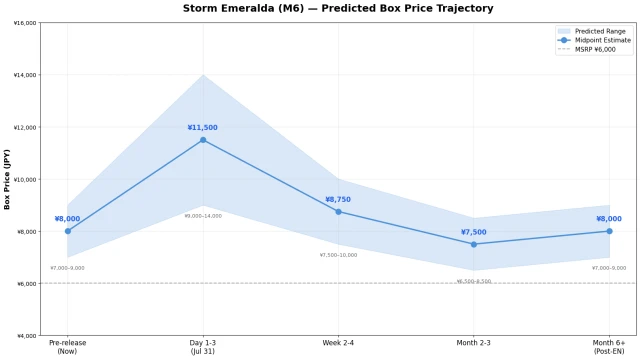
Secondary Market Box Price Trajectory (Predicted)

Storm Emeralda predicted box price trajectory chart showing MSRP at 6000 yen and expected premium timeline
Predicted Storm Emeralda box price trajectory — based on M1–M5 MEGA set patterns
Timeline Predicted Box Price Driver
Pre-release (Now) ¥7,000–9,000 Pre-order markups; Rayquaza premium
Day 1–3 (July 31–Aug 2) ¥9,000–14,000 Launch scarcity + Rayquaza chase demand
Week 2–4 ¥7,500–10,000 First restock wave; opening data available
Month 2–3 ¥6,500–8,500 Supply normalization; EN release approaching
Month 6+ (Post-EN release) ¥7,000–9,000 Collector demand stabilizes; Dragon-set premium
Dragon-Set Premium

Dragon-focused sets have historically held stronger long-term sealed value than other type-themed sets. Evolving Skies boxes appreciated from $140 to $400+ within 18 months. If Storm Emeralda follows this pattern — with the added MEGA series scarcity — sealed boxes could maintain premiums well beyond the typical 6-month normalization window.

Pre-Order Timing & Allocation Plan

Storm Emeralda has two demand spikes before launch: first, the information reveal window; second, the actual July 31 release. The mistake is paying peak leak-season pricing without knowing the chase-card artwork or the first allocation size.

Timing What changes Buyer action
Now to early June Mostly rumors, search demand, and retailer placeholders. Track prices, avoid aggressive premiums, and decide your target quantity before images reveal.
PJCS / first reveal window Potential first official card images or product confirmation wave. If Rayquaza artwork is exceptional, expect preorder listings to move fast. Compare multiple stores before buying.
Two to three weeks before launch More card images, lottery results, and secondary preorder listings. Good window for buyers who want more certainty and can accept a moderate premium.
Launch week Opening videos and early single-card prices appear. Best window for singles research; riskiest window for box FOMO.
Two to six weeks after launch Supply normalizes unless the Rayquaza chase is unusually strong. Usually the best patience window for singles and extra boxes.
Practical Buying Plan

For one sealed box, pre-ordering near MSRP plus shipping is reasonable. For a specific Mega Rayquaza ex SAR/MUR, singles are mathematically safer than chasing sealed boxes. For investors, split your plan: one early box for position, then wait for the first confirmed artwork and allocation data before adding more.

How to Buy Japanese Pokemon Cards

Japanese Pokemon booster boxes are region-locked at retail — you can’t simply order from the Pokemon Center Online unless you have a Japanese address. Here’s how international collectors typically get access to new Japanese sets like Storm Emeralda.

Japanese Retail (Lottery System)

Major Japanese retailers use a lottery (抽選) system for popular set releases:

  • Pokemon Center Online — Random selection; highest demand, lowest odds
  • Geo / TSUTAYA / Yodobashi — Regional lottery applications
  • Amazon Japan — Availability windows open closer to launch
  • Rakuten — Multiple sellers; prices vary

Winning a retail lottery is typically the only way to secure MSRP pricing. Most international buyers can’t access these lotteries directly.

International Options

Samurai Sword INC ships authentic Japanese Pokemon products directly from Tokyo to the US, UK, Canada, Australia, and beyond. Every box is verified authentic (seal and shrink wrap inspection), shipped with tracked international delivery, and packed to prevent transit damage.

Coming Soon
Storm Emeralda Booster Box (JPN)
Expected MSRP ¥6,000 (~$40) + shipping
Ships from Tokyo · Tracked international delivery

Browse Our Collection →

Key Dates to Watch

Date Event
June 27, 2025 Trademark filed (same day as Abyss Eye)
September 2025 Early rumors surface (Zygarde speculation)
February 2026 Sell sheets confirm Mega Rayquaza ex as headliner
May 22, 2026 Companion set Abyss Eye (M5) expected
June–July 2026 Card reveals expected (4–6 weeks before launch)
July 31, 2026 Expected Japan availability
~September 2026 Expected English availability (ME6)

Frequently Asked Questions

When is Storm Emeralda expected?

Storm Emeralda (M6) is currently expected for July 31, 2026 in Japan. The English equivalent is anticipated around September 2026 as ME6. It launches alongside three MEGA Starter Sets and a Collection File Premium featuring Mega Rayquaza. The companion set Abyss Eye (M5) is expected approximately two months earlier on May 22. Dates are subject to change.

How much is a Storm Emeralda booster box expected to cost?

The expected Japanese booster box MSRP is ¥6,000 (approximately $40 at current exchange rates) for 30 packs. This is the same ¥6,000 pricing introduced with Abyss Eye — ¥600 more than previous MEGA sets at ¥5,400. Secondary market prices for popular sets tend to be higher than MSRP, especially around launch.

What is the most valuable card expected in Storm Emeralda?

Japanese market trackers predict the Mega Rayquaza ex SAR (Special Art Rare) at ¥35,000–50,000, potentially the most valuable card. The MUR (Mega Ultra Rare) variant is predicted at ¥25,000–40,000. Zinnia SAR is predicted at ¥20,000–30,000. These are pre-release estimates based on Rayquaza’s historical market performance — actual values will be determined after release.

What are the expected pull rates for Storm Emeralda?

Based on the MEGA Expansion Pack pattern (M1–M5): MUR cards appear at roughly 1 per 45 boxes (~1 in 1,370 packs). SAR cards appear at roughly 1 per 3.4 boxes. Each box is expected to contain approximately 3 AR cards and 4 RR cards. The Pokemon Company does not officially publish pull rates — all figures are community estimates.

How does Storm Emeralda compare to Abyss Eye?

Storm Emeralda (M6) and Abyss Eye (M5) are companion sets releasing approximately two months apart in summer 2026. Abyss Eye features Mega Darkrai ex with a Dark/Ghost theme; Storm Emeralda features Mega Rayquaza ex with a Dragon/Sky theme. Both share the ¥6,000/box pricing. Rayquaza historically commands stronger collector premiums than Darkrai, and Dragon-focused sets have tended to hold sealed value longer.

How can I buy Storm Emeralda from outside Japan?

Japanese booster boxes are region-locked at retail. International buyers typically purchase through Japanese card exporters like Samurai Sword INC, which ships directly from Tokyo with tracked international delivery. Availability for new sets usually opens closer to the launch date. Amazon Japan and Rakuten also ship internationally on some listings, though availability varies.

Is the Storm Emeralda card list confirmed?

No. As of May 21, 2026, the public official card list has not been released. Mega Rayquaza ex is the high-confidence headliner, while Zinnia, Zygarde, Kyogre, Groudon, Latios, Latias, Salamence and other Hoenn picks remain predictions.

When will Storm Emeralda cards probably be revealed?

The most likely reveal window is early-to-mid June 2026, because Japanese sets often begin public card reveals several weeks before launch. PJCS 2026 on June 6-7 is a natural event to monitor, but a reveal there is not guaranteed.

Should I pre-order Storm Emeralda before the card list?

Only if the box price is close to MSRP plus reasonable shipping and you mainly want sealed exposure to Mega Rayquaza. If your goal is a specific chase card, waiting for official artwork and buying singles is usually safer.

Is Zinnia / Higana confirmed for Storm Emeralda?

No. Zinnia is a strong thematic prediction because of her Rayquaza connection in Omega Ruby and Alpha Sapphire, and Japanese prediction sites mention her often. She should be treated as a watchlist card until officially revealed.


Related Guides

Abyss Eye (M5) Complete handleiding: Mega Darkrai ex, meest gewilde kaarten & pre-orderinformatie [2026]

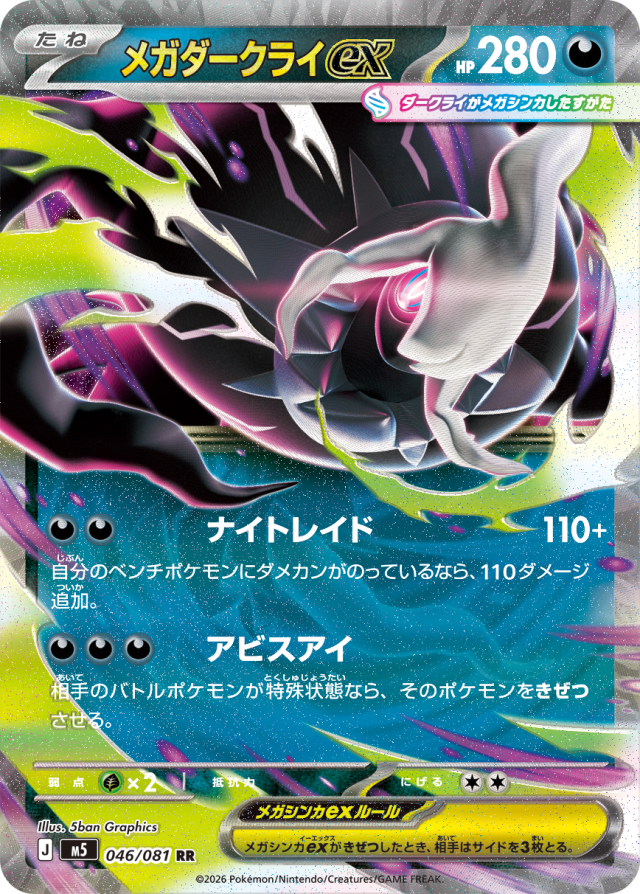
Abyss Eye (アビスアイ) is officially confirmed as the next MEGA Expansion Pack, releasing May 22, 2026 in Japan — headlined by Mega Darkrai ex, one of the most anticipated Mega Evolutions in the entire Scarlet & Violet era. The official key visual, pack artwork, and first card reveals were published on pokemon-card.com on April 20, 2026.

Confirmed on launch day is a Dark-type centered lineup: Mega Darkrai ex, Malamar (カラマネロ), Dark Bell, Chi-Yu (イーユイ), Zarude, and a brand-new special energy card — Shadow Dark Energy (シャドー悪エネルギー). The official pack MSRP is confirmed at ¥200 (tax included) per 5-card pack. Box-level configuration and full card list are still to be announced.

This guide has been updated to reflect the April 20, 2026 official reveal. Our team at Samurai Sword INC tracks every Japanese set announcement from Tokyo and ships sealed product to collectors worldwide — we’ll keep updating this page as each new card is revealed.

Key Takeaway (Updated Apr 20, 2026)

Abyss Eye (M5) is officially confirmed for May 22, 2026 in Japan. Pack MSRP is confirmed at ¥200 per 5-card pack. The headliner is Mega Darkrai ex, with confirmed Dark-type support from Malamar, Dark Bell, Chi-Yu, Zarude, and the new Shadow Dark Energy. Full card list and box configuration are still to be revealed.

Latest Update — Confirmed Details (May 7, 2026)

With Abyss Eye officially launching May 22, 2026 in Japan (15 days from this update), the full set has been progressively revealed. Here are the confirmed specifics from the official April 20 reveal and subsequent partial card list drops:

  • Set size: 81 cards in the main set, plus an estimated 35–40 secret rares (~120 total) — matching the structure of Nullifying Zero and Ninja Spinner.
  • Mega Darkrai ex profile: Darkness-type Basic, 280 HP. Two attacks confirmed — Night Raid [DD] 110+ (additional 110 damage if any of your Benched Pokémon have damage counters) and Abyss Eye [DDD] which instantly Knocks Out the opponent’s Active Pokémon if it is affected by any Special Conditie.
  • New mechanics confirmed: Shadow Dark Energy (new energy type) and Dark Bell (new Item card) form the core synergy package for the Mega Darkrai archetype.
  • Confirmed support cards: Inkay, Malamar, Zarude, Chi-Yu, and Mega Excadrill ex round out the Darkness-type lineup.
  • English equivalent: “Pitch Black” — likely a near 1:1 mirror of Abyss Eye, projected for July 2026 (~2 month delay per series pattern).

Sources: pokemon-card.com (official), PokéBeach, PokeGuardian, snkrdunk leak roundup. Reviewed May 7, 2026.

May 22
JPN Release Date

¥200
Pack MSRP (5 cards)

6
Cards Revealed

M5
Set Code

Set Overview: What Is Abyss Eye?

Abyss Eye (アビスアイ) is the fifth MEGA Expansion Pack in the Scarlet & Violet series, designated M5, officially announced on pokemon-card.com on April 20, 2026. It is paired thematically with Storm Emeralda as the next MEGA cycle (Storm Emeralda’s confirmed release details are pending). Together, the MEGA Expansion Pack lineup has driven some of the highest collector demand in recent Pokemon TCG history.

Spec Abyss Eye (M5) — Confirmed
Release Date (JPN) May 22, 2026 (Friday)
Featured Card Mega Darkrai ex
Pack MSRP ¥200 tax included (5 kaarten per pack)
Box MSRP To be announced
Theme Dark / Abyss
Game Tie-in Pokemon Legends: Z-A
Revealed Cards (Day 1) Mega Darkrai ex, Malamar, Dark Bell, Chi-Yu, Zarude, Shadow Dark Energy
EN Release To be announced
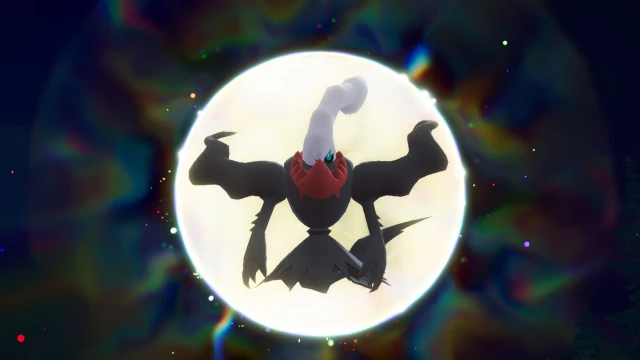
Mega Darkrai Phase 2 cinematic scene from Pokemon Legends Z-A showing nightmare abyss form

Pack Price Confirmed at ¥200

The official product page lists ¥200 tax included per pack with 5 cards. This matches the pack pricing introduced with the MEGA Expansion Pack era. Box-level MSRP and pack count per box have not yet been announced on the official site — we’ll update this guide once confirmed.

Connection to Pokemon Legends: Z-A

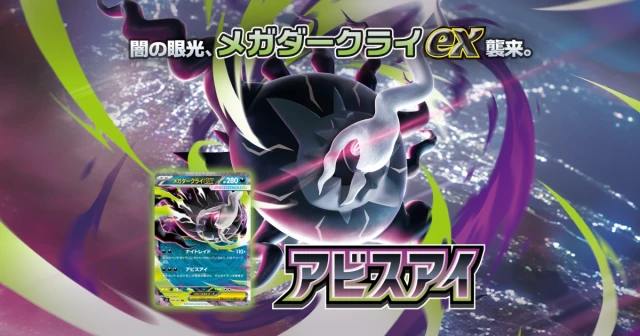
The set name “Abyss Eye” references Darkrai’s signature ability to drag opponents into nightmares. The official key visual taglines — “闇の眼光、メガダークライex襲来” (The eyes of darkness — Mega Darkrai ex arrives) and “闇の力で戦局を支配せよ” (Dominate the battle with the power of darkness) — establish Dark-type energy acceleration as the set’s core competitive identity.

Featured Card: Mega Darkrai ex

Official Mega Darkrai ex card artwork from Pokemon TCG Abyss Eye M5, revealed April 20 2026
Mega Darkrai ex — Official card artwork revealed on pokemon-card.com (April 20, 2026)

Mega Darkrai ex is the confirmed centerpiece of Abyss Eye. The official reveal shows the Mega Evolution’s signature attack “Brain Crash” (ブレインクラッシュ) — when the opponent’s Active Pokemon is Confused, this attack deals 130 damage for just one Dark Energy. Paired with the new Shadow Dark Energy (also revealed in this set), the card sets up an efficient one-attachment knockout line.

Why Mega Darkrai ex Matters

Darkrai has a strong collector pedigree in the Pokemon TCG. The original Darkrai LV.X from Great Encounters (2008) still commands $300+ in PSA 10 condition. Darkrai EX from Dark Explorers (2012) was both a competitive powerhouse and a collector favorite. Darkrai VSTAR SAR from Dark Phantasma (2022) has consistently traded in the ¥8,000–12,000 range on SNKRDUNK.

The Mega Evolution treatment adds another dimension: MEGA cards in the current series have consistently commanded premium prices. Based on the pattern from previous MEGA Expansion Packs (M1–M4), expect Mega Darkrai ex to appear in multiple rarities in Abyss Eye:

Rarity Predicted Price (JPN) Pull Rate Estimate
MUR (Mega Ultra Rare) ¥49,000–70,000+ ~1 per 45 boxes
SAR (Special Art Rare) ¥21,000–30,000 ~1 per 6 boxes
RR (Double Rare) ¥500–1,500 ~1 per 3–4 boxes
Darkrai’s TCG Track Record

Every major Darkrai card release has held strong secondary market value. Darkrai LV.X (2008): $300+ PSA 10. Darkrai EX (2012): $150+ PSA 10. Darkrai VSTAR SAR (2022): ¥8,000–12,000. The Mega Evolution version is positioned to be the premium entry in this lineage.

Expected Mechanics

Based on the M-Dimension Rush DLC gameplay — where Darkrai inflicts sleep before dealing damage — expect Mega Darkrai ex to feature sleep-status synergy and Dark-type energy acceleration. Previous Darkrai cards have emphasized energy manipulation (Dark Pulse, Dark Cloak), and the MEGA version is likely to continue this pattern at a higher power level.

Mega Darkrai official artwork from Pokemon Legends Z-A Mega Dimension DLC

Confirmed Cards & Community Predictions

Officially Revealed Cards (April 20, 2026)

The official pokemon-card.com reveal confirmed 6 cards on launch day, with more announcements promised ahead of the May 22 release. Each card below pairs thematically with Mega Darkrai ex and the new Shadow Dark Energy to build a Dark-type energy-acceleration engine.

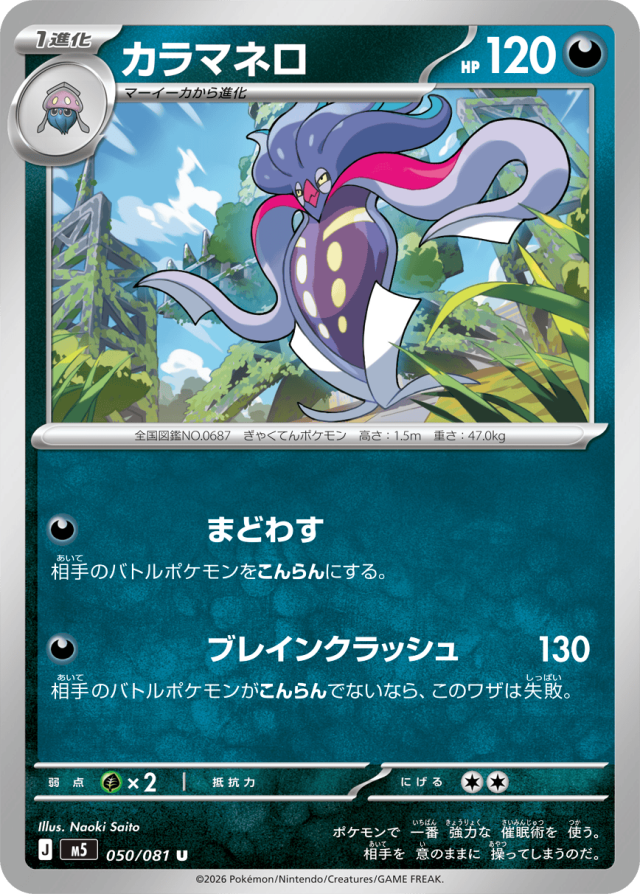
Malamar (Karamanero) official card from Abyss Eye M5
Malamar (カラマネロ) — Dark support
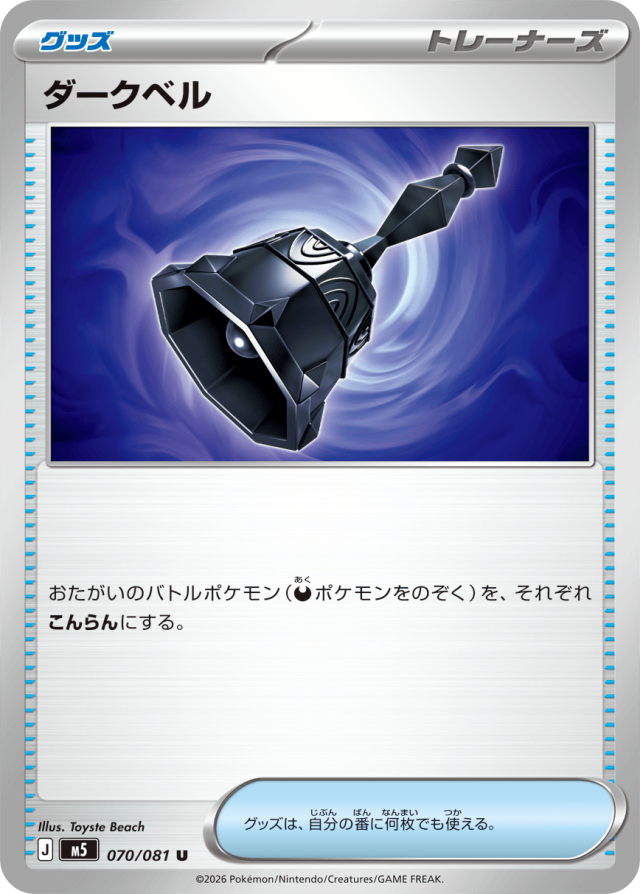
Dark Bell official card from Abyss Eye M5
Dark Bell (ダークベル) — Dark support
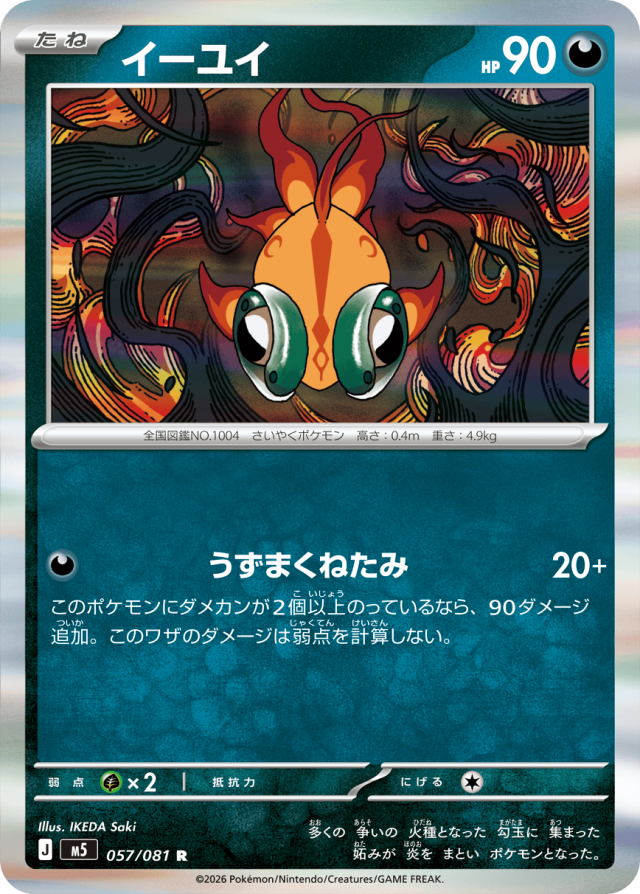
Chi-Yu (Ieyui) official card from Abyss Eye M5
Chi-Yu (イーユイ) — “Whirling Envy” 110 damage
Zarude official card from Abyss Eye M5
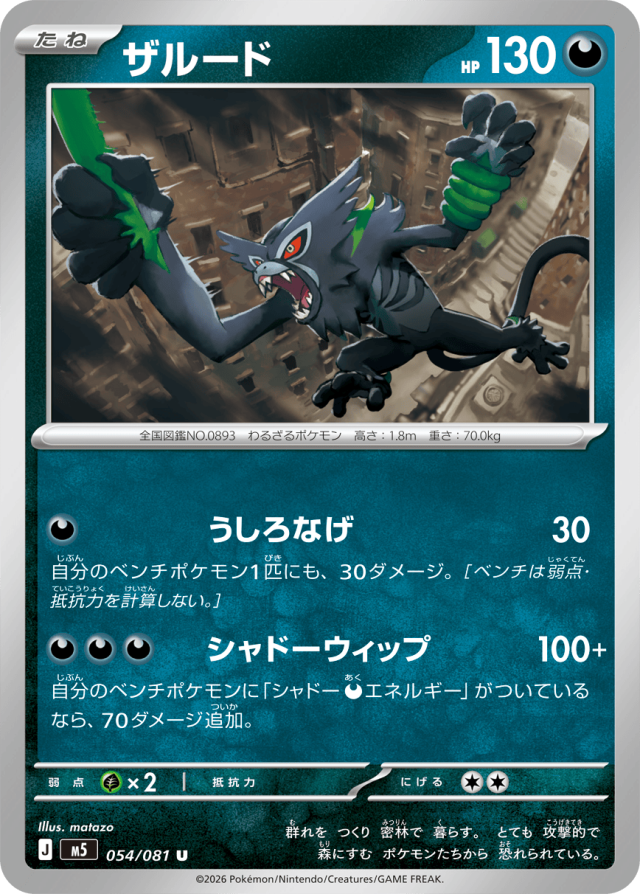
Zarude (ザルード) — “Shadow Whip” 170 damage
Shadow Dark Energy special energy card from Abyss Eye M5
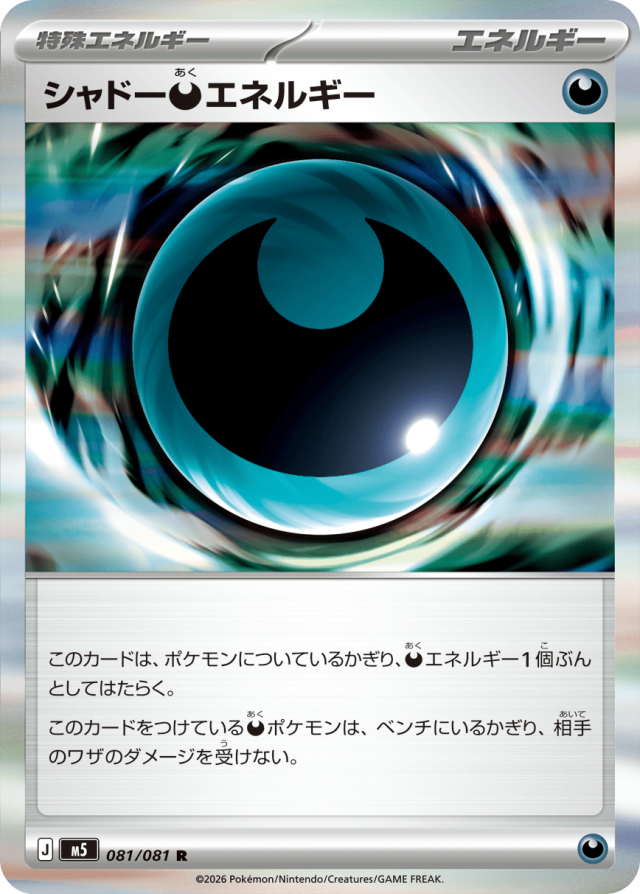
Shadow Dark Energy (シャドー悪エネルギー) — New Special Energy

Card Type / Role Key Attack or Effect
Mega Darkrai ex Stage — Mega (Dark) “Brain Crash” — 130 damage for 1 Dark Energy if opponent is Confused
Malamar (カラマネロ) Stage 1 (Dark) Confusion-support partner for Mega Darkrai ex
Dark Bell (ダークベル) Dark Pokemon Dark-type support (full reveal pending)
Chi-Yu (イーユイ) Dark Pokemon “Whirling Envy” — 110 damage for 1 Dark Energy when target has 2+ damage counters
Zarude (ザルード) Dark Pokemon “Shadow Whip” — 170 damage if Shadow Dark Energy is attached to a Benched Pokemon
Shadow Dark Energy (シャドー悪エネルギー) Special Energy Enables Zarude’s 170 damage attack; central to the set’s energy engine
What This Tells Us

All 6 revealed cards are Dark-type or Dark-synergy. This is a focused, archetype-driven MEGA set — similar to how M4’s lineup was built around a single Mega Evolution’s game plan. Expect further reveals to include additional Dark Pokemon, supporter cards, and at least one new trainer item to round out the archetype.

Community Predictions (Unconfirmed)

The cards below have not been officially announced. They are community predictions compiled from Japanese trackers (Toreca Map, Altema, SNKRDUNK threads) as of April 2026. Treat them as speculation until pokemon-card.com confirms further reveals.

Predicted Card Rarity Why It’s Predicted
Mega Giratina ex SAR Thematic tie to “Abyss” via the Distortion World; strong collector demand for Giratina
Mega Gengar ex SAR Dark/Ghost aesthetic fit; long-established chase-card pedigree
Cyrus (Akagi) SAR Dark-type specialist; Team Galactic lore connection to Darkrai
Cynthia (Shirona) SAR Sinnoh region tie-in; perennial SAR demand

We’ll replace these predictions with confirmed cards as pokemon-card.com publishes further reveals. Historically, full card lists for MEGA expansion packs are announced 3–4 weeks before the street date — so expect the complete Abyss Eye list around late April to early May 2026.

Expected Pull Rates

Pull rate estimates are based on the MEGA Expansion Pack pattern established by M1–M4. The Pokemon Company does not officially publish pull rates. Actual rates for Abyss Eye may differ.

Per-Box Expected Pulls (30 packs)

Rarity Expected per Box Odds (per pack)
MUR ~0.02 (1 per 45 boxes) ~1 in 1,370
SAR (any) ~0.29 (roughly 1 per 3.4 boxes) ~1 in 103
SR (Pokemon/Supporter) ~0.76
SR (Item/Stadium) ~1.0 (near-guaranteed)
AR ~3 ~1 in 10
RR ~4 ~1 in 7.5

How MEGA Set Pull Rates Compare

The MEGA Expansion Pack structure differs from standard expansions. The key distinction: MUR (Mega Ultra Rare) cards are extraordinarily rare — roughly 1 per 45 boxes, or about 1 per 1,370 packs. This ultra-scarcity is what drives MUR values to ¥50,000+ territory.

SAR pull rates in MEGA sets have been slightly more generous than standard expansions — approximately 1 SAR per 3.4 boxes versus 1 per 5–6 boxes in regular sets. However, with more SAR types in the set, the odds of pulling a specific SAR (like Mega Darkrai ex) remain low: roughly 1 in 20+ boxes for any individual SAR card.

Important

These pull rates are estimates based on previous MEGA Expansion Packs (M1–M4). Abyss Eye’s actual rates may differ. The Pokemon Company does not officially confirm pull rates for any set.

Should You Buy This Set?

With pack MSRP confirmed at ¥200 and the first six cards officially revealed, here’s how different collector profiles might want to approach Abyss Eye.

For Collectors (Experience-First Buyers)

If you collect Japanese Pokemon cards for the art and the opening experience, Abyss Eye looks like a strong candidate. The Dark-type focused aesthetic with Mega Darkrai as the centerpiece, the reveal of a brand-new Shadow Dark Energy special energy, and thematic support from Malamar, Chi-Yu, and Zarude make this an archetype-first set. Pre-ordering at or near pack MSRP (¥200) or box-level MSRP once announced will give you the best price point — secondary market prices for popular MEGA sets typically spike on Day 1 and stabilize within 2–4 weeks.

Collector verdict: Add to your radar. The official reveals confirm a cohesive Dark-type theme that will likely carry across 120+ cards — a strong opening experience is highly likely.

For Investors & Resellers

The MEGA Expansion Pack series has consistently produced boxes that hold value above MSRP thanks to MUR scarcity (~1 per 45 boxes) and high-demand SAR headliners. Mega Darkrai’s cross-media appeal (Pokemon Legends: Z-A tie-in) adds demand beyond the TCG collector base. Key variables: the still-unannounced box MSRP and the strength of the full card list once revealed.

Buy Early

  • Secure boxes at or near MSRP before markup
  • Day 1 access for resale/grading opportunities
  • Darkrai + Giratina demand is historically strong
  • Risk: if set underperforms, MSRP is your floor

Wait and See

  • See actual card reveals before committing
  • Post-launch price data available within 1 week
  • Potential for early supply surplus (price dip)
  • Risk: if Darkrai MUR hits big, boxes sell out fast

JPN vs. English: Which Version?

The English equivalent (expected as ME5, ~July 2026) would arrive approximately 2 months later. Japanese versions have historically carried a 15–40% premium over English equivalents for SAR and MUR cards. For collectors who specifically want Japanese art quality and first-to-market access, the JPN version is typically the preferred choice. For budget-conscious buyers, the English version tends to offer similar cards at lower prices.

Price Predictions & Box EV

All predictions are based on previous MEGA Expansion Pack patterns and Japanese market tracker estimates (Altema, Toreca Map, SNKRDUNK community). Actual prices will differ. As of April 2026 — pre-release speculation.

Predicted Box EV Breakdown

Slot Expected per Box Predicted Avg Value Expected Value
High-rarity (SAR/MUR/SR) ~1 pull ~¥5,000–8,000 avg ~¥5,000–8,000
AR cards ~3 pulls ~¥800–1,200 avg ~¥2,400–3,600
RR cards ~4 pulls ~¥300–500 avg ~¥1,200–2,000
R / C / U ~22 pulls ~¥50 avg ~¥1,100
Total Expected Value ~¥9,700–14,700
BOX MSRP TBA (pack ¥200 confirmed)

Once the box MSRP is announced, the predicted box EV is potentially positive in the early weeks — driven by inflated Day 1 prices on chase cards. This is typical for MEGA sets; box EV tends to normalize to slightly negative within 4–6 weeks as supply enters the market. The key variable: how high Mega Darkrai ex MUR and SAR prices actually go at launch.

Secondary Market Box Price Trajectory (Predicted)

Abyss Eye predicted box price trajectory chart showing MSRP at 6000 yen, expected Day 1 premium, and stabilization timeline
Predicted Abyss Eye box price trajectory — based on M1–M4 MEGA set patterns
Timeline Predicted Box Price Driver
Pre-release (Now) Pre-orders opening soon Secondary sellers listing ahead of official box MSRP
Day 1–3 (May 22–24) Significant premium expected Initial scarcity + Mega Darkrai ex hype
Week 2–4 Gradual normalization First restock wave; early opening data
Month 2–3 Closer to MSRP band Supply normalization; additional card reveals priced in
Month 6+ Stable collector demand Depends on reprint cycle and EN release timing
MEGA Set Pattern

Previous MEGA Expansion Packs (M1–M4) saw Day 1 box prices 30–100% above MSRP, followed by gradual normalization over 4–8 weeks. Sets with strong headliners (like MEGA Dream ex with Mega Charizard X) maintained premiums longest. Mega Darkrai’s popularity suggests Abyss Eye will follow a similar strong-demand pattern.

How to Buy Japanese Pokemon Cards

Japanese Pokemon booster boxes are region-locked at retail — you can’t simply order from the Pokemon Center Online unless you have a Japanese address. Here’s how international collectors typically get access to new Japanese sets.

Japanese Retail (Lottery System)

Major Japanese retailers use a lottery (抽選) system for popular set releases:

  • Pokemon Center Online — Random selection; highest demand, lowest odds
  • Geo / TSUTAYA / Yodobashi — Regional lottery applications
  • Amazon Japan — Availability windows open closer to launch
  • Rakuten — Multiple sellers; prices vary

Winning a retail lottery is typically the only way to secure MSRP pricing. Most international buyers can’t access these lotteries directly.

International Options

Samurai Sword INC ships authentic Japanese Pokemon products directly from Tokyo to the US, UK, Canada, Australia, and beyond. Every box is verified authentic (seal and shrink wrap inspection), shipped with tracked international delivery, and packed to prevent transit damage.

Pre-Order Opening Soon
Abyss Eye Booster Box (JPN)
Pack MSRP confirmed ¥200 · Box MSRP to be announced
Ships from Tokyo · Tracked international delivery

Browse Our Collection →

Key Dates to Watch

Date Event
April 20, 2026 Official reveal — Mega Darkrai ex + 5 support cards + Shadow Dark Energy
Late April – May 2026 Further card reveals expected from pokemon-card.com
May 22, 2026 (Fri) Official Japan release
TBA English release

Frequently Asked Questions

When is Abyss Eye released?

Abyss Eye (アビスアイ / M5) is officially confirmed for Friday, May 22, 2026 in Japan, as announced on the official pokemon-card.com product page on April 20, 2026. The English equivalent has not yet been announced.

How much is an Abyss Eye pack?

Pack MSRP is confirmed at ¥200 tax included for 5 kaarten per pack, per the official product page. Box-level MSRP and pack count per box have not yet been announced. Secondary market prices tend to be higher than MSRP for popular sets.

What cards have been confirmed in Abyss Eye?

As of April 20, 2026, the official site has confirmed six cards: Mega Darkrai ex (headliner, with the “Brain Crash” attack dealing 130 damage for 1 Dark Energy if the opponent is Confused), Malamar (カラマネロ), Dark Bell, Chi-Yu (“Whirling Envy” attack), Zarude (“Shadow Whip” 170 damage attack), and a new special energy card, Shadow Dark Energy (シャドー悪エネルギー). Further reveals are expected in the weeks before release.

What are the pull rates for Abyss Eye?

Based on the MEGA Expansion Pack pattern (M1–M4): MUR cards appear at roughly 1 per 45 boxes (~1 in 1,370 packs). SAR cards appear at roughly 1 per 3.4 boxes. Each box guarantees approximately 3 AR cards and 4 RR cards. The Pokemon Company does not officially publish pull rates — all figures are community estimates.

Is Abyss Eye connected to Pokemon Legends: Z-A?

Yes. The set is tied to Pokemon Legends: Z-A, with Mega Darkrai ex as the TCG headliner. The “Abyss Eye” name references Darkrai’s nightmare gaze concept — captured in the official Japanese tagline “闇の眼光、メガダークライex襲来” (The eyes of darkness — Mega Darkrai ex arrives). This cross-media connection has historically boosted collector demand for TCG cards.

How can I buy Abyss Eye from outside Japan?

Japanese booster boxes are region-locked at retail. International buyers typically purchase through Japanese card exporters like Samurai Sword INC, which ships directly from Tokyo with tracked international delivery. Availability for new sets usually opens closer to the launch date. Amazon Japan and Rakuten also ship internationally on some listings, though availability varies.


Japanese Pokemon MEGA Booster Box Price Index 2026: Box Prices, Chase Cards & What to Buy

Japanese Pokemon’s MEGA era is no longer just hype; it is measurable. We scraped Samurai Sword Tokyo’s live product grid on May 20, 2026, checked official Pokemon Card MSRP pages, and cross-checked chase-card references from SNKRDUNK, Buyee, Guardian TCG, and SST market notes.

The result is a practical MEGA booster box index: M2 Inferno X is the scarcity/premium box, M4 Ninja Spinner has the strongest chase-to-box ratio, M2A MEGA Dream ex has the deepest stock and broadest hit profile, and M3 Munikis Zero is the cheapest sealed entry with the thinnest live stock.

Shop the index: Browse Japanese Pokemon sealed booster boxes direct from Tokyo →


5.44x
Highest MSRP premium: M2 Inferno X
6.72x
Best top-chase/box ratio: M4
421
Deepest SST stock: M2A
¥9,476
Cheapest sealed entry: M3

MEGA Box Index Table

This table compares every major Japanese Pokemon MEGA sealed booster box currently in the SST buying window. Prices and stock are a fixed May 20, 2026 JST snapshot, so treat them as a research baseline rather than a live quote.

Set Release Official box MSRP SST sealed price SST stock Premium Top chase ref. Chase/box
M5 Abyss Eye May 22, 2026 ¥6,000 ¥13,000 99 2.17x pre-release n/a
M4 Ninja Spinner Mar 13, 2026 ¥5,400 ¥13,390 348 2.48x ¥90,000+ 6.72x
M3 Munikis Zero Jan 23, 2026 ¥5,400 ¥9,476 7 1.75x ¥35,000 3.69x
M2A MEGA Dream ex Nov 28, 2025 ¥5,500 ¥18,025 421 3.28x ¥55,000 3.05x
M2 Inferno X Sep 26, 2025 ¥5,400 ¥29,355 19 5.44x ¥79,999+ 2.73x
M1L Mega Brave Aug 1, 2025 ¥5,400 ¥14,626 260 2.71x ¥55,000 3.76x
M1S Mega Symphonia Aug 1, 2025 ¥5,400 ¥12,360 82 2.29x ~¥44,500 3.60x

Box MSRP is calculated from official pack MSRP and normal box pack count. M2A is a 10-pack high-class box at ¥550 per pack. M5 uses the new May 2026 ¥200 standard-pack MSRP.


How to Read the Index

Box premium tells you how far sealed supply has moved away from retail. It is useful for sealed buyers because official MSRP is the clean baseline every box starts from.

Chase-to-box ratio is different. It asks: if the top card is worth X and a sealed box costs Y, how much upside exists on the single best pull? It is not expected value. Pokemon does not publish official pull rates, and MUR cards are too scarce for a one-box buyer to treat the top chase as a normal outcome.

Stock depth matters because thin supply changes the buying decision. A box with only a handful of visible sealed units can reprice faster than a box with hundreds still available.

Practical rule: Use premium for sealed-buy timing, chase/box ratio for opening upside, and stock depth for urgency.


MSRP Premium: Which Boxes Repriced Most?

Japanese Pokemon MEGA booster box premium over official MSRP by set

M2 Inferno X is the clear sealed-premium outlier. At ¥29,355 against a ¥5,400 official box MSRP, it sits at 5.44x retail. That is the Charizard effect showing up in sealed product, not just in singles.

The calmer cluster is M1S, M4, M1L, and M5, all between 2.17x and 2.71x MSRP. M3 is the cheapest relative to retail at 1.75x, while M2A sits higher at 3.28x because high-class packs carry a different hit structure and demand profile.


Top Chase vs Box Price

Top chase card reference value divided by current sealed box price for Japanese Pokemon MEGA sets

On this metric, M4 Ninja Spinner leads. SNKRDUNK’s Ninja Spinner guide placed Mega Greninja ex MUR around ¥90,000+ at launch. Against SST’s ¥13,390 sealed price, that is a 6.72x top-chase-to-box ratio.

M1L, M3, and M1S sit in the mid-3x range, which is healthier than it looks because their sealed prices are not as inflated as M2. M2A looks lower at 3.05x if you only use Mega Gengar ex SAR as the single top reference, but that misses the point of a high-class pack: it has several liquid hits rather than one chase carrying the whole set.

M2 Inferno X has the lowest ratio among settled boxes at 2.73x using SNKRDUNK’s ¥79,999+ market reference for Mega Charizard X ex MUR. That does not make M2 weak; it means the sealed box has already captured a lot of the Charizard premium.


Stock Depth and Liquidity

SST stock depth snapshot for Japanese Pokemon MEGA sealed booster boxes on May 20 2026

Stock depth is the part most market articles skip. The same price means different things if there are 421 boxes visible versus 7.

  • Deepest stock: M2A MEGA Dream ex at 421 boxes. This is the easiest box to buy in quantity from the current snapshot.
  • Best price but thinnest stock: M3 Munikis Zero at 7 boxes. Good value can disappear quickly when inventory is this shallow.
  • High-premium, low-stock: M2 Inferno X at 19 boxes. That combination explains why it behaves more like a sealed collectible than a cheap opener.

Set-by-Set Market Read

M4 Ninja Spinner

M4 is the cleanest “open if you want upside” box in this snapshot. The SST sealed price is ¥13,390 against a ¥5,400 MSRP, a 2.48x premium. SNKRDUNK’s guide placed Mega Greninja ex MUR around ¥90,000+ at launch, which gives a 6.72x chase-to-box ratio.

That does not mean every box should be opened. It means M4’s top-end card is still large relative to the sealed box price. The 348-box SST stock count also gives buyers more room to scale into sealed inventory without immediately hitting a thin-stock repricing wall.

Read the Ninja Spinner pull rates and best cards guide →

M3 Munikis Zero

M3 is the value entry. At ¥9,476, it is the cheapest sealed MEGA box in the current SST snapshot and only 1.75x official MSRP. The tradeoff is stock: just 7 sealed boxes were visible in the live product grid.

The top-end chase is less explosive than Greninja or Charizard. SNKRDUNK and SST market references place Mega Zygarde ex MUR in a roughly ¥35,000-¥55,000 conversation depending on date and market frame. Using the conservative ¥35,000 reference, M3 still shows a 3.69x chase-to-box ratio.

Read the Nihil Zero pull rates and best cards guide →

M2A MEGA Dream ex

M2A is the liquidity box. It has the deepest SST stock in this basket at 421 sealed boxes, and the high-class pack structure gives it a broader hit profile than a standard 5-card expansion pack.

The box is not cheap relative to retail: ¥18,025 against a ¥5,500 official box MSRP, or 3.28x. But Buyee’s May 2026 price guide shows Mega Gengar ex SAR around ¥48,000-¥55,000, Pikachu ex SAR around ¥38,000-¥45,000, and Mega Dragonite ex MUR around ¥35,000-¥40,000. This is why M2A reads better as a diversified opening product than a single-chase lottery.

Read the MEGA Dream ex pull rates and best cards guide →

M2 Inferno X

M2 is the scarcity and Charizard box. At ¥29,355, it carries the highest sealed premium in the index: 5.44x official MSRP. Live SST stock was only 19 boxes.

The chase-card data explains why. SNKRDUNK lists Mega Charizard X ex MUR with a market reference of ¥79,999+ and a higher predicted market frame of ¥115,000+. Even using the lower public reference, the chase-to-box ratio is 2.73x. The sealed premium is already high, so M2 is better for sealed conviction or Charizard collectors than for pure value buyers.

Read the Inferno X pull rates and best cards guide →

M1L Mega Brave

M1L is the first-set-of-era box. It is not the cheapest, but the ¥14,626 SST price and 260-box stock count make it more accessible than M2 while still carrying meaningful character demand.

Buyee’s Mega Brave guide puts Mega Lucario ex MUR around ¥45,000-¥55,000 in detailed notes and ¥55,000-¥65,000 in its summary table. Using ¥55,000, M1L shows a 3.76x chase-to-box ratio. Add Lillie’s Determination SAR in the same broad value band and M1L becomes a balanced sealed/opening candidate.

Read the Mega Brave pull rates and best cards guide →

M1S Mega Symphonia

M1S is the calmer twin of M1L. The box price is ¥12,360, the premium is 2.29x MSRP, and live SST stock was 82 boxes.

Guardian TCG showed Mega Gardevoir ex MUR raw at $287.02 in May 2026. At a simple ¥155/$ reference, that is about ¥44,500 and a 3.60x chase-to-box ratio. It is not as liquid as M2A, not as explosive as M4, and not as scarce as M2. Its case is character-led collecting at a still-manageable sealed price.

Read the Mega Symphonia pull rates and best cards guide →

M5 Abyss Eye

M5 changes the baseline. The official Pokemon Card price revision moved standard 5-card expansion packs from ¥180 to ¥200 for May 2026 and later products, so a normal 30-pack box now starts from ¥6,000 instead of ¥5,400.

At the May 20 snapshot, Abyss Eye was listed at ¥13,000 with 99 stock. That is a 2.17x premium against the new MSRP floor. Because release is May 22, the chase-card market is not mature enough to treat as a settled ratio. For now, M5 should be read as a preorder / early-release position, not a proven EV box.

Read the Abyss Eye complete guide →


What to Buy by Goal

Opening Upside

Pick M4 Ninja Spinner. It has the largest top-chase-to-box ratio in this snapshot, with Mega Greninja ex MUR carrying the high-end demand.

Shop M4 Ninja Spinner →

Broad Hit Profile

Pick M2A MEGA Dream ex. The high-class structure and multiple liquid hits make it less dependent on one card than standard boxes.

Shop M2A MEGA Dream ex →

Cheapest Entry

Pick M3 Munikis Zero. It is the lowest sealed price and lowest MSRP multiple, but the snapshot stock was thin.

Shop M3 Munikis Zero →

Sealed Conviction

Pick M2 Inferno X or M1L Mega Brave. M2 is the Charizard box; M1L is the first MEGA-era set with Lucario and Lillie demand.

Shop M2 Inferno X →


Methodology and Sources

We used official Pokemon Card pages for release dates and MSRP, SST’s live product grid for sealed price and stock, and public market guides for top chase-card reference values. The box premium is current SST sealed price divided by official box MSRP.

Source type Used for Examples
Official Pokemon Card pages Release date, pack MSRP, pack contents M1-M5 product pages, 2026 price revision notice
SST live product grid Current sealed price and available stock M5, M4, M3, M2A, M2, M1L, M1S sealed listings
SNKRDUNK Japanese market references for M4, M3, M2 chases Mega Greninja ex MUR, Mega Zygarde ex MUR, Mega Charizard X ex MUR
Buyee M2A and M1L chase-card ranges Mega Gengar ex SAR, Mega Lucario ex MUR, Lillie’s Determination SAR
Guardian TCG M1S raw-card reference Mega Gardevoir ex MUR raw price

The chase-to-box ratio is not expected value. It only measures how large the top chase card is relative to the sealed price. Real opening EV depends on pull rates, mid-tier cards, bulk, fees, condition, and liquidity.

Core external sources: Pokemon Card M1, M2, M2A, M3, M4, M5, Pokemon Card price revision notice, SNKRDUNK Ninja Spinner, SNKRDUNK Inferno X, Buyee MEGA Dream ex, Buyee Mega Brave, Guardian TCG M1S.


FAQ

What is the best Japanese Pokemon MEGA booster box to buy in 2026?

For pure opening upside, M4 Ninja Spinner has the best ratio in this snapshot. For broader hit depth, M2A MEGA Dream ex is stronger. For sealed long-term identity, M2 Inferno X and M1L Mega Brave are stronger.

Why is Inferno X so expensive?

Inferno X is driven by Mega Charizard X ex, low visible stock, and a sealed price that has already repriced far above MSRP. The box is 5.44x official MSRP in this snapshot.

Are these official pull rates?

No. Pokemon does not publish official pull rates. Any pull-rate discussion in public articles is based on opening datasets and market observation, not an official Pokemon guarantee.

Should I buy boxes or singles?

Buy boxes when you value sealed supply, the opening experience, or a broad hit profile. Buy singles when you only want one specific chase card and do not want to absorb pull-rate variance.


Paradise Dragona (SV7a) trekkansen en beste kaarten gids

Paradise Dragona (SV7a) is no longer the quiet value box described in the older April guide. The May 21, 2026 refresh changes the buying answer: Latias ex SAR and Lisia’s Appeal SAR now form a two-card top end, Japanese sealed-box signals have repriced sharply from the old ¥7,500 assumption, and overseas prices are wide enough that buyers need to compare venue, condition, and shipping before treating any single number as “the market.”

The practical answer: buy a sealed Paradise Dragona box if you want the Dragon-focused Japanese set, the Latias/Lisia chase lane, and a box that has already started moving away from its old value-entry zone. Buy singles if your only goal is Latias ex SAR or Lisia SAR. The set is fun to open, but the chance of one exact SAR is still much lower than the chance of pulling any SR-or-better card.

This update follows the current SST long-form article standard: current market proof first, then pull-rate math, box EV, Japan vs overseas pricing, buyer segmentation, and visual proof. The old article had useful bones, but it was underbuilt for a set that has started repricing this quickly.

Paradise Dragona SV7a pull rates and best cards guide featuring Latias ex SAR and Lisia SAR
Thumbnail composite for SV7a Paradise Dragona using SST product imagery and key chase-card imagery.
Key Takeaway Paradise Dragona has shifted from a cheap enhanced-expansion pickup into a fast-moving Dragon collector box. Latias ex SAR is now the cleanest top chase, Lisia SAR remains the trainer-card anchor, and the sealed-box market should be evaluated with Japan and overseas signals separately rather than forcing a single converted price.
94Total cards
5SAR cards
¥30k+Latias SAR signal
$76-$132Overseas box range

Paradise Dragona Set Overview

Paradise Dragona is the Scarlet & Violet enhanced expansion built around Dragon Pokemon, tropical presentation, and two highly recognizable collector hooks: Latias and Lisia. The Japanese release date was September 13, 2024, and the box format follows the modern enhanced-expansion pattern of 30 packs per box and 5 kaarten per pack.

The set is smaller than an English mega-set, which is exactly why Japanese collectors like it. You are buying one focused set code, one product identity, and a concise secret-rare pool instead of a mixed English release where multiple Japanese sources are folded together.

Spec Detail
Set code SV7a
Japanese name Paradise Dragona / Enhanced Expansion Pack
Japanese release September 13, 2024
Box format 30 packs per box, 5 kaarten per pack
Total card count 64 main-set cards plus 30 secret cards, 94 total
Headline cards Latias ex SAR, Lisia’s Appeal SAR, Alolan Exeggutor ex SAR, Archaludon ex SAR, Drayton SAR
English relationship Many cards connect to Surging Sparks, but the Japanese SV7a product is cleaner for sealed collectors.
SV7a Paradise Dragona Japanese Pokemon booster box
SV7a Paradise Dragona sealed booster box. The white product background is softened in-layout so the box reads as a product image, not a white square.

What Changed Since the Old Article

The older version treated the box like a stable ¥7,500 value entry and treated Lisia SAR as the unquestioned top card. That is no longer the right buyer frame. Current Japanese market pages show Latias ex SAR around the low-¥30,000 band, Lisia SAR around the high-¥20,000 to low-¥30,000 band, and sealed-box signals that are materially higher than the old article’s baseline.

The point is not that every seller is quoting the same number. The point is the direction. Paradise Dragona has moved from “good art for the price” to “watch the market before old pricing disappears.”

Paradise Dragona vs Surging Sparks

English Surging Sparks is larger, easier to find locally, and better for players who need English cards for official play environments. Japanese Paradise Dragona is better for collectors who want the exact SV7a set, Japanese print quality, and the sealed-box identity attached to Latias, Lisia, and Alolan Exeggutor.

Factor Japanese Paradise Dragona English Surging Sparks
Collector identity Focused SV7a box, 94 total cards Larger English release with multiple source pools
Best for Japanese sealed collectors, Latias/Lisia collectors, import buyers Local players, English binders, casual retail opening
Price behavior Japan source and sealed-box signals moved up quickly in May Overseas pricing is wider and depends heavily on sold venue
Main risk Paying late-May prices while assuming old April value-box math Chasing one card through a larger English product pool

Top 10 Best Cards and Current Market Read

The current top end is more balanced than the old guide showed. Latias ex SAR has become the strongest top-card signal, while Lisia SAR still gives the set a trainer-card premium. That combination matters because a one-card set can cool quickly; Paradise Dragona has two different buyer lanes competing for attention.

Rank Card Rarity May 2026 market signal Why it matters
1 Latias ex 087/064 SAR Low-¥30,000 band in Japanese guides Eon Pokemon, connected-art demand, strongest current top-card signal
2 Lisia’s Appeal 091/064 SAR High-¥20,000 to low-¥30,000 band Fan-favorite trainer, long collector memory, female-supporter premium
3 Lisia’s Appeal 086/064 SR About mid-¥4,000 band Lower-cost Lisia target for trainer collectors
4 Alolan Exeggutor ex 089/064 SAR About mid-¥3,000 band Set mascot artwork and tropical identity
5 Latias ex 078/064 SR About high-¥2,000 band Budget Latias option when SAR is too expensive
6 Latios 070/064 AR About mid-¥2,000 band Companion art to Latias; binder demand is stronger than normal AR demand
7 Archaludon ex 088/064 SAR About low-¥2,000 band Dragon-type premium hit and competitive-adjacent Pokemon
8 Flygon ex 079/064 SR About low-¥1,000 band Dragon fan favorite with affordable entry
9 Black Kyurem ex 080/064 SR About low-¥1,000 band Recognizable Dragon legendary, better than pure bulk SR
10 Drayton 090/064 SAR Around ¥1,000 band Trainer SAR, low-cost completionist card
Latias ex SAR 087/064 from SV7a Paradise Dragona#1 Latias ex SAR

Latias is now the clean top-card story. The card benefits from a beloved Legendary Pokemon, strong composition, and the connected-art chase with Latios.

Lisia's Appeal SAR 091/064 from SV7a Paradise Dragona#2 Lisia SAR

Lisia is still the emotional anchor. Even if Latias leads the current price signal, Lisia gives the box the trainer-card demand that often keeps Japanese sets liquid.

Alolan Exeggutor ex SAR 089/064 from SV7a Paradise Dragona#4 Alolan Exeggutor SAR

Alolan Exeggutor is the set’s tropical mascot card. It is not priced like the top two, but it is one of the cards that makes the set visually distinct.

Top 3 Deep Dive

Latias ex SAR is the card that makes the May refresh necessary. The old article underweighted it, but current Japanese price guides put Latias at or above Lisia. Connected-art demand is the key reason. Collectors who want the complete Latias/Latios display are not buying only one card in isolation.

Lisia’s Appeal SAR remains the trainer premium. Lisia is not just another supporter. Her appearance history is limited enough that returning to the character after years of demand created a real collector lane. If Paradise Dragona were only a Dragon Pokemon set, its ceiling would be narrower. Lisia broadens it.

Lisia’s Appeal SR deserves attention because it is the rational alternative. A buyer who loves Lisia but does not want to pay SAR money can buy the SR and still feel connected to the set. That budget chase matters for liquidity.

Secondary Hits That Keep Boxes Interesting

Archaludon ex SAR from SV7a Paradise DragonaArchaludon SAR

Archaludon gives the box a Dragon-type SAR that still feels relevant even when it is not the top price card. It helps the set avoid a top-heavy opening experience.

Drayton SAR from SV7a Paradise DragonaDrayton SAR

Drayton is the low-cost trainer SAR. Pulling Drayton is not a Latias/Lisia outcome, but it still provides a full-art trainer hit that casual openers understand immediately.

That secondary layer is important for box buyers. If the set were Latias and Lisia only, opening one box would feel harsh unless you hit the top end. With Alolan Exeggutor, Archaludon, Drayton, Latios AR, and budget SRs, the experience is less binary.

Why Paradise Dragona Is Special

Every serious set guide needs a reason that could not be copied into a different article. For Paradise Dragona, the reason is not simply “good pull rates.” The set has a very specific identity: Dragon Pokemon, tropical artwork, the Latias/Latios pair, and Lisia returning as a premium trainer chase.

The Latias and Latios Connected-Art Hook

Latias ex SAR and Latios AR work as a collector pair. Connected art is powerful because it creates a second purchase after the first hit. A buyer who pulls Latias wants Latios; a buyer who already owns Latios wants Latias. That is a stronger demand structure than a normal one-card chase.

Lisia Gives the Set a Trainer Lane

Trainer-card demand behaves differently from Pokemon demand. A Dragon collector may care most about Latias, Latios, Flygon, or Black Kyurem. A trainer collector may care most about Lisia, even if they do not open Dragon decks or collect Eon Pokemon. Paradise Dragona gets both audiences.

The Art Direction Is Easy to Recognize

The box and top cards use a tropical, travel-like visual language. That makes the article thumbnail and product card easier to understand at small size. It also makes the set more memorable than many generic mid-era expansions where the best card could belong anywhere.

Should You Buy a Paradise Dragona Box in 2026?

The answer depends on why you are buying. A collector buying one sealed box for the shelf is solving a different problem from a singles buyer who wants Latias SAR. A reseller looking at source cost is solving a different problem again. Paradise Dragona now needs that separation because the price moved too much to use one generic “worth it” answer.

Buyer type Best action Reason
Latias-only buyer Buy the single A specific SAR chase is far too rare to justify sealed as the rational route.
Lisia collector Buy the SAR or SR directly unless you value opening Lisia has two good targets, and the SR is a cheaper collector compromise.
Sealed collector Buy before comparing only to old ¥7.5k guides The market has reset upward; old article prices are stale.
Casual opener Buy one box if the top-card hunt is part of the fun Enhanced-expansion hit structure gives a satisfying baseline, but not a guaranteed chase.
Player Buy singles Competitive needs are cheaper to satisfy with targeted card purchases.
Import buyer Compare landed cost, not sticker price Japan price, overseas price, shipping, duties, and condition all change the answer.

For Sealed Collectors

Paradise Dragona is attractive because it has a compact Japanese identity and two top chase lanes. The risk is paying a newly repriced number while mentally anchoring to the old ¥7,500 guide. If you buy sealed now, assume you are buying a box whose market has already noticed Latias and Lisia.

For Singles Buyers

Singles are cleaner if your target is exact. A single Latias ex SAR or Lisia SAR purchase removes the randomness, condition variance from opening, and the chance that your SR-or-better slot lands on a lower-value hit.

For Openers

Opening still makes sense if the product experience matters. You get 30 packs, a Dragon-themed card pool, ARs, ACE SPEC, ex cards, and a real shot at a premium card. Just do not call it a rational way to acquire one exact SAR.

Compared With Nearby SV-Era Boxes

Paradise Dragona now sits in an awkward but interesting place beside nearby Japanese boxes. It is not as universally famous as Eevee Heroes or Terastal Festival ex, and it does not have the same broad casual recognition as the biggest Pikachu-led sets. Its advantage is focus. A buyer can explain the box in one sentence: Japanese Dragon set with Latias and Lisia at the top. That clarity matters for a blog reader scanning the article card, and it matters for sealed collectors deciding which box deserves shelf space.

The comparison also changes the timing answer. If a set is still quiet, the best advice is usually patience and price shopping. If a set has already started repricing but has not become completely unreachable, the better advice is to stop using old guides and check the current spread. Paradise Dragona is in that second category now. It is not automatically a buy at any price, but the old ¥7,500 value-box framing is no longer strong enough for a serious buyer.

Comparison point Paradise Dragona implication
Versus cheaper SV boxes Paradise Dragona costs more now, but has a cleaner two-chase top end.
Versus bigger chase sets It is narrower, which can be good for collectors who want one exact Japanese product identity.
Versus opening singles value Singles remain smarter for exact Latias or Lisia targets.
Versus sealed holding The box has a stronger collector story than the old article captured.

Pull Rates, Chase Odds and Box EV

Pokemon does not publish official pull rates for Paradise Dragona, so all pull-rate numbers should be treated as estimates from community openings, Japanese guide aggregation, and normal Scarlet & Violet enhanced-expansion patterns. The useful buying point is not false precision. It is understanding the difference between “a good box opening” and “a specific chase-card plan.”

Estimated Pull Rate Breakdown

Rarity or slot Set count Estimated box behavior Buyer meaning
RR / Double Rare 10 Several per box Expected baseline, not the value driver
AR / Art Rare 12 Multiple per box Best regular visual hits and binder texture
ACE SPEC 2 Commonly one per box pattern Playable and collectible utility slot
SR 10 Dominant SR-or-better outcome Most boxes with a secret hit land here, not at SAR
SAR 5 Estimated around low-to-mid teens per box, often framed near 1 in 5 to 1 in 7 boxes depending on sample Any SAR is meaningful; one exact SAR is much harder
UR 3 Lower-frequency premium slot Nice hit, but not the main Paradise Dragona thesis
Pull Rate Reality If you are chasing Latias SAR specifically, the relevant math is not “can I pull a SAR?” It is “can I pull the right SAR?” With five SARs in the pool, a specific top-card outcome is many boxes away on average.

Specific Chase Odds

Using the common rough model of one SAR in about five boxes, a specific SAR such as Latias or Lisia would average around one in 25 boxes. If the true SAR rate is closer to 13%, the specific-card average is even harsher. Either way, the answer is the same: sealed is for the experience, singles are for precision.

Goal Estimated route Practical conclusion
Pull any SR-or-better Reasonable in a box Good opening expectation
Pull any SAR Multi-box outcome Fun chase, not guaranteed
Pull Latias ex SAR Specific SAR outcome Buy the single if this is the only target
Pull Lisia SAR Specific SAR outcome Same logic as Latias; sealed is not efficient
Complete the set Boxes plus singles Opening gives base volume, singles finish the expensive cards

Box EV Context

Box EV changes quickly because Latias, Lisia, and the sealed box are all moving. Japanese guide data around May 20, 2026 placed Paradise Dragona’s opening expected value around the low-¥7,000 band, while current sealed-box purchase signals are often much higher than that. That gap is normal for Pokemon sealed products: the box price includes scarcity, sealed premium, and optionality, not only the average raw value of opened cards.

EV component Role in the box How to think about it
Top SARs Latias and Lisia create the upside They determine whether a box beats price in one opening
Secondary SARs Alolan Exeggutor, Archaludon, Drayton They make a premium hit feel good without matching top-card value
SRs and ARs Opening texture They provide binder value and reduce disappointment
ACE SPEC and playables Utility value Useful, but not enough to carry sealed pricing alone
Bulk Base-card volume Important for set builders, low resale value

The important buyer message: EV does not say “do not buy.” It says “know what you are buying.” A sealed collector can rationally pay above EV because they value the sealed product. A singles buyer should not pay above EV for randomness when the exact card is available.

Japan vs Overseas Price Surge

The market section is the biggest change from the old article. The old guide framed Paradise Dragona as a stable ¥7,500 box. Current sources show a much wider and higher market. Fuji Card Shop showed a live box listing around ¥13,900, Japanese guide and buy-price checks showed stronger domestic demand, SST local weekly data carried Japan source signals above the old baseline, and overseas sold/listing data ranged from the mid-$70s to above $130 depending on venue.

That is why the chart below is indexed. We are not pretending that yen prices and dollar prices are one clean converted number. We are comparing direction and velocity: old article baseline equals 100, then Japan and overseas signals show how fast the product repriced.

Paradise Dragona Japan vs overseas indexed box price chart May 2026
Japan vs overseas market trend, indexed to the old April 2026 guide baseline so yen and dollar markets are compared by movement rather than blended currency.
Market signal Old guide assumption Latest May 2026 read Meaning
Japan retail/listing About ¥7,500 Fuji live listing around ¥13,900 The cheap-box framing is stale even before using stronger buy/source signals
Japan buy/source pressure Not covered deeply Domestic buy/source signals around the high-¥10,000 to ¥20,000+ zone Supply pressure is the reason the box needs a fresh market section
Overseas sold/listing About $52 Recent observed range around $76-$132 depending on source Overseas has also moved up, but the spread is wider
Buyer action Casual value pickup Compare landed cost and venue carefully Old pricing can no longer be used as a buying anchor

How to Read the Wide Price Band

A wide band is not a mistake. It is what fast repricing looks like. One shop can show a lower live retail number while another market source shows much stronger buy or source pressure. Overseas can show a lower sold result and a higher current retail result in the same week. The article should not flatten that into one fake “true price.”

Market Thesis

The bullish thesis is simple: Paradise Dragona has two premium chase lanes, a memorable sealed identity, and a box price that has started to detach from the old value-entry zone. The risk is equally clear: if supply returns or Latias/Lisia demand cools, late buyers can be paying after the sharpest part of the move.

What Would Change the Recommendation?

If Japan retail settles back near the old ¥7,500-9,000 band, the box becomes a clear opening value again. If overseas listings rise while Japan supply stays tight, sealed buyers should prioritize trustworthy source and condition over chasing the lowest sticker price. If Latias SAR or Lisia SAR drops sharply while the box stays elevated, singles become the better recommendation for most buyers.

Where to Buy Paradise Dragona

For SST customers, the cleanest path is to check the live Paradise Dragona product page first, then compare it with the broader Japanese sealed box collection if this specific box is out of stock or repriced sharply.

Paradise Dragona (SV7a) Booster Box

Japanese sealed booster box, 30 packs. Check live stock, current price, and shipping options before anchoring to old article pricing.

View SV7a Box

Authenticity Checks

Check Why it matters
Factory shrink and condition Sealed Pokemon boxes are condition-sensitive. Avoid boxes with questionable wrap, crushed corners, or unclear seller photos.
Japanese SV7a product code Confirms you are buying Paradise Dragona, not an English or Korean equivalent.
30-pack box format Matches the Japanese enhanced-expansion box configuration.
Landed cost Shipping, taxes, duties, and payment fees can erase a low sticker price.
Seller history Fast-moving boxes attract bad listings. Reliable sourcing matters more when price volatility is high.

You can also browse the Japanese Pokemon sealed booster box collection if you are comparing Paradise Dragona against newer or older Japanese boxes, and use the SV7a card list to inspect every card before deciding between sealed and singles.

Frequently Asked Questions

What are the pull rates for Paradise Dragona?

Pokemon does not publish official pull rates. Based on community opening patterns and Japanese guide aggregation, expect a normal enhanced-expansion structure with several RR cards, multiple AR cards, ACE SPEC presence, and one SR-or-better style chase slot. Any exact SAR is still a multi-box chase.

What is the best card in Paradise Dragona?

As of the May 2026 refresh, Latias ex SAR has the strongest current top-card signal, with Lisia’s Appeal SAR very close behind as the trainer-card anchor.

Is Paradise Dragona worth buying in 2026?

Yes for sealed collectors and Dragon/Lisia collectors, but not at old article expectations. The box has repriced upward, so compare current landed cost and decide whether you want sealed exposure or exact singles.

Should I buy a Paradise Dragona box or Latias ex SAR?

Buy Latias ex SAR directly if that is your only target. Buy the box if you value opening, sealed collecting, and the chance at multiple hits rather than one guaranteed card.

How many SAR cards are in Paradise Dragona?

Paradise Dragona has five SAR cards: Latias ex, Archaludon ex, Alolan Exeggutor ex, Drayton, and Lisia’s Appeal.

Why did the article change so much from the older version?

The older version was built around April 2026 assumptions: Lisia as the clear top card and the box around ¥7,500. Current May 2026 data shows Latias leading or tying the top end and sealed-box signals materially higher, so the buying advice had to change.

Is Paradise Dragona the same as Surging Sparks?

No. Surging Sparks includes many related cards in English, but Paradise Dragona is the Japanese SV7a product with its own compact set identity, card numbering, and sealed-box market.

Where can I see the full Paradise Dragona card list?

Use the SV7a Paradise Dragona card list to check every card, image, and card number.

What is the biggest risk with Paradise Dragona sealed boxes?

The biggest risk is buying after a sharp repricing while still expecting old value-box prices. Reprint supply, softer Latias/Lisia demand, or a wider overseas discount can all change the recommendation.

Is Paradise Dragona better opened or kept sealed?

Open it if you want the Dragon-themed pack experience and accept the chase odds. Keep it sealed if you mainly want exposure to a compact Japanese box with Latias and Lisia demand.

Stellar Miracle (SV7) trekkansen en beste kaarten gids

Stellar Miracle (SV7) needed a full May 21, 2026 refresh because the old article read like a short card list instead of a serious buying guide. The current standard is different: lead with the buying answer, show the product, show the chase cards, explain the pull-rate math, and separate Japan market signals from overseas customer-facing prices.

The practical answer is simple. Buy Stellar Miracle sealed if you want a compact Japanese Stellar Tera box with several mid-priced SARs and a still-reasonable sealed entry. Buy singles if your only target is Terapagos, Dachsbun, or Lacey. A sealed box can be a strong purchase when you want the product story and the opening experience. It is a weak purchase when you are only using it as an expensive shortcut to one exact SAR.

This version follows the same format as the stronger SST Pokemon guides: current market proof, a real product image, a top-card grid, a Japan vs overseas chart, buyer segmentation, box EV, and a deeper FAQ section. The goal is not to pad word count; it is to answer the questions a collector or shop buyer actually has before ordering.

The biggest change is the order of the thinking. A thin article usually starts with a card ranking and only later mentions whether a box is worth buying. This refresh starts with the purchase decision because that is what search traffic is really asking. A reader wants to know whether sealed makes sense today, whether singles are smarter, whether the set has a reason to age well, and whether the visible price is current. The card ranking is still important, but it sits inside a fuller buying framework.

Stellar Miracle SV7 pull rates and best cards guide
Thumbnail composite for Stellar Miracle using SST product imagery and key chase-card imagery.
Key Takeaway Terapagos ex SAR, Dachsbun ex SAR, and Lacey SAR form a tight top cluster rather than a one-card market. Japan signals now sit around ¥9,700-11,200, while SST’s overseas retail signal is 76.5. Judge the box by buyer type: sealed collectors, singles buyers, openers, and import buyers all need different advice.
SV7Set code
30Packs / box
135Total cards
6SAR pool

Stellar Miracle Set Overview

Stellar Miracle is the Japanese SV7 product released on July 19, 2024. It connects to Stellar Crown, but Japanese sealed buyers should treat it as its own product with its own card numbering, box price, and collector identity.

The old short article format usually stopped at release date, card count, and a top-10 table. That is not enough. A modern buyer needs to know whether the set has a durable reason to exist, whether the sealed price is moving, whether the top cards justify opening, and how the Japanese box compares with English or adjacent Japanese sets.

Spec Detail
Set code SV7
Japanese release July 19, 2024
Card count 102 main-set cards plus 33 secret cards, 135 total
Box format 30 packs per box, 5 kaarten per pack
SAR count 6 Special Art Rare cards
Current Japan signal Japan signals now sit around ¥9,700-11,200, while SST’s overseas retail signal is 76.5.
Best buyer Collector or shop buyer who understands the set story and is not relying on one exact pull.
Stellar Miracle Japanese Pokemon booster box
Stellar Miracle sealed Japanese booster box. The product image is shown early so the article card and article body match the product being sold.

What Changed in the May 2026 Refresh

The old article was useful as a first pass, but it was too thin for the current blog standard. It had fewer visual breaks, a weaker market section, and a shorter decision path. This refresh adds the missing context: why the set matters, where the box sits today, how the top cards rank, and when singles make more sense than sealed.

Japanese Box vs English Relationship

English products are easier for many local buyers, but the Japanese product is cleaner for collectors who want one exact set code and Japanese print quality. The Japanese box also has a more direct sealed-market signal because the product is not blended with multiple Japanese sources the way many English releases are.

Factor Japanese Stellar Miracle Stellar Crown
Product identity One Japanese set code, one box, one collector story English market relationship with different distribution and buyer behavior
Best for Japanese sealed collectors, import buyers, visual collectors Local players and buyers who prefer English cards
Pricing Read Japan and overseas separately Often easier to find locally, but not the same sealed thesis
Buying mistake Using old article prices after the market has moved Assuming English and Japanese pull economics are identical

What the Product Page Should Help You Decide

A strong set guide should reduce hesitation before the product page click. For Stellar Miracle, the reader should leave this section knowing the set code, the card count, the box format, the major chase lanes, and the current market spread. That is enough to compare the box against other Japanese sealed products without opening a dozen tabs.

This is especially important for overseas buyers. A small difference in listed price can disappear once shipping, payment fees, import tax, and condition risk are included. The article therefore treats price as a range and a decision signal, not as a single permanent number. That is the difference between a useful ecommerce guide and a static checklist.

Top 10 Best Cards and Current Market Read

Terapagos ex SAR, Dachsbun ex SAR, and Lacey SAR form a tight top cluster rather than a one-card market. The top-card table below uses the local PriceCharting cache and Fuji card-list image set where available, then frames each card by why a buyer would care. Prices are not permanent; the ranking is useful because it shows the shape of demand.

Rank Card Rarity Raw price signal Why it matters
1 Terapagos Ex 130/102 SAR $24.49 Mascot SAR, Stellar Tera identity, and the card buyers expect to see when the set is mentioned.
2 Dachsbun Ex 129/102 SAR $24.33 A visually distinct SAR that still competes with the mascot card in raw-price signals.
3 Lacey 131/102 SAR $23.99 Female-supporter SAR demand keeps the set from being only a Pokemon chase box.
4 Hydrapple Ex 127/102 SAR $19.19 Hydrapple gives the SAR pool another colorful Pokemon chase below the top three.
5 Galvantula Ex 128/102 SAR $12.63 Galvantula adds the Stellar Tera visual language and a lower-cost SAR lane.
6 Briar 132/102 SAR $15.00 Briar connects the set to Area Zero and gives completionists a second supporter SAR.
7 Area Zero Underdepths 135/102 UR $6.93 Area Zero Underdepths UR matters because the set story is broader than only SAR cards.
8 Crispin 123/102 SR $4.99 Crispin SR is an affordable trainer hit that improves the normal opening experience.
9 Terapagos Ex 133/102 UR $6.98 Terapagos ex UR gives the mascot a second premium slot.
10 Bravery Charm 134/102 UR $4.95 Bravery Charm UR is a practical gold-card hit and adds utility texture.
Terapagos Ex SAR from Stellar MiracleSAR

Terapagos Ex

Mascot SAR, Stellar Tera identity, and the card buyers expect to see when the set is mentioned.

Dachsbun Ex SAR from Stellar MiracleSAR

Dachsbun Ex

A visually distinct SAR that still competes with the mascot card in raw-price signals.

Lacey SAR from Stellar MiracleSAR

Lacey

Female-supporter SAR demand keeps the set from being only a Pokemon chase box.

Top-Card Thesis

The best version of a set guide explains why the top card leads. For Stellar Miracle, the top layer works because the cards are tied to the set story rather than feeling randomly expensive. The market can move, but the identity is easier to defend when the chase cards are aligned with the product name, mascot, character focus, or mechanic.

Secondary Hit Layer

A box feels better when there are enough cards below the top chase to keep opening from becoming binary. That does not mean every SAR or UR pays for the box. It means the buyer has several outcomes that still feel like meaningful collection pieces.

Hydrapple Ex SAR from Stellar MiracleSAR

Hydrapple Ex

Hydrapple gives the SAR pool another colorful Pokemon chase below the top three.

Galvantula Ex SAR from Stellar MiracleSAR

Galvantula Ex

Galvantula adds the Stellar Tera visual language and a lower-cost SAR lane.

Briar SAR from Stellar MiracleSAR

Briar

Briar connects the set to Area Zero and gives completionists a second supporter SAR.

Area Zero Underdepths UR from Stellar MiracleUR

Area Zero Underdepths

Area Zero Underdepths UR matters because the set story is broader than only SAR cards.

Budget Singles Worth Watching

Budget singles matter because not every reader is ready to buy a sealed box or a top SAR. Lower-cost SRs, ARs, and URs often make the article more useful for collectors who want the set identity without paying for the top card. For Stellar Miracle, the lower layer also helps explain why opening can still be enjoyable even when the expected value is below sealed price.

The lower layer also matters for resale and customer education. A shop buyer can sell the top chase easily, but the box becomes easier to merchandise when there are several cards that look good in a display case, binder page, or break menu. That is why the article covers secondary SARs, ARs, and URs instead of treating everything outside the top three as filler.

What Makes Stellar Miracle Special

The Stellar Tera Mechanic Is the Set Identity

Stellar Miracle is not just another SV-era box with good artwork. It is the Japanese set that introduced Stellar Tera as the product story, with Terapagos ex as the mascot and Area Zero support cards surrounding it. That gives the box a mechanical identity and a collector identity at the same time.

Why the Set Can Be Explained Quickly

A strong ecommerce article should make the set understandable from a thumbnail, a product card, or a quick scan. Stellar Miracle has that advantage: its best cards and product identity point in the same direction. That makes it easier for collectors, store buyers, and breakers to communicate the product without a long explanation.

Why That Matters for Sealed Boxes

Sealed boxes do not trade only on average pull value. They also trade on identity, scarcity, display appeal, and whether future buyers can understand the box quickly. A set with a clear story can stay easier to sell than a technically similar set whose top cards feel disconnected from the product.

Collector Memory and Thumbnail Recognition

Collector memory is practical, not abstract. If a buyer can remember the set from one image and one chase lane, the article and product card have a much better chance of converting later. Stellar Miracle should therefore be presented with its box image, its most recognizable cards, and the set-specific hook near the top of the page. A text-only article forces the reader to do too much work.

Should You Buy a Stellar Miracle Box in 2026?

Buy Stellar Miracle sealed if you want a compact Japanese Stellar Tera box with several mid-priced SARs and a still-reasonable sealed entry. Buy singles if your only target is Terapagos, Dachsbun, or Lacey. The honest answer changes by buyer type. That is the main reason the new article format needs more depth than the old one.

Buyer type Best action Reason
Exact top-card buyer Buy the single Specific-card odds are low, even when the set itself is good.
Sealed collector Buy after checking current spread The product story matters, but stale pricing can produce bad entries.
Casual opener Buy one box if lower hits are acceptable The box can be fun without guaranteeing the chase card.
Shop or breaker Buy if the set story is easy for your customers Clear chase identity matters for merchandising and breaks.
Player Buy singles Playable needs are cheaper and cleaner through targeted purchases.
Import buyer Compare landed cost Shipping, duties, and currency spread can erase a low sticker price.

Box vs Singles

Singles are the rational route for one exact chase. Sealed boxes are for the product experience, shelf identity, and optionality. The article should not confuse those two jobs. A box can be good and still be the wrong route to one card.

Compared With Paradise Dragona

Use Paradise Dragona as the comparison point rather than treating every SV-era box as identical. The better buy is the one whose chase structure matches the buyer’s goal. Sometimes that means paying more for a stronger chase; sometimes it means buying the cheaper box because the set identity is enough.

Sealed Holding Logic

The sealed holding case depends on whether the box will still be easy to explain later. Stellar Miracle has a clearer story than many generic mid-era boxes, but that does not remove restock, reprint, or demand risk. Buy sealed because you want the box and understand the thesis, not because an article says every sealed Pokemon product must rise.

How to Compare Entry Prices

Do not compare one seller’s Japan sticker price with another seller’s international checkout price as if they are the same thing. A clean comparison includes product condition, whether the box is factory sealed, shipping speed, tracking, payment fees, and the risk of dealing with an unknown marketplace seller. The cheapest visible number is not always the cheapest final purchase.

For repeat buyers and stores, consistency can be worth more than a small discount. A predictable sourcing route makes it easier to reorder, answer customer questions, and avoid condition disputes. For one-time collectors, the right move is often to decide the maximum landed cost first, then choose the cleanest box inside that budget.

Pull Rates, Chase Odds and Box EV

Pokemon does not publish official pull rates for Japanese booster boxes. The estimates below are decision support based on typical Japanese SV-era structure and community opening behavior, not guaranteed odds.

Pull Rate Reality The key distinction is any premium hit versus one exact card. A buyer can reasonably expect a satisfying box and still be very unlikely to pull the exact SAR they want.

Estimated Pull Rate Breakdown

Rarity or slot Estimated box behavior Buyer meaning
RR / ex Several per box Baseline hits, not the sealed-price thesis.
AR Multiple visual hits in many boxes Binder value and casual opening satisfaction.
SR Most boxes are anchored by an SR-or-better style slot The most common premium outcome.
SAR Chance upgrade, not guaranteed The main collector chase, but exact-card odds are much lower.
UR Lower-frequency gold-card upgrade Useful for collectors and playable/gold-card buyers.

Specific Chase Odds

If a buyer wants one exact SAR, the correct mental model is multi-box odds. Even if a set has a relatively small SAR pool, the box still has to hit the SAR layer and then hit the correct card inside that layer. That is why the recommendation for exact-card buyers is nearly always singles first.

Goal Estimated route Recommendation
Enjoy one sealed box Reasonable Buy sealed if the set story appeals to you.
Pull any premium card Reasonable but variable Open if lower outcomes are acceptable.
Pull the top SAR Low exact-card odds Buy the single if this is the only target.
Build a master set Boxes plus singles Use sealed for base volume, singles for expensive gaps.
Hold sealed No pull risk Focus on box condition, authenticity, and entry price.

Box EV Context

Expected value is usually below sealed price for Pokemon boxes. That is normal. The sealed price includes scarcity, product identity, optionality, and the entertainment value of opening. The mistake is using EV as the only reason to buy or ignoring EV completely. A strong guide shows both.

EV component Role in Stellar Miracle How to use it
Top SARs Main upside Great when hit, too rare to rely on.
Secondary SARs Reduce binary feel Make opening more satisfying below the top card.
SR/AR layer Baseline visual value Important for casual collectors and binder builders.
UR layer Gold-card optionality Can matter when the card is playable or iconic.
Sealed premium Box value beyond pulls Driven by condition, supply, and set identity.

Opening Plan by Budget

One box is best treated as an experience purchase. Two or three boxes can give a better feel for the set, but they still do not turn an exact SAR into a reliable outcome. If a buyer plans to spend more than the price of the target single, the singles route should be reconsidered before opening another box.

The balanced route for many collectors is one sealed box plus targeted singles. The box provides the product memory, base cards, AR texture, and a chance at upside. Singles then finish the exact chase cards without forcing the buyer to gamble through a larger sealed budget. That hybrid strategy is often better than pure sealed opening or pure singles buying.

Japan vs Overseas Price Snapshot

The market section is where the old articles were weakest. Japan signals now sit around ¥9,700-11,200, while SST’s overseas retail signal is 76.5. That does not mean there is one perfect price. It means buyers should compare Japan source signals, overseas retail, shipping, condition, and the reason they are buying.

Stellar Miracle Japan vs overseas box price chart May 2026
Japan vs overseas market snapshot for Stellar Miracle, updated May 21, 2026. Yen and dollar signals are intentionally separated.
Market signal Earlier baseline May 2026 read Buyer meaning
Japan low/mid signal ¥9,600 ¥10,304 Shows whether the box is still in its old range or has reset upward.
Japan upper live signal Not always covered in old article ¥11,200 Use this to avoid anchoring to stale pricing.
Overseas/SST signal $65 $76.5 Customer-facing price must include shipping, handling, and sourcing realities.
Best buyer action Casual price check Compare landed cost and buyer goal Do not use one converted number as the entire market.

How to Read a Wide Spread

A wide spread is not automatically a contradiction. Japan domestic signals, overseas retail, buy-price references, and sold data all measure different parts of the market. The right article explains the spread instead of hiding it.

What Would Change the Recommendation?

The recommendation weakens if sealed supply returns in size, if the top-card demand cools, or if overseas pricing runs far above Japan without a condition or sourcing reason. It strengthens if the box holds its current range while the top cards remain liquid.

Current Market Thesis

Stellar Miracle is best treated as a set with a specific buyer thesis, not a generic Pokemon box. If the buyer wants that thesis, sealed can make sense. If the buyer only wants a single card, the market thesis is a warning to buy the single instead.

May 2026 Action Guide

If the current Japan signal is close to the overseas checkout price after shipping, buying from a trusted store is usually simpler than chasing a marginal discount. If Japan is materially lower, the buyer should ask whether the difference is real after fees and condition risk. If overseas is materially lower, the buyer should check whether the listing is old stock, opened stock, regional product, or missing condition details.

The correct conclusion is not always “buy now.” Sometimes the correct move is to watch the spread for another week, buy the single, or choose a different Japanese box with a better entry. The value of the chart is that it gives the reader a framework for that choice instead of leaving them with a stale price line from an older article.

Where to Buy Stellar Miracle

For SST customers, check the live product page first, then compare against the broader Japanese sealed collection if the box is out of stock or if another set better matches the buyer’s goal.

Stellar Miracle (SV7) Booster Box

Japanese sealed booster box. Check live stock, current price, and shipping options before using old article assumptions.

View SV7 Box

Authenticity and Conditie Checks

Check Why it matters
Factory shrink and seams Conditie-sensitive sealed boxes should not have questionable wrap or unclear photos.
Japanese set code Confirms you are buying SV7, not an English or regional equivalent.
Box format 30 packs per box, 5 kaarten per pack should match the Japanese product.
Landed cost Shipping, taxes, duties, and payment fees matter more than sticker price alone.
Seller history Fast-moving boxes attract weak listings. Reliable sourcing reduces avoidable risk.

Use the SV7 card list to inspect every card, or browse the Japanese Pokemon sealed booster box collection if you are comparing alternatives.

The Bottom Line

Stellar Miracle is worth covering at full length because the buying decision is not just a top-10 list. The buyer needs product identity, current market context, chase-card odds, and a clear box-vs-singles answer. That is the gap this refresh closes.

The best buyer is someone who likes the set even when the top card does not appear. The worst buyer is someone who wants one exact SAR and thinks a box is the cheapest route. If you separate those two people, the recommendation becomes much clearer.

Best use case Buy sealed for the Stellar Miracle product story and optionality. Buy singles for precision. Use the current Japan vs overseas spread before deciding where to enter.

Frequently Asked Questions

What are the pull rates for Stellar Miracle?

Pokemon does not publish official pull rates. A normal Japanese SV box should be treated as several RR/ex cards, AR texture, and one SR-or-better style slot, with SAR/UR outcomes as chance upgrades.

What is the best card in Stellar Miracle?

Terapagos ex SAR is the set identity card, while Dachsbun ex SAR and Lacey SAR are very close in raw market signals. Treat the top end as a cluster, not a single lonely chase.

Is Stellar Miracle worth buying in 2026?

Yes for collectors who want the first Stellar Tera Japanese box and a moderate sealed entry. It is less attractive if you only want one exact SAR.

How many SAR cards are in Stellar Miracle?

Stellar Miracle has six SAR cards: Hydrapple ex, Galvantula ex, Dachsbun ex, Terapagos ex, Lacey, and Briar.

Is Stellar Miracle the same as Stellar Crown?

No. Stellar Crown is the English release relationship; Stellar Miracle is the Japanese SV7 product with its own card numbering and sealed-box market.

Should I buy a box or Terapagos ex SAR?

Buy Terapagos ex SAR directly if that is the only target. Buy the box if you value opening, sealed collecting, and exposure to the entire Stellar Tera set.

What is the biggest risk with Stellar Miracle?

The risk is assuming a specific SAR is likely from one box. The box is more balanced than many chase products, but exact-card odds remain low.

Where can I see the full Stellar Miracle card list?

Use the SV7 card list linked in the article to inspect every card, image, and number before buying sealed or singles.

Is Stellar Miracle better than Paradise Dragona?

It depends on the buyer. Stellar Miracle has the mechanic and Terapagos identity; Paradise Dragona has a hotter Dragon/Lisia/Latias collector story.

Is Stellar Miracle better opened or kept sealed?

Open it if the Stellar Tera pack experience matters. Keep it sealed if you want a clean Japanese SV7 box with multiple chase lanes.

Night Wanderer (SV6A) trekkansen en beste kaarten gids

Night Wanderer (SV6a) needed a full May 21, 2026 refresh because the old article read like a short card list instead of a serious buying guide. The current standard is different: lead with the buying answer, show the product, show the chase cards, explain the pull-rate math, and separate Japan market signals from overseas customer-facing prices.

The practical answer is simple. Buy Night Wanderer sealed if you want a compact Kitakami story box with Cassiopeia at the top and multiple character Pokemon beneath it. Buy singles if your only goal is Cassiopeia SAR. A sealed box can be a strong purchase when you want the product story and the opening experience. It is a weak purchase when you are only using it as an expensive shortcut to one exact SAR.

This version follows the same format as the stronger SST Pokemon guides: current market proof, a real product image, a top-card grid, a Japan vs overseas chart, buyer segmentation, box EV, and a deeper FAQ section. The goal is not to pad word count; it is to answer the questions a collector or shop buyer actually has before ordering.

The biggest change is the order of the thinking. A thin article usually starts with a card ranking and only later mentions whether a box is worth buying. This refresh starts with the purchase decision because that is what search traffic is really asking. A reader wants to know whether sealed makes sense today, whether singles are smarter, whether the set has a reason to age well, and whether the visible price is current. The card ranking is still important, but it sits inside a fuller buying framework.

Night Wanderer SV6a pull rates and best cards guide
Thumbnail composite for Night Wanderer using SST product imagery and key chase-card imagery.
Key Takeaway Cassiopeia SAR is still the clean top card, but Fezandipiti ex SAR and the Loyal Three SAR suite make the set less fragile than a one-hit product. Japan signals now sit around ¥9,500-11,700, while SST’s overseas retail signal is 76.5. Judge the box by buyer type: sealed collectors, singles buyers, openers, and import buyers all need different advice.
SV6aSet code
30Packs / box
94Total cards
5SAR pool

Night Wanderer Set Overview

Night Wanderer is the Japanese SV6a product released on June 7, 2024. It connects to Shrouded Fable, but Japanese sealed buyers should treat it as its own product with its own card numbering, box price, and collector identity.

The old short article format usually stopped at release date, card count, and a top-10 table. That is not enough. A modern buyer needs to know whether the set has a durable reason to exist, whether the sealed price is moving, whether the top cards justify opening, and how the Japanese box compares with English or adjacent Japanese sets.

Spec Detail
Set code SV6a
Japanese release June 7, 2024
Card count 64 main-set cards plus 30 secret cards, 94 total
Box format 30 packs per box, 5 kaarten per pack
SAR count 5 Special Art Rare cards
Current Japan signal Japan signals now sit around ¥9,500-11,700, while SST’s overseas retail signal is 76.5.
Best buyer Collector or shop buyer who understands the set story and is not relying on one exact pull.
Night Wanderer Japanese Pokemon booster box
Night Wanderer sealed Japanese booster box. The product image is shown early so the article card and article body match the product being sold.

What Changed in the May 2026 Refresh

The old article was useful as a first pass, but it was too thin for the current blog standard. It had fewer visual breaks, a weaker market section, and a shorter decision path. This refresh adds the missing context: why the set matters, where the box sits today, how the top cards rank, and when singles make more sense than sealed.

Japanese Box vs English Relationship

English products are easier for many local buyers, but the Japanese product is cleaner for collectors who want one exact set code and Japanese print quality. The Japanese box also has a more direct sealed-market signal because the product is not blended with multiple Japanese sources the way many English releases are.

Factor Japanese Night Wanderer Shrouded Fable
Product identity One Japanese set code, one box, one collector story English market relationship with different distribution and buyer behavior
Best for Japanese sealed collectors, import buyers, visual collectors Local players and buyers who prefer English cards
Pricing Read Japan and overseas separately Often easier to find locally, but not the same sealed thesis
Buying mistake Using old article prices after the market has moved Assuming English and Japanese pull economics are identical

What the Product Page Should Help You Decide

A strong set guide should reduce hesitation before the product page click. For Night Wanderer, the reader should leave this section knowing the set code, the card count, the box format, the major chase lanes, and the current market spread. That is enough to compare the box against other Japanese sealed products without opening a dozen tabs.

This is especially important for overseas buyers. A small difference in listed price can disappear once shipping, payment fees, import tax, and condition risk are included. The article therefore treats price as a range and a decision signal, not as a single permanent number. That is the difference between a useful ecommerce guide and a static checklist.

Top 10 Best Cards and Current Market Read

Cassiopeia SAR is still the clean top card, but Fezandipiti ex SAR and the Loyal Three SAR suite make the set less fragile than a one-hit product. The top-card table below uses the local PriceCharting cache and Fuji card-list image set where available, then frames each card by why a buyer would care. Prices are not permanent; the ranking is useful because it shows the shape of demand.

Rank Card Rarity Raw price signal Why it matters
1 Cassiopeia 91/64 SAR $20.96 The set-leading trainer SAR and the easiest card to explain to collector buyers.
2 Fezandipiti ex 89/64 SAR $17.05 The strongest Loyal Three SAR signal below Cassiopeia and a cleaner hit than most secondary cards.
3 Okidogi ex 87/64 SAR $11.01 Part of the Loyal Three set story and an affordable premium hit.
4 Munkidori ex 88/64 SAR $10.31 Completes the Loyal Three SAR trio and keeps the product identity cohesive.
5 Pecharunt ex 90/64 SAR $8.50 The narrative center of the set, even when the raw market signal is lower than Cassiopeia.
6 Earthen Vessel 93/64 UR $10.51 Playable gold-card demand improves the box below the SAR layer.
7 Duskull 68/64 AR $9.35 One of the best-looking art rares and a strong binder card for a smaller set.
8 Persian 75/64 AR $10.15 A memorable low-cost art rare that keeps casual openings satisfying.
9 Janine’s Secret Technique 84/64 SR $5.01 Trainer SR depth below Cassiopeia.
10 Pecharunt ex 92/64 UR $7.57 Gold Pecharunt gives the mascot a second premium lane.
Cassiopeia SAR from Night WandererSAR

Cassiopeia

The set-leading trainer SAR and the easiest card to explain to collector buyers.

Fezandipiti ex SAR from Night WandererSAR

Fezandipiti ex

The strongest Loyal Three SAR signal below Cassiopeia and a cleaner hit than most secondary cards.

Okidogi ex SAR from Night WandererSAR

Okidogi ex

Part of the Loyal Three set story and an affordable premium hit.

Top-Card Thesis

The best version of a set guide explains why the top card leads. For Night Wanderer, the top layer works because the cards are tied to the set story rather than feeling randomly expensive. The market can move, but the identity is easier to defend when the chase cards are aligned with the product name, mascot, character focus, or mechanic.

Secondary Hit Layer

A box feels better when there are enough cards below the top chase to keep opening from becoming binary. That does not mean every SAR or UR pays for the box. It means the buyer has several outcomes that still feel like meaningful collection pieces.

Munkidori ex SAR from Night WandererSAR

Munkidori ex

Completes the Loyal Three SAR trio and keeps the product identity cohesive.

Pecharunt ex SAR from Night WandererSAR

Pecharunt ex

The narrative center of the set, even when the raw market signal is lower than Cassiopeia.

Earthen Vessel UR from Night WandererUR

Earthen Vessel

Playable gold-card demand improves the box below the SAR layer.

Duskull AR from Night WandererAR

Duskull

One of the best-looking art rares and a strong binder card for a smaller set.

Budget Singles Worth Watching

Budget singles matter because not every reader is ready to buy a sealed box or a top SAR. Lower-cost SRs, ARs, and URs often make the article more useful for collectors who want the set identity without paying for the top card. For Night Wanderer, the lower layer also helps explain why opening can still be enjoyable even when the expected value is below sealed price.

The lower layer also matters for resale and customer education. A shop buyer can sell the top chase easily, but the box becomes easier to merchandise when there are several cards that look good in a display case, binder page, or break menu. That is why the article covers secondary SARs, ARs, and URs instead of treating everything outside the top three as filler.

What Makes Night Wanderer Special

The Loyal Three Give the Set a Cohesive Story

Night Wanderer is carried by the Kitakami after-dark story: Pecharunt, Okidogi, Munkidori, Fezandipiti, and Cassiopeia all belong to the same narrative lane. That makes the set easier to merchandise and easier to understand from a thumbnail than a generic mixed-card expansion.

Why the Set Can Be Explained Quickly

A strong ecommerce article should make the set understandable from a thumbnail, a product card, or a quick scan. Night Wanderer has that advantage: its best cards and product identity point in the same direction. That makes it easier for collectors, store buyers, and breakers to communicate the product without a long explanation.

Why That Matters for Sealed Boxes

Sealed boxes do not trade only on average pull value. They also trade on identity, scarcity, display appeal, and whether future buyers can understand the box quickly. A set with a clear story can stay easier to sell than a technically similar set whose top cards feel disconnected from the product.

Collector Memory and Thumbnail Recognition

Collector memory is practical, not abstract. If a buyer can remember the set from one image and one chase lane, the article and product card have a much better chance of converting later. Night Wanderer should therefore be presented with its box image, its most recognizable cards, and the set-specific hook near the top of the page. A text-only article forces the reader to do too much work.

Should You Buy a Night Wanderer Box in 2026?

Buy Night Wanderer sealed if you want a compact Kitakami story box with Cassiopeia at the top and multiple character Pokemon beneath it. Buy singles if your only goal is Cassiopeia SAR. The honest answer changes by buyer type. That is the main reason the new article format needs more depth than the old one.

Buyer type Best action Reason
Exact top-card buyer Buy the single Specific-card odds are low, even when the set itself is good.
Sealed collector Buy after checking current spread The product story matters, but stale pricing can produce bad entries.
Casual opener Buy one box if lower hits are acceptable The box can be fun without guaranteeing the chase card.
Shop or breaker Buy if the set story is easy for your customers Clear chase identity matters for merchandising and breaks.
Player Buy singles Playable needs are cheaper and cleaner through targeted purchases.
Import buyer Compare landed cost Shipping, duties, and currency spread can erase a low sticker price.

Box vs Singles

Singles are the rational route for one exact chase. Sealed boxes are for the product experience, shelf identity, and optionality. The article should not confuse those two jobs. A box can be good and still be the wrong route to one card.

Compared With Stellar Miracle

Use Stellar Miracle as the comparison point rather than treating every SV-era box as identical. The better buy is the one whose chase structure matches the buyer’s goal. Sometimes that means paying more for a stronger chase; sometimes it means buying the cheaper box because the set identity is enough.

Sealed Holding Logic

The sealed holding case depends on whether the box will still be easy to explain later. Night Wanderer has a clearer story than many generic mid-era boxes, but that does not remove restock, reprint, or demand risk. Buy sealed because you want the box and understand the thesis, not because an article says every sealed Pokemon product must rise.

How to Compare Entry Prices

Do not compare one seller’s Japan sticker price with another seller’s international checkout price as if they are the same thing. A clean comparison includes product condition, whether the box is factory sealed, shipping speed, tracking, payment fees, and the risk of dealing with an unknown marketplace seller. The cheapest visible number is not always the cheapest final purchase.

For repeat buyers and stores, consistency can be worth more than a small discount. A predictable sourcing route makes it easier to reorder, answer customer questions, and avoid condition disputes. For one-time collectors, the right move is often to decide the maximum landed cost first, then choose the cleanest box inside that budget.

Pull Rates, Chase Odds and Box EV

Pokemon does not publish official pull rates for Japanese booster boxes. The estimates below are decision support based on typical Japanese SV-era structure and community opening behavior, not guaranteed odds.

Pull Rate Reality The key distinction is any premium hit versus one exact card. A buyer can reasonably expect a satisfying box and still be very unlikely to pull the exact SAR they want.

Estimated Pull Rate Breakdown

Rarity or slot Estimated box behavior Buyer meaning
RR / ex Several per box Baseline hits, not the sealed-price thesis.
AR Multiple visual hits in many boxes Binder value and casual opening satisfaction.
SR Most boxes are anchored by an SR-or-better style slot The most common premium outcome.
SAR Chance upgrade, not guaranteed The main collector chase, but exact-card odds are much lower.
UR Lower-frequency gold-card upgrade Useful for collectors and playable/gold-card buyers.

Specific Chase Odds

If a buyer wants one exact SAR, the correct mental model is multi-box odds. Even if a set has a relatively small SAR pool, the box still has to hit the SAR layer and then hit the correct card inside that layer. That is why the recommendation for exact-card buyers is nearly always singles first.

Goal Estimated route Recommendation
Enjoy one sealed box Reasonable Buy sealed if the set story appeals to you.
Pull any premium card Reasonable but variable Open if lower outcomes are acceptable.
Pull the top SAR Low exact-card odds Buy the single if this is the only target.
Build a master set Boxes plus singles Use sealed for base volume, singles for expensive gaps.
Hold sealed No pull risk Focus on box condition, authenticity, and entry price.

Box EV Context

Expected value is usually below sealed price for Pokemon boxes. That is normal. The sealed price includes scarcity, product identity, optionality, and the entertainment value of opening. The mistake is using EV as the only reason to buy or ignoring EV completely. A strong guide shows both.

EV component Role in Night Wanderer How to use it
Top SARs Main upside Great when hit, too rare to rely on.
Secondary SARs Reduce binary feel Make opening more satisfying below the top card.
SR/AR layer Baseline visual value Important for casual collectors and binder builders.
UR layer Gold-card optionality Can matter when the card is playable or iconic.
Sealed premium Box value beyond pulls Driven by condition, supply, and set identity.

Opening Plan by Budget

One box is best treated as an experience purchase. Two or three boxes can give a better feel for the set, but they still do not turn an exact SAR into a reliable outcome. If a buyer plans to spend more than the price of the target single, the singles route should be reconsidered before opening another box.

The balanced route for many collectors is one sealed box plus targeted singles. The box provides the product memory, base cards, AR texture, and a chance at upside. Singles then finish the exact chase cards without forcing the buyer to gamble through a larger sealed budget. That hybrid strategy is often better than pure sealed opening or pure singles buying.

Japan vs Overseas Price Snapshot

The market section is where the old articles were weakest. Japan signals now sit around ¥9,500-11,700, while SST’s overseas retail signal is 76.5. That does not mean there is one perfect price. It means buyers should compare Japan source signals, overseas retail, shipping, condition, and the reason they are buying.

Night Wanderer Japan vs overseas box price chart May 2026
Japan vs overseas market snapshot for Night Wanderer, updated May 21, 2026. Yen and dollar signals are intentionally separated.
Market signal Earlier baseline May 2026 read Buyer meaning
Japan low/mid signal ¥9,200 ¥9,500 Shows whether the box is still in its old range or has reset upward.
Japan upper live signal Not always covered in old article ¥11,700 Use this to avoid anchoring to stale pricing.
Overseas/SST signal $67 $76.5 Customer-facing price must include shipping, handling, and sourcing realities.
Best buyer action Casual price check Compare landed cost and buyer goal Do not use one converted number as the entire market.

How to Read a Wide Spread

A wide spread is not automatically a contradiction. Japan domestic signals, overseas retail, buy-price references, and sold data all measure different parts of the market. The right article explains the spread instead of hiding it.

What Would Change the Recommendation?

The recommendation weakens if sealed supply returns in size, if the top-card demand cools, or if overseas pricing runs far above Japan without a condition or sourcing reason. It strengthens if the box holds its current range while the top cards remain liquid.

Current Market Thesis

Night Wanderer is best treated as a set with a specific buyer thesis, not a generic Pokemon box. If the buyer wants that thesis, sealed can make sense. If the buyer only wants a single card, the market thesis is a warning to buy the single instead.

May 2026 Action Guide

If the current Japan signal is close to the overseas checkout price after shipping, buying from a trusted store is usually simpler than chasing a marginal discount. If Japan is materially lower, the buyer should ask whether the difference is real after fees and condition risk. If overseas is materially lower, the buyer should check whether the listing is old stock, opened stock, regional product, or missing condition details.

The correct conclusion is not always “buy now.” Sometimes the correct move is to watch the spread for another week, buy the single, or choose a different Japanese box with a better entry. The value of the chart is that it gives the reader a framework for that choice instead of leaving them with a stale price line from an older article.

Where to Buy Night Wanderer

For SST customers, check the live product page first, then compare against the broader Japanese sealed collection if the box is out of stock or if another set better matches the buyer’s goal.

Night Wanderer (SV6a) Booster Box

Japanese sealed booster box. Check live stock, current price, and shipping options before using old article assumptions.

View SV6a Box

Authenticity and Conditie Checks

Check Why it matters
Factory shrink and seams Conditie-sensitive sealed boxes should not have questionable wrap or unclear photos.
Japanese set code Confirms you are buying SV6a, not an English or regional equivalent.
Box format 30 packs per box, 5 kaarten per pack should match the Japanese product.
Landed cost Shipping, taxes, duties, and payment fees matter more than sticker price alone.
Seller history Fast-moving boxes attract weak listings. Reliable sourcing reduces avoidable risk.

Use the SV6a card list to inspect every card, or browse the Japanese Pokemon sealed booster box collection if you are comparing alternatives.

The Bottom Line

Night Wanderer is worth covering at full length because the buying decision is not just a top-10 list. The buyer needs product identity, current market context, chase-card odds, and a clear box-vs-singles answer. That is the gap this refresh closes.

The best buyer is someone who likes the set even when the top card does not appear. The worst buyer is someone who wants one exact SAR and thinks a box is the cheapest route. If you separate those two people, the recommendation becomes much clearer.

Best use case Buy sealed for the Night Wanderer product story and optionality. Buy singles for precision. Use the current Japan vs overseas spread before deciding where to enter.

Frequently Asked Questions

What are the pull rates for Night Wanderer?

Pokemon does not publish official pull rates. Treat the numbers as estimates from Japanese SV enhanced-expansion behavior: multiple regular hits, AR texture, and one SR-or-better style slot with SAR/UR upgrades as chance outcomes.

What is the best card in Night Wanderer?

Cassiopeia SAR is the top collector card. Fezandipiti ex SAR and the other Loyal Three SARs provide the secondary hit layer.

Is Night Wanderer worth buying in 2026?

Yes if you want a compact Kitakami story box and accept that Cassiopeia is a specific-card chase. It is not the cheapest way to own Cassiopeia.

How many SAR cards are in Night Wanderer?

Night Wanderer has five SAR cards: Okidogi ex, Munkidori ex, Fezandipiti ex, Pecharunt ex, and Cassiopeia.

Is Night Wanderer the same as Shrouded Fable?

No. Shrouded Fable is the English relationship; Night Wanderer is the Japanese SV6a product with its own card list and sealed market.

Should I buy a box or Cassiopeia SAR?

Buy Cassiopeia SAR directly if she is your only target. Buy a box if the Kitakami product experience and secondary SARs matter to you.

What is the biggest risk with Night Wanderer?

The biggest risk is treating a sealed box as a rational Cassiopeia lottery. Exact-card odds are much lower than any-premium-hit odds.

Where can I see the full Night Wanderer card list?

Use the SV6a card list linked in the article to inspect every card before deciding between sealed and singles.

Is Night Wanderer better than Stellar Miracle?

Night Wanderer is stronger for Kitakami and Cassiopeia collectors. Stellar Miracle is stronger if you want the first Stellar Tera product story.

Is Night Wanderer better opened or kept sealed?

Open it if you like the darker Kitakami chase suite. Keep it sealed if you want a compact Japanese box with a clear character story.

Violet ex trekkansen, Beste kaarten & boxwaarde: Gids voor 2026

Violet ex (SV1V) is aging better than a normal launch set. It opened the Japanese Scarlet & Violet era on January 20, 2023, introduced the modern ex framework, and still has a clear collector anchor in Miriam SAR. The May 21, 2026 refresh shows a wider box-price signal: Japanese sources sit around ¥9,600-11,400 depending on whether you read market listings or buy-price references, while recent overseas sales are clustering around the $80-90 range.

The practical answer: buy Violet ex sealed if you want early-SV history, a real opening experience, and exposure to Miriam or Miraidon. Buy singles if your only target is Miriam SAR. A box gives you a standard SV rarity structure; it does not give you a rational shortcut to one specific chase.

This May 2026 refresh treats Violet ex the same way we evaluate stronger-performing SST box guides: not just “what are the best cards,” but whether the sealed box still makes sense after several years of market data. The biggest update is the speed of the repricing. Violet ex was still being treated like an accessible early-SV box in March; by mid-May, Japan and overseas data both show a much hotter sealed market.

That last point is important. Violet ex can be a good box without being a good Miriam-chasing strategy. The best articles make that distinction clearly: collectors, sealed buyers, singles buyers, and import buyers are not all trying to solve the same problem. This guide separates those buyer types so the answer is usable before you spend money.

Violet ex SV1V pull rates and best cards guide featuring Miriam SAR and Miraidon ex SAR
Thumbnail composite for Violet ex using SST product imagery and key chase-card imagery.
Key Takeaway Violet ex is the stronger half of the Scarlet/Violet launch pair for collectors. The set has a small five-card SAR pool, a top female-supporter chase, and a sealed price that is still close enough to current expansion boxes to justify opening one or holding one. Do not chase Miriam SAR through sealed unless you accept the math.
¥11.4kJP high-buy signal
108Total cards
5SAR cards
+$34%Overseas Mar-May

Violet ex Set Overview

Violet ex is the Japanese expansion that launched the Scarlet & Violet generation alongside Scarlet ex. It is built around Miraidon, Paldea’s future Paradox legendary, but the long-term market has been led by Miriam SAR and the set’s status as the first SV-era Japanese box.

Spec Detail
Set code SV1V
Japanese release January 20, 2023
Cards 78 main-set cards plus 30 secret cards, 108 total
Box format 30 packs per box, 5 kaarten per pack
Headline chases Miriam SAR, Miraidon ex SAR, Rare Candy UR, Miriam SR, Lightning Energy UR
May 2026 box signal Japan: SNKRDUNK around ¥9,599, Fuji around ¥10,900, Pokeca Box Hikaku high-buy reference ¥11,400. Overseas: recent PriceCharting/eBay sold data clustered around $81-94, with a May median near $87.
Violet ex SV1V Japanese booster box
SV1V Violet ex sealed booster box – the Japanese Scarlet & Violet launch set for Miraidon and Miriam collectors.

Violet ex vs Scarlet ex

The two launch sets are siblings, but their market profiles are different. Scarlet ex has Koraidon and a cleaner entry price. Violet ex has Miriam SAR, Miraidon ex, and stronger long-term collector demand. If a buyer wants only one launch-era box, Violet ex has the clearer chase-card story.

Factor Violet ex (SV1V) Scarlet ex (SV1S)
Mascot Miraidon Koraidon
Top collector card Miriam SAR Gardevoir ex SAR / supporter alternatives depending on market
Sealed box signal Higher than Scarlet ex in current SST market data Slightly cheaper entry
Best buyer Collector chasing trainer-card premium and SV launch history Buyer wanting the cheaper launch-pair box

Top 10 Most Valuable Cards in Violet ex

Miriam SAR is the article’s main character. Miraidon ex SAR gives the set its Pokemon identity, while Rare Candy UR, Miriam SR, and Lightning Energy UR add the kind of utility-card depth that keeps a set moving after release hype fades.

Rank Card Rarity Current signal Why it matters
1 Miriam SAR ~$99 raw / top JPN chase Female-supporter SAR with proven SV-era demand
2 Miraidon ex SAR ~$37 raw Flagship Pokemon card and early SV competitive icon
3 Miriam SR ~$15 raw Accessible Miriam collector option
4 Rare Candy UR ~$10 raw Evergreen trainer utility in gold treatment
5 Lightning Energy UR ~$12 raw Matches Miraidon and has broad binder appeal
6 Arven SAR Budget SAR Story-character appeal and low entry price
7 Miraidon ex UR Budget gold chase Completionist card for Miraidon collectors
8 Slowpoke AR Best AR signal One of the most loved early-SV art rares
9 Spidops ex SAR Budget SAR Low price, still a full SAR hit
10 Iron Treads ex SAR Budget SAR Paradox Pokemon SAR at entry-level pricing
Miriam SAR 105/078 from Violet ex#1 Miriam SAR

The premium card in SV1V. The draw is not only price; it is the combination of character popularity, soft full-art composition, and the fact that Miriam became the defining trainer chase of the launch pair.

Miraidon ex SAR 102/078 from Violet ex#2 Miraidon ex SAR

Miraidon is the set identity. Its price no longer behaves like a pure competitive card, but the SAR is still the card that makes Violet ex feel like Violet ex.

Rare Candy UR 107/078 from Violet ex#3 Utility gold

Rare Candy UR is the quiet long-tail card. Gold trainer cards with universal play history tend to stay liquid even when the spotlight moves to newer sets.

Top 3 Deep Dive

Miriam SAR is the reason Violet ex outpaces Scarlet ex. A specific Miriam pull is much rarer than “any SAR” because the SAR slot has five possible outcomes, so a box buyer should treat Miriam as an upside event, not an expectation.

Miraidon ex SAR is the best Pokemon card in the set. It benefits from mascot status, early SV play history, and the future-Paradox theme that separates Violet from Scarlet.

Rare Candy UR is not a headline character card, but it gives the top 10 more durability. It is a recognizable staple item, a gold card, and a card type that casual buyers understand quickly.

#4-10 Quick Rankings

Miriam SR is the obvious budget alternative to the SAR. It gives collectors the same character focus without turning the purchase into a top-card buy. Lightning Energy UR is the most thematic gold card because it lines up with Miraidon’s electric identity. Arven SAR and Slowpoke AR give the set more personality than the top-three price list suggests.

The lower SARs also matter more than their prices imply. Spidops ex SAR and Iron Treads ex SAR are not expensive, but they make opening a box feel materially different from opening a product where the non-top SARs are forgettable. This is one reason Violet ex remains a pleasant box to open even when the EV math says singles are cleaner.

Miriam SR from Violet exBudget trainer chase

Miriam SR is the compromise card: still character-led, still binder friendly, but not priced like the SAR. For many buyers, this is the more rational Miriam target.

Slowpoke AR from Violet exBest AR flavor

Slowpoke AR gives Violet ex a softer collector lane. It is not the price leader, but it is the kind of card that makes a set memorable beyond raw value.

Iron Treads ex SAR from Violet exEntry SAR hit

Iron Treads ex SAR keeps the SAR floor accessible. Pulling a lower SAR is not Miriam, but it still gives the box a premium-card moment.

More Violet ex Card Photos

A stronger Violet ex guide should show more than the top three cards. The set’s real depth comes from the trainer layer, AR flavor, utility gold cards, and lower-entry SARs that make a box feel complete even when Miriam is not inside.

Arven SAR from Violet exArven SAR

Character SAR that gives the lower half of the SAR pool more story value than a generic low-price secret rare.

Spidops ex SAR from Violet exSpidops ex SAR

A budget SAR that still matters for opening satisfaction because it keeps the premium slot visually distinct.

Miriam SR from Violet exMiriam SR

The more reachable Miriam card, useful for buyers who want the character without paying SAR pricing.

Slowpoke AR from Violet exSlowpoke AR

The best AR personality card in the set and one of the easiest binder pages to recommend from SV1V.

Iron Treads ex SAR from Violet exIron Treads ex SAR

An accessible Paradox Pokemon SAR that helps the set feel specific to the Scarlet & Violet launch era.

Rare Candy UR from Violet exRare Candy UR

Gold utility card with recognizable play history, which keeps liquidity broader than character cards alone.

Demand Tiers

Tier 1 is Miriam SAR. This card controls the set narrative and is the main reason collectors compare Violet ex favorably against Scarlet ex. Tier 2 is Miraidon ex SAR and Miriam SR. These cards keep the top end from being a one-card market. Tier 3 is the utility and binder layer: Rare Candy UR, Lightning Energy UR, Slowpoke AR, and budget SARs. A box with only Tier 3 hits may not beat sealed price, but it can still satisfy an opener.

Why Violet ex Is Special

The First Scarlet & Violet Era Signal

Violet ex is an era-start set. That matters because launch sets become reference points: first ex framework, first Paldea identity, first Japanese SV-era sealed boxes, and first wave of AR/SAR collecting for the generation.

The Miriam Premium

Many modern Pokemon SARs lose value after competitive relevance fades. Female-supporter SARs behave differently. Miriam SAR has remained the set’s clear premium because the demand is character-led rather than playability-led.

Small SAR Pool

The five-card SAR pool gives Violet ex a cleaner chase structure than later, larger sets. You still should not expect Miriam from a box, but a small SAR pool makes the set feel more focused than releases with broad, diluted secret pools.

Competitive History Without Depending on It

Miraidon ex was not just a mascot card; it had real competitive relevance during the early Scarlet & Violet era. That matters for memory. Sets attached to decks people actually played tend to be easier to explain years later. But Violet ex is not dependent on current playability anymore. The collector thesis has shifted from “Miraidon is playable” to “this is the launch box with Miriam and Miraidon.”

Why This Is Not Just Another SV Box

A lot of SV-era standard boxes blur together once their release window passes. Violet ex has three labels that stay easy to remember: first wave, Violet mascot, Miriam chase. That clarity is the unique hook. Even if a newer box has a more exciting short-term chase card, Violet ex is easier to position as a collection piece because its reason to exist is not tied to one month of hype.

Collector hook How Violet ex scores Why it matters
Era significance High Launch-era products stay easier to explain over time
Trainer premium High Miriam SAR gives the set a character-led top card
Mascot identity High Miraidon makes the set visually and thematically specific
Opening EV Average Normal standard-set math; not the main reason to buy
Sealed scarcity Building Not grail-level scarcity, but supply is no longer launch-window abundant

Should You Buy Violet ex in 2026?

For Collectors

Yes. Violet ex has a real anchor in Miriam SAR, a mascot SAR in Miraidon, and historical value as one half of the SV launch pair.

For Players

Buy singles. Miraidon ex and Rare Candy have play-history appeal, but sealed boxes are now priced for collectors, not deck construction.

For Sealed Buyers

One clean box makes sense if you want early-SV exposure. The box is still far cheaper than Pokemon 151, Eevee Heroes, or major Sword & Shield grails.

Box vs Singles Decision

Goal Better choice Reason
Hit Miriam SAR specifically Buy the single Specific-card odds make sealed chasing inefficient
Open an early SV box Buy a box Violet ex has strong set identity and a small SAR pool
Build a Miraidon binder page Singles first, box optional You can target Miraidon SAR/UR directly
Hold sealed long term One or two boxes Era-launch status matters more as supply tightens

Japanese Violet ex vs English Scarlet & Violet

The English Scarlet & Violet base set combines the launch experience differently, with larger product formats and a different market depth. Japanese Violet ex is cleaner for collectors who want one exact set code, one mascot identity, and Japanese print quality. English is better if you want local play legality and lower friction for casual buyers.

For Singles Buyers

If the target is one exact card, singles win. Miriam SAR, Miraidon ex SAR, Miriam SR, Rare Candy UR, and Slowpoke AR can all be bought directly. This removes variance and usually costs less than opening enough boxes to find the card naturally. The singles route is especially strong for buyers building a character page or a graded-card submission batch.

For Import Buyers

Violet ex is a friendly import box because the price is still moderate and the product is easy to understand. A buyer does not need deep modern Pokemon knowledge to understand the set: it is the Japanese Violet launch box with Miriam and Miraidon. That makes it better for overseas stores, breakers, and collectors who want products that are easy to explain to their own customers.

Current Box vs Older Grail Boxes

Violet ex is not trying to be Eevee Heroes or Pokemon 151. It is a lower-entry early-SV position. If you want maximum nostalgia, older grails are stronger. If you want a box that still feels accessible while having a clear long-term identity, Violet ex fits better. That middle lane is exactly why it should not be written like a short filler article.

Buying Tip The best Violet ex buyer is someone who would be happy with the box even without Miriam SAR. If missing Miriam makes the purchase feel like a failure, buy the single first and treat sealed as optional.

Pull Rates and Box EV

Japanese pull rates are not officially published by The Pokemon Company. The numbers below are estimates from community opening behavior and the known Japanese box structure. Treat them as decision support, not guarantees.

Pull Rate Summary A normal Violet ex box should deliver multiple RR/ex cards, AR cards, and one SR-or-better slot. SAR and UR outcomes are chance upgrades. A Miriam SAR pull is a specific-card event, not the same thing as “getting a SAR.”

Rarity Pull Rates

Rarity Cards in set Estimated per-box chance Buyer interpretation
RR / ex 6 Multiple per box Expected baseline hits
AR 12 Several per box Good binder value and visual satisfaction
SR 10 Most boxes have SR-or-better Typical premium slot
SAR 5 ~16% per box estimate Main excitement slot
UR 3 Lower than SAR Gold-card upside

Box Pattern

Standard pattern: normal RR/ex cards, AR cards, and one SR-or-better hit. This is the box most buyers should expect.

Upgrade pattern: some boxes produce an additional premium result, such as a SAR or UR upgrade. This is why the set feels exciting even when the expected value is below box price.

Specific Miriam Odds

The easiest mistake is to read “SAR chance” as “Miriam chance.” Those are not the same. If any SAR is roughly a mid-teens per-box event and there are five SARs in the pool, the specific Miriam outcome is only a fraction of that. In plain language: a box can be a good product while still being a bad way to force one exact card.

This is why the recommendation changes by buyer. A collector who wants the opening experience can accept variance. A buyer who wants Miriam for a binder, grading submission, or personal collection should buy the single. The set’s small SAR pool helps, but it does not eliminate the normal economics of chase cards.

Target Estimated difficulty Best strategy
Any AR Expected in a box Open sealed if you enjoy the set
Any SR-or-better Expected premium slot Open sealed
Any SAR Chance upgrade Open only if lower outcomes are acceptable
Miriam SAR specifically Low specific-card odds Buy the single
Sealed early-SV position No pull risk Buy and keep sealed

Expected Value and Market Repricing

Violet ex Japan vs overseas box price trend from March to May 2026
Japan vs overseas market trend, indexed to March 2026 so the yen and dollar markets can be compared by velocity.
Component Practical value Comment
Box cost Japan ¥9,600-11,400 / overseas roughly $80-90 May 2026 latest market signal across SST, Pokeca Box Hikaku, and PriceCharting/eBay sold data
Recent repricing About +30% Japan signal / about +34% overseas signal since March The move is fast enough that old March article pricing understates the current market
Miriam SAR Highest card in the set Can exceed box price, but specific-card odds are low
Miraidon ex SAR Mid-tier chase Strong hit, not enough alone to cover most boxes
AR/SR baseline Opening satisfaction Helps the box feel fair even when EV is negative
EV conclusion Below sealed price Normal for Pokemon TCG; buy sealed for experience, history, and upside

Why Negative EV Is Not Automatically Bad

Most sealed Pokemon products have negative expected value if you price the average pulls against the sealed box. That does not make every box a bad purchase. It means the purchase has to be justified by something beyond raw pull math: entertainment value, sealed collecting, scarcity, historical role, or the possibility of hitting an outlier chase.

Violet ex has enough non-EV support to be reasonable. It has launch-era importance, a major trainer chase, a mascot SAR, useful gold cards, and an accessible box price. The problem only starts when a buyer expects the box to behave like a discounted Miriam SAR lottery ticket. It is not.

Price Trends and Market Outlook

Violet ex has moved from “recent launch set” to “early SV-era reference box.” That shift matters. Buyers are no longer paying only for current cards; they are paying for Miriam, Miraidon, and the launch-year position. The latest market data makes that clearer than the earlier article did.

The important update is the March-to-May repricing. The March baseline used in the old article was around ¥8,800. By May 17, 2026, Pokeca Box Hikaku showed a ¥11,400 highest-buy reference, while SST’s weekly Japanese market signals still placed live sell-side references around ¥9,599-¥10,900. Overseas, recent PriceCharting/eBay sales moved from roughly $65 in March to a May median near $87. In other words, both sides of the market are repricing Violet ex upward, even if each venue prints a slightly different executable price.

Latest Market Read Treat Violet ex as a box that has already moved, not a box that is still sitting at March pricing. The 30-day domestic checker data is not screaming another immediate spike; the larger point is that the March-to-May jump has reset the floor.

Box Price Movement

Period Box price signal Market read
Launch, January 2023 Above MSRP during initial demand Normal launch premium
2023 restock window Lower and more available Supply normalized after hype
March 2026 article baseline Around ¥8,800 Stable early-SV collector box
April 2026 market move Japan signal around ¥11,000 band; overseas median around $75 The repricing was already underway before the latest May check
May 21, 2026 refresh Japan ¥9,599-¥11,400 depending source; overseas May sold median near $87 High-demand early-SV box, still accessible but no longer cheap relative to March

What Happens Next

The most likely path is gradual appreciation rather than a sudden spike. Violet ex does not have Pokemon 151-level nostalgia, but it has a cleaner identity than many later standard sets. The risk is opportunity cost: newer boxes may offer fresher chase cards, while older boxes may offer stronger scarcity. Violet ex sits in the middle as a practical early-SV hold.

Reprint Risk

Any meaningful reprint or restock can cool sealed prices. That is why this article treats Violet ex as a collector box, not a guaranteed investment. The strongest reason to buy is the combination of set identity, Miriam demand, and current accessibility.

What Would Change the Thesis?

The bullish thesis weakens if sealed supply returns in size, if Miriam SAR demand softens materially, or if early-SV nostalgia fails to develop as newer generations release. The thesis strengthens if boxes continue moving above the current ¥9,600-11,400 Japan band and $80-90 overseas band without a broad restock, because that would confirm that the market is starting to price Violet ex as an older collector box instead of a normal available expansion.

Related Set Ladder

Think of Violet ex as a middle-rung SV product. Below it are cheaper standard sets that may have weaker chase identity. Above it are heavy collector products like Pokemon 151 and Eevee-centered boxes where sealed prices already carry a much larger nostalgia premium. Violet ex is attractive because it still gives buyers a clear story without asking them to pay grail pricing.

Buyer budget Best fit Why
Lower entry Cheaper current SV boxes Better for opening volume, weaker historical identity
Middle entry Violet ex Era-start box with Miriam and Miraidon at an accessible price
Higher entry Pokemon 151 / older grails Stronger nostalgia, higher sealed-price pressure

Where to Buy Violet ex

For overseas buyers, the priority is simple: buy a clean Japanese box from a seller that can explain condition, tracking, and authenticity. Violet ex is still affordable enough that reseal risk is lower than high-end grails, but sealed integrity still matters.

What to Check Before Buying

Check Why it matters Good signal
Box condition Collectors care about display quality and sealed integrity Clear photos, no crushed corners, no vague “random condition” wording
Seller location Japanese domestic sourcing reduces uncertainty for Japanese boxes Ships from Japan or from a specialist with Japan supply
Tracking International sealed products should not move without traceability Tracked shipping with carrier handoff visible
Price realism Too-cheap boxes create avoidable risk Price sits near current market, not far below it
Return/support route Problems are rare but expensive when they happen Clear contact route and order history

For shop owners and repeat buyers, Violet ex is also easy to merchandise. “Japanese Violet launch box with Miriam SAR” is a cleaner shelf story than many mid-cycle sets. That matters when you need products customers can understand quickly from a thumbnail, a break menu, or a sealed-box display.

Shop Violet ex from Tokyo
SV1V Violet ex sealed Japanese booster box, tracked international shipping, and direct access to the SV1V card list.

View Violet ex box

Use the SV1V Violet ex card list for card-level checking, or browse all Japanese Pokemon sealed booster boxes if you are comparing set value across the SV era.

The Bottom Line

Violet ex works because the story is simple: first Scarlet & Violet launch set, Miraidon identity, Miriam SAR premium, and a sealed price that is still reachable. It is not the best EV box, and it is not the cheapest way to own Miriam. It is a strong collector box because the set has a reason to exist beyond a generic top-10 list.

The best comparison is not “can Violet ex beat every modern box on EV?” It cannot. The better question is whether the set has enough identity to deserve a sealed slot in a collection or enough chase depth to justify opening one. On that question, Violet ex is stronger than a generic standard expansion. It has an era-start role, one obvious top chase, a mascot SAR, and several affordable cards that keep the set enjoyable below the top-card level.

That is also why the article should be deeper than a short card list. A buyer needs to understand the split between sealed logic and singles logic. Violet ex is good when bought for the right reason. It becomes disappointing only when the buyer treats a sealed box as the cheapest path to Miriam SAR.

Best use case Buy one box if you want a clean early-SV sealed piece. Buy Miriam SAR directly if that is the only card you care about. Use the box for history and upside, not as a rational single-card chase strategy.

Frequently Asked Questions

What are the pull rates for Violet ex SAR cards?

SAR pulls are estimated around the mid-teens per box, often summarized near 16%. The exact rate is not officially published. Your chance of a specific SAR such as Miriam is lower because the SAR pool has five cards.

What is the most expensive card in Violet ex?

Miriam SAR is the clear top card. It is the card that gives Violet ex a stronger collector profile than Scarlet ex.

Is Violet ex worth buying in 2026?

Yes for collectors who want early SV history, Miriam exposure, and a still-accessible sealed box. It is less compelling for players or anyone targeting one exact card.

Should I buy a Violet ex box or Miriam SAR as a single?

Buy Miriam as a single if she is your only target. Buy the box if you value opening, sealed collecting, and the chance at multiple attractive hits.

How many cards are in Violet ex?

Violet ex has 108 total cards: 78 main-set cards and 30 secret cards.

What makes Violet ex different from Scarlet ex?

Violet ex has Miraidon and Miriam. Scarlet ex has Koraidon and a lower sealed entry point. Violet ex is generally the stronger collector pick because Miriam SAR leads the pair.

Can Japanese Violet ex cards be used in tournaments?

Official tournament legality depends on region and event rules. In many international official events, local-language cards are required. Japanese cards are still popular for collecting and casual play.

Where can I see the full Violet ex card list?

Use the SV1V Violet ex card list to check every card, image, and card number.

Why is Miriam SAR so important to Violet ex?

Miriam SAR gives Violet ex a character-led top chase that is not dependent on current tournament play. Female-supporter SARs have historically carried strong collector demand, and Miriam is the card most buyers remember from this launch pair.

Is Violet ex better to open or keep sealed?

It depends on your goal. Open it if you value the early-SV experience and would still enjoy non-Miriam hits. Keep it sealed if you want exposure to an era-start Japanese box and do not need immediate singles value.

What is the biggest risk with Violet ex?

The biggest risk is paying for sealed boxes while expecting a specific chase-card result. Reprint or restock pressure can also cool sealed prices. Treat Violet ex as a collector product first, not a guaranteed investment.

Scarlet ex trekkansen, Beste kaarten & boxwaarde: Gids voor 2026

Scarlet ex (SV1S) needed a full May 21, 2026 refresh because the old article read like a short card list instead of a serious buying guide. The current standard is different: lead with the buying answer, show the product, show the chase cards, explain the pull-rate math, and separate Japan market signals from overseas customer-facing prices.

The practical answer is simple. Buy Scarlet ex sealed if you want the Scarlet-side launch box at a lower entry than Violet ex. Buy singles if your only target is Gardevoir ex SAR. A sealed box can be a strong purchase when you want the product story and the opening experience. It is a weak purchase when you are only using it as an expensive shortcut to one exact SAR.

This version follows the same format as the stronger SST Pokemon guides: current market proof, a real product image, a top-card grid, a Japan vs overseas chart, buyer segmentation, box EV, and a deeper FAQ section. The goal is not to pad word count; it is to answer the questions a collector or shop buyer actually has before ordering.

The biggest change is the order of the thinking. A thin article usually starts with a card ranking and only later mentions whether a box is worth buying. This refresh starts with the purchase decision because that is what search traffic is really asking. A reader wants to know whether sealed makes sense today, whether singles are smarter, whether the set has a reason to age well, and whether the visible price is current. The card ranking is still important, but it sits inside a fuller buying framework.

Scarlet ex SV1S pull rates and best cards guide
Thumbnail composite for Scarlet ex using SST product imagery and key chase-card imagery.
Key Takeaway Gardevoir ex SAR is the clear top card, with Koraidon ex SAR, Nest Ball UR, and Penny SAR giving the set useful depth. Japan signals now sit around ¥11,700-13,400, while SST’s overseas retail signal is 76.5. Judge the box by buyer type: sealed collectors, singles buyers, openers, and import buyers all need different advice.
SV1SSet code
30Packs / box
108Total cards
5SAR pool

Scarlet ex Set Overview

Scarlet ex is the Japanese SV1S product released on January 20, 2023. It connects to Scarlet & Violet base era, but Japanese sealed buyers should treat it as its own product with its own card numbering, box price, and collector identity.

The old short article format usually stopped at release date, card count, and a top-10 table. That is not enough. A modern buyer needs to know whether the set has a durable reason to exist, whether the sealed price is moving, whether the top cards justify opening, and how the Japanese box compares with English or adjacent Japanese sets.

Spec Detail
Set code SV1S
Japanese release January 20, 2023
Card count 78 main-set cards plus 30 secret cards, 108 total
Box format 30 packs per box, 5 kaarten per pack
SAR count 5 Special Art Rare cards
Current Japan signal Japan signals now sit around ¥11,700-13,400, while SST’s overseas retail signal is 76.5.
Best buyer Collector or shop buyer who understands the set story and is not relying on one exact pull.
Scarlet ex Japanese Pokemon booster box
Scarlet ex sealed Japanese booster box. The product image is shown early so the article card and article body match the product being sold.

What Changed in the May 2026 Refresh

The old article was useful as a first pass, but it was too thin for the current blog standard. It had fewer visual breaks, a weaker market section, and a shorter decision path. This refresh adds the missing context: why the set matters, where the box sits today, how the top cards rank, and when singles make more sense than sealed.

Japanese Box vs English Relationship

English products are easier for many local buyers, but the Japanese product is cleaner for collectors who want one exact set code and Japanese print quality. The Japanese box also has a more direct sealed-market signal because the product is not blended with multiple Japanese sources the way many English releases are.

Factor Japanese Scarlet ex Scarlet & Violet base era
Product identity One Japanese set code, one box, one collector story English market relationship with different distribution and buyer behavior
Best for Japanese sealed collectors, import buyers, visual collectors Local players and buyers who prefer English cards
Pricing Read Japan and overseas separately Often easier to find locally, but not the same sealed thesis
Buying mistake Using old article prices after the market has moved Assuming English and Japanese pull economics are identical

What the Product Page Should Help You Decide

A strong set guide should reduce hesitation before the product page click. For Scarlet ex, the reader should leave this section knowing the set code, the card count, the box format, the major chase lanes, and the current market spread. That is enough to compare the box against other Japanese sealed products without opening a dozen tabs.

This is especially important for overseas buyers. A small difference in listed price can disappear once shipping, payment fees, import tax, and condition risk are included. The article therefore treats price as a range and a decision signal, not as a single permanent number. That is the difference between a useful ecommerce guide and a static checklist.

Top 10 Best Cards and Current Market Read

Gardevoir ex SAR is the clear top card, with Koraidon ex SAR, Nest Ball UR, and Penny SAR giving the set useful depth. The top-card table below uses the local PriceCharting cache and Fuji card-list image set where available, then frames each card by why a buyer would care. Prices are not permanent; the ranking is useful because it shows the shape of demand.

Rank Card Rarity Raw price signal Why it matters
1 Gardevoir Ex 101/78 SAR $174.55 The top card and the emotional anchor because it completes the Ralts/Kirlia/Gardevoir art story.
2 Koraidon Ex 103/78 SAR $40.23 The Scarlet mascot SAR and the product identity card for sealed buyers.
3 Nest Ball 107/78 UR $24.03 Nest Ball UR gives the set evergreen trainer utility and gold-card demand.
4 Penny 105/78 SAR $18.53 Penny SAR gives the box a trainer-card chase below Gardevoir.
5 Great Tusk Ex 102/78 SAR $12.99 Great Tusk ex SAR is the Paradox Pokemon premium hit.
6 Professor’s Research (Sada) 99/78 SR $11.45 Professor Sada SR adds a lower-priced character card.
7 Ralts 83/78 AR $10.50 Ralts AR is part of the line that makes Gardevoir feel like a real set story.
8 Kirlia 84/78 AR $10.78 Kirlia AR completes the collector chain into Gardevoir.
9 Gyarados Ex 91/78 SR $9.38 Gyarados ex SR is a recognizable Pokemon hit for casual buyers.
10 Fighting Energy 108/78 UR $11.42 Fighting Energy UR supports the gold-card layer.
Gardevoir Ex SAR from Scarlet exSAR

Gardevoir Ex

The top card and the emotional anchor because it completes the Ralts/Kirlia/Gardevoir art story.

Koraidon Ex SAR from Scarlet exSAR

Koraidon Ex

The Scarlet mascot SAR and the product identity card for sealed buyers.

Nest Ball UR from Scarlet exUR

Nest Ball

Nest Ball UR gives the set evergreen trainer utility and gold-card demand.

Top-Card Thesis

The best version of a set guide explains why the top card leads. For Scarlet ex, the top layer works because the cards are tied to the set story rather than feeling randomly expensive. The market can move, but the identity is easier to defend when the chase cards are aligned with the product name, mascot, character focus, or mechanic.

Secondary Hit Layer

A box feels better when there are enough cards below the top chase to keep opening from becoming binary. That does not mean every SAR or UR pays for the box. It means the buyer has several outcomes that still feel like meaningful collection pieces.

Penny SAR from Scarlet exSAR

Penny

Penny SAR gives the box a trainer-card chase below Gardevoir.

Great Tusk Ex SAR from Scarlet exSAR

Great Tusk Ex

Great Tusk ex SAR is the Paradox Pokemon premium hit.

Professor's Research (Sada) SR from Scarlet exSR

Professor’s Research (Sada)

Professor Sada SR adds a lower-priced character card.

Ralts AR from Scarlet exAR

Ralts

Ralts AR is part of the line that makes Gardevoir feel like a real set story.

Budget Singles Worth Watching

Budget singles matter because not every reader is ready to buy a sealed box or a top SAR. Lower-cost SRs, ARs, and URs often make the article more useful for collectors who want the set identity without paying for the top card. For Scarlet ex, the lower layer also helps explain why opening can still be enjoyable even when the expected value is below sealed price.

The lower layer also matters for resale and customer education. A shop buyer can sell the top chase easily, but the box becomes easier to merchandise when there are several cards that look good in a display case, binder page, or break menu. That is why the article covers secondary SARs, ARs, and URs instead of treating everything outside the top three as filler.

What Makes Scarlet ex Special

Scarlet ex Is the Cheaper Launch-Set Counterpart

Scarlet ex matters because it is the other half of the Japanese Scarlet & Violet launch pair. It does not have Miriam, so it needs to be sold honestly: Gardevoir, Koraidon, Nest Ball, and launch-era sealed identity are the thesis, not generic hype.

Why the Set Can Be Explained Quickly

A strong ecommerce article should make the set understandable from a thumbnail, a product card, or a quick scan. Scarlet ex has that advantage: its best cards and product identity point in the same direction. That makes it easier for collectors, store buyers, and breakers to communicate the product without a long explanation.

Why That Matters for Sealed Boxes

Sealed boxes do not trade only on average pull value. They also trade on identity, scarcity, display appeal, and whether future buyers can understand the box quickly. A set with a clear story can stay easier to sell than a technically similar set whose top cards feel disconnected from the product.

Collector Memory and Thumbnail Recognition

Collector memory is practical, not abstract. If a buyer can remember the set from one image and one chase lane, the article and product card have a much better chance of converting later. Scarlet ex should therefore be presented with its box image, its most recognizable cards, and the set-specific hook near the top of the page. A text-only article forces the reader to do too much work.

Should You Buy a Scarlet ex Box in 2026?

Buy Scarlet ex sealed if you want the Scarlet-side launch box at a lower entry than Violet ex. Buy singles if your only target is Gardevoir ex SAR. The honest answer changes by buyer type. That is the main reason the new article format needs more depth than the old one.

Buyer type Best action Reason
Exact top-card buyer Buy the single Specific-card odds are low, even when the set itself is good.
Sealed collector Buy after checking current spread The product story matters, but stale pricing can produce bad entries.
Casual opener Buy one box if lower hits are acceptable The box can be fun without guaranteeing the chase card.
Shop or breaker Buy if the set story is easy for your customers Clear chase identity matters for merchandising and breaks.
Player Buy singles Playable needs are cheaper and cleaner through targeted purchases.
Import buyer Compare landed cost Shipping, duties, and currency spread can erase a low sticker price.

Box vs Singles

Singles are the rational route for one exact chase. Sealed boxes are for the product experience, shelf identity, and optionality. The article should not confuse those two jobs. A box can be good and still be the wrong route to one card.

Compared With Violet ex

Use Violet ex as the comparison point rather than treating every SV-era box as identical. The better buy is the one whose chase structure matches the buyer’s goal. Sometimes that means paying more for a stronger chase; sometimes it means buying the cheaper box because the set identity is enough.

Sealed Holding Logic

The sealed holding case depends on whether the box will still be easy to explain later. Scarlet ex has a clearer story than many generic mid-era boxes, but that does not remove restock, reprint, or demand risk. Buy sealed because you want the box and understand the thesis, not because an article says every sealed Pokemon product must rise.

How to Compare Entry Prices

Do not compare one seller’s Japan sticker price with another seller’s international checkout price as if they are the same thing. A clean comparison includes product condition, whether the box is factory sealed, shipping speed, tracking, payment fees, and the risk of dealing with an unknown marketplace seller. The cheapest visible number is not always the cheapest final purchase.

For repeat buyers and stores, consistency can be worth more than a small discount. A predictable sourcing route makes it easier to reorder, answer customer questions, and avoid condition disputes. For one-time collectors, the right move is often to decide the maximum landed cost first, then choose the cleanest box inside that budget.

Pull Rates, Chase Odds and Box EV

Pokemon does not publish official pull rates for Japanese booster boxes. The estimates below are decision support based on typical Japanese SV-era structure and community opening behavior, not guaranteed odds.

Pull Rate Reality The key distinction is any premium hit versus one exact card. A buyer can reasonably expect a satisfying box and still be very unlikely to pull the exact SAR they want.

Estimated Pull Rate Breakdown

Rarity or slot Estimated box behavior Buyer meaning
RR / ex Several per box Baseline hits, not the sealed-price thesis.
AR Multiple visual hits in many boxes Binder value and casual opening satisfaction.
SR Most boxes are anchored by an SR-or-better style slot The most common premium outcome.
SAR Chance upgrade, not guaranteed The main collector chase, but exact-card odds are much lower.
UR Lower-frequency gold-card upgrade Useful for collectors and playable/gold-card buyers.

Specific Chase Odds

If a buyer wants one exact SAR, the correct mental model is multi-box odds. Even if a set has a relatively small SAR pool, the box still has to hit the SAR layer and then hit the correct card inside that layer. That is why the recommendation for exact-card buyers is nearly always singles first.

Goal Estimated route Recommendation
Enjoy one sealed box Reasonable Buy sealed if the set story appeals to you.
Pull any premium card Reasonable but variable Open if lower outcomes are acceptable.
Pull the top SAR Low exact-card odds Buy the single if this is the only target.
Build a master set Boxes plus singles Use sealed for base volume, singles for expensive gaps.
Hold sealed No pull risk Focus on box condition, authenticity, and entry price.

Box EV Context

Expected value is usually below sealed price for Pokemon boxes. That is normal. The sealed price includes scarcity, product identity, optionality, and the entertainment value of opening. The mistake is using EV as the only reason to buy or ignoring EV completely. A strong guide shows both.

EV component Role in Scarlet ex How to use it
Top SARs Main upside Great when hit, too rare to rely on.
Secondary SARs Reduce binary feel Make opening more satisfying below the top card.
SR/AR layer Baseline visual value Important for casual collectors and binder builders.
UR layer Gold-card optionality Can matter when the card is playable or iconic.
Sealed premium Box value beyond pulls Driven by condition, supply, and set identity.

Opening Plan by Budget

One box is best treated as an experience purchase. Two or three boxes can give a better feel for the set, but they still do not turn an exact SAR into a reliable outcome. If a buyer plans to spend more than the price of the target single, the singles route should be reconsidered before opening another box.

The balanced route for many collectors is one sealed box plus targeted singles. The box provides the product memory, base cards, AR texture, and a chance at upside. Singles then finish the exact chase cards without forcing the buyer to gamble through a larger sealed budget. That hybrid strategy is often better than pure sealed opening or pure singles buying.

Japan vs Overseas Price Snapshot

The market section is where the old articles were weakest. Japan signals now sit around ¥11,700-13,400, while SST’s overseas retail signal is 76.5. That does not mean there is one perfect price. It means buyers should compare Japan source signals, overseas retail, shipping, condition, and the reason they are buying.

Scarlet ex Japan vs overseas box price chart May 2026
Japan vs overseas market snapshot for Scarlet ex, updated May 21, 2026. Yen and dollar signals are intentionally separated.
Market signal Earlier baseline May 2026 read Buyer meaning
Japan low/mid signal ¥10,000 ¥11,700 Shows whether the box is still in its old range or has reset upward.
Japan upper live signal Not always covered in old article ¥13,400 Use this to avoid anchoring to stale pricing.
Overseas/SST signal $65 $76.5 Customer-facing price must include shipping, handling, and sourcing realities.
Best buyer action Casual price check Compare landed cost and buyer goal Do not use one converted number as the entire market.

How to Read a Wide Spread

A wide spread is not automatically a contradiction. Japan domestic signals, overseas retail, buy-price references, and sold data all measure different parts of the market. The right article explains the spread instead of hiding it.

What Would Change the Recommendation?

The recommendation weakens if sealed supply returns in size, if the top-card demand cools, or if overseas pricing runs far above Japan without a condition or sourcing reason. It strengthens if the box holds its current range while the top cards remain liquid.

Current Market Thesis

Scarlet ex is best treated as a set with a specific buyer thesis, not a generic Pokemon box. If the buyer wants that thesis, sealed can make sense. If the buyer only wants a single card, the market thesis is a warning to buy the single instead.

May 2026 Action Guide

If the current Japan signal is close to the overseas checkout price after shipping, buying from a trusted store is usually simpler than chasing a marginal discount. If Japan is materially lower, the buyer should ask whether the difference is real after fees and condition risk. If overseas is materially lower, the buyer should check whether the listing is old stock, opened stock, regional product, or missing condition details.

The correct conclusion is not always “buy now.” Sometimes the correct move is to watch the spread for another week, buy the single, or choose a different Japanese box with a better entry. The value of the chart is that it gives the reader a framework for that choice instead of leaving them with a stale price line from an older article.

Where to Buy Scarlet ex

For SST customers, check the live product page first, then compare against the broader Japanese sealed collection if the box is out of stock or if another set better matches the buyer’s goal.

Scarlet ex (SV1S) Booster Box

Japanese sealed booster box. Check live stock, current price, and shipping options before using old article assumptions.

View SV1S Box

Authenticity and Conditie Checks

Check Why it matters
Factory shrink and seams Conditie-sensitive sealed boxes should not have questionable wrap or unclear photos.
Japanese set code Confirms you are buying SV1S, not an English or regional equivalent.
Box format 30 packs per box, 5 kaarten per pack should match the Japanese product.
Landed cost Shipping, taxes, duties, and payment fees matter more than sticker price alone.
Seller history Fast-moving boxes attract weak listings. Reliable sourcing reduces avoidable risk.

Use the SV1S card list to inspect every card, or browse the Japanese Pokemon sealed booster box collection if you are comparing alternatives.

The Bottom Line

Scarlet ex is worth covering at full length because the buying decision is not just a top-10 list. The buyer needs product identity, current market context, chase-card odds, and a clear box-vs-singles answer. That is the gap this refresh closes.

The best buyer is someone who likes the set even when the top card does not appear. The worst buyer is someone who wants one exact SAR and thinks a box is the cheapest route. If you separate those two people, the recommendation becomes much clearer.

Best use case Buy sealed for the Scarlet ex product story and optionality. Buy singles for precision. Use the current Japan vs overseas spread before deciding where to enter.

Frequently Asked Questions

What are the pull rates for Scarlet ex?

Pokemon does not publish official rates. Use Japanese SV box behavior as the guide: multiple ex/RR cards, ARs, and one SR-or-better style slot, with SAR/UR as chance upgrades.

What is the best card in Scarlet ex?

Gardevoir ex SAR is the top card because it combines price, story, and the Ralts/Kirlia evolution art sequence.

Is Scarlet ex worth buying in 2026?

Yes for buyers who want the Scarlet-side Japanese launch box at a lower entry than Violet ex. It is less attractive for exact Gardevoir hunters.

How many SAR cards are in Scarlet ex?

Scarlet ex has five SAR cards in the main premium pool: Gardevoir ex, Great Tusk ex, Koraidon ex, Jacq, and Penny.

Is Scarlet ex better than Violet ex?

Violet ex has Miriam and generally stronger collector attention. Scarlet ex is cleaner for buyers who want Gardevoir, Koraidon, and a lower launch-pair entry.

Should I buy a box or Gardevoir ex SAR?

Buy Gardevoir directly if that is the only card you want. Buy the box for launch-era sealed exposure and the full Scarlet opening experience.

What is the biggest risk with Scarlet ex?

The risk is comparing it too directly to Violet ex. Scarlet ex has a different thesis and should not be priced like it has Miriam.

Where can I see the full Scarlet ex card list?

Use the SV1S card list linked in the article to inspect every card and number.

Does Nest Ball UR matter?

Yes. Nest Ball is an evergreen trainer card, and gold utility cards can stay liquid even when casual chase-card demand cools.

Is Scarlet ex better opened or kept sealed?

Open if you like Gardevoir and Koraidon. Keep sealed if your goal is the Japanese Scarlet launch-set position.