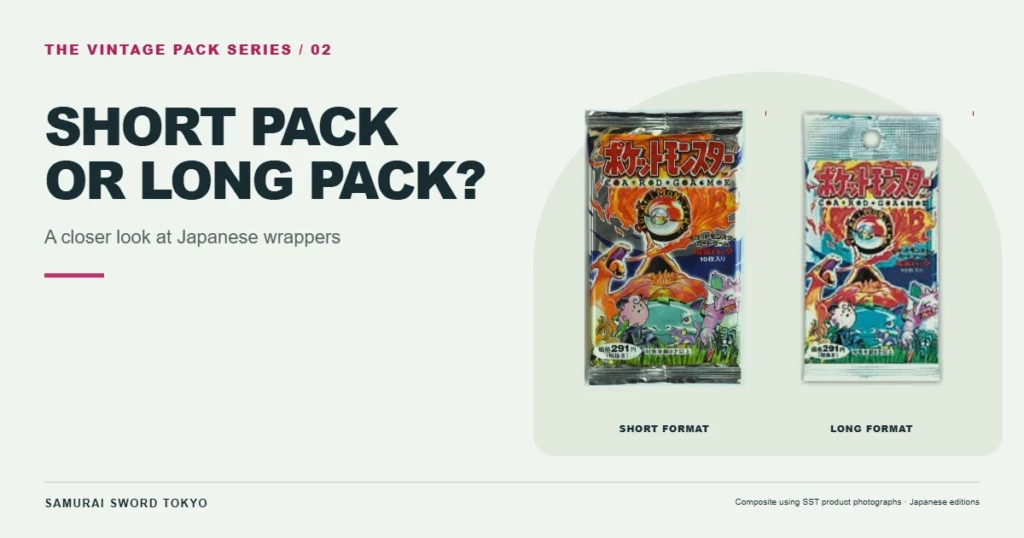
Japanese short vs long booster packs differ in wrapper format. In SST’s Base Set and Jungle listings, a short pack has no hanging tab at the top; a long pack has a hanging tab. Both formats contain 10 cards from their respective set. The extra wrapper length does not mean extra cards.
That answers the basic question, but choosing a sealed vintage pack takes another step. Set identity, wrapper format, condition and evidence about the individual item all matter. A label such as “short pack” does not, by itself, prove first-edition status, no-rarity contents, authenticity or a particular pull.
This guide compares the four Japanese Base Set and Jungle formats listed by Samurai Sword Tokyo. It also explains historical yen markings and how to compare Japanese listings with overseas sales without treating unlike packs as equivalent.
Choose the set first, then the wrapper variant. Treat edition claims and the condition of the actual pack as separate questions requiring their own evidence.
The Four Japanese Base Set and Jungle Pack Formats
“Base Set” is the familiar English search term for Japan’s original Expansion Pack. Pokemon Jungle is the next set covered here. The official Pokemon chronology dates the original launch to October 20, 1996, and places Jungle in 1997. Those are set-release dates; they do not date the manufacture of an individual surviving wrapper.
| Japanese product | Wrapper label | Top hanging tab | Cards per pack | Product details |
|---|---|---|---|---|
| Expansion Pack / Base Set | Short | Absent | 10 | Base Set Short (update: currently sold out — restock requests via Quick Order) |
| Expansion Pack / Base Set | Long | Present | 10 | Base Set Long (update: currently sold out — restock requests via Quick Order) |
| Pokemon Jungle | Short | Absent | 10 | Jungle Short (update: currently sold out — restock requests via Quick Order) |
| Pokemon Jungle | Long | Present | 10 | Jungle Long (update: currently sold out — restock requests via Quick Order) |
These specifications come from the linked SST listings. All four were sold out when checked on September 28, 2026. The links are useful for comparing product details and checking subsequent availability; they are not an indication that a pack can currently be ordered.
For a sold-out format, submit a sourcing request through Quick Order with the set name and Short or Long wrapper type. A request does not guarantee availability.
PMCG1 and PMCG2 are collector reference codes used in the listings. They help separate the original set from Jungle when English titles vary. Do not expect every wrapper to display the same code used by a retailer or database.
Both sets belong to the Japanese Old Back era. “Old Back” describes the cards’ reverse design, while short and long describe the packaging. Keeping those terms separate makes a listing easier to interpret. Our Old Back card guide covers the card design and its history in more detail.
Short, Long, 291 Yen and 300 Yen: Read Each Label Separately
SST uses Short Pack for the wrapper without the top hanging tab and Long Pack for the wrapper with it. Its descriptions present short as the generally earlier format and long as the generally later format, while explicitly calling this a collector distinction. That wording should not be expanded into a certified production date for a specific pack.
Elite Fourum’s collector research on Media Factory Base Set packs documents short and long crimps, 291-yen and 300-yen markings, and barcode/import-label differences. This is community research, not official authentication guidance. Its examples show why “long pack” alone is an incomplete variant description. We do not use its proposed sequence to certify a print run or the contents of any SST pack.
| Term in a listing | What it describes | What it does not establish |
|---|---|---|
| Short / Long | Wrapper format in the seller’s description | A manufacturer first-edition designation |
| 291 yen / 300 yen | Historical price marking on a wrapper or label | The current collectible sale price |
| Old Back | The original Japanese card-back design associated with the set | A special pack grade or condition assessment |
| No rarity | A distinction concerning the printed cards | Visible confirmation of hidden contents |
| Belum dibuka | The seller’s description of the item’s status | An independently verified history by itself |
A historical 291-yen marking is therefore not an offer to sell the pack for 291 yen today. Equally, a current asking price is not evidence of a wrapper’s release order. Record the printed marking and the current sale amount in different fields when comparing listings.
If a seller uses “first edition” loosely, ask what they mean and what supports it. An earlier wrapper format and a formal edition designation are different claims. For the separate Japanese card-stamp terminology, see our Japanese 1st Edition guide.
Base Set and Jungle: Compare the Wrapper Within Each Set
Compare Base Set Short against Base Set Long first. Then compare Jungle Short against Jungle Long. Jumping directly from Base Short to Jungle Long changes both the set and the packaging, so any difference in desirability or asking price cannot be attributed to wrapper length alone.
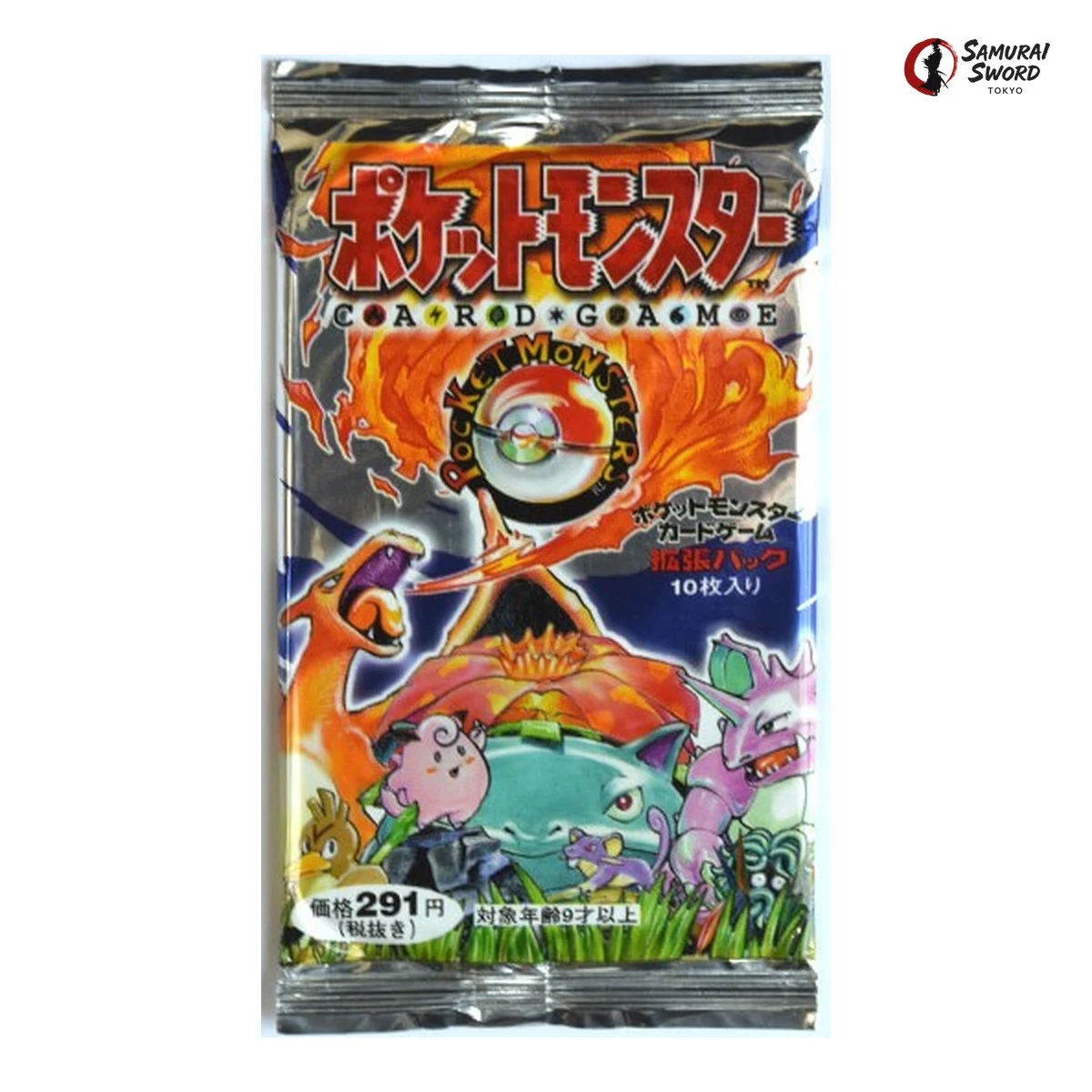
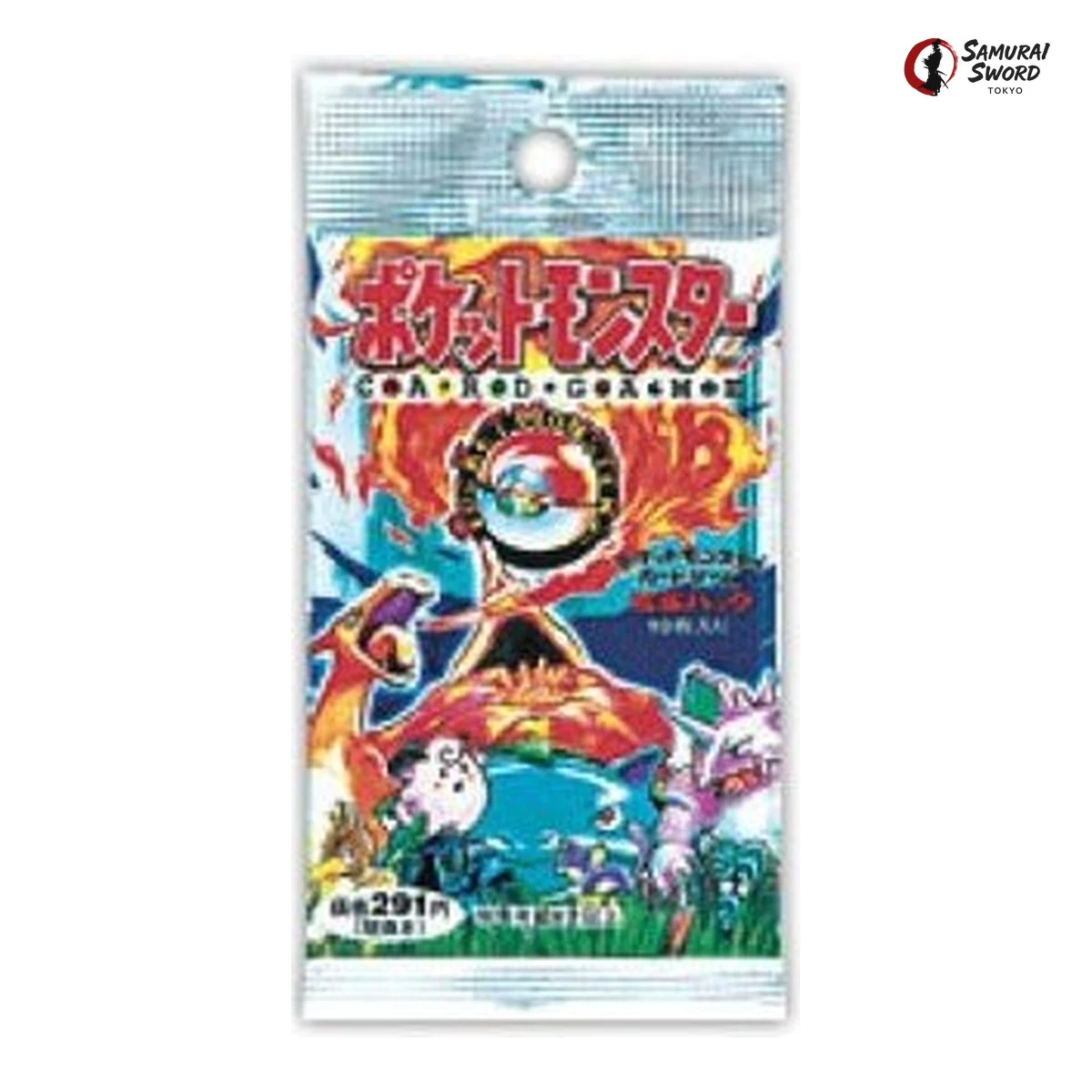
Base Set suits a collection centered on the beginning of the Japanese game. A wrapper-variant collection might eventually include both formats. Someone seeking one representative sealed pack can instead prioritize clear item photographs, acceptable presentation and a well-supported description. This is a collecting preference, not a claim that one format has better opening odds.
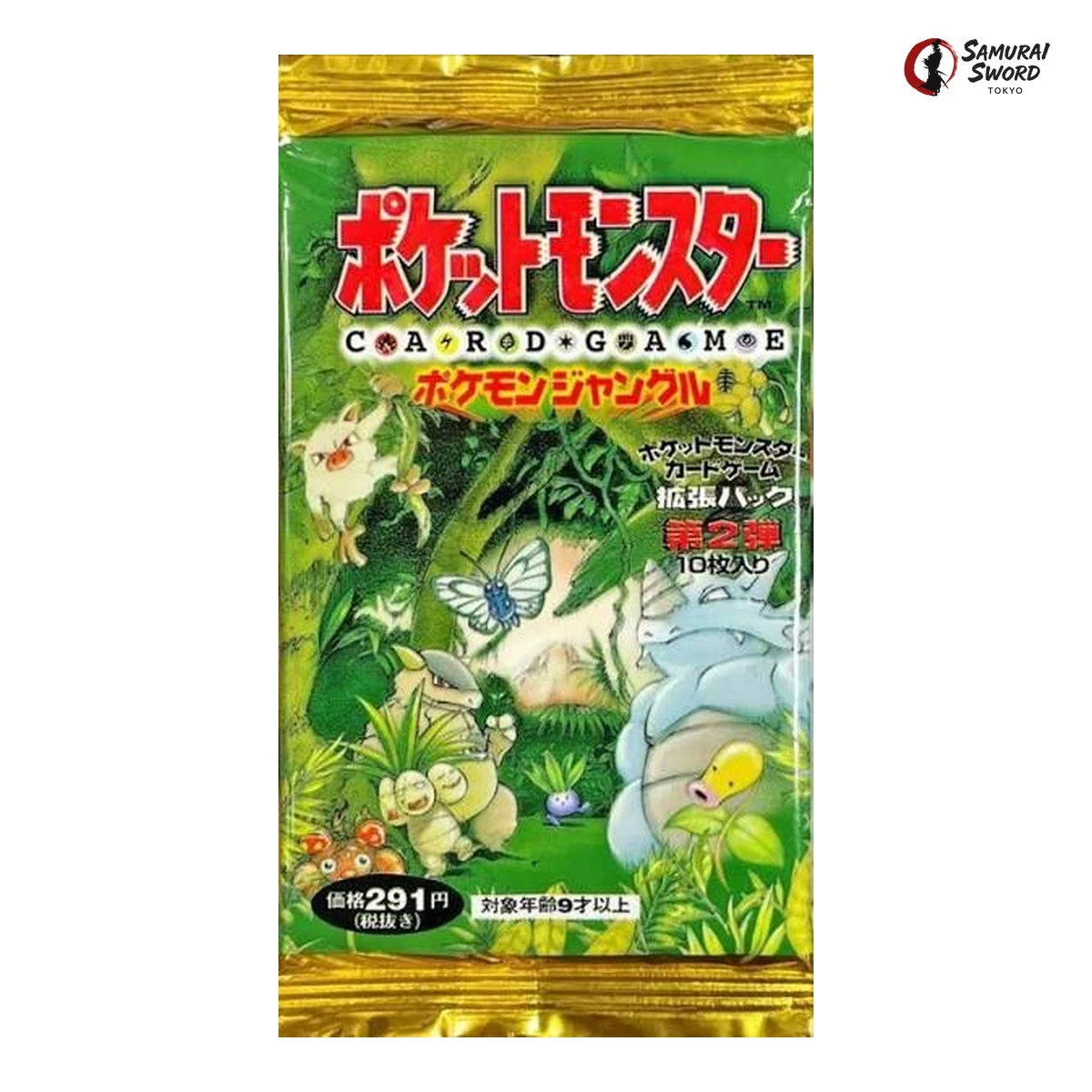
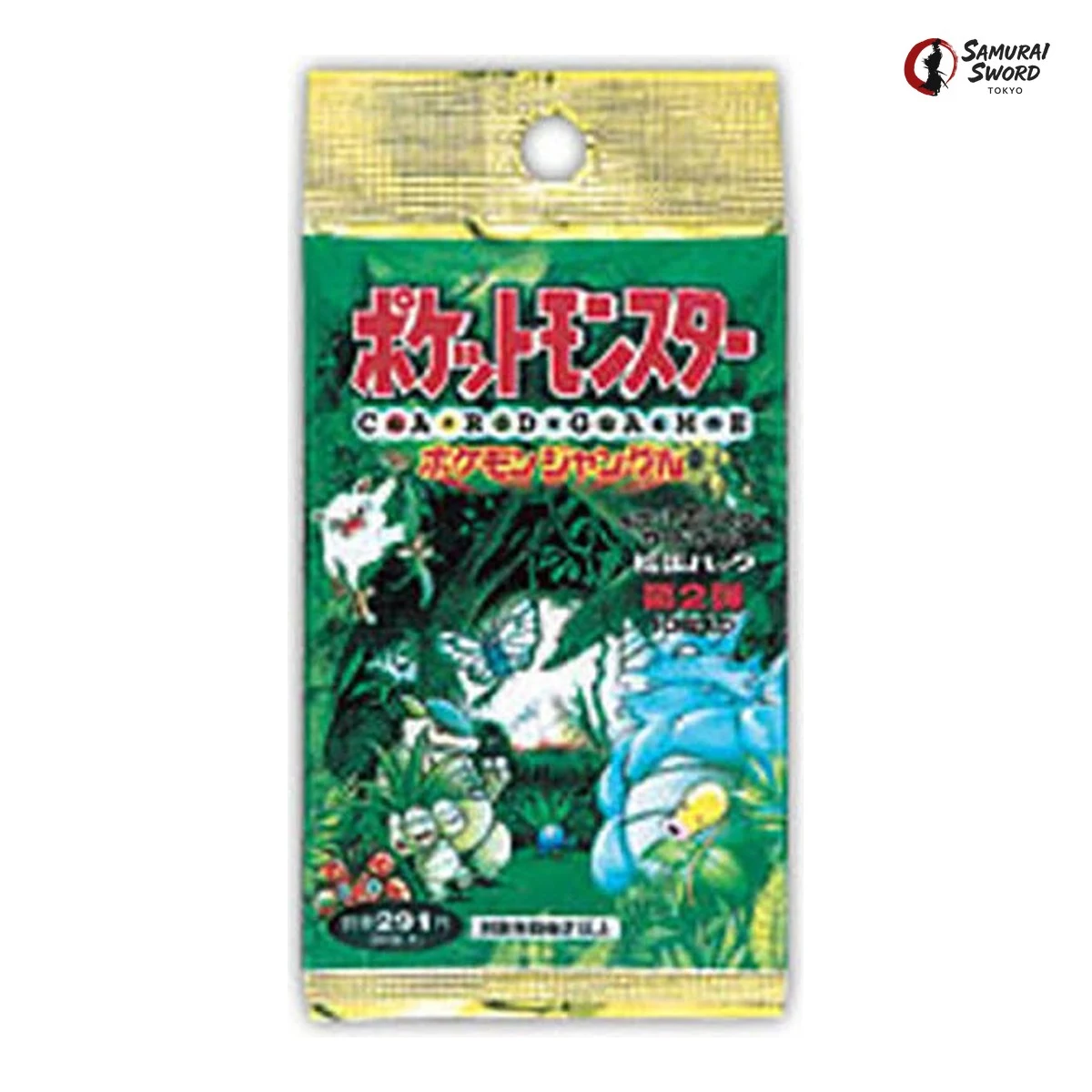
Jungle gives you a separate set in either wrapper. Its Short label does not import every claim made about original Base Set printings. In particular, applying a Base Set no-rarity discussion to Jungle merely because both use “short” would confuse packaging terminology with card-print research.
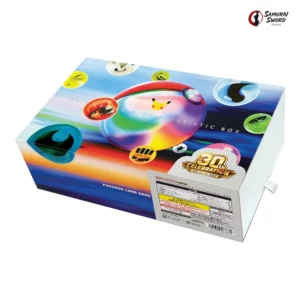
The photographs above illustrate SST’s listed products. They are not authentication certificates or proof of the cards inside. Before purchasing any available unit, establish whether its listing photograph shows that exact item or a representative example, especially when wrapper condition is central to your collection.
A second “Base” name worth recognizing
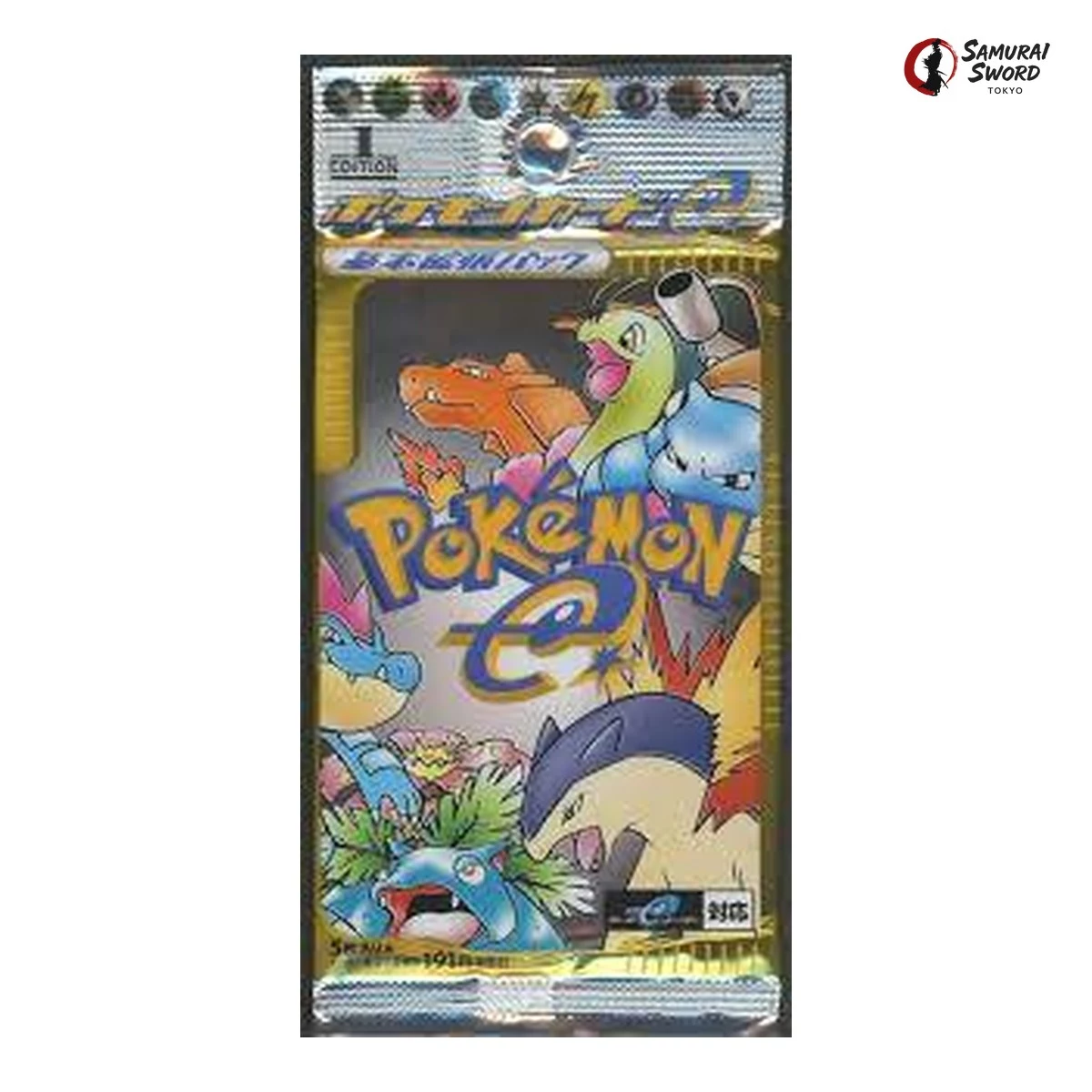
The 2001 e1 Base Expansion Pack (update: currently sold out — restock requests via Quick Order), associated with English Expedition, is another vintage product with “Base” in its name. It uses the newer Japanese card back and is listed with five kartu per pack. A search result containing “Japanese Base” therefore needs more context before it belongs in a comparison with these ten-card packs.
What to Ask About the Actual Pack Before Buying
A useful inquiry starts with the item, rather than a general question about whether short packs are better. Ask for clear, current front and back photographs, including the entire wrapper. The point is to understand what is offered and how its condition has been described, not to authenticate a valuable collectible from a single visual feature.
| Question for the seller | Why it helps | Limit of the answer |
|---|---|---|
| Are these photographs of the exact pack? | Connects visible condition to the item for sale | Photos alone do not establish complete provenance |
| What creases, tears, staining or label damage are present? | Makes display-condition expectations specific | Wrapper condition does not reveal card condition |
| What is known about its purchase and storage history? | Separates documented history from assumptions | A history may be incomplete |
| What supports any edition or contents claim? | Identifies the evidence behind stronger wording | An unsupported claim stays unverified |
| What exactly is included in this listing? | Distinguishes one pack, a lot, an empty wrapper or a graded item | A search-result title may omit details |
Read condition language literally. “Unopened” does not mean the wrapper has no storage wear, and a clean front does not describe the back. A collector keeping the pack sealed may care about a crease or damaged label that another buyer accepts. Have that discussion before treating two packs as interchangeable.
For an item carrying a significant premium, consider an independent specialist assessment. This guide does not offer a visual authentication pass/fail system. Nor does it assign contents or odds from wrapper size, a seller’s weighing claim or a photograph. If a specific card or print is your goal, a separately identified single is a more direct way to choose that exact collectible.
Keep the agreed description with your own purchase records. Recording set name, wrapper format, stated condition and the seller’s supporting photographs makes future cataloguing clearer. It also prevents a cautious seller statement from becoming an exaggerated certainty when the item is described again later.
How to Compare Japanese and Overseas Pack Prices
A Japanese marketplace result and an overseas result can look comparable while representing different products. Currency conversion is the final calculation, after identifying the pack, quantity, condition and transaction type. It cannot repair an incorrect match.
For example, a raw Japanese Base Set Long pack and a graded Japanese Base Set pack are different market records. An English Base Set pack is another product again. An asking price, an auction starting bid and a completed sale also answer different questions about what a buyer actually paid.
| Comparison dimension | Japanese listing | Overseas record | Acceptable comparison |
|---|---|---|---|
| Language and set | Original Japanese Expansion Pack | Explicitly the same Japanese release | Exclude English Base Set and Japanese e1 |
| Wrapper variant | Short/long and readable markings | Matching format and documented markings | Do not substitute a generic set title |
| Item form | One raw unopened pack | One raw unopened pack | Keep graded packs, lots and wrappers separate |
| Kondisi | Photographs and written description | Comparable visible and stated condition | Record meaningful differences |
| Transaction evidence | Verified completed sale | Verified completed sale | Keep active asks outside the sold comparison |
| Date and total cost | Sale date and included costs | Sale date and included costs | State conversion date and add applicable costs separately |
The PriceCharting Japanese Expansion Pack page is a starting point for finding sales records, but the page reviewed on September 28, 2026 included mixed listing descriptions, including a graded-pack title in an ungraded section. That makes its generic category unsuitable as an automatic valuation of a specific raw short or long pack.
Our research did not establish a matched, verified Japan-versus-overseas completed-sale sample for these four formats. We therefore do not publish a short-pack premium, an average price or a claimed import saving. When good comparisons are scarce, keeping a range unfilled is more informative than filling it with unrelated sales.
For your own comparison, retain the source listing and date alongside the amount. Where relevant, include marketplace fees, shipping and destination charges in a separate total-cost calculation. A lower headline price is only one part of the purchase decision.
Choose the Pack That Matches Your Collection
For a wrapper display, choose the artwork and format you want to see, then judge the offered example’s presentation. For a chronological collection, decide whether you want one pack per set or multiple packaging variants. These two plans produce different shopping lists even when both begin with Base Set.
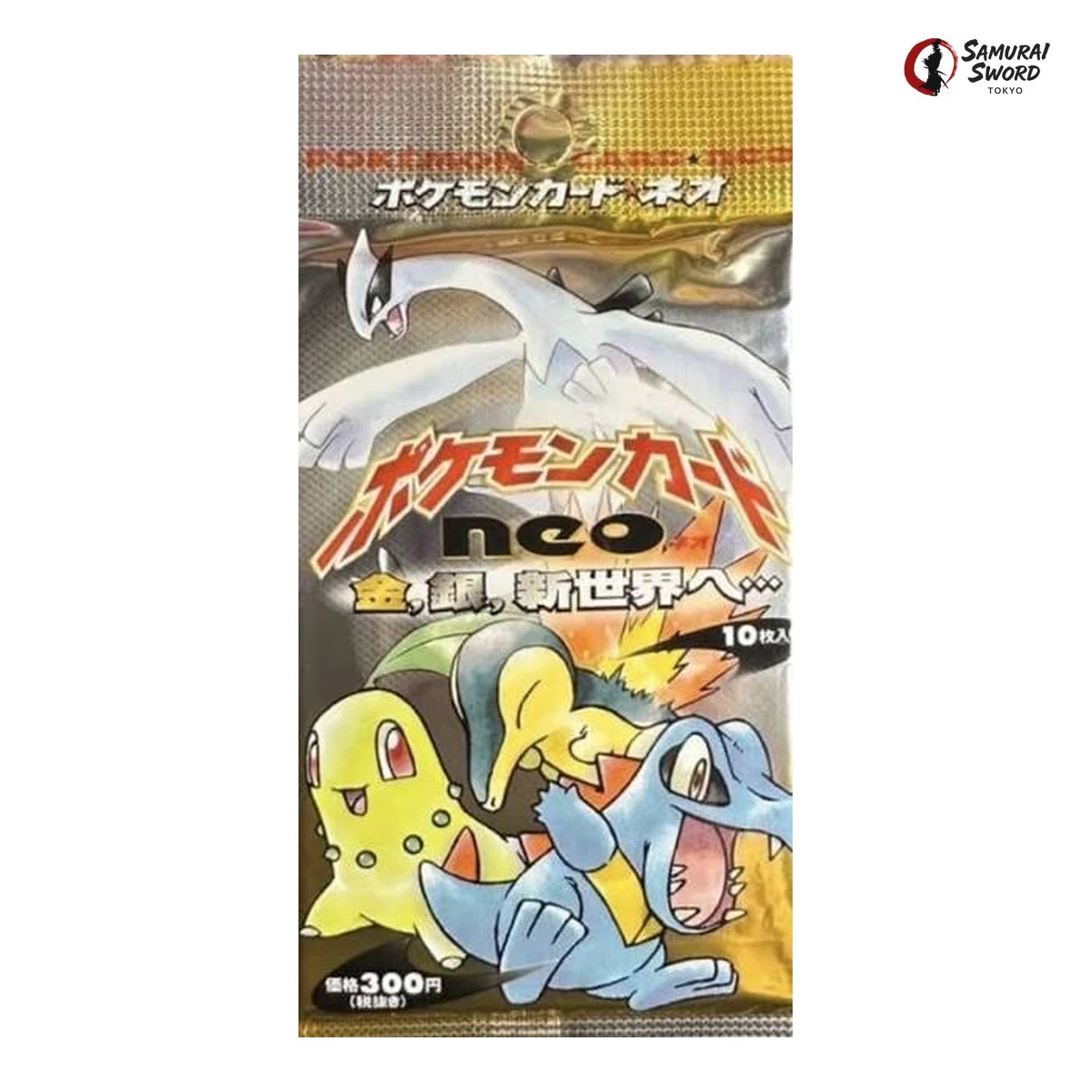
If the aim is simply to own an Old Back-era sealed booster, Base Set and Jungle are not the only possibilities. Japanese Neo1, Gold, Silver, to a New World…, is a later Old Back option with 10 kartu per pack. SST’s Neo1 listing dates the booster to February 4, 2000. It is a separate release from the December 1999 Neo Premium File.
Browse the Japanese vintage pack collection for the current selection. For a particular sold-out format, use Pesan Cepat to submit a sourcing request with the set and wrapper type. A request does not confirm availability or promise a restock.
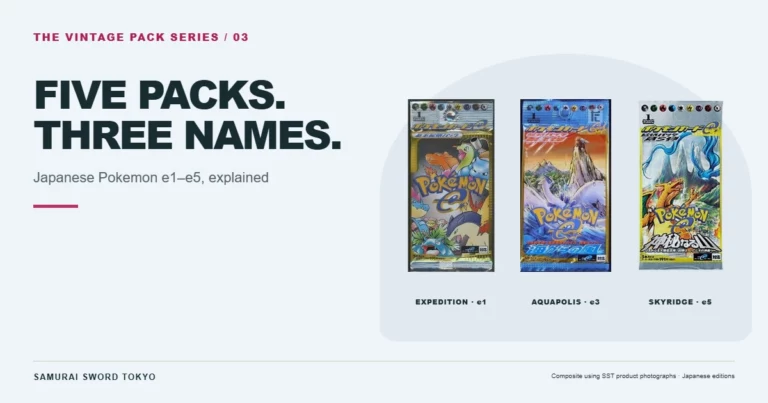
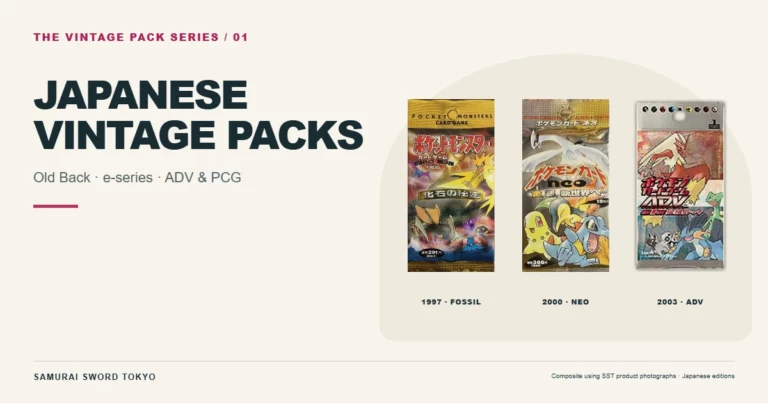
To compare other eras, continue with our Japanese vintage booster pack guide. If “Base” led you toward Expedition, our Japanese e-series pack guide separates those later releases.
Pertanyaan yang Sering Diajukan
What is the difference between Japanese short and long booster packs?
In SST’s Base Set and Jungle listings, short packs have no hanging tab at the top and long packs have a hanging tab. These are collector wrapper-format labels. Both formats contain 10 cards from their respective set.
Does a long Japanese pack contain more cards?
No. The Base Set Short, Base Set Long, Jungle Short and Jungle Long products compared here each contain 10 cards. Extra wrapper length does not mean extra cards.
Is a short Japanese Base Set pack automatically first edition?
No. Short is a collector packaging description, not an automatic manufacturer first-edition designation. Any claim about an individual pack’s print run needs separate supporting evidence.
Does a short pack guarantee no-rarity cards?
No. No-rarity describes a card-print distinction, and a sealed wrapper does not expose the cards inside. This guide does not certify no-rarity contents or assign a probability to them.
Are 291 yen and 300 yen the current values of these packs?
No. Those figures describe historical price markings found on wrappers or labels. A current collectible asking price or completed sale is a different amount and needs its own dated evidence.
Is Japanese Base Set the same as e1 Base Expansion Pack?
No. The original Japanese Expansion Pack launched in 1996 and belongs to the Old Back era. The e1 Base Expansion Pack launched in 2001, is associated with English Expedition and uses the newer Japanese card back.
Are short packs always worth more than long packs?
This research does not establish a universal premium. A useful comparison needs the same set and language, documented wrapper variants, comparable condition and verified sales of the same item form.
Where can I check availability for Japanese Base Set and Jungle packs?
Check SST’s individual product pages and Japanese vintage pack collection for current availability. Quick Order can accept a sourcing request for a sold-out format, but it does not promise stock or a restock.
Gratis 500 poin saat mendaftar
BUAT AKUN GRATIS1 pt = ¥1 saat checkout · Poin kedaluwarsa 30 hari setelah diperoleh · Bea masuk, pajak, dan biaya kepabeanan tidak termasuk dalam harga dan ditagih saat pengiriman, kecuali untuk tujuan yang kami kirim dengan bea dibayar di muka.
Dipilih untuk artikel ini
📩 Get member-only sale alerts & coupons
Sale alerts, coupons and restock notices by email — straight from Tokyo.