A LV.X card doesn’t evolve onto the Pokemon underneath it. It levels up — and that one-word distinction is why a Diamond & Pearl-era mechanic still gets asked about more than fifteen years after its last set.
Between 2006 and 2009, eleven English-language Pokemon TCG expansions carried a special gold-bordered card type called LV.X: a “level-up” form that sits on top of an existing Pokemon in play rather than replacing it through evolution. It’s a different rule from the ex cards that came before it and the GX cards that came after, and one specific LV.X — Garchomp C LV.X — ended up at the center of a World Championship-winning deck. This guide covers how the LV.X mechanic actually works, which sets carried it, and where Garchomp C LV.X’s 25th Anniversary reprint fits into the story. We ship Japanese sealed product and graded singles out of Tokyo every week, and the one LV.X print in our own catalog is the reprint covered below.
LV.X ran across eleven English-language sets from Diamond & Pearl (2006) through Arceus (2009): a Pokemon “levels up” rather than evolves, keeping every attack, Poke-Power, and Poke-Body it already had. The best-known LV.X, Garchomp C LV.X, anchored the “LuxChomp” deck that won the 2010 Pokemon World Championship. Its 25th Anniversary reprint is currently in our catalog — PSA 10 Garchomp C LV.X [S8a-P 018/025] is currently listed at ¥10,053 (~$62) (aggiornamento: esaurito — richiedi il riassortimento via Quick Order).
Pricing reflects our own catalog as of August 2026, converted at ¥163/USD.
What Is a Pokemon LV.X Card?
LV.X stands for “level-up,” and that’s a mechanically different action from evolving. A LV.X card is placed directly on top of a Pokemon of the same name that’s already in your Active spot — not played as an evolution the way a Stage 1 or Stage 2 card is. Because it isn’t an evolution, playing a LV.X card doesn’t trigger “just evolved” restrictions, and the Pokemon underneath keeps every attack, Poke-Power, and Poke-Body it already had. The LV.X card layers a gold-colored text box at the bottom of the card with its own additional attack, Poke-Power, or Poke-Body on top of what’s already there.
The mechanic’s Japanese debut was DP1, “Space-Time Creation” — released as the paired Diamond Collection and Pearl Collection sets on November 30, 2006. The first three LV.X cards were Empoleon, Infernape, and Torterra, the fully-evolved forms of the three Sinnoh starters. From there, LV.X continued through nearly every Diamond & Pearl-era expansion until its last English-language appearance in the Arceus set in 2009.
If a card is stacked on an identically-named Pokemon and keeps a gold text box at the bottom, it’s a LV.X. If the card replaces a lower-stage Pokemon through the normal evolution line, it isn’t — even if the artwork looks similar at a glance.
The Full LV.X Run: 2006–2009, Set by Set
Most LV.X Pokemon appear once per set; the exceptions are Shaymin (two Platinum prints) and Arceus (three prints in its own set). Here’s the full run across eleven English-language expansions:
| Set | LV.X Pokemon |
|---|---|
| Diamond & Pearl | Empoleon, Infernape, Torterra |
| Mysterious Treasures | Electivire, Lucario, Magmortar |
| Secret Wonders | Gardevoir, Honchkrow |
| Great Encounters | Cresselia, Darkrai, Dialga, Palkia |
| Majestic Dawn | Garchomp, Glaceon, Leafeon, Porygon-Z |
| Legends Awakened | Azelf, Gliscor, Magnezone, Mesprit, Mewtwo, Rhyperior, Uxie |
| Stormfront | Dusknoir, Heatran, Machamp, Raichu, Regigigas |
| Platinum | Dialga G, Drapion, Giratina, Palkia G, Shaymin |
| Rising Rivals | Alakazam E4, Floatzel GL, Flygon, Gallade E4, Hippowdon, Infernape E4, Luxray GL, Mismagius GL, Snorlax |
| Supreme Victors | Absol G, Blaziken FB, Charizard G, Electivire FB, Garchomp C, Rayquaza C, Staraptor FB |
| Arceus | Arceus (three separate prints), Gengar, Salamence, Tangrowth |
The two names in bold — Luxray GL from Rising Rivals and Garchomp C from Supreme Victors — are the pair that would go on to define the mechanic’s most famous competitive run, covered below.
Reading the Suffix: What “C,” “G,” and “GL” Mean
Scan the set list above and a pattern shows up: some LV.X names carry a trailing capital letter — G, GL, E4, FB, or C — while others don’t. That’s not decorative. The Platinum series introduced these cards as part of a “Pokemon SP” subset, expanded through Rising Rivals and Supreme Victors, where the suffix ties the card to a specific in-game trainer rather than leaving it as a plain wild Pokemon. On Garchomp C specifically, the “C” marks it as Champion Cynthia’s Pokemon — the same trainer pairing covered in more depth in our Garchomp cards guide. The other suffixes in the Supreme Victors and Rising Rivals lists above mark separate trainer-tagged families within those same two sets.
Garchomp C LV.X and Its 25th Anniversary Reprint
Garchomp C LV.X’s original printing is English-language Supreme Victors 145/147, a Rare Holo LV.X from 2009. Its Japanese original printing traces to the same Diamond & Pearl-Platinum period, though we haven’t been able to confirm the exact expansion or starter deck it first shipped in — the full print history and card text are covered in our Garchomp cards guide.
What we do carry is the card’s most recent reprint: Garchomp C LV.X, S8a-P 018/025, from the Promo Card Pack 25th Anniversary edition — distributed alongside the mainline “25th ANNIVERSARY COLLECTION” set (S8a), which released October 22, 2021. The reprint carries the same DP-era card design under a 25th Anniversary treatment. For the full promo pack breakdown, see our 25th Anniversary promo pack guide.
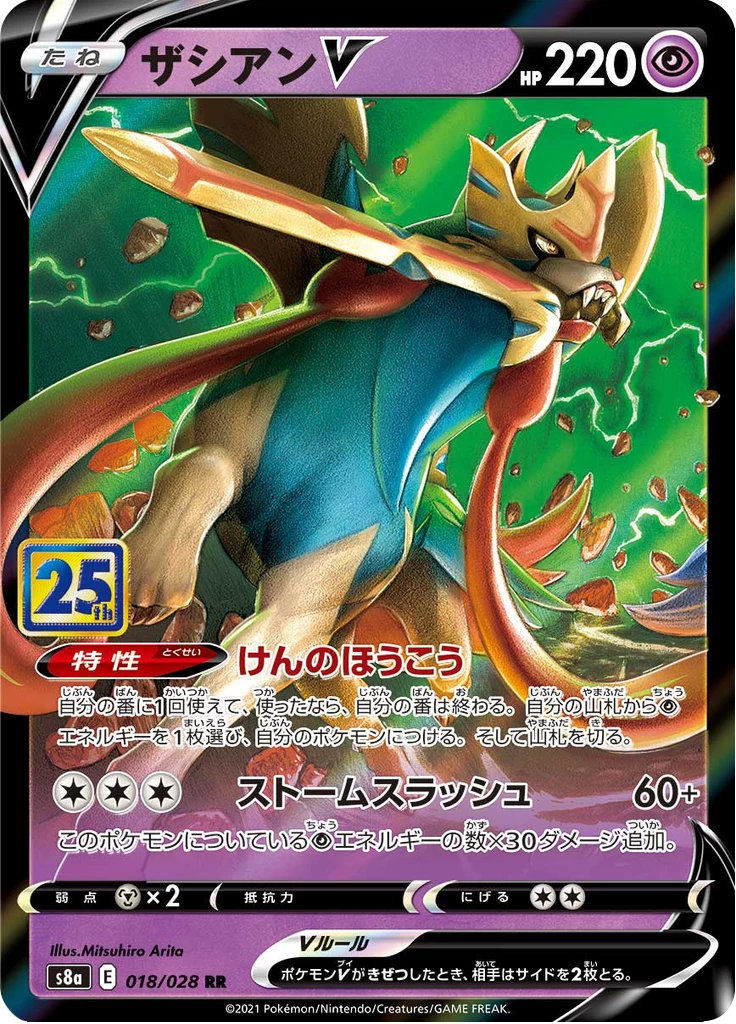
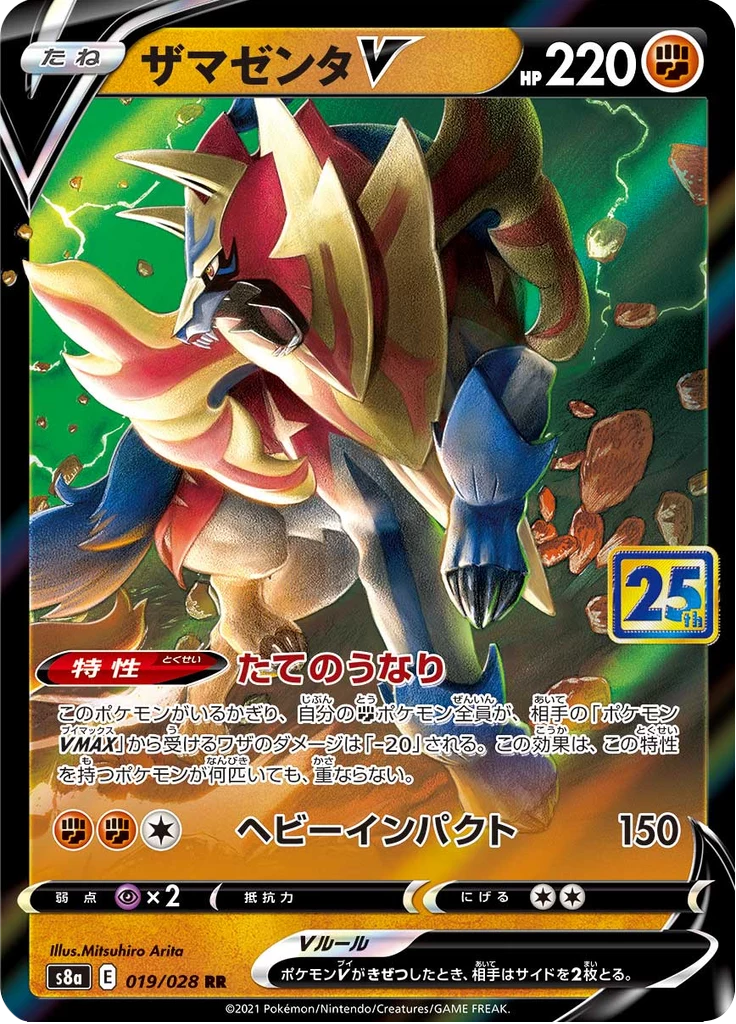
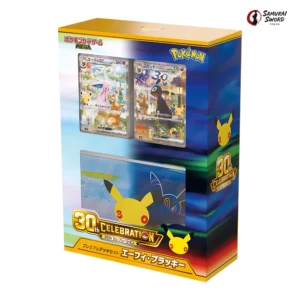
The Limitless card database doesn’t carry an image for the S8a-P promo pack itself, and Diamond & Pearl-era sets predate its Japanese image archive entirely. What it does carry are verified images from the accompanying S8a mainline set that shipped alongside the promo pack — shown below for release-era context, not as the LV.X card itself:
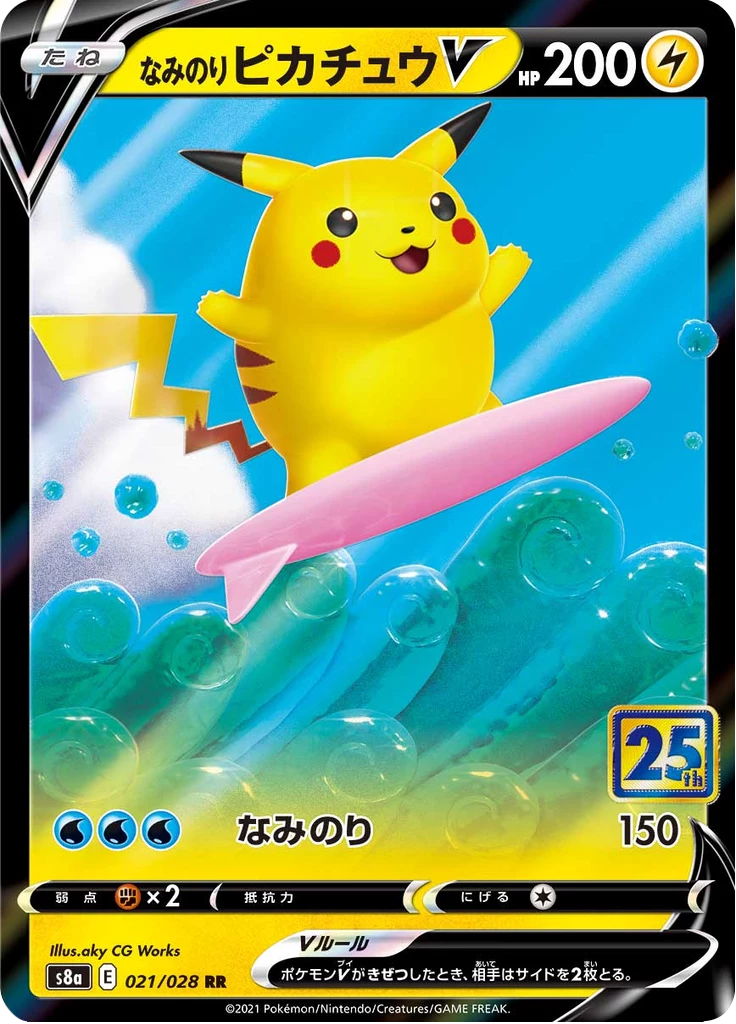
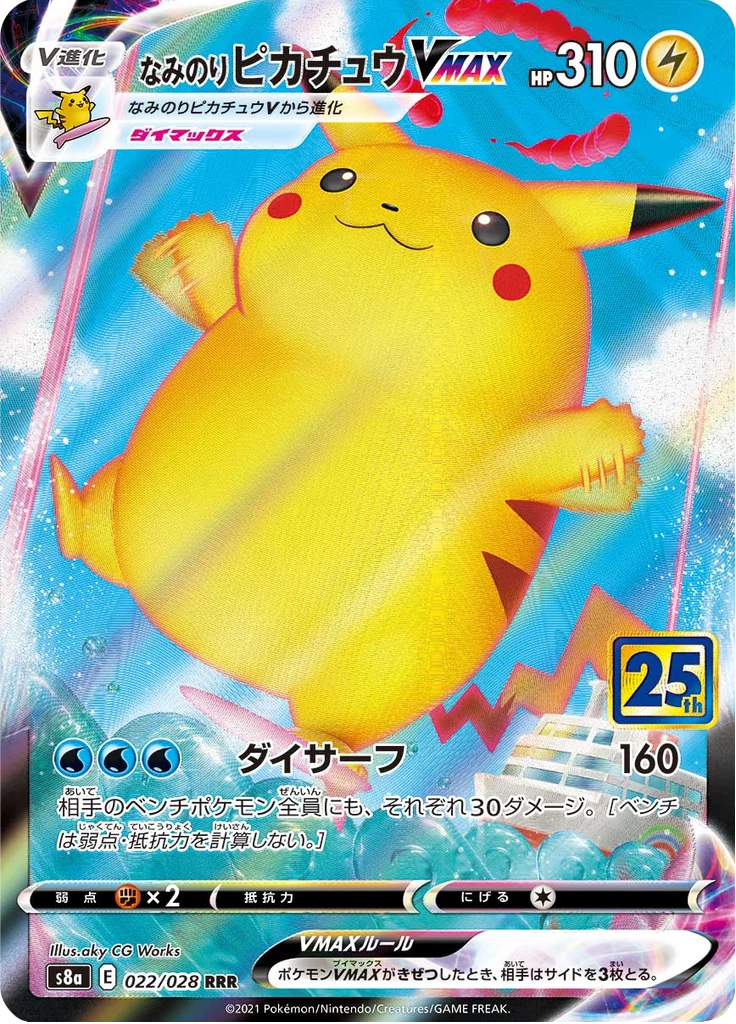
Our own graded copy of the reprint — PSA 10 Garchomp C LV.X [S8a-P 018/025] is currently listed at ¥10,053 (~$62) (aggiornamento: esaurito — richiedi il riassortimento via Quick Order).
LuxChomp: The 2010 World Championship Deck
Garchomp C LV.X’s competitive reputation comes from a single, well-documented result: at the 2010 Pokemon Trading Card Game World Championship (Masters division), Yuta Komatsuda won the title playing “LuxChomp” — a deck built around Luxray GL LV.X and Garchomp C LV.X, running two copies of Garchomp C LV.X. The winning decklist was later released as a commemorative product under the name “LuxChomp of the Spirit.”
The pairing worked because both cards kept their base Pokemon’s existing toolkit while adding a leveled-up attack on top — Garchomp C LV.X’s Dragon Rush could snipe damage onto the Bench, a role that fit directly into the deck’s overall damage-spread plan. That’s the LV.X mechanic doing exactly what it was designed to do: strengthen an existing Pokemon without resetting its evolution line.
How LV.X Compares to ex and GX
LV.X sits between two other special Pokemon card types in TCG history, and the difference comes down to prize cards. The ex line that preceded it (basic or evolved Pokemon marked “ex”) gives up two Prize cards when knocked out, in exchange for extra power. The GX line that came later pairs a dedicated GX attack with the same two-Prize cost. LV.X takes a different approach: because a LV.X card levels up an existing Pokemon rather than replacing it with a new one, it stays a single-Prize card even while adding extra attacks and abilities on top of what the base Pokemon already has.
That’s the practical reason LV.X still gets discussed as a distinct design: it added late-game power without asking a deck to trade away the extra Prize card that ex and GX both require.
For where LV.X sits inside the wider landscape of Japanese TCG rarity systems — including how rarity tiers are marked and read on modern cards — see our Japanese Pokemon card rarities explained guide. And if you’re chasing the earliest Japanese prints rather than the Diamond & Pearl era specifically, our Japanese old-back Pokemon cards guide covers the pre-2000 print runs that came a full Pokemon TCG generation before LV.X existed.
Own a Piece of the LuxChomp Story
The only LV.X card in our catalog right now is the same one that anchored a World Championship deck.
Where to Buy Japanese LV.X Cards
We ship Japanese sealed product and graded singles worldwide from Tokyo with tracked FedEx shipping. Our current LV.X stock is a single graded piece — PSA 10 Garchomp C LV.X [S8a-P 018/025], currently listed at ¥10,053 (aggiornamento: esaurito — richiedi il riassortimento via Quick Order).
For the full Garchomp print lineup, including the card’s Diamond & Pearl-era design details, see our Garchomp cards guide. For more on the promo pack this reprint came from, see our 25th Anniversary promo pack guide. Browse our full graded lineup on the PSA 10 collection or the PSA 10 card list, or use our Quick Order page to check current availability and build a mixed order in one checkout.
Domande frequenti
What does LV.X mean on a Pokemon card?
LV.X stands for “level-up.” A LV.X card is placed on top of an identically-named Pokemon already in play rather than evolving it, so the Pokemon keeps every attack, Poke-Power, and Poke-Body it already had, plus a new one added by the LV.X card’s gold text box.
Is a LV.X card the same as evolving a Pokemon?
No. Evolution replaces a Pokemon through its normal evolution line (Stage 1, Stage 2, and so on). A LV.X card levels up a Pokemon that’s already fully in play, without going through that evolution sequence, and it doesn’t trigger “just evolved” turn restrictions.
What sets did Pokemon LV.X cards appear in?
LV.X ran across eleven English-language sets from Diamond & Pearl (2006) through Arceus (2009), including Mysterious Treasures, Secret Wonders, Great Encounters, Majestic Dawn, Legends Awakened, Stormfront, Platinum, Rising Rivals, and Supreme Victors. Its Japanese debut was DP1, “Space-Time Creation,” on November 30, 2006.
Why is Garchomp C LV.X well known?
It was one half of “LuxChomp,” the deck Yuta Komatsuda used to win the 2010 Pokemon Trading Card Game World Championship (Masters division), running two copies of Garchomp C LV.X alongside Luxray GL LV.X. The winning decklist was later released as a commemorative product.
Where can I buy a Garchomp C LV.X card?
We ship Japanese sealed product and graded singles worldwide from Tokyo. Our PSA 10 Garchomp C LV.X [S8a-P 018/025], a 25th Anniversary promo reprint, is currently listed at ¥10,053.
Selezionato per questo articolo
📩 Saldi e coupon riservati ai membri
Avvisi saldi, coupon e riassortimenti via email, direttamente da Tokyo.