Most Pokémon cards are not worth much money, and a few are worth a great deal. To tell your card apart, you don’t need a price guide for every card ever printed. You need a short list of signs and a way to check them against real prices.
This guide gives you both. The signs come first: rarity tier, artwork type, character, age and print era, promo and event distribution, condition, grading and language. The examples below show how to identify the exact print before comparing asking prices. They come from about 2,900 PSA 10 Pokémon card listings in our online store’s catalogue on November 18, 2026 (most of them back-order listings). The list prices show something easy to miss. Even with a perfect grade, plenty of cards are modest, and only a small share is expensive.
One thing to keep in mind throughout: every price here is a list price, the price a card is listed at in our shop. It is an asking price, not a completed sale, and the product page shows the current figure.
- About half of the roughly 2,900 PSA 10 Pokémon card listings in our shop’s catalogue are listed under ¥30,000; the median is ¥28,600 (~$186). Only about one in ten is listed at ¥300,000 or more.
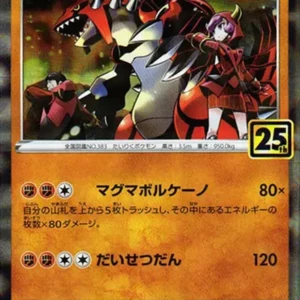
- A PSA 10 grade alone does not make a card valuable: a PSA 10 Groudon from the 25th Anniversary Collection is currently listed at ¥5,156.
- The cards that carry value usually combine several signs at once: a high rarity tier or limited promo, a popular character, a striking artwork, an older print and top condition.
All prices are list prices in our shop on November 18, 2026 (asking prices, not sales). US dollar figures use ¥154 = US$1. Most of the listings counted here, and many of the examples cited, are PSA 10 back-order listings (sourced to order). Each price is the asking price on the cited listing; the product page shows the current terms.
What the Shop’s PSA 10 Pokémon Listings Show About Value
On November 18, 2026, our catalogue had 2,910 PSA 10 Pokémon card listings with a list price, most of them back-order listings. This is a count of listings, not a count of distinct cards. Here is how the listings spread across price bands:
| List price band | Listings | Share |
|---|---|---|
| Under ¥5,000 | 0 | 0% |
| ¥5,000–¥9,999 | 555 | 19.1% |
| ¥10,000–¥29,999 | 925 | 31.8% |
| ¥30,000–¥99,999 | 717 | 24.6% |
| ¥100,000–¥299,999 | 418 | 14.4% |
| ¥300,000 and up | 295 | 10.1% |
The median list price is ¥28,600 (~$186). Put simply:
- About half of these listings sit under ¥30,000. 1,480 of the 2,910 listings are in the ¥5,000–¥9,999 and ¥10,000–¥29,999 bands.
- Three quarters sit under ¥100,000. Add the ¥30,000–¥99,999 band and you reach 2,197 listings, 75.5% of the total.
- About one in ten is listed at ¥300,000 or more. Those 295 listings account for 10.1% of the total. They are a minority even among PSA 10 listings.
These are graded-card asking prices. They do not establish the value of an ungraded copy or the amount grading changes its value.
A PSA 10 Grade Alone Does Not Make a Card Valuable
The bottom of the list proves the point. These are among the lowest list prices for PSA 10 cards in the catalogue. Each one has the top grade, and each sits around ¥5,000 (~$33):
| Card (PSA 10) | Set | What it shows | List price |
|---|---|---|---|
| Claydol P [S8a-P 016] | Promo Card Pack 25th Anniversary Edition | A promo listing can have a modest asking price | Listed at ¥5,047 as a back order |
| Raichu [S8a-G 004/015] | 25th Anniversary Golden Box | A special-box card can still be modest | Listed at ¥5,069 as a back order |
| Scovillain AR [SV1V 081/078] | Violet ex | An AR numbered above the set total is not enough | Listed at ¥5,136 as a back order |
| Groudon [s8a 006/028] | 25th Anniversary Collection | A popular Legendary is not enough | Currently listed at ¥5,156 |
| Toxtricity AR [s12a 181/172] | VSTAR Universe | A high-class pack AR can be modest | Listed at ¥5,199 as a back order |
| Cosmoem (Lillie) [s8a 015/028] | 25th Anniversary Collection | A character name in brackets is not a Trainer card | Listed at ¥5,200 as a back order |
| Pikachu ex [MP1 006/23] | The Start Deck 100 “Battle Collection Coro Ciao Ver.” | Even Pikachu is modest in a deck product | Listed at ¥5,200 as a back order |
| Noibat AR [SV9 111/100] | Battle Partners | A recent AR on its own | Listed at ¥5,200 as a back order |

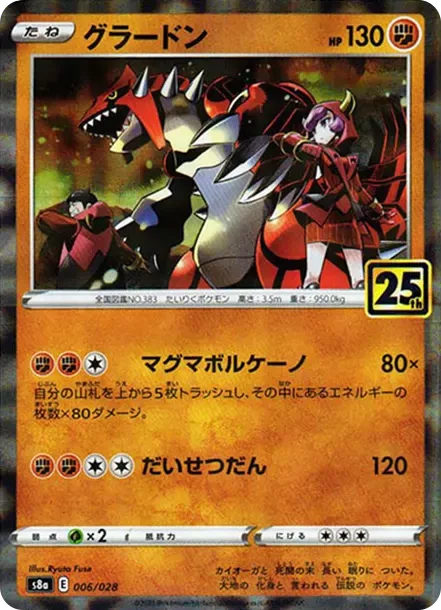
Look at what these cards have in common. Several are Art Rares, one is Pikachu, one is a promo and one is a Legendary. Each of those things can add value. None of them is enough on its own, and a perfect grade does not change that. For what the grade itself means, see our guide to PSA 10 on Pokémon cards.
Eight Signs a Pokémon Card Is Worth Money
Value comes from several signs adding up. Check each one on your card.
1. Rarity tier
Modern Japanese cards print the rarity next to the set code and card number at the bottom of the card: C, U, R and RR for the main set, then higher tiers such as AR, SR, SAR and UR above them. A collector number above the set total (for example 081/078) means the card sits outside the base numbering; read the rarity letters printed beside it. A higher tier is the first filter, but as the table above shows, it is not the last. See our guide to Japanese Pokémon rarity symbols.
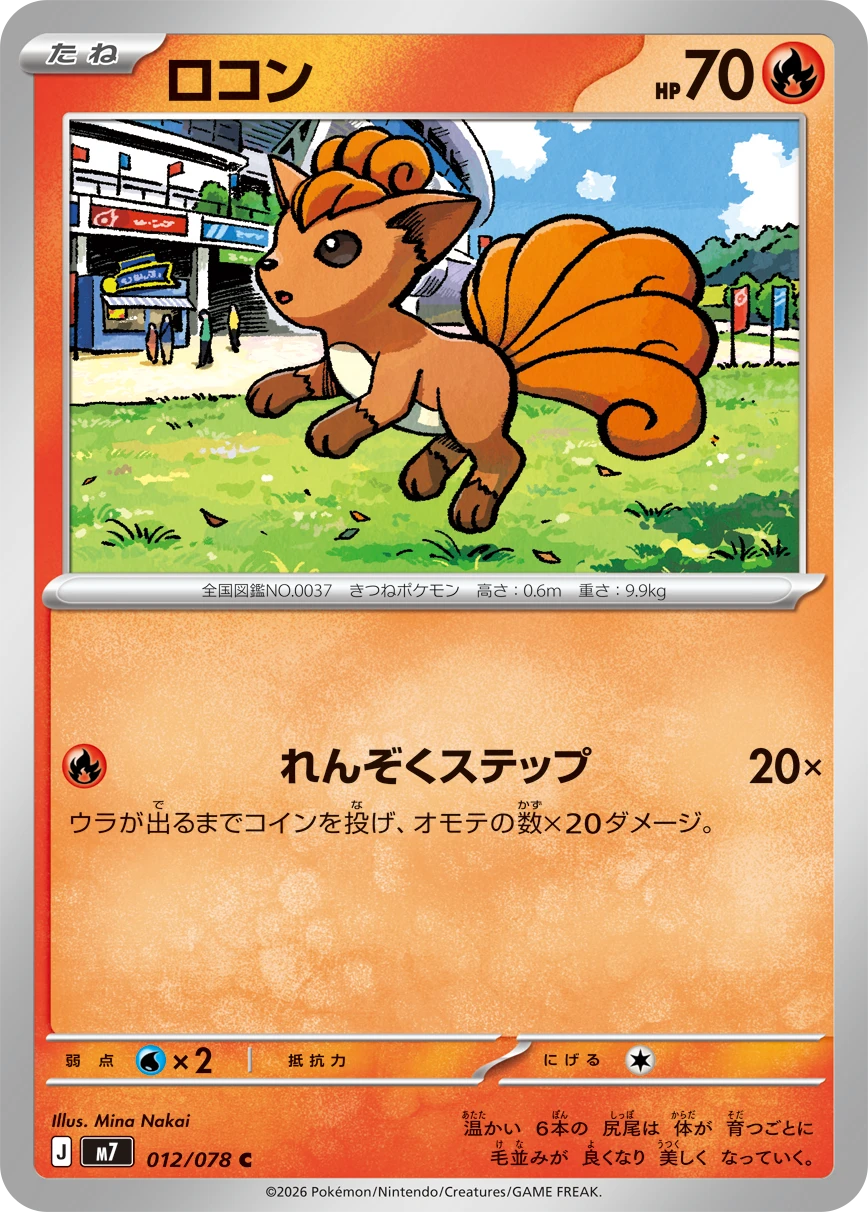
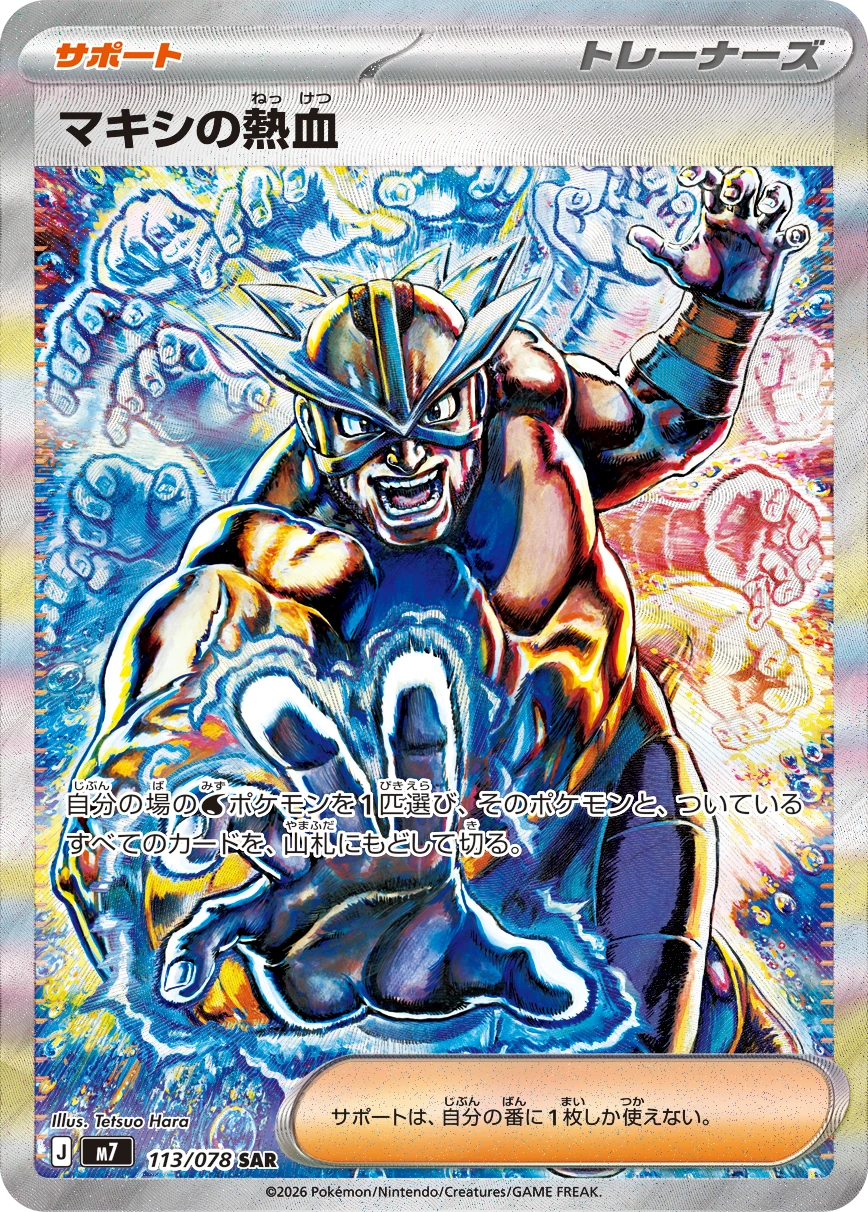
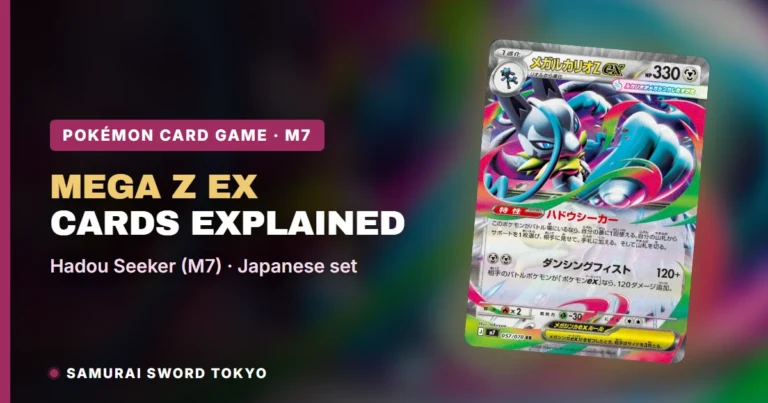
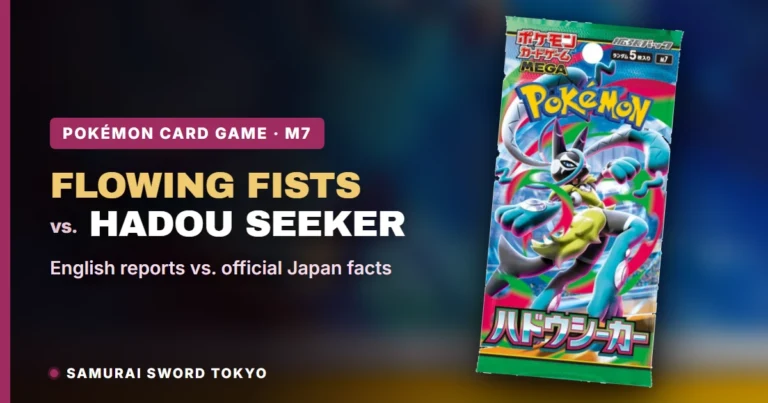
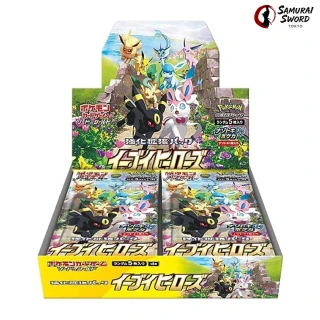
The two official card images above come from the same Japanese set, M7 ハドウシーカー (Hadou Seeker; overseas fans call it Aura Seeker). Compare the rarity letters and numbers printed at the bottom of each. The M7 card list shows the cards revealed so far.
2. Artwork type
Cards whose illustration runs across the whole card, such as special art and character art versions, tend to sit above the standard version of the same Pokémon. The alt art and SAR guide explains these versions.
3. Character
Demand follows popular Pokémon and popular Trainers. Our catalogue groups graded cards by theme, and the groups include Pikachu, Charizard, Umbreon and Eevee, and Trainer cards; the Hex Maniac listing below is one Trainer example. A popular character raises the ceiling, but the Pikachu ex deck card above shows that it doesn’t set the floor.
4. Age and print era
Store listings mark first-edition prints as “1ED” and the older card back as “Old Back”. An older print of a popular Pokémon is a strong sign; an older print of an unpopular one is not.
5. Promo and event distribution
Promos carry a promo series code with their own number (for example SM-P 287) instead of a set total. Cards handed out at events, in campaigns or in special boxes were distributed differently from booster cards. Some are listed far above others; the Claydol promo above is listed at about ¥5,000. The code tells you it is a promo.
6. Conditie and centering
Whitening on edges, soft corners, surface scratches and off-centre borders usually lower value, and they tend to matter more on cards with more potential. Our centering guide for Japanese cards shows how to judge the borders.
7. Grading
A grade from a recognised grader puts a number on condition and makes a card easier to price. A grade alone does not determine the asking price, as the ¥5,000 table shows.
8. Language
Japanese and English prints are separate cards in separate markets, with different sets, numbering and distribution. Price the language you actually hold; do not borrow a figure from the other language.
Sign, What to Look For, and an Example Listing
Use this table with your card in hand. Each example is a PSA 10 listing in our catalogue on November 18, 2026.
| Sign | What to look for on the card | Example listing |
|---|---|---|
| High rarity tier | Rarity letters such as SR or SAR at the bottom; a number above the set total | Umbreon EX SR 1ED [XY10 082/078] — listed at ¥736,975 as a back order |
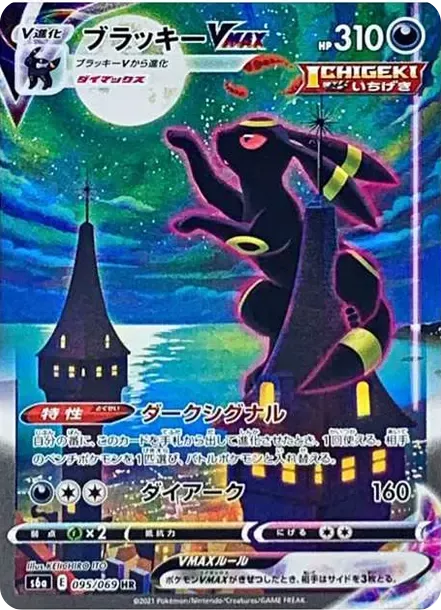
| Special artwork | Illustration across the whole card; “SA” or alternate art | Umbreon VMAX HR SA [S6a 095/069] — listed at ¥777,793 as a back order |
| Popular Trainer | A named Trainer card in a higher rarity | Hex Maniac [XY-BEST 181/171] — listed at ¥756,264 as a back order |
| Older first-edition print | A first-edition mark; an older set code; mirror foil | Umbreon Mirror 1ED [L2-L 037/080] — listed at ¥819,999 as a back order |
| Event promo | A promo series code with its own number (for example SM-P 287) instead of a set total; an event or exhibition name | Eevee Munch Exhibition promo [SM-P 287] — listed at ¥915,464 as a back order |
| Special-product promo | A promo tied to a collection file or special box | Eevee P [BW-P 189] Collection File Eevee Collection — listed at ¥768,750 as a back order |
| Top grade, few other signs | A PSA 10 slab on an anniversary-set card | Groudon [s8a 006/028] — currently listed at ¥5,156 |
Read the table from top to bottom and the pattern is clear. The cards in the upper rows combine two or three signs: Umbreon plus a special artwork, Eevee plus an event, a popular Trainer plus a number above the set total. The bottom row has the top grade and little else.
Examples from the Shop’s Listings
Here are four examples from the catalogue, with what each one shows.
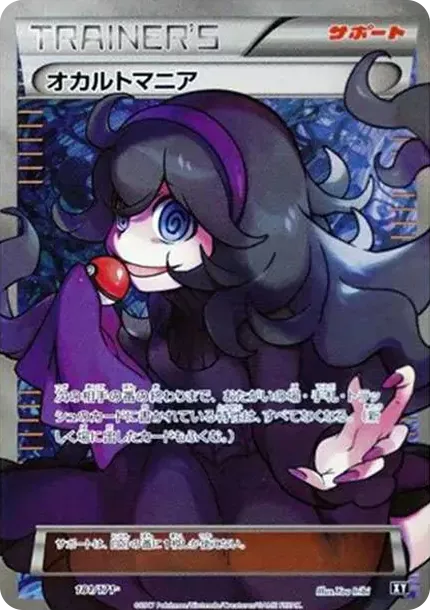
- Hex Maniac [XY-BEST 181/171], from the High Class Pack The Best of XY, is listed at ¥756,264 (~$4,911) as a back order. It is a Trainer card, numbered above the set total, of a character collectors seek out.
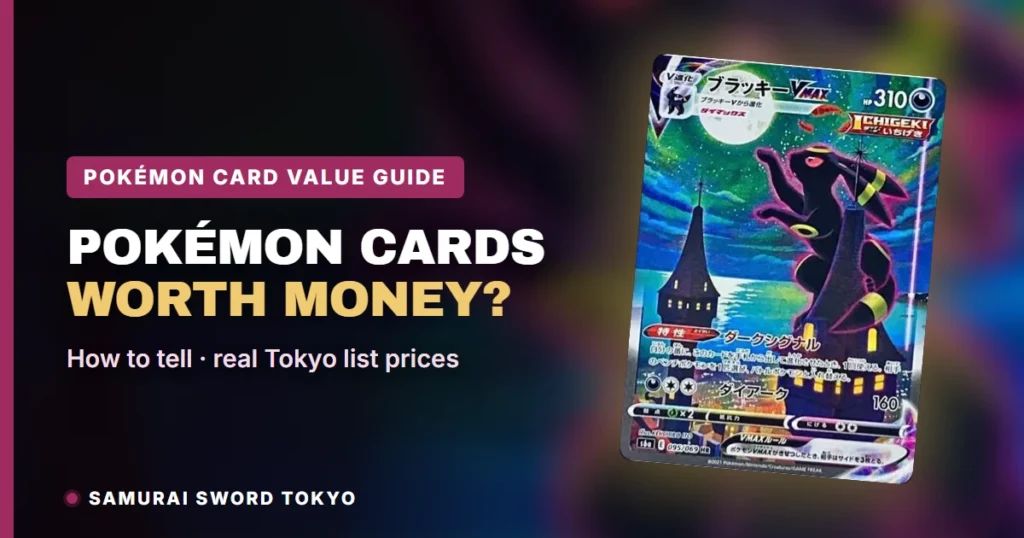
- Umbreon VMAX HR SA [S6a 095/069], from Eevee Heroes, is listed at ¥777,793 (~$5,051) as a back order. It combines a popular Eevee evolution with a special artwork and a high rarity.
- Umbreon Mirror 1ED [L2-L 037/080], from Reviving Legends, is listed at ¥819,999 (~$5,325) as a back order. It is numbered inside the set total, and the listing identifies it as a Mirror first-edition Umbreon.
- Eevee wearing a poncho [SM-P 144] is listed at ¥818,975 (~$5,318) as a back order. It is a promo with a popular character in a special costume.
Trainer cards are a strong category in Japanese collecting; our guide to the value of Japanese Pokémon cards covers how to check them alongside Pokémon cards.
Sealed Boxes Follow the Same Pattern
The same logic applies to sealed Japanese booster boxes. The selected November 18 listings range from ¥9,500 for the no-shrink M7 box to ¥427,544 for SM9 Tag Bolt:
| Box | List price |
|---|---|
| SM9 Tag Bolt | Currently listed at ¥427,544 (~$2,776) |
| S7R Blue Sky Stream | Currently listed at ¥226,656 (~$1,472) |
| S6A Eevee Heroes | Currently listed at ¥128,779 (~$836) |
| SM7A Thunderclap Spark | Currently listed at ¥68,168 |
| M7 Hadou Seeker | No Shrink version currently listed at ¥9,500 (~$62) |
The Eevee Heroes box links the two tables: the Umbreon VMAX special art above came out of that set. An unopened box still holds all of its possible pulls, and collectors price older sealed sets as items in their own right. A recent box such as M7 sits at a small fraction of those figures.
How to Check a Pokémon Card
You need the card, a light and a phone. Work through these steps in order:
- Read the bottom line. Note the set code, the card number and the rarity letters. If you can’t read a Japanese card, the rarity symbol guide linked above decodes it.
- Compare the number to the set total. A collector number above the set total (for example 081/078) means the card sits outside the base numbering; read the rarity letters printed beside it. Promos carry a promo series code with their own number (for example SM-P 287) instead of a set total.
- Look for era marks. A first-edition mark, an older card back or an older set code moves the card into a different group.
- Name the artwork type and the character. Is the illustration across the whole card? Is the subject a popular Pokémon or Trainer?
- Check condition under the light. Tilt the card. Look at all four corners, the edges, the surface and the border widths. Compare left with right and top with bottom.
- Search the exact card. Search set code, card number, language and grade together, and compare like with like: raw with raw, PSA 10 with PSA 10, Japanese with Japanese. Note whether a figure is an asking price or a sale.
- Decide what to do next. If several signs line up and condition looks clean, grading may be worth considering. If not, the card is most likely a modest one, and that is normal.
A price only matters if the card is real. Before you compare prices, run through our guide on how to spot fake Japanese Pokémon cards.
English or Japanese: What Changes
The signs are the same in both languages, but the details differ:
- Set names and codes differ. Japanese sets use their own codes (S6a, SV1V, M7) and their own numbering. An English set may combine or split Japanese sets, so the same artwork can carry a different number.
- Rarity labels are printed differently. Japanese cards print rarity letters at the bottom; English cards use a symbol. Use the system printed on your card.
- Promos differ. For a promo, match the language, promotional series and card number before comparing prices.
- Prices differ. The two languages are priced as separate markets. Always price the language you hold.
Our guide to checking Japanese Pokémon card values, linked above, goes further into the Japanese side.
Common Mistakes When Pricing a Card
- Using the top asking price as the value. An asking price is what a seller hopes for; compare several listings and, where you can, completed sales.
- Mixing versions. A standard print, a special art version and a promo of the same Pokémon are different cards with different prices.
- Pricing a raw card at the graded price. A PSA 10 figure applies to a PSA 10 card.
- Assuming a famous name is enough. The ¥5,000 table shows Pikachu, Groudon and Lillie’s Cosmoem at the bottom of the graded range.
- Grading everything. Grading fees and time make sense for cards where several signs line up, not for every card in a binder.
Where to Buy Japanese Pokémon Cards
We sell Japanese Pokémon sealed product and PSA 10 graded singles from Tokyo. A few starting points from this guide:
- S6A Eevee Heroes Japanese booster box — currently listed at ¥128,779 (~$836).
- SM7A Thunderclap Spark Japanese booster box — currently listed at ¥68,168.
- M7 Hadou Seeker Japanese booster box — No Shrink version currently listed at ¥9,500 (~$62); the product page shows the Sealed version too.
- PSA 10 Groudon [s8a 006/028] — currently listed at ¥5,156.
Sourcing requests for a specific card go through our Quick Order page; the product page shows the current terms.
Veelgestelde vragen
What Pokémon cards are worth money?
Cards that combine several signs: a high rarity tier or a limited promo, a popular Pokémon or Trainer, a special artwork, an older print and top condition. Check the combination of print, character, artwork and condition on your copy. Among about 2,900 PSA 10 Pokémon card listings in our shop’s catalogue on November 18, 2026 (most of them back-order listings), the median list price was ¥28,600, and about one in ten was listed at ¥300,000 or more.
How can I tell if my Pokémon card is rare?
Read the bottom of the card. Japanese cards print rarity letters such as C, U, R, RR, AR, SR or SAR next to the card number. A collector number above the set total (for example 081/078) means the card sits outside the base numbering; read the rarity letters printed beside it. Promos carry a promo series code with their own number (for example SM-P 287) instead of a set total.
Is every PSA 10 Pokémon card valuable?
No. Several PSA 10 cards in our catalogue are listed at around ¥5,000, including a Groudon from the 25th Anniversary Collection currently listed at ¥5,156. A grade alone does not determine the asking price.
Are Japanese Pokémon cards worth money?
Some are. The same signs apply as for English cards: rarity tier, artwork, character, age, promo distribution and condition. Japanese and English prints are separate markets, so price the language you hold.
Are old Pokémon cards always worth money?
No. Age helps when it comes with a popular character, a first-edition or older print and good condition. An old card of a less-chased Pokémon in worn condition is usually modest.
Should I get my Pokémon card graded?
Consider it when several value signs line up and the card looks clean on corners, edges, surface and centering. For a card with few signs, grading costs money, and a grade alone does not determine the asking price.
Gekozen bij dit artikel

📩 Sale-alerts & coupons alleen voor leden
Sale-alerts, coupons en restock-berichten per e-mail, rechtstreeks uit Tokio.