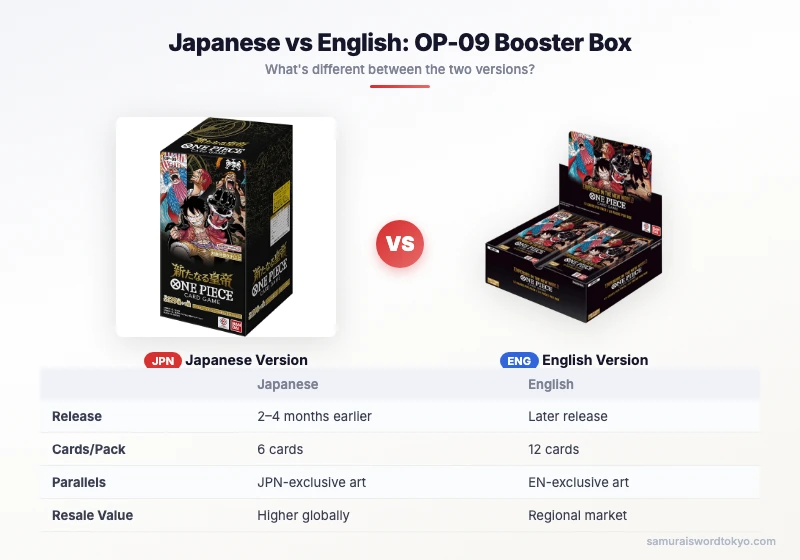
Japanese vs English Pokemon cards — the debate gets louder every time a new set drops. Japanese sets like Ninja Spinner and Inferno X keep landing months ahead of their English counterparts, and collectors worldwide keep asking the same question: which version should you actually buy?
The answer is not one-size-fits-all. It depends on whether you collect for art, play in tournaments, invest for value, or simply want the most cards for your money. Some categories favor Japanese cards by a wide margin. Others — particularly vintage and competitive play — tilt toward English.
This guide compares Japanese and English Pokemon cards across eight dimensions: print quality, rarity systems, pull rates, pricing, release timing, grading, tournament rules, and overall value.
Our team at Samurai Sword ships over 15,000 Japanese Pokemon boxes annually to collectors in the US, UK, Australia, and Canada. Every box is serial-tracked from source to delivery. The differences outlined here reflect what we handle daily across both markets.
Japanese Pokemon cards offer superior print quality, earlier access to new sets, and higher PSA 10 hit rates. JPN cards trade at a 15–40% premium over English equivalents — driven by texture quality, exclusive art, and collector demand.
The M6a 30th CELEBRATION set released worldwide in both Japanese and English as scheduled on September 16, 2026; our Japanese sealed booster box is currently listed as a pre-order at ¥25,000 (~$162) (see the Release Schedule section below). The MEGA Charizard X ex MUR, MEGA Lucario ex MUR, and Inferno X box prices below are dated September 15, 2026 (SNKRDUNK listings at ¥154/USD), and the ¥180→¥200 Japanese pack MSRP increase referenced below stays in effect.
Full card list: every card of the set with its official image, in number order — 30th CELEBRATION (M6a) card list (all 173 cards).
Japanese vs English Pokemon Cards at a Glance
| Dimension | Japanese (JPN) | English (ENG) |
|---|---|---|
| Print quality | Superior — textured holos, sharper edges, thinner card stock | Standard — silver borders since SV era narrow the gap |
| Cards per pack | 5 cards (¥200 per pack, up from ¥180 since May 2026) | 10 cards (~$4.00) |
| Packs per box | 30 packs | 36 packs |
| SR guarantee per box | Yes — at least one SR or better | No guarantee |
| Box price (market) | ¥10,000–14,500 (~$65–94) | $247–266 |
| Release timing | 3–6 months earlier | Follows JPN releases |
| Tournament legal | JPN tournaments only | International/ENG tournaments |
| PSA 10 rate (modern) | Community estimate ~15–20% | Community estimate ~8–12% |
Print Quality and Card Design
Japanese Pokemon cards have a measurable edge in print quality — and that gap widens with rarity.
Holographic Finish and Texture
Common and uncommon cards feel nearly identical between languages. The difference appears at RR (Double Rare) and above. Japanese SARs (Special Art Rare) feature deeper texture embossing that catches light differently from English SIRs (Special Illustration Rare). The holographic patterns on Japanese cards use a finer grain, creating a smoother shimmer rather than the rainbow-streak effect common in English prints.
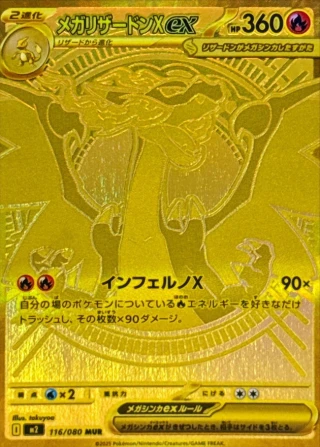
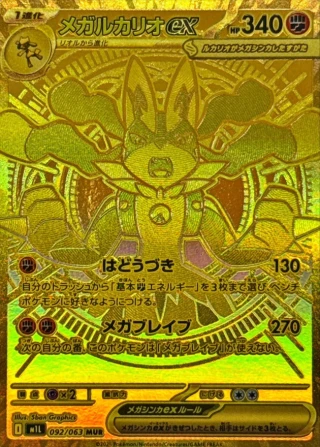
MEGA era cards (2025–2026) amplified this gap. The MUR (Mega Ultra Rare) rarity — exclusive to Japanese sets — uses a gold-base finish with rainbow shimmer layering that has no English equivalent.
Card Back, Border, and Thickness
Japanese cards have a distinct blue card back, compared to the standard purple/blue pattern on English cards. Border thickness differs: Japanese cards use a thinner yellow border on the front face. Card stock is thinner in Japanese prints, which paradoxically makes them easier to keep in mint condition — less warping from humidity changes.
English Scarlet & Violet era cards introduced silver borders, narrowing the visual gap on lower rarities. At SR (Super Rare) and above, the difference remains clear.
The Rarer the Card, the Bigger the Gap
At RR level, print differences are subtle. By SAR/SIR level, the gap is visible under any lighting. At MUR level, Japanese cards occupy a tier that English cards simply do not have. The Mega Charizard X ex MUR from Inferno X — with a lowest asking price of ¥75,000 (~$487) (any condition) on SNKRDUNK as of September 15, 2026 — showcases craftsmanship that sets a new standard for the hobby.
Rarity Systems Compared
Japanese and English Pokemon cards use overlapping but distinct rarity systems. Understanding these differences matters for both collecting and evaluating value.
JPN Rarity Symbols vs ENG Equivalents
| JPN Rarity | Symbol | ENG Equivalent | Notes |
|---|---|---|---|
| C (Common) | — | C (Common) | Identical |
| U (Uncommon) | ◆ | U (Uncommon) | Identical |
| R (Rare) | ★ | Rare Holo | Similar |
| RR (Double Rare) | ★★ | Double Rare | Similar |
| AR (Art Rare) | — | IR (Illustration Rare) | Different naming |
| SR (Super Rare) | ★★★ | Ultra Rare | Different naming |
| SAR (Special Art Rare) | — | SIR (Special Illustration Rare) | JPN = SAR, ENG = SIR |
| UR (Ultra Rare) | — | Hyper Rare / Gold | Gold-border cards |
| MUR (Mega Ultra Rare) | — | No equivalent | JPN exclusive (MEGA era) |
| MA (Mega Art) | — | No equivalent | JPN exclusive (MEGA era) |
| BWR (Black Wing Rare) | — | No equivalent | JPN exclusive — extremely rare |
MEGA Era Exclusives: MUR, MA, and BWR
The MEGA era (2025–2026) introduced three rarity tiers exclusive to Japanese sets:
MUR (Mega Ultra Rare) sits at the top. Gold-base artwork with rainbow shimmer, pulling at roughly 1 per 50 boxes. Cards like Mega Charizard X ex MUR (¥75,000, ~$487, any condition, lowest ask on SNKRDUNK as of September 15, 2026) and Mega Lucario ex MUR (¥30,000, ~$195, any condition, same source) represent the pinnacle of modern Pokemon card craftsmanship.
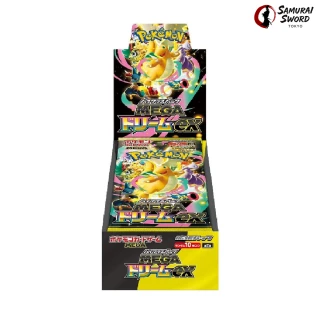
MA (Mega Art) cards appear at roughly 1 per 8–9 standard boxes. In High Class Packs like MEGA Dream ex, MA cards pull at approximately 1 per box.
BWR (Black Wing Rare) is the rarest tier at an estimated 0.002–0.004% rate. These command five-figure prices on the secondary market.
English Mega Evolution sets — including Perfect Order (released March 27, 2026) — restructure the rarity system. MUR, MA, and BWR do not exist in English sets. Collectors after these rarities can only get them in Japanese.
Pull Rates and Box Structure
Guaranteed pull structure is the single biggest practical difference between Japanese and English boxes — and the primary reason many collectors switch to Japanese Pokemon cards.
5-Card JPN Packs vs 10-Card ENG Packs
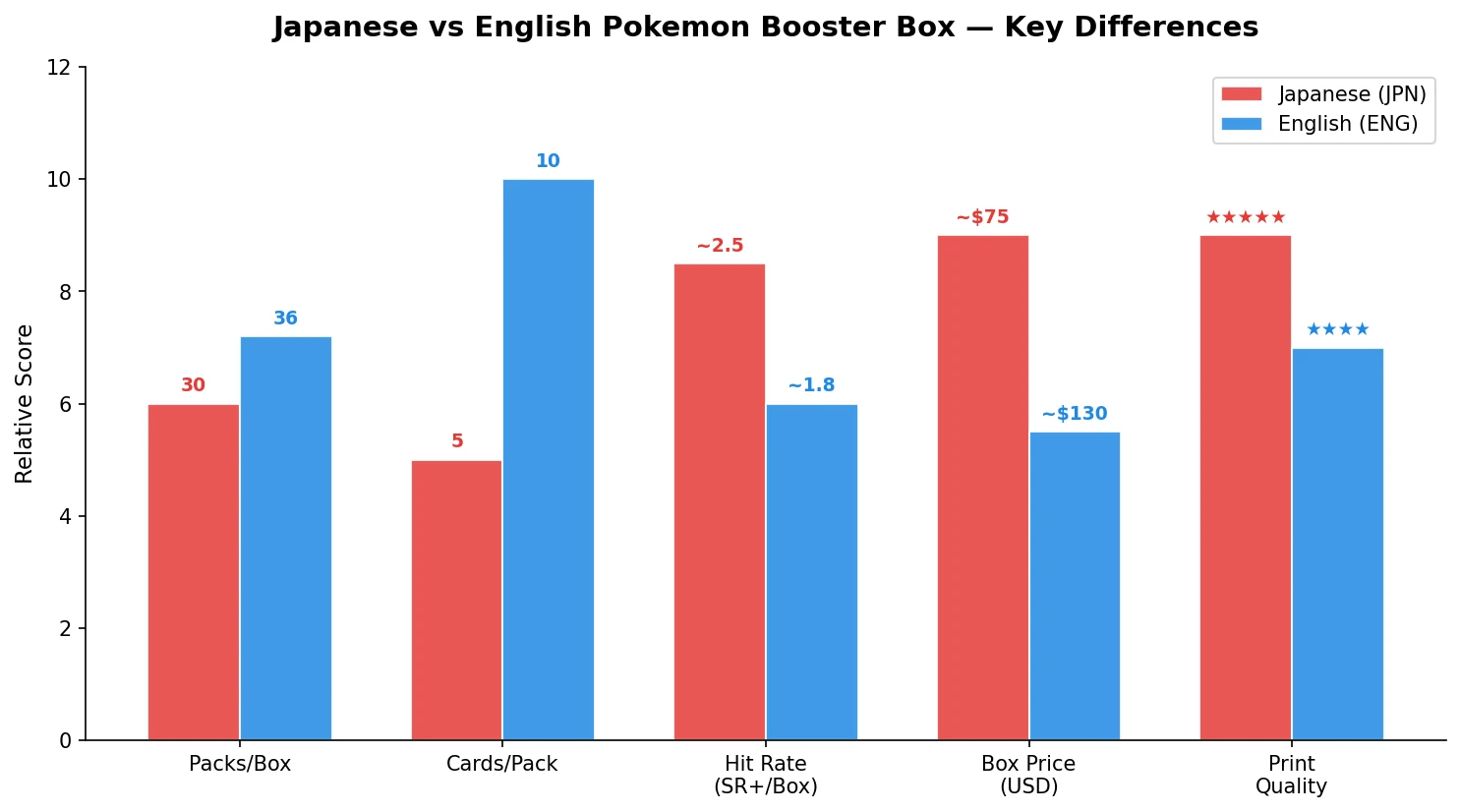
Japanese booster packs contain 5 cards. English packs contain 10 cards. A Japanese box (30 packs, 150 cards) costs ¥10,000–14,500 (~$65–94) on the secondary market as of March 2026. An English box (36 packs, 360 cards) runs $247–266.
On a per-card basis, Japanese boxes deliver fewer total cards but at a fraction of the cost.
Guaranteed SR per JPN Box
Every Japanese standard booster box guarantees at least one SR or better pull. Japanese consumer protection regulations around randomized products support this guaranteed structure. Pull rates are estimated based on community opening data — not officially confirmed by The Pokemon Company. A typical MEGA era box includes:
- 1× SR or better (guaranteed)
- 2–3× Art Rare (AR)
- 2× Double Rare (RR)
- Multiple holos across all 30 packs
English boxes carry no such guarantee. You can open an entire English booster box and pull nothing above an Ultra Rare — statistically unlikely, but it happens.
What This Means for Your Collection
| Factor | JPN Box | ENG Box |
|---|---|---|
| Total cards | 150 | 360 |
| Guaranteed SR+ | Yes | No |
| Market price (Mar 2026) | ¥10,000–14,500 (~$65–94) | $247–266 |
| Cost per guaranteed hit | = box price | N/A (no guarantee) |
| SAR/SIR pull rate | ~1 per 5–6 boxes | ~1 per 6–8 boxes (estimated) |
For collectors building a set or chasing chase cards, the Japanese box offers a more predictable and cost-effective path.
Price Comparison: Real Market Data
Price is where the “Japanese is always better” narrative gets nuanced. The answer varies dramatically by era and card type.
Modern Cards: The JPN Premium
For modern chase cards (2024–2026), Japanese versions typically trade at a 15–40% premium over English equivalents. This premium reflects earlier release dates, superior print quality at high rarities, and collector preference for the “original” Japanese version.
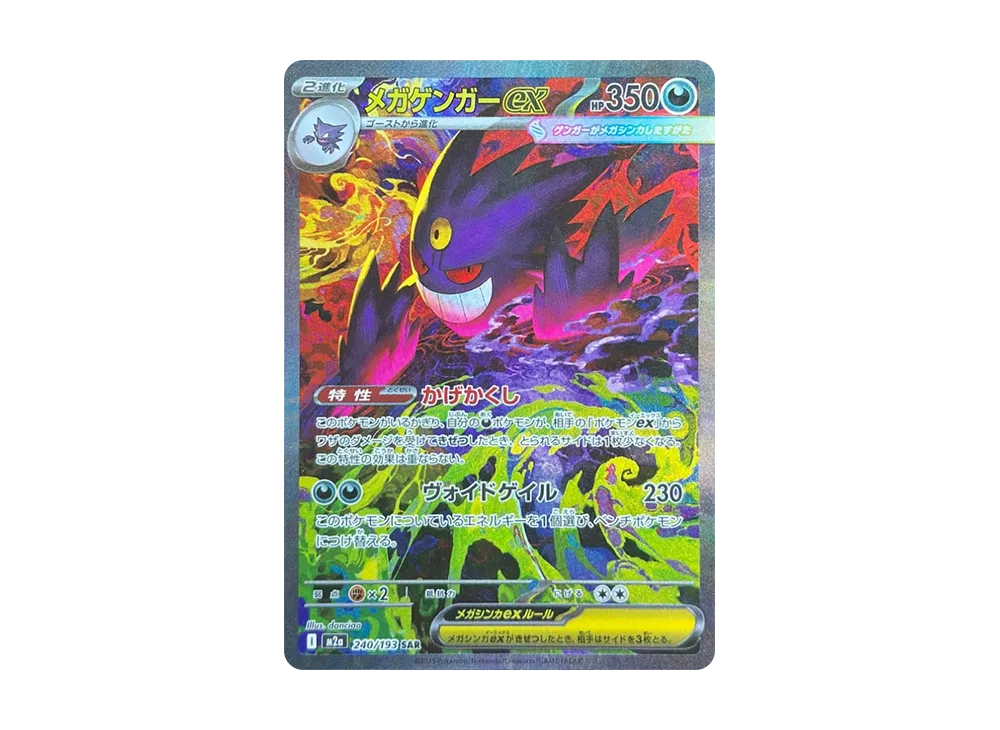
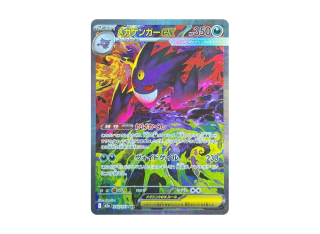
Example — Mega Gengar ex SAR (MEGA Dream ex): Japanese SAR: ~$316 ungraded, $660 PSA 10 (as of March 2026). No English equivalent exists yet — MEGA Dream ex has not been reprinted in English, making the Japanese version the only option.
Vintage Cards: When English Costs More
For vintage cards (Base Set through Neo era), the price relationship flips:
| Card | JPN Price | ENG Price | ENG Premium |
|---|---|---|---|
| Base Set Charizard (raw) | ~$241 | ~$355 | ENG 1.5× |
| Neo Genesis Lugia (raw) | ~$121 | ~$260 | ENG 2.1× |
Prices as of March 2026. English vintage commands higher prices due to stronger US/UK nostalgia demand, lower original supply reaching collectors, and decades of established PSA population data.
Sealed Box Prices: JPN vs ENG
At the box level, Japanese sealed product is consistently more affordable:
| Set | JPN BOX (SNKRDUNK) | ENG BOX (TCGPlayer) | JPN Savings |
|---|---|---|---|
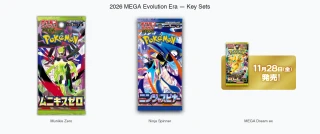
| Ninja Spinner (m4) | ¥10,000 (~$65) | — | — |
| Inferno X (M2) | ¥16,399 (~$106) | — | — |
| MEGA Dream ex (M2a) | ¥9,500 (~$62) | — | — |
| Journey Together (SV09) | — | $247 | — |
| Surging Sparks (SV08) | — | $266 | — |
The Inferno X figure above is the lowest SNKRDUNK asking price as of September 15, 2026; Ninja Spinner and MEGA Dream ex box prices are unchanged from March 2026 and not yet re-verified.
Japanese boxes cost 60–75% less than English boxes at current market prices, while delivering guaranteed pulls that English boxes do not match.
May 2026 Price Increase: What It Means
Since May 2026, new Japanese booster packs have increased from ¥180 to ¥200 per pack (+11%), and box MSRP rose from ¥5,400 to ¥6,000. This was the first increase since October 2022 when packs went from ¥165 to ¥180.
For the secondary market, the impact on existing sets is minimal — BOX prices are already set by supply and demand, not MSRP. For new releases since May, secondary market BOX prices have generally shifted upward by roughly ¥1,000–2,000. Japanese boxes still cost a fraction of English equivalents.
If you have been considering a Japanese box purchase, sets released before May 2026 — including Ninja Spinner, Inferno X, and every MEGA era set currently available — remain at the pre-increase MSRP structure.
Release Schedule and Early Access
Japanese sets release 3–6 months before their English counterparts — a structural advantage for collectors and investors.
When Inferno X launched in Japan on September 26, 2025, collectors worldwide could acquire Mega Charizard X ex MUR cards months before the English equivalent (Perfect Order, March 27, 2026). This early window offers first-mover pricing and collection completeness that English-only collectors cannot match.
2026 Release Calendar
| JPN Set | JPN Release | ENG Equivalent | ENG Release | Gap |
|---|---|---|---|---|
| Ninja Spinner (m4) | Mar 13, 2026 | Chaos Rising | May 22, 2026 | ~10 weeks |
| Perfect Order (ENG) | — | Perfect Order (ME03) | Mar 27, 2026 | JPN sets M1L/M1S/M2 combined |
| Abyss Eye (Pitch Black) | May 22, 2026 | TBA | Late 2026 | TBD |
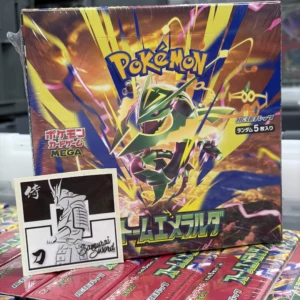
| Storm Emeralda | Jul 31, 2026 | TBA | Late 2026 | TBD |
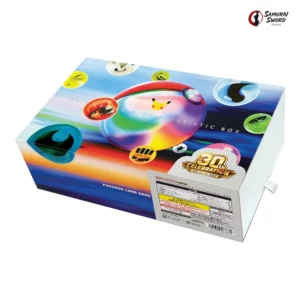
One exception to the usual JPN-first pattern: M6a 30th CELEBRATION released worldwide in both Japanese and English on September 16, 2026 — the first worldwide-simultaneous JP/EN release — with the Japanese sealed booster box currently listed as a pre-order at ¥25,000 (~$162).
For the latest Japanese Pokemon booster boxes including upcoming releases, see our full buying guide.
Grading and Investment Value
Japanese cards hold a structural advantage in grading — and that advantage translates directly to returns.
PSA 10 Rate: JPN vs ENG
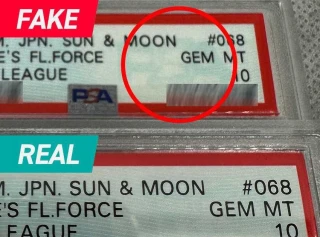
Collector community data suggests Japanese modern cards achieve PSA 10 (Gem Mint) at roughly 15–20%, compared to an estimated 8–12% for English cards. No official PSA breakdown by language exists, but the directional advantage is well-documented in community opening data. The primary factors:
- Centering: Japanese printing maintains tighter centering tolerances (consistently 60/40 or better). English cards show higher centering variability.
- Edge quality: Thinner Japanese card stock produces cleaner factory cuts with fewer whitening issues.
- Surface consistency: Japanese holographic layers show fewer print lines and roller marks.
For a detailed grading walkthrough, see our PSA grading guide.
Long-Term Value Trends
A PSA 10 Japanese card does not automatically sell for more than a PSA 10 English card. For many vintage cards, English PSA 10s command a 20–50% premium over Japanese PSA 10s — precisely because English 10s are scarcer.
The investment calculus:
- Japanese cards: Higher probability of achieving PSA 10 → lower grading costs per gem mint card → more predictable returns
- English cards: Lower PSA 10 probability → but each PSA 10 commands a higher premium due to scarcity
For investors focused on modern MEGA era cards, Japanese versions offer better risk-adjusted returns. For vintage collectors, English remains the established market with deeper liquidity.
Tournament Legality
Tournament legality is the one area where English cards hold a clear, non-negotiable advantage.
Japanese Pokemon cards cannot be used in English-language official tournaments (Play! Pokemon events, Regional Championships, World Championships). The reverse is also true — English cards cannot be used in Japanese official tournaments.
This is a hard rule, not a preference. Mixed-language decks are not permitted in sanctioned play.
For casual play, kitchen-table games, and local leagues that don’t enforce official rules, language does not matter. Many collectors use Japanese cards in casual settings specifically because of the superior art and print quality.
If competitive play is your primary goal, English cards are the only option for international tournaments.
Who Should Buy Japanese vs English?
The right choice depends entirely on your primary use case.
| Buyer Type | Recommendation | Key Reason |
|---|---|---|
| Collector (display/binder) | Japanese | Superior print quality, exclusive MUR/MA/BWR, guaranteed SR per box |
| Competitive player | English | Tournament-legal in international events |
| Investor (modern) | Japanese | Higher PSA 10 rate, lower box cost, JPN premium on modern SARs |
| Investor (vintage) | English | Deeper market, higher liquidity, established price history |
| Gift buyer | Either | Japanese for “unique/premium” feel; English if recipient plays competitively |
| Budget collector | Japanese | Boxes cost 60–75% less with guaranteed pulls |
For Collectors
Japanese cards are the clear choice for display collectors. The combination of textured SARs, exclusive MUR/MA/BWR rarities, guaranteed SR pulls per box, and earlier release dates makes Japanese the preferred format worldwide. Our most popular boxes — Ninja Spinner, Inferno X, and Mega Brave — ship to collectors in 40+ countries who specifically want Japanese printing quality.
For Players
If you compete in Play! Pokemon events, English is your only option. Build your competitive deck in English and keep a separate Japanese collection for display. Many competitive players maintain both — English for tournaments, Japanese for their personal collection.
For Investors
Modern Japanese cards (MEGA era SARs, MURs) offer better entry prices with higher PSA 10 probability. Vintage English cards (Base Set, Neo series) remain the blue-chip assets of the hobby. Match your investment thesis to the era you are targeting.
For detailed investment analysis, see our Japanese Pokemon card investment guide.
Where to Buy Japanese Pokemon Cards Safely
Buying Japanese Pokemon cards from overseas requires trust in authenticity. Here is what to look for:
- Factory shrink wrap: Every sealed box should have its original shrink wrap intact. Avoid boxes where the shrink has been cut and re-sealed.
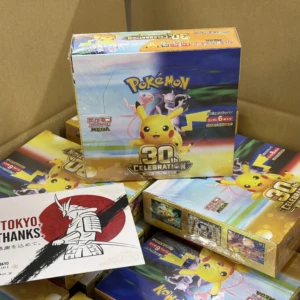
- Serial number tracking: Our team assigns a unique serial number to every box we ship. If a box shows signs of search or reseal, we trace it back to the source and permanently ban that supplier.
- Inspection process: Every box is inspected before shipping — for seal integrity, weight consistency, and packaging condition.
New to buying from Japan? Our complete purchasing guide covers shipping, customs, and payment methods. Concerned about fakes? See our authentication guide.
Our store ships tracked packages from Tokyo to the US, UK, Canada, Australia, and 40+ countries worldwide.

All orders ship from Japan with tracking and insurance. View shipping policy → | Customs & duties info →
Questions? Contact us → | Return policy →
Frequently Asked Questions
Are Japanese Pokemon cards worth more than English?
For modern cards (2024–2026), Japanese versions typically command a 15–40% premium over English equivalents, driven by superior print quality, exclusive rarities like MUR and SAR, and limited global supply. However, vintage English cards (Base Set, Neo era) are significantly more valuable — English Base Set Charizard trades at roughly 1.5× the Japanese version as of March 2026. The answer depends entirely on era and rarity.
Why are Japanese Pokemon cards cheaper per box?
Japanese booster boxes contain 30 five-card packs at an MSRP of ¥5,400 (~$35), compared to English boxes with 36 ten-card packs at ~$144 MSRP. Even at secondary market prices, Japanese boxes cost 60–75% less than English boxes while guaranteeing at least one SR or better pull. Since May 2026, new JPN pack MSRP is ¥200 (box MSRP ¥6,000), but Japanese boxes remain significantly cheaper than English equivalents.
Do Japanese Pokemon packs have better pull rates?
Every Japanese standard booster box guarantees at least one SR or better card, supported by Japanese consumer protection regulations around randomized products. English boxes have no such guarantee, though overall statistical pull rates across many boxes are similar. The guaranteed floor per box is the key difference. Pull rates are estimated based on community opening data — not officially confirmed.
Can you use Japanese Pokemon cards in English tournaments?
No. Official Play! Pokemon tournaments require all cards in your deck to match the event’s language. Japanese cards cannot be used in English-language sanctioned events. Casual play and local leagues that do not enforce official rules are the exception.
Are Japanese Pokemon cards better quality?
At common and uncommon levels, the quality difference is minimal. The gap becomes clear at RR and above, with Japanese cards showing deeper texture embossing, finer holographic patterns, and more consistent centering. At the highest rarities (SAR, MUR), Japanese print quality is widely regarded as superior. Community estimates put Japanese modern PSA 10 rates at roughly 15–20% versus 8–12% for English.
How can you tell if Japanese Pokemon cards are fake?
Check for: incorrect card weight (genuine Japanese cards weigh approximately 1.7g), missing or blurry texture on holographic cards, oversaturated color compared to reference images, and a “slick” rather than matte feel on non-holo surfaces. Buying sealed boxes from verified sellers with serial number tracking eliminates most counterfeit risk. See our full fake detection guide.
Will the May 2026 price increase affect existing sets?
No. The MSRP increase from ¥180 to ¥200 per pack applies only to sets released after May 2026. All currently available sets — including every MEGA era box — remain at the pre-increase price structure. Secondary market prices for existing sets are determined by supply and demand, not MSRP changes.
Final Verdict
Japanese and English Pokemon cards serve different purposes — and the best choice depends on yours.
Three key takeaways:
- Collectors get more value from Japanese cards: better print quality, exclusive MEGA era rarities (MUR/MA/BWR), and guaranteed SR pulls at 60–75% lower box prices.
- Competitive players need English cards for tournament legality — no exceptions.
- The price picture is era-dependent: modern JPN cards carry a 15–40% premium over ENG equivalents, but vintage ENG cards command 1.5–2.1× more than JPN versions.
If you have been watching Japanese card openings online and wondering whether to make the switch, for the majority of collectors the answer is yes. The combination of quality, exclusive content, and price accessibility makes Japanese boxes the strongest value proposition in the Pokemon TCG — especially with the May 2026 price increase making current-era boxes an even better deal in hindsight.
Ready to start? Browse the Japanese Pokemon Booster Box collection — ships from Tokyo with tracked delivery.
⚡ Shop Japanese Pokemon Booster Boxes
Authentic sealed products shipped directly from Tokyo, Japan with tracking & insurance via FedEx.
Picked for this article
📩 Get member-only sale alerts & coupons
Sale alerts, coupons and restock notices by email — straight from Tokyo.

![Super Electric Breaker (SV8) Pull Rates & Hit Rates — Best Cards & Box Value [2026]](https://samuraiswordtokyo.com/wp-content/uploads/blog-refresh/457/featured_1200x630_7d28b21a-be7a-4919-8190-f3944b75a801.webp)