
Buying Pokemon cards in Japan online comes down to matching your buyer type to the right route before you compare any single price. This buyer-first guide compares the realistic online routes for Japanese Pokemon cards: direct Japan-side stores, wholesale inquiry, official product sources, Japanese specialty shops, international-facing competitors, marketplaces, proxy services, and PSA 10 routes. It is written for overseas collectors, stores, breakers, resellers, and high-end buyers who need a safe path from search interest to purchase. See also our guide to buying Japanese Pokemon cards from Japan for the fundamentals.
Quick answer: the best place to buy Japanese Pokemon cards online depends on buyer type. Overseas collectors should start with a Japan-side store or direct inquiry, then confirm product identity through official Pokemon Card sources. Stores and breakers should use a wholesale brief. Advanced buyers can use marketplaces and proxy routes for rare singles or older products, but only after accounting for seller risk, condition, fees, customs, and return limits.
- Quick Order, the PSA 10 collection and the wholesale contact page are the three SST routes this guide uses.
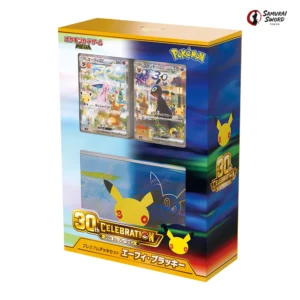
- Live sealed-box example: the M6a 30th CELEBRATION Booster Box (Japanese, released worldwide September 16, 2026) — the No Shrink option is currently listed at ¥23,500 (~$153), the Sealed option at ¥28,000 (~$182).
- Browse the full current card list at the card list page or the PSA 10 card list before comparing any single price from an older article or screenshot.
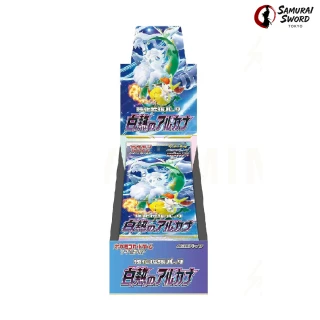
- Another sealed box currently listed: the S11A-Incandescent Arcana Japanese Pokemon Booster Box at ¥11,520 (~$75).
- USD figures convert at ¥154/USD, approximate.
Best Places To Buy Japanese Pokemon Cards Online
Most “where to buy” articles are too simple because they treat every buyer as the same person. A collector buying one sealed box, a store sourcing a case quantity, a breaker planning a release-week stream, and a high-end buyer looking for a PSA 10 trainer card should not all use the same route. The safest answer is a route map: identify the product, decide whether you need retail checkout or sourcing support, then compare total landed cost and risk.
A good “where to buy Japanese Pokemon cards” page does more than list store names. It should expose the buying decision early, give a comparison table, and route readers to product, wholesale, PSA, release-calendar, and trust-check pages before the long explanation. That is why the route table appears near the top.
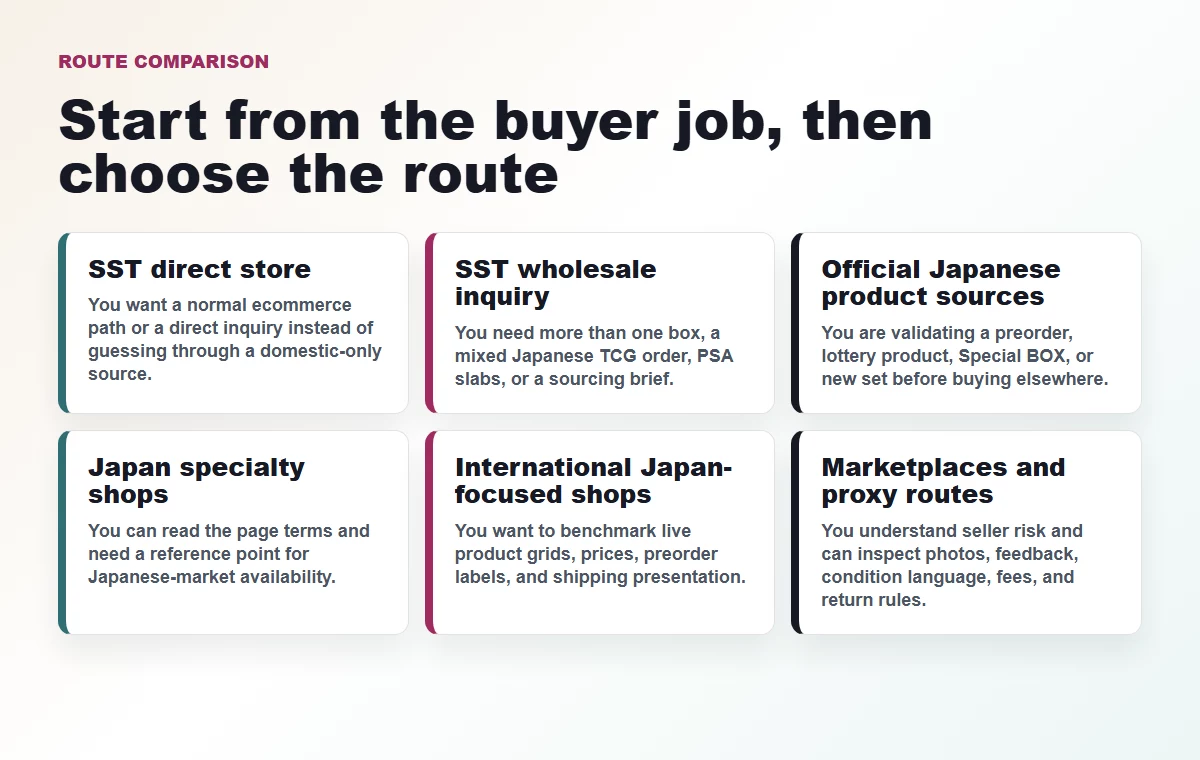
| Route | Best for | Use when | Main risk |
|---|---|---|---|
| SST direct store | Overseas collectors who want a Japan-side seller, English checkout context, sealed products, PSA routes, and support before buying. | You want a normal ecommerce path or a direct inquiry instead of guessing through a domestic-only source. | Availability changes, so use live product pages or Quick Order rather than an old article price. |
| SST wholesale inquiry | Stores, breakers, resellers, and recurring buyers who need quantities, substitutions, destination-aware shipping, or quote-only items. | You need more than one box, a mixed Japanese TCG order, PSA slabs, or a sourcing brief. | A vague request slows the quote. Send exact product names, quantity range, deadline, and acceptable substitutes. |
| Official Japanese product sources | Checking official names, release dates, card images, product contents, and whether a product is real. | You are validating a preorder, lottery product, Special BOX, or new set before buying elsewhere. | Official product pages are not always the easiest route for overseas checkout. Confirm account, address, lottery, and identity rules on the live page. |
| Japan specialty shops | Market checking, product discovery, domestic pricing context, and specific card availability. | You can read the page terms and need a reference point for Japanese-market availability. | Some shops are domestic-first. Overseas buyers must check payment, shipping, cancellation, and condition wording carefully. |
| International Japan-focused shops | Buyers who want Japanese products with international-facing checkout and English product pages. | You want to benchmark live product grids, prices, preorder labels, and shipping presentation. | Price, stock, and shipping can differ widely. Treat each page as a dated snapshot, not a universal market price. |
| Marketplaces and proxy routes | Exact singles, out-of-print products, old promos, regional products, and price discovery. | You understand seller risk and can inspect photos, feedback, condition language, fees, and return rules. | Highest authenticity and condition risk. Proxy fees, domestic shipping, international shipping, customs, and no-return rules can change the total cost. |
| PSA / graded-card routes | Collectors and resellers who want a known grade instead of raw-card condition risk. | You are buying high-value trainers, promos, Charizard, Pikachu, Eeveelutions, SAR, or older chase cards. | Do not buy only because a slab says PSA 10. Confirm exact card, set, language, cert display, photo quality, and current availability. |
Shop By Buyer Type
The same product can be a good buy for one person and a bad buy for another. A sealed collector may care about shrink and display condition. A breaker cares about release timing and opening demand. A store needs invoices, repeatable supply, and substitute planning. A PSA buyer cares less about the box and more about exact card identity, grade, and liquidity. Start from the buyer type before choosing a site.
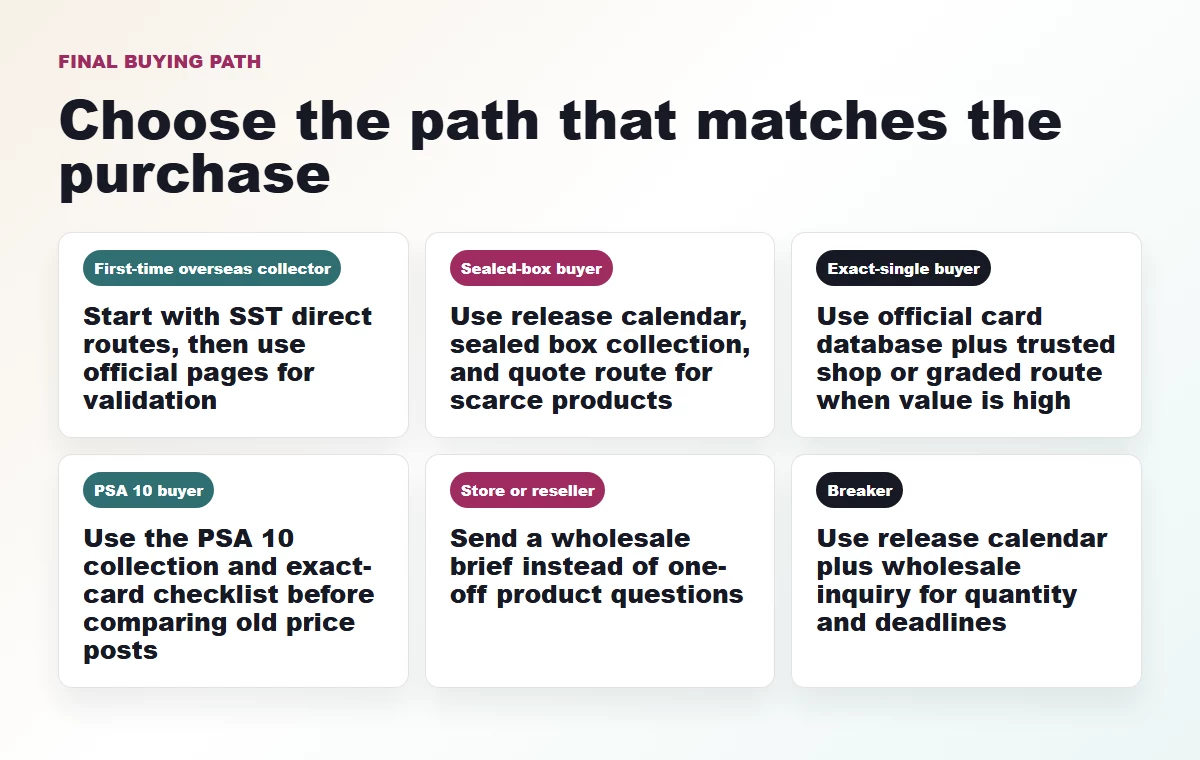
| Buyer | What they need | Best first move | Best route |
|---|---|---|---|
| First-time overseas collector | Avoid fake listings, understand product names, avoid paying every fee twice | Start with SST direct routes, then use official pages for validation | Open route |
| Sealed-box buyer | Needs shrink condition, box identity, release date, and fair total landed cost | Use release calendar, sealed box collection, and quote route for scarce products | Open route |
| Exact-single buyer | Needs card number, rarity, condition, photo quality, and seller credibility | Use official card database plus trusted shop or graded route when value is high | Open route |
| PSA 10 buyer | Wants lower condition risk and clearer resale framing | Use the PSA 10 collection and exact-card checklist before comparing old price posts | Open route |
| Store or reseller | Needs repeatable supply, substitution rules, invoice clarity, and shipping plan | Send a wholesale brief instead of one-off product questions | Open route |
| Breaker | Needs release-week demand, sealed condition, quantity, and timely shipment | Use release calendar plus wholesale inquiry for quantity and deadlines | Open route |
| High-end buyer | Needs exact identity, provenance, condition confidence, and fast confirmation | Use the wholesale/quote route and avoid anonymous low-detail listings | Open route |
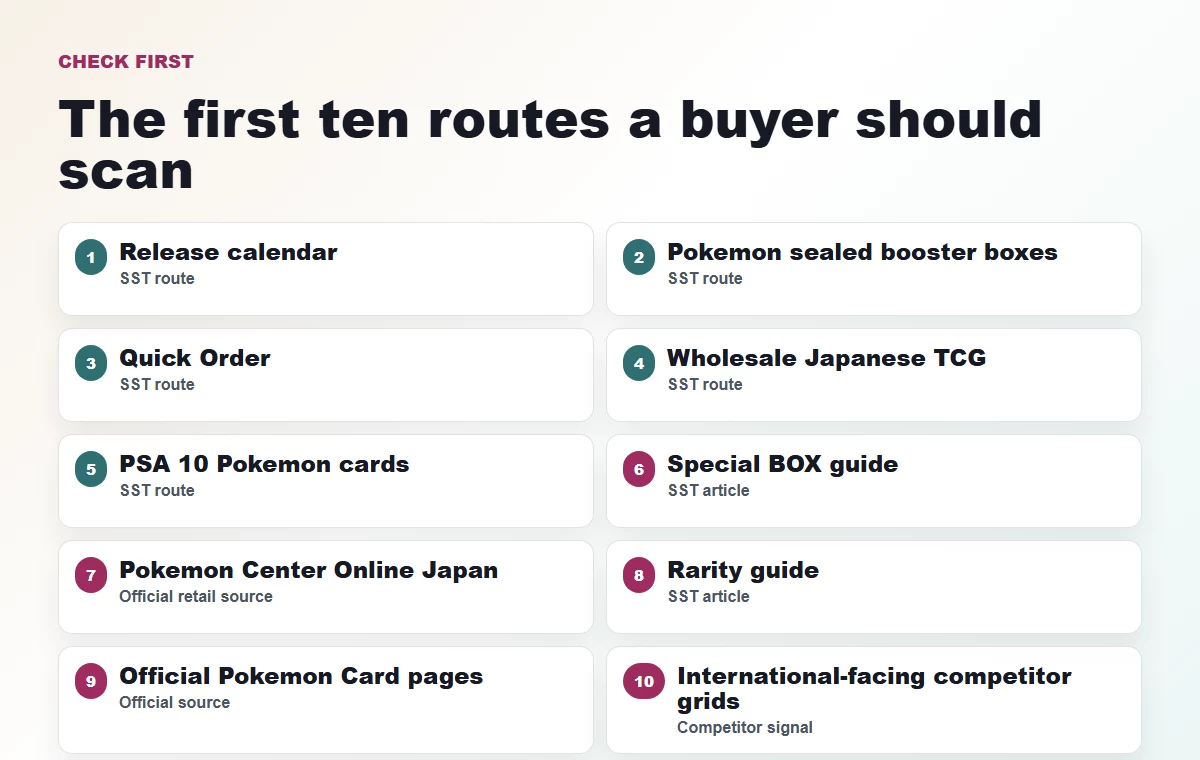
Top 10 Routes And Topics To Check First
Good store pages do not hide the commercial route. They show category paths, rankings, product grids, and current surfaces early, with clear source labeling and buyer logic. The table below is the practical “check first” list for a buyer who arrived from search and does not yet know which route is safest.
| # | Check first | Why it matters | Source type |
|---|---|---|---|
| 1 | Release calendar | Before buying any new Japanese set, confirm whether the product is current, past, or only a watch item. | SST route |
| 2 | Japanese card lists by set | Use this to browse Japanese Pokemon card lists by set and check product pages before comparing marketplace prices. | SST route |
| 3 | Quick Order | Use it to start a sourcing request for current-stock items instead of reading multiple old articles. | SST route |
| 4 | Wholesale Japanese TCG | Use the main wholesale route for stores, breakers, mixed orders, and recurring supply. | SST route |
| 5 | PSA 10 Pokemon cards | Use this when raw condition risk is too high or the buyer needs graded-card inventory. | SST route |
| 6 | Special BOX guide | Use exact product names for Pokemon Center regional products and other collector boxes. | SST article |
| 7 | Pokemon Center Online Japan | Use official retail context carefully, then confirm product-specific account, lottery, and shipping rules live. | Official retail source |
| 8 | Rarity guide | Use it to decode SAR, AR, SR, MUR, promos, and PSA buying implications. | SST article |
| 9 | Official Pokemon Card pages | Use official sources for set names, release dates, product contents, and card images. | Official source |
| 10 | International-facing competitor grids | Use competitor product/category pages as a market-reference surface, not as the only proof of fair price. | Competitor signal |
Choose Sealed, Singles, PSA, Or Wholesale Before Choosing A Site
A common mistake is searching for the cheapest website before deciding what kind of purchase is actually needed. Japanese Pokemon products do not all carry the same risk. A sealed box is a product-identity and seal-condition purchase. A raw single is a condition and card-number purchase. A PSA 10 slab is a certification and exact-label purchase. A Special BOX is a product-contents and collector-demand purchase. A wholesale order is an operations problem, not just a shopping cart.
This matters because the best site can change by purchase mode. A marketplace can be useful for one rare promo but inefficient for a normal current booster box. A direct store can be ideal for a normal order but too narrow for a store that needs substitutions. A PSA route can be safer for a high-value card but unnecessary for inexpensive binder cards. Decide the mode first, then choose the route.
| Purchase mode | Use when | Verify first | Best route family |
|---|---|---|---|
| Sealed booster box | You want the opening experience, display value, or store/breaker inventory. | Confirm set name, shrink/seal language, box condition, release timing, and total landed cost. | Release calendar, sealed collection, wholesale inquiry |
| Raw single card | You need one exact card and can judge condition from photos and seller history. | Confirm card number, rarity, language, photo quality, whitening/surface notes, and return rules. | Official card database, trusted shop, direct inquiry |
| PSA 10 slab | You want to reduce raw condition risk or build a premium display/resale case. | Confirm exact card, PSA cert display, label identity, card language, image quality, and current availability. | PSA 10 collection, exact-card checklist, high-end inquiry |
| Special BOX or regional product | You want a collector product that may not behave like a normal booster box. | Confirm exact product name, contents, region theme, seal condition, and whether stock is normal, quote-only, or lottery-linked. | Special BOX guide, official source, wholesale inquiry |
| Mixed wholesale order | You are buying for a shop, breaker, reseller, or recurring inventory plan. | Send product targets, acceptable substitutes, quantities, deadline, destination, condition rules, and budget logic. | Wholesale route and Japanese TCG wholesale page |
| Proxy marketplace purchase | You need a rare, old, domestic-only, or exact listing unavailable through normal routes. | Inspect seller history, listing photos, condition terms, proxy fees, storage rules, shipping insurance, customs, and return limits. | Advanced route only after identity and fee checks |
If you are ready to buy a current sealed box directly from Japan, the M6a 30th CELEBRATION Booster Box is a live example of the direct-store route above.
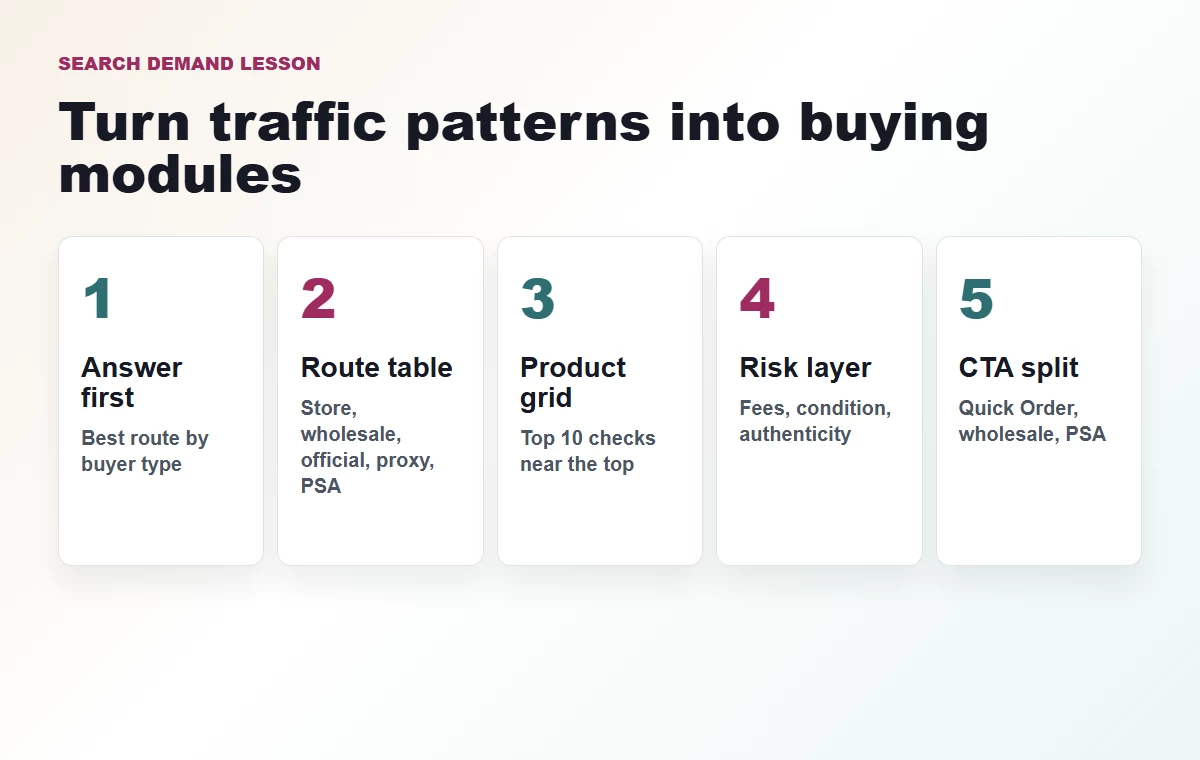
Search Demand And Competitor Pattern
Good domestic and English-facing ecommerce pages use simple, high-intent surfaces: release schedule hubs, best-card rankings, rarity explainers, PSA category pages, and where-to-buy pages. Putting preorder, box, case, PSA, and set content close to the first shopping path, and keeping product/category pages current, reduces buyer friction. Plaza Japan’s Japanese Pokemon booster box category is a useful example of an international-facing product grid: the page title and meta framing make the category easy to understand for overseas buyers.
The useful lesson is structure, not copy. A good buying guide answers the buyer question immediately, shows a route table, separates official facts from market signals, places product/category/wholesale routes early, and gives a risk checklist that protects the buyer from bad purchases.
Dated Source And Route Checks Used For This Guide
This article does not treat one competitor page as the market. The sources below are public source URLs and SST routes that were checked directly and resolved cleanly. Competitor pages that could not be verified live are not shown here as buyer recommendations. The table below shows the sources this guide relies on.
| Source or route | Status | How it is used |
|---|---|---|
| Pokemon Card official site | Official source | Use for official product identity, set pages, and notices. |
| Pokemon Card card search | Official source | Use for card number, rarity, language, and official card-image checking. |
| Pokemon Center Online Japan | Official retail source | Use as an official retail/product context source; confirm product-specific rules live. |
| Plaza Japan booster box category | Competitor category page | Use only as a competitor/product-grid reference for international-facing Japanese Pokemon category structure. |
| SST Quick Order | Quick Order page | Use as the direct current-product route. |
| SST wholesale | Contact page (verified September 23, 2026) | Use as the canonical B2B, quote, store, breaker, and reseller route. |
Use Official Sources To Validate Product Identity
Official Pokemon Card pages are the strongest source for product names, release dates, official card images, set pages, and notices. That does not mean every overseas buyer can or should use an official checkout path for every purchase. It means official pages should be your identity layer. Before paying a preorder, proxy listing, marketplace seller, or old sealed-product listing, verify that the product name, set code, release date, card number, and images match a real Japanese product.
This is especially important for products with multiple English renderings, regional Pokemon Center products, anniversary boxes, high-class packs, and promo-heavy items. If the listing uses vague wording such as “Japan Pokemon box” or mixes English and Japanese product names incorrectly, slow down. The cheapest route is not cheap if it sends the wrong product, wrong language, or wrong condition.
Japan Specialty Shops And International Shops
Japan specialty shops are useful because they reveal domestic market context: what products are listed, which singles receive category attention, and how Japanese sellers describe condition or stock. International-facing Japan-focused shops are useful because they show how overseas buyers search: product name, sealed box, preorder, price, stock, shipping, and product images all appear in a format that is easier to scan. The mistake is treating any one shop as the whole market.
Use shop pages as dated signals. If several credible shops show a similar product type, price band, or stock trend, that is stronger than one isolated listing. If one listing is far below the rest, it needs a reason. If a page is Cloudflare-blocked, login-gated, or difficult to inspect, treat it as unverified and check another source before relying on it.
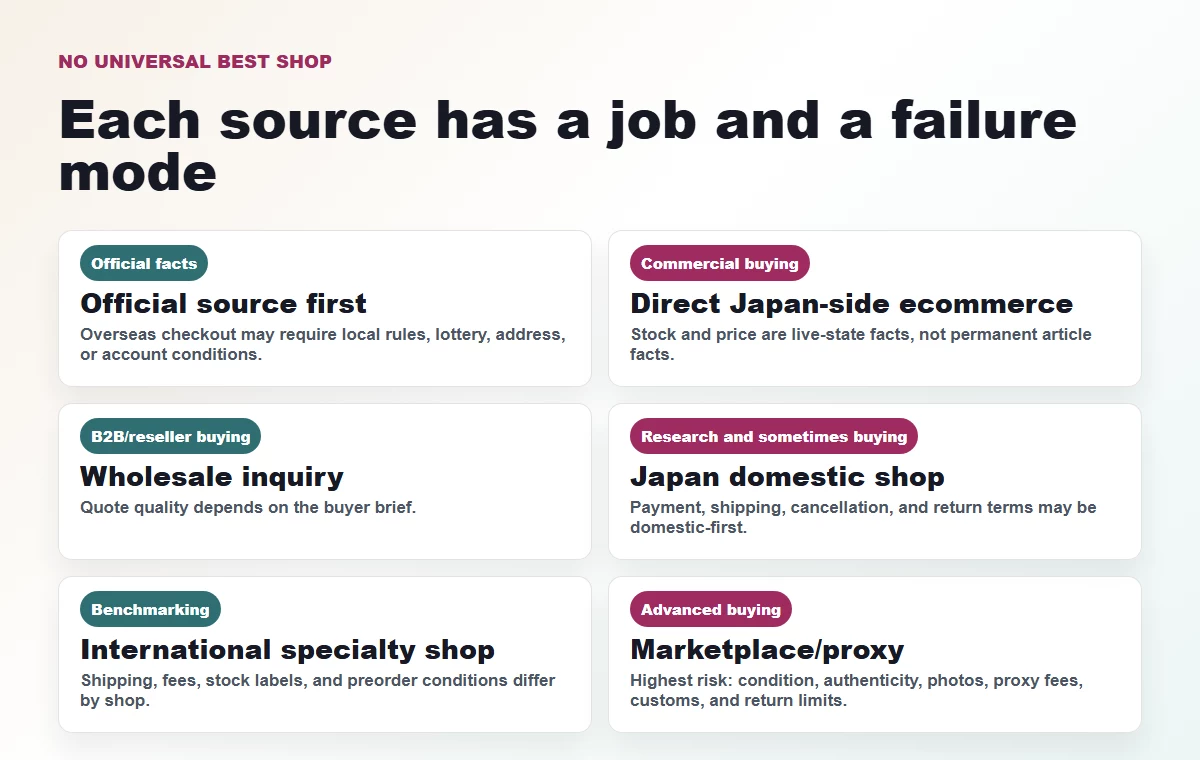
| Route type | Why use it | Best role | Caution |
|---|---|---|---|
| Official source first | Best factual source for names, set pages, card images, and release notices. | Official facts | Overseas checkout may require local rules, lottery, address, or account conditions. |
| Direct Japan-side ecommerce | Best everyday path for overseas buyers who need current product routes and support. | Commercial buying | Stock and price are live-state facts, not permanent article facts. |
| Wholesale inquiry | Best when quantity, deadline, substitution, or mixed Japanese TCG supply matters. | B2B/reseller buying | Quote quality depends on the buyer brief. |
| Japan domestic shop | Best for market context and domestic retail signals. | Research and sometimes buying | Payment, shipping, cancellation, and return terms may be domestic-first. |
| International specialty shop | Best for English product browsing and competitor price checks. | Benchmarking | Shipping, fees, stock labels, and preorder conditions differ by shop. |
| Marketplace/proxy | Best for older singles, rare promos, exact regional goods, and price discovery. | Advanced buying | Highest risk: condition, authenticity, photos, proxy fees, customs, and return limits. |
| Graded-card route | Best when raw-card condition risk is too expensive. | High-value cards | Still verify exact card, cert display, and availability. |
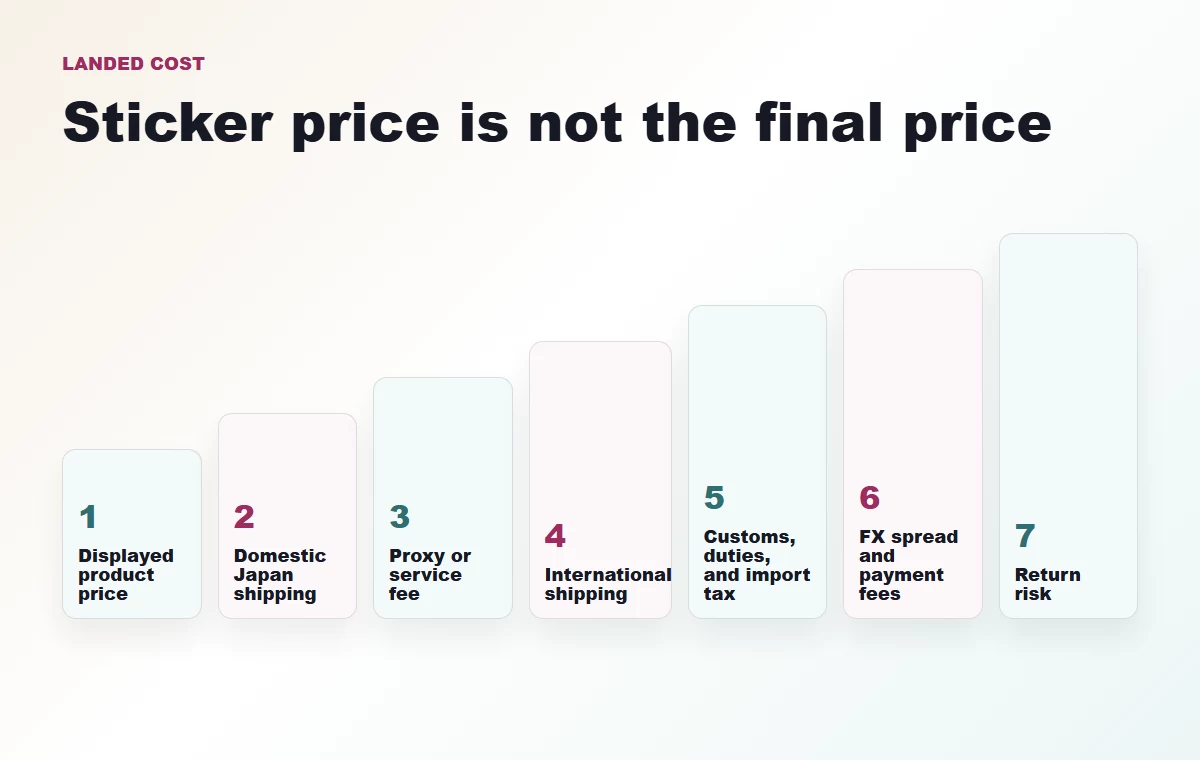
Compare Total Landed Cost, Not Sticker Price
Japanese Pokemon products can look cheaper in Japan because the visible price is often only the first layer. Overseas buyers need to calculate the total landed cost. A proxy route may add domestic shipping, service fees, consolidation, international shipping, customs, and currency conversion. A direct store route may have a higher item price but lower ambiguity and clearer support. A wholesale route may be stronger when the buyer can combine products into one shipment or accept substitutions.
This does not mean proxy routes are bad. It means they are tools for advanced buyers. If you are buying a rare promo, a single older item, or a domestic-only product, a proxy can be worth it. If you are buying a current sealed box that is already available through a direct route, the extra fee and return risk may not be worth the small apparent saving.
| Cost layer | What to check |
|---|---|
| Displayed product price | The visible price is only the first layer. Compare currency, tax display, and whether the item is preorder, currently listed, or quote-only. |
| Domestic Japan shipping | Proxy and marketplace orders may add a local shipping leg before international shipping starts. |
| Proxy or service fee | Proxy routes can add order fees, consolidation fees, inspection fees, payment fees, and storage rules. |
| International shipping | Weight, box size, insurance, tracking, and destination rules can matter more than the item price on bulky sealed products. |
| Customs, duties, and import tax | The buyer is usually responsible for destination-country charges. Treat this as part of landed cost. |
| FX spread and payment fees | Credit cards, PayPal, bank transfer, and platform currency conversion can change the real price. |
| Return risk | A no-return marketplace deal can be more expensive than a slightly higher direct-store price if there is a condition or authenticity issue. |
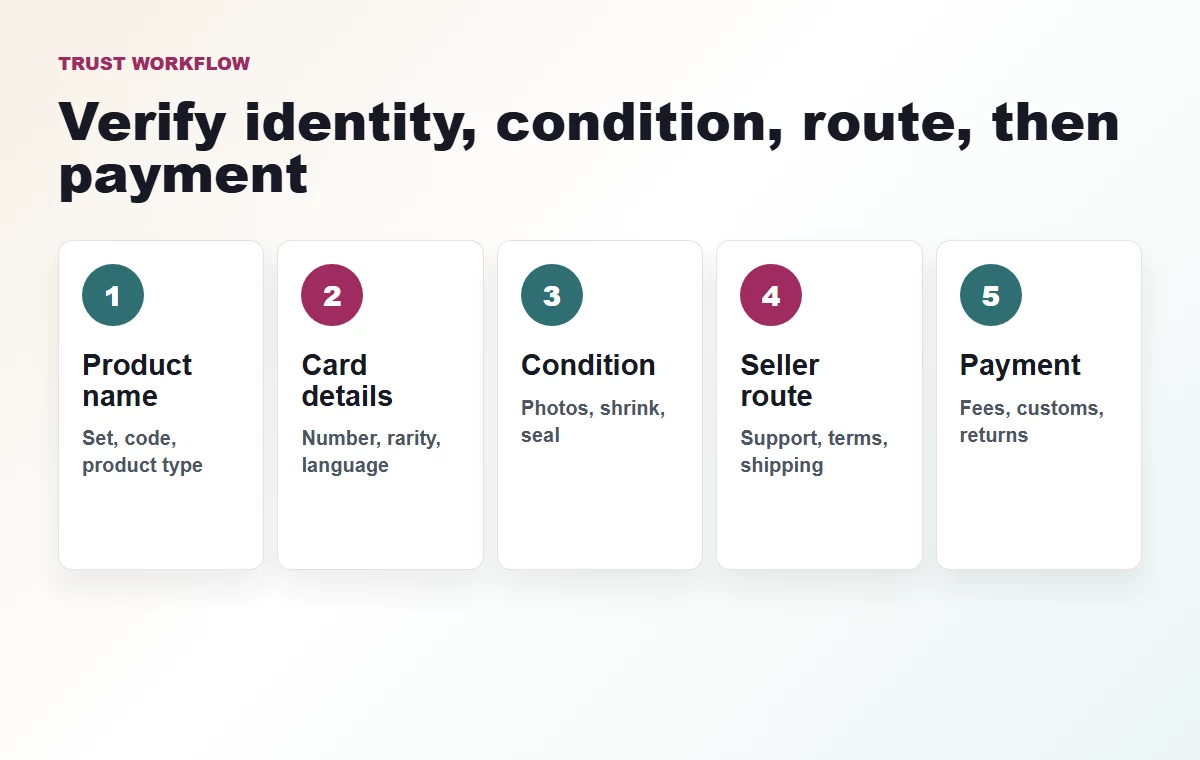
Authenticity And Condition Checklist
The most expensive mistake is not paying a little too much. It is buying the wrong version, wrong condition, or wrong product. Japanese Pokemon buying is detail-heavy: card number, rarity, language, set, promo stamp, shrink, seal, box condition, and seller identity all matter. A trustworthy route makes these details easier to confirm before payment.
| Check | Buyer rule |
|---|---|
| Exact product name | Match Japanese/English product name, set code, product type, and release date. |
| Photos and condition | For raw singles and older sealed products, generic photos are weaker than item-specific photos. |
| Shrink and seal language | For sealed boxes, confirm whether shrink, seal, no-shrink, or opened-for-inspection wording changes value. |
| Seller identity | Check store history, public reputation, contact path, and whether the site has consistent product/category pages. |
| Price realism | A price far below the market needs an explanation. Scarce Japanese products rarely stay underpriced for long. |
| Shipping route | Confirm tracked shipping, insurance, handling time, and destination restrictions. |
| Cancellation and preorder terms | Preorders and lottery goods can have stricter cancellation rules than products that are currently listed. |
| Language and version | Confirm Japanese card, Japanese set, Japanese sealed product, or Japanese PSA slab, not an English equivalent. |
| Card number and rarity | Use official databases or trusted set lists before buying SAR, AR, SR, MUR, promo, or trainer cards. |
| Buyer support | High-value or quantity orders should have a clear path for confirmation before payment. |
Marketplace And Proxy Risk
Marketplaces and proxy services can be powerful for rare Japanese Pokemon cards. They are often the only practical route for older promos, sold-out regional items, exact singles, or domestic listings that never appear in international product grids. But they are not beginner-safe by default. A proxy usually executes the purchase; it does not make the seller trustworthy, fix unclear photos, or guarantee easy returns.
Use a proxy when the target is specific and the risk is understood. Do not use a proxy simply because the first listed price looks cheaper. The real comparison is the landed cost and the probability of receiving the correct item in the expected condition. If the listing photos are weak, the condition wording is vague, the seller history is thin, or the product identity is unclear, the lower price is not a discount. It is a risk transfer.
Preorders, Lotteries, And New Releases
New Japanese Pokemon products create the most search demand and the most confusion. Some products are normal retail items. Some receive preorder waves. Some become lottery-heavy. Some are quote-only or allocation-sensitive. Some have official product pages before every card image is public. That is why a buyer should separate official facts, store availability, market signals, and speculation.
For sealed collectors, buying before the full card list can make sense if the product story and price are acceptable without knowing every chase card. For exact-card buyers, waiting is usually better until official card images and early singles pricing appear. For stores and breakers, preparation can begin earlier, but the order brief should include substitutes and timing. For PSA buyers, a release schedule is a watchlist, not a buy signal by itself.
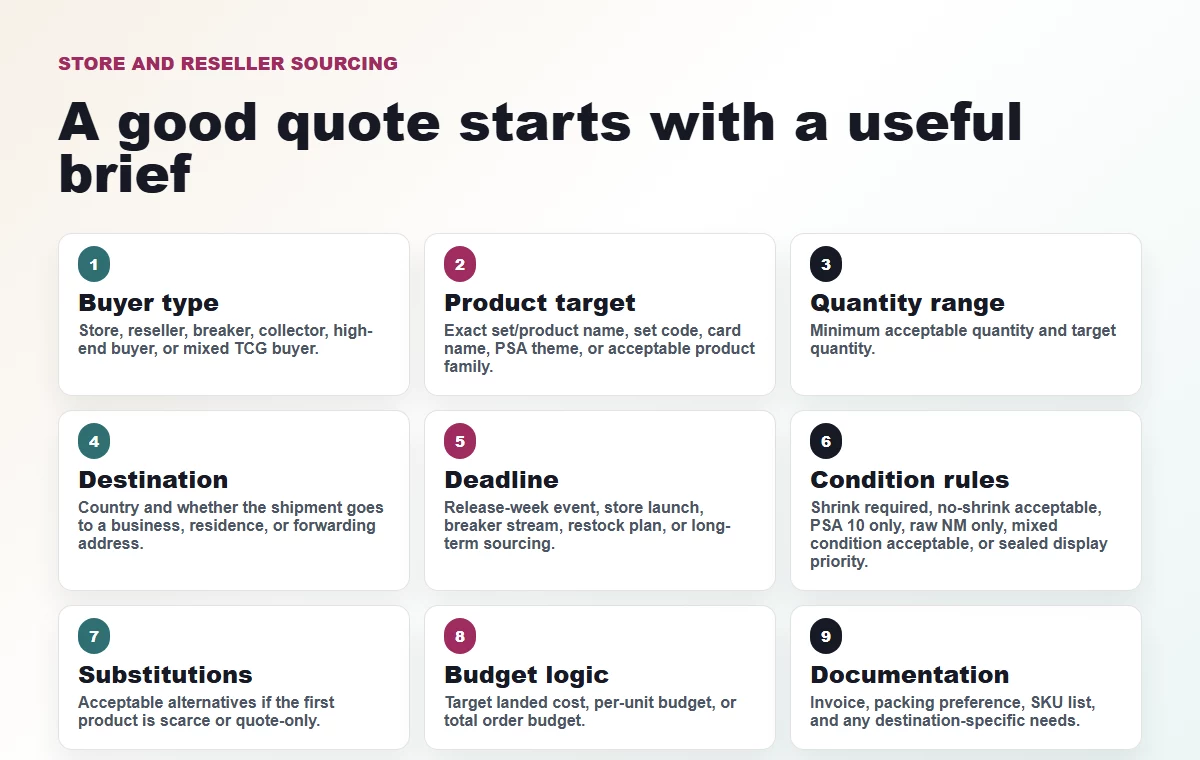
Wholesale And Store Buying Brief
If you are a store, breaker, or reseller, the best place to buy Japanese Pokemon cards is often not a public product page. It is a clear sourcing conversation. The request should tell the seller what to solve: quantity, destination, deadline, product family, condition rules, substitution options, and documentation needs. That makes the response faster and more useful.
| Brief item | What to send |
|---|---|
| Buyer type | Store, reseller, breaker, collector, high-end buyer, or mixed TCG buyer. |
| Product target | Exact set/product name, set code, card name, PSA theme, or acceptable product family. |
| Quantity range | Minimum acceptable quantity and target quantity. |
| Destination | Country and whether the shipment goes to a business, residence, or forwarding address. |
| Deadline | Release-week event, store launch, breaker stream, restock plan, or long-term sourcing. |
| Condition rules | Shrink required, no-shrink acceptable, PSA 10 only, raw NM only, mixed condition acceptable, or sealed display priority. |
| Substitutions | Acceptable alternatives if the first product is scarce or quote-only. |
| Budget logic | Target landed cost, per-unit budget, or total order budget. |
| Documentation | Invoice, packing preference, SKU list, and any destination-specific needs. |
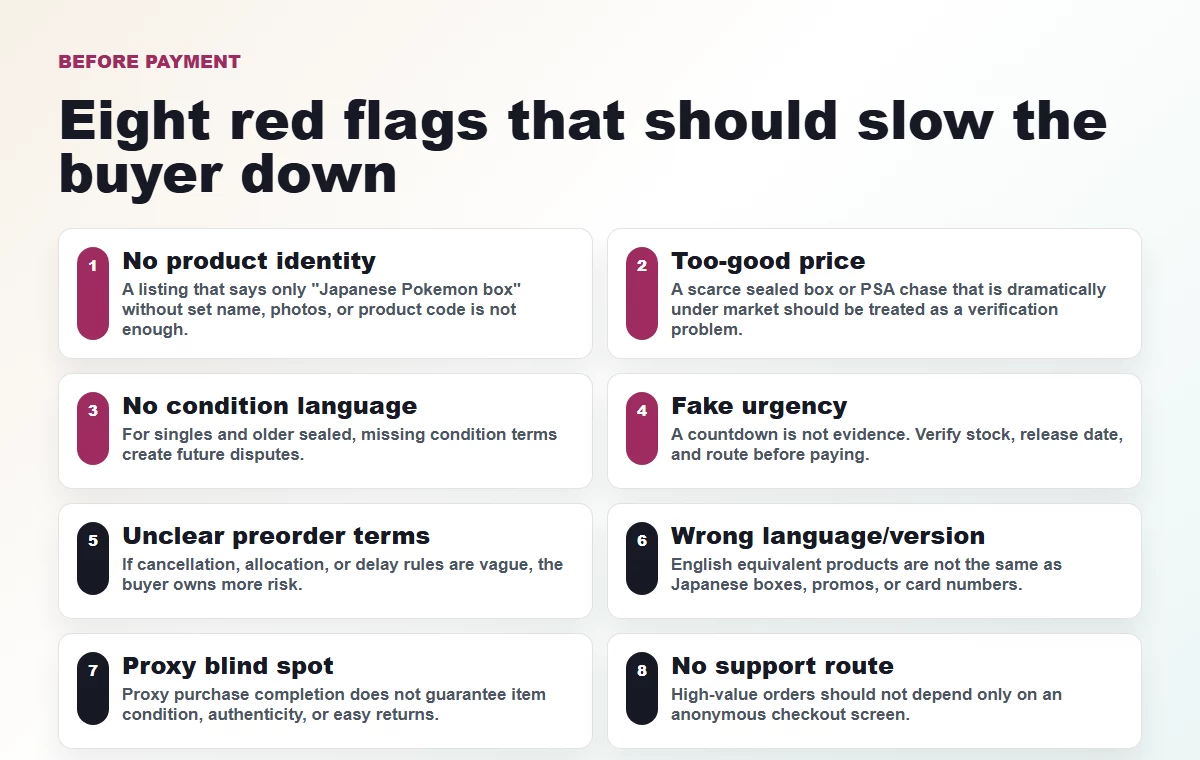
Red Flags Before You Pay
Bad purchases usually show warning signs before payment. The problem is that buyers ignore them when the product is scarce or the price looks attractive. Use this table before paying for high-value raw singles, older sealed boxes, regional products, preorder items, and PSA slabs.
| Red flag | Why it matters |
|---|---|
| No product identity | A listing that says only "Japanese Pokemon box" without set name, photos, or product code is not enough. |
| Too-good price | A scarce sealed box or PSA chase that is dramatically under market should be treated as a verification problem. |
| No condition language | For singles and older sealed, missing condition terms create future disputes. |
| Fake urgency | A countdown is not evidence. Verify stock, release date, and route before paying. |
| Unclear preorder terms | If cancellation, allocation, or delay rules are vague, the buyer owns more risk. |
| Wrong language/version | English equivalent products are not the same as Japanese boxes, promos, or card numbers. |
| Proxy blind spot | Proxy purchase completion does not guarantee item condition, authenticity, or easy returns. |
| No support route | High-value orders should not depend only on an anonymous checkout screen. |
How To Use SST As A Japan-Side Buying Route
Use SST differently depending on the buying job. If the product is live and the quantity is normal, start with Quick Order or the relevant collection. If you need sealed boxes, start with the Pokemon sealed booster box route and the release calendar. If you want graded cards, start with the PSA 10 collection and exact-card verification checklist. If you are buying for a store, breaker, reseller, high-end collector, or recurring supply, start with wholesale.
SST does not need to carry every high-attention item as a normal public product to be useful to a buyer. Even for items SST does not stock, this page gives a safer next step: validate the product, check the release calendar, browse current sealed products, request a quote, buy PSA 10 slabs, or ask for a substitute.
SST is a Tokyo-based Japanese TCG store with Quick Order, wholesale inquiry, PSA 10, and sealed-product routes for overseas buyers. The practical advantage is not only listing a product name; it is handling the buying question as an operations problem: tracked shipping from Tokyo, destination and customs details, quantity briefs, substitutions, sealed/PSA condition rules, and support before payment. That first-party route experience is why this article emphasizes brief quality, buyer type, product identity, and verification before checkout.
FAQ
Where is the best place to buy Japanese Pokemon cards online?
For overseas buyers, the safest starting point is usually a direct Japan-side seller or a clear wholesale/contact route, then official Pokemon Card pages for product validation. Use marketplaces and proxies only when you understand condition, seller, fee, and return risk.
Can I buy directly from Pokemon Center Japan from overseas?
Check the live Pokemon Center Online terms for the specific product, account, lottery, address, identity, and shipping conditions. For many overseas buyers, official pages are more reliable as a product-information source than as the universal checkout route.
Are Japanese Pokemon cards cheaper in Japan?
Sometimes the visible item price is lower, but landed cost can change after domestic shipping, proxy fees, international shipping, customs, and FX conversion. Compare total landed cost, not only the first displayed price.
Is it safe to buy Japanese Pokemon cards through a proxy?
Proxy routes can be useful for rare items, but they move seller, condition, photo, return, and fee risk onto the buyer. Use them for advanced purchases, not as the default route for every sealed box.
What should I check before buying a Japanese booster box?
Confirm set name, set code, release date, shrink/seal language, box condition, seller credibility, shipping method, and whether the price still makes sense after all fees.
Should I buy raw Japanese singles or PSA 10 slabs?
For low-value cards, raw singles may be enough. For expensive trainers, promos, Charizard, Pikachu, Eeveelutions, and SAR cards, PSA 10 can reduce condition uncertainty, but you still need to verify exact card identity and current availability.
How should stores buy Japanese Pokemon cards from Japan?
Stores should use a wholesale brief: product targets, quantities, destination, deadline, shrink/condition rules, substitutions, budget, and documentation needs. That is faster than asking only whether a new set is available.
What is the main risk with preorders?
Preorder risk comes from allocation, delayed release information, incomplete card lists, cancellation terms, and release-week price swings. Exact-card buyers should usually wait for official card images and early singles data.
How do I avoid fake Japanese Pokemon card listings?
Use official card databases for card identity, inspect photos and condition wording, verify seller reputation, avoid unrealistic prices, and use graded-card routes for high-value cards when raw condition risk is too high.
Can I use one price article as the market price?
No. Treat every price page as a dated signal. Japanese Pokemon prices, stock, shipping, and exchange rates move. Check live product pages, recent listings, and current quote routes before payment.
Get ¥2,000 in points with a free account
Create free account1 pt = ¥1 · Use on up to 20% of your order total · Welcome points expire 30 days after sign-up · Import duties, taxes and customs charges are not included in the price and are collected on delivery, except for destinations we ship duty-paid.
Picked for this article
📩 Get member-only sale alerts & coupons
Sale alerts, coupons and restock notices by email — straight from Tokyo.

![Super Electric Breaker (SV8) Pull Rates & Hit Rates — Best Cards & Box Value [2026]](https://samuraiswordtokyo.com/wp-content/uploads/blog-refresh/457/featured_1200x630_7d28b21a-be7a-4919-8190-f3944b75a801.webp)