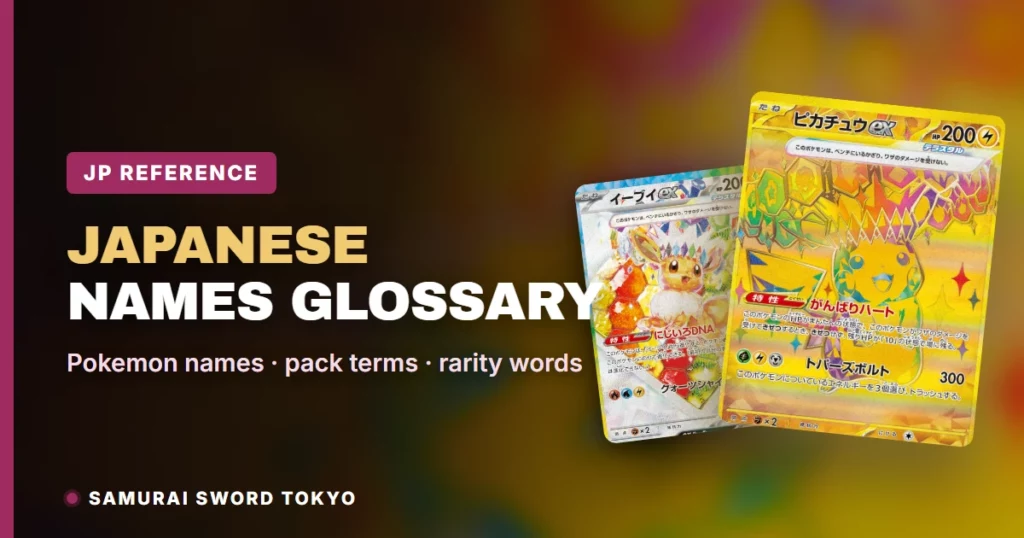
A Japanese Pokémon TCG listing packs a lot into one line: a set code, a rarity abbreviation, a product-type word and a card name, and Pokemon Japanese names often aren’t a phonetic match for the English ones at all. If ブラッキー doesn’t obviously read as „Umbreon“ to you, you’re not alone — Bulbapedia’s own romanization of that name is „Blacky,“ not a Japanese rendering of „Umbreon.“
The same Japanese vocabulary shows up in our own product titles.
Japanese card names frequently diverge from a direct phonetic transliteration of the English name — Umbreon is ブラッキー („Blacky“), Gengar is ゲンガー („Gangar“), Eevee is イーブイ („Eievui“). Product terms like 拡張パック (Expansion Pack) and ハイクラスパック (High Class Pack) tell you what kind of release you’re looking at, and rarity letters like SAR and UR tell you what kind of card is inside.
- Set reference: Japanese Pokemon card list.
- The M6a 30th CELEBRATION Booster Box is listed in its Sealed option.
Japanese names and romanizations are Bulbapedia’s own, as printed on each Pokémon’s page — not official Nintendo/Pokémon Company translations. USD figures convert at ¥154/USD, approximate.
Pokemon Japanese Names and Their English Equivalents
Here are 20 commonly traded Pokémon, with the Japanese name and Bulbapedia’s own romanization for each. Some romanizations are the phonetic match you’d expect (Pikachu, Mew, Lucario); others aren’t (Umbreon, Gengar, Charizard) — use Bulbapedia’s exact spelling rather than „correcting“ it to a more expected English sound.
| English | Japanisch | Romaji |
|---|---|---|
| Pikachu | ピカチュウ | Pikachu |
| Charizard | リザードン | Lizardon |
| Mewtwo | ミュウツー | Mewtwo |
| Eevee | イーブイ | Eievui |
| Umbreon | ブラッキー | Blacky |
| Sylveon | ニンフィア | Nymphia |
| Gengar | ゲンガー | Gangar |
| Mew | ミュウ | Mew |
| Snorlax | カビゴン | Kabigon |
| Ditto | メタモン | Metamon |
| Lucario | ルカリオ | Lucario |
| Greninja | ゲッコウガ | Gekkouga |
| Gardevoir | サーナイト | Sirnight |
| Leafeon | リーフィア | Leafia |
| Vaporeon | シャワーズ | Showers |
| Charmander | ヒトカゲ | Hitokage |
| Jigglypuff | プリン | Purin |
| Espeon | エーフィ | Eifie |
| Rayquaza | レックウザ | Rayquaza |
| Raichu | ライチュウ | Raichu |
Four of these names — Pikachu, Eevee, Umbreon and Sylveon — appear here on Japanese prints, so you can see how the kana maps to an actual card.
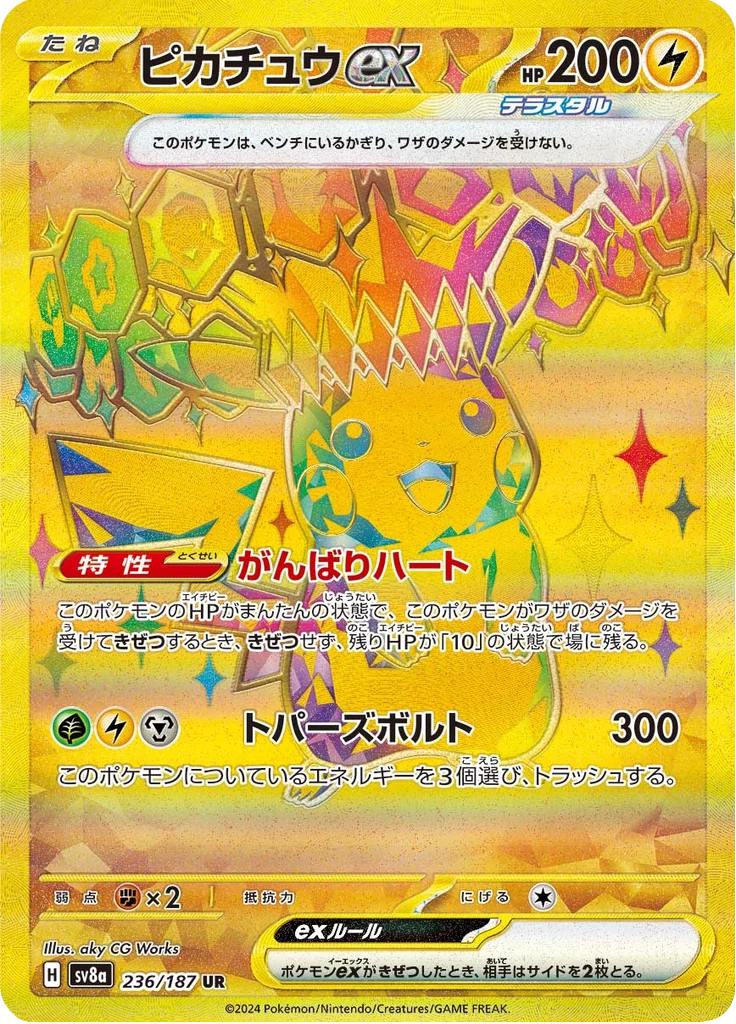
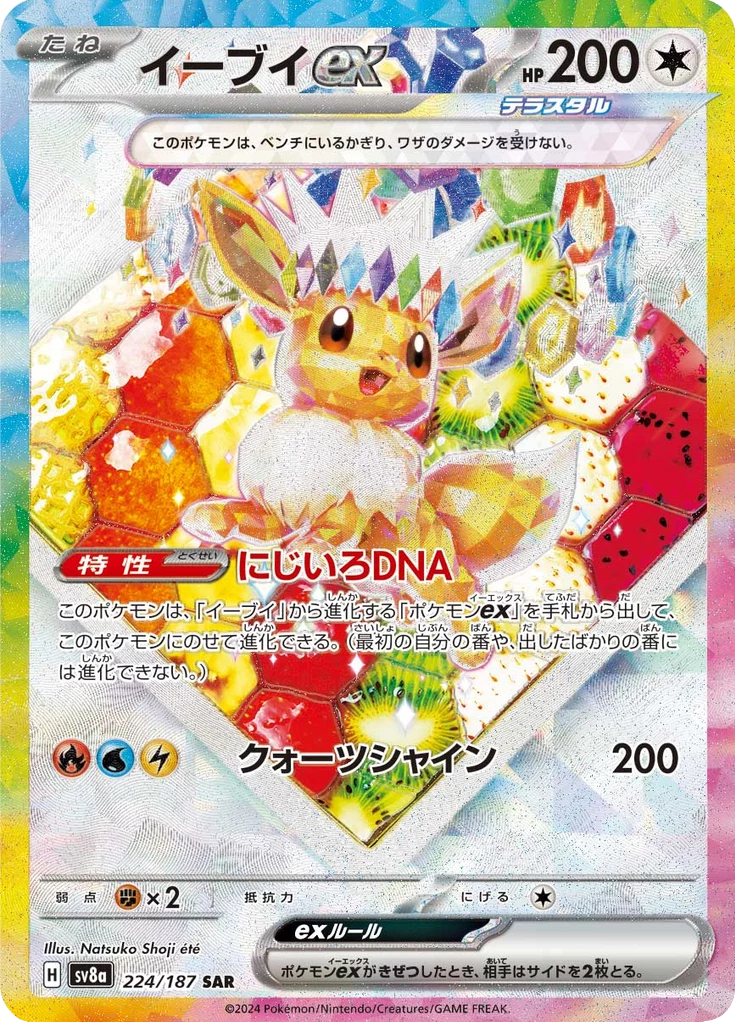
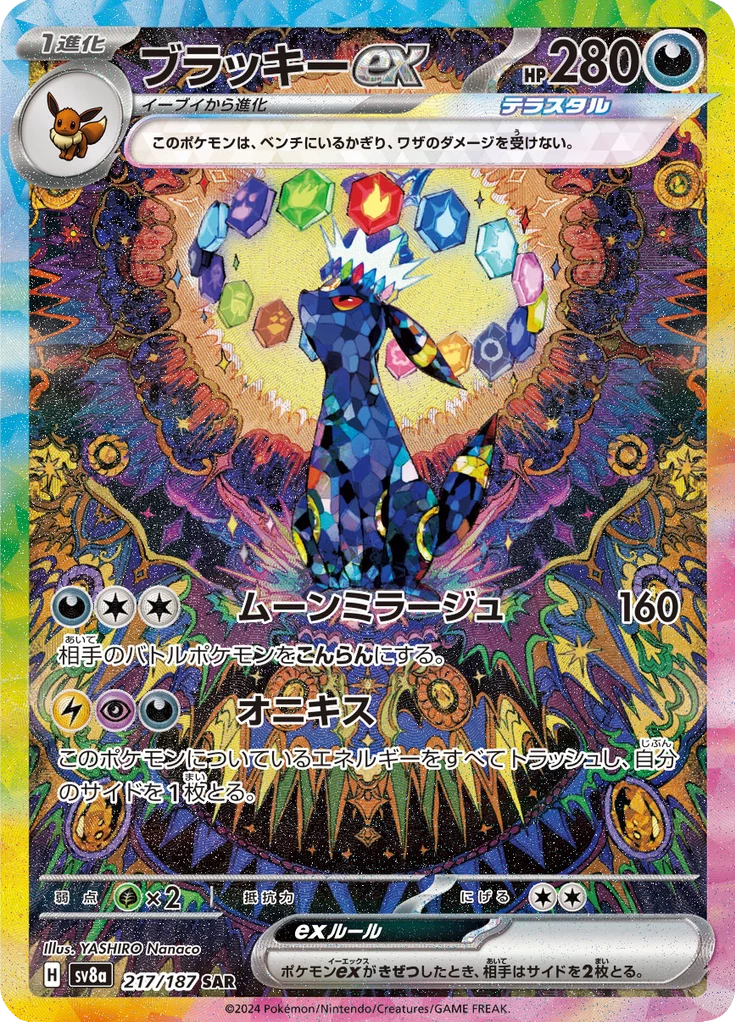
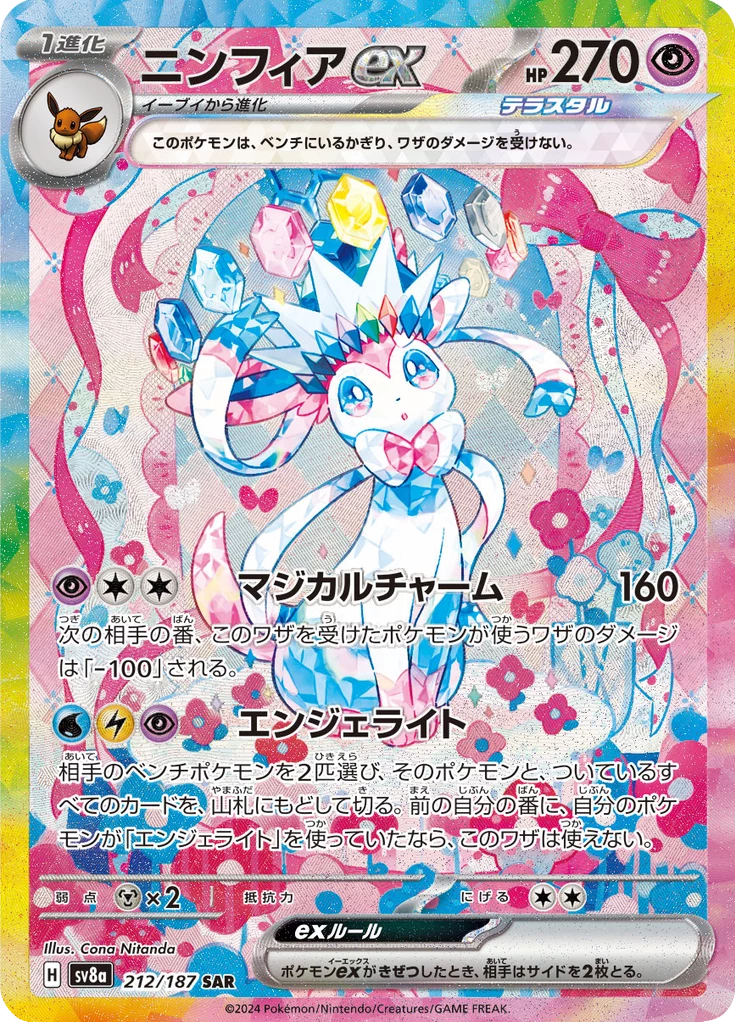
All four are from the same Japanese Scarlet & Violet-era release, Terastal Fest ex (SV8a), which makes for a useful side-by-side: same set, same card frame, four different names to practice against.
Looking specifically for graded Pikachu cards? Our PSA10 Pikachu Japanese cards buying guide covers that market in more depth.
Japanese TCG Product & Pack Terms
Before you can read a Pokémon name on a listing, it helps to know what kind of product you’re looking at. These are the recurring Japanese product-category terms, confirmed against Bulbapedia’s set and category pages.
| Japanisch | Romaji | English |
|---|---|---|
| 拡張パック | Kakuchō Pakku | Expansion Pack |
| 強化拡張パック | Kyōka Kakuchō Pakku | Enhanced Expansion Pack |
| ハイクラスパック | Hai Kurasu Pakku | High Class Pack |
| スタートデッキ100 | Sutāto Dekki Hyaku | Start Deck 100 |
| プロモ / プロモーションカード | Puromo | Promotional card(s) |
| ポケモンセンター | Pokemon Sentā | Pokémon Center |
| ブースターパック | Būsutā Pakku | Booster pack |
| ボックス / 1BOX | Bokkusu | Booster Box |
| ACE (ACE SPEC) | Ēsu Supekku | ACE SPEC Rare |
ハイクラスパック (High Class Pack) is the term behind releases like Hidden Fates (ハイクラスパック GXウルトラシャイニー) and Shining Fates (ハイクラスパック シャイニースターV) — a distinct Japanese product-category term from a standard expansion pack. 強化拡張パック (Enhanced Expansion Pack) is a related but separate label, confirmed on releases such as Eevee Heroes. ブースターパック (Booster pack) is the standard loanword transliteration used across the hobby; treat it as the conventional spelling rather than an officially cited one.
One caution on ボックス / 1BOX (Booster Box): Bulbapedia confirms English-language booster boxes contain 36 packs. Japanese boxes don’t have one confirmed pack count — it varies by product, so check the specific product page rather than assuming a number.
Rarity Abbreviations You’ll See in Listings
Alongside the product term, most Japanese listings carry a rarity abbreviation — the letters after the card number. These are the current Scarlet & Violet-era labels, the ones you’ll see on the majority of new Japanese product:
| Abbreviation | Meaning | What it is |
|---|---|---|
| C | Common | The most common rarity in any expansion |
| U | Uncommon | Mostly Trainer and Energy cards |
| R | Rare | Always holographic; the rarest non-ex Pokémon rarity |
| RR | Double Rare | Given to Pokémon ex and Tera Pokémon ex |
| AR | Art Rare | Full art Basic/Stage 1/Stage 2 Pokémon in a natural setting; EN equivalent „Illustration Rare“ |
| SAR | Special Art Rare | Pokémon ex / Supporter secret rares with an added glitter-foil layer; EN equivalent „Special Illustration Rare“ |
| UR | Ultra Rare | Gold foil Pokémon, Item, Stadium or Energy cards; EN equivalent „Hyper Rare“ |
“HR” changes meaning between eras (a rainbow-foil card in the Sword & Shield era, a gold-foil card in the current naming). For the full letter system across every era, see our Japanese Pokémon card rarity guide for graded buyers.
How to Read a Japanese Product Listing
Put the two glossaries together and a listing title stops looking like a wall of jargon. Take a sealed-box title in our own catalogue convention: „SM6-Forbidden Light Japanese Pokemon Booster Box.“
- SM6 — the set code (Sun & Moon era)
- Forbidden Light — the set’s English name
- Japanisch — the language/print origin, distinguishing it from an English-language box of the same artwork
- Booster Box — the English rendering of ボックス / 1BOX
Single-card and graded listings follow the same logic with two extra pieces bolted on. A title like „PSA10 Sylveon ex SAR 212/187“ breaks down as: PSA10 (the grading company and grade), Sylveon ex (the card, cross-checked against the name table), SAR (the rarity abbreviation), and 212/187 (card number over set total, as printed on the SV8a Sylveon ex card).
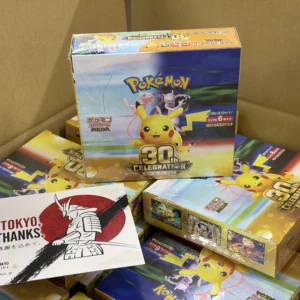
Once you can parse the set code, the language marker, the rarity letters and the card number, most Japanese listings — ours included — read the same way regardless of which set they’re from.
Same Name, Different Print: Pikachu and Umbreon
The Pikachu VMAX 279/184 UR and Umbreon VMAX 245/184 CSR are different prints from the ex-era Pikachu and Umbreon on the SV8a cards — same Pokémon and same Japanese name, different set. Reading the set code, number and rarity letters on a listing is how you tell such prints apart before you buy.
Where to Buy Japanese Pokémon Cards
We ship Japanese sealed product, singles and PSA-graded cards from Tokyo. If you want to browse rather than search by name, our Japanese Pokémon booster box collection, including the M6a 30th CELEBRATION Booster Box, and full shop are organised by set, and the PSA10 collection shows the graded singles currently listed. The PSA 10 listings for the Eevee ex 224/187 SAR, Sylveon ex 212/187 SAR, Pikachu VMAX 279/184 UR and Umbreon VMAX 245/184 CSR are sold out at the time of this update — sourcing requests go through Schnellbestellung.
For more on the eras these terms come from, see our guides to the Sun & Moon era, XY era, Black & White era, Sword & Shield era, and Scarlet & Violet era, plus our how-to-read-Japanese-cards guide for the card-front symbols.
Häufig gestellte Fragen
Is „Blacky“ really the Japanese name for Umbreon?
Yes, on the Japanese card its name is ブラッキー, which Bulbapedia romanizes as „Blacky.“ It’s not a phonetic rendering of „Umbreon“ — several Japanese Pokémon names follow their own naming logic rather than transliterating the English name, so it’s worth checking the actual kana rather than guessing from the English name.
What does „SAR“ mean on a Japanese Pokémon card listing?
SAR stands for Special Art Rare, a Japanese rarity label given to certain Pokémon ex and Supporter cards with full alternate-art illustrations and an added glitter-foil layer. It corresponds to the English-market „Special Illustration Rare“ naming.
What is 拡張パック (Kakuchō Pakku)?
It’s the standard Japanese product-category term for „Expansion Pack,“ as opposed to a ハイクラスパック (High Class Pack), which is a separate Japanese product-category term used for releases like Hidden Fates and Shining Fates.
Does a Japanese „Booster Box“ always contain 36 packs?
No. The 36-pack count is the confirmed standard for English-language booster boxes. Japanese booster boxes vary by release — check the pack count on the specific product page rather than assuming a number.
Are the names in this glossary official Nintendo or Pokémon Company translations?
No — they’re Bulbapedia-documented Japanese names and romanizations, not an official Nintendo or Pokémon Company translation source.
Passend zu diesem Artikel
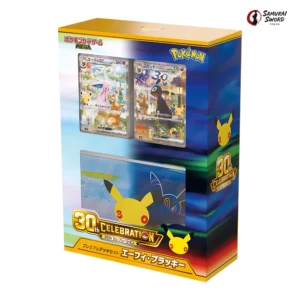
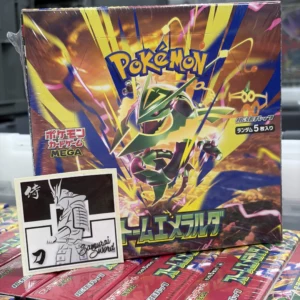
📩 Exklusive Sale-Alerts & Coupons für Mitglieder
Sale-Alerts, Coupons und Restock-Infos per E-Mail, direkt aus Tokio.