Japanese e-series booster packs come in five releases: e1 Base Expansion Pack, e2 The Town on No Map, e3 Wind from the Sea, e4 Split Earth and e5 Mysterious Mountains. English collectors encounter their cards across Expedition Base Set, Aquapolis and Skyridge. That five-to-three relationship matters when choosing a sealed Japanese pack: the two Japanese releases associated with Aquapolis or Skyridge have different card pools.
If your starting point is Crystal Lugia, look at e3. If it is Crystal Charizard, look at e5. If you want a sealed representative of the first Japanese e expansion, start with e1. This guide connects those collecting goals to the correct product, then explains how to compare individual packs without borrowing English prices or assuming a particular pull.
e1 → Expedition; e2 + e3 → Aquapolis; e4 + e5 → Skyridge. These are relationships between releases, not interchangeable sealed products. All five Japanese packs listed here contain five random cards and use the newer Japanese card back. None is an Old Back pack.
The five Japanese e-series booster packs at a glance
Use the Japanese title and collector reference together. A listing headed “Japanese Aquapolis” needs one more detail before you know what it contains: is it The Town on No Map or Wind from the Sea? The same applies to “Japanese Skyridge.” The e1–e5 codes below are catalog aids; their use here does not mean every wrapper prints that exact code.
| Reference | Japanese release | Japan release date | English connection | Cards per pack |
|---|---|---|---|---|
| e1 | Base Expansion Pack (update: currently sold out — restock requests via Quick Order) / 基本拡張パック | 1 December 2001 | Expedition Base Set | 5 |
| e2 | The Town on No Map (update: currently sold out — restock requests via Quick Order) / 地図にない町 | 8 March 2002 | Part of Aquapolis | 5 |
| e3 | Wind from the Sea (update: currently sold out — restock requests via Quick Order) / 海からの風 | 24 May 2002 | Part of Aquapolis | 5 |
| e4 | Split Earth (update: currently sold out — restock requests via Quick Order) / 裂けた大地 | 23 August 2002 | Part of Skyridge | 5 |
| e5 | Mysterious Mountains (update: currently sold out — restock requests via Quick Order) / 神秘なる山 | 4 October 2002 | Part of Skyridge | 5 |
Compare Japanese vintage pack listings, or request a specific e1–e5 pack through Quick Order. Include the Japanese title in your request; availability and sourcing must be confirmed.
Dates and pack counts above match the linked SST product specifications. Pokemon’s official anniversary chronology places the e-series in the 2001 era. For the technology behind the card borders, scanning and the e-Reader accessory, read our separate Japanese e-Reader cards guide. Here, the practical question is which sealed release belongs in your collection.
All five belong to vintage collecting, but vintage does not mean Old Back. The cards use the newer Japanese back introduced before e1. A collection organized by card-back design should therefore place these after the Old Back era; our Japanese card-back guide explains that distinction.
e1 Base Expansion Pack: the Japanese Expedition connection
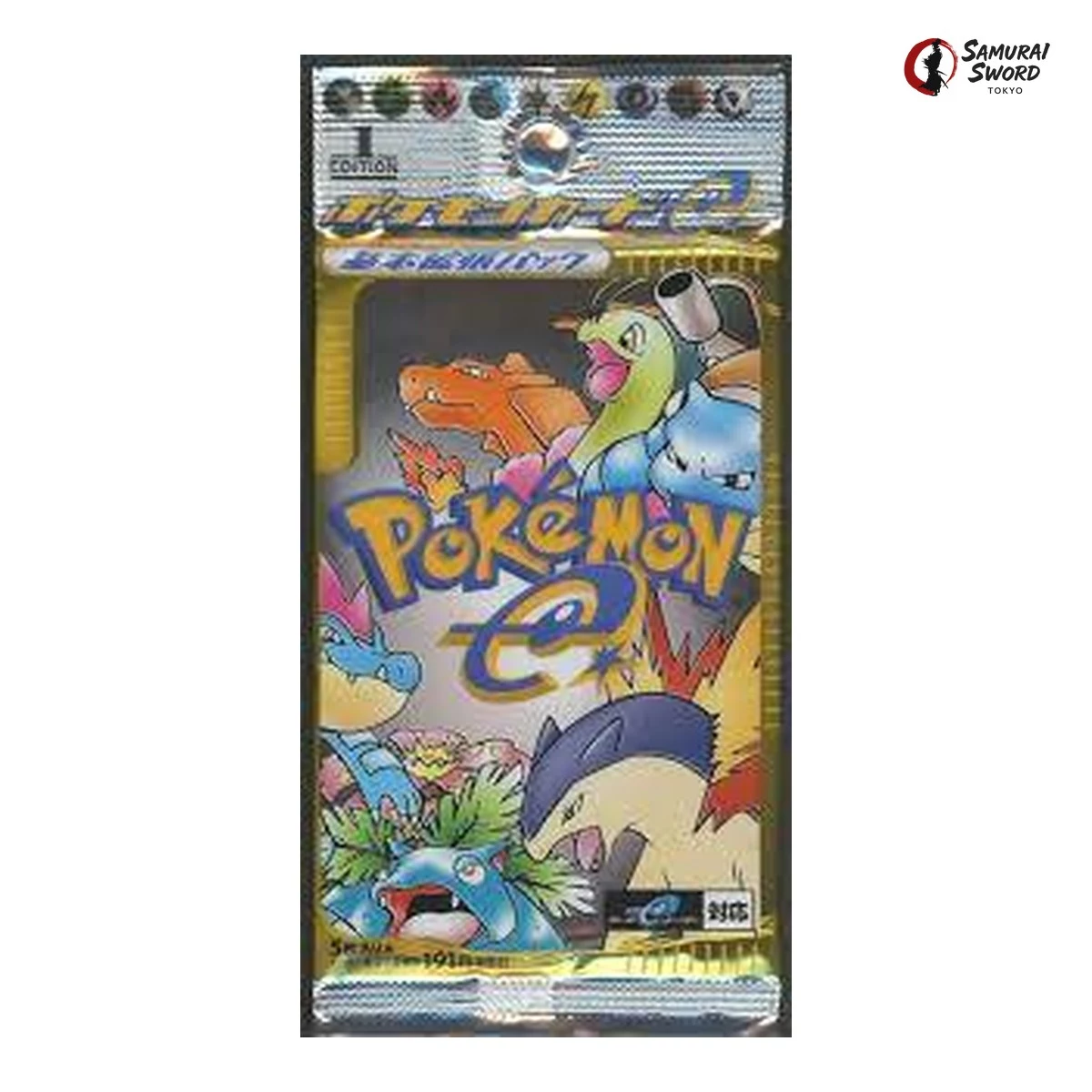
Base Expansion Pack is the first stop for an Expedition-focused collector. Its Japanese release date is 1 December 2001; English Expedition Base Set followed in 2002. That association helps you find the product, but a Japanese pack remains its own release, with Japanese contents and packaging. The community-maintained Bulbapedia Expedition checklist records the relationship and separate release details.
The name creates an avoidable buying mistake. “Base Expansion Pack” can sound like another translation of the original Japanese Base Set. It is a different product, released five years later. Check the year, series and Japanese title together before comparing prices or saving an auction search.
| Detail | Original Expansion Pack | e1 Base Expansion Pack |
|---|---|---|
| Japan release | 20 October 1996 | 1 December 2001 |
| Collecting context | Original Japanese TCG launch | First numbered Japanese e expansion |
| Japanese card back | Old Back | New Back |
| Useful search terms | 1996 Expansion Pack | e1, 基本拡張パック, Expedition |
The 1996 launch date is documented in Pokemon’s official 20th-anniversary chronology. A seller using “Base” loosely has not supplied enough information to identify either pack.
For a display collection, e1 gives you a clear starting point: the opening release in a five-pack run. For a card-focused purchase, work from the Japanese checklist for your target. The Crystal cards discussed below belong to later releases; e1 is not an alternative route to Crystal Lugia or Crystal Charizard. See the e1 product details (update: currently sold out — restock requests via Quick Order) for the listed pack.
Japanese Aquapolis packs: e2 and e3 have different contents
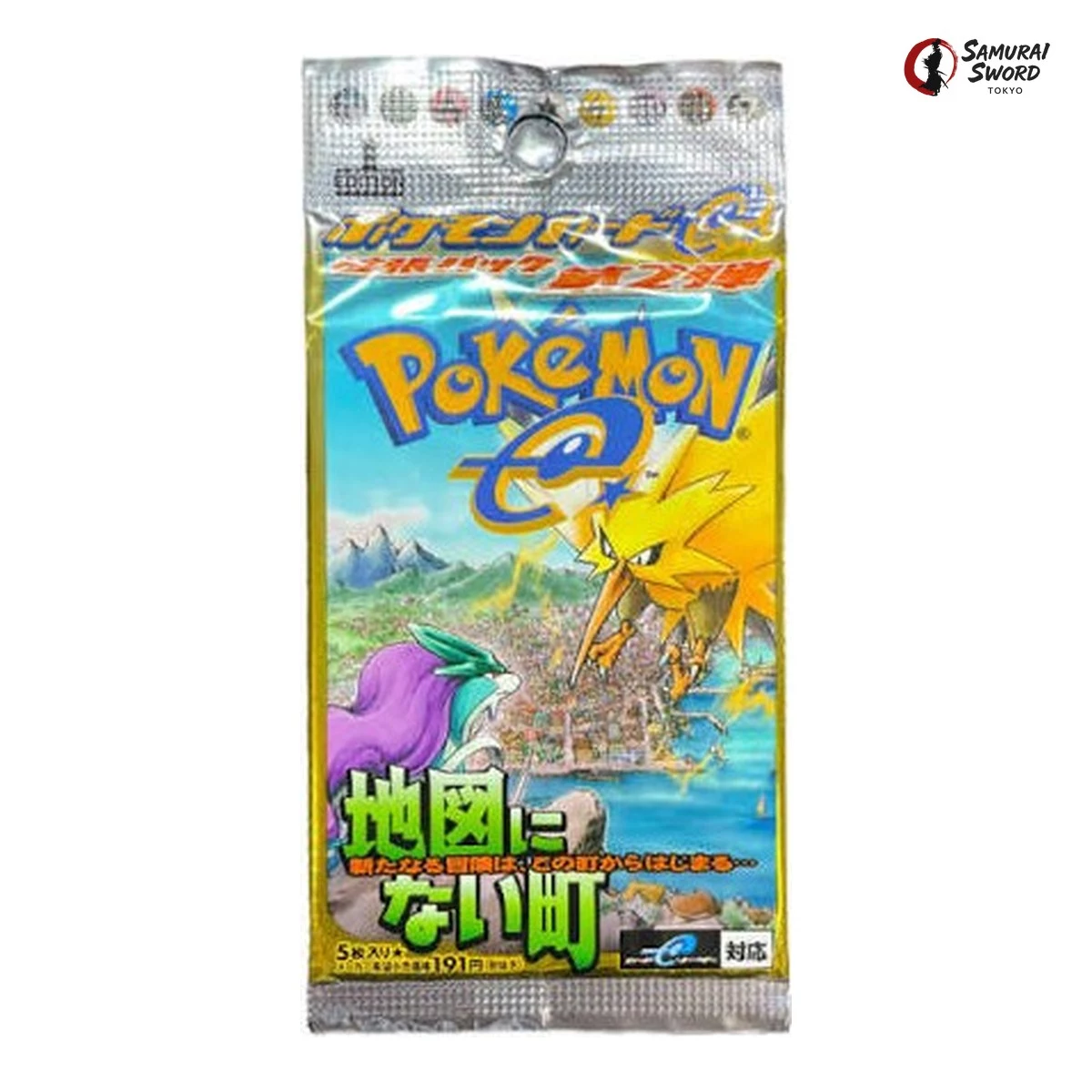
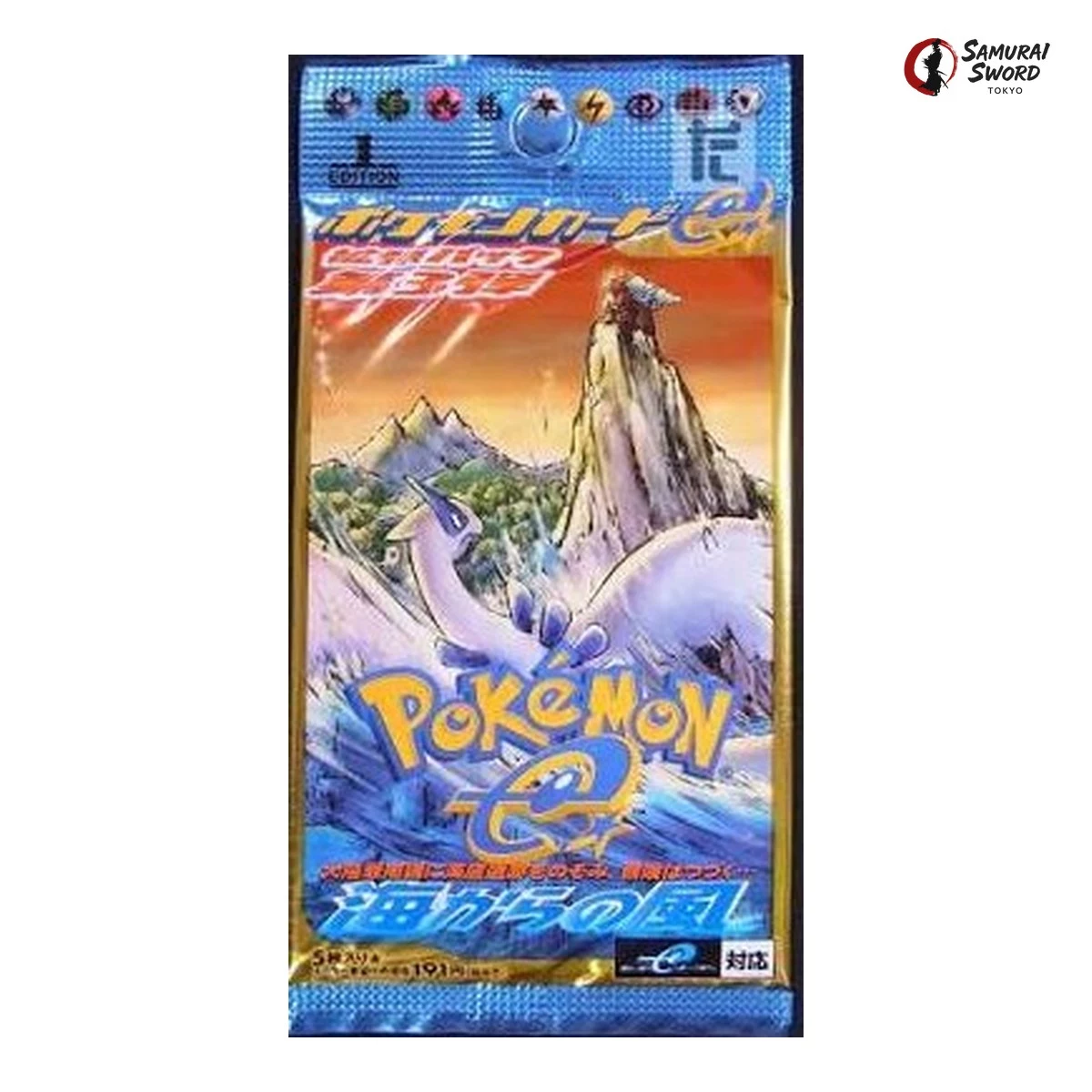
English Aquapolis draws from two Japanese expansions. The Town on No Map came first, followed by Wind from the Sea. They are separate products with separate checklists, not two wrapper designs containing the same card pool. A search result that groups both under Aquapolis can conceal this difference.
| Pack | Japanese set size in SST specifications | Crystal cards in its Japanese checklist | Use this listing |
|---|---|---|---|
| e2: The Town on No Map | 92 | None | Compare e2 details (update: currently sold out — restock requests via Quick Order) |
| e3: Wind from the Sea | 87 + 3 secrets | Nidoking 088/087; Kingdra 089/087; Lugia 090/087 | Compare e3 details (update: currently sold out — restock requests via Quick Order) |
The Japanese entries in the community-maintained Bulbapedia Aquapolis checklist place all three of those Crystal cards in Wind from the Sea. The numbers above are Japanese card numbers, not the numbers printed on their English counterparts.
Crystal Lugia collectors should identify e3 explicitly. Buying e2 because a listing mentions Aquapolis does not put Lugia 090/087 in that pack’s possible contents. Conversely, a collector assembling the Japanese releases behind Aquapolis needs both e2 and e3 to represent the pair. One does not replace the other simply because both are connected to the same English set.
Keep a set association separate from the experience you are buying. A sealed-pack collector may want Wind from the Sea for its connection to Lugia while leaving the wrapper unopened. Someone seeking the actual card should compare a specific single with the uncertain outcome of opening. The pack provides random contents; identifying the correct set establishes eligibility, not a probability or a promise.
Japanese Skyridge packs: e4 Split Earth versus e5 Mysterious Mountains
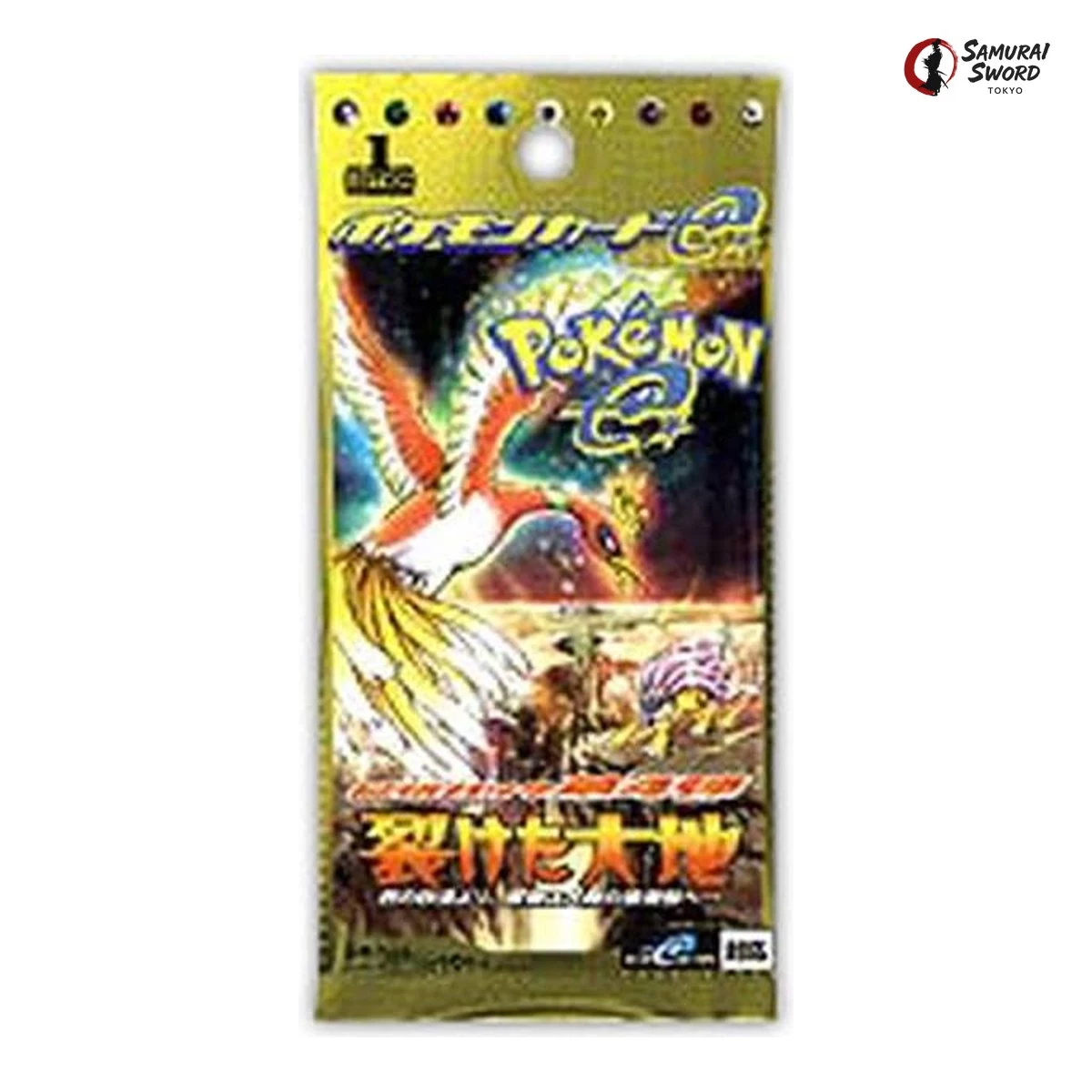
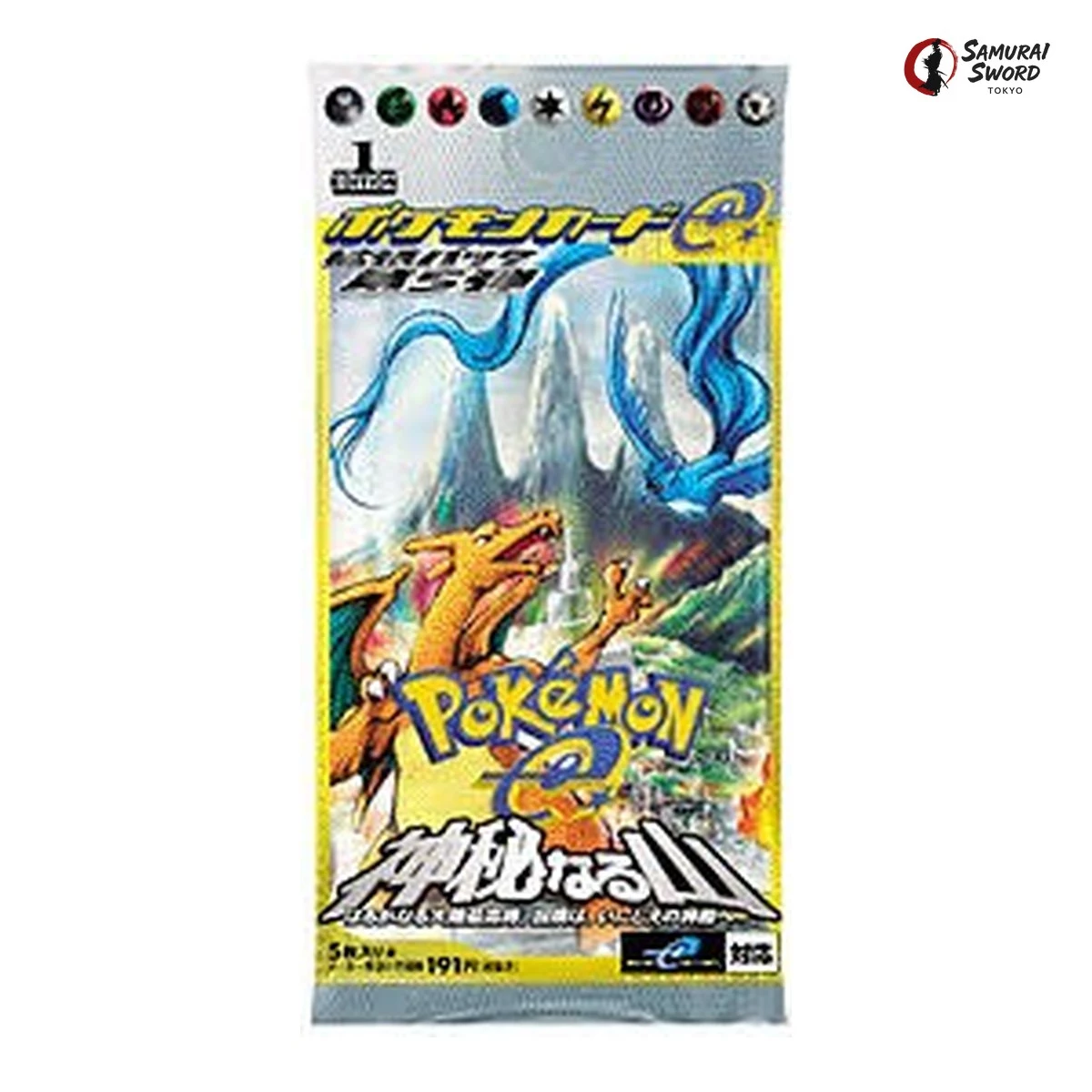
Skyridge has the same two-release complication. Split Earth and Mysterious Mountains both contributed cards to English Skyridge, but their Crystal selections differ. A generic “Japanese Skyridge pack” description is therefore incomplete for anyone choosing around a particular Pokemon.
| Pack | Japanese Crystal cards | Set size in SST specifications | Product details |
|---|---|---|---|
| e4: Split Earth | Golem 089/088; Kabutops 090/088; Ho-Oh 091/088 | 88 + 3 secrets | View e4 (update: currently sold out — restock requests via Quick Order) |
| e5: Mysterious Mountains | Charizard 089/088; Crobat 090/088; Celebi 091/088 | 88 + 3 secrets | View e5 (update: currently sold out — restock requests via Quick Order) |
These assignments and Japanese card numbers follow the Japanese tables in the community-maintained Bulbapedia Skyridge checklist. Notice that the same number can identify different Pokemon in different sets: 089/088 is Golem in e4 and Charizard in e5. Always keep the set name beside the number.
Crystal Charizard belongs to e5 Mysterious Mountains, not e4 Split Earth. Ho-Oh collectors should make the opposite selection and investigate e4. Collectors who enjoy the broader Skyridge connection can choose by wrapper presentation or assemble both Japanese releases, without treating either as an English Skyridge pack in another language.
A seller may describe a pack through its headline card because that is how collectors recognize the set. Read that as a checklist reference. A Charizard name or illustration alongside an e5 listing does not establish the contents of the individual sealed pack. We have no verified single-pack Crystal odds to provide, and this guide makes no guaranteed holo or Crystal claim.
Choose an e-series pack around your collecting goal
Start with the object you want to keep. A five-pack display, an Expedition-era memento and a specific Lugia single are different projects. Writing that goal down before comparing listings keeps an appealing English set name from overriding the Japanese product details.
| Your priority | Start with | Decision to make |
|---|---|---|
| First numbered Japanese e expansion | e1 | Choose the individual wrapper condition you want to display |
| Japanese releases behind Aquapolis | e2 and e3 | Collect the pair or identify your preferred checklist first |
| Crystal Lugia connection | e3 | Decide whether your goal is a sealed pack or the actual single |
| Crystal Ho-Oh connection | e4 | Keep Split Earth in the search, not just Skyridge |
| Crystal Charizard connection | e5 | Confirm Mysterious Mountains and 089/088 together |
| One of each Japanese e booster release | e1 through e5 | Set consistent condition and presentation requirements |
This is an editorial selection framework, not a ranking by scarcity, demand or expected returns. A pack that fits your collection is not automatically the lowest-priced listing or the one associated with the most familiar chase card. For a display, a clearly photographed wrapper may matter more to you than owning a particular set first.
For a five-pack project, keep a simple record with one row per release: Japanese title, product link, acquisition date, condition notes and photographs. That makes it easier to see which release is still missing and avoids accidentally treating two differently titled Aquapolis listings as duplicates. Decide whether you want comparable wrapper presentation across the run before buying the first pack; replacing an otherwise acceptable example later can complicate the project.
If your real priority is the older Japanese card-back design, redirect the search before purchasing. The Neo release below is a related vintage option from a different series. It does not fill an e1–e5 gap and cannot supply any e-series Crystal card.
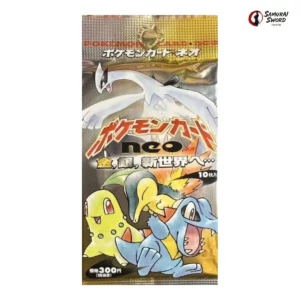
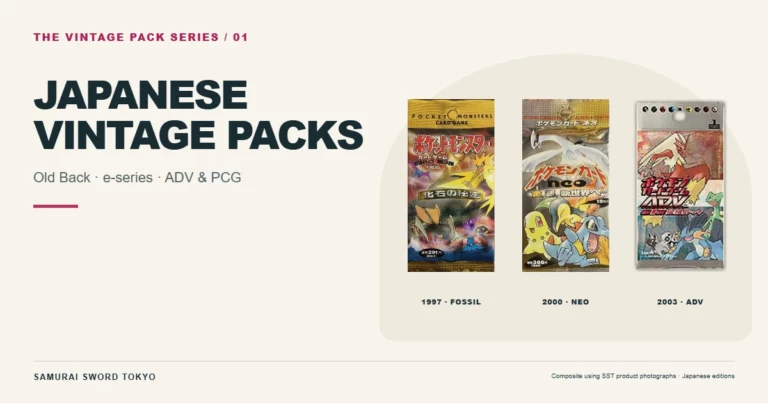
Our Japanese vintage booster pack guide places these releases alongside the earlier and later eras. For the original 1996-era wrapper distinction, the short versus long pack guide covers a separate buying question; those terms do not identify the five e-series card pools.
What to inspect before buying a loose Japanese e pack
Once the set is right, evaluate the individual item. These packs were released in 2001–2002, so the word “unopened” should not be read as a statement that the wrapper has no creases, surface wear or storage marks. The condition of a sealed collectible and the random cards inside it are separate questions.
Read the printing visible in the listing photo
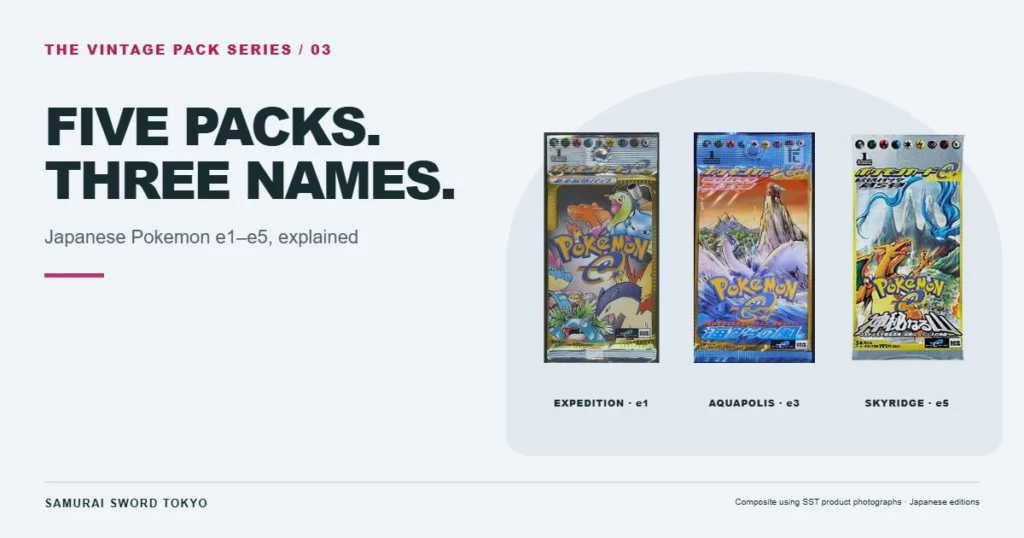
The five SST photographs above provide useful visual anchors. Match the printed title before relying on familiar Pokemon artwork. These observations describe the photographed examples, not every pack from the release or the unit a seller may offer later.
| Visible feature | Observation in these photographs | What to confirm |
|---|---|---|
| Japanese title | e2 shows 地図にない町; e3 shows 海からの風; e4 shows 裂けた大地; e5 shows 神秘なる山. | Match that printed title with the listing’s English name. |
| Expansion wording | The e1 front shows 基本拡張パック. The e2 and e3 headers include 第2弾 and 第3弾 respectively. | Use the expansion wording alongside the title; request a clearer close-up if needed. |
| Edition marking | A “1 EDITION” marking is visible near the upper-left corner in all five supplied pack photographs. | Confirm the marking on the actual offered unit; a catalog image does not establish its edition. |
These visible markings do not establish authenticity, a price premium or current availability. Ask for the offered unit’s photographs when edition and wrapper details matter to your collection.
| Check | Useful information to request | What it helps establish |
|---|---|---|
| Product identity | Japanese title, series and clear front image | The correct e1–e5 release |
| Individual wrapper | Front, reverse, edges and seal-area photos of the offered unit | Visible condition and areas needing clarification |
| Quantity and format | One loose pack, multiple packs, box or graded pack | What the quoted amount actually buys |
| Seller’s description | Known storage history and disclosed damage | What is documented versus unknown |
| Contents claims | The exact wording behind any claim about a particular card | Whether the listing merely describes the set checklist |
Photographs help you assess visible details, but photographs alone do not prove authenticity, an untouched history or the cards inside. If an image is a general catalog illustration, ask whether additional images show the unit being offered. The product images in this article identify SST listings; they are not an authentication report for a particular pack.
Be precise about missing information. “Can I see the reverse and both seal areas?” is more useful than “Is it good?” Likewise, ask about a visible fold directly rather than assuming it is only a lighting effect. If a description and image disagree on the set, resolve the identity first.
Save the listing description and available photographs with your purchase record. They document what was represented at the time, which is useful when comparing another example later. Keep your own condition notes separate from any seller claim you have not independently established.
Do not turn pack weight, a seller’s “unsearched” wording or a chase-card photograph into a guaranteed outcome. This article supplies no weight thresholds or pull-rate calculations. If you intend to keep the pack sealed, its condition and documentation remain relevant regardless of what might be inside.
Compare the right market evidence, then check availability
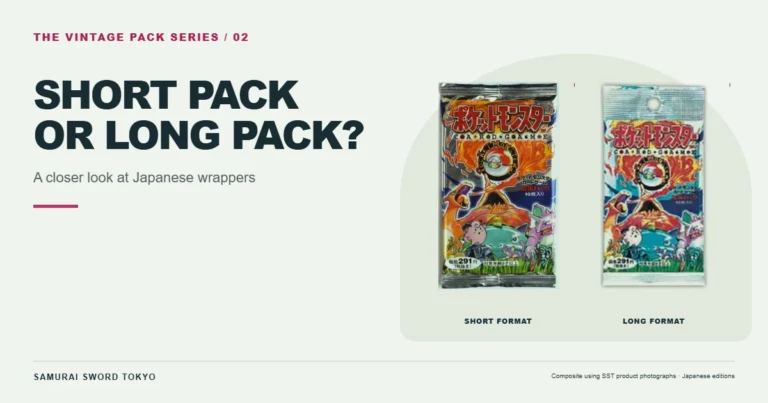
Japanese e-series packs should be compared with the same Japanese release. An English Aquapolis result cannot establish the value of either e2 or e3, and an English Skyridge result cannot price e4 or e5. Related artwork and set history do not make the sealed products equivalent.
| Comparison | How to use it | What still needs checking |
|---|---|---|
| Japanese e4 loose pack versus Japanese e4 loose pack | Potentially relevant comparable | Estado, sale date, quantity and completed-sale evidence |
| Japanese e4 versus Japanese e5 | Separate buying options | Different sets and different Crystal checklists |
| Japanese e5 versus English Skyridge | Release-context comparison only | Different language and sealed product |
| Raw pack versus graded pack | Separate market categories | Grading service, grade and certification details |
| Seller asking price versus completed transaction | Keep the evidence types separate | Whether a sale actually occurred and at what amount |
As research routes, PriceCharting maintains distinct pages for Japanese Split Earth booster packs and Japanese Mysterious Mountains booster packs. These are third-party sales aggregators, not an appraisal of a pack you are considering. Inspect the underlying listing and its format before treating a row as comparable.
For a Japan-versus-overseas comparison, record the same fields on both sides: exact set, raw or graded, unit quantity, visible condition, transaction date and sale type. Keep item price and disclosed delivery costs distinct. A converted currency amount is only comparable after the product identity is aligned. Our review on 28 September 2026 did not establish a reliable matched dataset for a numerical regional price chart, so none is presented here.
At our 28 September 2026 catalog check, all five SST e-series listings were sold out. Use their linked product pages for current details and availability, or browse the Japanese vintage pack collection. A product page remaining accessible is not evidence that a pack is available to order.
If you use Pedido rápido to request a pack, include its Japanese title, e reference, desired quantity and condition priorities. For example, “e3 Wind from the Sea, one sealed Japanese pack for display” is clearer than “Aquapolis.” A request does not promise sourcing, stock or a restock date.
Frequently asked questions
How do Japanese e1–e5 packs map to English sets?
e1 Base Expansion Pack corresponds to Expedition Base Set. e2 The Town on No Map and e3 Wind from the Sea contributed to Aquapolis. e4 Split Earth and e5 Mysterious Mountains contributed to Skyridge. The five Japanese packs remain distinct products.
Which Japanese e-series pack can contain Crystal Lugia?
e3 Wind from the Sea includes Crystal Lugia 090/087 in its Japanese checklist. e2 The Town on No Map does not. Buying an e3 pack does not guarantee Lugia or any other specific card.
Which Japanese pack can contain Crystal Charizard?
e5 Mysterious Mountains includes Crystal Charizard 089/088 in its Japanese checklist. e4 Split Earth does not. Both connect to English Skyridge, but they have different contents.
Are Japanese e-series cards Old Back?
No. The cards in e1–e5 use the newer Japanese back. Their 2001–2002 release dates make them vintage collectibles, but Old Back describes a different card-back design.
How many cards are in a Japanese e-series booster pack?
Each of the five SST e1–e5 booster pack listings specifies five random cartas por sobre. That count applies to these Japanese products and should not be generalized to every Japanese era or English release.
Is e1 Base Expansion Pack the original 1996 Japanese Base Set?
No. The original Japanese Expansion Pack launched on 20 October 1996. e1 Base Expansion Pack launched on 1 December 2001 and is associated with English Expedition Base Set.
Does a sealed Japanese e pack guarantee a Crystal card or holo?
A sealed pack contains random cards. A set checklist shows possible cards, but it does not promise a Crystal card or a particular holo in an individual pack.
How can I check e-series pack availability at SST?
Check each pack’s product page for current availability, or browse the Japanese vintage pack collection. You can request a specific Japanese release through Quick Order; a request does not guarantee stock, sourcing or a restock date.
500 puntos gratis al registrarte
CREAR CUENTA GRATIS1 pt = ¥1 al finalizar la compra · Los puntos caducan 30 días después de obtenerlos · Los aranceles de importación, impuestos y gastos de aduana no están incluidos en el precio y se cobran en la entrega, salvo en los destinos a los que enviamos con aranceles pagados.
Seleccionado para este artículo
📩 Get member-only sale alerts & coupons
Sale alerts, coupons and restock notices by email — straight from Tokyo.