PSA market update
PSA Value Tiers Paused: Why Japanese PSA 10 Cards May Reprice
Key takeaway: With PSA Value tiers paused, PSA’s 2026 service changes do not mean every PSA card automatically rises. The stronger, more useful reading is that lower-cost grading access has become harder, slower, or temporarily unavailable in major channels. That raises the replacement friction for fresh PSA 10 supply, which can make already-graded Japanese PSA 10 Pokemon cards more attractive to collectors, stores, and resellers.
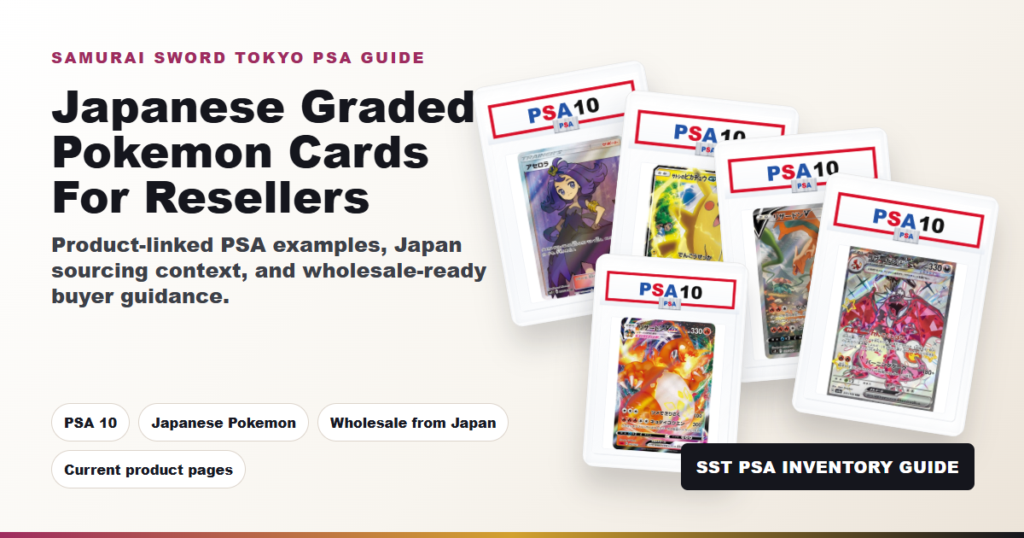
- Set reference: PSA 10 card list.
- Japanese PSA 10 graded cards are listed on our store as of this update.
For buyers, the practical move is not to chase any slab at any price. It is to focus on PSA 10 cards where demand already exists: Pikachu, Charizard, Eeveelutions, Mew and Mewtwo, Japanese promos, popular Trainers, limited distribution cards, and cards that stores can explain quickly to customers. If replacement cost rises and turnaround time stretches, ready-to-buy PSA 10 inventory becomes more valuable as a sourcing path.
What Changed: PSA Value Tiers Paused
PSA Japan announced that its service-level change applies to online submissions made from May 15, 2026 at 2:30 AM Japan time. In Japan, PSA stopped accepting Value Bulk, Value Plus, and Value Max. PSA Japan also changed the expected turnaround for Value to 160 business days and Regular to 60 business days.
| Japan service level | Declared value limit | Fee | Prior / listed turnaround | 2026 status |
|---|---|---|---|---|
| Value Bulk | JPY 80,000 or less | JPY 3,980/card | 120 business days | Acceptance stopped |
| Value | JPY 80,000 or less | JPY 4,980/card | 90 -> 160 business days | Still open, much slower |
| Value Plus | JPY 80,000 or less | JPY 7,980/card | 60 business days | Acceptance stopped |
| Value Max | JPY 150,000 or less | JPY 8,980/card | 40 business days | Acceptance stopped |
| Regular | JPY 250,000 or less | JPY 11,980/card | 30 -> 60 business days | Still open, slower |
PSA Japan also says items already shipped before the change, and orders already completed before the change, are handled under the service level, price, and turnaround from the time of submission. That distinction matters because the change affects new supply, not cards already inside PSA.
There is also a broader North America update. On May 28, 2026, PSA announced that effective June 2, 2026 at 3:00 PM Pacific Time, new submissions for Value Bulk, Value, Value Plus, and Value Max would be temporarily paused. PSA linked the pause to a 20% submission spike after its May 14 update, adding another 1.6 million cards to an active backlog approaching 10 million. PSA’s stated target is to reduce that backlog to 5 million units, with projections of up to four months.
Why This Can Support PSA 10 Values
The market mechanism is simple: when the cheapest and most flexible grading routes become unavailable or much slower, the replacement cost of a fresh PSA 10 rises. A raw card is no longer just "raw card plus cheap grading fee." It becomes raw card plus higher service choice, longer capital lockup, more uncertainty, and the risk that the card grades 9 instead of 10.
That does not guarantee a price increase for every slab. It does, however, strengthen the case for already-graded PSA 10 cards in categories where buyers already want certainty. A store does not need to wait months for a submission to return. A collector does not need to evaluate raw condition. A reseller does not need to hold capital through a long grading queue. The card is already in the grade the buyer wants.
The best phrase for this is replacement friction. The more expensive and slower it is to replace a PSA 10, the more valuable an existing PSA 10 can become.
| Market force | What changed | Why it matters for PSA 10 cards |
|---|---|---|
| Lower-cost submission access | Japan stopped several low/mid tiers; North America paused all Value tiers. | Fresh PSA 10 supply becomes harder to create at the same cost and speed. |
| Turnaround time | Japan lengthened Value and Regular turnaround. | Capital stays locked longer for submitters. |
| Backlog pressure | PSA cited backlog approaching 10 million cards in North America. | Buyers may prefer already-graded inventory instead of waiting for new returns. |
| Demand signal | PSA said a 20% submission spike added 1.6M cards after the May 14 update. | The market is still trying to submit heavily, even after slower timelines. |
| Brand signal | Collectors, PSA’s parent company, committed $200M over 18 months. | PSA is defending long-term trust and scale rather than discounting through congestion. |
The Official Demand Data Is Strong
PSA’s own May 2026 infrastructure article gives the demand context. The company says PSA graded about 2 million cards in 2020 and more than 19 million in 2025 in the English article. PSA Japan’s Japanese translation describes 2025 volume as more than 20 million. The same PSA announcement says January through April 2026 grading output rose by nearly 2.3 million items year over year, a 39% jump.
GemRate adds third-party market context. Its April 2026 recap says total grading activity reached 3.10 million cards and PSA graded 2.21 million cards, up 42% year over year. Its May 2026 recap says total grading activity was 2.95 million cards and PSA graded 2.07 million cards, up 25% year over year.
For Pokemon specifically, Pulled’s May 20, 2026 market report tracked 62,903 Pokemon cards and listed average raw price at $42.25 versus average PSA 10 price at $273.45, a 547.3% premium. That is broad English Pokemon data, not a promise for any Japanese card. But it confirms the general point: the market often pays materially more for PSA 10 certainty than for raw uncertainty.
Annual PSA grading volume
Recent monthly PSA grading activity
What This Means For Japanese Pokemon Buyers
Japanese Pokemon cards sit in a useful middle ground for this story. Many buyers want Japanese cards because of print quality, exclusive promos, Japanese set identity, and collector demand outside Japan. But a raw Japanese card still needs grading access, time, and a successful PSA 10 result before it becomes a ready-to-sell graded card.
When Value-tier access is limited, buyers may rotate toward finished PSA 10 inventory. That is especially true for overseas buyers who do not want to manage raw-card inspection, international shipping to a grader, long turnaround, and resale timing.
- If a buyer wants one exact card in PSA 10, an already-graded copy can be cleaner than raw plus grading risk.
- If a store wants display inventory now, a ready PSA 10 slab is easier than waiting for a submission.
- If a reseller wants quick listing speed, the finished grade shortens the path to sale.
- If a collector wants a Japanese promo or character card, the premium can be rational when the buyer values certainty.
- If a submitter planned to grade low-value raw cards cheaply, the math is now less friendly.
PSA 10 vs Submitting Raw Cards In 2026
Before this change, many buyers could think about raw Japanese cards and PSA 10 slabs as two versions of the same plan: buy raw, submit, wait, then hope the card comes back as a 10. That plan still exists, but the 2026 service changes make the hidden costs easier to see.
The raw route now needs more discipline. A raw card has to be clean enough to justify grading, valuable enough to absorb a higher or slower service path, and liquid enough that the market is still there when the card returns. If the card comes back as PSA 9, the result may not cover the grading cost, shipping cost, and time risk. That is especially important for modern cards where many buyers only pay a strong premium for PSA 10.
An already-graded PSA 10 is more expensive upfront, but the buyer is paying for the finished outcome. That can be rational when the buyer values certainty, immediate availability, and simpler resale or display. It is not automatically better. It is better when the buyer has already decided that PSA 10 is the target and the raw route would only be a delayed gamble.
| Buyer route | Best when | Main risk | 2026 adjustment |
|---|---|---|---|
| Buy raw and submit | You can inspect condition, accept waiting, and tolerate a 9. | Grading cost, lower grade, long turnaround, and market movement while waiting. | Be stricter about what raw cards deserve submission. |
| Buy finished PSA 10 | You need certainty, inventory now, or a clean collector copy. | Paying too much for the wrong card or version. | Compare exact Japanese card number and recent comps before buying. |
| Buy PSA 9 or lower | You want lower entry cost and do not need gem mint. | Weaker resale premium and less collector demand in some categories. | Use only when the card itself has demand beyond the grade. |
| Wait for reopening | You do not need inventory now. | Reopening timing and future service terms may change. | Watch PSA updates and avoid assuming old prices return. |
PSA’s Projection for the Pause
As of June 5, 2026, PSA described the North America Value-tier pause as temporary and tied to operational milestones, with a projection of up to four months. That is not a price forecast. Reopening would not instantly create fresh PSA 10 supply: cards still need to be received, graded, shipped, listed, and sold, so the announcement date and the date new inventory reaches the market are different things.
Which Cards Were Positioned to Benefit
After the May 15, 2026 change, the cards most likely to benefit were those where demand already existed before the service change: Pikachu and Charizard, Eeveelutions, Japanese promos, popular Trainers, and limited or nostalgia cards. For each, the caution was to compare exact artwork, card number, and recent sold data.
Which Cards Were Not Expected to Rise
After the June 2, 2026 pause, the service change was not a price floor. High-population modern cards, low-interest cards, and cards with unclear collector identity could still underperform, and more slabs could enter the market once PSA processed its backlog. The pause strengthened the case for the right PSA 10 cards; it did not save the wrong ones.
Buying Strategy For Collectors
As of June 5, 2026, the collector checklist was to confirm the exact Japanese card name, number, rarity, and set, compare PSA 10 comps against raw and PSA 9 comps, check whether recent sales cluster or rest on one outlier, and avoid buying a slab only because grading tiers changed. The strongest collector targets were cards where a PSA 9 would be unwelcome, since a finished PSA 10 removes that uncertainty.
Buying Strategy For Stores And Resellers
For stores and resellers, the framing was replacement cost and inventory velocity: a PSA 10 card that can be listed, displayed, or sold immediately has a different business value than a raw card waiting for grading.
| Order theme | Good use case |
|---|---|
| Icon Pokemon | Pikachu, Charizard, Mew, Mewtwo, Eeveelutions, starters, and legends. |
| Japanese promos | Campaign cards, event cards, and limited distribution cards. |
| Trainer demand | Character-driven slabs for collectors who follow Japanese card culture. |
| Display case mix | A few anchor cards plus mid-tier cards that keep the case active. |
| Reseller list | Cards with simple listing titles and recent comp support. |
Where to Buy Japanese PSA 10 Cards
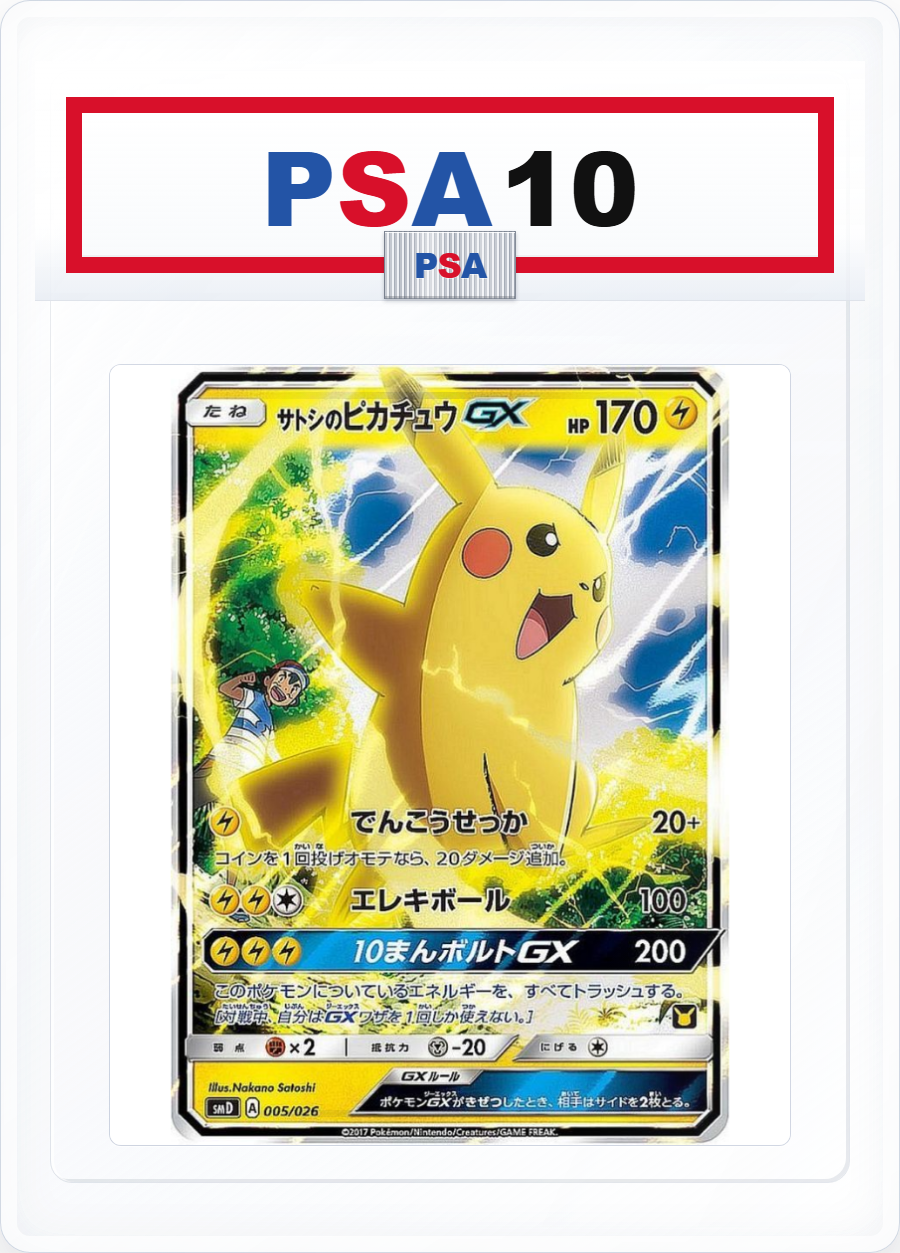
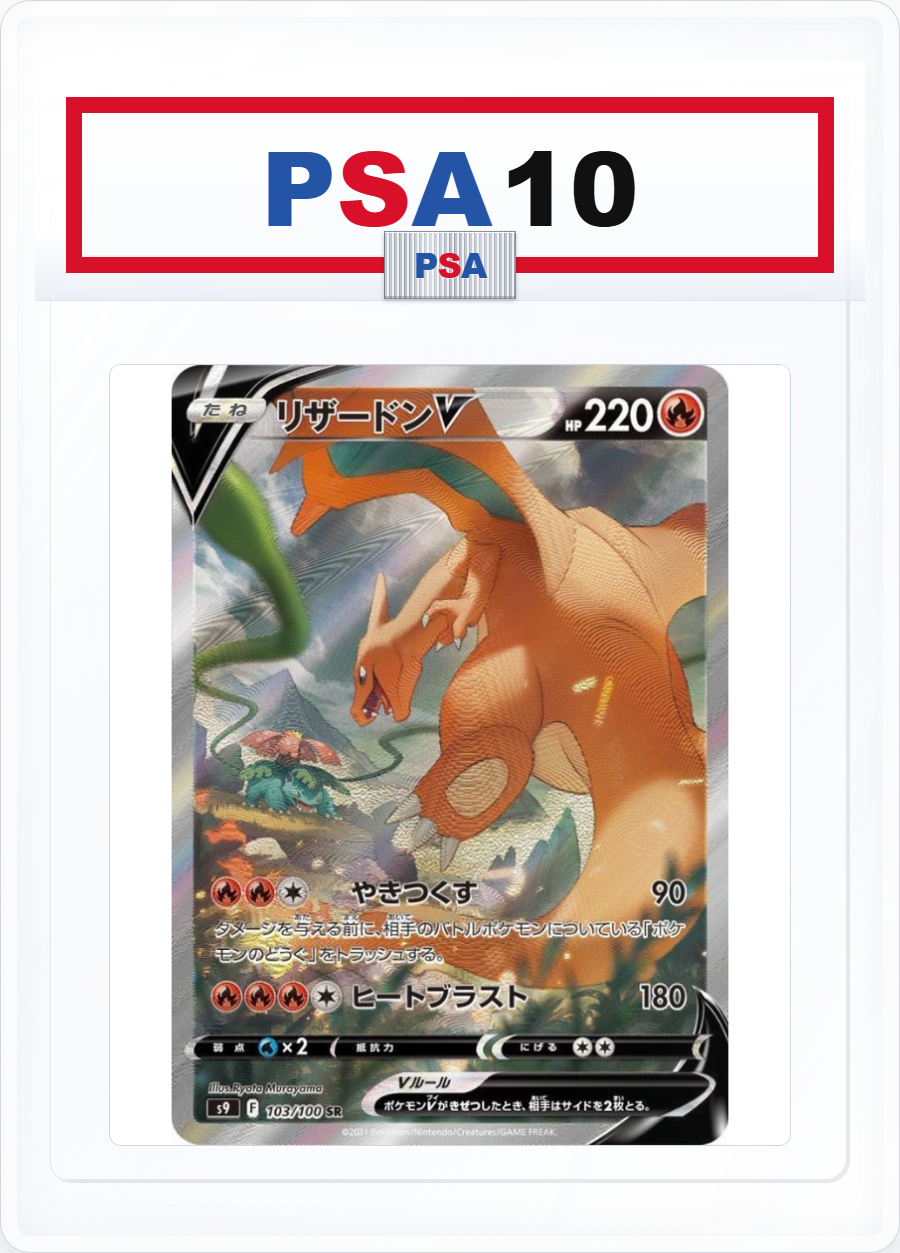
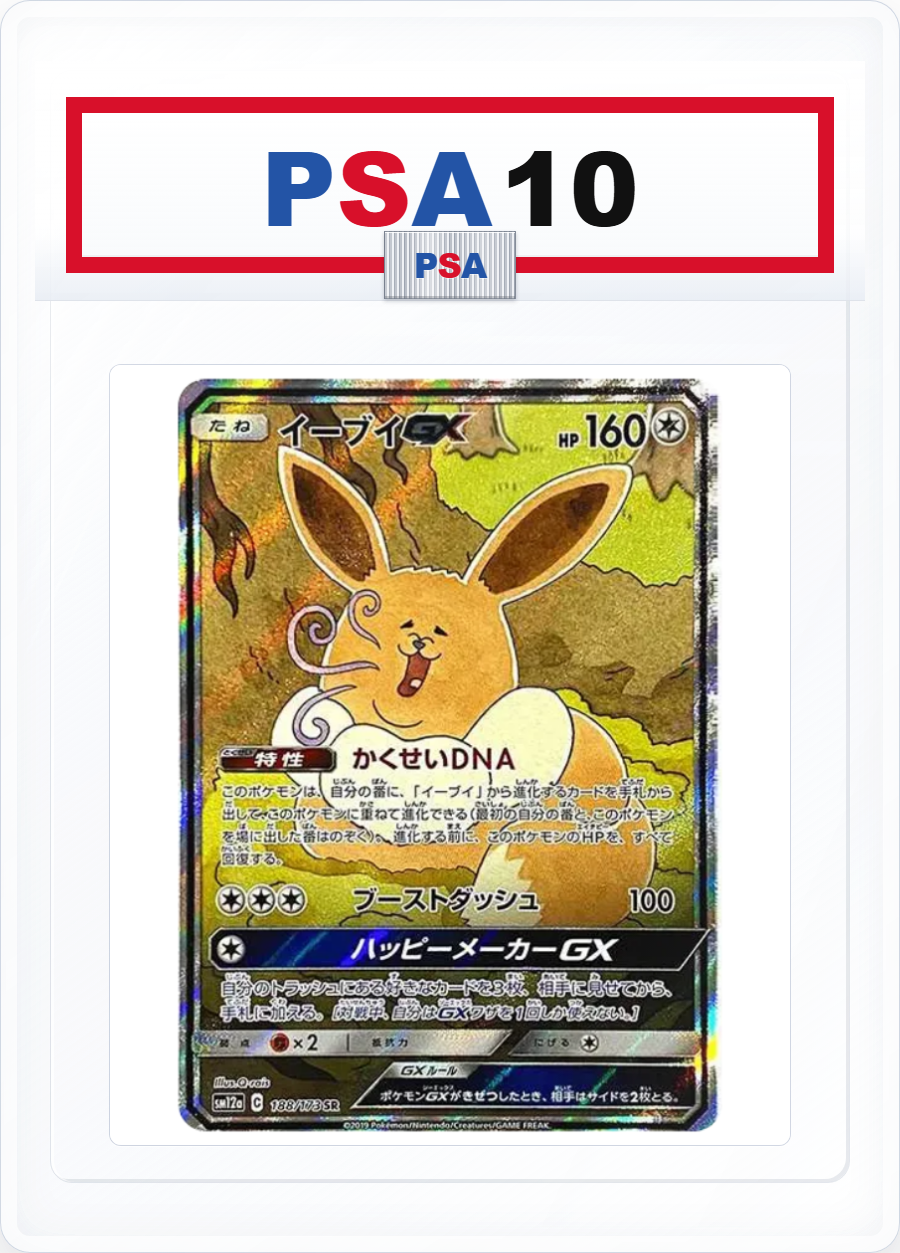
Japanese PSA 10 cards are listed in the PSA 10 collection. PSA10 Ash’s Pikachu GX 005/026, PSA10 Charizard V 103/100 SA and PSA10 Eevee GX 188/173 SA sold out at the time of this update — sourcing requests go through Quick Order. USD figures convert at ¥154/USD, approximate.
Bottom Line
As of May 28, 2026, PSA’s 2026 service-level changes were a real market signal. Japan’s change removed several lower service paths and made Value / Regular slower, and North America had announced a pause of all four Value tiers for new submissions. PSA also disclosed a submission surge and a backlog, with a target to reduce it before reopening paused tiers. That combination could support the relative value of already-graded Japanese PSA 10 Pokemon cards because fresh replacement supply was harder, slower, and more expensive to create. The reading then was selective buying: cards with existing demand, clear identity, and a practical use case.
FAQ
Did PSA Japan stop all grading submissions?
No. PSA Japan stopped selected service levels: Value Bulk, Value Plus, and Value Max. Value and Regular remained open with longer expected turnaround times.
Did PSA North America pause all Value tiers?
Yes. PSA announced that Value Bulk, Value, Value Plus, and Value Max would be paused for new submissions in North America.
Does this mean every PSA 10 Pokemon card will rise?
No. The service change supports the value of already-graded inventory only where demand exists. High-population or low-demand slabs can still underperform.
Why can already-graded PSA 10 cards become more attractive?
Because the buyer avoids raw-card condition risk, grading fees, long turnaround, and the risk of receiving a lower grade. When low-cost grading access is limited, a finished PSA 10 can be worth more as immediate inventory.
Should I buy raw cards or PSA 10 slabs now?
Buy raw when you have grading skill, time, and tolerance for a lower grade. Buy PSA 10 when certainty, speed, and resale-ready presentation matter more than grading upside.
Picked for this article
📩 Get member-only sale alerts & coupons
Sale alerts, coupons and restock notices by email — straight from Tokyo.