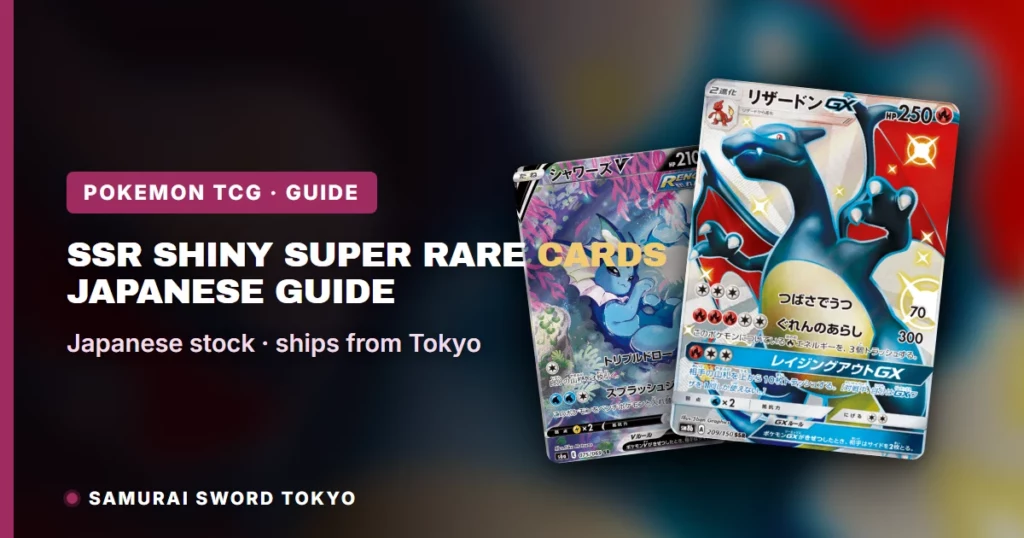
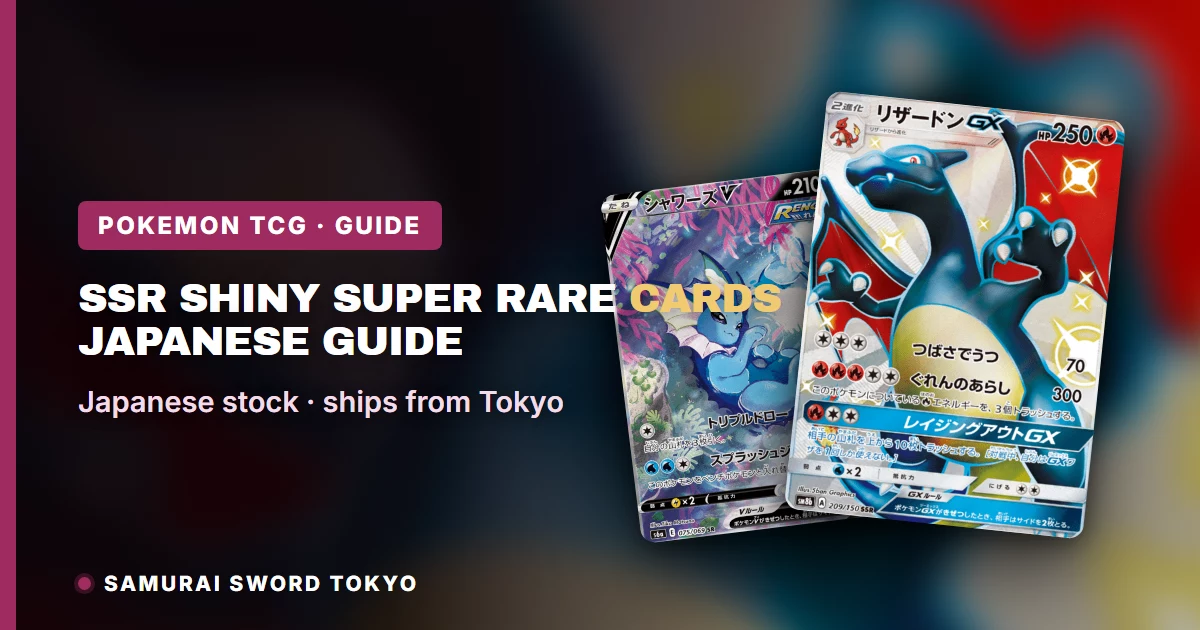
SSR is one of the few major Japanese Pokemon rarity names that spans three different eras of the game — GX, V/VMAX, and ex — without changing what it means: take an SR-style illustration and repaint the Pokemon itself in shiny colors. Three high-class packs, released four years apart, all put SSR at the top of the box, and each one is still traded as its own distinct card today.
This isn’t a set-by-set pull-rate breakdown — we’ve already covered GX Ultra Shiny and Shiny Star V individually and head-to-head. This guide instead traces SSR as a rarity concept: where the name comes from, which three sets used it, how a database like limitlesstcg actually classifies these cards behind the scenes, and how SSR relates to the neighboring rarities collectors mix it up with.
SSR (Shiny Super Rare) is an official rarity mark printed on the Japanese card — introduced alongside the “S” (Shiny) rarity in GX Ultra Shiny (SM8b, 2018) — that English-language card databases don’t always file under the same tag. It returned in Shiny Star V (S4a, 2020), and again in Shiny Treasure ex (SV4a). Our current SSR chase card is a PSA10 Charizard GX SSR (209/150, GX Ultra Shiny) (update: currently sold out — restock requests via Quick Order), currently listed at ¥381,718 (~$2,342).
Prices are our own sealed/graded listings as of August 2026, converted at ¥163/USD. This guide is not about pull rates or box math for any single set — see the linked set guides below for that.
What SSR Actually Means
SSR stands for Shiny Super Rare. It’s the collector and commercial shorthand for a specific visual treatment: take a Pokemon that would normally get an SR-style full-art illustration, and instead render that same illustration with the Pokemon recolored into its shiny (color variant) form. The card frame, layout conventions, and general “full-art chase” feel carry over from SR — the shiny palette is what sets it apart.
This is worth stating plainly up front, because SSR is easy to confuse with several other three-letter Japanese rarity names that look similar on the page but describe different things entirely. SSR is not the same concept as SA (a historical community nickname for SR cards with a special alternate illustration, used before SAR existed), not the same as HR (the rainbow-foil finish used from Sun & Moon through Sword & Shield), and not related to SAR’s alternate-illustration structure. We cover each of those separately; this guide’s last section lays out the distinctions in one place.
What makes SSR distinct as a naming story is that it wasn’t a one-off. The same three-letter tag was reused across three separate high-class packs spanning a full Pokemon TCG generational shift — from the GX era, through V/VMAX, into the ex era. That’s the throughline this guide follows.
Three Sets, One Name: SM8b, S4a, SV4a
SSR-labeled cards appeared as the headline rarity in three Japanese high-class packs:
| Set | Full name | Era | JP release date |
|---|---|---|---|
| SM8b | GX Ultra Shiny | Sun & Moon (GX) | November 2, 2018 |
| S4a | Shiny Star V | Sword & Shield (V/VMAX) | November 20, 2020 |
| SV4a | Shiny Treasure ex | Scarlet & Violet (ex) | — |
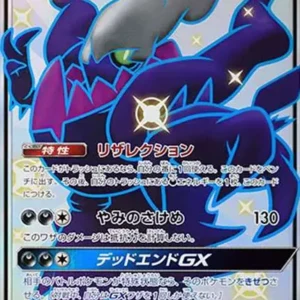
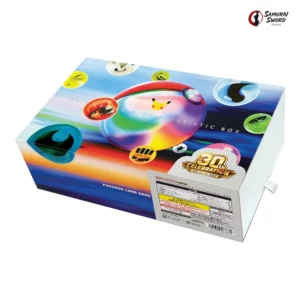
GX Ultra Shiny was the first of the three, built around GX Pokemon repainted in shiny colorways — a full high-class pack dedicated entirely to the concept, roughly one SSR per box (community-reported; the Pokemon Company hasn’t published official pull rates). It’s where cards like Charizard GX SSR (209/150) (update: currently sold out — restock requests via Quick Order) and Darkrai GX SSR (230/150) come from.
Shiny Star V followed two years later, carrying the same “shiny colorway, roughly one per box (community-reported)” structure into the V/VMAX generation. For a full side-by-side of these first two SSR sets — release timing, box availability, and chase-card comparison — see our GX Ultra Shiny vs Shiny Star V guide. For a deep dive on GX Ultra Shiny specifically, including its full SSR card list and set structure, see the SM8b GX Ultra Shiny high class pack guide.
Shiny Treasure ex carried the SSR name forward into the Scarlet & Violet ex era, keeping the shiny-colorway concept alive well after GX and V/VMAX were retired as card types. We haven’t independently verified how SSR sits within SV4a’s broader rarity structure (which otherwise centers on AR and SAR) — that’s a set-specific detail outside the scope of this rarity-history guide.
This article is about SSR as a naming concept across its three sets. If you want box-by-box pull rates, SSR variant counts, or full price breakdowns for GX Ultra Shiny or Shiny Star V specifically, use the two set guides linked above — they cover that ground in detail so this one doesn’t have to repeat it.
What limitlesstcg’s Database Shows
One useful way to see SSR’s real status is to check how it’s printed versus how an English-language reference database files it. SSR is printed directly on the Japanese card — introduced alongside the “S” (Shiny) rarity mark in GX Ultra Shiny. But when we looked up Charizard GX SSR (SM8b #209) directly on limitlesstcg.com, the card’s rarity field reads “Secret Rare” — not “SSR.” That set’s database entry doesn’t use “SSR” as its own tag.
limitlesstcg’s handling isn’t even consistent across the three SSR sets: Charizard VMAX SSR from Shiny Star V (S4a #308) is filed under a different label again, “Shiny Ultra Rare,” a separate category limitlesstcg uses for that set’s shiny cards. So a card carrying the same printed “SSR” mark in Japan can land under “Secret Rare” for one set and “Shiny Ultra Rare” for another, depending on which English-language database you’re checking and which set it’s from.
SSR and HR are official Japanese rarity marks that appear on the card itself; SA, covered below, is the one of this group that’s genuinely a community nickname rather than a printed designation. Practically, this means the SSR label on a marketplace listing or in a collector’s binder is describing the card’s actual printed rarity — it’s the English-language database bucket that varies by set, not the underlying Japanese rarity.
SSR Chase Cards We Track
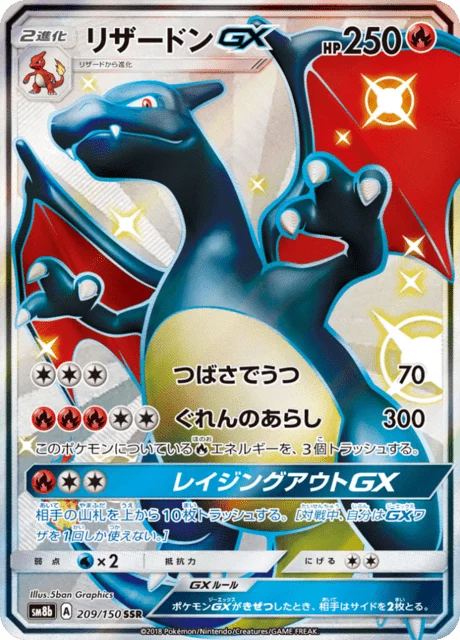
Our current top SSR is a PSA10 Charizard GX SSR (209/150), currently listed at ¥381,718 (~$2,342) (update: currently sold out — restock requests via Quick Order). This is a single graded copy — one-of-one stock, and when it sells, it’s gone; a card at this level is not something we can guarantee restocking.
Below that, a PSA10 Darkrai GX SSR (230/150), currently listed at ¥53,560 (~$329), and other GX-era SSR chases round out the tier at a range of price points.
| Card | Set | Status |
|---|---|---|
| Charizard GX SSR [SM8b 209/150] | GX Ultra Shiny (confirmed) | PSA10 currently listed at ¥381,718 (update: currently sold out — restock requests via Quick Order) |
| Rayquaza GX SSR [240/150] | GX-era SSR (150-card series) | PSA10 currently listed at ¥334,750 (update: currently sold out — restock requests via Quick Order) |
| Darkrai GX SSR [SM8b 230/150] | GX Ultra Shiny (confirmed) | PSA10 currently listed at ¥53,560 |
| Charizard VMAX SSR [308/190] | V/VMAX-era SSR | PSA10 currently listed at ¥41,690 (update: currently sold out — restock requests via Quick Order) |
| Leafeon GX SSR [206/150] | GX-era SSR (150-card series) | PSA10 currently listed at ¥29,870 (update: currently sold out — restock requests via Quick Order) |
| Scizor GX SSR [233/150] | GX-era SSR (150-card series) | PSA10 currently listed at ¥27,810 (update: currently sold out — restock requests via Quick Order) |
View Card → (update: currently sold out — restock requests via Quick Order)
What SSR Is Not: Telling It Apart from SA, HR, and SAR
Because so many Japanese Pokemon rarity abbreviations look alike, it’s worth being explicit about what SSR doesn’t overlap with:
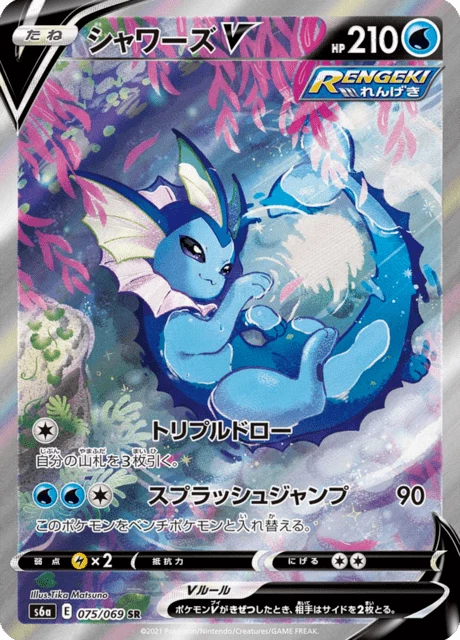
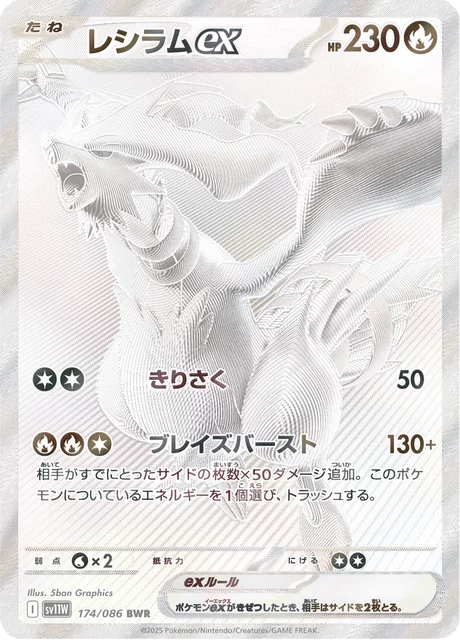
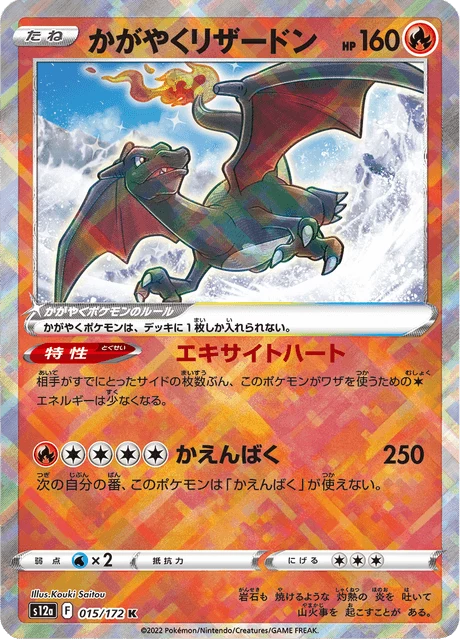
None of these three cards are SSR — they’re pictured here specifically because their names get mixed up with SSR and with each other. SA is a community nickname for an SR with a special alternate illustration, distinct from the set’s standard full-art print; BWR is a solid-color full-holo finish introduced in 2025; Radiant (K) is a Shiny Pokemon subgroup with its own 1-per-deck deckbuilding rule. Each has its own dedicated guide if you want the full breakdown.
- SSR vs SA. SA is a historical community nickname for SR cards with a special alternate illustration (distinct from the set’s standard full-art print), used before the official SAR rarity debuted in VSTAR Universe (December 2022). It’s a distinction within the SR print run, not a shiny recolor. A card can be SA without being shiny, and no SSR card is described as SA in our listings.
- SSR vs HR. HR (Hyper Rare, “Rainbow Rare”) is a full-silver, rainbow-foil finish used from the Sun & Moon era through Sword & Shield, sharing artwork with a set’s Full Art print. It’s a foil treatment, not a color-swap of the Pokemon itself — a different visual mechanism from SSR’s shiny recolor.
- SSR vs SAR. SAR (Special Art Rare) uses an alternate illustration exclusive to that print, unlike SR/SSR cards which typically share art direction with other prints in the set. SAR is also a distinctly Scarlet & Violet-era naming convention, debuting in VSTAR Universe.
The common thread across all of these is the one flagged in the database section above: SSR and HR are official rarity marks printed on the cards themselves, but English-language databases like limitlesstcg don’t always carry them as their own field — they get filed under broader buckets like “Secret Rare” or “Ultra Rare” depending on the set. SA is different in kind: it’s a community nickname with no printed designation of its own. Keeping straight which of these are printed rarities and which are collector shorthand is the fastest way to avoid mixing them up.
Where to Buy SSR-Era Japanese Cards
We ship graded and raw Japanese Pokemon singles worldwide out of Tokyo with tracked delivery. Our current SSR stock is centered on GX Ultra Shiny, with select V/VMAX-era SSR singles such as Charizard VMAX SSR [308/190] also in stock — for Shiny Star V box and singles availability, see the comparison guide linked below.
For the full GX Ultra Shiny set breakdown — every SSR variant, pull rates, and box structure — see our SM8b GX Ultra Shiny high class pack guide. For how SSR compares directly against Shiny Star V’s version of the same idea two years later, see our GX Ultra Shiny vs Shiny Star V guide. And for how SSR sits alongside SA, HR, SAR, and the rest of the Japanese rarity system, see our Japanese Pokemon card rarities explained hub.
Browse our full PSA10 graded singles collection for other GX and V-era shiny chases, or use our Quick Order page for the fastest route through a mixed order of singles and sealed product.
Frequently Asked Questions
What does SSR mean in Pokemon cards?
SSR stands for Shiny Super Rare — an official Japanese rarity mark, introduced alongside the “S” (Shiny) rarity in GX Ultra Shiny, for SR-style cards where the Pokemon itself is recolored into its shiny (color variant) form. English-language databases like limitlesstcg don’t always file it under its own “SSR” tag, but the mark itself is printed on the card.
Which sets have SSR cards?
Three Japanese high-class packs: GX Ultra Shiny (SM8b, released November 2, 2018), Shiny Star V (S4a, released November 20, 2020), and Shiny Treasure ex (SV4a).
Is SSR an official Pokemon Company rarity?
Yes — it’s printed directly on the Japanese card. What varies is how English-language reference databases file it: limitlesstcg lists Charizard GX SSR (SM8b #209) under “Secret Rare” and Charizard VMAX SSR (S4a #308) under a separate “Shiny Ultra Rare” bucket, rather than using “SSR” as its own tag in either case.
What’s the difference between SSR and SA?
SA is a historical community nickname for SR cards with a special alternate illustration, distinct from the set’s standard full-art print, used before the official SAR rarity debuted in VSTAR Universe (December 2022). SSR cards are specifically shiny-colorway reprints of the Pokemon itself.
What’s the difference between SSR and HR (Rainbow Rare)?
HR is a rainbow-foil finish that shares artwork with a set’s Full Art card, used from Sun & Moon through Sword & Shield. SSR is a distinct shiny-colorway illustration rather than a foil treatment on existing art.
500 Points Free on Sign-Up
CREATE FREE ACCOUNT1 pt = ¥1 at checkout · Points expire 30 days after they are earned · Import duties, taxes and customs charges are not included in the price and are collected on delivery, except for destinations we ship duty-paid.
Picked for this article
📩 Get member-only sale alerts & coupons
Sale alerts, coupons and restock notices by email — straight from Tokyo.