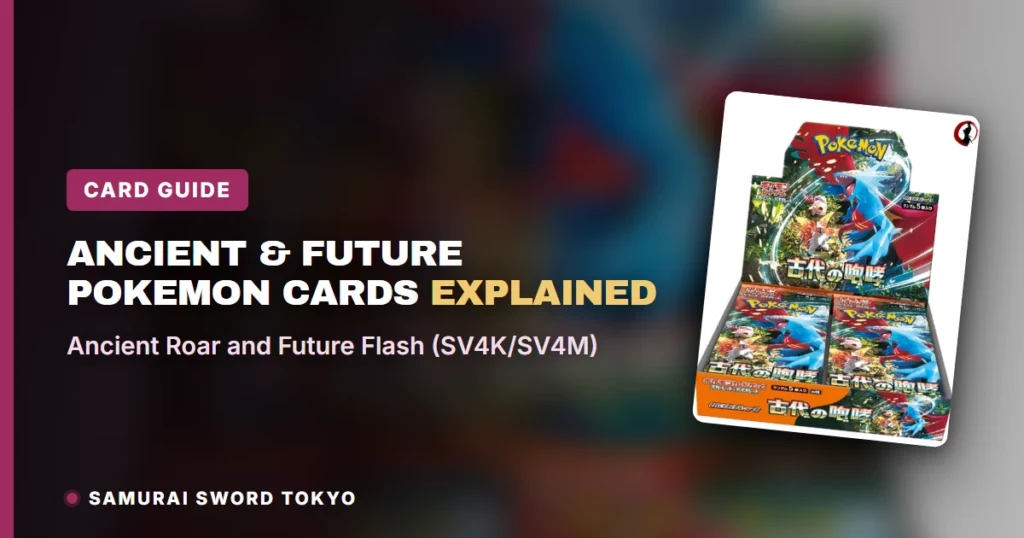
Ancient and Future are not rarity tiers and not a Pokemon type — they are a card mechanic built around Paradox Pokemon from the Scarlet & Violet video games. Ancient cards feature past-form Paradox Pokemon such as Roaring Moon and Sandy Shocks; Future cards feature future-form Paradox Pokemon such as Iron Valiant and Iron Moth.
Japan introduced the mechanic with a same-day two-set release: SV4K “Ancient Roar” for the Ancient side and SV4M “Future Flash” for the Future side. Rather than mixing Ancient and Future Pokemon into one shared set the way earlier Scarlet & Violet-era releases sometimes blended themes, Japan gave each camp its own standalone set, its own box art, and its own full card list — while keeping both on the same release calendar date. This guide explains what the Ancient/Future split means, how to spot an Ancient or Future card on sight, how the two Japanese sets break down card by card, and how they map onto the English side of the game.
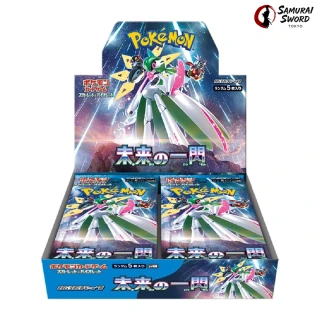
Ancient and Future cards feature past-form and future-form Paradox Pokemon respectively, and both carry a small stamp graphic in the bottom-right corner of the card. Japan released them together on October 27, 2023 as two separate sets: SV4K Ancient Roar currently listed at ¥10,192 (~$64), and SV4M Future Flash currently listed at ¥10,088 (~$63). Both sets feed into the English Paradox Rift expansion — alongside a third Japanese set, SV3a.
Yen figures below convert at ¥159/USD (September 2026). Prices are a store snapshot — check the linked listing for the current number before ordering.
What “Ancient” and “Future” Mean on a Pokemon Card
Ancient and Future are a card mechanic tied to the Paradox Pokemon introduced in the Scarlet & Violet video games — creatures presented as alternate-timeline forms of existing Pokemon. The mechanic splits them into two camps:
- Ancient cards feature past-form Paradox Pokemon, for example Roaring Moon and Sandy Shocks.
- Future cards feature future-form Paradox Pokemon, for example Iron Valiant and Iron Moth.
Rather than mixing both camps into one set, Japan gave each camp its own dedicated set on the same release day — which is why the two sets below share a release date but have separate names, separate card lists, and separate box art built around their theme.
The naming is a useful memory aid on its own: “Ancient Roar” pairs a past-tense idea (Ancient) with a loud, primal-sounding word (Roar), while “Future Flash” pairs a forward-looking idea (Future) with a fast, technological-sounding word (Flash). If you remember the mechanic split, the set names follow logically from it.
Ancient Roar and Future Flash: The Two Japanese Sets
Both sets released in Japan on the same day — October 27, 2023 — and split the Ancient/Future mechanic cleanly down the middle.
| Set | JP code | Theme | Japan release |
|---|---|---|---|
| Ancient Roar | SV4K | Ancient (past-form Paradox Pokemon) | October 27, 2023 |
| Future Flash | SV4M | Future (future-form Paradox Pokemon) | October 27, 2023 |
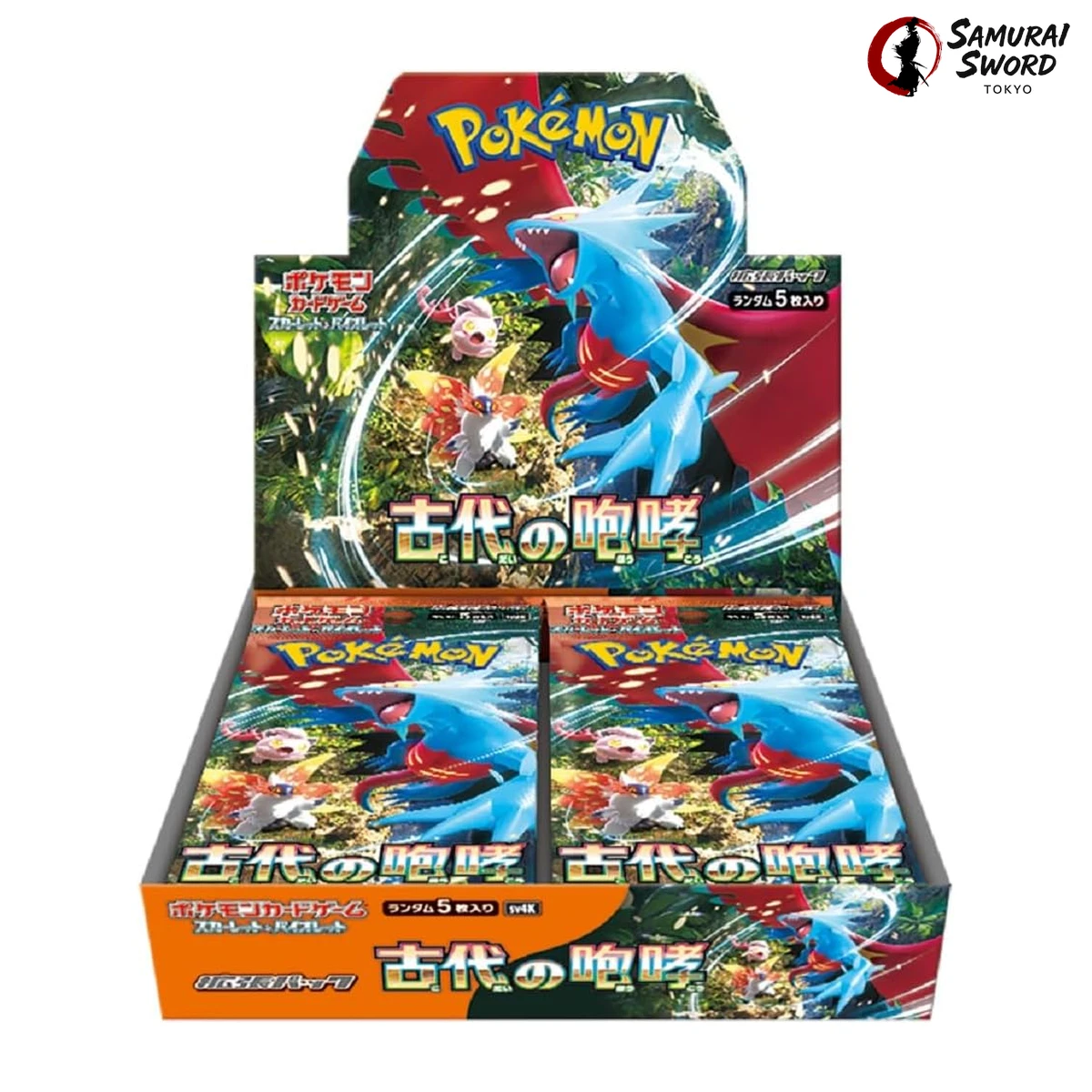
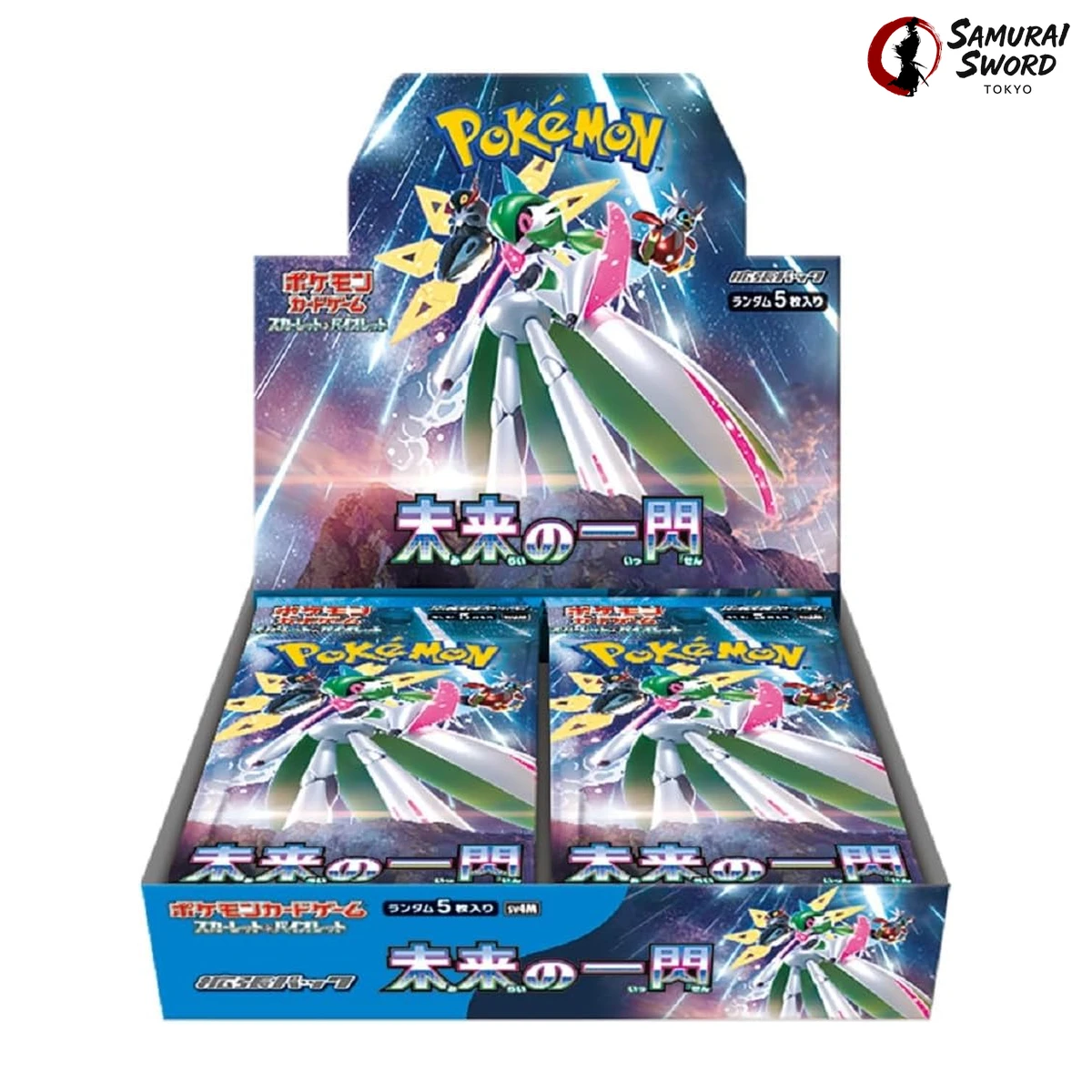
For the full card-by-card breakdown of each set, see our Ancient Roar (SV4K) card list and Future Flash (SV4M) card list.
How to Spot an Ancient or Future Card
Ancient and Future Pokemon cards in this pair of sets carry an individual small stamp graphic printed in the bottom-right of the card. That stamp is the fastest way to confirm a card belongs to the mechanic without needing to know every Paradox Pokemon by sight.
The same stamp-style design convention — a small corner graphic marking a themed subset — was also used in the earlier Japanese Single Strike Master (S5I) and Rapid Strike Master (S5R) sets. That is a different mechanic with a different theme (Single Strike and Rapid Strike style versions of existing Pokemon, rather than Paradox Pokemon); the stamp placement is simply a design convention the sets share, not evidence the mechanics are related.
In practical terms, this means two separate things can both be true about a Japanese Pokemon card: it can carry a small corner stamp, and that stamp can belong to entirely different mechanics depending on which set and era the card comes from. When you are trying to identify a card, always check which set it is from first, then use the stamp to confirm the mechanic rather than assuming the mechanic from the stamp style alone.
Inside SV4K Ancient Roar: The Card Count Breakdown
SV4K Ancient Roar totals 94 cards: a 66-card base/main set plus a 28-card secret-rarity run split across four rarity tiers.
| Tier | Cards |
|---|---|
| Base/main set | 66 |
| AR (secret) | 12 |
| SR (secret) | 9 |
| SAR (secret) | 5 |
| UR (secret) | 2 |
| Secret-rarity total | 28 |
| Set total | 94 |
That secret-rarity split is what the set’s pull-rates coverage digs into in more depth — see our SV4K Ancient Roar pull rates and best cards page and its sibling, SV4M Future Flash pull rates and best cards, for the Future-side equivalent.
From Japan to English: Where Paradox Rift Comes From
Both SV4K Ancient Roar and SV4M Future Flash feed into the English Paradox Rift (PAR) expansion. It is a common shorthand to say Paradox Rift is “the English version of Ancient Roar and Future Flash,” but that oversimplifies the mapping — a third Japanese set, SV3a, is also a source set for Paradox Rift.
In other words, Paradox Rift pulls its card pool from three Japanese sets, not two. Our own set-facts hubs cover this mapping in full: the Paradox Rift Japanese card list lays out the complete JP-to-EN mapping, and the Paradox Rift chase cards page tracks which Japanese prints the English chase cards come from.
That three-set structure is worth remembering if you are trying to trace a specific English Paradox Rift card back to its Japanese original: the print you are looking for could be sitting in Ancient Roar, Future Flash, or SV3a, and the set it came from is not always obvious from the English card alone. This is exactly the kind of detail that gets lost when a set is described with the shorthand “this is just the English version of X,” and it is why the dedicated JP-to-EN hub linked above stays separate from this explainer rather than folding the full mapping in here.
Which Ancient Roar and Future Flash Box to Buy
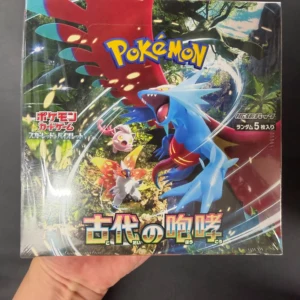
If you want the Ancient side of the mechanic, SV4K Ancient Roar is currently listed at ¥10,192 (~$64). For the Future side, SV4M Future Flash is currently listed at ¥10,088 (~$63). Both are sealed Japanese booster boxes from the same October 2023 release.
We also list a Damaged Box variant of SV4K Ancient Roar in our own catalogue: same set contents, sold at a different price point purely because of cosmetic condition on the outer box. As with every Damaged Box listing on this site, the definition is cosmetic box damage only — the sealed product inside is unaffected. See our general Damaged Box explainer for how the store defines the category (written for a different set, but the same store-wide definition applies here).
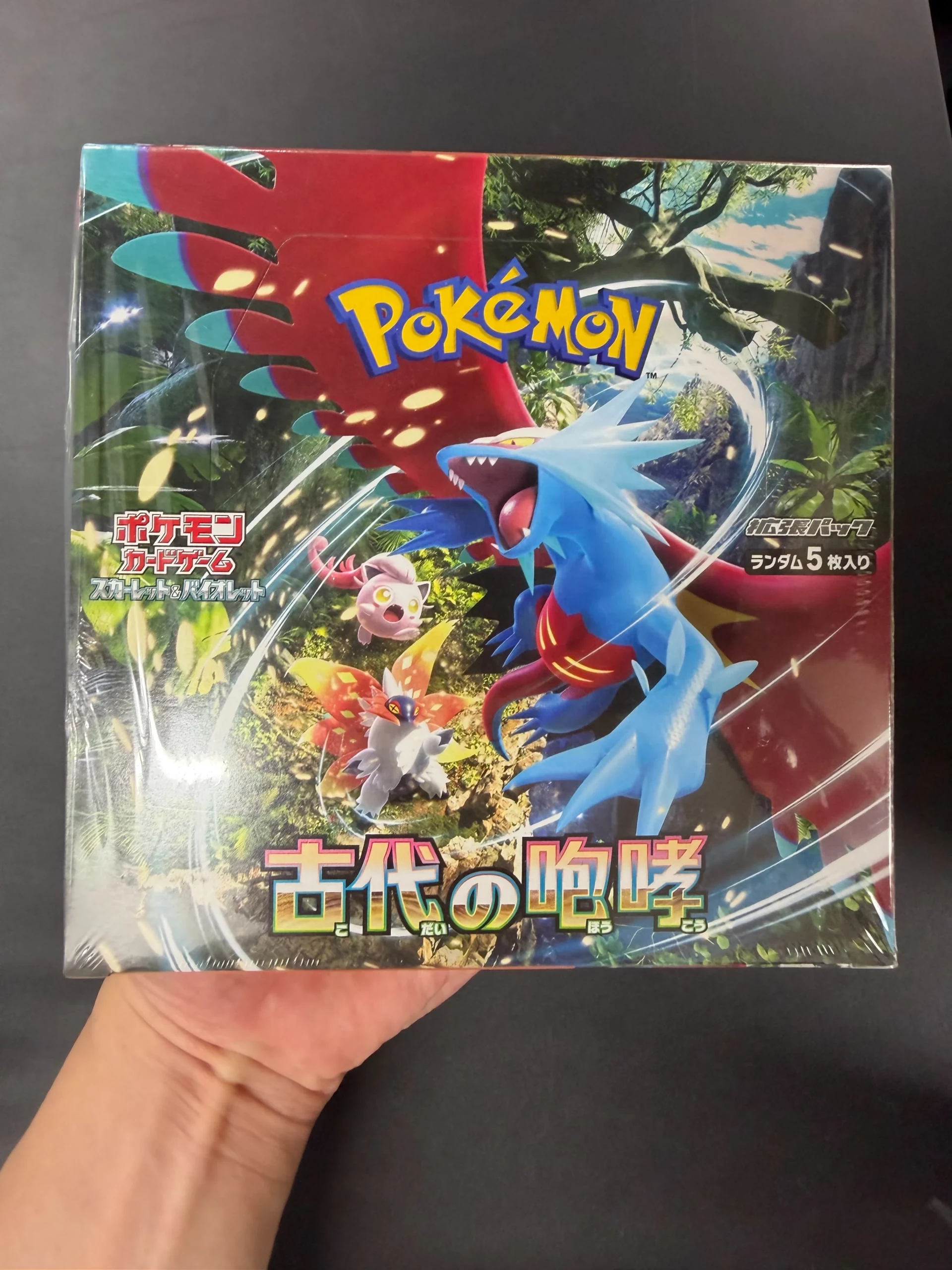
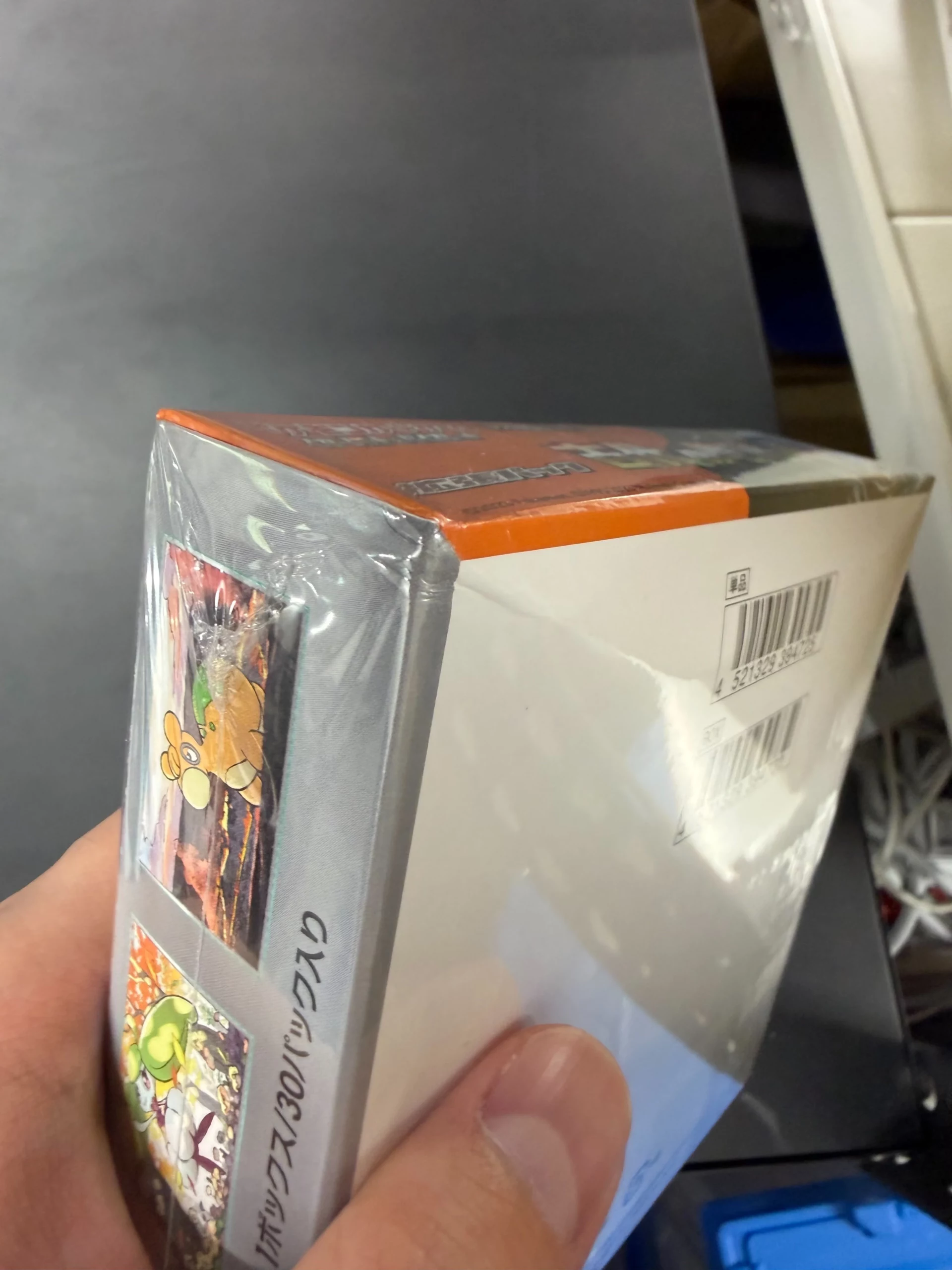
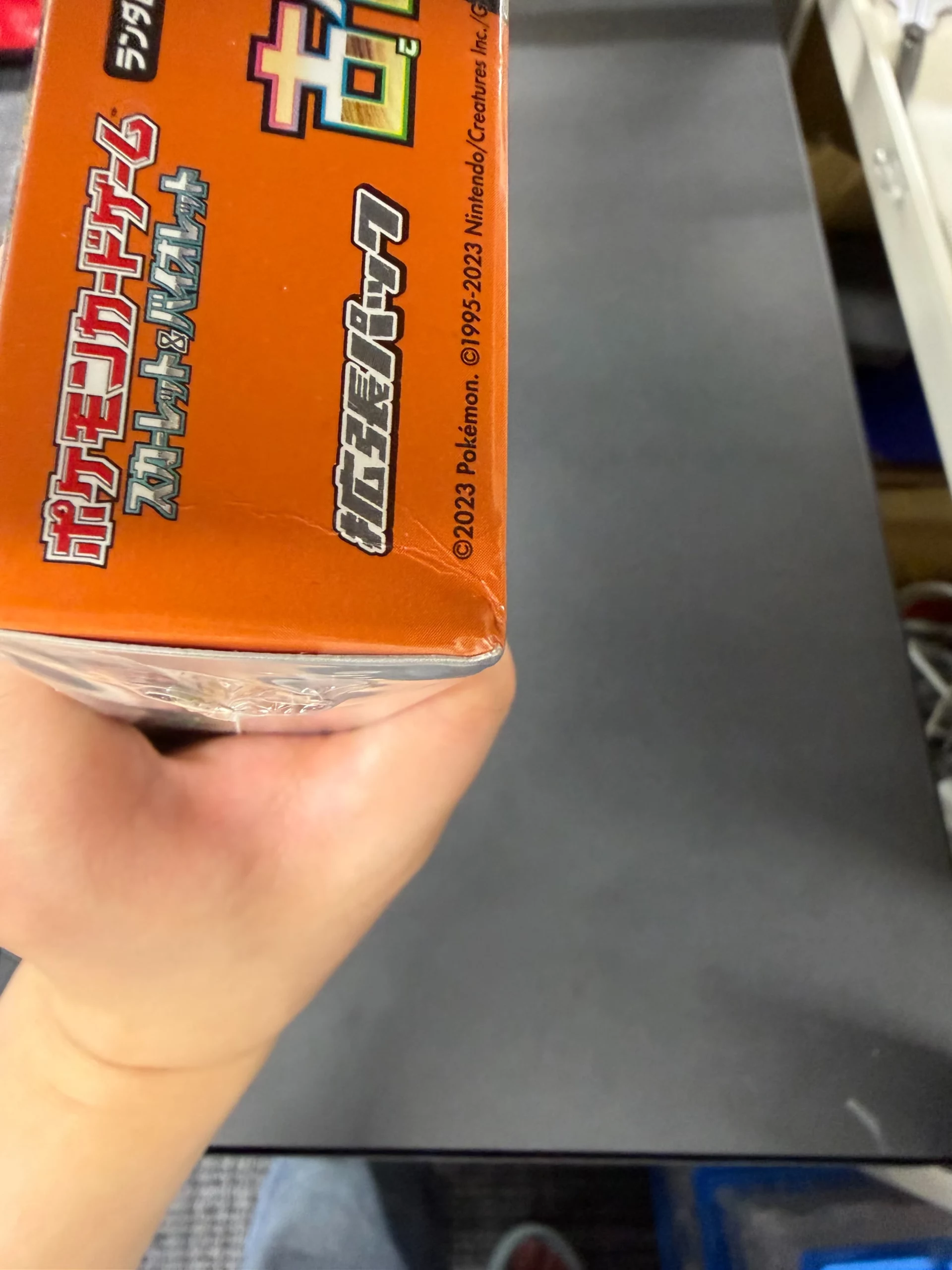
The SV4K Ancient Roar Damaged Box is currently listed at ¥12,000 (~$75). For more Japanese Pokemon booster boxes, browse the Pokemon card box collection, or build a mixed order — sealed boxes plus singles — through Quick Order.
Frequently Asked Questions
What is the difference between Ancient and Future Pokemon cards?
Ancient cards feature past-form Paradox Pokemon (for example Roaring Moon and Sandy Shocks); Future cards feature future-form Paradox Pokemon (for example Iron Valiant and Iron Moth). Japan split the two camps into separate sets: SV4K Ancient Roar for Ancient, SV4M Future Flash for Future.
When were Ancient Roar and Future Flash released in Japan?
Both sets released together on October 27, 2023.
How many cards are in SV4K Ancient Roar?
94 cards total: a 66-card base/main set plus a 28-card secret-rarity run (12 AR, 9 SR, 5 SAR, 2 UR).
How can you tell if a card is Ancient or Future?
Ancient and Future cards carry a small stamp graphic in the bottom-right corner of the card. The same stamp-style design convention was also used on the earlier Single Strike Master (S5I) and Rapid Strike Master (S5R) Japanese sets, though that is a separate, unrelated mechanic.
What is the English equivalent of Ancient Roar and Future Flash?
Both sets feed into the English Paradox Rift (PAR) expansion — along with a third Japanese source set, SV3a. Paradox Rift is built from three Japanese sets, not just SV4K and SV4M.
What is the difference between a regular box and a Damaged Box on your site?
A Damaged Box has the same sealed set contents as the regular box; the difference is cosmetic damage to the outer box only. It is sold at a different price point purely because of that cosmetic condition.
¥500 off, on us
- ¥500 off one order of ¥30,000 or more
- +1% extra points on that order
- One coupon per account
Sign in or create an account to claim · One use per account · One coupon per order · Not valid on pre-order items · Ends Sep 24, 2026, 23:59 JST · Import duties, taxes and customs charges are not included in the price and are collected on delivery, except for destinations we ship duty-paid.
Picked for this article
📩 Get member-only sale alerts & coupons
Sale alerts, coupons and restock notices by email — straight from Tokyo.