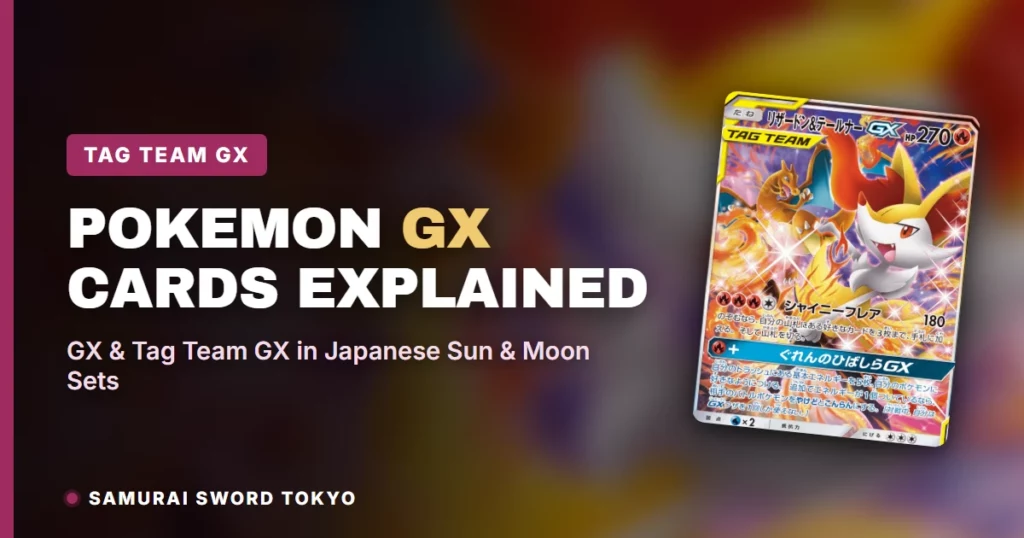
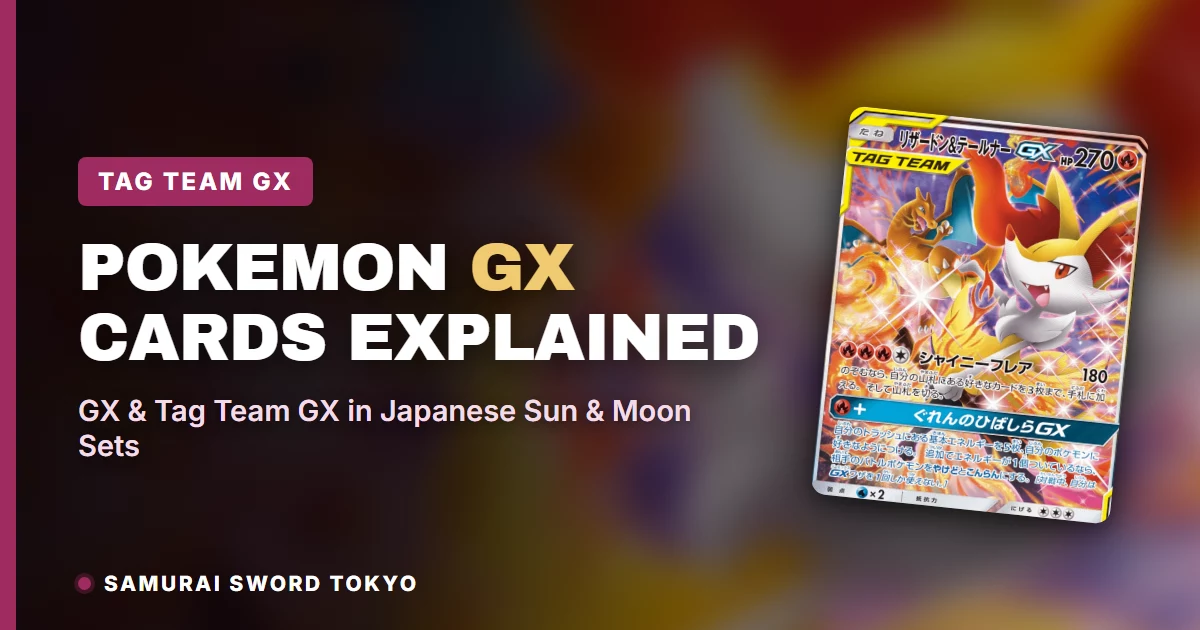
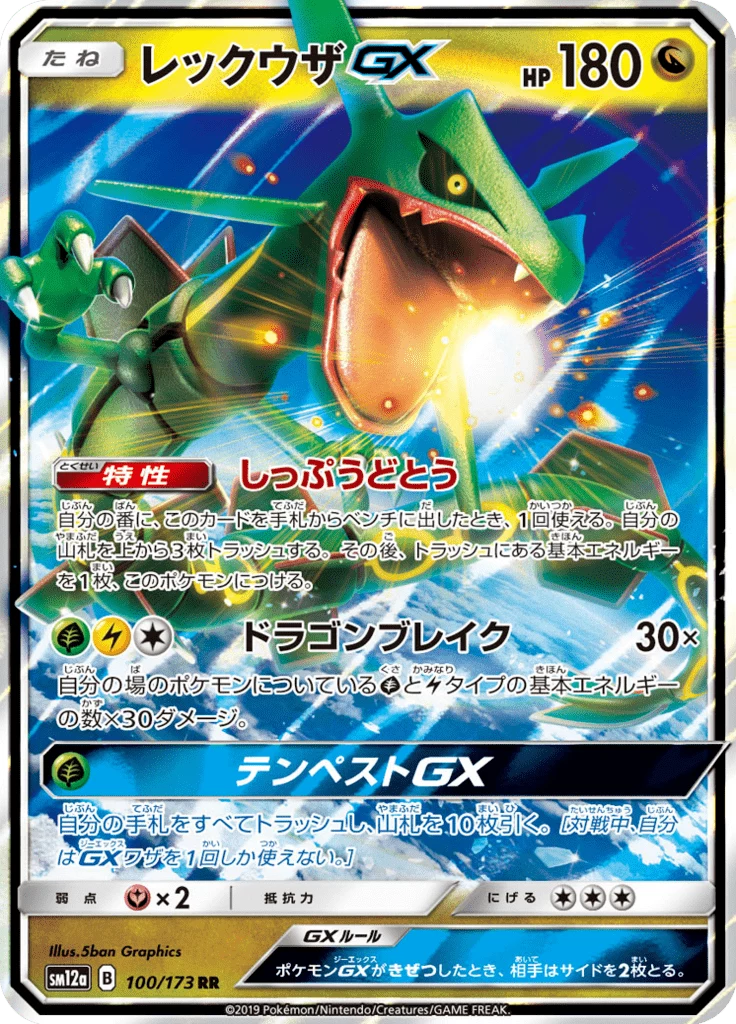
A Pokemon GX card gives up two Prize cards when it’s Knocked Out instead of one, and its single GX attack can only be used once per game. A TAG TEAM GX card raises the stakes further — two or three Pokemon printed on one card, always treated as a Basic, and three Prize cards handed over on a KO. Both mechanics debuted in the Sun & Moon era (2017–18), and the Japanese sets that carry them run their own print ladder — RR, SR, an extra “SA” tier, and UR — that decides exactly which version of a card you’re holding.
This guide explains what the GX and TAG TEAM GX mechanics do on the battlefield, how the Japanese rarity tiers stack on top of each other, and which Sun & Moon sets to buy sealed if you want these cards. For a price-ranked list of the best TAG TEAM GX cards, see our best TAG TEAM GX cards guide — that article ranks cards by price, this one explains the mechanic and rarity system behind them.
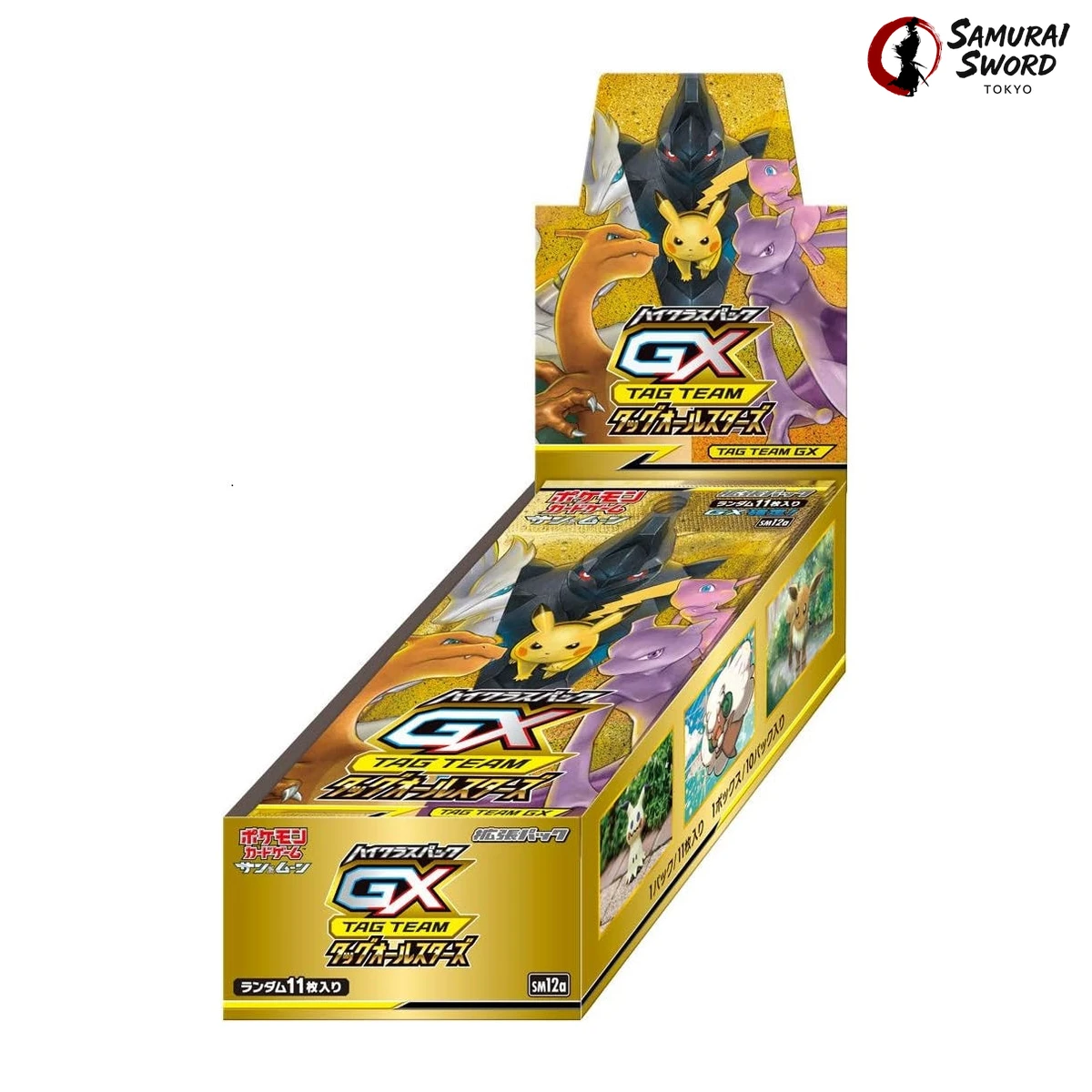
A regular Pokemon-GX card gives up 2 Prize cards on a KO; a TAG TEAM GX card gives up 3. The earliest confirmed Japanese set carrying TAG TEAM GX cards is SM9, Tag Bolt. The SM12a Tag All-Stars booster box is currently listed at ¥207,900 (~$1,308), and the PSA10 Pikachu & Zekrom GX UR from that same set is currently listed at ¥155,288 (~$977).
Yen figures below convert at ¥159/USD (September 2026). Prices are our own listed prices, checked against today’s catalogue.
What Is a Pokemon GX Card?
The GX mechanic debuted in the Sun & Moon expansion era (2017–18). A Pokemon-GX card carries one GX attack in addition to its normal attacks, and a player may use only one GX attack per game — unless a card effect specifically says otherwise. Once it’s used, the player flips a physical GX marker to track that the attack is spent for the rest of the match. GX attacks are themed on the video games’ Z-Moves and hit noticeably harder than the Pokemon’s regular attacks.
The trade-off is built into the Prize system. Knocking out a regular Pokemon-GX card hands the opponent 2 Prize cards instead of the usual 1 for a normal Pokemon — a meaningful swing in a format where the first player to take 6 Prizes wins.
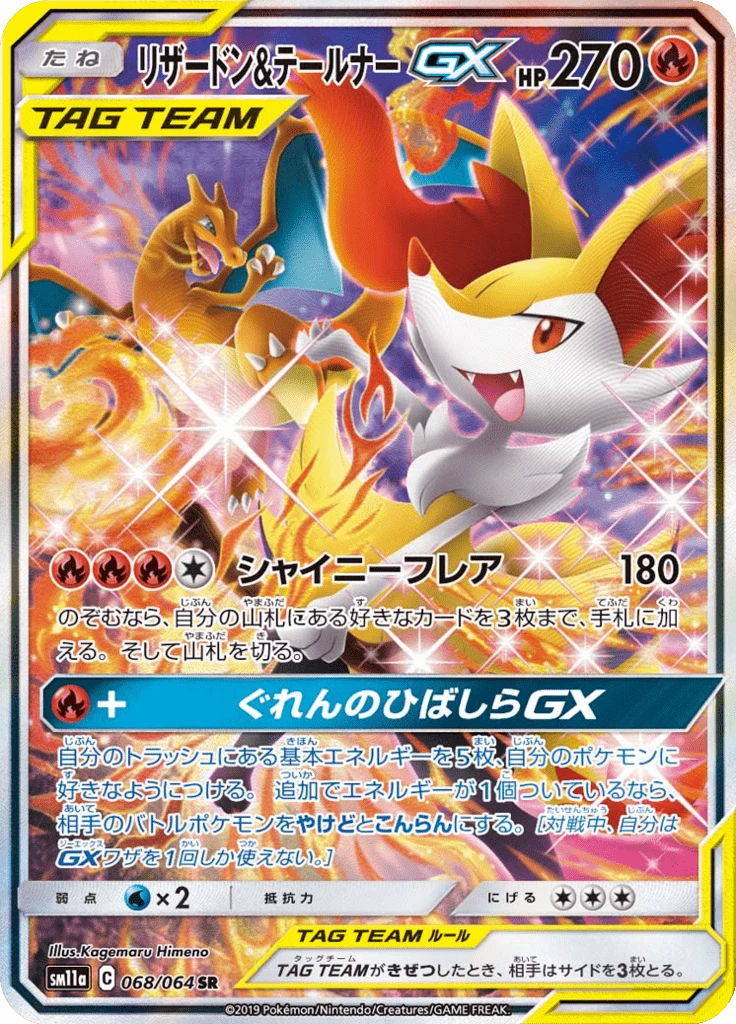
Not every GX-era set is built around Tag Team pairings — several Sun & Moon sets carry single-Pokemon GX cards alongside the Tag Team versions, which is a distinction worth keeping straight before you start comparing prices. That split is covered in the sets section below.
What Makes a TAG TEAM GX Card Different
A TAG TEAM GX card combines two or three Pokemon that share at least one type on a single card. TAG TEAM GX Pokemon are always treated as Basic Pokemon regardless of what the individual Pokemon’s normal evolution line looks like, and they carry noticeably elevated HP compared with a single-Pokemon GX card. TAG TEAM GX attacks are marked with a “+” bonus-effect symbol, distinguishing them from a standard GX attack at a glance.
The stakes go up again at knockout: a TAG TEAM GX card hands the opponent 3 Prize cards when it’s Knocked Out — one more than a regular GX card, and three times a normal Pokemon.
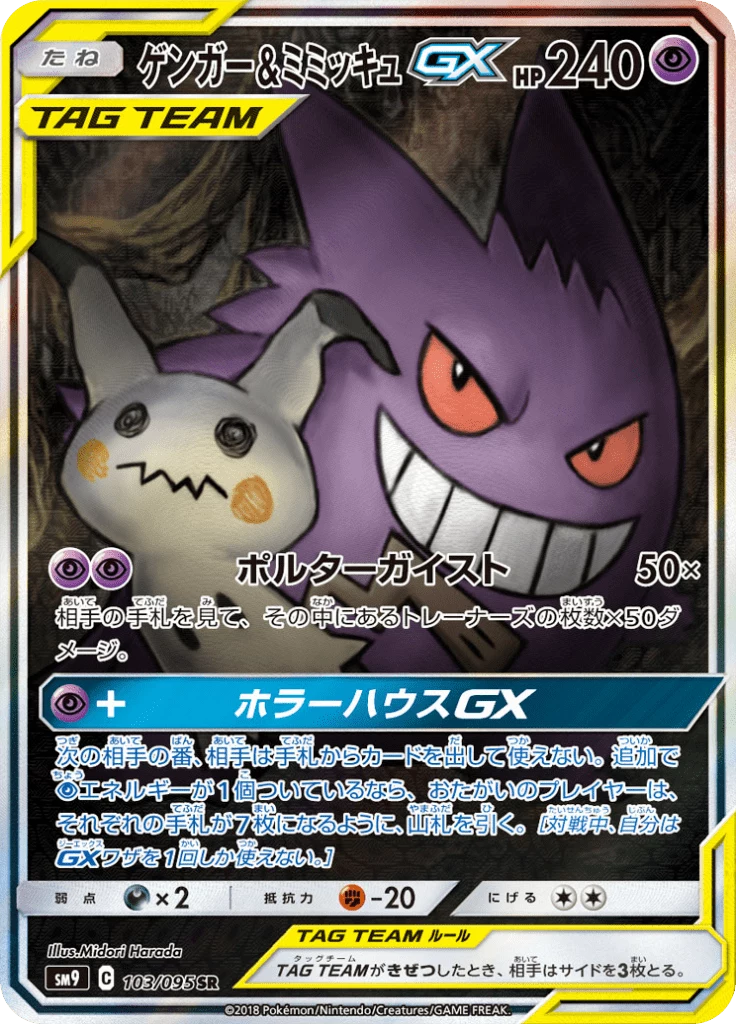
The Japanese set that carries the first TAG TEAM GX cards is SM9, Tag Bolt. Our Gengar & Mimikyu GX card guide covers the Tag Bolt Special Art print of one of that debut set’s TAG TEAM GX cards in full, including its exact number and print details.
GX Rarity Tiers: RR to UR on Sun & Moon Cards
Across the Sun & Moon-era Tag Team GX cards in our catalogue, the print tiers run RR (regular), SR, an SA (Special Art) step above some SRs, and UR — with HR appearing on other GX-era cards too. A single set can carry a Tag Team GX Pokemon at more than one of these tiers, each printed as a separate card with its own number. SM12a “Tag All-Stars” is a clean example of the full ladder in one set:
| Tier | Card | Number | Currently listed at |
|---|---|---|---|
| RR | Dedenne GX | 048/173 | ¥12,979 (~$82) (update: currently sold out — restock requests via Quick Order) |
| SR | Dedenne GX | 175/173 | ¥62,330 (~$392) |
| UR | Lucario & Melmetal GX | 224/173 | ¥30,800 (~$194) (update: currently sold out — restock requests via Quick Order) |
| UR | Pikachu & Zekrom GX | 221/173 | ¥155,288 (~$977) |
Dedenne GX is the plainest illustration of the ladder on its own: the same Pokemon appears as an RR at 048/173 and again as an SR at 175/173, at roughly 5x the price. The two URs at the bottom of the table make a second point — Lucario & Melmetal GX and Pikachu & Zekrom GX sit at the identical UR tier, yet their listed prices are more than five times apart. The letter marks the print tier, not a fixed price; the Pokemon and the specific card decide the number from there.
Same Card, Two Numbers: How the SA Print Tier Works
SA stands for Special Art, and it sits above a regular SR as an extra, higher print tier for the same card. The clearest verified example in our stock comes from Sky Legend (SM10b): Moltres & Zapdos & Articuno GX exists as a regular SR at #059/054 and again as an SA at #060/054 — the very next number in the set.
| Number | Currently listed at | |
|---|---|---|
| SR (regular) | 059/054 | ¥62,540 (~$393) |
| SR:SA (Special Art) | 060/054 | ¥657,968 (~$4,138) |
In this verified pair, the SA print is numbered one slot above its regular-SR sibling and is currently listed at more than ten times the price. We’ve checked this exact pair against our own catalogue, but we haven’t re-verified every SA/SR pair across the Sun & Moon era, so treat it as a confirmed example of the pattern rather than a rule that applies to every set automatically. If you’re trying to identify a Tag Team GX card, checking the number against the set’s total card count is the fastest way to tell an SA from its regular SR sibling.
Which Sun & Moon Sets Carry TAG TEAM GX Cards
Several Japanese Sun & Moon sets carry TAG TEAM GX cards after the SM9 Tag Bolt debut:
| Set | JP release | Main-set size |
|---|---|---|
| SM11a — Remix Bout | 5 July 2019 | 73 cards |
| SM11b — Dream League | 2 August 2019 | 68 cards |
| SM12a — Tag All-Stars | 4 October 2019 | 173 cards |
Remix Bout and Dream League are enhanced-expansion sets, and it’s worth knowing they aren’t exclusively Tag Team GX releases — both also carry single-Pokemon GX cards. Dream League, for example, includes Vileplume GX HR at #069/049 and Silvally GX RR at #041/049, and neither is a Tag Team card. For the complete Remix Bout print run, see our SM11a Remix Bout card list.
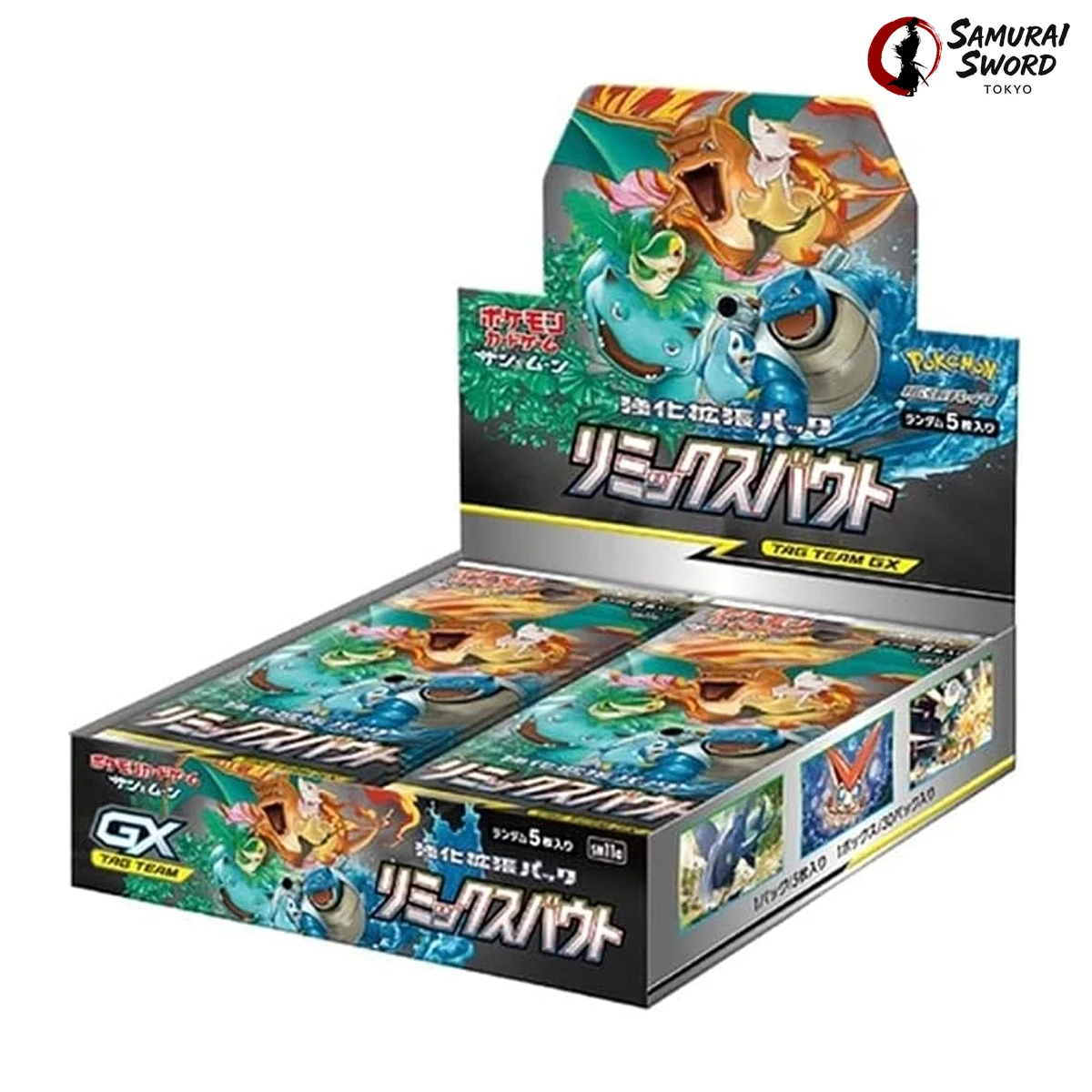
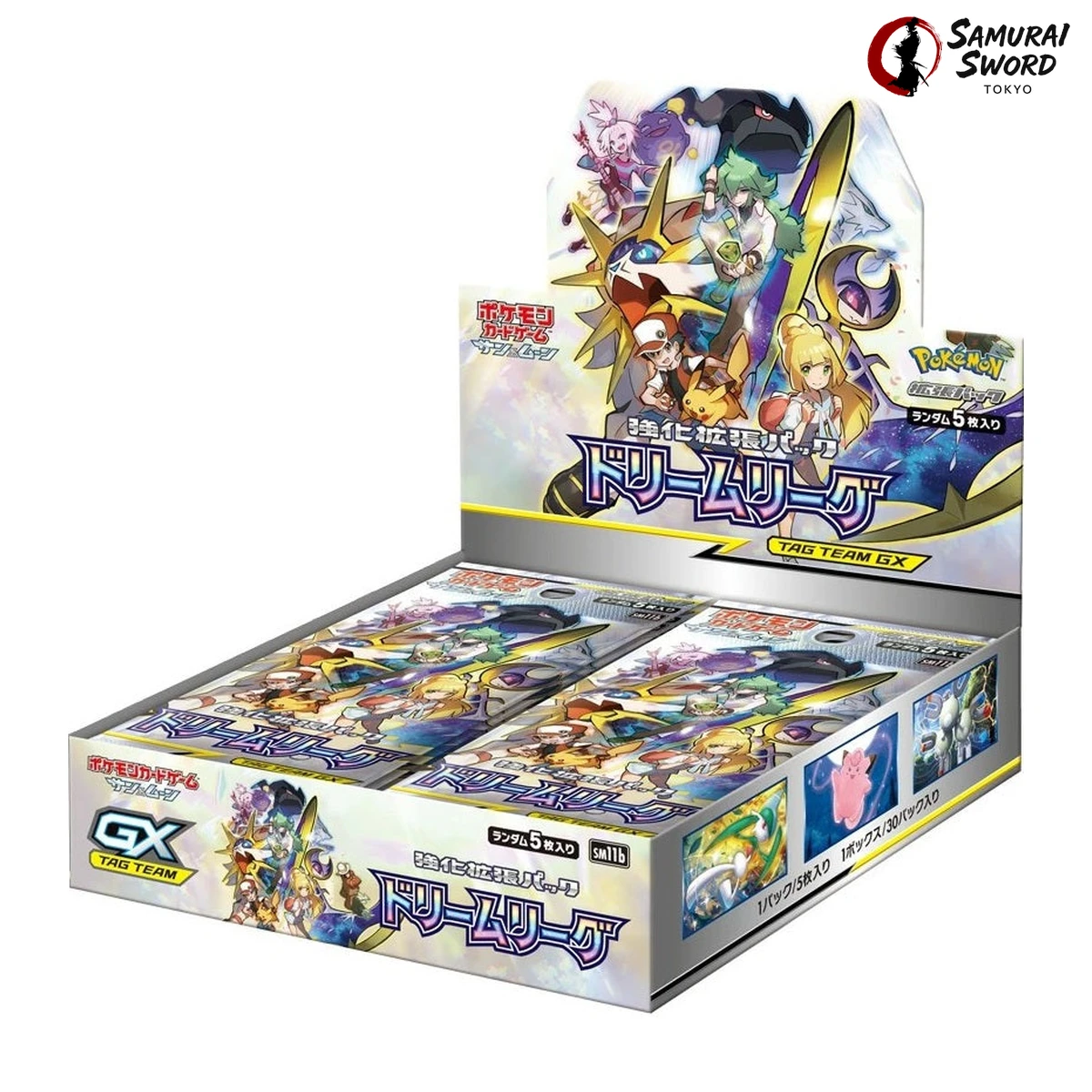
For the single-GX cards those two sets carry, our PSA10 Vileplume GX HR (update: currently sold out — restock requests via Quick Order) is currently listed at ¥18,128 (~$114), and our PSA10 Silvally GX RR is currently listed at ¥11,800 (~$74). For the era’s wider release context, our Sun & Moon era collector guide covers the full run of sets, and our Mewtwo GX card guide is a deep dive into one specific single-Pokemon GX print if you want to see how a non-Tag-Team GX card is documented print by print.
Where to Buy GX and TAG TEAM GX Cards from Tokyo
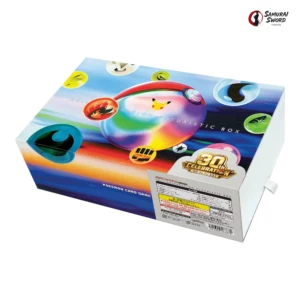
We ship Japanese sealed product and graded singles worldwide out of Tokyo with tracked delivery. If you want the cards from the rarity ladder above sealed, the three Sun & Moon boxes covered here are the direct route: SM11A Remix Bout (update: currently sold out — restock requests via Quick Order) at ¥141,750 (~$892), SM11B Dream League at ¥170,100 (~$1,070), and SM12A Tag All-Stars at ¥207,900 (~$1,308).
For graded singles, PSA10 Lucario & Melmetal GX UR (update: currently sold out — restock requests via Quick Order) is currently listed at ¥30,800 (~$194), PSA10 Pikachu & Zekrom GX UR at ¥155,288 (~$977), and PSA10 Moltres & Zapdos & Articuno GX SR:SA at ¥657,968 (~$4,138). Browse the full PSA10 graded card collection or the Japanese Pokemon booster box collection for more, or use Quick Order to build a mixed order of sealed boxes and singles in one pass.
Two more sibling guides worth reading before you buy: our Lucario & Melmetal GX card guide covers the SM12a UR print in full, and our Tag All-Stars booster box buying guide covers what’s inside an SM12a box beyond the cards listed above. Our Dream League booster box buying guide does the same for SM11b.

Frequently Asked Questions
What is a Pokemon GX card?
A Pokemon-GX card is a card type introduced in the Sun & Moon expansion era (2017–18) that carries one GX attack, usable only once per game, in addition to its normal attacks. Knocking one out gives the opponent 2 Prize cards instead of the usual 1.
What is a TAG TEAM GX card?
A TAG TEAM GX card combines two or three Pokemon that share at least one type on a single card. TAG TEAM GX Pokemon are always treated as Basic Pokemon, carry elevated HP, and give up 3 Prize cards when Knocked Out. Their GX attacks are marked with a “+” bonus-effect symbol.
How many Prize cards does a TAG TEAM GX card give up when it’s Knocked Out?
Three — one more than a regular Pokemon-GX card (2) and three times a normal Pokemon (1).
What is the difference between a regular SR and an SA (Special Art) Tag Team GX card?
SA sits above a regular SR as a separate, higher print tier of the same card. In our verified example from Sky Legend (SM10b), the SA print of Moltres & Zapdos & Articuno GX is numbered directly above its regular SR sibling and is currently listed at more than ten times the price.
Which Japanese set introduced TAG TEAM GX cards?
SM9, Tag Bolt, is the earliest confirmed Japanese set carrying TAG TEAM GX cards.
Are Dream League and Remix Bout TAG TEAM GX sets?
They carry TAG TEAM GX cards, but they aren’t exclusively Tag Team releases. Both are enhanced-expansion sets that also include single-Pokemon GX cards — Dream League, for example, carries Vileplume GX HR and Silvally GX RR, neither of which is a Tag Team card.
Picked for this article

📩 Get member-only sale alerts & coupons
Sale alerts, coupons and restock notices by email — straight from Tokyo.