Japanese Pokemon card market value follows predictable seasonal patterns in 2026: modern singles have corrected 20–30% from 2024 peaks while vintage sealed product climbs 15–25% annually. Understanding these cycles helps you buy at the right time.
The 30th Anniversary Celebration set released worldwide on September 16, 2026, as scheduled. Sealed box prices in this guide now reflect our own current listings at samuraiswordtokyo.com; figures that are still SNKRDUNK/Mercari secondary-market data keep their original date label.
Full card list: every card of the set with its official image, in number order — 30th CELEBRATION (M6a) card list (all 173 cards).
Introduction
“Are Japanese Pokemon card market trends in 2026 pointing toward a crash — or is this the buying window collectors have been waiting for?”
Japanese Pokemon card market value in 2026 is splitting in two. Modern singles are correcting 20-30% from launch peaks while vintage and sealed products climb 15-25%. Same hobby, two different speeds.
Three forces have reshaped prices this year. A booster pack price increase hit Japan in May — the second in four years. Pokemon’s 30th anniversary is driving sealed vintage demand to new highs, with the worldwide 30th Anniversary Celebration set released September 16, 2026. And Pokemon TCG Pocket pulled $1.25 billion in its first year, converting digital collectors into physical card buyers faster than production can keep up.
Our team tracks Japanese card prices daily through SNKRDUNK and Mercari, handling 15,000+ boxes monthly from Tokyo. Every box ships with a unique serial number for authenticity tracking. Here’s what the data shows for Q1 2026, what’s driving the shifts, and where the market heads next.
Japanese Pokemon Card Market Value: Where It Stands (September 2026)
Japanese Pokemon card market value moved into a correction in early 2026 — not a crash.
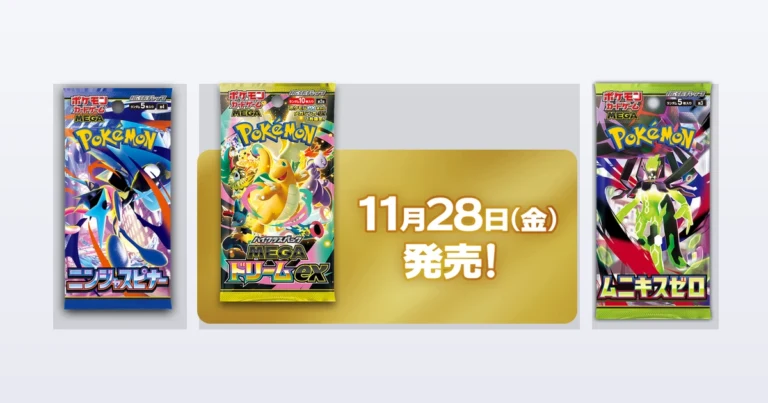
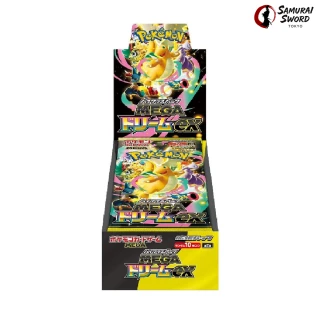
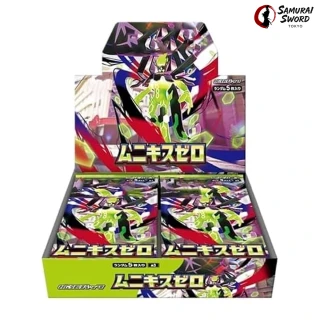
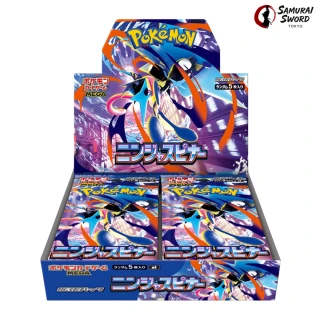
SNKRDUNK transaction data told the story earlier in the year: MEGA era booster boxes held steady on price while trading volume cooled from Q4 2025 peaks. On our own shelves, Mega Dream ex (M2A) is currently listed at ¥11,040 (~$72), Munikis Zero (M3) at ¥8,160 (~$53), and Ninja Spinner (M4) at ¥7,200 (~$47) — the Mega Greninja ex MUR remains the set’s headline chase card.
The gap between price levels and actual deal velocity matters. Prices look stable on charts, but fewer transactions close per day compared to late 2025. This mirrors a typical cooling period between set releases: casual sellers exit while committed collectors accumulate.
On the singles side, high-rarity chase cards hold firm. Mega Charizard X ex SAR commands around ¥70,000 ($473) on SNKRDUNK — up from approximately ¥55,000 in January. Pikachu ex SAR (Mega Dream ex set) holds near ¥58,000 ($392). Mid-tier cards — RR and standard SR (Super Rare) — absorb the correction, with 15-25% declines from launch-week peaks.
SNKRDUNK’s January 2026 market report ranked Mega Dream ex packs and Munikis Zero boxes among the most-traded products. Liquidity remains strong for popular sealed products even as single card prices normalize.
Single-card prices above are as of March 2026, secondary market prices via SNKRDUNK and Mercari; box prices above reflect our own listings at samuraiswordtokyo.com, updated September 16, 2026.
Modern Cards vs Vintage: The Two-Speed Market
Two speeds define the 2026 Japanese card market — understanding which lane you’re in determines whether you see opportunity or panic.
Modern cards (2023-2026) are correcting. SAR (Special Art Rare) and SIR (Special Illustration Rare) cards from recent sets spike on release day, then shed 20-30% within 60 days as supply enters the secondary market. This is standard price discovery, not a collapse. The Harribary UR (Ultra Rare) from a recent MEGA set dropped 81% from its initial spike — a textbook case of launch-day FOMO correcting to fundamental value.
Vintage and sealed products tell a different story. Base Set era cards, E-Series, and early ex-era products have appreciated 15-25% heading into Pokemon’s 30th anniversary year. A PSA 10 1st Edition Shadowless Charizard sold for $550,000 at Heritage Auctions in December 2025. Vintage 1st Edition cards are projected for 30-50% appreciation through 2026, according to PokemonPriceTracker’s Q1 report. For the full ranking of high-value cards, see our most valuable Japanese Pokemon cards in 2026. For investment-focused analysis, check our Japanese Pokemon cards investment guide.
MEGA era sealed boxes occupy interesting middle ground — too new for “vintage” status but already showing appreciation:
| Product | MSRP (JPY) | Listed At (JPY) | Listed At (USD) | Change from MSRP |
|---|---|---|---|---|
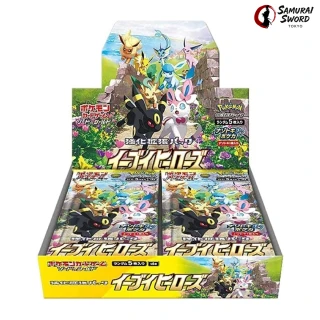
| Eevee Heroes | ¥4,950 | ¥139,200 | ~$904 | 2,712% |
| Pokemon Card 151 | ¥5,800 | ¥49,440 | ~$321 | 752% |
| VSTAR Universe | ¥5,500 | ¥27,840 | ~$181 | 406% |
| Mega Dream ex | ¥5,500 | ¥11,040 | ~$72 | 101% |
Source: samuraiswordtokyo.com product listings, September 16, 2026.
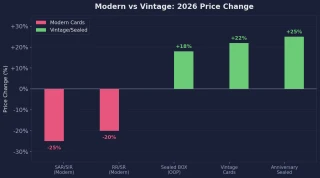
The takeaway: what you buy matters more than when. Out-of-print sealed boxes with strong chase cards continue to appreciate. Recently released singles need time to find their floor.
The May 2026 Price Increase: What ¥180 → ¥200 Means for You
Starting in May 2026, Japanese booster packs jumped from ¥180 to ¥200 — and booster boxes went from ¥5,400 to ¥6,000. That’s an 11.1% increase, the second in four years.
Creatures Inc. cited rising material costs. Packs previously went from ¥165 to ¥180 in October 2022 at the start of the Scarlet & Violet era. Cumulatively, Japanese booster packs have increased 21.2% since 2022, per PokeBeach and PokeGuardian.
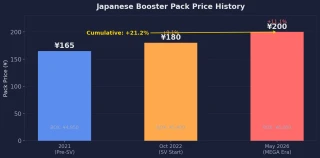
What happened after the last price increase? When packs rose from ¥165 to ¥180 in late 2022, secondary market BOX prices dipped briefly as buyers waited. Within 2-3 months, the new MSRP became the accepted price floor. Pre-increase sealed product — the final sets at ¥165 MSRP — appreciated faster once production shifted to the new price point.
What this means for you now:
- Pre-May boxes (all current MEGA era sets: M1-M4) keep their ¥5,400 MSRP. No retroactive changes.
- Post-May sets (Abyss Eye (Pitch Black) onward) start at the higher ¥6,000 floor, creating a natural price gap.
- Secondary market pattern: This kind of transition typically brings a brief dip as some sellers front-run the change, followed by gradual revaluation upward as the new MSRP anchors expectations higher.
For international buyers paying in USD, the yen exchange rate compounds the advantage. At ¥159/USD (September 2026), a ¥6,000 box costs approximately $38 — still far below the $90-120 that English-language booster boxes retail for.
30th Anniversary Effect on Japanese Card Prices
Pokemon’s 30th anniversary is the single biggest demand catalyst of 2026, and its impact is accelerating.
Vintage sealed products are the clearest winners. Anniversary milestones drive nostalgia-fueled buying. The 25th Anniversary Collection box climbed from ¥4,752 MSRP to around ¥40,000 on SNKRDUNK. WOTC-era and early Japanese exclusive sealed products have appreciated 15-25% in the 12 months leading up to this milestone. Pokemon Trading Card Game 151 prices are spiking specifically because of 30th anniversary attention, with Wargamer reporting price increases across the set.
Modern anniversary products follow a frenzy-to-normalization cycle. The Pokemon Day 2026 Collection launched at $14.99 MSRP, jumped to scalper prices of $38-50, then settled to $25-27 within weeks.
30th Anniversary Celebration — released September 16, 2026. Pokemon.com officially confirmed the special 30th anniversary set for a worldwide simultaneous release on September 16, 2026 — a first in TCG history, moved up from the October window originally reported, and that release date has now passed. The set spans all ten Pokemon generations, features new Mew and Mewtwo key art, and is distributed through Elite Trainer Boxes, Collection Boxes, and an Ultra-Premium Collection. The Japanese “30th CELEBRATION” products are listed on our site: the 30th CELEBRATION Booster Box is currently listed as a pre-order at ¥25,000 (~$162), the 30th CELEBRATION FUTURISTIC BOX at ¥79,800 (~$518), and the Premium Deck Set Espeon & Umbreon at ¥29,800 (~$194); orders ship from Tokyo after release — see each product page for the current dispatch date.
Past anniversary sets have consistently appreciated. The 20th Anniversary set and 25th Anniversary Collection both trade well above MSRP years later. The 15th Anniversary Pikachu promo recently surged into five-digit territory for the first time.
4 Price Patterns Every Japanese Card Collector Should Know
SNKRDUNK transaction data reveals four recurring price patterns in the Japanese Pokemon card market. Recognizing them gives you a timing edge.
Pattern 1: Limited Promo + Popular Pokemon = Explosive Premium
Limited-distribution promos featuring iconic Pokemon explode in price. The Van Gogh Museum Pikachu surged 517% — from ¥18,027 to ¥111,369 on SNKRDUNK. The Ancient Mew followed at 456%. Regional Pokemon Center exclusives track the same pattern: the Fukuoka Special Box went from ¥2,090 MSRP to over ¥30,000 on the resale market.
Pattern 2: New Card Announcement → Old Card Surge
When a new version of a popular Pokemon is announced, older versions spike. Mega Evolution ex reveals through Legends Z-A drove Rayquaza cards up across every era — original ex, VMAX, VSTAR, and MEGA ex. Collectors rush to complete full character lineups.
Pattern 3: Launch Spike → 60-Day Correction
High-rarity cards almost always spike on release day, then correct 20-40% within 1-2 months as supply stabilizes. Harribary UR dropped 81.95% from its hype peak. Your move: waiting 4-6 weeks after a set release typically saves 20-30% on singles.
Pattern 4: Reprint & Rotation = Temporary Dip
Reprint announcements trigger temporary price drops as buyers hesitate. Format rotations can crater competitive staples — Clara SR lost 41.46% after becoming tournament-illegal. Collector exception: cards valued for art (SARs, full arts) recover faster than playability-driven cards. Rotation dips are buying opportunities for collector-focused cards.
| Pattern | Trigger | Typical Impact | Best Action |
|---|---|---|---|
| 1. Limited Promo | Regional exclusive / collab | +200% to +500% | Buy early if available |
| 2. Character Announcement | New version revealed | Older versions +15-40% | Buy before reveal if rumored |
| 3. Launch Spike | Set release day | -20% to -40% in 60 days | Wait 4-6 weeks for singles |
| 4. Reprint/Rotation | Official announcement | -15% to -40% temporary | Buy collector cards on dips |
What’s Fueling Demand: TCG Pocket, MEGA Era & the Global Collector Wave
Three structural forces are converging to drive Japanese Pokemon card demand in 2026.
Pokemon TCG Pocket changed the equation. The mobile app generated $1.25 billion in its first year — $245 million more than Pokemon GO earned in year one. Pocket players collectively opened 10x more digital cards than the physical TCG produced in its best year. That digital engagement converts to physical purchases: TCGPlayer confirmed median card prices began climbing immediately after Pocket launched. The overall TCG market is projected to reach $14.7 billion in 2026 and $37.4 billion by 2034.
MEGA Evolution nostalgia is real. The return of Mega Evolutions through Legends Z-A and the MEGA expansion era reignited demand for fan-favorite Pokemon. Mega Charizard X ex SAR trades around ¥70,000 ($473). The Ninja Spinner set’s Mega Greninja ex is generating massive buzz on SNKRDUNK Magazine.
International demand for Japanese cards is at an all-time high. SNKRDUNK launching an English-language magazine signals growing Western collector interest in Japanese exclusives. Pokemon Center regionals, McDonald’s promos, and event-limited items are increasingly tracked by international collectors. One competitive note: Bandai’s One Piece and Dragon Ball card games continue capturing Japanese card shop shelf space, tightening Pokemon retail allocation — which paradoxically supports secondary market prices for sealed product.
Q2-Q4 2026 Outlook: What to Watch and When to Buy
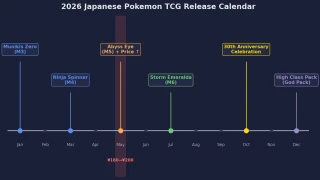
2026 has been loaded with catalysts for the Japanese Pokemon card market. Here’s what has already happened and what’s still ahead.
Q2 (April-June) — already happened:
- May 22: Abyss Eye (Pitch Black) released — Mega Darkrai ex headlined the set as the first MEGA era set at the new ¥6,000 BOX price, following the standard launch-spike-then-correction pattern (Pattern 3). The box is currently listed at ¥7,200 (~$47).
- May: The booster pack price increase took effect as scheduled.
Q3 (July-September) — already happened:
- July 31: Storm Emeralda released, featuring Mega Rayquaza ex. The box is currently listed at ¥11,040 (~$72).
- September 16: 30th Anniversary Celebration released worldwide (a TCG first). All ten generations. The Japanese “30th CELEBRATION” products are listed (see above).
Q4 (October-December) — still ahead:
- December: Annual High Class Pack expected — 10 cards per pack, God Pack potential.
Timing Strategy by Collector Type
| Your Goal | Recommended Timing | Why |
|---|---|---|
| Pre-May MEGA era boxes (M1-M4) at the older ¥5,400 MSRP tier | Already closed as of September 2026 | New sets now start at the ¥6,000 floor — see current listings below |
| Abyss Eye (Pitch Black) / Storm Emeralda singles | Already past the 4-6 week launch-spike window | Pattern 3: launch spike corrected 20-30% |
| 30th Anniversary sealed product | Released Sept 16 — listed (see listings above) | Anniversary sets appreciate long-term |
| Vintage / OOP sealed boxes | Through the rest of 2026 | 30th anniversary attention pushes vintage all year |
For the complete 2026 release schedule, see our full release calendar. Looking for the best value across current sets? Check our best Japanese booster boxes 2026 guide.
The Bottom Line
Three data points sum up Japanese Pokemon card market trends in 2026:
- Correction, not crash. Modern singles are finding their floor while vintage and sealed products climb. Two markets, one hobby. The overall market has gained 3,821% since 2004.
- May is the dividing line. The ¥180 → ¥200 price increase creates a before-and-after for BOX valuations. Current MEGA era boxes at ¥5,400 MSRP are the last of their price tier.
- 30th anniversary momentum lasts all year. With the Celebration Collection having released worldwide on September 16, 2026 — spanning all ten generations — demand for sealed products stays elevated through Q4 and beyond.
Our team handles 15,000+ boxes monthly from Japan, and every box ships with a unique serial number for authenticity tracking. The data points to opportunity — but only if you’re buying the right products at the right time.
FAQ [schema: FAQPage]
Are Japanese Pokemon card prices going up or down in 2026?
Both — it depends on the segment. Modern singles from recent sets have corrected 20-30% from launch peaks, which is standard price discovery. Vintage cards and out-of-print sealed products are climbing 15-25%, driven by 30th anniversary demand. The market is splitting into two speeds, not moving in one direction.
Is the Pokemon card market crashing in 2026?
No. Market data shows a correction, not a crash. Trading volume on platforms like SNKRDUNK remains healthy, and liquidity for popular products is strong. Modern card price adjustments reflect supply normalization — not collapsing demand. The Pokemon card market has appreciated 3,821% since 2004, compared to 483% for the S&P 500. Vintage and sealed markets are strengthening.
Why are Japanese booster packs getting more expensive in May 2026?
Creatures Inc. announced a price increase from ¥180 to ¥200 per pack (boxes from ¥5,400 to ¥6,000), citing rising material costs. This is the second increase in four years — packs went from ¥165 to ¥180 in October 2022. Sets released before May keep their original pricing.
Is now a good time to buy Japanese Pokemon cards?
The pre-May window for ¥5,400 MSRP MEGA era boxes has already closed — current sets start at the ¥6,000 floor. For singles, the 4-6 week post-launch correction window has also passed for this year’s releases. Vintage sealed products and the newly released 30th Anniversary Celebration products remain in demand heading into Q4 2026.
How has Pokemon TCG Pocket affected physical card prices?
Pokemon TCG Pocket generated $1.25 billion in its first year and brought millions of new collectors into the hobby. TCGPlayer data shows median physical card prices began rising immediately after Pocket launched. The app created demand that physical production couldn’t match, contributing to ongoing supply tightness for popular products.
What is the Japanese vs English card price premium?
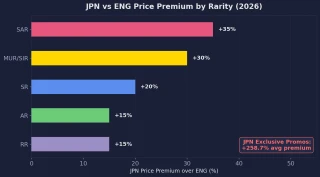
Japanese cards typically trade 15-40% above English equivalents for the same card. Premium factors include earlier release dates, superior print quality, shorter print runs, and collector prestige. For high-demand Japanese exclusive promos, premiums can exceed 200%.
⚡ Shop Japanese Pokemon Booster Boxes
Authentic sealed products shipped directly from Tokyo, Japan with tracking & insurance via FedEx.
Picked for this article
📩 Get member-only sale alerts & coupons
Sale alerts, coupons and restock notices by email — straight from Tokyo.