
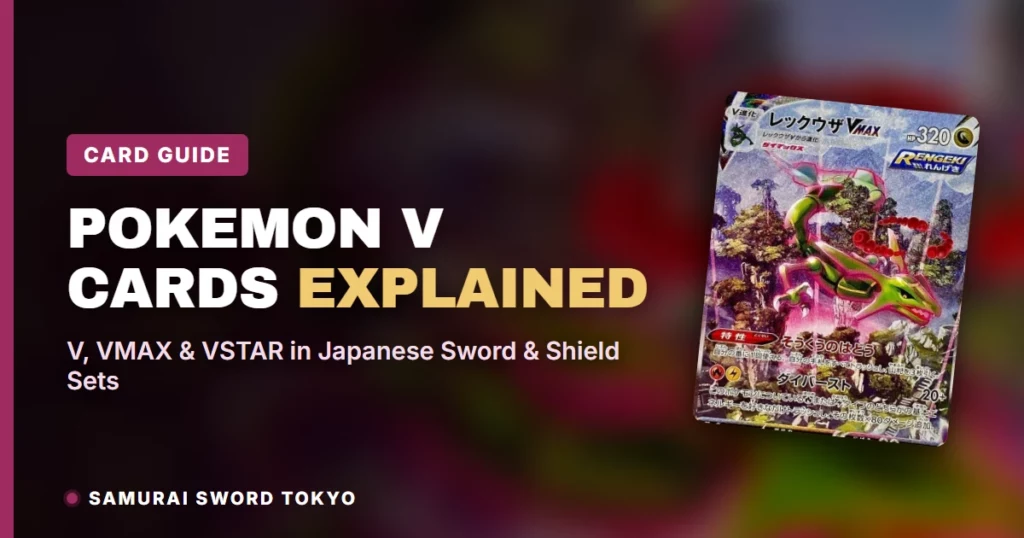
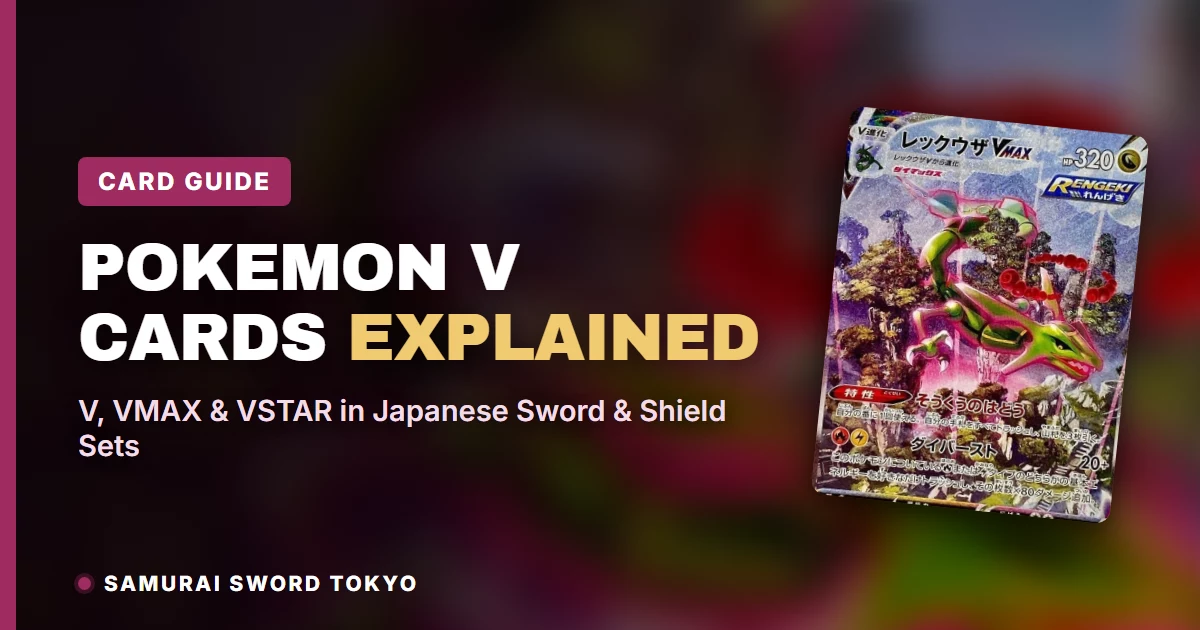
Pokemon V, VMAX and VSTAR are three related but different card types, all built during the Sword & Shield era around the same idea: a stronger single-card upgrade that costs the opponent more than the usual one Prize card when it’s Knocked Out. A Pokemon V and a Pokemon VSTAR both give up 2 Prize cards on a Knock Out; a Pokemon VMAX gives up 3.
They didn’t all arrive at once, either. V and VMAX launched together in Japan in December 2019. VSTAR came more than two years later, as a separate mechanic with its own rules. This guide breaks down what each card type actually does, when each one first appeared in a Japanese set, and which Japanese Sword & Shield boxes from our own shop carry them.
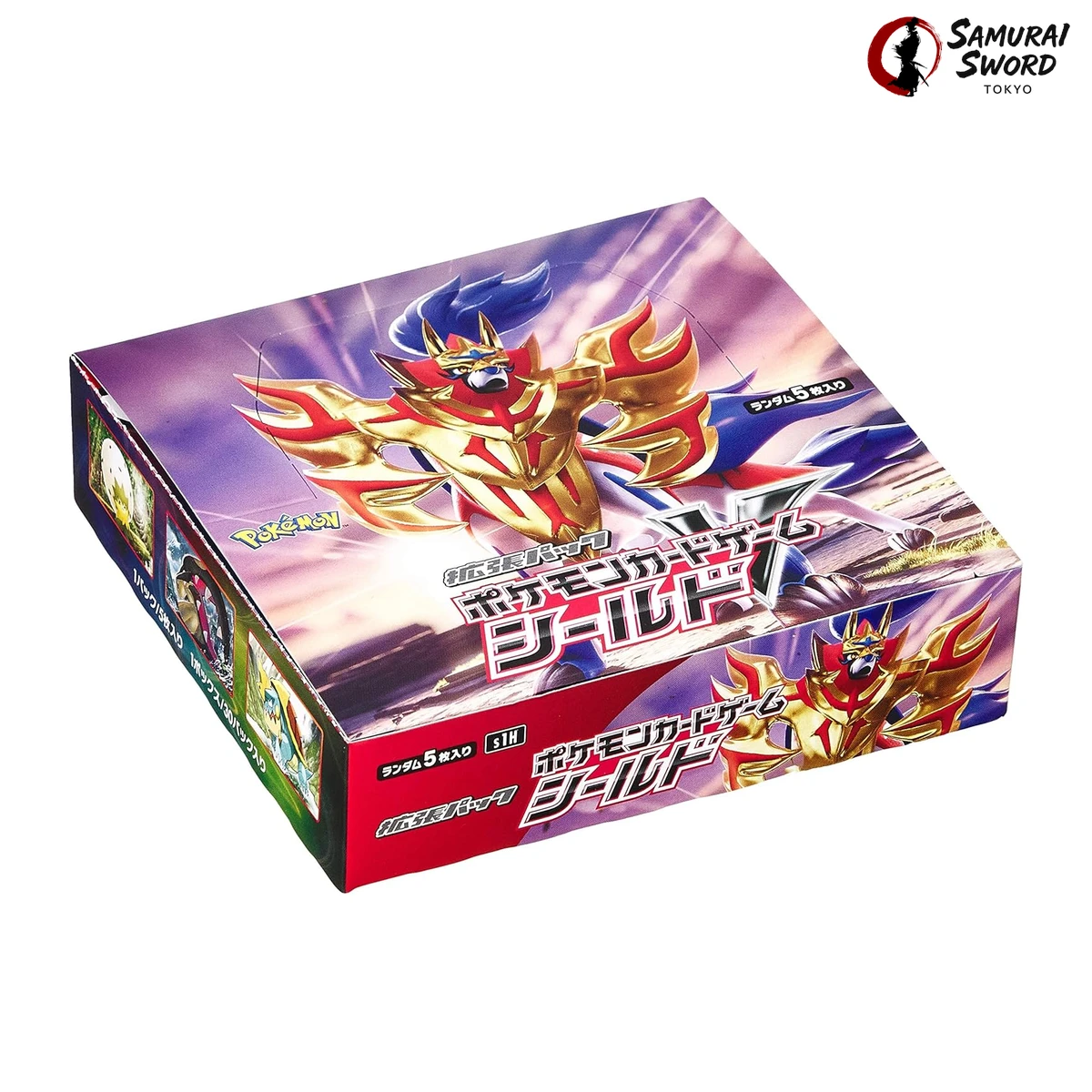
Pokemon V and VSTAR both cost the opponent 2 Prize cards on a Knock Out; VMAX costs 3. V and VMAX first appeared together in Japan’s Sword (S1W) and Shield (S1H) sets on 6 December 2019, followed by the dedicated VMAX Rising (S1a) booster box, currently listed at ¥94,500 (~$594). VSTAR didn’t exist yet at that point — it debuted in Japan’s Star Birth expansion in January 2022. Our S1H Shield V booster box is currently listed at ¥63,000 (~$396) if you want a box from the mechanic’s original release.
What Makes a Pokemon V Different from a Regular Pokemon
Pokemon V is a Basic Pokemon card type introduced with the Sword & Shield era. A Pokemon V of a given species is printed with higher HP and stronger attacks than a regular, non-V card of the same Pokemon — that’s the entire trade-off built into the card type. In exchange for that extra power, a Pokemon V gives the opponent 2 Prize cards instead of the usual 1 when it’s Knocked Out.
That Prize-card cost is the mechanical backbone of every V-based card discussed in this guide, and it directly extends the basic scoring rules covered in our how to play Pokemon cards beginner guide — if you’re new to the game, that’s the place to start before this one.
VMAX: The Dynamax Evolution
A Pokemon VMAX evolves from a Pokemon V. The card type represents the Dynamax, Gigantamax and Eternamax mechanics from the Sword & Shield video games, translated onto an even bigger, more powerful card. Knocking out a VMAX costs the opponent 3 Prize cards — one more than a V, and the steepest Prize-card cost of the three types covered here.
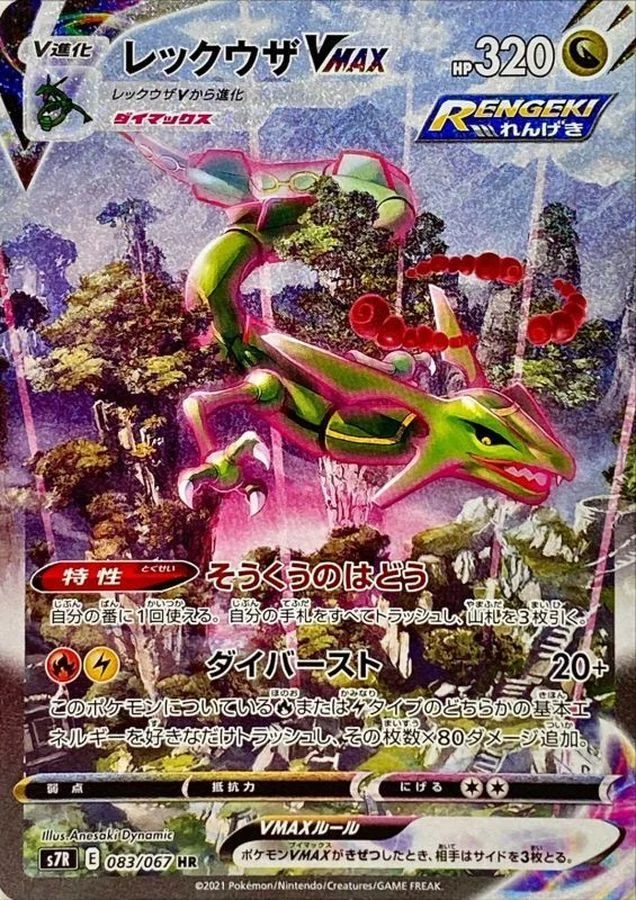
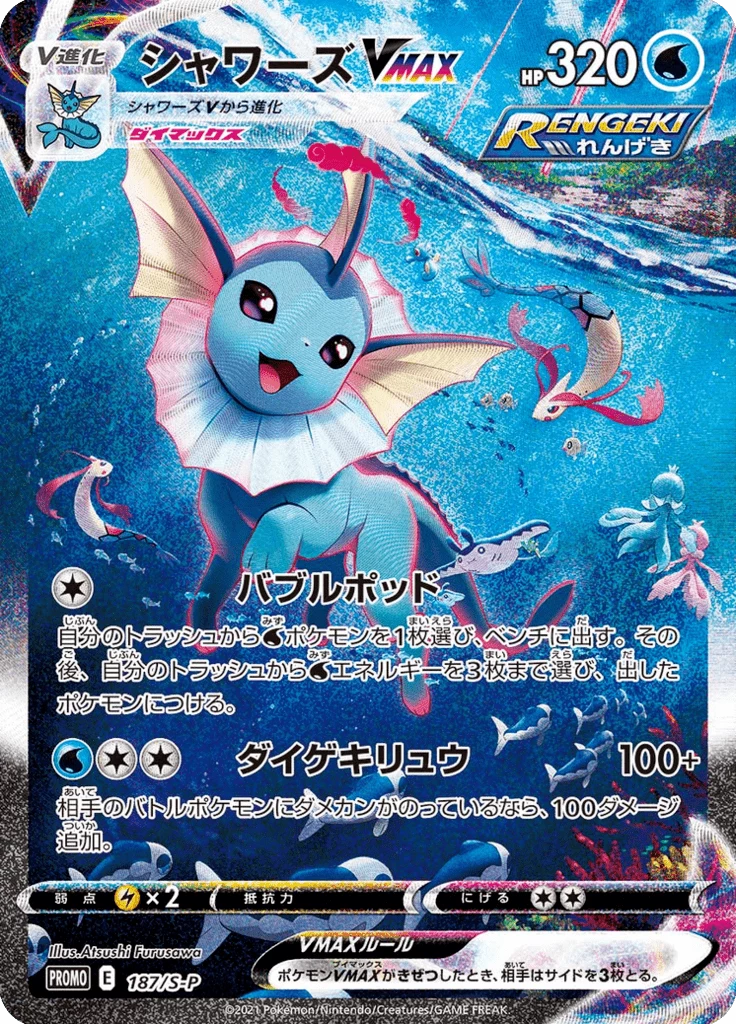
Both cards above are Pokemon VMAX — one a Hyper Rare set pull, the other a numbered Japanese promo — and both carry the same 3-Prize cost regardless of rarity. For a full single-card breakdown of a Sword & Shield-era VMAX pulled from the same card pool as our S2 box below, see our Toxtricity VMAX card guide. For the wider value picture across the card type, see our best Japanese VMAX cards guide.
VSTAR: A Different Upgrade, Two Years Later
A Pokemon VSTAR also evolves from a Pokemon V, but it isn’t a VMAX with a different name. Each VSTAR card carries a VSTAR Power — either an attack or an Ability — that can only be used once per game, across your entire VSTAR lineup. Knocking out a VSTAR costs the opponent 2 Prize cards, the same as a plain Pokemon V and one fewer than a VMAX.
VSTAR is also newer than V and VMAX by a wide margin. The mechanic debuted in Japan in the Star Birth expansion, released 14 January 2022. The English-language equivalent, Brilliant Stars, followed on 25 February 2022. That’s more than two years after Pokemon V and VMAX first appeared in Japan — VSTAR was not part of the original Sword & Shield launch. For the full VSTAR-era set list, see our VSTAR Universe (S12a) card list.
V vs VMAX vs VSTAR at a Glance
The Prize-card cost is the one number worth memorising, because it’s easy to mix up VMAX and VSTAR since both evolve from a V:
| Card type | Evolves from | Prize cards on KO | Defining mechanic |
|---|---|---|---|
| Pokemon V | Basic (does not evolve from another V card) | 2 | Higher HP and stronger attacks than a same-species regular Pokemon |
| Pokemon VMAX | Pokemon V | 3 | Represents Dynamax, Gigantamax and Eternamax from the video games |
| Pokemon VSTAR | Pokemon V | 2 | One VSTAR Power (attack or Ability) usable once per game |
Note the pattern: VMAX and VSTAR share the same evolution requirement — both need a Pokemon V in play first — but they don’t share the same Prize-card cost. Only VMAX pushes that number to 3; VSTAR stays level with a plain V at 2.
Where V, VMAX and VSTAR First Appeared in Japan
Pokemon V and VMAX launched together in Japan on the same day. VSTAR followed as a separate, later addition:
| Japanese set | Code | Japan release | Milestone |
|---|---|---|---|
| Sword | S1W | 6 Dec 2019 | First Japanese Pokemon V and VMAX cards |
| Shield | S1H | 6 Dec 2019 | First Japanese Pokemon V and VMAX cards |
| VMAX Rising | S1a | 7 Feb 2020 | Dedicated high-class pack adding more V and VMAX cards |
| Star Birth | — | 14 Jan 2022 | First Japanese Pokemon VSTAR cards |
| Brilliant Stars (English) | — | 25 Feb 2022 | English-language VSTAR debut |
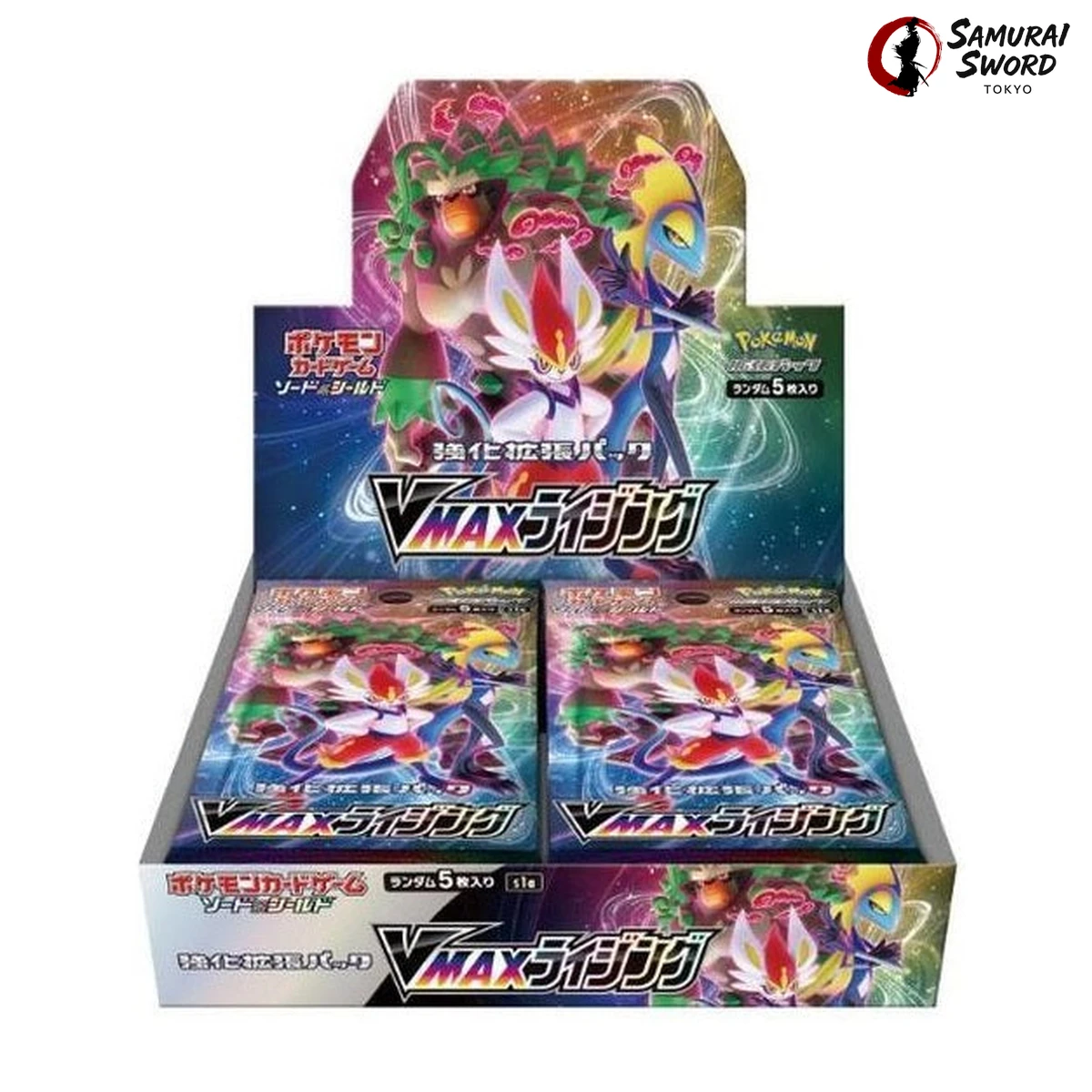
The dedicated VMAX Rising (S1a) card list covers all 78 Japanese cards and rarities from that set if you want the full breakdown rather than just the mechanic explainer here; our S1a VMAX Rising pull rates and best cards guide is the companion piece on what’s actually chase-worthy inside the set.
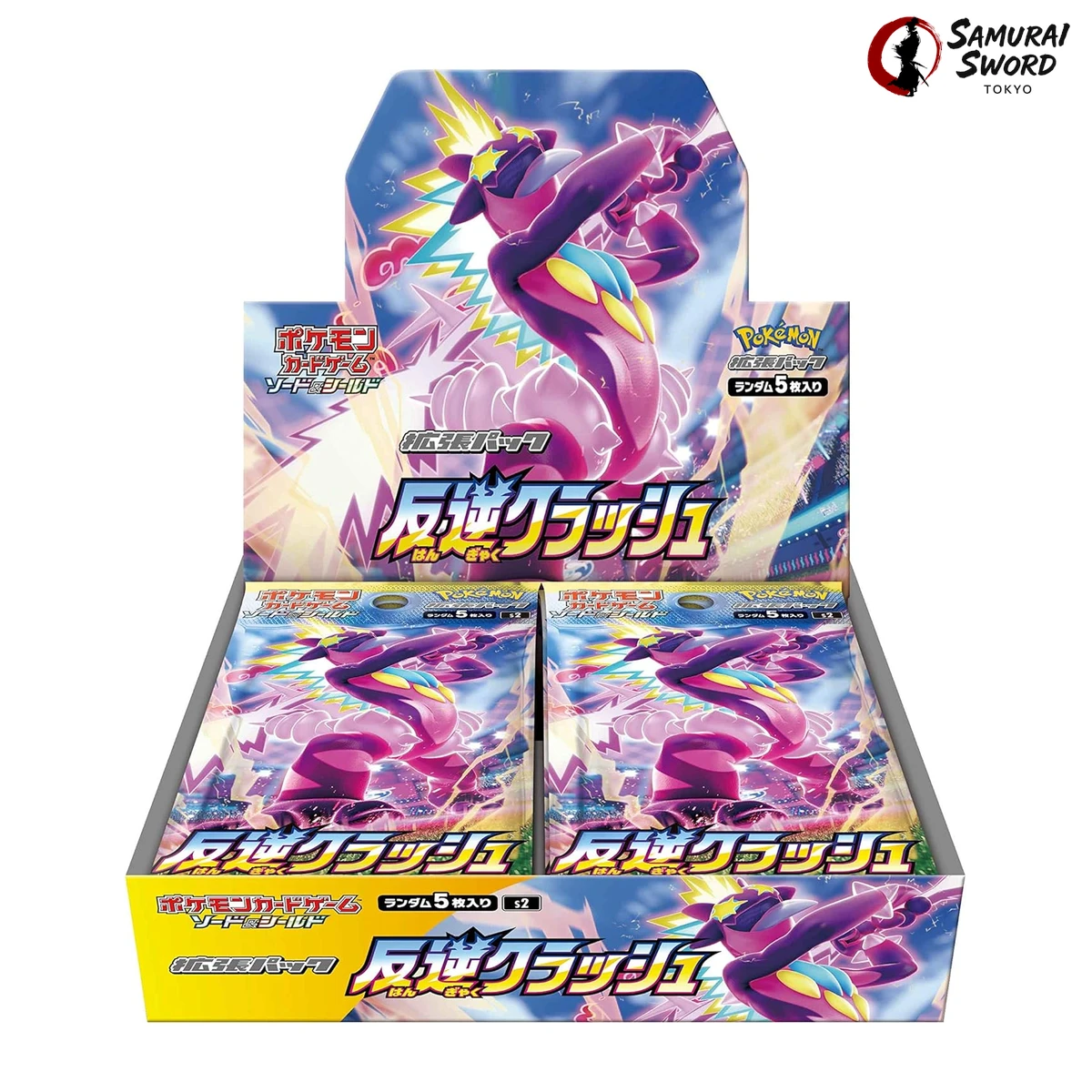
Our third box anchor, S2 Rebellion Crash, is worth calling out specifically: it’s a Sword & Shield-era set that continued printing V and VMAX cards, but it did not introduce the mechanic — that credit belongs to S1W/S1H from December 2019.
Which Japanese Sword & Shield Boxes to Open for V and VMAX
All three of our current Sword & Shield-era anchors carry V and VMAX cards, but each sits at a different point in the mechanic’s history:
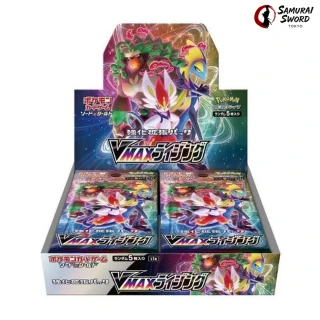
- The S1A-VMAX Rising Japanese Pokemon Booster Box is currently listed at ¥94,500 (~$594) — a dedicated high-class pack built specifically around V and VMAX cards, so it’s the densest of the three for this mechanic.
- The S1H-Shield V Japanese Pokemon Booster Box is currently listed at ¥63,000 (~$396) — the Shield-side half of the set that introduced the mechanic to the Japanese TCG on 6 December 2019.
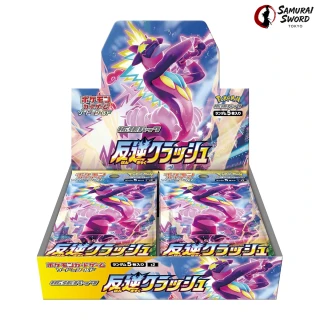
- The S2-Rebellion Crash Japanese Pokemon Booster Box is currently listed at ¥50,400 (~$317) — a later Sword & Shield-era set continuing the same V/VMAX card pool, at a lower price point.
None of these three boxes contain VSTAR cards — that mechanic wasn’t introduced until Star Birth in January 2022, well after all three of these sets released. If you’re specifically after VSTAR-era product, our VSTAR Universe (S12a) card list covers that later set. For browsing beyond these three, our Japanese Pokemon booster box collection lists everything currently available.
Where to Buy V, VMAX and VSTAR Cards from Tokyo
We ship Japanese sealed product worldwide out of Tokyo with tracked delivery. For V and VMAX specifically, our three Sword & Shield-era anchors above cover the mechanic from its December 2019 introduction (S1H, S1W’s Shield-side counterpart) through its dedicated high-class pack (S1A) and a later continuation set (S2):
- S1H-Shield V Booster Box — currently listed at ¥63,000 (~$396)
- S1A-VMAX Rising Booster Box — currently listed at ¥94,500 (~$594)
- S2-Rebellion Crash Booster Box — currently listed at ¥50,400 (~$317)
Browse the full Japanese Pokemon booster box collection for other sets, or use Quick Order to build a mixed order of boxes and singles in one pass. Sourcing requests for prints not listed above go through Quick Order as well.
Frequently Asked Questions
What’s the difference between Pokemon V, VMAX and VSTAR cards?
Pokemon V is a Basic Pokemon card type from the Sword & Shield era, printed with higher HP and stronger attacks than a regular same-species card. VMAX and VSTAR both evolve from a V, but VMAX represents the Dynamax, Gigantamax and Eternamax mechanics and costs 3 Prize cards on a Knock Out, while VSTAR carries a once-per-game VSTAR Power and costs 2 Prize cards — the same as a plain V.
How many Prize cards do you take when you Knock Out a VMAX?
Three. That’s one more than a Pokemon V or VSTAR, which each give up 2 Prize cards when Knocked Out, and two more than a regular Pokemon, which gives up 1.
Are VSTAR cards the same as VMAX cards?
No. Both evolve from a Pokemon V, but VMAX gives the opponent 3 Prize cards on a Knock Out and represents the Dynamax mechanic, while VSTAR gives up only 2 Prize cards and instead carries a VSTAR Power usable once per game.
When did V and VMAX cards first appear in Japan?
Pokemon V and VMAX made their first Japanese TCG appearance in the Sword (S1W) and Shield (S1H) expansions, released 6 December 2019. The dedicated VMAX Rising (S1a) high-class pack followed on 7 February 2020 with more V and VMAX cards.
When was the VSTAR mechanic introduced?
VSTAR debuted in Japan in the Star Birth expansion, released 14 January 2022 — over two years after V and VMAX. The English-language equivalent, Brilliant Stars, released 25 February 2022.
Which Japanese Sword & Shield boxes contain V and VMAX cards?
Our current anchors are the S1A-VMAX Rising booster box (a dedicated V/VMAX high-class pack), the S1H-Shield V booster box (from the mechanic’s original introduction), and the S2-Rebellion Crash booster box (a later Sword & Shield-era set that continued the V/VMAX card pool). None of these three contain VSTAR cards, which came later in Star Birth.
500 Points Free on Sign-Up
CREATE FREE ACCOUNT1 pt = ¥1 at checkout · Points expire 30 days after they are earned · Import duties, taxes and customs charges are not included in the price and are collected on delivery, except for destinations we ship duty-paid.
Picked for this article
📩 Get member-only sale alerts & coupons
Sale alerts, coupons and restock notices by email — straight from Tokyo.


