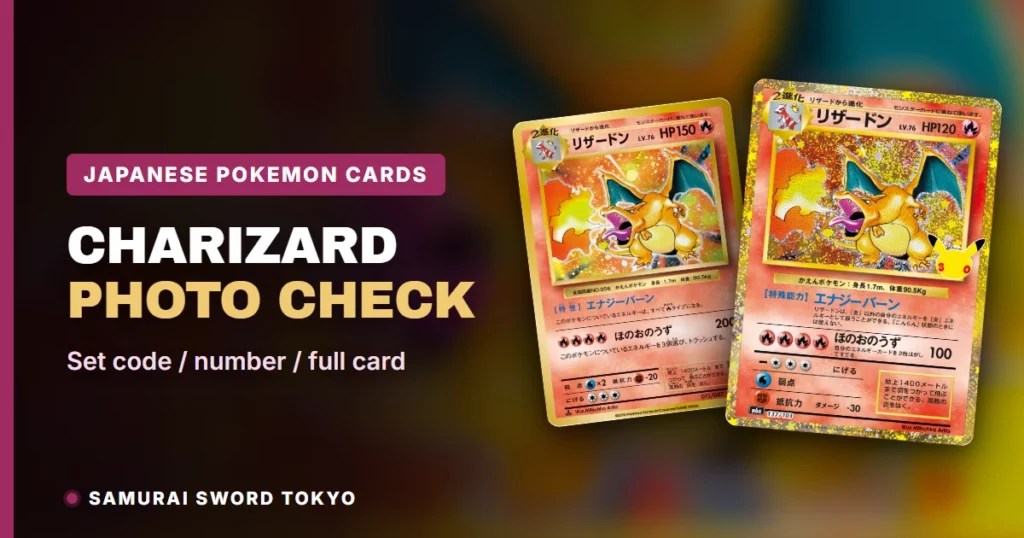
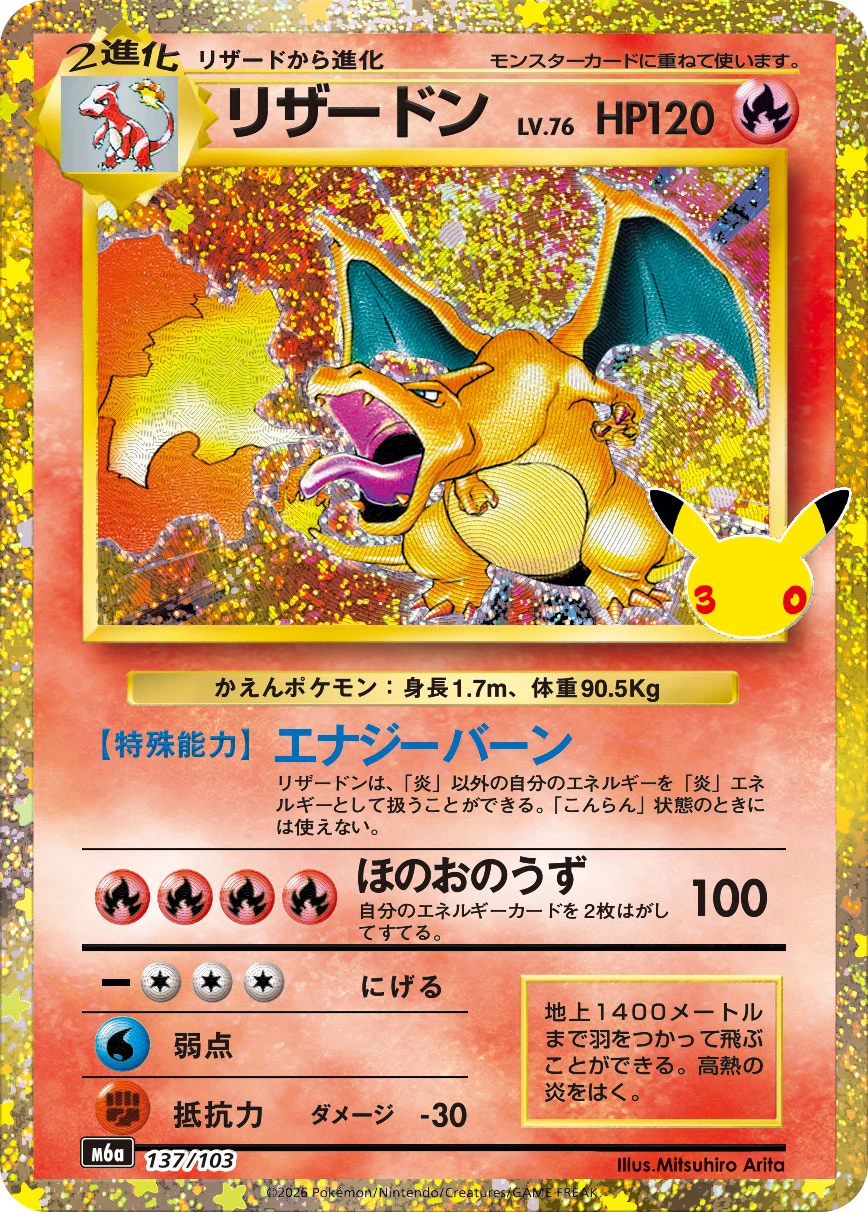
Identify Japanese Charizard 137/103 by the printed M6a set code and collector number, then compare the whole front with the matching official record. A familiar illustration, a strong red reflection or a cropped photograph is not enough to identify the exact anniversary printing.
This checklist is for reading product listings and requesting useful photographs. It does not certify authenticity, establish a separate rarity from foil colour or predict a PSA grade. The aim is to keep the intended card, the photographed item and the seller’s description aligned before you compare prices.
M6a 137/103 is the 120 HP Charizard in 30th CELEBRATION’s Classic Collection block. Other Japanese identifiers include CP6 011/087, S8a-P 001/025 and CLL 003/032. Our S8a-P PSA 10 backorder offer is listed at ¥86,736 and CLL PSA 10 backorder offer at ¥53,560; neither is an M6a 137/103 single. Always retain the exact number beside an offer.
Step 1: Read the Full Identifier
Start with the set code and number, before inspecting colour or comparing an advertised amount. The official Japanese Charizard record identifies M6a 137/103, リザードン, Stage 2, LV.76 and 120 HP, with illustration credited to Mitsuhiro Arita.
| Printed or listed identifier | What it refers to | Useful distinction |
|---|---|---|
| M6a 137/103 | 30th CELEBRATION Classic Collection | The target printing in this checklist |
| CP6 011/087 | Japanese 20th Anniversary card | Different number and printed text |
| S8a-P 001/025 | 25th Anniversary promo | Separate promo-pack route |
| CLL 003/032 | Pokémon Card Game Classic | Separate deck product |
Read these identifiers in the photograph where they are visible and compare them with the seller’s full title. A listing shortened to “reprint Charizard” leaves several possibilities. If the number is cropped out or unreadable, request a clearer full-front image rather than substituting the most familiar version.
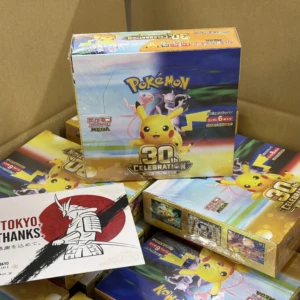
The 30th Celebration Charizard guide supplies the target’s context, and the M6a card listing places it within the set. This step establishes which printing you are discussing; it does not establish authenticity.
Step 2: Request the Whole Front and Back
For an individual card, ask for a full front and back, followed by closer views of corners, edges and the surface. A full image shows which details belong to the same photographed item. Close-ups can then address a specific area without replacing the overall view.
Make sure the card number is readable. If a seller supplies several images, the set and number should remain consistent with the listing title throughout. For a graded card, include a clear photograph of the grading label, so the stated card identity and grade are visible alongside the holder.
A studio image can illustrate the printing while telling you little about the condition of an individual item. Treat a stock product image and an item-specific photograph as different kinds of information. Read the listing’s description of which images are representative and which show the offered item.
If the necessary detail is absent, the practical next step is clarification from the seller or a more complete listing. Do not fill a missing card number, unseen back or unreadable grade with an assumption based on the product’s headline.
This sequence is useful whether you are comparing a raw single or a slab. It keeps card identity separate from condition, and condition separate from the price somebody has chosen to advertise.
Step 3: Compare the Printed Text
For M6a 137/103, the official record gives 120 HP. Its ほのおのうず attack does 100 damage and requires discarding two attached Energy cards. The special rule allows non-Fire Energy attached to it to be treated as Fire, and cannot be used when Charizard is Confused.
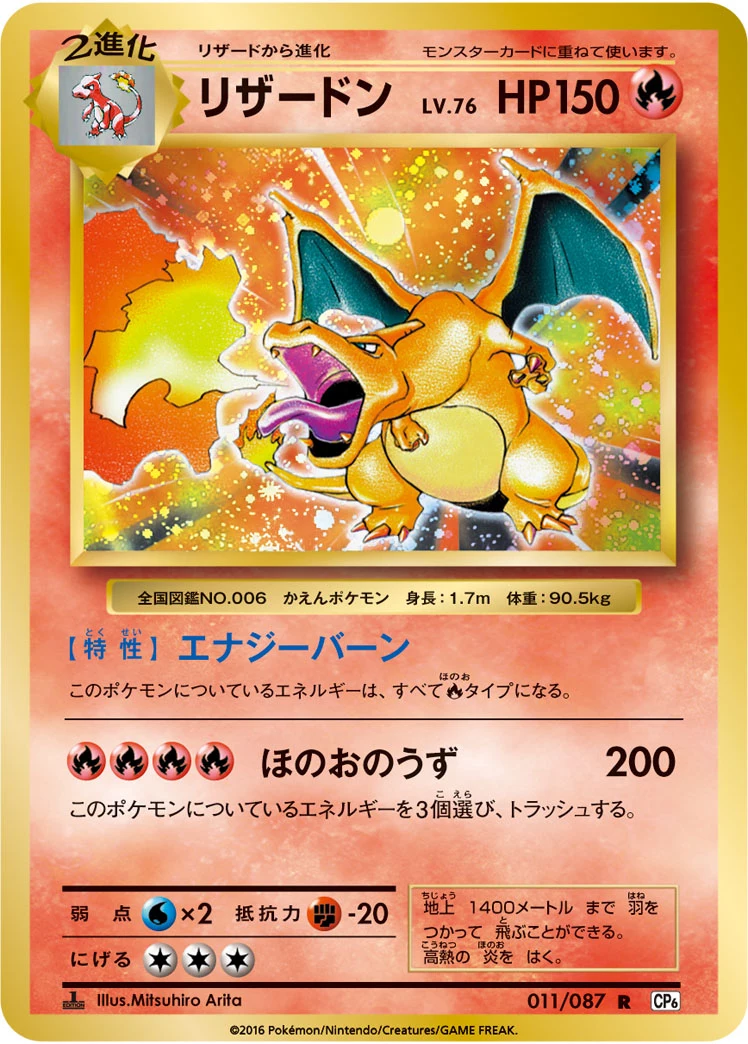
The CP6 011/087 record gives 150 HP. Its ほのおのうず does 200 damage and discards three Energy; エナジーバーン changes its attached Energy to Fire type. These are useful identification differences even though the cards share familiar artwork.
Use the record for the specific Japanese number. Do not insert the text of an English Base Set or Evolutions printing to explain a blurry Japanese image. The M6a-versus-CP6 comparison gives a fuller side-by-side reference.
M6a’s Classic Collection reprints have no regulation letter and are not legal in current Standard play. That is another detail to read in the appropriate official context, not a substitute for the full card number. Do not infer a tournament rule for every other anniversary product from this one subset.
Step 4: Look at the Surface Under Consistent Lighting
Ask for surface angles with consistent lighting when the seller can provide them. Changes in exposure, viewing angle, a light source or a sleeve can alter how foil and colour appear in photographs. Comparing one dark image with one brightly lit image can therefore obscure the surface details you are trying to inspect.
A stronger red reflection is not, by itself, evidence of a named variant, a special print run or a price premium. No official variant designation is established here from those photographic differences. Retain the printed identity and inspect the actual listing information rather than attaching a rarity claim to an appearance.
Similarly, a photograph cannot assign a PSA grade. Visible condition observations and a grading-company label are different information. For an explanation of graded Japanese Charizard buying, continue to the PSA 10 Charizard guide.
Keep any photographic adjustments out of the evidence you use to compare offers. If two images have different colour balance or contrast, request consistent images where possible. The purpose is a readable description of the offered card, not a brighter illustration.
Step 5: Separate the Other Reprint Routes
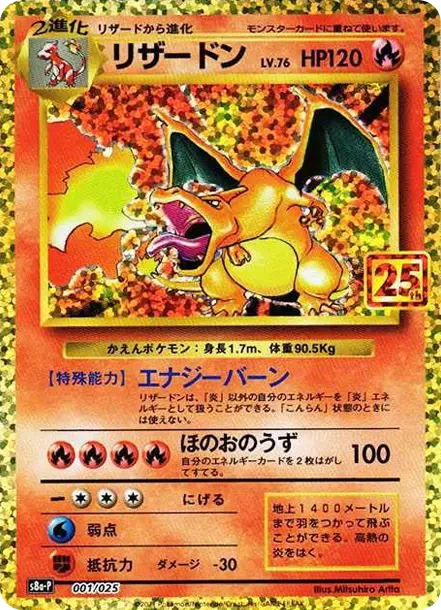
The 25th Anniversary product information describes a separate random promo pack. S8a-P 001/025 belongs to that route, rather than being an assured inclusion in a main S8a booster box. Our identified PSA 10 backorder offer is listed at ¥86,736. Read its number and ordering terms together.
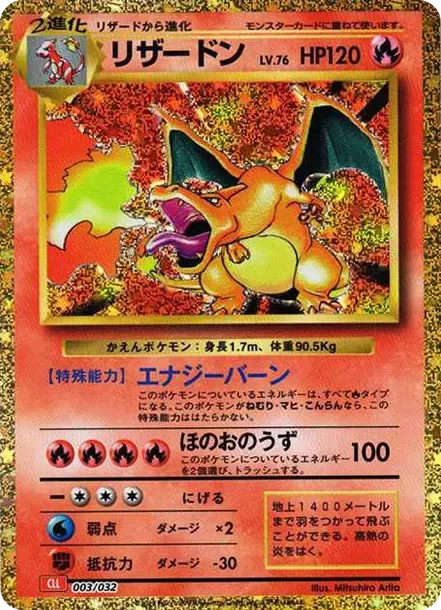
CLL 003/032 is the identifier in our Classic Charizard PSA 10 backorder listing at ¥53,560. Pokémon Card Game Classic is the separate three-deck product; it is not the same product name as M6a’s Classic Collection subset.
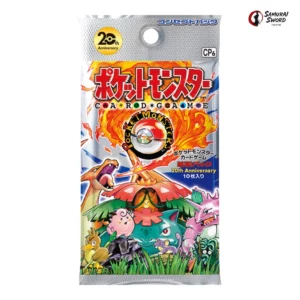
The 25th Anniversary comparison and CLL Classic comparison explain those routes. Their photographs help identify the products being discussed, while an individual seller’s images remain necessary for a specific condition assessment.
Step 6: Attach the Right Condition Label to the Ask
On SNKRDUNK’s M6a Charizard page at 19:12 JST on September 18, 2026, the lowest displayed raw ask was ¥19,800. Condition-A, B and C asks were ¥24,000, ¥19,800 and ¥24,999 respectively. They should remain labelled rather than being collapsed into one supposed card price.
Those letters are marketplace condition categories, not PSA grades. The amounts are asking prices, not completed-sale results. A photograph and description can help you understand the advertised item, but they do not turn a marketplace A label into PSA 10.
If you compare a raw M6a ask with a graded 25th Anniversary listing, both the printing and the condition description differ. First match the card number and the grade or seller condition category. Then consider the individual photographs, current terms and amount.
The word “rare” in a seller’s title, an unusually bright foil image or a large advertised price does not add an official rarity designation. Use the printed identifiers and source record for the card’s name; use the actual offer for its condition and price.
Where to Buy an Identified Printing
For Japanese graded alternatives, our backorder offers include S8a-P 001/025 at ¥86,736, CP6 011/087 1ED at ¥115,335 and CLL 003/032 at ¥53,560. Each price stays with its own card identifier. The 1ED description applies to the named CP6 listing.
For M6a 137/103 itself, sourcing requests go through Quick Order; this guide does not provide a store single price or promise a sourcing outcome. Browse the PSA 10 collection for other graded items. Store amounts were checked September 20, 2026 at 11:41 JST; read the linked page for current terms.
Frequently Asked Questions
What is the first detail to read in a Charizard reprint photo?
Read the complete set code and collector number. The target here is Japanese M6a 137/103. Then compare the whole front with that printing’s official record.
What photographs are useful for an individual purchase?
A readable full front and back, corners and edges, surface angles under consistent lighting, and a clear grading-label image when the item is slabbed.
Does stronger red foil establish a premium variant?
No. Lighting, exposure, angle and sleeves can change the appearance. A photographic difference alone does not establish an official variant, special print run or price premium.
Can this checklist confirm authenticity or a PSA grade?
No. It helps align a listing’s card identity and photographs. It does not authenticate the card or assign a grade.
How does CP6 text differ from M6a Charizard?
M6a 137/103 has 120 HP and a 100-damage ほのおのうず discarding two Energy cards. CP6 011/087 has 150 HP and a 200-damage version discarding three Energy.
Is a marketplace condition-A price a PSA 10 price?
No. Marketplace A/B/C categories and PSA grades are different labels. Preserve the exact printing and condition category when comparing the dated asking amounts.
500 Points Free on Sign-Up
CREATE FREE ACCOUNT1 pt = ¥1 at checkout · Points expire 30 days after they are earned · Import duties, taxes and customs charges are not included in the price and are collected on delivery, except for destinations we ship duty-paid.
Picked for this article
📩 Get member-only sale alerts & coupons
Sale alerts, coupons and restock notices by email — straight from Tokyo.