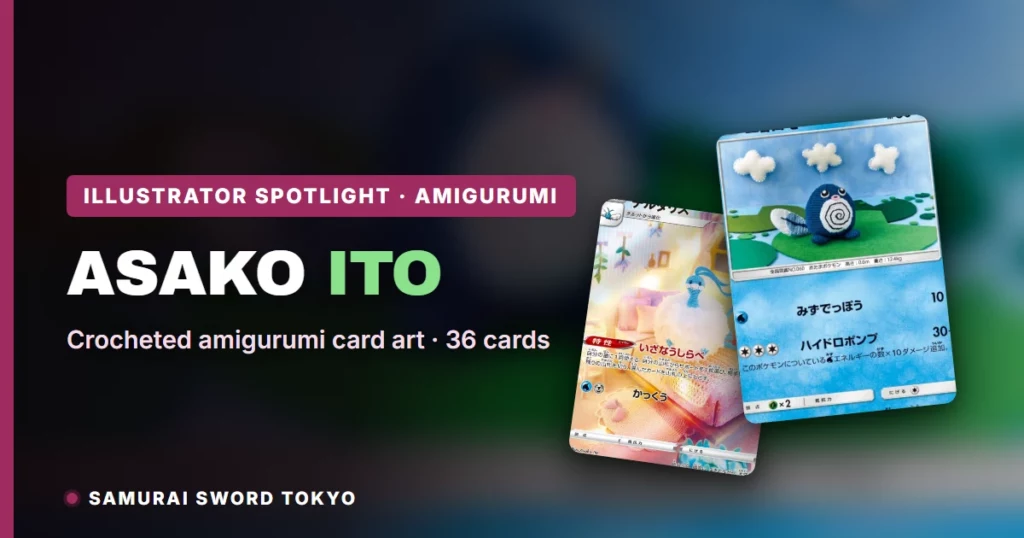
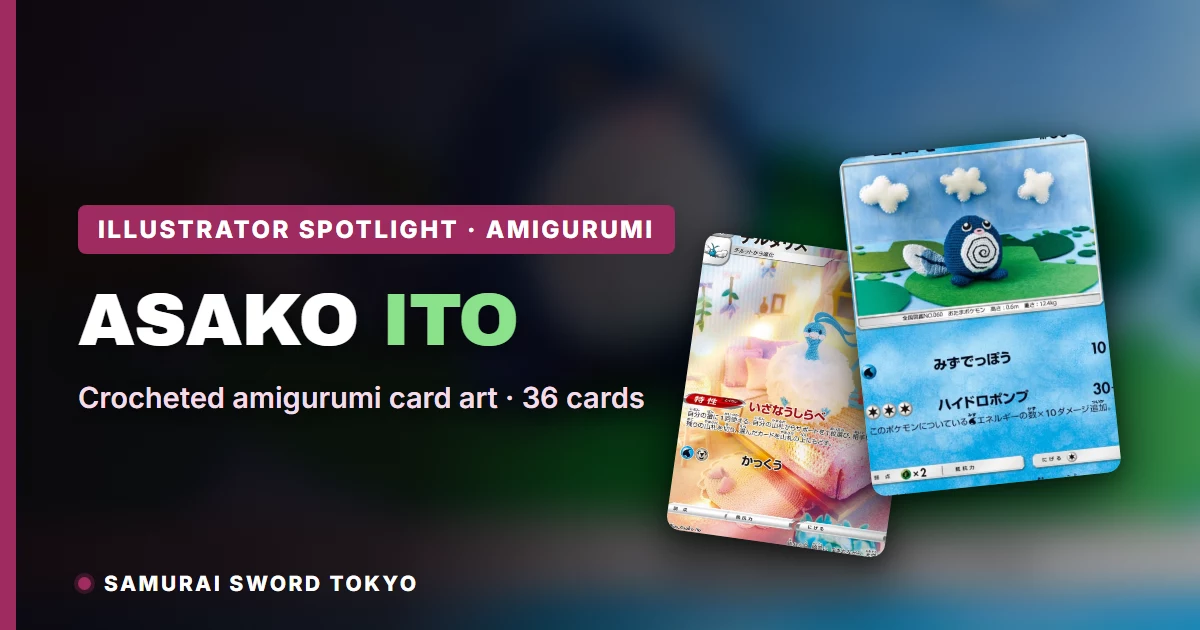
Asako Ito Pokemon cards stand out from nearly everything else in the TCG: the large majority of Pokemon TCG card art is drawn, painted, or digitally rendered, but Asako Ito crochets. Rather than sketching a Pokemon or building a 3D model of one, Ito makes an amigurumi — a knitted, crocheted stuffed doll — of the subject, sets it against a handmade background built from materials like felt, and the resulting photograph becomes the card art. Since debuting on Poliwag in the Sun & Moon expansion, that technique has carried Ito through 36 Pokemon TCG cards, plus a separately counted 8 in Pokemon Trading Card Game Pocket.
It’s also worth a quick note on the name before going further: Asako Ito is not the same illustrator as KEIICHIRO ITO, the artist behind the “Moonbreon” Umbreon VMAX alt art covered in our separate guide. They are different credited illustrators with separate catalogs — different technique, different card lists. This guide covers what’s verified about Asako Ito specifically: the crochet-and-photograph process, the card catalog, and where things stand on our end, since we don’t currently hold a graded Asako Ito card in stock.
We do not currently have an Asako Ito PSA 10 in stock. Asako Ito is a Miyagi Prefecture-born illustrator who debuted in the Pokemon TCG with Poliwag (Sun & Moon, SUM 30) and has since illustrated 36 main-line Pokemon TCG cards; separately, 8 Pokemon TCG Pocket cards, using a signature technique of crocheting amigurumi dolls of each Pokemon rather than drawing or rendering them. If you want an Asako Ito card, flag it on our Quick Order page and we’ll source it.
We rechecked this Asako Ito Pokemon cards list against Bulbapedia and Limitless TCG and our own vault — the catalog count is unchanged and we still don’t carry a graded Asako Ito card in stock.
Card and set details verified against Bulbapedia and Limitless TCG as of August 2026.
Who Is Asako Ito?
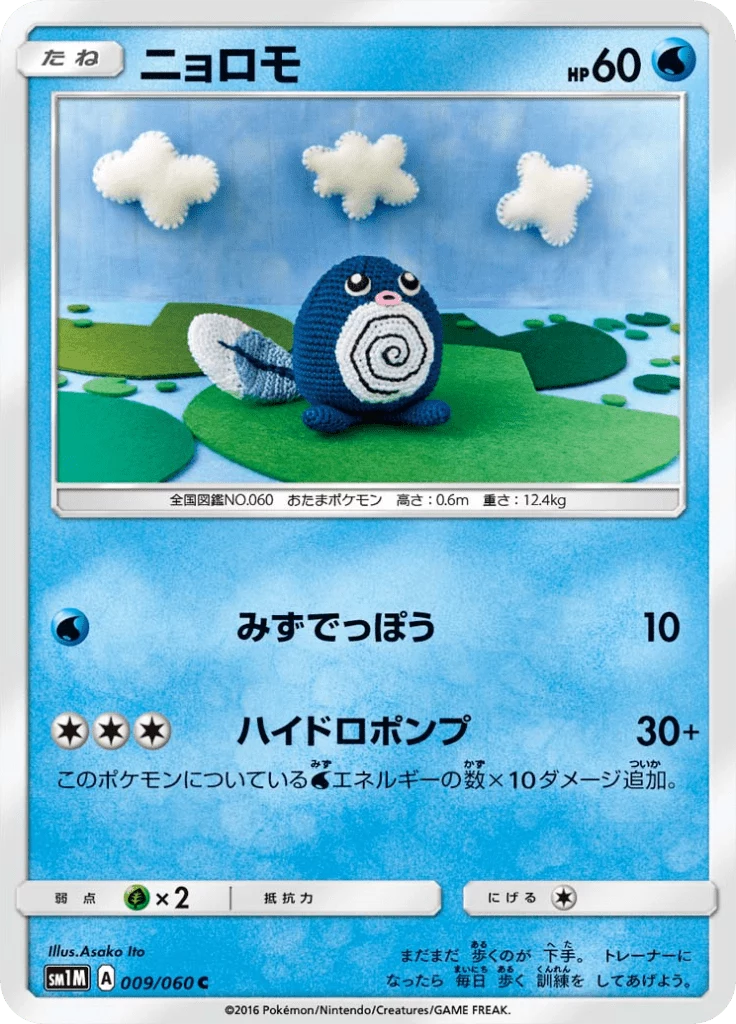
Asako Ito was born in Miyagi Prefecture, Japan. Bulbapedia refers to Ito as “she” throughout her artist page, and this guide follows the same convention. Her Pokemon Trading Card Game debut came on Poliwag, a common card in the Sun & Moon expansion (English SUM 30) — a modest entry point for a catalog that has since grown to 36 main-line TCG cards, cross-checked and confirmed as a matching count on both Limitless TCG’s artist database and Bulbapedia’s artist page.
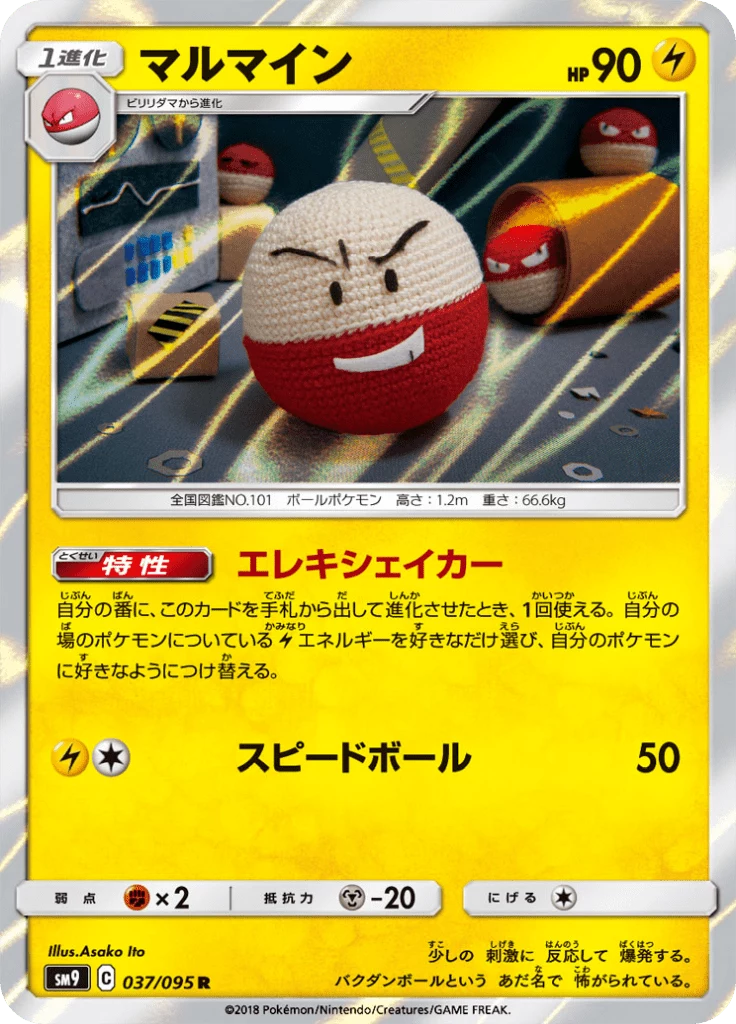
Beyond the TCG debut card list, Bulbapedia also credits Ito with 8 additional illustrations in Pokemon Trading Card Game Pocket, including an Electrode print in the Genetic Apex set. Those two pools — main-line TCG and TCG Pocket — track separate card games with separate numbering, so the 36 and the 8 shouldn’t be added together as a single total; each figure comes from its own database.
Ito’s catalog leans heavily toward Commons and Uncommons across more than a dozen Sun & Moon, Sword & Shield, and Scarlet & Violet-era sets — Burning Shadows, Celestial Storm, Lost Thunder, Team Up, Unbroken Bonds, Unified Minds, Cosmic Eclipse, Rebel Clash, Darkness Ablaze, Vivid Voltage, Battle Styles, Chilling Reign, Fusion Strike, Lost Origin, Silver Tempest, Crown Zenith, Temporal Forces, Twilight Masquerade, Journey Together, and Black Bolt all carry at least one Ito print. It’s a wide spread across a small catalog, which is part of what makes the crochet technique stand out once you know to look for it — a single distinctive process applied consistently across nearly a decade of sets.
The Crochet-and-Amigurumi Technique
Per Bulbapedia, Asako Ito’s process is unusual among Pokemon TCG illustrators: “rather than drawing or making a 3D render, she crochets amigurumi stuffed dolls of the subject,” with backgrounds built from materials like felt. The card art isn’t a painting or a digital illustration of a Pokemon at all — it’s a photograph of a handmade, fiber-crafted object, styled and staged the way any other Pokemon TCG artwork is composed.
The technique has roots in Ito’s academic background. She majored in oil painting at university, but it was there, outside her formal coursework, that she taught herself knitting — inspired by a desire to recreate a teddy bear from the Mr. Bean television series. That self-taught knitting hobby preceded the amigurumi technique that now defines her Pokemon TCG work — a formally trained painter whose signature style came from a craft picked up on the side.
No verified sources describe Ito exhibiting the amigurumi dolls themselves, selling them separately from the cards, or documenting the crochet process publicly beyond what’s visible in the finished card photographs. What’s confirmed is the technique itself and the catalog it produced — the rest of Ito’s process stays behind the scenes.
The Debut and Notable Cards in the Catalog
Poliwag’s debut print set the tone: a Common-rarity Pokemon rendered through crochet rather than illustration, in a set (Sun & Moon) that otherwise ran heavily on traditional digital and painted card art. From there, Ito’s catalog spread one or two cards per set across roughly a decade of Pokemon TCG expansions, almost always at Common or Uncommon rarity.
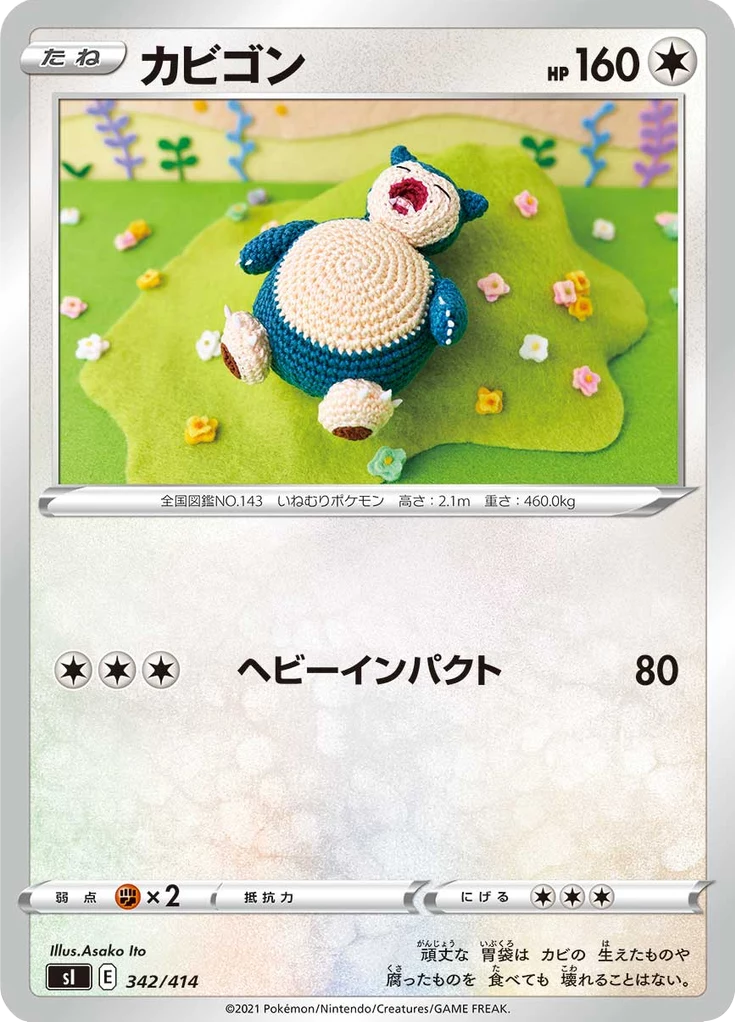
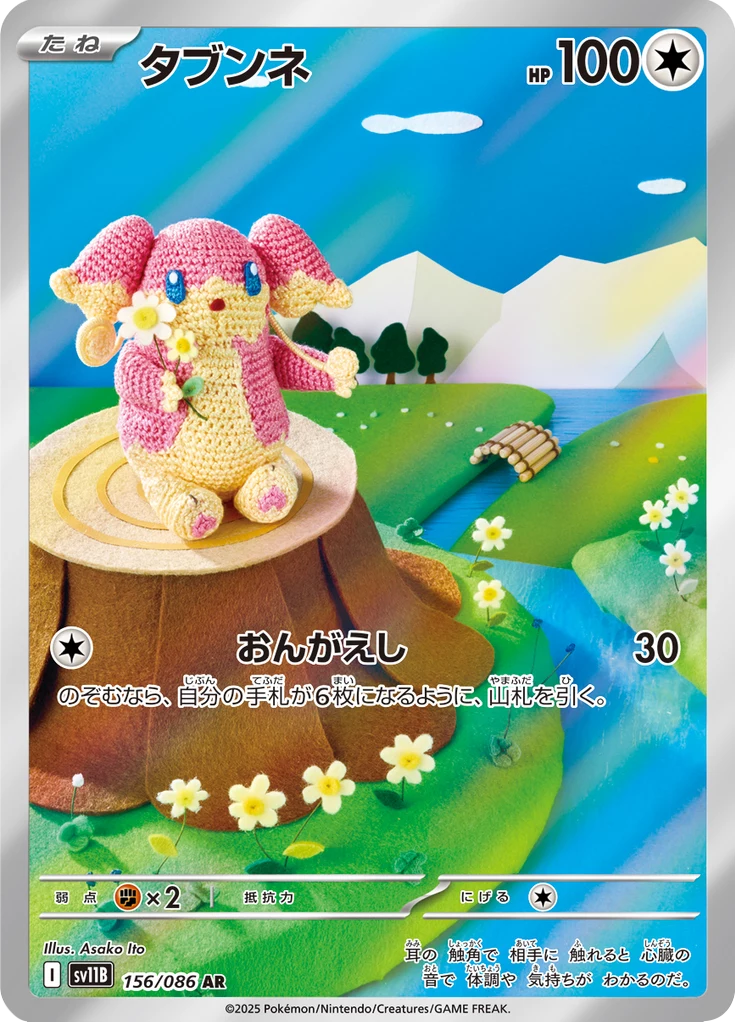
A handful of prints break from that pattern. Electrode, a Holo Rare in Team Up (TEU 39), is one of Ito’s higher-rarity main-TCG prints and also appears to be the Pokemon behind her separate Pokemon TCG Pocket illustration in Genetic Apex. Snorlax in Crown Zenith (CRZ 109) is a Rare rather than the usual Common or Uncommon. And Audino in Black Bolt (BLK 151) is credited as an Art Rare (Illustration Rare) — Ito’s only confirmed appearance at that rarity tier in the verified list. Raw Black Bolt singles — the set that Audino AR comes from — are listed in our Black Bolt (SV11B) singles collection.
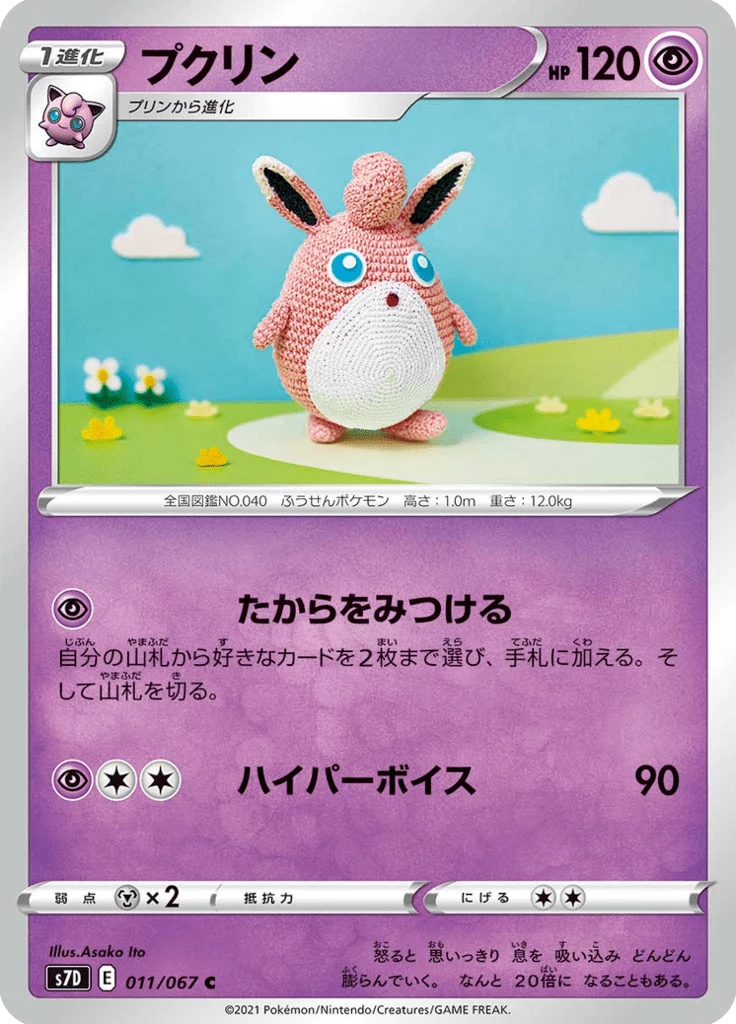
Elsewhere in the catalog, Wigglytuff in Fusion Strike (FST 111) is an Uncommon that pairs with the Grubbin from the same set, and earlier prints like Marill and Tynamo (Burning Shadows), Cherubi and Drifloon (Ultra Prism), and Litwick and Phanpy (Lost Thunder) round out a run of small, unassuming Pokemon rendered in yarn and felt across the Sun & Moon and Sword & Shield eras.
The Altaria Mix-Up: Two Different Illustrators
One card in Ito’s catalog is worth flagging specifically because it’s easy to confuse with a different print of the same Pokemon. Ito illustrated an Altaria Character Holo Rare in Crown Zenith, catalogued as CRZ GG19. That is not the same card as the currently listed Altaria some collectors may be thinking of — a Character Rare (CHR) Altaria at 074/068 from the Japanese set Incandescent Arcana (S11a), which we do carry, and which is illustrated by Yuu Nishida, not Asako Ito.
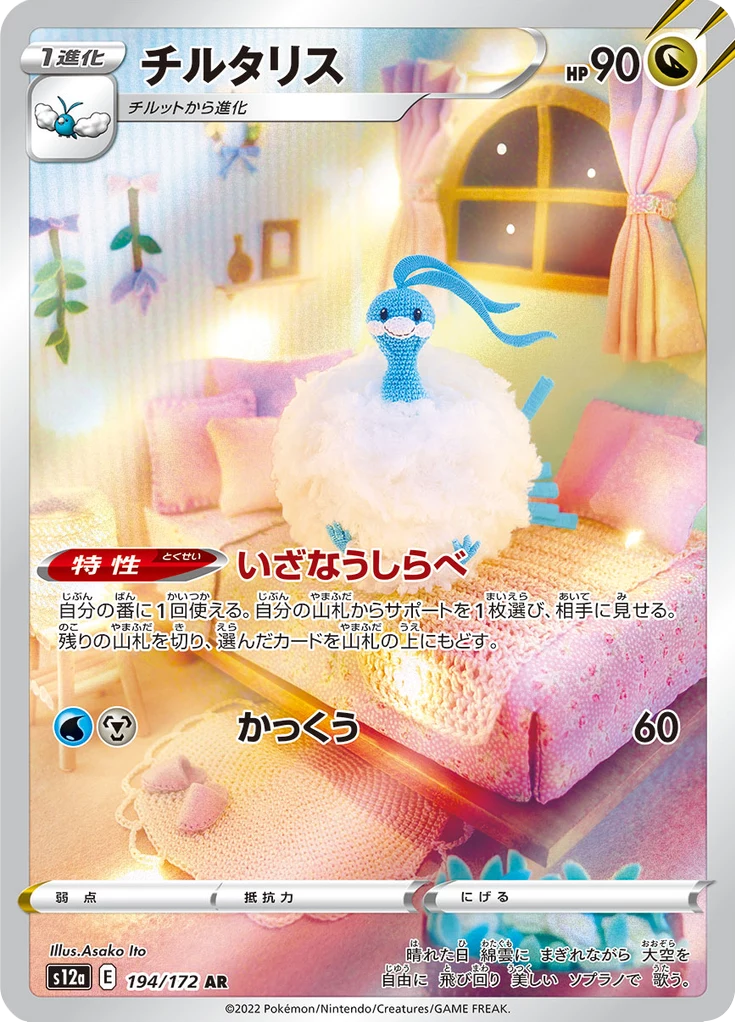
Two different Altaria cards, two different illustrators, two different sets — the kind of mix-up that’s easy to make when browsing by Pokemon name instead of by illustrator and print number. If you’re specifically after the Asako Ito Altaria (CRZ GG19), it isn’t the same listing as our currently listed Nishida Altaria CHR, and it isn’t currently in our graded inventory either.
Asako Ito Pokemon Cards List
We currently hold zero graded Asako Ito cards. The table below lists the notable printings referenced in this guide, none of which are in stock:
| Card | Set | Type | Status |
|---|---|---|---|
| Poliwag | SUM 30 | TCG debut, Common | Not in stock — request via Quick Order |
| Electrode | TEU 39 | Holo Rare | Not in stock |
| Snorlax | CRZ 109 | Rare | Not in stock |
| Altaria, CHR | CRZ GG19 | Character Holo Rare | Not in stock |
| Audino, AR | BLK 151 | Art Rare (Illustration Rare) | Not in stock |
| Wigglytuff | FST 111 | Uncommon | Not in stock |
Because we don’t hold a copy to ship immediately, an Asako Ito request works differently from a listed card: we track down and confirm a graded copy before it’s added to a listing. That process starts with a request on our Quick Order page, where you can flag any of the cards above and we’ll confirm availability and next steps.
If you’re drawn to Ito’s handcraft approach, our Yuka Morii guide covers a different illustrator working in a related but distinct handcraft technique — sculpted clay models photographed against built scenery, rather than crochet and felt. Both artists build the card art as a physical object first and a photograph second, which sets them apart from the painted and digitally rendered illustrations that make up most of the TCG’s catalog.
Requesting an Asako Ito Card from Japan
We source and ship Japanese Pokemon cards and sealed product from Tokyo with tracked delivery. For an illustrator like Asako Ito, where we don’t hold graded stock on hand, the process runs through a direct request rather than an existing listing:
- Flag which Asako Ito card you’re after — the Poliwag debut, Electrode, Snorlax, the Altaria Character Holo Rare (CRZ GG19), Audino Illustration Rare, Wigglytuff, or any other confirmed print — on our Quick Order page.
- Browse our current PSA 10 card list for graded cards already listed from other illustrators — recent examples include a Comfey AR (VSTAR Universe, s12a 187/172), an Oricorio AR (VSTAR Universe, s12a 176/172), and a Charizard VSTAR SAR (VSTAR Universe, s12a 212/172) — none of them Asako Ito prints, just a sense of what’s moving through the vault while we source hers.
- Double-check you’re after the right print if the Pokemon has multiple illustrators — the Altaria mix-up above (Ito’s CRZ GG19 versus Yuu Nishida’s S11a 074/068) is a useful example of why the print number matters more than the Pokemon’s name.
Not an Asako Ito print — shown as an example of graded stock from our current listings as of September 15, 2026 while an Asako Ito card is sourced to order.
For more illustrator profiles built the same way — catalog, notable cards, and current stock status — see our guides to KEIICHIRO ITO (a different illustrator entirely, best known for the Umbreon VMAX “Moonbreon” alt art) and Amelicart, another artist whose work isn’t currently in our graded vault. If you’re weighing a graded purchase generally, our Japanese PSA 10 price guide explains how we price and source graded cards from Japan.
Frequently Asked Questions
Who is Asako Ito?
Asako Ito is a Pokemon TCG illustrator born in Miyagi Prefecture, Japan, referred to as “she” by Bulbapedia. She debuted with Poliwag in the Sun & Moon expansion (SUM 30) and has since illustrated 36 main-line Pokemon TCG cards plus 8 Pokemon Trading Card Game Pocket cards.
What makes Asako Ito’s card art different from other illustrators?
Per Bulbapedia, rather than drawing or making a 3D render, Ito crochets amigurumi stuffed dolls of each Pokemon and builds backgrounds from materials like felt. The finished card art is a photograph of that handmade scene rather than a painted or digitally rendered illustration.
Which card was Asako Ito’s Pokemon TCG debut?
Poliwag, a Common card in the Sun & Moon expansion (English SUM 30).
Is the Altaria currently listed in your inventory illustrated by Asako Ito?
No. Asako Ito illustrated a separate Altaria Character Holo Rare from Crown Zenith (CRZ GG19). The Altaria CHR in our own inventory (074/068, from the Japanese set Incandescent Arcana / S11a) is illustrated by Yuu Nishida, not Asako Ito.
Do you have any Asako Ito cards in stock?
Not currently. We don’t hold a graded Asako Ito card in inventory right now. Flag the card you want on our Quick Order page and we’ll confirm sourcing and availability.
Is Asako Ito the same illustrator as KEIICHIRO ITO?
No. Asako Ito and KEIICHIRO ITO are two different Pokemon TCG illustrators who share a surname. KEIICHIRO ITO is best known for the Umbreon VMAX “Moonbreon” alt art and is covered in our separate guide; Asako Ito’s work is defined by the crochet-and-amigurumi technique covered in this guide.
500 Points Free on Sign-Up
CREATE FREE ACCOUNT1 pt = ¥1 at checkout · Points expire 30 days after they are earned · Import duties, taxes and customs charges are not included in the price and are collected on delivery, except for destinations we ship duty-paid.
Picked for this article

📩 Get member-only sale alerts & coupons
Sale alerts, coupons and restock notices by email — straight from Tokyo.