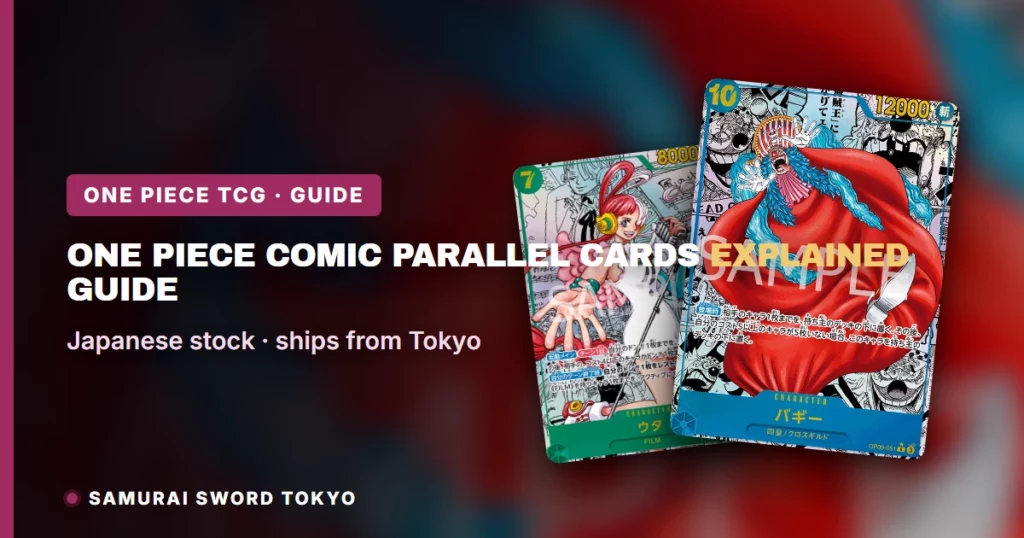
Same card slot, same set, two completely different prices. Pull a normal Super Rare and it might list for a few thousand yen. Pull the version with a black-and-white manga panel behind the character art, and the same card number can jump into six figures.
That second version is what collectors and secondary-market sellers call a Comic Parallel, sometimes shortened to SP. It is not a Bandai rarity code you will find printed on a booster box — it is a naming convention that grew out of the community and retailers to describe a specific art treatment: original panels from Eiichiro Oda’s manga used as the card’s background, in high-contrast black and white, layered under whichever base rarity the card actually carries.
We currently have three graded Comic Parallel cards listed — Uta, Buggy and Koby — so this guide uses those three to walk through what the term means, how the naming actually breaks down against Bandai’s own official labels, and why these particular slots trade at a premium.
“Comic Parallel” and “SP” are community and vendor shorthand for a manga-background art treatment — not an official Bandai rarity. Right now we have three PSA 10 examples listed: Uta SEC-SP currently listed at ¥243,286, Koby SR-SP currently listed at ¥196,709 (update: currently sold out — restock requests via Quick Order), and Buggy R-SP currently listed at ¥173,040. Each is one-of-one stock — when one sells, it’s gone.
What Is a “Comic Parallel” / SP Card?
Bandai’s official card lists show a base rarity for every card — C, UC, R, SR, SEC and so on — plus, where a parallel version exists, an alternate image code such as _p1 or _p2. What the official card list does not show is the word “Comic Parallel.” That phrase comes from community writeups and retail listings describing a specific look: the character art is placed over a monochrome panel pulled directly from the manga, giving the card a high-contrast, comic-page background instead of the standard illustrated scene.
Retailers and collectors also refer to this same treatment as “SP” — short for “special” — and pair it with the card’s base rarity in listings, which is exactly how our own product titles read: SEC-SP, SR-SP, R-SP. The base letters are Bandai’s rarity. The “-SP” and “Comic Parallel” label on top are the vendor and community layer describing which parallel art you’re looking at.
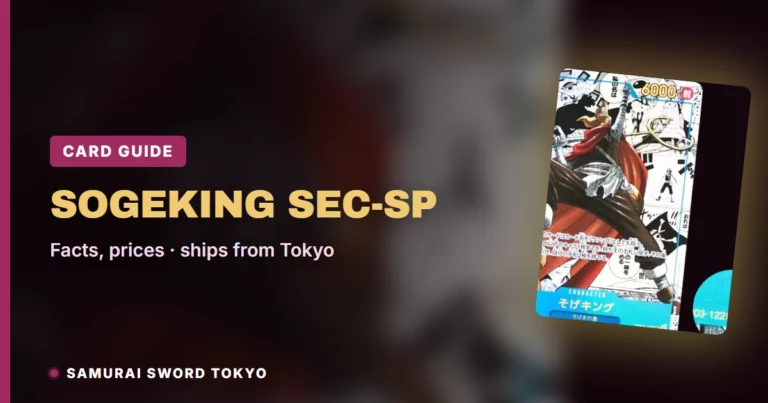
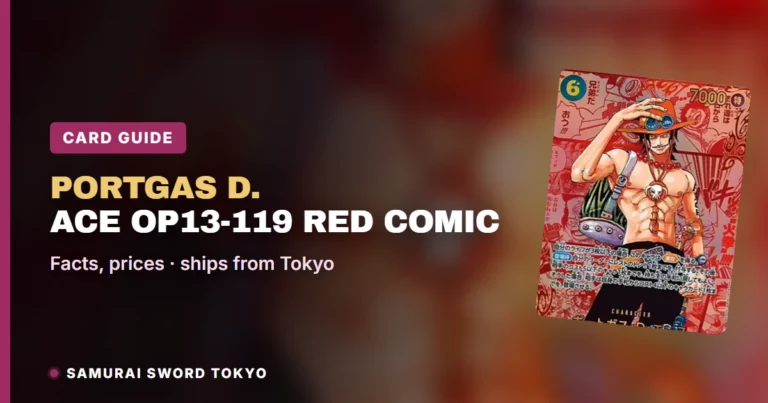
Look at the background behind the character, not the rarity stamp. If it’s a black-and-white comic panel rather than a full illustrated scene, you’re holding the manga-parallel — regardless of whether the card’s base rarity is R, SR or SEC.
Official Labels vs. the Community Term
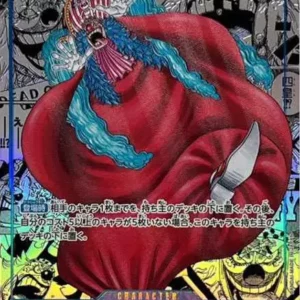
The gap between Bandai’s own naming and the community’s shorthand shows up clearly once you compare official card-list terms against retail listings. Take Buggy’s OP09-051 print from -Emperors In The New World- [OP-09]. Bandai’s own card list uses the label “SP CARD” for one specific parallel of this card — but that “SP CARD” is a different piece of art entirely, a WANTED-poster illustration, not the manga-background version. The manga-background copy that collectors call “Comic Parallel” and list as “R-SP” is a separate parallel of the same card number.
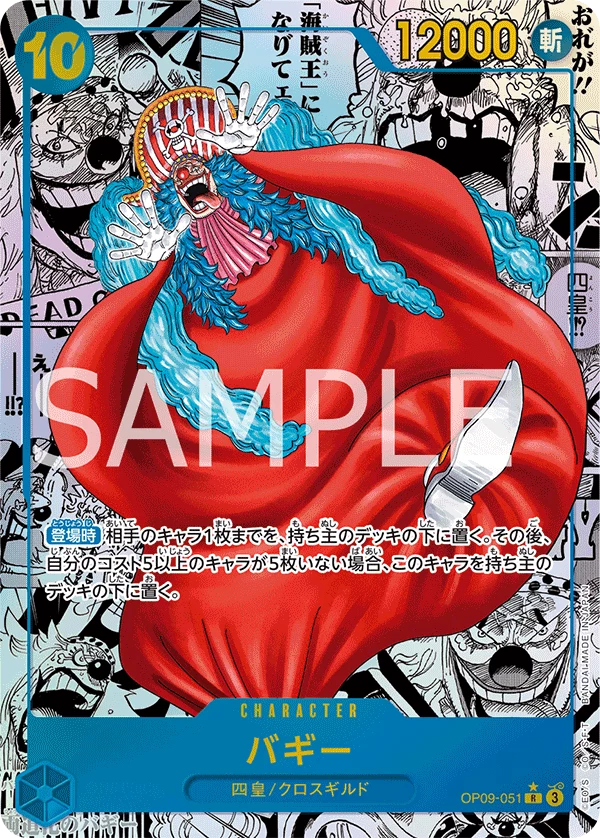
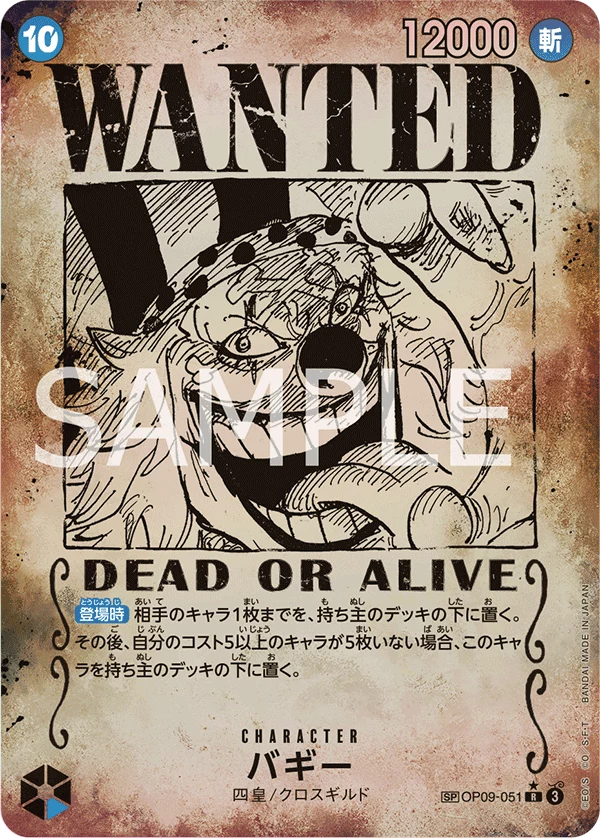
That mismatch is a useful reminder for anyone comparing listings across sites: “SP” as used by vendors for the manga-background treatment is not the same string Bandai uses on its own card list for a card with an official “SP CARD” designation. When you’re buying, match the artwork, not just the abbreviation.
How These Are Packed — What’s Confirmed and What Isn’t
Bandai’s official product page for Extra Booster -EGGHEAD CRISIS- [EB-04] — the set that produced our Koby example — lists the set’s composition by rarity (67 card types + 1 DON!!) and 6 cards per pack; it does not publish per-box parallel odds. The same official page calls out Koby by name as “the super alternate art card of this set.” That confirms the card exists and roughly where it sits in the box structure.
What it does not confirm is a pull rate or print ratio specifically for the manga-background parallel versus other parallels of the same card. We have not found an official Bandai pull-rate publication for Comic Parallel cards in EB-04, OP-09 or EB-03, and community pricing sources covering this card don’t cite one either. Any pack-odds figure you see for these cards elsewhere should be treated as community-reported, not Bandai-confirmed.
What we can say as an observed, factual pattern from our own inventory: across all three sets represented here, the manga-background parallel of each card has consistently listed as a single, harder-to-source unit relative to that card’s base printing — each of the three we’ve carried has come through as one-of-one stock.
Three Comic Parallels, Three Base Rarities
The manga-background treatment isn’t locked to one rarity tier. Our three current examples span Secret Rare, Super Rare and Rare base slots:
| Card | Code | Set | Base rarity | Price |
|---|---|---|---|---|
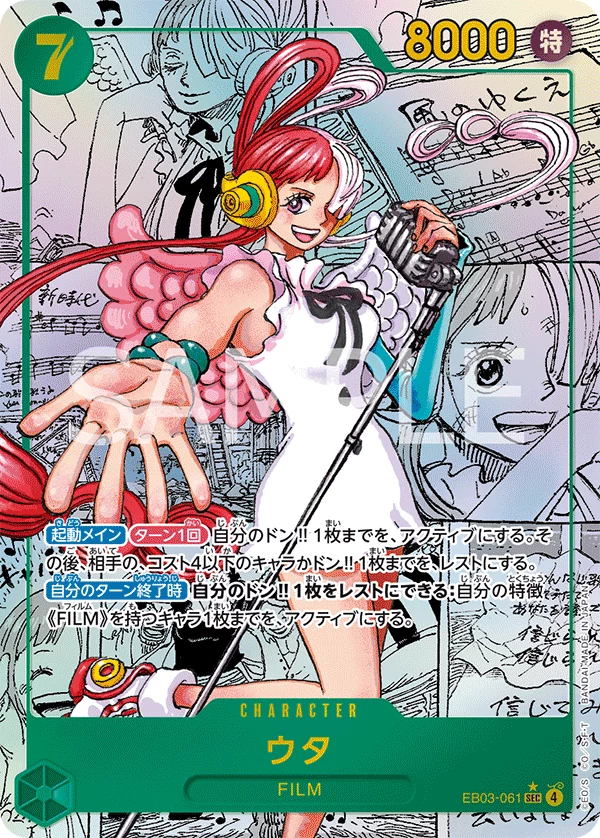
| PSA10 Uta SEC-SP (Comic Parallel) | EB03-061 | Extra Booster -ONE PIECE Heroines Edition- [EB-03] | SEC | currently listed at ¥243,286 |
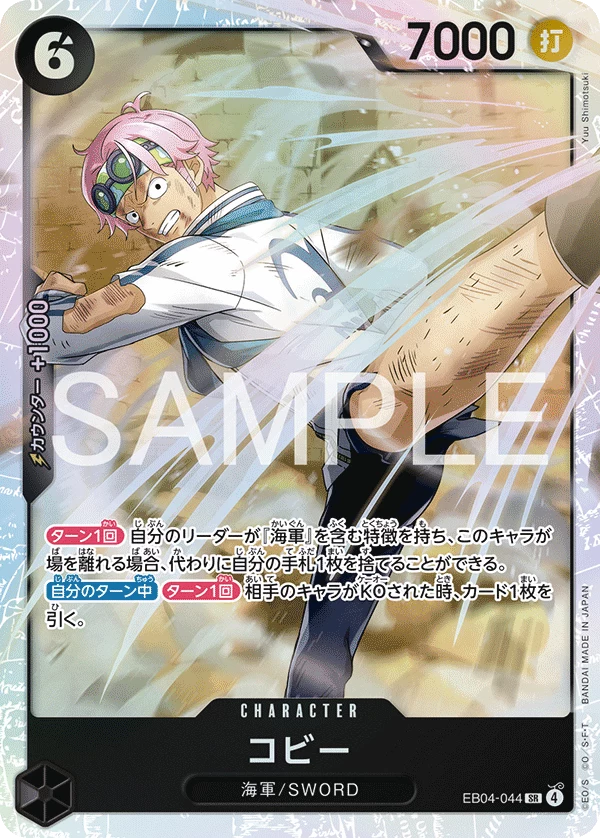
| PSA10 Koby SR-SP (Comic Parallel) (update: currently sold out — restock requests via Quick Order) | EB04-044 | Extra Booster -EGGHEAD CRISIS- [EB-04] | SR | currently listed at ¥196,709 (update: currently sold out — restock requests via Quick Order) |
| PSA10 Buggy R-SP (Comic Parallel) | OP09-051 | Booster Pack -Emperors In The New World- [OP-09] | R | currently listed at ¥173,040 |
Uta — EB03-061 (Secret Rare base). Uta’s manga-parallel starts from the highest base rarity of the three, which lines up with it also carrying the highest current price. It comes out of ONE PIECE Heroines Edition [EB-03], billed as the extra booster centered on the franchise’s female cast.
Koby — EB04-044 (Super Rare base). Koby’s card comes from EGGHEAD CRISIS [EB-04], billed as the set centered on the Egghead arc, and Bandai’s own set page singles this card out as the set’s super alternate art card (Bandai’s own wording). For a closer look at every printing Koby has appeared in — not just this one — see our Koby One Piece cards guide.
Buggy — OP09-051 (Rare base). Buggy’s version starts from the lowest base rarity of the group — a Rare, not a Super Rare or Secret Rare — and it’s the clearest illustration of how the manga-background treatment can elevate a normally common-tier card slot into a genuine chase piece, separate from OP-09’s official “SP CARD” parallel discussed above.
Why the Manga-Background Slot Commands a Premium
Community pricing coverage of the Koby card gives a useful before-and-after. A pricing writeup covering EB04-044 shortly after the set’s January 31, 2026 release put the raw (ungraded) market price for this card around ¥100,000 and buy-side offers around ¥90,000, with the article noting that a PSA 10 market figure was not yet established at that point. Our current PSA10 listing for the same card sits at ¥196,709 — roughly double that early raw-market range, though we’re citing that community figure as a data point rather than an authority on current pricing.
We’ve covered the manga-panel art treatment in more depth on other characters where it appears — see our Zoro One Piece cards guide and our Shanks One Piece cards guide for how the same style plays out on their respective chase cards, and our broader most valuable One Piece cards roundup for where these three fit against the rest of the market. If you’re building a PSA 10 One Piece want-list beyond just Comic Parallels, our PSA 10 One Piece buying guide covers the grading side in general, and our One Piece promo cards guide covers the separate world of Flagship Battle and event-exclusive prints.
Where to Buy Comic Parallel One Piece Cards
We ship PSA-graded and raw Japanese One Piece cards worldwide from Tokyo with tracked delivery. Each Comic Parallel listing below is a single graded copy — one-of-one stock, and once it sells, that specific card is gone.
PSA10 Koby SR-SP Comic Parallel — currently listed at ¥196,709 (update: currently sold out — restock requests via Quick Order)
Browse the full graded lineup on our PSA 10 collection, or for a mixed order across singles, sealed product and other Japanese sets, use our Quick Order page to build a single checkout.
Frequently Asked Questions
What does “Comic Parallel” mean on a One Piece card?
It describes a parallel art treatment where the card’s background is a black-and-white panel taken from the original manga, rather than a standard illustrated scene. “Comic Parallel” and “SP” are community and retail terms for this look — they are not rarity codes printed on Bandai’s official card list.
Is “SP” an official Bandai rarity?
Not in the way it’s used for the manga-background treatment. Bandai’s card list shows base rarities like R, SR and SEC plus parallel image codes such as _p1/_p2. Bandai does use “SP CARD” as its own label on some cards, but that label can point to a different parallel entirely — as with Buggy’s OP09-051, where Bandai’s “SP CARD” is a separate WANTED-poster illustration, not the manga-background version.
What base rarity are Comic Parallel cards?
It varies by card. Our three current examples span three different base rarities: Uta (EB03-061) is a Secret Rare, Koby (EB04-044) is a Super Rare, and Buggy (OP09-051) is a Rare. The manga-background treatment sits on top of whichever base rarity that card slot carries.
Are Comic Parallel pull rates published by Bandai?
No official pull rate for the manga-background parallel specifically has been found on Bandai’s set pages. Bandai’s set page for EB-04 lists the set’s composition by rarity (67 card types + 1 DON!!) and 6 cards per pack — it does not publish per-box parallel odds. Any pull-rate figures circulating elsewhere are community-reported, not Bandai-confirmed.
Which Comic Parallel One Piece cards are currently in stock?
As of this listing: PSA10 Uta SEC-SP (EB03-061) at ¥243,286, PSA10 Koby SR-SP (EB04-044) at ¥196,709, and PSA10 Buggy R-SP (OP09-051) at ¥173,040. Each is one-of-one graded stock, so current availability and price should be confirmed on the product page before ordering.
500 Points Free on Sign-Up
CREATE FREE ACCOUNT1 pt = ¥1 at checkout · Points expire 30 days after they are earned · Import duties, taxes and customs charges are not included in the price and are collected on delivery, except for destinations we ship duty-paid.
Picked for this article


📩 Get member-only sale alerts & coupons
Sale alerts, coupons and restock notices by email — straight from Tokyo.