OCG and TCG are two regional versions of the same card game. They look similar on the surface, but the card backs differ, the two formats keep separate tournament banlists, and cards legal in one are not automatically legal in the other.
If you’re buying Japanese Yu-Gi-Oh product — sealed boxes, singles, or anything shipped out of Japan — you are buying OCG cards. This guide walks through exactly what separates the two formats, using Yugipedia’s “Yu-Gi-Oh! Official Card Game” page as the source, and what the differences actually mean at the point of purchase.
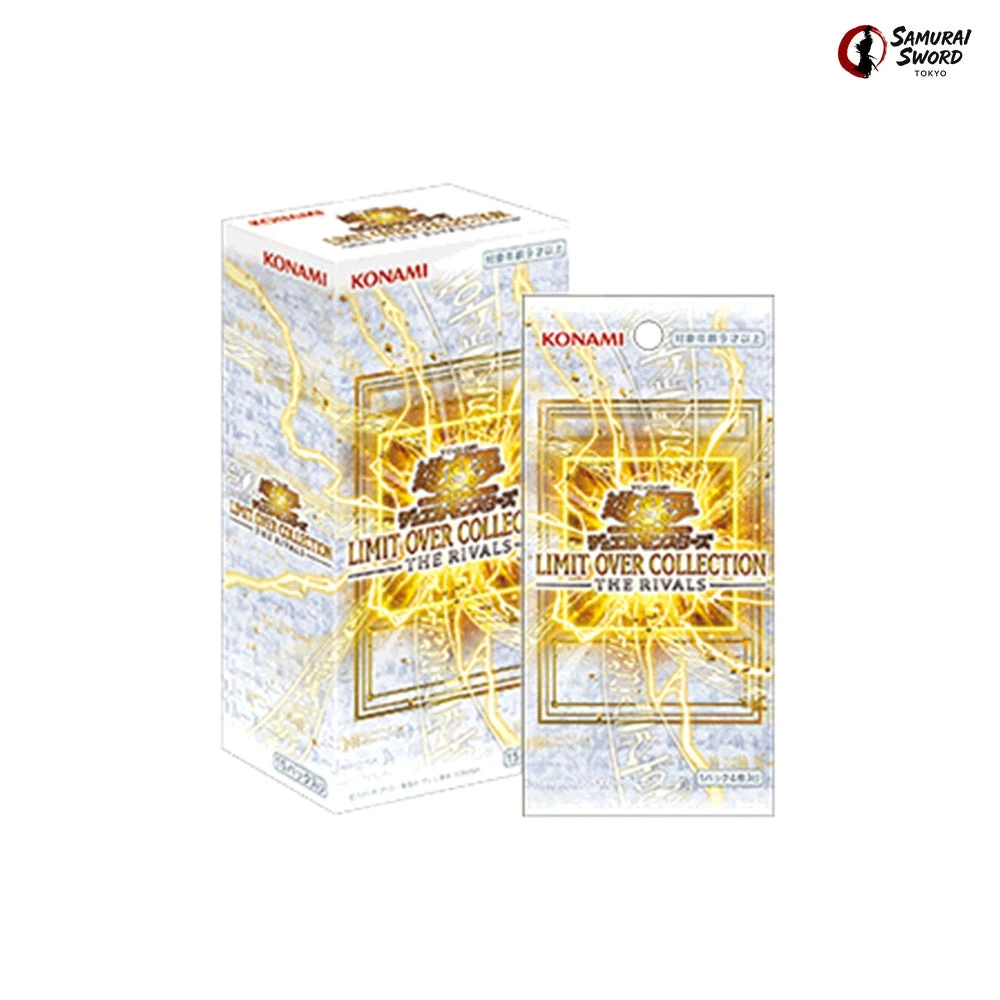
The OCG launched on February 4, 1999, before it had an English-language TCG counterpart. Card backs differ by region, TCG cards are not tournament-legal in OCG events, and the two formats have run separate Forbidden/Limited banlists since September 2013 — the same card can be Forbidden in one format and Unlimited in the other. Our LOCR – Limit Over Collection The Rivals booster box is an OCG-only release with no TCG equivalent, currently listed at ¥7,455 (~$47).
Yen figures below convert at ¥159/USD (September 2026).
OCG vs TCG: What the Two Formats Actually Are
The OCG and TCG are separately administered regional versions of the same game, with distinct card pools, print runs and release calendars.
The OCG came first. It launched in Japan on February 4, 1999 with Vol.1, and its Official Rules followed on March 6, 1999 — per the same Yugipedia source. Japanese Yu-Gi-Oh cards are OCG cards because they were printed for the Japanese market.
| Aspect | OCG | TCG |
|---|---|---|
| Region | Japan and other OCG markets | TCG markets |
| Card back | Varies by sub-region — Japanese/Japanese-Asian, Asian-English and Korean backs are all different from each other | One universal back logo worldwide |
| Tournament legality | TCG cards are not legal in OCG events | Runs its own separate legal card pool |
| Banlist | Own Forbidden/Limited list, maintained separately since September 2013 | Own Forbidden/Limited list, maintained separately since September 2013 |
| Release schedule | Own schedule; gets OCG-exclusive cards and sets | Own schedule — by the same two-list logic, the TCG gets its own exclusives too |
Card Backs: How to Tell OCG from TCG at a Glance
The fastest way to identify which format a card belongs to is the back of the card, not the front. TCG cards, regardless of which English-, French-, German- or Spanish-language box they came from, all share one universal back logo.
OCG cards don’t work that way. According to Yugipedia, Japanese and Japanese-Asian card backs carry a logo featuring the Japanese Yu-Gi-Oh! logo — rendered with English ruby text — and the phrase “Official Card Game Duel Monsters” printed in katakana. Asian-English cards use a different backing again, and Korean cards a different one still, distinct from both the Japanese cards and from each other.
Because the backs are visibly different across regions, a player mixing OCG and TCG cards — or mixing Japanese, Asian-English and Korean cards within the OCG — needs opaque-backed sleeves. Without them, an opponent can potentially read information about a card from its back alone.
For a deeper look at spotting the specific print details that separate genuine Japanese product from everything else, see our guide to identifying Yu-Gi-Oh cards.
Tournament Legality: Why the Two Formats Don’t Mix
Per Yugipedia, TCG cards are not legal in OCG tournaments. The two formats run on separate legal card pools, and a card being printed for one region’s release schedule doesn’t automatically make it usable in the other region’s events.
This is the practical reason the card-back difference matters. If you’re playing in an OCG event in Japan, or a TCG event anywhere else, the cards on the table need to belong to that format — and if a deck legitimately mixes formats for casual play, opaque sleeves are the fix so the backs don’t give anything away.
Banlists: The Same Card, Two Different Statuses
Since September 2013, the OCG and TCG have maintained entirely separate Forbidden/Limited banlists. That means the exact same printed card can carry a different legal status depending on which format you’re playing — Forbidden in the OCG and Unlimited in the TCG, or the other way around. Both directions happen; the pattern isn’t one-way.
Because banlists are revised multiple times a year in each format, this guide isn’t the place to state any individual card’s current status — check the live OCG or TCG list for the format you’re playing before assuming a card’s legality.
The one place the two lists get reconciled is the World Championship. During Worlds, every card is set to whichever status is most restrictive across all the regional banlists in play — so a card Forbidden under any one region’s list, even if Unlimited everywhere else, is Forbidden for the entire event.
Release Schedules and OCG-Exclusive Sets
The OCG runs its own release schedule for sets and products, separate from the TCG’s. That schedule produces cards and sets that exist only on the OCG side — and by the same logic that gives each format its own banlist, the TCG has releases that stay TCG-only in return.
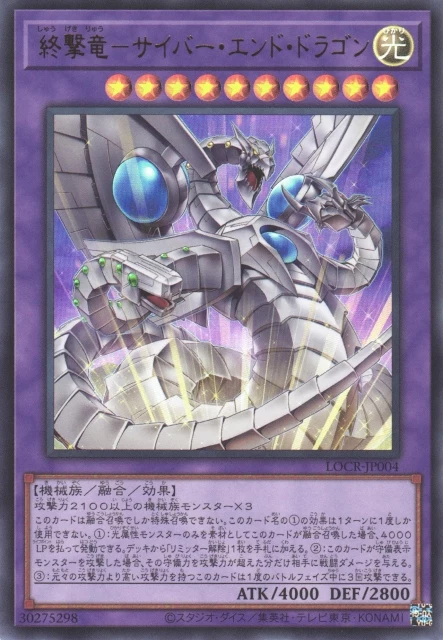
Our LOCR – Limit Over Collection The Rivals booster box is a clear example: as of our research, it’s an OCG-only product with no TCG equivalent set. It includes Ultra Rare prints such as Cyber End Dragon “The Final Strike Dragon” and Deep-Eyes White Dragon “The Blue Abyss.”
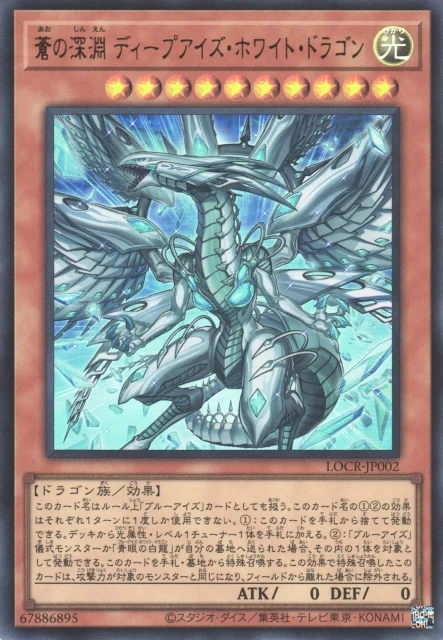
See the full card breakdown in our LOCR card list.
What This Means When You’re Buying Japanese Yu-Gi-Oh Cards
Every Japanese Yu-Gi-Oh product covered here is OCG product because it was printed for the Japanese release schedule. In practical terms, that means: the card backs carry the Japanese OCG logo and katakana text described above; the cards follow the OCG banlist rather than the TCG one; and some of what’s inside a Japanese box, like LOCR, simply doesn’t have a TCG-printed counterpart.
Our LOCR booster box is currently listed at ¥7,455 (~$47) and ships sealed from Tokyo. For high-end OCG anniversary product, our QCAC – Quarter Century Art Collection booster box carton is priced on request through Quick Order and includes prints like Blue-Eyes White Dragon and Red-Eyes Black Dragon in Ultra Rare.
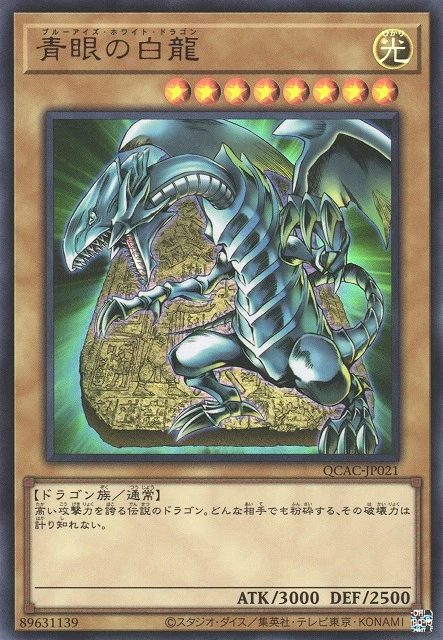
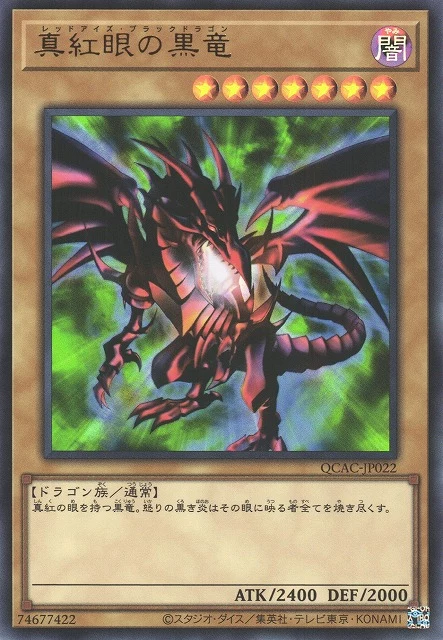
Related reading: our QCAC card list, the wider 25th Anniversary / Quarter Century cards guide, and our most expensive Yu-Gi-Oh cards guide for where OCG chase prints sit relative to the rest of the market.
For anything not listed directly, our Quick Order page is the fastest way to request Japanese OCG singles or sealed product.
Frequently Asked Questions
What’s the difference between Yu-Gi-Oh OCG and TCG?
The OCG (Official Card Game) and TCG (Trading Card Game) are regional versions of Yu-Gi-Oh. They share the same core rules but run separate card backs, separate tournament banlists, and separate release schedules.
How can I tell if a Yu-Gi-Oh card is OCG or TCG?
Check the back of the card. TCG cards all use one universal back logo worldwide. OCG cards vary by sub-region: Japanese and Japanese-Asian cards carry a Japanese-logo back with katakana text reading “Official Card Game Duel Monsters,” while Asian-English and Korean cards each use their own distinct backing.
Can I use TCG cards in OCG tournaments?
No. TCG cards are not legal in OCG tournaments. Because the card backs are visibly different between formats, a deck mixing OCG and TCG cards for casual play needs opaque-backed sleeves.
Do OCG and TCG share the same banlist?
No, not since September 2013. The two formats have maintained separate Forbidden/Limited lists since then, so the same card can be Forbidden in one format and Unlimited in the other. Always check the current list for the format you’re playing, since these lists change multiple times a year.
When was the OCG first released?
The OCG launched in Japan on February 4, 1999 with Vol.1, and its Official Rules followed on March 6, 1999.
Are there Yu-Gi-Oh cards or sets only available in the OCG?
Yes. The OCG has its own release schedule and gets OCG-exclusive cards and sets that the TCG doesn’t print. LOCR – Limit Over Collection The Rivals is one example: as of our research it has no TCG equivalent set.
Free and discounted shipping, by delivery country
- Each delivery country has its own qualifying amount and its own coupon code.
- Each paid campaign order unlocks the next step for your account.
- Sign in, or choose "Create account: Yes" at checkout, to use a campaign code.
The coupon code, the minimum order and the shipping benefit all depend on your delivery country — open the campaign page for the terms that apply to you. The minimum is the product subtotal only: shipping, tax and any other discount are not counted towards it. The campaign ends September 10, 2026 23:59 Japan time (September 10, 2026 14:59 UTC); the codes stop working at that moment. Coupons cannot be applied to pre-order items. Add an in-stock item to use a coupon. Import duties, taxes and customs charges are not included in the price and are collected on delivery, except for destinations we ship duty-paid.
Picked for this article
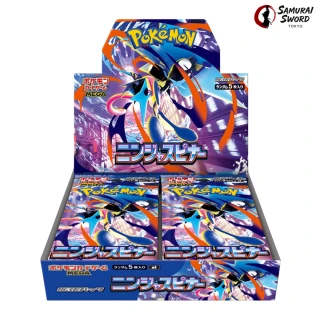
📩 Get member-only sale alerts & coupons
Sale alerts, coupons and restock notices by email — straight from Tokyo.