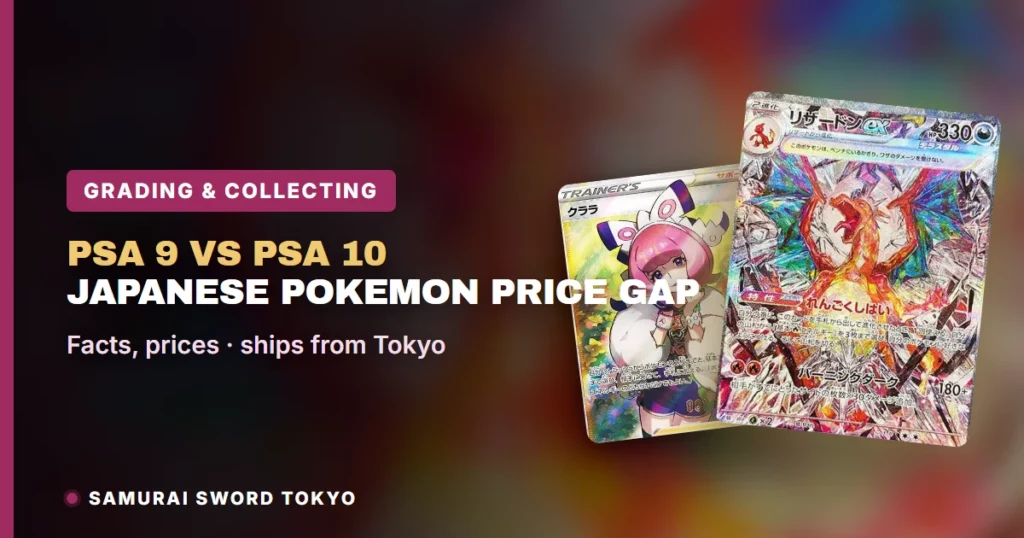
PSA 9 and PSA 10 are different grades, but this guide does not have a dated, matched pair of PSA 9 and PSA 10 prices for the same Japanese card. We can explain the published grading criteria and show separate raw-to-PSA-10 asking-price examples. Those examples do not measure a PSA 9-to-PSA-10 premium.
Below, the grading section explains PSA’s published Gem Mint 10 criteria. A separate price table compares dated raw and PSA 10 asking prices for three Japanese cards, alongside our listings where available. Grade definitions describe condition requirements; these price observations alone do not establish why sellers choose different prices.
PSA publishes definitions for every grade on its Grading Standards page; only the Gem Mint 10 definition was readable on the page we could quote. Using SNKRDUNK’s dated Klara SR asking prices as one illustration, a raw copy of the same card asked ¥7,500 on September 18, 2026, while graded PSA 10 copies were quoted at ¥40,000 to ¥128,000 on the same marketplace and date — an illustration of the difference between raw and PSA 10 asking prices for one Japanese card.
Store prices and availability checked September 25, 2026 at 13:48 JST. Marketplace observations retain their stated dates. USD conversions use ¥154 per US dollar.
Every quote and figure below carries its source and date. Where a fact was not published on a page we could quote, we say so instead of guessing. USD figures convert at ¥154/USD, approximate.
What Separates a PSA 9 from a PSA 10
PSA’s own Grading Standards page defines the top grade in specific terms:
“A PSA Gem Mint 10 card is a virtually perfect card. Attributes include four perfectly sharp corners, sharp focus and full original gloss. A PSA Gem Mint 10 card must be free of staining of any kind, but an allowance may be made for a slight printing imperfection, if it doesn’t impair the overall appeal of the card. The image must be centered on the card within a tolerance not to exceed approximately 55/45 percent on the front, and 75/25 percent on the reverse.” (psacard.com/gradingstandards, as printed on September 18, 2026)
PSA publishes definitions for all ten grades on its Grading Standards page, but only the Gem Mint 10 wording above was readable there as text on September 18, 2026. We won’t quote centering percentages for Mint 9 that we haven’t actually seen published. If you want the exact wording for grades below 10, see PSA’s own Grading Standards page.
What PSA does confirm, on the same page, is that grading isn’t purely mechanical:
“While it’s true that a large part of grading is objective (locating print defects, staining, surface wrinkles, measuring centering, etc.), the other component of grading is somewhat subjective. The best way to define the subjective element is to do so by posing a question: What will the market accept for this particular issue?” (psacard.com/gradingstandards, as printed on September 18, 2026)
PSA’s explanation describes its grading process. It does not quantify a price premium between PSA 9 and PSA 10, and we do not use it as evidence for one.
The Centering Tolerance Behind the Top Grade
Our own condition guide article breaks PSA’s evaluation down into four pillars, corroborating the same PSA 10 sentence quoted above:
- Centering — “How evenly the printed image sits within the card’s border, front and back”
- Corners — “Sharpness of all four corners — a Gem Mint 10 requires all four to be perfectly sharp”
- Edges — “Condition of the card’s cut edges, checked for whitening, chipping, or roughness”
- Surface — “Gloss, print quality, and freedom from staining, scratches, or print defects” (samuraiswordtokyo.com condition guide, as printed on September 18, 2026; those four pillar labels are our article’s own wording, not PSA’s)
PSA also defines what a card must avoid entirely to be gradable at all, regardless of grade: “PSA will not grade cards that bear evidence of trimming, re-coloring, restoration, or any other forms of tampering, or are of questionable authenticity.” (psacard.com/gradingstandards, as printed on September 18, 2026) That’s a separate, harder line than the 9-versus-10 question — it’s the difference between a numeric grade and no grade at all.
How CGC Defines a Similar Gap
Since PSA’s own Mint 9 wording wasn’t available on the page we could quote, CGC Cards’ published grading scale gives a useful, clearly-attributed parallel for what separates a near-top grade from a perfect one on a competing scale:
| CGC Grade | Definition as printed |
|---|---|
| Pristine 10 | “A Pristine 10 is a virtually flawless card to the naked eye. The centering is 50/50, and the card has flawless color and registration.” |
| Gem Mint 10 | “A Gem Mint 10 is a card that has received a 10 grade overall; however, one of the grading criteria does not meet the requirements of a Pristine 10.” |
| Mint+ 9.5 | “A Mint+ 9.5 is a card that displays premium eye appeal for a Mint card. Qualities such as exceptional centering, surface qualities/color or other key elements can elevate a card to a Mint+ grade.” |
| Mint 9 | “A Mint card has four sharp corners with only minor wear visible. Slight minor flaws on the edges may be visible.” |
(cgccards.com/card-grading/grading-scale, as printed on September 18, 2026)
These are CGC’s definitions. They distinguish grades using condition criteria, but they cannot substitute for PSA’s Mint 9 definition or establish the price difference between PSA grades.
Available Prices: Three Raw-to-PSA-10 Comparisons
The following three cards have recorded raw and explicitly labelled PSA 10 asking prices on the same marketplace and date. A raw card has no assigned PSA grade, so none of these rows is a substitute for a matched PSA 9-versus-PSA-10 comparison.
| Card | SNKRDUNK raw ask, Sept 18, 2026 | SNKRDUNK PSA 10 asking range, Sept 18, 2026 | Our PSA 10 listing |
|---|---|---|---|
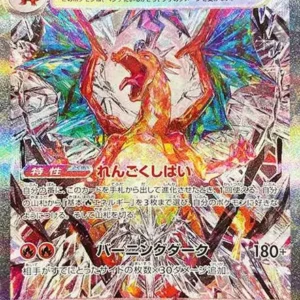
| Charizard ex 134/108 SAR (Ruler of the Black Flame) | ¥22,000 | ¥91,000–¥155,555 | ¥71,735 (~$466) |
| Klara SR 082/070 (Peerless Fighters) | ¥7,500 | ¥40,000–¥128,000 | Sold out (update: currently sold out — restock requests via Quick Order) |
| Cynthia’s Ambition SR 114/100 (Star Birth) | ¥2,800 | ¥22,500–¥70,000 | sold out at the time of writing |

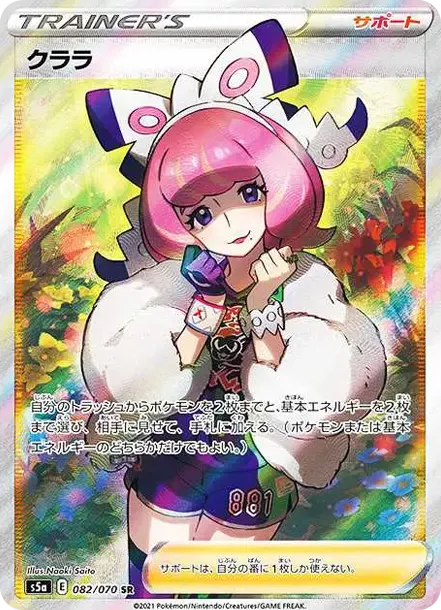
The three raw asks and PSA 10 ranges above were recorded on SNKRDUNK on September 18, 2026. They are seller asking prices, not confirmed sales. Dividing the lowest PSA 10 ask by the raw ask gives approximately 4.1× for Charizard ex, 5.3× for Klara and 8.0× for Cynthia’s Ambition. These calculations describe only the quoted listings and do not measure a PSA 9-to-PSA-10 premium.
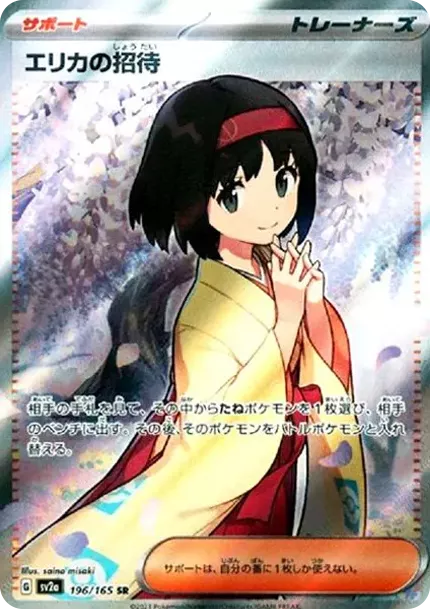
For separate context, Erika’s Invitation SR 196/165 (update: currently sold out — restock requests via Quick Order) had a raw ask of ¥3,000 and a recorded graded-copy range of ¥6,000–¥29,800 on the same date. The source did not specify the grade for that range, so Erika is excluded from the PSA 10 comparison and the 4×–8× summary. Our PSA 10 Erika’s Invitation listing (update: currently sold out — restock requests via Quick Order) is sold out at the time of writing.

What These Prices Do Not Establish
The table records seller asks for raw and PSA 10 copies. It does not include matched PSA 9 quotes, completed-sale prices or evidence isolating the cause of each asking-price difference. We therefore cannot calculate a PSA 9-to-PSA-10 premium from these figures or attribute the differences to grading criteria alone. A direct comparison would need the same card, language, grading company and observation date, with the grade stated on both listings.
It’s also worth repeating what we can’t tell you: we have no published PSA population data to cite — PSA’s Population Report page did not show readable figures on September 18, 2026 — so we can’t say how many PSA 9s versus PSA 10s exist for any of these cards. Our Japanese Pokemon card grading guide covers PSA, BGS and CGC side by side if you’re deciding which service to use before submitting a card.
Where to Buy PSA 10 Japanese Cards
We list graded Japanese singles sourced and shipped from Tokyo. The Charizard ex PSA 10 above is currently listed at ¥71,735 (~$466); the Klara SR, Cynthia’s Ambition and Erika’s Invitation listings are sold out at the time of this update. Browse the full PSA 10 collection for more, or use Quick Order for a card that isn’t currently listed on our site. Our PSA 10 meaning explainer covers what the grade itself certifies, and CGC vs PSA guide compares the two services if you’re grading your own cards rather than buying pre-graded.
Frequently Asked Questions
What’s the actual difference between a PSA 9 and a PSA 10?
PSA’s published definition of a Gem Mint 10 requires four perfectly sharp corners, full original gloss, no staining, and centering within roughly 55/45 on the front and 75/25 on the back. PSA’s Mint 9 wording wasn’t readable as text on the page we could quote, so we can’t quote the exact line between the two — but both grades are judged on the same categories: centering, corners, edges and surface.
Do you sell PSA 9 examples of Japanese cards?
This guide does not include a matched PSA 9 listing. Its three price-table rows compare raw asking prices with explicitly labelled PSA 10 asking prices; they do not measure PSA 9 against PSA 10. Check our current catalogue for availability.
How much more does a PSA 10 cost than a raw copy of the same card?
For the three explicitly labelled PSA 10 examples recorded on SNKRDUNK on September 18, 2026, the lowest PSA 10 ask divided by the raw ask was about 4.1× for Charizard ex, 5.3× for Klara and 8.0× for Cynthia’s Ambition. These are asking-price observations, not sale-price averages or PSA 9-to-PSA-10 premiums. Erika’s Invitation is excluded because its recorded graded-copy range did not specify the grade.
Is PSA grading subjective?
PSA describes it as mostly objective with a subjective component: “a large part of grading is objective… the other component of grading is somewhat subjective,” tied to eye appeal and what the market will accept for a given issue, per PSA’s Grading Standards page.
Can a trimmed or altered card still get a PSA 9 or 10?
No. PSA states it “will not grade cards that bear evidence of trimming, re-coloring, restoration, or any other forms of tampering, or are of questionable authenticity” — that’s a pass/fail authentication step before any numeric grade is assigned.
Where can I see PSA’s full grading scale?
PSA publishes definitions for each of its grades on its own Grading Standards page. We’ve quoted only the PSA 10 definition here because that’s the only one we could read as text.
500 Points Free on Sign-Up
CREATE FREE ACCOUNT1 pt = ¥1 at checkout · Points expire 30 days after they are earned · Import duties, taxes and customs charges are not included in the price and are collected on delivery, except for destinations we ship duty-paid.
Picked for this article

📩 Get member-only sale alerts & coupons
Sale alerts, coupons and restock notices by email — straight from Tokyo.