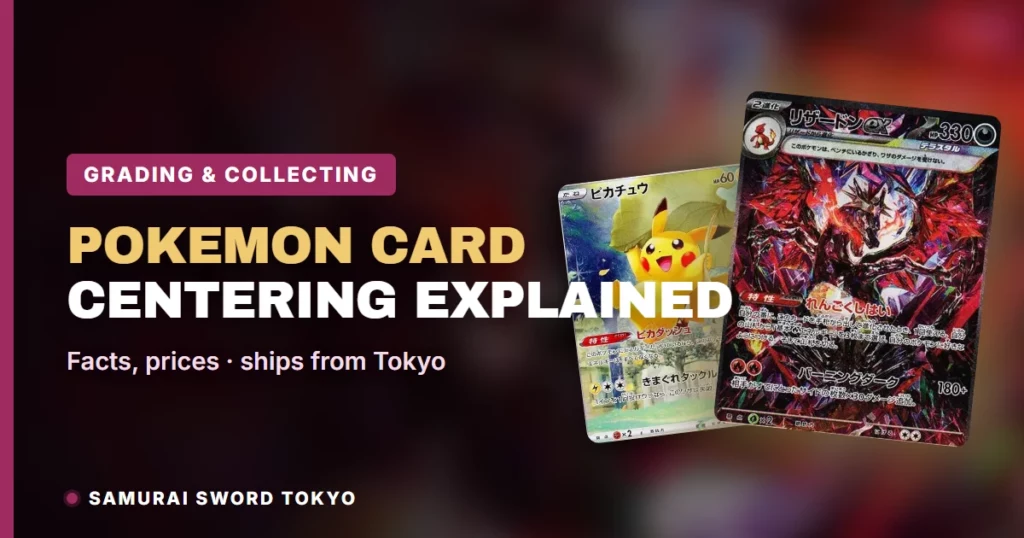
Centering is one of the four pillars, and the only one PSA publishes a number for, and it’s also the easiest grading criterion to check yourself before you ever send a card anywhere. It’s simply how evenly the printed border sits around the artwork — and PSA publishes an actual number for how far off-centre a card can be and still qualify for its top grade.
This guide quotes PSA’s own centering language directly, explains the front-versus-back split most collectors miss, and shows what an in-hand Japanese card looks like when it’s part of a graded PSA 10 example. Japanese and English cards share the same physical dimensions, so the measuring principle below applies identically to both.
PSA’s Gem Mint 10 standard requires the image “centered on the card within a tolerance not to exceed approximately 55/45 percent on the front, and 75/25 percent on the reverse” — the back is allowed to run noticeably further off-centre than the front. PSA also reserves discretion: “a small variance may be permitted on occasion based on the card’s overall eye appeal.” Our own condition guide names centering as one of four pillars PSA-style grading checks, alongside corners, edges and surface. Our PSA 10 Salamence ex 129/100 SAR (update: currently sold out — restock requests via Quick Order) is sold out at the time of this update — sourcing requests go through Quick Order. USD figures convert at ¥154/USD, approximate.
Store prices and availability checked September 25, 2026 at 13:48 JST. Marketplace observations retain their stated dates. USD conversions use ¥154 per US dollar.
What Centering Actually Means
Our own Pokemon Card Condition Guide article defines centering in plain language as one of four physical checkpoints a grader looks at: “How evenly the printed image sits within the card’s border, front and back.” The other three pillars in the same article are corners (“Sharpness of all four corners — a Gem Mint 10 requires all four to be perfectly sharp”), edges (“Condition of the card’s cut edges, checked for whitening, chipping, or roughness”) and surface (“Gloss, print quality, and freedom from staining, scratches, or print defects”).
Centering is a printing-and-cutting issue, not a handling issue — a card is either printed and factory-cut close to center, or it isn’t, before it ever reaches a collector’s hands. Centering is one of the four pillars, and the only one PSA publishes a number for: a card can have flawless corners, edges and surface and still miss a 10 purely on how the printed border sits.
PSA’s Published Numbers: 55/45 and 75/25
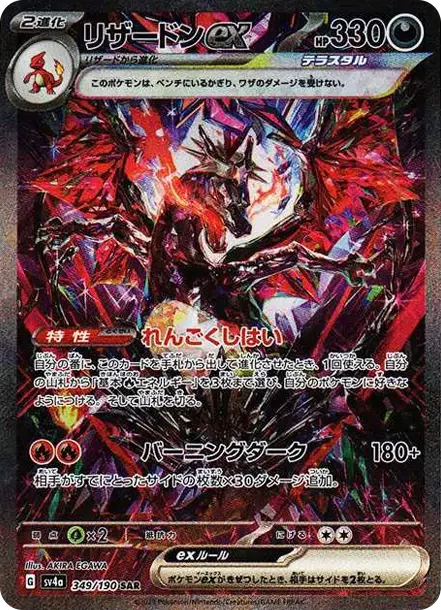
PSA’s Grading Standards page states the exact tolerance in its Gem Mint 10 definition: “The image must be centered on the card within a tolerance not to exceed approximately 55/45 percent on the front, and 75/25 percent on the reverse.” Read as a ratio, 55/45 means the wider border on one side can be up to roughly 55% of the total margin against 45% on the opposite side before a card’s front centering falls outside PSA 10 territory — it does not mean the card can be tilted by that percentage overall.
PSA’s full Gem Mint 10 paragraph frames centering alongside the card’s other attributes: “Attributes include four perfectly sharp corners, sharp focus and full original gloss. A PSA Gem Mint 10 card must be free of staining of any kind, but an allowance may be made for a slight printing imperfection, if it doesn’t impair the overall appeal of the card.” Centering sits inside that same sentence as one requirement among several, not a separate pass/fail gate on its own.
Why Front and Back Are Measured Differently
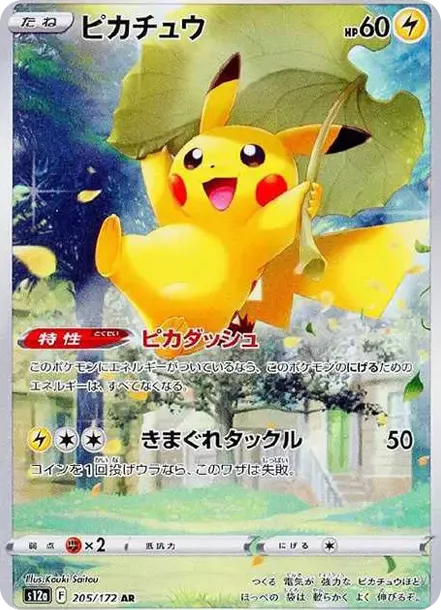
PSA does not state why the front tolerance (55/45) is tighter than the back (75/25); one plausible reading is that it reflects where a collector’s eye actually lands. The front carries the artwork, name and rarity treatment, so a small centering shift there is immediately visible. The back of every card in a given set is identical (the standard Pokemon card-back design), so a wider tolerance there has a much smaller effect on how the card reads at a glance.
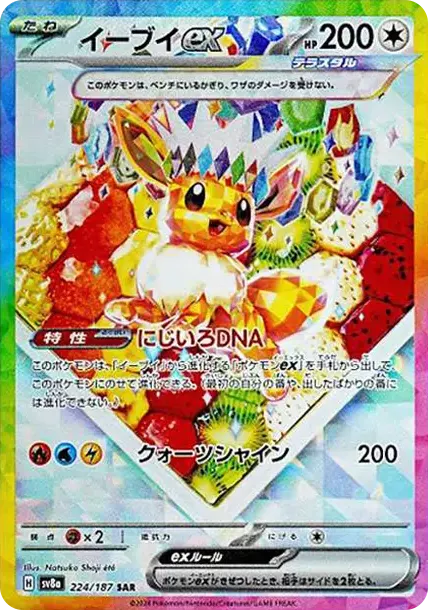
PSA’s own explanation of why grading has both an objective and a subjective side touches on this directly: “the vast majority of grading is applied with a basic, objective standard but no one can ignore the small (yet sometimes significant) subjective element. This issue will usually arise when centering and/or eye appeal are in question. For example, while most cards fall clearly within the centering guidelines for a particular grade, some cards fall either just within or just outside the printed centering standards.”
Where Discretion Comes In
PSA doesn’t present its centering numbers as a rigid pass/fail line. A footnote attached to the grade section reads: “Centering Note: At the grader’s sole discretion, a small variance may be permitted on occasion based on the card’s overall eye appeal.” PSA’s broader description of its process reinforces that a published tolerance is a guideline, not a formula a machine applies automatically: “The key point to remember is that the graders reserve the right, based on the strength or weakness of the eye appeal, to make a judgment call on the grade of a particular card.”
That’s also why two cards that look nearly identical when you eyeball the border can come back from PSA with different grades — a difference of a percentage point or two right at the 55/45 line is exactly the kind of borderline case the discretion clause exists for.
Centering Among the Four Grading Pillars
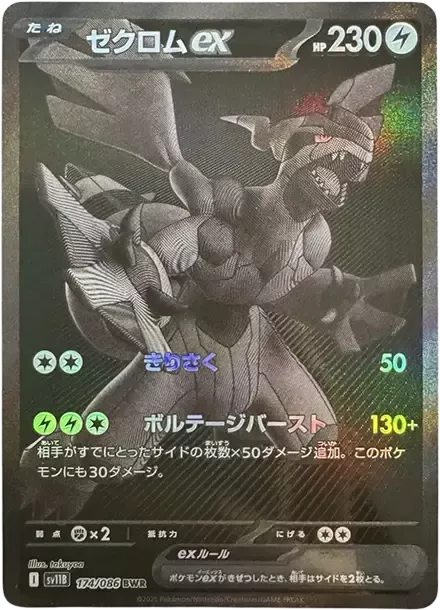
Centering is one of four checkpoints our own condition guide names, alongside corners, edges and surface. PSA’s own qualifier system also touches areas outside the four pillars — for instance, the “MK” qualifier: “Any and all cards with writing, ink marks, pencil marks, etc. or evidence of the impression left from the act of writing will be designated ‘MK.'” A card can be perfectly centered and still not reach a 10 if it fails on corners, edges or surface, which is why centering alone doesn’t guarantee a grade — it’s a necessary condition, not a sufficient one. Our guide to spotting fake Japanese Pokemon cards covers a related but separate check — authenticity — that PSA confirms before centering is ever assessed.
PSA’s own services page describes the authentication step that happens before grading: “A series of PSA graders review your cards for authenticity. If genuine, PSA looks for evidence of doctoring, such as re-coloring or trimming.” Centering assessment only happens once a card has already cleared that authenticity check. Our Japanese Pokemon Card Grading Guide walks through PSA’s process end to end.
Does This Apply the Same Way to Japanese Cards?
Yes. PSA Japan’s own FAQ addresses this directly: “PSA Japanのグレーディング基準はPSA USよりも厳しいのですか? いいえ、PSAのグレーディング基準が国や事業所によって異なることはありません。” (“Is PSA Japan’s grading standard stricter than PSA US’s? No, PSA’s grading standards do not differ by country or office.”) The same page adds: “PSA Japanでは、米国本社で定めたグレーディング基準に準拠して鑑定を行っており、グレーディングの均質化を非常に重視しています。” (“PSA Japan grades in accordance with the standards set by the US head office, and places significant emphasis on grading consistency.”)
Physically, there’s no size difference to account for either. Our own card-size guide, published September 4, 2026, states: “Japanese and English Pokemon cards use the same card size,” measuring roughly “63mm × 88mm (2.5in × 3.5in)” — “that’s the same physical footprint as the ‘poker size’ used across the wider trading card industry.” A Japanese card’s border sits on the same physical canvas as its English counterpart, so the same 55/45 and 75/25 tolerances apply without adjustment. Rarity treatments differ from card to card, though — our Japanese Pokemon card rarities guide covers how AR, SAR, SR and other rarity marks are printed, which is worth knowing before you compare centering across two different rarity treatments of the same character, such as the Salamence ex 129/100 SAR (update: currently sold out — restock requests via Quick Order).
View Product → (update: currently sold out — restock requests via Quick Order)
Where to Buy PSA 10 Japanese Cards
We source and list Japanese singles that have already been graded by PSA; the graded singles we list are PSA 10 examples. The Salamence ex 129/100 SAR (update: currently sold out — restock requests via Quick Order) example above is sold out at the time of this update — sourcing requests go through Quick Order.
Browse the full PSA 10 collection or our wider Japanese Pokemon card collection. If a specific card isn’t listed, sourcing requests go through Quick Order.
Frequently Asked Questions
What centering tolerance does PSA require for a Gem Mint 10?
PSA’s Grading Standards page states the image must be centered “within a tolerance not to exceed approximately 55/45 percent on the front, and 75/25 percent on the reverse.”
Why is the back allowed to be less centered than the front?
PSA publishes separate front and reverse tolerances but does not explain the reason for that difference on its Grading Standards page. Apply each stated tolerance to the corresponding side of the card.
Can a card with slightly off centering still get a PSA 10?
PSA’s own footnote states that “a small variance may be permitted on occasion based on the card’s overall eye appeal,” meaning a borderline case near the published tolerance isn’t automatically excluded.
Is centering the only thing PSA checks for a Gem Mint 10?
No. Our condition guide names four pillars — centering, corners, edges and surface — and PSA’s own Gem Mint 10 definition also requires “four perfectly sharp corners, sharp focus and full original gloss” and freedom from staining.
Does PSA grade Japanese cards to a different centering standard than English cards?
No. PSA Japan’s own FAQ states its grading standards do not differ by country, and that PSA Japan grades in accordance with the standards set by PSA’s US head office.
Are Japanese and English Pokemon cards the same physical size?
Yes. Our card-size guide states Japanese and English Pokemon cards use the same card size, roughly 63mm by 88mm, the same footprint as standard “poker size” trading cards.
500 Points Free on Sign-Up
CREATE FREE ACCOUNT1 pt = ¥1 at checkout · Points expire 30 days after they are earned · Import duties, taxes and customs charges are not included in the price and are collected on delivery, except for destinations we ship duty-paid.
Picked for this article
📩 Get member-only sale alerts & coupons
Sale alerts, coupons and restock notices by email — straight from Tokyo.