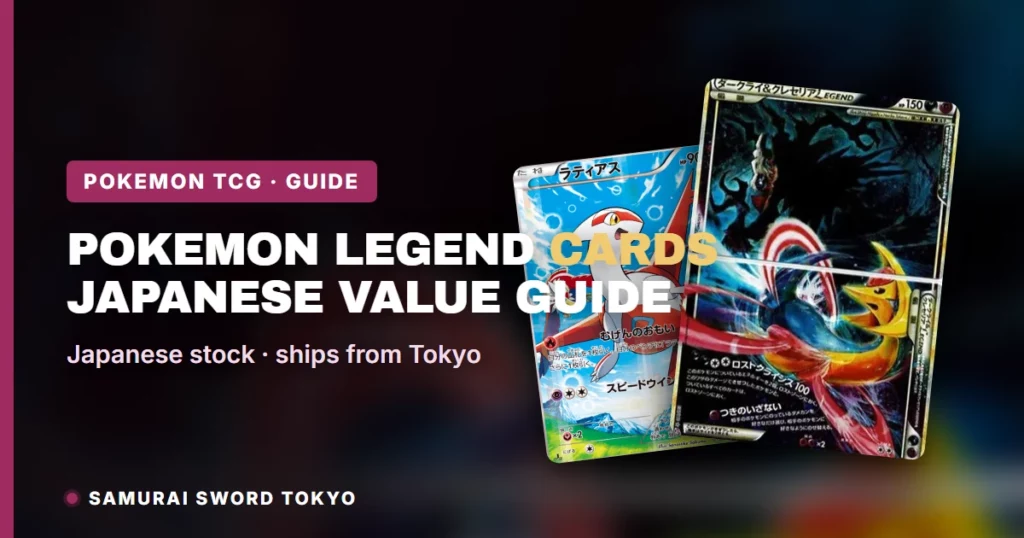

Pokemon LEGEND cards are a two-piece Japanese card format, yet a search for “Legend” pulls up cards from five completely different Japanese sets spanning eleven years — and only one of them is an actual LEGEND card. The rest just happen to have “Legend” or “Legendary” in a set or sub-brand name that a translator chose at some point.
That is not a small distinction. A genuine LEGEND card is a two-piece game mechanic that only existed in Japan for about nine months in 2009–2010. Everything else — a 2015 concept pack, a 2016 concept pack, a 2017 enhanced expansion, a 2020 booster box — is a normal single-card product that got swept into “Legend” branding years later, sometimes for a completely different Pokemon than the one on the actual LEGEND card.
A true Pokemon LEGEND card is built from two physical cards that combine into one Pokemon in play. Japan printed them for roughly nine months, October 2009 to July 2010, and the only Japanese subset from that era is Lost Link, whose headline card is Darkrai & Cresselia LEGEND (LL 035-036/040). Every other product that carries “Legend” in its name — Legendary Shine Collection, Mythical & Legendary Dream Shine Collection, Shining Legends, Legendary Heartbeat — is a different product using a different card format.
- Set reference: Japanese card lists.
- The S3A Legendary Heartbeat Japanese booster box is currently listed on our store.
Store prices are samuraiswordtokyo.com listings in Japanese yen; USD figures convert at ¥154/USD, approximate.
What Makes Pokemon LEGEND Cards a Two-Piece Format
A Pokemon LEGEND card is not one card — it’s two. Every LEGEND is printed as a top-half card and a bottom-half card, and a player has to place both halves onto the Bench in the same turn before the LEGEND can be played as a single Pokemon. Once both halves are down, the game treats them as one card for every other purpose: one Pokemon, one set of attacks, one spot in play.
The mechanic cuts both ways — for the later, two-Pokemon combined LEGENDs, that is. Dual-Pokemon LEGENDs, the format Darkrai & Cresselia follows, carry an extra rule: when knocked out, the opponent takes two Prize cards instead of the usual one. The earliest LEGENDs, which split a single Pokemon across their two halves, gave up only the standard one Prize card on knockout. LEGEND was introduced as the successor to the LV.X mechanic, and like LV.X it was a high-risk, high-reward centerpiece card rather than a common pull.
For where LEGEND sits next to Japan’s other special card formats and rarities across the decades, our Japanese Pokemon card rarities explained guide maps the wider picture.
The Japanese LEGEND Era: October 2009 to July 2010
LEGEND cards debuted in Japan in the HeartGold Collection / SoulSilver Collection sets, released October 9, 2009. The earliest LEGENDs split a single Pokemon across its two halves — Lugia LEGEND and Ho-Oh LEGEND being the pattern-setters, one Pokemon, cut in two.
The format then evolved. Starting with the “Unleashed” era of sets, LEGEND cards moved to combining two different Pokemon into one card, with the names joined by “&” — Rayquaza & Deoxys LEGEND is the best-known example of this later style. Darkrai & Cresselia LEGEND from Lost Link follows this two-Pokemon format.
Japan’s last set to include LEGEND cards was Clash at the Summit (頂上大激突), released July 8, 2010 — documented as the third and final expansion of the LEGEND Era. Counting from the October 2009 debut, that gives the Japanese LEGEND card format a run of roughly nine months across a handful of sets before it was retired. The next major Japanese block, Black Collection / White Collection (BW1), followed about five months later on December 17, 2010, opening the BW era covered in our BW era Japanese Pokemon guide.
The Chase Card: Darkrai & Cresselia LEGEND from Lost Link
The set behind Darkrai & Cresselia LEGEND is Lost Link (強化パック ロストリンク), a 40-card enhanced expansion released April 16, 2010 — squarely inside that nine-month window, between the format’s debut and Clash at the Summit. Lost Link is documented as the only subset released during Japan’s LEGEND Era, and it was built differently from a standard set to match: packs held seven cards instead of the usual eleven, and no Energy cards were included at all.
Its headline card is Darkrai & Cresselia LEGEND, split across card numbers 035/040 and 036/040, rarity Rare Holo LEGEND, combining Darkness and Psychic typing in one Pokemon. The English-language equivalent of this card appeared later in the Triumphant set, at #99/102 and #100/102.

The PSA 10 example pictured is graded as a matched top-and-bottom pair from that 40-card subset. For other high-end Japanese singles, see our most valuable Japanese Pokemon cards roundup.
Four Sets That Say “Legend” But Aren’t LEGEND Cards
This is where most of the confusion starts. Several Japanese product lines carry “Legend” or “Legendary” in their name, but none of them use the two-piece LEGEND mechanic. Here’s what each one actually is:
| Set / Product | Released | What it actually is |
|---|---|---|
| CP2 — Legendary Shine Collection (JP: レジェンドキラコレクション) | Jul 18, 2015 | Concept pack of standard single R/SR cards, XY era |
| CP5 — Mythical & Legendary Dream Shine Collection | Jul 16, 2016 | Concept pack of standard single cards |
| SM3+ — Shining Legends (JP: シャイニングレジェンズ) | Jul 15, 2017 | 82-card enhanced expansion built around “Shining” special-illustration Pokemon, single cards |
| S3a — Legendary Heartbeat | Jul 10, 2020 | 94-card Sword & Shield-era expansion (English equivalent: Vivid Voltage), single cards |
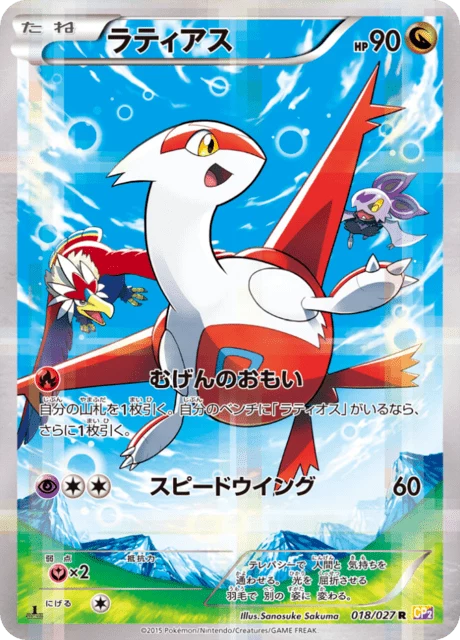
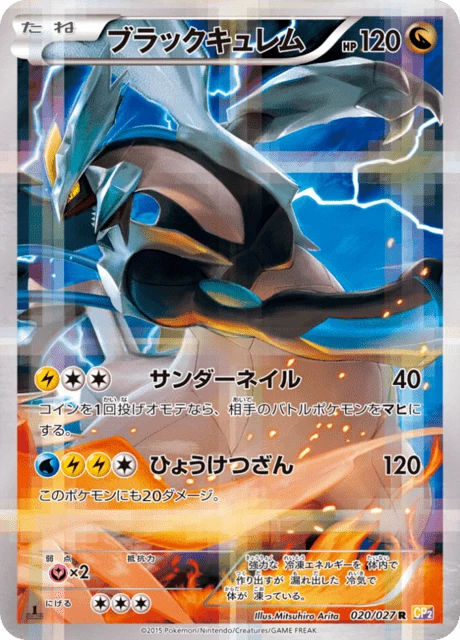
CP2 — Legendary Shine Collection. Despite the “Legend” name, this 2015 concept pack (Japanese name レジェンドキラコレクション, “Legend Kira Collection”) is built from standard single R and SR cards, not two-piece LEGENDs. Its cards include Latias R (CP2 018/027) and Black Kyurem R (CP2 020/027).
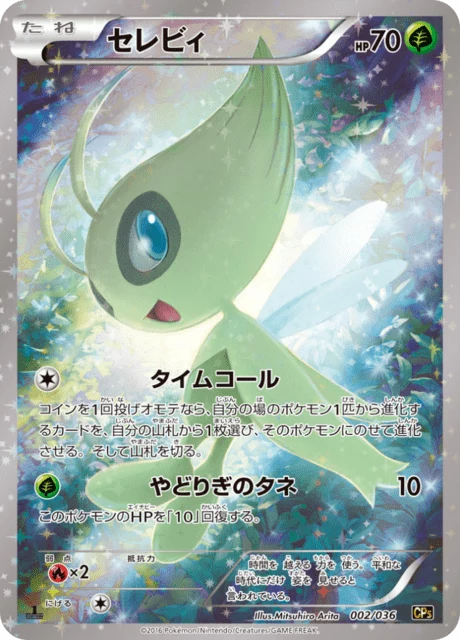
CP5 — Mythical & Legendary Dream Shine Collection. The 2016 follow-up to CP2, same single-card structure. Celebi (CP5 002/036) is one of its single cards.
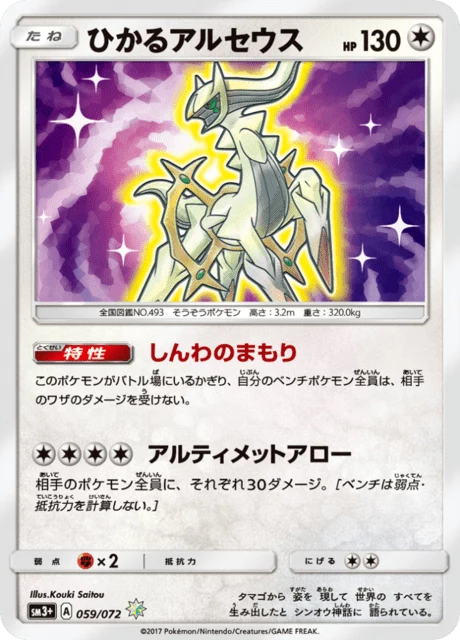
SM3+ — Shining Legends. Released July 15, 2017 as an 82-card enhanced expansion, Shining Legends is built around “Shining” Pokemon — a special-illustration treatment on individual cards, not a two-card combined format. It has no connection to the 2009–2010 LEGEND mechanic beyond the name. Shining Arceus H (SM3+ 059/072) and Shining Rayquaza H (SM3+ 057/072) from this set are both single cards despite the shared “Legends” branding with the true LEGEND era.

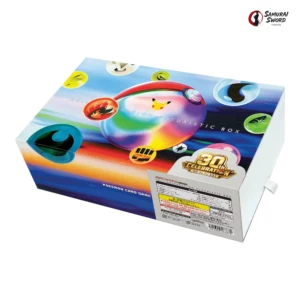
S3a — Legendary Heartbeat. Sword & Shield era, released July 10, 2020, English equivalent Vivid Voltage. This is a standard 94-card expansion with no relationship to the 2009–2010 LEGEND format at all — the “Legendary” in the name refers to the Legendary Pokemon featured in the set, not a card mechanic. The sealed S3A Legendary Heartbeat Japanese Booster Box is currently listed at ¥34,856 (~$226).

If a card is a single piece of cardboard, it is not a LEGEND card, no matter what “Legend” or “Legendary” appears in the set name. A genuine LEGEND card only exists as two halves that combine — if you’re holding (or shopping for) just one card, it’s one of these name-alike products instead.
Where to Buy
We ship Japanese sealed product and graded singles out of Tokyo.
- S3A Legendary Heartbeat Japanese Booster Box — sealed Sword & Shield-era booster box
- PSA 10 graded singles — our graded collection
The PSA 10 Darkrai & Cresselia LEGEND (LL 035-036/040) is sold out at the time of this update — sourcing requests go through Quick Order, as do requests for a different LEGEND-era card or a raw copy.
Frequently Asked Questions
What is a Pokemon LEGEND card?
A LEGEND card is split across two physical cards — a top half and a bottom half — that must both be placed on the Bench before they combine into a single Pokemon in play. Once combined, it’s treated as one card. Dual-Pokemon LEGENDs (two different Pokemon fused into one, like Darkrai & Cresselia) give up two Prize cards if knocked out instead of the usual one; the earliest single-Pokemon LEGENDs like Lugia and Ho-Oh gave up only one.
When were LEGEND cards printed in Japan?
Japan’s LEGEND card era ran from the HeartGold Collection / SoulSilver Collection debut on October 9, 2009 through Clash at the Summit on July 8, 2010 — roughly nine months. Clash at the Summit is documented as the third and final expansion of the LEGEND Era.
Is Shining Rayquaza H a LEGEND card?
No. Shining Rayquaza H comes from SM3+ Shining Legends (2017), an enhanced expansion built around single “Shining” special-illustration cards. Despite sharing the word “Legends” in the set name, it has no connection to the two-piece LEGEND mechanic from 2009–2010.
What’s the difference between CP2 “Legendary Shine Collection” and an actual LEGEND card?
CP2 (2015) is a concept pack of standard single R and SR cards released five years after the LEGEND era ended. It uses “Legend” in its name because of the Legendary Pokemon featured on its cards, not because it uses the two-piece LEGEND card mechanic.
Where can I buy the Darkrai & Cresselia LEGEND card?
Darkrai & Cresselia LEGEND comes from Lost Link, split across 035/040 and 036/040 and combining Darkness and Psychic typing. A PSA 10 copy is sold out on our store at the time of this update; sourcing requests go through our Quick Order page.
Picked for this article
📩 Get member-only sale alerts & coupons
Sale alerts, coupons and restock notices by email — straight from Tokyo.