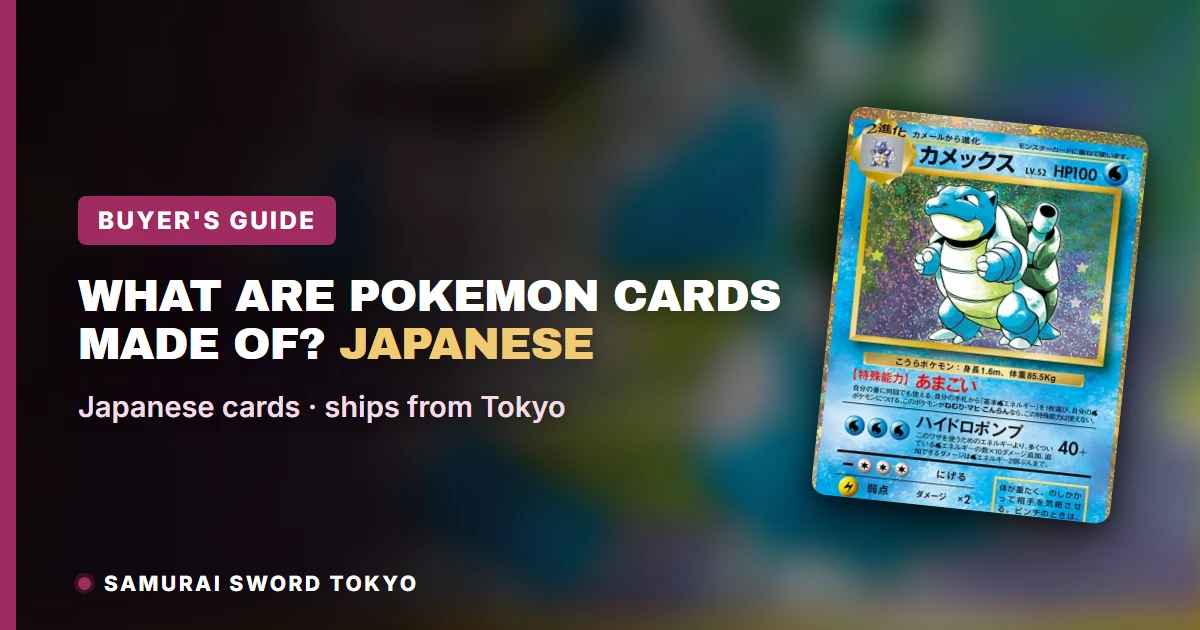
What are Pokemon cards made of? A Pokemon card is not a single sheet of card — it’s a small stack of layers pressed together, built around a thick paper core that’s commonly described as tinted dark so light can’t pass through it. That’s why a genuine card feels rigid and snaps back when you flex it gently, and why holding one up to a bright light is one of the oldest tricks in the hobby for checking whether a card is real.
The description of the layers comes from independent card-production explainers and long-standing collector consensus, which agree with each other closely enough to be useful. Read it as informed description rather than an official Pokemon Company materials statement.
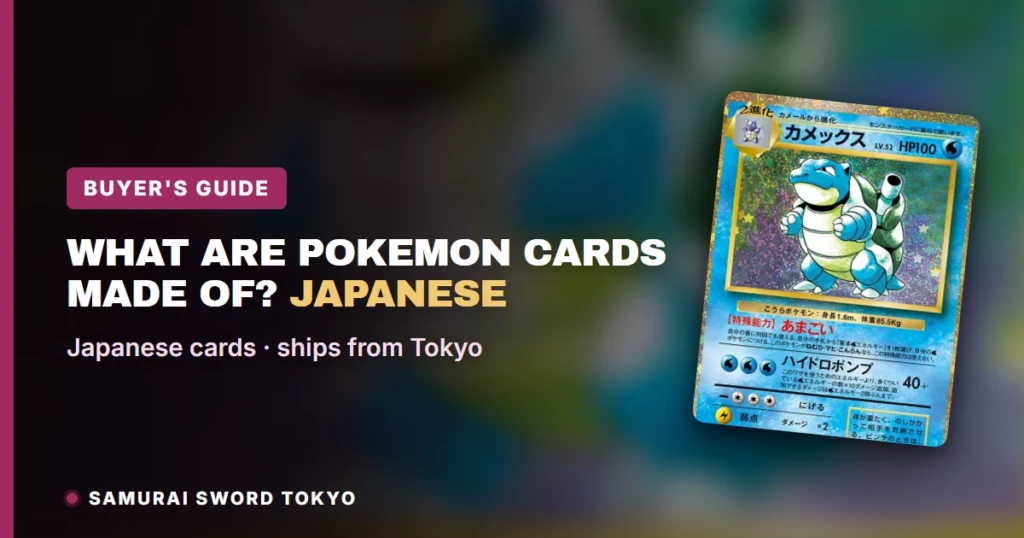
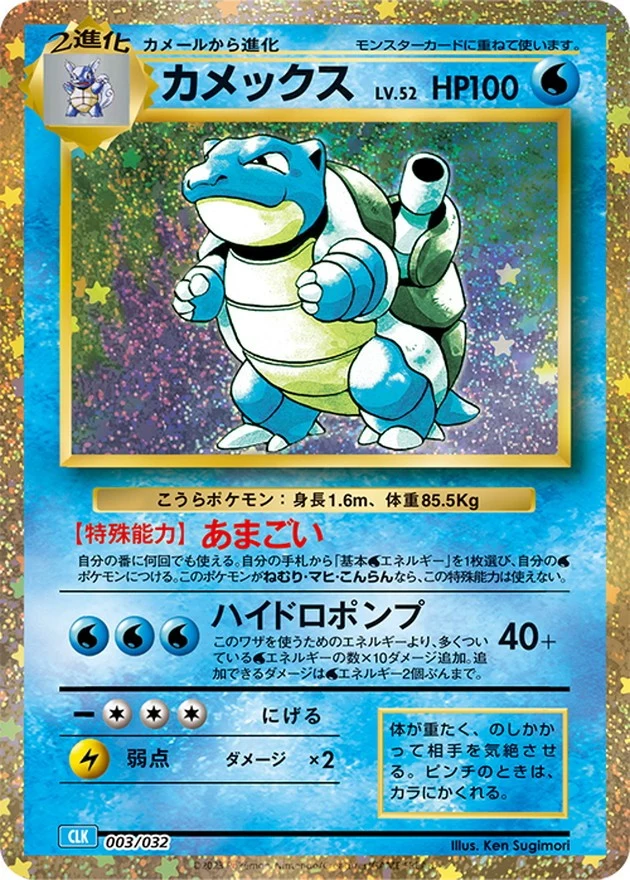
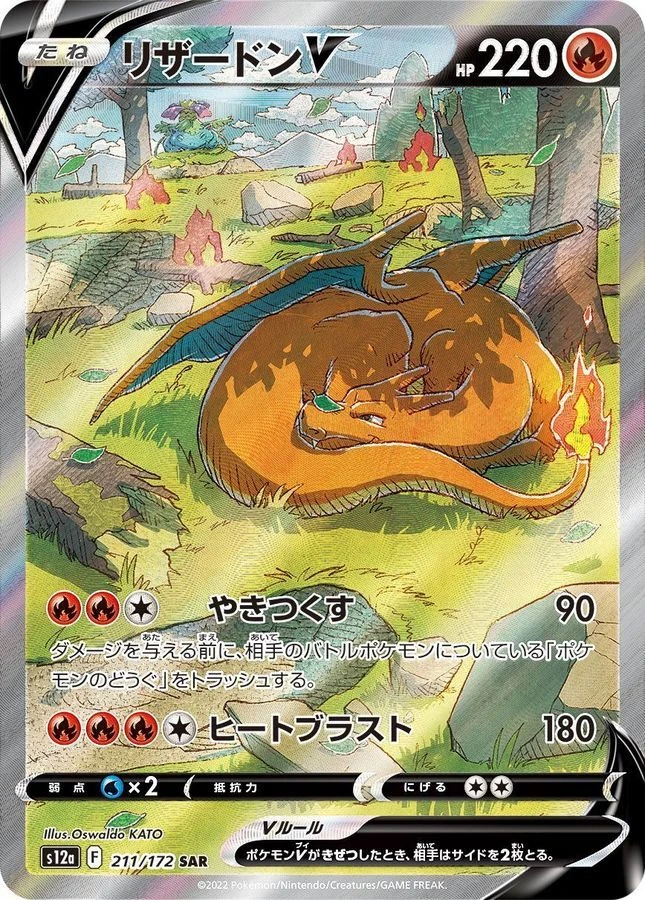
Collectors and card-production explainers describe Pokemon cards as a multi-layer paperboard construction: a thick core stock (often called “black-core” for its dark inner tint), a front print layer, a back print layer carrying the Poke Ball design, and a thin protective coating. Foil and holo rarities add an extra metallic-effect layer on top — the standard playable card is paperboard, not plastic or literal metal, even on gold-foil rarities (official commemorative metal cards are a separate product category). A PSA10 Blastoise 003/032 is a standard non-foil example of that base construction, while a PSA 10 Charizard V 211/172 SAR shows the added foil layer.
- Set reference: Japanese Pokemon card list.
- A PSA 10 graded single and a sealed Japanese booster box are listed on our store as of this update.
USD figures convert at ¥154/USD, approximate. Prices checked October 23, 2026 — the linked listing shows the current price.
What Are Pokemon Cards Made Of
Independent card-production explainers — sources like the production breakdown at rubenmisprints.com — describe official Pokemon TCG cards as a multi-layer paperboard construction, not a single piece of paper or plastic. A thick, high-quality core paper stock sits in the middle, with the front and back print layers glued or pressed onto either side, and a thin protective coating sealing the front. The result is a card that’s noticeably stiffer and heavier than ordinary printer paper, which is one of the first things people notice when they hold one for the first time.
Rarity does not change the base: a Common and a secret-rare card share the same base construction underneath whatever print or foil sits on top.
The Layers, One by One
Breaking the consensus description down layer by layer:
| Layer | What it’s described as doing |
|---|---|
| Front print layer | Carries the card’s front artwork, name, attacks and text |
| Core paper stock (“black-core”) | Thick central layer; the dark tint is commonly described as blocking light from passing through the card |
| Back print layer | Carries the card-back design — the blue Poke Ball pattern |
| Protective coating | Thin surface coating over the front print layer |
| Foil/holo layer (rarity-dependent) | Added metallic-effect layer used on holo, reverse-holo and foil-rarity cards |
Per the consensus description, the front print layer, core stock, back print layer and protective coating apply to standard playable cards, foil or not. The foil/holo layer only shows up once a card carries a holo, reverse-holo or foil-rarity print — it’s an addition on top of the base construction, not a replacement for it.
Foil and Holo Cards: The Extra Layer
What separates a plain Common from a holo, reverse-holo or full-art foil rarity isn’t a different core material — it’s an added metallic-effect layer sitting on top of the same base paperboard construction. That layer is what produces the shimmer or rainbow shift you see when you tilt the card under light.
This holds true across the Japanese rarity tiers as well — an SAR, AR, SR or UR card is still built on the same four-layer base; the foil treatment is the visible difference, not a change to what’s underneath it. For how those rarity tiers are labelled on Japanese cards, our Japanese vs English Pokemon cards guide covers the naming differences.
Not Plastic, Not Metal: What the Foil Actually Is
Even the flashiest Japanese rarity tiers — gold-foil UR/Hyper Rare cards, or the gold-etched top tiers of a set — are still built on the same paperboard base. The gold look comes from a foil treatment on the surface, not from the card being made of metal, and the card is not plastic either, despite how glossy or rigid a heavily foiled card can feel.
A full-art foil rarity like an SR still flexes and handles like paperboard, not like a laminated plastic card or a metal collectible. That distinction matters for playable, tournament-legal cards. Separately, The Pokemon Company has also released genuinely metal collectibles as part of certain official boxed products — for example, commemorative Pikachu and Charizard cards described as made of metal, bundled inside the Celebrations Ultra-Premium Collection. Those are official Pokemon Company items, but they are non-playable commemorative pieces, not standard paperboard card stock — and they are a different category again from third-party novelty “metal card” or gold-plated collectibles sold outside the official TCG.
Card Stock and Card Size Are Separate Things
Material and physical size are two different questions, and it’s worth keeping them apart. Whatever the layer construction, a standard Pokemon card measures roughly 63mm × 88mm — the same footprint across Japanese and English print runs, across every rarity tier, and across eras. Our card size and dimensions guide covers that spec, plus sleeves, toploaders and PSA slab sizing, in full.
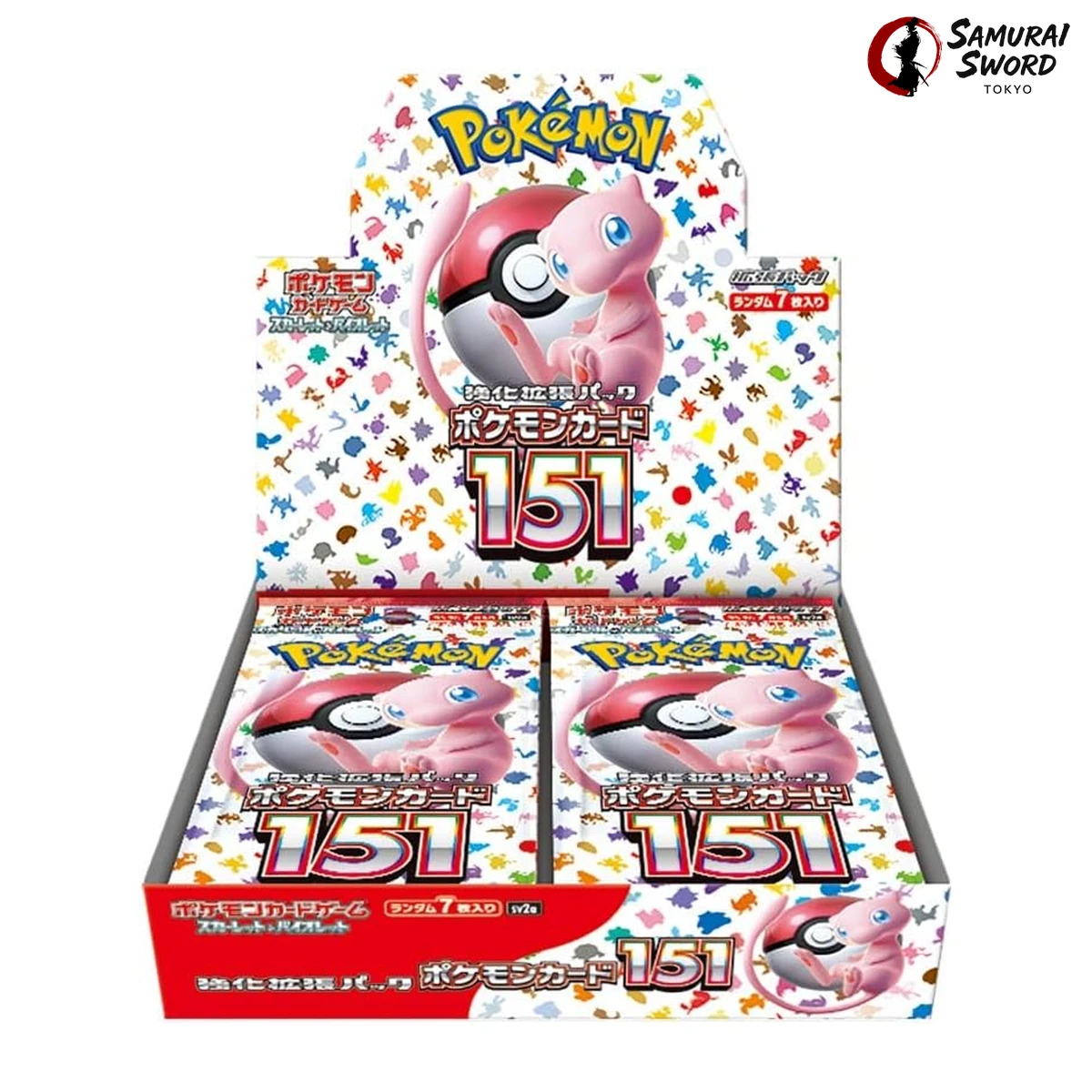
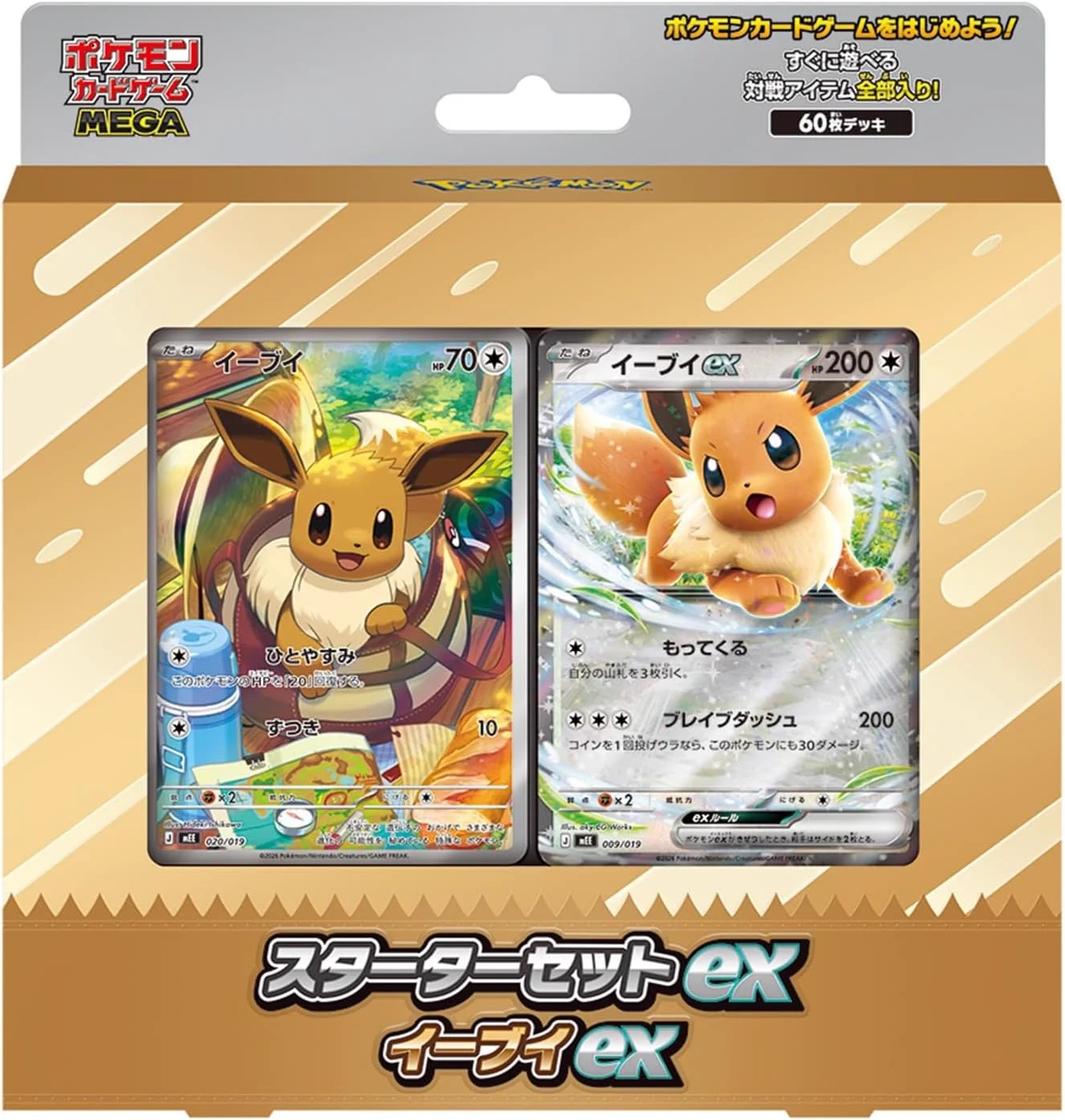
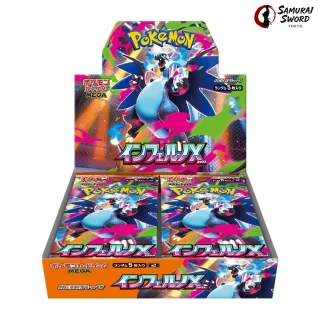
Sealed product is a different case again: a booster box or a structure-deck box uses the same layered cardstock for the cards and packs inside, but the outer packaging itself is a separate cardboard product built for shipping and shelf display, not governed by the 63mm × 88mm card spec at all.
Why the Layers Matter When You’re Buying
The black-core layer isn’t just a production detail — it’s one of the long-standing signals collectors use when judging whether a card looks right, because a genuine card’s dark core stops light bleeding through in the way a thinner or differently built card might. Our dedicated guide to spotting fake Japanese Pokemon cards covers the light test and other checks.
Material quality also connects directly to grading. Surface scratches, print lines, and coating defects — the kind of thing a grading service checks for on the print layer and protective coating — are central to how a card’s condition gets assessed. Our Japanese Pokemon card grading guide walks through how those surface and print-layer defects map onto the grading scale.
Material alone does not prove authenticity — it’s one signal among several, and it’s best used alongside the fuller checks in the fake-card and grading guides rather than in isolation.
Where to Buy Japanese Pokemon Cards from Tokyo
We ship Japanese sealed product and graded singles out of Tokyo. Examples by material type:
- A standard non-foil single, like the PSA10 Blastoise 003/032, currently listed at ¥22,320 (~$145) — the base construction.
- Sealed product, like the M6a 30th CELEBRATION booster box, whose Sealed option is currently listed at ¥26,449 (~$172).
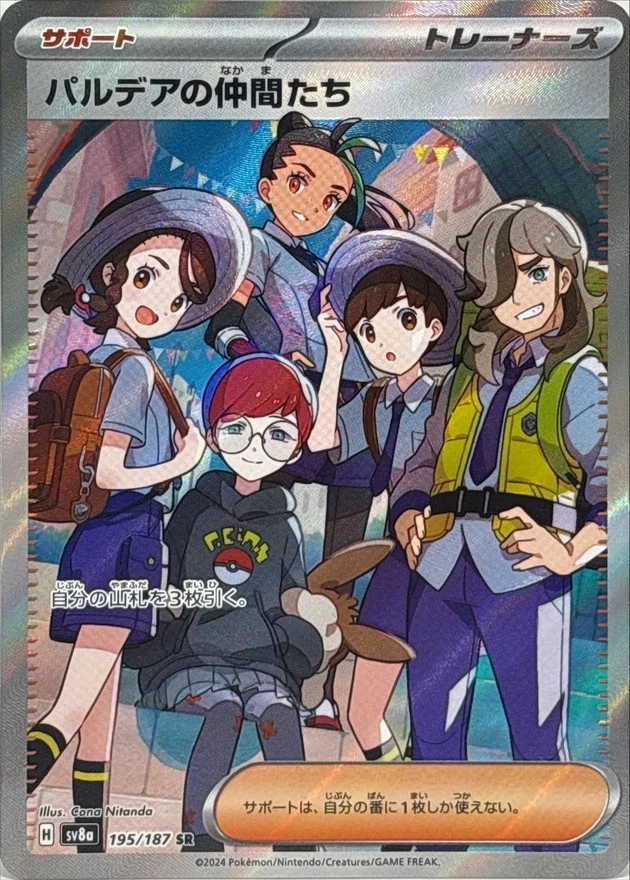
The foil and Full Art examples (the PSA10 Charizard V 211/172 SAR and the PSA10 Friends of Paldea SR, SV8a 195/187) and the SV2A Pokemon 151 Booster Box and Starter Set ex Eevee ex packaging examples are sold out at the time of this update — sourcing requests go through Quick Order.
Browse the full Japanese Pokemon booster box collection or the PSA10 graded card collection for more listed product.
Frequently Asked Questions
What are Pokemon cards made of?
Collectors and card-production explainers describe official Pokemon TCG cards as a multi-layer paperboard construction — a thick core paper stock (often called “black-core” for its dark inner tint), front and back print layers, and a thin protective coating. This is consensus-level description from independent sources rather than an official Pokemon Company materials statement.
Why do Pokemon cards have a black layer inside them?
The dark inner core is commonly described as blocking light from passing through the card. It’s also one of the signals collectors check when judging whether a card looks right, since holding a card up to a bright light and seeing whether light bleeds through is a long-standing hobby check. See our guide to spotting fake Japanese Pokemon cards for the fuller set of checks.
Are Pokemon cards made of plastic?
No. Official Pokemon TCG cards are described as a paperboard construction, not plastic. What can make a card feel glossier or more rigid is the protective coating and, on rarity cards, an added foil layer — not a plastic card body.
Are gold Pokemon cards made of real gold?
No. Gold-foil rarities like UR/Hyper Rare cards use a gold-coloured foil layer printed onto the same paperboard base as every other card — they are not made of literal gold or any other metal.
Do Japanese and English Pokemon cards use different materials?
The independent explainers describe the same multi-layer paperboard construction without separating cards by market. Physical size is identical between Japanese and English print runs; see our card size and dimensions guide for that comparison in detail.
What’s different about holo or foil Pokemon cards?
Holo, reverse-holo and full-art foil cards add a metallic-effect layer on top of the same base paperboard construction used for non-foil cards. The foil layer produces the shimmer effect; the underlying card material is unchanged.
Picked for this article
📩 Get member-only sale alerts & coupons
Sale alerts, coupons and restock notices by email — straight from Tokyo.