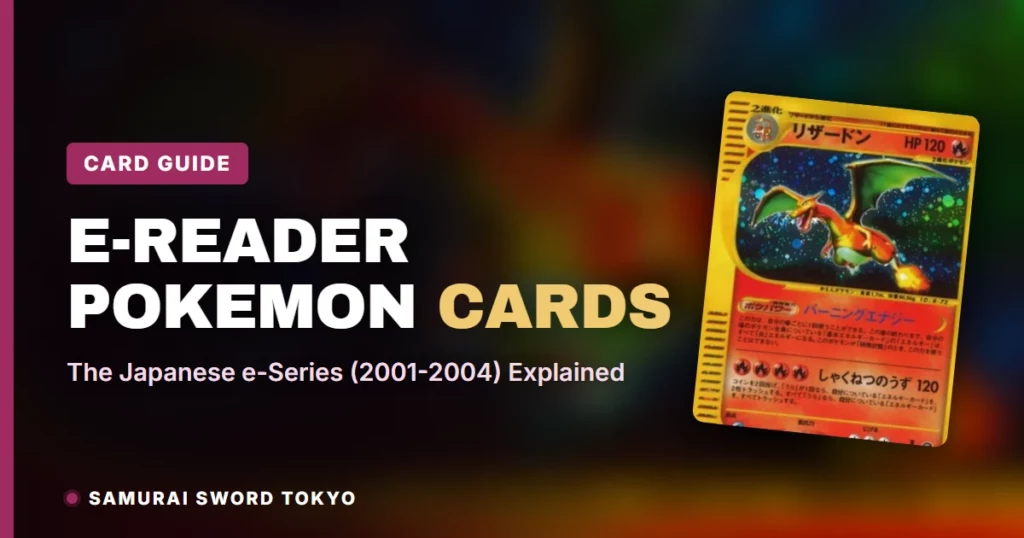
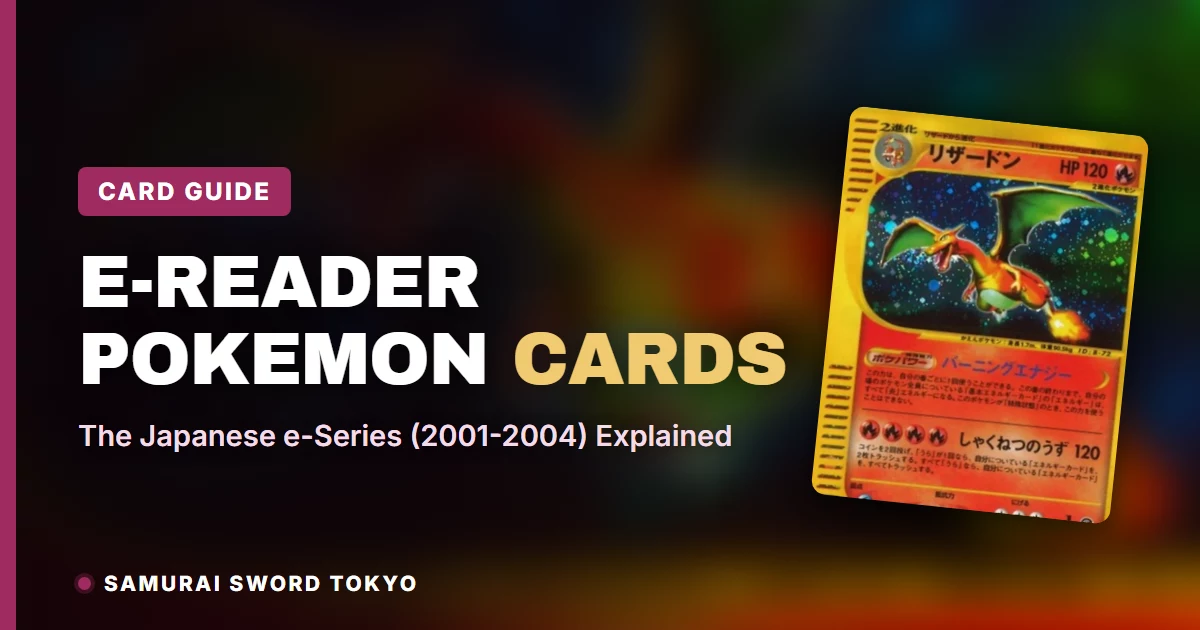
An e-Reader Pokemon card is a Japanese Pokemon TCG card printed with a dot-code strip along its border that could be scanned by the Card e Reader — a Game Boy Advance peripheral that launched in Japan on 1 December 2001. Scanning the strip unlocked in-game extras and minigames rather than changing anything printed on the card. Only five Japanese sets were built around this feature: the Pokemon Card e series, e1 through e5, released across 2001 and 2002.
Those five sets sit in a narrow window of Japanese Pokemon TCG history — after the original “old back” era wound down and before Ruby & Sapphire arrived in November 2002. This guide explains what the e-Reader hardware actually did, which sets genuinely carry the dot-code feature, and why several later Japanese-market sets that sometimes get grouped in with “e-series” searches almost certainly don’t.
The e-Reader launched in Japan on 1 December 2001, and only the five Pokemon Card e sets (e1–e5) physically carry the dot-code strips it reads. A PSA10 1st Edition Charizard from e1, the true e-Card era Base Expansion Pack (103/128), is currently listed at ¥1,097,400 (~$6,902). Later Japanese sets in the PCG naming series — including the PCG4 set behind our PSA10 1st Edition Entei, currently listed at ¥2,808,400 (~$17,663) — came after the e-Card era, and this guide has not verified that their cards carry a working dot-code strip.
Yen figures below convert at ¥159/USD (September 2026). Every price is our own current listing — there are no third-party market prices in this guide.
What Is an e-Reader Pokemon Card?
The Card e Reader is a Game Boy Advance peripheral that plugs into the console’s link port and reads a printed dot-code strip by sliding the card through an optical scanner. Japan got the device on 1 December 2001; an enhanced version, the Card e Reader+, followed on 23 June 2003. The device could read two lengths of dot-code strip — a long strip holding up to 2.2 KB of data, and a shorter strip holding up to 1.4 KB — both printed along the card’s border.
Scanning a strip unlocked in-game content on the connected Game Boy Advance cartridge: extra items, minigames, or other bonus material, rather than anything that changed on the physical card itself. The device stayed popular in Japan for the rest of the GBA’s lifespan, but North America had discontinued support for it by 2004.
Because the dot-code strip has to be part of the card’s printed layout, only cards actually produced during the e-Reader’s active window — and specifically designed to carry the strip — work with the device. That’s a narrower group than “any Pokemon card from the early 2000s,” which is the mix-up this guide exists to untangle.
The Pokemon Card e Series (e1–e5): The True e-Reader Sets
The dedicated Pokemon Card e series — numbered e1 through e5 — are the Japanese sets that physically carried e-Reader dot-code strips. They released in 2001 and 2002, in what’s generally referred to as the e-Card TCG Era, bridging the tail end of Generation II and the arrival of Ruby & Sapphire in November 2002.
e1, “Pokemon Card e Vol.1: Base Expansion Pack,” released in Japan on 1 December 2001 — the same day as the e-Reader device itself — and carries 128 cards in its main set. It’s the set our two e-Card era single anchors below come from.
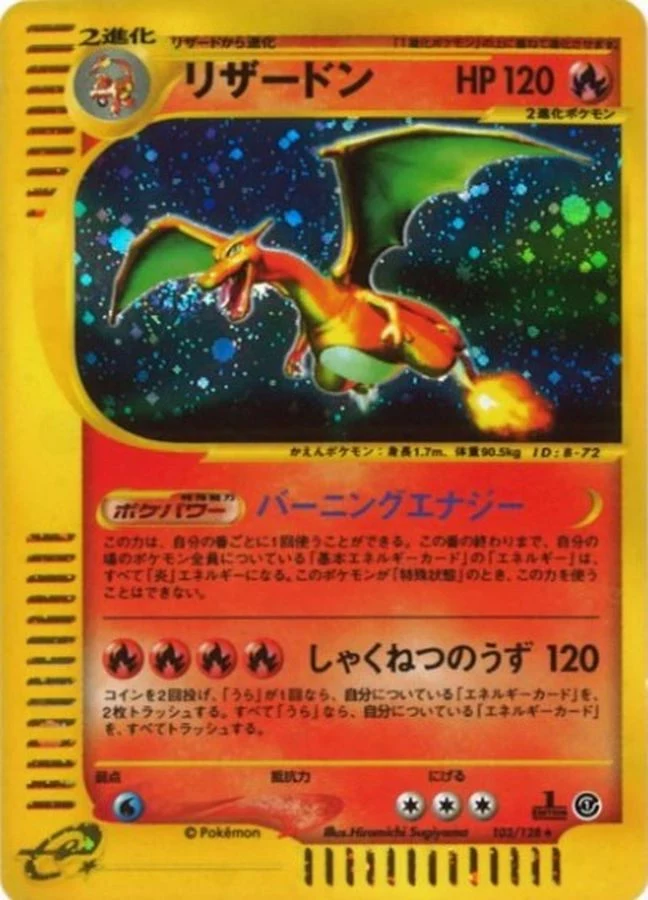
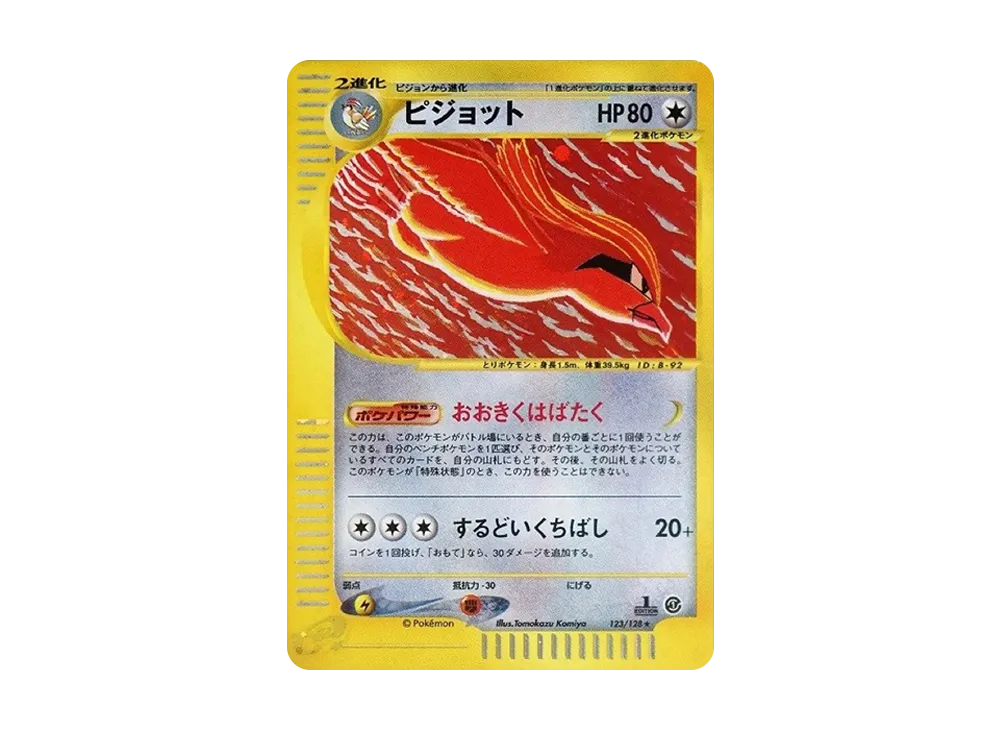
A PSA10 1st Edition e1 Charizard (103/128) is currently listed at ¥1,097,400 (~$6,902); a PSA10 1st Edition e1 Pidgeot (123/128) from the same set is currently listed at ¥129,800 (~$816) — a useful illustration of how wide the price range runs within a single e-Card set, long before rarity letters like today’s “SAR” or “UR” existed.
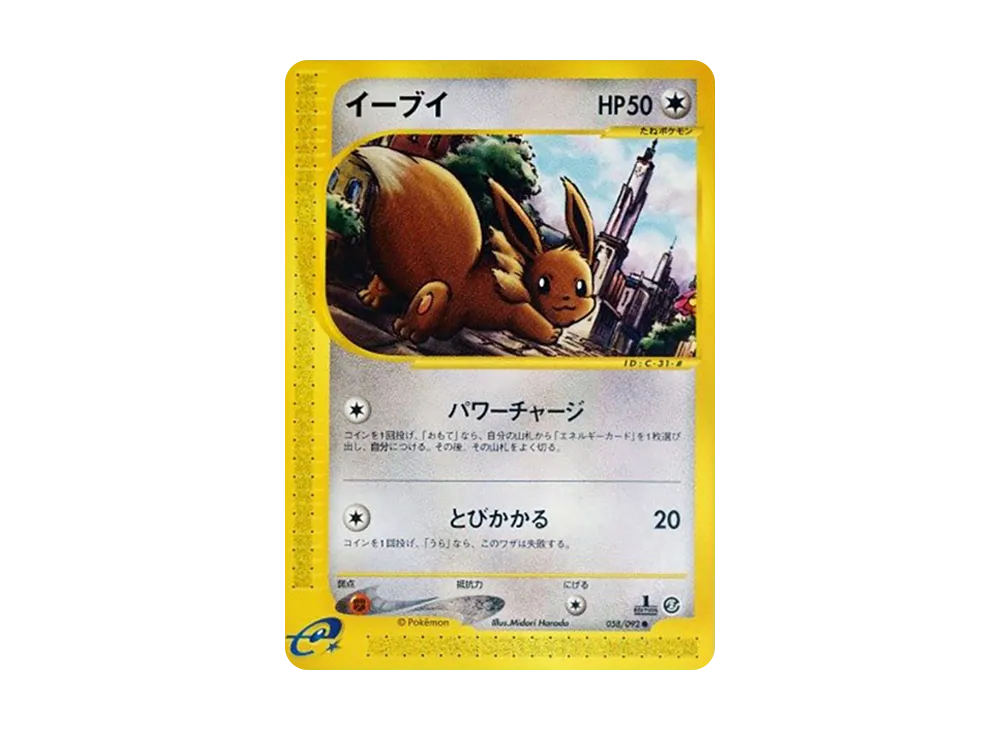
The series continues into e2, e3, e4 and e5. Our own listings include a PSA10 1st Edition e2 Eevee (058/092), from the set known as “The Town on No Map,” currently listed at ¥100,300 (~$631). We haven’t independently re-verified every individual release date across e2 through e5 for this guide, so treat the wider e-Card era as the 2001–2002 window above rather than a confirmed set-by-set calendar.
After the e-Card Era: ADV and the PCG Naming Series
Generation III Japanese Pokemon TCG merchandise begins with the ADV Era, which started on 31 January 2003 with the Japanese “Expansion Pack” (ADV1) plus three half-decks. This era carried no e-Reader emphasis — it simply followed on from the e-Card Era described above.
Later still came the Japanese PCG-naming series — PCG1 “Flight of Legends” onward — running roughly 2003 to 2006. Two of our own anchor products, covered in the next section, come from PCG4 and PCG5. We could not independently re-verify today whether individual PCG-era cards still physically carry an e-Reader dot-code strip, so this guide treats that as unverified rather than confirming it either way. If you’re specifically after e-Reader-compatible cards, the confirmed sets are e1 through e5 above — not PCG4 or PCG5.
PCG4 and PCG5: Golden Sky, Silvery Ocean and Illusionary Forest
PCG4, titled “Expansion Pack: Golden Sky, Silvery Ocean,” released in Japan on 8 April 2005 (a date reported by community set data rather than a Bulbapedia-primary source, so treat it as reported rather than fully confirmed). It’s the set behind two of our highest-value anchors: a PSA10 1st Edition Entei (019/106) and a PSA10 1st Edition Typhlosion (014/106).
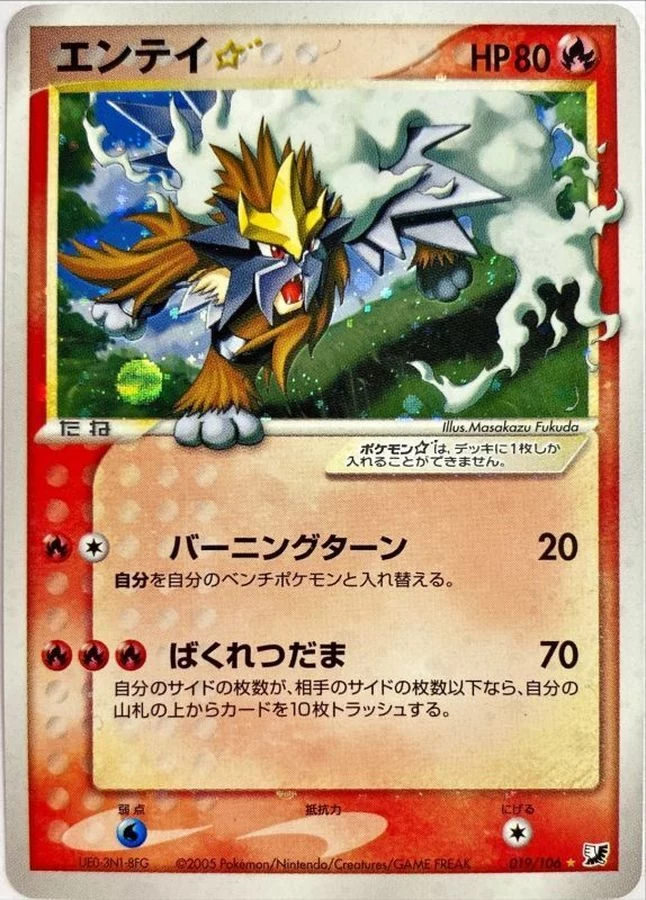
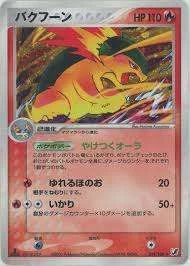
The PSA10 1st Edition Entei is currently listed at ¥2,808,400 (~$17,663) — the highest price point in this guide. The PSA10 1st Edition Typhlosion is currently listed at ¥198,240 (~$1,247). Note that our own site shows two slightly different English translations of the PCG4 set name across listings — “Golden Sky, Silvery Ocean” and “Gold Sky Silver Sea” — both referring to the same Japanese set.
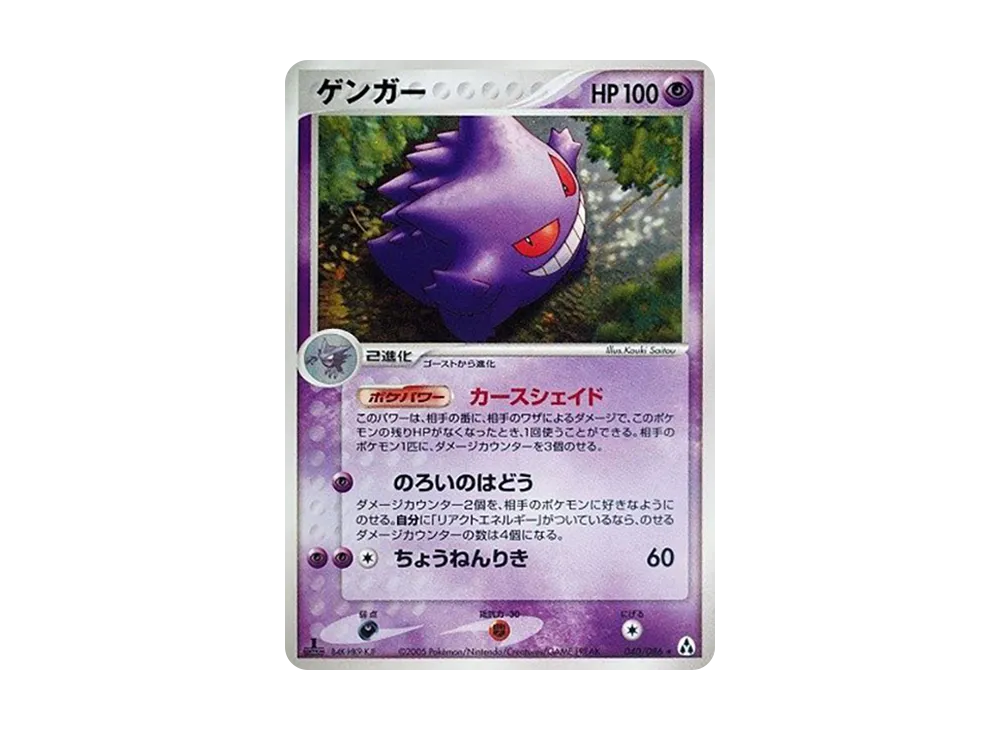
PCG5 is titled “Illusionary Forest” on our own product listings. Community and Bulbapedia sources translate the same Japanese set name (まぼろしの森) as “Mirage Forest” — this is one set with two English translations in circulation, not two separate sets. PCG5 released in Japan on 30 June 2005 with 86 cards in its main set, roughly corresponding to the English-language “EX Legend Maker.” A PSA10 1st Edition Gengar (040/086) from this set is currently listed at ¥1,026,600 (~$6,457).
Where the e-Series Sits in Japanese Pokemon Card History
It’s worth being precise about eras here, because “vintage Japanese Pokemon cards” covers a lot of ground. The Japanese old-back era ran through the late 1990s and wound down around 2001, distinguished by its card-back design rather than any dot-code feature — e-series cards are generally not old-back cards, even though the two eras sit close together on the calendar. For the broader vintage picture spanning 1996 through 2001, see our vintage Japanese Pokemon cards guide, and for sealed product from that period, our vintage Japanese booster box guide.
Our Team Rocket cards guide spans a much wider timeline — 1997 old-backs all the way through SV10 — and is a useful comparison point for seeing how one Pokemon’s Japanese prints track across every era covered here and beyond. Rarity-mechanic hubs like our LEGEND cards guide cover a much later Japanese design idea — LEGEND cards arrived roughly eight years after the e-series, and share no printing feature with it beyond both being distinctive Japanese-market concepts at the time of their release.
Where to Buy e-Series and PCG-Era Cards from Tokyo
We ship Japanese sealed product and graded singles worldwide out of Tokyo. Here’s every anchor referenced in this guide in one place:
| Card | Set | Listed price |
|---|---|---|
| Charizard 1ED [e1 103/128] | Base Expansion Pack (e-Card era) | ¥1,097,400 (~$6,902) |
| Pidgeot 1ED [e1 123/128] | Base Expansion Pack (e-Card era) | ¥129,800 (~$816) |
| Eevee 1ED [e2 058/092] | The Town on No Map (e-Card era) | ¥100,300 (~$631) |
| Entei 1ED [PCG4 019/106] | Golden Sky, Silvery Ocean | ¥2,808,400 (~$17,663) |
| Typhlosion 1ED [PCG4 014/106] | Golden Sky, Silvery Ocean | ¥198,240 (~$1,247) |
| Gengar 1ED [PCG5 040/086] | Illusionary Forest | ¥1,026,600 (~$6,457) |
Every card above is PSA10 graded and 1st Edition. Browse the wider PSA10 graded card collection for more Japanese vintage grades, or use Quick Order to build a mixed order across sets and eras in one pass.
Frequently Asked Questions
What is an e-Reader Pokemon card?
It’s a Japanese Pokemon TCG card printed with a dot-code strip along its border, made to be scanned by the Card e Reader — a Game Boy Advance peripheral that launched in Japan on 1 December 2001. Scanning the strip unlocked in-game extras and minigames rather than changing the card itself.
Which Japanese Pokemon sets actually carry e-Reader dot codes?
The dedicated Pokemon Card e series — e1 through e5 — released in Japan in 2001 and 2002. e1, “Pokemon Card e Vol.1: Base Expansion Pack,” released 1 December 2001, the same day as the e-Reader device, with 128 cards in its main set.
Do PCG4 and PCG5 cards have e-Reader dot codes?
We haven’t verified that they do. PCG4 and PCG5 belong to a later Japanese naming series that ran roughly 2003 to 2006, after the dedicated e-Card era. Until that’s independently confirmed, treat e1 through e5 as the confirmed e-Reader-compatible sets.
Is “Illusionary Forest” the same set as “Mirage Forest”?
Yes — it’s one Japanese set (PCG5, released 30 June 2005) with two English translations in circulation. Our own listings use “Illusionary Forest”; community and Bulbapedia sources also translate it as “Mirage Forest.”
When was the e-Reader discontinued?
North America had stopped supporting the device by 2004. It remained popular in Japan for the rest of the Game Boy Advance’s lifespan, and Japan had also released an enhanced Card e Reader+ on 23 June 2003.
Are e-series cards the same as Japanese “old back” Pokemon cards?
No. The old-back era is defined by its card-back design and ran through the late 1990s into around 2001. The e-series is defined by its dot-code printing feature and runs 2001 to 2002 — the two eras sit next to each other on the calendar but are identified by different physical features.
500 Points Free on Sign-Up
CREATE FREE ACCOUNT1 pt = ¥1 at checkout · Points expire 30 days after they are earned · Import duties, taxes and customs charges are not included in the price and are collected on delivery, except for destinations we ship duty-paid.
Picked for this article
📩 Get member-only sale alerts & coupons
Sale alerts, coupons and restock notices by email — straight from Tokyo.