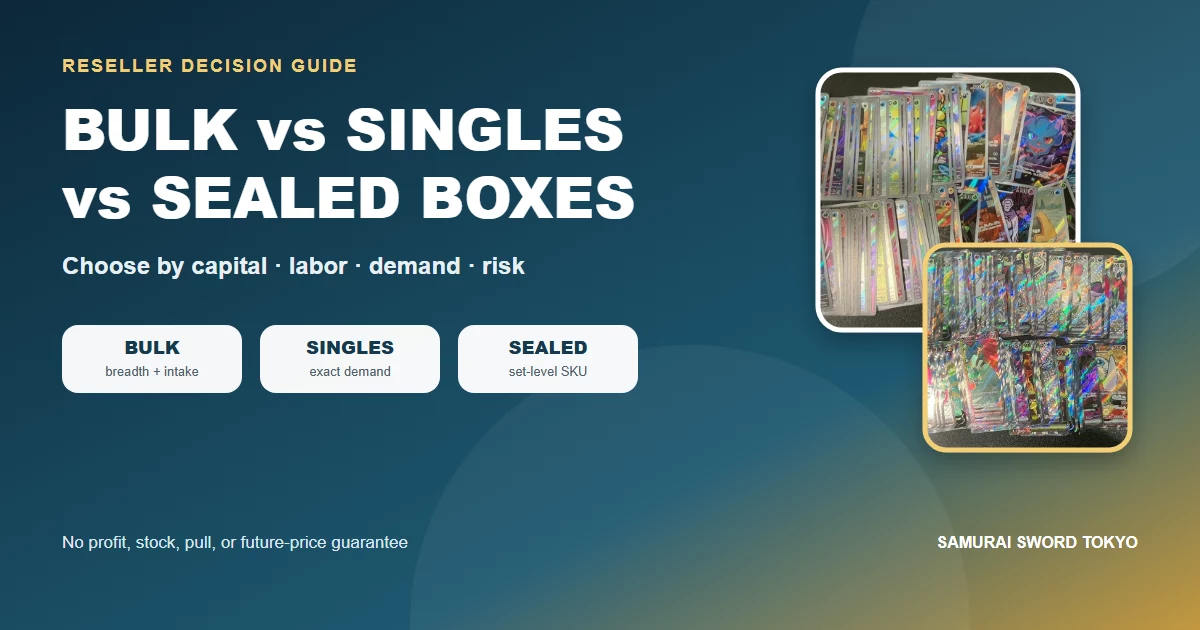
Route verification: July 14, 2026 (JST). Intended publication time: March 16, 2026 at 7:50 AM JST. Product and category availability is live-only and can change; this guide does not reserve stock or guarantee future supply.
For most resellers, there is no universally “best” inventory format. Bulk cards can create assortment depth at the cost of random identity, possible duplicates, condition intake, and heavy cataloging. Exact singles give the clearest product identity and customer match, but every acquisition decision is made card by card. Sealed booster boxes reduce listing count and keep the opening experience intact, but concentrate capital at the set level and expose the reseller to reprint, box-condition, and demand-cycle risk.
The best route is the one your operation can process, sell, and reorder using evidence. A live seller with fast visual sorting may use bulk efficiently. A search-driven store may prefer exact singles. A shop with collectors who want unopened Japanese product may favor sealed boxes. Many durable businesses use all three, with a different job and risk budget for each.
Contents: Decision router · Bulk · Singles · Sealed · Capital · Labor · Risk · Portfolio · Test plan · FAQ
Decision Router: Shop by Reseller Intent
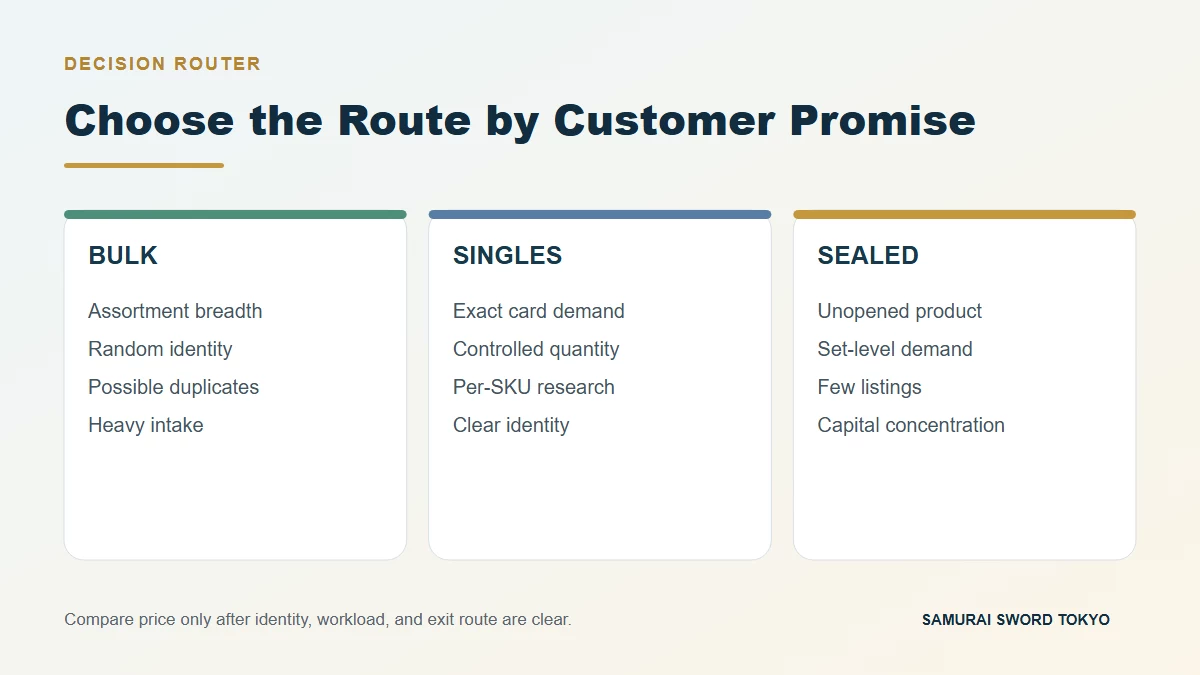
The first click should match the inventory problem
Do not begin with the format that looks cheapest in isolation. Begin with the customer promise you must fulfill. If a buyer asks for one exact Japanese card, a random lot is the wrong starting point. If a convention seller needs hundreds of visually interesting cards for rotating displays, buying each single one by one may consume too much sourcing time. If a collector wants an unopened box, neither bulk nor loose singles can substitute for sealed condition.
| Reseller need | Best first route | Why | Primary SST path |
|---|---|---|---|
| Broad art-card or rarity-lane assortment | Bulk | One lot creates many card-level SKUs, with randomness and duplicates accepted | AR Bulk — 100-Card Set or SR Bulk — 100-Card Set |
| Exact customer requests | Singles | Identity, version, and condition can be selected card by card | Japanese Pokemon single cards |
| Unopened product / set-level demand | Sealed | One SKU preserves the sealed opening proposition | Japanese Pokemon sealed booster boxes |
| Mixed store or recurring procurement | Wholesale | Route mix, budget, timing, and requirements can be stated together | Wholesale inquiry |
What buyers should check in the first 10 minutes
| Check | Bulk | Singles | Sealed |
|---|---|---|---|
| Exact identity | Unknown until intake | Known before purchase | Set/product known; internal pulls unknown |
| Condition work | Card-by-card | Card-by-card, but preselected | Box/seal inspection rather than every card |
| Duplicate exposure | Explicitly possible in random lots | Controlled by order quantity | Duplicate boxes are intentional quantity |
| Listing count | Potentially very high | High but controlled | Low relative to units of card inventory |
| Demand level | Card/character/rarity mix | Exact card | Set, box, chase narrative, sealed collector |
| Reprint sensitivity | Card-specific and supply-specific | Card-specific | Often concentrated at product/set level |
| Best evidence | Intake sample and sell-through | Sold data for exact card/version | Set demand, reprint information, live category/quote |
These differences explain why a single gross-margin target is not enough. Each format uses capital and labor differently. A format can show a high percentage markup but still produce worse cash flow because it takes too long to catalog or sell.
Live routes are evidence, not inventory promises
Samurai Sword Tokyo’s current WooCommerce structure uses the /collections path as the category base. The current Pokemon single-card category is Pokemon Single Card, and the sealed category is Pokemon Sealed Booster Box. Those routes were verified against live taxonomy on July 14, 2026. Category assignment counts are not the same as currently sellable stock, and neither a link nor this article reserves inventory.
Bulk Route: Buy Breadth, Then Create Order
What the current AR and SR lots actually promise
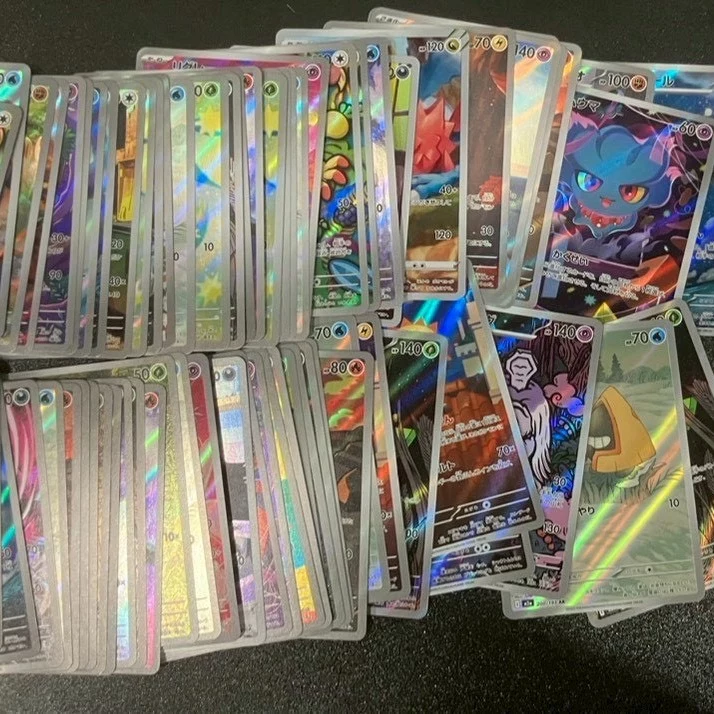
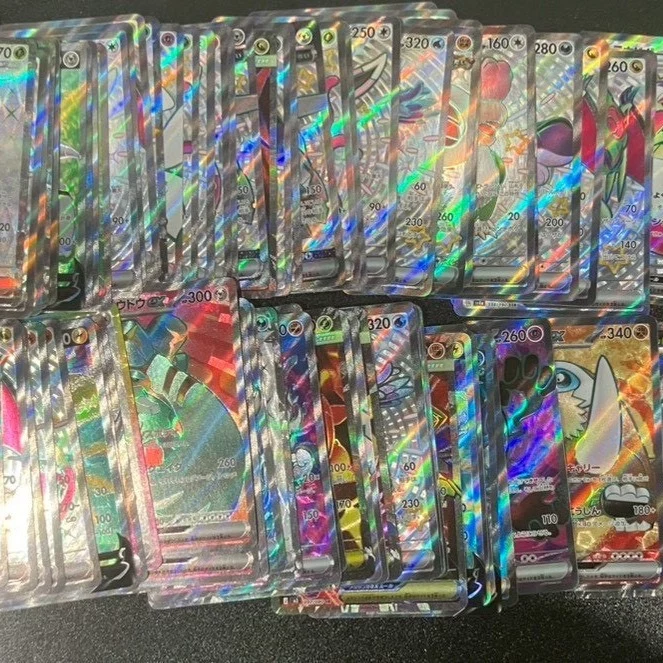
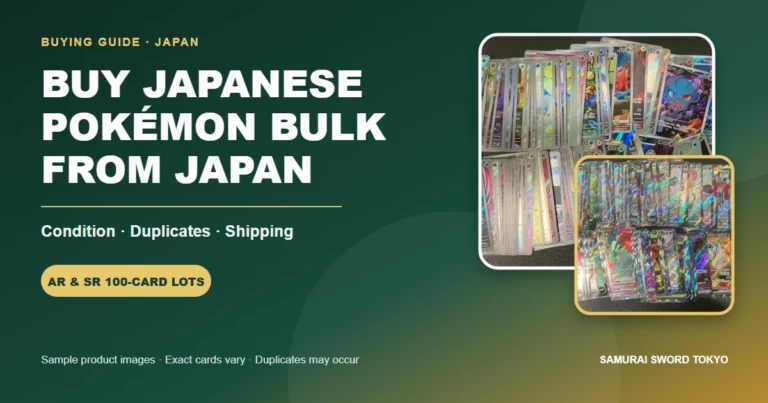
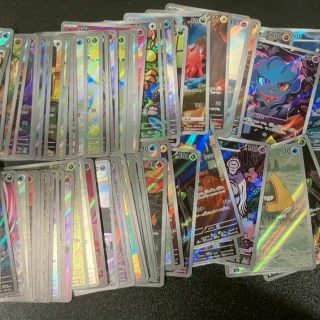
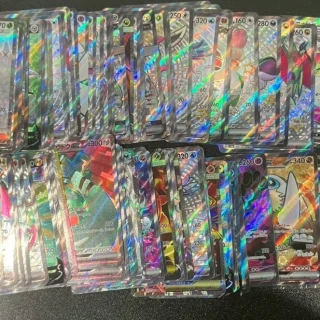
The current AR Bulk and SR Bulk pages are both 100-card products. Their written disclosures are the controlling buyer expectation: the photograph is a sample, cards are selected randomly, Samurai Sword Tokyo will try to avoid duplicates, and duplicates can still occur. “100-card set” therefore describes quantity, not 100 guaranteed unique card numbers.
This route is strongest when the reseller can turn an unordered assortment into useful inventory. That requires identity checks, condition inspection, stable SKUs, duplicate counts, storage, images, price research, and a channel for slow cards. The acquisition is only the beginning; operational conversion creates the actual product a downstream customer sees.
When bulk wins
Bulk can outperform other routes when sourcing time is the bottleneck and the business already has a fast intake system. Convention sellers, live sellers, binder specialists, character-bundle merchants, and stores with high multi-card order rates may value the breadth. A repeated copy is not automatically a failure if the same SKU sells consistently or can rotate across events.
Bulk can also support content and discovery: a broad visual assortment gives a reseller more subjects for social posts, live streams, themed trays, or “shop by Pokemon” routes. But that benefit exists only when each exact card is represented honestly. Never reuse the sample lot photograph as if it were the customer’s specific inventory, and never promise characters visible in that sample.
When bulk loses
Bulk is a poor fit when the reseller needs exact cards, has little cataloging capacity, cannot inspect raw condition, or has no plan for repeated slow-moving copies. It also fails when profitability depends on every card being Near Mint, gradeable, or worth more than the lot average. The current product descriptions make no such guarantees.
| Bulk strength | Operational requirement | Failure mode | Control |
|---|---|---|---|
| Fast assortment depth | Repeatable identity and condition intake | Cards remain unlisted in boxes | Set an intake-hours deadline |
| Many visual SKUs | Efficient photography and listing template | Labor exceeds gross margin | Measure minutes per sellable SKU |
| Possible quantity per SKU | Duplicate outlet and storage | Capital concentrates in weak repeats | Track copies by SKU and age |
| Random discovery | Conservative value forecast | Sample image biases expected value | Forecast by buckets, not pictured cards |
| One-lot sourcing | Accurate landed-cost allocation | Freight and duties disappear from model | Allocate actual costs consistently |
Singles Route: Buy Exact Demand and Control Identity
Why exact singles are the cleanest customer match
The Japanese Pokemon single-card category is the right route when a customer searches by Pokemon, Trainer, set, card number, rarity, language, or exact artwork. The reseller knows the product identity before purchase and can decide quantity deliberately. This removes random assortment risk and makes keyword, collection, and want-list merchandising more precise.
Exact selection is especially useful for restocking proven sellers. If historical orders show steady demand for a specific card, buying that card can be more efficient than acquiring a random lot and hoping it appears. The reseller can also separate versions that look similar but differ by set code, card number, stamp, rarity, mirror treatment, or reprint.
Singles are controlled, not effortless
Each single still requires condition confidence, price research, an inventory record, storage, and fulfillment. Sourcing one by one can consume time, and popular cards may carry a high acquisition cost because other buyers see the same demand. The exact identity reduces mix risk; it does not guarantee that the resale price will hold or that the card will sell inside the desired window.
Use the official Japanese Pokemon Card Game card-search page to cross-check card identity and current official taxonomy where applicable. Then verify the exact product page and condition evidence. Do not merge two printings because the artwork appears similar.
When singles win or lose
| Situation | Singles advantage | Singles downside | Decision rule |
|---|---|---|---|
| Customer want list | Exact fulfillment | Acquisition may be competitive | Buy only the exact version requested |
| Proven bestseller | Controlled reorder | Price can rise with visible demand | Use a maximum landed cost |
| SEO/search store | Clear card-name landing pages | Many individual listings | Prioritize queries with sales evidence |
| High-value raw card | Exact inspection focus | One condition mistake has impact | Require detailed condition review |
| New reseller | Easy identity logic | Temptation to chase hype | Start with low count and measured turnover |
Singles lose when sourcing and listing overhead becomes fragmented, when the reseller buys attractive cards without customer evidence, or when current asking prices are mistaken for completed-sale value. A smaller exact inventory is not automatically liquid. Every SKU still needs an exit plan.
Sealed Route: Sell the Product, Not the Expected Pulls
The sealed proposition is set-level demand
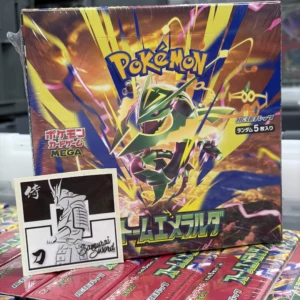
The current route for unopened Japanese Pokemon boxes is the sealed booster-box category, with a broader Japanese booster-box route also available. This guide intentionally avoids publishing individual sealed-product prices. Box price, stock, shrink/no-shrink status, allocation, and reprint expectations can change; verify the live category, exact product page, and current wholesale quote at decision time.
A sealed reseller sells a defined unopened product and its set-level narrative: release era, chase lineup, opening experience, collectability, language, and box condition. The internal card outcome remains uncertain, so do not market a box as though it contains a specific chase or guaranteed profit. Pull-rate estimates, when used, need their own source and caveat; they are not a substitute for a sealed inventory thesis.
Why sealed can simplify operations
One box is one primary SKU. The reseller photographs and inspects the exterior, confirms the exact product and seal state, records condition, and stores a smaller number of units than an equivalent card-by-card assortment. Listing, picking, and counting can be faster than a 100-card random lot. That operational simplicity is one reason sealed can support wholesale and repeat-store procurement.
However, low listing count does not mean low risk. A box can absorb more capital per unit, and demand can move with new releases, official reprints, allocation changes, collector sentiment, or the relative value of chase cards. Box dents, tears, fading, crushing, or seal concerns can reduce buyer confidence. Storage volume and international shipping weight also matter.
When sealed wins or loses
| Sealed factor | Why it can win | Why it can lose | Evidence needed |
|---|---|---|---|
| Few SKUs | Faster listing and fulfillment | Capital concentrates by set | Set-level sell-through |
| Unopened experience | Appeals to collectors/openers | Buyer expectations can be speculative | Accurate product and seal description |
| Recognizable product | Easier merchandising | New releases compete for attention | Release/reprint monitoring |
| Box quantity | Works for shops and breakers | Shipping/storage cost grows | Checkout/wholesale quote |
| Long holding option | Product can remain sealed | Capital is unavailable while held | Maximum holding period and exit rule |
Sealed is a poor choice when the business needs quick card-level cash flow, cannot store boxes safely, or is buying solely because online discussion predicts a future price. It is also wrong for a customer who wants one exact single. Use the official Pokemon Card Game news page to monitor product announcements and reprint-related information, then verify the specific SST route.
Capital and Landed Cost: Compare the Same Economic Unit
Product cost is only the first layer
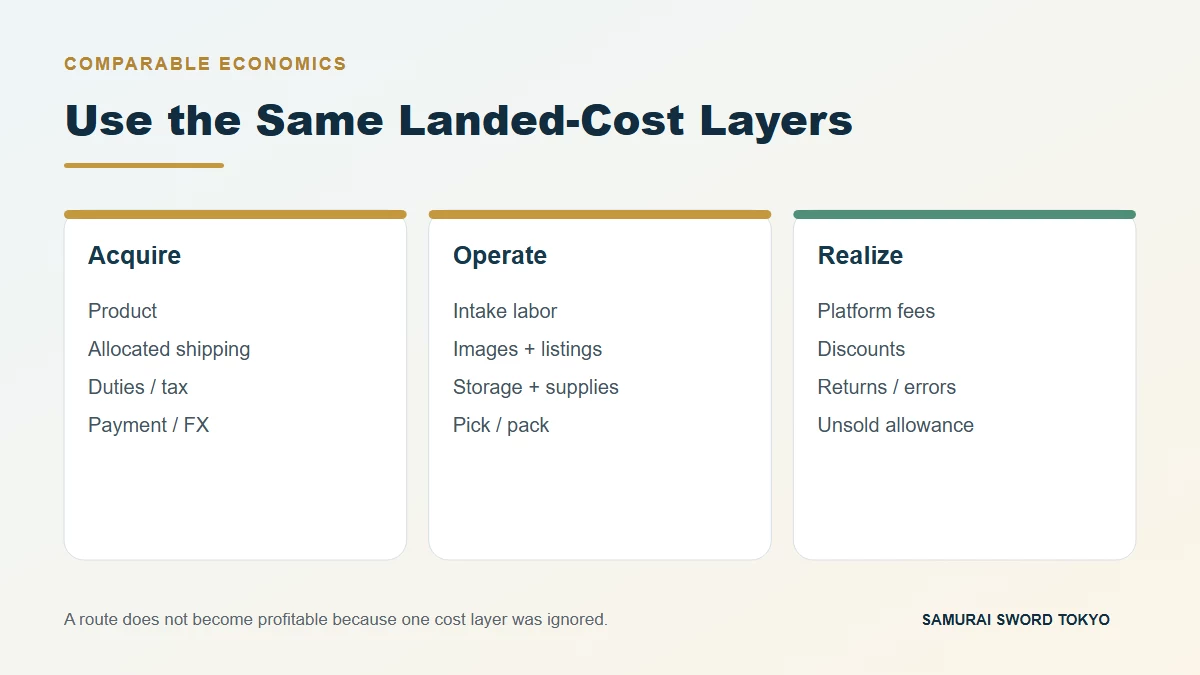
For every route, landed cost includes acquisition, allocated shipping, destination duties or taxes where applicable, payment and currency costs, supplies, intake labor, listing labor, marketplace fees, pick/pack labor, customer-service and return allowance, discounts, and inventory that remains unsold beyond the target period. Different routes distribute those costs differently, but none makes them disappear.
Bulk often spreads acquisition across many cards while increasing labor per lot. Singles concentrate research and acquisition at the exact-SKU level. Sealed can reduce listing labor while increasing capital and storage per unit. Compare net proceeds per labor hour and per capital-day, not only gross markup percentage.
Cash conversion matters more than the prettiest margin
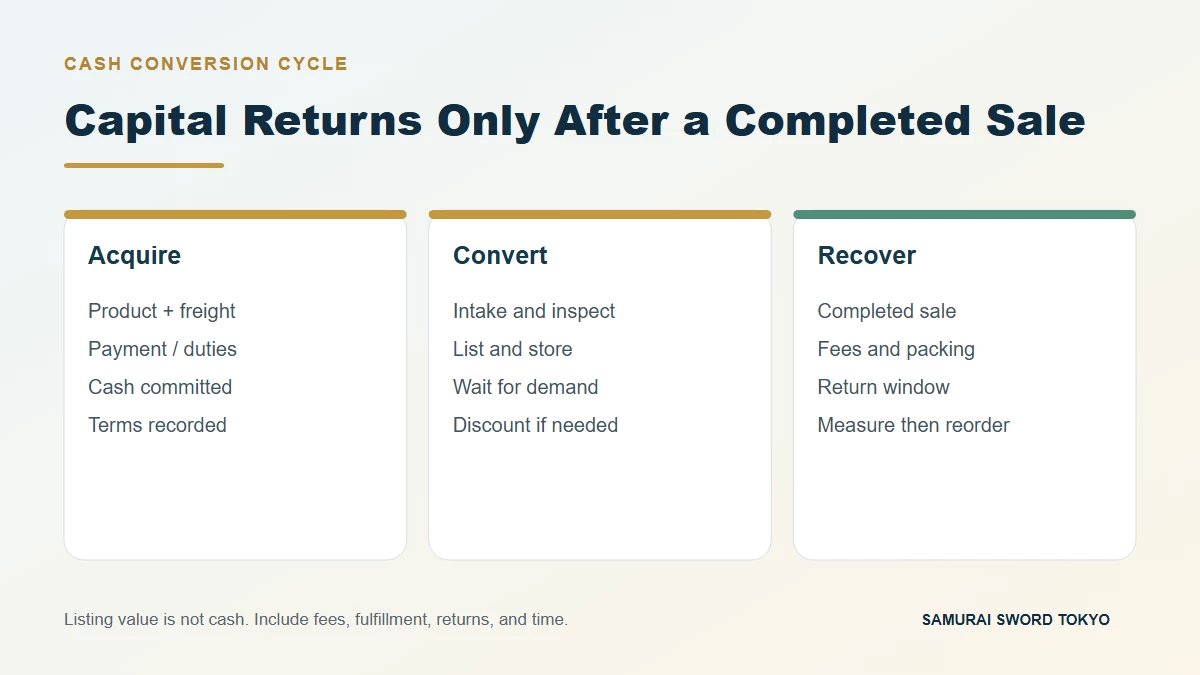
A bulk card that costs little but takes six months to list is not cheap operationally. A high-demand single with a modest margin may recycle capital quickly. A sealed box with an attractive theoretical gain may create no usable cash while it sits in storage. Decide the maximum time allowed for each stage: procurement, intake, listing, sale, and reorder.
| Metric | Bulk | Singles | Sealed |
|---|---|---|---|
| Primary cost unit | Lot, then per received/sellable card | Exact card | Exact box/product |
| Hidden cost risk | Intake and unlisted cards | Research fragmentation and condition | Storage, freight, capital concentration |
| Revenue unit | Card, bundle, or quantity listing | Exact card | Box/product |
| Best velocity metric | % cataloged and sold in 30/60/90 days | Days per SKU sale and reorder | Units sold by set and holding period |
| Capital warning | Many small slow cards | Overpaying for obvious demand | Holding too much in one release |
Allocate shared shipping honestly
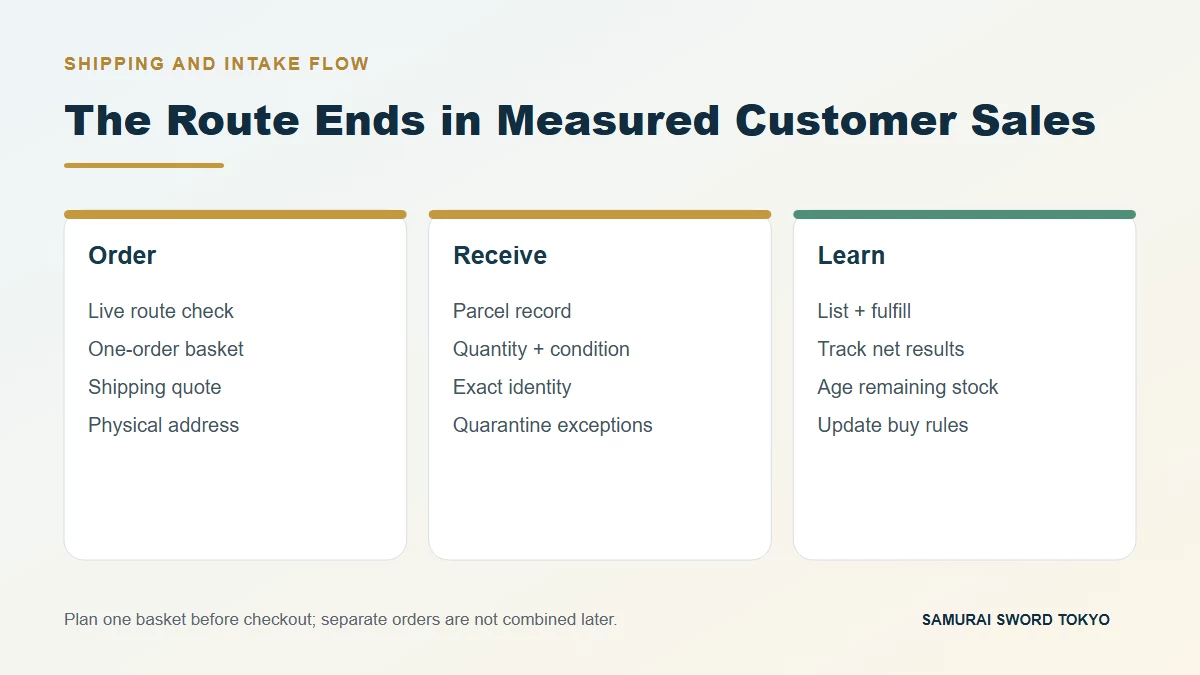
The current SST Shipping Policy calculates shipping at checkout and states that separate orders ship separately rather than being combined later. If a reseller wants bulk, singles, and sealed products in one parcel, the basket must be planned before checkout. Allocate actual freight across the products using a consistent method such as weight, volume, or value; do not make one route look better by assigning its freight elsewhere.
Labor and Throughput: The Route Your Team Can Process
Bulk creates the largest intake queue
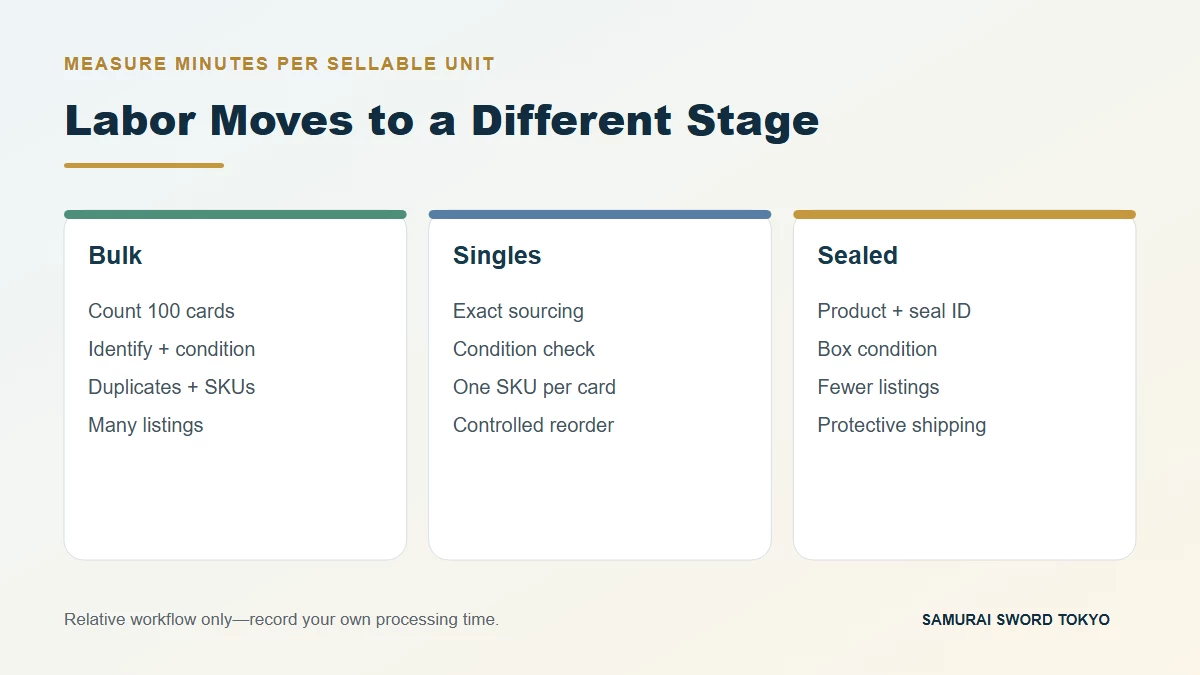
A random 100-card lot must be counted, identified, inspected, sorted, assigned to SKUs, photographed or matched to an accurate image system, priced, stored, and routed to listings or bundles. Duplicate copies require quantity control. Condition exceptions require individual photos and conservative descriptions. The lot may be physically received today but commercially unavailable for days if intake capacity is weak.
Exact singles still require many of the same steps, but identity and intended quantity are known at purchase. Sealed boxes shift attention from card-by-card inspection to product, seal, exterior condition, variant, and shipping protection. Each route needs a standard operating procedure that is short enough to follow and detailed enough to prevent SKU mixing.
Measure bottlenecks by stage
| Stage | Bulk bottleneck | Singles bottleneck | Sealed bottleneck |
|---|---|---|---|
| Sourcing | Unknown mix and lot terms | Finding exact card/version | Finding correct set/seal/quantity |
| Intake | 100-card identity and condition queue | Per-card condition | Box/seal/exterior verification |
| Listing | Many SKUs and duplicates | Many exact listings | Few listings, more product detail |
| Storage | Card organization | High-value card security | Space and crush protection |
| Fulfillment | Picking exact card/condition | Exact-card accuracy | Protective box packing and freight |
| Reorder | Mix may not repeat | Exact SKU can be targeted | Set supply and reprint can change |
Choose formats that fit existing labor, not imagined labor
A solo seller with two hours per week should not buy a pipeline that requires twenty hours of intake. A store with barcode, photography, and staff systems may process the same lot efficiently. Record minutes per received unit, minutes per listed SKU, correction rate, and orders per labor hour. Use those facts in the next purchase decision.
If your team cannot process one route without creating backlog, reduce quantity or change format. Unlisted inventory has acquisition cost but no searchable sales surface. The cheapest operational improvement is often a smaller order that reaches customers faster.
Risk and Buyer Expectations: Control What Each Format Can Break
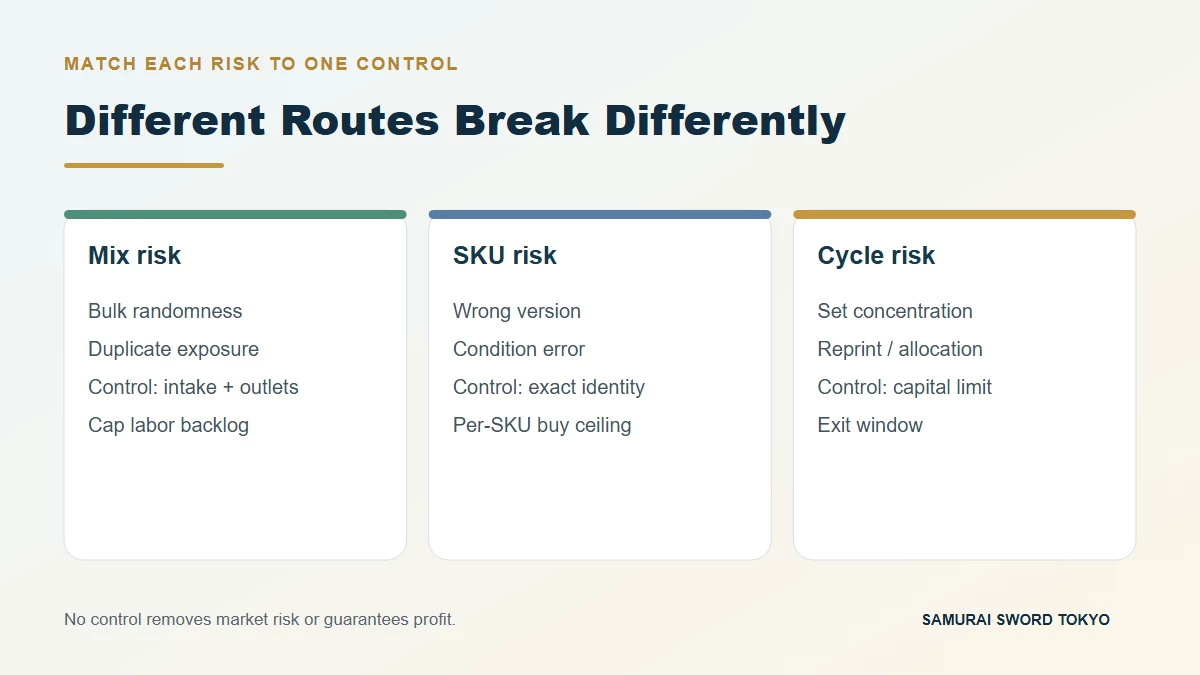
Bulk risk is mix uncertainty
Bulk risk begins with what is not known: exact card identities, duplicate concentration, and the condition distribution of a random assortment. The controls are disclosure, conservative forecasting, intake sampling, duplicate outlets, and a maximum labor budget. The current sample-photo and duplicate language must remain visible to the buyer.
Singles risk is exact-SKU error
Singles risk includes wrong set, wrong card number, wrong language, wrong variation, incorrect condition, or acquisition at a price unsupported by completed demand. The controls are identity verification, exact images, conservative condition grading, and SKU-level purchase ceilings.
Sealed risk is product and cycle concentration
Sealed risk includes wrong variant, seal or box-condition disputes, reprint or allocation changes, release-cycle competition, storage damage, and capital held in one set. Controls include exact product naming, exterior-condition records, official news monitoring, category/wholesale refresh, quantity limits, and a defined exit date.
| Risk | Bulk control | Singles control | Sealed control |
|---|---|---|---|
| Identity | Intake every card | Verify exact card before purchase | Verify exact box/set/variant |
| Condition | Grade each received card consistently | Use exact-card evidence | Record box and seal condition |
| Availability | Never promise future lot stock | Confirm live SKU | Confirm category/product/quote |
| Demand | Use bucketed sell-through | Use exact-card sales evidence | Use set-level demand and release context |
| Concentration | Duplicate limits and outlets | Per-SKU quantity ceiling | Per-set capital ceiling |
| Customer claim | Random/sample disclosure | Exact version and condition | No guaranteed pulls or returns |
No control removes market risk. It makes the decision auditable and reduces errors that the reseller can prevent.
Build a Mixed Inventory Portfolio
Give every route one job
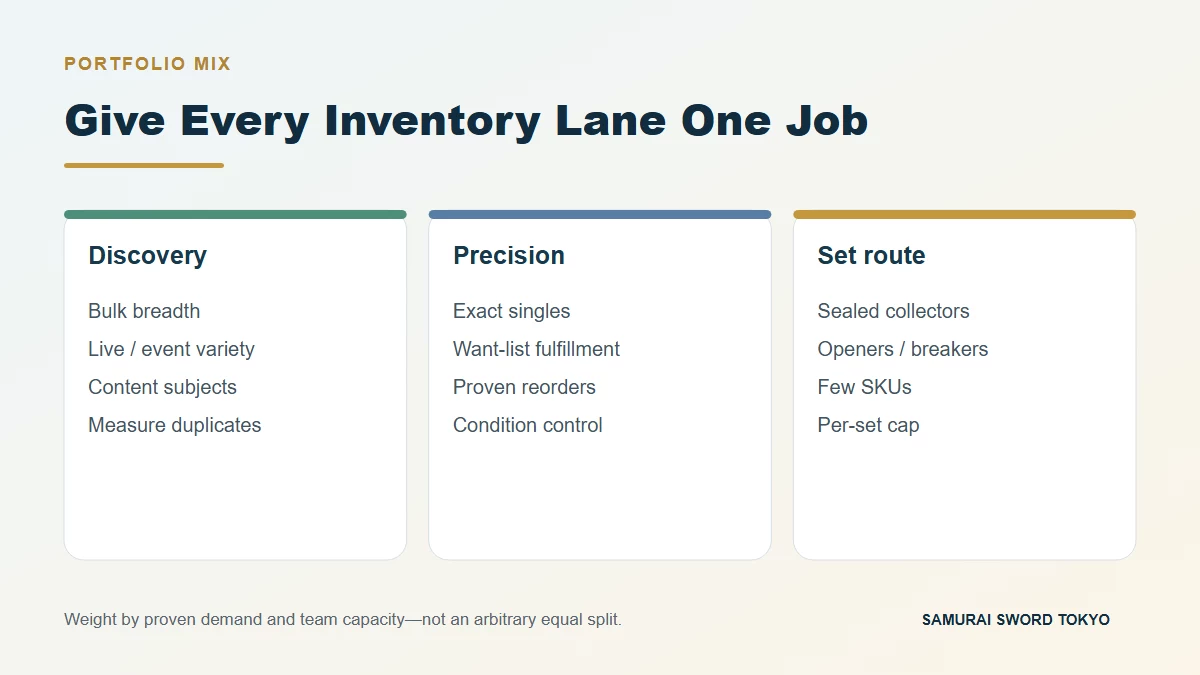
Bulk can provide discovery and breadth. Singles can fulfill exact search demand and restock proven cards. Sealed can serve collectors, openers, stores, and breakers who want the unopened product. A mixed portfolio becomes useful when those roles are explicit; otherwise it becomes three unrelated piles competing for cash and labor.
Create separate dashboards. For bulk, track percentage cataloged, unique SKUs, duplicate concentration, and sell-through by rarity or character. For singles, track exact SKU turnover, replenishment success, and condition-related returns. For sealed, track units by set, days held, storage, release/reprint events, and price/quote refresh dates.
Budget by capacity and evidence
Do not use an arbitrary equal split. A store with strong box demand and limited card-scanning staff may allocate more to sealed. A high-volume marketplace seller with mature single-card operations may allocate more to exact singles. A live seller with fast sorting and an audience that likes variety may allocate a controlled share to bulk.
| Business type | Core lane | Support lane | Limit |
|---|---|---|---|
| Search-driven online singles store | Exact singles | Select bulk for discovery | Cap unlisted intake backlog |
| Convention / live seller | Bulk or mixed singles | Sealed highlights | Cap duplicate concentration |
| Collector-focused sealed shop | Sealed | Chase singles | Cap per-set capital |
| New reseller | Small exact singles test | One controlled bulk/sealed test | No route scaled before evidence |
| Card shop / breaker | Sealed + exact singles | Bulk for side inventory | Use current wholesale quote and labor plan |
Use wholesale for mixed procurement, not vague requests
The wholesale inquiry is the right place to state destination, route mix, budget, quantity, condition requirements, duplicate tolerance, timing, and substitution rules. It does not guarantee any product, allocation, price, or custom assortment. Wait for current written confirmation before promising inventory to customers.
Test and Reorder: A 30/60/90-Day Framework
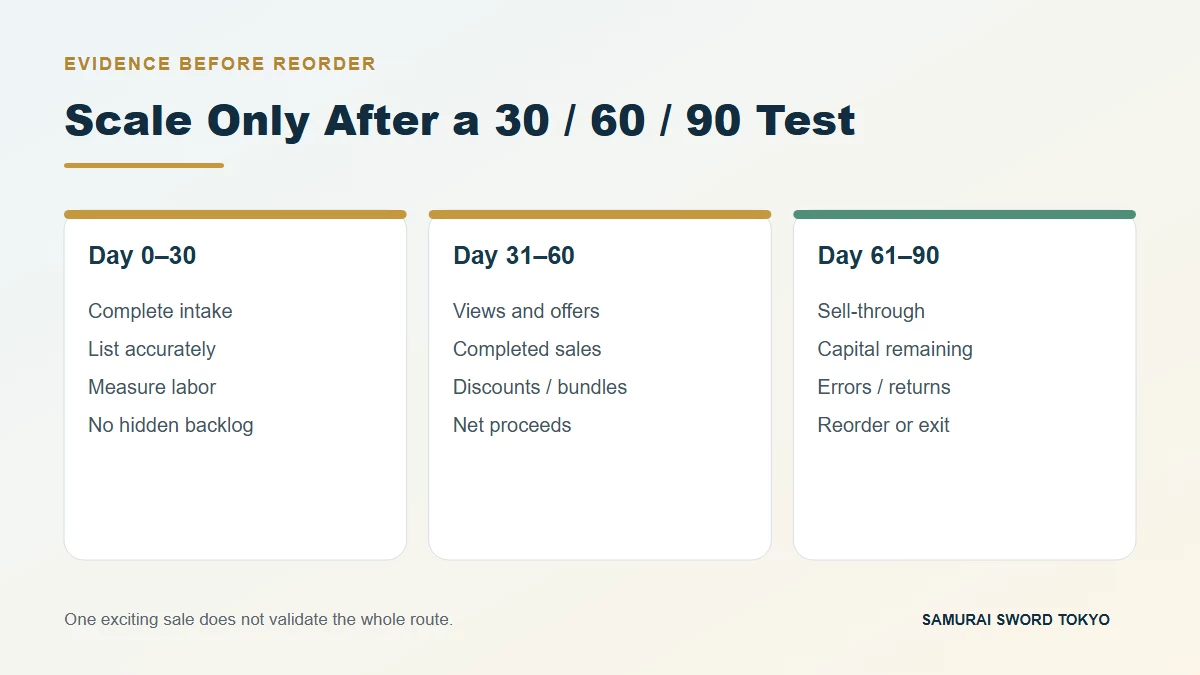
Day 0 to 30: prove the intake system
Set a fixed test budget and maximum labor allowance for each chosen route. Record the live URL, order terms, checkout shipping, and the reason each item was selected. On arrival, count and inspect before mixing with existing stock. The first 30-day goal is not maximum revenue; it is complete, accurate, searchable inventory with no hidden backlog.
For bulk, calculate unique SKUs, duplicate concentration, condition distribution, and minutes per card. For singles, verify identity/condition error rate and time per listing. For sealed, record box/seal condition, storage space, listing completion, and the current release/reprint information used in the decision.
Day 31 to 60: measure real customer demand
Track views, inquiries, offers, completed sales, discounts, bundles, average cards or boxes per order, and net proceeds. Separate gross listing value from money actually received. Identify inventory that sells without promotion, inventory that requires discounting, and inventory that receives no qualified interest.
Day 61 to 90: decide whether to reorder, revise, or exit
At 90 days, compare every route on net margin after labor, percentage sold, capital still tied up, error/return rate, and remaining inventory quality. Reorder only if the route passes thresholds written before the test. Revise when one fix is clear, such as faster imaging or a lower per-SKU quantity. Exit when the customer fit or economics do not work under conservative assumptions.
| Gate | Reorder | Revise | Stop / exit |
|---|---|---|---|
| Intake | Completed on schedule | Backlog has one solvable cause | Inventory cannot be cataloged economically |
| Demand | Target sell-through reached | Interest exists but price/channel needs change | Little qualified demand |
| Margin | Positive after full costs and labor | Near target with measurable fix | Depends on omitted costs or optimistic listings |
| Risk | Errors/returns within limit | One control needs improvement | Identity, condition, or claims repeatedly fail |
| Capital | Remaining stock fits holding limit | Reduce next quantity | Capital lock blocks better inventory |
The framework protects against excitement bias. One strong pull, one viral card, or one fast box sale does not validate the full route. Repeated, accurately measured transactions do.
Frequently Asked Questions
Are bulk Pokemon cards better for resellers than singles?
Only when the reseller can process randomness, possible duplicates, condition intake, and high listing volume efficiently. Singles are usually better for exact customer demand. Compare net proceeds per labor hour and capital-day instead of assuming the lower blended acquisition route wins.
Are sealed booster boxes safer than bulk cards?
Not universally. Sealed removes card-by-card assortment work, but concentrates risk at the set and product level. Reprints, allocation, box condition, storage, and demand cycles matter. Bulk and sealed fail differently; neither guarantees profit.
Which route needs the least listing labor?
Sealed usually needs the fewest listings because one box is one primary SKU. Exact singles require many controlled listings. Random bulk typically creates the largest intake queue because every card must be identified, inspected, sorted, and routed.
Can a 100-card bulk lot be treated as 100 unique cards?
No. The live AR and SR descriptions say selection is random and duplicates can occur despite a best effort to avoid them. Quantity is not a uniqueness guarantee, and the sample image is not an exact manifest.
Will bulk buyers receive the exact sample-photo cards?
No. The photo is described as a sample. Do not forecast value from pictured cards, promise those identities downstream, or reuse the source sample as though it represents your exact resale stock.
Should a new reseller start with sealed boxes?
Only after defining customer demand, storage, box-condition controls, reprint monitoring, freight economics, and an exit window. A small cross-route test often teaches more than putting the entire starting budget into one sealed release.
What is the best route for exact customer requests?
Use the Japanese Pokemon single-card route. Confirm card number, set, rarity, language, version, and condition. Bulk is random, and sealed does not guarantee one specific pull.
How should a reseller compare profit across the three routes?
Use actual net proceeds after acquisition, shipping, duties or taxes, payment costs, labor, supplies, platform fees, discounts, returns, and unsold stock. Apply the same time horizon and labor rate to all routes. This guide makes no profit guarantee.
Can stock or future availability be assumed from this guide?
No. Routes were verified on July 14, 2026, but products, category contents, stock, quotes, and shipping conditions can change. Recheck the live page and obtain current written confirmation before making customer commitments.
When should a reseller use the wholesale route?
Use wholesale for recurring supply, mixed formats, store or breaker quantities, or requirements that need a written answer. Include destination, budget, quantities, route mix, duplicate tolerance, condition rules, timing, and substitutions.
Bottom Line
Bulk, singles, and sealed boxes solve different reseller problems. Bulk buys breadth and creates processing work. Singles buy exact identity and require card-level sourcing discipline. Sealed buys a defined unopened product and concentrates capital at the set level. The right route is not the one with the most exciting gross margin; it is the one that reaches customers accurately, converts cash within the target window, and can be repeated without breaking the team’s labor or risk limits.
Start from the live SST route that matches the customer promise: AR Bulk, SR Bulk, Japanese Pokemon singles, or sealed booster boxes. Use wholesale for a current mixed-order or recurring-supply conversation. Verify availability and terms at decision time, then scale only after measured 30/60/90-day results.
Picked for this article
📩 Get member-only sale alerts & coupons
Sale alerts, coupons and restock notices by email — straight from Tokyo.