The rarest Japanese Pokemon cards aren’t rare because of what they’re worth — they’re rare because of how few were ever produced or how narrowly they were given out. A tournament-prize card handed to a few hundred players, a magazine-contest prize limited to a few dozen winners, and a modern chase card drawn from a defined pool are all “rare” in different, documentable ways. This guide ranks Japanese rarity by distribution and print history — not by resale price or auction results.
Some of the cards below are once-in-a-generation tournament prizes that never entered general circulation. Others are built into today’s booster boxes as a chase mechanism, where the scarcity is engineered into every box rather than tied to a one-off event. Both count as documented Japanese rarity, just on very different scales.
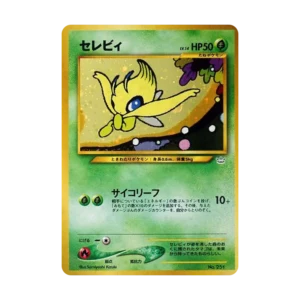
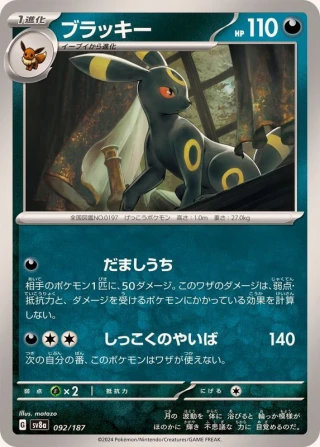
Tropical Wind (1999) has both tournament and magazine distribution in its history, but this guide does not assign a combined print total because the supplied sources conflict on the tournament attribution. Pikachu Illustrator’s officially recorded distribution is 39 cards, with the known total around 41 as of August 2020. Our own PSA10 Celebi, Old Back [PRMF-3 No.251], is currently listed at ¥275,000 (~$1,730), and a PSA10 Umbreon, Master Ball Mirror [SV8a 092/187], is currently listed at ¥32,560 (~$205) — two very different rarity mechanisms, both documented below.
Prices below are our own listed prices, converted at ¥159/USD (September 2026). This guide ranks by documented distribution and print history, not by price — see our most valuable Japanese Pokemon cards hub if you want the price-ranked version of this question.
What Makes a Japanese Pokemon Card Rare
“Rare” means different things depending on how a card left the printer. Three distinct mechanisms show up across Japanese Pokemon history:
- Tournament-prize cards — handed out to players who reached a specific tournament, with the total distribution capped by however many people attended.
- Contest-promo cards — awarded to winners of a magazine or company-run illustration contest, with the total capped by however many prizes were announced.
- Packed-in chase cards — a card type built into a modern booster box’s print run, where a specific card is drawn from a defined pool rather than reliably included.
The first two categories are historical and closed — no more Tropical Wind or Pikachu Illustrator cards are being made. The third is current: every new Japanese high-class pack can introduce its own chase mechanism. This guide covers one example of each, plus a fourth category built from an official bonus-file product with its own card-back era. For how graders and collectors talk about rarity tiers more broadly, see our rarity guide for graded buyers.
Tropical Wind: A 1999 Tournament Prize Card
Tropical Wind is a 1999 tournament-related prize card with additional distribution through a Trainers Magazine Vol. 3 lottery. The supplied research conflicts over which tournament accounts for the cited participant figure, so this guide does not attribute that figure to a named event or state a combined print total.
A separate reprint dated 2001 exists on e-card stock, carrying updated Generation II artwork from the same illustrator. The exact print run for that later version isn’t documented on the source page we drew this from, so no figure is given for it here.
Pikachu Illustrator: The CoroCoro Contest Card
Pikachu Illustrator came out of a CoroCoro Comic illustration contest rather than a tournament. The first contest was announced in the November 1997 issue (released October 15, 1997), with results published in the January 1998 issue (released December 1997):
| Award tier | Winners | What each received |
|---|---|---|
| Best Award | 3 | 20 cards of their own submitted artwork, plus one Pikachu Illustrator card each |
| Excellence Award | 20 | One Pikachu Illustrator card each |
Further Mewtwo- and Pikachu-themed contests in 1998 distributed additional cards on top of that first leg. Taken together, the officially recorded distribution stands at 39 cards; as of August 2020, two further examples had surfaced outside that official count, putting the documented total at roughly 41.
No.1 Trainer: A Recurring Tournament Trophy
Unlike Tropical Wind and Pikachu Illustrator, No.1 Trainer isn’t a single print — it’s a Trainer-tier prize card issued across many separate Japanese tournaments, with later World Championships first-place prize versions also documented. Tournaments carrying a No.1 Trainer prize include:
- Pokemon Card Game Official Tournament
- Lizardon Mega Battle
- Kamex Mega Battle
- Tropical Mega Battle
- Secret Super Battle
- World Challenge Secret Super Battle
- World Challenge Tropical Mega Battle
- Neo Spring/Summer Road
- World Championships first-place prize versions
The source we drew this list from doesn’t give a print quantity for any individual year’s version, so we won’t attach a number to it here. What makes No.1 Trainer collectible as a category is the sheer number of distinct tournament-year versions rather than any single print run — each event effectively minted its own variant of the same trophy design.
Old Back Premium File: Celebi’s TCG Debut
![PSA 10 Celebi, Old Back [PRMF-3 No.251], Pokemon Card neo Premium File 3](https://samuraiswordtokyo.com/wp-content/uploads/2026/09/img_rarest_pkmn-tcg-7303414-yu_65187b55c7d3.webp)
Not every rarity story here is a tournament prize. Our own PSA10 Celebi carries the designation “Old Back [PRMF-3 No.251]” on its own listing, placing it in Pokemon Card neo’s “Premium File 3” — an official bonus-file product using the pre-2002 card-back design from the Pokemon Card neo era rather than the modern back. Per Bulbapedia, Premium File 3 held nine cards representing each TCG type, and this Celebi print was the character’s first-ever TCG appearance rather than a reprint of an earlier release.
We haven’t independently re-verified the exact print run for PRMF-3 itself in this research pass, so that figure is marked unverified here — the only distribution detail we can state with confidence is what our own product listing carries: the “Old Back” designation and its PRMF-3 catalogue number. That’s a different kind of rarity claim from Tropical Wind or Pikachu Illustrator: it’s about a specific product era and card-back design, not a hard-capped distribution count.
Master Ball Mirror: A Modern Chase Mechanism
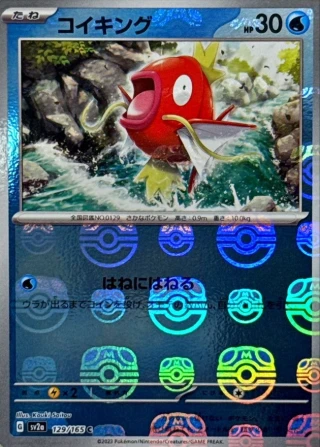
Not all rarity mechanisms are historical. SV2a “Pokemon Card 151” (Japan, June 2023) introduced the Master Ball Mirror — a reverse-holo treatment drawn from a defined pool of 153 eligible cards (151 Pokemon plus 2 Trainer cards). One Master Ball-pattern card is drawn per box from that pool, which makes it a chase mechanism built into the print run rather than a guaranteed pull of any single card. This description is sourced from secondary retail and community pages rather than a direct Pokemon Company statement, so treat the “one per box, drawn from 153” mechanism as unverified against a primary source, even though it’s the consistent secondary-source description of how the set behaves.
![Magikarp, C Master Ball Mirror [SV2a 129/165], Pokemon Card 151](https://samuraiswordtokyo.com/wp-content/uploads/2026/09/img_rarest_sv2a_129_r_jp_c56d5f8abae7-1.webp)
![Aerodactyl, R Master Ball Mirror [SV2a 142/165], Pokemon Card 151](https://samuraiswordtokyo.com/wp-content/uploads/2026/09/img_rarest_sv2a_142_r_jp_24182e97ba08-1.webp)
The same Master Ball Mirror rarity type also appears in later Japanese high-class packs, such as “Terastal Festival ex” (SV8a). The pool size and per-box draw mechanics for that later set aren’t covered by the source above, so we won’t extend the “153-card pool” figure to it — it’s the same rarity label, not necessarily the same underlying odds.
![PSA 10 Umbreon, Master Ball Mirror [SV8a 092/187], High Class Pack Terastal Festival ex](https://samuraiswordtokyo.com/wp-content/uploads/2026/09/img_rarest_85jvw4q3m0e0z6jrfjfsnucenyrwa3tjdcrzuqsk-master_7216cf014da9.webp)
For a full breakdown of how the Master Ball Mirror mechanism works across sets, see our dedicated Master Ball Mirror guide — this section is a summary of the mechanism as one entry in a wider rarity survey, not the full deep dive.
Where to Buy These Rarity Tiers from Japan
Tropical Wind, Pikachu Illustrator and No.1 Trainer are not listed on our site at the moment; sourcing requests for cards like these go through Quick Order. The two documentable modern and bonus-file categories above, though, are currently listed on our site:
![PSA 10 Groudon, P [XY-P 144], movie-campaign promo](https://samuraiswordtokyo.com/wp-content/uploads/2026/09/img_rarest_pkmn-tcg-7314688-yu_fdabb6ee2876.webp)
- PSA10 Celebi, Old Back [PRMF-3 No.251] (Pokemon Card neo “Premium File 3”) — currently listed at ¥275,000 (~$1,730)
- PSA10 Groudon, P [XY-P 144] (movie-campaign promo) — currently listed at ¥52,580 (~$331)
- PSA10 Team Rocket’s Mewtwo ex, P [043/M-P] (promo) — currently listed at ¥22,440 (~$141)
- PSA10 Umbreon, Master Ball Mirror [SV8a 092/187] (High Class Pack “Terastal Festival ex”) — currently listed at ¥32,560 (~$205)
- PSA10 Magikarp, C Master Ball Mirror [SV2a 129/165] (Pokemon Card 151) — currently listed at ¥29,150 (~$183)
- PSA10 Aerodactyl, R Master Ball Mirror [SV2a 142/165] (Pokemon Card 151) — currently listed at ¥22,825 (~$144)
![PSA 10 Team Rocket's Mewtwo ex, P [043/M-P], promo](https://samuraiswordtokyo.com/wp-content/uploads/2026/09/img_rarest_0zo3hwsm63peltfwjh8bh7r4tpryvo1doyal0t5y-1_f4f5db239ad9.webp)
Browse the full PSA10 graded card collection for more examples across these and other rarity types, or read our Japanese 1st Edition guide and what PSA 10 actually means to understand how grading and print-era details combine with the distribution facts above.
Frequently Asked Questions
What makes a Japanese Pokemon card “rare” if not price?
Documented distribution and print history: how many people could ever have received the card (a tournament-prize or contest-promo card), or how the card is drawn into a modern booster box’s print run (a chase mechanism like Master Ball Mirror). Price is a separate, later effect of that scarcity, not the definition of it.
What is the rarest Japanese Pokemon card by documented distribution?
Among the cards covered here, Pikachu Illustrator has the narrowest documented distribution stated in this guide: 39 cards officially recorded, with the known total at roughly 41 as of August 2020. This guide does not assign a combined print total to Tropical Wind because the supplied sources conflict on the tournament attribution.
How many Pikachu Illustrator cards were made?
The officially documented distribution is 39 cards, awarded through a 1997–98 CoroCoro Comic illustration contest (3 Best Award winners and 20 Excellence Award winners in the first leg, plus further 1998 contests). As of August 2020, two additional examples had surfaced outside that official count, putting the known total at roughly 41.
What is a Master Ball Mirror card?
Secondary retail and community sources describe a reverse-holo rarity type in SV2a “Pokemon Card 151” (Japan, June 2023), with one Master Ball-pattern card drawn per box from a pool of 153 eligible cards. It’s described as a chase mechanism rather than a guaranteed pull of any specific card, but the mechanism has not been verified here against an official Pokemon Company statement.
Is the “Old Back” Celebi the same as an original Pokemon Card neo release?
Our listing designates it “Old Back [PRMF-3 No.251]”, which places it in Pokemon Card neo’s official “Premium File 3” bonus-file product using the pre-2002 card-back design. Per Bulbapedia, this Celebi print was the character’s TCG debut, not a reprint. We haven’t independently verified PRMF-3’s exact print run, so we cite only what our own listing states rather than a broader distribution figure.
Where can I buy PSA10 examples of these rarity types from Japan?
PSA10 examples across the Old Back Premium File, promo and Master Ball Mirror categories are currently listed — see the product links in the Where to Buy section above, or browse the full PSA10 graded card collection. Tropical Wind, Pikachu Illustrator and No.1 Trainer aren’t listed on our site at the moment; sourcing requests for cards like these go through Quick Order.
Free and discounted shipping, by delivery country
- Each delivery country has its own qualifying amount and its own coupon code.
- Each paid campaign order unlocks the next step for your account.
- Sign in, or choose "Create account: Yes" at checkout, to use a campaign code.
The coupon code, the minimum order and the shipping benefit all depend on your delivery country — open the campaign page for the terms that apply to you. The minimum is the product subtotal only: shipping, tax and any other discount are not counted towards it. The campaign ends September 10, 2026 23:59 Japan time (September 10, 2026 14:59 UTC); the codes stop working at that moment. Coupons cannot be applied to pre-order items. Add an in-stock item to use a coupon. Import duties, taxes and customs charges are not included in the price and are collected on delivery, except for destinations we ship duty-paid.
Picked for this article
📩 Get member-only sale alerts & coupons
Sale alerts, coupons and restock notices by email — straight from Tokyo.