Japanese TCG Store Samurai Sword

Japanese Pokemon MEGA Booster Box Price Index 2026: Box Prices, Chase Cards & What to Buy
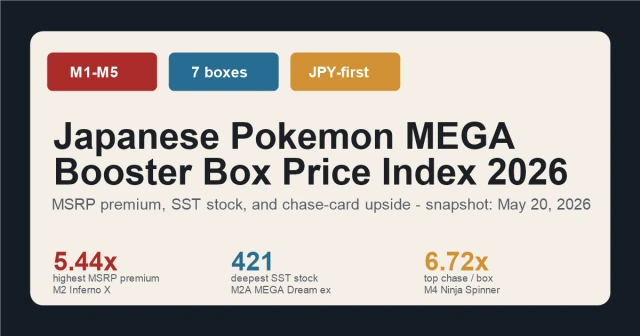
Japanese Pokemon’s MEGA era is no longer just hype; it is measurable. We scraped Samurai Sword Tokyo’s live product grid on May 20, 2026, checked official Pokemon Card MSRP pages, and cross-checked chase-card references from SNKRDUNK, Buyee, Guardian TCG, and SST market notes.

The result is a practical MEGA booster box index: M2 Inferno X is the scarcity/premium box, M4 Ninja Spinner has the strongest chase-to-box ratio, M2A MEGA Dream ex has the deepest stock and broadest hit profile, and M3 Munikis Zero is the cheapest sealed entry with the thinnest live stock.

Shop the index: Browse Japanese Pokemon sealed booster boxes direct from Tokyo →


5.44x
Highest MSRP premium: M2 Inferno X
6.72x
Best top-chase/box ratio: M4
421
Deepest SST stock: M2A
¥9,476
Cheapest sealed entry: M3

MEGA Box Index Table

This table compares every major Japanese Pokemon MEGA sealed booster box currently in the SST buying window. Prices and stock are a fixed May 20, 2026 JST snapshot, so treat them as a research baseline rather than a live quote.

Set Release Official box MSRP SST sealed price SST stock Premium Top chase ref. Chase/box
M5 Abyss Eye May 22, 2026 ¥6,000 ¥13,000 99 2.17x pre-release n/a
M4 Ninja Spinner Mar 13, 2026 ¥5,400 ¥13,390 348 2.48x ¥90,000+ 6.72x
M3 Munikis Zero Jan 23, 2026 ¥5,400 ¥9,476 7 1.75x ¥35,000 3.69x
M2A MEGA Dream ex Nov 28, 2025 ¥5,500 ¥18,025 421 3.28x ¥55,000 3.05x
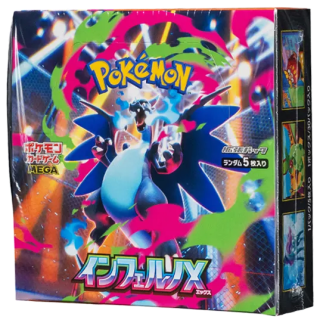
M2 Inferno X Sep 26, 2025 ¥5,400 ¥29,355 19 5.44x ¥79,999+ 2.73x
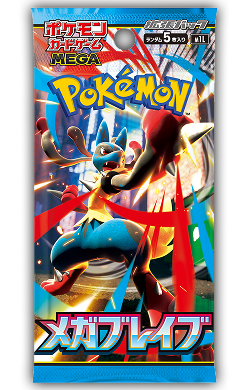
M1L Mega Brave Aug 1, 2025 ¥5,400 ¥14,626 260 2.71x ¥55,000 3.76x
M1S Mega Symphonia Aug 1, 2025 ¥5,400 ¥12,360 82 2.29x ~¥44,500 3.60x

Box MSRP is calculated from official pack MSRP and normal box pack count. M2A is a 10-pack high-class box at ¥550 per pack. M5 uses the new May 2026 ¥200 standard-pack MSRP.


How to Read the Index

Box premium tells you how far sealed supply has moved away from retail. It is useful for sealed buyers because official MSRP is the clean baseline every box starts from.

Chase-to-box ratio is different. It asks: if the top card is worth X and a sealed box costs Y, how much upside exists on the single best pull? It is not expected value. Pokemon does not publish official pull rates, and MUR cards are too scarce for a one-box buyer to treat the top chase as a normal outcome.

Stock depth matters because thin supply changes the buying decision. A box with only a handful of visible sealed units can reprice faster than a box with hundreds still available.

Practical rule: Use premium for sealed-buy timing, chase/box ratio for opening upside, and stock depth for urgency.


MSRP Premium: Which Boxes Repriced Most?
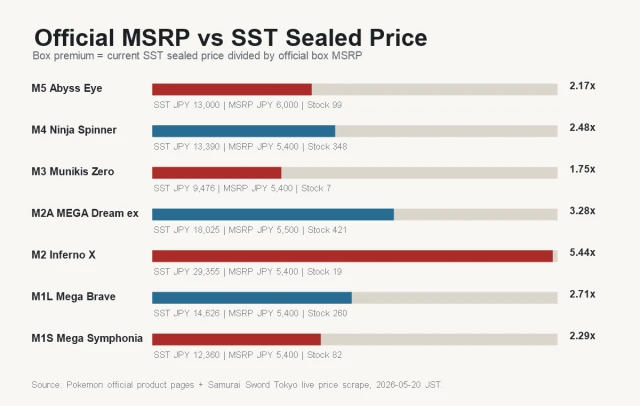
Japanese Pokemon MEGA booster box premium over official MSRP by set

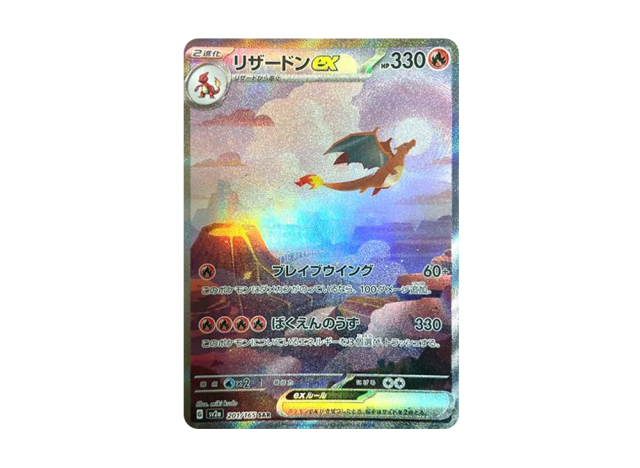
M2 Inferno X is the clear sealed-premium outlier. At ¥29,355 against a ¥5,400 official box MSRP, it sits at 5.44x retail. That is the Charizard effect showing up in sealed product, not just in singles.

The calmer cluster is M1S, M4, M1L, and M5, all between 2.17x and 2.71x MSRP. M3 is the cheapest relative to retail at 1.75x, while M2A sits higher at 3.28x because high-class packs carry a different hit structure and demand profile.


Top Chase vs Box Price
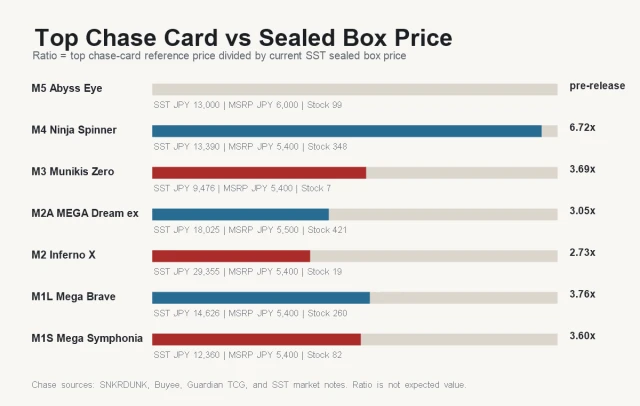
Top chase card reference value divided by current sealed box price for Japanese Pokemon MEGA sets

On this metric, M4 Ninja Spinner leads. SNKRDUNK’s Ninja Spinner guide placed Mega Greninja ex MUR around ¥90,000+ at launch. Against SST’s ¥13,390 sealed price, that is a 6.72x top-chase-to-box ratio.

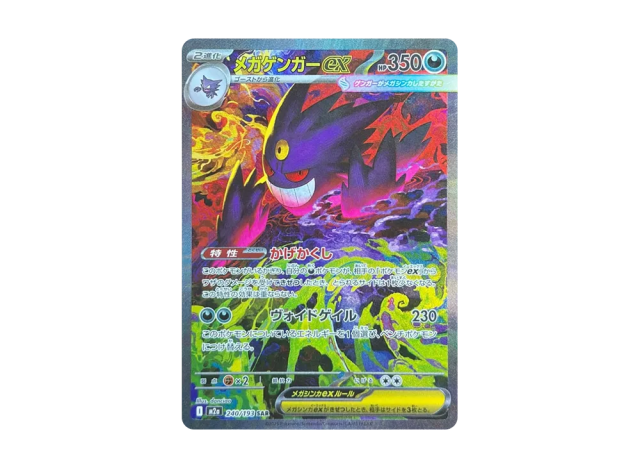
M1L, M3, and M1S sit in the mid-3x range, which is healthier than it looks because their sealed prices are not as inflated as M2. M2A looks lower at 3.05x if you only use Mega Gengar ex SAR as the single top reference, but that misses the point of a high-class pack: it has several liquid hits rather than one chase carrying the whole set.

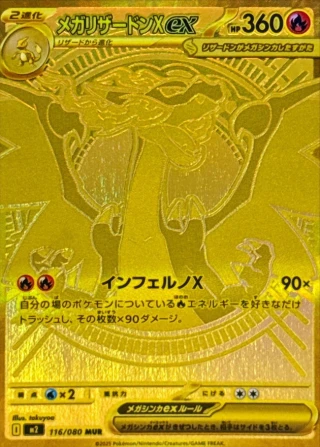
M2 Inferno X has the lowest ratio among settled boxes at 2.73x using SNKRDUNK’s ¥79,999+ market reference for Mega Charizard X ex MUR. That does not make M2 weak; it means the sealed box has already captured a lot of the Charizard premium.


Stock Depth and Liquidity
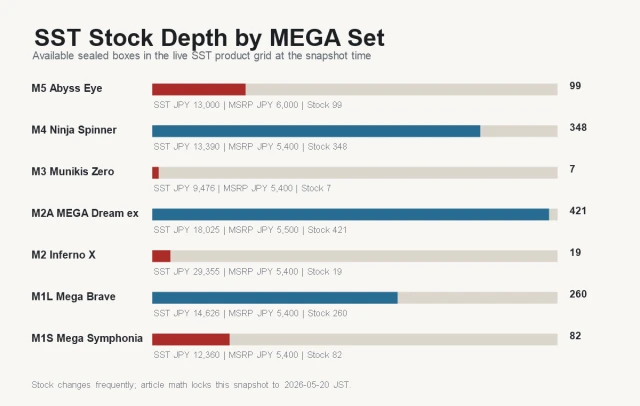
SST stock depth snapshot for Japanese Pokemon MEGA sealed booster boxes on May 20 2026

Stock depth is the part most market articles skip. The same price means different things if there are 421 boxes visible versus 7.

  • Deepest stock: M2A MEGA Dream ex at 421 boxes. This is the easiest box to buy in quantity from the current snapshot.
  • Best price but thinnest stock: M3 Munikis Zero at 7 boxes. Good value can disappear quickly when inventory is this shallow.
  • High-premium, low-stock: M2 Inferno X at 19 boxes. That combination explains why it behaves more like a sealed collectible than a cheap opener.

Set-by-Set Market Read

M4 Ninja Spinner

M4 is the cleanest “open if you want upside” box in this snapshot. The SST sealed price is ¥13,390 against a ¥5,400 MSRP, a 2.48x premium. SNKRDUNK’s guide placed Mega Greninja ex MUR around ¥90,000+ at launch, which gives a 6.72x chase-to-box ratio.

That does not mean every box should be opened. It means M4’s top-end card is still large relative to the sealed box price. The 348-box SST stock count also gives buyers more room to scale into sealed inventory without immediately hitting a thin-stock repricing wall.

Read the Ninja Spinner pull rates and best cards guide →

M3 Munikis Zero

M3 is the value entry. At ¥9,476, it is the cheapest sealed MEGA box in the current SST snapshot and only 1.75x official MSRP. The tradeoff is stock: just 7 sealed boxes were visible in the live product grid.

The top-end chase is less explosive than Greninja or Charizard. SNKRDUNK and SST market references place Mega Zygarde ex MUR in a roughly ¥35,000-¥55,000 conversation depending on date and market frame. Using the conservative ¥35,000 reference, M3 still shows a 3.69x chase-to-box ratio.

Read the Nihil Zero pull rates and best cards guide →

M2A MEGA Dream ex

M2A is the liquidity box. It has the deepest SST stock in this basket at 421 sealed boxes, and the high-class pack structure gives it a broader hit profile than a standard 5-card expansion pack.

The box is not cheap relative to retail: ¥18,025 against a ¥5,500 official box MSRP, or 3.28x. But Buyee’s May 2026 price guide shows Mega Gengar ex SAR around ¥48,000-¥55,000, Pikachu ex SAR around ¥38,000-¥45,000, and Mega Dragonite ex MUR around ¥35,000-¥40,000. This is why M2A reads better as a diversified opening product than a single-chase lottery.

Read the MEGA Dream ex pull rates and best cards guide →

M2 Inferno X

M2 is the scarcity and Charizard box. At ¥29,355, it carries the highest sealed premium in the index: 5.44x official MSRP. Live SST stock was only 19 boxes.

The chase-card data explains why. SNKRDUNK lists Mega Charizard X ex MUR with a market reference of ¥79,999+ and a higher predicted market frame of ¥115,000+. Even using the lower public reference, the chase-to-box ratio is 2.73x. The sealed premium is already high, so M2 is better for sealed conviction or Charizard collectors than for pure value buyers.

Read the Inferno X pull rates and best cards guide →

M1L Mega Brave

M1L is the first-set-of-era box. It is not the cheapest, but the ¥14,626 SST price and 260-box stock count make it more accessible than M2 while still carrying meaningful character demand.

Buyee’s Mega Brave guide puts Mega Lucario ex MUR around ¥45,000-¥55,000 in detailed notes and ¥55,000-¥65,000 in its summary table. Using ¥55,000, M1L shows a 3.76x chase-to-box ratio. Add Lillie’s Determination SAR in the same broad value band and M1L becomes a balanced sealed/opening candidate.

Read the Mega Brave pull rates and best cards guide →

M1S Mega Symphonia

M1S is the calmer twin of M1L. The box price is ¥12,360, the premium is 2.29x MSRP, and live SST stock was 82 boxes.

Guardian TCG showed Mega Gardevoir ex MUR raw at $287.02 in May 2026. At a simple ¥155/$ reference, that is about ¥44,500 and a 3.60x chase-to-box ratio. It is not as liquid as M2A, not as explosive as M4, and not as scarce as M2. Its case is character-led collecting at a still-manageable sealed price.

Read the Mega Symphonia pull rates and best cards guide →

M5 Abyss Eye

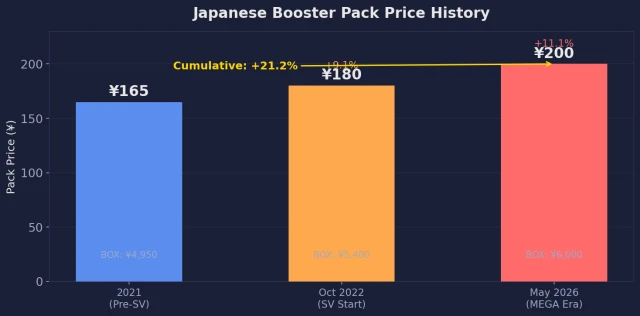
M5 changes the baseline. The official Pokemon Card price revision moved standard 5-card expansion packs from ¥180 to ¥200 for May 2026 and later products, so a normal 30-pack box now starts from ¥6,000 instead of ¥5,400.

At the May 20 snapshot, Abyss Eye was listed at ¥13,000 with 99 stock. That is a 2.17x premium against the new MSRP floor. Because release is May 22, the chase-card market is not mature enough to treat as a settled ratio. For now, M5 should be read as a preorder / early-release position, not a proven EV box.

Read the Abyss Eye complete guide →


What to Buy by Goal

Opening Upside

Pick M4 Ninja Spinner. It has the largest top-chase-to-box ratio in this snapshot, with Mega Greninja ex MUR carrying the high-end demand.

Shop M4 Ninja Spinner →

Broad Hit Profile

Pick M2A MEGA Dream ex. The high-class structure and multiple liquid hits make it less dependent on one card than standard boxes.

Shop M2A MEGA Dream ex →

Cheapest Entry

Pick M3 Munikis Zero. It is the lowest sealed price and lowest MSRP multiple, but the snapshot stock was thin.

Shop M3 Munikis Zero →

Sealed Conviction

Pick M2 Inferno X or M1L Mega Brave. M2 is the Charizard box; M1L is the first MEGA-era set with Lucario and Lillie demand.

Shop M2 Inferno X →


Methodology and Sources

We used official Pokemon Card pages for release dates and MSRP, SST’s live product grid for sealed price and stock, and public market guides for top chase-card reference values. The box premium is current SST sealed price divided by official box MSRP.

Source type Used for Examples
Official Pokemon Card pages Release date, pack MSRP, pack contents M1-M5 product pages, 2026 price revision notice
SST live product grid Current sealed price and available stock M5, M4, M3, M2A, M2, M1L, M1S sealed listings
SNKRDUNK Japanese market references for M4, M3, M2 chases Mega Greninja ex MUR, Mega Zygarde ex MUR, Mega Charizard X ex MUR
Buyee M2A and M1L chase-card ranges Mega Gengar ex SAR, Mega Lucario ex MUR, Lillie’s Determination SAR
Guardian TCG M1S raw-card reference Mega Gardevoir ex MUR raw price

The chase-to-box ratio is not expected value. It only measures how large the top chase card is relative to the sealed price. Real opening EV depends on pull rates, mid-tier cards, bulk, fees, condition, and liquidity.

Core external sources: Pokemon Card M1, M2, M2A, M3, M4, M5, Pokemon Card price revision notice, SNKRDUNK Ninja Spinner, SNKRDUNK Inferno X, Buyee MEGA Dream ex, Buyee Mega Brave, Guardian TCG M1S.


FAQ

What is the best Japanese Pokemon MEGA booster box to buy in 2026?

For pure opening upside, M4 Ninja Spinner has the best ratio in this snapshot. For broader hit depth, M2A MEGA Dream ex is stronger. For sealed long-term identity, M2 Inferno X and M1L Mega Brave are stronger.

Why is Inferno X so expensive?

Inferno X is driven by Mega Charizard X ex, low visible stock, and a sealed price that has already repriced far above MSRP. The box is 5.44x official MSRP in this snapshot.

Are these official pull rates?

No. Pokemon does not publish official pull rates. Any pull-rate discussion in public articles is based on opening datasets and market observation, not an official Pokemon guarantee.

Should I buy boxes or singles?

Buy boxes when you value sealed supply, the opening experience, or a broad hit profile. Buy singles when you only want one specific chase card and do not want to absorb pull-rate variance.
Best Japanese Pokemon Cards Worth Grading PSA in 2026 — Top Picks

Meta description: Updated March 2026 ranking of the 15 best Japanese Pokemon cards worth PSA grading. New PSA fees, raw vs PSA 10 prices, ROI calculations, and set-by-set analysis.

OG title: Best Japanese Pokemon Cards to Grade in 2026 | PSA 10 ROI OG description: 15 best JPN cards worth PSA grading in 2026 — updated with new PSA fee structure, raw vs PSA 10 prices, and ROI calculations based on SNKRDUNK data.

Which best Japanese Pokemon cards should you grade for PSA in 2026? A Mega Gengar ex card worth ¥1,318 raw turns into ¥25,400 inside a PSA 10 slab — a 19x return that repeats across dozens of modern Japanese cards.

PSA raised its grading fees in February 2026, bumping the Value tier from $25 to $33 per card. That changes the ROI math on every submission. We re-ran the numbers across 50+ modern Japanese Pokemon cards using SNKRDUNK and eBay transaction data to find the 15 that still deliver strong grading returns at the new price point.

The answer: premium SARs and specific hidden gems still clear the ROI bar by wide margins. Charizard ex SAR from Pokemon Card 151 now trades at ¥45,000 raw with PSA 10 copies at ¥78,000+ — and Mega Charizard X ex SAR from Inferno X commands ¥122,000 in a slab.

Three tiers in this ranking: high-value SARs ($250+ raw), mid-value grading candidates ($125–$250), and hidden gems where sub-$15 cards become triple-digit slabs. Plus a set-by-set breakdown showing which Japanese booster boxes produce the most grading candidates.

For the full step-by-step grading process, see our Japanese Pokemon Card Grading Guide.

Prices as of March 2026. Secondary market prices based on SNKRDUNK and eBay sold data. ¥159/USD.

Key Takeaway

Not every card is worth grading. Focus on cards where the PSA 10 premium exceeds 3× the raw price plus grading fees. Japanese cards grade higher on average than English — PSA 10 hit rates of 60–70% vs 40–50%.

19.27x
Top Grading ROI

$33
PSA Fee (2026)

60-89%
JPN PSA 10 Rate

15 Cards
Ranked

The PSA 10 Premium on Japanese Cards — By the Numbers

Japanese Pokemon cards earn the highest PSA 10 premiums in the hobby: modern JPN SARs see 40% to over 100% price increases after grading. Two structural factors drive this.

Why Japanese Cards Grade Higher

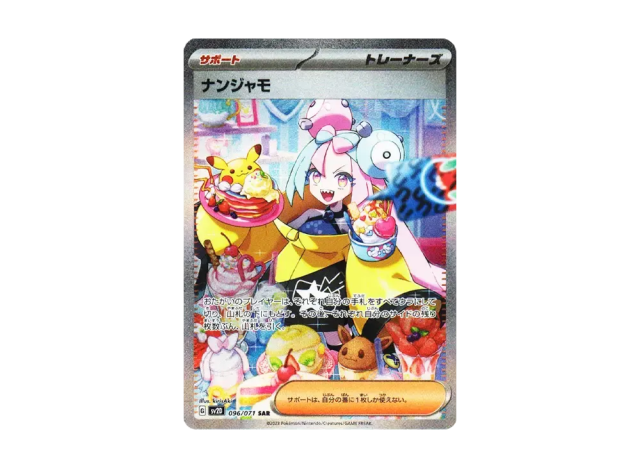
Japanese Pokemon cards hit PSA 10 at rates between 60% and 89% — significantly higher than their English counterparts. Pikachu ex SAR from Super Electric Breaker grades PSA 10 at 89.9%. Charizard ex SAR from Ruler of Black Flame hits 89.1%. Even Nanjamo SAR from Clay Burst, one of the toughest modern grades, sits at 58.1%.

Japanese card stock is thicker and more rigid, reducing corner and edge damage during pack opening. JPN printing uses a finer dot matrix, producing sharper text and fewer surface imperfections that PSA flags.

This higher hit rate directly impacts your bottom line. When 4 out of 5 cards come back PSA 10 instead of 2, your per-card cost drops and total return multiplies.

Japanese Pokemon card printing quality comparison showing superior texture
Comparison of Japanese vs English Pokemon card texture quality close-up

The ROI Framework: 2026 Updated Fees

PSA overhauled its pricing in February 2026. Here’s the new cost structure:

Factor Value
PSA grading fee (Value tier, Feb 2026) $33 per card
Shipping to PSA ~$10–18 per submission
Insurance (recommended for $300+) ~$5–12
Total cost per card ~$40–55

The $100 Rule: At the new $33 fee, don’t grade any raw card worth less than $100 unless it’s a Tier 3 hidden gem with a proven 10x+ multiplier. The old $75 threshold no longer applies.

The 10% Rule: If all-in grading cost exceeds 10% of the PSA 10 value, reconsider. A $45 fee on a $500 slab? That’s 9% — solid. A $45 fee on a $150 slab? That’s 30% — too thin.

Breakeven formula: Raw price + grading cost < PSA 10 value. Charizard ex SAR (151) at ¥45,000 raw ($283), plus ¥7,000 ($44) grading = ¥52,000 total. PSA 10 sells for ¥78,000 ($491) — net gain ¥26,000, a 50% return.

Top 15 Japanese Pokemon Cards Worth Grading in 2026

Nanjamo (Iono) SAR delivers the strongest percentage ROI at +116%, while Mega Charizard X ex SAR from Inferno X generates the largest dollar gain per card at +$327. All prices reflect SNKRDUNK, altema.jp, and eBay completed transactions as of March 2026 at ¥159/USD.

Tier 1: High-Value SARs ($250+ Raw)

Premium submissions where PSA 10 grading adds $150 to $330 in value per card.

Rank Card Set Raw (USD) PSA 10 (USD) Premium
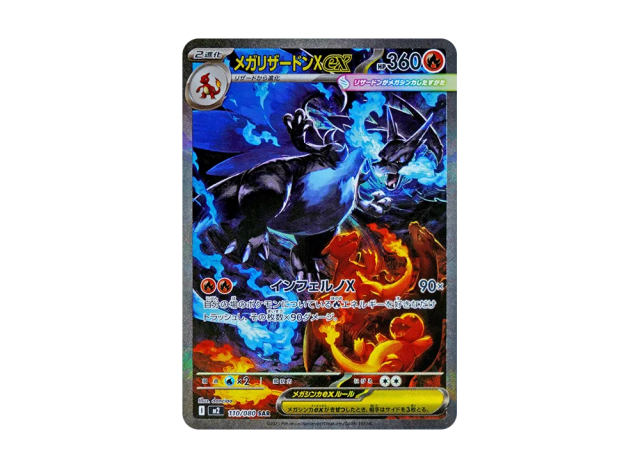
1 Mega Charizard X ex SAR Inferno X $440 (¥70,000) $767 (¥122,000) +74%
2 Nanjamo (Iono) SAR Clay Burst (sv2D) $314 (¥50,000) $679 (¥108,000) +116%
3 Mega Gengar ex SAR MEGA Dream ex (M2a) $302 (¥48,000) $557 (¥88,600) +84%
4 Pikachu ex SAR Super Electric Breaker (SV8) $346 (¥55,000) $574 (¥91,300) +66%
5 Mew ex SAR Shiny Treasure ex (SV4a) $302 (¥48,000) $541 (¥86,000) +79%
6 Charizard ex SAR Pokemon Card 151 (sv2a) $283 (¥45,000) $491 (¥78,000) +73%
7 Charizard ex SAR Ruler of Black Flame (SV3) $252 (¥40,000) $415 (¥65,900) +65%
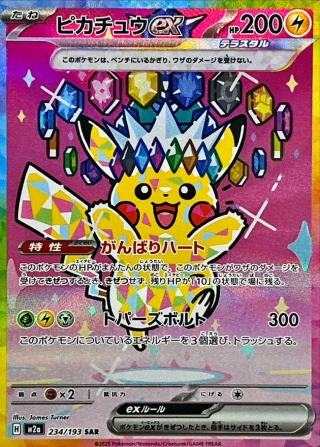
8 Pikachu ex SAR MEGA Dream ex (M2a) $252 (¥40,000) $476 (¥75,700) +89%
PSA 10 Mega Charizard X ex SAR Inferno X Japanese Pokemon card
PSA 10 slab of Mega Charizard X ex SAR from Inferno X

#1 Mega Charizard X ex SAR — The highest raw-to-graded dollar gain on this list at +$327. Pulled from the Inferno X set, this card’s PSA 10 premium approaches its raw price. Charizard PSA 10 slabs have historically held value better than any other character. With PSA 10 population still under 500 for this recent set, scarcity supports the premium.

#2 Nanjamo (Iono) SAR — The highest percentage premium in Tier 1 at +116%. Sustained popularity across JPN and ENG markets keeps PSA 10 demand high. At a 58.1% PSA 10 rate — the lowest on this list — the odds are tougher, but the $365 premium per successful grade makes it the most rewarding high-stakes submission.

#3 Mega Gengar ex SAR — New to Tier 1 in this update. This card was previously tracked as a low-value hidden gem in RR form, but the SAR version from MEGA Dream ex commands ¥88,600 in PSA 10 — an 84% premium on a ¥48,000 raw card. Gengar’s sustained collector following and low SAR pull rates drive the premium.

#7 Charizard ex SAR (Ruler of Black Flame) — PSA 10 has surged from ¥35,000 to ¥65,900 while the raw card has also climbed to ¥40,000, creating a solid +65% premium. The SV3 set produced one of the most iconic Charizard artworks in the Scarlet & Violet era, and a PSA 10 hit rate of 89.1% makes this a high-confidence submission.

#6 Charizard ex SAR (Pokemon Card 151) — This card has climbed from ¥20,000 to ¥45,000 raw since our last update, reflecting surging demand for the sv2a set. PSA 10 at ¥78,000 still delivers a 73% premium. See the full breakdown in our Pokemon Card 151 pull rates guide.

PSA 10 Charizard ex SAR Pokemon Card 151 Japanese card
PSA 10 slab of Charizard ex SAR from Pokemon Card 151 sv2a

Tier 2: Mid-Value Grading Candidates ($125–$250 Raw)

Rank Card Set Raw (USD) PSA 10 (USD) Premium
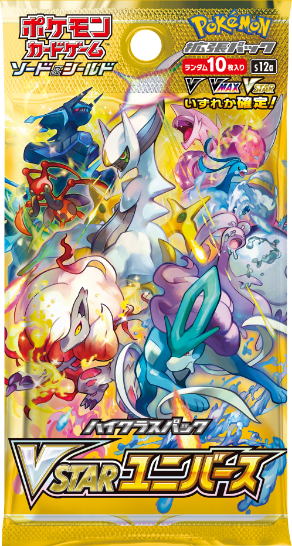
9 Pikachu AR VSTAR Universe (s12a) $189 (¥30,000) $397 (¥63,200) +111%
10 Lillie’s Clefairy ex SAR Battle Partners (SV9) $176 (¥28,000) $283 (¥45,000) +61%
PSA 10 Pikachu AR VSTAR Universe Japanese Pokemon card
PSA 10 slab of Pikachu AR from VSTAR Universe s12a

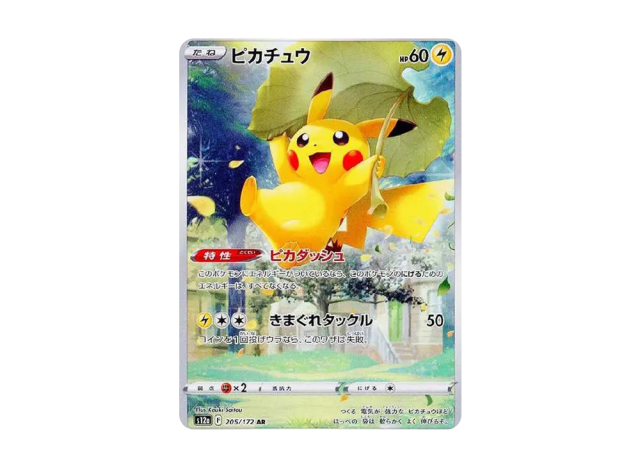
#9 Pikachu AR (VSTAR Universe) — This Art Rare from the VSTAR Universe set delivers +111% premium at a PSA 10 rate of 84.3%. ARs tend to have excellent surface quality. At $189 raw, the grading fee is under 8% of the PSA 10 value — well within our ROI framework.

#10 Lillie’s Clefairy ex SAR — From Battle Partners, one of the newest sets on this list. The 61% premium is moderate, but PSA 10 population is still growing. Lillie’s character popularity and the card’s recent release suggest room for premium expansion.

Tier 3: Hidden Gems — Highest ROI Multipliers

Cards under ¥2,000 raw ($13) that multiply in value with a PSA 10 label. Dollar gains are smaller, but the multipliers justify batch grading.

Rank Card Set Raw (USD) PSA 10 (USD) Multiplier
11 Mega Gengar ex RR MEGA Dream ex (M2a) ~$9 (¥1,400) ~$160 (¥25,400) 18.1x
12 Mega Gardevoir ex SR Mega Symphonia (M1S) ~$8 (¥1,200) ~$94 (¥15,000) 12.5x
13 Marshadow AR Mega Brave (M1L) ~$5 (¥800) ~$57 (¥9,000) 11.3x
14 Cassiopeia SR Night Wanderer (SV6a) ~$6 (¥1,000) ~$56 (¥8,900) 8.9x
15 Team Rocket’s Giovanni P Promo ~$10 (¥1,600) ~$113 (¥18,000) 11.3x
PSA 10 Mega Gengar ex Japanese card with 18x value multiplier
PSA 10 Mega Gengar ex RR from MEGA Dream ex showing 18x value multiplier

#11 Mega Gengar ex RR (18.1x) — The star of grading arbitrage. A raw RR copy costs about ¥1,400. Ship it to PSA, get a 10, and it’s worth roughly ¥25,400. Even at the new $33 grading fee (¥5,250), your net return is ¥18,750 on a ¥6,650 investment — a 282% return. Note: the SAR version (#3 on this list) is a separate, higher-value card.

#15 Team Rocket’s Giovanni P (11.3x) — A promo card most collectors overlook. Giovanni’s enduring franchise popularity drives PSA 10 demand, and limited promo distribution keeps PSA 10 population low. At ¥1,600 raw, submitting 3–5 copies in one batch is the optimal strategy.

Tier 3 Strategy: Buy 3–5 raw copies, grade them all, and sell the PSA 10s while keeping one. At ¥800–1,600 per card, your total outlay for 5 copies plus grading at the new rate is under ¥35,000 — and a single PSA 10 return covers the entire batch.

Best Japanese Sets for Grading Candidates

Inferno X and Super Electric Breaker produce the highest-value PSA 10 candidates, while MEGA Dream ex leads on candidate depth with 3 cards on this list. Here’s the set-by-set breakdown.

Tier Set Cards on This List Avg PSA 10 Premium Best Candidate
Tier 1 Inferno X 1 +74% Mega Charizard X ex SAR (PSA 10: ¥122,000)
Tier 1 MEGA Dream ex (M2a) 3 +84% avg Mega Gengar ex SAR (PSA 10: ¥88,600)
Tier 1 Super Electric Breaker (SV8) 1 +66% Pikachu ex SAR (PSA 10: ¥91,300)
Tier 1 Shiny Treasure ex (SV4a) 1 +79% Mew ex SAR (PSA 10: ¥86,000)
Tier 1 Pokemon Card 151 (sv2a) 1 +73% Charizard ex SAR (PSA 10: ¥78,000)
Tier 1 Ruler of Black Flame (SV3) 1 +65% Charizard ex SAR (PSA 10: ¥65,900)
Tier 2 VSTAR Universe (s12a) 1 +111% Pikachu AR (PSA 10: ¥63,200)
Tier 2 Battle Partners (SV9) 1 +61% Lillie’s Clefairy ex SAR (PSA 10: ¥45,000)
Best Japanese Pokemon booster boxes for PSA grading candidates 2026
Collection of Japanese Pokemon booster boxes from top grading sets

MEGA Dream ex dominates this ranking with 3 cards across two tiers — Mega Gengar ex SAR in Tier 1, Pikachu ex SAR in Tier 1, and Mega Gengar ex RR in Tier 3. This high-class pack produces the deepest bench of grading candidates.

Ruler of Black Flame’s Charizard ex SAR saw PSA 10 surge from ¥35,000 to ¥65,900 — a +65% premium with the raw card now at ¥40,000. Combined with an 89.1% PSA 10 hit rate, this remains one of the most reliable grading plays.

Shiny Treasure ex remains the safest grading bet thanks to Mew ex SAR’s 85.3% PSA 10 rate. If you want to maximize the odds of a 10, this set delivers.

For hidden gems, MEGA-era sets and select promos dominate. BOX prices for these sets are reasonable, and the grading multipliers on low-value cards are extraordinary.

The Grading ROI Calculator — Is Your Card Worth Submitting?

Any Japanese card worth ¥25,000+ raw ($157) with a 60%+ PSA 10 premium clears our updated ROI threshold. Here’s a quick-reference table showing net ROI at the new $33 fee, assuming a ¥7,000 ($44) all-in grading cost.

Raw Value Grading Cost PSA 10 Value (at +80% avg) Net Gain ROI on Total Cost
¥15,000 ($94) ¥7,000 ($44) ¥27,000 ($170) +¥5,000 +23%
¥25,000 ($157) ¥7,000 ($44) ¥45,000 ($283) +¥13,000 +41%
¥40,000 ($252) ¥7,000 ($44) ¥72,000 ($453) +¥25,000 +53%
¥55,000 ($346) ¥7,000 ($44) ¥99,000 ($623) +¥37,000 +60%
¥80,000 ($503) ¥7,000 ($44) ¥144,000 ($906) +¥57,000 +66%

Assumes 80% PSA 10 hit rate (JPN average). Adjust down for cards with known surface issues.

PSA 10 Nanjamo Iono SAR Clay Burst Japanese Pokemon card grading ROI
PSA 10 Nanjamo SAR from Clay Burst showing 116% grading premium

When NOT to Grade

Save your money on these:

  • Raw value under ¥15,000 ($94) — Unless it’s a Tier 3 hidden gem with 10x+ multiplier, the new $33 fee eats too much of the premium
  • Visible whitening or edge wear — PSA 9 premiums on modern JPN cards add only 10–15% vs raw, while PSA 10 adds 60%+
  • PSA 10 population over 5,000 — Supply outpacing demand compresses premiums over time
  • Cards from sets released in the last 3 months — PSA 10 prices spike then correct. Wait for stabilization
Japanese Pokemon card edge quality check for PSA grading submission
Example of a Japanese Pokemon card edge showing PSA 10 quality indicators

PSA 10 Population and Scarcity — Why Low POP Matters

Population data directly impacts long-term PSA 10 values. A PSA 10 Mega Charizard X ex SAR with population under 500 holds its premium far better than a Pikachu V with 15,000+ copies graded.

Reading the PSA POP Report

The PSA POP Report shows how many copies of each card have been graded at each level. Focus on:

  • Total PSA 10 population — Under 500 is ideal for premium retention
  • PSA 10 rate — JPN modern cards typically hit 60–89%. Higher rates mean more supply, which can compress premiums long-term
  • Submission velocity — How fast the POP is growing. Cards from 2023 and earlier have slower growth, keeping current low-POP cards scarcer

Cards with the Best POP-to-Demand Ratios

From our ranking:

  • Mega Charizard X ex SAR (Inferno X) — Recent set, limited PSA submissions. Charizard demand is effectively infinite
  • Team Rocket’s Giovanni P (Promo) — Narrow distribution, promo cards historically have lower submission rates
  • Charizard ex SAR (Ruler of Black Flame) — The +65% premium with an 89.1% hit rate and PSA 10 population of 17,137 still shows demand outpacing the graded supply reaching the market

For long-term value analysis, check our best Japanese Pokemon cards to invest in 2026 guide and our most valuable Japanese Pokemon cards ranking.

How to Get Your Cards Graded

PSA’s Value tier at $33 per card (up from $25) remains the most cost-effective option for Japanese Pokemon card submissions, with a 75-day turnaround.

We’ve written a complete walkthrough in our Japanese Pokemon Card Grading Guide. Key points for 2026:

  • Service levels (February 2026 pricing): Value ($33/card, 75-day turnaround), Value Plus ($50/card, 45-day), Value Max ($65/card, 35-day), Regular ($80/card, 25-day)
  • International shipping: US-based submitters ship directly. International collectors use proxy services or forwarding partners
  • Card protection: Penny sleeves + semi-rigid holders (Card Savers). Never use toploaders for PSA submissions
  • Declared value: Always declare at or above market value for insurance purposes
How to prepare Japanese Pokemon cards for PSA grading submission
Card preparation setup for PSA submission with penny sleeves and Card Savers

The Bottom Line

Three takeaways from the updated March 2026 data:

  1. Nanjamo (Iono) SAR leads on percentage premium at +116% — ¥50,000 raw, ¥108,000 graded, with the lowest PSA 10 rate on this list (58.1%) making it a high-reward, higher-risk play
  2. Hidden gems under ¥2,000 still deliver 10x–18x multipliers even after PSA’s fee increase — a single PSA 10 Mega Gengar ex RR covers an entire 5-card batch
  3. PSA’s February 2026 fee increase raised the minimum viable grading threshold from ¥11,000 to ¥15,000 raw — but every card on this list still clears it

Got a Mega Charizard X ex SAR worth ¥70,000? Or a stack of ¥1,400 Mega Gengar ex RR cards? The data points to the same conclusion: selective PSA grading of Japanese Pokemon cards remains one of the strongest value-adds in the hobby — you just need to be more selective now that fees have risen.

The best source for grading candidates? Sealed Japanese booster boxes. Every box you open is a chance to pull a card from this ranking.

All orders ship from Japan with tracking and insurance. View shipping policy → | Customs & duties info →
Questions? Contact us → | Return policy →

Price Sources

Data Point Source Notes
JPN raw card prices SNKRDUNK + altema.jp Primary JPN market reference
JPN PSA 10 prices SNKRDUNK + altema.jp PSA 10 transaction data Completed sale data
USD conversion ¥159/USD As of March 12, 2026
PSA 10 hit rates PSA POP Report + community opening data Estimated, not officially confirmed
Grading fees PSA February 2026 revised fee schedule

FAQ

What Japanese Pokemon cards are worth grading PSA in 2026?

Cards with a raw value above ¥15,000 ($94) and a proven PSA 10 premium of 60%+ are the strongest candidates. Our top percentage ROI pick is Nanjamo (Iono) SAR from Clay Burst — ¥50,000 raw, ¥108,000 as PSA 10 (+116%). For high-dollar returns, Mega Charizard X ex SAR from Inferno X adds ¥52,000 per graded card. Hidden gems under ¥2,000 with 10x+ multipliers (like Mega Gengar ex RR at 18.1x) justify batch grading.

How much does PSA grading cost in 2026?

PSA raised prices in February 2026. Value tier is now $33 per card (75-day turnaround), up from $25. Value Plus is $50 (45 days), Value Max is $65 (35 days), and Regular is $80 (25 days). With shipping and insurance, budget ¥7,000–8,000 ($44–50) per card for the Value tier.

Is it worth getting Japanese Pokemon cards PSA graded after the 2026 fee increase?

Yes, for cards that clear our updated thresholds. Japanese cards hit PSA 10 at 60–89% rates. At the new $33 fee, any JPN card worth ¥25,000+ raw ($157) with an 80%+ PSA 10 rate is a strong submission. The fee increase eliminated borderline candidates but left the top 15 on this list with comfortable ROI margins.

What is the most valuable PSA 10 Japanese Pokemon card in 2026?

Among modern cards (2022–2026 releases), Mega Charizard X ex SAR from Inferno X leads at ¥122,000 ($767) in PSA 10. Nanjamo SAR is second at ¥108,000 ($679). For all-time rankings including vintage cards, see our most valuable Japanese Pokemon cards guide.

Which Pokemon sets have the best PSA 10 hit rate?

Super Electric Breaker leads with Pikachu ex SAR hitting 89.9% PSA 10 rate. Ruler of Black Flame’s Charizard ex SAR is close at 89.1%. Shiny Treasure ex delivers 85.3% on Mew ex SAR. Modern Japanese sets generally grade between 58–90% PSA 10.

What is the minimum card value worth grading after PSA’s 2026 price increase?

We recommend ¥15,000 ($94) raw as the new minimum for standard submissions, up from ¥11,000 before the fee change. Below ¥15,000, the ¥7,000 all-in grading cost eats too much premium. Exception: hidden gem cards in the ¥800–2,000 range with 10x+ multipliers, where batch grading 3–5 copies still works.

Which modern Japanese Pokemon cards have the highest PSA 10 premium?

By percentage: Nanjamo (Iono) SAR at +116%, Pikachu AR (VSTAR Universe) at +111%, Pikachu ex SAR (MEGA Dream ex) at +89%. By yen amount: Mega Charizard X ex SAR (Inferno X) adds ¥52,000, Nanjamo SAR adds ¥58,000, and Mega Gengar ex SAR (MEGA Dream ex) adds ¥40,600. The best candidates score high on both metrics.


⚡ Shop Japanese Pokemon Booster Boxes

Authentic sealed products shipped directly from Tokyo, Japan with tracking & insurance via FedEx.

Browse All Japanese Pokemon Booster Boxes


Japanese Pokemon Card Grading Guide (PSA/BGS/CGC)

A PSA 10 Pikachu ex SAR from Super Electric Breaker recently sold for $516 on eBay. The same card ungraded trades around ¥55,000 (~$375). That single plastic case added roughly $140 in value.

Grading Japanese Pokemon cards has become one of the smartest moves a collector can make — and Japanese cards have a built-in advantage that most English-language guides completely ignore. JPN cards consistently grade higher than their English counterparts thanks to superior card stock and tighter quality control at the printing facility.

This guide covers everything you need to know about grading Japanese Pokemon cards in 2026: which service to choose (PSA, BGS, or CGC), exactly how much it costs after the February 2026 price update, how to submit your cards step by step, and which cards are actually worth the grading fee. We handle Japanese Pokemon cards daily at our warehouse, and we have seen firsthand how a PSA 10 slab transforms a card’s market value.

Key Takeaway

A PSA 10 slab adds 38-75% to a Japanese SAR’s value — Pikachu ex SAR jumps from ¥55,000 raw to ~$516 graded. Japanese cards grade PSA 10 at significantly higher rates than English prints thanks to thicker card stock and tighter QC, making every JPN box opening a potential grading opportunity.

+38-75%
PSA 10 Premium

$33
PSA Fee (2026)

$516
Top PSA 10 Sale

60-89%
JPN PSA 10 Rate

Why Grade Japanese Pokemon Cards?

Grading Japanese Pokemon cards locks in a card’s condition with a trusted third-party score, and the price premium for top grades is significant. A PSA 10 (Gem Mint) designation can add 50-200% to a card’s raw value — sometimes more for chase cards with low PSA 10 populations.

The PSA 10 Premium — Real Numbers

The gap between raw and graded prices tells the story. Here are real market examples from early 2026:

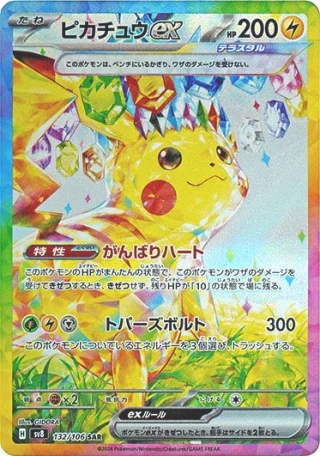
PSA 10 Pikachu ex SAR Super Electric Breaker Japanese Pokemon card graded slab
PSA 10 graded Pikachu ex SAR in slab
Card Rarity Raw Price PSA 10 Price Premium
Pikachu ex SAR (Super Electric Breaker) SAR ¥55,000 (~$375) ~$516 (¥76,000) +38%
Mega Charizard X ex SAR (Inferno X) SAR ¥65,000 (~$440) ~$720 (¥105,000) +62%
Umbreon ex SAR (Terastal Festival ex) SAR ¥47,000 (~$320) ~$420 (¥62,000) +32%
Mew ex SAR (Shiny Treasure ex) SAR ¥55,000 (~$375) ~$575 (¥85,000) +55%
Charizard ex SAR (Pokemon Card 151) SAR ¥20,000 (~$136) ~$238 (¥35,000) +75%

Prices as of March 2026. Secondary market prices via SNKRDUNK and eBay sold listings.

The pattern is clear: cards valued at $100+ raw see the strongest return on grading investment. The grading fee ($25-$33 for PSA Value tiers) is a fraction of the premium gained.

Why Japanese Cards Grade Higher Than English

Japanese Pokemon cards have a structural advantage when it comes to grading. The printing facility in Japan produces cards with:

  • Better centering — JPN cards are cut with tighter tolerances, making off-center cards far less common than in English print runs
  • Smoother card stock — The paper quality is more uniform, reducing surface imperfections that cost points on the grading scale
  • Cleaner edges — Factory-fresh JPN cards show fewer whitening issues straight out of the pack
  • Consistent foil application — Holographic patterns and texture are applied more evenly

This means a freshly pulled Japanese SAR or SR has a meaningfully higher chance of earning a PSA 10 compared to the same card printed in English. Collectors who grade Japanese cards regularly report PSA 10 hit rates of 60-80% on pack-fresh cards, compared to 40-60% for English equivalents.

For collectors buying sealed Japanese booster boxes, this is a major advantage. Every box you open is a potential source of PSA 10 candidates.

PSA vs BGS vs CGC — Which Service for Japanese Cards?

PSA is the strongest choice for Japanese Pokemon cards if resale value matters to you. Three grading services dominate the Pokemon card market, and each has strengths — but for Japanese cards specifically, the numbers favor PSA.

PSA — The Market Leader

PSA holds roughly 70% of the graded Pokemon card market. For Japanese cards, PSA is the default choice for most collectors and resellers.

Why PSA for JPN cards:

  • Highest resale liquidity — PSA slabs sell faster and for more money on eBay, Mercari, and SNKRDUNK
  • PSA Japan accepts domestic submissions — no international shipping needed if you are in Japan
  • PSA POP Report provides transparent population data for every card
  • Most recognized brand globally among Pokemon collectors

Drawback: PSA uses a single overall grade (1-10) without subgrades. If your card scores a 9 with near-perfect centering but a small surface mark, you only see “PSA 9” — not the breakdown.

BGS (Beckett Grading Services) — Subgrades for Serious Collectors

BGS assigns four subgrades — Centering, Corners, Edges, and Surface — alongside the overall grade. This transparency appeals to collectors who want to know exactly where a card lost points.

BGS graded Pokemon card showing four subgrades centering corners edges surface
BGS graded card showing subgrades label close-up

The BGS Black Label: A BGS 10 Black Label (all four subgrades at 10) is rarer than a PSA 10 and commands a significant premium. However, BGS Black Labels are extremely difficult to achieve on any card.

For JPN cards specifically:

  • BGS market share for Pokemon is smaller than PSA — resale prices are typically 10-20% lower than equivalent PSA grades
  • Turnaround times have historically been longer
  • No domestic Japan submission option — cards must ship to the US

CGC (Certified Guaranty Company) — The Growing Alternative

CGC entered the trading card market more recently and has been gaining traction with competitive pricing and faster turnaround.

For JPN cards:

  • Stricter centering standards than PSA — JPN cards’ better centering works in your favor here
  • Growing acceptance but still lags PSA in resale value by 15-25%
  • Offers subgrades (optional, for an additional fee)
  • No domestic Japan submission
Feature PSA BGS CGC
Market Share (Pokemon) ~70% ~15% ~15%
Resale Premium Highest Medium Growing
Subgrades No Yes (4) Optional
JPN Domestic Submission Yes (PSA Japan) No No
Starting Price (2026) $24.99 $14.95 $15.00
Best For Resale value, liquidity Detailed condition data Budget grading

Our recommendation: For Japanese Pokemon cards, PSA is the strongest choice if you plan to sell or trade your graded cards. The resale premium alone justifies the slightly higher cost. If you are a personal collector who values detailed condition breakdowns, BGS is worth considering.

PSA Grading Costs in 2026 (Updated February)

PSA updated its pricing on February 10, 2026, with increases of $3-$5 across most service levels. Here is the complete breakdown.

US Pricing Tiers

Service Level Cost Per Card Turnaround Max Declared Value Best For
Value Bulk $24.99 95 business days $499 Bulk submissions (20+ cards)
Value $32.99 75 business days $499 Standard single cards
Value Plus $49.99 45 business days $999 Faster turnaround
Value Max $64.99 35 business days $999 Mid-priority cards
Regular $79.99 25 business days $2,499 Higher-value cards
Express $149.00 15 business days $2,499 Time-sensitive submissions
Super Express $299.00 7 business days $4,999 Urgent, high-value cards

Value Bulk requires PSA Collectors Club membership ($99/year). All prices per card.

PSA Japan Pricing (¥ — Domestic Submissions)

If you are submitting from within Japan, PSA Japan offers yen-denominated pricing through psacard.co.jp:

Service Level Cost Per Card (¥) Turnaround Change (Feb 2026)
Value Bulk (バリュー・バルク) ¥3,980 90 business days +¥1,000
Value (バリュー) ¥4,980 +¥1,000
Value Plus (バリュー・プラス) ¥6,980 +¥1,000
Regular (レギュラー) ¥9,980 +¥1,000

PSA Japan pricing as of February 2026. Higher tiers (Express+) available — check psacard.co.jp for current rates.

Which Tier to Choose

The right tier depends on your card’s value:

  • Card worth $100-$300 raw → Value Bulk ($24.99) or Value ($32.99). The grading fee is a small percentage of the potential premium
  • Card worth $300-$1,000 raw → Value ($32.99) to Value Plus ($49.99). Worth the faster turnaround since the card represents significant value
  • Card worth $1,000+ raw → Regular ($79.99) or Express ($149). You want your high-value card back quickly with proper insurance coverage

Rule of thumb: If the grading fee is less than 10% of the card’s raw value, it is almost always worth submitting. For cards under $75 raw, the math gets tight — the grading fee plus shipping can eat into or exceed the PSA 10 premium.

How to Submit Japanese Cards for Grading — Step by Step

Submitting cards to PSA is straightforward once you know the process. Here are the five steps.

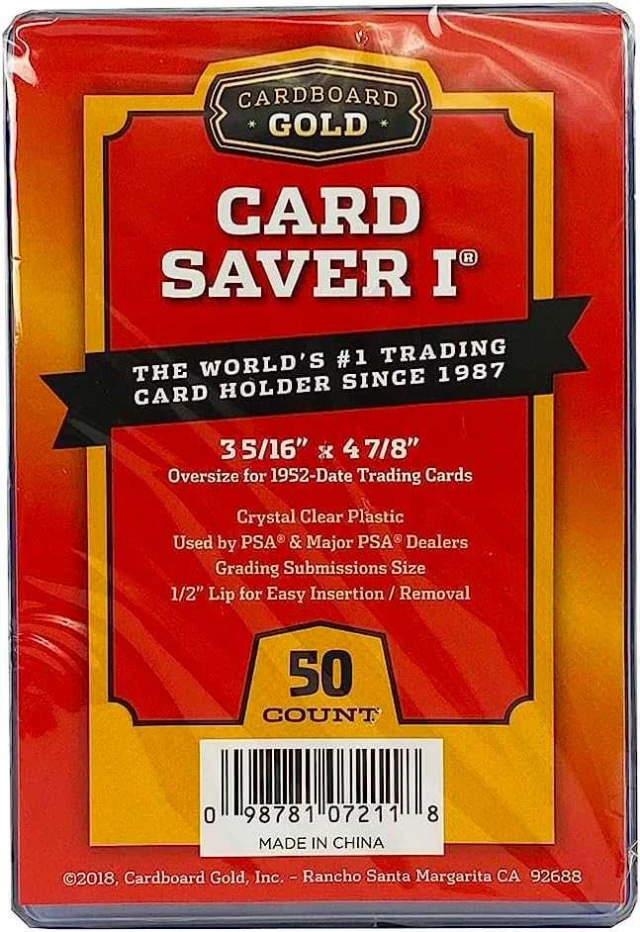
Card Saver I semi-rigid holder and penny sleeve for PSA grading submission
Card Saver I semi-rigid holder with penny sleeve for PSA submission

Step 1 — Inspect and Select Your Cards

Before spending money on grading, evaluate each card honestly:

  • Check centering — Hold the card up and compare the border width on all four sides. JPN cards are generally well-centered, but check anyway
  • Inspect corners — Use a loupe or magnifying glass. Even tiny whitening can drop a grade
  • Look for surface scratches — Tilt the card under direct light. Holo cards show scratches more easily
  • Check edges — Run your finger along each edge. Feel for nicks or rough spots

The $75 rule: Only submit cards worth $75 or more in raw condition. Below that threshold, the grading fee ($25-$33) plus return shipping ($10-$20) makes the ROI marginal at best.

Step 2 — Prepare and Package Your Cards

Proper packaging prevents damage during transit — and PSA will charge you if cards arrive damaged.

  1. Place each card in a penny sleeve (soft sleeve), inserting top-first
  2. Slide the sleeved card into a Card Saver I (semi-rigid holder). Do NOT use top-loaders — PSA prefers Card Saver I holders
  3. Write the card’s submission number on the Card Saver with a marker
  4. Stack Card Savers together and wrap with a rubber band or painter’s tape
  5. Place the stack between two pieces of cardboard for rigidity
  6. Use a box that fits snugly — excess space means cards can shift during shipping

Step 3 — Create Your Submission on PSA’s Website

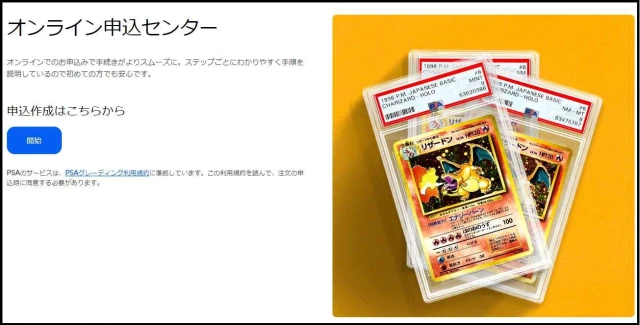
PSA online submission form for Japanese Pokemon card grading
PSA online submission form screenshot
  1. Log in to your PSA account at psacard.com (or psacard.co.jp for PSA Japan)
  2. Click “Submit” and select your service level
  3. Enter each card’s details: Card Name, Set, Card Number, Year, Declared Value
  4. For Japanese cards, select “Japanese” as the language — PSA handles JPN cards routinely
  5. Review your submission, pay the grading fee, and print the packing slip

Declared value tip: Be honest with declared values. PSA uses this for insurance purposes. Underdeclaring risks denied claims if something goes wrong. Overdeclaring bumps you into a higher service tier.

Step 4 — Ship to PSA

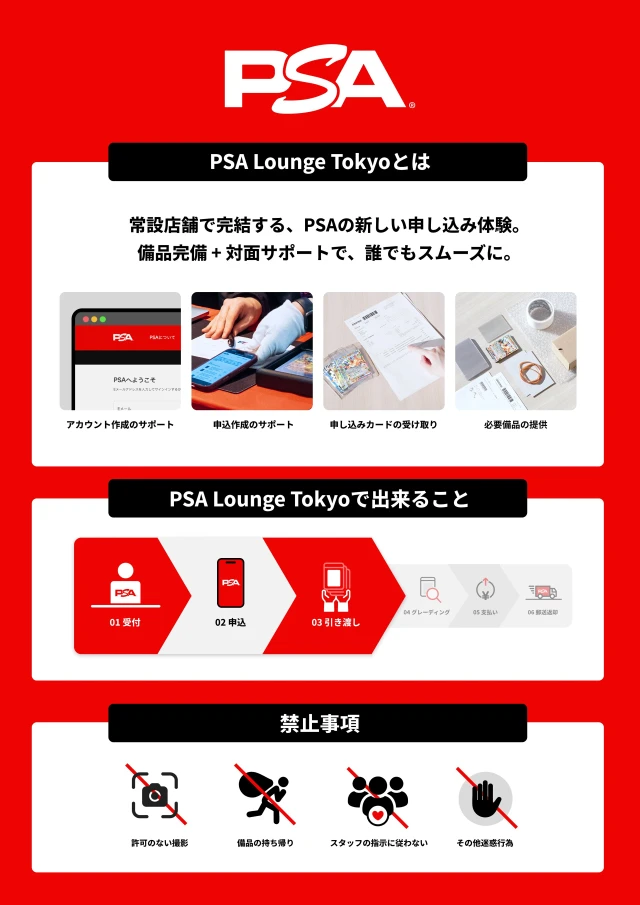
PSA Lounge Tokyo Akihabara storefront for walk-in Pokemon card grading submissions
PSA Lounge Tokyo in Akihabara – storefront photo
  • From the US: Ship to PSA’s facility in Santa Ana, California. Use USPS Priority Mail with tracking and insurance matching your declared value
  • From Japan (via PSA Japan): Ship domestically to PSA Japan’s receiving address. Standard tracked shipping within Japan is sufficient
  • From other countries: Ship internationally to PSA US, or use a forwarding service. Factor in customs declarations and shipping insurance
  • PSA Lounge Tokyo (Akihabara): Walk-in submissions accepted — bring your cards directly and skip shipping entirely

Always use tracked shipping. Untracked packages with valuable cards are a risk not worth taking.

Step 5 — Receive and Verify Your Graded Cards

After PSA grades your cards:

  1. Check your PSA account for grade results before the cards arrive
  2. Verify each slab matches the card you submitted (cert number, card name, grade)
  3. Look up your card on the PSA POP Report to see how many copies exist at each grade
  4. Update your collection tracking with the PSA certification number

Your graded cards will arrive in PSA’s tamper-evident slabs, ready for display, sale, or long-term storage.

What the Grades Mean — PSA Scale Explained

PSA uses a 1-10 scale, but for modern Japanese Pokemon cards, the grades that matter most are 8, 9, and 10. Cards grading below 8 are typically not worth the submission fee unless they are vintage or extremely rare.

PSA grading scale 1 to 10 explained for Pokemon cards with grade descriptions
PSA grading scale visual diagram showing grades 1-10

PSA 8-9 — Near Mint to Mint

  • PSA 8 (NM-MT): Minor imperfections visible upon close inspection. Slight whitening on one or two corners, minor centering shift. A PSA 8 on a $200+ card still holds value, but the premium over raw is modest (10-20%)
  • PSA 9 (Mint): Nearly perfect with one minor flaw — perhaps slightly off-center or a single corner with minimal whitening. PSA 9 carries a solid premium (20-40% over raw) and is a realistic target for most pack-fresh JPN cards

PSA 10 (Gem Mint) — The Gold Standard

PSA 10 means the card is virtually perfect: sharp corners, flawless surface, centered within PSA’s tolerances, and clean edges. This is the grade that commands the massive premium.

For Japanese cards, PSA 10 is achievable at higher rates than English cards. The combination of better card stock, tighter centering, and cleaner printing gives JPN cards an edge. Many collectors report that 6-8 out of every 10 pack-fresh JPN SARs or SRs earn a PSA 10.

Grade Condition Market Impact JPN Card Hit Rate (Pack-Fresh)
PSA 10 Gem Mint — virtually perfect 50-200% premium over raw 60-80%
PSA 9 Mint — one minor flaw 20-40% premium over raw 15-30%
PSA 8 NM-MT — minor imperfections 10-20% premium over raw 5-10%
PSA 7 or below Visible wear Often below raw market price Rare for pack-fresh

Which Japanese Cards Are Worth Grading?

Not every card deserves a slab. Grading fees, shipping costs, and turnaround time mean you should be selective about what you submit.

The $75 Rule — When Grading Pays Off

A simple ROI framework: only grade cards worth $75 or more in raw condition.

Here is the math. Assume you use PSA Value Bulk ($24.99) with $15 in shipping costs:

  • Total grading cost: ~$40
  • If the PSA 10 premium is 50%: your card needs to be worth at least $80 raw to break even
  • If the PSA 10 premium is 75%: break-even drops to around $55 raw

Since JPN cards hit PSA 10 at higher rates (60-80%), the expected value calculation favors grading. But you still need the raw card to be worth enough to absorb the fee.

Best Candidates by Rarity

Rarity Grade Priority Why
SAR (Special Art Rare) High — always consider grading Highest raw values, strongest PSA 10 premiums
MUR (Master Ultra Rare) High Ultra-rare, extremely high per-card value
UR (Ultra Rare) Medium-High Solid premiums, especially for popular characters
SR (Super Rare) Medium Grade if raw value exceeds $75
AR (Art Rare) Low Most ARs are under $20 raw — grading fee exceeds premium
RR (Double Rare) Low Rarely worth grading unless it is a meta staple

Which sets have the best grading candidates? Check our detailed pull rates and top card guides for each set:

Charizard ex SAR Pokemon Card 151 Japanese grading candidate PSA 10
Charizard ex SAR from Pokemon Card 151 — top grading candidate

For a broader look at the most valuable Japanese cards, see our Most Valuable Japanese Pokemon Cards 2026 guide and our investment analysis.

Cards NOT Worth Grading

Save your money on these:

  • Cards under $50 raw — The math does not work. Grading cost + shipping eats the premium
  • Cards with visible damage — Creases, bends, or heavy whitening will grade PSA 6 or below. Not worth the fee
  • Common and uncommon cards — Unless it is a vintage error card, sub-$5 cards should never be graded
  • Cards you pulled and handled without sleeves — Surface micro-scratches from bare handling almost guarantee a PSA 9 or lower

Tips for Getting PSA 10 on Japanese Cards

Pulling a valuable card is only half the battle. How you handle it from pack to slab determines whether you get a PSA 10 or settle for a 9.

Handle Fresh Pulls Correctly

The moment you pull a card from the pack:

  1. Touch only the edges — Fingerprints on the surface show under PSA’s inspection light
  2. Sleeve immediately — Have penny sleeves ready before you open packs. Insert top-first into the sleeve
  3. Do not riffle through the pack — Sliding cards against each other causes micro-scratches on holo surfaces
  4. Work on a clean, soft surface — A playmat or microfiber cloth prevents back-side scratches
  5. Store sleeved cards flat — Avoid bending by storing in a Card Saver or top-loader right away

Common Defects That Cost You a Grade

Even on Japanese cards with their superior print quality, these issues appear:

  • Print lines — Faint horizontal lines across the holo surface. Common on textured cards. Hold under angled light to check
  • Corner whitening — Even factory-fresh JPN cards occasionally show minor whitening on one corner. Check all four
  • Off-center cuts — While JPN centering is generally excellent, some cards still come slightly off. PSA allows roughly 60/40 centering for a 10
  • Surface texture irregularities — On full-art and SAR cards, look for bumps or inconsistencies in the textured surface
  • Edge nicks — Tiny chips on the card edge from pack opening. Use a loupe to inspect

Pro tip: If a card has one minor flaw, it is likely a PSA 9 — still worth grading if the raw value exceeds $100. Do not only submit cards you think are “perfect 10s.” A PSA 9 SAR still commands a meaningful premium.

The Bottom Line

Grading Japanese Pokemon cards is one of the highest-ROI moves a collector can make, especially given JPN cards’ natural advantage in achieving top grades.

Three key takeaways:

  1. PSA is the top choice for JPN cards — 70% market share, highest resale value, and PSA Japan enables domestic submissions from Japan
  2. The 2026 costs are manageable — At $24.99-$32.99 for Value tiers, the grading fee is a small fraction of the premium on cards worth $75+
  3. JPN cards grade higher — Superior card stock and centering give Japanese cards a 60-80% PSA 10 hit rate on pack-fresh cards, compared to 40-60% for English

The best way to build a collection of gradeable cards? Start with quality sealed product. Every Japanese booster box is a potential source of PSA 10 candidates — and every box from our store is serial-tracked for authenticity.

Grade-Worthy Cards Start Here
Japanese Sealed Booster Boxes
From ¥5,500 (~$37)
Ships from Tokyo · Tracked · Serial-numbered

Browse Collection →

FAQ [schema: FAQPage]

How much does it cost to get a Japanese Pokemon card graded?

PSA grading starts at $24.99 per card (Value Bulk tier, as of February 2026). PSA Japan offers yen-denominated pricing starting at ¥3,980. BGS starts at $14.95 and CGC at $15.00. Factor in return shipping ($10-$20 for US domestic, more for international) when calculating total cost.

Is it worth grading Japanese Pokemon cards?

Yes, if the card is worth $75 or more in raw condition. PSA 10 premiums on Japanese SARs and URs typically range from 50-200% over raw prices. Japanese cards also have a higher PSA 10 hit rate (60-80% pack-fresh) compared to English cards, making the expected return on grading stronger.

Can you send Japanese cards to PSA from Japan?

Yes. PSA Japan (psacard.co.jp) accepts domestic submissions from within Japan. Value Bulk pricing starts at ¥3,980 per card with a 90-business-day turnaround. You ship domestically within Japan, avoiding international shipping costs and customs. PSA Lounge Tokyo in Akihabara also accepts walk-in submissions.

What grade do most Japanese Pokemon cards get?

Pack-fresh Japanese cards in good condition typically receive PSA 9 or PSA 10. The superior card stock and centering of JPN printing gives them an advantage — collectors commonly report 60-80% PSA 10 rates on carefully handled pack-fresh SARs and SRs.

PSA vs CGC — which is better for Japanese Pokemon cards?

PSA is the stronger choice for resale value and market liquidity. PSA-graded Pokemon cards sell for 15-25% more than equivalent CGC grades on secondary markets. CGC offers lower starting prices ($15 vs $24.99) and optional subgrades, making it a reasonable budget alternative if you plan to keep the cards in your personal collection.

How long does PSA grading take in 2026?

After the February 2026 update: Value Bulk takes 95 business days, Value takes 75 days, and Express takes 15 days. PSA Japan’s Value Bulk turnaround is 90 business days. Actual times may vary based on submission volume.

What Japanese Pokemon cards are worth grading?

Focus on SARs (Special Art Rare) and URs (Ultra Rare) worth $75+ in raw condition. Top candidates include chase cards like Pikachu ex SAR, Charizard ex SAR, and popular character SARs from recent sets. Avoid grading cards under $50 raw — the grading fee and shipping costs will eat into or exceed the premium.


⚡ Shop Japanese Pokemon Booster Boxes

Authentic sealed products shipped directly from Tokyo, Japan with tracking & insurance via FedEx.

Browse All Japanese Pokemon Booster Boxes

Japanese Pokemon Booster Box Unboxing Guide

Key Takeaway

Japanese booster boxes guarantee at least 1 SR + 3 ARs + 2-3 RRs per box — something English boxes never promise. Four box types exist (Main Expansion, Enhanced, High Class Pack, Special), each with different pack counts and pull structures. Start with a High Class Pack for the best first-time experience.
30
Packs per Box

5
Cards per Pack

1 SR
Guaranteed

4
Box Types

Introduction

Thirty packs. Five cards each. A guaranteed Super Rare in every box. A Japanese Pokemon booster box is not just a smaller version of the English box — the pack count, card structure, pull rate guarantees, and even what counts as “rare” are fundamentally different.

If you’re opening your first Japanese booster box — or thinking about buying one — the differences can be confusing. Thirty packs instead of thirty-six. Five cards per pack instead of ten. No energy cards. And a guaranteed Super Rare in every box? That last part is real, and it’s one of the biggest reasons collectors worldwide are switching to Japanese boxes.

We ship hundreds of Japanese booster boxes from Tokyo every month and have documented pull rates across 17+ sets. This guide breaks down exactly what’s inside each box type, how Japanese boxes compare to English ones, what pulls you can realistically expect, and which box type matches your goals.

What’s Inside a Japanese Booster Box?

Every Japanese booster box contains sealed booster packs wrapped in factory shrink wrap. But the specifics depend on the set type — and that’s where most first-time buyers get confused.

Box Contents at a Glance

A standard Japanese expansion pack box contains 30 booster packs with 5 cards each, totaling 150 cards per box. No energy cards are included in standard packs (unlike English packs, which always include an energy card). Every card at Rare or above is holographic — there are no non-holo rares in Japanese sets.

The box itself features full set artwork on the cover, which makes sealed Japanese boxes popular display pieces. Inside, packs are lined up in rows with uniform packaging and set-specific pack art.

Inside a Japanese Pokemon booster box showing 30 sealed packs
Japanese booster box opened showing 30 packs arranged inside

Inside Each Pack — The 5-Card Slot Structure

Each Japanese booster pack follows a consistent slot structure. Understanding this pattern transforms the opening experience — you’ll know exactly when to hold your breath.

Slot Typical Contents Notes
1 Common (C) Base card
2 Common (C) Base card
3 Common (C) or Uncommon (U) Occasionally upgraded
4 Uncommon (U) Higher-tier base card
5 Rare (R) or higher The hit slot — can be R, RR, AR, SR, SAR, or UR

Slot 5 is where the action happens. In most packs, you’ll pull a standard Rare (holo). But in roughly 1 out of every 5-6 packs, slot 5 upgrades to a Double Rare (RR), Art Rare (AR), or higher. That’s the moment collectors live for.

Pro Tip: The 5th Card

Always check slot 5 last. That’s your hit slot — and in roughly 1 out of 5-6 packs, it upgrades from a standard Rare to an RR, AR, SR, SAR, or even UR. The anticipation is what makes Japanese pack openings addictive.

4 Types of Japanese Booster Boxes Explained

Not all Japanese booster boxes are the same. The Pokemon Company releases four distinct product types, each with different pack counts, card counts, and pull rate structures.

Main Expansion (拡張パック)

The standard release and the most common box type. Main expansions form the backbone of each generation’s card pool.

  • Packs per box: 30
  • Cards per pack: 5
  • MSRP: ¥5,400 → Market price: ¥6,000–8,000 (~$40–55)
  • Best for: General collecting, building a set, consistent value

Recent examples: Battle Partners (SV9), Super Electric Breaker (SV8), Ninja Spinner (M4)

Best Starting Point

Main expansions at $40–55 are the most budget-friendly entry into Japanese Pokemon collecting. Every box guarantees 1 SR and 150 cards with zero filler energy cards.

Enhanced Expansion (強化拡張パック)

Enhanced expansions use the same box structure as main expansions but feature higher rarity rates and typically focus on a specific theme or popular Pokemon.

  • Packs per box: 30
  • Cards per pack: 5 (some sets have 6)
  • Market price: ¥7,000–12,000 (~$48–83)
  • Best for: Collectors targeting chase cards, higher pull rate value

Recent examples: Terastal Festival ex (SV8a), Pokemon Card 151 (SV2a)

Japanese Pokemon Terastal Festival ex enhanced expansion booster box
Terastal Festival ex — an enhanced expansion with all 9 Eeveelution SARs and God Pack potential

High Class Pack (ハイクラスパック)

The premium offering, typically released once per year around November-December. High Class Packs are the most exciting boxes to open — more cards per pack, better guaranteed pulls, and the highest concentration of ultra-rare cards.

  • Packs per box: 10
  • Cards per pack: 10–11
  • Market price: ¥7,000–10,000 (~$48–69, as of March 2026)
  • Best for: Maximum opening excitement, best guaranteed pulls, gift-worthy unboxing

Recent examples: MEGA Dream ex, Shiny Treasure ex (SV4a), VSTAR Universe (S12a)

HCP vs Standard: Which Has More Value?

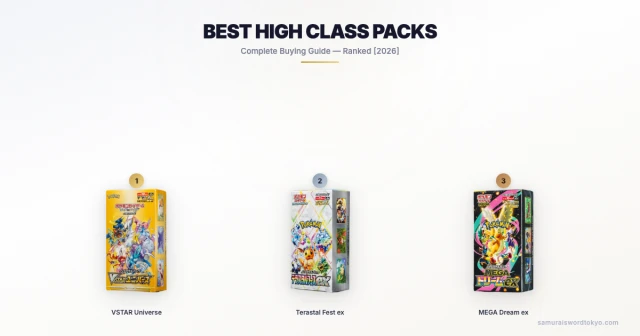
High Class Packs deliver more guaranteed hits per dollar despite having fewer packs. With 2-3 SRs, 4-6 ARs, and God Pack potential, HCPs are the premium opening experience. Standard boxes win on total card count (150 vs 100-110). See our Best High Class Packs guide for the full comparison.

Special Expansion

Special expansions don’t follow a fixed structure. Pack counts, card counts, and even the included products (decks, promos, accessories) vary with each release. Always check the specific product details before purchasing.
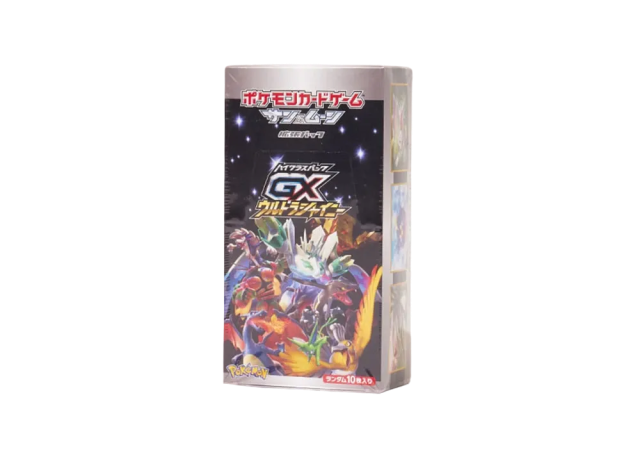
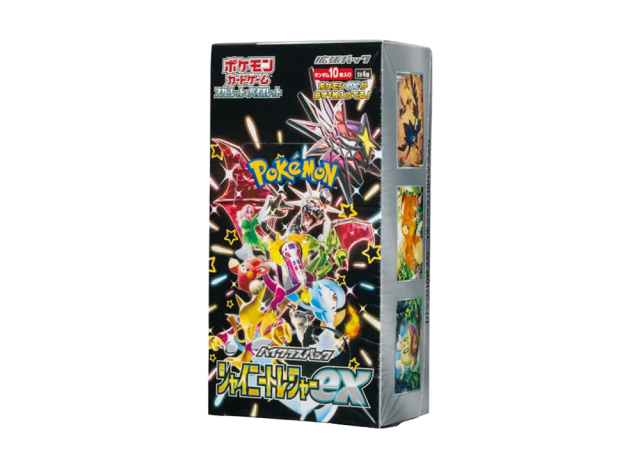
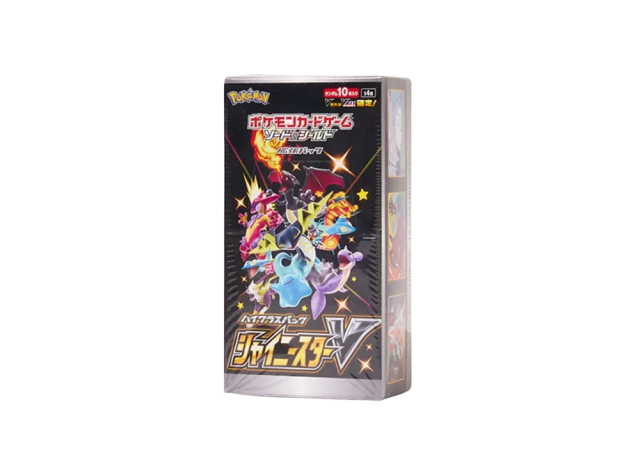
  • Packs per box: Varies (commonly 10–30)
  • Cards per pack: Varies (5–11)
  • Price: Varies by product
  • Best for: Themed collections, promo hunters
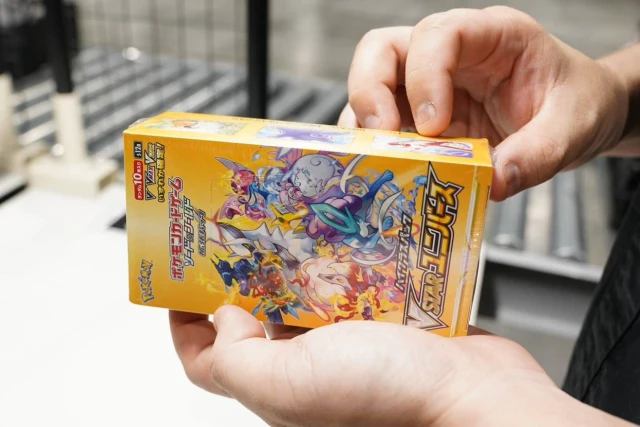
Japanese Pokemon High Class Pack booster box MEGA Dream ex
High Class Pack box (MEGA Dream ex) — premium packaging with 10 packs of 10-11 cards each

Quick Comparison

Feature Main Expansion Enhanced High Class Pack Special
Packs per box 30 30 10 Varies
Cards per pack 5 5–6 10–11 Varies
Total cards 150 150–180 100–110 Varies
Market price $40–55 $48–83 $48–69 Varies
SR+ guarantee 1 SR 1 SR 1 SR + extras Varies
God Pack chance No Rare Yes (1–4%) Some sets
Release frequency ~6/year ~2/year 1/year ~2/year

Japanese vs English Booster Boxes — Key Differences

Japanese booster boxes outperform English boxes in pull rate consistency, print quality, and guaranteed hits. If you’ve only opened English boxes before, Japanese boxes will feel like a different product entirely.

Pack & Card Count

Japanese English
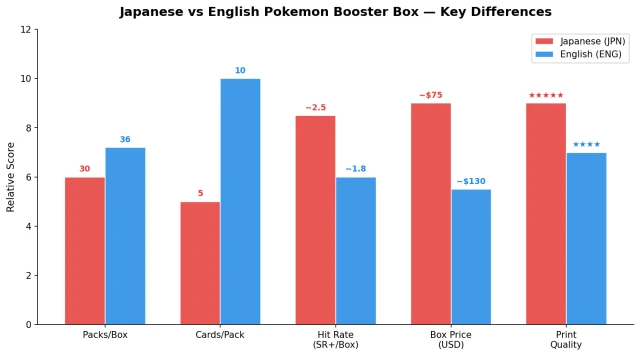
Packs per box 30 36
Cards per pack 5 10
Total cards per box 150 360
Energy cards included No Yes (1 per pack)
Actual collectible cards 150 ~324 (36 energies removed)

English boxes have more total cards, but Japanese boxes have a higher ratio of meaningful pulls per card opened. No filler energy cards means every card you pull has collection potential.

Pull Rate Guarantees

This is the single biggest advantage of Japanese booster boxes. Every Japanese booster box is virtually guaranteed at least one Super Rare (SR) or higher card. English boxes have no such guarantee — you can open an entire English booster box and pull nothing above a standard holo.

Why does Japan have guaranteed pulls? It traces back to Japanese consumer protection regulations. Products sold with random contents must ensure a baseline level of value, which means The Pokemon Company structures Japanese print runs to include guaranteed hit slots.

English-language sets have no equivalent legal requirement, so pulls are purely random.

The Guarantee Difference

Japanese box: 1 SR guaranteed per box (community-verified across thousands of openings). English box: Fully random — no guaranteed hits above standard holo. This single difference is the #1 reason international collectors are switching to Japanese boxes.

Print Quality & Card Features

Japanese cards are printed by Creatures Inc. and are widely regarded as having superior print quality:

  • All Rare cards are holographic — no non-holo rares exist in Japanese sets
  • Sharper printing and better texture on full-art and special art rare cards
  • More consistent centering — Japanese cards grade higher at PSA on average
  • No reverse holo filler — when you pull a holo, it’s a real rare
JPN vs ENG Print Quality

Japanese cards are printed by Creatures Inc. on higher-quality cardstock. The texture on full-art and SAR cards is noticeably sharper, centering is more consistent (higher PSA 10 rates), and every Rare is holographic — no non-holo rares exist. For a deep dive, see our Japanese vs English Pokemon Cards comparison.

Guaranteed Pulls — What Every Japanese Box Includes

Japanese booster boxes provide a baseline level of guaranteed rare cards. These guarantees are not officially confirmed by The Pokemon Company, but extensive community opening data across thousands of boxes shows highly consistent patterns.

Standard Expansion Guarantees

For a typical main expansion box (30 packs), you can expect:

Rarity Guaranteed Minimum Notes
SR (Super Rare) 1 Sometimes 2
AR (Art Rare) 3 Beautiful full-art illustrations
RR (Double Rare) 2–3 Playable ex/MEGA cards
R (Rare) ~20 All holographic
ACE SPEC 1 Scarlet & Violet era onward

That means every single box gives you at least one premium pull worth keeping or trading. The SR alone typically covers 15–30% of the box’s market price.

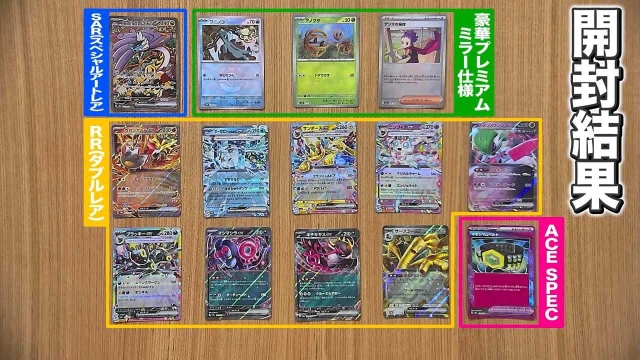
Japanese Pokemon booster box opening results showing guaranteed SR, AR, and RR pulls laid out
Actual box opening results — guaranteed SR, ARs, RRs, and ACE SPEC cards from a single Japanese booster box
Guaranteed Value Floor

Even in the least exciting box, you’re walking away with 1 SR + 3 ARs + 2-3 RRs + ~20 holo Rares. That’s a minimum of 25+ collectible cards worth keeping, trading, or grading.

High Class Pack Guarantees

High Class Packs have significantly better guaranteed pulls:

  • Multiple SRs per box — often 2–3
  • Higher AR count — 4–6 per box
  • SAR/UR appearance rate — roughly 1 in every 3–5 boxes
  • God Pack possibility — see below

For detailed pull rate breakdowns by set, check our individual set guides.

HCP Pull Rate Advantage

A single High Class Pack box often contains more SRs and ARs than 2-3 standard boxes combined. If guaranteed premium pulls are your priority, HCPs are the clear winner.

Why Japanese Boxes Have Guarantees

Japan’s consumer protection framework requires products with randomized contents to deliver minimum value thresholds. The Pokemon Company structures its Japanese print runs to meet these requirements, ensuring every box contains at least one high-rarity card.

English-language products are printed by a different entity and aren’t subject to the same regulations — which is why English box pulls are fully random.

Why This Matters for Buyers

The guaranteed SR in every Japanese box means your minimum value floor is built in. Even in a “worst case” opening, you’re pulling cards worth collecting. English boxes have no such safety net — some English box openings yield nothing above a standard holo worth $1-2.

Realistic Expectations — What a “Normal” Box Looks Like

Every box guarantees a baseline of rare cards, and that baseline alone makes Japanese booster boxes strong value for collectors. Here’s what a typical opening actually looks like.

What 80% of Boxes Look Like

1 SR (chase-worthy special art) + 3 ARs (full-illustration Pokemon) + 2-3 RRs (playable ex cards) + 1 ACE SPEC + ~20 holo Rares. That’s 25+ meaningful cards from a single box — every one of them holographic and collectible.

The Typical Box (Most Common Outcome)

About 80% of boxes you open will look something like this:

  • 1 Super Rare (SR) — a chase-worthy card with special art treatment
  • 3 Art Rares (AR) — full-illustration cards featuring Pokemon in scenic settings
  • 2–3 Double Rares (RR) — playable ex or MEGA Pokemon cards
  • 1 ACE SPEC — a powerful trainer card with special rarity
Box Composition Breakdown

~20 holo Rares (all holographic) + ~120 Commons/Uncommons for set completion. Every single Rare in a Japanese set has holographic treatment — no non-holo rares exist.

This is a solid haul. The SR alone often has a market value of ¥1,000–5,000 ($7–35, as of March 2026), and the ARs are some of the most beautiful cards in the hobby. For collectors, even a “normal” box builds your collection with 25+ meaningful cards.

Every Card Is Holo

Unlike English sets where you might pull non-holo rares, every Rare card in a Japanese set is holographic. Even your “common” rare pulls have that satisfying shine. Combined with no energy filler, Japanese boxes deliver a noticeably higher-quality opening experience card for card.

The Lucky Box (About 1 in 5)

Roughly 20% of boxes include a bonus hit on top of the guaranteed pulls:

  • A second SR — two premium pulls in one box
  • A SAR (Special Art Rare) — the chase cards worth ¥10,000–50,000+ ($70–350+)
  • A UR (Ultra Rare) — gold cards with premium market value

When a SAR appears, it can be worth more than the box itself. These are the moments that make opening Japanese boxes addictive.

Setting Expectations

Go in expecting the typical box (1 SR + 3 ARs) and you’ll always be satisfied. The lucky box is a bonus, not the baseline. This mindset is what separates collectors who enjoy the hobby from those who chase disappointment.

God Packs — The Ultimate Surprise

God Packs are exclusive to High Class Packs and select enhanced expansions. A God Pack replaces a normal pack with one containing all rare or ultra-rare cards — typically 10 cards at AR rarity or above.

God Packs are the jackpot of the Pokemon card world. Even the possibility adds an extra layer of excitement to every High Class Pack opening.

God Pack Odds by Set

VSTAR Universe: ~1% (all 9 AR cards) · Shiny Treasure ex: ~4% (highest rate ever) · Terastal Festival ex: all 9 Eeveelution SARs in one pack. God Packs only appear in High Class Packs and select enhanced expansions — standard boxes don’t have them.

How to Verify Your Box Is Authentic

Counterfeit Japanese booster boxes exist, and the best defense is knowing what to look for before you open anything.

Quick Authentication Checklist

Shrink wrap: tight, uniform, no bubbles or re-seal marks · Weight: ~350-400g (standard) or ~200-250g (HCP) · Heat seals: clean edges at top and bottom · Seller: buy from serial-tracked sellers for full protection

Authenticator inspecting Japanese Pokemon booster box shrink wrap seal
Professional authentication — inspecting shrink wrap quality on a sealed Japanese booster box

Shrink Wrap Check

Authentic Japanese booster boxes have factory-applied shrink wrap with tight, uniform seals, clean heat seals at the top and bottom edges, official logos printed on the wrap (varies by set), and consistent thickness. Re-wrapped boxes often feel thicker or uneven.

Buying Tip

The safest approach is to buy from sellers who serial-track their inventory. If a box is ever reported as tampered, the seller can trace it to the source and take action. This is why authentication matters more than price when choosing where to buy.

If the shrink wrap looks hand-applied or has irregular seals, stop and verify with the seller.

Weight & Feel

Box Type Expected Weight Warning Sign
Standard 30-pack 350–400g Lighter = missing packs
High Class Pack 10-pack 200–250g Heavier = replacement contents
Red Flags to Watch For

Prices significantly below market average, sellers with no reviews, missing shrink wrap seals, and irregular box weight are the top 4 warning signs. When in doubt, pay slightly more from a verified seller rather than risk a counterfeit.

For a complete authentication guide covering cards, packs, and boxes, see our How to Spot Fake Japanese Pokemon Cards guide.

Every box we ship from Samurai Sword is serial-tracked. If a tampered or counterfeit box is ever identified, we trace it back to the source and permanently ban that supplier. This serial tracking system protects every purchase.

Your First Japanese Booster Box — Which Type to Choose

The right box depends on your budget, goals, and experience level. Here’s a straightforward recommendation for each scenario.

Best for First-Timers: High Class Pack

If you’re opening your first Japanese booster box, a High Class Pack delivers the best experience. More guaranteed hits, larger packs (10–11 cards each), the possibility of a God Pack, and a higher concentration of visually stunning cards. Sets like Shiny Treasure ex and MEGA Dream ex are excellent starting points.

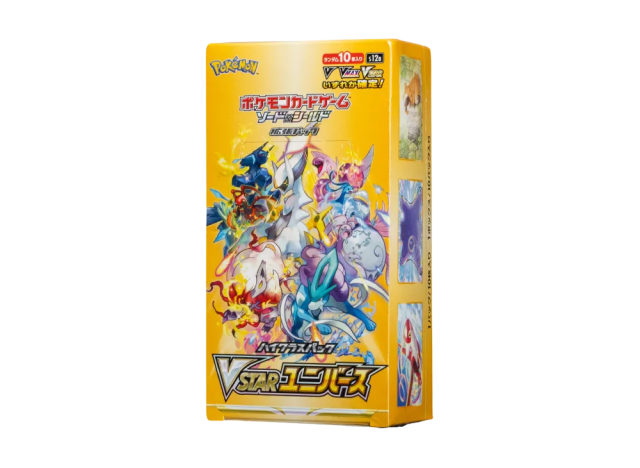
Japanese Pokemon VSTAR Universe High Class Pack booster box
VSTAR Universe — one of the most popular High Class Packs with God Pack potential and iconic Pikachu AR

For more starter recommendations, see our Best Japanese Pokemon Sets for Beginners guide.

Best Value: Main Expansion

Main expansions offer the most cards per dollar. At $40–55 per box with 150 cards and a guaranteed SR, they’re the most budget-friendly way to build a Japanese collection. Sets like Battle Partners and Super Electric Breaker provide strong pull rates at accessible price points.

Best for Chase Card Hunters: Enhanced Expansion

Enhanced expansions focus on specific themes with higher concentrations of desirable cards. If there’s a particular Pokemon or character you’re targeting, enhanced sets usually have better odds. Terastal Festival ex (all 9 Eeveelution SARs) and Pokemon Card 151 (Master Ball Mirror collection) are prime examples.

Your Goal Recommended Type Top Pick Price Range
First box ever High Class Pack Shiny Treasure ex / MEGA Dream ex $48–69
Budget collecting Main Expansion Battle Partners / Super Electric Breaker $40–55
Chase cards Enhanced Expansion Terastal Festival ex / Pokemon 151 $48–83
Maximum excitement High Class Pack VSTAR Universe / Shiny Treasure ex $48–69
Set completion Main Expansion Any current set $40–55

For a full comparison of the best boxes available right now, see our Best Japanese Pokemon Booster Boxes 2026 ranking.

Japanese Pokemon Booster Boxes
All Sealed Booster Boxes — Serial Tracked
From $40
Ships from Tokyo · Tracked shipping · Authenticity guaranteed

Browse all boxes →

The Bottom Line

Japanese booster boxes deliver a fundamentally better opening experience than English boxes — guaranteed rare pulls, superior print quality, and more consistent value in every box.

Three things to remember:

  1. Every Japanese box guarantees at least 1 SR + 3 ARs + 2-3 RRs — you’re never walking away empty-handed
  2. Four box types exist — Main Expansion (best value), Enhanced (higher pull rates), High Class Pack (premium experience), and Special (varies)
  3. Japanese boxes are structured differently from English — 30 packs × 5 cards, no energy filler, all Rares are holo

If you’re ready to try your first Japanese booster box, start with a High Class Pack for maximum impact or a Main Expansion for best value. Either way, you’re getting a product built to deliver.

FAQ

How many packs are in a Japanese Pokemon booster box?

Most Japanese booster boxes contain 30 packs with 5 cards each, totaling 150 cards. High Class Packs are the exception — they contain 10 packs with 10–11 cards each (100–110 total). Special expansions vary, so always check the product details for the specific set.

What’s the difference between a Japanese and English Pokemon booster box?

Japanese boxes have 30 packs with 5 cards (vs 36 packs with 10 cards in English). Japanese boxes guarantee at least one Super Rare per box, while English boxes are fully random. Japanese cards also have no non-holo rares and no energy cards in packs. Print quality is generally considered superior in Japanese products.

Are Japanese Pokemon booster boxes guaranteed a rare card?

Yes, based on extensive community data. Every standard Japanese booster box includes at least 1 Super Rare (SR), approximately 3 Art Rares (AR), and 2–3 Double Rares (RR). These guarantees are not officially confirmed by The Pokemon Company but are remarkably consistent across thousands of documented openings. Japanese consumer protection regulations are believed to be the underlying reason.

What is a God Pack in Japanese Pokemon?

A God Pack is a special pack found in High Class Packs and some enhanced expansions where every card in the pack is a rare or ultra-rare. For example, in Terastal Festival ex, a God Pack contains all 9 Eeveelution Special Art Rares. God Pack rates range from roughly 1% to 4% of boxes, depending on the set.

Which Japanese booster box should I buy first?

For your first Japanese box, we recommend a High Class Pack like Shiny Treasure ex or MEGA Dream ex. They offer the most exciting opening experience with better guaranteed pulls, larger packs, and the chance of a God Pack. If budget is a priority, any current main expansion (like Battle Partners or Super Electric Breaker) at $40–55 gives you 150 cards with a guaranteed SR.

How can I tell if a Japanese booster box is authentic?

Check the shrink wrap for tight, uniform factory sealing with clean heat seals and no bubbles or wrinkles. Verify the box weight matches the expected range (350–400g for standard 30-pack boxes). Buy from established sellers who provide tracking and authentication guarantees. For detailed authentication steps, see our counterfeit detection guide.

Do Japanese Pokemon packs contain energy cards?

No. Standard Japanese booster packs contain only 5 collectible cards — no basic energy cards are included. This is a key difference from English packs, which always include at least one energy card. Energy cards in Japan are typically acquired through starter decks, theme decks, or purchased separately.


⚡ Shop Japanese Pokemon Booster Boxes

Authentic sealed products shipped directly from Tokyo, Japan with tracking & insurance via FedEx.

Browse All Japanese Pokemon Booster Boxes

Best Japanese Pokemon Sets for Beginners — Starter Guide [2026]

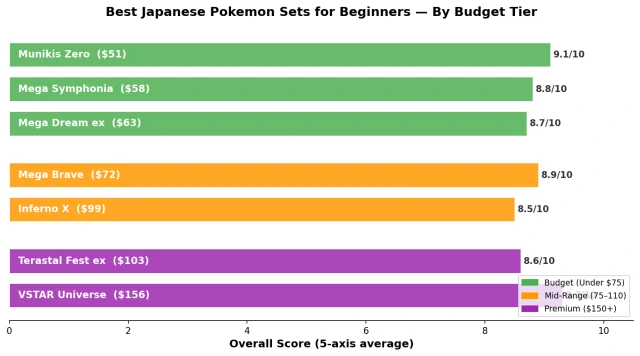
Looking for the best Japanese Pokemon sets for beginners? Japanese booster boxes offer better print quality, higher pull rates, and box prices starting at just $51 — less than half the cost of most English boxes.

We ranked 7 of the best Japanese Pokemon sets for beginners across 5 scoring criteria, sorted by budget tier so you can find the right box whether you have $50 or $150 to spend.

Every price in this guide comes from SNKRDUNK — Japan’s largest authenticated marketplace — updated as of March 2026. Our team at Samurai Sword INC ships 500+ boxes from Tokyo every month, and we have tracked which sets new collectors keep coming back for.

Here is what we cover: why Japanese sets beat English for beginners, our 5 scoring criteria, a quick-comparison table, and detailed reviews of all 7 sets by price tier.

Key Takeaway

Japanese booster boxes start at just $51 (¥7,500) with guaranteed SR+ pulls per box. Our #1 pick for beginners: Nihil Zero — newest set, lowest price, strong availability.

7
Sets Compared

$51–$156
Price Range

3
Budget Tiers

5-Axis
Scoring System

Why Japanese Pokemon Cards Are Perfect for Beginners

Japanese Pokemon sets for beginners offer three advantages that English sets cannot match: superior quality, better pull rates, and a lower price floor.

Superior Print Quality & Art

Japanese cards grade higher than English cards on average. Stronger centering, cleaner edges, and more consistent surface quality give Japanese cards a measurable edge at PSA and CGC. For a beginner building a first collection, starting with cards that hold their condition means better long-term value.

The art itself is another draw. Japanese sets feature exclusive Special Art Rares (SAR) with full-illustration designs by artists like Mitsuhiro Arita and HYOGONOSUKE — artwork that often never appears on English prints. These SARs have become the most collected cards in the modern era, and Japanese versions historically trade at a 15–40% premium over their English equivalents.

Better Pull Rate Structure

Japanese booster boxes contain 30 packs of 5 cards each (150 cards total). English boxes contain 36 packs of 10 cards, but the hit rates differ substantially.

Based on community opening data, a Japanese box is expected to contain at least one SR (Super Rare) or higher per box, with realistic chances at SAR and MUR pulls. (Pull rates are estimated from large-sample openings and are not officially confirmed by The Pokemon Company.) English boxes follow a different rarity system that many collectors find less generous. For a beginner opening their first sealed product, Japanese boxes deliver a more satisfying experience per dollar spent.

Affordable Entry Point

Here is where Japanese sets really shine for beginners. Current MEGA-era Japanese booster boxes start at approximately $51 (¥7,500) on the secondary market. Compare that to English booster boxes that routinely sell for $100–$150.

Price Comparison

Japanese BOX from $51 vs. English BOX from $100+. You can buy two Japanese boxes for the price of one English box — and get a better opening experience from each.

How We Ranked These Sets — Our 5 Scoring Criteria

Transparency matters. Here is exactly how we scored each set on a 10-point scale across 5 criteria:

Criteria Weight What It Measures
Beginner Friendliness 25% Familiar Pokemon, simple themes, visual appeal for newcomers
Card Art Quality 20% SAR/MUR artwork, illustration variety, display-worthiness
Pull Rate Value 20% Chance of pulling high-rarity cards relative to box price
Price Accessibility 20% Current market price — lower is better for beginners
Set Availability 15% How easy it is to find authentic sealed boxes right now

Each set receives a weighted total score out of 10. We factored in our own sales data (which boxes first-time buyers order most) and opening data from the Japanese collector community. These criteria reflect what matters most when choosing the best Japanese Pokemon sets for beginners — not just card value, but the overall first-time experience.

Quick Comparison — All 7 Sets at a Glance

Rank Set Type Price ($) Score Best For
1 Nihil Zero Expansion ~$51 8.6 Best Overall Value
2 Mega Symphonia Expansion ~$58 8.4 Best Art & Design
3 Mega Dream ex High Class ~$63 8.3 Best First High Class Pack
4 Mega Brave Expansion ~$72 8.1 Best for Lucario Fans
5 Inferno X Expansion ~$99 7.9 Best Charizard Set
6 Terastal Festival ex High Class ~$103 8.2 Best Eeveelution Collection
7 VSTAR Universe High Class ~$156 8.0 Best Premium Experience

Prices: SNKRDUNK secondary market, March 2026. USD at approximately ¥146/USD. Card prices verified via TCGPlayer for English equivalents.

Japanese Pokemon set budget comparison chart showing under $75, $75-110, and $150+ tiers
All 7 sets scored and sorted by budget tier

Best Budget Sets — Under $75

These four sets give beginners the most value per dollar. Each one costs less than a single English booster box.

#1 Nihil Zero — Best Overall Value (~$51 / ¥7,500)

Nihil Zero is the best Japanese Pokemon set for beginners who want maximum cards per dollar.

Nihil Zero Japanese Pokemon booster box — best budget option for beginners
Nihil Zero — #1 Best Overall Value

Released January 2026, this is the newest MEGA-era expansion pack. The set revolves around Mega Zygarde ex and trainer May (Haruka), with May’s SAR currently trading at approximately ¥25,000 ($171). At ¥7,500 per box, that is a 3.3x return on a single pull.

Why beginners love it:

  • Lowest price point of any current expansion (~$51)
  • Fresh set with strong availability — easy to find sealed
  • Popular trainer SARs (May) that hold value
  • Full MEGA-era pull rate structure (SR+ guaranteed per box)

Quick specs: 30 packs × 5 cards | MSRP: ¥5,400 | Market: ~¥7,500 | 83 cards in set

For more on this set’s pull rates and top cards, see our Nihil Zero pull rates guide.

Budget Tier Highlight

All 4 budget sets cost under $75 — less than a single English booster box. At these prices, you can try 2 different Japanese sets for the price of 1 English box.

#2 Mega Symphonia — Best Art & Design (~$58 / ¥8,500)

Mega Symphonia delivers the most visually stunning cards in the current MEGA era — the SARs in this set are gallery-worthy.

Mega Symphonia Japanese Pokemon booster box featuring Mega Gardevoir
Mega Symphonia — #2 Best Art & Design

Built around Mega Gardevoir ex, this set features some of the most praised artwork in modern Pokemon TCG. The Acerola SAR and Gardevoir SAR have become iconic collector pieces. Acerola’s SAR trades at approximately ¥22,000 ($151) as of March 2026.

Why beginners love it:

  • Widely considered the most beautiful set in the MEGA era
  • Gardevoir and Acerola are universally popular characters
  • Strong Art Rare (AR) lineup — even common pulls look great
  • Good price-to-art ratio at ~$58

Quick specs: 30 packs × 5 cards | MSRP: ¥5,400 | Market: ~¥8,500 | 83 cards in set

Read the full breakdown in our Mega Symphonia pull rates guide.

Expansion vs. High Class Pack

Sets #1, #2, and #4 are standard expansion packs (30 packs × 5 cards). Set #3 below is a High Class Pack (10 packs × 10 cards) with boosted pull rates and a curated card pool.

#3 Mega Dream ex — Best First High Class Pack (~$63 / ¥9,200)

Mega Dream ex is the most beginner-friendly High Class Pack ever released — and the most affordable HCP on the market right now.

Mega Dream ex Japanese Pokemon High Class Pack booster box
Mega Dream ex — #3 Best First High Class Pack

High Class Packs (HCPs) are premium sets with boosted pull rates and curated card pools. Mega Dream ex, released November 2025, features cards from across the MEGA era plus exclusive SARs you cannot find in standard expansions. The Charizard ex Master Art (MA) is the set’s crown jewel.

Why beginners love it:

  • Higher pull rates than standard expansion packs
  • Only 10 packs per box, but each pack has better odds
  • “Greatest hits” card pool — familiar Pokemon from multiple sets
  • At ¥9,200 (~$63), it is the cheapest HCP available

Quick specs: 10 packs × 10 cards | MSRP: ¥5,500 | Market: ~¥9,200 | 143 cards in set

For the full card rankings, check our Mega Dream ex pull rates guide and best Japanese High Class Packs guide.

#4 Mega Brave — Best for Lucario Fans (~$72 / ¥10,500)

Mega Brave is the set to buy if Lucario is your favorite Pokemon — Mega Lucario ex headlines this expansion with a chase-worthy MUR (Master Ultra Rare).

Mega Brave Japanese Pokemon booster box featuring Mega Lucario
Mega Brave — #4 Best for Lucario Fans

Released August 2025 alongside Mega Symphonia, Mega Brave launched the MEGA era. The set has matured nicely in the secondary market, with prices stabilizing from their initial premium. Mega Lucario ex MUR trades at approximately ¥48,000 ($329).

Why beginners love it:

  • Lucario is consistently one of the most popular Pokemon worldwide
  • First MEGA-era set — historic significance for collectors
  • Strong MUR chase card with high long-term potential
  • Mature market means stable, fair pricing

Quick specs: 30 packs × 5 cards | MSRP: ¥5,400 | Market: ~¥10,500 | 81 cards in set

Full analysis in our Mega Brave pull rates guide.

Budget Tier Summary

4 sets under $75: Nihil Zero ($51) for value, Mega Symphonia ($58) for art, Mega Dream ex ($63) for HCP experience, Mega Brave ($72) for Lucario fans. Any of these makes an excellent first box.

Best Mid-Range Sets — $75 to $110

These sets cost more but deliver premium chase cards and deeper collector experiences.

#5 Inferno X — Best Charizard Set (~$99 / ¥14,500)

Inferno X is the set every Charizard fan needs. Mega Charizard X ex headlines this expansion with multiple ultra-rare variants.

Inferno X Japanese Pokemon booster box featuring Mega Charizard X
Inferno X — #5 Best Charizard Set

Released September 2025, Inferno X carries a higher price tag than other MEGA-era expansions because Charizard sells. The Mega Charizard X ex MUR is the most expensive card in the MEGA era so far, trading at approximately ¥60,000+ ($411+). Every sealed box carries that lottery ticket.

Why beginners love it:

  • Charizard is the most recognized and collected Pokemon
  • Multiple Charizard variants (MUR, SAR, SR) in one set
  • Strong resale value — Charizard cards rarely lose demand
  • Exciting opening experience with high-ceiling pulls
Budget Tip

The ¥14,500 price tag is about 2× the budget sets above. If your budget allows, this set delivers unmatched excitement. If you want to start smaller, grab a Nihil Zero first and save Inferno X for your second box.

Quick specs: 30 packs × 5 cards | MSRP: ¥5,400 | Market: ~¥14,500 | 83 cards in set

See our Inferno X pull rates guide for the full card rankings.

Mid-Range Value

Inferno X and Terastal Festival ex both sit in the $99–$103 range. The difference? Inferno X is pure Charizard energy. Terastal Fest ex is an Eeveelution collector’s dream. Pick your passion.

#6 Terastal Festival ex — Best Eeveelution Collection (~$103 / ¥15,000)

Terastal Festival ex is the ultimate Eevee fan set — all 9 Eeveelutions receive Special Art Rares in a single High Class Pack.

Terastal Festival ex Japanese Pokemon High Class Pack with all 9 Eeveelution SARs
Terastal Festival ex — #6 Best Eeveelution Collection

This Scarlet & Violet-era High Class Pack (released December 2024) features Umbreon ex SAR at approximately ¥47,000 ($322) as the crown jewel, alongside stunning SARs of Sylveon, Espeon, Glaceon, and all other Eeveelutions. For collectors who love Eevee — and that is a huge portion of the community — no other set comes close.

Why beginners love it:

  • All 9 Eeveelutions in SAR form — a unique collector milestone
  • Umbreon SAR is one of the most valuable modern Pokemon cards
  • High Class Pack pull rates (more generous than standard sets)
  • Eevee is universally beloved — perfect for display collections

Quick specs: 10 packs × 10 cards | MSRP: ¥5,500 | Market: ~¥15,000 | 190 cards in set

Our Terastal Festival ex pull rates guide covers every card in detail.

Best Premium Set — $150+

#7 VSTAR Universe — Best Premium Collector Experience (~$156 / ¥22,800)

VSTAR Universe is the set that turned Japanese Pokemon cards into a global phenomenon — and it still delivers one of the best opening experiences in the hobby.

VSTAR Universe Japanese Pokemon High Class Pack booster box
VSTAR Universe — #7 Best Premium Experience

Released December 2022, this Sword & Shield-era High Class Pack is approaching limited availability. The Pikachu Art Rare — arguably the most iconic modern Pokemon card — trades at approximately ¥21,000 ($144). But the real draw is the God Pack: roughly 1 in 100 boxes contains a pack where every card is an Art Rare. Opening a God Pack is a once-in-a-lifetime collector moment.

Why beginners love it:

  • The Pikachu AR is a grail card for any Pokemon collection
  • God Pack chance (~1%) adds unmatched opening excitement
  • Art Rare lineup features 9 stunning full-art illustrations
  • High Class Pack with generous pull rates across all rarities
Note

At ¥22,800 (~$156), this is the most expensive box on our list. Supply is decreasing as the set approaches out-of-print status. If you can stretch your budget, VSTAR Universe is a set you will not regret owning. Otherwise, start with a budget set and add this to your wishlist.

Quick specs: 10 packs × 10 cards | MSRP: ¥5,500 | Market: ~¥22,800 | 172 cards in set

Read our VSTAR Universe pull rates guide for the complete card breakdown.

What to Know Before Buying Your First Japanese Box

Three things every beginner needs to understand before purchasing.

Pack Structure — JPN vs ENG Differences

Japanese and English Pokemon boxes are not the same product. Here is a quick breakdown:

Feature Japanese Box English Box
Packs per box 30 (standard) / 10 (HCP) 36
Cards per pack 5 (standard) / 10 (HCP) 10
SR+ guarantee Yes (1+ per box) Varies
Language Japanese English
Typical price $50–$160 $100–$180
Japanese vs English Pokemon booster box structure comparison — packs, cards, and price differences
Japanese vs English box comparison at a glance

The language barrier does not matter for collectors. You are buying these cards for the art, the quality, and the thrill of the pull — not to read the attack text. If you do want to play competitively, English cards are required for Western tournaments. For collecting? Japanese is the premium choice.

For a deeper comparison, read our Japanese vs English Pokemon Cards guide.

Japanese Box

  • 30 packs × 5 cards
  • SR+ guaranteed per box
  • From ~$51
  • Premium print quality

English Box

  • 36 packs × 10 cards
  • Varies by set
  • From ~$100
  • Playable in tournaments

How to Spot Fakes — Quick Authentication Guide

Counterfeit Japanese Pokemon cards exist, but they are easy to identify once you know what to look for. Three quick checks:

  1. Texture test — Authentic Japanese holos have a distinct raised texture you can feel with your fingernail
  2. Light test — Hold the card up to a light source. Genuine cards show a thin, even structure. Fakes often appear thicker or uneven
  3. Edge quality — Japanese cards have exceptionally clean edges. Rough or uneven edges are a red flag

Buy from authenticated sellers to eliminate this risk entirely. Our full guide to spotting fake Japanese Pokemon cards covers 10 authentication tests.

Safety First

Never buy Japanese Pokemon boxes from unverified sellers on social media. Stick to authenticated marketplaces and established export shops with tracked shipping and serial-numbered inventory.

Shipping & Customs Basics

Buying Japanese cards from overseas means international shipping. Key points:

  • Shipping time: 7–14 days from Japan to the US/UK/AU via tracked carriers
  • US customs: Pokemon cards under $800 per shipment enter duty-free (de minimis threshold)
  • UK/EU customs: VAT may apply on imports above local thresholds
  • Insurance: Always buy from sellers who offer tracked, insured shipping

For a complete walkthrough, see our guide to buying Japanese Pokemon cards from Japan.

Where to Buy Japanese Pokemon Boxes Online

The safest way to buy authentic Japanese Pokemon booster boxes is through specialized export shops that source directly from Japan.

Samurai Sword INC (samuraiswordtokyo.com) — Our shop ships sealed, shrink-wrapped boxes from Tokyo with tracked delivery. Every box is serial-tracked: if a box is found to be searched or resealed, we can trace it back to the source and ban that supplier. This level of authentication gives you peace of mind that your sealed product is genuinely factory-fresh.

Our Guarantee

Every box ships with a serial number. Searched or resealed? We trace it, ban the supplier, and make it right. 500+ boxes shipped from Tokyo every month.

Other reputable options for finding the best Japanese Pokemon sets for beginners include:

  • Plaza Japan — Established Japanese retailer with international shipping
  • AmiAmi — Japanese hobby shop with competitive pricing

For the latest set news and release announcements, follow PokeBeach and PokeGuardian — both track Japanese releases months before English versions are announced.

When choosing any seller, look for: sealed shrink wrap, tracked shipping, a clear return policy, and verified customer reviews.

All orders ship from Japan with tracking and insurance. View shipping policy → | Customs & duties info →

Questions? Contact us → | Return policy →

The Bottom Line — Our Top 3 Picks

Seven sets, three tiers, one recommendation per budget:

  1. Best starter box: Nihil Zero at ~$51. Maximum value, newest set, strong availability. Grab this one first.
  2. Best upgrade: Terastal Festival ex at ~$103. All 9 Eeveelution SARs in one High Class Pack — a collector milestone.
  3. Best splurge: VSTAR Universe at ~$156. The God Pack chance and Pikachu AR make this a bucket-list box.
Our Pick

No matter which set you choose, Japanese Pokemon cards will deliver a collecting experience that English sets simply cannot match. Better art, better quality, better pull rates — and often at a lower price. Start with one box. You will understand why collectors worldwide are going Japanese.

Shop Our Collection
Japanese Pokemon Booster Boxes
From ~$51 / ~¥7,500
Ships from Tokyo · Tracked delivery · Serial-tracked

View All Boxes →

Frequently Asked Questions

What is the best Japanese Pokemon set for a complete beginner?

Nihil Zero is our top pick for complete beginners. At approximately $51 (¥7,500), it is the most affordable current expansion pack, features the full MEGA-era pull rate structure with SR+ guaranteed per box, and is widely available as a January 2026 release. The set includes popular trainer SARs that hold strong value on the secondary market.

Are Japanese Pokemon cards worth buying if I cannot read Japanese?

For collectors, language does not matter at all. You are collecting for the artwork, print quality, and rarity — not to read the card text. Japanese cards grade higher on average at PSA due to better centering and edge quality. The only scenario where language matters is competitive play: Western tournaments require English-language cards.

How much does a Japanese Pokemon booster box cost?

Current MEGA-era Japanese booster boxes range from approximately $51 to $99 (¥7,500–¥14,500) on the secondary market as of March 2026. High Class Packs range from $63 to $156 (¥9,200–¥22,800). These prices are from SNKRDUNK, Japan’s largest authenticated trading card marketplace. All boxes sell above their MSRP of ¥5,400–¥5,500 because retail availability is extremely limited.

What is a High Class Pack and should beginners buy one?

High Class Packs (HCPs) are premium Japanese sets with boosted pull rates and curated card pools drawn from multiple standard expansions. They contain 10 packs of 10 cards (vs. 30 packs of 5 in standard sets). HCPs cost more per box but offer better odds at rare pulls. For beginners, Mega Dream ex (~$63) is an excellent first HCP because it combines accessible pricing with premium pull rates. Read our best High Class Packs guide for a full comparison.

How do I know if a Japanese Pokemon box is authentic?

Look for three things: factory-applied shrink wrap with even, tight seals; correct pack count (30 for standard, 10 for HCP); and purchase from a verified seller with tracked shipping. At Samurai Sword INC, every box receives a serial number — if any box is found to be tampered with, we trace it back to the supplier. For a detailed authentication process, see our fake detection guide.

Should I buy Japanese or English Pokemon cards as a beginner?

For collecting, Japanese cards offer superior print quality, exclusive artwork, higher pull rates per box, and lower entry prices ($51 vs. $100+). For competitive play, you need English cards for Western tournaments. Most beginners start with Japanese boxes for collecting and add English cards later if they want to play. Our Japanese vs English comparison breaks down every difference.

What Pokemon card set should I buy coming from Pokemon TCG Pocket?

If Pokemon TCG Pocket sparked your interest in physical cards, Japanese booster boxes are the natural next step. The digital pulls you love translate directly to real cards with even better artwork. Start with Nihil Zero or Mega Symphonia for an affordable first box. Our Pocket to physical cards guide walks you through the transition step by step.


⚡ Shop Japanese Pokemon Booster Boxes

Authentic sealed products shipped directly from Tokyo, Japan with tracking & insurance via FedEx.

Browse All Japanese Pokemon Booster Boxes

Best Japanese Pokemon High Class Packs Ranked — God Pack & SAR Odds [2026]

The best Japanese Pokemon High Class Packs deliver guaranteed chase cards, God Pack jackpots, and investment returns that no regular booster box can match. But with 10 sets spanning eight years — and prices ranging from ¥5,000 to ¥900,000 per box — picking the right one takes more than luck.

High Class Packs are Japan’s premium year-end product line: 10 packs of 10-11 cards each, with guaranteed SR, SAR, or MA pulls in every box. No English equivalent exists. Each box also carries a slim chance at a God Pack — a single pack where every card is ultra-rare.

Our team at Samurai Sword INC tracks SNKRDUNK and Mercari prices daily from Tokyo. We’ve ranked all 10 High Class Packs using a transparent 5-axis scoring system covering pull rate value, chase cards, investment ROI, God Pack appeal, and current accessibility. You’ll find the complete guaranteed hit rates for each set, real market prices as of March 2026, and our “Best for You” recommendations based on your goals.

Key Takeaway

VSTAR Universe and Terastal Fest ex lead the rankings at 33/40 each — both guarantee an SAR per box. For first-time buyers, MEGA Dream ex at ¥9,400 ($64) offers the most accessible entry point. Every out-of-print HCP has appreciated to at least 3× retail.

10
Sets Ranked

¥5K–¥900K
Price Range

SAR
Guaranteed Hits

~1%
God Pack Odds

What Makes High Class Packs Special?

Every sealed box guarantees at least one SR or higher rarity card — a feature exclusive to Japan’s premium year-end product line. No English equivalent exists, and no regular booster box matches this guaranteed pull structure.

10-Pack Premium Structure

Standard Japanese booster boxes contain 30 packs of 5 cards. HCPs flip that formula: 10 packs of 10-11 cards each. Fewer packs, but every single pack delivers at minimum one holo or higher rarity card. The result is a condensed, high-value opening experience where nearly every pack feels significant.

Feature Regular Booster Box High Class Pack Box
Packs per box 30 10
Cards per pack 5 10-11
Total cards 150 100-110
MSRP ¥5,400 (~$37) ¥5,500 (~$38)
Guaranteed SR+ 0-1 1-2
Guaranteed AR/MA 0 1-3
God Pack chance No Yes

Guaranteed Hits vs Regular Boxes

The defining feature of this product line is the guaranteed pull structure. A regular Japanese booster box might give you one SR if you’re fortunate. Each sealed HCP box guarantees specific rarities — sometimes including a SAR (Special Art Rare), the most sought-after modern rarity.

For reference, here’s what recent sets guarantee per box:

  • VSTAR Universe: 1 SAR + 1 SR Energy + 3 AR + 1 K-Radiant
  • Terastal Fest ex: 1 SAR + 1 ACE SPEC + 3 Reverse Holo + 9 RR
  • MEGA Dream ex: 1 MA + 1 SR + 1 Item SR + 3 AR

These aren’t probabilities — they’re guarantees. Every sealed box delivers at minimum these cards. For a broader comparison of Japanese booster boxes, see our Best Japanese Pokemon Booster Boxes 2026 guide.

The God Pack Phenomenon

God Packs are exclusive to this product line. In a God Pack, every card in the pack is ultra-rare — typically all SARs, all MAs, or all shiny variants depending on the set. Odds range from roughly 1 in 100 to 1 in 200 boxes (0.5-1%).

A single VSTAR Universe God Pack containing 5 SARs and 5 ARs can be worth ¥200,000+ ($1,360+). Terastal Fest ex’s Eeveelution God Pack — featuring all 9 Eevee evolution SARs — routinely sells for ¥300,000+ ($2,040+) on Mercari.

God Pack Value

A single Terastal Fest ex Eeveelution God Pack (all 9 Eevee SARs) sells for ¥300,000+ ($2,040+). Odds: approximately 1 in 60-100 boxes.

God Packs turn every box opening into a lottery ticket on top of the guaranteed value. This combination of floor (guaranteed hits) and ceiling (God Pack jackpot) is why these premium boxes command market prices far above retail years after release.

Complete List — All 10 Japanese High Class Packs

Ten sets have been released since 2017, and every out-of-print set has appreciated above retail. All prices below are market data from SNKRDUNK as of March 2026.

# Set Name Code Release Market Price ROI
1 THE BEST OF XY Apr 2017 ¥720,000+ ($4,900+) 133×
2 GX Battle Boost SM4+ Oct 2017 ¥900,000+ ($6,120+) 167×
3 GX Ultra Shiny SM8b Nov 2018 ¥100,000–130,000 ($680–$884) 22×
4 Tag All Stars SM12a Oct 2019 ¥60,000–80,000 ($408–$544) 13×
5 Shiny Star V S4a Nov 2020 ¥15,000–18,000 ($102–$122)
6 VMAX Climax S8b Dec 2021 ¥23,100 ($157) 4.2×
7 VSTAR Universe S12a Dec 2022 ¥23,000 ($156) 4.2×
8 Shiny Treasure ex SV4a Dec 2023 ¥5,000 ($34) 0.9×
9 Terastal Fest ex SV8a Dec 2024 ¥13,000 ($88) 2.4×
10 MEGA Dream ex M2a Nov 2025 ¥9,400 ($64) 1.7×

Prices: SNKRDUNK secondary market, March 2026. USD at approximately ¥147/USD.

Every set that’s been out of print for 3+ years trades above ¥15,000 — a minimum 3× return on the original ¥5,400-5,500 retail price.

Sun & Moon Era (2017-2019)

Pokemon GX Battle Boost High Class Pack booster box
GX Battle Boost — home of the legendary がんばリーリエ (Lillie SR)

The first three sets established the format. THE BEST OF XY compiled highlights from the XY era. GX Battle Boost became legendary thanks to “がんばリーリエ” (Lillie Full Art SR), now worth over ¥5,000,000 ($34,000+) as a single card. GX Ultra Shiny introduced the SSR (Shiny Secret Rare) format with color-variant cards that collectors still chase.

Tag All Stars closed the SM era with Tag Team GX reprints. All four sets are now out of print, with the earliest two exceeding ¥700,000 per box.

Sword & Shield Era (2020-2022)

Pokemon VSTAR Universe High Class Pack booster box — the gold standard
VSTAR Universe — widely considered the best HCP ever made

Shiny Star V brought the format into the modern era with Baby Shiny cards and the iconic Marnie SR. VMAX Climax introduced Character Super Rares (CSR) — full-art cards featuring Pokemon with their trainers. VSTAR Universe is widely considered the best HCP ever made: guaranteed SAR per box, three God Pack variants, and chase cards like Giratina VSTAR SAR.

Scarlet & Violet Era (2023-2024)

Pokemon Terastal Fest ex High Class Pack booster box — Eeveelution God Pack
Terastal Fest ex — the Eeveelution God Pack phenomenon

Shiny Treasure ex featured shiny variants of SV-era Pokemon. Market price dipped below retail due to heavy reprints — making it the most affordable HCP entry point right now at ¥5,000. Terastal Fest ex became an instant classic with its Eeveelution SAR lineup and the most desirable God Pack in HCP history.

MEGA Era (2025)

Pokemon MEGA Dream ex High Class Pack booster box — latest 2025 release
MEGA Dream ex — the newest HCP with Mega Attack Rare guarantee

MEGA Dream ex brought back Mega Evolution with a new rarity tier: MA (Mega Attack Rare). No SAR is guaranteed per box — a notable shift from Terastal Fest ex — but the MA guaranteed slot and the new MUR (Mega Ultimate Rare) chase tier keep demand strong. At ¥9,400, it’s the second-most affordable in-print HCP after Shiny Treasure ex. For detailed pull rates, see our MEGA Dream ex Pull Rates & Best Cards guide.

How We Ranked — Our 5-Axis Scoring Method

Pull Rate Value and Investment ROI carry the heaviest weight (×2.0 each) because they most directly determine whether a box purchase delivers tangible returns. Here’s the full methodology:

Axis Weight What It Measures Data Source
Pull Rate Value ×2.0 (max 10) Quality of guaranteed hits per box The Poke Court
Chase Card Appeal ×1.5 (max 7.5) Market value of top cards SNKRDUNK, Mercari
Investment ROI ×2.0 (max 10) Historical price appreciation SNKRDUNK market data
God Pack Factor ×1.0 (max 5) God Pack probability & desirability Community opening data
Accessibility ×1.5 (max 7.5) Current availability & price SNKRDUNK listings

Why these weights? Pull Rate Value and Investment ROI get ×2.0 because they directly affect whether a box delivers tangible value. Accessibility is weighted ×1.5 because even the best HCP is irrelevant if you can’t afford or find it.

Top 10 High Class Packs — Ranked

Rank Set Score Pull Rate Chase ROI God Pack Access Best For
1 VSTAR Universe 33.0/40 10.0 7.5 6.0 5.0 4.5 Overall Value
2 Terastal Fest ex 33.0/40 10.0 6.0 6.0 5.0 6.0 God Pack Hunters
3 MEGA Dream ex 31.0/40 8.0 7.5 4.0 4.0 7.5 First-Time Buyers
4 Shiny Star V 29.0/40 8.0 6.0 6.0 3.0 6.0 Budget Collectors
5 VMAX Climax 28.5/40 8.0 6.0 6.0 4.0 4.5 Trainer Art Fans
6 GX Ultra Shiny 28.0/40 8.0 6.0 8.0 3.0 3.0 Vintage Collectors
7 Shiny Treasure ex 27.0/40 8.0 4.5 4.0 3.0 7.5 Budget Entry
8 GX Battle Boost 27.0/40 6.0 7.5 10.0 2.0 1.5 Trophy Investors
9 Tag All Stars 26.0/40 8.0 6.0 6.0 3.0 3.0 Tag Team Fans
10 THE BEST OF XY 25.5/40 6.0 6.0 10.0 2.0 1.5 Museum Pieces

#1: VSTAR Universe — The Gold Standard (33.0/40)

Giratina VSTAR SAR — VSTAR Universe High Class Pack chase card
Giratina VSTAR — the most iconic chase card in HCP history

VSTAR Universe earns the top spot because it delivers the most complete package: guaranteed SAR per box, the best God Pack variants in HCP history, and proven price appreciation. At ¥23,000 ($156), it’s not cheap — but the floor value from guaranteed pulls alone justifies the price.

The chase list reads like a hall of fame. Giratina VSTAR SAR, Arceus VSTAR SAR, and Origin Forme Palkia VSTAR SAR remain among the most traded modern Japanese cards. The God Pack has two variants: 9 consecutive Art Rares, or the dream hit — 5 SARs paired with 5 ARs. Community data estimates God Pack odds at roughly 1 in 100-200 boxes.

Who it’s for: Experienced collectors who want the single best HCP ever made. The SAR guarantee means every box delivers meaningful value, and the God Pack upside is unmatched.

#2: Terastal Fest ex — The Eeveelution Phenomenon (33.0/40)

Umbreon ex SAR — Terastal Fest ex High Class Pack chase card
Umbreon ex SAR — the most sought-after Eeveelution card

Terastal Fest ex ties with VSTAR Universe on total score but edges it on accessibility. At ¥13,000 ($88), it’s nearly half the price. The guaranteed SAR per box carries over from VSTAR Universe — and the chase lineup features all nine Eeveelution SARs, led by Umbreon ex SAR.

The God Pack is the real showstopper. Two variants exist: one with 7 reverse holos and 3 Eeveelution SARs, and the ultimate version containing all 9 Eevee family SARs plus a common Eevee. A complete Eeveelution God Pack regularly sells for ¥300,000+ ($2,040+) on the secondary market.

Who it’s for: Eevee fans (a massive demographic), God Pack hunters, and anyone looking for the best value-to-price ratio in a current HCP.

#3: MEGA Dream ex — Best Entry Point (31.0/40)

MEGA Dream ex scores highest on accessibility at ¥9,400 ($64) — just 1.7× above retail. The MA (Mega Attack Rare) guarantee is unique to this set, and chase cards like Mega Charizard X ex MUR command ¥100,000+ ($680+). One critical note: no SAR is guaranteed per box, unlike VSTAR Universe and Terastal Fest ex.

God Pack composition is exceptional: 5 MAs + 4 SARs + 1 AR. Community tracking from 200+ box openings estimates God Pack odds at approximately 1 in 100 boxes.

Who it’s for: First-time HCP buyers, Mega Evolution nostalgic collectors, and anyone wanting the newest HCP experience at the most accessible price.

#4-7: Strong Picks by Niche

Pokemon Shiny Star V High Class Pack booster box
Shiny Star V — the most affordable out-of-print HCP

#4 Shiny Star V (29.0/40) — The most affordable out-of-print HCP at ¥15,000-18,000. Marnie SR remains one of the most iconic trainer cards ever printed. Strong Baby Shiny collection appeal.

Pokemon VMAX Climax High Class Pack booster box
VMAX Climax — pioneer of Character Super Rares

#5 VMAX Climax (28.5/40) — Pioneer of Character Super Rares. Pikachu VMAX CSR (featuring Ash) and Mew VMAX CSR are top pulls. Three distinct God Pack variants add unpredictability.

Pokemon GX Ultra Shiny High Class Pack booster box
GX Ultra Shiny — the original shiny card set

#6 GX Ultra Shiny (28.0/40) — The original shiny card set. Charizard GX SSR and Umbreon GX SSR drive demand. At ¥100,000-130,000, it’s entering collector-tier pricing but still trades well below the two oldest HCPs.

Pokemon Shiny Treasure ex High Class Pack booster box — most affordable entry
Shiny Treasure ex — currently the cheapest HCP at ¥5,000

#7 Shiny Treasure ex (27.0/40) — Currently the cheapest HCP at ¥5,000 ($34), actually below retail. Heavy reprints pushed prices down. If you believe the pattern of HCPs appreciating once out of print, this is the lowest-risk entry available.

#8-10: Collector Tier

#8 GX Battle Boost (27.0/40) — Houses the legendary がんばリーリエ (Lillie SR), worth ¥5,000,000+ as a PSA 10. Box price exceeds ¥900,000. Not a purchase recommendation — this is a collector artifact.

#9 Tag All Stars (26.0/40) — Tag Team GX reprints in a premium format. Solid at ¥60,000-80,000 but lacks the standout chase card or God Pack appeal of higher-ranked sets.

Pokemon Tag All Stars High Class Pack booster box — SM era premium
Tag All Stars — solid SM era premium format

#10 THE BEST OF XY (25.5/40) — The first High Class Pack ever released. Historic significance and ¥720,000+ pricing put it firmly in the investment collectible category rather than the buying guide.

Best High Class Pack for Your Goal

Quick Pick Guide

First-time buyer → MEGA Dream ex (¥9,400). God Pack hunter → Terastal Fest ex (¥13,000). Long-term investment → VSTAR Universe (¥23,000). Lowest risk → Shiny Treasure ex (¥5,000).

Best for First-Time HCP Buyers: MEGA Dream ex

Start here if you’ve never opened an HCP. At ¥9,400 ($64), the price barrier is low. The MA guarantee gives you a unique card type exclusive to this set, and the 10-pack opening experience — where nearly every pack delivers something meaningful — is the best introduction to what makes this product line special.

Best for God Pack Hunters: Terastal Fest ex

The Eeveelution God Pack is the most iconic in HCP history. If pulling one is your dream scenario, Terastal Fest ex gives you the best combination of desirability and reasonable box price (¥13,000). Each box is a shot at a ¥300,000+ jackpot.

Best for Long-Term Investment: VSTAR Universe

Every set in this category that’s gone out of print for 3+ years has appreciated. VSTAR Universe combines guaranteed SAR value, proven collector demand, and the “gold standard” reputation. At ¥23,000 — roughly 4× retail — the historical pattern suggests further appreciation once print runs end.

Best for Budget Collectors: Shiny Treasure ex

At ¥5,000 ($34), below retail price, Shiny Treasure ex offers the lowest-risk HCP purchase available. If the historical pattern holds — and every previous HCP eventually trades above retail — this is the most asymmetric opportunity on the list.

Guaranteed Hit Rates — Complete Comparison

Only VSTAR Universe and Terastal Fest ex guarantee a SAR per box — that single difference defines the tier split across all ten sets. The full breakdown below comes from community opening reports compiled by The Poke Court and verified against Japanese opening data.

Set SAR SR AR/MA Other Guaranteed God Pack Contents
MEGA Dream ex 1 SR + 1 Item SR 1 MA + 3 AR 5 MA + 4 SAR + 1 AR
Terastal Fest ex 1 SAR 1 ACE, 3 Rev, 9 RR 7 Rev + 3 Eevee SAR or 9 Eevee SAR
Shiny Treasure ex 1 Shiny SR 3 Baby Shiny, 9 RR 1 AR + 6 Baby Shiny + 3 FA Shiny
VSTAR Universe 1 SAR 1 SR Energy 3 AR 1 K-Radiant 9 AR or 5 SAR + 5 AR
VMAX Climax 1 CSR 3 CHR 10 Galar FA or SR or CHR+CSR
Shiny Star V 1 FA Shiny 3 Baby Shiny 3 FA Shiny + 7 Baby Shiny
The SAR Difference

Only VSTAR Universe and Terastal Fest ex guarantee a SAR per box. A guaranteed SAR puts a ¥5,000-50,000+ ($34-$340+) floor under every box — the single biggest factor separating Tier 1 from Tier 2 HCPs.

God Pack Odds by Set

God Pack probabilities are estimates based on community tracking. No official rates exist.

Set Estimated Odds Per Box Notable Feature
MEGA Dream ex ~1/1,000 packs ~1/100 boxes 5 MA + 4 SAR = highest single-pack value
Terastal Fest ex ~1/600-1,000 packs ~1/60-100 boxes All 9 Eeveelution SARs in one pack
VSTAR Universe ~1/1,000 packs ~1/100 boxes 5 SAR + 5 AR variant is legendary
VMAX Climax ~1/1,000-2,000 ~1/100-200 boxes Three distinct God Pack types
Shiny Treasure ex ~1/1,000 packs ~1/100 boxes 3 Full Art Shiny cards in one pack
Shiny Star V ~1/1,000+ packs ~1/100+ boxes 3 FA Shiny + 7 Baby Shiny

Price History & Investment Returns

These premium boxes follow a consistent appreciation pattern. Retail price starts at ¥5,400-5,500. After initial market fluctuation, prices stabilize. Once print runs end and supply dries up, prices climb — often dramatically.

Set MSRP Current Return Years Annual ROI
GX Battle Boost ¥5,400 ¥900,000+ 167× 8.4 ~85%/yr
THE BEST OF XY ¥5,400 ¥720,000+ 133× 8.9 ~72%/yr
GX Ultra Shiny ¥5,400 ¥115,000 21× 7.3 ~52%/yr
Tag All Stars ¥5,400 ¥70,000 13× 6.4 ~46%/yr
VMAX Climax ¥5,500 ¥23,100 4.2× 4.2 ~42%/yr
VSTAR Universe ¥5,500 ¥23,000 4.2× 3.3 ~50%/yr
Shiny Star V ¥5,500 ¥16,500 5.3 ~23%/yr
Terastal Fest ex ¥5,500 ¥13,000 2.4× 1.2 ~136%/yr
MEGA Dream ex ¥5,500 ¥9,400 1.7× 0.3
Shiny Treasure ex ¥5,500 ¥5,000 0.9× 2.3 -4%/yr

SNKRDUNK market prices as of March 2026. Annual ROI is compound.

The Pattern — Why HCPs Appreciate

Three factors drive HCP appreciation:

  1. Limited print runs: HCPs are produced once (occasionally reprinted within the first year). Once the print run ends, supply only decreases.
  2. Year-end premium positioning: Each HCP represents the “best of” its generation. This curated status keeps collector demand stable.
  3. God Pack mystique: Sealed HCPs carry God Pack potential. Every box opened reduces the remaining God Pack supply, increasing the value of sealed inventory.
Exception

Shiny Treasure ex trades below retail at ¥5,000. Heavy reprint volumes and relatively modest chase cards suppressed prices. Yet even this set could follow the appreciation pattern once reprints end and supply tightens.

Which Current HCPs Have the Best Upside?

Shiny Treasure ex (¥5,000): Below retail. Maximum asymmetry — if it follows the historical pattern, 3-5× returns within 3-5 years. If it doesn’t, your downside from ¥5,000 is minimal.

MEGA Dream ex (¥9,400): Just 4 months old. Prices typically stabilize 6-12 months post-release before climbing. Current price may still be near its floor.

Terastal Fest ex (¥13,000): Already showing strong appreciation at 2.4× in 15 months. Eeveelution demand provides a durable price floor.

Where to Buy Japanese High Class Packs

Specialized export shops offer the best combination of authenticity and convenience for overseas buyers. Here are your options ranked by reliability.

Specialized Export Shops (Recommended)

Samurai Sword INC ships sealed, shrink-wrapped HCP boxes directly from Tokyo. Every box is serial-tracked — if any tampering or search marks are found, we trace it back to the source and ban that supplier. This authentication system means you get guaranteed sealed product.

Current availability includes MEGA Dream ex and select other HCPs. Check our sealed booster box collection for the latest stock.

Japanese Marketplaces

SNKRDUNK offers professional authentication on all trades. Prices tend to be higher than direct export shops but authentication is guaranteed. Mercari Japan offers lower prices but requires a proxy service or Japanese address.

Tips for Buying Sealed HCP Boxes

  • Always verify shrink wrap: Check for re-seal marks, loose wrapping, or weight inconsistencies
  • Buy from serialized sellers: Serial tracking protects against searched or resealed boxes
  • Compare prices across platforms: SNKRDUNK, Mercari, and export shops can vary 10-20% on the same product
  • For more on identifying authentic products, read our How to Spot Fake Japanese Pokemon Cards guide. And for a complete purchasing walkthrough, see How to Buy Japanese Pokemon Cards from Japan

All orders ship from Japan with tracking and insurance. View shipping policy → | Customs & duties info →

Questions? Contact us → | Return policy →

The Bottom Line

High Class Packs are the premium tier of Japanese Pokemon TCG for good reason. Guaranteed ultra-rare pulls, God Pack jackpot potential, and a historical pattern of appreciation make them a compelling product for collectors and investors.

Three key takeaways:

  1. VSTAR Universe and Terastal Fest ex lead the rankings with guaranteed SARs and the best God Pack variants. Both deliver consistent value above their market price.
  2. MEGA Dream ex and Shiny Treasure ex are the best entry points at ¥9,400 and ¥5,000 respectively. If you’re new to HCPs, start here.
  3. Every HCP that’s been out of print for 3+ years trades above ¥15,000 — at minimum 3× the original retail price. The historical appreciation pattern is the strongest argument for sealed HCP purchases.
Shop High Class Packs
Sealed Japanese Pokemon Booster Boxes
From ~$64 / ~¥9,400
Ships from Tokyo · Tracked delivery · Serial-tracked authenticity

View Collection →

Frequently Asked Questions

What is a High Class Pack in Pokemon TCG?

A High Class Pack is a premium Japanese-exclusive product released annually (typically in November-December). Each box contains 10 packs of 10-11 cards with guaranteed ultra-rare pulls. No equivalent product exists in the English Pokemon TCG. HCPs feature curated card pools, higher pull rates than standard booster boxes, and the exclusive chance at God Packs.

How many packs are in a High Class Pack box?

Every HCP box contains 10 packs. Each pack has 10-11 cards depending on the set. This gives you 100-110 total cards per box, compared to 150 cards in a standard 30-pack booster box. Despite fewer packs, the guaranteed hit structure means more ultra-rare cards per box.

What is a God Pack and how rare is it?

A God Pack is a single pack where every card is ultra-rare — typically all SARs, all MAs, or all shiny variants. God Packs are exclusive to HCP products and do not appear in regular booster boxes. Odds are estimated at roughly 1 in 100-200 boxes (0.5-1% per box) based on community opening data. A single God Pack can be worth ¥200,000-300,000+ ($1,360-$2,040+).

Are High Class Packs worth the premium price?

For collectors, yes. The guaranteed pull structure means every box delivers specific ultra-rare cards — unlike regular booster boxes where you might get nothing above RR rarity. For investors, the track record is strong: every HCP that’s been out of print for 3+ years has appreciated to at least 3× retail price. The main risk is with currently in-print sets that may see reprints.

Which High Class Pack has the best pull rates?

VSTAR Universe and Terastal Fest ex both guarantee one SAR per box — the highest-value guaranteed pull of any HCP. MEGA Dream ex guarantees an MA (Mega Attack Rare) instead, which is unique to that set but typically valued lower than SARs. For sheer number of guaranteed hits, Terastal Fest ex delivers the most cards above RR rarity per box.

Do English Pokemon TCG sets have High Class Packs?

No. High Class Packs are exclusive to the Japanese Pokemon TCG. English sets sometimes incorporate HCP content into different products — for example, VSTAR Universe cards appeared in Crown Zenith, and MEGA Dream ex content was included in Ascended Heroes — but the box structure, guaranteed hits, and God Pack mechanic are Japan-only features. For a detailed comparison, see our Japanese vs English Pokemon Cards guide.

How much does a Japanese High Class Pack box cost?

Retail price is ¥5,500 (approximately $38), but these boxes are rarely available at retail. Secondary market prices range from ¥5,000 ($34) for Shiny Treasure ex to ¥900,000+ ($6,120+) for vintage sets like GX Battle Boost. Currently in-print sets like MEGA Dream ex trade around ¥9,400 ($64). Prices reflect SNKRDUNK secondary market data as of March 2026.


⚡ Shop Japanese Pokemon Booster Boxes

Authentic sealed products shipped directly from Tokyo, Japan with tracking & insurance via FedEx.

Browse All Japanese Pokemon Booster Boxes

TCG Pocket to Real Cards: Japanese Pokemon Guide

Pokemon TCG Pocket Japanese cards are driving a wave of new collectors into the physical market — and the numbers back it up. The app crossed 150 million downloads, generated $1.25 billion in its first year, and triggered a surge in sealed product prices that is still shaping the market in March 2026.

If you have been swiping through Pocket packs and pulling Immersive three-star cards, you already know the rush. But the app cannot show you the embossed texture of a real Japanese SAR under your fingernails, the weight of a sealed 30-pack booster box, or the fact that your physical pulls hold real market value — from $50 to over $500 per card.

This guide is built specifically for Pokemon TCG Pocket players ready to collect physical Japanese Pokemon cards. You will learn how Pocket’s diamond-star-crown rarity maps to real card rarities, which physical box matches each Pocket expansion, and what makes Japanese cards the collector’s choice. Our team ships over 100 sealed boxes from Tokyo every week — we know both worlds.

Key Takeaway

Your TCG Pocket knowledge translates directly to physical Japanese cards. The rarity system, card art, and set structure are nearly identical — the main difference is that physical JPN cards offer texture, collectibility, and real-world value.

~$55
JPN Box Entry

$50-500+
SAR Card Value

3★ = SAR
Rarity Mapping

30 Packs
Per Box

Why 150 Million Pocket Players Are Discovering Physical Cards

Pokemon TCG Pocket created the biggest wave of new physical card collectors since the 2020 pandemic boom — not by replacing collecting, but by making millions of people care about it.

The Numbers Behind the Surge

In its first year, Pocket players opened 18 billion digital booster packs and collected 111.7 billion cards. That is roughly ten times the physical Pokemon TCG’s best production year (11.9 billion cards from March 2022 to 2023, per The Pokemon Company’s annual report).

According to PokeBeach, card prices on TCGPlayer began rising shortly after Pocket’s October 2024 launch. Sealed product median prices climbed roughly five times from pre-launch levels — a trend that, combined with the upcoming Pokemon 30th anniversary in October 2026, continues to shape the market.

The Pocket-to-Physical Pipeline

The pattern is consistent across collector communities. You start with Pocket’s free daily packs, get hooked on the art, then realize you want something the app cannot deliver: texture, ownership, and real value. Reddit communities like r/PTCGP and r/PokemonTCG are filled with posts from Pocket players sharing their first physical box openings.

Developer DeNA has acknowledged that existing Pocket user retention has declined from launch levels — while new user acquisition stays strong. For many players, the natural next step is physical cards. The app was designed as a gateway, and it is working as intended.

Unboxing a Japanese Pokemon booster box showing 30 sealed packs spread on a table
Physical Japanese Pokemon card box opening with packs spread out
Pokemon TCG Pocket rarity system showing diamond star and crown cards
Pokemon TCG Pocket app screenshot showing rarity system

Pocket Rarity to Physical Rarity — The Translation Guide

Pocket’s diamond-star-crown rarity system maps directly to physical Japanese Pokemon cards — but physical sets include rarities that Pocket has never reproduced. Here is the complete translation.

The Rarity Map

Pocket Rarity Symbol Physical JPN Equivalent Physical Symbol Price Range (Physical)
1 Diamond (Common) C (Common) Near $0
2 Diamond (Uncommon) ◆◆ U (Uncommon) Near $0
3 Diamond (Rare) ◆◆◆ R (Rare) $0.50-$5
4 Diamond (Double Rare) ◆◆◆◆ RR (Double Rare) ★★ $3-$30
1 Star (Illustration Rare) AR (Art Rare) $2-$20
2 Star (Full Art) ★★ SR (Super Rare) ★★★ $10-$100+
3 Star (Immersive) ★★★ No direct equivalent See below
Crown (Ultra Rare) Crown UR (Ultra Rare) $15-$100+
SAR (Special Art Rare) $20-$500+
MUR (Master Ultra Rare) $200-$1,000+

What Pocket Does Not Have

Physical Japanese Pokemon cards include three rarities that do not exist in any form in Pocket:

  • SAR (Special Art Rare) — Full-art trainer cards with cinematic illustrations and embossed textures you can feel under your fingers. SARs are the primary chase cards in physical Japanese sets, with top examples trading at $100-$500+ on SNKRDUNK. Pocket’s two-star full arts are flat digital images by comparison.
  • MUR (Master Ultra Rare) — The rarest card in modern physical Japanese Pokemon. Roughly 1 per 50-60 boxes opened. Valued at $200-$1,000+. Pocket’s Crown rares can be pulled every few hundred packs for free — MURs require real investment and real luck.
  • AR (Art Rare) guaranteed slots — Every physical Japanese box guarantees multiple AR pulls with unique illustrations for each Pokemon in the set. Pocket has Illustration Rares but no guaranteed pulls per pack cycle.

What Physical Cards Do Not Have

Pocket wins on one front: Immersive cards (three-star). These animated, parallax-effect artworks are exclusive to the app — no physical card replicates the movement and depth of an Immersive Charizard ex or Mewtwo ex. Think of physical SARs as the closest real-world counterpart: different technology, same impact, but with a tactile dimension no screen delivers.

Close-up of Japanese Pokemon SAR card showing textured foil and embossing detail compared to Pocket flat digital art
Japanese SAR card showing embossed texture detail

Your Pocket Sets in Physical Form — Which Box to Buy

Every Pocket expansion has matching physical Japanese booster boxes — and the physical versions include SAR and MUR rarities that Pocket cannot show you. Here is the complete map as of March 2026.

B-Series (Pocket) = MEGA Era (Physical JPN)

Pocket’s B-series launched in October 2025 with Mega Rising (B1), introducing Mega Evolution to the app. The physical Japanese TCG launched its MEGA era at the same time. That Mega Blaziken you pulled as a 4-diamond in Pocket? The physical Japanese version has a full-art SAR with embossed metallic texture.

Pocket Expansion Code Physical JPN Box Market Price Chase Card
Mega Rising B1 Mega Brave (M1L) ~$90 (¥13,000) Mega Lucario ex MUR
Mega Rising B1 Mega Symphonia (M1S) ~$93 (¥13,500) Acerola SAR
Crimson Blaze B1a Inferno X (M2) ~$55 (¥8,000) Mega Charizard X ex MUR
Fantastical Parade B2 Munikis Zero (M4) ~$50 (¥7,500) Mega Zygarde ex MUR
Paldean Wonders B2a Ninja Spinner (M3) ~$67 (¥10,000) Mega Greninja ex MUR

Ninja Spinner released on March 13, 2026 — the newest physical box in the MEGA era. If you are opening Paldean Wonders packs in Pocket right now, the physical Ninja Spinner box contains the same MEGA-era card pool with SAR and MUR cards the app cannot reproduce. For the full card breakdown, see our Ninja Spinner Pull Rates & Best Cards guide.

A-Series (Pocket) = Scarlet & Violet Era (Physical JPN)

Pocket’s original A-series pulled from the Scarlet & Violet physical card pool. Some of these physical Japanese boxes are still available:

Pocket Expansion Code Physical JPN Box Market Price Why It Connects
Eevee Grove A3b Terastal Fest ex ~$100 (¥15,000) Eeveelution SARs — all 9 in one set
Celestial Guardians A3 SV era sets $50-$80 Solgaleo & Lunala cards
Genetic Apex A1 Multiple SV sets $50-$100 Original Pocket card pool

If you loved Pocket’s Eevee Grove expansion, the physical Terastal Fest ex High Class Pack contains SAR versions of all nine Eeveelutions — textured, embossed cards that collectors value at $30-$200+ each. The God Pack mechanic (all 10 cards in one pack can be rare) has no Pocket equivalent.

Munikis Zero, Ninja Spinner, and Mega Symphonia Japanese Pokemon booster boxes matching Pocket expansions
Three recommended Japanese Pokemon BOX products side by side

Five Things Physical Cards Have That Pocket Never Will

Physical Japanese cards deliver five experiences that no app update will ever replicate.

1. Texture You Can Feel

A physical Japanese SAR has embossed texture — a raised, fingerprint-like pattern across the entire card surface. MUR cards have a different texture: smoother, metallic, with light-catching properties that shift as you tilt the card. No screen resolution or Immersive animation replicates this.

2. Real Money on the Table

Your Pocket collection is worth exactly $0 on the secondary market. A physical Japanese SAR from Mega Symphonia (Acerola) trades for $80-$200+ on SNKRDUNK. A MUR can command $500-$1,000+. Every pack you open is a real financial event.

Japanese Pokemon Master Ultra Rare MUR card with full gold metallic treatment
MUR card from Japanese Pokemon set showing golden texture

3. PSA Grading Turns Cards into Verified Assets

Pocket cards cannot be graded. Physical cards can be submitted to PSA (Professional Sports Authenticator), which evaluates condition on a 1-10 scale. A PSA 10 (Gem Mint) Japanese SAR worth $80 raw can command $250-$500+ in a graded slab — a 3-6x multiplier. Japanese cards achieve PSA 10 at higher rates than English cards due to superior print quality.

PSA 10 Gem Mint graded Japanese Pokemon SAR card in protective slab case
PSA 10 graded Japanese Pokemon card in slab

4. Permanent Ownership

Pocket cards live inside an app tied to a server. Physical cards survive decades — Base Set Charizards from 1996 sell for thousands in graded condition, nearly 30 years later. With the Pokemon 30th anniversary arriving in October 2026, collector interest in physical cards is at a multi-year high.

5. The 30-Pack Box Opening Experience

Pocket gives you two free packs per day with five cards each. A physical Japanese booster box gives you 30 packs in one sitting — 150 cards, guaranteed multiple rares, and the act of tearing foil wrappers. Collectors who have experienced both consistently describe the real thing as a level above.

Japanese Pokemon booster box 30 packs contents with pulled SAR and AR cards displayed
Japanese Pokemon booster box contents showing 30 packs and pulled cards

Your First Physical Box — Budget Guide for Pocket Players

Munikis Zero at ~$50 (¥7,500) is the lowest entry point in the current MEGA era, while Mega Symphonia at ~$93 offers the best SAR art quality. All prices are secondary market via SNKRDUNK and PriceCharting as of March 2026.

Budget Box Price Best For
Under $60 Munikis Zero (M4) ~$50 (¥7,500) Lowest MEGA era entry, Mega Zygarde MUR chase
Under $60 Inferno X (M2) ~$55 (¥8,000) Mega Charizard X MUR, strong name recognition
$60-100 Ninja Spinner (M3) ~$67 (¥10,000) Brand new (March 2026), Mega Greninja MUR
$60-100 Mega Brave (M1L) ~$90 (¥13,000) Mega Lucario MUR, competitive pull rates
$60-100 Mega Symphonia (M1S) ~$93 (¥13,500) Best SAR art, matches Pocket B1 era
$100+ Terastal Fest ex (HCP) ~$100 (¥15,000) Eeveelution SARs, God Pack mechanic
$100+ MEGA Dream ex (HCP) ~$62 (¥9,200) High Class Pack at a correction price

If you love Pocket’s Mega Rising cards: Start with Munikis Zero ($50) or Inferno X ($55) for the lowest entry, or Mega Symphonia ($93) for the best art.

If you love Pocket’s Eeveelutions: Terastal Fest ex has all nine Eeveelution SARs in one set.

Best value right now: MEGA Dream ex at ~$62 is a High Class Pack at a significant price correction — boosted rare rates at a mid-range price.

For the full set-by-set ranking with five-axis scoring, see our Best Japanese Pokemon Booster Boxes 2026. For High Class Pack breakdowns, check our Best Japanese High Class Packs Guide.

Japanese Pokemon booster boxes organized by price tier from budget to premium
Budget tier comparison of Japanese Pokemon BOX products

Check Current Box Availability →

From App to Mailbox — Buying Japanese Cards Safely

Samurai Sword INC is the safest route for Pocket players making their first physical purchase. Every box ships sealed with shrink wrap intact and a unique serial number — if any box shows signs of search or reseal, we trace it to the source and permanently ban the supplier. Direct shipping from Tokyo with tracking, no middlemen.

The physical card market has a growing counterfeiting problem. SNKRDUNK’s authentication data shows roughly 59% of submitted items require rejection or verification. Before buying from any seller, verify shrink wrap seals and check seller reviews.

For the complete purchasing guide and authentication methods:

Authentic sealed Japanese Pokemon booster box with shrink wrap and Samurai Sword INC serial number
Sealed Japanese Pokemon BOX with shrink wrap and serial number visible

Browse Sealed Japanese Boxes →

The Bottom Line

Pokemon TCG Pocket taught 150 million players to love collecting. Physical Japanese Pokemon cards give you what the app never can: SAR textures you can feel, MUR chase cards worth hundreds of dollars, PSA grading that turns cards into verified assets, and permanent ownership that outlasts any server.

If you are opening Paldean Wonders packs in Pocket right now, the same MEGA-era cards exist in physical Japanese boxes — with embossed foils, exclusive SARs, and real market value starting at $50 per box. The 30th anniversary of Pokemon arrives in October 2026, and collector demand is building.

Three actions to take right now:

  1. Pick a box that matches your Pocket favorites from the set mapping above
  2. Learn to spot fakes with our authentication guide
  3. Start collecting — every serial-numbered box from Samurai Sword INC ships directly from Tokyo with tracked delivery
Start Your Collection
Japanese Pokemon Sealed Booster Boxes
From ~$50 / ~¥7,500
Ships from Tokyo · Tracked delivery · Serial-numbered

Browse All Boxes →

Frequently Asked Questions [schema: FAQPage]

How does Pokemon TCG Pocket’s rarity system compare to physical Japanese cards?

Pocket uses diamonds (1-4), stars (1-3), and crowns. Physical Japanese cards use C, U, R, RR, SR, SAR, MUR, AR, and UR. The systems roughly align — 4-diamond equals RR, 2-star equals SR — but physical cards include SAR (Special Art Rare) and MUR (Master Ultra Rare) rarities that have no Pocket equivalent. SARs trade at $20-$500+ and MURs at $200-$1,000+.

Which physical box should I buy if I like Pocket’s Mega Rising expansion?

Munikis Zero (~$50) or Inferno X (~$55) offer the lowest entry into the MEGA era. Mega Symphonia (~$93) or Mega Brave (~$90) deliver the best SAR art and MUR chase cards from the same card pool as Pocket’s B1 set. All include embossed textures and rarities that do not exist in the app.

Can I get Pocket’s Immersive cards as physical cards?

No. Immersive (three-star) cards are digital-only with animated parallax effects exclusive to the app. The closest physical equivalent is a Japanese SAR — embossed textures and metallic inks you can feel and see shift in the light. Different technology, comparable impact.

Are the cards in Pokemon TCG Pocket the same as physical Japanese Pokemon cards?

They share the same Pokemon and trainers, but they are different products. About 40% of Pocket cards feature original artwork not found in any physical set. Physical Japanese cards include exclusive rarities (SAR, MUR) with embossed textures, and the pull rates differ significantly. Pocket uses a simplified rarity system while physical cards have their own notation.

Is it worth spending money on physical cards when Pocket is free?

Pocket is excellent for exploring sets at no cost. But Pocket cards hold zero resale value. Physical Japanese Pokemon cards are tangible assets: SARs sell for $50-$500+, PSA grading can multiply value 3-6x, and you own them permanently. With the Pokemon 30th anniversary in October 2026 driving collector interest higher, many Pocket players see physical cards as the natural next step.

Where is the best place to buy Japanese Pokemon cards as a Pocket player?

Specialized Japanese card exporters like Samurai Sword INC offer authenticated, serial-numbered sealed boxes shipped directly from Tokyo with tracked delivery. This eliminates tampered or counterfeit product risk. For all purchasing options, see our complete buying guide.

What is the cheapest way to start collecting physical Japanese Pokemon cards?

Munikis Zero at ~$50 (¥7,500) is the current lowest-priced MEGA era box, giving you 30 packs with SAR and MUR chase potential. MEGA Dream ex at ~$62 (¥9,200) is a High Class Pack at a correction price — boosted rare rates at mid-range cost. Both cost less than what many Pocket players spend on in-app purchases monthly.


⚡ Shop Japanese Pokemon Booster Boxes

Authentic sealed products shipped directly from Tokyo, Japan with tracking & insurance via FedEx.

Browse All Japanese Pokemon Booster Boxes

Japanese Pokemon Card Market Trends 2026 — Price Data & Set Performance

Meta Description: Japanese Pokemon card market trends in 2026 — real price data from SNKRDUNK and Mercari, the May booster pack price increase, 30th anniversary Celebration Collection, and 4 price patterns every collector should know. Updated March 2026.

Key Takeaway

Japanese Pokemon card prices follow predictable seasonal patterns. Modern singles have corrected 20–30% from 2024 peaks while vintage sealed product climbs 15–25% annually. Understanding these cycles helps you buy at the right time.

-20-30%
Modern Correction

+15-25%
Vintage Growth

¥200
New Pack Price

Oct 2026
30th Anniversary

Introduction

“Are Japanese Pokemon card market trends in 2026 pointing toward a crash — or is this the buying window collectors have been waiting for?”

The Japanese Pokemon card market in 2026 is splitting in two. Modern singles are correcting 20-30% from launch peaks while vintage and sealed products climb 15-25%. Same hobby, two different speeds.

Three forces are reshaping prices right now. A booster pack price increase hits Japan in May — the first in four years. Pokemon’s 30th anniversary is driving sealed vintage demand to new highs. And Pokemon TCG Pocket pulled $1.25 billion in its first year, converting digital collectors into physical card buyers faster than production can keep up.

Our team tracks Japanese card prices daily through SNKRDUNK and Mercari, handling 15,000+ boxes monthly from Tokyo. Every box ships with a unique serial number for authenticity tracking. Here’s what the data shows for Q1 2026, what’s driving the shifts, and where the market heads next.

Where the Japanese Pokemon Card Market Stands Right Now

The Japanese Pokemon card market in March 2026 is in a correction — not a crash.

SNKRDUNK transaction data tells the story. MEGA era booster boxes hold steady on price but trading volume has cooled from Q4 2025 peaks. Mega Dream ex (M2A) boxes trade around ¥9,200 ($62 at ¥148/USD). Munikis Zero (M3) boxes sit near ¥7,500 ($51). Ninja Spinner (M4) launched March 13 with strong pre-order demand — the Mega Greninja ex MUR is the set’s headline chase card.

The gap between price levels and actual deal velocity matters. Prices look stable on charts, but fewer transactions close per day compared to late 2025. This mirrors a typical cooling period between set releases: casual sellers exit while committed collectors accumulate.

On the singles side, high-rarity chase cards hold firm. Mega Charizard X ex SAR commands around ¥70,000 ($473) on SNKRDUNK — up from approximately ¥55,000 in January. Pikachu ex SAR (Mega Dream ex set) holds near ¥58,000 ($392). Mid-tier cards — RR and standard SR (Super Rare) — absorb the correction, with 15-25% declines from launch-week peaks.

SNKRDUNK’s January 2026 market report ranked Mega Dream ex packs and Munikis Zero boxes among the most-traded products. Liquidity remains strong for popular sealed products even as single card prices normalize.

Prices as of March 2026. Secondary market prices via SNKRDUNK and Mercari.

Modern Cards vs Vintage: The Two-Speed Market

Two speeds define the 2026 Japanese card market — understanding which lane you’re in determines whether you see opportunity or panic.

Modern cards (2023-2026) are correcting. SAR (Special Art Rare) and SIR (Special Illustration Rare) cards from recent sets spike on release day, then shed 20-30% within 60 days as supply enters the secondary market. This is standard price discovery, not a collapse. The Harribary UR (Ultra Rare) from a recent MEGA set dropped 81% from its initial spike — a textbook case of launch-day FOMO correcting to fundamental value.

Vintage and sealed products tell a different story. Base Set era cards, E-Series, and early ex-era products have appreciated 15-25% heading into Pokemon’s 30th anniversary year. A PSA 10 1st Edition Shadowless Charizard sold for $550,000 at Heritage Auctions in December 2025. Vintage 1st Edition cards are projected for 30-50% appreciation through 2026, according to PokemonPriceTracker’s Q1 report. For the full ranking of high-value cards, see our most valuable Japanese Pokemon cards in 2026. For investment-focused analysis, check our Japanese Pokemon cards investment guide.

MEGA era sealed boxes occupy interesting middle ground — too new for “vintage” status but already showing appreciation:

Product MSRP (JPY) Current Price (JPY) Current USD ROI from MSRP
Eevee Heroes ¥4,950 ~¥89,000 ~$601 1,698%
Pokemon Card 151 ¥5,800 ~¥40,000 ~$270 590%
VSTAR Universe ¥5,500 ~¥17,000 ~$115 209%
Mega Dream ex ¥5,500 ~¥9,200 ~$62 67%

Source: SNKRDUNK transaction data, March 2026.

Chart comparing modern card price corrections vs vintage card appreciation in 2026
Modern vs vintage Japanese Pokemon card price trends chart

The takeaway: what you buy matters more than when. Out-of-print sealed boxes with strong chase cards continue to appreciate. Recently released singles need time to find their floor.

The May 2026 Price Increase: What ¥180 → ¥200 Means for You

Starting May 2026, Japanese booster packs jump from ¥180 to ¥200 — and booster boxes go from ¥5,400 to ¥6,000. That’s an 11.1% increase, the second in four years.

Creatures Inc. cited rising material costs. Packs previously went from ¥165 to ¥180 in October 2022 at the start of the Scarlet & Violet era. Cumulatively, Japanese booster packs have increased 21.2% since 2022, per PokeBeach and PokeGuardian.

Japanese Pokemon card booster pack price increase timeline from 2022 to 2026
Japanese Pokemon booster pack price increase history ¥165 to ¥180 to ¥200

What happened after the last price increase? When packs rose from ¥165 to ¥180 in late 2022, secondary market BOX prices dipped briefly as buyers waited. Within 2-3 months, the new MSRP became the accepted price floor. Pre-increase sealed product — the final sets at ¥165 MSRP — appreciated faster once production shifted to the new price point.

What this means for you now:

  • Pre-May boxes (all current MEGA era sets: M1-M4) keep their ¥5,400 MSRP. No retroactive changes.
  • Post-May sets (Abyss Eye onward) start at the higher ¥6,000 floor, creating a natural price gap.
  • Secondary market prediction: Expect a brief dip in April as some sellers front-run the transition. Then gradual revaluation upward as the new MSRP anchors expectations higher.

For international buyers paying in USD, the yen exchange rate compounds the advantage. At ¥148/USD, a ¥6,000 box costs approximately $40.50 — still far below the $90-120 that English-language booster boxes retail for.

30th Anniversary Effect on Japanese Card Prices

Pokemon’s 30th anniversary is the single biggest demand catalyst of 2026, and its impact is accelerating.

Vintage sealed products are the clearest winners. Anniversary milestones drive nostalgia-fueled buying. The 25th Anniversary Collection box climbed from ¥4,752 MSRP to around ¥40,000 on SNKRDUNK. WOTC-era and early Japanese exclusive sealed products have appreciated 15-25% in the 12 months leading up to this milestone. Pokemon Trading Card Game 151 prices are spiking specifically because of 30th anniversary attention, with Wargamer reporting price increases across the set.

Modern anniversary products follow a frenzy-to-normalization cycle. The Pokemon Day 2026 Collection launched at $14.99 MSRP, jumped to scalper prices of $38-50, then settled to $25-27 within weeks.

The October wildcard — Celebration Collection. Pokemon.com officially announced a special 30th anniversary set releasing worldwide simultaneously in October 2026 — a first in TCG history. PokeBeach reports the set spans all ten Pokemon generations, features new Mew and Mewtwo key art, and will be distributed through Elite Trainer Boxes, Collection Boxes, and an Ultra-Premium Collection. If it follows the 25th Anniversary Celebrations pattern, expect massive pre-order demand and long-term sealed appreciation. The Japanese version releases first.

Past anniversary sets have consistently appreciated. The 20th Anniversary set and 25th Anniversary Collection both trade well above MSRP years later. The 15th Anniversary Pikachu promo recently surged into five-digit territory for the first time.

Pokemon anniversary sealed product price appreciation over time
30th anniversary set price trends chart

4 Price Patterns Every Japanese Card Collector Should Know

SNKRDUNK transaction data reveals four recurring price patterns in the Japanese Pokemon card market. Recognizing them gives you a timing edge.

Pattern 1: Limited Promo + Popular Pokemon = Explosive Premium

Limited-distribution promos featuring iconic Pokemon explode in price. The Van Gogh Museum Pikachu surged 517% — from ¥18,027 to ¥111,369 on SNKRDUNK. The Ancient Mew followed at 456%. Regional Pokemon Center exclusives track the same pattern: the Fukuoka Special Box went from ¥2,090 MSRP to over ¥30,000 on the resale market.

Pattern 2: New Card Announcement → Old Card Surge

When a new version of a popular Pokemon is announced, older versions spike. Mega Evolution ex reveals through Legends Z-A drove Rayquaza cards up across every era — original ex, VMAX, VSTAR, and MEGA ex. Collectors rush to complete full character lineups.

Pattern 3: Launch Spike → 60-Day Correction

High-rarity cards almost always spike on release day, then correct 20-40% within 1-2 months as supply stabilizes. Harribary UR dropped 81.95% from its hype peak. Your move: waiting 4-6 weeks after a set release typically saves 20-30% on singles.

Pattern 4: Reprint & Rotation = Temporary Dip

Reprint announcements trigger temporary price drops as buyers hesitate. Format rotations can crater competitive staples — Clara SR lost 41.46% after becoming tournament-illegal. Collector exception: cards valued for art (SARs, full arts) recover faster than playability-driven cards. Rotation dips are buying opportunities for collector-focused cards.

Pattern Trigger Typical Impact Best Action
1. Limited Promo Regional exclusive / collab +200% to +500% Buy early if available
2. Character Announcement New version revealed Older versions +15-40% Buy before reveal if rumored
3. Launch Spike Set release day -20% to -40% in 60 days Wait 4-6 weeks for singles
4. Reprint/Rotation Official announcement -15% to -40% temporary Buy collector cards on dips
Four recurring Japanese Pokemon card price patterns with examples
Price pattern examples chart

Japanese vs English Price Premium: 2026 Data

Japanese Pokemon cards consistently trade at a premium over English equivalents — and the gap remains wide in 2026.

Across high-rarity categories, Japanese cards command an average premium of 15-40% over English versions. For top-tier Japanese exclusive promos, SNKRDUNK Magazine has documented premiums averaging 258.7%.

Why the premium exists:

  1. Earlier release: Japanese sets launch months before English versions. Early adopters pay for first access.
  2. Print quality: Japanese cards feature superior texturing, sharper foil patterns, and more consistent centering — making PSA 10 grades more achievable.
  3. Limited supply: Japanese booster boxes have shorter print runs than the global English market.
  4. Collector prestige: Owning the “original” Japanese version carries collector credibility.

What to watch: The JPN-ENG premium typically narrows 6 months after the English version releases. MEGA era cards are still in their premium window since most English equivalents haven’t launched yet.

For a complete breakdown, see our detailed Japanese vs English Pokemon cards comparison.

What’s Fueling Demand: TCG Pocket, MEGA Era & the Global Collector Wave

Three structural forces are converging to drive Japanese Pokemon card demand in 2026.

Pokemon TCG Pocket changed the equation. The mobile app generated $1.25 billion in its first year — $245 million more than Pokemon GO earned in year one. Pocket players collectively opened 10x more digital cards than the physical TCG produced in its best year. That digital engagement converts to physical purchases: TCGPlayer confirmed median card prices began climbing immediately after Pocket launched. The overall TCG market is projected to reach $14.7 billion in 2026 and $37.4 billion by 2034.

MEGA Evolution nostalgia is real. The return of Mega Evolutions through Legends Z-A and the MEGA expansion era reignited demand for fan-favorite Pokemon. Mega Charizard X ex SAR trades around ¥70,000 ($473). The Ninja Spinner set’s Mega Greninja ex is generating massive buzz on SNKRDUNK Magazine.

International demand for Japanese cards is at an all-time high. SNKRDUNK launching an English-language magazine signals growing Western collector interest in Japanese exclusives. Pokemon Center regionals, McDonald’s promos, and event-limited items are increasingly tracked by international collectors. One competitive note: Bandai’s One Piece and Dragon Ball card games continue capturing Japanese card shop shelf space, tightening Pokemon retail allocation — which paradoxically supports secondary market prices for sealed product.

TCG Pocket impact on physical card demand chart

Q2-Q4 2026 Outlook: What to Watch and When to Buy

The rest of 2026 is loaded with catalysts for the Japanese Pokemon card market. Here’s what each event means for prices.

Q2 (April-June):

  • May 22: Abyss Eye release — Mega Darkrai ex headlines the set. First MEGA era set at the new ¥6,000 BOX price. Expect the standard launch-spike-then-correction pattern (Pattern 3).
  • May: Booster pack price increase takes effect. Watch for a pre-increase buying window in April.

Q3 (July-September):

  • July 31: Storm Emeralda release — featuring Mega Rayquaza ex. If Rayquaza demand follows historical patterns (Pattern 2), this could be the year’s most anticipated set.

Q4 (October-December):

  • October: 30th Anniversary Celebration Collection — worldwide simultaneous release (a TCG first). All ten generations. Japanese version releases first.
  • December: Annual High Class Pack expected — 10 cards per pack, God Pack potential.
2026 Japanese Pokemon card release calendar showing Abyss Eye, Storm Emeralda, and 30th anniversary Celebration Collection
2026 Japanese Pokemon TCG release calendar

Timing Strategy by Collector Type

Your Goal Recommended Timing Why
Current MEGA era boxes at pre-increase prices Now through April 2026 ¥5,400 MSRP won’t last — new sets start at ¥6,000
Abyss Eye / Storm Emeralda singles 4-6 weeks after release Pattern 3: launch spike corrects 20-30%
30th Anniversary sealed product Pre-order when available Anniversary sets appreciate long-term
Vintage / OOP sealed boxes Before Q4 2026 30th anniversary attention pushes vintage all year

For the complete 2026 release schedule, see our full release calendar. Looking for the best value across current sets? Check our best Japanese booster boxes 2026 guide.

The Bottom Line

Three data points sum up Japanese Pokemon card market trends in 2026:

  1. Correction, not crash. Modern singles are finding their floor while vintage and sealed products climb. Two markets, one hobby. The overall market has gained 3,821% since 2004.
  2. May is the dividing line. The ¥180 → ¥200 price increase creates a before-and-after for BOX valuations. Current MEGA era boxes at ¥5,400 MSRP are the last of their price tier.
  3. 30th anniversary momentum lasts all year. With the Celebration Collection launching worldwide in October — spanning all ten generations — demand for sealed products stays elevated through Q4 and beyond.

Our team handles 15,000+ boxes monthly from Japan, and every box ships with a unique serial number for authenticity tracking. The data points to opportunity — but only if you’re buying the right products at the right time.

FAQ [schema: FAQPage]

Are Japanese Pokemon card prices going up or down in 2026?

Both — it depends on the segment. Modern singles from recent sets have corrected 20-30% from launch peaks, which is standard price discovery. Vintage cards and out-of-print sealed products are climbing 15-25%, driven by 30th anniversary demand. The market is splitting into two speeds, not moving in one direction.

Is the Pokemon card market crashing in 2026?

No. Market data shows a correction, not a crash. Trading volume on platforms like SNKRDUNK remains healthy, and liquidity for popular products is strong. Modern card price adjustments reflect supply normalization — not collapsing demand. The Pokemon card market has appreciated 3,821% since 2004, compared to 483% for the S&P 500. Vintage and sealed markets are strengthening.

Why are Japanese booster packs getting more expensive in May 2026?

Creatures Inc. announced a price increase from ¥180 to ¥200 per pack (boxes from ¥5,400 to ¥6,000), citing rising material costs. This is the second increase in four years — packs went from ¥165 to ¥180 in October 2022. Sets released before May keep their original pricing.

Is now a good time to buy Japanese Pokemon cards?

For current MEGA era sealed boxes, the pre-May window offers the last chance at the ¥5,400 MSRP tier. For singles, waiting 4-6 weeks after a new set release typically saves 20-30%. Vintage sealed products trend upward throughout 2026 with 30th anniversary momentum.

How has Pokemon TCG Pocket affected physical card prices?

Pokemon TCG Pocket generated $1.25 billion in its first year and brought millions of new collectors into the hobby. TCGPlayer data shows median physical card prices began rising immediately after Pocket launched. The app created demand that physical production couldn’t match, contributing to ongoing supply tightness for popular products.

What is the Japanese vs English card price premium?

Japanese cards typically trade 15-40% above English equivalents for the same card. Premium factors include earlier release dates, superior print quality, shorter print runs, and collector prestige. For high-demand Japanese exclusive promos, premiums can exceed 200%.


⚡ Shop Japanese Pokemon Booster Boxes

Authentic sealed products shipped directly from Tokyo, Japan with tracking & insurance via FedEx.

Browse All Japanese Pokemon Booster Boxes

Best Japanese Pokemon Cards to Invest In 2026 — Cards That Hold Value

Meta description: Data-driven Japanese Pokemon card investment picks for 2026. SNKRDUNK Top 30 ROI data, MEGA era box analysis, budget portfolios from $100 to $1,000+ — updated March 2026.

OG title: Best Japanese Pokemon Cards to Invest In 2026 OG description: SNKRDUNK ROI data, MEGA era sealed boxes from ~$53, MUR price trends, and budget portfolios. Updated March 2026 by a Tokyo-based dealer.

Prices as of March 2026. Secondary market prices. Exchange rate: approximately ¥159/USD.

Mega Charizard X ex MUR launched at ¥108,000 in October 2025 and trades at ¥138,000 six months later — a 28% gain while most financial assets moved sideways. The best Japanese Pokemon cards to invest in share specific characteristics that make this kind of appreciation repeatable, and 2026 offers a rare alignment of accessible MEGA era pricing and the approaching 30th anniversary.

This guide breaks down SNKRDUNK’s Top 30 sealed box ROI rankings, our top singles picks with March 2026 pricing, three investment strategies compared head-to-head, and concrete portfolio builds from $100 to $1,000+. Our team ships 100+ sealed boxes from Tokyo weekly and tracks the Japanese market daily — here’s what the latest data tells us.

Disclaimer: This article provides market analysis and historical data for educational purposes. Past performance does not guarantee future results. Pokemon cards should not be treated as traditional financial investments.

Key Takeaway

Every Japanese sealed box tracked in SNKRDUNK’s Top 30 has appreciated above retail — returns range from 155% to 1,838%. MEGA era boxes start around $53 (¥8,000), and the approaching 30th anniversary in October 2026 creates a rare alignment of accessible pricing and a major demand catalyst.

155-1,838%
ROI Range

~$53
MEGA Box Entry

Top 30
Boxes Tracked

Oct 2026
30th Anniversary

Why Japanese Pokemon Cards Outperform as Investments

Japanese Pokemon cards have consistently delivered stronger returns than their English counterparts. The SNKRDUNK Top 30 shows every tracked sealed box has appreciated above retail, with returns from 155% to 1,838%. Three structural advantages drive this.

Print Quality & PSA Advantage

Japanese cards are printed under stricter quality control — sharper lines, better centering, and cleaner holo patterns. Grading costs the same for Japanese and English cards ($19-25/card through PSA), so higher base quality means better odds of hitting PSA 10. A raw Japanese SAR might sell for $300, but a PSA 10 slab of the same card can command $900-$1,500. The Mega Charizard X ex SAR jumped from ¥114,000 to ¥147,000 at PSA 10 — a 29% premium from grading alone.

For a complete grading breakdown, see our PSA grading guide.

Lower Print Runs, Higher Scarcity

Japanese sets are produced in smaller quantities than international releases and arrive 3-6 months earlier. Once a Japanese set goes out of print, supply constricts rapidly while global collector demand keeps growing. This dynamic has played out consistently across every generation.

The JPN vs ENG Price Premium (15-40%)

Japanese cards typically trade at a 15-40% premium over English equivalents. SARs and MURs see the widest gap at 30-40%. This premium held through the 2024-2025 market corrections, confirming it reflects genuine collector preference rather than temporary hype.

For deeper analysis, see our JPN vs ENG comparison guide.

Top Japanese Cards to Invest In: 2026 Singles Picks

The strongest singles investments combine iconic characters, limited supply, and artwork that resonates across generations. Here are the cards showing the strongest appreciation signals as of March 2026.

Modern Chase Cards (SAR/MUR Tier)

Card Set Rarity Price (March 2026) Why It’s a Strong Pick
Mega Charizard X ex Inferno X (M2) MUR ¥138,000 (~$868) Up from ¥108,000 at launch (+28%). Charizard x Mega Evolution x lowest pull rate
Mega Charizard X ex Inferno X (M2) SAR ¥70,000 (~$440) PSA 10 at ¥147,000. More accessible entry for the same iconic card
Umbreon VMAX Eevee Heroes (S6a) SA ¥65,000-¥100,000 (~$409-$629) The “Moonbreon.” PSA 10 copies at $2,400-$3,500. Proven long-term performer
Iono Shiny Treasure (SV4a) SAR $250-$400 Most in-demand trainer SAR of the modern era. Consistent cross-market demand
Pikachu ex Super Electric Breaker (SV8) SAR ~¥25,000 (~$157) Universal brand recognition. 30th anniversary year amplifier expected
Giratina VSTAR VSTAR Universe (S12a) SAR $90-$160 High Class Pack origin. Supply capped by pack structure

Vintage & Anniversary Cards

Card Set/Era Price (March 2026) Appreciation Pattern
Pikachu Illustrator 1998 Promo $16.49M (Goldin, Feb 2026) PSA 10 shattered records at Goldin Auctions. Only ~40 known copies
Base Set Charizard 1996 Base PSA 10: $30,000-$50,000+ 20-30% compound annual growth
Umbreon Gold Star PCG Era PSA 10: $15,000+ Low population. Japanese exclusive design commands premium
25th Anniversary Pikachu 25th Collection PSA 10: $800-$1,200 Benchmark for 30th anniversary card potential

Cards featuring Charizard, Pikachu, and Eeveelutions consistently outperform the broader market. MEGA era cards — particularly the Mega Charizard X ex MUR with its documented uptrend — represent the current sweet spot: still early enough in their appreciation curve for meaningful upside.

For our full ranking of high-value Japanese cards, see the most valuable Japanese Pokemon cards guide.

Best Sealed Japanese Booster Boxes for Investment

Sealed booster boxes have historically been the most reliable investment vehicle in the Pokemon TCG market. The data speaks clearly.

All-Time Top Performers (SNKRDUNK Data)

Chart showing ROI of top Japanese Pokemon booster boxes from SNKRDUNK Top 30 data
https://samuraiswordtokyo.com/wp-content/uploads/samurai-media/2026/05/external-3523d49df1d0/chart_roi_comparison_443817a9-926d-485e-ac8e-a637130dc8e5-master.webp

The SNKRDUNK Top 30 ranking tracks every Japanese booster box by highest recorded transaction price versus original retail:

Rank Box Retail (¥) Peak Sale (¥) ROI
1 Eevee Heroes ¥4,950 ¥91,000 1,838%
2 25th Anniversary Collection ¥4,752 ¥40,000 842%
3 Lost Abyss ¥4,950 ¥39,000 788%
4 Pokemon Card 151 ¥5,800 ¥40,000 690%
5 Skyscraping Voltecker ¥4,950 ¥29,800 602%
6 VSTAR Universe ¥5,500 ¥19,500 355%

Boxes with iconic chase cards and limited production consistently top the chart. High Class Packs (VSTAR Universe, Shiny Treasure, MEGA Dream ex) rank strongly thanks to premium card pools and once-per-year production.

Current MEGA Era Opportunities

MEGA era boxes are the current sweet spot for sealed investment. Here’s the March 2026 snapshot:

Box Market Price (March 2026) Retail Current ROI Key Factor
Inferno X ~¥14,500 (~$91) ¥5,400 269% MUR Charizard X ex — strongest chase card of the era
Mega Brave ~¥10,500 (~$66) ¥5,400 194% First MEGA era expansion. Historical significance
Ninja Spinner ~¥10,000 (~$63) ¥5,400 185% Just released March 13. Mega Greninja ex MUR
MEGA Dream ex ~¥9,200 (~$58) ¥5,500 167% Reprinted March 2026 — price corrected from ¥17,300. Re-entry window
Mega Symphonia ~¥8,500 (~$53) ¥5,400 157% Lowest premium = highest potential ceiling
Black Bolt / White Flare ~¥8,500 (~$53) ¥5,400 157% Dual-set era. Both approaching out-of-print

From our experience handling hundreds of MEGA era boxes monthly, Mega Symphonia and Black Bolt/White Flare stand out at current prices. Their low premiums leave significant room for appreciation as these sets move toward out-of-print status — a pattern repeated with every earlier set on the SNKRDUNK ranking.

MEGA Dream ex deserves special attention: its March 2026 reprint dropped the price from ¥17,300 to ¥9,200 (a 47% correction). For investors, this is a textbook re-entry point on a set that previously ranked in the SNKRDUNK Top 10. Once reprint supply absorbs, the appreciation cycle restarts.

For detailed set-by-set analysis, see our booster box comparison guide.

Shop Now
Japanese Pokemon Booster Boxes
MEGA Era from ~$53
Sealed & serial-tracked · Shipped from Tokyo

Browse sealed boxes →

Sealed vs Singles vs Graded: Which Strategy Wins?

A hybrid portfolio outperforms any single-strategy approach. The right mix depends on your budget, risk tolerance, and time horizon.

Chart comparing ROI, risk, and liquidity of sealed vs singles vs graded Pokemon card investment strategies
https://samuraiswordtokyo.com/wp-content/uploads/samurai-media/2026/05/external-0c40d0f63f7a/chart_strategy_comparison_471cf68b-dfd5-4b09-930d-134ee1422580-master.webp
Factor Sealed Boxes Raw Singles Graded (PSA/CGC)
Historical ROI 150-400% (18 months post-OOP) 200-500% (variable) 300-600% (PSA 10)
Risk Level Low Medium-High Medium
Liquidity High — boxes sell fast Medium — depends on card High for PSA 10
Entry Cost $53-$91 per MEGA box $10-$500+ per card $100-$1,000+ per slab
Storage Easy (keep sealed) Requires protection Already encased
Knowledge Required Low High Medium

Sealed boxes are the safest entry point. Once out of print, supply permanently decreases while demand grows. Every box on the SNKRDUNK Top 30 has appreciated — zero exceptions.

Raw singles offer higher ceiling but require deeper market knowledge. Target low-population chase cards from sets approaching out-of-print — MEGA era SARs are the current prime target.

Graded cards combine authentication with manufactured scarcity. PSA 10 typically commands 2-5x over raw. Japanese cards’ superior print quality gives statistically better odds of top grades.

The most effective approach: a hybrid portfolio with roughly 60% sealed and 40% singles targets 300%+ returns while maintaining stability.

The 30th Anniversary Catalyst

The 25th anniversary created a 680% return on the Golden Box alone — and the 30th anniversary is months away. Pokemon celebrates this milestone on October 20, 2026, with products already rolling out.

Chart showing Pokemon 25th anniversary price impact and projected 30th anniversary catalyst
https://samuraiswordtokyo.com/wp-content/uploads/samurai-media/2026/05/external-0ec07a25cc42/chart_anniversary_impact_55797038-0d7e-4a09-89c3-e7f27847472e-master.webp

What the 25th Anniversary Taught Us

The 25th Anniversary Golden Box launched at ¥17,600 in October 2021. By March 2026, sealed copies trade above ¥120,000 — 680% appreciation in under five years. The halo effect spread market-wide:

  • Vintage Base Set cards saw 30-50% price increases during the anniversary year
  • Anniversary promos (PSA 10 Pikachu) appreciated from ~$200 to $800-$1,200
  • Non-anniversary sets also benefited from increased collector attention

2026 Anniversary Products & Timeline

The Pokemon Company’s 30th celebration is underway:

  • January 30: Pokemon Day Collection released ($50 launch, corrected to ~$27 = buy signal)
  • March 20: First Partner Illustration Collection Series 1 (Kanto, Sinnoh, Alola starters)
  • March 27: Perfect Order EN release (MEGA era expansion)
  • October 2026: Special “Celebration Collection” set expected (PokeBeach)

Position before October. Anniversary products may spike then correct, but the broader catalyst creates genuine value. The Pokemon Day Collection’s $50-to-$27 correction is the template: initial pricing normalizes, then long-term appreciation begins.

For all 2026 releases, see our Pokemon TCG release schedule.

Build Your Pokemon Investment Portfolio

Chart showing recommended Pokemon card investment portfolio allocation by budget tier
https://samuraiswordtokyo.com/wp-content/uploads/samurai-media/2026/05/external-1729d4c38682/chart_portfolio_allocation_ec624168-e6e3-4bf1-a796-f84c6f6a1091-master.webp

Here’s how to allocate based on historical patterns and March 2026 market pricing.

$100 Starter Portfolio

Allocation What to Buy Target
$53 (53%) 1x Mega Symphonia sealed box Lowest premium MEGA box. Out-of-print catalyst ahead
$47 (47%) 2-3 raw AR/RR cards from Inferno X or Mega Brave Low entry cost. MEGA era demand is building

$500 Growth Portfolio

Allocation What to Buy Target
$300 (60%) 4-5x sealed MEGA era boxes (mix of sets) Diversification across different chase cards and print runs
$120 (24%) 1x modern SAR (Pikachu ex, Iono, or MEGA era SAR) High-demand character with proven collector appeal
$80 (16%) 2x raw cards for PSA submission Target low-pop Japanese SARs for 3-5x grading multiplier

$1,000+ Serious Collector Portfolio

Allocation What to Buy Target
$500 (50%) 6-8x sealed boxes (MEGA era + 1x older OOP set like Pokemon 151) Core sealed position anchored by a proven performer
$300 (30%) 2-3x modern SARs/MURs targeting PSA submission Grade early while population is low
$200 (20%) 1x vintage slab or anniversary product Long-term anchor. Base Set or 25th Anniversary cards

Every box we ship from our Tokyo warehouse is sealed with original shrink wrap and assigned a serial number that traces to our supply chain. Serial-tracked sourcing eliminates the authenticity variable that can erode investment returns.

For authenticating Japanese Pokemon products, see our fake detection guide. For grading strategy, see our PSA grading investment guide.

Start Investing
Sealed Japanese Booster Boxes
From ~$53 per box
Serial-tracked · Shipped from Tokyo

Build your portfolio →

Risk Factors Every Pokemon Investor Should Know

Every investment carries risk. Pokemon cards have specific vulnerabilities that traditional assets do not.

Reprints & Supply Risk

The Pokemon Company can reprint any set without warning. Case study: MEGA Dream ex traded at ¥17,300 in February 2026. The March 2026 reprint dropped it to ¥9,200 — a 47% correction in weeks. Protection: diversify across multiple sets and eras. High Class Packs (one per year, limited production) carry historically lower reprint risk.

Market Corrections & Liquidity

The 2024-2025 period saw modern cards correct 20-50% from pandemic peaks while vintage cards kept appreciating 15-25%. Sealed boxes showed stronger resilience — no box on the SNKRDUNK Top 30 has dropped below original retail. Other risk factors:

  • Currency: At ¥159/USD (March 2026), a strengthening yen increases dollar costs
  • Grading backlogs: PSA turnaround times affect when graded premiums are realized
  • Counterfeits: Our fake detection guide covers what to watch for

For market analysis, see our Japanese Pokemon card market trends report.

Where to Buy Japanese Pokemon Cards for Investment

Sourcing matters for investment-grade products. Authentication, condition, and provenance directly affect resale value.

Samurai Sword INC — Our Tokyo-based operation specializes in sealed Japanese booster boxes. Every box is authenticated with original shrink wrap and assigned a unique serial number for supply chain traceability. We handle 100+ boxes daily and ship internationally with tracking.

Other reliable sources:

  • SNKRDUNK — Japan’s largest authenticated marketplace. Strong for price verification and market data
  • eBay (authenticated sellers) — Check seller ratings and completed sales. Look for shrink-wrapped boxes with clear photos
  • TCGPlayer — Primary market for English cards. Useful for JPN vs ENG price comparison

For all purchasing options, see our guide to buying Japanese Pokemon cards from Japan.

Shop Now
Sealed & Serial-Tracked Boxes
MEGA Era from ~$53
Authenticated · International shipping

Browse inventory →

All orders ship from Japan with tracking and insurance. View shipping policy → | Customs & duties info →

Questions? Contact us → | Return policy →

The Bottom Line

Japanese Pokemon cards offer quality, scarcity, and proven appreciation that English cards cannot match. MEGA era boxes start at ~$53, the 30th anniversary is months away, and entry points exist across every budget level.

Three actionable takeaways:

  1. Sealed MEGA era boxes (Mega Symphonia ~$53, MEGA Dream ex ~$58 post-reprint) offer lowest-risk entry with 200-800%+ historical returns after out-of-print
  2. Japanese MURs and SARs show documented uptrends — Mega Charizard X ex MUR gained 28% in six months from ¥108,000 to ¥138,000
  3. Position before the 30th anniversary Celebration Collection (expected October 2026) — the 25th anniversary produced 680% on the Golden Box

The data is current, the entry points are clear, and the clock is ticking.

FAQ

Are Japanese Pokemon cards a good investment in 2026?

A: Historical data strongly supports it. The SNKRDUNK Top 30 shows every tracked sealed box appreciated above retail, from 155% to 1,838%. The approaching 30th anniversary adds a catalyst — the 25th anniversary produced 680% on the Golden Box. Risks include reprints (MEGA Dream ex dropped 47% after March 2026 reprint) and broader market corrections.

Should I invest in sealed Pokemon boxes or single cards?

A: Sealed boxes offer lower risk with 150-400% returns over 18 months post-OOP. Singles carry higher potential (200-500%+) but need deeper market knowledge. A hybrid of 60% sealed and 40% singles balances stability with upside. MEGA era boxes start around $53, making sealed investment accessible.

What is the ROI on Japanese Pokemon booster boxes?

A: SNKRDUNK data shows Eevee Heroes returned 1,838% (¥4,950 to ¥91,000 peak). The median Top 30 box returned approximately 220%. Current MEGA era boxes (¥8,500-¥14,500) are early in their appreciation curve, with 6 of 8 sets not yet out of print.

Is it too late to invest in Japanese Pokemon cards?

A: MEGA era boxes trade at 157-269% over retail — modest compared to 550-1,838% for out-of-print sets. Ninja Spinner just released March 13 near retail pricing. MEGA Dream ex offers a post-reprint re-entry at ~¥9,200. Multiple windows remain open.

Which Japanese Pokemon sets will be worth the most?

A: Three characteristics predict long-term appreciation: (1) an iconic chase card (Charizard, Pikachu, Eeveelutions), (2) limited production (High Class Packs, Enhanced Expansion Packs), (3) cross-generational artwork. Inferno X (MUR Charizard X ex, +28% from launch) and MEGA Dream ex (post-reprint opportunity) fit this profile closest.

Will Pokemon cards rise with the 30th anniversary?

A: The 25th anniversary shows clear precedent: Golden Box +680%, vintage cards +30-50%, promos like PSA 10 Pikachu $200 to $1,200. The 30th Celebration Collection (expected October 2026) should create similar effects. Early corrections on anniversary products — Pokemon Day Collection $50 to $27 — are historically the best entries.


⚡ Shop Japanese Pokemon Booster Boxes

Authentic sealed products shipped directly from Tokyo, Japan with tracking & insurance via FedEx.

Browse All Japanese Pokemon Booster Boxes

Most Valuable Japanese Pokemon Cards 2026 — Top 50 with Current Prices

The most valuable Japanese Pokemon cards range from a $16.5 million Pikachu Illustrator to a $1,125 Sylveon VMAX — and the gap between raw and PSA 10 graded prices can be 3–14x. A PSA 10 Pikachu Illustrator sold for $16,492,000 at Goldin Auctions in February 2026, setting the all-time record for any trading card. But the real story for collectors sits in the modern era, where a PSA 10 Lillie SR from GX Battle Boost commands $14,009 and a Moonbreon (Umbreon VMAX) from Eevee Heroes trades at $4,088.

This guide ranks the most valuable Japanese Pokemon cards across three tiers: all-time auction legends, modern elite at PSA 10, and MEGA era rising stars. Every price comes from verified sources — Goldin and Heritage auction records, eBay sold listings via PriceCharting, SNKRDUNK for JPN domestic data. Our team tracks JPN market prices daily across 10+ domestic platforms and handles over 15,000 sealed boxes monthly from our Tokyo warehouse.

Prices as of March 2026. Exchange rate: ¥157/USD.

Key Takeaway

PSA 10 grading is where real value lives — the premium ranges from 3.3x to 14x across the modern top 10. Sun & Moon era trainer full-arts dominate with 7 of the top 10 modern cards, and MEGA era MUR cards from sets still in production offer the best current entry point for collectors building long-term value.

$16.5M
Top Price

15
Cards Ranked

PSA 10
Price Basis

3
Price Tiers


All-Time Most Valuable Japanese Pokemon Cards

These five cards have recorded the highest auction sales in Japanese Pokemon card history — trophy prizes, contest exclusives, and corporate promos that will never be printed again.

Rank Card Year Type Highest Sale Grade
1 Pikachu Illustrator 1998 Contest Promo $16,492,000 PSA 10
2 Trophy Pikachu No. 1 Trainer (Gold) 1998 Tournament Prize $3,000,000 PSA 9
3 Victory Orb Mew 2005 Tournament Prize $550,000 PSA 10
4 Trophy Pikachu No. 2 Trainer (Silver) 1998 Tournament Prize $444,000 PSA 10
5 Ishihara GX Promo (Signed) 2017 Corporate Promo $247,230 PSA 7 / Auto 9

#1 — Pikachu Illustrator ($16,492,000)

PSA 10 Pikachu Illustrator 1998 Japanese promo card — most valuable Pokemon card ever sold
Pikachu Illustrator — the most valuable trading card in history at $16.49 million

The single most expensive trading card ever sold at auction. Logan Paul’s PSA 10 copy went for $16,492,000 at Goldin Auctions on February 15, 2026 — hammer price $13.3 million plus Goldin’s 24% buyer’s premium — after 97 bids. The buyer was A.J. Scaramucci of Solari Capital. Only 39 copies were distributed to winners of a CoroCoro Comic illustration contest in 1997–1998, and this is the only PSA Gem Mint 10 in existence. The previous record was $5.275 million for the same card in 2021 — a 3x increase in under five years.

#2 — Trophy Pikachu No. 1 Trainer — Gold ($3,000,000)

Trophy Pikachu No. 1 Trainer Gold 1998 — second most valuable Japanese Pokemon card
Trophy Pikachu No. 1 Trainer (Gold) — $3,000,000 at PSA 9

The gold-bordered first-place prize from the 1998 Lizardon Mega Battle tournament. A PSA 9 copy sold for $3,000,000 on eBay on September 12, 2025 — the same day a PSA 9 Pikachu Illustrator sold for $4 million on the same platform. Only an estimated 15 copies exist. The previous highest sale for this card was approximately $80,000 for a PSA 7 — making the PSA 9 sale a 37x jump that shocked the market.

#3 — Victory Orb Mew ($550,000)

Victory Orb Mew 2005 Summer Battle Road — third most valuable Japanese Pokemon card
Victory Orb Mew — $550,000 at PSA 10

Awarded to top-3 finishers in each age division at the 2005 Summer Battle Road regional tournaments across Japan. Only the top performers at 9 regional competitions received this card, with 29 copies graded PSA 10 out of 37 total submitted. The combination of competitive exclusivity, the Mew character’s enduring popularity, and an extremely limited distribution makes this one of the most sought-after “new back” trophy cards.

#4 — Trophy Pikachu No. 2 Trainer — Silver ($444,000)

Trophy Pikachu No. 2 Trainer Silver 1998 — fourth most valuable Japanese Pokemon card
Trophy Pikachu No. 2 Trainer (Silver) — $444,000 at PSA 10

The silver-bordered second-place prize from the 1997–1998 Lizardon Mega Battle tournament, featuring Pikachu holding a trophy in artwork by Mitsuhiro Arita. A PSA Gem Mint 10 copy sold for $444,000 at Goldin Auctions in September 2023 after nearly 30 bids starting from $50,000. Approximately 14 copies are believed to exist. A bronze (third-place) version of this card has sold for $300,000 at Heritage Auctions.

#5 — Ishihara GX Promo — Signed ($247,230)

Ishihara GX Promo signed — fifth most valuable Japanese Pokemon card
Ishihara GX Promo (Signed) — $247,230 at PSA 7 / Auto 9

Created exclusively for The Pokemon Company executives to honor former president Tsunekazu Ishihara, this card was never distributed to the public. A signed copy graded PSA 7 with an Auto 9 signature grade sold for $247,230 at Goldin Auctions in April 2021. The signature by Ishihara himself makes this a one-of-a-kind item. An unsigned PSA 10 copy has sold for approximately $50,000, demonstrating the massive premium that provenance and authentication add to trophy-tier cards.


Top 10 Most Valuable Modern Japanese Cards — PSA 10

Serious collectors grade their chase cards. A PSA 10 (Gem Mint) can be worth 3–14x the raw card price — and that premium only grows as a card ages. This ranking covers expansion pack cards only (no promos or event exclusives), with prices from eBay completed sales tracked by PriceCharting.

Rank Card Set Rarity PSA 10 Price
1 Lillie SR (Ganba Lillie) GX Battle Boost (SM4+, 2017) SR $14,009
2 Lillie SR (Hat Lillie) Collection Moon (SM1M, 2016) SR $7,385
3 Acerola SR Facing a New Trial (SM2+, 2017) SR $4,210
4 Rayquaza VMAX HR (Alt Art) Blue Sky Stream (S7R, 2021) HR $4,187
5 Umbreon VMAX HR (Moonbreon) Eevee Heroes (S6a, 2021) HR $4,088
6 Lana SR GX Battle Boost (SM4+, 2017) SR $1,800
7 Giratina V SR (Alt Art) Lost Abyss (S11, 2022) SR $1,575
8 Sightseer SR Tag All Stars (SM12a, 2019) SR $1,548
9 Lusamine SR GX Battle Boost (SM4+, 2017) SR $1,508
10 Sylveon VMAX HR Eevee Heroes (S6a, 2021) HR $1,125

PSA 10 prices from eBay completed sales via PriceCharting, as of March 2026.

#1 — Lillie SR — Ganba Lillie ($14,009 PSA 10)

Lillie SR Ganba Lillie GX Battle Boost PSA 10 — most valuable modern Japanese Pokemon card
Lillie SR (Ganba Lillie) from GX Battle Boost — $14,009 at PSA 10

The most valuable modern Japanese Pokemon card by a wide margin. “Ganba Lillie” from GX Battle Boost (2017) features a full-art illustration of Lillie that has become the single most sought-after modern card in the Japanese collecting community. PSA 10 copies trade between $14,000–$16,000, with a January 2026 sale hitting $16,000. The PSA 10 population is extremely small — roughly 2 copies change hands per year. Raw Near Mint copies trade around $800–$1,000, making the PSA 10 premium approximately 14x. If you have one in mint condition, getting it graded could multiply your card’s value dramatically.

#2 — Lillie SR — Hat Lillie ($7,385 PSA 10)

Lillie SR Hat Lillie Collection Moon PSA 10 — second most valuable modern Japanese Pokemon card
Lillie SR (Hat Lillie) from Collection Moon — $7,385 at PSA 10

The “other” Lillie — and proof that one character can carry two cards into the top 10. This is the original Lillie full-art from Collection Moon (SM1M, December 2016), commonly called “Hat Lillie” for her wide-brimmed sun hat. PSA 10 copies have sold between $5,000 and $14,999, with a December 2025 sale at $14,999. The PSA 10 population is slightly larger than Ganba Lillie but still scarce enough to command a 5–7x premium over the raw card price of approximately $1,200–$1,500. Two Lillie cards in the top 2 speaks to one of the deepest collector followings in Japanese Pokemon history.

#3 — Acerola SR ($4,210 PSA 10)

Acerola SR Facing a New Trial PSA 10 — third most valuable modern Japanese Pokemon card
Acerola SR from Facing a New Trial — $4,210 at PSA 10

Acerola’s full-art SR from Facing a New Trial (SM2+, April 2017) is the third most valuable modern expansion card at PSA 10. Megumi Mizutani’s illustration captures the Trial Captain’s playful character, and the extremely small PSA 10 population — approximately 3 sales per year — drives prices to $4,210. During the 2021–2022 card bubble, PSA 10 copies briefly crossed ¥3,000,000. Prices have since stabilized around ¥600,000–¥800,000 but remain far above the raw card value of $350–$500, creating an 8–12x grading premium.

#4 — Rayquaza VMAX HR — Alt Art ($4,187 PSA 10)

Rayquaza VMAX HR alternate art Blue Sky Stream PSA 10 — fourth most valuable modern Japanese card
Rayquaza VMAX HR (Alt Art) from Blue Sky Stream — $4,187 at PSA 10

Blue Sky Stream’s flagship card (S7R, July 2021) features Rayquaza soaring through a vivid skyscape — one of the most celebrated alternate arts in the Sword & Shield era. PSA 10 copies have surged to $4,187, with recent sales reaching $5,500–$6,473 in early 2026. The pull rate was extremely low at approximately 1 per 12–20 boxes, and sealed Blue Sky Stream boxes are now out of print. This card rivals the Moonbreon in cultural status and has traded within $100 of it throughout 2026.

#5 — Umbreon VMAX HR — Moonbreon ($4,088 PSA 10)

Umbreon VMAX HR Moonbreon Eevee Heroes PSA 10 — fifth most valuable modern Japanese card
Umbreon VMAX HR (Moonbreon) from Eevee Heroes — $4,088 at PSA 10

The “Moonbreon” from Eevee Heroes (2021) — named for its stunning moonlit alternate art — is the most iconic card of the Sword & Shield era. PSA 10 copies have traded between $4,000 and $4,500 in early 2026, with steady appreciation since release. Eevee Heroes is the most valuable modern Japanese set overall, with two cards from this single set appearing in this top 10 — plus Glaceon, Leafeon, and other Eeveelutions commanding $600–$725 just outside the list. BOX prices for Eevee Heroes have risen over 300% since the 2021 release.

#6 — Lana SR ($1,800 PSA 10)

Lana SR GX Battle Boost PSA 10 — sixth most valuable modern Japanese Pokemon card
Lana SR from GX Battle Boost — $1,800 at PSA 10

The third card from GX Battle Boost (SM4+) in this ranking — alongside Lillie (#1) and Lusamine (#9). Kanako Eo’s full-art illustration of Lana captures the Water-type Trial Captain in a fishing scene. PSA 10 copies command $1,800 with approximately 1 sale per year, making each transaction a significant market signal. Three of the top 10 most valuable modern cards coming from a single 2017 high-class pack underscores how dominant GX Battle Boost has become in the collector market.

#7 — Giratina V SR — Alt Art ($1,575 PSA 10)

Giratina V SR alternate art Lost Abyss PSA 10 — seventh most valuable modern Japanese card
Giratina V SR (Alt Art) from Lost Abyss — $1,575 at PSA 10

Giratina V from Lost Abyss (2022) features one of the most dramatic alternate art illustrations in the modern Pokemon TCG. The card’s dark, swirling composition set a new standard for SR alternate arts. PSA 10 copies command $1,575, while raw Near Mint versions trade around $350–$430 — a 3.5x PSA 10 premium. This card remains one of the most liquid high-value JPN cards on the international market.

#8 — Sightseer SR ($1,548 PSA 10)

Sightseer SR Tag All Stars PSA 10 — eighth most valuable modern Japanese card
Sightseer SR from Tag All Stars — $1,548 at PSA 10

Sightseer from Tag All Stars (2019) demonstrates a pattern unique to the Japanese market: Trainer cards featuring popular characters by top illustrators can outperform iconic Pokemon. Shinji Kanda’s full-art illustration, combined with Tag All Stars’ limited print run, drives PSA 10 copies to $1,548. Raw copies trade around $400–$475, meaning the grading premium is approximately 3.3x.

#9 — Lusamine SR ($1,508 PSA 10)

Lusamine SR GX Battle Boost PSA 10 — ninth most valuable modern Japanese card
Lusamine SR from GX Battle Boost — $1,508 at PSA 10

From the same legendary set as the #1 Lillie and #6 Lana, Lusamine’s full-art SR from GX Battle Boost (2017) commands $1,508 at PSA 10. GX Battle Boost has proven to be the single most important modern Japanese set, with three of its trainer cards in the top 10. Low print runs from this era, combined with collector demand for character full-arts, have pushed this card past $1,500.

#10 — Sylveon VMAX HR ($1,125 PSA 10)

Sylveon VMAX HR Eevee Heroes PSA 10 — tenth most valuable modern Japanese card
Sylveon VMAX HR from Eevee Heroes — $1,125 at PSA 10

The second Eevee Heroes entry in this top 10. Sylveon VMAX’s alternate art features the Fairy-type Eeveelution in a pastel dreamscape that resonates strongly with Japanese collectors. At $1,125 PSA 10, it anchors the bottom of the rankings but still commands a solid 4x premium over raw copies at approximately $280.

SM Era + Character Full-Arts Dominate

Seven of the top 10 most valuable modern cards are SM-era trainer full-arts (2016–2019). GX Battle Boost alone holds three spots (#1 Lillie, #6 Lana, #9 Lusamine). These low-print-run character cards have aged into the most sought-after modern collectibles — and the grading premium at PSA 10 ranges from 3.3x to 14x.


MEGA Era Cards Climbing in Value — 2026 Picks

Mega Charizard X ex MUR from Inferno X leads the MEGA era at ¥113,934 (~$726) — already the most expensive MUR card across all current sets. The return of Mega Evolution in the Pokemon TCG (starting September 2025 with Inferno X) introduced a new tier of ultra-rare cards, and these sets are still in active production. You can pull these cards from sealed boxes available right now.

Card Set Rarity Price (¥) USD Est. Trend
Mega Charizard X ex Inferno X MUR ¥113,934 ~$726 Stable
Mega Charizard X ex Inferno X SAR ¥68,000 ~$433 Stable
Mega Lucario ex Mega Brave MUR ¥49,800 ~$317 Settling
Mega Gengar ex MEGA Dream ex SAR ¥38,000 ~$242 Stable
Mega Lucario ex Mega Brave SAR ¥28,000 ~$178 Settling

Prices from SNKRDUNK as of March 2026. “Settling” indicates post-launch price correction in progress.

Mega Charizard X ex MUR Inferno X — most valuable MEGA era Japanese Pokemon card 2026
Mega Charizard X ex MUR from Inferno X — the most valuable MEGA era card at ¥113,934 (~$726)

The MUR’s value is driven by three factors: Charizard’s unmatched character popularity, the extremely low MUR pull rate (approximately 1 in 50–60 boxes), and the dramatic full-gold artwork unique to the MUR rarity tier. For detailed pull rates and card breakdowns, see our Inferno X guide.

For collectors watching the MEGA era, the key pattern is clear: MUR cards from the first set in a new generation tend to hold the strongest long-term value. Inferno X, as the debut MEGA set, is positioned similarly to how Eevee Heroes performed — the “first of its kind” premium. Mega Brave and MEGA Dream ex cards are settling into market equilibrium as supply increases, which makes them attractive entry points at current prices.


Why Japanese Cards Command Premium Prices

Japanese Pokemon cards trade at a 15–40% premium over their English counterparts for the same card. Three structural factors explain why.

Print Quality & PSA 10 Advantage

Japanese cards are printed on higher-quality card stock with sharper textures, cleaner holo patterns, and better centering consistency. JPN cards achieve PSA 10 grades at higher rates than English versions — and as this guide shows, PSA 10 copies sell for 2–14x the raw card price. For you as a collector who grades cards, buying Japanese means a better chance of hitting the top grade.

Japan-Exclusive Promos & Mechanics

Several high-value card types exist only in Japanese:

  • Master Ball foil pattern — exclusive to JPN booster packs
  • CoroCoro promos — distributed through Japan’s iconic manga magazine
  • Tournament prizes — Trophy Pikachu, Victory Orb Mew, and other cards from JPN-only events
  • MUR (Mega Ultra Rare) — the highest rarity tier in MEGA era sets, exclusive to JPN packaging

These exclusives create supply constraints that drive prices upward on the international market. For a deeper comparison, see our guide to Japanese vs English Pokemon cards.

Earlier Release Window

Japanese sets release months before their international English counterparts. Collectors who want the newest cards first turn to JPN imports, creating a “first mover” premium that can last 3–6 months. This early access premium ranges from 20–50% on chase cards during the pre-English release window.


How to Check Japanese Pokemon Card Prices

Three platforms give you accurate JPN card prices — our team uses all three daily.

SNKRDUNK — BOX & High-Value Card Prices

SNKRDUNK is Japan’s largest secondary market platform for Pokemon cards and sealed product. It functions like StockX for sneakers — verified authentication, real transaction data, and transparent pricing. Search any set name or card name in Japanese to see current ask and bid prices. This is the single best source for JPN BOX market prices.

Mercari — Real Transaction Prices

Mercari is Japan’s largest consumer-to-consumer marketplace. Unlike listing platforms, Mercari shows you completed sale prices — what cards actually sold for, not what sellers are asking. Search the card name in Japanese (e.g., “リーリエ SR”) and filter by “sold items” to see the true market clearing price.

PriceCharting — PSA 10 Price Tracking

PriceCharting aggregates eBay completed sale data for graded cards, including Japanese versions. Search any card to see PSA 10, PSA 9, and ungraded price histories. This is the most reliable English-language source for tracking PSA 10 value over time.

For help identifying your cards and spotting counterfeits, see our guide to spotting fake Japanese Pokemon cards.

Japanese Pokemon card PSA 10 price trends — how to track graded card values
Price trend chart — track JPN card PSA 10 values over time using PriceCharting


Where to Buy Valuable Japanese Pokemon Cards

Sealed booster boxes are your most reliable path to building a collection of valuable JPN cards. Every card on the modern and MEGA era lists above can be pulled from a box — and the experience of opening packs is something that raw card purchases cannot replicate.

At Samurai Sword INC, every box ships from our Tokyo warehouse with shrink wrap intact and a unique serial number. Our serial tracking system means if a box is ever found to be searched or resealed, we can trace it back to the source and permanently ban that supplier. Every box is serial-tracked — that is the level of authentication that protects your collection from day one.

Buying Tip

For individual graded cards, eBay’s “sold listings” filter is your best tool for finding fair PSA 10 prices. Check recent completed sales before making any purchase above $500 — asking prices and actual sale prices can differ by 20–30%.

For a complete guide to purchasing from Japan, including shipping, customs, and payment methods, see our step-by-step buying guide.


Bottom Line

Three takeaways from this price guide:

  1. PSA 10 is where the money is. A raw Lillie SR trades for ~$900 — a PSA 10 commands $14,009. Across the modern top 10, the PSA 10 premium ranges from 3.3x to 14x. If you are collecting for long-term value, grading matters.
  2. Sun & Moon era trainer full-arts dominate. Seven of the top 10 most valuable modern cards are SM-era trainer full-arts (2016–2019). GX Battle Boost alone holds three spots. These low-print-run character cards have aged into the most sought-after modern collectibles.
  3. MEGA era is the current opportunity. Inferno X MUR cards are already worth $726, and these sets are still in production. First-generation sets historically hold the strongest long-term value.

Your next step: pick a tier that matches your budget and start building.

For sealed box recommendations based on these card values, see our best Japanese Pokemon booster box guide.

Shop Japanese Pokemon Cards
Sealed Booster Boxes from Tokyo
Serial-tracked · Shrink-wrapped
Ships from Tokyo · Tracked delivery

Browse Collection →


Frequently Asked Questions

What is the most valuable Japanese Pokemon card?

The Pikachu Illustrator PSA 10 is the most valuable Japanese Pokemon card — and the most expensive trading card in history. It sold for $16,492,000 at Goldin Auctions in February 2026. Only 39 copies were originally distributed through a 1997–1998 CoroCoro Comic illustration contest, and only one has achieved a PSA 10 grade. The second most valuable is the Trophy Pikachu No. 1 Trainer (Gold), which sold for $3,000,000 on eBay in September 2025.

What is the most valuable modern Japanese Pokemon card?

At PSA 10, the Lillie SR (“Ganba Lillie”) from GX Battle Boost (2017) is the most valuable modern Japanese Pokemon card at approximately $14,009. The “Hat Lillie” SR from Collection Moon (2016) is second at $7,385 PSA 10, followed by Acerola SR ($4,210), Rayquaza VMAX HR ($4,187), and the Moonbreon ($4,088). Raw (ungraded) prices are significantly lower — the PSA 10 premium ranges from 3x to 14x across the top 10.

Are Japanese Pokemon cards worth more than English?

For modern cards, Japanese versions typically trade at a 15–40% premium over English equivalents. The premium is driven by higher print quality, better PSA 10 rates, and Japan-exclusive rarities like Master Ball foils and MUR cards. For some iconic vintage cards (like the Base Set 1st Edition Charizard), the English version commands higher prices due to stronger Western collector demand. See our full comparison guide for detailed data.

How do I find the value of my Japanese Pokemon cards?

For PSA 10 graded card prices, check PriceCharting which tracks eBay completed sales. For raw card and BOX prices, use SNKRDUNK for current JPN market prices and Mercari for completed sale prices. Prices as of March 2026.

What Japanese Pokemon cards should I collect in 2026?

Focus on two categories: (1) Proven modern chase cards — Eevee Heroes alternate arts (Moonbreon, Sylveon VMAX) and character full-arts (Lillie SR, Acerola SR, Sightseer SR) have shown consistent PSA 10 appreciation. (2) MEGA era MUR and SAR cards from current sets — Mega Charizard X ex MUR (¥113,934) leads the pack, while Mega Lucario ex MUR and Mega Gengar ex SAR offer lower entry points. Sealed booster boxes from Inferno X, Mega Brave, and MEGA Dream ex give you a chance to pull these cards directly.


⚡ Shop Japanese Pokemon Booster Boxes

Authentic sealed products shipped directly from Tokyo, Japan with tracking & insurance via FedEx.

Browse All Japanese Pokemon Booster Boxes