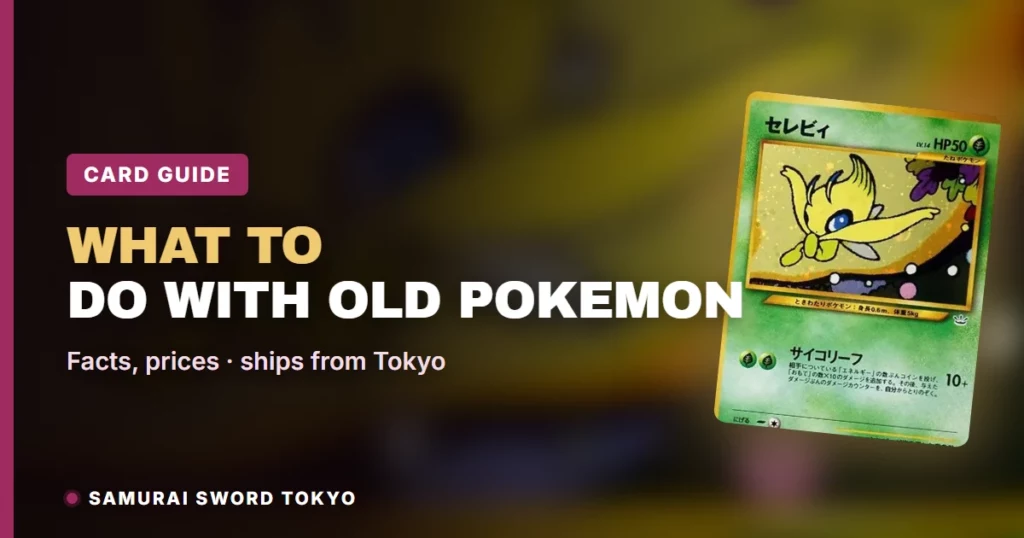
If you are wondering what to do with old Pokemon cards, the useful first step is not choosing between grading and selling — it is finding out exactly what you hold, because every later choice depends on the set code, the number and the condition.
This guide walks through four routes (grade, sell, keep, complete a set) using PSA’s published standard and fees, the wording our Old Back listings use, and our own condition guides. It states no market prices and no estimates of what a card might fetch.
- Identify first: set code, number and condition decide every later option, and PSA will not grade cards that show trimming, re-coloring, restoration or other tampering.
- PSA’s Standard tier is $59.99 per card (max insured value $1,000) on its US schedule; PSA Japan prints a separate yen schedule, so never mix the two.
- For reference on how graded vintage looks in a listing, the PSA 10 Celebi (Old Back, PRMF-3 No.251) carries a listing price of ¥250,290 (~$1,625). USD figures convert at ¥154/USD, approximate.
Step One: Identify What You Have
Lay the cards out and write down four things for each one before you decide anything:
- The set code or symbol. Our Old Back listings use codes such as PMCG4, PMCG-G2, PMCG-P, neo1, neo3, neo4 and PRMF-3; our e-series listings use e1 to e5.
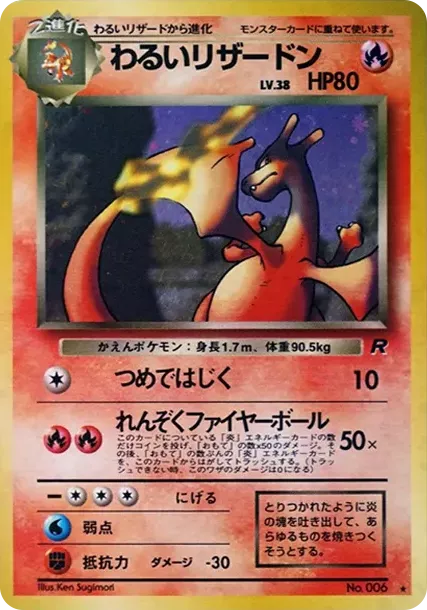
- The number. Old Back listings print “No.” plus a number (Charizard is No.006 in the PMCG4 row we list); e-series and VS listings print a fraction such as 103/128.
- Front and reverse condition. Corners, edges, surface and centering, front and back.
- Any edition marking. Our listing names carry “1ED” on some e-series and VS rows.
Then photograph both sides in even light. The photographs help with every route: a grader submission, a sale listing or an insurance record. Our Old Back guide shows how to recognise the older reverse, and how to read Japanese Pokemon cards covers the layout of a Japanese card.
Leave the card exactly as it is. PSA states that it will not grade cards that bear evidence of trimming, re-coloring, restoration or any other form of tampering, so any attempt to improve a card can only remove options.
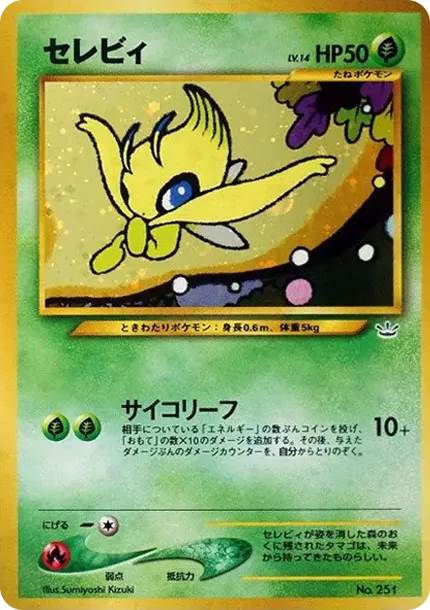
For cards like this one, the official database does not list this print; the number, set and grade are as printed on our listed copy. That is the level of detail to record for your own old cards too: name, set code, number, and condition.
Route One: Grade with PSA
Grading puts a card in a PSA case with a label showing the grade and certification number. The standard behind that label is PSA’s own text: “A PSA Gem Mint 10 card is a virtually perfect card. Attributes include four perfectly sharp corners, sharp focus and full original gloss. A PSA Gem Mint 10 card must be free of staining of any kind, but an allowance may be made for a slight printing imperfection, if it doesn’t impair the overall appeal of the card.” Front centering must be within approximately 55/45 percent and reverse within approximately 75/25 percent, with a small variance permitted at the grader’s sole discretion.
PSA’s trading card grading page lists these US service levels in USD, as printed on September 29, 2026:
| Level | Fee per card | Max insured value | Estimated turnaround (business days) |
|---|---|---|---|
| Standard | $59.99 | $1,000 | 90–100 |
| Priority | $79.99 | $1,500 | 70–80 |
| Express | $199.00 | $2,500 | 20–30 |
| Super Express | $349.00 | $5,000 | 10–15 |
| Premier | $599.00 | $10,000 | 7–10 |
PSA states that turnaround times are estimates only and not guaranteed, that it may adjust pricing and services, and that its Value tiers were temporarily paused on that date. Higher Premium levels start at $999.00. PSA’s backlog tracker, dated September 22, 2026, gives an active global backlog of approximately 9 million units.
PSA Japan prints its own schedule in yen, tax included, with declared-value limits: Standard ¥9,980 (declared value up to ¥150,000), Priority ¥11,980 (up to ¥250,000) and Express ¥29,980 (up to ¥400,000). Its lead times start from the arrival notice email, so US and Japanese tables should not be compared line by line. Our PSA Japan label and service article explains what the Japanese service is, and the Japanese Pokemon card grading guide compares PSA, BGS and CGC.
The decision rule that follows from the tables is simple: choose a tier whose maximum insured or declared value covers what you declare, and read the estimated turnaround as an estimate. PSA’s text does not tell you in advance which grade a raw card will receive, and neither does this guide.
Route Two: Sell
Selling is a separate decision from grading, and we state no prices for it here. What we can describe is how a buyer reads a listing, because that is what you will be judged on.
- Name, set code and number, exactly as printed. Our own vintage listings read like “Charizard : Old Back [PMCG4 No.006]” or “Psyduck [e2 020/092]”.
- Grade and label. A graded card is described by its grade; a raw card is described by its condition.
- Photographs of both sides. Buyers of Japanese cards compare corners, surface and centering on the photo, exactly as our condition guide describes.
Before setting an asking price, check current listings for the same set code and number yourself; a listing for a different print of the same Pokemon is not a comparison. Our guide to spotting fake Japanese cards is worth reading if any of your cards came from an unknown source, since a buyer will ask the same questions.

Route Three: Keep
Keeping is the route that needs the least paperwork and the most care. Handle the card by the edges, keep it away from moisture and store cards flat and separate rather than loose in a stack.
Two habits help if you might change your mind later: keep your identification notes with the card (name, set code, number), and keep the photographs. Our condition guide for Japanese cards lists what to look at when you re-check a card, and the PSA 10 meaning guide explains the grade you would be aiming for if you later decide to submit.
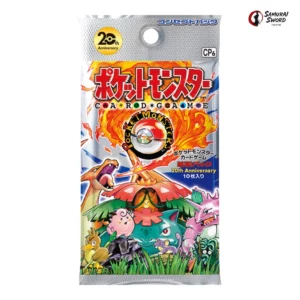
If you keep sealed product, the same logic applies to the pack: leave it sealed and record the set code printed on it. Our vintage booster packs guide and short vs long booster packs article explain the pack formats.
Route Four: Complete a Japanese Set
A Japanese set is completed by number, so old cards you already own may be part of a set you can finish. Match each card’s set code against a set list first: for Old Back-era codes, the vintage Japanese cards guide covers the era; for modern sets, our Japanese Pokemon card sets in order lists the S, SV and MEGA eras.
The Team Rocket rows we list show how numbers work inside one set. Each of the following is offered as a PSA 10 back order — sourced to order; the product page shows the current terms.
| Card as listed | Set code and number | Status | Price |
|---|---|---|---|
| Charizard (Old Back) | PMCG4 No.006 | PSA 10 back order | ¥632,400 (~$4,106) |
| Blastoise (Old Back) | PMCG4 No.009 | PSA 10 back order | ¥295,596 (~$1,919) |
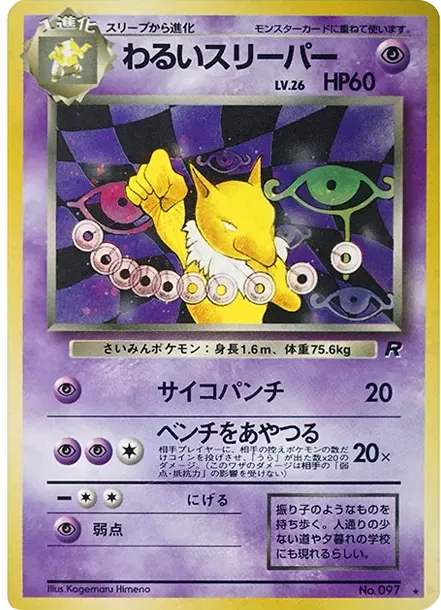
| Hypno (Old Back) | PMCG4 No.097 | PSA 10 back order | ¥74,256 (~$482) |
| Porygon (Old Back) | PMCG4 No.137 | PSA 10 back order | ¥71,400 (~$464) |
| Gyarados (Old Back) | PMCG4 No.130 | PSA 10 back order | ¥312,528 (~$2,029) |
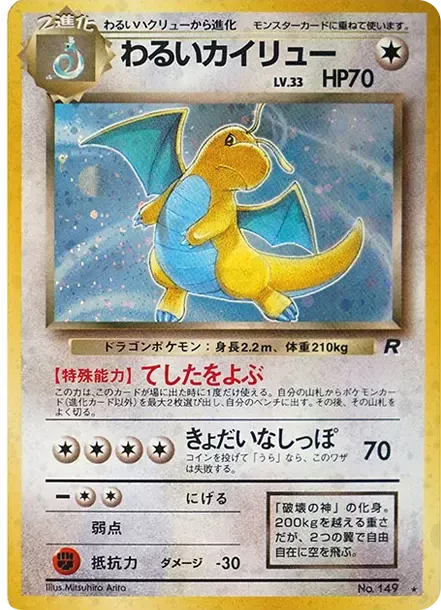
| Dragonite (Old Back) | PMCG4 No.149 | PSA 10 back order | ¥540,600 (~$3,510) |
These are selected examples from one listed set, not the full set. The official database does not list this print; the number, set and grade are as printed on our listed copy. For a modern set, our card-list pages show the full list; the card list hub links to them. The PSA 10 back order guide explains back orders once.
Choosing a Route
| If you want to… | Start here | Read |
|---|---|---|
| Know what you hold | Set code, number, both sides photographed | How to read Japanese cards |
| Grade a card | Pick a tier whose declared-value limit covers the card; read turnaround as an estimate | Grading guide |
| Sell a card | Exact name, set code, number and both-side photos | Condition guide |
| Keep a card | Store flat and separate; keep your notes and photos | PSA 10 meaning |
| Complete a set | Match set codes and numbers to a set list | Vintage guide (Old Back era) or Sets in order (modern sets) |
Collectors can choose different routes for different cards: a few graded, a few kept raw, and a want list for the numbers that are missing.
Where to Buy Graded Vintage Cards from Tokyo
If the route you choose is buying the missing piece as a graded copy, our PSA 10 collection and PSA 10 card list show the graded singles we list, and the vintage pack collection shows sealed vintage packs. The PSA 10 Celebi Old Back PRMF-3 No.251 is currently listed at ¥250,290 (~$1,625). For a specific print that is not listed, sourcing requests go through Quick Order. The guide to buying Japanese Pokemon cards from Japan explains ordering from Tokyo.
Frequently Asked Questions
What should I do first with old Pokemon cards?
Identify each card by set code, number and condition, and photograph both sides. Leave the cards as they are: PSA will not grade cards that show trimming, re-coloring, restoration or other tampering.
Should I get old Pokemon cards graded?
That depends on the card and your goal. PSA’s US Standard tier is $59.99 per card with a $1,000 maximum insured value, and PSA Japan’s Standard tier is ¥9,980 with a declared-value limit of ¥150,000; turnaround times are estimates only.
How do I sell old Pokemon cards?
Describe each card by exact name, set code and number, state whether it is raw or graded, and photograph both sides. We give no price estimates; compare current listings of the same print yourself.
How should I store old Pokemon cards?
Handle cards by the edges, keep them away from moisture and store them flat and separate. Keep your identification notes and photographs with them.
Are Old Back cards in the official Pokemon card database?
For the Old Back prints in this guide, the official database does not list this print; the number, set and grade are as printed on our listed copy.
Where can I buy a graded vintage card to fill a gap?
Our PSA 10 collection lists graded singles, and sourcing requests for a specific print go through Quick Order.
500 Points Free on Sign-Up
CREATE FREE ACCOUNT1 pt = ¥1 at checkout · Points expire 30 days after they are earned · Import duties, taxes and customs charges are not included in the price and are collected on delivery, except for destinations we ship duty-paid.
Picked for this article
📩 Get member-only sale alerts & coupons
Sale alerts, coupons and restock notices by email — straight from Tokyo.