Sourcing requests go through Quick Order, and the AR Bulk and SR Bulk prices below are the listed prices at the time of this update. USD figures convert at ¥154/USD, approximate. RFQ, shipping, customs, payment, stock and allocation terms must be rechecked before every order. Related guides: how to buy Japanese Pokemon cards wholesale, Japanese One Piece card wholesale guide and Pokemon PSA 10 wholesale price list guide; browse the card list hub to browse sets. The October 15, 2026 update checks links, prices and destination-specific customs treatment; the other facts in this article were last checked on July 14, 2026.
Japanese TCG wholesale requests are easier to assess when a card shop supplies an exact product specification. Identify the product, SKU or JAN, quantity and unit, destination, deadline and payment preference. Ask Samurai Sword Tokyo to confirm the available product, price, any allocation or reservation conditions, quote expiry, payment instructions and shipping assumptions before deciding whether to buy.
For booster boxes, cases, raw singles, bulk lots, graded cards or future releases, describe each requested line separately. Ask whether the exact products and quantities can be supplied and ordered together. Build the purchase decision around the confirmed offer, landed cost and your store’s own sell-through evidence.
1. How the SST wholesale RFQ workflow works
Use the RFQ when something must be confirmed before purchase
Use Quick Order for a sourcing request when the product, quantity or availability needs checking. For an existing order, use the customer-support route shown in your account or on the contact page. Describe each requested product with a clear identity, quantity and unit.
For market-priced items, provide exact Japanese identifiers rather than an English nickname alone. Ask whether a sold-out item can be sourced again at a current price, or whether a future release has an available allocation. For items not listed on the store, include set codes, JANs, card names, certification numbers and relevant reference images.
| Buying situation | What to request | What to verify |
|---|---|---|
| Visible current product | Current quantity, pricing and shipping details | Whether and when the requested quantity is reserved |
| Sold-out item | A check for possible supply | Current availability and price before committing |
| Pre-order or upcoming set | Available allocation for the exact product | Confirmation conditions and estimated timing |
| ASK or market-priced line | A current quote for the specified item | Expiry and any price-lock conditions |
| Not-listed single, lot or slab | Availability against exact identifiers and condition needs | Whether the offered item meets every requirement |
Understand the four stages
First, identify what your store wants. Second, state quantity, unit, destination and deadline. Third, ask for availability, price, substitutes and shipping details. Fourth, compare the response with your request and resolve any missing confirmation before payment. Keep the request and response together as one purchasing record.
The separation between request and response is important. The request expresses demand; the response defines the current offer. If a requirement changes—quantity, destination, deadline, product mix, substitute tolerance, or payment route—the original quote may no longer describe the transaction. Ask for an updated confirmation rather than editing the assumptions internally.
Confirm stock and allocation status
Ask whether stock is reserved, when allocation is secured and what payment or invoice conditions apply. A submitted request alone is not enough evidence for promising incoming stock to your customers. Keep the line marked “requested” internally until you receive the confirmation needed for that purchase.
2. Build a quote-ready request with the right fields
Product identity: product name, SKU, JAN or another stable identifier
A strong identifier is the fastest way to prevent cross-set and variant errors. For sealed products, use the exact Japanese set name, set code, SKU or JAN, product link, and whether you need a standard box, no-shrink box, case, deck, special set, or promotional item. For singles, include language, set, card number, rarity and treatment. For PSA 10, include grading company, grade, exact card identity and certificate when a particular slab matters.
Do not rely on character name alone. A single Pokemon or One Piece character can have many Japanese cards, reprints, rarities, alternate arts, promos, and card numbers. “Pikachu PSA 10” or “Luffy card” is a discovery query, not a purchasable specification. If the item is not listed, attach a screenshot only as supporting evidence and write the machine-readable identifiers in text.
Quantity and unit: define what one means
Quantity without a unit creates expensive ambiguity. State boxes, sealed cases, cards, graded slabs, 100-card lots, kilograms, complete sets, or another defined unit. For a case, state the expected box count only if it is confirmed for that exact product; do not import an assumption from another game or release. For bulk, define whether duplicates are allowed, whether the mix is random, language, rarity, condition, and whether the photo is actual or representative.
Destination, deadline, payment preference and substitutions
Give the destination country and distinguish a dispatch deadline from an arrival deadline. The current shipping policy refers to payment through Wise or PayPal. State your preferred method and follow the instructions supplied for the order; confirm any fees and deadlines before paying.
Finally, define substitutes. A useful rule might allow another sealed configuration but reject a different set; allow mixed PSA certificates but reject a different grade; or allow a substitute product only below a maximum unit price. “Substitutes accepted” without boundaries moves the decision back into email and delays the quote.
Give the request an internal reference such as a purchasing batch number and record the version sent. If the store later changes quantities, removes a line, raises a budget, changes destination, or extends the deadline, send a clearly revised request instead of assuming the original response covers the change. Version control is especially useful when several buyers, a warehouse, and an accounts-payable team are involved: everyone can compare the same product lines, quote validity and payment instructions.
Before submission, ask a second operator to review identifiers and units. A one-character set-code error or a case-versus-box mistake can change the order materially. The review should also check that the deadline is realistic, that the destination matches the importing entity, and that each substitute rule has a commercial limit. This small control is cheaper than resolving a variant dispute after international dispatch.
| RFQ field | Minimum useful detail | Common failure |
|---|---|---|
| Product | Name plus SKU, JAN, set code, card number, URL or certificate | Using a broad nickname that matches several items |
| Quantity | Number plus explicit unit type | Writing “10” without boxes, cases, cards or lots |
| Destination | Country and delivery postcode/region when requested | Asking for shipping without a destination |
| Deadline | Dispatch-by or arrival-by date, clearly labeled | Calling an estimate a guaranteed delivery date |
| Payment | Preferred route and acceptable alternative | Assuming every route has identical terms |
| Budget | Maximum unit price or total merchandise budget where relevant | Requesting “best price” without a decision threshold |
| Substitutes | Allowed and forbidden changes | Accepting substitutions with no product boundaries |
3. Wholesale booster boxes and sealed cases
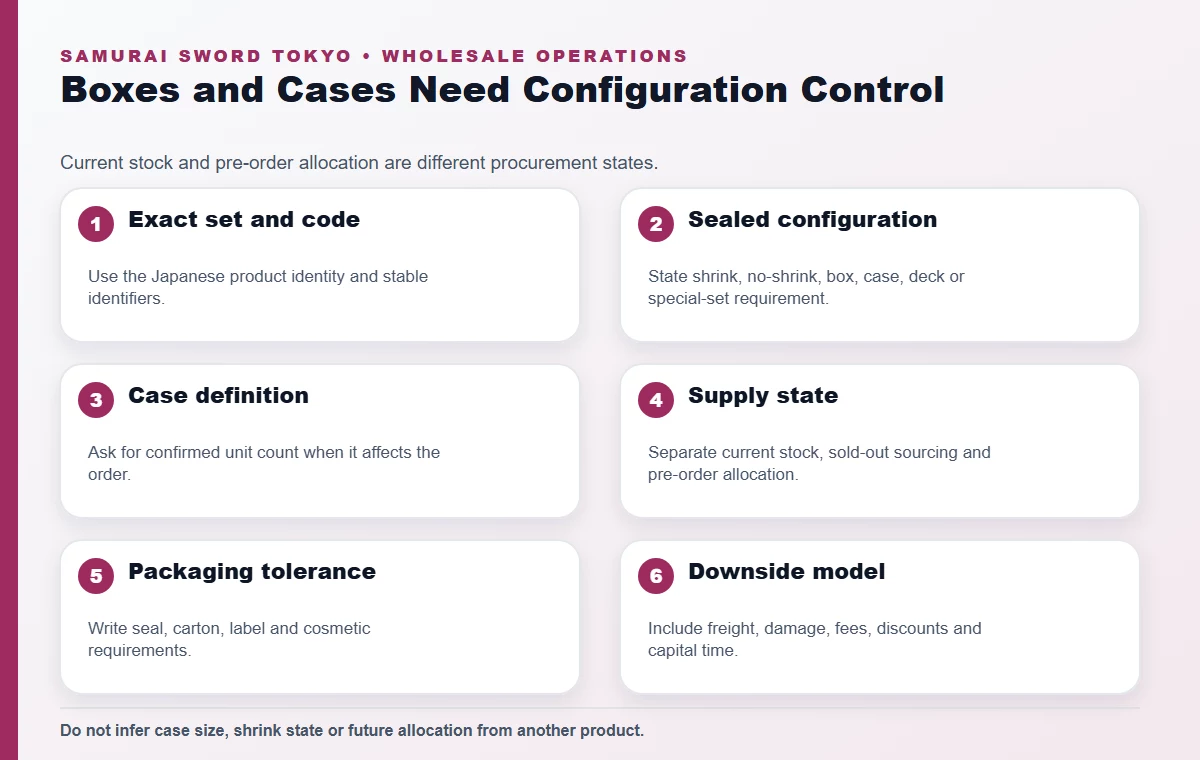
Specify the sealed configuration, not only the set
Japanese booster products can appear as standard sealed boxes, no-shrink units, sealed cases, special sets, decks, or other configurations. They have different unit economics, resale audiences, shipping efficiency and condition expectations. A card shop should say exactly which configuration is acceptable and whether shrink condition, case seal, carton labels, or box cosmetic standards matter to the business.
For a sealed case, request the exact product and case unit. Do not assume a standard number of boxes across games or releases. Ask the response to confirm the case definition when it affects your purchase. If you accept loose boxes as a substitute, state the maximum quantity and the packaging standard you need.
Separate current stock from pre-order allocation
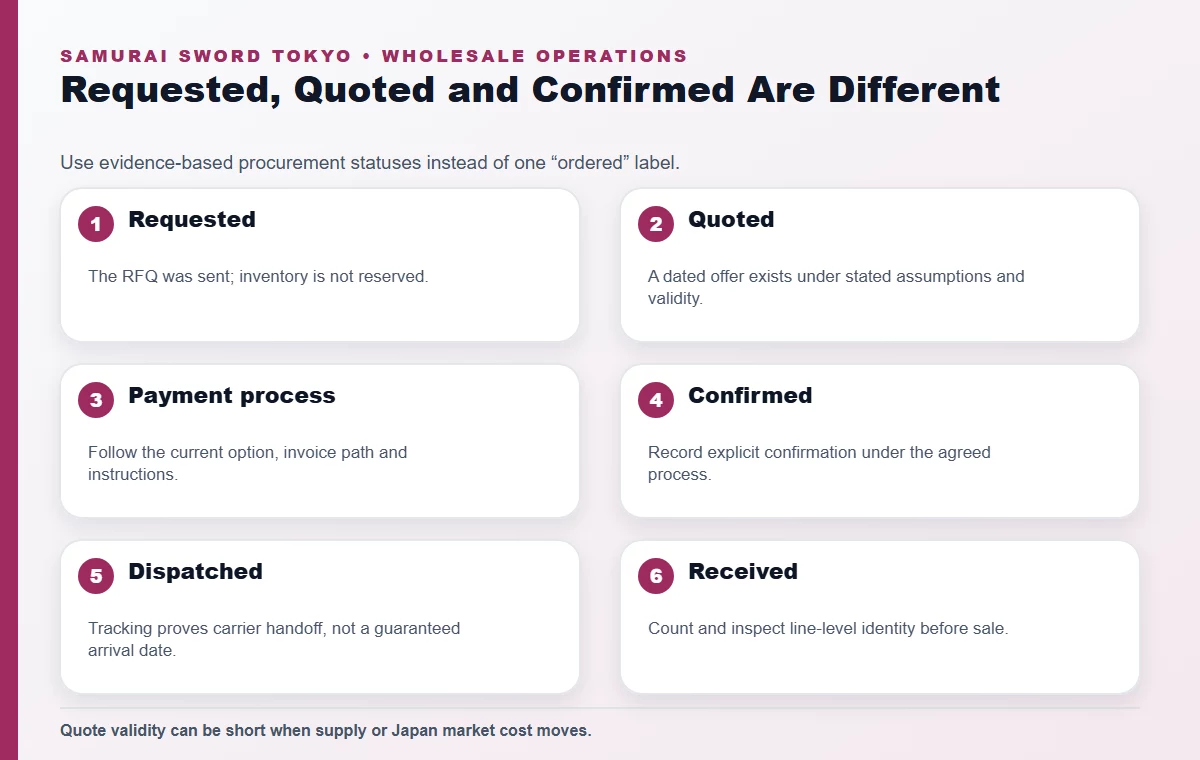
Current-stock lines and pre-order allocation are different procurement states. Current stock can still move before payment confirmation. Pre-order supply can change because of supplier allocation, release timing, inspection or other conditions. Use internal statuses such as requested, quoted, paid/confirmed, received and reconciled. Do not mark stock as inbound when it is only requested.
| Route | Best for | Specification | Main risk to control |
|---|---|---|---|
| Individual booster boxes | Assortment testing and flexible resale | Set, configuration, quantity, shrink requirement | Higher freight per box or mixed condition |
| Sealed cases | Launch inventory and breakers | Exact case definition, seals, carton requirements | Allocation, capital concentration and carton damage |
| No-shrink boxes | Buyers accepting disclosed packaging state | Exact no-shrink product and resale wording | Confusing with factory-sealed shrink configuration |
| Pre-order request | Upcoming launches | Product, expected release, box/case unit, destination, deadline | Supply and release timing are not guaranteed |
| Recurring supply | Repeat stock planning | Target cadence, quantity range and substitute rules | Assuming one quote creates future allocation |
Model sealed inventory without a guaranteed margin
A wholesale price does not guarantee a retail spread. Compare the quoted merchandise cost with inbound shipping, import costs, payment expenses, damage reserve, marketplace fees, outbound fulfillment, discounting and capital time. Use conservative net proceeds and several sell-through scenarios. Do not base a case order on launch hype, an isolated listing price, or a previous set’s performance.
4. Wholesale raw singles: identity and condition come first
Make each requested card machine-checkable
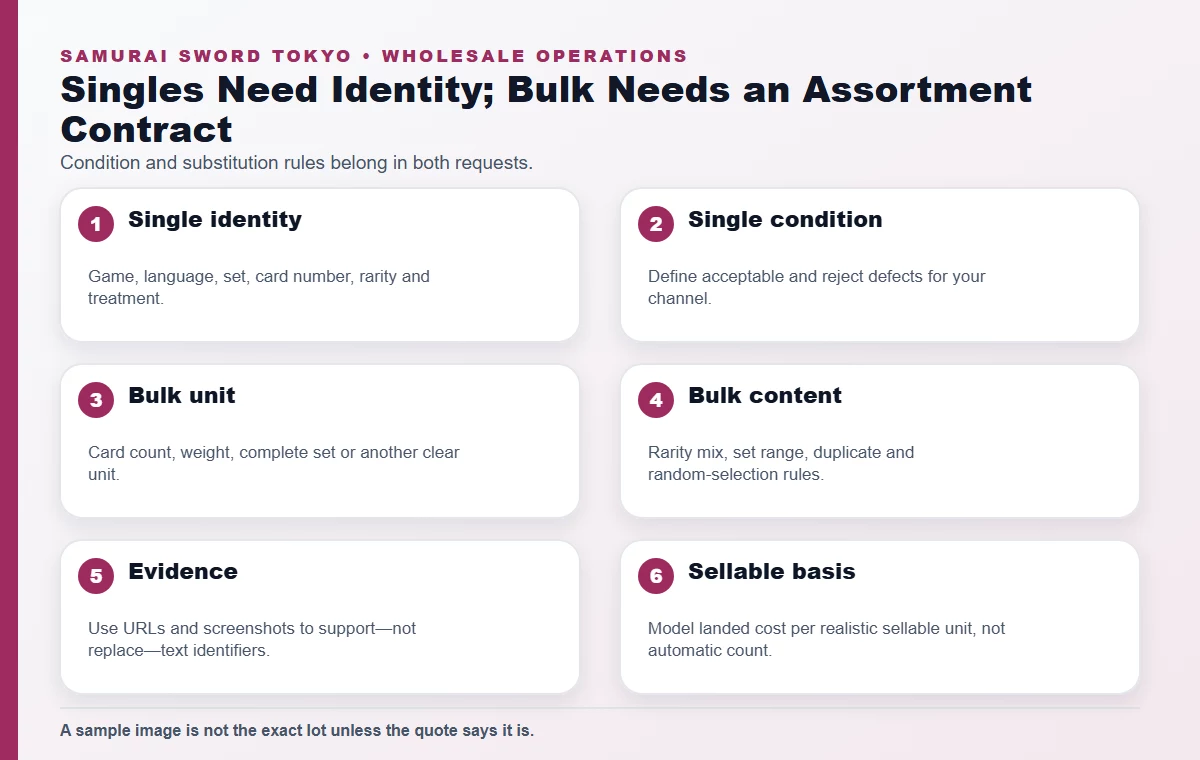
For raw singles, include game, language, set, card number, rarity, printing or treatment, quantity and desired condition range. If the card is a promo, include the promo number and distribution identifier where known. Character name, artwork description or translated set name can support the request, but should not replace card number and set evidence.
A multi-card request should use one row per distinct card or a structured attachment. Avoid a screenshot-only collage that forces the sourcing team to infer card numbers. If you accept alternate printings, list them explicitly in priority order and state whether the price cap changes.
Condition wording must be operational
Terms such as near mint can vary by marketplace and store. State the defects that are unacceptable for your channel: dents, creases, heavy whitening, scratches, print lines, stains, edge chips, writing, warping or possible alteration. For higher-value cards, ask what photos or condition confirmation can be provided before payment. For lower-value bulk singles, use a batch-level standard only if both parties understand its limits.
| Single-card field | Example of precise input | Why it matters |
|---|---|---|
| Identity | Game, Japanese set, card number, rarity | Separates reprints and alternate treatments |
| Quantity | Exact copies per identity | Prevents a total-card count from hiding the mix |
| Condition | Written acceptable and reject defects | Aligns intake with the resale channel |
| Substitution | Named alternate printing or no substitutions | Prevents a different card from satisfying the request |
| Evidence | Product URL, card database link or screenshot | Supports the textual identifiers |
| Price cap | Maximum per card or total line | Creates a commercial decision rule |
Route received singles by actual economics
After receipt, verify count, identity and condition before listing. The best route may be individual sale, character bundle, set-completion lot, live-sale inventory, grading review or hold. Wholesale sourcing supplies inventory; it does not determine the resale channel. Track net proceeds by inbound batch so future requests use evidence rather than general impressions.
5. Bulk cards and lots: define the assortment contract
Bulk is a unit, not a quality promise
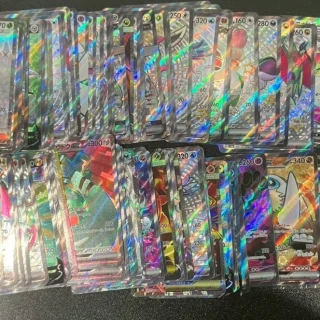
For current retail examples, review SST’s AR Bulk – 100-Card Set, listed at ¥26,999 (~$175) and SR Bulk – 100-Card Set, listed at ¥34,999 (~$227), then use the wholesale RFQ for larger, recurring or mixed requirements. Product-page price and availability remain live, volatile values rather than a wholesale promise.
“Bulk” can mean 100 Art Rare cards, low-rarity commons and uncommons, holo lots, mixed Japanese singles, duplicate-heavy inventory, set-sorted cards or weight-based supply. Every interpretation has different labor, shipping and resale economics. Define card count or weight, game, language, rarity mix, set range, duplicate policy, random-selection policy, condition and whether sample images represent the category or the actual lot.
If the seller will make a best effort to reduce duplicates, record that as best effort rather than a uniqueness guarantee. If your customer-facing bundle promises no duplicates, your own receiving and packing workflow must create and verify that promise. Do not inherit stronger language than the supply terms support.
Calculate cost per sellable unit, not automatically per received card
The merchandise price divided by received cards is only a starting basis. Add inbound freight, duties or taxes, payment costs, supplies, sorting, cataloging, photography, listing, selling fees, returns and unsold inventory. Then divide by the cards or bundles your channels can realistically sell. Damaged cards, duplicate concentration and low-demand inventory can reduce the effective denominator.
| Bulk specification | Decision to write | Risk if omitted |
|---|---|---|
| Unit | 100 cards, 1,000 cards, kilogram, complete set or another unit | Quantity cannot be compared or received accurately |
| Rarity/content | AR, holo, common/uncommon, mixed or exact list | Buyer and seller imagine different inventory |
| Duplicates | Allowed, capped, best effort or guaranteed unique | Concentration destroys planned variety |
| Selection | Random, curated, set-sorted or actual cards shown | Sample imagery is mistaken for exact content |
| Condition | Batch standard plus reject defects | Labor and sellable count are mis-modeled |
| Substitutes | Allowed rarity, set, language and price boundaries | Different supply satisfies an unclear request |
Use one pilot lot before recurring scale
Measure unique identities, duplicate concentration, sellable count, sorting hours, average net proceeds, 30/60-day sell-through, return rate and inventory age. Scale only after the cohort meets your thresholds. A larger lot may lower freight per card while increasing labor, cash exposure and slow-stock risk.
6. PSA 10 graded cards: exact slabs, not generic grade inventory
Specify card identity and certificate tolerance
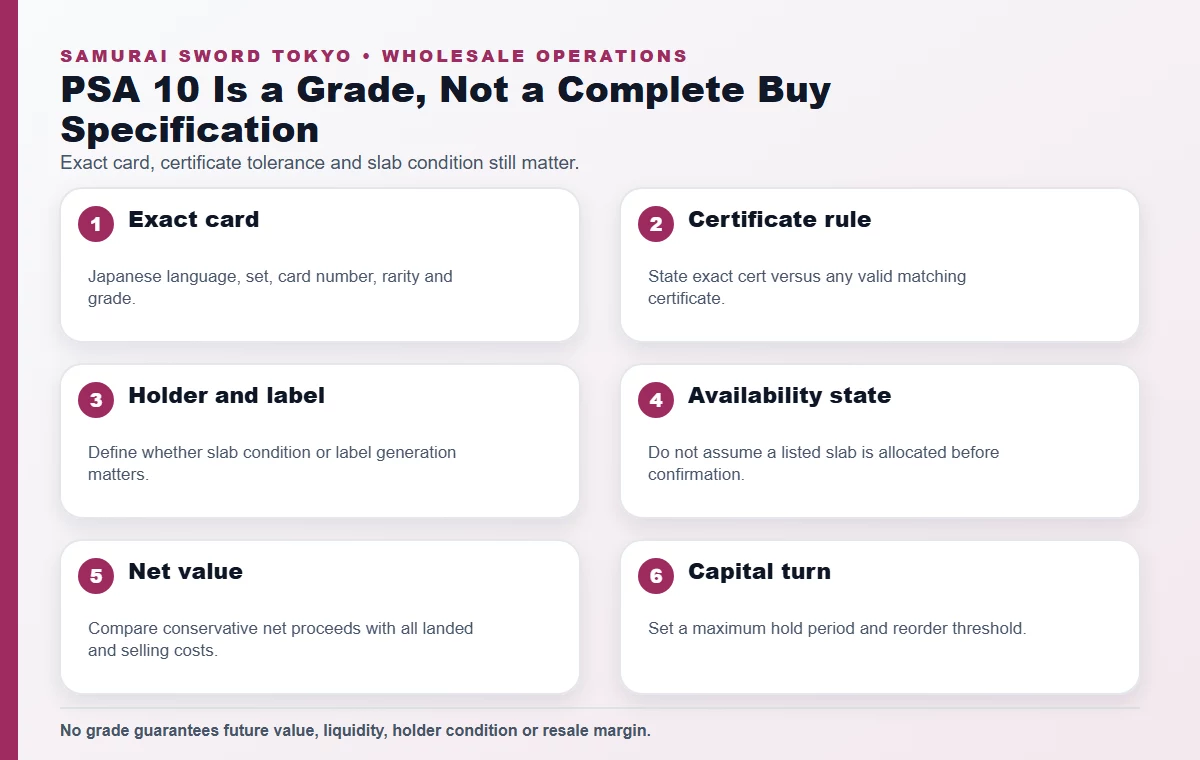
A PSA 10 request should include exact card identity, Japanese language, set, card number, rarity or treatment, grade, quantity and whether any valid certificate is acceptable. If the store needs the exact slab shown, include the certification number. If mixed certificates are acceptable, state whether label generation, holder condition or eye appeal has an acceptance rule.
Grade alone does not make all slabs commercially equivalent. Character demand, artwork, population, set, certification, centering, label, holder condition and your buyer base affect liquidity. No RFQ can guarantee future resale value or speed.
Control simultaneous online and physical-store availability
SST’s shipping policy notes that PSA graded cards may also be sold in its physical store, so an item shown online can sell there before allocation is locked. For wholesale requests, treat the slab as unconfirmed until the response and agreed process secure it. If a specific certificate is essential, make that constraint explicit and do not accept a generic replacement without review.
Build a graded-card margin model with downside
| Control | Question | No-guarantee implication |
|---|---|---|
| Exact identity | Is set/card number/rarity/language correct? | A similar character card is not a substitute |
| Certificate | Any cert or exact cert? | Availability can change before allocation is locked |
| Holder/label | Are slab condition and label generation material? | PSA 10 does not guarantee a flawless holder |
| Net resale evidence | What are conservative net proceeds in your market? | Listing price is not realized margin |
| Inventory turn | How long can capital remain in one slab? | High nominal value can still mean slow cash conversion |
| Substitutes | Which alternate card/cert/price is acceptable? | Undefined flexibility creates approval delays |
7. Control price, stock, allocation and quote validity
Read the quote as a dated offer with assumptions
The RFQ response should state what can be quoted, pricing, availability, validity, payment option, invoice path and next steps. Save it with the original request. Check that product, quantity, unit, destination, deadline, substitution and shipping assumptions still match. If any input changed, ask whether the quote remains valid.
Ask for an explicit expiry date or time and any conditions affecting price or availability. If you change quantity, destination or product requirements, request confirmation that the quote still applies. Reconfirm an expired quote before sending payment.
Use explicit procurement statuses
| Status | Evidence | What the shop may claim internally |
|---|---|---|
| Requested | Sourcing request sent | Await explicit stock and reservation confirmation |
| Quoted | Current response with validity | Offer available under stated assumptions |
| Payment/invoice in process | Agreed route and instructions | Do not assume secured until confirmed |
| Confirmed | SST confirmation under agreed process | Inbound procurement acknowledged |
| Dispatched | Carrier handoff and tracking | In transit; arrival date remains estimated |
| Received/reconciled | Count, identity and condition audit | Available inventory after exceptions are recorded |
Substitution approval belongs to the buyer
When supply moves, a substitute may preserve a deadline or price band, but only if it fits the store’s demand. Define pre-approved substitutions in the RFQ. Any other change should return for buyer approval with the revised item, quantity, price and shipping effect. Never let a general “substitutes okay” note override card identity, sealed configuration, grade or assortment requirements.
8. Shipping, duties, taxes and landed cost
A quote and landed cost are not automatically the same
SST’s current customs policy states that US and US-territory orders ship DDP: applicable import charges are collected at checkout, with no additional customs payment on delivery. Other destinations ship DAP, with applicable duties, taxes and carrier fees payable to the carrier before or at delivery. Confirm the destination and current policy when calculating landed cost.
Build landed cost from merchandise, international freight, insurance, payment and currency cost, duty, VAT/GST or other taxes, brokerage or carrier charges, inbound handling, damage reserve and local transport. Ask whether shipping is final or an assumption. For customs classification and importer obligations, consult the destination authority or qualified adviser; neither a blog nor a supplier quote guarantees treatment.
Do not promise delivery dates from estimates
SST’s shipping policy labels handling and carrier transit times as estimates, not guaranteed dates, and lists allocation, inspection, customs, carrier and destination conditions that can cause delay. A store should maintain separate requested, estimated and actual dates. Do not pre-sell with a guaranteed customer date unless the business can honor it independently of supplier and carrier variability.
| Landed-cost layer | Evidence source | Control |
|---|---|---|
| Merchandise | Current quote/invoice | Match product, quantity, unit and currency |
| International freight | Quote, checkout or carrier evidence | Confirm whether estimated or final and allocate consistently |
| Payment/FX | Actual payment route | Record fees and effective conversion separately |
| Duties/taxes | Quote, DDP treatment and customs authority | Check DDP at checkout for US/US territories and DAP destination charges elsewhere |
| Brokerage/handling | Carrier or broker | Include advancement and clearance costs when applicable |
| Inbound exceptions | Receiving audit | Reserve for damage, shortage, condition and delay |
| Selling cost | Your channel | Add marketplace, labor, packing, returns and discounting |
Allocate mixed-shipment cost consistently
Boxes, bulk cards and PSA slabs consume different weight, volume and insured value. Choose a documented allocation method—weight, packed volume, value or a hybrid—and use it across cohorts. An arbitrary equal split can make one category look profitable while another absorbs its freight. Reconcile estimated and actual charges after delivery.
9. Receiving, margin and reorder controls
Receive against the quote and line-level manifest
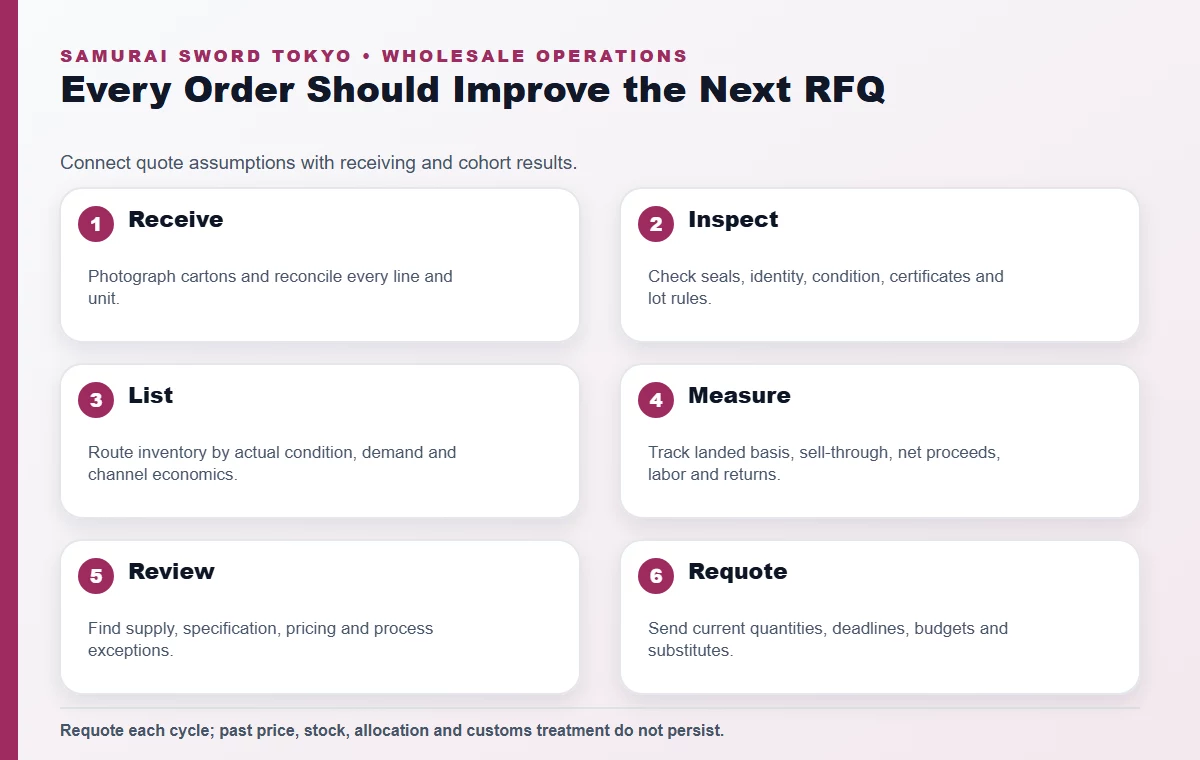
Before opening, photograph visible carton damage and preserve labels. Count cartons, then line items, then units. Match product identifiers, sealed configuration, card numbers, certificates, bulk assortment rules and condition. Record shortages, substitutions, damage and uncertainty before inventory is dispersed. A total order value is not enough; line-level identity and quantity matter.
For sealed cases, inspect carton and seal evidence according to the agreed specification. For boxes, record shrink/no-shrink state and cosmetic exceptions. For singles, apply the written condition standard. For bulk, count the unit and sample or inspect according to the contract. For PSA 10, match certificate and slab condition when required.
Measure net contribution and cash conversion
Do not evaluate a wholesale order from gross sales alone. Track landed basis, selling fees, discounts, labor, returns, damage, inventory age and net proceeds. Separate cohorts by order date and product line. Boxes may turn quickly but carry launch volatility; singles may produce higher gross percentages but require labor; bulk may need sorting and tolerate duplicates; PSA 10 may concentrate capital in fewer units.
| KPI | Why it matters | Reorder question |
|---|---|---|
| Line fill rate | Shows what was confirmed and received | Does the supply route fit your planned assortment? |
| Landed basis by unit | Prevents freight and tax from disappearing | Does the new quote still clear the threshold? |
| 30/60/90-day sell-through | Measures inventory turn | Will another order create productive depth or overstock? |
| Net proceeds | Uses money retained after variable costs | Did the cohort contribute after selling expenses? |
| Labor hours | Exposes sorting, listing and service cost | Can the process scale without reducing accuracy? |
| Returns/exceptions | Tests specification and condition controls | What must change in the next RFQ? |
| Inventory age | Measures tied-up capital | Should the store reorder, bundle, discount or stop? |
Requote every cycle
A successful first order does not create a permanent price, stock level, allocation, shipping rate, customs treatment or margin. Submit or refresh the RFQ with current quantity, destination, deadline and substitution rules. Compare the new offer against the previous cohort, not against memory. Scale only when supply reliability, landed cost, receiving accuracy, sell-through and cash conversion support it.
Use a short purchasing review before approving the next order. The commercial buyer should confirm demand and price thresholds; operations should confirm storage, inspection and listing capacity; finance should confirm landed-cost assumptions and cash timing; and the importer of record should confirm current customs requirements. A product can be attractive to customers while still being the wrong purchase if the team cannot receive it accurately, fund it through the hold period, or sell it without excessive discounting.
Document the final decision even when the answer is “do not buy.” Recording the rejected quote, reason, and review date creates useful market memory without treating old numbers as current truth. When supply changes, the shop can revisit the line with a new RFQ and compare like-for-like assumptions instead of rebuilding the decision from scattered messages.
10. FAQ: Japanese TCG wholesale for card shops
What information should a card shop include in a Japanese TCG wholesale RFQ?
Include the product name and a strong identifier such as SKU, JAN, set code, product link, card number, certification number, or screenshot; the quantity and unit type; destination country; delivery deadline; payment preference; budget or maximum unit price when relevant; and whether substitutes are acceptable.
Does submitting a sourcing request reserve stock?
Ask SST whether stock is reserved, when allocation is secured and which payment or invoice conditions apply. Keep a Quick Order sourcing request marked as requested until the relevant purchase details are confirmed. Do not promise incoming stock to customers from a submission confirmation alone.
Can I request sold-out or not-listed products?
Yes, as a sourcing check. For sold-out demand, identify the exact item and required quantity. For a not-listed item, provide set codes, JANs, card names, certification numbers, screenshots, or notes. A request does not guarantee that the product can be sourced or that the price will fit your target.
Can I request pre-order allocation for booster boxes or cases?
Yes. Include the product, expected release, requested box or case quantity, destination, and deadline. Allocation is not guaranteed by the request and may depend on supplier supply, market conditions, payment timing, and staff confirmation.
How long is a Japanese TCG wholesale quote valid?
Ask for the expiry date or time and any price or availability conditions in the response. Reconfirm after expiry or after changing your requirements, rather than relying on an earlier price or stock statement.
Can a wholesale order mix boxes, singles, bulk lots and PSA 10 cards?
List the requested products separately with their own quantities, units and acceptance rules. Ask whether they can be quoted, purchased and shipped together. SST’s shipping policy states that separate orders are shipped separately, so confirm the order arrangement before checkout.
Are profit margins guaranteed on wholesale Japanese cards?
No. A quote is a procurement offer, not a resale-price or profit guarantee. Your margin depends on landed cost, currency and payment costs, taxes, shipping, fees, labor, condition, assortment, sell-through, returns, price changes, and the market where you sell.
Who pays import duties and taxes?
US and US-territory orders ship DDP: applicable import charges are collected at checkout, with no additional customs payment on delivery. Other destinations ship DAP, with applicable duties, taxes and carrier fees payable to the carrier before or at delivery. Verify the current customs policy before paying.
What should I specify for PSA 10 wholesale requests?
Use the exact card identity, language, set and card number, grade, grading company, quantity, and—when you need a particular slab—the certification number. State whether mixed certificates or substitute cards are acceptable. Grade alone does not guarantee equal market value, liquidity, or eye appeal.
When should a card shop reorder?
Reorder only after comparing the new quote with actual cohort results: sell-through, net proceeds, labor, inventory age, returns, duplicate concentration, condition exceptions, and cash conversion. Reconfirm price, availability, allocation, shipping assumptions, taxes, and quote validity every cycle.
Before paying, confirm the exact products, quantities, condition, price, availability, quote expiry and payment instructions. Review the current shipping and customs policies for the destination, and keep those details with the accepted offer.
Picked for this article
📩 Get member-only sale alerts & coupons
Sale alerts, coupons and restock notices by email — straight from Tokyo.