
You play Pokemon cards by building a legal 60-card deck, setting aside 6 Prize cards, and then taking turns attaching Energy, playing Trainer cards, evolving your Pokemon and attacking with your Active Pokemon until one of three win conditions is met. Deck size, Prize cards, turn structure and how a game ends are identical whether your deck is printed in English or Japanese — only the language on the card changes, not the mechanics.
This guide walks through what a legal deck looks like, how a game is set up, what you can actually do on your turn, how to read the numbers on a Japanese card, and how you win, using the same mechanics laid out on Pokemon’s own official rules pages. It’s written around Japanese sets, since that’s the market we ship out of Tokyo, but every rule below applies to any Pokemon TCG deck regardless of language.
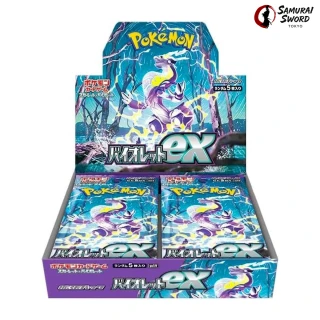
A legal Pokemon deck is exactly 60 cards, with at most 4 of any one named card allowed (Basic Energy is exempt from that limit). Each player sets aside 6 Prize cards at the start of a match and takes one into their hand every time they Knock Out an opponent’s Pokemon. If you want a ready-built Japanese card pool to learn these rules with, the Ruler of the Black Flame Deck Build Box is currently listed at ¥5,400 (~$34) (update: currently sold out — restock requests via Quick Order), or start from a full booster box with the M6 Storm Emeralda Booster Box, currently listed at ¥11,040 (~$69).
Yen figures below convert at ¥159/USD (September 2026).
Building a Legal 60-Card Deck
Every Pokemon TCG deck — Japanese or English — has to hit one number exactly: 60 cards. Not 59, not “roughly 60.” Sixty.
Within those 60 cards, one construction rule limits how many of a single named card you can run: at most 4 total of any card sharing the same name. The one exception is Basic Energy — you can run as many Basic Energy cards of the same name as you want, with no 4-card cap applied to it.
This is also where a Japanese deck and an English deck are functionally identical: the deck-size and copy-limit rules don’t change by region. For a fuller breakdown of how a 60-card Japanese deck typically splits between Pokemon, Trainer and Energy cards, see our deep dive on deck-building card counts — that article covers what goes into the deck, this one covers what happens once it’s built.
Game Setup: Prize Cards, Your Opening Hand and the Active Pokemon
Before a single card is played, both players go through the same setup sequence. First, shuffle your 60-card deck. Then draw a 7-card opening hand.
From that hand, place one Basic Pokemon face-down as your Active Pokemon — the card that does your fighting first. If your opening 7 cards don’t contain a single Basic Pokemon, you reshuffle that hand back into your deck and redraw; as compensation, your opponent gets to draw one extra card. That rule exists specifically so an unplayable opening hand doesn’t end the game for you before it starts.
Once both players have an Active Pokemon down, each player sets aside 6 Prize cards face-down from their deck. Prize cards sit untouched until a Pokemon is Knocked Out — they’re the resource that actually decides the game (see “How You Win,” below).
The battlefield has room for more than just the Active Pokemon: up to 5 additional Pokemon can sit on the Bench at any time, for a maximum of 6 Pokemon in play per player.
What You Can Do on Your Turn
Once setup is finished, turns follow a consistent shape. On your turn you can, in whatever order suits your hand:
- Attach an Energy card to one of your Pokemon — generally limited to one Energy attachment per turn.
- Play Trainer cards from your hand.
- Evolve a Pokemon already in play into its next stage.
- Retreat your Active Pokemon to the Bench and bring up a Benched Pokemon instead — retreating costs Energy.
- Attack with your Active Pokemon, which ends your turn.
There’s one restriction that catches new players every time: whoever takes the very first turn of the game cannot attack on that first turn. Every other action above is available to the first player on turn one — they just can’t close it out with an attack. From the second turn onward, both players can attack freely.
Reading a Japanese Card: HP, Attacks and Retreat Cost
Card text on a Japanese Pokemon card is printed in Japanese, but the layout carries the same information as an English card, and you don’t need to read Japanese to play a Japanese deck once you know where to look.
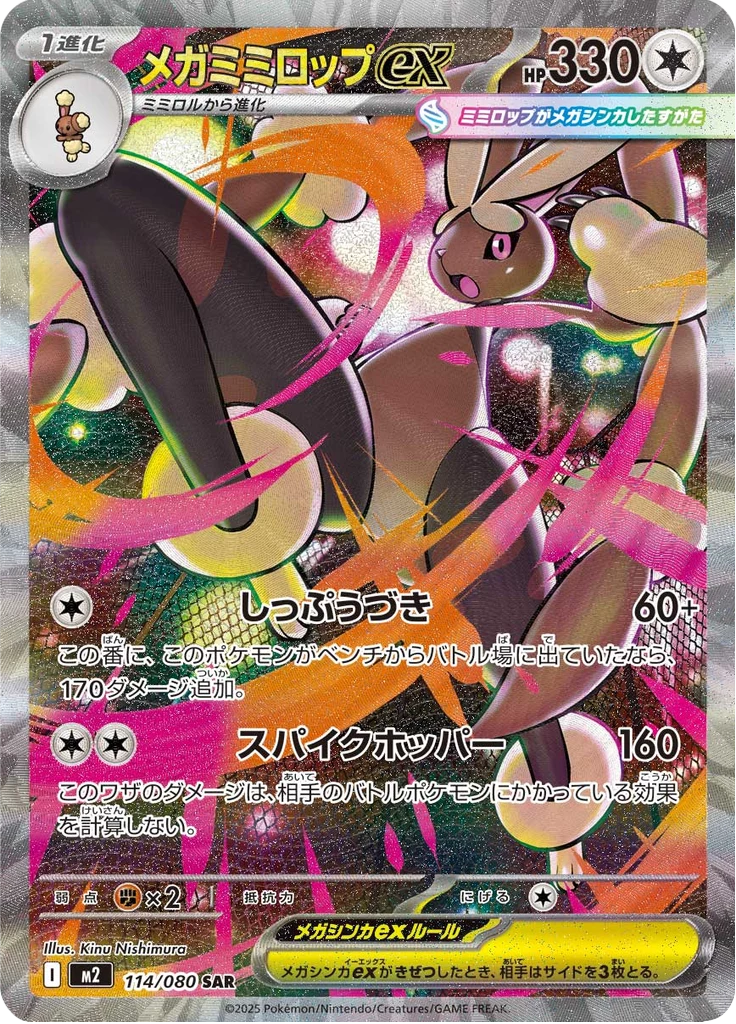
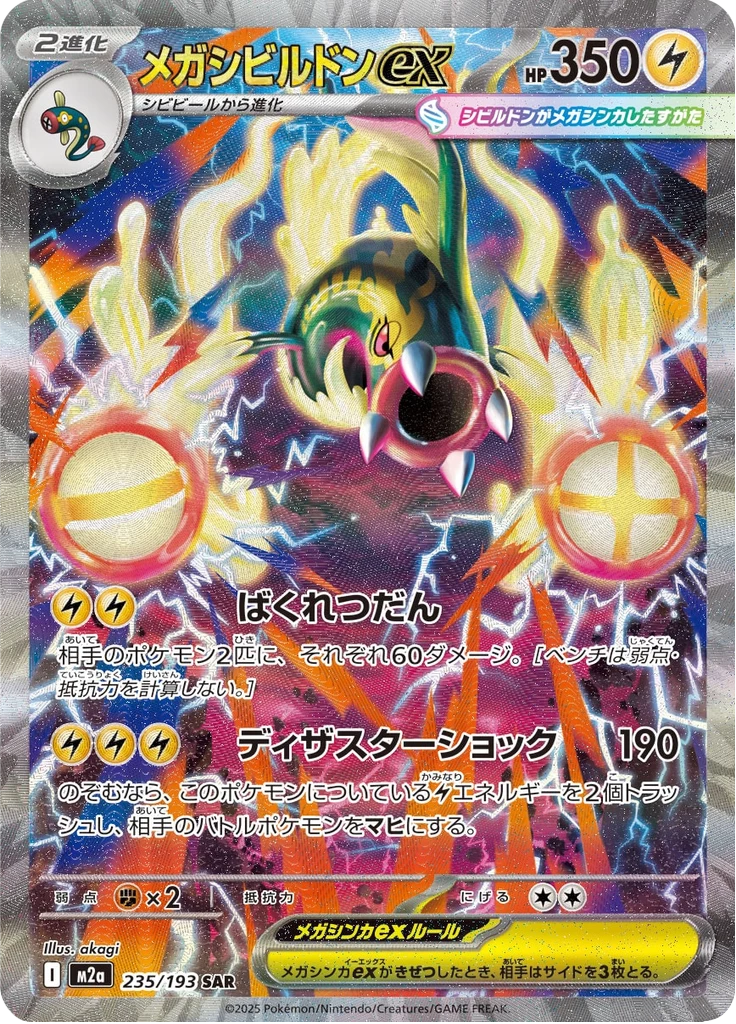
Three things matter most once you’re actually playing: the Pokemon’s HP (how much damage it can take before being Knocked Out), the damage and effect text printed under each attack, and the retreat cost — the number of Energy cards you have to discard to retreat that Pokemon to the Bench, the same retreat mechanic covered in the turn actions above. All three sit in consistent layout positions across a set, so once you’ve matched them up on one Japanese card, you can read any other card from the same era the same way.
None of this changes the rules covered elsewhere in this guide — a Japanese Active Pokemon retreats for Energy exactly like an English one, and a Knock Out happens the same way regardless of the language printed on the card. For the next layer of what’s printed on a Japanese card — rarity marks rather than gameplay stats — see our Japanese Pokemon card rarity guide for graded buyers.
How You Win (and Lose) a Game
A Pokemon TCG game ends the moment any one of three conditions is met:
- You take all 6 of your Prize cards by Knocking Out your opponent’s Pokemon.
- Your opponent has no Pokemon left in play — no Active Pokemon and nothing on the Bench.
- Your opponent can’t draw a card from an empty deck at the start of their turn.
Knocking out an opponent’s Pokemon is what feeds condition 1: each Knock Out lets you take one Prize card into your hand — except higher-value Pokemon types like Pokemon V and VMAX, which give up more than one Prize card when Knocked Out. Our Pokemon V, VMAX and VSTAR guide covers the exact Prize-card count for each of those card types.
All three win conditions, the 6-Prize count, and the Knock Out mechanic itself are identical whether you’re playing a Japanese deck or an English one — the official rules make no region-specific exception for any part of this.
Starting Your First Japanese Deck: What to Buy
If you’re learning these rules for the first time, the fastest way into a legal 60-card Japanese deck isn’t buying singles one at a time — it’s starting from sealed product that already gives you a working card pool.
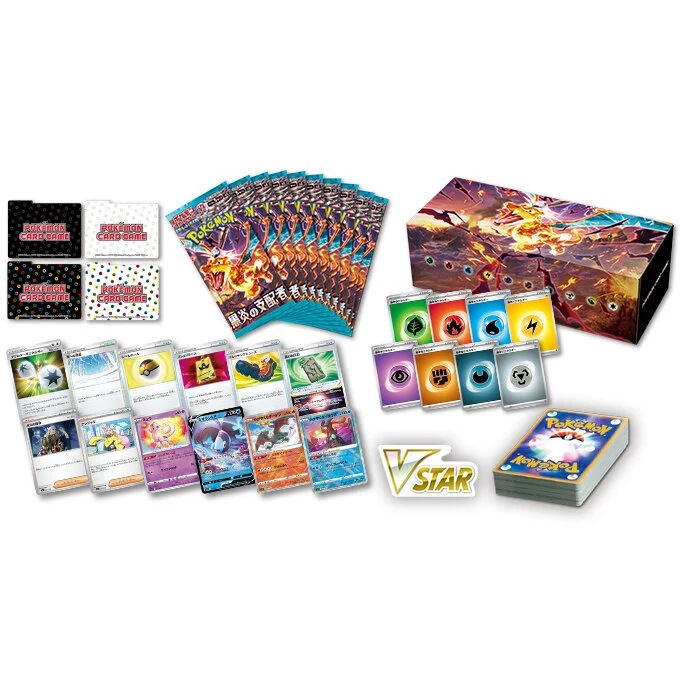
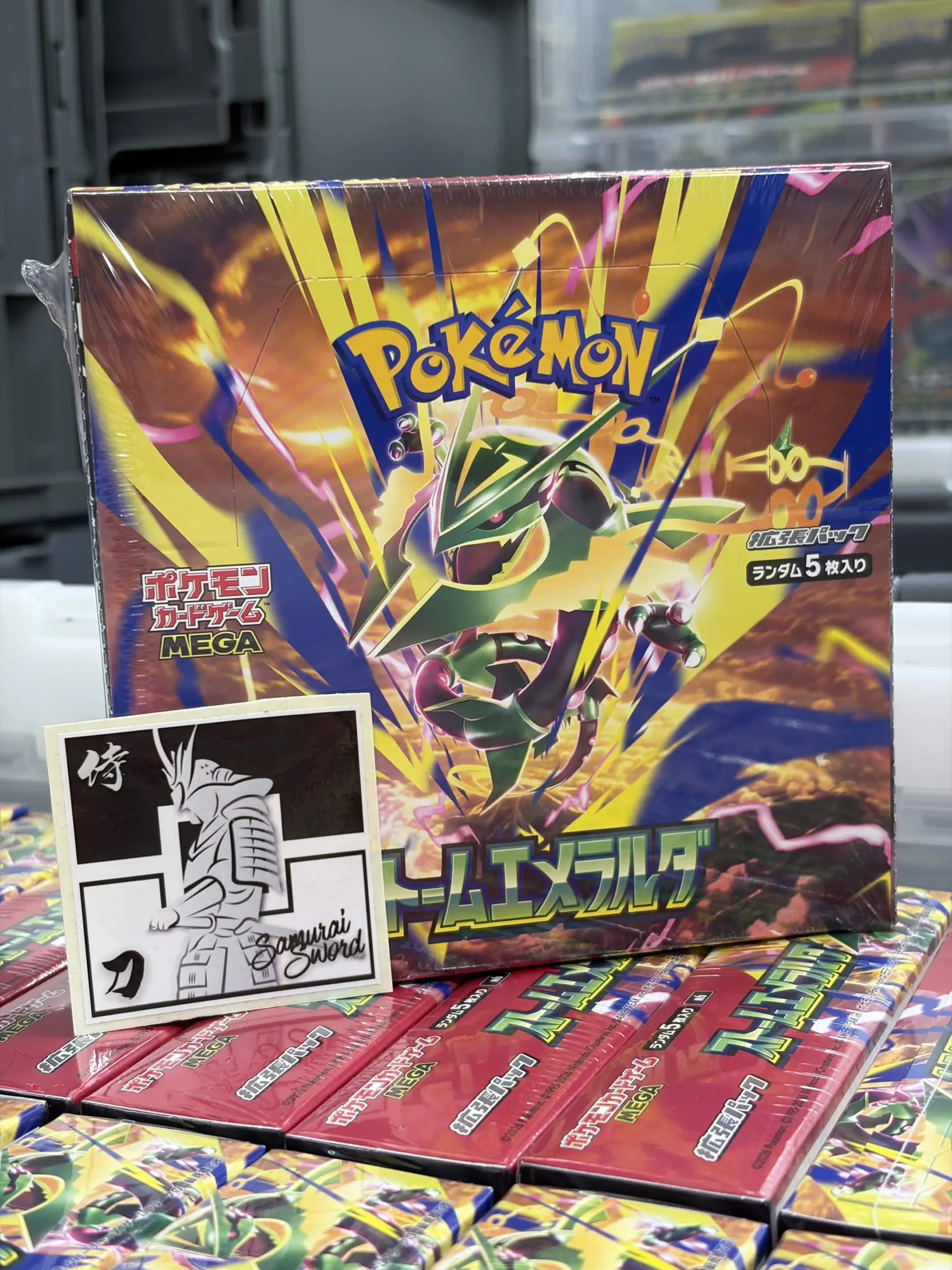
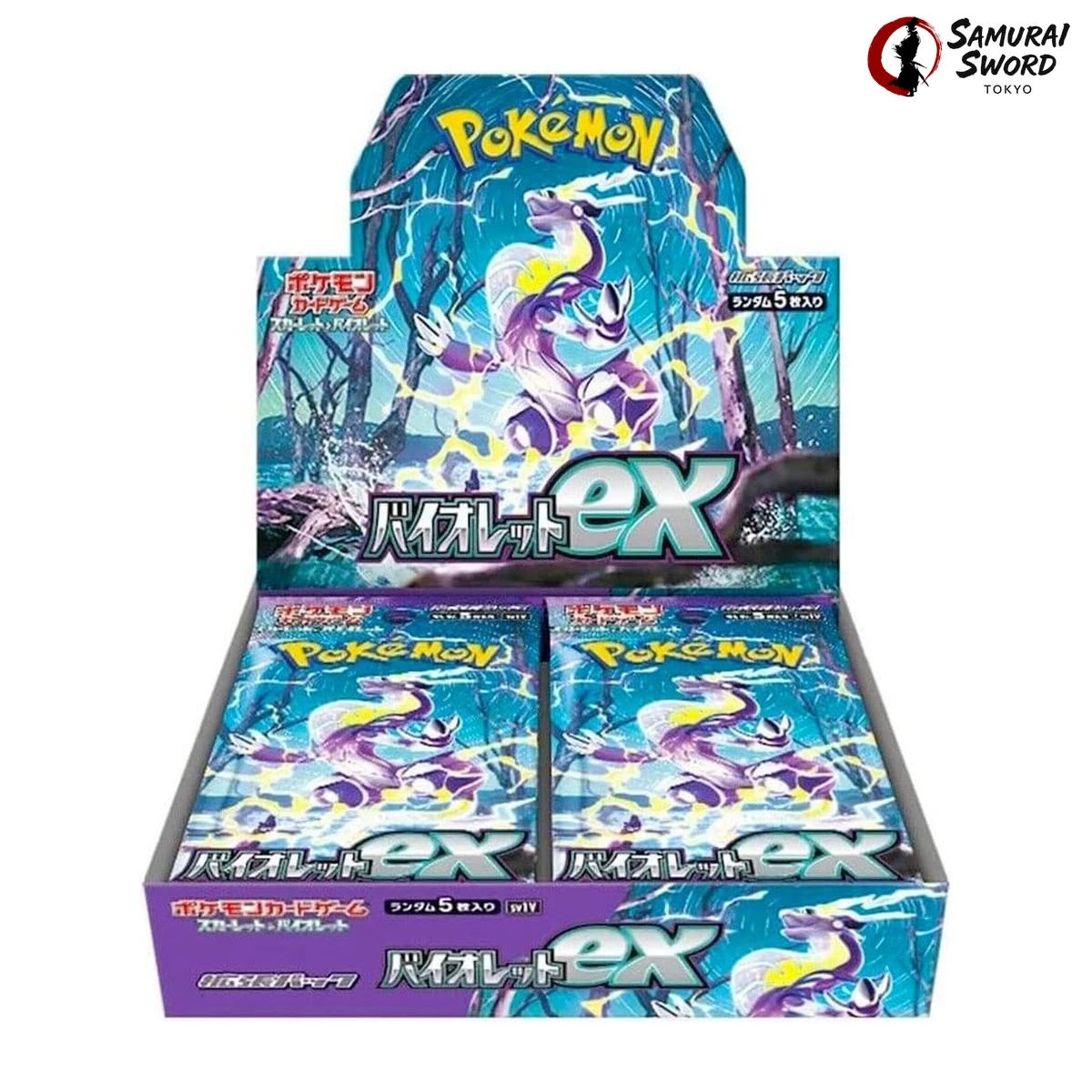
The Ruler of the Black Flame Deck Build Box is currently listed at ¥5,400 (~$34) (update: currently sold out — restock requests via Quick Order) and gives you a ready card pool built to be playable straight out of the box — the most direct route from “I know the rules” to “I have a deck.” For a broader Pokemon pool to build from, the M6 Storm Emeralda Booster Box is currently listed at ¥11,040 (~$69), and for an entry-level modern set that’s a common beginner pick, the SV1V-Violet ex Booster Box is currently listed at ¥9,880 (~$62).
If you want to know how many cards actually come in each pack before you open a box, see our how many cards in a Japanese Pokemon pack guide. Whichever product you start with, every card inside plays by the same 60-card, 6-Prize, one-attack-per-turn rules covered above — the language printed on the card doesn’t change a single mechanic. For sourcing options beyond these three anchors, our where to buy Japanese Pokemon cards online guide covers the wider picture, and the full Japanese Pokemon booster box collection lists everything currently available. If you’re also curious about a different card game, our how to play One Piece Card Game guide covers its rules separately — the two games share no rules in common beyond both being trading card games.
View Product → (update: currently sold out — restock requests via Quick Order)
Frequently Asked Questions
How do you play Pokemon cards?
Build a legal 60-card deck, shuffle it, draw a 7-card opening hand and place one Basic Pokemon as your Active Pokemon, then set aside 6 Prize cards. On your turn you can attach Energy, play Trainer cards, evolve your Pokemon, retreat your Active Pokemon and attack. The game ends when a player takes all 6 Prize cards, their opponent has no Pokemon left in play, or their opponent can’t draw a card from an empty deck.
How many cards are in a Pokemon deck?
Exactly 60. You can include at most 4 of any one named card, though Basic Energy cards are exempt from that limit. See our deck-building card counts guide for how that 60 typically splits between Pokemon, Trainer and Energy cards.
How many Prize cards does each player start with?
Six. Each player sets aside 6 Prize cards face-down at the start of a match and takes one into their hand each time they Knock Out an opponent’s Pokemon — except Knock Outs on higher-value Pokemon types like V and VMAX, which give up more than one Prize card.
Can the player who goes first attack on their first turn?
No. Whoever takes the very first turn of the game cannot attack on that turn. Every other turn action — attaching Energy, playing Trainer cards, evolving, retreating — is still available to them; from the second turn onward, both players can attack normally.
What happens if you don’t have a Basic Pokemon in your opening hand?
You reshuffle that 7-card hand back into your deck and redraw a new one. As compensation, your opponent draws one extra card.
Are the rules different for Japanese-language Pokemon decks?
No. Deck size, Prize cards, turn structure and the win conditions are the same worldwide according to the official rules pages — only the language printed on the cards changes, not the mechanics.
500 Points Free on Sign-Up
CREATE FREE ACCOUNT1 pt = ¥1 at checkout · Points expire 30 days after they are earned · Import duties, taxes and customs charges are not included in the price and are collected on delivery, except for destinations we ship duty-paid.
Picked for this article
📩 Get member-only sale alerts & coupons
Sale alerts, coupons and restock notices by email — straight from Tokyo.


