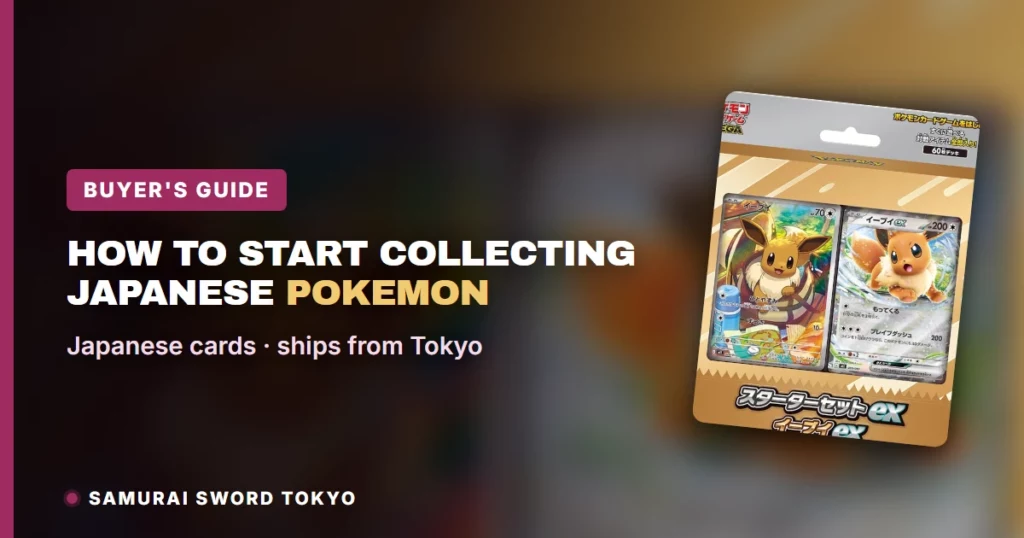
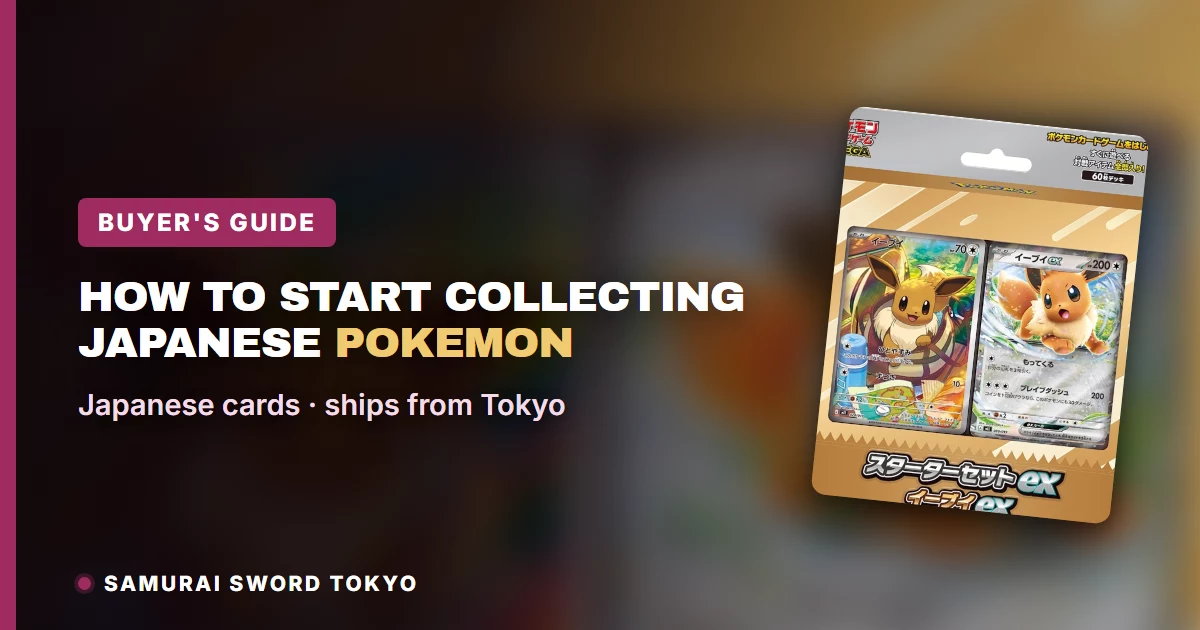
Start with a preconstructed Starter Set rather than a booster box if you want to learn from a fixed, published card list. A booster box has randomised contents, so it does not teach card identification as directly on a first purchase. From there, learning the handful of card types you’ll hold, confirming that Japanese cards need nothing special in terms of sleeves or binders, and understanding the PSA Gem Mint 10 standard before you touch graded singles covers almost everything a beginner needs before spending real money.
This guide walks through those steps in order: what a preconstructed Starter Set is, the three basic card types (and the nine Basic Energy types you’ll see across the hobby’s history), why Japanese and English cards fit the same supplies, what “PSA 10” really means on paper, and a couple of low-cost ways to grow a collection quickly once the basics are in place.
Preconstructed Starter Sets have known card lists — a lower-risk starting point than a randomised booster box; the Starter Set ex Eevee ex is currently listed at ¥2,912 (~$18) (update: currently sold out — restock requests via Quick Order). Basic Energy comes in 9 defined types across TCG history, and it’s the only card type a deck can run more than 4 of. Japanese and English cards share the exact same physical size, so they take the same sleeves and binders. PSA grades Japanese cards on the identical Gem Mint 10 standard used for English cards — worth reading before you buy a graded single like the Random PSA10 (1 Card), currently listed at ¥6,000 (~$38).
Yen figures convert at ¥159/USD (September 2026).
The Three Card Types You’ll Hold on Day One
Open any starter product and you’ll sort the contents into three buckets: Pokemon cards, Trainer cards, and Energy cards. The first two vary card by card, but Energy is standardised, and it’s worth knowing the list before you build or trade anything.
Basic Energy has appeared in 9 defined types across the Pokemon TCG’s history: Grass, Fire, Water, Lightning, Psychic, Fighting, Darkness, Metal, and Fairy. Fairy-type Energy is a legacy type — it was introduced in the XY era, while Fairy-type Pokémon and their support were discontinued at the beginning of the Sword & Shield Series; Pokémon formerly represented as Fairy began appearing as Psychic instead. Basic Energy is also the one card type in the game a deck is allowed to run more than four of, which is why preconstructed starter products include several Basic Energy cards.
| Card type | What it does | Deck-building note |
|---|---|---|
| Pokemon | The creatures you play and attack with | Standard 4-card limit per named card |
| Trainer | Items, Supporters, Stadiums and Tools that support your Pokemon | Standard 4-card limit per named card |
| Energy (Basic) | Powers attacks; 9 types across the game’s history | The only card type exempt from the 4-card limit |
Start With a Starter Set, Not a Booster Box
A preconstructed Starter Set is separate from a booster box. The difference that matters for a beginner: the Starter Set’s contents are fixed and published in advance, while a booster box’s contents are randomised pack by pack. That makes a Starter Set the lower-risk way to learn the game and start a collection — you know exactly what you’re getting before you open it.
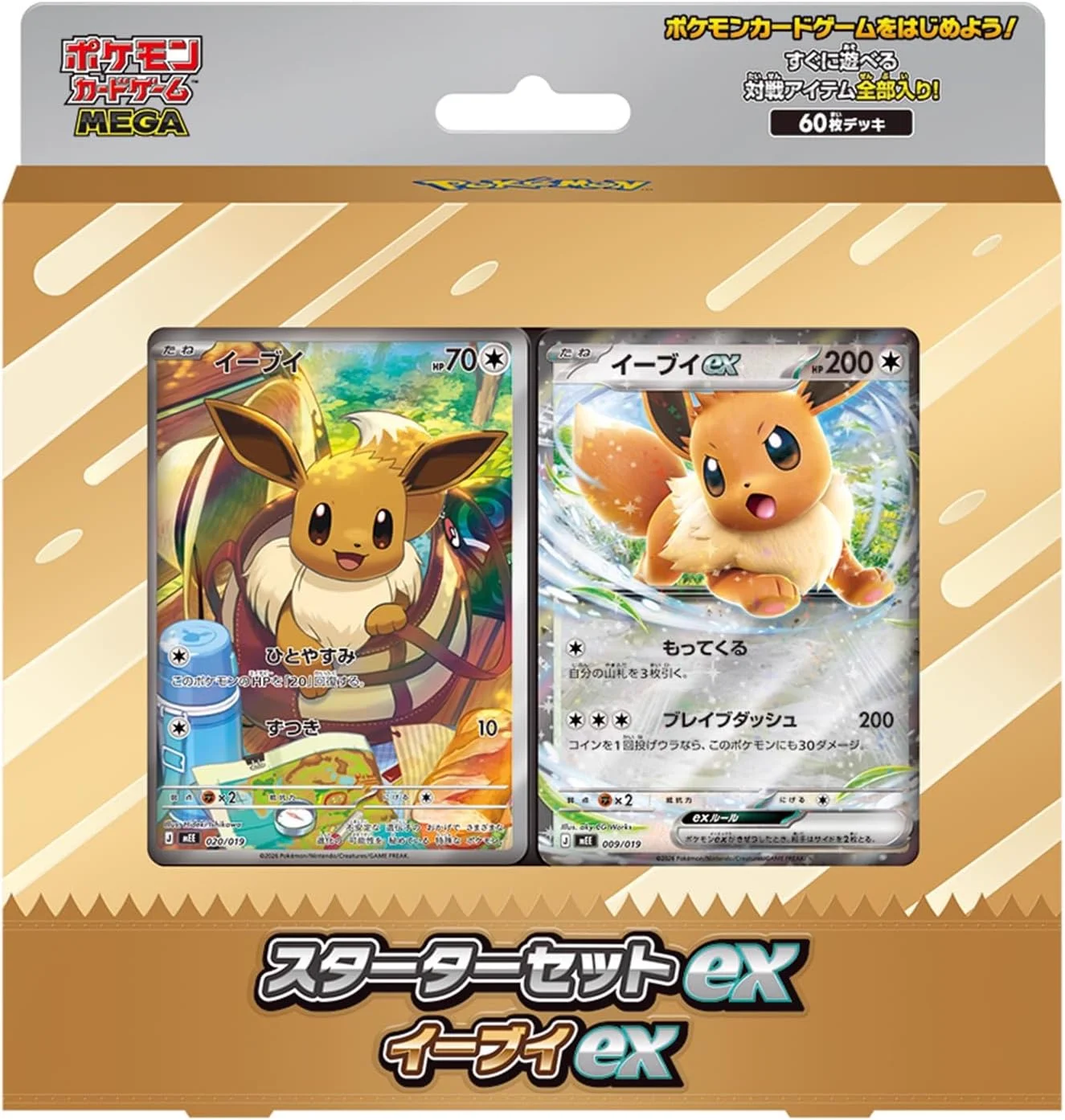
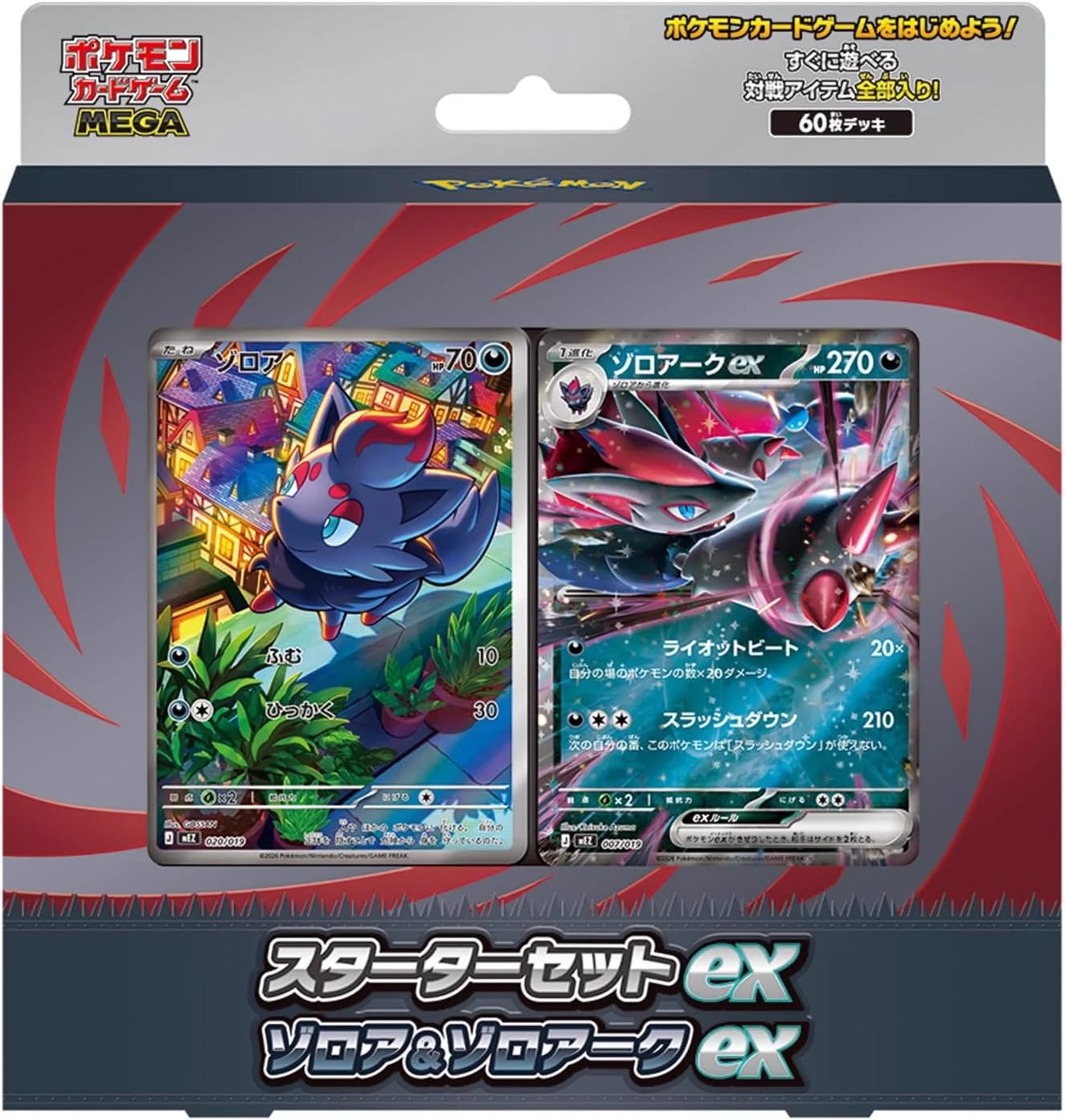
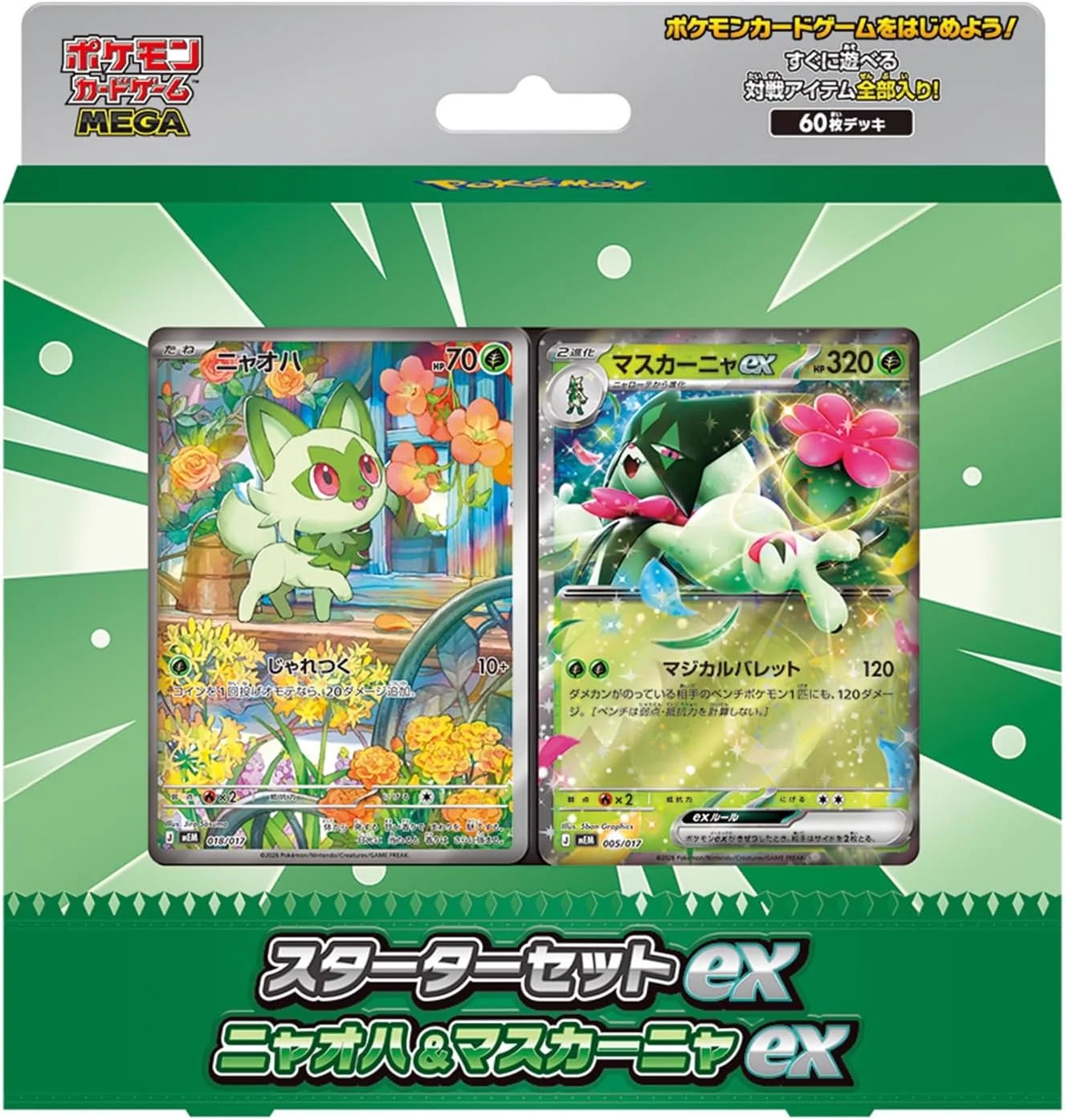
The Starter Set ex Eevee ex is currently listed at ¥2,912 (~$18) (update: currently sold out — restock requests via Quick Order), with the Zorua & Zoroark ex and Sprigatito & Meowscarada ex sets each currently listed at ¥1,872 (~$12). All three give you a complete, playable deck plus Energy at a known price, which is a more predictable first purchase than a booster box. Once you’ve decided which Japanese sets and boxes appeal to you beyond the starter tier, our guide to the best Japanese sets for beginners covers which booster sets are worth opening first — this article stays focused on the broader on-ramp: Starter Sets, card types, sizing, and grading basics.
Japanese vs English Cards: What Actually Differs
One question every beginner asks before ordering from Japan: will these cards fit existing sleeves and binders? The physical card — the size and format — is identical between Japanese and English Pokemon cards. Nothing about switching to Japanese product requires different sleeves, different binder pages, or different storage.
What differs is the language printed on the card and, era by era, the print details covered in our dedicated Japanese vs English Pokemon cards comparison. For a first purchase, the point that matters is simple: your current supplies carry over without modification.
Grading Basics: What “PSA 10” Actually Means
You’ll see “PSA 10” everywhere once you start browsing graded Japanese singles, so it’s worth knowing the actual standard before you buy one. Per PSA’s own grading standards page, a PSA Gem Mint 10 is defined as:
“A PSA Gem Mint 10 card is a virtually perfect card. Attributes include four perfectly sharp corners, sharp focus and full original gloss. A PSA Gem Mint 10 card must be free of staining of any kind, but an allowance may be made for a slight printing imperfection, if it doesn’t impair the overall appeal of the card. The image must be centered on the card within a tolerance not to exceed approximately 55/45 percent on the front, and 75/25 percent on the reverse.”
PSA judges every card under four categories — centering, corners, edges, and surface — and Japanese cards are graded against exactly the same numeric scale and criteria as English cards. There is no separate “Japanese card” scale; the same 55/45 front and 75/25 back centering tolerance applies to both, which follows directly from the two markets sharing an identical physical card size.
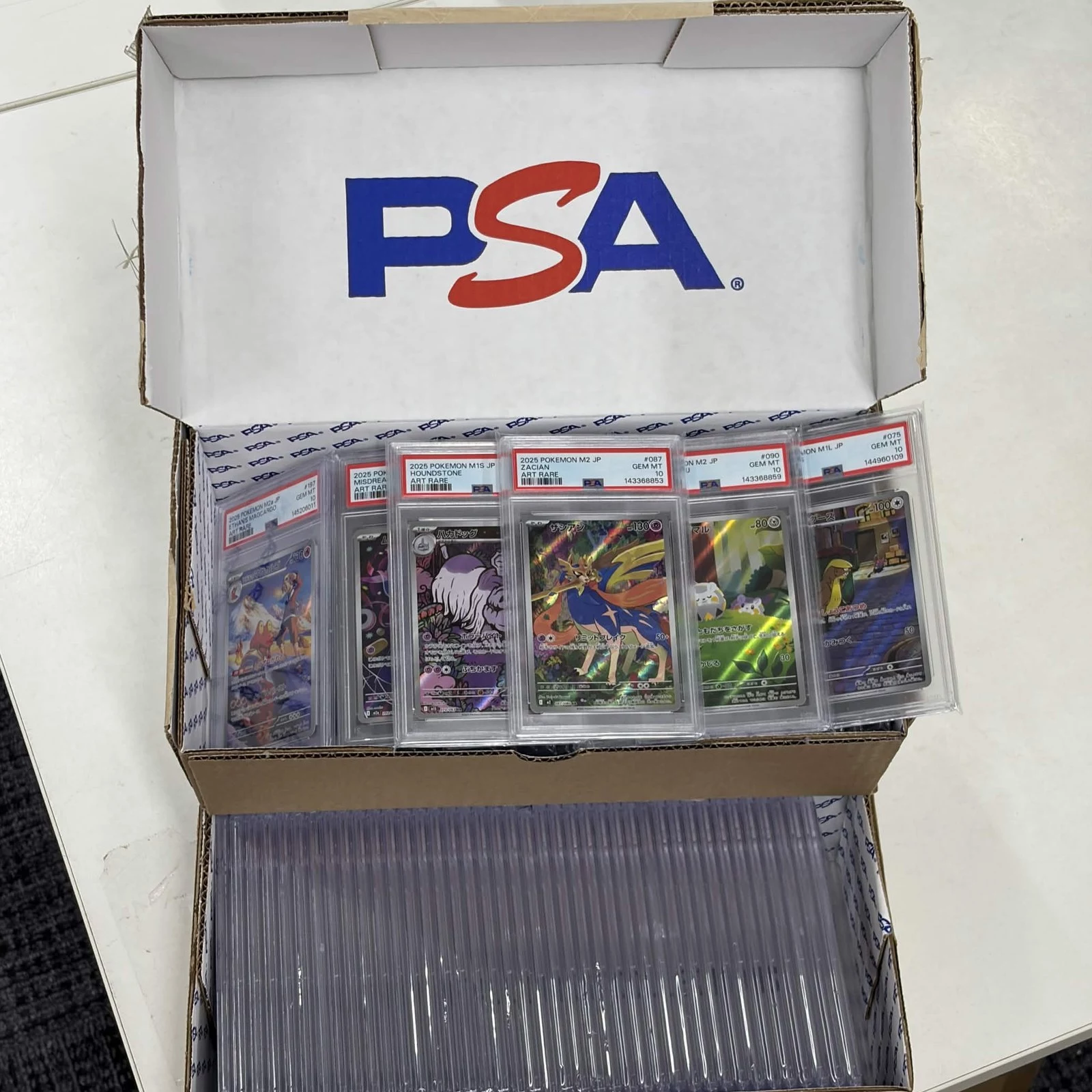
If you’re not ready to pick a specific graded card by name yet, the Random PSA10 (1 Card) is currently listed at ¥6,000 (~$38) and gives you a hands-on look at a Gem Mint 10 slab before you start shopping graded singles individually. For a fuller walk-through of the standard and how PSA, BGS and CGC compare, see our Japanese Pokemon card grading guide.
Building a Larger Collection Without Chasing Singles
Once the basics click, some collectors want volume rather than one specific card. Bulk sets are the direct route: a fixed-count set of cards at a set price, without sourcing each card individually.
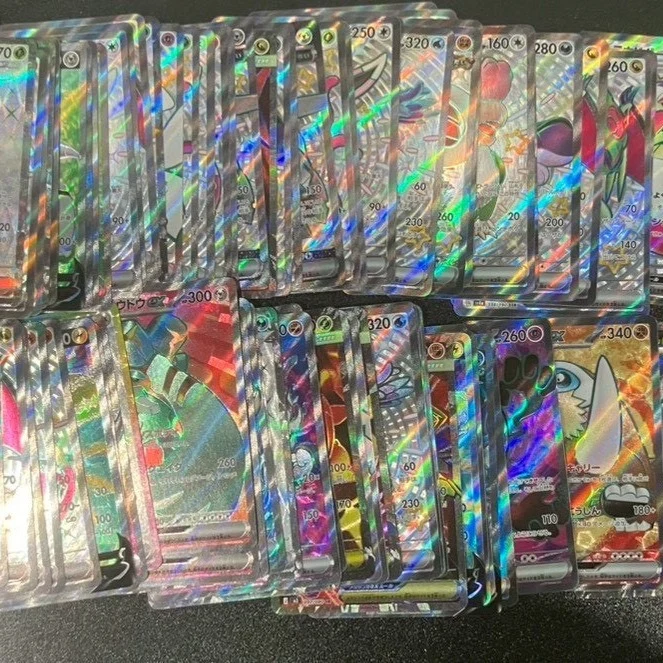
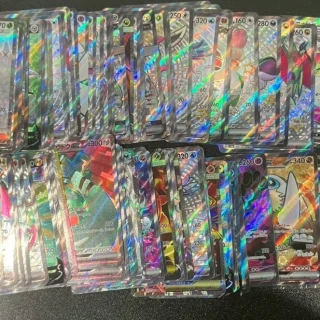
The SR Bulk 100-Card Set is currently listed at ¥35,000 (~$220) and is built specifically as a low-cost way to build a large collection fast, rather than as a source for any one named card. It pairs well with the Starter Sets above: starter products teach the game and the card types, bulk sets grow the pile, and graded singles come later once you know what you’re looking for.
Buying Japanese Pokemon Cards From Tokyo
Everything above points to the same starting shortlist. In rough order of what to buy first:
- A Starter Set to learn the game and the card types — the Starter Set ex Eevee ex, currently listed at ¥2,912 (~$18) (update: currently sold out — restock requests via Quick Order), or the Zorua & Zoroark ex set, currently listed at ¥1,872 (~$12) (update: currently sold out — restock requests via Quick Order).
- A second Starter Set if you want two playable decks from day one — the Sprigatito & Meowscarada ex set, currently listed at ¥1,872 (~$12) (update: currently sold out — restock requests via Quick Order).
- A graded single to see the PSA Gem Mint 10 standard first-hand — the Random PSA10 (1 Card), currently listed at ¥6,000 (~$38), or browse the full PSA 10 graded card collection.
- A bulk set once you’re ready to grow volume — the SR Bulk 100-Card Set, currently listed at ¥35,000 (~$220).
All of it ships from Tokyo with tracked delivery. If you’re weighing which sealed booster sets to add once the basics are covered, our best Japanese sets for beginners guide and the where to buy Japanese Pokemon cards online guide both go further into set selection and sourcing. Before spending on graded singles at any real volume, it’s also worth reading the guide to spotting fake Japanese Pokemon cards — useful background before buying raw singles outside of PSA-slabbed product.
View Product → (update: currently sold out — restock requests via Quick Order)
For anything not listed above, the Quick Order page is the fastest way to put together a mixed order across Starter Sets, bulk sets, and graded singles.
Frequently Asked Questions
What should a new collector buy first?
A preconstructed Starter Set rather than a booster box. Starter Sets have fixed, published card lists, so you know exactly what you’re getting — unlike a booster box, where contents are randomised. The Starter Set ex Eevee ex is a straightforward example, currently listed at ¥2,912 (~$18).
What are Basic Energy cards?
Energy is one of the three fundamental card types alongside Pokemon and Trainer cards. Basic Energy comes in 9 defined types across the TCG’s history: Grass, Fire, Water, Lightning, Psychic, Fighting, Darkness, Metal, and Fairy. Fairy-type Energy is a legacy type introduced in the XY era; Fairy-type Pokémon and their support were discontinued at the beginning of Sword & Shield, with formerly Fairy-type Pokémon represented as Psychic instead. Basic Energy is also the only card type a deck can run more than 4 of.
Do Japanese Pokemon cards need different sleeves or binders?
No. Japanese and English Pokemon cards share the same physical size and format, so existing sleeves and binder pages work with both. See the Japanese vs English cards comparison for what does differ.
What does PSA Gem Mint 10 actually mean?
Per PSA’s own grading standards, a Gem Mint 10 is “a virtually perfect card” with four sharp corners, sharp focus, full original gloss, no staining, and centering within roughly 55/45 on the front and 75/25 on the back. PSA grades Japanese and English cards against the exact same standard — there’s no separate scale.
What’s a low-cost way to build a larger collection quickly?
A bulk set is built for exactly that. The SR Bulk 100-Card Set, currently listed at ¥35,000 (~$220), is a fixed-count set of cards designed as a low-cost way to grow a collection fast, rather than a source for one specific card.
Where can I buy Japanese Pokemon cards from Tokyo?
Starter Sets, PSA 10 graded singles, and bulk sets are all listed on the site and ship from Tokyo with tracked delivery. For sets and sealed product beyond the starter tier, see the where to buy Japanese Pokemon cards online guide, or use the Quick Order page for a mixed order.
Free and discounted shipping, by delivery country
- Each delivery country has its own qualifying amount and its own coupon code.
- Each paid campaign order unlocks the next step for your account.
- Sign in, or choose "Create account: Yes" at checkout, to use a campaign code.
The coupon code, the minimum order and the shipping benefit all depend on your delivery country — open the campaign page for the terms that apply to you. The minimum is the product subtotal only: shipping, tax and any other discount are not counted towards it. The campaign ends September 10, 2026 23:59 Japan time (September 10, 2026 14:59 UTC); the codes stop working at that moment. Coupons cannot be applied to pre-order items. Add an in-stock item to use a coupon. Import duties, taxes and customs charges are not included in the price and are collected on delivery, except for destinations we ship duty-paid.
Picked for this article
📩 Get member-only sale alerts & coupons
Sale alerts, coupons and restock notices by email — straight from Tokyo.