“Hyper Rare” is an English-only rarity name. Buy the Japanese version of the same card and the pack calls it something else — and depending on which Japanese set you’re looking at, “something else” has meant two completely different card designs.
In current English Scarlet & Violet-era product, Hyper Rare (HR) is the gold-background, three-star full art tier at the very top of a set. Japan’s Scarlet & Violet-era sets print the same gold-foil card but label it Ultra Rare (UR), marked with two silver stars. Go back a few years to Japan’s Sword & Shield era, though, and “HR” was already printed on Japanese cards — just on a different, rainbow-foil design. This guide sorts out which letters mean what, in which era, so you know exactly which Japanese print you’re looking at before you compare it to the English “Hyper Rare” cards everyone talks about.
English “Hyper Rare” (three gold stars, Scarlet & Violet-onward) is the same design tier Japan calls UR (Ultra Rare, two silver stars) — not a direct translation, just the current-era equivalent. A separate, older Japanese HR tier from the Sword & Shield era used rainbow foil on alternate-art VMAX cards, and that tier is visually and structurally different from today’s gold “Hyper Rare.” A PSA10 Charizard ex UR is currently listed at ¥23,584 (~$148) (update: currently sold out — restock requests via Quick Order), and a PSA10 Charizard VMAX HR promo is currently listed at ¥2,306,900 (~$14,509) — two different eras, two different design tiers, both carrying English-market names that get flattened into “Hyper Rare” in casual conversation.
Yen figures below convert at ¥159/USD (September 2026).
What Is a Hyper Rare Pokemon Card?
Hyper Rare (HR) is an English-language Pokemon TCG rarity tier that debuted with the Scarlet & Violet expansion series. Hyper Rare cards present a Pokemon, Item, Pokemon Tool, Stadium, Basic Energy, or Special Energy card in a full-art layout with a gilded gold background and an added glitter-foil layer. The rarity symbol printed on the card is three gold stars. Before this naming existed, cards with this look were commonly grouped in the broader “secret rare” category rather than given their own named tier.
That definition is specific to English-language product. It tells you what the card looks like and where it sits in an English set’s print run — it does not automatically tell you what the equivalent Japanese card is called, which is where most of the confusion starts.
Our own catalogue also carries non-Pokemon “UR” cards, including Yu-Gi-Oh Ultra Rare. Yu-Gi-Oh’s UR is a completely separate rarity system defined by its own game rules and has no connection to the Pokemon rarity tiers described in this article — don’t treat a Yu-Gi-Oh UR card as a Pokemon Hyper Rare example.
Why Japan Calls It “Ultra Rare” (UR), Not “Hyper Rare”
In Japanese Scarlet & Violet-era expansions, the gold-background, full-art tier that corresponds to English “Hyper Rare” is printed with a different name: Ultra Rare (UR), marked with two silver stars under the Scarlet & Violet-onward Japanese rarity system. Visually, this is the tier English-speaking buyers mean when they say “Hyper Rare” today.
The two names are not a clean 1:1 translation, though. English “Hyper Rare” and Japanese “Ultra Rare” are documented as not perfectly overlapping, because Japan had already used the “Ultra Rare” label once before — on Sword & Shield-era secret-rare-tier cards that are not the same design tier as the current Scarlet & Violet-era UR. So “UR” printed on a Japanese card can point to slightly different eras and card types depending on which set it’s from; the current, gold-foil, two-star UR is the one that lines up with today’s English “Hyper Rare.”
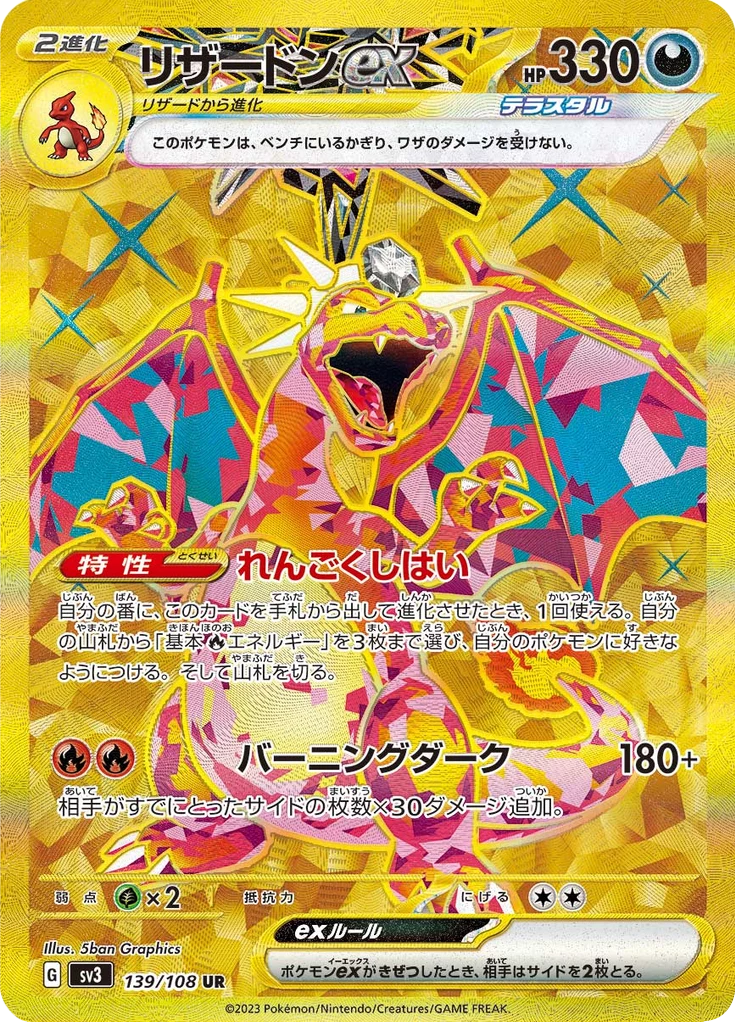
This card — PSA10 Charizard ex UR, currently listed at ¥23,584 (~$148) (update: currently sold out — restock requests via Quick Order) — is a straightforward example of the current-era look: gold background, full art, two silver stars in the rarity mark. It’s also one of the more affordable entry points into this tier on our site.
For the fuller breakdown of this gold tier across multiple Japanese sets, see our Gold UR Japanese Pokemon Cards guide. Two worked single-card examples of the same “gold UR” framing — described there as Character Super Rare rather than plain UR, since naming again varies by set — are our Eternatus VMAX Gold UR guide and Duraludon VMAX Gold UR guide.
The Older “HR”: Sword & Shield-Era Japanese Hyper Rare
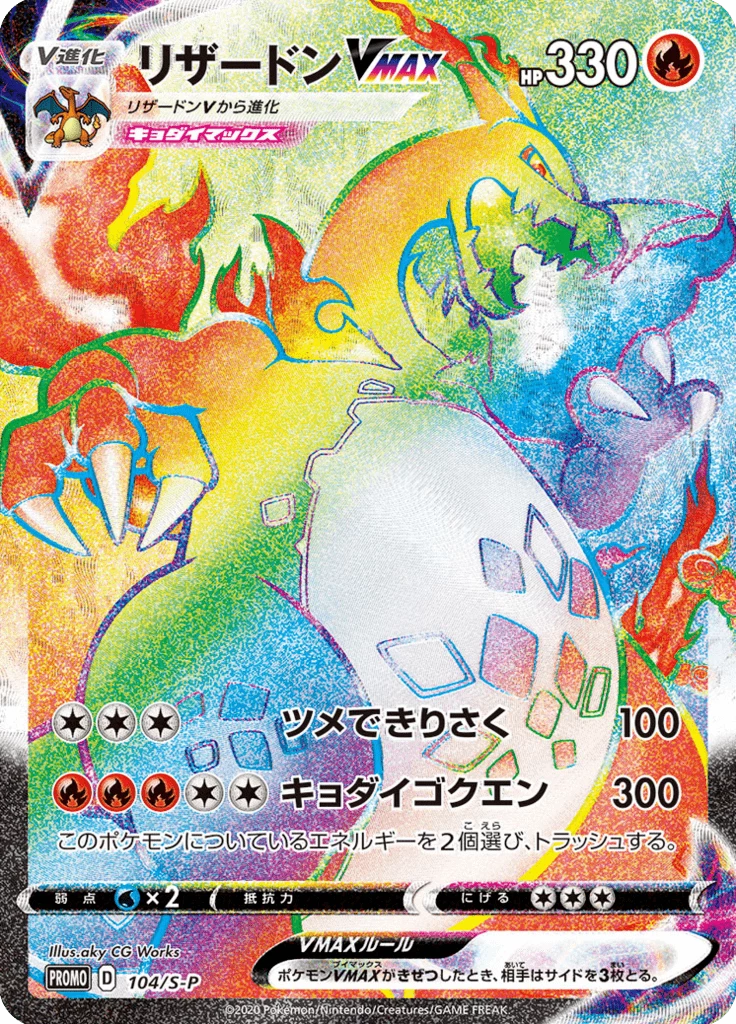
Here’s the part that trips people up: Japan already had a rarity tier printed as “HR” before the current gold UR tier existed. In Japanese Sword & Shield-era sets, alternate-art Pokemon VMAX cards were specifically labeled “Hyper Rare” (HR) — and that card is a rainbow-foil full art design, not the gold treatment described above. Earlier still, in Black & White-era and other pre-Scarlet & Violet Asian-language sets, the equivalent top-end gold-or-rainbow tier was called Super Rare (SR) instead.
So the letters “HR” printed on a Japanese Sword & Shield-era card and the English words “Hyper Rare” used for a current Scarlet & Violet-era card refer to two different design tiers. Same two-word English phrase, different eras, different foil treatment, different card types. Don’t assume a Japanese “HR” card and a current English “Hyper Rare” card are interchangeable just because the term reads the same.
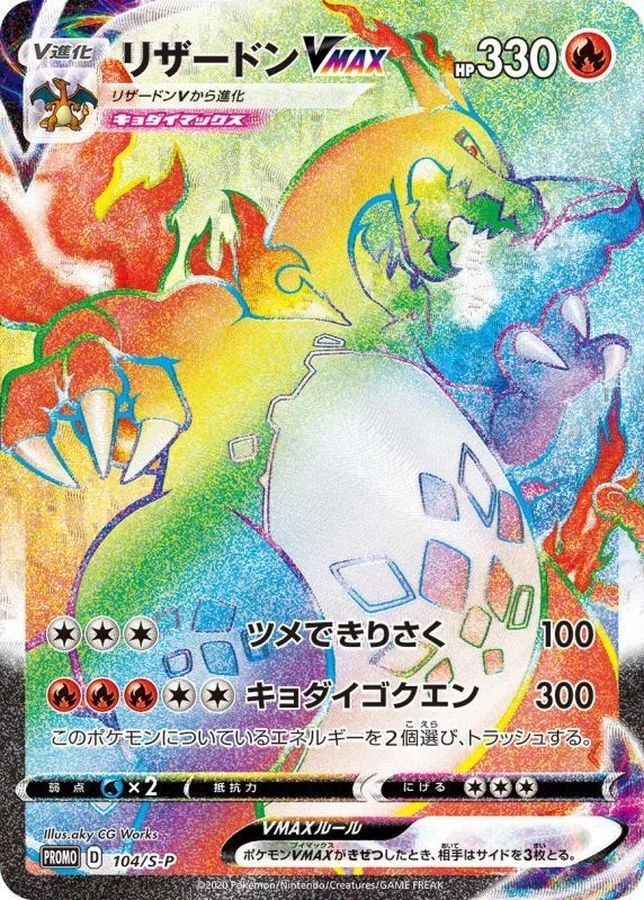
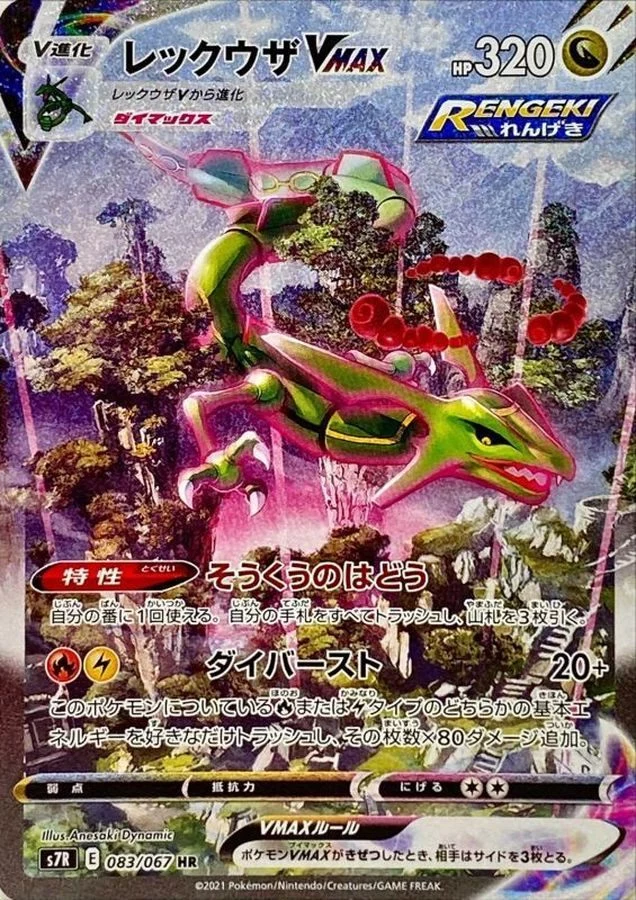
Both of these are Sword & Shield-era Japanese “HR” cards: rainbow-foil, alternate-art VMAX, with the “HR” letters printed on the card. Neither uses the gold background that defines today’s English Hyper Rare / Japanese UR tier described above — the rainbow-foil look is what the hobby also nicknames “Rainbow Rare.” For the full rundown of this specific tier, see our HR Rainbow Rare Japanese Cards guide.
Before “HR”: Super Rare and Earlier Japanese Naming
Rarity naming in Japanese Pokemon product has changed more than once. Before the Sword & Shield era introduced “HR” for alternate-art rainbow VMAX cards, Black & White-era and other pre-Scarlet & Violet Asian-language sets used Super Rare (SR) as the label for the equivalent top-tier gold or rainbow card. The letters on the card, in other words, have moved at least three times across recent eras: Super Rare (pre-Sword & Shield), Hyper Rare (Sword & Shield, rainbow), and Ultra Rare (Scarlet & Violet-onward, gold).
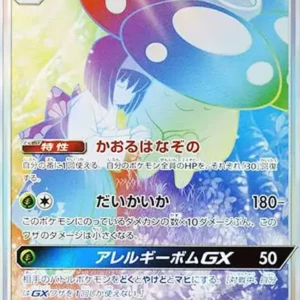
Cross-era comparison cards are useful here for a sanity check. A PSA10 Vileplume GX HR from the Sun & Moon-era set Dream League is currently listed at ¥18,128 (~$114) — another rainbow-foil “HR” card, from an era even earlier than the Sword & Shield examples above, confirming that “HR” as a printed Japanese rarity mark spans more than one generation of sets before Scarlet & Violet retired it in favour of “UR.”
The practical takeaway: when you see “HR” or “SR” or “UR” on a Japanese card, the set and era it came from matters as much as the letters themselves. At the opposite end of the rarity spectrum entirely, our Common rarity explainer covers the tier these top-end cards are being compared against, and our FUR / Futuristic Rare guide covers a newer tier introduced for the 30th Celebration era.
How Often UR and HR Cards Turn Up in Japanese Packs
A Japanese collector-guide aggregation — corroborated by multiple Japanese trade sites, though not an official Pokemon Company statement — puts a rough shape on how these two tiers compare in scarcity. Treat the figures below as reported, not as guaranteed or tournament-official pack odds, and not as our own pack-opening data.
| Tier | Era | Reported frequency (collector-guide aggregation) |
|---|---|---|
| UR Ultra Rare | Scarlet & Violet (current, gold) | Roughly one per ten boxes — about one per carton |
| HR Hyper Rare | Sword & Shield (rainbow foil) | Roughly one per five boxes |
The same aggregation notes that HR and the adjacent RRR (Triple Rare) tier were discontinued from Japanese packs starting with Scarlet ex / Violet ex, released 20 January 2023, and are not found in packs printed after that date. That’s a meaningful marker for anyone trying to place an “HR” card in time: if it’s genuinely a packed “HR” card rather than a promo, the printing predates January 2023.
What This Means When Buying Japanese UR & HR Cards
If you’re shopping by rarity letter alone, the era attached to that letter matters more than the letter itself. A Japanese “UR” and a Japanese “HR” are not two tiers of the same ladder — they’re headline chase cards from two different design generations, one gold and current, one rainbow and discontinued from packs since early 2023. Knowing which one you’re looking at tells you the foil type, the approximate release window, and which of our two dedicated guides above to read next.
| Tier / Era | Currently listed at | |
|---|---|---|
| Charizard VMAX, S-P 104 (S-P Promotional cards) | HR · Sword & Shield | ¥2,306,900 (~$14,509) |
| Rayquaza VMAX SA, S7R 083/067 (Blue Sky Stream) | HR · Sword & Shield | ¥1,179,758 (~$7,420) |
| Charizard ex, SV3 139/108 (Ruler of the Black Flame) | UR · Scarlet & Violet | ¥23,584 (~$148) (update: currently sold out — restock requests via Quick Order) |
| Vileplume GX, SM11b 069/049 (Dream League) | HR · Sun & Moon | ¥18,128 (~$114) |
Rarity letter alone doesn’t set the price — the individual card, the set it’s from, and grading all move the number independently of which rarity tier it belongs to.
View Product → (update: currently sold out — restock requests via Quick Order)
Where to Buy Hyper Rare / UR / HR Cards from Tokyo
We ship graded Japanese singles worldwide out of Tokyo with tracked delivery. Alongside the four prints above, our full PSA10 graded card collection carries further examples across both the current Ultra Rare tier and the older Sword & Shield Hyper Rare tier. For rarity questions specific to grading decisions, see our Japanese rarity guide for graded buyers. For anything not listed here, our Quick Order page is the fastest way to build a mixed order of singles and sealed product in one pass.
Frequently Asked Questions
What does “Hyper Rare” mean on a Pokemon card?
Hyper Rare (HR) is an English-language Pokemon TCG rarity introduced with Scarlet & Violet: a full-art card with a gold background and glitter-foil layer, marked with three gold stars. It applies to Pokemon, Items, Pokemon Tools, Stadiums, Basic Energy, or Special Energy cards shown in this gilded style.
Is Japanese “UR” the same as English “Hyper Rare”?
They’re the current-era equivalent of each other, not an exact translation. Japan’s Scarlet & Violet-era Ultra Rare (UR) is the same gold-foil, full-art design as English Hyper Rare, but is marked with two silver stars rather than three gold stars, and the two terms are documented as not perfectly overlapping because Japan had already used “Ultra Rare” once before for a different, Sword & Shield-era secret-rare tier.
Why do some older Japanese cards already say “HR”?
Because Japan used “HR” (Hyper Rare) before Scarlet & Violet existed. In Japanese Sword & Shield-era sets, “HR” was printed on rainbow-foil alternate-art Pokemon VMAX cards — a different, earlier design tier from today’s gold Scarlet & Violet-era Hyper Rare / Ultra Rare cards. Even earlier, pre-Sword & Shield Asian-language sets called the equivalent top tier “Super Rare” (SR) instead.
How rare are UR and HR Pokemon cards in Japanese packs?
Per a Japanese collector-guide aggregation (reported, not tournament-official data), the current Scarlet & Violet UR tier turns up roughly once per ten boxes, and the older Sword & Shield HR tier turned up roughly once per five boxes. HR and the adjacent RRR tier were discontinued from Japanese packs starting with Scarlet ex / Violet ex, released 20 January 2023.
Can I still find “HR” cards in current Japanese packs?
Not from new packs. According to the same collector-guide aggregation, HR and RRR were dropped from Japanese packs starting with Scarlet ex / Violet ex on 20 January 2023. Genuine packed HR cards come from sets printed before that date; newer sets use the gold UR tier instead.
Is Yu-Gi-Oh’s “UR” rarity related to Pokemon’s Hyper Rare?
No. Yu-Gi-Oh’s Ultra Rare (UR) is a completely separate rarity system with its own rules, unrelated to the Pokemon Japanese “UR” (Ultra Rare) tier or English “Hyper Rare” described in this guide. The two only share an abbreviation, not a rarity definition.
¥500 off, on us
- ¥500 off one order of ¥30,000 or more
- +1% extra points on that order
- One coupon per account
Sign in or create an account to claim · One use per account · One coupon per order · Not valid on pre-order items · Ends Sep 24, 2026, 23:59 JST · Import duties, taxes and customs charges are not included in the price and are collected on delivery, except for destinations we ship duty-paid.
Picked for this article
📩 Get member-only sale alerts & coupons
Sale alerts, coupons and restock notices by email — straight from Tokyo.