Japanese booster boxes typically include at least 1 SR + 3 ARs + 2-3 RRs per box, a pattern documented across thousands of community-recorded openings — something English boxes don’t promise. Four box types exist (Main Expansion, Enhanced, High Class Pack, Special), each with different pack counts and pull structures. Start with a High Class Pack for the best first-time experience.
- The Terastal Festival ex (SV8a) High Class Pack booster box is currently listed in the store.
- Set reference: Card List.
USD figures convert at ¥154/USD, approximate.
Introduction
Thirty packs. Five cards each. A Super Rare in most boxes, based on community-recorded openings. A Japanese Pokemon booster box is not just a smaller version of the English box — the pack count, card structure, pull rate patterns, and even what counts as “rare” are fundamentally different.
If you’re opening your first Japanese booster box — or thinking about buying one — the differences can be confusing. Thirty packs instead of thirty-six. Five cards per pack instead of ten. No energy cards. And a Super Rare that shows up in the large majority of boxes? That last part is real, and it’s one of the biggest reasons collectors worldwide are switching to Japanese boxes.
We ship Japanese booster boxes from Tokyo and publish set-by-set pull-rate guides.
What’s Inside a Japanese Booster Box?
Every Japanese booster box contains sealed booster packs wrapped in factory shrink wrap. But the specifics depend on the set type — and that’s where most first-time buyers get confused.
Box Contents at a Glance
A standard Japanese expansion pack box contains 30 booster packs with 5 cards each, totaling 150 cards per box. No energy cards are included in standard packs (unlike English packs, which always include an energy card). Every card at Rare or above is holographic — there are no non-holo rares in Japanese sets.
The box itself features full set artwork on the cover, which makes sealed Japanese boxes popular display pieces. Inside, packs are lined up in rows with uniform packaging and set-specific pack art.

Inside Each Pack — The 5-Card Slot Structure
Each Japanese booster pack follows a consistent slot structure. Understanding this pattern transforms the opening experience — you’ll know exactly when to hold your breath.
| Slot | Typical Contents | Notes |
|---|---|---|
| 1 | Common (C) | Base card |
| 2 | Common (C) | Base card |
| 3 | Common (C) or Uncommon (U) | Occasionally upgraded |
| 4 | Uncommon (U) | Higher-tier base card |
| 5 | Rare (R) or higher | The hit slot — can be R, RR, AR, SR, SAR, or UR |
Slot 5 is where the action happens. In most packs, you’ll pull a standard Rare (holo). Collectors report that in roughly 1 out of every 5-6 packs, slot 5 upgrades to a Double Rare (RR), Art Rare (AR), or higher (community-reported; The Pokemon Company publishes no rates). That’s the moment collectors live for.
Always check slot 5 last. That’s your hit slot — and collectors report it upgrades from a standard Rare to an RR, AR, SR, SAR, or even UR in roughly 1 out of 5-6 packs (community-reported). The anticipation is what makes Japanese pack openings addictive.
How Many Packs Come in a Japanese Booster Box?
Pack count depends on the box type — it isn’t the same across all Japanese releases. Pack counts by box type:
| Box Type | Packs per Box |
|---|---|
| Main Expansion | 30 |
| High Class Pack | 10 |
Main Expansion boxes contain 30 packs of 5 cards each (150 cards total). High Class Packs are the exception — 10 packs of 10–11 cards each (100–110 cards total). Enhanced Expansion and Special expansions vary by release, so always check the specific product before buying.
4 Types of Japanese Booster Boxes Explained
Not all Japanese booster boxes are the same. The Pokemon Company releases four distinct product types, each with different pack counts, card counts, and pull rate structures.
Main Expansion (拡張パック)
The standard release and the most common box type. Main expansions form the backbone of each generation’s card pool.
- Packs per box: 30
- Cards per pack: 5
- Best for: General collecting, building a set, consistent value
Recent examples: Battle Partners (SV9), Super Electric Breaker (SV8), Ninja Spinner (M4). See the full Battle Partners card list.
Main expansions are the most budget-friendly entry into Japanese Pokemon collecting. Every box typically includes 1 SR and 150 cards with zero filler energy cards.
Enhanced Expansion (強化拡張パック)
Enhanced expansions use the same box structure as main expansions but feature higher rarity rates and typically focus on a specific theme or popular Pokemon.
- Packs per box: 30
- Cards per pack: 5 (some sets have 6)
- Best for: Collectors targeting chase cards, higher pull rate value
Recent examples: Pokemon Card 151 (SV2a). See the full Pokemon Card 151 card list.
High Class Pack (ハイクラスパック)
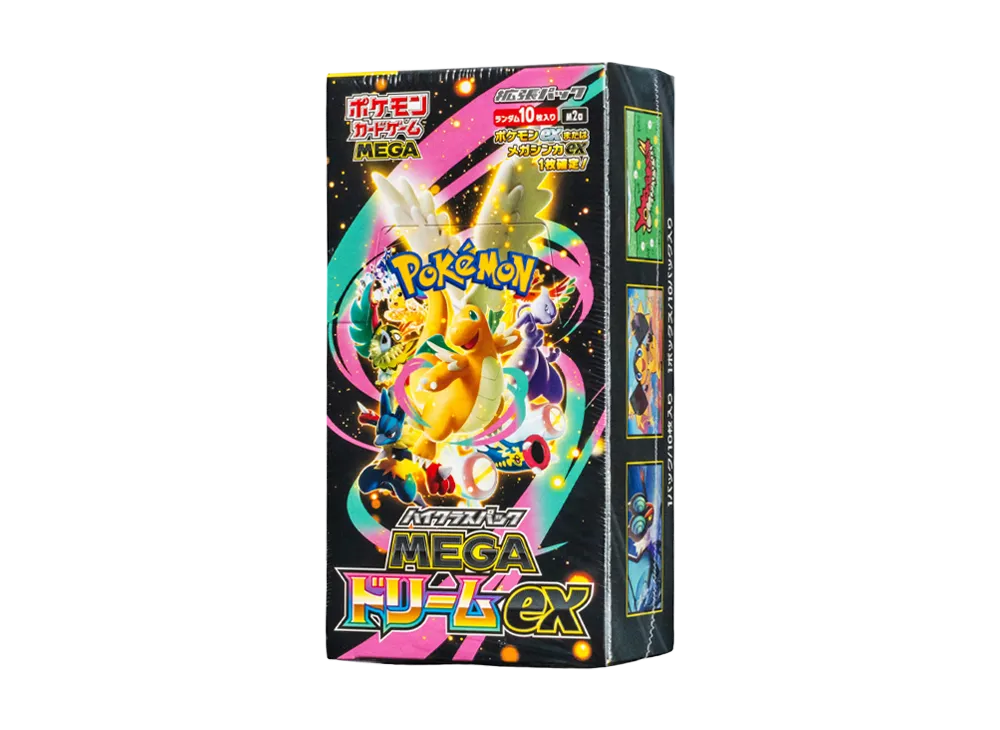
The premium offering, typically released once per year around November-December. High Class Packs are the most exciting boxes to open — more cards per pack, better pull rate patterns, and the highest concentration of ultra-rare cards.
- Packs per box: 10
- Cards per pack: 10–11
- Best for: Maximum opening excitement, best pull rate patterns, gift-worthy unboxing
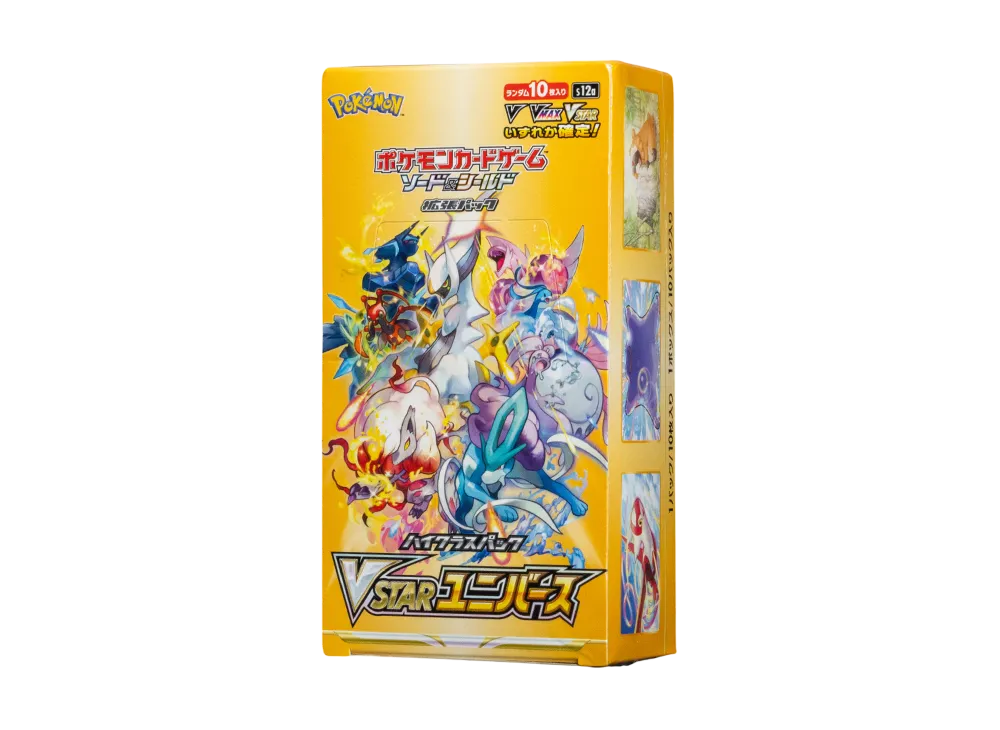
Recent examples: MEGA Dream ex, Terastal Festival ex (SV8a), Shiny Treasure ex (SV4a), VSTAR Universe (S12a). See the full Terastal Festival ex card list.

High Class Packs deliver more pull-rate value per dollar despite having fewer packs. With 2-3 SRs, 4-6 ARs, and God Pack potential, HCPs are the premium opening experience. Standard boxes win on total card count (150 vs 100-110). See our Best High Class Packs guide for the full comparison.
Special Expansion
Special expansions don’t follow a fixed structure. Pack counts, card counts, and even the included products (decks, promos, accessories) vary with each release. Always check the specific product details before purchasing.
- Packs per box: Varies (commonly 10–30)
- Cards per pack: Varies (5–11)
- Price: Varies by product
- Best for: Themed collections, promo hunters
Quick Comparison
| Feature | Main Expansion | Enhanced | High Class Pack | Special |
|---|---|---|---|---|
| Packs per box | 30 | 30 | 10 | Varies |
| Cards per pack | 5 | 5–6 | 10–11 | Varies |
| Total cards | 150 | 150–180 | 100–110 | Varies |
| SR+ pattern | 1 SR | 1 SR | 1 SR + extras | Varies |
| God Pack chance | No | Rare | Yes (1–4%) | Some sets |
| Release frequency | ~6/year | ~2/year | 1/year | ~2/year |
Japanese vs English Booster Boxes — Key Differences
Japanese booster boxes outperform English boxes in pull rate consistency, print quality, and typical hits. If you’ve only opened English boxes before, Japanese boxes will feel like a different product entirely.
Pack & Card Count
| Japanese | English | |
|---|---|---|
| Packs per box | 30 | 36 |
| Cards per pack | 5 | 10 |
| Total cards per box | 150 | 360 |
| Energy cards included | No | Yes (1 per pack) |
| Actual collectible cards | 150 | ~324 (36 energies removed) |
English boxes have more total cards, but Japanese boxes have a higher ratio of meaningful pulls per card opened. No filler energy cards means every card you pull has collection potential.
Pull Rate Patterns
This is the single biggest advantage of Japanese booster boxes. The large majority of Japanese booster boxes include at least one Super Rare (SR) or higher card, based on thousands of community-recorded openings. English boxes have no such pattern — you can open an entire English booster box and pull nothing above a standard holo.
Japanese box: typically 1 SR per box (community-observed across thousands of openings; not officially confirmed by The Pokemon Company). English box: fully random — no consistent pattern above standard holo. This is one of the reasons international collectors compare Japanese boxes favorably to English ones.
Print Quality & Card Features
Japanese cards are printed by Creatures Inc. and are widely regarded as having superior print quality:
- All Rare cards are holographic — no non-holo rares exist in Japanese sets
- Sharper printing and better texture on full-art and special art rare cards
- More consistent centering — Japanese cards grade higher at PSA on average
- No reverse holo filler — when you pull a holo, it’s a real rare
Japanese cards are printed by Creatures Inc. on higher-quality cardstock. The texture on full-art and SAR cards is noticeably sharper, centering is more consistent (higher PSA 10 rates), and every Rare is holographic — no non-holo rares exist. For a deep dive, see our Japanese vs English Pokemon Cards comparison.
Typical Pulls — What a Japanese Box Usually Includes
Japanese booster boxes provide a baseline level of typical rare cards. These patterns are not officially confirmed by The Pokemon Company, but extensive community opening data across thousands of boxes shows highly consistent results.
Standard Expansion Pull Patterns
For a typical main expansion box (30 packs), you can expect:
| Rarity | Typical Minimum | Notes |
|---|---|---|
| SR (Super Rare) | 1 | Sometimes 2 |
| AR (Art Rare) | 3 | Beautiful full-art illustrations |
| RR (Double Rare) | 2–3 | Playable ex/MEGA cards |
| R (Rare) | ~20 | All holographic |
| ACE SPEC | 1 | Scarlet & Violet era onward |
That means most boxes give you at least one premium pull worth keeping or trading.

In a typical box, collectors report 1 SR + 3 ARs + 2-3 RRs + ~20 holo Rares (community-observed; The Pokemon Company publishes no rates). That’s a baseline of 25+ collectible cards worth keeping, trading, or grading.
High Class Pack Pull Patterns
High Class Packs have significantly better pull-rate patterns:
- Multiple SRs per box — often 2–3
- Higher AR count — 4–6 per box
- SAR/UR appearance rate — community-reported at roughly 1 in every 3–5 boxes
- God Pack possibility
For detailed pull rate breakdowns by set, check our individual set guides.
A single High Class Pack box often contains more SRs and ARs than 2-3 standard boxes combined. If premium pulls are your priority, HCPs are the clear winner.
The community-observed SR pattern in Japanese boxes means your typical value floor is built in. In most openings, you’re pulling cards worth collecting. English boxes have no such pattern — some English box openings yield nothing above a standard holo.
Realistic Expectations — What a “Normal” Box Looks Like
Most boxes deliver a baseline of rare cards, and that baseline alone makes Japanese booster boxes strong value for collectors.
1 SR (chase-worthy special art) + 3 ARs (full-illustration Pokemon) + 2-3 RRs (playable ex cards) + 1 ACE SPEC + ~20 holo Rares. That’s 25+ meaningful cards from a single box — every one of them holographic and collectible.
The Typical Box (Most Common Outcome)
Collectors report that boxes typically look something like this (community-reported; not an official rate):
- 1 Super Rare (SR) — a chase-worthy card with special art treatment
- 3 Art Rares (AR) — full-illustration cards featuring Pokemon in scenic settings
- 2–3 Double Rares (RR) — playable ex or MEGA Pokemon cards
- 1 ACE SPEC — a powerful trainer card with special rarity
~20 holo Rares (all holographic) + ~120 Commons/Uncommons for set completion. Every single Rare in a Japanese set has holographic treatment — no non-holo rares exist.
This is a solid haul, and the ARs are some of the most beautiful cards in the hobby. For collectors, even a “normal” box builds your collection with 25+ meaningful cards.
Unlike English sets where you might pull non-holo rares, every Rare card in a Japanese set is holographic. Even your “common” rare pulls have that satisfying shine. Combined with no energy filler, Japanese boxes deliver a noticeably higher-quality opening experience card for card.
The Lucky Box
Collectors report that some boxes include a bonus hit on top of the typical pulls (community-reported):
- A second SR — two premium pulls in one box
- A SAR (Special Art Rare) — the chase cards
- A UR (Ultra Rare) — gold cards with a premium price tag
When a SAR appears, it can be worth more than the box itself. These are the moments that make opening Japanese boxes addictive.
Go in expecting the typical box (1 SR + 3 ARs) and you’ll always be satisfied. The lucky box is a bonus, not the baseline. This mindset is what separates collectors who enjoy the hobby from those who chase disappointment.
God Packs — The Ultimate Surprise
God Packs are exclusive to High Class Packs and select enhanced expansions. A God Pack replaces a normal pack with one containing all rare or ultra-rare cards — typically 10 cards at AR rarity or above.
- Appearance rate: Estimated 1–4% of boxes, depending on the set
- VSTAR Universe: ~1% chance, all 9 AR cards in one pack
- Shiny Treasure ex: community-estimated ~4% chance, one of the highest God Pack rates seen
- Terastal Festival ex: All 9 Eeveelution SARs in a single pack
Even the possibility adds an extra layer of excitement to every High Class Pack opening.
VSTAR Universe: community-estimated ~1% (all 9 AR cards) · Shiny Treasure ex: community-estimated ~4% (one of the highest rates seen) · Terastal Festival ex: all 9 Eeveelution SARs in one pack, no consensus rate. God Packs only appear in High Class Packs and select enhanced expansions — standard boxes don’t have them. The Pokemon Company publishes no official God Pack rates.
How to Verify Your Box Is Authentic
Counterfeit Japanese booster boxes exist, and the best defense is knowing what to look for before you open anything.
Shrink wrap: tight, uniform, no bubbles or re-seal marks · Weight: ~350-400g (standard) or ~200-250g (HCP) · Heat seals: clean edges at top and bottom · Seller: buy from serial-tracked sellers for full protection

Shrink Wrap Check
Authentic Japanese booster boxes have factory-applied shrink wrap with tight, uniform seals, clean heat seals at the top and bottom edges, official logos printed on the wrap (varies by set), and consistent thickness. Re-wrapped boxes often feel thicker or uneven.
The safest approach is to buy from sellers who serial-track their inventory. If a box is ever reported as tampered, the seller can trace it to the source and take action. This is why authentication matters more than price when choosing where to buy.
If the shrink wrap looks hand-applied or has irregular seals, stop and verify with the seller.
Weight & Feel
| Box Type | Expected Weight | Warning Sign |
|---|---|---|
| Standard 30-pack | 350–400g | Lighter = missing packs |
| High Class Pack 10-pack | 200–250g | Heavier = replacement contents |
Prices significantly below market average, sellers with no reviews, missing shrink wrap seals, and irregular box weight are the top 4 warning signs. When in doubt, pay slightly more from a verified seller rather than risk a counterfeit.
For a complete authentication guide covering cards, packs, and boxes, see our How to Spot Fake Japanese Pokemon Cards guide.
Your First Japanese Booster Box — Which Type to Choose
The right box depends on your budget, goals, and experience level.
Best for First-Timers: High Class Pack
If you’re opening your first Japanese booster box, a High Class Pack delivers the best experience. More typical hits, larger packs (10–11 cards each), the possibility of a God Pack, and a higher concentration of visually stunning cards. Sets like Shiny Treasure ex (see the full Shiny Treasure ex card list) and MEGA Dream ex are excellent starting points. The Shiny Treasure ex (SV4a) and VSTAR Universe (S12A) booster boxes are sold out at the time of this update — sourcing requests go through Quick Order.
For more starter recommendations, see our Best Japanese Pokemon Sets for Beginners guide.
Best Value: Main Expansion
Main expansions offer the most cards per dollar. With 150 cards and a typical SR, they’re the most budget-friendly way to build a Japanese collection. Sets like Battle Partners and Super Electric Breaker provide strong pull rates at accessible price points.
Best for Chase Card Hunters: Enhanced Expansion
Enhanced expansions focus on specific themes with higher concentrations of desirable cards. If there’s a particular Pokemon or character you’re targeting, enhanced sets usually have better odds. Pokemon Card 151 (Master Ball Mirror collection) is a prime example; High Class Packs like Terastal Festival ex (all 9 Eeveelution SARs) offer a similar chase.
| Your Goal | Recommended Type | Top Pick |
|---|---|---|
| First box ever | High Class Pack | Shiny Treasure ex / MEGA Dream ex |
| Budget collecting | Main Expansion | Battle Partners / Super Electric Breaker |
| Chase cards | Enhanced Expansion | Pokemon 151 |
| Maximum excitement | High Class Pack | VSTAR Universe / Shiny Treasure ex |
| Set completion | Main Expansion | Any current set |
For a full comparison of the best boxes, see our Best Japanese Pokemon Booster Boxes 2026 ranking. See the full VSTAR Universe card list.

The Bottom Line
Japanese booster boxes deliver a fundamentally better opening experience than English boxes — a community-observed pattern of rare pulls, superior print quality, and more consistent value in every box.
Three things to remember:
- Most Japanese boxes include at least 1 SR + 3 ARs + 2-3 RRs (community-observed; not officially confirmed) — you’re rarely walking away empty-handed
- Four box types exist — Main Expansion (best value), Enhanced (higher pull rates), High Class Pack (premium experience), and Special (varies)
- Japanese boxes are structured differently from English — 30 packs × 5 cards, no energy filler, all Rares are holo
If you’re ready to try your first Japanese booster box, start with a High Class Pack for maximum impact or a Main Expansion for best value. Either way, you’re getting a product built to deliver.
Ready to buy? Full set card lists are at our card list hub, graded PSA 10 singles are in our PSA 10 collection, and any box or single can be ordered through Quick Order.
FAQ
How many packs come in a Japanese booster box?
Main Expansion boxes contain 30 packs of 5 cards each (150 cards total). High Class Packs contain 10 packs of 10–11 cards each (100–110 cards total). Enhanced and Special expansions vary by release, so always check the specific product details.
How many packs are in a Japanese Pokemon booster box?
Most Japanese booster boxes contain 30 packs with 5 cards each, totaling 150 cards. High Class Packs are the exception — they contain 10 packs with 10–11 cards each (100–110 total). Special expansions vary, so always check the product details for the specific set.
What’s the difference between a Japanese and English Pokemon booster box?
Japanese boxes have 30 packs with 5 cards (vs 36 packs with 10 cards in English). Japanese boxes typically include at least one Super Rare per box based on community-recorded openings, while English boxes are fully random. Japanese cards also have no non-holo rares and no energy cards in packs. Print quality is generally considered superior in Japanese products.
Are Japanese Pokemon booster boxes guaranteed a rare card?
Typically yes, based on extensive community data. Most standard Japanese booster boxes include at least 1 Super Rare (SR), approximately 3 Art Rares (AR), and 2–3 Double Rares (RR). This pattern is not officially confirmed by The Pokemon Company but is remarkably consistent across thousands of documented openings.
What is a God Pack in Japanese Pokemon?
A God Pack is a special pack found in High Class Packs and some enhanced expansions where every card in the pack is a rare or ultra-rare. For example, in Terastal Festival ex, a God Pack contains all 9 Eeveelution Special Art Rares. Community-estimated God Pack rates range from roughly 1% to 4% of boxes, depending on the set — The Pokemon Company publishes no official figures.
Which Japanese booster box should I buy first?
For your first Japanese box, we recommend a High Class Pack like Shiny Treasure ex or MEGA Dream ex. They offer the most exciting opening experience with better pull-rate patterns, larger packs, and the chance of a God Pack. If budget is a priority, any current main expansion (like Battle Partners or Super Electric Breaker) gives you 150 cards with a typical SR.
How can I tell if a Japanese booster box is authentic?
Check the shrink wrap for tight, uniform factory sealing with clean heat seals and no bubbles or wrinkles. Verify the box weight matches the expected range (350–400g for standard 30-pack boxes). Buy from established sellers with a clear return and contact policy. For detailed authentication steps, see our counterfeit detection guide.
Do Japanese Pokemon packs contain energy cards?
No. Standard Japanese booster packs contain only 5 collectible cards — no basic energy cards are included. This is a key difference from English packs, which always include at least one energy card. Energy cards in Japan are typically acquired through starter decks, theme decks, or purchased separately.
Picked for this article
📩 Get member-only sale alerts & coupons
Sale alerts, coupons and restock notices by email — straight from Tokyo.