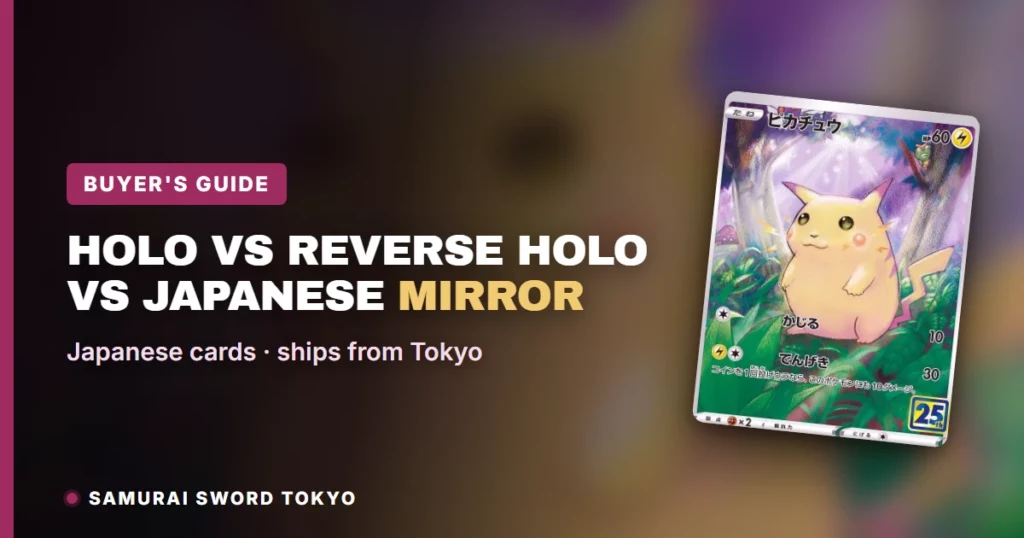
Holo, reverse holo and mirror are three different foil treatments, not three names for the same shine. Holofoil puts the foil over the Pokemon artwork itself. Reverse holofoil flips that around and foils the card’s background and border instead, leaving the artwork flat. “Mirror” is used for set-specific treatments; in Scarlet & Violet-era Japanese sets it describes a flat mirror-foil finish applied in the reverse-holo slot — and per Bulbapedia that finish technically isn’t holofoil at all, because it doesn’t scatter light in colour the way true holofoil does.
The distinction is especially relevant to the Japanese set Pokemon Card 151 (SV2a), where eligible Common, Uncommon and Rare cards have same-number variants commonly called “Mirror” cards, with a Poké Ball pattern or, more rarely, a Master Ball pattern. This guide sorts out what each term means and which listed prints show each finish.
Holofoil = foil on the artwork. Reverse holofoil = foil on the background/border, introduced in Legendary Collection (May 2002) to replace 1st Edition printings. In Japanese Pokemon Card 151 (SV2a), eligible Common, Uncommon and Rare cards have same-number variants commonly called “Mirror” cards, with a Poké Ball pattern or a rarer Master Ball pattern; the English-language “Pokemon 151” release does not use this system. The SV2a Japanese Booster Box is currently listed at ¥43,860 (~$276), and a graded example, PSA10 Magikarp Master Ball Mirror is currently listed at ¥29,150 (~$183).
Yen figures below convert at ¥159/USD (September 2026). Prices are a September 2026 store snapshot for our own listings — check the linked product page for the current number before ordering.
What Is Holofoil?
Per Bulbapedia, holofoil is “a special type of card in the Pokemon Trading Card Game” that carries a shiny, light-scattering foil effect applied directly to the artwork or its background panel. Most Rare-or-higher cards and promotional cards get this treatment, and while it’s most associated with Pokemon cards, Trainer and Energy cards can be printed as holofoil too.
The tell is where the shine sits. On a true holofoil card, the foil covers the Pokemon illustration itself — tilt the card and the artwork panel is what catches the light and scatters colour. That’s the baseline everything else in this guide gets compared against.
Holofoil Pattern Eras, Base Set to Today
The holofoil pattern itself has changed several times since 1996. Bulbapedia’s general design history lists seven named patterns across the game’s history:
| Sets covered | Pattern name | Visual description |
|---|---|---|
| Base Set–Fossil | Starlight | The original holofoil texture |
| Base Set 2–Call of Legends | Cosmos | Dots and circles |
| Black & White–Legendary Treasures | Tinsel | Horizontal stripes |
| XY–Steam Siege | Sheen | Diagonal refraction |
| Sun & Moon–Cosmic Eclipse | Water-Web | Wave pattern |
| Sword & Shield–Crown Zenith | Line | Vertical-stripe pattern |
| Scarlet & Violet onward | Mirage Holofoil | Silver-bordered foil panel |
The current pattern — Mirage Holofoil, with its silver borders — is the baseline you’re comparing against when you get to the Scarlet & Violet-era “mirror” cards further down this page. For a full breakdown of how Japanese rarity letters map onto these prints, see our Japanese Pokemon card rarities guide.
What Is Reverse Holofoil?
Reverse holofoil does the opposite job to standard holofoil. Per Bulbapedia, it was introduced in the Legendary Collection expansion in May 2002, specifically to replace 1st Edition printings going forward. Instead of foiling the Pokemon artwork, the foil effect is applied to the card’s background and border — the illustration panel itself stays flat and matte, while the frame around it catches the light.
Pack composition must be read by language and product. The two reverse-holo positions introduced with Scarlet & Violet apply to international English-language packs; they are not a general rule for Japanese five-card packs. Japanese special sets can use different pack sizes and foil configurations, including Pokemon Card 151’s seven-card packs.
What Are “Mirror” Cards? The Scarlet & Violet Twist
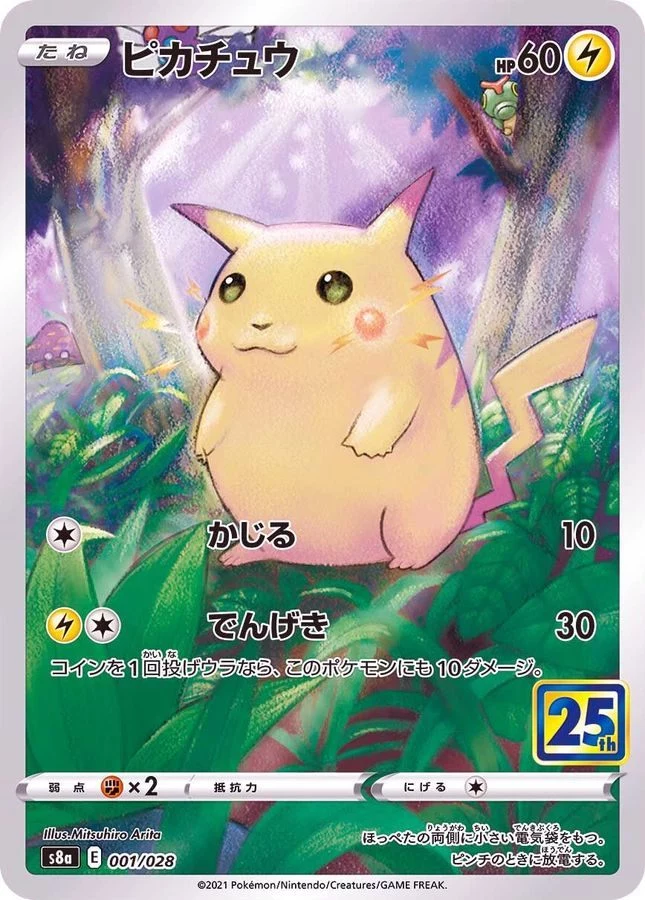
The Scarlet & Violet series introduced what Bulbapedia describes as “a mirror foil base for reverse ‘holofoil’ cards, technically making the name inaccurate as they lack any of the colour scattering expected from holofoil cards.” In plain terms: what the community calls a “Mirror” card in Scarlet & Violet-era Japanese sets is a flat, mirror-like foil finish sitting in the reverse-holo slot — it reflects like a mirror rather than scattering rainbow colour the way classic holofoil does.
That’s an important line to hold. A Mirror card is not a type of holofoil card, even though both are shiny and both sit under the general “foil” umbrella. If a listing calls something “holo” when it’s actually this flat mirror finish, that’s the exact mix-up this guide exists to clear up. The Pikachu 001/028 example above, from the 25th Anniversary Collection (s8a), shows the plain mirror-foil look on a set that has nothing to do with the Master Ball mechanic covered next — useful as a contrast case before we get into the more elaborate version. For a single-card breakdown of that print, see our Pikachu Mirror (s8a 001/028) card guide.
Master Ball & Monster Ball Mirrors: Pokemon Card 151’s Special Case
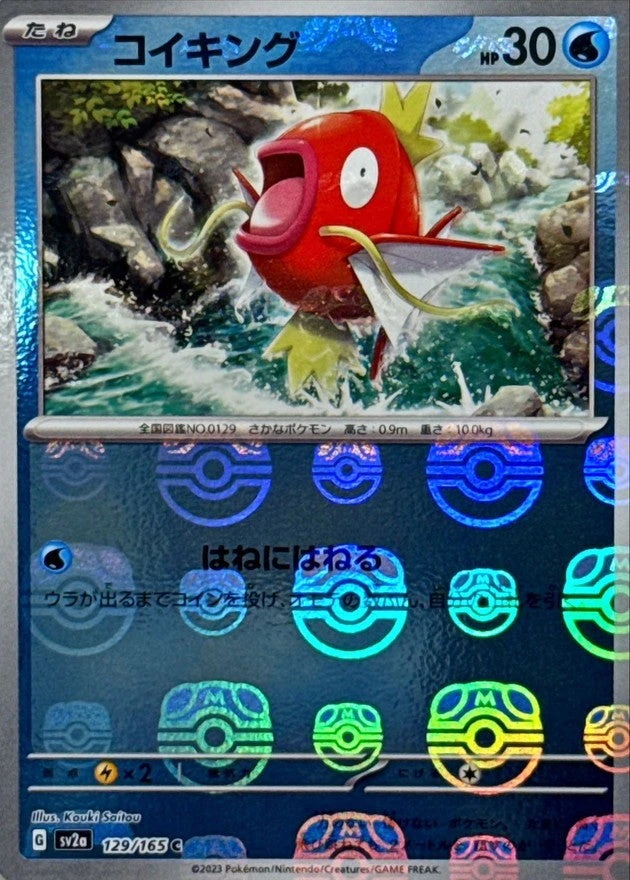
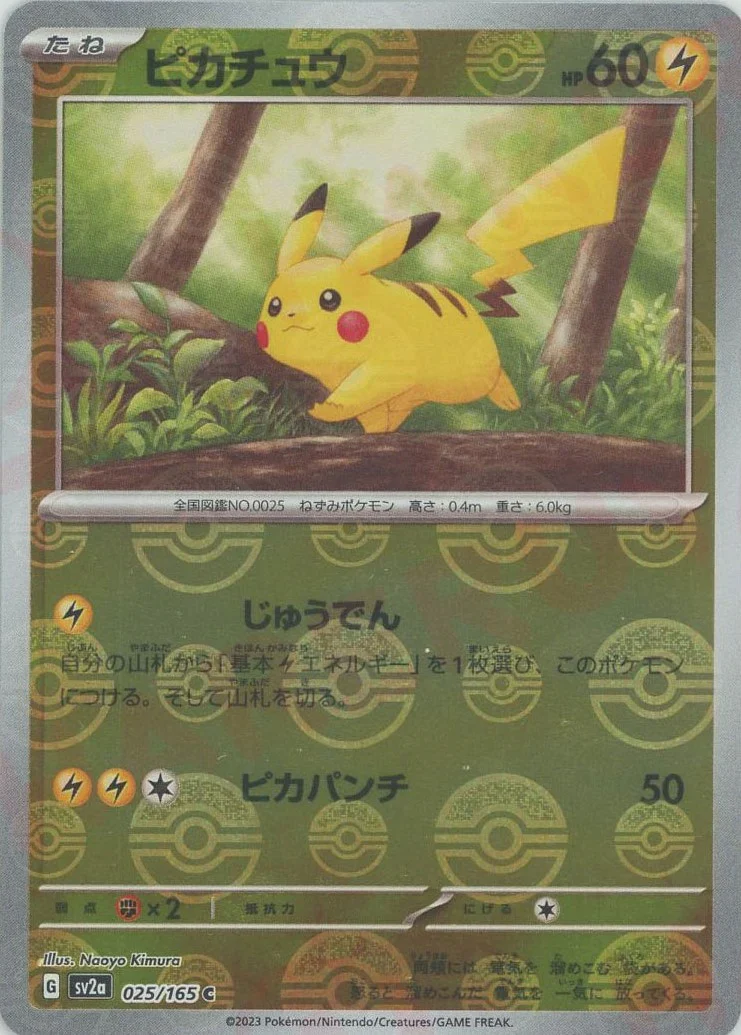
In Japanese Pokemon Card 151 (SV2a), eligible Common, Uncommon and Rare cards can appear as variants commonly called “Mirror” cards, with a Poké Ball pattern or, more rarely, a Master Ball pattern. The Japanese name for Poké Ball is Monster Ball, which explains why store labels may say “Monster Ball Mirror”; it is not a third ball design that replaces the Poké Ball version on selected cards. These variants retain the base card’s number, so Pikachu remains 025/165 in either pattern. The English-language “Pokemon 151” release does not use this same pattern system.
We’re not going to restate pull-rate numbers here, because odds claims for this specific mechanic aren’t something we’ve independently verified to our own standard. If you want the odds breakdown, our dedicated Pokemon Card 151 pull rates and best cards guide covers that ground directly — treat that article as the source rather than any number repeated elsewhere.
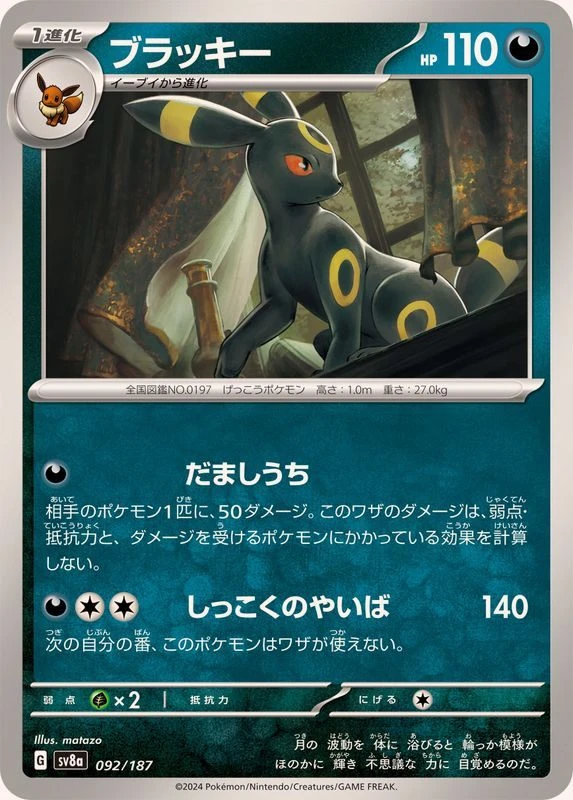
The finish also isn’t locked to SV2a alone. An Umbreon 092/187 Master Ball Mirror from Terastal Festival ex (SV8a) is currently listed at ¥32,560 (~$205) — the same pattern appearing in a later Scarlet & Violet-era set. If you’re comparing Japanese and English releases more broadly, our Japanese vs English Pokemon cards guide and our wider Japanese Pokemon mirror card variants guide both go into more of the set-by-set detail than fits here.
Holo vs Reverse Holo vs Mirror, Side by Side
Putting the three terms next to each other:
| Holofoil | Reverse Holofoil | Mirror (SV era) | |
|---|---|---|---|
| Where the foil sits | Over the Pokemon artwork | Over the background/border | Over the background/border (reverse-holo slot) |
| Introduced | Base Set (1996) | Legendary Collection, May 2002 | Scarlet & Violet series |
| Light behaviour | Scatters colour (“true” holofoil) | Scatters colour, on the border only | Flat mirror reflection — per Bulbapedia, technically not true holofoil |
| Per booster pack | Varies by set/rarity | Varies by set and release | Varies by set and release |
The short version: holofoil and reverse holofoil are both genuine light-scattering finishes, just applied to different parts of the card. “Mirror” is a name for a different, flatter kind of shine that happens to sit in the same pack slot reverse-holo normally occupies — which is exactly why the three terms get mixed up in casual conversation.
Buying These Variants from Japan
Knowing which finish you’re looking at matters before you buy, because listings don’t always use these terms carefully. Here’s where each term above maps onto graded examples we currently list:
| Card | Finish | Set | Listed price |
|---|---|---|---|
| Umbreon 092/187 | Master Ball Mirror | Terastal Festival ex (SV8a) | ¥32,560 (~$205) |
| Magikarp 129/165 | Master Ball Mirror | Pokemon Card 151 (SV2a) | ¥29,150 (~$183) |
| Pikachu 025/165 | Monster Ball Mirror | Pokemon Card 151 (SV2a) | ¥27,764 (~$175) |
| Pikachu 001/028 (update: currently sold out — restock requests via Quick Order) | Mirror | 25th Anniversary Collection (s8a) | ¥18,106 (~$114) (update: currently sold out — restock requests via Quick Order) |
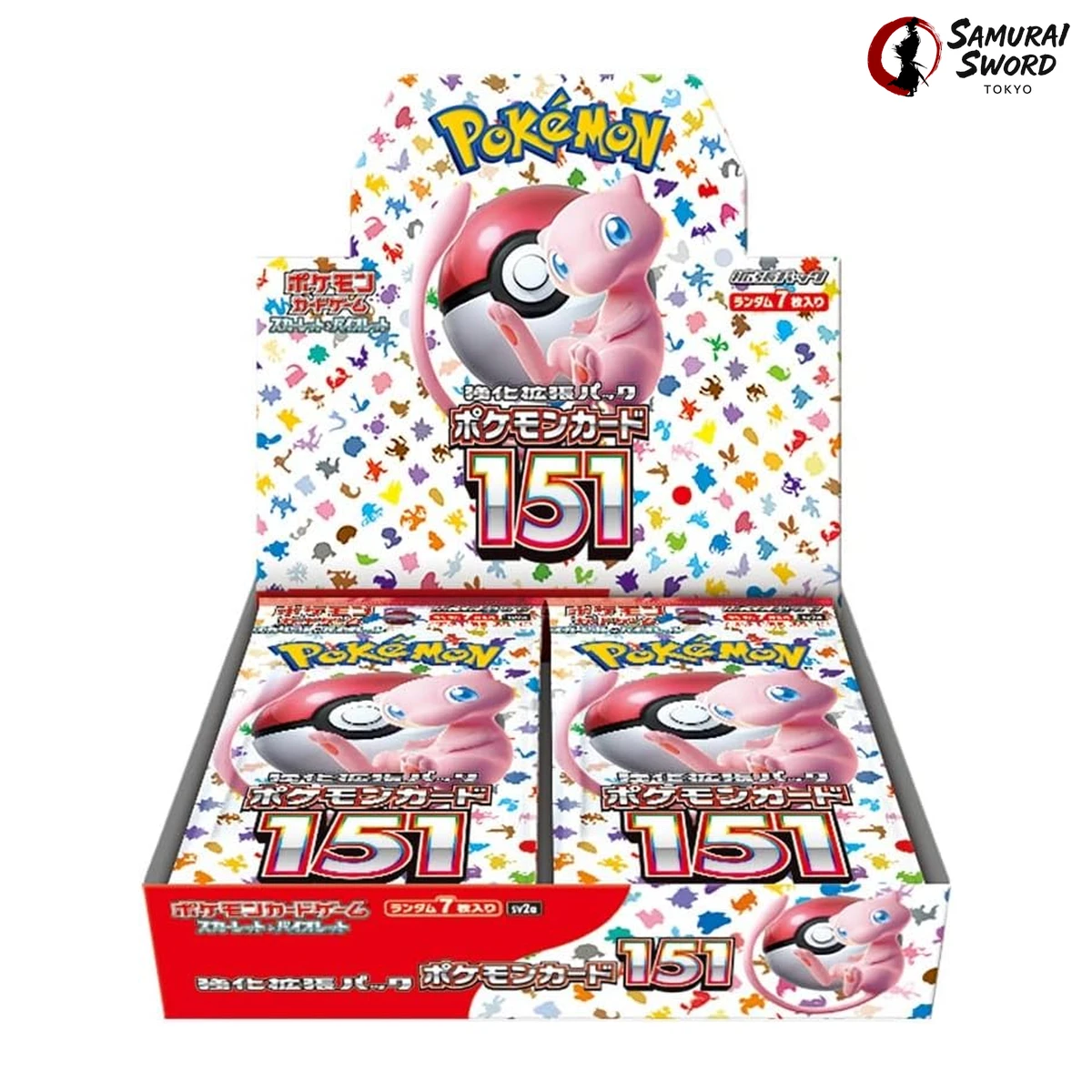
If you want to open packs and find these yourself rather than buying a graded single, the source set for these Poké Ball and Master Ball Mirror variants is the SV2a Pokemon Card 151 Japanese Booster Box, currently listed at ¥43,860 (~$276). For PSA10-graded examples across rarities more broadly, browse our PSA 10 graded card collection. For specific cards or sets not shown here, use Quick Order.
Frequently Asked Questions
What’s the actual difference between holo and reverse holo?
Holofoil applies the shiny, light-scattering foil to the Pokemon artwork itself. Reverse holofoil applies that same kind of foil to the card’s background and border instead, leaving the artwork flat. Reverse holofoil was introduced in the Legendary Collection expansion in May 2002.
Is a “Mirror” card the same as a holofoil card?
No. Per Bulbapedia, the Scarlet & Violet-era mirror foil finish “technically” isn’t holofoil, because it lacks the colour scattering that true holofoil has. It’s a flat mirror-foil finish sitting in the reverse-holo slot of the pack, not a variant of holofoil itself.
What is a Master Ball Mirror card?
In Japanese Pokemon Card 151 (SV2a), eligible Common, Uncommon and Rare cards can have same-number variants commonly called “Mirror” cards, with a Poké Ball pattern or a rarer Master Ball pattern. “Monster Ball” is the Japanese name for Poké Ball, not a separate third pattern.
Does the English “Pokemon 151” release have Master Ball or Monster Ball mirrors?
No. This mechanic is specific to the Japanese Pokemon Card 151 (SV2a) release and does not exist in the English-language “Pokemon 151” set.
How many reverse holo cards are in a modern booster pack?
It depends on the language and product. Scarlet & Violet international English-language packs use two reverse-holo positions, but that is not a general rule for Japanese five-card packs; Japanese special sets can use different configurations.
Has the Master Ball Mirror finish appeared outside Pokemon Card 151?
Yes — later Scarlet & Violet-era sets include the finish, such as Umbreon 092/187 Master Ball Mirror from Terastal Festival ex (SV8a), so it isn’t locked to SV2a.
Samurai Sword Tokyo 1st Anniversary Sale
- Every in-stock Pokémon product is on sale
- Pre-orders are not included
- Ends when stock sells out
In-stock Pokémon products only · Pre-orders are not included · While stock lasts · Import duties, taxes and customs charges are not included in the price and are collected on delivery, except for destinations we ship duty-paid.
Picked for this article


📩 Get member-only sale alerts & coupons
Sale alerts, coupons and restock notices by email — straight from Tokyo.