Learning how to read Japanese Pokemon cards is easier than you think, and knowing how to identify Japanese Pokemon cards at a glance matters more than reading every word. You just opened a Japanese booster box — the art is stunning, the card quality feels premium — but you can’t read a single word on the cards, and Pokemon cards in Japanese can look intimidating the first time you sort a pull.
Good news: you don’t need to read Japanese to understand your cards. Over 70% of the information on a Japanese Pokemon card uses numbers, symbols, and icons that are identical to English versions. The layout is the same. The energy symbols are the same. The damage numbers are the same.
This guide gives you everything you need to decode any Japanese Pokemon card in seconds. We cover the full card layout, all rarity symbols (including the MEGA-era MUR and the new Futuristic Rare, FUR, from M6a 30th CELEBRATION), a 50-word Japanese-English cheat sheet you can reference while sorting your pulls, and the best translation tools for card text.
These are the methods we recommend to first-time Japanese card buyers.
You don’t need to read Japanese to understand your cards. Over 70% of the information uses universal numbers, symbols, and icons. This guide covers every card zone, all rarity symbols, and a 50-word cheat sheet.
- Standard format is still regulation marks H, I, and J (G rotated out on January 23, 2026).
- M6a 30th CELEBRATION released worldwide on September 16, 2026, confirming the new FUR (Futuristic Rare) rarity at ¥360 per 6-card pack / ¥7,200 per box.
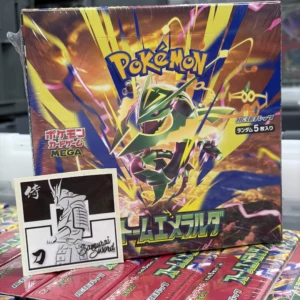
- Our M6 Storm Emeralda booster box is currently listed at ¥12,100 for the Sealed option (~$79) or ¥10,560 for the No Shrink option (~$69).
USD figures convert at ¥154/USD, approximate.
Japanese Pokemon Card Layout — What Each Part Means
A Japanese Pokemon card has the exact same layout as an English card. If you hold them side by side, every element is in the same position. The only difference is the language of the text.
Here’s what each zone on the card contains:
The Name Zone (Top Left)
The Pokemon’s name appears at the top left, written in katakana (angular Japanese characters). Next to the name, you’ll see:
- Evolution stage: たね (Basic), 1進化 (Stage 1), 2進化 (Stage 2)
- ex badge: If the card is a Pokemon ex, “ex” appears in the same style as English cards
- Tera icon: Terastal Pokemon show a crystal icon, identical to English versions
- Mega ex (メガシンカex): MEGA-era cards (from August 1, 2025) add a Mega Evolution ex. It counts as a Pokemon ex, carries higher HP and stronger attacks, and your opponent takes 3 Prize cards when it is Knocked Out
You don’t need to read the katakana name to identify the Pokemon — the artwork and Pokedex number in the set info tell you exactly which Pokemon it is.
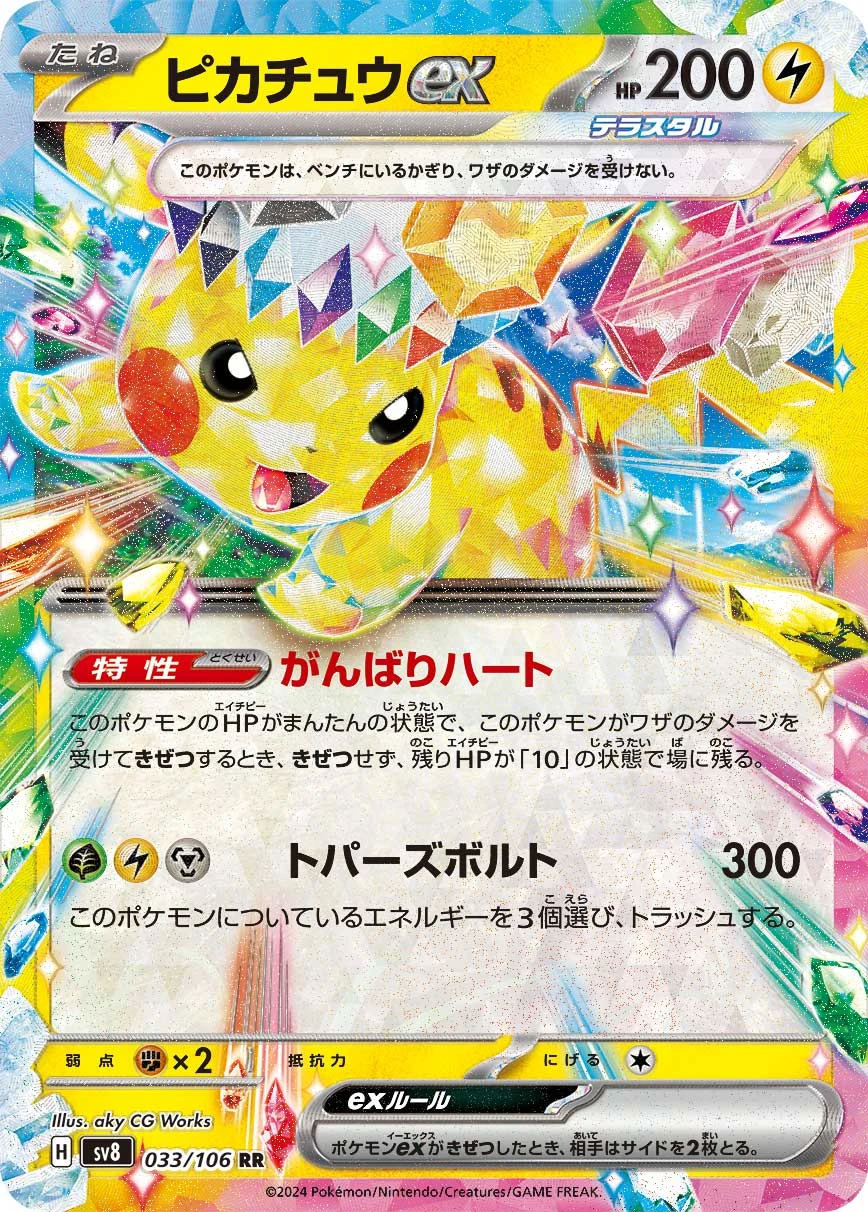
HP, Type & Weakness Zone
These elements are 100% identical to English cards:
- HP: Same number, same position (top right)
- Type icon: Fire, Water, Grass — same color-coded energy symbol
- Weakness: Bottom left, shows an energy type × 2
- Resistance: Next to weakness, shows an energy type − 30
- Retreat cost: Bottom center, shown as colorless energy icons
No Japanese reading required for any of these.
Hold a Japanese card next to its English equivalent. You’ll see every element — HP, type icon, weakness, retreat cost — is in the exact same position. The layout is universal.
Attack Zone — Reading Damage & Energy Costs
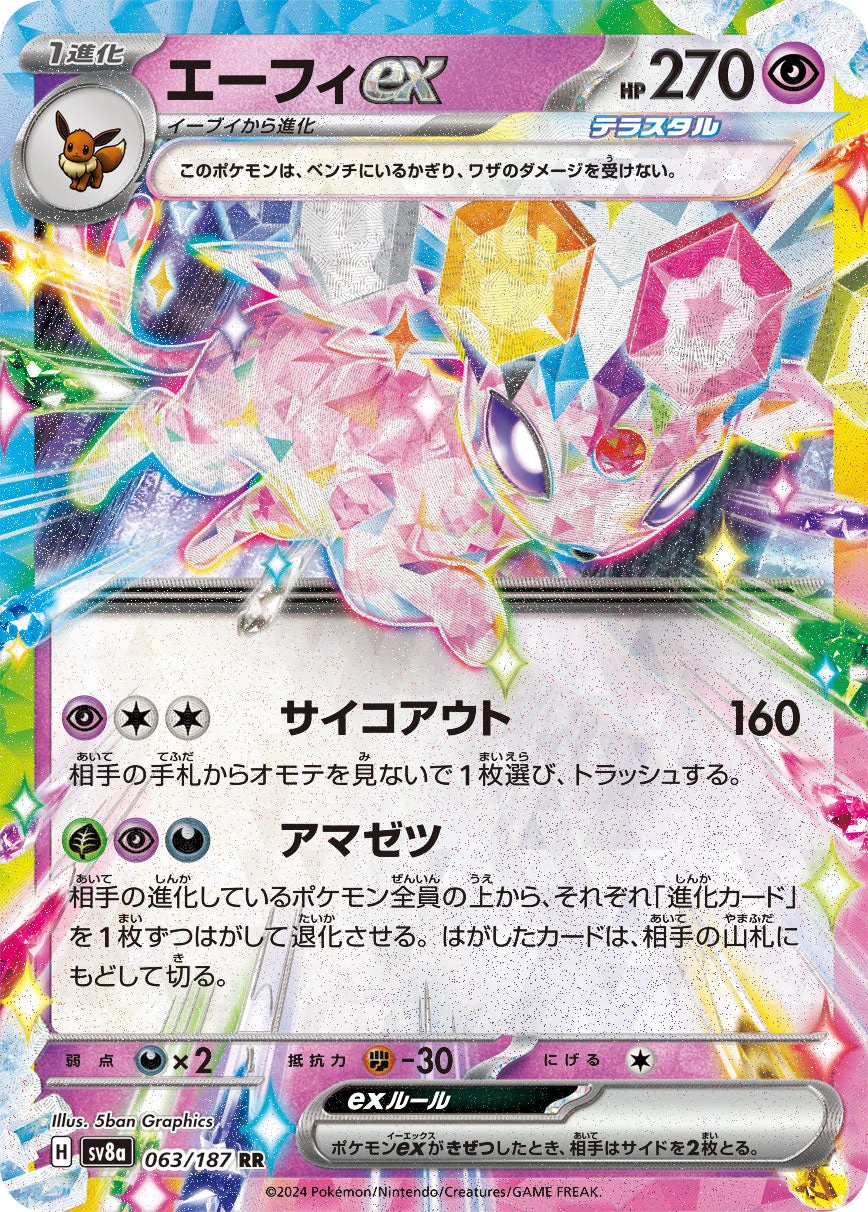
The attack section sits in the middle of the card. Here’s how to read it without knowing Japanese:
- Energy cost: The colored circles on the left side of each attack are universal energy symbols — Fire, Water, Lightning, Psychic, Fighting, Darkness, Metal, Dragon, Colorless. Count them exactly as you would on an English card
- Damage number: On the right side of each attack. “120” means 120 damage in any language
- Effect text: The Japanese text between the attack name and damage describes the effect. This is the only part that requires translation (covered in the Translation Tools section below)
The attack name itself appears in Japanese, but the mechanical information — energy cost, damage output — is fully readable without translation.
Understanding Japanese Text on Pokemon Cards
Japanese uses three writing systems, and all three appear on Pokemon cards. Knowing which system is used where helps you navigate the card faster.
Katakana = Pokemon Names
Katakana (カタカナ) characters are angular and sharp. On Pokemon cards, they’re used for:
- Pokemon names: ピカチュウ (Pikachu), リザードン (Charizard), ミュウ (Mew)
- Foreign loanwords in card effects: ダメージ (Damage), エネルギー (Energy), ベンチ (Bench)
If you see angular text at the top of the card, that’s the Pokemon’s name in katakana.
Katakana (angular) = Pokemon names & foreign words
Hiragana (rounded) = Rules & card effects
Kanji (complex) = Attack names & game terms
Hiragana & Kanji = Rules and Attacks
Hiragana (ひらがな) characters are rounded and flowing. They appear in:
- Attack descriptions and card effects
- Rule text (e.g., special conditions)
- Small text above kanji (called furigana) that shows pronunciation
Kanji (漢字) are complex Chinese-origin characters used for:
- Attack names: 炎のうず (Flame Vortex), 雷撃 (Thunder Strike)
- Ability names and game terms
If you’re collecting (not playing), you don’t need to read hiragana or kanji at all. Card value is determined by rarity, artwork, and Pokemon identity — not by what the attack text says.
Numbers & Symbols Are Universal
Here’s the most important thing to remember: numbers and symbols on Japanese Pokemon cards are identical to English cards. This includes:
| Universal (No Translation) | Japanese Only (Translation Helpful) |
|---|---|
| HP values | Pokemon name (top left) |
| Damage numbers | Attack name text |
| Energy symbols | Attack effect description |
| Retreat cost icons | Ability name & text |
| Weakness / resistance | Trainer card effects |
| Set numbers (bottom left) | Rule box text |
This means you can evaluate a card’s battle stats without reading a single Japanese character.
How to Identify Card Rarity at a Glance
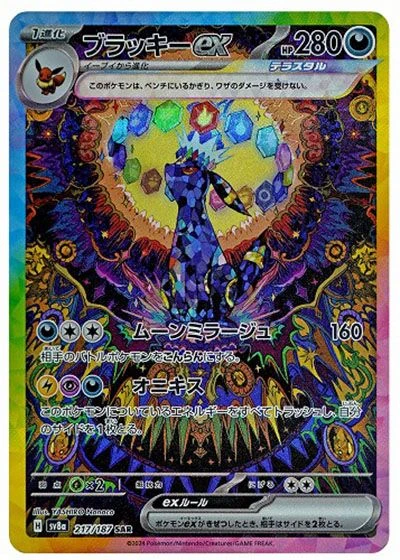
Identifying rarity is the most important skill for collectors. Japanese cards use a symbol system in the bottom-left corner that tells you exactly how rare a card is.
Rarity Symbols Explained (C → MUR)
| Symbol | Rarity | Name | Value Tier (relative) | Visual Cue |
|---|---|---|---|---|
| ◇ | C | Common | Bulk | Plain card, no holo |
| ◇◇ | U | Uncommon | Bulk | Plain card, no holo |
| ★ | R | Rare | Low | Slight holo or plain |
| ★★ | RR | Double Rare | Low to mid | Full holo pattern (Pokemon ex) |
| — | RRR | Triple Rare | Low to mid | Full holo, used for selected ex cards |
| ★★★ | SR | Super Rare | Mid to high | Textured holo, alternate art |
| — | AR | Art Rare | Low to mid | Full-art illustration, unique art style |
| — | SAR | Special Art Rare | High | Premium texture, full illustration |
| — | UR | Ultra Rare | Mid to high | Gold card or rainbow holo |
| — | MUR | MEGA Ultra Rare | Highest (MEGA era) | Premium texture, secret-numbered (e.g., M6 113/076) |
| — | FUR | Futuristic Rare | New (from Sep 16, 2026) | M6a 30th CELEBRATION only: Mew ex / Mewtwo ex by YOSHIROTTEN |
Value tiers above are relative only; market prices change constantly, so check a dated price source before buying or selling. Cards from SR and above typically have a different card texture you can feel with your fingers — embossed patterns, raised ink, or premium holo foil.
Set Numbers — The Universal Decoder
Every Japanese Pokemon card has a set number in the bottom-left corner formatted as:
XXX / YYY (e.g., 052/073)
- XXX = this card’s number in the set
- YYY = total number of regular cards in the set
Here’s the key trick: if XXX is higher than YYY, you have a Secret Rare. For example, a card numbered 081/073 means it’s one of the secret rares that go beyond the standard set — these are typically SR, SAR, UR, or MUR cards (in M6 Storm Emeralda, the Mega Rayquaza ex MUR is numbered 113/076).
Card number > Set total = Secret Rare. Example: 081/073 = a card beyond the standard set — always check the bottom-left corner.
MEGA Era New Rarities (2025–2026)
The current MEGA era started on August 1, 2025 with Mega Brave (M1L) and Mega Symphonia (M1S), followed by Inferno X (M2, September 26, 2025) and the High Class Pack Mega Dream ex (M2a, November 28, 2025). In 2026 the line continued with M3 Munkith Zero (January 23), M4 Ninja Spinner (March 13), M5 Abyss Eye (May 22), M6 Storm Emeralda (July 31), and M6a 30th CELEBRATION (September 16, released worldwide). The era brings two rarities you won’t find in SV-era sets:
- MUR (MEGA Ultra Rare): The top rarity in MEGA-era sets. Premium textured full-art cards of Mega Evolution ex Pokemon, always secret-numbered above the set total (e.g., M6 113/076 Mega Rayquaza ex, M4 120/083, M5 118/081, M2a 250/193)
- FUR (Futuristic Rare): Debuted in M6a 30th CELEBRATION, released worldwide September 16, 2026 (¥360 per 6-card pack, ¥7,200 per 20-pack box). The first FUR cards are Mew ex and Mewtwo ex illustrated by YOSHIROTTEN. Note that the 30th-anniversary reprints in this set are not Standard-legal
The rest of the ladder — C, U, R, RR, RRR, AR, SR, SAR, and UR — carries over from the SV era. If you’re opening MEGA-era boxes (Mega Brave, Mega Symphonia, Mega Dream ex, Storm Emeralda, etc.), look for the MUR marking on secret-numbered cards. For a deeper breakdown of each rarity tier, see our Japanese Pokemon card rarities explained guide.
Essential Japanese TCG Vocabulary — 50-Word Cheat Sheet
These 50 terms cover over 90% of the Japanese text you’ll encounter on Pokemon cards.
Card Types & Game Zones
| Japanese | Romaji | English | Where You’ll See It |
|---|---|---|---|
| ポケモン | Pokemon | Pokemon | Card type |
| トレーナーズ | Toreinazu | Trainers | Card type label |
| グッズ | Guzzu | Item | Trainer subtype |
| サポート | Sapooto | Supporter | Trainer subtype |
| スタジアム | Sutajiamu | Stadium | Trainer subtype |
| エネルギー | Enerugii | Energy | Card type |
| たね | Tane | Basic | Evolution stage |
| 1進化 | 1-Shinka | Stage 1 | Evolution stage |
| 2進化 | 2-Shinka | Stage 2 | Evolution stage |
| バトル場 | Batoru-ba | Active Spot | Game zone |
| ベンチ | Benchi | Bench | Game zone |
| 手札 | Tefuda | Hand | Game zone |
| 山札 | Yamafuda | Deck | Game zone |
| トラッシュ | Torasshu | Discard Pile | Game zone |
| きぜつ | Kizetsu | Knocked Out | Game state |
Attacks, Abilities & Effects
| Japanese | Romaji | English | Where You’ll See It |
|---|---|---|---|
| ワザ | Waza | Attack / Move | Attack section |
| 特性 | Tokusei | Ability | Above attacks |
| ダメージ | Dameeji | Damage | Attack description |
| にげる | Nigeru | Retreat | Bottom of card |
| 弱点 | Jakuten | Weakness | Bottom left |
| 抵抗力 | Teikou-ryoku | Resistance | Bottom area |
| HP | HP | Hit Points | Top right |
| エネ | Ene | Energy (short) | Attack costs |
| きぜつする | Kizetsu-suru | Is Knocked Out | Card effects |
| ダメカン | Damekan | Damage Counter | Card effects |
| つける | Tsukeru | Attach | Card effects |
| はがす | Hagasu | Remove/Detach | Card effects |
| もどす | Modosu | Return (to deck/hand) | Card effects |
| 選ぶ | Erabu | Choose | Card effects |
| 引く | Hiku | Draw | Card effects |
Common Phrases on Trainer Cards
| Japanese | Romaji | English | Where You’ll See It |
|---|---|---|---|
| 〜を引く | ~wo Hiku | Draw ~ | Supporter effects |
| 〜を選ぶ | ~wo Erabu | Choose ~ | Item effects |
| 〜を出す | ~wo Dasu | Put ~ (into play) | Effects |
| 〜をトラッシュする | ~wo Torasshu-suru | Discard ~ | Effects |
| 〜までもどす | ~made Modosu | Return ~ to | Effects |
| 〜をつける | ~wo Tsukeru | Attach ~ | Energy effects |
| 自分の | Jibun-no | Your / Your own | Card effects |
| 相手の | Aite-no | Your opponent’s | Card effects |
| このポケモン | Kono Pokemon | This Pokemon | Card effects |
| 次の番 | Tsugi-no-ban | Next turn | Card effects |
| 〜枚 | ~mai | ~ card(s) (counter) | Card effects |
| 〜回 | ~kai | ~ time(s) (counter) | Card effects |
| コイン | Koin | Coin | Coin flip effects |
| オモテ | Omote | Heads | Coin flip results |
| ウラ | Ura | Tails | Coin flip results |
| 使う | Tsukau | Use / Play | Card effects |
| のぞく | Nozoku | Look at (peek) | Card effects |
| 入れ替える | Irekaeru | Switch | Card effects |
| 回復 | Kaifuku | Heal / Recover | Card effects |
| 番 | Ban | Turn | Game flow |
Bookmark this table or print it out. Having it next to you while sorting pulls from a Japanese box makes identification significantly faster.
The 15 terms in “Card Types & Game Zones” are enough to identify any card’s basic function. Start with those, then learn the attack keywords as needed.
Japanese Pokemon Set Symbols, Regulation Marks & Set Codes
Every Japanese Pokemon card from the Sword & Shield era onward has a small letter in the bottom-left corner — this is the regulation mark. It determines which cards are legal in the current Standard format.
Current Standard Format (2026)
Since January 23, 2026, the Standard format in Japan uses cards with regulation marks H, I, and J (official regulation page, updated January 22, 2026):
| Regulation Mark | Standard Status (September 24, 2026) | How to Check |
|---|---|---|
| H | Legal | Printed on many Scarlet & Violet-era cards; read the letter on each card |
| I | Legal | Printed on later SV-era and some MEGA-era cards; the mark can differ between cards in the same set |
| J | Legal | The newest mark, used on MEGA-era prints (M-prefix set codes) |
Cards with marks D, E, F, or G have rotated out of Standard (G was the latest to leave, on January 23, 2026) and are only legal in Expanded format. If you’re building a competitive Japanese deck, check the regulation mark before including a card.
For collectors, the regulation mark doesn’t affect a card’s value — a PSA 10 Charizard is valuable regardless of its format legality. Only check regulation marks if you’re building a competitive deck.
How to Find the Set Code
The set code appears at the bottom of the card, near the regulation mark. Japanese set codes follow this format:
sv8a – 001 / 072
- sv8a: Set identifier (sv = Scarlet & Violet era, 8a = specific set)
- 001: Card number within the set
- 072: Total regular cards in the set
For MEGA-era cards, the prefix changes to an uppercase M — M1L is Mega Brave, M1S is Mega Symphonia, M2a is the Mega Dream ex High Class Pack, and M6 is Storm Emeralda (an M6 MUR reads 113/076). Knowing the set code lets you instantly look up any card in online databases like Limitless TCG or Bulbapedia, or browse our own Japanese card list by set code once you know which one you’re holding.
sv = Scarlet & Violet era | M = MEGA era | s12a = Sword & Shield HCP
Number after prefix = set number within that era. M1L and M1S are the paired Mega Brave / Mega Symphonia release; s12a is a Sword & Shield High Class Pack.
Trainer, Supporter & Item Cards — How to Tell Them Apart
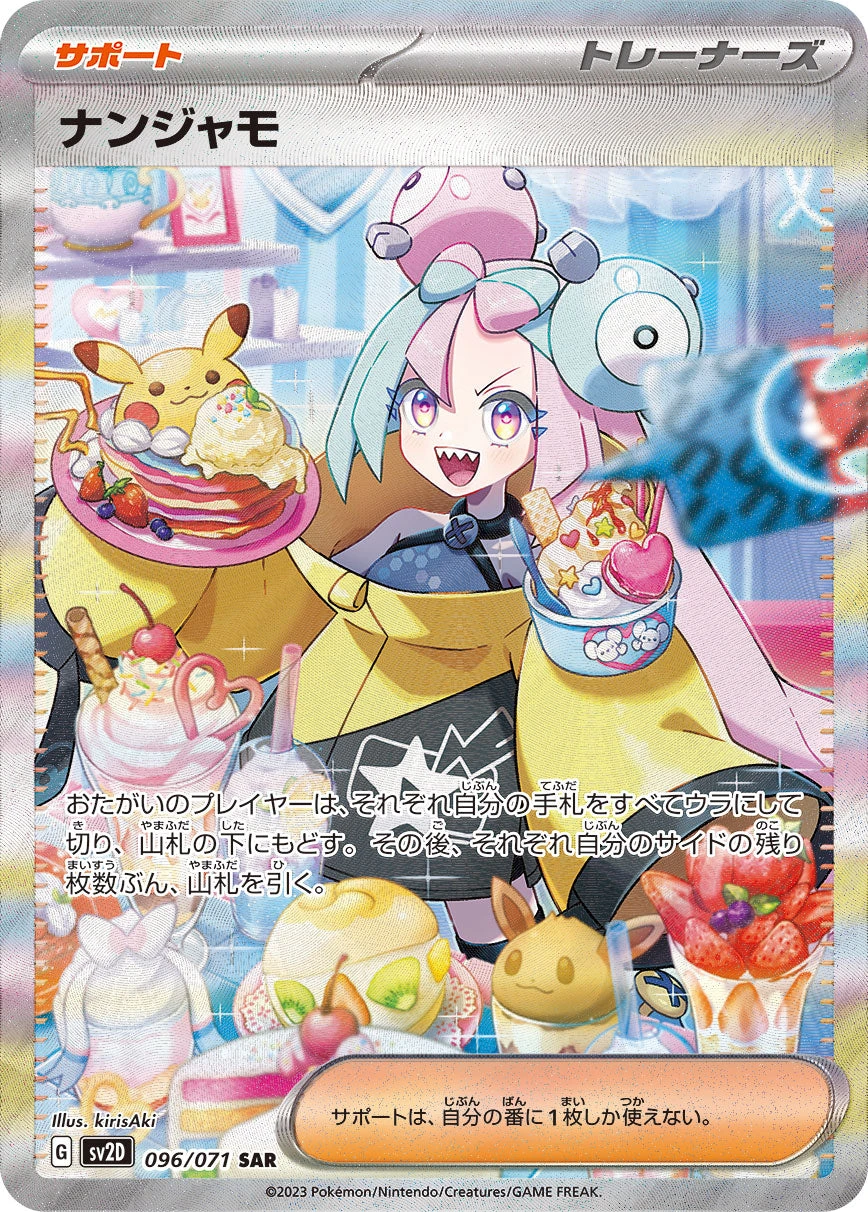
Trainer cards in the Japanese TCG fall into three subtypes, and each one has a distinct visual indicator:
Visual Indicators
| Card Type | Japanese Label | Icon/Visual Cue | Play Rules |
|---|---|---|---|
| グッズ (Item) | グッズ | Wrench/tool icon | Play as many as you want per turn |
| サポート (Supporter) | サポート | Person silhouette icon | Only one per turn |
| スタジアム (Stadium) | スタジアム | Building icon | Stays in play, one at a time |
The card type label appears at the top of the card, just below the card name. Even without reading the Japanese text, the icon next to the label tells you which type it is.
10 Most Common Trainer Cards You’ll See
| Japanese Name | English Name | Type | Quick Effect |
|---|---|---|---|
| ネストボール | Nest Ball | Item | Search deck for Basic Pokemon |
| ハイパーボール | Ultra Ball | Item | Discard 2, search for any Pokemon |
| ナンジャモ | Iono | Supporter | Both players shuffle hand, draw based on prizes |
| 博士の研究 | Professor’s Research | Supporter | Discard hand, draw 7 |
| ボスの指令 | Boss’s Orders | Supporter | Switch opponent’s Active Pokemon |
| ふしぎなアメ | Rare Candy | Item | Evolve Basic directly to Stage 2 |
| すごいつりざお | Super Rod | Item | Return 3 Pokemon/Energy from discard |
| ポケモンいれかえ | Switch | Item | Switch your Active Pokemon |
| エネルギー回収 | Energy Retrieval | Item | Return 2 Energy from discard |
| 夜のタンカ | Night Stretcher | Item | Return 1 Pokemon from discard to hand |
If you see these cards in your pulls, you’ll recognize them by name after opening a few boxes.
Translation Tools That Actually Work
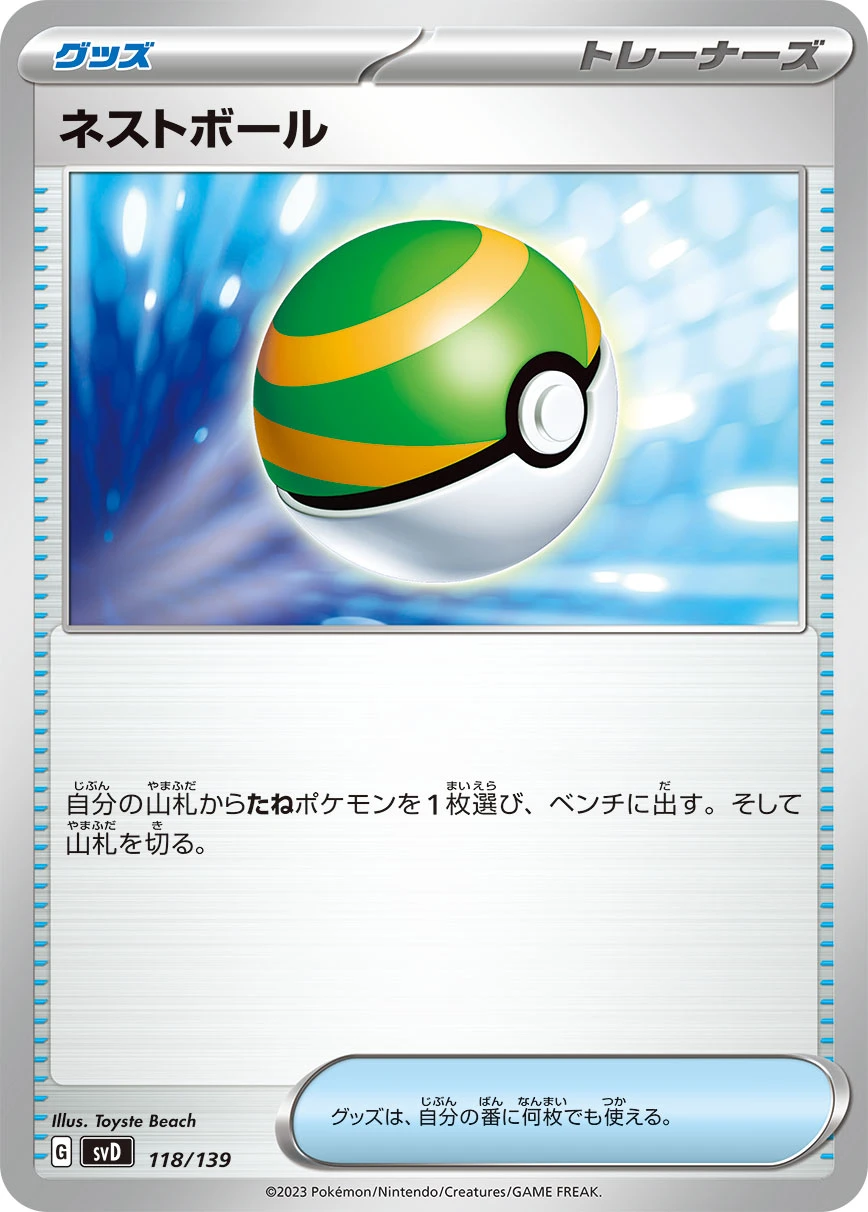
When you need to know the exact effect of a Japanese card, try these three tools.
Limitless TCG Card Database
Limitless TCG is a database used by competitive players. Search by set number (e.g., “sv8a 001”) and get the full English translation of any Japanese card, including attacks, abilities, and trainer effects.
Google Translate Camera Mode
Open Google Translate on your phone, select Japanese → English, and point your camera at the card. The live translation overlay works surprisingly well for Pokemon cards because the text is printed clearly. Accuracy isn’t perfect for complex effects, but it handles 80% of card text correctly.
Bulbapedia & PokeGuardian
Bulbapedia has every Pokemon card ever printed with full English text. Search by the Pokemon’s English name plus the set name. PokeGuardian specializes in Japanese set translations and often publishes English translations before sets release internationally.
Note the set code from the bottom of your card → Search it on Limitless TCG → Read the full English text in seconds.
Common Mistakes When Reading Japanese Cards
These are three common mistakes when reading Japanese cards.
Confusing Similar-Looking Katakana
Several katakana characters look almost identical:
| Pair | Characters | How to Tell Apart |
|---|---|---|
| shi / tsu | シ / ツ | シ (shi) strokes go bottom-left to top-right; ツ (tsu) strokes go top-left to bottom-right |
| so / n | ソ / ン | ソ (so) strokes go down; ン (n) strokes go up |
| u / wa | ウ / ワ | ウ (u) has a top horizontal stroke; ワ (wa) doesn’t |
This matters when you’re trying to search for a card online by its Japanese name. Misreading one character can lead to a completely different search result.
Missing Secret Rares in Your Box
New collectors sometimes sort through their pulls quickly and miss Secret Rares because they don’t check set numbers. Always look at the bottom-left corner: if the card number exceeds the set total (e.g., 081/073), you’ve pulled something special. These cards often have premium textures, but some Secret Rares look similar to regular holos at first glance.
Assuming You Need to Read Everything
For collectors, you need to read exactly zero Japanese to enjoy and evaluate your cards. The card’s value is determined by:
- Rarity symbol (bottom-left corner)
- Set number (Secret Rare check)
- Artwork and Pokemon identity (visual)
- Card texture (feel it — premium cards have embossed patterns)
The Japanese text describes game effects. Unless you’re playing competitively with Japanese cards, you can skip it entirely.
Ready to Open Your First Japanese Box?
Now that you can read any Japanese Pokemon card, the next step is getting your hands on some.
Best Boxes for New Japanese Card Collectors
Here are the boxes we recommend for collectors who are new to Japanese cards (as of September 24, 2026):
- M6 Storm Emeralda (M6) — A MEGA-era set released July 31, 2026 (¥200 per 5-card pack, ¥6,000 box MSRP). Home of the Mega Rayquaza ex MUR (113/076). Our M6 Storm Emeralda booster box is currently listed at ¥12,100 for the Sealed option (~$79) or ¥10,560 for the No Shrink option (~$69)
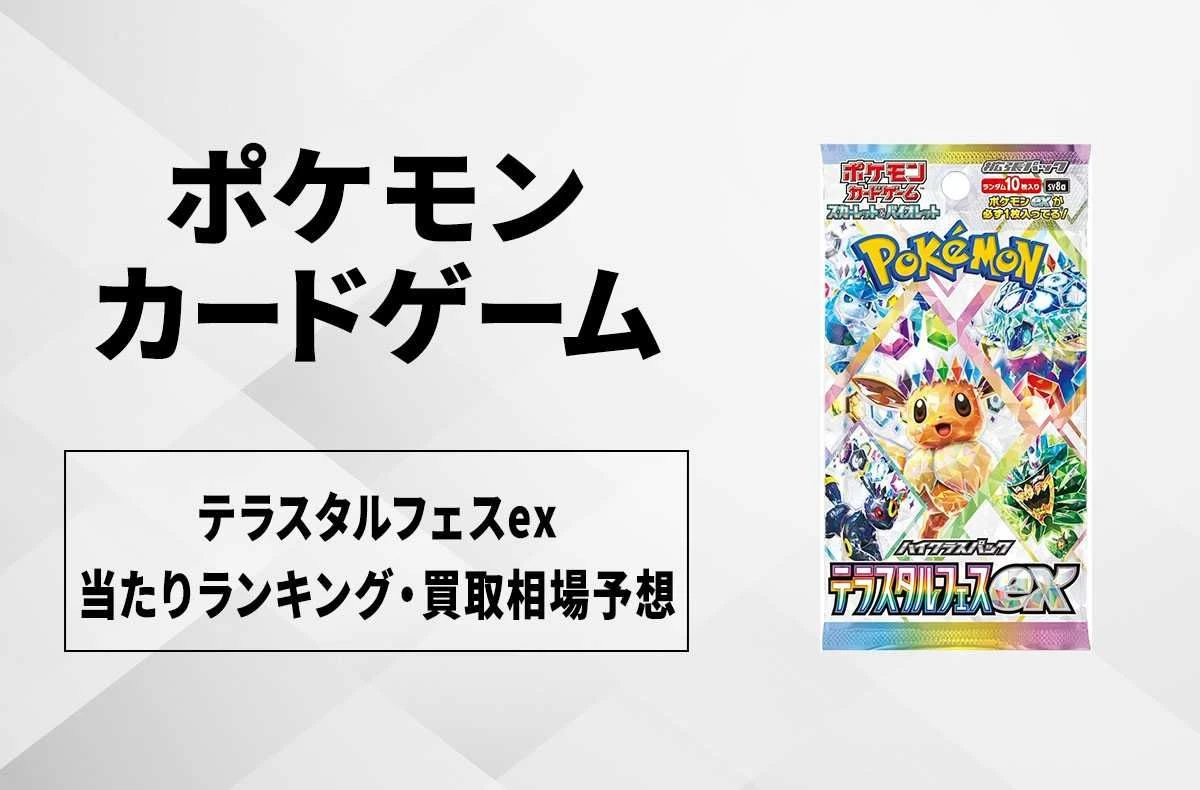
- Terastal Festival ex (sv8a) — The Eeveelution SAR collection is a popular introduction to Japanese card art quality, and sv8a is the set code you’ll see quoted most often in guides
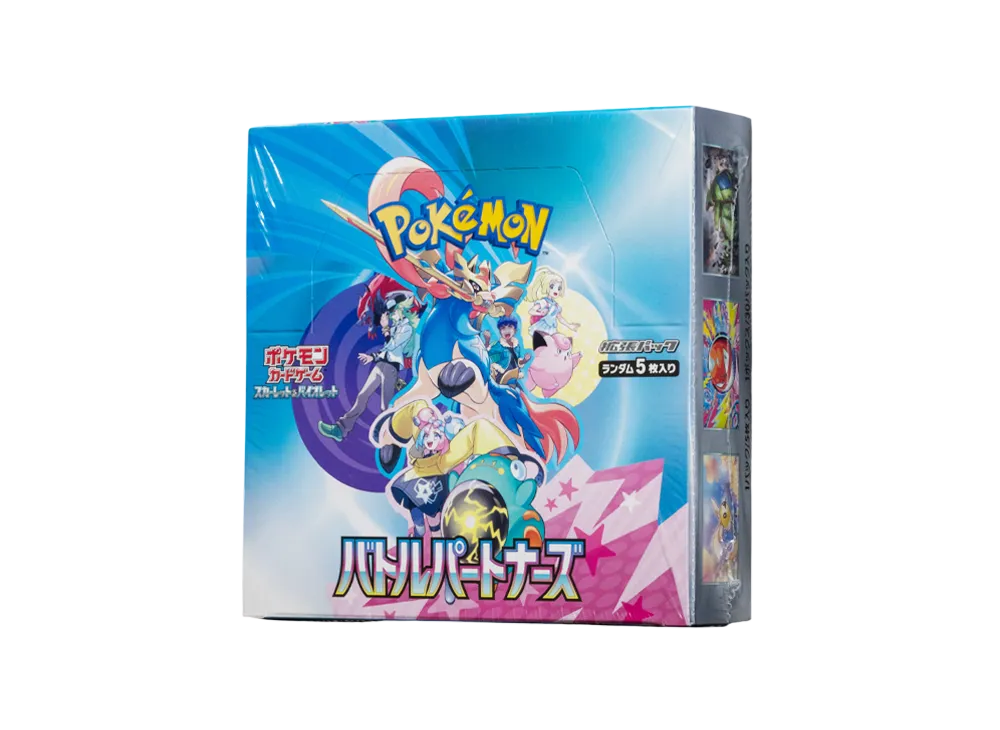
- Battle Partners (sv9) — An SV-era set known for the Lillie’s Clefairy ex SAR. No longer the newest release, but still a well-known SV-era box for learning the sv-prefix layout
- Mega Dream ex (M2a) — The MEGA-era High Class Pack (November 28, 2025) with the MUR rarity (250/193). A dense way to study MEGA-era card layouts
M6a 30th CELEBRATION also released worldwide on September 16, 2026, adding the new FUR rarity and 30 Pikachu cards to the lineup.
Why Buy from Samurai Sword CO.,LTD.
Boxes ship from Tokyo; the product page names the Sealed or No Shrink option you are buying, sourced in Japan.
Frequently Asked Questions
Can you play with Japanese Pokemon cards in English tournaments?
In most official Play! Pokemon tournaments, cards must be in the local language — so Japanese cards aren’t allowed in English-language events. However, many local leagues and casual play groups allow Japanese cards as long as you can provide an English reference (a printed translation or the Limitless TCG database on your phone). Always check with your tournament organizer before registering with a Japanese deck.
Are Japanese Pokemon cards worth more than English?
Prices differ by card and change often — compare dated asks for the exact printing before buying, especially for high-rarity cards like SARs and MURs. Japanese sets also release months before English versions.
How do you tell if a Japanese Pokemon card is rare?
Check three things: (1) The rarity symbol in the bottom-left corner — stars and special marks indicate higher rarity. (2) The set number — if it exceeds the set total (e.g., 081/073), it’s a Secret Rare. (3) The card texture — premium rares have embossed patterns, raised ink, or unique holo foil you can feel with your fingers.
What do the numbers on the bottom of Japanese Pokemon cards mean?
The numbers follow the format XXX/YYY where XXX is the card’s number in the set and YYY is the total regular cards. Cards numbered beyond the total are Secret Rares. You’ll also see the set code (like “sv8a” or “M2a”), the regulation mark letter, and the illustrator’s name.
Do Japanese Pokemon cards have different pull rates?
Japanese boxes follow a set-by-set rarity structure that differs from English boxes. MEGA-era boxes such as M5 Abyss Eye and M6 Storm Emeralda contain 30 packs of 5 cards (¥200 per pack, ¥6,000 per box MSRP), while M6a 30th CELEBRATION changes to 20 packs of 6 cards (¥360 per pack, ¥7,200 per box).
How do I find the English name of a Japanese Pokemon card?
Find the set code and card number at the bottom of the card (e.g., sv8a-052), then search it on Limitless TCG. The database shows the English name, full translated text, and high-resolution scans. Alternatively, identify the Pokemon by its artwork and search on Bulbapedia.
⚡ Shop Japanese Pokemon Booster Boxes
Japanese sealed products, shipped from Tokyo.
Picked for this article
📩 Get member-only sale alerts & coupons
Sale alerts, coupons and restock notices by email — straight from Tokyo.
![How to Buy Japanese Pokemon Cards Wholesale from Japan [2026 Guide]](https://samuraiswordtokyo.com/wp-content/uploads/2026/08/featured-how-to-buy-japanese-pokemon-cards-wholesale-1-768x403.webp)