How does PSA grading work? PSA answers in three steps on its pricing page: authentication, grading on a 1-10 scale, and encapsulation in a tamper-evident case whose PSA LightHouse label shows the grade and certification number.
As of September 29, 2026, the wording comes from psacard.com: the pricing page, the grading standards page, the customer notices and the PSA Japan FAQ. Every fee or turnaround figure is PSA’s own estimate with its date.
We sell Japanese sealed product and graded singles from Tokyo. USD figures convert at ¥154/USD, approximate.
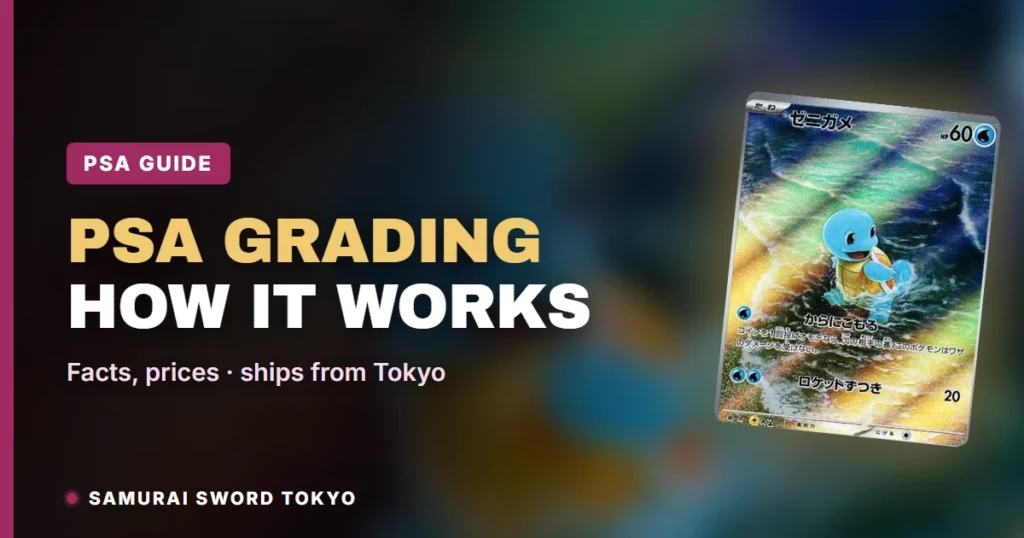
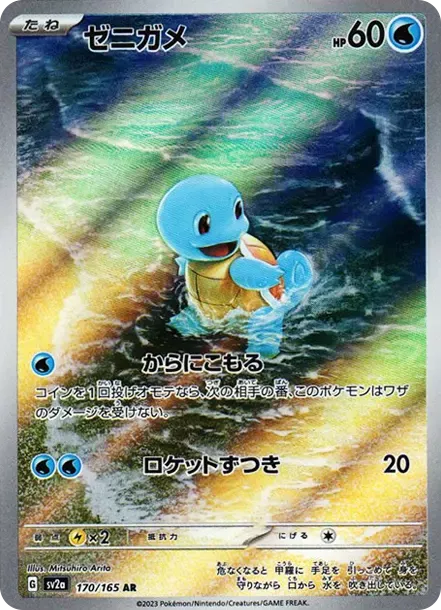
PSA authenticates first, grades second and encapsulates third, and it grades only a card that has been deemed authentic. A card that fails or shows alteration comes back without a numeric grade under an N code (N1 to N9). One example of a PSA 10 we list is Squirtle AR 170/165 from Pokemon Card 151, offered as a PSA 10 back order at ¥13,178 (~$86) — sourced to order; the product page shows the current terms.
PSA’s Standard service level opened on September 14, 2026 in the US and on September 15, 2026 in Japan. The fee and turnaround tables in this article are as of September 29, 2026 and can change without notice. For the meaning of the top grade, see our PSA 10 meaning article.
What PSA Stands For and Who Runs It
PSA stands for Professional Sports Authenticator. The PSA Japan About page spells the name out and describes PSA as the world’s largest third-party trading card authentication and grading company. The table collects the corporate facts PSA and its parent company state, each with its source and date.
| Item | What is stated | Source |
|---|---|---|
| Name | Professional Sports Authenticator (PSA) | PSA Japan About page |
| Founded | 1991 | PSA Japan About page |
| Items authenticated and graded | More than 170 million since 1991 | PSA Japan About page (undated) |
| Parent group | PSA is listed among the Collectors divisions and subsidiaries | Collectors release, December 15, 2025 |
| Grading facilities | Six global grading facilities, including Frankfurt for EU collectors from September 15, 2026 | PSA News, September 9, 2026 |
| Daily volume | About 90,000 cards per day globally | PSA News, February 10, 2026 |
| Active backlog | About 9 million units on September 22, 2026, down from 9.9 million on September 8 | PSA Backlog Tracker |
The volume and backlog lines are dated statements as of their own dates, not current counts. The December 15, 2025 Collectors release announced a definitive agreement to acquire Beckett and says Beckett will remain an independent brand. For how the grading companies compare on Japanese cards, see our Japanese Pokemon card grading guide.
The Three Steps: Authentication, Grading, Encapsulation
PSA’s pricing page defines the two words first. Authentication is the process of verifying the originality or genuineness of a trading card. Grading is assessing the quality and condition of a card using PSA’s 10-point grading scale. The page adds that grading can only take place after a card has been deemed authentic.
| Step | Name | What PSA says happens |
|---|---|---|
| 1 | Authentication | A series of PSA graders review the cards for authenticity. If genuine, PSA looks for evidence of doctoring, such as re-coloring or trimming. |
| 2 | Grading | If the cards pass authentication, PSA grades the condition of each card on a scale of 1-10, with 10 being best. |
| 3 | Encapsulation | PSA encapsulates each card in its own sonically sealed, tamper-evident case. The grade and certification number are displayed on the PSA LightHouse label. |
The order matters. A card that does not pass step 1 never reaches a numeric grade at step 2, which is why PSA’s no-grade codes, covered in their own section, sit next to the grading standards.
Authentication: Authentic, Authentic Altered and Counterfeits
The PSA Japan FAQ (F-05) separates two terms that appear on non-numeric slabs. Authentic means only that the card is genuine and says nothing about condition. Authentic Altered means a genuine card with alteration, such as trimming, re-coloring or cleaning. PSA states that such a card cannot be graded and only authentication is possible.
| Outcome | What PSA states |
|---|---|
| Numeric grade (1-10) | The card passed authentication and was graded on the 1-10 scale. |
| Authentic or Authentic Altered | No numeric grade; the two terms are defined above (FAQ F-05). |
| Returned ungraded | For a suspected counterfeit, the card is returned ungraded in the card saver (FAQ B-02); code N4 covers questionable authenticity. |
PSA’s grading standards page adds a blanket rule: PSA will not grade cards that bear evidence of trimming, re-coloring, restoration or any other form of tampering, or that are of questionable authenticity. That rule is the reason authentication comes first.
What PSA’s 2025 Fraud Report Says
PSA’s 2025 Fraud Report is PSA’s own submission data, not a market-wide rate. PSA presents its headline dollar figure for intercepted fraudulent collectibles, $200M+, as an estimate.
| Figure in the report | Value stated by PSA |
|---|---|
| Counterfeit cards by category | 56.3% TCG and 43.1% Sports |
| Counterfeit Pokemon cards, year over year | Up 125% |
| All counterfeit cards, year over year | Up 45.3% |
| Altered Pokemon cards, year over year | Up 407.2% |
| 2025 Japanese McDonald’s Promo Pikachu (our PSA 10 back order at ¥10,588 (~$69) — sourced to order; the product page shows the current terms) | 285,000+ authentic cards graded in 2025; 51 counterfeit examples submitted |
The report ranks Pokemon first among the top counterfeited categories, with Yu-Gi-Oh! fifth and ONE PIECE eighth, and lists Charizard first and Pikachu third among the top counterfeited subjects. Our fake Japanese Pokemon card article covers checks you can make on a raw card.
Grading: The 1-10 Scale and What PSA Says About Gem Mint 10
Step 2 assigns a number from 1 to 10. On its grading standards page, PSA defines Gem Mint 10 this way: a virtually perfect card with four perfectly sharp corners, sharp focus and full original gloss, free of staining of any kind, with an allowance for a slight printing imperfection that does not impair the overall appeal of the card.
The same definition sets the centering limit: the image must be centered within a tolerance not to exceed approximately 55/45 percent on the front and 75/25 percent on the reverse. PSA adds a centering note that a small variance may be permitted at the grader’s sole discretion, based on the card’s overall eye appeal. Our centering article shows how those ratios look on Japanese cards.
Objective Checks and the Judgment Call
PSA’s standards page states that a large part of grading is objective, such as locating print defects, staining and surface wrinkles and measuring centering, while another component is somewhat subjective. It says graders reserve the right, based on the strength or weakness of a card’s eye appeal, to make a judgment call on the grade. PSA describes this as applying to the rare card that falls on the line between two grades.
Same Standards in Japan
PSA Japan FAQ A-04 says PSA Japan grades according to the grading standards set at the US headquarters, and that the standards do not differ by country or facility. Service levels and prices are separate lists, covered in the PSA Japan and PSA US sections. For the gap between neighbouring grades on Japanese cards, read PSA 9 vs PSA 10, and for a grade-by-grade tour, PSA 5, 9 and 10 with Japanese card examples.
No-Grade Codes N1 to N9 and the MK Qualifier
PSA’s grading standards page lists nine reasons a card comes back without a numeric grade, in a card saver sleeve. The table paraphrases each code and states the encapsulation option and grading fee as PSA words them. “AA” and “Auth” refer to the desired minimum grade a submitter can enter on the submission form, and PSA notes that the Minimum Grade option is only available on select service levels.
| Code | Name | What PSA describes | Encapsulation and fee, per PSA |
|---|---|---|---|
| N1 | Evidence of Trimming | The card’s edge appears altered with scissors, a scalpel, a cutter or another sharp instrument | May qualify as Authentic Altered at the grader’s discretion if AA was listed; fee charged either way |
| N2 | Evidence of Restoration | The paper stock appears built up, for example ripped corners built up to look like new corners | May qualify as Authentic Altered if AA was listed; fee charged |
| N3 | Evidence of Recoloration | The card’s color appears artificially improved | May qualify as Authentic Altered if AA was listed; fee charged |
| N4 | Questionable Authenticity | The card appears to be counterfeit, or an autograph is deemed not genuine | Never qualifies for encapsulation; fee still applies |
| N5 | Altered Stock | Signs of alteration such as paper restoration, crease or wrinkle pressing, scratch removal, enhanced gloss, or a foreign substance like cleaning spray or wax | May qualify as Authentic Altered if AA was listed; fee charged |
| N6 | Minimum Size Requirement | The card is significantly undersized according to factory specifications | No fee; may be encapsulated as Authentic only if Auth was listed, and then the fee is charged |
| N7 | Evidence of Cleaning | A whitener used on borders, or a solution used to remove wax, candy, gum or tobacco stains | May qualify as Authentic Altered if AA was listed; fee charged |
| N8 | Miscut | The factory cut is abnormal for the issue, so the edges deviate from their intended appearance | No fee; may be encapsulated as Authentic if Auth was listed, and then the fee is charged |
| N9 | Don’t Grade | PSA does not grade or cannot encapsulate the issue, for example an oversized or obscure issue | Does not qualify for encapsulation; no fee; a Research Request can be filed in advance through the Customer Request Center |
Alongside the N codes, PSA lists one qualifier on the same page. MK stands for Marks: any card with writing, ink marks, pencil marks or the impression left from the act of writing is designated MK.
Three of the nine codes, N6, N8 and N9, carry no fee when the card is returned unencapsulated; N6 and N8 cards encapsulated as Authentic do carry the fee, as the table shows, and N9 is never encapsulated. Five codes, N1 to N3, N5 and N7, are the ones PSA ties to an Authentic Altered slab, and only when the submitter asked for that minimum.
The Slab and the LightHouse Label
Step 3 puts each card in its own case. PSA says the case is sonically sealed and tamper-evident, and that the grade and certification number are displayed on the PSA LightHouse label. A Customer Communications notice dated March 10, 2023 lists the security features of PSA slabs as advanced holograms, proprietary labeling and tamper-evident cases.
| What to look at | Where PSA says it appears |
|---|---|
| Grade | On the PSA LightHouse label |
| Certification number | On the PSA LightHouse label |
| Case | Sonically sealed, tamper-evident, one card per case |
| Verification | The online Certification Verification page and the PSA app |
| Suspected counterfeit slab | A Quality Assurance Request in the Customer Request Center, with PSA’s instructions for a free Item Verification |
PSA also runs the Population Report, which the PSA Japan FAQ (F-03) describes as the online tool showing per-grade card counts by series and year, called 鑑定分布データ on the Japanese site. For how the Japanese label and service names read, see our PSA Japan label and service article.
Express and every level above it include Grader Notes that detail card defects and clarify the outcome, according to PSA’s pricing page. Standard and Priority do not list Grader Notes. So the label is not the only information a submitter can receive, but on a finished slab the label is what a buyer sees.
PSA Japan: Who Can Submit and Which Levels Exist
PSA Japan FAQ D-08 says the grading service accepts applications only from people who live in Japan. A PSA support article dated July 18, 2025 uses the same wording, that the Japan branch currently accepts submissions from residents of Japan only. FAQ D-09 adds that PSA US has stopped accepting grading submissions from customers outside the US, so PSA Vault and similar US-routed services are temporarily restricted for Japan residents.
PSA Lounge Tokyo
| Item | What PSA Japan states |
|---|---|
| Location | 東京都千代田区外神田1-14-1 外神田一丁目ビル5F, attached to the fifth floor of the SNKRDUNK Akihabara TCG store |
| Reception | By reservation only since April 2, including for people who already created an order in the web or app |
| Hours | 11:00-14:00 (reception closes 13:30) and 15:00-19:00 (reception closes 18:30); closed Tuesday and Wednesday |
| Services accepted | Standard, Priority, Express, Super Express, Reholder 30 and Reholder 75 |
| Outbound shipping | Covered by PSA when submitting at the Lounge |
| Collecting graded items | Not possible at the Lounge; graded items are mailed to the registered address |
PSA Japan Price List, as of September 29, 2026
PSA Japan prices are per card, tax included, and the estimated lead time counts from the arrival notice email. The Japan list is separate from the US list, so do not mix the two. The Value services show reception as suspended. Express moved from ¥22,980 to ¥29,980 per card for orders from September 10, 2026, and Standard opened on September 15, 2026.
| Service level | Fee per card (tax incl.) | Declared value up to | Estimated lead time |
|---|---|---|---|
| Standard (スタンダード) | ¥9,980 | ¥150,000 | 100 business days |
| Priority (プライオリティ) | ¥11,980 | ¥250,000 | 80 business days |
| Express (エクスプレス) | ¥29,980 | ¥400,000 | 25 business days |
| Super Express (スーパー・エクスプレス) | ¥44,980 | ¥750,000 | 25 business days |
| Premier (プレミア) | ¥89,980 | ¥1,500,000 | 25 business days |
The PSA Japan page states that the arrival notice comes about 2-3 business days after the parcel arrives, and that the order number notice follows about two months to two and a half months after that. Higher Premium levels exist above Premier on the same page. Source: the PSA Japan services page as of September 29, 2026 and the September 2026 service level notice.
PSA US Service Levels and Estimates
The US pricing page lists fees in USD per card with a maximum insured value. PSA calls every turnaround figure an estimate only, says the clock does not start until the order has been entered into the grading system, and says the times may change rapidly without notice. As of September 29, 2026 the Value Bulk and Value tiers show as temporarily paused.
| Service level | Fee per card | Max insured value | Estimated turnaround | Listed extras |
|---|---|---|---|---|
| Standard | $59.99 | $1,000 | 90-100 business days | Standard imaging of front and back |
| Priority | $79.99 | $1,500 | 70-80 business days | Standard imaging; fitted sleeve protector |
| Express | $199.00 | $2,500 | 20-30 business days | Fitted sleeve; Grader Notes |
| Super Express | $349.00 | $5,000 | 10-15 business days | Premium imaging; fitted sleeve; Grader Notes |
| Premier | $599.00 | $10,000 | 7-10 business days | Premium imaging; fitted sleeve; Grader Notes |
Higher Premium levels from $999.00 sit above Premier on the same page. In its September 9, 2026 announcement PSA said Priority is the new name for the $79.99 level, previously Regular, and that Express is priced at $199.00. PSA also said Standard is not a replacement for its Value tiers, which remain paused, and that Standard orders will be processed following existing Value and Bulk orders.
The US and Japan lists use different tier caps, prices and lead times. The right way to compare them is figure by figure with each site’s own date. Our PSA grading cost article sets the submission route against buying a PSA 10 that already exists.
From the Label to a Listing: Buying a PSA 10 from Japan
Everything above ends at the label. A buyer who did not submit the card sees a finished slab and needs to know what to check. PSA states these places to look: the grade and certification number on the LightHouse label, the tamper-evident case, and the Certification Verification page or app. Our condition guide covers raw grades before grading.
| Card | Set | Listing type | Price (listed September 29, 2026) |
|---|---|---|---|
| Squirtle AR 170/165 | Pokemon Card 151 (SV2a) | PSA 10 back order | ¥13,178 (~$86) |
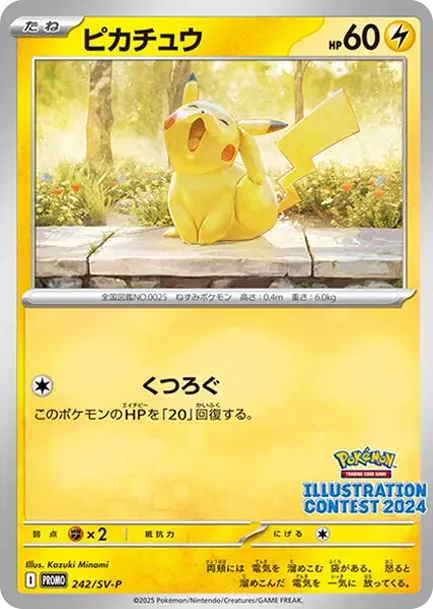
| Pikachu SV-P 242 | SV-P promo | PSA 10 back order | ¥11,884 (~$77) |
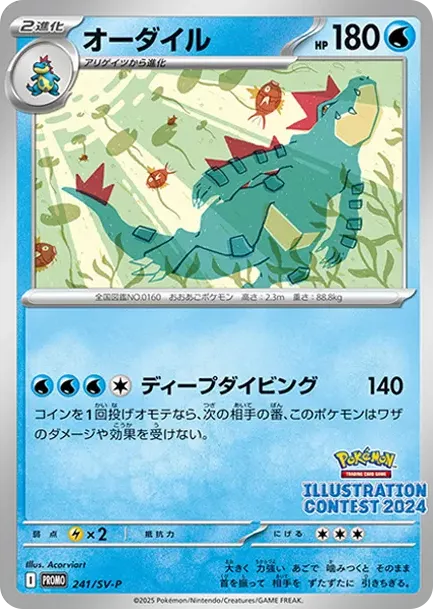
| Feraligatr SV-P 241 | SV-P promo | PSA 10 back order | ¥6,834 (~$44) |
| Worker SR 111/098 | Paradigm Trigger (S12) | PSA 10 back order | ¥6,528 (~$42) |
| Toxtricity ex SV-P 243 | SV-P promo | PSA 10 back order | ¥5,406 (~$35) |
| MEGA Charizard X ex RR 013/080 | Inferno X (M2) | PSA 10 back order | Offered as a PSA 10 back order at ¥5,457 (~$35) — sourced to order; the product page shows the current terms |
| Mimikyu AR 341/190 | Shiny Treasure ex (SV4a) | PSA 10 back order | ¥12,791 (~$83) |
| Bianca P 098/BW-P | BW-P promo | PSA 10 back order | ¥51,000 (~$331) |
Rows marked back order are offered as back orders — sourced to order; each product page shows the current terms, and the way PSA 10 back orders work is explained separately. A PSA 10 slab carries the grade PSA assigned under the Gem Mint 10 description above; which cards reach that grade is decided by PSA, not by the seller.
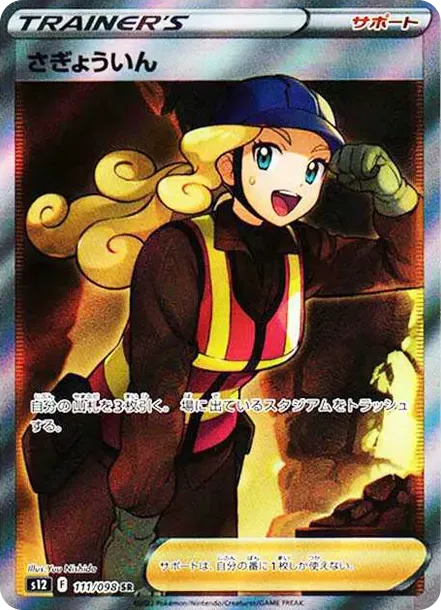

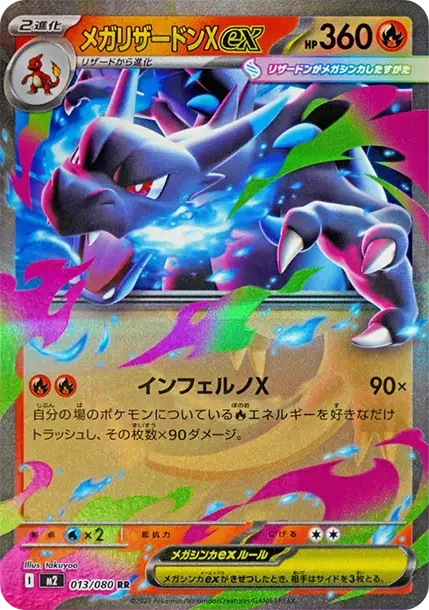
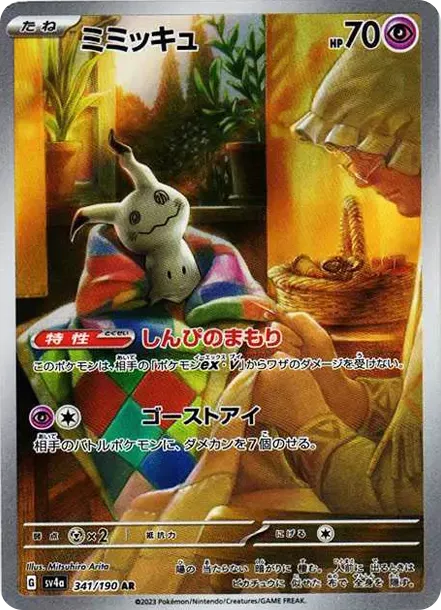
Reading price context helps too: our PSA 10 cards under $50 article lists lower-priced Japanese slabs, and how hard it is to get a PSA 10 explains the standard behind the grade.
Where to Buy PSA 10 Cards from Japan
The PSA 10 card list shows the current rows, and each row links to its product page. Examples used above include the Pikachu SV-P 242 and the Worker SR 111/098. A card that is not listed can be requested through Quick Order, and the product page shows the current terms for anything sourced to order.
New to buying from Japan? Read how to buy Japanese Pokemon cards from Japan, and for the region-specific label details see the PSA Japan label article.
Frequently Asked Questions
How does PSA grading work?
PSA describes three steps on its pricing page: authentication by a series of PSA graders, grading of the condition on a scale of 1-10 with 10 being best, and encapsulation in a sonically sealed, tamper-evident case. The grade and certification number appear on the PSA LightHouse label.
What does PSA stand for?
PSA stands for Professional Sports Authenticator, as the PSA Japan About page spells it out. The same page says PSA has authenticated and graded more than 170 million items since its founding in 1991, and describes PSA as a third-party trading card authentication and grading company.
How does PSA handle a card it cannot grade?
PSA returns the card without a numeric grade in a card saver sleeve and assigns a no-grade code from N1 to N9, such as N1 Evidence of Trimming or N4 Questionable Authenticity. Some codes can qualify for an Authentic Altered or Authentic encapsulation if the submitter requested that minimum grade.
What does Authentic Altered mean on a PSA slab?
The PSA Japan FAQ says Authentic means only that the card is genuine and does not describe its condition. Authentic Altered means a genuine card that has been altered, for example trimmed, re-colored or cleaned. PSA states such a card cannot be graded, and only authentication is possible.
How can I check a PSA certification number?
PSA states that customers can verify a slab with the online Certification Verification page and the PSA app, in a customer notice dated March 10, 2023. The slab label shows the certification number next to the grade, so that number is what you enter when you check the cert.
How long does PSA grading take in 2026?
PSA calls its turnaround figures estimates only. On September 29, 2026 the US pricing page listed Standard at 90-100 business days and Express at 20-30 business days, while the PSA Japan page listed Standard at 100 business days and Express at 25 business days. The figures can change without notice.
Can I submit cards to PSA Japan from outside Japan?
PSA Japan FAQ D-08 says the grading service accepts applications only from residents of Japan. FAQ D-09 adds that PSA US has stopped accepting grading submissions from customers outside the US, so US-routed services are temporarily restricted for Japan residents. Check PSA before sending anything.
Does PSA Japan grade differently from PSA in the US?
No. PSA Japan FAQ A-04 says PSA Japan grades according to the grading standards set at the US headquarters, and that the standards do not differ by country or facility. Service level names, fees and lead times do differ between the US and Japan price lists, so compare each site on its own figures.
500 Points Free on Sign-Up
CREATE FREE ACCOUNT1 pt = ¥1 at checkout · Points expire 30 days after they are earned · Import duties, taxes and customs charges are not included in the price and are collected on delivery, except for destinations we ship duty-paid.
Picked for this article
📩 Get member-only sale alerts & coupons
Sale alerts, coupons and restock notices by email — straight from Tokyo.