Pokemon card backs in Japan are usually discussed as an old back and a current back, and The Pokémon Company’s own chronicle dates the redesign between them to July 2001. Earlier cards carry a back tied to the game’s original “Pocket Monsters Card Game” branding; cards printed since use the current back. Identify promotional cards by their specific print.
For every detail of the split itself — including 1st Edition and how the current Japanese back compares to the English one — see our dedicated Japanese Pokemon card back guide. For spotting a counterfeit by its back, see how to check a real Japanese Pokemon card back for fakes.
The Japanese Pokemon TCG launched in 1996 under the name “Pocket Monsters Card Game,” and cards from that early period carry what the hobby calls the old back. The Pokémon Company’s chronicle lists a card-back redesign in July 2001, and Play! Pokémon’s tournament handbook says Japanese card backs are different from the backs of all other Pokémon cards. An old-back example in PSA 10 is the PSA10 Celebi, Old Back [PRMF-3 No.251], listed at ¥251,320 (~$1,632) (update: currently sold out — restock requests via Quick Order); the same card is offered as a PSA 10 back order at ¥248,880 (~$1,616) — sourced to order; the product page shows the current terms. The PSA 10 back order hub explains the format.
- The July 2001 date is restated from The Pokémon Company’s official chronicle (month only) and from Bulbapedia’s archived Pokémon VS page (July 19, 2001).
- The Japanese-versus-other-backs statement now follows Play! Pokémon’s tournament handbook, as of its September 1, 2026 revision.
- Store prices are as of October 5, 2026 and the old-back listings are updated.
- USD figures convert at ¥154/USD, approximate.
The Old Back’s Name: “Pocket Monsters Card Game”
The Japanese Pokemon Trading Card Game launched in 1996 under the name “Pocket Monsters Card Game” (ポケットモンスターカードゲーム). The Pokémon Company’s chronicle, as of October 5, 2026, dates the first expansion pack and the first starter pack to October 20, 1996. Cards printed under that branding carried a back tied to it; Bulbapedia, in its archived Pokémon VS page, describes the 2001 change as a move from the “Pocket Monsters Card Game” back to the “Pokémon” design used in international prints.
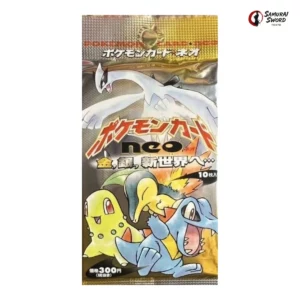
That branding covers the first era of the Japanese game: the base sets, and the Jungle-, Fossil-, Team Rocket-, Neo- and Gym-era Japanese releases. Our listings use the term in product titles, for example “Old Back” in the names of vintage Japanese packs and graded cards. In the hobby, any card from that window is called an “old back” card — the term describes the back design, not the set, rarity, or condition of the card itself.
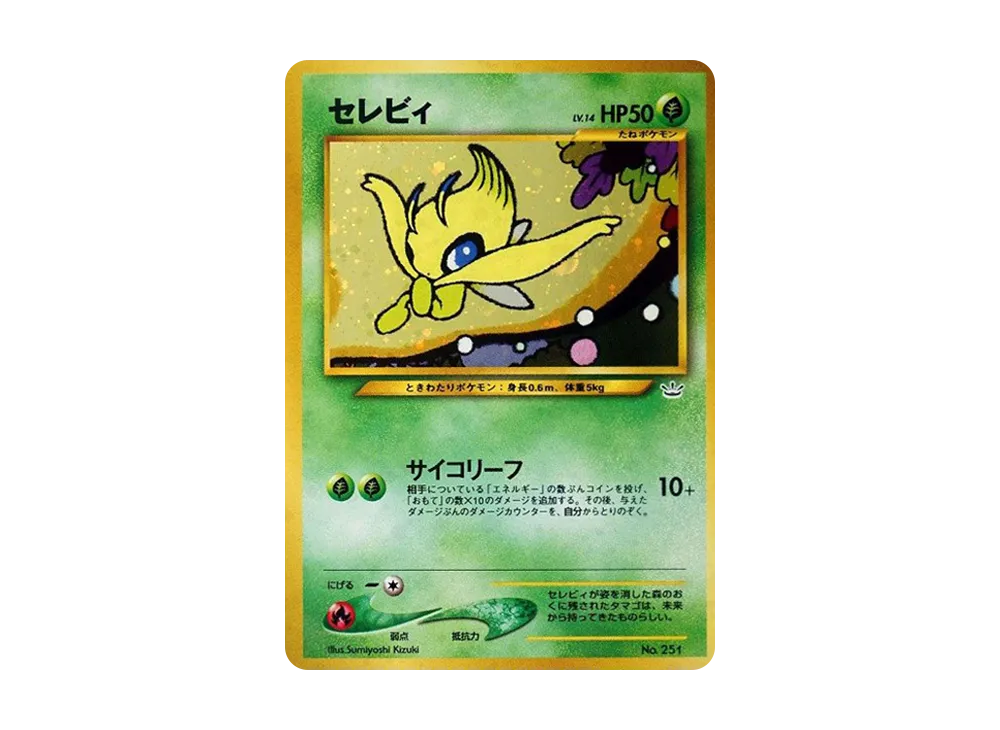
The photos here are front-facing card and slab examples, so they illustrate the era labels rather than show the reverse designs.
For where the name “Pocket Monsters” itself comes from, and how it relates to “Pokemon” as a name rather than a card feature, see our dedicated Pocket Monsters Card Game name guide.
July 2001: When the Back Design Changed
The Pokémon Company’s chronicle lists the line 「ポケモンカードゲームの裏面デザインを変更 (2001年7月)」 — “the card back design of the Pokémon Card Game was changed (July 2001)” — under the other topics of the Pokémon Card★VS series. The official page gives the month, not the day, so the exact day of the changeover rests on Bulbapedia’s release date for Pokémon VS. Bulbapedia (archived September 4, 2026) supplies the release: Pokémon Card★VS was released on July 19, 2001, and “the back of the card was changed from the ‘Pocket Monsters Card Game’ to the ‘Pokémon’ design used in international prints.”
For standard expansion cards, that places the main switch at Pokémon VS: earlier standard cards use the old back, while Pokémon VS and later standard releases use the current back. Bulbapedia calls Pokémon VS the only expansion of the VS era, and the first Japanese expansion to include Secret cards and the first to release 1st Edition prints. Those are separate attributes from the back design. Promotional cards are a different matter: each promo should be identified from the card in hand rather than forced into a timeline.
The date story, with the 1st Edition details, is told in full in the Japanese Pokemon card back guide.
Back design and 1st Edition identification are separate checks. Our Japanese 1st Edition cards guide covers the latter attribute on its own.
Pokemon Card Backs at a Glance: Old Back vs Current Back
| Back design | Branding | Years used | Covers |
|---|---|---|---|
| Old back | “Pocket Monsters Card Game” | 1996 – July 2001 | Base, Jungle-, Fossil-, Team Rocket-, Neo- and Gym-era Japanese releases |
| Current back | “Pokémon” design | July 2001 – present | Pokémon VS onward for standard expansion releases |
The “Pokémon” design in the table is the one Bulbapedia describes as used in international prints at the 2001 switch. That is a statement about 2001, not a claim that the two backs are the same now. Play! Pokémon’s TCG Tournament Handbook (revised September 1, 2026) states that Japanese cards are considered “marked” in tournament play “as their card backs are different than the card backs of all other Pokémon trading cards,” and that mixed language decks are allowed so long as the backs are consistent. The handbook does not describe how the backs differ. It defines a marked card as one where “some aspect of the card makes it possible to identify it without seeing its face,” which is the context for its statement about Japanese backs.
The Pokémon Company’s page for the 2016 Concept Pack CP6 gives a second official data point: its cards can be mixed with XY BREAK series cards, and the page adds 「(今のウラ面です)」, which means “this is the current back.” It shows the term “current back” was in official use in 2016 for a recreation of an old set, which is the meaning of “current back” on these cards.
The transition concerns the back design. The front of Japanese cards has gone through several redesigns since while the same broad back-design era continues. Cards from different years can therefore carry the same back design while looking different on the front.
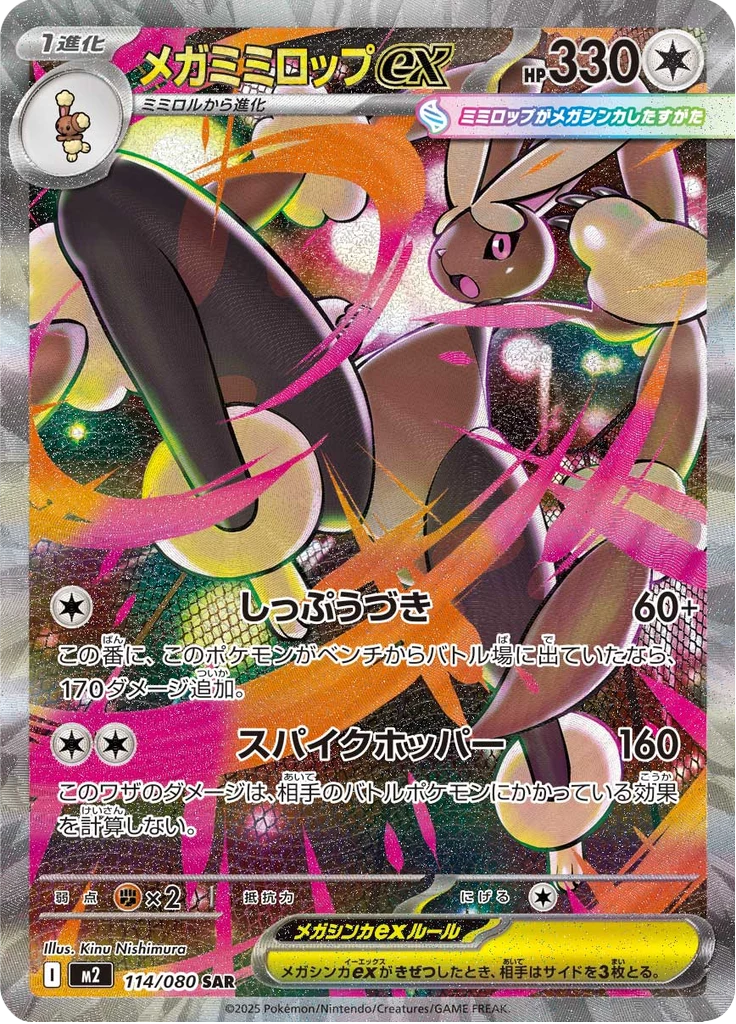

Both fronts above belong to the era after the July 2001 change: Mega Lopunny ex 114/080 SAR and Melony 274/184 SR.
Identifying the Back on a Card You Own
The front-facing photos above do not show the reverse, so identification comes down to two practical checks:
- Check the set, not the back art. If a Japanese card is confirmed to be from a Base-, Jungle-, Fossil-, Team Rocket-, Neo- or Gym-era release, it predates the July 2001 changeover and carries the old back.
- Check the product or listing title. Our own listings for vintage Japanese cards name the designation in the title, for example “PSA10 Celebi : Old Back [PRMF-3 No.251]” — a photographable confirmation rather than a judgement call from the card alone.
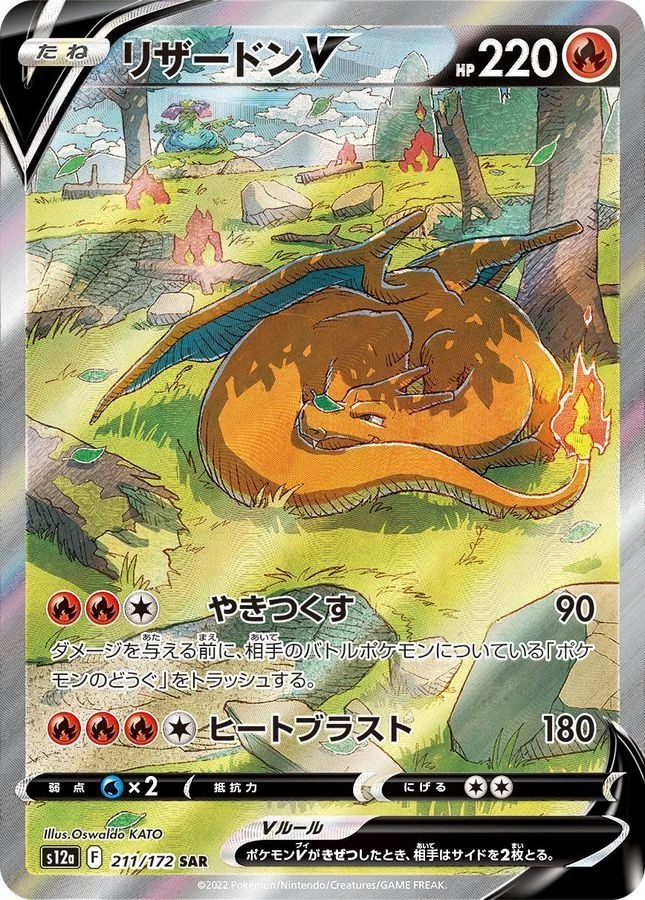
Standard expansion cards from Sun & Moon, Sword & Shield, Scarlet & Violet, and the current Mega era come after the July 2001 change; Bulbapedia dates the first of them, Pokémon VS, to July 19, 2001. For promotional or otherwise unusual cards, confirm the specific print instead of assuming the rule applies.
, current-back era slab](https://samuraiswordtokyo.com/wp-content/uploads/2026/09/img_japanese_vyvoi4uwhxktgbbjnafgtadqeoojqmphuvo6mqfg-1_8e2516118328.webp)
Genesect ex SAR [SV11B 172/086] is offered as a PSA 10 back order at ¥7,130 (~$46).
Buying Old-Back and Current-Back Cards from Tokyo
Vintage Japanese cards and packs come from Tokyo in both eras. If you’re after the branding that started it all, the old-back example is the graded Celebi from Pokemon Card neo’s “Premium File 3”.
Other old-back cards: the PSA10 Feraligatr, Old Back [PRMF-1 No.160] is offered as a PSA 10 back order at ¥45,900 (~$298), the PSA10 Entei LV.24, Old Back [PRMF-3 No.244] at ¥64,056 (~$416), the PSA10 Giovanni’s Machamp R, Old Back [PMCG-G2 No.068] at ¥86,700 (~$563), and the PSA10 Kingdra, Old Back [neo1 No.230] at ¥91,800 (~$596). For a sealed old-back product, the Neo Genesis Japanese Pokemon Booster Pack [neo1] (Old Back) is listed at ¥190,000 (~$1,234); the Neo Genesis pack guide covers it in detail.
For current-back cards, the PSA10 Charizard V 211/172 SAR is offered as a PSA 10 back order at ¥15,054 (~$98), and the PSA10 MEGA Lopunny ex 114/080 SAR at ¥4,673 (~$30). The Melony 274/184 SR is offered as a PSA 10 back order at ¥5,712 (~$37); other sourcing requests go through Quick Order.
Browse the PSA 10 card list and the original packs page, or the PSA 10 graded card collection. For sealed product from the old-back era, see the vintage Japanese Pokemon booster box guide, vintage Japanese Pokemon cards and vintage booster packs 1996–2004. Sourcing requests for a specific card go through Quick Order.
Frequently Asked Questions
What does “old back” mean on a Japanese Pokemon card?
It refers to the card back used on Japanese Pokemon cards from the game’s 1996 launch, under the “Pocket Monsters Card Game” branding, until the Pokémon VS changeover in July 2001. The term describes the back design, not a specific set or rarity, and it says nothing about condition.
When did the Japanese Pokemon card back change?
The Pokémon Company’s chronicle lists the card-back redesign in July 2001, and Bulbapedia dates Pokémon VS to July 19, 2001. For standard Japanese expansion cards, that release marks the changeover from the old “Pocket Monsters Card Game” back to the current back. Promotional cards should be checked by print.
Is an old-back card the same as a 1st Edition card?
No. The old back dates to the Japanese game’s 1996 launch. Bulbapedia dates Pokémon VS to July 19, 2001 and identifies it as the first Japanese expansion with 1st Edition prints. That release introduced the current back, so old-back design and 1st Edition status are separate attributes.
Does “Pocket Monsters Card Game” refer to one specific set?
No. It’s the branding for the first era of the Japanese TCG, covering the base sets and the Jungle-, Fossil-, Team Rocket-, Neo- and Gym-era Japanese releases. All of them share the old back; the name alone doesn’t identify which set a card is from, or its rarity, or its condition.
Is the current Japanese back the same as the English back?
No source says they are identical. Play! Pokémon’s TCG Tournament Handbook, revised September 1, 2026, says Japanese card backs are different from the card backs of all other Pokémon trading cards, without describing how. The front and set information remain the more reliable way to confirm print region.
How can I tell which back my card has if I can’t see a back photo?
Confirm the set instead. If a Japanese card is from a Base-, Jungle-, Fossil-, Team Rocket-, Neo- or Gym-era release, it predates the July 2001 changeover and carries the old back. For graded cards, the listing title often names the designation, as in “Old Back” in the product name.
Picked for this article
📩 Get member-only sale alerts & coupons
Sale alerts, coupons and restock notices by email — straight from Tokyo.